Daniel 3:26
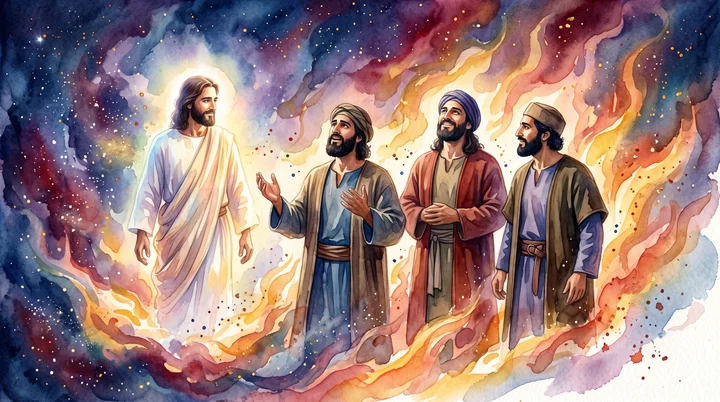
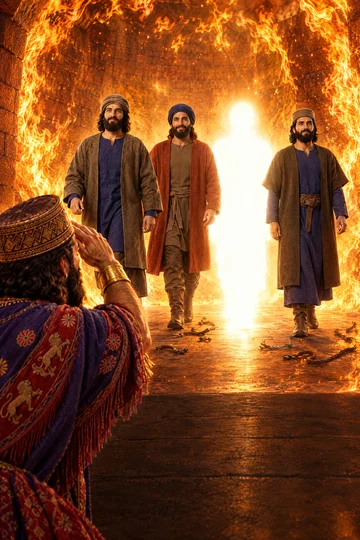
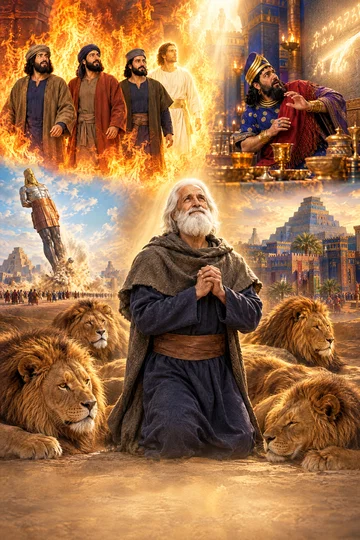
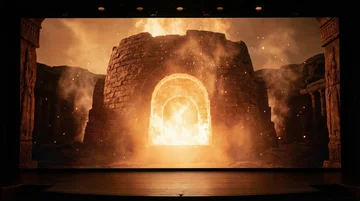
Then Nebuchadnezzar came near to the mouth of the burning fiery furnace, and spake, and said, Shadrach, Meshach, and Abed-nego, ye servants of the most high God, come forth, and come hither. Then Shadrach, Meshach, and Abed-nego, came forth of the midst of the fire.
Translations
Then Nebuchadnezzar came near to the mouth of the burning fiery furnace, and spoke, and said, Shadrach, Meshach, and Abednego, you servants of the most high God, come forth, and come here. Then Shadrach, Meshach, and Abednego, came forth of the middle of the fire.
King James Version, KJV Cambridge Paragraph Bible
Then Nebuchadnezzar came near to the mouth of the burning fiery furnace, and spake, and said, Shadrach, Meshach, and Abed-nego, ye servants of the most high God, come forth, and come hither. Then Shadrach, Meshach, and Abed-nego, came forth of the midst of the fire.
Then Nebuchadnezzar came near to the mouth of the burning fiery furnace, and spoke, and said, Shadrach, Meshach, and Abed-nego, ye servants of the most high God, come forth, and come hither. Then Shadrach, Meshach, and Abed-nego, came forth from the midst of the fire.
Then Nebuchadnezzar came near to the mouth of the burning fiery furnace: he spake and said, Shadrach, Meshach, and Abed-nego, ye servants of the Most High God, come forth, and come hither. Then Shadrach, Meshach, and Abed-nego, came forth out of the midst of the fire.
Then Nebuchadnezzar came near to the mouth of the burning fiery furnace: he spake and said, Shadrach, Meshach, and Abed-nego, ye servants of the Most High God, come forth, and come hither. Then Shadrach, Meshach, and Abed-nego came forth out of the midst of the fire.
Then Nebuchadnezzar hath drawn near to the gate of the burning fiery furnace; he hath answered and said, 'Shadrach, Meshach, and Abed-Nego, servants of God Most High come forth, yea, come;' then come forth do Shadrach, Meshach, and Abed-Nego, from the midst of the fire;
Then Nebuchadnezzar came near to the opening of the burning fiery furnace; he spoke and said, Shadrach, Meshach, and Abed-nego, ye servants of the Most High God, come forth, and come [hither]. Then Shadrach, Meshach, and Abed-nego came forth from the midst of the fire.
Then did Nebuchadnezzar, draw near, to the door of the burning furnace of fire, he spake and said, Shadrach, Meshach, and Abed-nego, ye servants of the most high God, step forth and come hither. Then stepped forth Shadrach, Meshach, and Abed-nego, out of the midst of the fire.
Berean Standard Bible, Majority Standard Bible
Then Nebuchadnezzar approached the door of the blazing fiery furnace and called out, “ Shadrach, Meshach, and Abednego, servants of the Most High God, come out!”So Shadrach, Meshach, and Abednego came out of the fire,
Then Nebuchadnezzar came near to the mouth of the burning fiery furnace. He spoke and said, “ Shadrach, Meshach, and Abednego, you servants of the Most High God, come out, and come here!”Then Shadrach, Meshach, and Abednego came out of the middle of the fire.
Then Nebuchadnezzar came near the door of the burning and flaming fire: he made answer and said, Shadrach, Meshach, and Abed-nego, you servants of the Most High God, come out and come here. Then Shadrach, Meshach, and Abed-nego came out of the fire.
Then the King Nebuchad-nezzar came neere to the mouth of the hote fierie fornace, and spake and said, Shadrach, Meshach and Abednego, the seruants of the hie God goe foorth and come hither: so Shadrach, Meshach and Abednego came foorth of the middes of the fire.
Douay-Rheims (Challoner revision)
Then Nabuchodonosor came to the door of the burning fiery furnace, and said: Sidrach, Misach, and Abdenago, ye servants of the most high God, go ye forth, and come. And immediately Sidrach, Misach, and Abdenago went out from the midst of the fire.
Pictures
Cross-references 20 of 32
- Daniel 3:16-18
Shadrach, Meshach, and Abed-nego, answered and said to the king, O Nebuchadnezzar, we are not careful to answer thee in this matter.
The three Hebrews refuse the king’s command to worship the image, trusting God whether or not he delivers them.
- Daniel 6:22-23
My God hath sent his angel, and hath shut the lions’ mouths, that they have not hurt me: forasmuch as before him innocency was found in me; and also before thee, O king, have I done no hurt.
Daniel’s deliverance from the lions likewise shows God protecting his faithful servants.
- Hebrews 11:34
Quenched the violence of fire, escaped the edge of the sword, out of weakness were made strong, waxed valiant in fight, turned to flight the armies of the aliens.
Faith quenches fire’s violence, as seen in the three Hebrews’ rescue.
- Acts 5:29
Then Peter and the other apostles answered and said, We ought to obey God rather than men.
Both teach that loyalty to God takes priority over human demands.
- Daniel 4:37
Now I Nebuchadnezzar praise and extol and honour the King of heaven, all whose works are truth, and his ways judgment: and those that walk in pride he is able to abase.
Nebuchadnezzar praises heaven’s King and declares God can humble the proud.
- Isaiah 33:14-15
The sinners in Zion are afraid; fearfulness hath surprised the hypocrites. Who among us shall dwell with the devouring fire? who among us shall dwell with everlasting burnings?
The righteous are able to dwell amid the devouring fire.
- Daniel 3:19
Then was Nebuchadnezzar full of fury, and the form of his visage was changed against Shadrach, Meshach, and Abed-nego: therefore he spake, and commanded that they should heat the furnace one seven times more than it was wont to be heated.
The furnace is heated seven times hotter, and the three remain faithful.
- Daniel 3:1-7
Nebuchadnezzar the king made an image of gold, whose height was threescore cubits, and the breadth thereof six cubits: he set it up in the plain of Dura, in the province of Babylon.
The golden image and command to bow establish the conflict leading to the furnace.
- Jeremiah 27:6
And now have I given all these lands into the hand of Nebuchadnezzar the king of Babylon, my servant; and the beasts of the field have I given him also to serve him.
Both call Nebuchadnezzar God’s servant, with his authority granted by God.
- Isaiah 43:2
When thou passest through the waters, I will be with thee; and through the rivers, they shall not overflow thee: when thou walkest through the fire, thou shalt not be burned; neither shall the flame kindle upon thee.
God’s promise of protection through fire is illustrated by the three men’s deliverance.
- Daniel 3:6
And whoso falleth not down and worshippeth shall the same hour be cast into the midst of a burning fiery furnace.
The decree commands worship and threatens the furnace for refusal.
- Exodus 20:4-5
Thou shalt not make unto thee any graven image, or any likeness of any thing that is in heaven above, or that is in the earth beneath, or that is in the water under the earth:
The command against idolatry explains their refusal to worship the king’s image.
- Daniel 6:16
Then the king commanded, and they brought Daniel, and cast him into the den of lions. Now the king spake and said unto Daniel, Thy God whom thou servest continually, he will deliver thee.
Both are cast into punishment for breaking unrighteous law.
- Daniel 3:22
Therefore because the king’s commandment was urgent, and the furnace exceeding hot, the flame of the fire slew those men that took up Shadrach, Meshach, and Abed-nego.
The flames kill the men who cast them into the furnace.
- Daniel 5:2-4
Belshazzar, whiles he tasted the wine, commanded to bring the golden and silver vessels which his father Nebuchadnezzar had taken out of the temple which was in Jerusalem; that the king, and his princes, his wives, and his concubines, might drink therein.
Belshazzar dishonors the God whose power delivered the three men from the furnace.
- Daniel 3:15
Now if ye be ready that at what time ye hear the sound of the cornet, flute, harp, sackbut, psaltery, and dulcimer, and all kinds of musick, ye fall down and worship the image which I have made; well: but if ye worship not, ye shall be cast the same hour into the midst of a burning fiery furnace; and who is that God that shall deliver you out of my hands?
The king’s defiance before deliverance contrasts with his later confession.
- Daniel 3:12
There are certain Jews whom thou hast set over the affairs of the province of Babylon, Shadrach, Meshach, and Abed-nego; these men, O king, have not regarded thee: they serve not thy gods, nor worship the golden image which thou hast set up.
They are accused of refusing to worship the king’s gods and golden image.
- Daniel 3:30
Then the king promoted Shadrach, Meshach, and Abed-nego, in the province of Babylon.
After their deliverance, they were advanced in Babylon.
- Daniel 4:2-3
I thought it good to shew the signs and wonders that the high God hath wrought toward me.
The king publicly recounts God’s mighty works and everlasting kingdom.
- Daniel 4:34
And at the end of the days I Nebuchadnezzar lifted up mine eyes unto heaven, and mine understanding returned unto me, and I blessed the most High, and I praised and honoured him that liveth for ever, whose dominion is an everlasting dominion, and his kingdom is from generation to generation:
Nebuchadnezzar later acknowledges God’s everlasting dominion.
Commentary
Each commentary is drawn from primary sources: the writings of Ellen G. White and Adventist pioneers and periodicals. Each commentary is separate. Its own words are not a quotation; follow the references to read the source passages.
Ellen G. White
58 sources
Nebuchadnezzar came near to the mouth of the burning fiery furnace and called Shadrach, Meshach and Abed-nego as servants of the most high God to come forth and come hither, and they came forth out of the midst of the fire before the assembled crowd.ST Dec 24, 1912Ms 73, 1909, par. 12–14Lt 126, 1910, par. 2–8 His summons followed his looking into the furnace and seeing the three alive and walking amid the flames with a fourth figure like the Son of God, the Savior walking with them.PK 503Lt 90, 1897, par. 21–25Ms 163, 1898, par. 5–11 They came out alive and unharmed with bodies and clothing untouched, the fire having burned only their fetters so that not even the smell of fire was upon them.PK 503Ms 110, 1904, par. 52–56STA 121.2 The deliverance became a public witness that wrought upon the king to believe, acknowledge the living God above every earthly power, turn wrath to praise, and decree that no other god can deliver after this sort.BS 33.4ST Oct 19, 1882DA 28.3 It stands as the pattern for the final crisis, when those who keep the commandments and the seventh-day Sabbath must stand firm though the furnace be heated seven times hotter and human law exalt a spurious sabbath, assured that the form of the Fourth walks with them and they shall come forth unharmed.STA 121.2ST2 13.1PK 512.1Ms 61, 1890, par. 4112MR 218.2–220.1
Call from the Furnace Mouth
Nebuchadnezzar himself came near to the mouth of the burning fiery furnace and spoke aloud, calling Shadrach, Meshach and Abed-nego by name as servants of the most high God and bidding them come forth and come hither, and they then came forth out of the midst of the fire before the assembled crowd, alive and unharmed.ST Dec 24, 1912Ms 73, 1909, par. 12–14Lt 126, 1910, par. 2–8Lt 90, 1897, par. 21–25Ms 110, 1904, par. 52–56 The summons came after he looked into the furnace and saw the three alive and walking amid the flames, loose and unhurt, with a fourth figure with them like the Son of God.Ms 163, 1898, par. 5–11ST Oct 19, 1882Ms 44, 1886, par. 8–10 That fourth was the Savior, Jesus, Christ, walking with them in the fire, an angelic presence whose companionship kept the flames from consuming them in the Lord's presence.PK 503PK 508.3Ms 44, 1886, par. 8–10 Their coming out therefore completed a deliverance that displayed God's personal presence and power to protect the faithful even in the midst of fire.Ms 73, 1909, par. 12–14Lt 90, 1897, par. 21–25Lt 132, 1901, par. 7–15
The call followed their fixed refusal to worship the costly golden image he had set up in the plain of Dura.ST Dec 24, 1912Ms 73, 1909, par. 12–14Ms 163, 1898, par. 5–11 That image was made to represent Babylon and especially the king himself, to magnify Babylon and himself, after he perverted the light given through the interpretation of his dream.ST Oct 19, 188212MR 218.2–220.1 His advisers ensnared the Hebrews by leading him to decree that every knee should bow to the golden image, and he used force to punish disobedience by commanding the furnace heated seven times hotter than usual.STA 121.2ST2 13.1Ms 61, 1890, par. 4112MR 218.2–220.1
He first had the men who had informed against and accused the Hebrews cast into the furnace, then called to those inside to come out, and that command magnified God before him and his courtiers.Ms 163, 1898, par. 5–11 In calling them he was overcome with terror and felt himself in the presence of the Infinite One.ST Oct 19, 1882 He spoke with remorse and shame, acknowledging that the living God is above every earthly power.BS 33.4ST Oct 19, 1882
These events belong to the chapter that comes after he had acknowledged God's power but then returned to idol worship.PK 503.2 They took place in the same year Daniel and his companions entered the service of the king of Babylon, as a severe test of the integrity of these youthful Hebrews.BS 29.1 Their trial involved refusing to disregard the Sabbath and to observe heathen festivals.DA 28.3
Preservation in the Flames
God had not forsaken the three in the fire but was personally present with power to protect the faithful, and the Son of God, Jesus, Christ, the Savior was with them and walked with them, so the flames could not harm or consume them in the Lord's presence.Lt 90, 1897, par. 21–25STBk 121.2PK 508.3Ms 44, 1886, par. 8–10Ms 168, 1898, par. 1–3 Nebuchadnezzar called Shadrach, Meshach, and Abed-nego out only after seeing them alive and walking amid the flames with a fourth figure like the Son of God, and he recognized them as servants of the Most High God because they had remained faithful under threat of death and refused to worship his image.Lt 90, 1897, par. 21–25STBk 121.2ST Apr 20, 1876Ms 44, 1886, par. 8–10Ms 168, 1898, par. 1–3 Their deliverance displayed that living faith in the crucified Redeemer carries people through affliction and trial, and the miracle moved the king to believe in God and recognize His superior power.Lt 90, 1897, par. 21–25ST Apr 20, 1876Ms 168, 1898, par. 1–3
They came forth out of the midst of the fire alive and unharmed before the assembled crowd, with bodies and clothing untouched.PK 503Ms 110, 1904, par. 52–56PK 509.3–4 The fire had burned only their fetters, leaving them without even the smell of fire upon their garments.Ms 110, 1904, par. 52–56STA 121.2PK 509.3–4ST2 13.13MR 95.4 With an angelic presence in the fire and the form of the Fourth seen walking with them, they were not forsaken after being cast in but were preserved in the blazing furnace, and they told the king how they had been delivered.PK 503STA 121.2ST2 13.13MR 95.4Ms 44, 1886, par. 8–10
The deliverance was a wonderful miracle worked by God's wise providence, which is incessantly at work over human affairs to bring even idolatrous minds into close reasoning contact with Himself and give them light.Lt 109a, 1898, par. 5–813MR 60.1–61.2 He manifests Himself in this way to those who have and keep His commandments, as Christ Himself walking with His three faithful servants who would not bow the knee to the costly idolatrous golden image set up in the plain of Dura to represent Babylon and especially the king and to magnify Babylon and himself.Lt 109a, 1898, par. 5–813MR 60.1–61.2 It took place in the same year Daniel and his companions entered the service of the king of Babylon as a severe test of the integrity of these youthful Hebrews, and it proves before an idolatrous nation the power and faithfulness of the God of Israel, with Nebuchadnezzar's heart wrought upon so that he believed in God and in His superior power over every other kingdom.Lt 109a, 1898, par. 5–813MR 60.1–61.2BS 29.1
The verse teaches important principles about the working out of the Lord's purpose for the children of obedience in contrast with the children of disobedience.Lt 118, 1910, par. 2 It declares that God takes His stand with the oppressed and rebukes earthly powers that rebel against the authority of Heaven, and their coming forth unharmed declares their faith in the God they worship to the whole nation of Babylon, resting on reliance on God and honoring faith in the living Word in the sight of all.PK 511.1 This fulfills the promise to be with His people when passing through waters and walking through fire without being burned or kindled upon, so that through the faithfulness of His children, with tidings carried to many countries by representatives of the different nations gathered for the dedication, God is glorified in all the earth.PK 511.1 That same preserving power keeps fearless advocates of truth when powerful enemies seek their blood, for God keeps His faithful servants alive when they are cast into certain death for their faith and can protect them from death, yet faithfulness to God and the gospel matters more than whether one's life is spared.AA 570.1–2GC88 145.1–146.1SG4 275.3–276.3
Witness to King and Nations
The coming forth from the midst of the fire became a public witness to God's power before the assembled crowd, and because the three had honored God the king honored them.Lt 132, 1901, par. 7–15 They came out without even the smell of fire upon their garments and told the king how they had been delivered.3MR 95.4
The miracle produced a striking change in the minds of the people, so that the great golden image set up with such display was forgotten.BS 33.4ST Oct 19, 1882 Their deliverance from the attempt to force idolatry brought knowledge of the true God to Babylon's assembled princes and leading men.5T 453.1–4Ms 2b, 1895, par. 25–26 Through persecution God brought His servants face to face with kings and rulers so they and their people might receive the light.DA 28.3 The tidings of the deliverance were carried to many countries by the representatives of the different nations gathered for the dedication, so that through the faithfulness of His children God was glorified in all the earth.PK 511.1
Seeing the form of the Fourth in the furnace convinced Nebuchadnezzar that their God was the living God.13MR 60.1–61.2 By this miracle his heart was wrought upon so that he believed in God and recognized His superior power over every other kingdom and over earthly kings.Ms 168, 1898, par. 1–3Lt 109a, 1898, par. 5–8 His wrath was turned to praise and thanksgiving to Jehovah, and the greatest monarch proclaimed the supremacy of the God whom His Hebrew captives worshiped.DA 28.3 He then published a decree that anyone speaking against their God should be put to death, because no other god can deliver after this sort.BS 33.4ST Oct 19, 1882
Although he acknowledged the wonderful miracle wrought for them, because he did not continue to walk in the light he lost the holy impression made upon his mind.13MR 60.1–61.2
Their deliverance displayed God's power and rewarded their trust and refusal to worship any god but Him.Ms 16, 1896, par. 31–34 God vindicated their loyal course despite the king's death sentence, and made known that God rules over earthly kings.Ms 2b, 1895, par. 25–26Lt 32, 1899, par. 6–11
Pattern for Final Crisis
The coming forth from the furnace is the pattern for faithfulness through the continual sharp contests that last to the close of the controversy between good and evil, between the two great powers.STA 121.2ST2 13.1Ms 61, 1890, par. 41Ms 40a, 1890, par. 101–102Ms 40, 1890, par. 92–94 Those who purpose to be true to principle come what may must stand firm in the time of trial and not turn aside from allegiance to the truth even when the fiery furnace is heated seven times hotter than usual, than it was wont to be heated.STA 121.2ST2 13.1Ms 61, 1890, par. 41Ms 40a, 1890, par. 101–102Ms 40, 1890, par. 92–94 Those cast into the furnace for such faithfulness are not forsaken of God, for the form of the Fourth is seen walking with them in the flames, and called as servants of the most high God they come forth from the midst of the fire unharmed without even the smell of fire upon their garments.STA 121.2ST2 13.1Ms 61, 1890, par. 41Ms 40a, 1890, par. 101–102Ms 40, 1890, par. 92–94
Their experience on the plain of Dura provides a lesson for God's servants who will face humiliation and abuse for their faith.PK 512.1 In particular, those who keep the seventh-day Sabbath will be targeted by a decree condemning them to death.PK 512.1 The same decision for or against the commandments of God, as the three worthies made when they refused to bow to Nebuchadnezzar's image, will face believers in a future period in the Southern States.Lt 35, 1895, par. 1–3
The golden image prefigures the Sunday idol set up by union of church and state, where human laws demand worship of a spurious sabbath in the place where God's holy Sabbath of the fourth commandment should be.12MR 218.2–220.1 The same effort to turn God's people from allegiance will be made today.12MR 218.2–220.1 Those who make cruel enactments seeking to destroy God's people are themselves destroyed by the recoil of their actions.12MR 218.2–220.1
Their deliverance shows that in the day of the Lord smoke and flame will be powerless to harm the righteous who are united with Him and prepared to meet their Saviour, because the Son of God was with them and they came out unharmed.Ms 159, 1903, par. 15–19 God did not forget the three faithful men in the fiery furnace, for they came out alive despite their enemies' attempt to destroy them.GC 626.2–627.1 Their deliverance illustrates that God remembers and protects His people in times of persecution and distress.GC 626.2–627.1
Faith and Presence in Trial
The three trusted God's Word and stood against royal power, and their coming forth unharmed shows that living faith in the crucified Redeemer carries people through affliction and trial.ST Apr 20, 1876ED 254.2–3RH Dec 24, 1908RH Nov 11, 1915 Their faith set against Nebuchadnezzar on his earthly throne demonstrates that God's Word sustains the helpless against the might of the world.ED 254.2–3RH Nov 11, 1915 It enables the apparently helpless to withstand human power used in support of evil and to overcome earthly power.RH Dec 24, 1908RH Nov 11, 1915
Their steadfast refusal to bow shows that loyalty to God can withstand even the threat of death in the fiery furnace.5T 42.2–43.2Ms 15, 1896, par. 33–34 They obeyed God rather than deny truth to gain favor, honor, or position, and could not be intimidated.Ms 15, 1896, par. 33–34Ms 201, 1898, par. 11 So God's people must remain loyal to His commandments when civil authority and religious pressure oppose them.5T 42.2–43.2Ms 15, 1896, par. 33–34 Their preservation shows that God sustains those who face temptation without deliberately entering into it, while those who choose to walk into temptation cannot rely on divine aid to keep them from being overcome.ST Sep 2, 1897
When God's people suffer for Christ, Jesus is with them in the trial, not with a promise of freedom from suffering but with His presence and strength.RH Apr 22, 1862 Jesus and angels watch over trusting people, so the fire cannot destroy them though it can consume the dross.RH Apr 22, 1862 God does not forsake those who remain faithful through deadly trials, and their coming out alive at the king's call gives reason to trust Him when facing violence or death.4SP 120.14SP 445.2–446.1Lt 49, 1886, par. 7–8 That same care gives courage when obedience brings persecution or unjust punishment.4SP 120.1Lt 49, 1886, par. 7–8
The Most High God who preserved them still lives and reigns, and can preserve His servant when called before rulers over questions of truth even when health is impaired and violence is probable.GC 146.1GW92 57.2–61.11T 373.2–375.1 Their survival parallels God's preservation of John when cast into boiling oil.RH Sep 5, 1912 It gave Luther reason to trust God amid threats of death, confident that as God had preserved them He could preserve Luther through danger as long as his work was not finished.GW92 57.2–61.11T 373.2–375.1 Trust in Him means hearing a ruler's summons as God's call, placing the matter in the Lord's hands, going forward sick if necessary, refusing flight and recantation, counting life of little consequence if He will not save, and being willing to shed blood so the gospel is not exposed to scorn and triumph and so all may be saved.GC 146.1
They stand as examples of self-denial and sacrifice, showing that faithfulness to God must overcome hereditary and cultivated habits and every circumstance.20MR 113.3–114.1Lt 73, 1896, par. 39–42 The God-fearing man makes appetites and passions servants, not rulers, and is not enslaved by any hereditary or cultivated habit or tendency.Lt 73, 1896, par. 39–42 He rules the animal passions instead of being held in bondage of habit, not serving circumstances but controlling circumstances by an inwrought principle learned from the greatest Teacher.20MR 113.3–114.1Lt 73, 1896, par. 39–42 That principle passes like a plowshare through hereditary and cultivated habits, through all circumstances and surroundings.Lt 73, 1896, par. 39–42
Sources
Pioneers and periodicals
155 sources
Nebuchadnezzar came near to the mouth of the burning furnace and called Shadrach, Meshach, and Abed-nego as servants of the most high God to come forth, and they came forth out of the midst of the fire.ST Dec 24, 1912RH Oct 25, 1864ST Oct 11, 1905 They came out unharmed before the assembled rulers, with no power of the fire upon their bodies, no singed hair, no changed clothing, and not even the smell of fire upon them, while only their bonds were burned away.ST Jan 9, 1912ST Oct 9, 1901ST Jan 29, 1908 Their deliverance came by God's direct intervention through his angel, the Son of God present with them in the flame, who restrained the natural effect of the fire that had been heated sevenfold and had slain the men who cast them in.ST Jan 29, 1908ST Oct 9, 1901ST Aug 13, 1874ST Jan 29, 1908RH Oct 8, 1903 They had refused to serve Babylon's gods or worship the golden image even under certain death, and God vindicated their obedience, showing that when a king commands false worship his people must obey God rather than man.RH Jul 14, 1904RH Feb 20, 1900RH Oct 7, 1902ST Jun 11, 1912ST Sep 10, 1885 Their coming forth from a death decree for refusing the image is the pattern of God's promised deliverance of his people in the last conflict over worship of the beast's image, and a foreshadowing that the righteous will live unharmed in the fire of his unveiled glory while sin is consumed.RH Jul 14, 1904RH May 1, 1855ST Dec 1, 1914ST Nov 1, 1905ST Jun 27, 1911
Furnace Scene and Setting
Nebuchadnezzar himself came near to the mouth of the burning fiery furnace and spoke, calling Shadrach, Meshach, and Abed-nego servants of the most high God and summoning them to come forth and come hither, and they came forth out of the midst of the fire.ST Dec 24, 1912RH Oct 25, 1864ST Oct 11, 1905ST Jan 9, 1912ST Oct 13, 1909 The call acknowledged them as servants of the Most High after he had used force to punish their refusal to worship his image, and their coming out alive showed God had preserved them in the fire.ST Dec 24, 1912ST Jan 9, 1912ST Jan 29, 1908 Their emergence is God's deliverance of those who remain faithful to Him, supporting all who trust in Him that He may deliver them from danger or, if they suffer death, receive them into heaven, while His mercy can even reach a persecutor and turn him to repentance.RH Oct 25, 1864ST Oct 11, 1905ST Oct 13, 1909
They emerged unharmed before the assembled officials and representative men gathered from all parts of the kingdom, who witnessed the deliverance.ST Jan 9, 1912RH Aug 20, 1908 The fire had no power upon their bodies, did not singe a hair, did not change their clothing, and left not even the smell of fire upon them.ST Jan 9, 1912ST Oct 9, 1901ST Jan 29, 1908ST Jan 9, 1907 Only their fetters were burned away, so that men bound and cast in rose and walked freely within the flame and then walked forth from its midst with not the least semblance of injury, which dispelled any thought that the king had been the victim of a distorted vision.ST Oct 9, 1901RH Aug 20, 1908ST Jan 9, 1907 The burning of the bonds alone mocked the attempt to exercise unwarranted control over men who were first servants of God and second servants of the king.ST Oct 9, 1901ST Jan 29, 1908RH Aug 20, 1908
The furnace had been heated seven times hotter than ordinary in the king's fury, and his mightiest strong men bound the unresisting Hebrews and cast them in.ST Jan 29, 1908ST Jan 9, 1907 The fierceness of the heat killed those strong men who threw them in, but the fire had no power to burn the faithful except to devour the bands of earth's bondage.ST Jan 29, 1908ST Oct 11, 1905 Where three bound men had been cast, four beings appeared loose and walking in the midst of the flame with no hurt, singing praises and blessing the Lord.ST Jan 29, 1908ST Aug 13, 1874 The fourth was the shining Angel of Jehovah with the aspect of a son of the gods, a manlike form identified as the Angel of the covenant, the Son of God, sent to protect them, showing that angels can control the elements and restrain the natural effects of fire.ST Jan 29, 1908ST Oct 9, 1901ST Aug 13, 1874RH Oct 8, 1903
The event was a real burning furnace according to the Babylonian practice of putting men alive into the fire, truly entered and not merely approached.ST Jan 9, 1912ST It stood about twenty years after the revelation of the dream in Daniel 2, when Babylon had grown strong through conquest, administration, and building, and less than fifty years before Belshazzar's feast, at which men who had seen it were later present, for the episode was public record and public knowledge.RH Oct 22, 1901ST The king's summons is his sixth recorded speech in the account, acknowledging the deliverance he had challenged and the faithfulness the men had declared.ST Jul 16, 1912ST Jan 9, 1912 The chapter is an inspired record of events and words concerning the kingdoms of man and of God, but the king himself and his words are not thereby inspired.ST Jul 16, 1912ST Sep 8, 1909 The two or three names of musical instruments in chapter 3 involve no other Greek words or Grecisms, and Greek instruments of music in Nebuchadnezzar's time are no stranger than names of Indian animals and of an Indian tree reaching Jerusalem under Solomon, since monuments show Greek culture and traders already in those countries in the eighth century before Christ in the days of Sargon and Sennacherib, so they do not demand a date after Alexander's conquest of Palestine in 332 B.C. or presuppose a well-established Persian empire.ST Jan 11, 1916
Miracle of Divine Deliverance
Daniel 3:26 displays God as Deliverer who is able to deliver His faithful servants when it serves His glory, preserving them from danger and sustaining them in trial, and if they must suffer death receiving them into heaven.RH Oct 25, 1864ST Sep 6, 1899ST Aug 9, 1910ST Oct 21, 1908 Nebuchadnezzar summoned the three men as servants of the Most High God to come out of the furnace after God had preserved them, and they left it alive, an education of the king of Babylon in deliverance and a lesson in religious liberty for every age.RH Oct 25, 1864ST Jan 29, 1908ST Sep 6, 1899ST Aug 9, 1910 His care protected them and brought them out alive, showing His power to deliver His children, His mercy reaching even a persecutor to turn him to repentance, and His presence with those who remain true to principle without compromise even under threat of death.RH Oct 25, 1864ST Sep 6, 1899ST Oct 21, 1908
Deliverance came by God's direct intervention and the presence of His angel, the Angel of the covenant, the Son of God, a manlike form with the aspect of a son of the gods who stood and walked with them in the fire.ST Oct 9, 1901ST Aug 13, 1874ST Jan 29, 1908RH Oct 8, 1903 Angels can control the elements and restrain the natural effects of fire, so their garments were not even scorched and they came out at the king's command without any evidence of harm.ST Aug 13, 1874ST Jan 29, 1908RH Oct 8, 1903 The rescue is an exception to the ordinary course of natural law that demonstrates the rule, granted only after they had been brought to terrible extremity, showing that God's people may face a severe test before He delivers them.ST Oct 5, 1882
The deliverance was a real miracle of the same kind as bringing forth life at creation, bringing Israel unharmed through the sea, keeping Daniel safe among lions, and keeping Jonah unharmed in the sea-monster.ST Nov 25, 1889ST Dec 9, 1913 It belongs to one divine system with Paul's deliverance in shipwreck and Peter's deliverance from jail, so that accepting the New Testament deliverances requires accepting this Old Testament fact with Christ as its product and perfection.ST Nov 25, 1889 Laws of God exist only for human reckoning, for with God Himself it is will from moment to moment, the will of highest wisdom and love upon which past expression lets the future be presumed and so is called law.RH Aug 20, 1908 To make a man is at least as great a marvel as to raise a man from the dead, and seed multiplying in the furrow is as marvelous as bread multiplying in Christ's hands, so the deliverance is not a greater exertion or manifestation of divine power than ordinary and ever-repeated processes, but a different manifestation of the will by which God constantly works.RH Aug 20, 1908
On the human side they quenched the violence of fire by patient faithfulness, fixed purpose, fixed trust, and prayer, which was their shield and kept the fire from burning them.ST Jan 11, 1899RH Oct 24, 1854ST Aug 22, 1878ST Sep 9, 1880 They had patiently suffered the privations of captivity away from their Canaan home and without a murmur submitted to the exactions of an unrighteous decree, making them an example of suffering, affliction and patience for all who will obey God and be His.RH Oct 24, 1854 Their trust in God is an instance of faith quenching the violence of fire as God manifested His power through them, giving an example of faith facing persecution that may expect His presence in trial and deliverance so complete that not even the smell of fire remains.RH Dec 19, 1871 Prayer preserved them alive in the furnace and brought them safely out, and continual faithful service makes believers greatly beloved, proving God answers the prayer of faith as readily now as then.ST Sep 9, 1880
God's presence in fire consumes sin and what is identified with sin, not those who are whole-hearted, free in Christ, and purified by His presence.ST Oct 9, 1901ST Jan 29, 1908ST Sep 26, 1911 The fierceness of the heat killed the strong men who threw them in when the infuriated king heated the furnace sevenfold and had his mightiest men bind and cast the unresisting Hebrews into it, but the fire had no power to burn the faithful men except to devour the bands of earth's bondage, leaving them loose and walking in the midst of the flame with no hurt, singing praises and blessing the Lord.ST Jan 29, 1908 The flame that slew the executioners only burned away their bonds and freed their usefulness, demonstrating God's saving power and His presence with them through His Son, the fourth shining figure, and making the power of God's kingdom a present reality by faith.ST Jan 29, 1908RH May 1, 1900ST May 19, 1914 The Son of God stood with them when thrown in for refusing the state's religious command, and they came out when called, showing God's people can dwell safely in devouring fire while His judgment consumes sin and those identified with it, and thereby defending their freedom to choose whom to worship even against an entire nation.ST Sep 26, 1911ST May 19, 1914
Faithfulness Under Death Threat
On the plain of Dura they refused to serve Babylon's gods or worship the golden image even with certain death before them, remembering God's command against bowing to idols and yielding their bodies rather than serve any other god.RH Jul 14, 1904RH Oct 7, 1902ST Aug 29, 1895RH Jul 13, 1916RH Jan 15, 1867 They accepted the consequences without knowing beforehand that they would be delivered, for their faithfulness did not depend on foreknowledge of rescue.RH Jul 14, 1904ST Sep 10, 1885 Their refusal came because conscience would not let them bow to an idol, and it stands as the model of standing firm when religious practice conflicts with conscience.ST Aug 29, 1895RH Jul 13, 1916RH Jan 15, 1867 Their experience shows the privileges and blessings of serving God faithfully when loyalty is tested, and its principles apply to God's people in the last days when they will face conflict with an apostate civil government.RH Jul 14, 1904RH Oct 7, 1902RH Jan 15, 1867
Their preservation and coming forth unscathed was evidence of God's favor toward them and vindication that they were servants of Jehovah, the Most High God.RH Oct 7, 1902RH Jan 12, 1869ST Nov 7, 1895 Daniel's special gift for understanding visions and dreams did not mean they were any less accepted by God than he was.RH Oct 7, 1902RH Jan 12, 1869 Their deliverance proves that God vindicates and approves those who obey Him rather than human rulers, even when powerful kingdoms oppose them.RH Oct 7, 1902
True principle is fireproof: they went through the fiery furnace and came forth unsinged, while the policy that tries to throw principle into the fire is itself burned in the effort.ST Jun 17, 1903ST Aug 22, 1878 Their fixed purpose and heroic faith overcame the violence of the fire in an exploit of splendid physical courage and heroic faithfulness under threat to life, of the same kind as Daniel in the lions' den.ST Aug 22, 1878ST Mar 12, 1885 Their trial gave them opportunity to gain the precious faith pictured as gold, an example of the strong faith needed to meet a test of obedience and stand ready for the coming Saviour.RH May 12, 1910ST Mar 12, 1885RH Feb 15, 1912
They feared only God and not man, even kings, caring whether God approved their conduct rather than whether men thought well or ill of it.ST Oct 1, 1896 They chose to be hurled into a fiery furnace with the favor of God and a good conscience rather than to live with the flatteries of kings in the comforts of a palace.ST Jun 25, 1912 They were right when they would not bow on the plain of Dura, where patriotism was exalted into worship, while all Babylon was wrong, proving that large numbers and majorities do not make religious worship right and that religious truth is often with the minority.ST Jun 25, 1912ST Oct 17, 1916 What is right, not what is popular, is the correct governing principle of life, for majorities and numbers are no standard of right or wrong, and majorities cannot rule in questions of conscience, truth and right.ST Oct 17, 1916 One man or a few standing for God, kept watch over by Him, can overrule a dozen nations and more than conquer against a host, so no one must trust numbers or votes to decide whether and how to worship God but must hold to the Bible as the standard of truth, with the right triumphing not by army nor by human power but by the Spirit of Jehovah of hosts.ST Jun 25, 1912ST Oct 17, 1916 They could not be intimidated even by torture, as later victims of religious persecution were, and Christians in everyday living in relation to truth and error have the privilege of demonstrating the same noble stand and keeping free from the spirit of compromise.ST Oct 1, 1896
Facing the furnace required genuine Christian courage, faith, and fortitude to seal faith with one's own life-blood, standing alongside facing a lions' den as a moment of martyrdom.ST Apr 3, 1907 Enduring the Christian conflict manfully for many weary years in the meekness, gentleness, and patience of Christ requires even more grace.ST Apr 3, 1907 A faithful stand like the furnace can be fruitful in winning souls to Christ, and a life of long faithful endurance can be as fruitful.ST Apr 3, 1907
Limits of Civil Authority
When a king commands worship of an image, God's people must worship God regardless of the king's will.RH Feb 20, 1900ST Sep 10, 1885ST May 12, 1890RH Oct 21, 1862ST Mar 19, 1896 Shadrach, Meshach, and Abed-nego committed a crime under human law by refusing to bow, but they did not sin, for disobeying a human law that requires disobeying God is not sin, while obeying it would be sin.ST Jun 11, 1912ST Jul 24, 1884ST Jan 23, 1912ST Sep 10, 1885ST May 12, 1890 They accepted the consequences rather than disobey God, without knowing beforehand that they would be delivered, and God justified and honored their refusal whether by deliverance in this life or in the life to come.ST Jun 11, 1912ST Jan 23, 1912ST Sep 10, 1885ST May 12, 1890RH Oct 21, 1862 Nebuchadnezzar's law was put forth as only a civil statute in harmony with the majority, for the good of the people and necessary for the maintenance and stability of Babylon, and the Hebrews were not forbidden to worship their own God, yet the required obedience was religious and could not be rendered as a mere civil ordinance without compromising faith.RH Feb 20, 1900ST Sep 9, 1889ST May 12, 1890 Their coming forth from the midst of the fire when the king called them servants of the most high God proves God vindicated their course.ST Jul 24, 1884ST Jan 23, 1912ST Sep 10, 1885ST May 12, 1890RH Oct 21, 1862
They did not resist the authorities when cast in, but meekly trusted God for deliverance and submitted to the penalty without resisting the power, leaving vindication to him.ST Jul 24, 1884RH Oct 21, 1862RH Oct 21, 1862ST Mar 19, 1896 Their course proves that when civil government requires disobedience to God, God's servants totally disregard the human law and God sustains them, yet they do not resist the power but submit to the consequences.ST Jul 24, 1884RH Oct 21, 1862ST Mar 19, 1896ST May 14, 1896 This establishes the rule for Christians for all time to obey civil government always unless such obedience involves disobedience to the law of God.ST Jul 24, 1884RH Oct 21, 1862ST Mar 19, 1896 The sustaining of the three in defiance of a civil ruler proves there is a limit to the matters over which the ruler may legitimately take cognizance, even though the ruler as God's minister bearing the sword may execute the death penalty upon evildoers.ST Mar 19, 1896ST May 14, 1896
Civil government is ordained of God only within its legitimate sphere to restrain evil and prevent incivility, but it has no authority over the spiritual realm, worship, or conscience.ST Jul 11, 1911ST Apr 23, 1912ST Dec 3, 1896ST Jul 1, 1903RH Aug 20, 1908 Church and state flourish best separate, and their union in Babylon produced persecution and proves that such union in principle always brings persecution.ST Sep 9, 1889ST Jul 11, 1911ST Oct 1, 1896 When the state made itself serve a false system of religion to the point of commanding all to worship on pain of the furnace, religious faithfulness was treated as an offense against the state as a pretext by which persecution was justified.ST Nov 8, 1905ST Oct 1, 1896ST Apr 23, 1912 The claim that the king's demand was merely civil does not remove the force of that compulsion upon religious conviction.ST Sep 9, 1889ST May 12, 1890
The deliverance rebuked the state for misuse of its authority to compel worship and demonstrated the superior power by which Christ conducts His work.ST Nov 8, 1905ST Dec 3, 1896ST Jun 18, 1912 The fire had only burned their bonds, though heated sevenfold hotter than ordinary by order of the king, mocking the king's attempt to exercise unwarranted control over men who were first servants of God and second servants of the king.ST Nov 8, 1905ST Jul 1, 1903RH Aug 20, 1908 God miraculously preserved them and brought them out, forcing the king to acknowledge that God had overturned his command.ST Jul 1, 1903ST Jan 9, 1912ST Jun 18, 1912 When Nebuchadnezzar tried to take God's place by directing and controlling worship and punishing those who would not worship as he decreed, God humbled him and proud Babylon.ST Jul 11, 1911ST Dec 3, 1896ST Jul 1, 1903ST Jan 9, 1912
The account vindicates individual conscience and the God-given right to worship according to faith, even against an entire nation and the supreme law of the land.ST May 21, 1912ST May 12, 1890RH Aug 20, 1908ST May 21, 1912 No power on earth could compel the three on the plain of Dura to violate conscience, and in the same way no power on earth can compel a true Christian to break the Sabbath, for true religion stands by inward manhood and loyalty to God, not by the prop of civil law.ST May 21, 1912RH Aug 20, 1908 The same principle gives Sabbath keepers divine right to refuse coercive Sunday laws that presume to say what day is holy, since God's law commands work on the first day and rest on the seventh.ST May 21, 1912ST May 12, 1890 Those who disregard the combine and stand alone against religious despotism are right and are the true heroes who keep alive liberty and the rights of mankind, and this lesson of religious liberty remains true even when faithful people suffer martyrdom without miraculous deliverance.RH Aug 20, 1908ST Jan 9, 1912
The furnace persecution is contrasted with a government draft intended for defense rather than oppression, the distinction turning on the motives behind the actions.RH Sep 23, 1862RH Sep 9, 1862 The Hebrews' danger for faith is not a parallel to being drafted unless the war is directed against God's people.RH Sep 23, 1862RH Sep 9, 1862
Witness to King and Nations
The astonished king stood as near the blazing furnace as he dared, overcome with terror, remorse and shame in the presence of the Infinite One, and was compelled to acknowledge the Hebrews' God as above all other gods.ST May 6, 1897ST Oct 19, 1882ST Jul 16, 1912 He summoned the three as servants of the Most High God to come forth, confessing a higher King than himself and that there is no other god who can deliver after this sort.RH Apr 25, 1912ST Jun 21, 1905RH Sep 11, 1900RH Oct 22, 1901 Their unharmed coming forth made God's power known throughout Babylon and became part of the testimony by which the knowledge of the true God was made known beyond Babylon.ST Jun 21, 1905RH Sep 11, 1900 He was moved to proclaim the true God to all peoples, languages and nations and to exalt Him as the only God who can deliver in this manner and as sovereign Ruler of the universe.ST May 13, 1897RH Oct 22, 1903ST Mar 11, 1897
This was God's second public call to Nebuchadnezzar, coming about twenty years after the revealing of the dream in Daniel 2 by the deliverance of the three worthies from the furnace.RH Oct 22, 1901 From what Daniel and his brethren had taught he knew God and His Son Jesus Christ, having beheld four men walking in the fire where the form of the fourth is like the Son of God, and having learned that the Son of God has a form and that angels can and will protect His people.RH Oct 22, 1901 He confessed that God sent His angel to deliver His servants because they trusted in Him, yet pride still closed his soul and prevented the conversion needed to bring him into close relation with God.RH Oct 22, 1901 He remained deeply guilty for having ignored God's earlier warnings and opposed the righteous.RH Oct 22, 1901RH Jan 1, 1901
God purposed that the gospel of the kingdom should be made known in Babylon in fact and not in theory, through willing human instrumentalities witnessing with authority and power to its superhuman origin.RH Aug 27, 1908 The trust that led the three captives to yield their bodies did not come from any miraculous exhibition of the divine presence, but from the revelation God had made of Himself in His Word and His works, by which they knew Him as able to save their souls from death and chose loyalty even if their bodies were destroyed.RH Aug 27, 1908 By ruling the most destructive element He spoke through the visible of the invisible, proclaiming by deliverance of bodies from fire His ability to deliver souls from sin and displaying power beyond the elements of nature as an appeal to submit to the God whose creative power brings salvation and healing.RH Aug 27, 1908ST Nov 26, 1912 In this He used the faithfulness of His people to make His character known to a heathen king and to carry forward the mission Israel had failed to fulfill, working through and beyond Israel and Gentile kings to reach the nations when Israel failed to carry the gospel to the world.RH Oct 22, 1903RH Nov 11, 1902ST Mar 11, 1897 Through this saving message of righteousness by faith human pride was brought low.RH Aug 22, 1907
Their unharmed deliverance was beyond the comprehension of the wise men and made a decided change in the sentiments of the people, turning minds away from the golden image.ST May 6, 1897ST Oct 19, 1882 The tidings of the wonderful deliverance were carried to many countries by the representatives of the different nations, so that God was glorified by the faithfulness of His children.ST May 6, 1897 The king blessed their God, decreed death to none speaking against Him because no other god can deliver in this way, and rewarded their faithfulness with promotion to positions of usefulness and trust in the province of Babylon.ST Oct 19, 1882RH Aug 27, 1908ST Feb 17, 1909RH Aug 18, 1863 Yet he had no right to use civil power to compel his subjects to turn from idols to the true God or to threaten death to anyone speaking against God, any more than he had right to consign to the flames all who refused to worship the golden image.ST May 13, 1897
The episode was put on public record so all people may have confidence in the God of heaven as able to deliver from the power of darkness.RH Aug 27, 1908ST Aug 13, 1896 It took place less than fifty years before Belshazzar's feast and was seen by great men who were afterward present at that feast.ST Oct 23, 1901 Belshazzar had the privilege and opportunity to know this useful lesson of life about the power of the God they were then dishonoring, but he did not take it to heart.STST Oct 23, 1901ST Aug 13, 1896 The scene displays God's power and the deliverance of the Hebrews as a lesson known in Babylon but later disregarded by those who dishonored God, to their ruin.ST
Prophecy of Last Days
The golden image was a grand patriotic demonstration to assure the perpetuation of Nebuchadnezzar's kingdom and to make Babylon universal and everlasting.ST Jun 3, 1913ST Dec 3, 1912 It was erected in refusal to admit that his kingdom would finally be overcome and superseded by another, in futile attempt to prove untrue God's revelation through Daniel that after him another kingdom would arise.ST Jun 3, 1913ST Dec 3, 1912 The thought of the continued existence of his kingdom is hinted in the greeting of the Chaldeans, O king, live forever.ST Jun 3, 1913 The whole account belongs to prophecy concerning the kingdoms of man and of God, illustrating that human confidence in kingdoms cannot overturn God's prophetic word.ST Dec 3, 1912ST Sep 8, 1909 When the three refused the image and came out unharmed, their preservation vindicated their loyalty and confirmed the truth of the vision that empires would succeed one another rather than Babylon endure forever, changing the king's word and his idea of empire, and showing the outcome of the contest between Babylon's gods and the Creator in Babylon's attempt to impose religious dominion.ST Feb 3, 1904ST Dec 12, 1911
Deliverance from a death decree for refusing to worship an image is the pattern for God's promised intervention to save His people during the final conflict over worship of the beast's image when the time of trouble has fully begun.RH Jul 14, 1904RH May 1, 1855 As God directly intervened to preserve the three in the furnace and Nebuchadnezzar summoned them out, so Christ will appear to deliver His faithful from a death decree.RH May 1, 1855RH Jan 1, 1901 Their trial under Nebuchadnezzar serves as parallel to the deadly choice facing faithful believers under the later beast power to worship its image or face death, a precedent for those who will face death for refusing to worship the image in a future time of religious coercion.ST Nov 1, 1905RH May 12, 1868 The principles of the chapter apply to God's people in the last days when they will face conflict with an apostate civil government, showing the privileges and blessings of serving God faithfully when loyalty is tested, and the fiery trial from which some escape by dying faithful to God.RH Jul 14, 1904ST Nov 1, 1905 Their stand also shows a time would come in the Southern States when people would have to decide for or against God's commandments, while the king who summoned them remained guilty for ignoring earlier warnings and opposing the righteous.RH Jan 1, 1901RH Apr 13, 1911
As the image was set up at Babylon, the first day of the week, a common working day with no sanctity, will be set up as a spurious sabbath to make of no account the day instituted by God as a memorial of creation.ST May 6, 1897 All nations and tongues and peoples will be commanded to worship it, and the decree enforcing worship of this day is to go forth to all the world.ST May 6, 1897 In a limited degree it has already gone forth where civil power speaks with the voice of a dragon just as the heathen king spoke with authority to the Hebrew captives, and history will be repeated in that same kind of speech and command.ST May 6, 1897 Trial and persecution will come to all who in obedience to the Word refuse this false sabbath, for force is the last resort of every false religion, first using attraction as by music and outward show and then the furnace, and the Papacy will continue to compel obedience as before, requiring the same steadfast, single-eyed loyalty shown by the three.ST May 6, 1897 God approves disobedience to civil law when it conflicts with the law of God and will likewise deliver in a remarkable manner those who now refuse the enforced first-day sabbath and keep the seventh-day Sabbath, giving Sabbath keepers divine right to oppose laws presuming to tell what day is holy, what day is the Lord's day, or on what day to rest, since God's law commands work on the first day and rest on the seventh.ST Apr 24, 1893ST Jan 23, 1901
Ancient Babylon demanded universal spiritual submission under threat of punishment, commanding all to bow to the golden image with refusal punished by death in the fiery furnace.RH Apr 10, 1916 That demand is service and obedience to its laws even when those laws are contrary to God's laws, an example of the false worship the beast always demands.ST Oct 7, 1913 The decree on the plains of Dura illustrates Babylon's persecution of God's people and its use of religious law enforced by the state.ST Oct 15, 1894 Had God not intervened to save the three from the proposed burning, Babylon's satanic power would have destroyed them and could have pursued the destruction of all the faithful.ST Jun 27, 1911 Their coming out of the fire shows the outcome of that contest within Babylon's attempt to impose religious dominion by testing the power of its gods against the Creator they worshiped.ST Dec 12, 1911
The account illustrates the Babylonian principle of religion cut loose from God and without divine power supplying its lack by uniting with the state and enlisting the state in its behalf, standing in the course that ends in destruction of the proud city.ST Dec 24, 1896 Nebuchadnezzar's pride and exaltation of self, the same pride seen in Lucifer and Nimrod, resulted in a legal creed enforced by religious persecution.ST Dec 24, 1896 It is the first phase of the prophetic sequence of powers opposed to God's people, showing oppression under the Babylonian persecuting system by compulsory worship of false gods, in which an idolatrous ruler persecuted Hebrew captives for refusing an idol.ST Sep 8, 1914ST Jul 13, 1915RH Jun 8, 1916 Church and state united in Babylon produced persecution of God's servants, proving that union of church and state in principle always brings persecution regardless of what church or state is united.ST Dec 12, 1895 The furnace here also serves as image of a worse danger, escaping prejudice and lawlessness only to fall under despotism.ST Oct 9, 1901
Their coming forth alive at the king's call, proving there is no other god able to deliver after this sort, was put on record so all may have confidence in the God of heaven as able to deliver from the power of darkness and to translate into the kingdom of the Son of His love, first revealed as salvation from sin.RH Aug 27, 1908 Their faithfulness was rewarded with promotion in the province of Babylon.RH Aug 27, 1908 Their coming forth foreshadows the present generation when the whole earth will be a burning fiery furnace reserved for fire against the day of judgment and destruction of ungodly men, when the God of the three alone can deliver.RH Aug 27, 1908 Then believers brought to face the same test over worship of the image of the beast must show faith and loyalty in continual service to pass safely through the final crisis, with the difference that then those who worship will perish in the fires of the last day, and every faithful servant will receive promotion in the kingdom of heaven.RH Aug 27, 1908 Daniel and his companions serving God in Babylon are thus the example of how God would have His workers serve in the world during its closing period.RH Dec 20, 1906
Enduring Final Fire Unharmed
The coming forth unharmed from the midst of the fire foreshadows God's protection of His children in the final burning day.ST Dec 1, 1914ST Jun 27, 1911ST Jan 9, 1912ST Jan 9, 1912RH Aug 27, 1908 As the three lived in the fiery furnace with the angel and came safely out, so the righteous in harmony with God and in full relationship with Him will live unharmed in the fire of His unveiled glory and pass safely through the devouring fire and everlasting burnings.ST Dec 1, 1914ST Jun 27, 1911ST Mar 18, 1913ST Jan 9, 1912 When God is revealed in all His glory with no dimming clouds between, the earth will be kindled by His presence into a lake of fire for the testing of the wicked at the great white throne, consumed by the glory of His presence while His sinless children dwell unharmed amid that devouring fire.ST Jun 27, 1911ST Mar 18, 1913 The righteous will live in that glory while the wicked who trusted Satan's lie of indestructible immortality will perish in it, unlike those who are unworthy and cannot endure the final test by fire.ST Dec 1, 1914ST Mar 18, 1913 The deliverance was put on record to give all people confidence in the God of heaven as able to deliver from the power of darkness and to translate into the kingdom of the Son of His love, first revealed as salvation from sin.RH Aug 27, 1908 Their faithfulness was rewarded with promotion in the province of Babylon, foreshadowing promotion in the kingdom of heaven for every faithful servant who shows faith and loyalty in continual service when brought to face the same test over worship of the image of the beast.RH Aug 27, 1908
The whole earth will then be a burning fiery furnace reserved for fire against the day of judgment and destruction of ungodly men, when the God of the three alone can deliver.RH Aug 27, 1908 Those who through the power of God have uprooted sin from their souls and made sin an outcast, who have taken Christ for their all in all and are covered with the robe of His righteousness, will stand unscathed and unharmed in the midst of the burnings of that day.ST Sep 26, 1911RH Oct 22, 1914ST Jun 18, 1896 The Son of God will be with them just as He was with the Hebrews, for God's people can dwell safely in the midst of devouring fire while His judgment consumes sin and those identified with it.ST Sep 26, 1911RH Oct 22, 1914 While the elements are on fire and the earth is a molten sea from the heat of Jehovah's wrath, the city of God in the midst of the final devouring fire and the people of God within the city will remain unharmed.RH Oct 22, 1914ST Jun 18, 1896 Wickedness and those in whom sin has taken root and matured, incorrigible sinners identified with sin, will be burned to ashes and cannot stand that test, utterly destroyed by the burning molten earth and lake of fire kindled by God's presence.ST Sep 26, 1911RH Oct 22, 1914ST Jun 18, 1896 Those covered with Christ's righteousness will pass out of that fire of testing into the restored Eden, the paradise of God, and eternal life.RH Oct 22, 1914
Jesus Himself from Bethlehem to Calvary was tried in a furnace of fire made seven times hotter by Satan through angelic and human agencies pursuing Him from the cradle to the tomb with intense fiery zeal and hatred to make Him fail in revealing the faith and love of God to a lost rebellious world.ST Apr 3, 1907 Yet He came forth out of the crucible unharmed without even the slightest taint upon that faith and love.ST Apr 3, 1907 He thus demonstrated to all the universe that no power can destroy a being filled and led by the faith and love of God shed abroad in the heart by the Holy Spirit, true riches He now has in overflowing abundance to give to every lukewarm professor who opens the door of the heart with true repentance.ST Apr 3, 1907 As the three came out of the furnace unharmed after passing through the fire, so characters joined to Christ, like gold, silver, and precious stones built on the foundation of Christ, will be preserved through the fire of the last day.ST Aug 20, 1912
Their preservation belongs with the Lord's preservation of His faithful servants through persecution, as He also preserved John when he was thrown into boiling oil and brought out alive.ST May 19, 1914RH Sep 5, 1912 It is an Old Testament fact belonging to the same one divine system as the New Testament, with Christ as its product and perfection.ST Nov 25, 1889 It must stand or fall together with Paul's deliverance in shipwreck and Peter's deliverance from jail, so that accepting the New Testament deliverances requires accepting this Old Testament deliverance.ST Nov 25, 1889
Trust and Obedience Today
Living faith in the crucified Redeemer carries believers through affliction and trial just as God was present with the three faithful men in the fierce heat.ST Apr 20, 1876RH Apr 22, 1862RH Jul 20, 1916 He does not always keep his servants from the furnace but sustains them in it, walking with them in the fire until they come forth when called, surrounding sufferers with his arms, promises, and Christ's power to perfect character.RH Apr 18, 1871RH Feb 4, 1858RH Aug 21, 1856 Satan may bring severe trials, yet Jesus and angels watch over trusting people so the fire cannot destroy them though it consumes the dross and loosens their hold on sin and self.RH Apr 22, 1862RH Feb 4, 1858 During such trials God may seem to have forsaken them and left them without comfort, but faithfulness does not shrink from danger imposed for obedience, and even severe trial has a bright side of praise and brings honor from God and people out of darkness.RH Jul 20, 1916RH Feb 4, 1858RH Aug 21, 1856
Continual faithful service makes believers greatly beloved, and as God delivered Shadrach, Meshach, and Abed-nego from the midst of the burning furnace because they served him continually, so every brother and sister who serves as faithfully may expect the same deliverance, for God is no respecter of persons.RH Dec 12, 1907RH Sep 17, 1872 This calls all who know the third angel's message to serve God continually and pray without ceasing.RH Dec 12, 1907 They refused homage to the golden image set up in the plain of Dura though threatened with burning, prayed to God with faith, and prayer was their shield; God delivered them and their deliverance moved the nation.ST Nov 11, 1886 Their coming out when Nebuchadnezzar approached and acknowledged them as servants of the Most High God shows God glorified through the ordeal and answering the prayer of faith as readily now as in Daniel's time.RH Nov 4, 1862RH Sep 17, 1872
God sustains those who meet temptation without deliberately entering into it, for those who choose to walk into temptation cannot rely on divine aid to keep them from being overcome, as shown by the preservation of those with whom Jesus had been in the flames.ST Sep 2, 1897 Believers should remain in the trial until called out, as the three came out of the furnace only when called, with the furnace understood as fiery temptation.RH Jun 23, 1868 Whether an offense or trial injures or blesses depends on attitude toward it: the same flame that slew the men who cast them in did not injure the three but only consumed the cords that bound them, freeing their usefulness and leaving not even the smell of fire on their garments, so when the heart is right disagreeable surroundings and unkind treatment do not harm but burn away only what hinders.ST Mar 20, 1907
God's Word enables the apparently helpless to withstand human power on thrones used in support of evil, as the men who trusted God's Word stood against Nebuchadnezzar's power and were kept safe in mortal danger.RH Dec 24, 1908RH Dec 30, 1915 He has the same care for his faithful servants now as when he protected them in the furnace, remains able to help his people today, and cares for those who do their duty in obeying him and relying on him.RH Jan 10, 1871RH Dec 30, 1915RH Sep 2, 1862 Their deliverance after being preserved in the fire protects those who refuse to yield to known sin, gives encouragement in every age, and provides the firm confidence his people will need when facing trials.RH Jul 3, 1866RH May 18, 1869 He encourages those who refuse known sin and calls believers to venture everything for truth though others call them fools.RH Jan 10, 1871RH Jul 3, 1866RH May 18, 1869
The furnace pictures the fiery trial of criticism, scathing denunciation, and social ostracism that falls on one who keeps higher allegiance to God, because self-love rules as absolute monarch and demands that all hearts bow at the popular shrine.ST Feb 19, 1902 Some have taken passing through the furnace unharmed and coming out with stronger witness as evidence that the jubilee is near.RH Jun 26, 1860RH Jun 19, 1856 The image of remaining in the fire without being burned has been applied to hoping to stay at school amid opposition without losing faith.ST Oct 7, 1913 Entering the furnace to rescue souls from moral ruin, though meeting hostility and condemnation, is courageous and just.ST Nov 12, 1885
Their coming forth unharmed was a divine rescue and not a pattern anyone may safely imitate by entering fire.ST Aug 26, 1889 God leads his faithful followers individually through difficult places he permits to come, bringing honor and glory to his own name and to them by human impossibility through instruments of clay, not only for their own salvation but to accomplish the salvation of souls about them.RH Apr 24, 1900 Being so led requires renouncing sin and willingness to be led into difficult places with fasting and prayer for victory unto complete victory.RH Apr 24, 1900
Being chosen and called servants of the most high God is greater honor than serving an earthly king, and service to God benefits those who serve, for its reward is returned with increase.RH Mar 30, 1869 Though by all human calculation the wrath of man must have swallowed them up, God rescued those who bore that wrath with faith and meekness and brought honor to his own name, to the utter shame and confusion of their enemies, verifying his promise to make the wrath of man praise him while restraining the remainder.RH Sep 29, 1863 Their emerging unharmed after condemnation to die shows God bringing light and rescue out of darkness and bringing honor from God and people.RH Aug 21, 1856
The woe laid upon servants of the most high God to show transgression and reprove sin means they cannot keep still but must obey or sink in the common ruin, so they speak even though imprisonment, starvation, or cruel deaths with hottest heat stare them in the face.RH Jun 16, 1874 Omnipotent power is infused into them to give their message in the fear of God, many sealing testimony with blood, with glorious reward but a little in the future when they sit with Abraham and all the saved in the kingdom with the great Captain of salvation.RH Jun 16, 1874
Those who held the spiritist explanation taught that they were preserved because spirits enveloped their flesh in a tissue of electricity, in the same way a spirit medium held his finger in a kerosene lamp five minutes without even raising a blister.RH Feb 2, 1864
Sources