Daniel 5:3
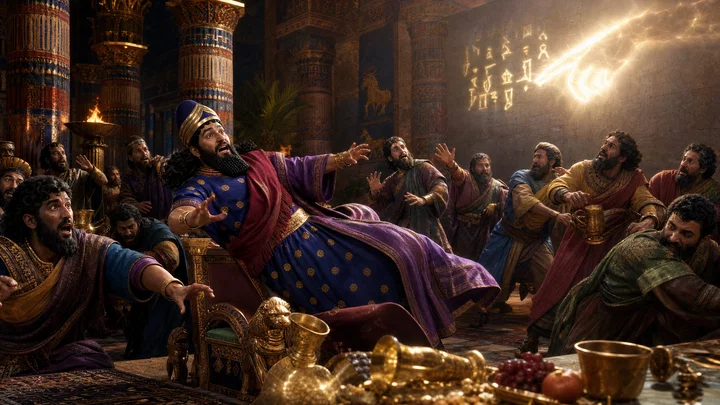
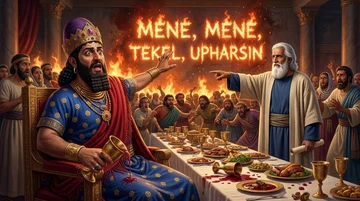
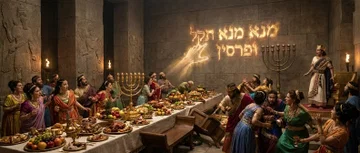
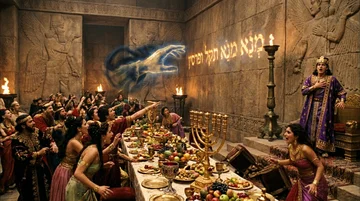
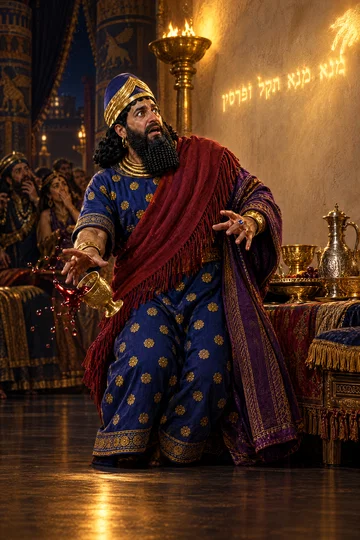
Then they brought the golden vessels that were taken out of the temple of the house of God which was at Jerusalem; and the king, and his princes, his wives, and his concubines, drank in them.
Translations
American King James Version, King James Version, KJV Cambridge Paragraph Bible, Webster Bible
Then they brought the golden vessels that were taken out of the temple of the house of God which was at Jerusalem; and the king, and his princes, his wives, and his concubines, drank in them.
Then they brought the golden vessels that were taken out of the temple of the house of God which was at Jerusalem; and the king and his lords, his wives and his concubines, drank in them.
Then they brought the golden vessels that were taken out of the temple of the house of God which was at Jerusalem; and the king and his lords, his wives and his concubines, drank from them.
Then they have brought in the vessels of gold that had been taken out of the temple of the house of God that [is] in Jerusalem, and drunk with them have the king and his great men, his wives and his concubines;
Then they brought the golden vessels that were taken out of the temple of the house of God which was at Jerusalem; and the king and his nobles, his wives and his concubines, drank in them.
Then brought they the vessels of gold which had been taken out of the temple of the house of God, which was in Jerusalem,—and the king and his nobles, his wives and, his concubines, drank therein:
Berean Standard Bible, Majority Standard Bible
Thus they brought in the gold vessels that had been taken from the temple, the house of God in Jerusalem, and the king drank from them, along with his nobles, his wives, and his concubines.
Then they brought the golden vessels that were taken out of the temple of God’s house which was at Jerusalem; and the king and his lords, his wives and his concubines, drank from them.
Then they took in the gold and silver vessels which had been in the Temple of the house of God at Jerusalem; and the king and his lords, his wives and his other women, took wine from them.
Then were brought the golden vessels, that were taken out of the Temple of the Lords house at Ierusalem, and the King and his princes, his wiues and his concubines dranke in them.
Douay-Rheims (Challoner revision)
Then were the golden and silver vessels brought, which he had brought away out of the temple that was in Jerusalem: and the king and his nobles, his wives and his concubines, drank in them.
Pictures
Cross-references 20 of 25
- Daniel 5:30-31
In that night was Belshazzar the king of the Chaldeans slain.
Belshazzar is slain that night, and the kingdom passes to the Medes and Persians.
- Daniel 5:27
TEKEL; Thou art weighed in the balances, and art found wanting.
Belshazzar is weighed and found wanting in the judgment pronounced during the feast.
- Jeremiah 51:57
And I will make drunk her princes, and her wise men, her captains, and her rulers, and her mighty men: and they shall sleep a perpetual sleep, and not wake, saith the King, whose name is the LORD of hosts.
Babylon’s rulers become drunk before their destruction and death.
- Daniel 5:23
But hast lifted up thyself against the Lord of heaven; and they have brought the vessels of his house before thee, and thou, and thy lords, thy wives, and thy concubines, have drunk wine in them; and thou hast praised the gods of silver, and gold, of brass, iron, wood, and stone, which see not, nor hear, nor know: and the God in whose hand thy breath is, and whose are all thy ways, hast thou not glorified:
Drinking from the temple vessels was defiance against the Lord and failure to glorify him.
- Daniel 4:34
And at the end of the days I Nebuchadnezzar lifted up mine eyes unto heaven, and mine understanding returned unto me, and I blessed the most High, and I praised and honoured him that liveth for ever, whose dominion is an everlasting dominion, and his kingdom is from generation to generation:
Nebuchadnezzar glorified God after his humiliation, a warning Belshazzar ignored.
- Jeremiah 51:39
In their heat I will make their feasts, and I will make them drunken, that they may rejoice, and sleep a perpetual sleep, and not wake, saith the LORD.
The prophecy of a drunken feast ending in perpetual sleep is fulfilled at Belshazzar’s feast.
- Isaiah 14:22-23
For I will rise up against them, saith the LORD of hosts, and cut off from Babylon the name, and remnant, and son, and nephew, saith the LORD.
Babylon’s downfall begins with the king’s overthrow and the city’s destruction.
- Daniel 1:2
And the Lord gave Jehoiakim king of Judah into his hand, with part of the vessels of the house of God: which he carried into the land of Shinar to the house of his god; and he brought the vessels into the treasure house of his god.
The vessels used at Belshazzar’s feast had been taken from Jerusalem’s temple.
- Isaiah 47:11
Therefore shall evil come upon thee; thou shalt not know from whence it riseth: and mischief shall fall upon thee; thou shalt not be able to put it off: and desolation shall come upon thee suddenly, which thou shalt not know.
Babylon’s sudden desolation fulfills the prophecy of its destruction.
- Isaiah 45:1-2
Thus saith the LORD to his anointed, to Cyrus, whose right hand I have holden, to subdue nations before him; and I will loose the loins of kings, to open before him the two leaved gates; and the gates shall not be shut;
God foretells Cyrus’s conquest of Babylon through its opened gates.
- Revelation 14:8
And there followed another angel, saying, Babylon is fallen, is fallen, that great city, because she made all nations drink of the wine of the wrath of her fornication.
Babylon’s wine leads to her fall.
- Daniel 5:25
And this is the writing that was written, MENE, MENE, TEKEL, UPHARSIN.
The handwriting appears during the feast and condemns the revelers’ desecration.
- Jeremiah 50:24
I have laid a snare for thee, and thou art also taken, O Babylon, and thou wast not aware: thou art found, and also caught, because thou hast striven against the LORD.
Babylon is caught and judged, fulfilling the prophecy of its destruction.
- Daniel 8:1
In the third year of the reign of king Belshazzar a vision appeared unto me, even unto me Daniel, after that which appeared unto me at the first.
Both texts place events in Belshazzar’s third year.
- 2 Chronicles 36:18
And all the vessels of the house of God, great and small, and the treasures of the house of the LORD, and the treasures of the king, and of his princes; all these he brought to Babylon.
The temple vessels were carried to Babylon during Jerusalem’s destruction.
- Jeremiah 27:16-22
Also I spake to the priests and to all this people, saying, Thus saith the LORD; Hearken not to the words of your prophets that prophesy unto you, saying, Behold, the vessels of the LORD’s house shall now shortly be brought again from Babylon: for they prophesy a lie unto you.
Jeremiah foretells the temple vessels’ removal to Babylon.
- Isaiah 13:19-22
And Babylon, the glory of kingdoms, the beauty of the Chaldees’ excellency, shall be as when God overthrew Sodom and Gomorrah.
doom fulfilled beginning that night
- Daniel 5:16
And I have heard of thee, that thou canst make interpretations, and dissolve doubts: now if thou canst read the writing, and make known to me the interpretation thereof, thou shalt be clothed with scarlet, and have a chain of gold about thy neck, and shalt be the third ruler in the kingdom.
The account of Belshazzar is historically confirmed.
- Psalms 137:1-4
By the rivers of Babylon, there we sat down, yea, we wept, when we remembered Zion.
Captives in Babylon mourn Zion and are asked to sing its songs.
- Daniel 5:29
Then commanded Belshazzar, and they clothed Daniel with scarlet, and put a chain of gold about his neck, and made a proclamation concerning him, that he should be the third ruler in the kingdom.
The account of Belshazzar is historically confirmed.
Commentary
Each commentary is drawn from primary sources: the writings of Ellen G. White and Adventist pioneers and periodicals. Each commentary is separate. Its own words are not a quotation; follow the references to read the source passages.
Ellen G. White
37 sources
The vessels of gold taken from the temple of God at Jerusalem were brought into Belshazzar's feast, and the king with his princes, his wives, and his concubines drank wine from them in the last revelry of declining Babylon while the city stood under siege.Lt 8, 1893, par. 14–15PK 522.1PK 523.3CH 110.1PK 523.1 To drink from vessels consecrated to sacred service was contempt and irreverence toward what God had set apart, done in proud defiance and idolatrous revelry while praising gods of gold and silver.Lt 8, 1893, par. 14–15PK 522.25T 244.4–5PK 523.3CTBH 20.1–21.2 God was present as an unseen Witness hearing every dishonoring word, and in the midst of the drunken scene a bloodless hand wrote judgment on the palace wall announcing the doom of the king and his kingdom.5T 244.4–5CTBH 20.1–21.2SLP 10.1–13.120MR 286.4 That night filled up the measure of evil and passed the limit of forbearance, so Belshazzar was weighed and found wanting, to be slain that night and his kingdom given to others.MYP 228.3–229.1Lt 23a, 1890, par. 9–106MR 391.1–3 As Babylon fell in an hour of feasting and revelry, so it will be at the end of the world, when the same Witness beholds modern mirth, pleasure-seeking, and turning of consecrated devotion toward earthly things, and records it for judgment.SLP 10.1–13.1RH Apr 6, 1916RH Apr 20, 1916Ms 168, 1898, par. 1–3
Feast's Setting and Action
The golden vessels taken out of the temple of the house of God at Jerusalem were brought to Belshazzar's feast, and the king, his princes, his wives, and his concubines drank in them.Lt 8, 1893, par. 14–15PK 523.3CH 110.1Lt 113, 1893, par. 23–28Ms 53, 1894, par. 14–16 Those vessels had been consecrated to sacred service in God's temple, and to turn them to drinking use at an intoxicated, idolatrous revel profaned what belonged to God and set apart as sacred.Lt 8, 1893, par. 14–15PK 523.3Lt 113, 1893, par. 23–2810MR 307.1 Their misuse was irreverence toward holy things, contempt for what was sacred, and part of the king's idolatry.Lt 8, 1893, par. 14–15PK 523.310MR 307.1 The drinking belonged to indulgent merriment, drunkenness and gluttony in which God was dishonored and forgotten, and that gluttony and drunkenness were the foundation of Babylon's sins and causes of its fall.CH 110.1Lt 113, 1893, par. 23–28Ms 53, 1894, par. 14–16
The feast belongs to the final period of Babylon's rule after Nebuchadnezzar's death, when his successors governed unwisely and the kingdom was declining.PK 522.1 Belshazzar feasted and reveled while the city was under siege, feeling secure inside its fortifications and abundant stores.PK 523.1
The fall of Babylon came in an hour of feasting and revelry, when doom closed the night's dishonoring of sacred things under God's witnessing presence.Ms 47a, 1898, par. 2–5Lt 113, 1893, par. 23–28Lt 109a, 1898, par. 5–8 The account belongs to Babylon being swept with destruction and left a ruined, desolate city.PK 522
Profaning the Sacred Vessels
Belshazzar and his court had the golden vessels consecrated to the temple at Jerusalem brought in and drank from them at the feast, turning objects set apart for sacred service to common drinking use.Lt 8, 1893, par. 14–15PK 523.3Lt 113, 1893, par. 23–28 That misuse profaned what belonged to God and what He had chosen as sacred to Himself, treating holy things with contempt, irreverence, and sacrilegious mirth.5T 244.4–5PK 523.3ST Jan 14, 1913 The king with his thousand lords, his princes, his wives and his concubines joined in making light of the sacred, and their profaning of even soulless vessels of Jehovah brought certain punishment.5T 244.4–5PK 523.3ST Jan 14, 1913
The drinking was not mere revelry but proud defiance of the God of heaven and blasphemous presumption against Him.PK 522.2Lt 40a, 1878, par. 6–12 While drinking wine from the vessels consecrated to Jehovah, the king and his nobles, wives and concubines praised the gods of gold and silver and the idols of Babylon, profaning the true God in an intoxicated, idolatrous revel.CTBH 20.1–21.2Lt 40a, 1878, par. 6–12PK 524.1 That contempt for what is sacred, joined with praise to false gods, completed the sacrilege that called forth the announcement of judgment and the fall of the kingdom.5T 244.4–5CTBH 20.1–21.2PK 524.1
The profanation took place amid gluttony and drunkenness, revelry and excess, sensual indulgence and disregard for God.CH 110.13T 162.2SPBC 156.319MR 111.1–3 The wickedness of Babylon was her gluttony and drunkenness, displayed when king, princes, wives and concubines drank wine from the vessels taken from the temple of God at Jerusalem.CH 110.1HRP 3.2CTBH 43.1–44.2 That indulgence of appetite and passion formed the foundation and basis of her sins, the cause identified with her fall, and the same spirit of drunken pleasure and sensual indulgence that marked Israel's idolatrous feast brought shame and impending judgment.CH 110.1CTBH 43.1–44.219MR 111.1–3
Under the influence of wine with beclouded reason Belshazzar forgot God and dishonored His name, taking the lead in riot and blasphemy.Lt 40a, 1878, par. 6–12Ms 53, 1894, par. 14–16Ms 53, 1894, par. 42–43 He ignored the lessons and heaven-sent light and the opportunities for knowing God's will given through Nebuchadnezzar, choosing defiance instead.PK 522.2Lt 40a, 1878, par. 6–12 In praising gods of silver and gold and even praising the vessels themselves, the revelers took honor to themselves, and such human self-glorification dishonors God and offends Him.Lt 40a, 1878, par. 6–12Ms 17, 1890, par. 17–18 The same feasting and drinking with worldly companions that makes men forget God and dishonor His name is reproduced by the fascination of the clubroom, the suppers, and world-loving associates.Ms 53, 1894, par. 14–16RH Apr 20, 1916
Heaven's Witness and Judgment
Belshazzar did not feast unwatched, for God Himself was present in the palace as an unseen Witness, observing every movement of the king, his thousand lords, his wives and his concubines as they drank from the golden vessels taken from the temple at Jerusalem.5T 244.4–5CTBH 20.1–21.2SLP 10.1–13.1Lt 40a, 1878, par. 6–12 He heard the idolatrous praises bestowed upon the gods of gold and silver and upon the vessels themselves, and He marked every dishonoring word spoken against Himself while His sacred things were desecrated.SLP 10.1–13.1Lt 40a, 1878, par. 6–1220MR 286.4 What was seen and heard was not left to pass away, for He made a faithful history and record of the sacrilege to testify against the revelers to the close of time, taking account of their actions as He takes account of all injustice and oppression against His people.5T 244.4–5CTBH 20.1–21.2Lt 40a, 1878, par. 6–1220MR 286.4
In the very midst of that unholy scene the revelry was broken by the appearance of a bloodless, divine hand tracing mysterious characters upon the palace wall.5T 244.4–5PK 524.1ST Jan 14, 1913 That writing was a warning and pronouncement of doom upon the terrified king and his court, announcing judgment for profaning what God had set apart as sacred.5T 244.4–5CTBH 20.1–21.220MR 286.4ST Jan 14, 1913 It declared the fall of the kingdom, that Babylon's rule would pass into other hands.5T 244.4–5CTBH 20.1–21.2Lt 113, 1893, par. 23–28
That night's performance brought the figures of Belshazzar's evil works to their full measure and crossed the limits of divine forbearance.Lt 23a, 1890, par. 9–106MR 391.1–3 Protection and shielding were therefore withdrawn and the restraining power no longer warded off evil, so that he was to fall, his body to be slain and his kingdom to pass to another.Lt 23a, 1890, par. 9–104MR 242.3 He was weighed in the balances of heaven and found wanting, for God weighs character in the sanctuary and records the deeds of those who rush into sin and indifference.MYP 228.3–229.14MR 242.3 The same hand that recorded his blasphemy records carelessness and neglect of God-given duty, and his calamity came because he disregarded heaven-sent light, ignoring the lessons given to Nebuchadnezzar and losing their benefit.MYP 228.3–229.1Lt 23a, 1890, par. 9–10Lt 201, 1899, par. 3–4
Warning for Later Generations
The fall of Babylon came in an hour of feasting and reveling, and so it will be at the end of the world.Ms 168, 1898, par. 1–3 The same sin is repeated whenever men and women under vows of consecration, with powers devoted to God's sacred service, drag the sacred vessel from its lofty sphere to administer to debasing lust.SLP 10.1–13.1 This turns pure devotion, affection, praise and adoration belonging alone to God toward a sinful human being or earthly thing, which supersedes God, dishonors Him, and ruins the actors.SLP 10.1–13.1 Those living in the last days, upon whom the ends of the world are come, who do this are far more guilty than Belshazzar, who took the gold and silver vessels consecrated to God in the temple at Jerusalem and used them for drinking and praise in a sacrilegious, licentious feast of desecration and idol worship while God in heaven was present as an uninvited witness hearing the praises bestowed on the vessels.SLP 10.1–13.1
The same Witness is present in all scenes of mirth and revelry in the fallen churches today, where there are true worshippers and false worshippers who set their hearts on worldly pleasure and worldly gain and indulge a false hope, just as God was present as a witness in that night of sacrilegious mirth and revelry and in a moment changed the features of the scene.Ms 52, 1900, par. 5–9 Belshazzar's feast was a pleasure gathering of merriment and feasting and indulgence in the wine cup, with men absorbed in the pleasures of the table, hilarity and witticism, written in His book as intemperance, which does not blend with eternal realities and cannot be joined with the sacred worship of God, while Christ, the center of the world's hope, was grieved to see men put Him out of their thoughts for such indulgence.RH Apr 6, 1916 Feasting and drinking with worldly companions led to forgetfulness of God and dishonoring of His name, the same result produced by the fascination of the clubroom, the suppers, and the world-loving associates.RH Apr 20, 1916 The scene shares the spirit of Israel's idolatrous feast, where revelry and excess dishonored God through drunken pleasure, sensual indulgence, and disregard for God bringing shame and impending judgment, though God still gave the guilty an opportunity to turn from sin.19MR 111.1–3
Treating what God has set apart as sacred with contempt brings His judgment, for Belshazzar and his thousand lords profaned the sacred golden vessels taken from God's temple in Jerusalem by drinking from them and praising Babylon's idols, and God witnessed this sacrilege and announced judgment on the king and his court by writing on the palace wall, keeping a faithful record of injustice and oppression against His people.5T 244.4–5ST Jan 14, 1913 Profaning even soulless vessels brings certain punishment from a witnessing God who keeps faithful record, and how much more does He witness and record slander, injustice and oppression against the characters of those whom Christ purchased by His blood.ST Jan 14, 1913 The hand that recorded the king's blasphemy also records carelessness and neglect of duty, so that failing to fulfill God-given obligations brings condemnation.MYP 228.3–229.1 The idolatrous revelry when the sacred vessels were used in a drunken feast stands as an example of dishonoring the Redeemer, witnessed by angels.RH Nov 24, 1904 The same ever-present God is present where sinners think no eye sees, watching pollution of soul and body, with pure angels veiling their faces and turning away as spectators, and every secret case must pass in solemn review before the Judge of all the earth.21MR 386.4–387.2
Sources
Pioneers and periodicals
94 sources
Then they brought the golden vessels taken from the temple of the house of God at Jerusalem, and Belshazzar with his thousand lords, his princes, his wives and his concubines drank wine from them at his great feast.RH Nov 26, 1857ST Jan 15, 1880ST Sep 10, 1885 The vessels had been carried away by Nebuchadnezzar and kept in Babylon, and to bring them out when heated with wine and drink from them in idol-worship profaned what was consecrated to the true God and treated the sacred as common.RH Nov 26, 1857ST Sep 22, 1890RH May 11, 1869ST Feb 4, 1886ST Sep 10, 1885 While drinking from them they praised gods of gold and silver, brass, iron, wood and stone, turning a triumph over the captive Hebrews into open defiance and contempt of the living God whose power Nebuchadnezzar had already acknowledged.RH Nov 26, 1857ST Sep 22, 1890RH May 11, 1869RH May 29, 1900ST Oct 18, 1905 That same night God numbered and finished the kingdom, weighed the king in the balances and found him wanting, and gave it to the Medes and Persians, and Babylon was taken while drunken and secure and Belshazzar was slain.RH Nov 26, 1857ST Sep 22, 1890ST Jan 15, 1880ST Jan 23, 1912ST Oct 23, 1901 The bringing of the vessels filled Babylon's cup of iniquity and sealed its unfitness to rule, and it stands as warning that the same weighing meets every indulgent revelry and every modern Babylon that exalts itself while judgment is at hand.RH Nov 26, 1857ST Jan 15, 1880RH Apr 10, 1916ST Oct 23, 1901
Feast Setting and Participants
The verse describes Belshazzar's great feast to a thousand of his lords, where the king drank wine before the thousand and he with his princes, his wives and his concubines drank wine from the golden vessels taken from the temple.RH Nov 26, 1857ST Jan 15, 1880ST Sep 10, 1885ST Sep 17, 1885ST Jan 23, 1912 The vessels of gold and silver had been taken from the temple of the great God at Jerusalem, and they were brought to the feast for this drinking while those present praised their gods of gold and silver and of brass, iron, wood and stone.RH Nov 26, 1857ST Jan 15, 1880ST Jan 23, 1912RH May 5, 1874 This impious drinking from vessels dedicated to God was the crowning revelry of the night Babylon fell.RH Nov 26, 1857ST Jan 15, 1880
The feast was an annual festival in which the whole city was given up to mirth, revelry, drunkenness, reckless carelessness and presumption.STST Feb 22, 1877ST Feb 22, 1877RH Feb 9, 1869 It was held with unusual abandon as the annual feast of the god Tammuz, to show utter contempt for the besieging army outside and perfect confidence in Babylon's walls, gates and resources.STRH May 29, 1900RH Feb 9, 1869 Those who place it on the fourteenth day of Tammuz hold it was a festival marked by orgies celebrating the union of Tammuz and Ishtar, which explains why the women joined in the drinking.ST Nov 27, 1884
The banquet may have been held in the grand audience hall of Nebuchadnezzar's palace at Babylon, whose plaster-covered walls displayed the message of doom.RH Oct 29, 1908ST Sep 19, 1911 The writing on the wall there announced Babylon's doom in the setting of Babylon's final days.RH Oct 29, 1908ST Sep 19, 1911 It belongs among the scenes illuminated by ancient lamps and torches made to burn animal fat, tree resin, and wild-bee wax.
The wine drunk from the holy vessels was fermented, like the wine offered to Daniel in Babylon, and its use there desecrated what was holy.ST Jun 9, 1914 It was served in abundance from deep cellars heaped with a horde of costliest rich rare old wines greater than Thebes or Babel ever stored, with wine running as a rivulet.ST Apr 19, 1910ST Apr 19, 1910 The proud men sat at wine till ghostly dawn in drunken revelry and wild, drunken, crazed delight at the rich man's board, drinking the rich man's rosy cup from flowing cellars mile on mile.ST Apr 19, 1910ST Apr 19, 1910ST Apr 19, 1910
The king and the whole city gave themselves to feasting, drunkenness and revelry in the most apparent security at the very time destruction came suddenly upon them ere they were aware.RH Nov 26, 1857ST Jan 15, 1880 Shut up in the city, they trusted Babylon's strength and provisions despite the Medes being at its gates, chose pleasure and revelry, and ignored God's teaching and power instead of driving away the besieging enemy outside.ST Jan 15, 1880RH May 29, 1900ST Oct 18, 1905 Their drunken revelry left the high brass river gates open and unguarded, so no one noticed the river going down or the soldiers making their way to the palace and the city was taken.STST Feb 22, 1877RH Feb 9, 1869
Vessels Taken and Profaned
The golden and silver vessels had been taken by Nebuchadnezzar from the temple of the house of the great God at Jerusalem.RH Nov 26, 1857ST Sep 22, 1890RH May 11, 1869ST Jan 15, 1880ST Jan 23, 1912 Nebuchadnezzar is called father after the Scripture manner of calling any ancestor father, and is identified as grandfather and as father.RH Nov 26, 1857ST Sep 22, 1890ST Jan 15, 1880RH May 29, 1900 He stored the vessels where he kept them, and his keeping them marked his own temple as a rival sanctuary.RH Nov 26, 1857ST Jan 15, 1880STST Aug 13, 1896 The vessels taken were sacred vessels from God's temple, golden vessels taken from the holy temple.ST Feb 4, 1886ST Sep 10, 1885ST Jan 23, 1912ST May 20, 1897ST
When heated with wine Belshazzar commanded that the vessels be brought.ST Sep 22, 1890RH May 11, 1869RH May 29, 1900ST Apr 23, 1912 He commanded his servants to bring them from where Nebuchadnezzar had stored them.STRH May 29, 1900ST Aug 13, 1896 Then they were brought to the feast to the king and his guests, brought to the great feast to a thousand lords where Belshazzar drank wine before the thousand.ST Sep 22, 1890RH May 11, 1869RH May 29, 1900ST Apr 23, 1912 They were brought for the king and his princes, his wives and his concubines to drink wine in them, so he and they drank from vessels dedicated to the only true God.ST Sep 22, 1890RH May 11, 1869STRH May 29, 1900ST Apr 23, 1912
Their use for drinking and for idol worship profaned what belonged to God.ST Feb 4, 1886ST Sep 10, 1885ST Oct 18, 1905ST Sep 17, 1885ST Jan 23, 1912 It treated the sacred and holy as common, debasing the holy things of the Lord.ST Sep 10, 1885STST Sep 17, 1885ST Jan 23, 1912 It showed contempt and irreverence for Him and loss of all sense of sacred things.RH May 11, 1869ST Sep 10, 1885ST Sep 17, 1885RH May 29, 1900 The vessels had been dedicated to the worship of the true God and consecrated to Him, and drinking from them while praising gods of gold and silver, brass, iron, wood and stone profaned vessels dedicated to God during a drunken feast that also honored idols.ST Sep 22, 1890RH May 11, 1869ST Sep 10, 1885ST Oct 18, 1905ST Sep 17, 1885 The feast at Babylon where the king and his court so used the golden vessels taken from God's temple in Jerusalem was the idolatrous and blasphemous feast that preceded Babylon's sudden fall on the night it fell.ST Sep 22, 1890ST Feb 4, 1886ST May 20, 1897
This sacrilege, which no earlier Babylonian king had dared commit, revealed Babylon's corruption and unfitness to rule and filled up the measure of its iniquity. Some of these vessels had likely been used before in the temple.ST Aug 9, 1899 Their presence at the feast stands in contrast to their return when God's people yielded to Him, after which He brought even their enemies to be at peace with them.ST Aug 9, 1899
Defiance, Idolatry and Pride
While they drank wine from the vessels they praised gods of gold and silver, brass, iron, wood and stone, celebrating the superior power of their heathen deities over the God of the Jews.RH Nov 26, 1857ST Sep 22, 1890RH May 11, 1869ST Jan 15, 1880ST Feb 13, 1907 It was drunken idolatrous revelry in which the holy things of the Lord were debased to honor the heathen sun-god Baal and his images.ST Sep 22, 1890ST Feb 13, 1907ST The king, his princes, his wives and his concubines drank to Babylon's gods of gold and wood and stone from the rarest chalices plundered from the holy temple at Jerusalem.RH Nov 26, 1857ST Feb 13, 1907ST Jan 23, 1912 That idolatrous blasphemy tested whether Babylon's perverted principles of self-exaltation would stand or God's truth would abide.ST Feb 13, 1907
The act referred to Babylon's former victory over the Jews and used vessels dedicated to the true God to celebrate the conquest by which they were obtained.RH May 11, 1869 It was triumph over the captive Hebrews held in bondage and insult to their God, done as if in triumph over Him to His face.ST Apr 23, 1912RH May 29, 1900RH Aug 21, 1900 Drinking the wine of Babylon in the vessels from the temple was studied public worship of idols graven by art and man's device, giving to false gods the praise due to the living God.ST Apr 23, 1912RH May 29, 1900 It was a presumptuous affront by excessive drinking, a public defiling and insulting of God.ST Jun 28, 1899ST Jun 28, 1899
This was done after God had revealed through Nebuchadnezzar's dream of the image, the deliverance of the three Hebrews from the furnace, and the dream of the tree that the Most High rules in the kingdom of men and gives it to whom He wills and that He is the King of heaven whose works are truth and whose ways are judgment.RH May 29, 1900 Those truths had been proclaimed to all the world by royal proclamation so that all might put confidence in God and not forget His doings, making the lesson as personal as if each one had passed through the experiences himself, but the message was disregarded and the living God was not glorified.RH May 29, 1900 Belshazzar therefore publicly and formally repudiated the gospel of the kingdom which Nebuchadnezzar had received and proclaimed; under the same messages one glorified Him that lives forever and the other praised the work of men's hands.RH Apr 10, 1916RH May 29, 1900RH Aug 21, 1900 He repudiated the religion taught by Daniel and others who feared God, refused to follow Nebuchadnezzar's example of being healed, rejected the healing message given again and again to Babylon, and disregarded the prophetic announcements recorded in Daniel 7 to 9, though he knew how God had humbled Nebuchadnezzar and that the Most High rules.ST Oct 18, 1905STRH Apr 10, 1916ST Nov 26, 1912ST Jun 28, 1899 Daniel later charged him with profaning the vessels and failing to honor the God who held his life and ways in His hand and in whose hand his breath was.ST Jun 28, 1899
The misuse of sacred things for a riotous feast is presumption, and their use during the revelry was an act of pride against the Lord.ST Mar 18, 1903ST Jun 28, 1899 It was drunkenness with wine and vanity and boasting in nightly revel of puny power and cheap glory, acting as if he himself ruled and Babylon would stand forever.STST Aug 13, 1896 Even while the Medes and Persians were outside the city he trusted in its mighty walls, with twenty years' provisions, instead of driving away the besieging enemy.ST Jun 28, 1899ST Aug 13, 1896 This sacrilege filled Babylon's cup of iniquity and showed the kingdom corrupt and unfit to continue ruling.ST Oct 23, 1901
The drunken, idolatrous revelry was high blasphemy against the God of heaven and earth, the crowning act of folly and sin on the night Babylon fell in 538 B.C.ST Sep 22, 1890ST May 20, 1897 It was open rebellion on the last night of his reign by a weak, dissolute, riotous, idolatrous blasphemer of God and worshiper of Babylon and her deities, whose heart was weak because not sustained by God.ST Feb 13, 1907ST The desecration formed part of the proud feast at which he praised idols in contempt for God amid lascivious and wanton worship of Babylon's deities, and that same night he was slain after the hand appeared and wrote his destiny.ST Sep 17, 1885RH Mar 25, 1873ST Dec 19, 1916 Using the sacred temple vessel in this revel marked the act as impious and showed Babylon utterly broken in opposition to God.ST Feb 13, 1907ST Dec 19, 1916
Judgment Written That Night
That same night Babylon fell, ending Babylonish supremacy in B.C. 538, when the Medes and Persians entered and Belshazzar was slain and Darius the Median at sixty-two years old took the kingdom.RH Nov 26, 1857ST Sep 22, 1890ST Jan 15, 1880ST Cyrus turned the Euphrates aside into a lake and trench and entered the city through its fordable channel, while the feast was an annual festival given up to mirth, revelry, drunkenness, reckless carelessness and presumption and the high brass river gates that guarded the streets were left open and unguarded.RH Nov 26, 1857ST Jan 15, 1880ST No one noticed the river going down or the soldiers making their way to the palace, and that drunken debauch cost the Babylonians their kingdom and freedom.ST Babylon was taken on every quarter, Belshazzar was slain in his palace during the feast, his drunken sleep becoming a perpetual sleep when the city was captured.STST Feb 13, 1907ST May 20, 1913 The impious use of the sacred vessels was the crowning revelry of that night, calling forth the handwriting and the sentence that was executed that very night when the king was slain.RH Nov 26, 1857ST Sep 22, 1890ST Jan 15, 1880
Even while he drank from the vessels a shining hand wrote MENE, TEKEL, PERES, meaning Numbered, numbered, Weighed, Divisions.RH Nov 26, 1857ST Jan 15, 1880ST Feb 13, 1907 God had numbered and finished his kingdom, weighed him in the balances and found him wanting, and divided it and given it to the Medes and Persians.RH Nov 26, 1857ST Sep 22, 1890ST Jan 15, 1880ST Feb 13, 1907 Guilt smote his conscience when the hand appeared on the wall, sobering him with a sense of divine retribution, his knees struck together, and Persian soldiers sped to the palace.ST Sep 22, 1890ST Jan 15, 1880RH Jun 16, 1868 The predicted overthrow of Babylon followed swiftly after the meaning explained in the chapter.RH Sep 2, 1909
Daniel rebuked Belshazzar for disregarding God's warnings, profaning the vessels, and failing to honor the God who held his life and ways in His hand and in whose hand his breath was.ST Sep 22, 1890ST Jun 28, 1899 His greatness had already become known during Nebuchadnezzar's long reign before he later appeared before Babylon's last king at the godless feast.ST Jan 30, 1912 Babylon's astrologers, Chaldeans and soothsayers publicly acknowledged that they could not read the writing nor make known its interpretation to the king, which opened the way for Daniel to be called.ST Sep 22, 1890ST Oct 5, 1904 The queen who then spoke was Belshazzar's mother, Belshazzar being king in conjunction with his father, who was then absent from Babylon in command of the army.ST Oct 5, 1904 Belshazzar had promised Daniel the place of third ruler in the kingdom if he could read it, and after Daniel read the inscription and told its interpretation Belshazzar commanded that he be clothed with purple with a chain of gold put on his neck and proclaimed third ruler, since the first and second places were both already filled.ST May 20, 1913RH Dec 24, 1872
The judgment fell on king and nation together, for by polluting the holy vessels before his lords the king crossed a decisive line; that night he died, and Babylon fell.ST Apr 23, 1912ST May 2, 1916 The Babylonian empire, though rich, powerful and secure, was suddenly destroyed as signal proof of Jehovah's displeasure against a persecuting government, God punishing the king of Babylon for persisting in sin even after seeing how God had punished the Jews.ST Jun 21, 1883ST Apr 23, 1912 By that transfer God opened the way for His chosen people to be restored to liberty and religious privileges.ST Apr 23, 1912 God worked for His people in overthrowing Babylon, and these events helped Cyrus recognize the true God and prompted his proclamation.ST Dec 19, 1892
The account belongs to Babylon's last night of rule, before another power succeeded it.ST Oct 29, 1885 It was the night Cyrus took Babylon, when the two-leaved gates were opened before Cyrus and Babylon's mighty men forbore to fight, remained in their holds, lost their might, and became as women.RH Nov 11, 1862 At his impious feast his heart was weak because it was not sustained by God, illustrating the loss of the fearless, conquering spirit associated with Babylon.
History Dates and Confirmation
The account of Belshazzar ruling in Babylon is confirmed by Babylonian inscriptions that identify him as the king's son and commander of the city.ST Jul 23, 1885 His historical existence, once challenged, is confirmed by a prayer of Nabonidus mentioning his son Bel-shar-usur as joint-ruler of Babylon.RH Aug 17, 1905ST Oct 23, 1901 A cuneiform cylinder from about 556-539 bearing Nabonidus's prayer to the moon-god for himself and for Belshazzar his son concurs with the Word of God, giving a twofold witness that could not be collusive and conclusively establishes the reliability of the record in Daniel against the charge that it is false and not in harmony with history.ST May 20, 1913 An inscription recording his death gives further support to its historical reliability, and the capture of Babylon with Belshazzar killed during the feast in which the Jerusalem temple vessels were used for drinking by king, princes, wives, and concubines corroborates the biblical account.RH May 13, 1909ST Nov 27, 1884
Belshazzar was the eldest son, offspring and heir of Nabonidus, also called Nabonadius or Nabonedus, the last king of Babylon, called in his father's inscriptions eldest son, offspring of my heart.ST May 20, 1913RH Dec 24, 1872 Nabonidus, a devout temple builder who gave the last part of his life to worship of the gods and building of temples, associated Belshazzar with himself upon the throne from about B.C. 540, with Nabonidus as first ruler and Belshazzar as second ruler occupying the throne conjointly.ST Dec 24, 1894ST May 20, 1913 Belshazzar therefore acted as king at Babylon at the time of the fall of the city, being king in conjunction with his father, who was then absent from Babylon in command of the army, and the queen who spoke when the writing appeared was Belshazzar's mother.ST Oct 5, 1904RH Dec 24, 1872 The promise of the third place in the kingdom to whoever would interpret the handwriting shows that the first and second places were both already filled, leaving the third place as the highest reward Belshazzar could assign.RH Dec 24, 1872
His reign began in 549 B.C., and his third year was B.C. 538, his last year, when he was slain and Babylon was conquered by Medo-Persia under Darius and Cyrus, ending Babylonian supremacy.ST Dec 24, 1894ST Jul 10, 1901 The feast at the close of Babylon's greatness came only a quarter of a century after the death of Nebuchadnezzar, forty years after him, held while Cyrus was besieging Babylon in the sixteenth year of Belshazzar and at the end of Jerusalem's seventy years.RH May 29, 1900ST Feb 13, 1907RH Feb 9, 1869 It fulfills what God said through Jeremiah that all nations would serve Nebuchadnezzar and his son and his son's son until the time of his land came and that God would then punish Babylon's king.RH May 29, 1900
The verse is true history from the reign of Belshazzar in the last years of the Babylonian kingdom culminating in the handwriting on the wall, when a hand came forth and wrote the doom of Babylon, Daniel read and interpreted it, Belshazzar commanded Daniel clothed with purple with a gold chain and proclaimed third ruler, and that night Belshazzar was slain.ST May 20, 1913RH Jul 1, 1902ST May 20, 1913RH Jul 2, 1901 It stands as testimony of history to the Word in Daniel, one of the disputed books of the Bible.ST May 20, 1913 It names the same king as in Daniel 7:1, fixing those visions to his reign.ST Apr 5, 1877
Prophecy of Babylon Fall
Daniel 5 presents God as Judge, who uses a nation while it can serve His glory and then sets it aside and raises up another, and it records the termination of Babylon's kingdom by a divine verdict weighing the kingdom in the balances of justice and finding it wanting.ST Jan 23, 1912ST Oct 23, 1901ST Dec 1, 1914 Bringing in the vessels taken from the temple of the house of God at Jerusalem, vessels dedicated to the worship of the God of heaven, and drinking the wine of Babylon from them while worship was offered to false gods marked the climax of Babylon's apostasy and made it hopeless.RH Apr 10, 1916 The gospel had been preached in Babylon and Nebuchadnezzar had been brought to acknowledge and worship the true God, but after his death Babylon relapsed into idolatry, and Belshazzar repudiated the religion taught by Daniel and others who feared God.RH Apr 10, 1916RH May 29, 1900RH Aug 21, 1900 That profanation of what was holy for a drunken feast in honor of Babylon's gods, a sacrilege which no earlier Babylonian king had dared commit, sealed Babylon's guilt, filled up the measure of its iniquity and its cup of iniquity, revealed its corruption, demonstrated that the kingdom was unfit to rule and unfit to continue ruling, and was an act of defiance against God marking its guilt as complete.RH Apr 10, 1916ST Oct 23, 1901 Then came the handwriting on the wall and the fall that same night when Belshazzar was slain and the kingdom fell to the Medes and Persians.RH Apr 10, 1916ST Oct 23, 1901
The weak, dissolute, riotous, idolatrous blasphemer of God and worshiper of Babylon and her deities held high festival over Babylon's greatness forty years after Nebuchadnezzar, demanding the choicest libations in the rarest chalices and calling for the sacred vessels of gold and silver plundered from the holy temple to drink from them to Babylon's gods of gold and wood and stone.ST Feb 13, 1907 The act tests whether Babylon's perverted principles of self-exaltation will stand or God's truth will abide, and it is idolatrous blasphemy bringing immediate divine judgment, for even while he drinks a shining hand writes Numbered, numbered, Weighed, Divisions, meaning God has numbered his kingdom and finished it, he is weighed in the balances and found wanting, and his kingdom is divided and given to the Medes and Persians.ST Feb 13, 1907 That same night Babylon is taken on every quarter and the cry goes out Babylon is fallen, is fallen, proving no might or scheme or power or wealth can save a city or nation sowing error, confusion, destruction and death.ST Feb 13, 1907 In the feast the wine of Babylon is drunk in the cups from the Lord's house, acting out apostasy in which the creations of men's minds are put in the place of the Creator of all things and right principles become confused, forms remaining but Christ displaced.RH May 29, 1900 Because of the fall of the men in Babylon the way is prepared for the fall of Babylon itself, and that fall comes during a time of feasting and drunkenness.RH May 29, 1900RH Oct 11, 1915
The reckless and impious drunken revelry was led by the king himself with his princes, wives, concubines and a thousand lords while a powerful foe besieged the city, and drinking the wine of Babylon in the vessels from the temple of the true God was a studied public insult to the King of heaven and an act of worship of idols graven by art and man's device, giving to false gods the praise due to the living God.RH May 29, 1900RH Jul 31, 1900 It was a public and formal repudiation of the gospel of the kingdom which Nebuchadnezzar had received and proclaimed after the knowledge of the true God had been revealed; under the same messages one glorified Him that lives forever and the other praised the work of men's hands, each made his choice and the result showed its nature, one established in his kingdom and the other losing both life and kingdom.RH May 29, 1900RH Aug 21, 1900 Those who seek first the kingdom of God and His righteousness receive all things, while the kingdom of God is taken from those who reject it and given to a nation bringing forth its fruits, and refusing to glorify the God in whose hand his breath was and whose were all his ways was sufficient cause for the handwriting on the wall.RH May 29, 1900RH Aug 21, 1900 That history of ancient Babylon's contempt for God and confidence in its permanence serves as prophecy of modern Babylon whose fall is likewise impending, and the chapter's lesson depends also on the biblical meaning of the name Babylon.RH Jul 31, 1900RH Aug 21, 1900RH Oct 11, 1915 Babylon's use of the golden vessels set apart for service in God's temple to drink its wine is matched by modern Babylon's use of God's sacred commandments to promote its own wine, particularly by using the fourth commandment to establish Sunday observance.RH May 14, 1914
The same defiance is repeated by modern Babylon in adopting the dogma of infallibility, which makes repentance for the past and reform for the future impossible and seals its destruction, though individuals holding its teaching may still be saved through personal repentance and faith, while the call now sounds to come out of her so as not to share her sins and plagues.RH Mar 15, 1870RH Aug 21, 1900 Belshazzar gathered his lords together with him at his feast in a large assembled company drinking with the king, almost equal in number to the papal bishops assembled at Rome to pronounce the pope infallible.RH Mar 15, 1870 That modern gathering takes place at the very time when God the Father sits in judgment in heaven before the coming of Christ, and its act of declaring infallibility is the speaking of the great words of the little horn that Daniel heard while the judgment tribunal was in session.RH Mar 15, 1870 The bringing of the golden vessels taken from the temple at Jerusalem so Belshazzar and his court could drink from them belongs to the final night of the king of Babylon before his death and overthrow, and it gives the literal historical overthrow behind Isaiah's figurative picture of that king going down to sheol where the dead are stirred up, rise from thrones and mock him.RH Mar 28, 1865ST Mar 15, 1877 Belshazzar feasting and drinking with his lords while shut up in the city instead of driving away his enemies like a lion, till he was killed and the kingdom passed to the Medes and Persians, shows the last weak and cowardly king after rapid conquests and ruling power under Nebuchadnezzar had ended, pictured by the lion with its eagle wings plucked and a man's heart given to it.RH Apr 23, 1857RH Feb 8, 1870ST May 3, 1877
Warning and Present Application
The feast and its fall stand as a striking lesson from the past, written for learning and profitable to study, with particular relevance to the present as a portrayal of contempt for God and confidence in permanence whose impending fall foreshadows that of modern Babylon.STRH Oct 11, 1915ST The last of the kings of rich, proud, luxurious, voluptuous Babylon fell in that night, making the account preeminently applicable today.ST
The handwriting that condemned the impious revelry declared MENE, TEKEL, PERES, that God had numbered and finished the kingdom, weighed the king and found him wanting, and divided it to the Medes and Persians, executed that same night when the Medes and Persians entered, Belshazzar was slain, and Darius the Median took the kingdom, ending the Babylonish empire in B.C. 538.RH Nov 26, 1857 That crowning revelry came when Belshazzar brought out vessels of gold and silver taken by his grandfather Nebuchadnezzar, called father after the Scripture manner of calling any ancestor father, from the temple of the great God at Jerusalem, and drank wine from them with his princes, wives and concubines while praising gods of gold and silver.RH Nov 26, 1857ST Jan 15, 1880 The same weighing is the scales by which God estimates the moral worth of mankind and may find the reader wanting, finding everyone who sets himself against the God of the Bible wanting.ST Jan 15, 1880 At the end of Jerusalem's seventy years of captivity, when God was to punish the king of Babylon as promised through Jeremiah, Belshazzar felt secure inside impregnable walls and triumphed as if prophecy had failed, drinking from consecrated vessels taken from Jerusalem while praising gods of silver and gold, of brass, iron, wood, and stone, until in that night he was slain and prophecy was verified to the letter. His feasting warns against extravagant display and against indulgence that makes a person spiritually dull and unready for the Lord's return.ST Apr 29, 1913RH Nov 6, 1860
The night was the crowning act of folly, sin and high blasphemy against the God of heaven and earth, when with heart lifted up with wine in drunken idolatrous revelry with princes, wives and concubines, the golden and silver vessels taken from the temple at Jerusalem were brought that they might drink wine in them while praising gods of gold, silver, brass, iron, wood and stone.ST Sep 22, 1890 That drunken blasphemy brought immediate divine witness, the handwriting on the palace wall that sobered him with a sense of divine retribution, followed by rebuke for disregarding God's warnings and the interpretation that his kingdom was numbered and finished, weighed and found wanting, divided and given to the Medes and Persians that very night.ST Sep 22, 1890 The feast was a pleasure gathering of merriment and feasting and indulgence in the wine cup, with men absorbed in the pleasures of the table, hilarity and witticism, at which God was present as a Witness, writing it in His book as intemperance.RH Apr 6, 1916 Christ, the center of the world's hope, was grieved to see men put Him out of their thoughts for such indulgence, and such revelry does not blend with eternal realities and cannot be joined with sacred worship of God.RH Apr 6, 1916 The idolatrous revelry using sacred vessels from God's temple in Jerusalem in a drunken feast stands as an example of dishonoring the Redeemer, witnessed by angels, and of strong drink costing a nation its existence, for Chaldea fell under his rule.RH Nov 24, 1904ST Feb 20, 1901
The revelry of Belshazzar and a thousand lords drinking from golden goblets ended when the handwriting appeared on the wall, Belshazzar died that night, and his kingdom passed away, warning that celebrations of peace can end in sudden destruction.ST May 22, 1907 The abandoned and debauching feast, with king and princes, wives and concubines drinking from golden vessels taken from the temple of God at Jerusalem, went on while downfall was at hand on the fatal night he was compelled to hand over his kingdom to Darius the Mede.ST May 19, 1898 It illustrates men who tell that great military preparation means only peace and who voluntarily close all the senses to a foe marching up with noisy parade.ST May 19, 1898 The portent is not to deceive in the last days when the nations are angry and a military spirit such as the world has never known is present.ST May 19, 1898
Men who know the right and know the wicked deeds and darkness around them yet love yellow metal more than right excuse themselves by saying they are not their brother's keeper, and this course brings the seven-headed beast and brings the last Belshazzar's feast.ST Apr 19, 1910 The feast images people who love gold more than what is right and face God's judgment, linked to San Francisco's injustice and greed, while the city's destruction is presented as a warning of divine displeasure.RH Feb 20, 1908
Feasting that dishonored God by using sacred vessels from the Jerusalem temple for drinking is paralleled by the use of religious imagery on gambling cards in Christian homes.ST Apr 11, 1906 The same feasting and drinking with worldly companions that led to forgetfulness of God and dishonoring of His name is produced by the fascination of the clubroom, the suppers, and the world-loving associates of secret societies.RH Apr 20, 1916 Church festivals where religious leaders feasted while opposing the message of Christ's second coming are likewise Babylonian feasts dishonoring God.LDT 159.1–2
The feast came at the close of Babylon's greatness, only a quarter of a century after the death of Nebuchadnezzar, when armies of Medo-Persia under Cyrus were before the city, fulfilling what God said through Jeremiah that all nations would serve Nebuchadnezzar and his son and his son's son until the time of his land came.RH May 29, 1900 It came after God had revealed through Nebuchadnezzar's dream of the image, the deliverance of the three Hebrews from the furnace, and the dream of the tree that the Most High rules in the kingdom of men and gives it to whom He wills and that He is the King of heaven whose works are truth and whose ways are judgment, truths proclaimed to all the world by royal proclamation so that all might put confidence in God and not forget His doings and keep His commands, making the lesson as personal as if each one had passed through the experiences himself.RH May 29, 1900 But the message was disregarded, they soon forgot His works, the living God was not glorified, and the conqueror stood at the gates, showing that the character of the king determines the greatness and permanence of the dominion.RH May 29, 1900 The reckless and impious drunken revelry led by the king himself with princes, wives, concubines, and a thousand lords while a powerful foe besieged the city, drinking the wine of Babylon in vessels from the temple of the true God, was a studied public insult to the King of heaven and worship of idols graven by art and man's device, giving to false gods the praise due to the living God.RH May 29, 1900 It was a public and formal repudiation of the gospel of the kingdom which Nebuchadnezzar had received and proclaimed; under the same messages one glorified Him that lives forever and the other praised the work of men's hands, each made his choice and the result showed its nature, for one was established in his kingdom and the other lost both life and kingdom, since those who seek first the kingdom of God and His righteousness receive all things, while the kingdom of God is taken from those who reject it and given to a nation bringing forth its fruits.RH May 29, 1900 Belshazzar and his thousand lords made light of what God had chosen as sacred to Himself by profaning the golden vessels of Jehovah taken from Jerusalem, drinking from them in sacrilegious mirth while praising the idols of Babylon, and the God whom they defied witnessed the unholy scene, while in the midst of it a bloodless hand traced mysterious characters upon the palace wall, filling the terrified king and courtiers with dread as doom was pronounced by the servant of the Most High.ST Jan 14, 1913 Profaning even soulless vessels brings certain punishment from a witnessing God who keeps faithful record, and how much more does He witness and record slander, injustice and oppression against the characters of those whom Christ purchased by His blood.ST Jan 14, 1913 Babylon's king and his court using the sacred golden vessels taken from God's temple in Jerusalem for drinking treated holy things with irreverence as Babylon's rulers forgot God.RH Feb 6, 1900
Sources