Daniel 7:20
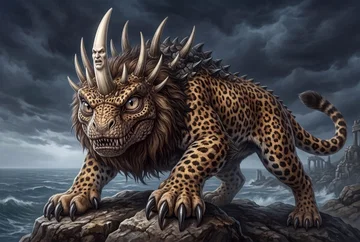
And of the ten horns that were in his head, and of the other which came up, and before whom three fell; even of that horn that had eyes, and a mouth that spake very great things, whose look was more stout than his fellows.
Translations
American King James Version, Webster Bible
And of the ten horns that were in his head, and of the other which came up, and before whom three fell; even of that horn that had eyes, and a mouth that spoke very great things, whose look was more stout than his fellows.
And of the ten horns that were in his head, and of the other which came up, and before whom three fell; even of that horn that had eyes, and a mouth that spake very great things, whose look was more stout than his fellows.
and of the ten horns that were in his head, and of the other which came up, and before whom three fell; even of that horn that had eyes, and a mouth that spake very great things, whose look was more stout than his fellows.
and concerning the ten horns that were on his head, and the other horn which came up, and before which three fell; even that horn that had eyes, and a mouth that spake great things, whose look was more stout than his fellows.
and concerning the ten horns that were on its head, and the other horn which came up, and before which three fell, even that horn that had eyes, and a mouth that spake great things, whose look was more stout than its fellows.
and concerning the ten horns that [are] in its heads, and of the other that came up, and before which three have fallen, even of that horn that hath eyes, and a mouth speaking great things, and whose appearance [is] great above its companions.
and concerning the ten horns that were in its head, and the other that came up, and before which three fell: even that horn that had eyes, and a mouth speaking great things, and whose look was more imposing than its fellows.
also concerning the ten horns, which were in his head, and the other, which came up, and there fell—from among them that were before it—three,—and this horn which had, eyes, and, a mouth, speaking great things, and, his look, was more proud than his fellows:
Berean Standard Bible, Majority Standard Bible
I also wanted to know about the ten horns on its head and the other horn that came up, before which three of them fell— the horn whose appearance was more imposing than the others, with eyes and with a mouth that spoke words of arrogance.
and concerning the ten horns that were on its head and the other horn which came up, and before which three fell, even that horn that had eyes and a mouth that spoke arrogantly, whose look was more stout than its fellows.
And about the ten horns on his head and the other which came up, causing the fall of three; that horn which had eyes, and a mouth saying great things, which seemed to be greater than the other horns.
Also to know of the tenne hornes that were in his head, and of the other which came vp, before whome three fell, and of the horne that had eyes, and of the mouth that spake presumptuous thinges, whose looke was more stoute then his fellowes.
Douay-Rheims (Challoner revision)
And concerning the ten horns that he had on his head: and concerning the other that came up, before which three horns fell: and of that horn that had eyes, and a mouth speaking great things, and was greater than the rest.
Pictures
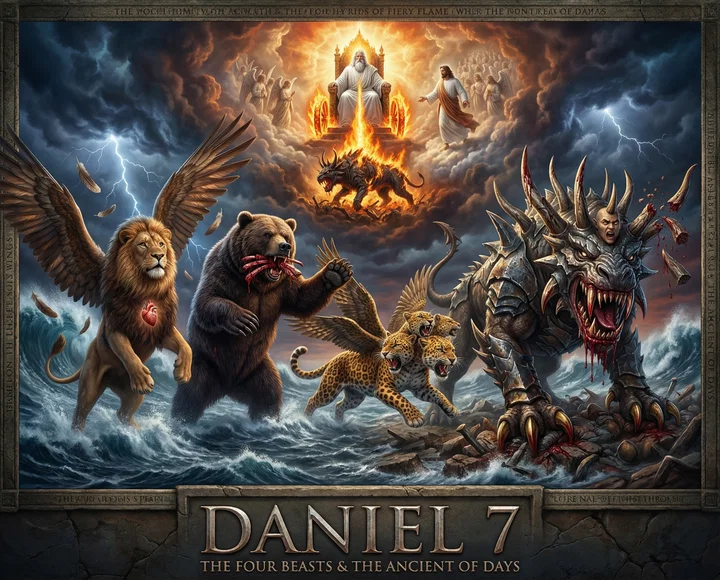
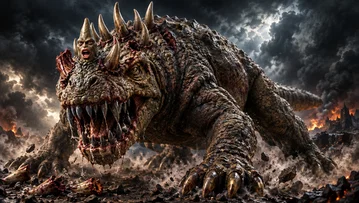
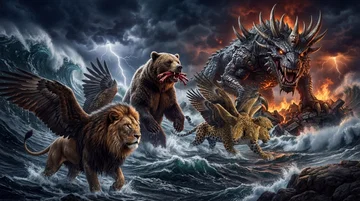
Cross-references 20 of 41
- Daniel 7:25
And he shall speak great words against the most High, and shall wear out the saints of the most High, and think to change times and laws: and they shall be given into his hand until a time and times and the dividing of time.
The horn speaks against God, persecutes the saints, and seeks to change times and laws for an appointed period.
- Daniel 7:8
I considered the horns, and, behold, there came up among them another little horn, before whom there were three of the first horns plucked up by the roots: and, behold, in this horn were eyes like the eyes of man, and a mouth speaking great things.
The little horn rises among the ten, uproots three, and speaks boastfully.
- Daniel 2:40-45
And the fourth kingdom shall be strong as iron: forasmuch as iron breaketh in pieces and subdueth all things: and as iron that breaketh all these, shall it break in pieces and bruise.
Both visions depict successive kingdoms and the division of the fourth kingdom.
- Revelation 13:5-7
And there was given unto him a mouth speaking great things and blasphemies; and power was given unto him to continue forty and two months.
The beast’s great speech, persecution of the saints, and fixed period match Daniel’s little horn.
- Daniel 7:24
And the ten horns out of this kingdom are ten kings that shall arise: and another shall rise after them; and he shall be diverse from the first, and he shall subdue three kings.
The ten horns are ten kings, and another ruler rises after them and subdues three.
- Daniel 7:26
But the judgment shall sit, and they shall take away his dominion, to consume and to destroy it unto the end.
The judgment takes away the horn’s dominion.
- Revelation 13:1-2
And I stood upon the sand of the sea, and saw a beast rise up out of the sea, having seven heads and ten horns, and upon his horns ten crowns, and upon his heads the name of blasphemy.
The beast’s ten horns and persecuting power echo Daniel’s fourth beast and little horn.
- Daniel 7:11
I beheld then because of the voice of the great words which the horn spake: I beheld even till the beast was slain, and his body destroyed, and given to the burning flame.
The horn’s boastful words lead to its judgment and destruction by fire.
- Daniel 8:9-12
And out of one of them came forth a little horn, which waxed exceeding great, toward the south, and toward the east, and toward the pleasant land.
Its little horn is contrasted with Daniel 7’s horn, within parallel visions of empire.
- Revelation 12
And there appeared a great wonder in heaven; a woman clothed with the sun, and the moon under her feet, and upon her head a crown of twelve stars:
These chapters complement the prophecies in Daniel 7-12.
- Daniel 7:27
And the kingdom and dominion, and the greatness of the kingdom under the whole heaven, shall be given to the people of the saints of the most High, whose kingdom is an everlasting kingdom, and all dominions shall serve and obey him.
The kingdom is given to the saints after the little horn’s rule.
- Daniel 7:7
After this I saw in the night visions, and behold a fourth beast, dreadful and terrible, and strong exceedingly; and it had great iron teeth: it devoured and brake in pieces, and stamped the residue with the feet of it: and it was diverse from all the beasts that were before it; and it had ten horns.
The fourth beast has ten horns, among which the little horn rises.
- Revelation 17:3-12
So he carried me away in the spirit into the wilderness: and I saw a woman sit upon a scarlet coloured beast, full of names of blasphemy, having seven heads and ten horns.
The scarlet beast’s ten horns represent kingdoms allied with the power symbolized by Daniel’s horn.
- 2 Thessalonians 2:3-4
Let no man deceive you by any means: for that day shall not come, except there come a falling away first, and that man of sin be revealed, the son of perdition;
The man of sin exalts himself against God, matching Daniel’s little horn.
- Daniel 7:13-14
I saw in the night visions, and, behold, one like the Son of man came with the clouds of heaven, and came to the Ancient of days, and they brought him near before him.
The Son of man comes to the Ancient of days and receives an everlasting kingdom after the horn’s tyranny.
- Revelation 13:6-7
And he opened his mouth in blasphemy against God, to blaspheme his name, and his tabernacle, and them that dwell in heaven.
The beast blasphemes God and makes war on the saints, matching the horn’s traits.
- Daniel 8:23-25
And in the latter time of their kingdom, when the transgressors are come to the full, a king of fierce countenance, and understanding dark sentences, shall stand up.
Gives a parallel prophecy applied to the same power.
- Revelation 17:12
And the ten horns which thou sawest are ten kings, which have received no kingdom as yet; but receive power as kings one hour with the beast.
The ten horns are identified as ten kings who receive power with the beast.
- Revelation 19:20
And the beast was taken, and with him the false prophet that wrought miracles before him, with which he deceived them that had received the mark of the beast, and them that worshipped his image. These both were cast alive into a lake of fire burning with brimstone.
The beast is taken and cast into the lake of fire at Christ’s return.
- Revelation 13:6
And he opened his mouth in blasphemy against God, to blaspheme his name, and his tabernacle, and them that dwell in heaven.
The beast’s blasphemous words match the horn’s great words against God.
Commentary
Each commentary is drawn from primary sources: the writings of Ellen G. White and Adventist pioneers and periodicals. Each commentary is separate. Its own words are not a quotation; follow the references to read the source passages.
Ellen G. White
8 sources
The four beasts and their horns are Babylon, Persia, Greece, and Rome, and the papal power inherited the authority successively held by those empires.4SP 502.2–3 The horn among the ten horns is the Roman Church as a church, even before it gained civil power.4SP 502.4–6 The little horn is the papacy, which succeeded to the power and seat and great authority of ancient Rome when pagan Rome gave them to it, and it corresponds to the leopard-like beast in Revelation 13.GC88 439.14SP 502.4–6 Its dominion was taken away when French general Berthier entered Rome on February 10, 1798, and the pope was taken prisoner on February 15, which mark the close of the 1260 days and the removal of the little horn's dominion.LS 66.1–67.2
The prophecy figuratively portrays historical events leading to the close of earth's history, and the scenes connected with the man of sin are among the last features plainly revealed in that history.Ms 31, 1896, par. 1–2 It belongs to Daniel's prophecies about events to come that were not fully understood even by Daniel and were to be understood in the closing period of world history.PK 547.1 Among the prophecies of apocalyptic beasts, it portrays the deadly effects of uniting church and state, showing that such powers cruelly crush those who oppose them.DA 837.3–4 As part of the vision of judgment and the powers represented by the beast's horns, it warns of God's judgments and calls people to heed the warning and turn to him.Ms 129, 1908, par. 8–10
Sources
Pioneers and periodicals
230 sources
The verse describes the ten horns in the head of the fourth beast and another horn coming up among and after them, before whom three of the first horns fell, having eyes like a man and a mouth speaking very great things, with a look more stout and imposing than its fellows.RH Feb 17, 1853RH Sep 26, 1854ST Jul 23, 1874 The fourth beast is the fourth universal kingdom, Imperial Rome, and the ten horns are ten kings arising out of it in the division of the Western Empire, the same as the ten toes of Daniel 2.ST Oct 11, 1905RH Feb 3, 1853RH Sep 16, 1915ST May 8, 1907 The other horn coming up among and after them is the Papacy, papal Rome, a diverse spiritual and ecclesiastical kingdom combining priestly and royal authority that rose from Rome's ruins and became stronger than its fellows.ST Aug 14, 1893RH Sep 16, 1915RH Dec 13, 1853ST May 18, 1915ST Apr 26, 1877 The three horns plucked up by the roots before it to give it place were the Heruli, the Vandals, and the Ostrogoths, Arian powers overthrown in its rise in 493, 534, and 538, when papal supremacy in fact began.ST Oct 29, 1902RH Jul 23, 1872ST Dec 17, 1896ST Jul 25, 1911ST Sep 5, 1911 Its human eyes signify keen intelligence, foresight and worldwide watchfulness, its mouth signifies proud blasphemies against God and the Most High, and its stouter look signifies greater pomp, power and commanding dominion over faith and consciences than the fellow civil kingdoms.ST Jun 3, 1897ST Dec 21, 1882ST Jul 13, 1915RH Feb 17, 1874ST Apr 26, 1877
Verse Wording and Symbols
The verse portrays the ten horns set in the head of the fourth beast together with another distinct horn coming up among them and after them, before whom three of the first horns fell.RH Feb 17, 1853RH Sep 26, 1854RH Feb 3, 1853RH Dec 13, 1853RH Jan 20, 1853 That later horn is marked by eyes like those of a man and by a mouth speaking very great, boastful things, and its look is more stout, stronger and more imposing than its fellows.RH Feb 17, 1853ST Jul 23, 1874RH Feb 3, 1853RH Dec 13, 1853RH Jan 20, 1853 Together with what follows, these traits identify a blasphemous power that speaks against God and the Most High, makes war on the saints, and thinks to change God's times and laws, with the warning that the attempted change proves God's laws are unchangeable and provides the sign by which the enemy is recognized.RH Feb 17, 1853RH Sep 26, 1854RH Dec 13, 1853RH Jan 20, 1853 In historical fulfillment the ten horns are the division of the Roman Empire and the little horn is the papal power, which subdued three of the ten kingdoms and continued for its appointed time until judgment, destruction of the kingdoms, the saints receiving the everlasting kingdom, and the later loss of dominion in 1798 after 1260 years of triumph from about 538.RH Feb 3, 1853RH Dec 13, 1853RH Jan 20, 1853
The verse also belongs to treatments of the fourth beast and its horn that apply them to Rome in its later papal phase and use them to provide the setting for protest against Romanism and for the judgment scene before Christ's advent when His priesthood gives way to His kingly office at His coronation.RH Mar 24, 1874RH Jun 6, 1912ST Mar 28, 1878ST Jan 4, 1883 In those treatments the fourth beast is placed among four successive kingdoms with Rome as the fourth, so that identifying Rome shows supernatural insight into the future, including Rome as a republic when it devoured, broke in pieces and trampled what remained.STST Nov 29, 1899 Its individual details of the horn, its eyes, its mouth, and the three fallen horns are not explained there.RH Mar 24, 1874STST Nov 29, 1899ST Mar 28, 1878
The vision belongs to the prophetic Aramaic portion given in a dream as symbolic prophecy whose new symbols receive their meaning from the interpretation supplied within the chapter, making it a model for understanding symbolic prophecy.RH Sep 2, 1909 In that symbolism beasts and horns are not literal but represent kingdoms, nations or powers generally, with heads signifying successive powers and horns signifying contemporaneous powers.RH May 8, 1916ST Jan 6, 1887 The four beasts or kingdoms rise out of the sea when the four winds strive upon it, where the sea means peoples and nations and the striving winds mean commotions, political strife, revolution, aggressive wars and turmoil among peoples, and it was by such conquest and overthrow of predecessors that the four kingdoms arose successively.ST Aug 7, 1879RH Jan 15, 1861RH Jun 25, 1857RH Jun 9, 1874
Its meaning is plain because interpretation is given in the Bible itself, leaving no uncertainty or speculation, and it runs parallel with Daniel 2 in definitely foretelling four world monarchies with the last divided and remaining divided until the end of time.ST Jun 30, 1914 The chapter resumes the subject of Daniel 2 and gives many additional facts, covering the same period as Daniel 2 with repetition designed to bring out additional characteristics as object-lessons to impress the mind, and the beasts, heads and horns are symbols used by the Holy Spirit not to be scoffed at.RH Aug 1, 1865ST Jun 17, 1913 Daniel 8, given after the first monarchy had passed, fortifies it by naming Medo-Persia and Greece among the three to follow, and Daniel 7 is studied together with Daniel 2 and Daniel 8 in connection with the sanctuary and the 2300 days, giving certain ground for making known the power and coming of the Lord Jesus Christ.ST Jun 30, 1914RH May 28, 1867 Daniel's inquiry about the fourth beast and especially the little horn is the objective point of the vision, and like the seven-headed beast of Revelation 13 its identity is defined by comparing the prophecy's specifications with historical fulfillment.RH Mar 21, 1854
Four Kingdoms Fourth Rome
The vision traces consecutive world history from Daniel's time to the end, culminating in the everlasting kingdom of Christ, and it repeats the same four universal kingdoms as Daniel 2 but portrays them as cruel beasts rather than glorious metals, namely Babylon, Medo-Persia, Greece, and Rome.ST Oct 11, 1905ST Dec 14, 1882RH Aug 9, 1915RH Jun 20, 1854 It gives a full chain of successive governments delineating their character and relation so clearly that the powers intended cannot be mistaken, with clear waymarks reflected in history and providence directing the rise, fall, timing, and acts of kingdoms.RH Jun 20, 1854 The fourth empire is divided into ten lesser kingdoms which remain with changes until Christ returns, and the long-lasting apostasy arising in the Latin Empire soon after that division afflicts the church for many ages until the second coming, when spiritual Babylon as tyrant over consciences is brought before the eternal Judge and its victims receive the everlasting inheritance.ST Dec 14, 1882RH Aug 9, 1915
The winged lion is Babylon under Nebuchadnezzar, holding sovereignty from 603 B.C. to 538 B.C.; the bear with three ribs in its mouth is Medo-Persia under Darius, the same as the ram of Daniel 8 and the silver breast and arms of Daniel 2, falling in 331 B.C. at Arbela; and the four-headed four-winged leopard is Greece under the youthful Alexander, whose four heads denote the four kingdoms into which his empire broke up and was divided.RH Nov 2, 1905RH Dec 31, 1914RH Aug 14, 1856RH Nov 21, 1854 Rome became dominant over Greece in 168 B.C. and was fully established as world ruler at the battle of Pydna, ruling until 168 B.C. gave place to Rome, and these symbols with their meaning even to the little horn were understood long ago and engraved in stone over the portals of Nurnberg city hall in Bavaria.RH Nov 2, 1905ST Jul 15, 1913RH Dec 31, 1914 The kingdoms are not modern nations merely because they use the same animal as a symbol, so that Russia's use of the bear does not identify it with Daniel's bear kingdom.ST Jul 15, 1913
The fourth beast is the fourth kingdom upon earth, Imperial Rome, diverse from all kingdoms and exceeding dreadful with teeth of iron and nails of brass, which devoured the whole earth and brake in pieces and stamped the residue with trampling.ST May 3, 1877RH Sep 16, 1915ST Nov 29, 1899 It was a republic when it devoured, broke in pieces, and trampled what remained, and its period is dated from 161 B.C. to A.D. 483, reaching even to the First Advent and beyond with its own symbolized existence distinct from the third beast and its heads.ST May 3, 1877ST Nov 29, 1899RH Mar 2, 1852 It contains no division into two great eastern and western parts to match the two legs of the image, for Rome proper whose ten horns give the ten kingdoms lies west of Grecia in the territory of the Western Empire where the ten kingdoms arose, fulfilled when barbarian peoples of the North swept down and established the kingdoms represented to this day by western Europe.RH Sep 16, 1915RH Mar 16, 1869
Rome continues in two phases, pagan Rome as the great beast followed by papal Rome as the little horn produced by union of the apostate Christian church with the Roman state, which changed Rome's form in prophecy and history while continuing its essential character.RH Apr 10, 1900RH Jun 5, 1900 The great subject is Rome continued in another form by the little horn, so the beast's final destruction represents the end of Rome in its papal form as well as its earlier form.RH Apr 10, 1900RH May 29, 1900 The little horn arising among the ten horns is closely identified with the fourth beast and yet has an independent history and work in opposition to the establishment of the fifth kingdom, the kingdom of the Most High, and that opposition is the main theme and objective point of the vision to which the first three kingdoms serve as stepping stones.ST Oct 1, 1902
The horn is not Antiochus Epiphanes, who died centuries before the ten kings and 164 years before Christ was born, being only the eighth of twenty-six kings of the divided Grecian empire, a vile king called the madman who was a hostage at Rome and paid tribute to Rome.RH May 27, 1873RH Nov 21, 1854ST Feb 12, 1880 He enlarged his dominion only by temporary conquests in Egypt which he relinquished at Rome's command and vented his rage on the Jews, unable to resist Rome and ruling only briefly, unlike the horn that grew from small beginnings to surpass Persia which ruled 127 provinces and Grecia, exercised more-than-thousand-year universal power, prospered longer than any other persecuting power, and stands up against the Prince of princes who is Jesus Christ.ST Jun 19, 1884RH Nov 21, 1854ST Feb 12, 1880 Nor is it Caligula living four centuries before the last ten kings, nor Napoleon III, nor Mahometanism, and the little horn of Daniel 7 representing the papacy exclusively is distinct from the little horn of Daniel 8 representing Rome throughout both its pagan and papal phases.RH Aug 1, 1865ST Jun 19, 1884ST May 10, 1877 In the futuristic interpretation the little horn with eyes and a mouth speaking great things and more imposing than the other horns represents an antichrist power yet to arise in connection with the beginning of the setting up of Christ's everlasting kingdom.ST
Ten Horns Divided Rome
The ten horns are ten kings arising out of the fourth kingdom, fulfilled in the division of the Western Roman Empire into lesser kingdoms when northern barbarian peoples swept down and broke it up.RH Feb 3, 1853RH Sep 16, 1915ST May 8, 1907ST Jun 30, 1914 They are the same as the ten toes in the iron-and-clay state, occupying all the territory Rome once embraced and continuing with changes until Christ returns.RH Feb 3, 1853RH Sep 16, 1915ST May 8, 1907RH Jan 10, 1865RH Mar 18, 1862 The division shaped the political history of the Middle Ages and modern times, and the kingdoms represented are to this day the kingdoms of western Europe.RH Sep 16, 1915ST May 8, 1907ST Jun 30, 1914 The beast's actions belong to its undivided period before those kingdoms appear, and after the division further actions are attributed specifically to the little horn.RH Jan 10, 1865RH Mar 18, 1862
The ten are the Alemanni, Franks, Burgundians, Vandals, Suevi, Visigoths, Saxons or Anglo-Saxons, Ostrogoths, Lombards, and Heruli.ST Oct 17, 1906ST Oct 29, 1902ST Jul 6, 1915ST May 26, 1909ST Jan 30, 1896 Variants name the Huns, the Rugii or Thuringi, Sueves and Alans, Angles, and Allemani in place of some of these names.ST Jan 30, 1896 Ten kingdoms stood in Western Rome between A.D. 476 and 493.ST Oct 29, 1902ST May 26, 1909 They are still known as the ten kingdoms of the western empire.
The division developed between A.D. 351 and 476, also dated 353 to 483, 356 to 483, and 351 to 476.ST Oct 17, 1906RH Feb 21, 1865ST Oct 22, 1894ST Nov 24, 1914RH Jan 31, 1854 Rome was broken from 395 until the Herulian Kingdom of Italy in 476, after which ten kingdoms stood on the same territory.ST Oct 29, 1902ST Jul 6, 1915ST Jun 30, 1914 The conquest and division occurred during the fourth and fifth centuries.ST Jul 6, 1915ST Jun 30, 1914 The Ostrogoths, the third kingdom to fall, were subdued in 538.ST Oct 29, 1902RH Feb 21, 1865
The prophecy does not say there will be exactly ten kingdoms continuously afterward, for the divisions changed as nations conquered one another, changed names and borders, or became tributary.ST Nov 9, 1882ST Nov 24, 1914 Yet they continued to be called ten from their original number, and changes in the number did not erase their identity as the ten kings.ST Nov 9, 1882ST Nov 24, 1914 Unlike the seven heads which are successive, the ten horns exist at the same time as contemporaneous powers.RH Jan 10, 1871ST Nov 14, 1906 Unlike the later confederacy in Revelation 17 they did not act together in lifting the little horn to supreme power.ST Oct 22, 1894ST Nov 14, 1906
Three were uprooted before the papacy, leaving seven kingdoms in whose days God will establish His everlasting kingdom.RH Aug 14, 1900ST Apr 13, 1915ST Jan 21, 1886 Those seven continue in the territory of Western Rome as the powers of Western Europe today: Britain from the Saxons, France from the Franks, Germany from the Alemanni, Switzerland from the Burgundians, Spain from the Visigoths, Portugal from the Suevi, and Italy from the Lombards who moved from the Danube to Italy after the third kingdom was plucked up and gave Lombardy its name.RH Aug 28, 1900 They stand partly strong and partly broken, with Britain, France, and Germany powerful and worldwide in influence, Switzerland, Spain, and Portugal weak, and Italy between strong and weak.RH Aug 28, 1900 These kingdoms with the papacy make up the Beast and his power, against whose work the third angel's warning is given.RH Aug 28, 1900ST
The last kingdom would be divided and remain divided until the end of time, until the stone strikes.ST Jun 30, 1914ST Those ten horns are carried over onto the first beast of Revelation 13, which also carries the lion's mouth, the bear's feet, and the leopard's body, so that first beast occupies in symbol all the power and dominion of Daniel's beasts.RH Oct 20, 1874 Since no horn was to become by metamorphosis another distinct beast, the two-horned beast cannot be found in Europe or on old Roman territory but must be sought westward in America.RH Oct 20, 1874RH Mar 12, 1857 With the exception of Russia, the United States, and Japan, the great nations of today involved in the Eastern question are the powers of Western Europe and are indeed the strong ones of those horns.RH Sep 25, 1900RH Aug 28, 1900
Little Horn Papal Identity
The other horn that comes up among and after the ten is the Papacy, papal Rome, the Roman Catholic hierarchy and church under the pope.ST Aug 14, 1893RH Dec 13, 1853ST May 18, 1915RH Jan 17, 1871RH Dec 11, 1860 It is the apostate church-and-state system and modern Babylon, the man of sin and antichrist, and no other power at that time and place meets every detail.ST Aug 14, 1893RH Dec 13, 1853ST May 18, 1915RH Jan 17, 1871RH Jan 20, 1853 Its eyes and boastful mouth mark it as a distinct power stronger than its fellows, subduing three of the ten kingdoms formed by Rome's division and continuing for its appointed time of persecuting rule from the sixth century to 1798.RH Dec 13, 1853ST May 18, 1915RH Jan 17, 1871RH Dec 11, 1860RH Jan 20, 1853
It is another king diverse from the ten, not merely political but a spiritual, ecclesiastical, priestly kingdom rising as a church.RH Sep 16, 1915ST Apr 26, 1877ST Jun 30, 1914RH Jun 15, 1869ST Oct 6, 1881 It combines priestly and royal authority, claiming both spiritual and temporal dominion and seeking to put itself in God's place, with temporal rule geographically limited while spiritual jurisdiction extends over the earth.RH Sep 16, 1915ST Apr 26, 1877RH Aug 21, 1900RH Jun 15, 1869ST Oct 6, 1881 Its rulers are bishops and prophets as overseers, shown by man's eyes in a beast and by episkopos meaning bishop, unlike an ordinary kingdom.RH Sep 16, 1915ST Apr 26, 1877ST Jun 30, 1914RH Jun 15, 1869ST Oct 6, 1881 A horn can mean a church or power generally before civil union, and king and kingdom are used interchangeably.RH Sep 16, 1915RH Aug 21, 1900ST Oct 6, 1881
It arose after pagan Rome fell and was divided, among those kingdoms from its ruins, taking the Caesars' place with the pope's throne at Rome.ST May 12, 1914ST Feb 17, 1909RH Oct 7, 1915RH Jun 13, 1912GSAM 54.1–2 It inherited Rome's seat and imperial prestige and arose after the tenfold division, overthrowing or subduing three of them to establish itself as spiritual ruler over them all.ST May 12, 1914ST Feb 17, 1909RH Oct 7, 1915RH Jun 13, 1912GSAM 54.1–2 It began small among bishops' sees and as a small power opposed by rival kingdoms, then grew to absolute monarchy claiming authority over nations, consciences, soul and body, and became more imposing and stronger than its fellows.ST May 12, 1914ST Feb 17, 1909RH Jun 13, 1912GSAM 54.1–2ST Nov 13, 1901
It arose as an ecclesiastical power in 538 and remained purely ecclesiastical for 217 years, until a grant of provinces in 755 made the pope a temporal monarch.ST Dec 4, 1879RH Nov 21, 1871RH Nov 21, 1871 Its temporal dominion then ran with defined limits to 1870, while its persecuting and spiritual domination is distinct from mere ecclesiastical authority among its own adherents.ST Dec 4, 1879RH Nov 21, 1871RH Mar 26, 1908ST Jun 24, 1897ST Jul 28, 1898 It is in prophecy because it became a persecutor through legal acknowledgment of its claims by earthly powers as Head over all the churches and Corrector of Heretics, giving it spiritual domination over consciences and faith.ST Jun 24, 1897ST Jul 28, 1898 That power to persecute existed in a degree between 538 and 755 before it had civil power, beginning when the last opposing Arian power was plucked up in 538 made effective Justinian's 533 recognition, distinct from its temporal or civil power as world ruler which did not begin till 755 or 756.RH Nov 21, 1871ST Jun 24, 1897ST Jul 28, 1898
Its overthrow of three powers is linked to the pope's triple crown as a sign of dominion over three separate powers.ST Nov 5, 1885ST Jan 28, 1889 The change by which the little horn takes the place of three horns that are plucked up is represented by detachable symbols.ST Nov 5, 1885ST Jan 28, 1889
Its prophetic work is complete except final destruction, its allotted time expired and its dominion taken away.RH Aug 9, 1915RH Aug 31, 1869ST Jun 27, 1878ST Jan 15, 1880 Ten of eleven specifications are fulfilled in the Papacy, while the remaining one is expected soon when it again becomes the world's dominating power, forged again into religious and political power.ST Jun 24, 1897RH Aug 31, 1869ST Jun 27, 1878ST Jan 15, 1880 It outlasted its rivals and passed through its full career and decline, its 1,260 years ended and its influence being consumed, yet it continues until destroyed at Christ's second advent when the eternal Judge sentences spiritual Babylon and the saints receive the everlasting inheritance.RH Aug 9, 1915RH Aug 31, 1869ST Jun 27, 1878ST Jan 15, 1880
Three Horns Uprooted History
Three of the first ten horns fell and were plucked up by the roots before the little horn through its influence to give it place, leaving seven kingdoms.ST Apr 13, 1915ST Oct 31, 1906ST Oct 27, 1881RH Jun 20, 1854RH Sep 16, 1915 The other horn came up among and after the ten and grew until it was stronger than its fellows, with three kingdoms removed before its rise.ST Oct 31, 1906RH Sep 16, 1915RH Jul 23, 1861 Before it three Arian heretical kingdoms were overthrown and plucked up by the roots through its influence, and the horn need not have been civil government alone but power more generally, since it was already a horn as an ecclesiastical power before gaining temporal authority.RH Sep 16, 1915RH Jul 23, 1861 These are distinct from the later ten-horn confederacy of Revelation 17, which unlike these horns act together in support of the beast.ST Sep 5, 1911ST Apr 13, 1915
The three were the Heruli, Vandals, and Ostrogoths, three kingdoms of divided Western Rome in Italy and Africa, overthrown in the papacy's rise between 493 and 538.ST Dec 17, 1896ST Jul 25, 1911ST Apr 13, 1915ST Oct 27, 1881RH Jun 20, 1854 They were kingdoms of divided Rome overthrown before the papacy was established, with the ten horns identified as the Alemanni, Franks, Burgundians, Vandals, Suevi, Visigoths, Saxons, Ostrogoths, Lombards, and Heruli arising as the empire broke up between A.D. 351 and 476.ST Oct 29, 1902ST Sep 5, 1911ST Apr 13, 1915 There were ten kingdoms from 476 to 493, and their removal cleared the way for papal supremacy.ST Oct 29, 1902ST Oct 27, 1881 The defeat of the Ostrogoths opened the way for Justinian's decree making the bishop of Rome head of the churches to take effect, because the Ostrogoths were Arian opponents of the pope and controlled Rome.RH Jun 20, 1854
They fell in 493 for the Heruli, 534 for the Vandals, and 538 for the Ostrogoths when driven from Rome and defeated, opening papal supremacy.ST Oct 29, 1902RH Jul 23, 1872RH Feb 21, 1865ST Oct 27, 1881RH Jun 20, 1854 The last to fall was the Ostrogoths finally subdued in March A.D. 538, three years after Justinian decreed the bishop of Rome should be head of the churches.RH Jul 23, 1872RH Feb 21, 1865 Those who date differently place the Vandals in 533 and the Ostrogoths' power broken in 538 although nationally extinct not until about 553, with destruction in 552-553.RH Jun 20, 1912ST Apr 13, 1915 In one dating the Vandals were overthrown in 493 and the Ostrogoths in 538, and in another the Heruli in 493, Vandals in 534, and Ostrogoths driven from Rome in 538.ST Oct 27, 1881ST
They were Arian heretical powers opposed to the Trinitarian bishop of Rome, obstructing Catholic influence and ambition to head the churches by holding Rome and Italy, and their removal cleared the way for papal spiritual supremacy.ST Nov 29, 1905ST Nov 13, 1901ST Oct 22, 1894ST Jun 24, 1913ST Jul 11, 1878 The three kingdoms that fell were Arian in belief while the bishop of Rome was Trinitarian, and they were not united in lifting the little horn to supreme power.ST Oct 22, 1894 The pope's elevation to power as head of the church at the beginning of the sixth century followed the completion of the ten-kingdom division before the end of the fifth century, with Rome given to the pope after the imperial seat moved to Constantinople.ST Sep 30, 1880 After they fell before the Roman bishop, the little horn became the dominating spiritual power of the divided Roman Empire in A.D. 538.ST Oct 22, 1894
Justinian's decree of 533 naming the bishop of Rome head over the churches and corrector of heretics, with support five years before 538, could not take effect under Arian Ostrogothic control until their power was broken.RH Feb 21, 1865ST Nov 29, 1905ST Nov 13, 1901ST Oct 22, 1894ST Jun 24, 1913 War began in 534, Belisarius entered Rome December 10, 536, the Ostrogoths besieged Rome from March 537 and retired broken in March 538, so saints, times and laws came into the pope's hands in fact in 538.RH Jun 20, 1854RH Feb 21, 1865 The rise preceded the period in which the saints were given into its hand, dated to A.D. 533 when Justinian's edict made the bishop of Rome head of the churches, yet taking effect in fact in 538 and rejecting 606.RH Jun 20, 1854 Constantine laid the civil and ecclesiastical foundation by giving the bishop civil authority, and Justinian's action against opponents and recognition of primacy helped clear the way for independent civil authority and growth over rulers, with the Ostrogoths as the third kingdom subdued by Justinian.ST May 7, 1885ST Aug 12, 1875STST Aug 8, 1916
In detail the Heruli were exterminated in 493 when Theodoric and the Ostrogoths entered Italy at Zeno's encouragement, Vandal rule ended when Belisarius took the Vandal king captive to Constantinople where he was denied favor for refusing to renounce Arianism, and the Ostrogothic kingdom fell when Belisarius triumphed in Rome in 536.RH May 27, 1875 They fell by the policy of the spiritual power that was coming up, and with nothing left in the way that power laid hold of civil authority in A.D. 538 and became the little horn.RH May 27, 1875 Though not utterly destroyed they were compelled to quit the field for limits elsewhere.RH Oct 13, 1874 Ravenna in 752, the Lombards in 774, and the Senate of Rome in 800 do not fit the three, because three original kingdoms had already fallen and the Senate was counted as part of Ravenna rather than a separate kingdom.ST Jan 7, 1889
Eyes Mouth Stouter Look
The eyes like those of a man denote keen intelligence, superior foresight, shrewdness, cunning, far-seeing wisdom, sagacity and constant political skill, in contrast to the uncalculating eyes of a mere animal.ST Jun 3, 1897RH Feb 17, 1874ST Apr 26, 1877RH Aug 9, 1915ST Jun 5, 1884 They mark a power that sees with human perception rather than brute instinct, and therefore plans with calculation and craft.ST Jul 23, 1874RH Jun 15, 1869ST Oct 6, 1881
With man's eyes set in a beast, force is joined to far-reaching policy that plots for conquest, dominion and glory for generations and centuries to come, freely sacrificing the present for influence and success a hundred years away.ST Oct 1, 1902ST Nov 29, 1905ST Oct 17, 1906ST Jun 17, 1897ST Oct 1, 1902 While the fellow civil kingdoms are blind like brute beasts that live and plan and perish only for the present contest, this power exercises worldwide watchfulness and control over governments through orders, Jesuits, prelates and confessionals.ST Nov 29, 1905ST Nov 13, 1901ST Oct 1, 1902 This perceptiveness was seen in its discernment regarding democratic socialism, and it stands as a warning against submission to an evil system and its principles rather than condemnation of individuals.ST Nov 13, 1901ST Jun 24, 1913
The eyes also signify a seer or overseer, expressed in the New Testament by episkopos or bishop, showing a monarchy whose rulers are bishops and prophets and therefore unlike an ordinary kingdom.RH Jan 23, 1908RH Aug 9, 1915
The mouth speaking very great things means proud, arrogant, boastful, threatening, commanding and cursing claims, identified as blasphemies against God and the Most High.RH Feb 17, 1874ST Apr 26, 1877RH Aug 9, 1915RH Jun 15, 1869ST Oct 6, 1881 These are claims to God's titles, prerogatives and authority over the Bible, enforced by civil law and directed in threats, anathemas, depositions, wars and persecution, and this distinctive mark is what astonished Daniel.ST Jul 23, 1874ST Jun 5, 1884ST Nov 29, 1905 Its mouth is also its decrees and laws through which it speaks, and its persecuting power, though taken away, will be restored by acknowledgment of its claims as to what is authoritative in religious matters.ST Nov 29, 1905ST Jun 24, 1913
Those great words include the claim of infallibility, put forth by pope and council even in the face of the Judgment and culminating in 1870, with the growing number of such words as cumulative evidence of fulfillment over time.RH Jul 23, 1872RH Nov 7, 1871ST Oct 1, 1902ST Oct 7, 1913ST May 3, 1877 They include claimed creative power to change bread and wine into flesh and blood, power to forgive sin and pronounce judicial sentence, power to judge heretics, to contain the whole church and judge the conscience of peasant, prince, household and legislature, and power to set aside divine and human law.ST Oct 1, 1902RH Mar 2, 1852 They include titles such as Our Lord God the Pope, Another God upon Earth, Vicegerent of God, Vicar of Christ, Vicar of Jesus Christ, Arbiter of Heaven, Lord of the Earth, Master of the Universe, Most Divine Head, Light of the World and Lion of Judah, received by millions as God's voice, with the July 14 vote hailing Pius IX as God on earth as the unmistakable mark.ST Oct 1, 1902RH Mar 2, 1852ST Feb 13, 1912 Though little it became mighty through power not its own, so that a command from the Vatican could stir nations and raise armies as the Crusades showed, while monarchs feared for their thrones.ST Jun 13, 1900 Claiming to act in Christ's service does not disprove the fulfillment, since apostasy has made that claim, and these claims assume prerogatives belonging only to God which Jesus Himself did not assume.ST Feb 13, 1912ST Jun 13, 1900
Its look more stout than its fellows means an unusually proud, majestic, imposing, stronger and more commanding appearance than the fellow civil kingdoms, with greater-than-royal pomp, outward grandeur and asserted dominion over faith and consciences.ST Dec 21, 1882ST Jul 13, 1915RH Aug 9, 1915RH Feb 23, 1911RH Mar 3, 1874 It wields a kingly scepter among divided Rome, inheriting the empire's power, seat and prestige, demanding homage with rulers serving and prostrating themselves before him in ceremonies that treated him with adoration.ST Dec 21, 1882ST Jul 7, 1914RH Mar 3, 1874 Popes forced rulers including Robert of France, Henry IV, Henry V and Frederick I to submit to humiliating ceremonies, with emperors kneeling, and papal grandeur reached its height under Innocent III in the early thirteenth century, midway between the rise and fall of papal supremacy.ST Jul 13, 1915ST Jul 7, 1914RH Mar 3, 1874 That proud, commanding appearance continued even after it no longer possessed a temporal kingdom, abiding while many fellow kingdoms utterly fell.RH Feb 23, 1911ST Nov 29, 1905
Stout translates the Chaldean rab, which can mean chief, captain, great, lord or master.ST Nov 13, 1901ST Feb 13, 1912 The image shows a power that first sought power, prestige and favor and then came to command as chief and rule over its fellows.ST Nov 13, 1901ST Feb 13, 1912 Its masterful posture contrasts with Jesus, who was among His followers as one who served.ST Nov 13, 1901ST Feb 13, 1912
War Saints Law Change
The horn speaks against the Most High and makes war upon His people, persecuting and wearing out the saints and prevailing against them until the Ancient of Days comes and judgment is given to the saints to possess the kingdom.RH Sep 26, 1854RH Sep 16, 1915ST Dec 16, 1903RH Dec 11, 1860 It martyrs myriads both directly and through the powers it dominates, continuing longer than any other persecuting power, with its pride and self-exaltation and substitution of human for divine authority seen in the reign of terror of the Inquisition.RH Sep 26, 1854RH Sep 16, 1915 Its distinctive work riveted the prophet's attention, for the fourth beast diverse from all others devours and breaks in pieces, and the ten horns are ten kings arising from Imperial Rome in the division of the West by the northern barbarians, while the other horn rising among and after them is another kind of kingdom diverse from them that subdues three kings.RH Sep 16, 1915 It held the saints with God's times and laws in its hand for 1,260 years ending near 1798, placing the world near the end of the sequence before earthly powers are destroyed and God's everlasting kingdom is set up.RH Sep 26, 1854RH Dec 11, 1860
Its victims are numbered as more than fifty millions of Christians put to death during its bloody reign from 538 to 1798, the twelve hundred and sixty years allotted to its supremacy.ST Jan 17, 1878RH Oct 13, 1874 The number is also given as 75,000,000 saints, crushed for more than twelve centuries through the Dark Ages.ST Jan 17, 1878RH Oct 13, 1874ST Feb 6, 1879 The Dark Ages were its golden age of Romanism, when it held all western Europe in absolute spiritual subjection with the saints, times and laws in its hands.ST Feb 6, 1879ST Jun 24, 1897 Its oppression continues until the saints possess the kingdom at the Lord's coming, when the beast is destroyed in the burning flame.ST Jun 24, 1897ST Sep 2, 1886
It thinks to change God's times and laws, not human laws which earthly powers may rightly change.RH Sep 26, 1854ST Jun 27, 1878ST Oct 14, 1889ST Dec 24, 1912RH Jan 23, 1900 The laws are God's laws, and the warning that this power would think to change them shows that God does not change them, so the attempted change is the sign by which the enemy can be recognized.RH Sep 26, 1854ST Jun 27, 1878 Changing the Father's household rules exalts the changer above Jehovah, so that keeping the changed commandments worships the law-changer instead of the Law-maker.RH Sep 26, 1854ST Jun 27, 1878ST Oct 14, 1889 It is that apostate power in its career as persecutor of the people of God, rebel against His laws and blasphemer of His holy name, a church-and-state apostasy centered on the Papacy with remarkable shrewdness, continuing to the end until the Judge puts judgment in the hands of His people at the second coming when the saints possess the kingdom under the whole heaven.ST Oct 14, 1889ST Dec 24, 1912RH Jan 23, 1900 Its dominion continues for a time and times and the dividing of time, a definite prophetic period with marked beginning and ending, closed by the judgment when its dominion is taken away and the kingdom is given to the saints.RH Dec 11, 1860RH Jan 23, 1900
This is fulfilled only in removing the second commandment, changing the fourth and the ninth, and dividing the tenth.RH Sep 26, 1854ST Jun 27, 1878ST Oct 14, 1889ST Dec 24, 1912RH Jan 23, 1900 Above all it is fulfilled in changing the Sabbath from the seventh day to Sunday without scriptural authority by church authority alone, as the token and proof of its power, and also in changing the time the day begins.RH Sep 26, 1854ST Jun 27, 1878ST Oct 14, 1889 Christ did not make that change.RH Sep 26, 1854ST Jun 27, 1878
If the horn is Antiochus Epiphanes the alleged change of the Sabbath law would have occurred before the Christian era, while if it is the papacy it arose only after the Roman Empire was divided into ten parts, so the change would have occurred after Rome's fall.RH May 27, 1873RH Apr 28, 1853 That latter chronology is challenged as conflicting with historical testimony that Christian churches observed Sunday before the fall of Rome, and proponents of either identification are challenged to provide historical evidence.RH May 27, 1873 The horn's challenge is linked to the claim that papal Sunday observance should continue until Christ's second coming, a claim that must be proved from the Bible.RH Apr 28, 1853
Its blasphemy and persecution from 538 continue until the Son of man comes and the saints receive the everlasting kingdom.RH Aug 28, 1900RH Oct 3, 1854RH Aug 9, 1915RH Oct 7, 1862 It is a monarchy whose rulers are overseers or bishops and prophets, unlike an ordinary kingdom, asserting boastful blasphemous claims and authority over times and laws and persecuting the saints for 1,260 years, eventually losing its dominion before its final destruction.RH Aug 28, 1900RH Aug 9, 1915 Its overthrow is placed at Christ's personal advent and the resurrection of the dead.RH Oct 3, 1854RH Oct 7, 1862
The persecutions described in Daniel 7 fall upon the righteous, in contrast to the later time of trouble, which falls upon the wicked.ST May 7, 1912
Rule Duration Final Doom
The appointed time, times and dividing of time is 1,260 prophetic years reckoned from 538 to 1798, equal to forty-two months and 1,260 days by the day-year principle, running from Justinian's establishment of papal supremacy to the taking away of dominion when the pope was carried into captivity by the French.RH Jan 20, 1853RH Feb 10, 1874ST Aug 19, 1880RH Oct 7, 1915RH Nov 7, 1871 The ten horns are the divisions of the Western Roman Empire and the other horn coming up among them before whom three fell is the papacy, the kingdom of the popes of Rome, different from the rest, whose rise and fall of three horns belong to that rule and its loss of dominion in 1798 after 1,260 years of triumph from about 538.RH Jan 20, 1853RH Feb 10, 1874ST Aug 19, 1880RH Jul 23, 1872RH Nov 7, 1871 Its eyes and mouth speaking very great things and its stouter look mean blasphemous claims against the Most High, wearing out of the saints, attempt to change times and laws, and great words of infallibility spoken even in the face of the Judgment, backed by greater power than its fellows.RH Jul 23, 1872RH Nov 7, 1871
The period began when the last of the three opposing powers was uprooted and papal government in fact started in 538, five years after the 533 decree, the Ostrogoths being finally subdued in March 538.RH Jan 20, 1853RH Feb 10, 1874ST Aug 19, 1880RH Jun 20, 1854RH Jul 23, 1872 Justinian's edict in 533 made the Bishop of Rome head of the churches, dating the giving of the saints into its hand, but full establishment came in 538.RH Feb 10, 1874RH Jun 20, 1854RH Jul 23, 1872 It ended February 10, 1798 when Berthier entered Rome and February 15 when the pope was taken prisoner to France, dealing a fatal blow to papal sovereignty and a deadly wound, ending persecuting domination and beginning the time of the end.RH Feb 10, 1874ST Aug 19, 1880RH Oct 7, 1915RH Nov 7, 1871 Tribulation had eased about 1776 through the Reformation so that heavenly signs fell between 1776 and 1798.RH Nov 7, 1871
Since then the judgment sits to take away dominion to consume and destroy it unto the end, and its power has since been diminishing and wearing away after 1798 until finally destroyed at Christ's coming.ST Aug 19, 1880RH Oct 7, 1915RH Nov 7, 1871ST Jun 22, 1882RH Jan 10, 1865 This consuming is seen in the weakening of Spain, the absorption of Naples into Italy, the humbling of Austria, and the fall of France and the loss of the pope's temporal territory with Rome made the capital of united Italy and the pope a captive in his own capital.RH Nov 7, 1871 Remaining sovereignty was lost in 1870, never fully restored even when another pope was installed.RH Nov 7, 1871ST Jun 22, 1882
The vision then turns to a heavenly judgment session, not on earth, where after the nations have appeared judgment is the next important event.RH Jan 23, 1855RH Jun 20, 1854 The judgment could not come before this horn's rise and its period of triumph had run their course, and its rise and rule had to occur before the Judgment, its power to wear out the saints lasting for 1,260 prophetic years after which its triumph ended and the Judgment could be proclaimed as near.ST Jun 22, 1882RH Jul 11, 1854RH Jan 23, 1855 The Father presides in the sanctuary's second apartment with angels, the Son comes before Him to receive the kingdom before returning as King, closing priesthood, blotting out sins, acquitting the righteous dead while probation remains for the living, crowning Christ to execute decision; with 1798 past Christ's coming is next.ST Jun 22, 1882RH Jan 23, 1855RH Jun 20, 1854 Its dominion is now being consumed, and though it continues and prevails while being gradually consumed its final destruction will come with Christ's second advent.RH Jan 10, 1865RH Aug 24, 1869RH Jul 11, 1854
The little horn is the last waymark on the road to Judgment-day and the setting up of God's everlasting kingdom; after the fourth dreadful beast with ten horns, three first horns plucked up and a peculiar horn with man's eyes and mouth coming up in their place, when this sign has transpired no more signs remain.ST Jul 23, 1874RH Nov 14, 1854ST Aug 2, 1877 What comes next is the Judgment of the great day, the glorious reward of the just, and the glorious city of the great King where there is neither sickness, sorrow, pain nor death.ST Jul 23, 1874 What remains to be accomplished is the slaying of the beast and giving his body to the burning flame, its destruction by the judgment, its victims receiving the everlasting inheritance.RH Aug 9, 1915ST Aug 2, 1877ST Jun 27, 1878 Its prophetic work is complete except final destruction, its allotted time expired, its destruction at Christ's second advent and the establishment of God's everlasting kingdom over the earth remaining, the fifth universal empire immediately impending.RH Aug 31, 1869ST Aug 2, 1877ST Jun 27, 1878 That everlasting kingdom under the whole heaven is given to the saints, located on the renewed new earth at the end of the thousand years as in Matthew 25, possessed now only as heirs.RH Nov 7, 1871RH Jul 11, 1854RH Jun 20, 1854
Divided Rome with the horn began its persecuting career in 538, was checked in 1798, will revive briefly just before the Lord comes, and continues until now as the apostasy.ST Nov 28, 1895ST Oct 29, 1896RH Apr 19, 1870 The verse gives no definite time for Christ's coming, but shows that the next great event after this history is the setting up of His everlasting kingdom at His coming, carrying the world's history down to 1798 and then pointing forward to God's kingdom.ST Nov 28, 1895ST Jun 19, 1884RH Mar 31, 1868RH Apr 30, 1867 Its prophecy has been partly fulfilled in persecution through the Dark Ages, and its final fulfillment is beginning in Sunday laws, growing intolerance and persecution, with the final conflict beginning in Sunday laws.ST Nov 28, 1895ST Oct 29, 1896 Fulfillment shows the last days have come and God's everlasting kingdom is near; establishing that kingdom and destroying the earthly kingdoms are what remain.RH Apr 19, 1870RH Mar 31, 1868RH Apr 30, 1867
It has depended on civil governments for power and has waged war against Christ's church, and although its dominion was subjected to civil authority it is to continue opposing the church until the saints possess the kingdom.RH Jan 20, 1853 Just before Michael stands up for their deliverance it will again speak great words, and that renewed assertion of power would require France's aid or an alliance with another powerful nation.RH Jan 20, 1853
Parallel Prophecies Other Scriptures
Daniel 7 covers the same ground as Daniel 2, concerning the four great monarchies with the fourth breaking into ten kingdoms, among which an eleventh ecclesiastical kingdom would arise.ST Jun 30, 1914ST Jun 30, 1914ST Nov 29, 1905 The symbols of Daniel 7 represent the principal kingdoms and events of world history parallel to Daniel 2, with more definite specifications identified by history, adding new symbolic features to Nebuchadnezzar's dream and showing developments in medieval and modern times with special reference to the papacy.ST Jun 30, 1914ST Jun 13, 1878 The ten horns are the same as the ten toes of Daniel 2, the kingdoms of Europe formed when northern barbarians divided the Roman Empire.RH Nov 7, 1871 Daniel 7 portrays these empires by their wild and cruel character as beasts, while Daniel 2 portrays their glory and lasting qualities through metals.ST Nov 29, 1905
The little horn that rose among the ten with eyes and a mouth speaking very great things and a stouter look is the Catholic church under the pope, made head over the churches in 538, speaking great words against God such as infallibility, wearing out the saints for 1,260 years from 538 to 1798 when the pope was carried captive by the French, after which judgment sits to consume his dominion as seen in the weakening of Spain, absorption of Naples, humbling of Austria, fall of France, and loss of temporal territory with Rome made Italy's capital, until the beast's body is given to the burning flame and the kingdom under heaven is given to the saints at Christ's near coming.RH Nov 7, 1871 The little horn with eyes and mouth speaking very great things is the same power as Paul's man of sin, standing in the prophetic series from Daniel's time to the judgment and everlasting kingdom.RH Jan 23, 1855ST Jun 22, 1882RH Apr 26, 1870 It must arise and perform its predicted 1,260-year work first, giving ground for Paul's proof that Christ's coming to judgment was not at hand, and when that work is accomplished Christ will come to consume that Wicked with His brightness.RH Jan 23, 1855ST Jun 22, 1882ST Oct 3, 1878 It is also the desolating transgression in Daniel 8, the mystery of iniquity and son of perdition, shorn of strength by a deadly wound yet abiding till Christ appears to destroy it, proving no conversion of the world before the end but righteous and wicked together until harvest.ST Jun 20, 1900ST Oct 3, 1878ST Nov 21, 1895
Its speaking great things matches the beast's mouth in Revelation 13:5, showing both symbols represent papal Rome succeeding pagan Rome.RH May 10, 1870RH Jan 18, 1870 It is identical with the leopard beast of Revelation 13:1-10, coming at the same time, occupying the same territory, maintaining the same character, doing the same work, existing the same length of time, and meeting the same fate.RH May 10, 1870RH Nov 6, 1866 That beast combines the leopard's body, bear's feet, lion's mouth and the fourth beast's horns, showing succession from Babylon, Persia, Greece and especially pagan Rome, receiving its seat at Rome and civil power from the dragon when paganism moved to Constantinople.ST Jun 19, 1884 Like the little horn it is a blasphemous power making war with the saints and prevailing against them, with blasphemy against God's name, tabernacle and angels, continuing forty-two months or 1,260 days as years allotted to dominate saints, times and laws.RH May 10, 1870ST Mar 18, 1880ST Jun 19, 1884
Daniel 7 is the second of the parallel prophetic lines alongside Daniel 2, Daniel 8 and 9, and Daniel 10-12, extending through the present dispensation to its end with the 2300 days spanning nearly the whole field.ST Aug 12, 1875ST Apr 15, 1875 The four lines are the metallic image of Daniel 2, the four beasts and little horn of Daniel 7, Medo-Persia, Grecia, the little-horn power and 2300 days of Daniel 8-9, and the kings of the north and south with Michael's reign in Daniel 10-12, together spanning Babylon, Media-Persia, Grecia, Rome and God's eternal kingdom, the first two beginning with Babylon and the last two with Medo-Persia, all closing violently without human help at Christ's second coming and the resurrection when Michael stands up, God's people are delivered and the wise shine forever.RH Sep 13, 1915ST Apr 9, 1912ST Apr 15, 1875 Daniel 2 is the basic background showing the failure of universal human empire and God's restoration in Christ, while Daniel 7 reveals the different earthly kingdom attempted after Babylon, Medo-Persia, Greece and Rome, symbolized by the horn with eyes and mouth as ecclesiastical Rome.RH Sep 13, 1915 Daniel 8 names Medo-Persia and Greece fortifying Daniel 7, its four horns after Greece's broken horn corresponding to the leopard's four heads, while Daniel 11 expands the brief account.RH Apr 30, 1857ST Apr 15, 1875
Revelation deals wholly with the fourth-beast and little-horn period and gives light on Daniel 7, presenting the Roman Empire under papal spiritual domination from 538 in Revelation 13:1-10.ST Oct 22, 1894ST Jan 30, 1879 The fourth beast under the little horn is that beast, whose leopard, bear and lion features show succession from earlier kingdoms, and the little horn, beast and man of sin of 2 Thessalonians 2 are the same papal power from apostasy, with its mouth identifying papal authority elevated within the empire speaking arrogantly in God's name.ST Jan 30, 1879ST Aug 24, 1882 This includes the worship test, the composite beast, the woman on the scarlet beast as modern Babylon, and the two-horned beast distinct from the little horn.ST Mar 18, 1880ST Jun 19, 1884ST Jan 4, 1883 The ten horns reappear on the Revelation 13 beast, and the two-horned power is to be sought outside old Roman territory after 1798 in America.ST Jun 19, 1884
The prophecy of Daniel 7 is one of eleven long chains spanning the Christian dispensation and reaching back before Christ, each placing the present in the last link on the verge of God's day and together making certainty, showing the nearness of Christ's personal coming to punish the ungodly, reward saints and bring restitution.RH Mar 11, 1875 With Daniel 2, 8, 11, 12 and the periods of Daniel 7, 8, 9, 12 and Revelation 11, 12, 13 it harmonizes to sustain the proclamation that the gospel has gone worldwide, the sign of the end has appeared and judgment hour is come.RH Feb 6, 1855 Reviewed with Daniel 2, 8, 9, Matthew 24 and Revelation 12-14 it gives signs of the times in Sunday-law enforcement, worldwide warning against it, and exaltation of God's commandments and faith of Jesus to a worldwide crisis at Christ's appearing.RH Nov 17, 1904 The horn is the papal power authorized in 538, whose mouth and blasphemies are Revelation 13:5 and whose forty-two months are 1260 years to 1798, and its setting up is the abomination synchronizing with Daniel 11:31 and Daniel 12:11 for 1290 years to 1843, with Daniel 12:12 extending further.SMV 33.1 Its proud imposing look corresponds to the high looks of Assyria's king, linking the final Roman oppressor completing the treading down of God's people to punishment when indignation ends, and connecting prophetic history with Revelation 13 against the faithful.RH Jan 3, 1856
Certainty Warning Present Application
Daniel's prophecies are definite and reliable, and their fulfillment with minute accuracy in order as consecutive prophecy gives confidence that the remaining declarations will also be fulfilled.ST Nov 24, 1914RH Jan 21, 1909ST Jun 25, 1912 The power and locality of the little horn among the ten horns are found with definiteness only by fulfillment of the specifications given for its rise and development, and when a power fulfills those specifications it is assured to be the very power represented.RH Jun 25, 1857RH Mar 21, 1854 The verse belongs to a chain of prophecy locating the second coming, terminating within a few years, with vastly increased evidence because the first coming was located by the single prophecy of Daniel 9:25-27 while the second is located by numerous chains including Daniel 7.RH Apr 26, 1864 Predicted events occur in sequence so that when one is fulfilled the next follows, and the events of Daniel 7 stand as waymarks whose fulfillment sheds light on present-day movements and conditions.RH Jan 21, 1909ST Jun 25, 1912
The prophecy warns against an evil system and its consequences and principles, not against particular people, for submission to a system founded on evil principles can lead even a conscientious person to do evil, and the warning is for everyone both within and outside that system.STST Nov 13, 1901ST Feb 13, 1912 The little horn with eyes and mouth speaking very great things and look more stout than its fellows is the Papacy as a state-recognized religio-civil dominion over the Roman Empire in the Dark Ages, distinct from the Roman Catholic Church and its sincere Christian members, centered in the bishop's see at Rome.ST Nov 29, 1905ST Nov 29, 1905ST Feb 13, 1912 People may support its principles sincerely and without realizing their character.ST Feb 13, 1912 Its uprooting of three, its humanlike eyes as shrewd far-seeing foresight plotting for the far future while fellow civil kingdoms planned only for the present, its mouth as pre-eminently blasphemous arrogation of powers and titles angels would not assume enforced by civil law, its greater stout strength abiding while many fellow kingdoms utterly fell, and its martyrdom of myriads by itself and through dominated powers with persecuting power now taken away to be restored by acknowledgment of papal claims as authoritative in religious matters, all belong to this identification.ST Nov 29, 1905ST Nov 13, 1901RH Apr 15, 1875ST Nov 29, 1905
Teaching about the little horn confronts hearers so sharply that it can at first provoke rage and even threats of violence, yet it leads to true conversion to God and obedience to His commandments including the Sabbath.ST Sep 27, 1877 Daniel 7:20-26 foretells the great apostasy resulting in the papacy as the Antichristian power that would think to change God's times and laws, with its most important changes the time for observing the Sabbath and the time at which the day begins, not the time for beginning the year.ST Mar 11, 1880RH Dec 8, 1859ST Apr 3, 1879 That power is the only authority for the claim that the Sabbath has been changed from the seventh day to the first day of the week, a fable with no higher authority, and exposure of that power by the warning against worship of the beast turns men in many nations to keep the commandments as written including resting from secular labor on the seventh day.ST Apr 3, 1879ST Dec 9, 1880 Its official declarations are presented as evidence identifying it as the power represented by the horn speaking great things.
The culminating practical point of the great line of prophecy in Daniel 7 is the third angel's loud warning against worshiping the beast and his image and receiving his mark, whose call to keep the commandments of God and the faith of Jesus is the final test closing probation forever and distinguishing true worshipers of God from worshipers of the beast.RH Jul 1, 1873RH Mar 25, 1875 The first and second angels' messages lead to this climax and sequel, and the whole series must be fulfilled in given order under God's controlling hand without failure, even through human error and disappointment, ending for believers not in disappointment but in the promised coming.RH Mar 25, 1875 The great lines of consecutive and descriptive prophecy in Daniel 2 and 7 and Revelation 12 and 13 show nearness to the Judgment and close of human probation, describing Rome and the papacy in rise, work, duration and decline, so that fulfillment shows the last days have arrived with remaining events including destruction of papal power at Christ's second coming.RH Jul 1, 1873RH Nov 4, 1873 These prophecies and their fulfillment in history are so plain that the common mind can understand them, because a just God will not make salvation or destruction depend on a final test men in general cannot comprehend.RH Jul 1, 1873 Present signs drawn from Daniel 7 with Daniel 2, 8, 9, Matthew 24 and Revelation 12 as prophecies of the second coming are the progress of the movement to enforce Sunday laws, the progress of carrying the message of warning against that movement to the world, and the advancement in raising the standard of the commandments of God and the faith of Jesus before the people, coming to a worldwide crisis at the very hour Christ is seen coming in the clouds with power and great glory, while the beast dominating the nations as persecutor continues to the end in antagonism to the kingdom of God.RH Nov 17, 1904ST Mar 6, 1901ST Sep 8, 1909
The chapter depicts four kingdoms with the Roman Empire as the fourth, which was a republic when it devoured, broke in pieces and trampled what remained, giving supernatural insight into the future and providing the setting for protest against Romanism by delineation of the character of the Roman system.STST Nov 29, 1899RH Jun 6, 1912 Its prophecy identifies the pope and Roman hierarchy with the man of sin and points to the end of that power and the coming reign of Christ and the saints with His coronation when priesthood gives way to kingly office in the judgment scene before the advent, teaching that the world will finally be brought under Christ's rule as King of kings and Lord of lords not through constitutional or other national reform.ST Mar 28, 1878ST Jan 4, 1883ST Aug 19, 1886 It exposes the crowning deception counterfeiting godliness to guard the church, and shows the world will not be converted before the end but righteous and wicked remain till harvest in rampant war-spirit days.STST Nov 29, 1899RH Jun 6, 1912
The verse belongs to outlines on the prophetic chart since the 1844 Advent movement marking rise and fall of kingdoms and Christ's coming in glory, representing earthly governments from Daniel's time until destruction of all earthly powers, fulfilled except for final destruction and bringing the world's story down to the end at the same point reached by Daniel 2, 8 and 9.RH Jul 24, 1866ST Aug 1, 1911ST Mar 9, 1876 Considered with Daniel 2 it was used to show that the Catholic Church is not the true church, with the horn's mouth speaking very great things fulfilled in blasphemous claims made in behalf of the Catholic priesthood against the Most High.RH Aug 17, 1905RH Jul 30, 1914 It belongs to the prophetic outline of the Papacy's career as the last great apostasy from Reformation principles, in which powers succeeding Babylon including Medo-Persia, Greece, and Rome in imperial, divided, pagan and papal phases have a place.ST Feb 15, 1910ST Aug 1, 1911 Some groups resembling the horn in opposing the soon-coming doctrine leave the choice to obey this power or serve God for the everlasting kingdom.RH Aug 17, 1905RH Jul 30, 1914RH Jul 24, 1866
Sources