Daniel 7:19
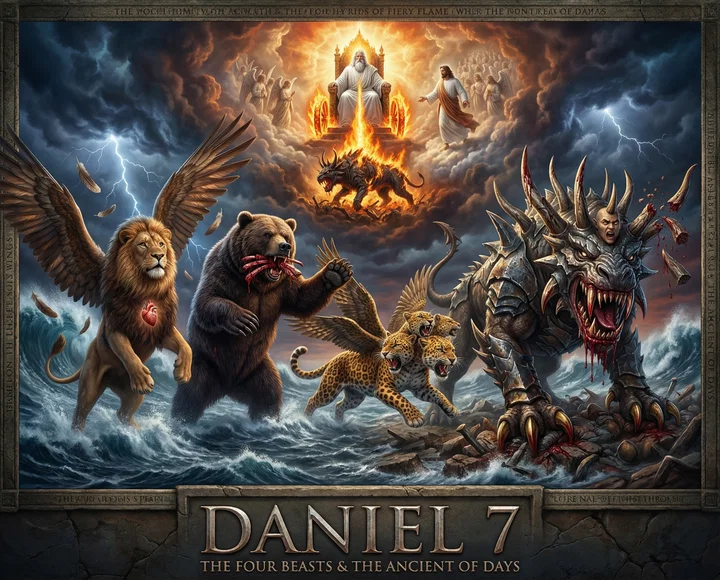
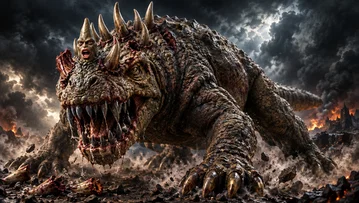
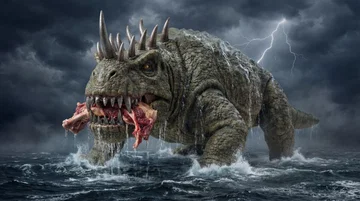
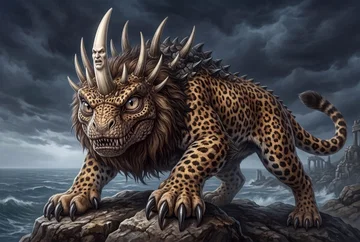
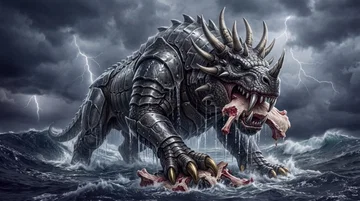
Then I would know the truth of the fourth beast, which was diverse from all the others, exceeding dreadful, whose teeth were of iron, and his nails of brass; which devoured, brake in pieces, and stamped the residue with his feet;
Translations
American King James Version, Webster Bible
Then I would know the truth of the fourth beast, which was diverse from all the others, exceeding dreadful, whose teeth were of iron, and his nails of brass; which devoured, broke in pieces, and stamped the residue with his feet;
King James Version, KJV Cambridge Paragraph Bible
Then I would know the truth of the fourth beast, which was diverse from all the others, exceeding dreadful, whose teeth were of iron, and his nails of brass; which devoured, brake in pieces, and stamped the residue with his feet;
Then I desired to know the truth concerning the fourth beast, which was diverse from all of them, exceeding terrible, whose teeth were of iron, and his nails of brass; which devoured, brake in pieces, and stamped the residue with his feet;
Then I desired to know the truth concerning the fourth beast, which was diverse from all of them, exceeding terrible, whose teeth were of iron, and its nails of brass; which devoured, brake in pieces, and stamped the residue with its feet;
'Then I wished for certainty concerning the fourth beast, that was diverse from them all, fearful exceedingly; its teeth of iron, and its nails of brass, it hath devoured, it doth break small, and the remnant with its feet it hath trampled;
Then I desired to know the certainty concerning the fourth beast, which was different from them all, exceeding dreadful, whose teeth were of iron, and its nails of brass; which devoured, broke in pieces, and stamped the rest with its feet;
Then desired I to be sure, concerning the fourth wild beast, which was diverse from all of them,—exceeding terrible, whose, teeth, were iron, and, his claws, of bronze, he devoured, brake in pieces, and, the residue—with his feet, he trampled down;
Berean Standard Bible, Majority Standard Bible
Then I wanted to know the true meaning of the fourth beast, which was different from all the others— extremely terrifying—devouring and crushing with iron teeth and bronze claws, then trampling underfoot whatever was left.
“ Then I desired to know the truth concerning the fourth animal, which was different from all of them, exceedingly terrible, whose teeth were of iron, and its nails of bronze; which devoured, broke in pieces, and stamped the residue with its feet;
Then it was my desire to have certain knowledge about the fourth beast, which was different from all the others, a cause of great fear, whose teeth were of iron and his nails of brass; who took his food, crushing some of it to bits and stamping on the rest with his feet;
After this, I woulde knowe the trueth of the fourth beast, which was so vnlike to all the others, very fearefull, whose teeth were of yron, and his nailes of brasse: which deuoured, brake in pieces, and stamped the residue vnder his feete.
Douay-Rheims (Challoner revision)
After this I would diligently learn concerning the fourth beast. which was very different from all, and exceeding terrible: his teeth and claws were of iron: he devoured and broke in pieces, and the rest he stamped upon with his feet:
Pictures
Cross-references 20 of 43
- Daniel 2:40-44
And the fourth kingdom shall be strong as iron: forasmuch as iron breaketh in pieces and subdueth all things: and as iron that breaketh all these, shall it break in pieces and bruise.
Both visions describe successive kingdoms, the iron fourth kingdom, and God’s everlasting kingdom.
- Daniel 7:23-25
Thus he said, The fourth beast shall be the fourth kingdom upon earth, which shall be diverse from all kingdoms, and shall devour the whole earth, and shall tread it down, and break it in pieces.
Describes the fourth kingdom and the horn’s persecution of the saints and allotted time.
- Daniel 7:8
I considered the horns, and, behold, there came up among them another little horn, before whom there were three of the first horns plucked up by the roots: and, behold, in this horn were eyes like the eyes of man, and a mouth speaking great things.
The little horn arises among the horns of the fourth beast.
- Daniel 7:23-24
Thus he said, The fourth beast shall be the fourth kingdom upon earth, which shall be diverse from all kingdoms, and shall devour the whole earth, and shall tread it down, and break it in pieces.
Identifies the fourth beast as a kingdom and explains its horns as kings.
- Revelation 13:1-2
And I stood upon the sand of the sea, and saw a beast rise up out of the sea, having seven heads and ten horns, and upon his horns ten crowns, and upon his heads the name of blasphemy.
The composite beast echoes Daniel’s fourth beast and its ten horns.
- Daniel 7:27
And the kingdom and dominion, and the greatness of the kingdom under the whole heaven, shall be given to the people of the saints of the most High, whose kingdom is an everlasting kingdom, and all dominions shall serve and obey him.
The beast’s dominion ends as the everlasting kingdom is given to the saints.
- Daniel 8
In the third year of the reign of king Belshazzar a vision appeared unto me, even unto me Daniel, after that which appeared unto me at the first.
Its symbols are arranged in chronological parallel with Daniel 7.
- Daniel 7:7
After this I saw in the night visions, and behold a fourth beast, dreadful and terrible, and strong exceedingly; and it had great iron teeth: it devoured and brake in pieces, and stamped the residue with the feet of it: and it was diverse from all the beasts that were before it; and it had ten horns.
Describes the dreadful fourth beast’s iron teeth and destructive actions.
- Daniel 2:40-43
And the fourth kingdom shall be strong as iron: forasmuch as iron breaketh in pieces and subdueth all things: and as iron that breaketh all these, shall it break in pieces and bruise.
The listed work treats Daniel’s prophecy of the four universal monarchies.
- Daniel 7:11
I beheld then because of the voice of the great words which the horn spake: I beheld even till the beast was slain, and his body destroyed, and given to the burning flame.
The fourth beast is slain and destroyed by fire.
- Daniel 7:23
Thus he said, The fourth beast shall be the fourth kingdom upon earth, which shall be diverse from all kingdoms, and shall devour the whole earth, and shall tread it down, and break it in pieces.
Identifies the fourth beast as a kingdom that devours and breaks the earth.
- Daniel 7:26
But the judgment shall sit, and they shall take away his dominion, to consume and to destroy it unto the end.
Judgment removes the little horn’s dominion before its power is consumed.
- Daniel 2:34-35
Thou sawest till that a stone was cut out without hands, which smote the image upon his feet that were of iron and clay, and brake them to pieces.
The image’s kingdoms are broken together, corresponding to the fourth beast’s destruction.
- Revelation 13:5-7
And there was given unto him a mouth speaking great things and blasphemies; and power was given unto him to continue forty and two months.
The beast blasphemes God and makes war on the saints, like Daniel’s little horn.
- Daniel 7:4-6
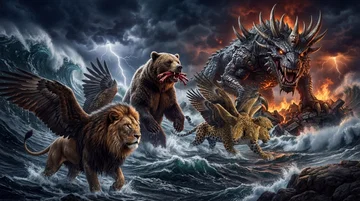
The first was like a lion, and had eagle’s wings: I beheld till the wings thereof were plucked, and it was lifted up from the earth, and made stand upon the feet as a man, and a man’s heart was given to it.
The first three beasts precede the fourth and explain its composite form.
- Revelation 17:3
So he carried me away in the spirit into the wilderness: and I saw a woman sit upon a scarlet coloured beast, full of names of blasphemy, having seven heads and ten horns.
The scarlet beast’s horns and form echo Daniel’s fourth beast and its kingdoms.
- Daniel 2:41
And whereas thou sawest the feet and toes, part of potters’ clay, and part of iron, the kingdom shall be divided; but there shall be in it of the strength of the iron, forasmuch as thou sawest the iron mixed with miry clay.
The divided feet and toes correspond to the fourth beast’s divided kingdom.
- Daniel 7:13-14
I saw in the night visions, and, behold, one like the Son of man came with the clouds of heaven, and came to the Ancient of days, and they brought him near before him.
The beasts’ kingdoms end as the Son of man receives everlasting dominion.
- Daniel 7:2-3
Daniel spake and said, I saw in my vision by night, and, behold, the four winds of the heaven strove upon the great sea.
The four beasts rise from the sea amid the struggle of the winds.
- Revelation 13:2
And the beast which I saw was like unto a leopard, and his feet were as the feet of a bear, and his mouth as the mouth of a lion: and the dragon gave him his power, and his seat, and great authority.
The beast combines traits of Daniel’s beasts, matching Daniel’s fourth beast.
Commentary
Each commentary is drawn from primary sources: the writings of Ellen G. White and Adventist pioneers and periodicals. Each commentary is separate. Its own words are not a quotation; follow the references to read the source passages.
Ellen G. White
8 sources
The verse records Daniel's request to know the truth or meaning of the fourth beast and its destructive power.4SP 502.4–6PK 484.3 That beast was diverse from and unlike all the others, exceeding dreadful, with teeth of iron and nails of brass, which devoured, brake in pieces, and stamped the residue with its feet.LS 66.1–67.24SP 502.4–64SP 502.2–3DA 837.3–4 The four beasts are Babylon, Persia, Greece, and Rome, and the fourth beast is Rome.LS 66.1–67.24SP 502.2–3 The beast imagery denotes powers formed by the union of church and state, which cruelly crush those who oppose them.DA 837.3–4
A horn in the prophecy can represent a church, and the little horn represents the Roman Church before it received civil power.4SP 502.4–6 That little horn identifies the papacy which succeeded to the power, seat, and authority of the ancient Roman Empire.GC88 439.1 Its dominion was taken away in 1798, when Berthier entered Rome and the Pope was taken prisoner.LS 66.1–67.2 The papal power described in Revelation 13 bears the characteristics of the four beasts and inherits the power held by their empires in succession.4SP 502.2–3
The verse belongs to the wonderful prophecies of Daniel 7 to 12, given to Daniel as God's ambassador as revelations of the mysteries of ages to come.PK 547.1 They were taught to him and recorded by him in figures and symbols for coming generations as a figurative account of prophetic history till the close of time and the close of earth's history.PK 547.1PK 484.3Ms 31, 1896, par. 1–2 Its full meaning was not understood even by Daniel himself, for the words were shut up and sealed until the time of the end, the closing period of this world's history, and Daniel was assured that he would rest and then stand in his lot and place at the end of the days.PK 547.1 Daniel was able to know the truth of the fourth beast because God gave him understanding in all visions and dreams, with knowledge and skill in all learning and wisdom.PK 484.3 This came with the Lord's approval and blessing on his firmness, self-denial, and purity of motive, fulfilling the promise that those who honor God will be honored, and as he clung to God with unwavering trust the spirit of prophetic power came upon him even while he was receiving instruction from men in the duties of court life.PK 484.3 The prophecy is to be studied carefully, and its application must be guarded against misinterpretation and theories that create confusion.Ms 31, 1896, par. 1–2
Sources
Pioneers and periodicals
166 sources
Daniel asked to know the truth of the fourth beast, diverse from all the others and exceeding dreadful, with teeth of iron and nails of brass which devoured, broke in pieces and stamped the residue with its feet.ST Jun 3, 1897ST Jun 27, 1878RH Feb 17, 1874 The beast is Rome, the fourth kingdom upon earth after Babylon, Medo-Persia and Greece, the last earthly government before the kingdom passes to the saints.ST Jun 27, 1878ST May 3, 1877RH Apr 23, 1857 Its iron teeth and brass claws portray destructive force and cruelty greater than earlier kingdoms, devouring the whole earth, crushing and trampling those under its power and especially God's people.ST Jun 3, 1897RH Jun 15, 1869RH Sep 16, 1915 His anxious inquiry was drawn by its unnatural terrible appearance and embraced its ten horns and the little horn rising among them, which is the Papacy, the apostate ecclesiastical power that would wear out the saints and think to change times and laws.RH Aug 9, 1915ST Jun 27, 1878RH Feb 17, 1874RH Oct 7, 1915 The course of the vision leads to the judgment sitting to take away that dominion and destroy the beast, and to the kingdom under the whole heaven then given to the saints of the Most High forever.ST Jun 27, 1878ST May 3, 1877RH Nov 7, 1871ST Jul 23, 1874
Verse Wording and Inquiry
The fourth beast is different from all the others, exceptionally dreadful and terrible, with teeth of iron and nails or claws of brass or bronze, which devoured and broke in pieces or crushed, and stamped or trampled the residue with its feet.ST Jun 3, 1897ST Jun 27, 1878RH Feb 17, 1874RH Apr 23, 1857RH Jun 15, 1869 Its iron teeth devour and break, and its bronze claws trample what remains, portraying fierceness, destructive force greater than earlier kingdoms, and oppression of those under its power.ST Jun 3, 1897ST Jun 27, 1878RH Apr 23, 1857RH Jun 15, 1869ST Apr 26, 1877 The verse belongs to the prophecy about the little horn arising from the Roman Empire when divided into ten kingdoms, with the fourth beast as Rome and the blasphemous little horn as the papacy whose allotted period has been fulfilled and whose destruction by judgment remains to come.ST Jun 3, 1897ST Jun 27, 1878 Rome was diverse in seven successive forms of government, Republican, Consular, Tribune, Decemvirate, Dictatorial, Imperial, and Kingly, later divided into Eastern and Western empires with territory divided into ten kingdoms between A.D. 356 and 493.ST Jun 27, 1878RH Apr 23, 1857
Daniel asks to know the truth or meaning of the fourth beast in anxious fuller inquiry because he was astonished at it as terrifying, destructive and different and needing explanation.RH Feb 17, 1874RH Oct 7, 1915RH Sep 16, 1915 His question also concerns the beast's ten horns and the little horn that rose among them, which made war on the saints and prevailed until the Ancient of Days came, judgment was given to the saints, and they received the kingdom.RH Oct 7, 1915RH Sep 16, 1915 The chapter's prophecy extends from the distant past through to the eternal kingdom with waymarks corresponding to history, and the fourth beast corresponds to the iron legs of Daniel 2 and to the fourth great monarchy, Imperial Rome, devouring the whole earth and treading it down.RH Jan 20, 1853RH Sep 16, 1915 The little horn rises within the Roman Empire after its division into ten kingdoms as the Roman Papacy, with 1,260 years of supremacy beginning in the days of Justinian and ending with the events of the last decade of the eighteenth century that dealt it a deadly wound.RH Oct 7, 1915
He had so clear an understanding of the first three beasts that they gave him no trouble, while the unnatural dreadful appearance of the fourth drew his special attention and perplexed him.RH Feb 17, 1874ST Apr 26, 1877ST Nov 5, 1885 No natural animal could fitly image it, and the increasingly unnatural beasts reflect growing degeneracy of earthly governments, with the first three as Babylon, Medo-Persia and Greece as stepping stones to locate the fourth as the objective point of the vision.RH Feb 17, 1874ST Apr 26, 1877ST Nov 5, 1885 The terrible strength pictured by iron teeth and devouring and crushing belongs to Rome as the fourth world kingdom, whose ten horns are its divisions and whose other horn arising after them and uprooting three is the papacy.ST Apr 26, 1877ST Nov 5, 1885RH Sep 8, 1874 The inquiry brings mankind to a grand final test closing probation upon the commandments of God and the faith of Jesus in the third angel's message, distinguishing true worshipers from worshipers of the beast as the great papal apostasy, so plain that the common mind can understand it.RH Jul 1, 1873RH Sep 8, 1874RH May 12, 1874
Some treatments give no separate explanation of the fourth beast in this verse and do not explain its iron teeth or brass nails.ST Oct 11, 1905RH Aug 9, 1915RH Jan 18, 1870RH Apr 26, 1870 They point instead to the ten horns and little horn or to what follows about opposition, times and laws, the period and the judgment, identifying the little horn with papal Rome as the second professedly Christian phase of Roman power and the same as the beast of Revelation 13, blaspheming, making war on saints, rising as pagan Rome gives way, and exercising authority 1,260 years.RH Jan 18, 1870RH Apr 26, 1870RH Jun 3, 1858 The sequence leads from the fourth empire divided into ten kingdoms through the little horn's rule and persecution to the Judgment, with papal supremacy dated 538 to 1798 whose overthrow marks the end of the last major event before the Judgment and beginning of the time of the end, and with Daniel 7:25 showing the attempt to change God's law.ST Oct 11, 1905RH Aug 9, 1915RH Apr 26, 1870RH Jun 3, 1858 The outline extends from Daniel's time and literal Babylon to the end of time, with spiritual Babylon facing judgment and sufferers receiving the everlasting inheritance.ST Oct 11, 1905RH Aug 9, 1915
The four beasts were shown to Daniel in a dream, and this verse is part of that dream account in which God revealed prophetic visions.RH Apr 21, 1851ST Jun 30, 1914RH Aug 23, 1870 It is written in Aramaic or Chaldee as part of the section running from Daniel 2:4 through the end of Daniel 7, distinctively prophetic, whose subject resembles Daniel 2 which helps explain why the Chaldee continues through this chapter.ST Jun 30, 1914ST Oct 21, 1908RH Nov 25, 1873 The Bible gives a definite interpretation making its meaning clear rather than speculation, explained to Daniel by one who stood nearby, and unlike Daniel 8 presenting no difficulty requiring further explanation.ST Jun 30, 1914RH Aug 23, 1870 Such prophetic announcements were failed to be heeded by Belshazzar and his subjects.RH Apr 21, 1851ST Oct 21, 1908ST Nov 26, 1912
Symbols and Destructive Imagery
In symbol the wild beast is not a literal animal but an earthly kingdom, government, nation, power or system, and horns are kings or kingdoms, while the vision portrays such powers by their character and by their treatment of God and His people.ST May 3, 1877ST Nov 29, 1905STST Nov 13, 1901 The same succession shown in Daniel 2 is here shown by wild and cruel beasts to set forth the tyranny, cruelty and oppression that meet those loyal to truth and duty, and to warn against evil systems and their consequences rather than against individual persons.ST May 3, 1877ST Nov 29, 1905STST Aug 9, 1910 Even conscientious persons by submission to an evil system built on evil principles may be led to do evil, so the warning bears both upon those inside such a system and upon those outside it.ST These prophecies belong to one series in which prophetic days stand for years, covering the same powers and events, portraying nations as powers opposed to God's gospel, and pointing to Christ's second coming and the everlasting kingdom when the last earthly government is given to the burning flame and the kingdom passes permanently to the saints.ST May 3, 1877ST Aug 9, 1910ST Nov 13, 1901
The four beasts rose from the sea when the winds strove upon it, where the sea means peoples, nations, multitudes and tongues, and the winds mean commotion, political strife, aggressive wars, revolution and conquest like wind stirring raging waves.RH Jun 9, 1874RH Jun 25, 1857RH May 8, 1916ST Oct 2, 1884RH Jan 15, 1861 All four came up in the same way, by nations striving against nations with each new power overthrowing its predecessor through popular strife and aggressive war.RH Jun 25, 1857RH Jan 15, 1861 This stands in contrast to a power coming up from the earth quietly from its own inward resources in territory previously unoccupied by civil governments, without such striving and overthrow, as with the two-horned beast of Revelation 13 set against the beasts that arose from the sea.RH Jun 9, 1874RH Jun 25, 1857RH Jan 15, 1861
The fourth beast is an unnatural symbol unlike any natural animal, so terrible that no earthly creature could suitably represent it.RH Jun 15, 1869ST May 4, 1876ST Oct 6, 1881ST Apr 26, 1877RH Apr 15, 1909 Its dreadful and terrifying form portrays a cruel, rapacious, fiercely oppressive and persecuting power antagonistic to God and His work, with fierceness shown in oppression of those under its power.RH Jun 15, 1869ST May 4, 1876ST Oct 6, 1881ST Apr 26, 1877 The increasingly unnatural beasts reflect the growing degeneracy of earthly governments, the first three finding images in nature while nature supplies no fitting image for the fourth.ST Oct 6, 1881ST Apr 26, 1877
Its teeth of iron and nails or claws of brass or bronze depict destructive force and cruelty greater than the earlier kingdoms, a power to devour the earth, crush and break in pieces, and trample the residue with its feet.ST Jun 3, 1897RH Jun 15, 1869ST Jul 20, 1882ST Oct 6, 1881RH Nov 14, 1854 The iron teeth devour and break, the bronze claws trample what remains, even treading down the former three beasts, showing oppression of subjects and especially of God's people in both pagan and papal forms.ST Jun 3, 1897RH Sep 16, 1915ST Jul 20, 1882RH Nov 14, 1854 This fourth great monarchy, diverse from all others and exceeding dreadful, devours the whole earth and treads it down and breaks it in pieces, until its kingdom is taken away and utterly destroyed and the saints possess the kingdom forever.RH Sep 16, 1915ST Jul 20, 1882RH Nov 14, 1854
Its being diverse means its government was diverse from those before it, for Rome began as a republic and later became an imperial power, with successive forms and later division, in unified and divided phases, the latter phase including the Papacy.ST Oct 14, 1889RH May 27, 1873ST Jun 17, 1903RH Jun 5, 1900 Together the four beasts are separate empires, and the ten horns are part of the same prophetic picture later shown in Revelation as one continuing church-and-state system whose successive heads give it different forms.ST Jun 17, 1903RH Nov 19, 1901 The symbols remain significant even when the literal form changes, for the ten horns represent kingdoms that arose from Rome and divisions continuing until God establishes His kingdom, though three were later destroyed, and the sealing of this prophecy until the time of the end brings light amid the world's darkness.RH Nov 19, 1901RH Jun 5, 1900
The account gives the fourth beast more space and detail than the first three combined, showing its greater importance, and with its mouth and great words makes it with the little horn a leading feature that powerfully expounds the prophetic word.RH Nov 9, 1905ST Jun 13, 1878RH Jun 20, 1854RH May 29, 1900RH Aug 9, 1915 Its description is more definite and particular than the symbols in Daniel 2, giving a full delineation of the character of each government and their relation to one another so clearly that the governments intended can hardly be mistaken, yet matching its predictions to past history requires extensive knowledge of history.ST Jun 13, 1878RH Jun 20, 1854 Daniel's inquiry fastens especially on the ten horns and the other, little horn that arose among them after three fell, which as an ecclesiastical power claiming authority over spiritual and temporal affairs is distinct from Rome's civil divisions.ST Nov 13, 1901RH Aug 9, 1915
Rome as Fourth Kingdom
The truth Daniel sought about the fourth beast is Rome, the fourth kingdom upon earth after Babylon, Medo-Persia and Greece successively arising and passing away, the last earthly government before the kingdom passes permanently to the saints.ST Jun 27, 1878ST May 3, 1877RH Jun 19, 1860RH Dec 11, 1860ST Jun 30, 1914 The vision parallels Daniel 2, but on the breaking of the fourth kingdom it gives the exact number ten and adds an eleventh ecclesiastical kingdom arising among the ten with detail of what that church power would do.ST Jun 27, 1878RH Jun 19, 1860ST Jun 30, 1914 Its ten horns are the kingdoms into which Rome was divided, and the blasphemous little horn rising among them is the papacy, whose allotted period has been fulfilled with only its destruction by the judgment remaining to come.ST Jun 27, 1878ST May 3, 1877RH Dec 11, 1860 The beasts are kingdoms rather than literal animals, and the fourth is to be given to the burning flame before the everlasting kingdom is set up.ST May 3, 1877RH Dec 11, 1860ST Feb 17, 1909
History confirms that these kingdoms arose in the stated order and carried out the work predicted of them.ST Jun 30, 1914ST Oct 1, 1885 Rome became dominant after overthrowing the Grecian Empire in 168 B.C., conquering Macedonia, later forming a league with the Jews and completing world empire with Egypt in 30 B.C.ST Jun 30, 1914ST Jul 15, 1913ST Jun 26, 1879 It then ruled for six long centuries, subduing the known nations through Roman power.ST Jul 6, 1915ST Jun 4, 1885ST Jun 30, 1914 Daniel 8 fortifies this sequence by setting forth the kingdoms to follow Babylon and naming the Medo-Persians and the Greeks, and this definite and plain fulfillment gives certainty about the coming of Jesus Christ.ST Jun 30, 1914ST Jun 26, 1879 The dominion of the four is continued by the beast of Revelation 13:1-8, which has the characteristics of all the beasts of Daniel 7 and is the last form of the Roman Empire under papal rule from A.D. 538 for forty-two months, or time, times and a half, until the captivity of the pope by the French in 1798.ST Jun 26, 1879
Rome ruled the earth for six long centuries as a terrible and exceedingly strong iron power which devours the whole earth and treads it down and breaks it in pieces.ST Jul 6, 1915ST Jun 4, 1885ST Oct 13, 1909 It dashed in pieces the greatest captains such as Hannibal and Mithridates, bringing by degrees all known nations to submit to the dread authority of the Roman senate as allies or conquered peoples, with Marius, Sulla, Pompey, Caesar and a hundred more marching to all parts spreading terror and ruin and making nations yield wealth and offspring, so that the terror of the Roman name became a proverb.ST Jul 6, 1915 It sprang into existence with the strength of a giant and in an almost incredibly brief time effectually subjugated all the nations of the earth to its sway, with a crown of iron fitting its rule strong as iron.ST Jun 4, 1885 When the seat of empire was removed to the East, therein was laid the foundation of a despotism notable for its continuance, its strength, and its cruelty.ST Jun 4, 1885 After years of struggle it conquered Grecia in its divided state, and its breaking up into various divisions is the iron mixed with clay.ST Oct 13, 1909
It was diverse from other kingdoms in its succession of seven forms of government: Republican, Consular, Tribune, Decemvirate, Dictatorial, Imperial, and Kingly.RH Apr 23, 1857 It was later divided into Eastern and Western empires, and its territory was divided into ten kingdoms between A.D. 356 and 493.RH Apr 23, 1857 It corresponds to the iron legs of the image in Daniel 2, strong as iron to break, bruise and subdue all things, stronger than the preceding kingdoms.RH Apr 23, 1857RH Jan 20, 1853ST Oct 14, 1889 The description of the fourth beast is more definite and particular than the symbols in Daniel 2, and matching its predictions to past history requires extensive knowledge of history.ST Jun 13, 1878 The vision covers world history from Daniel's time to the end, and the truth of this diverse fourth empire is its breaking up into ten lesser kingdoms which, with certain changes, remain until the Lord of glory breaks them all in pieces at the establishing of His heavenly kingdom at the second coming.
The fourth beast is Rome in two phases in its unified and divided state, the latter phase including the Papacy.ST Oct 14, 1889 In its pagan phase it is the dreadful beast seated at Rome, followed by papal Rome as a professedly Christian second phase, so that its characteristics continue in the little horn and at the end it is the beast — not merely the horn — that is destroyed.RH Mar 24, 1874RH Apr 10, 1900 Its cruelty and ferocity exceeded those of the earlier empires, combining their characteristics, and it is a cruel kingdom opposed to God and His truth.ST Dec 24, 1912ST Oct 1, 1902 It is not Antiochus Epiphanes, and its distinct symbolized existence cannot be mixed with the third beast.ST Oct 14, 1889ST Dec 24, 1912 The truth about this diverse and dreadful power is its career as a persecutor of the people of God, a rebel against His laws, and a blasphemer of His holy name, continuing until every vestige of power as an earthly ruler is removed yet continuing until the second coming when judgment is put in the hands of His people and the saints possess the kingdom under the whole heaven.ST Oct 14, 1889
Its acts of devouring, breaking in pieces, and trampling with iron teeth and brass nails belong to the beast before its division into ten kingdoms, especially while a republic.RH Nov 7, 1871RH Mar 18, 1862RH May 27, 1873 After the division, further acts are attributed specifically to the little horn as a new phase introduced in the fourth symbol, speaking great words against God and wearing out His saints.RH Nov 7, 1871RH Mar 18, 1862RH Apr 15, 1875 That horn is the Roman pontiff's power persisting until the Son of man comes, speaking blasphemies, persecuting God's people, and claiming authority to change God's law for 1,260 years, after which its dominion is taken away in judgment and God gives the everlasting kingdom to His saints.RH Aug 9, 1915RH May 10, 1870RH Apr 15, 1875 The prophecy gives that fourth kingdom no name and focuses instead on a power developing within it, which Daniel does not name.RH Jul 31, 1900
Ten Horns and Divisions
The ten horns are ten kings or kingdoms arising out of the divided Roman Empire through its division, with the little horn rising among them after that division as the papal power.ST Jun 3, 1897ST Jun 27, 1878RH Oct 7, 1915RH Dec 11, 1860ST Jun 30, 1914 The vision parallels Daniel 2 but on the breaking of the fourth kingdom gives the exact number ten and adds an eleventh ecclesiastical kingdom arising among the ten.ST Jun 30, 1914RH Aug 9, 1915 That divided state then continues until the end of time and until the beast faces destruction at the establishing of the heavenly kingdom at the second coming, with Rome's divisions and the period of papal power preceding the setting up of God's everlasting kingdom.ST Jun 27, 1878RH Dec 11, 1860RH Nov 19, 1901 The prophecy concerning this power has been fulfilled including its allotted period of operation, while its destruction by the judgment remains to come.ST Jun 27, 1878
The ten kingdoms formed on the ruins of the Western Empire are the Alemanni, Franks, Burgundians, Vandals, Suevi, Visigoths, Saxons or Anglo-Saxons, Ostrogoths, Lombards and Heruli.ST Oct 17, 1906ST Oct 22, 1894ST May 26, 1909 France was one of those kingdoms represented by a horn.RH Jan 10, 1871 Its ten horns are ten divisions of the Roman Empire produced by the incursions of the northern barbarians, identical with the seven-headed ten-horned beast of Revelation 13.ST Oct 22, 1894
Rome continued as a united kingdom till about A.D. 351 and then as a divided empire until now.ST Oct 17, 1906ST Nov 28, 1895 Its ten horns are the ten divisions that arose between A.D. 351 and 476, also dated between A.D. 356 and 493, from 476 to 493, between 353 and 483, and between 356 and 483, and upon the fall of the Western Empire in 476.ST Oct 17, 1906ST May 26, 1909ST Jul 25, 1911ST Jan 30, 1896RH Dec 31, 1914 Ten kingdoms existed in Western Rome between A.D. 476 and 493.ST May 26, 1909
The ten divisions arose at specific times, namely the Alemanni and Franks in A.D. 351, the Burgundians, Vandals and Suevi in 406, the Visigoths in 408, the Saxons in 449, the Ostrogoths and Lombards in 453, and the Heruli in 475-476.ST Jan 30, 1896 The kingdom was divided by inroads of barbarians from the north beginning with the Visigoths under Alaric in A.D. 395 until the final destruction of the Roman Empire by the establishment of the Herulian Kingdom of Italy in A.D. 476.ST Aug 13, 1902 In the place of the Roman Empire, occupying exactly the same territory, ten kingdoms were founded, and those who hold a variant list place among them the Huns, Sueves and Alans, Turingi, and Saxons and Angles before the close of the sixth century.ST Aug 13, 1902RH Sep 22, 1874
Before this little horn three of the first horns were plucked up by the roots and fell.ST Jul 7, 1914ST Oct 29, 1902RH Jul 23, 1872 Those three were the Heruli, Vandals and Ostrogoths, three Arian powers destroyed between A.D. 493 and A.D. 538.ST Oct 29, 1902RH May 27, 1875ST May 26, 1909 The Heruli were exterminated in A.D. 493 by the Ostrogoths under Theodoric at the instigation of Zeno, the Vandals were conquered in Africa in 533 or 534 with their captive king denied favor at Constantinople for refusing to renounce Arianism, and the Ostrogoths were overthrown when Belisarius entered Rome in December 536.ST May 25, 1882RH May 27, 1875ST May 26, 1909 After Belisarius entered Rome they gathered to besiege it from March 537 until, wasted in combat, they raised the siege in March 538 and retired broken with numbers scarcely sufficient to preserve their existence as a nation, and the last of the three opposing powers was thus subdued in March A.D. 538.RH Jul 23, 1872ST May 25, 1882 They fell by the policy of the spiritual power coming up behind them, leaving nothing in the way of its assumption of civil power in A.D. 538, when it became the little horn.ST Nov 5, 1885RH May 27, 1875
After three were uprooted before the papacy, seven remained.RH Aug 14, 1900 The peoples involved in those invasions became ancestors of the great nations of the present day.RH Aug 14, 1900 The division of the Roman Empire produced the nations of Western Europe, and the great powers of Western Europe today are the strong ones of those kingdoms that arose upon the ruin of Rome.RH Sep 25, 1900
Little Horn as Papacy
The little horn that comes up among the ten after the division of the Roman or Latin Empire is the Papacy, the power and line of the Roman pontiffs, the Roman Catholic Church and hierarchy, a long-enduring apostasy and anti-Christian power, the same as the beast of Revelation 13 and the man of sin of 2 Thessalonians.RH Aug 9, 1915ST Jun 27, 1878RH Oct 7, 1915ST Dec 14, 1882RH Dec 11, 1860 It rises within the Roman Empire after its division into ten kingdoms, about the sixth or seventh century, and continues until the judgment and the second coming when the everlasting kingdom is given to the saints.RH Aug 9, 1915ST Jun 27, 1878ST Dec 14, 1882RH Dec 11, 1860RH Aug 9, 1915 Daniel's inquiry after the truth of the dreadful fourth beast therefore opens directly upon this horn, its blasphemies, its persecution of God's people, its claimed change of God's law, and its 1,260-year career.RH Aug 9, 1915ST Jun 27, 1878RH Oct 7, 1915
That horn is diverse from the other horns because it is an ecclesiastical, professedly Christian empire, an eleventh kingdom arising among the ten and doing in detail what a church power would do.RH Oct 7, 1915ST Jun 30, 1914RH Aug 9, 1915ST Jun 5, 1884ST Feb 17, 1909 It is a priest-king combining king and priest, putting itself in God's place, claiming divine and spiritual dominion over kings, taking over Rome's former seat and authority, becoming politically powerful and more stout than its fellows.ST Jun 3, 1897RH Oct 7, 1915RH Aug 9, 1915ST Jun 5, 1884RH Aug 21, 1900 It has eyes like a man and a mouth speaking great, blasphemous, arrogant things against the Most High.RH Aug 9, 1915ST Jun 5, 1884RH Feb 17, 1853
Its work is to make war on the saints, to wear them out and prevail against them until the Ancient of Days comes, with a long murderous career putting millions to death.RH Aug 9, 1915ST Oct 14, 1889RH Jan 17, 1871RH Feb 17, 1853 It opposes God and true worship and rebels against His laws and blasphemes His holy name.ST Oct 14, 1889RH Feb 17, 1853ST Jun 28, 1877 It thinks to change times and laws, which it can only think to change and not truly change, fulfilled in nothing but the change of the Sabbath, including abolishing the second commandment and changing the fourth, a change made by the little horn and not by Christ.RH Aug 9, 1915ST Jun 28, 1877
Its period of supremacy as this persecuting, law-changing power is 1,260 prophetic days for 1,260 literal years, called time, times and dividing of time, and forty-two months, running from 538 to 1798.RH Aug 9, 1915RH Oct 7, 1915RH Jan 17, 1871ST Aug 19, 1880RH Feb 10, 1874 It begins when Justinian's decree making the pope head of all churches takes effect on the overthrow of the Arian Ostrogoths, and ends when the pope is carried into captivity by the French.RH Oct 7, 1915RH Aug 9, 1915RH Jan 17, 1871ST Aug 19, 1880RH Feb 10, 1874 That spiritual despotism holds supremacy through those years and then has its dominion taken away.ST Aug 19, 1880RH Feb 10, 1874
The 1,260 years close when General Berthier enters Rome on February 10, 1798 and on February 15 takes Pope Pius VI prisoner to France, wounding the Papacy as a persecutor, ending its spiritual domination over the nations and taking away its dominion.RH Oct 7, 1915RH Jan 17, 1871ST Aug 19, 1880ST Nov 5, 1894ST Apr 16, 1894 This is the deadly wound of the last decade of the eighteenth century.RH Aug 9, 1915RH Oct 7, 1915 Its temporal territory was narrow and was lost in 1870, but its claimed spiritual authority over the kings of the earth continues.RH Aug 9, 1915RH Aug 21, 1900
Though its dominion is taken away in 1798, it continues with even greater numbers until Christ comes, remaining prominent though its power to make war is not restored.ST Jun 27, 1878ST Oct 14, 1889ST Aug 14, 1893ST Aug 2, 1877ST Aug 19, 1880 After 1798 its civil power is consumed while as a church it continues until its utter destruction, the slaying of the beast and giving of its body to the burning flame, at Christ's coming and by the brightness of His coming.ST Jun 27, 1878ST May 3, 1877ST Aug 14, 1893ST Aug 2, 1877ST Aug 19, 1880 All has been fulfilled except those very closing specifications, with only the fifth universal empire, God's everlasting kingdom, then immediately impending.ST Jun 27, 1878ST Aug 2, 1877
From 538 the horn rules as a union of church and state in which the church defines heresy and condemns heretics and the civil power makes church dogmas into law and enforces them, and in that church-dominated state it devours and breaks in pieces and stamps the residue.ST Oct 14, 1889ST Nov 5, 1894 Loss of earthly rule does not terminate its career, for it continues until every vestige of power as an earthly ruler is removed and until the second coming when judgment is given to the saints and they are no longer persecuted but possess the kingdom under the whole heaven.ST Oct 14, 1889RH Jan 20, 1853 It is now forging again into religious and political power and influence, as seen in its dominant control over the religion and social, political and educational condition of lands such as Spain, Italy, Ireland and the South American states, yet it is forever doomed to utter loss and only a little spell of seeming triumph remains before its end draws near.ST Oct 14, 1889ST Oct 1, 1902RH Sep 22, 1874
Its time of tribulation as papal supremacy, the persecuting rule of the Roman Catholic Church from 538 to the captivity of 1798, ceases through the influence of the Reformation about 1776, so that the darkening of the sun and moon between 1776 and 1798 comes after the tribulation.ST Apr 16, 1894
Judgment and Everlasting Kingdom
The course of the fourth beast leads on to judgment sitting to take away the little horn's dominion to consume and destroy it unto the end, fulfilled before all eyes in the humbling of Spain, Naples, Austria and France and the pope left captive without territory with Rome ruled by united Italy.RH Nov 7, 1871RH Apr 15, 1875 After the nations have passed in the vision the scene turns to judgment, marking judgment as the next major event when the final nations have come to power, and the whole prophecy moves toward the inauguration of the King of kings, the judgment, and the reward of the just.ST Jul 23, 1874 That divided state into ten parts continues with the papal power as spiritual ruler over them all for 1260 years in that divided condition, and the history of the fourth beast reaches to the time when Christ receives the kingdom from His Father and gives it to the saints.GSAM 54.1–2RH Apr 15, 1875 The judgment scene takes place in the heavenly temple, especially its second apartment, where Christ completes priestly work, sins are blotted out, and the Father crowns the Son king before He appears in the clouds.RH Nov 7, 1871GSAM 54.1–2 This definite and plain fulfillment of four world monarchies with the last divided and remaining in that divided state until the end of time gives certainty about the coming of Jesus Christ.ST Jun 30, 1914
Unlike the earlier beasts whose lives were prolonged after their dominion was taken, the body of this beast does not pass under other ruling heads but at the end is slain and its body destroyed and given to the burning flame at the coming of Christ, when dominion is given to His people raised from the dead.RH Jul 23, 1872 Its iron teeth represent its power to devour the earth, while it crushes and tramples what remains and treads down the former three beasts, yet the fourth kingdom is eventually taken away and destroyed and the saints ultimately possess the kingdom forever.ST Jul 20, 1882RH Nov 14, 1854 Its life continues beyond its dominion, but it is destroyed at Christ's coming along with the other powers represented in the vision, and their destruction does not require the resurrection of the ancient nations they represent.ST Jan 21, 1913 The beast's power is the last beast in Daniel 7, destined to be cast into the lake of fire, and when Christ comes their national powers and identities will be brought to an end and will not reappear even when the wicked are raised after the thousand years.ST Jan 21, 1913RH Mar 13, 1879
The fourth beast represents Rome, the last earthly government before it is given to the burning flame and the kingdom passes permanently to the saints.ST Jun 27, 1878ST May 3, 1877 The part still future is the slaying of the beast and giving his body to the burning flame, after which the fifth universal empire, which is God's everlasting kingdom, is immediately impending.ST Aug 14, 1893ST Aug 2, 1877 The former kingdoms are reduced to become like the chaff of the summer threshingfloor with no place found for them, while God's kingdom bears rule over all the earth, fills the whole earth, and stands forever.ST Aug 2, 1877GSAM 54.1–2 That kingdom and dominion under the whole heaven is the renewed earth with the New Jerusalem above as capital, then given to the saints of the Most High and to Christ before His coming with full dominion afterward, inherited only in an immortal state.ST Aug 30, 1905ST Oct 14, 1889ST Aug 14, 1893 The prophecy concerning this persecuting, law-rebelling, blaspheming power has been fulfilled including its allotted period of operation, its dominion falls, and the kingdom is then given to the saints, showing that Christ's coming is near.ST Jun 27, 1878ST Aug 14, 1893 Its allotted career is about run, with only a little spell of seeming triumph before its end draweth nigh, when judgment is put in the hands of His people, after which the saints are no longer persecuted but possess the kingdom under the whole heaven.ST Oct 14, 1889
The saints do not possess the kingdom until the papal power has had its day, for that power practices and prevails until the time comes that the saints possess the kingdom.RH Nov 7, 1871RH Jun 30, 1874 The kingdom of God is set up and entered only at the closing up of this dispensation, when the judgment is set and the Son of man receives the kingdom, when dominion over His enemies is given to Him at the close of His priesthood at the right hand of the Father.ST Jul 23, 1874RH Jun 30, 1874 That everlasting kingdom filling the whole earth has not yet been given, and its oppression continues until they possess the kingdom at the Lord's coming when the beast is destroyed.RH Nov 7, 1871GSAM 54.1–2 The fourth beast represents the Roman kingdom under which Christ would come to redeem humanity, and it is the final earthly kingdom before the world's end and the establishment of Christ's everlasting kingdom.ST Jun 30, 1914RH Nov 11, 1915
The chapter places the little horn after the fourth empire is divided into ten kingdoms, a division dated about five hundred years after Christ, and the horn then has power to wear out the saints for 1,260 years before the Judgment.ST Jun 22, 1882RH Jan 23, 1855 Its period of supremacy ends shortly before the investigative judgment, its dominion falls, and the kingdom is then given to the saints of the Most High.ST Aug 14, 1893RH Jan 23, 1855 Thus the Judgment could not be immediately impending before those events had taken place, and the sequence of fourth empire, ten kingdoms, little horn's work and judgment shows the judgment was not next in Paul's day.ST Jun 22, 1882RH Apr 26, 1870 The little horn, identified with the Man of Sin and the Romish apostasy, had to arise and complete its allotted period of power first, and the judgment comes only after the little horn's period of power identified as 1,260 years.RH Apr 26, 1870RH Jan 23, 1855 For this reason Paul did not expect the Lord's coming in his own lifetime, since the prophecies in Daniel must first be fulfilled before Christ comes.RH Apr 26, 1870ST Feb 4, 1913
Parallels with Other Prophecies
The vision covers the same succession of world empires and the same ground as Daniel 2, presenting the same four monarchies under new symbols of wild and cruel beasts that portray character through tyranny, cruelty and oppression toward those loyal to truth and duty.ST Nov 29, 1905ST Jun 30, 1914ST Jun 30, 1914RH Jan 20, 1853ST Oct 14, 1889 The fourth beast is Rome, the same power as the iron legs and the iron-and-clay of the image, seen in unified and divided phases with the latter including the Papacy, diverse and dreadful as a persecutor of God's people, a rebel against His laws and a blasphemer of His name.RH Jun 19, 1860RH Jan 20, 1853ST Oct 14, 1889 On the breaking of the fourth kingdom Daniel 7 gives the exact number ten where Daniel 2 gave toes, linking the ten horns with the toes as the divided Roman kingdom, and it adds an eleventh ecclesiastical kingdom arising among the ten with detail of what that church power would do, especially concerning the papacy in medieval and modern times.ST Jun 30, 1914RH Jun 19, 1860ST Jun 30, 1914 After the little horn arises judgment takes place before the saints receive the kingdom, and though loss of earthly rule does not terminate its career, every vestige of power as earthly ruler is removed and it continues only until the second coming when judgment is given to the saints and they possess the kingdom under the whole heaven.RH Jun 19, 1860ST Oct 14, 1889
Daniel 7 resumes Daniel 2 with many additional facts, again presenting the four kingdoms as four great beasts with additional characteristics not given before, in symbols profitable to treat with care.RH Oct 8, 1908RH Aug 1, 1865ST Jun 17, 1913 Its prophetic line is parallel in main features to Daniel 2 and Daniel 8 and extends through the Christian era to the end rather than being confined to the earlier dispensation, arranged chronologically alongside Daniel 2 and Daniel 8 and understood together with them concerning the sanctuary and the 2300 days.RH Oct 8, 1908ST Aug 12, 1875RH May 28, 1867 It teaches four world monarchies with the last divided and remaining divided until the end of time, giving certainty about Christ's coming, and Daniel 8 fortifies it by setting forth the kingdoms to follow Babylon and naming the Medo-Persians and the Greeks.ST Jun 30, 1914 The little horn of Daniel 7 is the Papacy, distinct from the little horn of Daniel 8 understood as Mahometanism and distinct from its seven heads.RH Aug 1, 1865ST Jun 17, 1913ST Aug 12, 1875
The book of Revelation is the complement of Daniel and deals wholly with the period when the fourth beast and little horn are on the stage.ST Aug 24, 1882RH May 10, 1870ST Jul 31, 1879ST Jun 19, 1884ST Oct 22, 1894 The fourth beast after the little horn arises is the same power as the beast of Revelation 13 after receiving its blasphemous mouth, the same as Revelation 17 and the man of sin in 2 Thessalonians, succeeding pagan Rome and inheriting its seat, civil power, authority and characteristics.ST Aug 24, 1882ST Jul 31, 1879ST Jun 19, 1884 Identity is shown by coming at the same time, occupying the same territory, maintaining the same character, doing the same work of blasphemy against God and war against the saints, existing the same 1260 years of time, times and dividing of time, and meeting the same fate with loss of dominion at the end of the specified period.RH May 10, 1870ST Dec 9, 1880 Pagan Rome with its seat in the city of Rome shows its dreadful character worst in its work against Christ Himself, and its horns reappear on the beast of Revelation 13 together with the leopard's body, bear's feet and lion's mouth of the first three beasts, proving that beast is successor of all the universal empires and specially of pagan Rome.ST Jun 19, 1884ST Oct 22, 1894 The ten horns are ten divisions produced by northern barbarian incursions between A.D. 351 and 476, namely Ostrogoths, Visigoths, Alemanni, Franks, Vandals, Suevi, Burgundians, Heruli, Anglo-Saxons and Lombards, among whom arose the little horn with man's eyes and mouth speaking great things, the Papacy, overthrowing three Arian kingdoms to become the dominating spiritual power of the divided empire in A.D. 538 as one of Satan's persecuting heads uttering laws against God's people.ST Oct 22, 1894
The four beasts are symbolized again together in the one composite beast of Revelation 13, joining the mouth of the lion for Babylon, the feet of the bear for Persia, the body of the leopard for Greece, and the ten horns of the dreadful beast for Rome into one apostate earthly rule acting as the civil agent of the dragon.RH Jul 23, 1872RH Oct 20, 1874RH Mar 24, 1874ST Dec 4, 1879ST Mar 30, 1915 Its diverse and dreadful character matches Revelation 13:5-7, proving both prophecies speak of one power that would think to change God's times and laws, identified as Rome in pagan and papal phases and as the papal hierarchy.ST Dec 9, 1880RH Mar 24, 1874ST Dec 4, 1879 The ten horns all exist contemporaneously, unlike successive heads, and they remain upon the first beast of Revelation 13, shutting the two-horned beast out of Europe.RH Jul 23, 1872RH Oct 20, 1874 That chain runs to the advent in marked connection with God's people and work, most markedly fulfilled where the second advent and the prophecies are most studied, giving a clear solution to the wonders of the last days and light on the messages.RH Oct 20, 1874
The prophecy of Daniel 2 and 7 is complemented and continued by the trumpets of Revelation 8 and 9, with the first four trumpets describing the fall of the Roman Empire and the manner of its breaking into ten parts as represented by the ten toes and ten horns.RH Sep 29, 1874 The trumpet is a symbol of war denoting great political commotions among the nations in the Christian dispensation, and this unbroken line from head to feet gives landmarks that increase faith in God's promises.RH Sep 29, 1874 Some treatments give no separate account of iron teeth, brass nails or other details here and point instead to Daniel 7:25 for the claim to change God's law and exalt authority above God.RH Jun 3, 1858RH Sep 22, 1863ST Dec 9, 1880
The prophecy reaches to the First Advent and beyond into the time of the fourth beast with its decade of horns and brazen nails, and the fourth kingdom has its own distinct symbolized existence that cannot be mixed with the third beast or absorbed by a head of the third, such as a Syrian head swallowing the whole fourth beast.RH Mar 2, 1852 To make it end with the third beast destroys its order and fulfillment, as making the midnight cry absorb the whole parable would destroy the order of tarrying, cry, falling away and shut door.RH Mar 2, 1852 Unlike Daniel 8, where the apostate power is broken without hand and triumph is only implied, Daniel 7 plainly assures triumph with the kingdom given to the saints.ST Apr 9, 1912 The vision of Daniel 10-12, especially chapter 11, is supplementary to Daniel 8 and 9 and fills up the same outline of the four beasts, covering the same ground, dealing with the same powers and reaching the same end, so that Daniel 2, 7, 8 and 12 together point to Christ's second coming and the everlasting kingdom and new earth.ST Apr 9, 1912RH Jan 20, 1910RH Dec 15, 1904
Daniel 7 is the second of four distinct lines covering the same great field and closing at the same time, beginning with Babylon and passing through Media and Persia and Greece to Rome and then to God's eternal kingdom, carrying history to the end, the time of trouble, Christ's coming and the resurrection when Michael stands up.ST Oct 9, 1879ST Oct 28, 1908ST Apr 9, 1912 The ten kingdoms are said to have arisen by 488 A.D., and the little horn arising after them is identified with the transgression of desolation in Daniel 8 and the man of sin in 2 Thessalonians 2.ST Jun 20, 1900 Rome is distinguished by beginning as a republic and later becoming imperial, destroying Jerusalem and the temple, with its later phase arising when the apostate church united with the Roman state, a prophecy sealed until the time of the end beginning about 1793-1798 to give light amid darkness and to show prophetic periods fulfilled and the last days near.ST Oct 9, 1879ST Oct 28, 1908RH Jun 5, 1900ST May 27, 1875 The Roman Empire comes to its end at the second coming and resurrection, when the wise shine as stars forever.ST Apr 9, 1912
The fourth beast contains no symbol of division into two great eastern and western parts, which shows the iron legs in Daniel 2 were not meant to predict division into Eastern and Western Empires.RH Mar 16, 1869 Its power is connected with the king of fierce countenance in Daniel 8, with Rome represented in both pagan and papal phases and pagan Rome serving as a type of papal Rome.
Fulfillment Timing and Application
The chapter is a prophetic outline reaching from Daniel's time and literal Babylon to the end of time and the New Earth, with waymarks corresponding to history and pointing also to the kingdoms of earth and the city of the great King.ST Jun 3, 1897ST Jul 23, 1874ST Oct 11, 1905ST Aug 30, 1905 The fourth beast is the fourth waymark after the lion with eagle's wings, the bear with three ribs in its mouth, and the leopard with four wings and four heads, diverse from the others, dreadful and terrible, with great iron teeth and ten horns, devouring, breaking in pieces and trampling the residue.ST Jun 3, 1897ST Jul 23, 1874RH Nov 14, 1854 Passing it confirms the truth of the directions and marks progress made, but it is not the last sign, for after it the horn with eyes like a man must be looked for, and next comes the judgment and the everlasting kingdom.ST Jul 23, 1874RH Nov 14, 1854 The prophecy extends from the distant past through to the eternal kingdom, and no separate explanation of the fourth beast in this verse is given apart from that onward sequence.ST Oct 11, 1905
The prophecy has been fulfilled in every particular but the very last, including its allotted period of operation, with papal time run out and influence consumed.ST Jun 27, 1878ST Aug 14, 1893ST Aug 2, 1877 The fourth beast about which truth is sought is Rome, the fourth after Babylon, Medo-Persia and Greece successively arising and passing away, bearing the little horn representing the papacy, the last earthly government before it is given to the burning flame and the kingdom passes permanently to the saints.ST Jun 27, 1878ST May 3, 1877ST Aug 2, 1877 Its career as persecutor of God's people, rebel against His laws and blasphemer of His name is seen until every vestige of power as an earthly ruler is removed, yet loss of earthly rule does not terminate its career, for it continues until the second coming when judgment is put in the hands of His people.ST Oct 14, 1889RH Feb 24, 1874 There remains only utter destruction of the papal power and the body of the beast at Christ's coming, the slaying of the beast and giving his body to the burning flame, after which the fifth universal empire which is God's everlasting kingdom is immediately impending, when saints are raised, no longer persecuted, and receive the kingdom under the whole heaven.ST May 3, 1877ST Oct 14, 1889ST Aug 2, 1877 Its allotted career is about run, with only a little spell of seeming triumph before its end draweth nigh, its period of supremacy ending shortly before the investigative judgment when its dominion falls.ST Oct 14, 1889ST Aug 14, 1893
The long continuance in the last divided state proves the setting up of God's fifth kingdom is near, for the great Roman empire diverse from all others and exceeding dreadful was divided by the barbarians of Northern Europe into the modern kingdoms of Europe represented by the ten toes, and the world has long lived in that divided state preceding the fifth kingdom.RH Nov 7, 1871ST Jun 30, 1914ST Jul 11, 1878 That definite and plain fulfillment, running parallel with Daniel 2 and fortified by Daniel 8 naming the Medo-Persians and Greeks, gives certainty about the coming of Jesus Christ and shows God is about to establish His kingdom.ST Jun 30, 1914ST Aug 2, 1910RH Mar 26, 1867 The full truth of the fourth symbol includes the new phase of the little horn speaking great words against God and wearing out His saints, the Catholic church under the pope made head over the churches in 538, whose time, times and dividing of time of 1,260 years ended in 1798 when he was carried into captivity by the French.RH Nov 7, 1871ST Jul 11, 1878 Of him judgment shall sit to take away his dominion to consume and destroy it unto the end, fulfilled before all eyes in the humbling of Spain, Naples, Austria and France and the pope left captive without territory, his spiritual domination ended, with Rome ruled by united Italy despite claims of infallibility.RH Nov 7, 1871 After that ending no definite prophetic date remains except the final event, the giving of the kingdom of the earth to the people of the saints of the Most High, which follows the judgment that determines the life standing of all mankind, fixing the time of the end to 1798 and the time of the end onward to 1844.RH Nov 7, 1871
The prophecy refutes the conversion of the world, for the beasts grow increasingly cruel and the sequence ends with their destruction, not with conversion.ST Jul 1, 1908 That ultimate subjection of the world under Christ's rule as King of kings is not accomplished by imposing religious laws through a church-state alliance.ST Aug 19, 1886 It likewise disputes placing the establishment of the kingdom of God on the day of Pentecost and shifting fulfillment to Antiochus, eliminating the Church of Rome from the list of possible true churches and showing the Catholic Church is not the true church.ST Aug 16, 1905RH Jul 3, 1860 Daniel 7 identifies a prophetic power that would change times and laws, exalt itself above God and set its decrees above Jehovah's, applied to the papacy which made a breach in God's law; the only change ever to be made in the law of God would be made by that little horn, fulfilled in the change of the Sabbath from the seventh day to the first day, openly claimed as the mark of its authority, so that to say Christ made the change puts Christ in the office of that blasphemous power and makes the prophecy fail.RH Jul 21, 1874RH Jun 26, 1856 The end-time reform is therefore the work of God's people restoring that law and keeping God's commandments, including the Sabbath.RH Jun 26, 1856
Knowing the truth of the beast means exposing this power embodied in Roman Catholicism, and faithfully preaching the word requires denouncing it as error because that denunciation is part of the truth.ST Jun 28, 1877ST Jan 14, 1889 The vision covers the same ground as Daniel 2 while showing further developments in medieval and modern times, especially concerning the papacy, presenting the sequence to reveal when and where a long-lasting apostasy would arise in the Latin Empire soon after it divided into ten kingdoms and continue until Christ's second coming.ST Jun 30, 1914ST Dec 14, 1882 The fourth-beast setting is the Roman monarchy and empire divided into ten Latin kingdoms, with the papal power as priest-king arising after that division around the sixth or seventh century, speaking great words against the Most High, wearing out the saints and thinking to change times and laws, able only to think to change them, fulfilled in nothing but the change of the Sabbath as secular history shows.RH Aug 9, 1915ST Jun 28, 1877 The labor and suffering and death of Luther and Zwingli and Calvin and Hooper and Ridley and others in opposing it was not in vain, for the prophecy is given to expose the mystery of iniquity, put the church on guard, and show the career of the last great apostasy from Reformation principles, and the Reformation continues in that faithful witness.ST Dec 16, 1903ST Jan 14, 1889
In fulfillment this line brings mankind to a grand and final test that closes probation forever, found in the message of the third angel upon the commandments of God and the faith of Jesus, discovering the true worshipers of God and distinguishing them from the worshipers of the beast, that is the followers of the great papal apostasy.RH Jul 1, 1873RH Mar 25, 1875 The great line of consecutive and descriptive prophecy in Daniel 2 and 7 and Revelation 12 and 13 shows nearness to the judgment and the close of human probation, and is so plain that the common mind can understand it, for a just God will not make salvation or destruction depend on a final test that men in general cannot comprehend.RH Jul 1, 1873 Its culminating and practical point is the third angel's last warning over worship of the beast and his image and receiving his mark versus keeping the commandments, unseen before the 1844 disappointment yet appearing in given order despite human error, preparing the way for the grand test and not ending in disappointment to the believer.RH Mar 25, 1875 That ending of papal supremacy in 538 to 1798 with the overthrow of the pope's temporal power is the last important event in Daniel 7 before the judgment, so the hour of God's judgment could not be preached as come many years before 1798.RH Jan 23, 1855 The prophecy has been partly fulfilled in persecution of Christ, His apostles and disciples through the Dark Ages, and its final fulfillment is beginning in Sunday laws, growing intolerance and persecution, picturing the use of force against the truth and people of God, to destroy the Bible and its printed and written teachings and teachers, fully pointing to the papacy established in 538 and continuing 1,260 years until 1798 when the pope was taken prisoner by France under Berthier, wounded yet with the wound healed.ST Oct 29, 1896ST Nov 3, 1914RH Sep 18, 1900
The inquiry into the fourth beast leads to predictions about modern nations including the United States, with the history of the four universal kingdoms needed to show fulfillment, for denying that history makes the prophecy useless.RH Jan 13, 1852STST Mar 11, 1903 The vision covers ancient and modern Babylon, connecting them as pagan principles revived under Christian forms and taught as truth in place of the genuine gospel, expanding the alphabet of symbolic prophecy in Daniel 2 from world empires to the everlasting reign of Christ with many new features including the diverse dreadful fourth beast, complemented after the Messiah by Revelation 12, 13, 17 and 18.ST Apr 29, 1903 Its symbols are explained by studying other parts of the same prophecy, the four beasts, ten horns and little horn receiving interpretation within Daniel 7 with further guidance from other prophecies and national history, leading to the little horn's war with the saints and its ending followed by the glorious kingdom given to the saints, in connection with an antichrist power still to arise at the setting up of Christ's everlasting kingdom.STST Mar 11, 1903RH Jan 23, 1913 With secular history alongside prophecy the subject is made plain for standing through the crisis, opening an asylum of liberty where the brazen hoof is removed.ST Apr 29, 1903RH Jan 23, 1913
The prophecy is written for the present time to be presented now with a day as a year, serving as second-advent message and light showing God is about to set up His kingdom.RH Jun 19, 1860ST Oct 11, 1905 Its symbols represent the principal kingdoms and events in world history parallel to Daniel 2, but the description of the fourth beast is more definite and particular, more clearly pointing out the facts, though matching predictions to past history requires extensive knowledge of history.ST Jun 13, 1878 It portrays character through wild and cruel beasts, foretells the dynasties of earth, and warns of tyranny, cruelty and oppression faced by those loyal to truth and duty.ST Nov 29, 1905 After the divided Roman kingdom shown by toes and horns arises the little horn, and then judgment takes place before the saints receive the kingdom, revealing when and where the long apostasy in the Latin Empire would arise and continue until the second coming, evidence that Christ's coming and judgment are near.RH Jun 19, 1860ST Dec 14, 1882
Sources