Daniel 2:40
And the fourth kingdom shall be strong as iron: forasmuch as iron breaketh in pieces and subdueth all things: and as iron that breaketh all these, shall it break in pieces and bruise.
Translations
And the fourth kingdom shall be strong as iron: for as much as iron breaks in pieces and subdues all things: and as iron that breaks all these, shall it break in pieces and bruise.
King James Version, KJV Cambridge Paragraph Bible, Webster Bible
And the fourth kingdom shall be strong as iron: forasmuch as iron breaketh in pieces and subdueth all things: and as iron that breaketh all these, shall it break in pieces and bruise.
And the fourth kingdom shall be strong as iron: forasmuch as iron breaketh in pieces and subdueth all things: and as iron that crusheth all these, shall it break in pieces and crush.
And the fourth kingdom shall be strong as iron, forasmuch as iron breaketh in pieces and subdueth all things; and as iron that crusheth all these, shall it break in pieces and crush.
And the fourth kingdom is strong as iron, because that iron is breaking small, and making feeble, all [things], even as iron that is breaking all these, it beateth small and breaketh.
And the fourth kingdom shall be strong as iron: forasmuch as iron breaketh in pieces and subdueth everything, and as iron that breaketh all these, so shall it break in pieces and bruise.
And, the fourth kingdom, shall be hard as iron,—in like manner as iron breaketh in pieces and crusheth all things,—even as iron which bringeth to ruins all these, shall it break in pieces and bring to ruins.
Berean Standard Bible, Majority Standard Bible
Finally, there will be a fourth kingdom as strong as iron; for iron shatters and crushes all things, and like iron that crushes all things, it will shatter and crush all the others.
The fourth kingdom will be strong as iron, because iron breaks in pieces and subdues all things; and as iron that crushes all these, it will break in pieces and crush.
And the fourth kingdom will be strong as iron: because, as all things are broken and overcome by iron, so it will have the power of crushing and smashing down all the earth.
And the fourth kingdome shall be strong as yron: for as yron breaketh in pieces, and subdueth all things, and as yron bruiseth all these things, so shall it breake in pieces, and bruise all.
Douay-Rheims (Challoner revision)
And the fourth kingdom shall be as iron. As iron breaketh into pieces, and subdueth all things, so shall that break and destroy all these.
Pictures
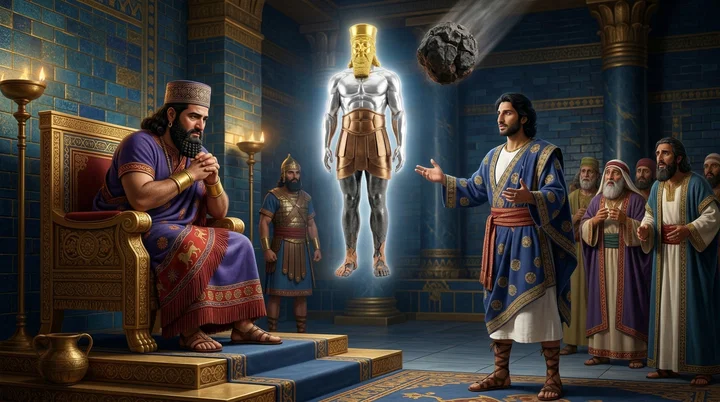
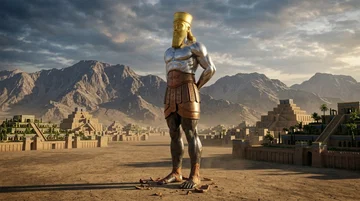
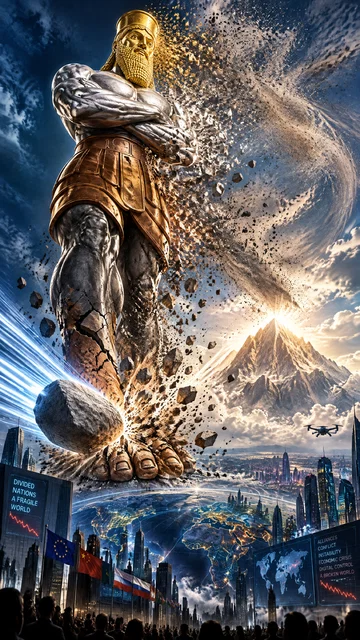
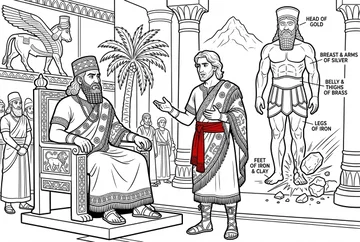
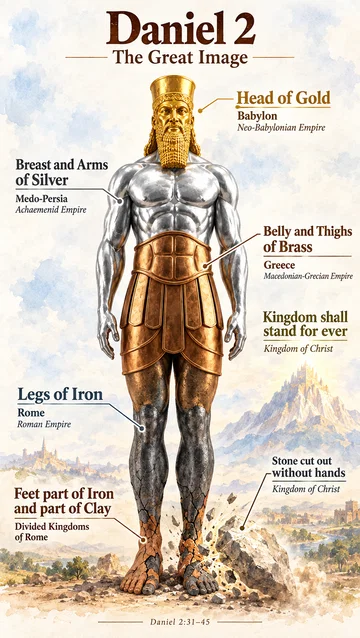
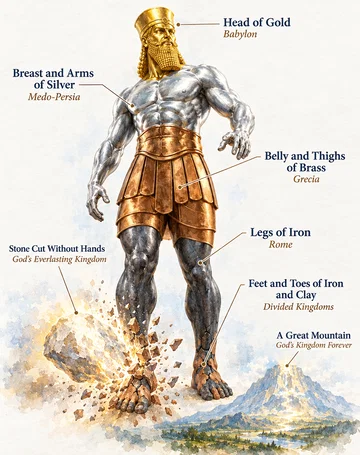
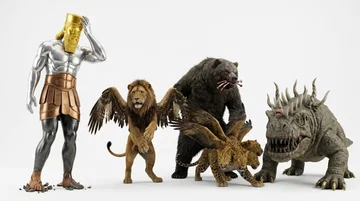
Cross-references 20 of 31
- Daniel 7:7
After this I saw in the night visions, and behold a fourth beast, dreadful and terrible, and strong exceedingly; and it had great iron teeth: it devoured and brake in pieces, and stamped the residue with the feet of it: and it was diverse from all the beasts that were before it; and it had ten horns.
The fourth beast’s iron teeth and destructive power portray Daniel’s fourth kingdom.
- Daniel 2:44-45
And in the days of these kings shall the God of heaven set up a kingdom, which shall never be destroyed: and the kingdom shall not be left to other people, but it shall break in pieces and consume all these kingdoms, and it shall stand for ever.
The fourth kingdom is broken as God establishes his everlasting kingdom.
- Daniel 7:23-24
Thus he said, The fourth beast shall be the fourth kingdom upon earth, which shall be diverse from all kingdoms, and shall devour the whole earth, and shall tread it down, and break it in pieces.
Daniel 7 is named alongside Daniel 2 as an exposition of the kingdoms.
- Daniel 8:20-25
The ram which thou sawest having two horns are the kings of Media and Persia.
The vision traces the succeeding empires and describes the power that follows Greece.
- Daniel 2:34-35
Thou sawest till that a stone was cut out without hands, which smote the image upon his feet that were of iron and clay, and brake them to pieces.
The fourth kingdom ends as God’s everlasting kingdom replaces earthly powers.
- Daniel 7:17-18
These great beasts, which are four, are four kings, which shall arise out of the earth.
The four kingdoms precede the saints’ possession of the everlasting kingdom.
- Daniel 2:33
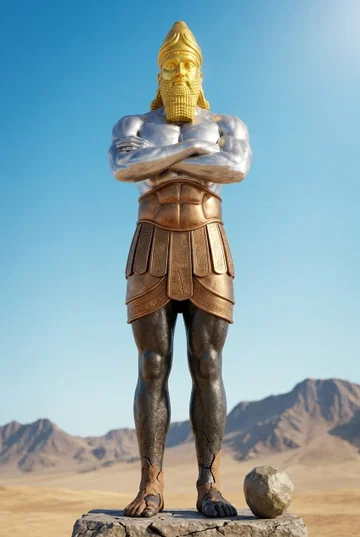
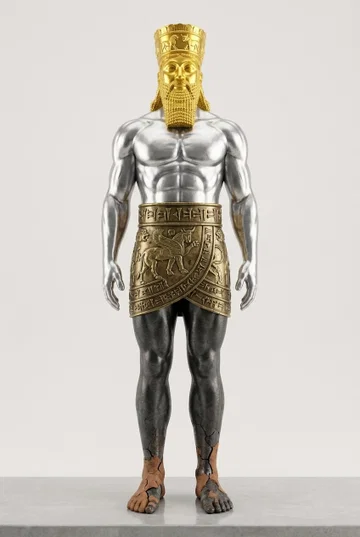
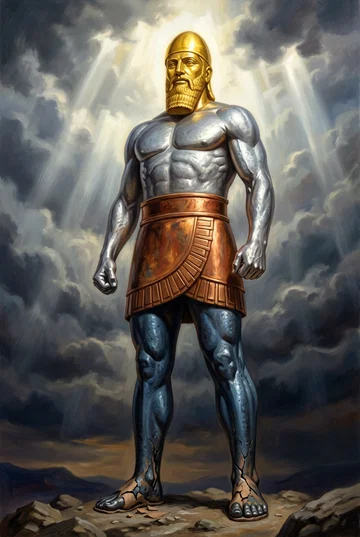
His legs of iron, his feet part of iron and part of clay.
The iron legs represent the fourth kingdom, identified with Rome.
- Daniel 7:24
And the ten horns out of this kingdom are ten kings that shall arise: and another shall rise after them; and he shall be diverse from the first, and he shall subdue three kings.
The ten horns are identified as ten kings arising from the fourth kingdom, paralleling Daniel’s divided kingdom.
- Daniel 7:3
And four great beasts came up from the sea, diverse one from another.
The four beasts parallel the four kingdoms represented by Daniel’s image.
- Psalms 2:8-9
Ask of me, and I shall give thee the heathen for thine inheritance, and the uttermost parts of the earth for thy possession.
Christ receives the nations and breaks them with a rod of iron.
- Daniel 2:28
But there is a God in heaven that revealeth secrets, and maketh known to the king Nebuchadnezzar what shall be in the latter days. Thy dream, and the visions of thy head upon thy bed, are these;
quoted as the promise fulfilled by the four kingdoms
- Daniel 7:13-14
I saw in the night visions, and, behold, one like the Son of man came with the clouds of heaven, and came to the Ancient of days, and they brought him near before him.
Daniel 7 is paired with Daniel 2 in the prophetic account of empire and God’s kingdom.
- Daniel 7:27
And the kingdom and dominion, and the greatness of the kingdom under the whole heaven, shall be given to the people of the saints of the most High, whose kingdom is an everlasting kingdom, and all dominions shall serve and obey him.
The fourth earthly power ends, and the saints receive God’s everlasting kingdom.
- Daniel 11:2-4
And now will I shew thee the truth. Behold, there shall stand up yet three kings in Persia; and the fourth shall be far richer than they all: and by his strength through his riches he shall stir up all against the realm of Grecia.
Its prophecy develops the sequence of world kingdoms represented symbolically in Daniel 2.
- Daniel 2:32
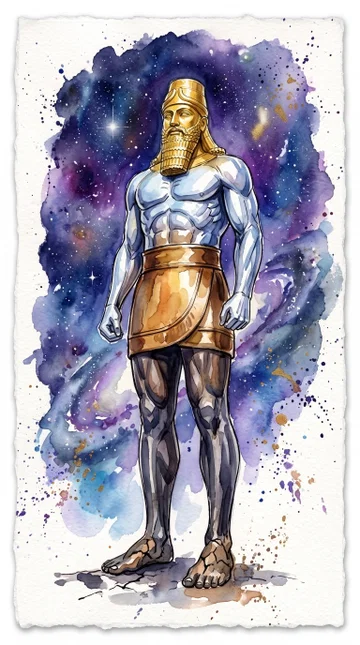
This image’s head was of fine gold, his breast and his arms of silver, his belly and his thighs of brass,
The silver breast and arms represent Media and Persia, following Babylon’s gold head.
- Daniel 8:3-8
Then I lifted up mine eyes, and saw, and, behold, there stood before the river a ram which had two horns: and the two horns were high; but one was higher than the other, and the higher came up last.
The ram and he-goat represent Medo-Persia and Greece, following Babylon in the kingdom sequence.
- Daniel 2:45
Forasmuch as thou sawest that the stone was cut out of the mountain without hands, and that it brake in pieces the iron, the brass, the clay, the silver, and the gold; the great God hath made known to the king what shall come to pass hereafter: and the dream is certain, and the interpretation thereof sure.
The stone cut without hands destroys the fourth kingdom and the image.
- Daniel 7:19
Then I would know the truth of the fourth beast, which was diverse from all the others, exceeding dreadful, whose teeth were of iron, and his nails of brass; which devoured, brake in pieces, and stamped the residue with his feet;
Both describe the fourth kingdom as a power that breaks and devours.
- Daniel 2:34
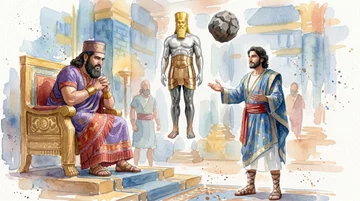
Thou sawest till that a stone was cut out without hands, which smote the image upon his feet that were of iron and clay, and brake them to pieces.
The stone strikes and destroys the image’s iron-and-clay feet.
- Daniel 2:1-13
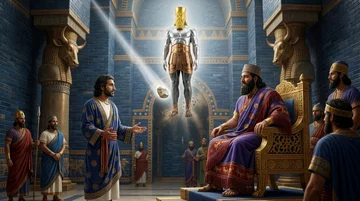
And in the second year of the reign of Nebuchadnezzar Nebuchadnezzar dreamed dreams, wherewith his spirit was troubled, and his sleep brake from him.
Nebuchadnezzar’s forgotten dream triggers the crisis over its interpretation.
Commentary part 1 of 2
Each commentary is drawn from primary sources: the writings of Ellen G. White and Adventist pioneers and periodicals. Each commentary is separate. Its own words are not a quotation; follow the references to read the source passages.
Ellen G. White
44 sources
The fourth kingdom after Babylon, Medo-Persia and Greece is Rome, which would be stronger and more fierce than those before it, breaking in pieces, crushing and subduing the nations as iron breaks and subdues all things.PK 498.1–499.1ST Apr 29, 1897PK 535.1ED 176.4Ms 39, 1899, par. 9–11
Its iron strength shows that earthly kingdoms rule by the ascendancy of physical power to break and bruise, while the Messiah's kingdom is to uplift and ennoble fallen humanity without carnal weapons or coercion.PK 498.1–499.1Ms 39, 1899, par. 5–8Lt 32, 1899, par. 6–11
Earthly kingdoms are temporal and decline in power and glory, and this fourth kingdom would be divided partly strong and partly broken until God sets up a kingdom that shall never be destroyed or left to others but shall break in pieces and consume all these kingdoms and stand forever.PK 498.1–499.1ST Apr 29, 1897PK 495.2PK 514.1
Its rise hundreds of years before it came shows that God knows beforehand the rise and fall of kingdoms and rules in the affairs of the world, changing times and seasons and removing kings and setting up kings to fulfill His purpose.1MR 49.1–2Ms 36, 1896, par. 3Lt 57, 1896, par. 4–7
The metals decrease in value from gold downward because nations decrease in moral worth as they separate from God and His law, and Rome fitly pictures this in casting God off and trampling His law until through wickedness and corruption it crumbled, warning that moral and spiritual weakness grows just in proportion as God is forgotten.Ms 39, 1899, par. 5–8RH Feb 6, 19001MR 50.4Ms 39, 1899, par. 9–11RH Feb 6, 1900
Dream Revelation and Setting
The dream belongs soon after Daniel and his companions entered the king's service, and its interpretation was still recalled more than half a century afterward.PK 491.1PK 527.2 Its revelation through Daniel rescued Daniel and the wise men from death and helped the king out of his difficulty.PK 491.116MR 336.2Ms 85, 1910, par. 41–44 What the magicians, astrologers, sorcerers, Chaldeans and wise men of Babylon could not tell was made known by God in heaven who reveals secrets, showing what shall be in the latter days through Daniel in a night vision.ST Apr 29, 1897 God required the forgotten dream to be revived in order to silence the wise men and expose the inability and inefficiency of their scientific power, showing human wisdom to be folly and the superior wisdom of those who worship Him.Lt 151, 1904, par. 3–5 This was opened to Hebrew captives who felt themselves exiles in a strange land dependent on God alone, not to those charmed by Babylon's splendor, and its lessons were given for people living in the present day.FE 412.1Lt 151, 1904, par. 3–5
God gave the prophecy in pictures and symbols to appeal to understanding through sight, so that lessons could be given to the people and understood better than in any other way.HSFM 211.5–212.4 These symbols were to be represented plainly upon tables so that he who reads can understand, and God's own use of such pictures shows that picture-making itself is not sin and is not prohibited by the second commandment, which prohibits image worship.HSFM 211.5–212.4 Daniel was taught by God to understand this symbolic revelation of future world history and to record it for later generations through the close of time.PK 484.3 It is a figurative outline of historical events leading to the close of earth's history, whose prophetic waymarks must be guarded and whose events must be correctly applied in their order.PK 484.3Ms 31, 1896, par. 1–2
The dream was light that exalted Jehovah as more powerful than every earthly kingdom and foretold what would come upon Babylon and the kingdoms after it.Lt 109a, 1898, par. 5–8Ms 168, 1898, par. 1–3Ms 47a, 1898, par. 2–5 God's providence incessantly working over human affairs brought the idolatrous king into reasoning relation with Daniel for that purpose, to reach even idolatrous minds.Lt 109a, 1898, par. 5–8 Dreams and providence are to be read in the light of the living Oracles, not Scripture in the light of dreams.Lt 109a, 1898, par. 5–8Ms 168, 1898, par. 1–3Ms 47a, 1898, par. 2–5 Nebuchadnezzar did the opposite, reading the interpretation through his own idolatrous mind, ambitions and human understanding to exalt Babylon and himself.Lt 109a, 1898, par. 5–8Ms 168, 1898, par. 1–3Ms 47a, 1898, par. 2–5 The image was meant to make God's purpose known and to show that earthly kingdoms would pass away and be followed by the kingdom of heaven which would fill the earth, but it was rejected and misused to glorify human power and to hinder the spread of God's knowledge.PK 505.112MR 218.2–220.1 He set up a golden image, identified with the dream's image, representing Babylon and especially himself as an earthly object of worship to convert the nations.12MR 218.2–220.1Lt 109a, 1898, par. 5–8Ms 168, 1898, par. 1–3ST Oct 19, 1882 Despite that defiance the prophesied fall of Babylon still came at an hour of feasting and revelling.Lt 109a, 1898, par. 5–8
Iron Strength of Fourth Kingdom
The fourth universal kingdom after Babylon and the two kingdoms after it shall be strong as iron.PK 498.1–499.1ST Apr 29, 1897PK 501.11MR 49.1–2 It follows Babylon the head of gold, an inferior second kingdom, and a third kingdom of brass that shall bear rule over all the earth, and stands in the succession before the kingdom that the God of heaven shall set up.PK 498.1–499.1ST Apr 29, 18971MR 49.1–2 It is stronger and more forceful than those before it, more fierce, determined and powerful than any kingdom before it.Ms 39, 1899, par. 5–8RH Feb 6, 19001MR 49.1–2 For as iron breaks in pieces, crushes and subdues all things, so it shall break in pieces, crush and bruise and subdue the nations of the world.PK 498.1–499.1Ms 39, 1899, par. 5–8RH Feb 6, 1900PK 501.1
The fourth of the great world empires traced by prophecy in succession after Babylon, Medo-Persia and Greece is Rome.PK 535.1ED 176.4 It is the vast empire of Rome with iron power to subdue, strong as iron to subdue and break in pieces all nations.Ms 39, 1899, par. 9–11RH Feb 6, 1900 Like the other empires it was allowed a period of testing, failed to fulfill God's purposes, lost its glory and power, and was replaced by another, its glory fading and its power departing.PK 535.1ED 176.4
Its iron strength means earthly kingdoms rule by the ascendancy of physical power, breaking in pieces and subduing.Lt 32, 1899, par. 6–11 By contrast the Messiah's kingdom, marked by a lamb, is to be established to uplift and ennoble fallen humanity.Lt 32, 1899, par. 6–11 That kingdom the Lord was to establish and by His power maintain against all the power and craft of Satan, banishing every carnal weapon and every instrument of coercion.Lt 32, 1899, par. 6–11
Succession Toward Everlasting Kingdom
The dream and its interpretation made the future known, revealing what kingdoms of men will come to pass in metallic divisions representing four great world-moulding empires that would rule before the end of human dominion.PK 495.1PK 495.3–496.2 The sequence begins with Babylonia as the head of gold, followed by an inferior second kingdom and a third kingdom of brass that shall bear rule over all the earth, with the iron kingdom standing as part of the later succession of earthly powers showing the course of history toward the end.PK 495.1PK 495.3–496.213MR 63.1–3Ms 163, 1898, par. 5–11Ms 15, 1896, par. 10–12 That succession of earthly kingdoms was shown to run its course toward the end before God sets up His everlasting kingdom, and the kingdoms would be of decreasing value from Nebuchadnezzar's kingdom downward.13MR 63.1–3Ms 163, 1898, par. 5–11Ms 15, 1896, par. 10–12
Earthly kingdoms are temporal and must pass away, declining in power and glory, ruling in succession until God sets up a kingdom that will supersede all earthly powers.PK 495.2PK 514.1 Babylon would fall and other earthly kingdoms would rule in succession until that kingdom comes, and the only kingdom that will never pass away is Christ's kingdom, represented by the Living Stone.PK 495.2PK 514.1
The fourth kingdom after Babylon and the third kingdom would be powerful and destructive, like iron that crushes and subdues everything.PK 498.1–499.1ST Apr 29, 1897 The later image of iron mixed with clay shows that this kingdom would be divided, partly strong and partly broken.PK 498.1–499.1 Its place in the succession stands before the kingdom that the God of heaven shall set up in the days of these kings, which was made known not by magicians, astrologers, sorcerers, Chaldeans and wise men, who could not tell the dream or show the interpretation, but by God in heaven who reveals secrets and made known what shall be in the latter days through Daniel in a night vision.ST Apr 29, 1897 That stone kingdom set up by God, represented by the stone and the Living Stone which is Christ's kingdom, shall never be destroyed, shall never pass away, shall not be left to other people and shall fill the earth, but shall break in pieces and consume all these kingdoms and stand forever, while earthly kingdoms would pass away to be followed by the kingdom of heaven.PK 498.1–499.1ST Apr 29, 1897PK 495.2PK 514.112MR 218.2–220.1
God's Sovereignty Over Nations
The interpretation of the dream exalted Jehovah as more powerful than every earthly ruler.7T 161.1Lt 109a, 1898, par. 5–8Ms 47a, 1898, par. 2–5 It was given to show the idolatrous nation that the God of heaven is Ruler over all monarchs and kings of earth.Ms 47a, 1898, par. 2–5Lt 32, 1899, par. 6–11 His name is God over all gods, and the rulers of earthly kingdoms have a Ruler in the heavens.Lt 32, 1899, par. 6–11 That heavenly Ruler would establish His kingdom and by His own power maintain it against all the power and craft of Satan.Lt 32, 1899, par. 6–11
Like the kingdoms before it, Rome as the fourth empire was given a period of trial and testing, and its place and continuance turned on obedience or disobedience to prove whether it would exalt the one Ruler, the only true God.1MR 49.1–2PK 535.1ED 176.4 Each empire in succession was allowed such testing, and each failed to fulfill God's purposes, lost its glory and power, and was replaced by another.PK 535.1Lt 57, 1896, par. 4–7ED 176.4 So Rome's glory faded and its power departed.PK 535.1ED 176.4 This history shows God bringing down human pride and laying human glory in the dust, humbling rulers, bringing them down and setting others up as He moves history toward His everlasting kingdom.Lt 57, 1896, par. 4–7Ms 142, 1901, par. 5 That movement points to events being fulfilled in the last days.Lt 57, 1896, par. 4–7
Its rise was predicted hundreds of years before it came upon the stage of action, showing the rise and fall of kingdoms is known beforehand by God and foretold through His prophets.1MR 49.1–2RH Feb 6, 1900 Its predicted place in the succession demonstrates that God is the ruling power in the affairs of the world, changing the times and the seasons and removing kings and setting up kings to fulfill His own purpose.1MR 49.1–2Ms 36, 1896, par. 3 He brings nations forward at the predicted time to fill their appointed place, while kingdoms rise and fall according to His purpose.1MR 49.1–2Ms 36, 1896, par. 3 Rulers who think they are carrying out their own purposes nevertheless fulfill God's word and plan, and God alone remains supreme over human powers.Lt 57, 1896, par. 4–7RH Feb 6, 1900
The metals of the image decline in value from the gold head downward, signifying that nations decrease in value as they separate further from God.RH Feb 6, 1900Ms 15, 1896, par. 4–613MR 60.1–61.2 The kingdoms represented declined in moral worth as they turned from God, cast off allegiance to Him and His law, and forgot Him.Ms 39, 1899, par. 5–8RH Feb 6, 19001MR 50.4 Those that followed became increasingly base and corrupt, fierce yet sinking lower and still lower in the scale of moral worth.Ms 39, 1899, par. 5–81MR 50.4PK 501.3 This was literally fulfilled in the history of nations.PK 501.3
Proven Fulfillment and Present Warning
The iron kingdom belongs to a prophecy whose fulfillment is seen in the record of ancient history with remarkable and wonderful exactness.GC88 364.2GC 364.2–3 That exact fulfillment testifies to the inspiration of the Scriptures and gives an anchor for faith amid rationalism and skepticism.GC88 364.2GC 364.2–3 It is literally fulfilled in the history of nations, showing the kingdoms after Babylon and Medo-Persia sank lower and still lower in the scale of moral worth, becoming even more base and corrupt.PK 501.3
Rome fitly pictures this deterioration of religion, for though strong as iron with power to subdue, it cast God off and forgot Him and sank lower in moral value.Ms 39, 1899, par. 9–11RH Feb 6, 1900 Like the kingdoms before it, it trampled the law of God under foot, while wickedness, blasphemy and corruption prevailed until it became more fierce, determined and powerful than any kingdom before it in breaking in pieces and subduing all nations, yet more base and corrupt than those that preceded it.Ms 39, 1899, par. 9–11RH Feb 6, 1900 It sank lower and lower until the vast empire crumbled into pieces, showing that moral and spiritual weakness grows just in proportion as God is forgotten.Ms 39, 1899, par. 9–11RH Feb 6, 1900
The same iron strength therefore teaches that when men forget God and refuse to obey His law they grow weak morally and spiritually.RH Feb 6, 1900 They are humiliated and tested by God, and receive the penalty of transgression if they do not humble their hearts and confess their sins.RH Feb 6, 1900 The divine science of eternity was opened to Hebrew captives who felt themselves exiles in a strange land with God as their only dependence, and not to those charmed by the splendor of Babylon, after the wise men were silenced by being required to revive the forgotten dream and acknowledge their inability and the inefficiency of their scientific power, to show human wisdom to be folly and the superior wisdom of those who worship Him.Lt 151, 1904, par. 3–5 By that revelation God sought to lead princes and people from broken cisterns to the living fountain, and the same treasures of eternity and glories of the eternal world are revealed today to those who refuse to be charmed by things of time and sense and who come out from the world and are separate while faithfully performing their assigned duties.Lt 151, 1904, par. 3–5
Sources
Pioneers and periodicals
459 sources
The fourth kingdom is Rome, standing fourth after Babylon, Medo-Persia and Greece as successive universal world kingdoms.ST Aug 1, 1916ST May 29, 1884RH Sep 22, 1863ST Jun 6, 1916 Its iron stands for unbending strength that breaks in pieces, subdues, crushes and bruises all it meets.ST Aug 1, 1916ST Dec 20, 1910ST Apr 2, 1894RH Oct 31, 1854RH Apr 9, 1857 Like iron it was stronger than those before it, conquering Greece and ruling the world in undivided pagan power.ST Apr 2, 1894RH Oct 31, 1854RH Apr 9, 1857ST Dec 3, 1912ST Jul 7, 1887 It afterward becomes divided and continues divided in feet and toes of iron mixed with clay, as ten kingdoms that never reunite until the end.ST Aug 1, 1916ST Jun 15, 1915RH Nov 26, 1914RH Jul 23, 1872RH Dec 11, 1856 In the days of those divided kings God sets up His everlasting kingdom, which by sudden blow at Christ's second coming breaks all earthly kingdoms together and stands forever.ST May 1, 1907ST Aug 1, 1916ST Dec 20, 1910ST Mar 17, 1887
Meaning of Iron Symbol
The iron stands for strength and power to break in pieces, subdue, crush, bruise and grind whatever it meets, that is unbending imperialism, political despotism, brutal force, cruelty, rigor, and invincible fortitude and hardiness.ST Aug 1, 1916ST Dec 20, 1910ST Apr 2, 1894RH Oct 31, 1854ST Jun 15, 1915 It identifies the fourth kingdom as Rome, with universal rule, whose iron legs conquered, subdued and crushed other powers in one stage of the symbolic history running from Babylon to the destruction of earthly powers and the setting up of God's everlasting kingdom.ST Aug 1, 1916ST Dec 20, 1910RH Oct 31, 1854ST Jun 15, 1915ST Mar 17, 1887 Its iron continues into feet mixed with clay, showing the kingdom later becomes divided, partly strong and partly broken and fragile, whose parts do not cleave or unite securely and whose attempts at union by mingling fail.ST Aug 1, 1916ST Jun 15, 1915ST Mar 17, 1887 Like iron, Rome was stronger than the kingdoms before it, breaking in pieces and bruising Greece under Alexander and his successors and subduing the kingdoms that came before it.ST Apr 2, 1894RH Oct 31, 1854RH Apr 9, 1857ST Aug 18, 1881RH Mar 2, 1869 It succeeded Greece in universal empire by conquest, so that only one rules at a time, gaining the empire of the world, with resistance fatal.ST Apr 2, 1894RH Apr 9, 1857ST Aug 18, 1881RH Mar 2, 1869ST Jul 7, 1887 At the beginning of the Christian era its rule extended across many lands, it dominated the known world for centuries from 161 B.C. to A.D. 476, and its emperor's decree to enroll or tax the people showed the reach of its authority.ST Apr 2, 1894ST Jul 7, 1887
The fitness of the emblem is seen in that in the former part of its prosperity Rome was remarkable only for valor, hardiness, frugality and poverty, and like iron it broke and subdued all before it, making more extensive conquests through more ages than any people had ever made.ST May 29, 1884ST Dec 12, 1878ST Jan 20, 1909 It successively overcame kingdoms and extended rule across the known world East and West, overcoming the Macedonian phalanx and bringing the remaining parts of Alexander's empire under Roman rule, advancing rapidly to the Euphrates, Danube, Rhine and ocean.ST Dec 12, 1878ST Jun 4, 1885ST Jan 20, 1909 Its dread and terror were never equaled, devouring and breaking in pieces with great iron teeth and stamping the residue and grinding the nations into dust beneath its feet, the same power as the dreadful and terrible fourth beast of Daniel 7.ST May 29, 1884 This crushing oppressive dominion made resistance fatal and escape nearly impossible, as illustrated by the exile of Ovid, and by Rome taking Jerusalem and destroying the city and temple.ST Dec 12, 1878ST May 27, 1875 Its iron crown aptly symbolizes a rule risen with remarkable speed to subjugate nations, continuing in later form after the seat moved east as a long-lasting strong cruel despotism persecuting the saints.ST Jun 4, 1885
Its iron strength was its all-conquering armies, by which its greatness was built by destroying human life at the expense of others to gain unlimited sway over the earth.ST Jun 6, 1906ST Jul 23, 1874ST Nov 14, 1900 So far as human hands could act, it rested for ages in complete security with no prince or nation able to rival it or break its worldwide peace, holding the larger part of mankind under a single will with power to advance or hold back human progress.ST Jun 6, 1906ST Oct 29, 1885 Its emperor was treated as sacred and his house as divine, and movements in Judea were noted because his dominion had a God-appointed place.ST Oct 29, 1885 That military power did not last, for conquest was followed by luxury, lust and decay until dominion was broken into fragments, proving that nations that take the sword perish with the sword and that true greatness is not gained by war, in contrast to Christian greatness.ST Jun 6, 1906ST Oct 10, 1900ST Nov 14, 1900 Its rule was marked by great extent and tyranny, a great cruel power of imperial spirit, strong and crushing as an iron monarchy.ST Jul 23, 1874ST Oct 10, 1900ST Nov 14, 1900
Iron signifies union and strength because metals such as iron, like gold and silver, can be hammered, melted, fused and welded together, fitly picturing strong imperial Rome organized through municipal government and imperial dynasties.ST Nov 7, 1900ST Oct 11, 1905ST Feb 26, 1880 This is in contrast to clay, which represents republican government, social democracy and socialism and does not blend with iron.ST Nov 7, 1900ST Apr 13, 1915ST Oct 7, 1913ST Oct 11, 1905 The iron represents imperial, monarchical, militaristic rule and unlimited autocracy and imperialism in Europe, later intermingled with and giving way to the clay of republicanism, socialism and social democracy.ST Apr 13, 1915ST Oct 7, 1913 The strong iron phase runs down through limited monarchies to the divided clay condition, with later revolutions weakening and dividing the empire into toes, manifest in socialistic and republican principles, revolutions, and modern political movements including socialism, republicanism and democracy.ST Apr 13, 1915ST Oct 7, 1913ST Oct 11, 1905ST Feb 26, 1880 The image is completed when these changes have taken place, and the next event is God's kingdom destroying the earthly kingdoms.ST Feb 26, 1880
Four Kingdoms in Succession
The fourth kingdom is Rome, shown by the legs of iron, strong as iron to break in pieces and subdue and bruise and crush, standing fourth after Babylon and Medo-Persia and Greece as pagan Rome, the iron monarchy.ST Aug 1, 1916ST May 29, 1884RH Sep 22, 1863ST Apr 2, 1894 Its prophetic beginning was 161 B.C. when it became connected with God's people by league with the Jews, and it lasted 644 years to its full division into ten kingdoms in A.D. 488, also reckoned to A.D. 476, ruling as undisputed universal empire from 161 B.C. to A.D. 476 with authority ordering a world-wide enrollment or tax.RH Sep 22, 1863ST Apr 2, 1894ST Jun 22, 1915 Rome conquered the Grecian kingdoms and dominated the known world for centuries with greater might and long rule, and it was to be broken into numerous smaller kingdoms remaining divided until Christ comes in person to overthrow them and establish His everlasting reign, with no later world empire succeeding.ST Apr 2, 1894ST Jun 22, 1915
The verse is third in a succession of four successive universal world kingdoms from Daniel's time to the close of earthly things.ST Jun 6, 1916ST Oct 14, 1889 The head of gold is Babylon under Nebuchadnezzar given kingdom and power and strength and glory, the breast and arms of silver is the inferior second kingdom of Medo-Persia, the belly and sides of brass is Greece bearing rule over all the earth under Alexander and his successors, and the iron is Rome.ST May 29, 1884ST Oct 14, 1889ST Dec 16, 1880RH Sep 27, 1853 The iron kingdom is not the fragments of Alexander's empire.ST May 29, 1884 The unified Roman kingdom of iron legs is followed by Rome in its divided state of iron and clay and then by the setting up of the everlasting kingdom of the Lord Jesus Christ.ST Oct 14, 1889ST Dec 16, 1880RH Sep 27, 1853
The metals of the image, rather than its anatomical parts, symbolize the kingdoms of man.ST Jan 8, 1880ST Dec 29, 1909 The king is put for the kingdom he represents, beginning with Babylon under Nebuchadnezzar as the head of gold as the defined starting point of Gentile world dominion after Judah's independent government ended.ST Jan 8, 1880RH Sep 22, 1874 They form an ordered series of successive earthly governments beginning in Daniel's day and extending through successive phases to the end, whose grandeur and glory do not last, with head of fine gold and breast and arms of silver and belly and sides of brass and legs of iron and feet part of iron and part of clay reaching down to the present time and a little beyond until the stone cut out of the mountain without hands smites the image upon the feet.ST Jan 8, 1880RH Sep 22, 1874RH Mar 23, 1869ST Oct 8, 1896
The metals decline in value from gold to silver to brass to iron to iron and clay, showing marked decline and deterioration, while iron surpasses the three before it in crushing strength before becoming weakened and divided and partly strong and partly broken.RH Dec 17, 1872ST Jun 4, 1874ST Apr 5, 1877RH Oct 22, 1901 The parallel bear vision likewise represents a kingdom inferior to the preceding lion, for Medo-Persia was less wealthy and magnificent than Babylon and had a less brilliant career.ST Apr 5, 1877 The iron joining the brass represents Rome succeeding Greece in continuous imperial succession of empires whose dominion passes from one to another, standing fourth in five universal kingdoms with Babylon as gold and Persia as silver and Grecia as brass and Rome as iron followed by the immortal kingdom of God.RH Dec 17, 1872ST Jun 4, 1874RH Jul 16, 1908 Nebuchadnezzar's all-gold image rejected this forecast by asserting that Babylon would have no successor and would rule the world permanently, ignoring the prediction of later kingdoms and that none before the final kingdom would endure forever.RH Oct 22, 1901RH Aug 6, 1908
Egypt and Syria do not fit the fourth kingdom, for they did not crush the others and were not universal and were two separate kingdoms.RH Apr 5, 1860 Rome is fourth because it was the next universal kingdom after Greece recognized in Bible and secular history.RH Apr 5, 1860RH Jan 31, 1856 Rome is the universal empire that succeeded Grecia, coming forth from one of the divisions of the Grecian empire with superior strength to Medo-Persia and Grecia, and the succession of kingdoms is by conquest.RH Jan 31, 1856ST Aug 25, 1881 Alexander's generals did not conquer his empire but only divided what he left, so they are a continuation of the third kingdom Grecia, and together they were weaker than Babylon and Medo-Persia and Alexander's own empire.ST Aug 25, 1881ST May 29, 1884 Analogy requires the fourth kingdom to have a nationality of its own distinct from Babylon and Persia and Grecia, which is found in the Romans alone, rising on European territory and taking its name from its birthplace as Grecia did and occupying the territory of the former kingdoms by conquest, holding the eastern territory of its predecessors together with its western possessions and additions from conquest and hereditary lands with the strongest claim to universal rule.ST Aug 25, 1881ST May 29, 1884ST Dec 3, 1912 It is not chronologically confined to the time between Alexander and the birth of Christ, and these world-dominating powers beginning with Babylon are identified by succession to world domination, not by possession of particular cities or territory.ST Aug 25, 1881ST Dec 3, 1912
The dream was given in 603 B.C., three years after Nebuchadnezzar was associated with his father in rulership in 606 B.C. at the beginning of the seventy years' captivity, in the time of the Babylonian Empire dating from about 625 B.C. and brought to its grandeur under Nebuchadnezzar whose life covered its glory.ST Jun 30, 1914ST Sep 10, 1885 After the magicians and astrologers and sorcerers and Chaldeans and wise men of Babylon could not tell the dream or show the interpretation, God in heaven who reveals secrets made known through Daniel in a night vision what shall be in the latter days, the king's thoughts about the dream coming to him while he was in bed.ST Apr 29, 1897ST Jan 16, 1901 The statements of Daniel 2 were given by Daniel from the God of Heaven, and Nebuchadnezzar himself was a part of the image seen in the dream even though the intention was to make known what shall be in the latter days.ST Oct 11, 1883 The record is inspired, but that does not mean Nebuchadnezzar himself or his words were inspired.ST Jul 16, 1912
The vision stands in symbolic vision like Daniel 7 and 8, unlike Daniel 11 given mostly in plain language, with God revealing things to come in figures and parables repeating the same things revealed again by different visions so the visions must be combined all in one to understand them.ST Jan 10, 1878RH Feb 18, 1873 It belongs to the Aramaic or Chaldee portion from Daniel 2:4 to the close of Daniel 7 used as court language for court speeches, given nearly seventy years before the last vision in the third year of Cyrus about B.C. 536.ST Jan 10, 1878 It was given to a heathen idolater and not begun in the religious excitement of a Jewish believer, introduced through the king's fear that Babylon would also decay or be conquered and that another power might bring it under its rule, and God made truth known through Gentile kings when Israel failed to carry the gospel to the nations.ST Oct 2, 1901RH Nov 11, 1902 Nebuchadnezzar rejected the succession by making an all-gold image, while the same end was shown to Daniel in beasts with added characteristics and new symbols bringing out important movements running with that history that metals were little adapted to express for God's prophet and people.RH Oct 22, 1901
The verse belongs within the image's sequence and dream account presenting the course of world history through a great image whose legs are iron and whose feet are partly iron and partly clay with the stone striking and breaking the feet, as history revealed in advance by God.ST Apr 30, 1894 It belongs to the succession to Greece and to the Old World setting against the background of empires conquering and ruling other nations where Babylon itself had brought nations under an iron yoke. It is listed as the fourth kingdom of the five-kingdom series which is the Roman empire divided into ten kingdoms, a division accomplished in A.D. 483, and as part of the great metallic image which is the alphabet of all symbolic prophecies beginning with the history of the great world empires and reaching to the everlasting and universal reign of Christ.RH Nov 19, 1857ST Jan 8, 1880RH Mar 23, 1869ST Oct 8, 1896
Rome's Rise and Rule
In prophecy a kingdom is dated not from its earlier political existence but from the time it becomes connected with God's people, since no nation enters prophecy until it assumes that relation.RH Apr 22, 1862RH Mar 12, 1857 So Babylon the head of gold is dated from B.C. 677 when Manasseh was taken captive and the Jews became tributary, though Babylon arose much earlier out of the old Assyrian empire founded by Nimrod and dated as a distinctive empire from B.C. 747 when that empire was divided.RH Apr 22, 1862 Rome was founded in 754 B.C. but did not enter prophetic history until 161 B.C.RH Apr 22, 1862RH Apr 22, 1862 It was built by Italians from the far west out of a puny village called Rome on the small river Tiber into the queen of nations, the new Babylon, the so-called eternal city, the greatest, most terrible and enduring of empires, breaking and bruising all before it.RH Mar 12, 1857ST Jun 9, 1914ST Jun 8, 1915 When the prophecy was given Persia was without power and fame, Greece was nothing, and Italy was less still, so no human foresight could have believed obscure Persians would overthrow mighty Babylon, Greeks and Macedonians would rule to the Indus, and Italians would gain world rule.ST Jun 9, 1914ST Jun 8, 1915
Rome's prophetic beginning was 161 B.C. when Judas Maccabaeus sent an embassy to the Romans for aid against the oppressing Syrian kings and made a league of mutual friendship and defense, which began Roman ascendancy over the Jews.RH Dec 10, 1857ST Feb 12, 1880ST Apr 9, 1896 That league ended the third kingdom of brass after its one-hundred-seventy-year rule from the battle of Arbela in 331 B.C.RH Dec 10, 1857ST Feb 12, 1880 Rome had conquered the Macedonian division of Grecia seven years before, then subjugated the Syrian division in B.C. 65 and Egypt in B.C. 30, and then ruled the world.ST May 20, 1897ST Apr 9, 1896 Its rise as the fourth kingdom strong as iron succeeding Grecia in dominion of the world is therefore dated in prophecy from B.C. 161 rather than B.C. 30, holding the sceptre of universal dominion as mistress of the world when the decree went out from Caesar Augustus that all the world should be taxed.RH Sep 22, 1874RH Apr 22, 1862ST Jun 19, 1884
Rome's rise is placed at the conquest of Macedonia in 168 B.C. and victory over Perseus at Pydna ending Alexander's empire, its league with the Jews seven years later, and the completion of world empire with the conquest of Egypt in 30 B.C.ST May 20, 1897RH Mar 10, 1904 Beginning around 150 B.C. it exercised iron political despotism, brutal force, and capacity to conquer, plunder, subdue, crush and hold nations under oppressive rule for six centuries.ST Jun 15, 1915ST Jun 16, 1914 It was fully established after Pydna and became undisputed ruler of the world, having fully completed the conquest of Greece half a century before Christ's first advent, when it stood undivided at the height of its power.ST Feb 15, 1883RH Mar 10, 1904 Alexander's early death gave Rome more time to develop strength before the deciding contest, and Rome later was gradually broken into pieces by invasions from the north until its final destruction in A.D. 476.ST Aug 13, 1902ST Feb 15, 1883RH Mar 10, 1904
Rome lasted 644 years from 161 B.C. to its full division into ten kingdoms in A.D. 488, longer than the preceding empires combined.RH Sep 22, 1863 Its rule is also reckoned from 161 B.C. to A.D. 476 as imperial Rome conquering the Grecian kingdoms, dominating the known world for centuries, and ordering a world-wide enrollment or tax.ST Apr 2, 1894 Other reckonings give Babylon until 538 B.C., Medo-Persia from 538 to 331 B.C., Grecia from 331 to 168 B.C., and Rome as united empire until A.D. 351 or about A.D. 350 when the first kingdoms were established, with its outline extending to A.D. 483 and supremacy to the fifth century.RH Oct 1, 1914ST Jun 19, 1884 Like iron Rome was powerful in war, conquering Greece and breaking and subduing enemies, its imperial authority extending across many lands at the beginning of the Christian era, then declining as peoples came from the north and dividing into ten kingdoms corresponding to the statue's toes and the terrible beast's horns.ST Jul 7, 1887ST Sep 21, 1882
Rome alone answers the description because it had crushing strength to break in pieces and subdue all the kingdoms before it and held universal empire, as shown when Caesar Augustus as Roman emperor decreed that all the world should be taxed.ST Apr 2, 1894ST Jun 25, 1874 It bore rule in the days of Christ so the kingdom could be proclaimed at hand as next in order, was universal in power at His discourse, and held dominion when Christ the heir of David was born.ST Dec 3, 1912ST Jul 7, 1887 Through Herod its governor it tried to destroy the child Jesus, and it extended its rule westward and northward with its western dominion later divided into ten divisions that remained major forces in world affairs.ST Dec 3, 1912ST Sep 21, 1882
Rome's universal dominion did not mean direct occupation of the whole earth, for its own territory and seat of power were in Europe in the west while it extended authority over the territories of earlier empires and other powers yielded to its supremacy, the kingdom proper being distinguished from its dependencies.ST Jan 27, 1898ST May 29, 1884 It added fresh western territory of the Western Empire to the eastern territories of Babylon, Persia and Greece, with transfer of supreme power over the whole image to Rome since each succeeding metal rules over the portions above it as well as its own.RH Dec 12, 1907RH Jan 16, 1908 It became master of the world not by a single decisive act as Persia and Greece did but by gradual growth that waxed exceedingly great, subduing Syria in B.C. 65 and Egypt in B.C. 30.ST May 29, 1884 Its arms advanced to the Euphrates, the Danube, the Rhine and the ocean, successively breaking nations and kings, taking in the whole south of Europe, France, England, the greater part of Netherland, Switzerland and the south of Germany, Hungary, Turkey and Greece, with possessions in Asia and Africa, occupying the finest thousand-mile belt around the Mediterranean with all great ancient cities, so that to resist was fatal, flight was nearly impossible, and for three centuries after Actium there was silence in the world.RH Mar 2, 1869ST May 29, 1884
This iron strength belongs to Rome in its unified imperial pagan state down to Christ's first coming, distinct from the later divided kingdom of feet and toes of iron and clay.RH Jun 19, 1860ST Jan 8, 1880RH Apr 7, 1863 The iron legs are Rome in its imperial period, strong like iron to break and subdue what it overcomes, followed by Rome in its divided state of iron and clay and then by the setting up of the everlasting kingdom.ST Oct 14, 1889ST May 8, 1907ST Jul 1, 1897 This describes Rome in its early pagan state at Christ's first coming before division, in whose world the gospel was preached even in Caesar's household, after which Rome rejected light and was divided.RH Apr 7, 1863 It reached its summit under Marcus Aurelius with decline beginning under Commodus in A.D. 180, weakened by internal conflict and plundered by Alaric, Genseric and Attila, its civil power now gone and ecclesiastical power questioned.ST Oct 14, 1889
The four world empires are associated with the Mediterranean region, with Rome as the fourth kingdom in that sequence.RH Dec 17, 1908 Babylon and Medo-Persia were seated in Asia, Greece in Eastern Europe, and Rome still farther west fully occupying the ground to the Atlantic coast, for the course of empire moves from east to west like the sun from Asia the cradle of the race.RH Feb 8, 1870RH May 12, 1874 Spain was part of the Roman empire of the Caesars, and after Rome's power northern barbarians overran and settled Spain in connection with the kingdom's later divisions.RH Dec 17, 1908 Civilization and Christianity have crossed the Atlantic with that westward march, so after Rome the next great empire to act in the last act must be found farther west on the American continent, the fifth, noblest and last power completing the circuit where the day ends its course.RH Feb 8, 1870RH May 12, 1874
Division into Ten Kingdoms
The iron of the legs runs on into feet mixed with clay, showing the same fourth kingdom passing from unity into a later divided condition that is partly strong and partly fragile, of unequal strength.ST Aug 1, 1916ST Jun 15, 1915RH Nov 26, 1914RH Nov 26, 1914RH Jun 19, 1860 The parts do not cleave together, just as iron does not mix with clay, and attempts to unite them by mingling with the seed of men and by marriage fail.ST Aug 1, 1916ST Jun 15, 1915ST Jun 16, 1914 That divided state is distinct from the undivided legs, belonging to the feet and toes that follow them.RH Nov 26, 1914RH Nov 26, 1914RH Jun 19, 1860
The legs of iron are Rome in its united strong state, and the feet and ten toes of iron mixed with clay are Rome in its divided state, continuing in divided form rather than ending as a single power.ST Nov 9, 1882RH Apr 7, 1874ST Jun 5, 1884ST Aug 3, 1915 Though their number and boundaries changed, those lesser kingdoms retained much of Rome's strength and were still known as the ten kingdoms.ST Nov 9, 1882RH Apr 7, 1874 The chapter does not itself give the number of the divisions, but Daniel 7 supplies that ten kings would arise, and the dominion was broken up by incursion of tribes from the north with ten kingdoms established upon its ruins within the boundaries of the old empire.ST Dec 30, 1903
The iron kingdom was to be divided and not united again until God appears, into ten parts corresponding to the ten toes of the image and the ten horns, in whose days God sets up His kingdom.RH Jul 23, 1872RH Dec 11, 1856RH Apr 20, 1876ST Jun 30, 1914RH Dec 13, 1853 That divided condition would continue until the end of time and never be reunited as one, just as iron does not mix with clay.RH Jul 23, 1872ST Dec 22, 1881ST Jun 30, 1914 After breaking and subduing other powers, Rome would itself be broken up into separate kingdoms on its own territory.RH Jul 23, 1872RH Dec 11, 1856ST Dec 22, 1881
That division was accomplished a little before A.D. 500, between A.D. 356 and 483, in A.D. 483 and by the fifth century, when the old empire was broken by invading peoples and northern barbarians from which modern European kingdoms came.ST Jul 20, 1882RH Jun 9, 1859RH Jul 23, 1872RH Dec 11, 1856 The empire broke up in the fourth century, with final destruction as a united power by the Herulian kingdom in A.D. 476, after which ten distinct independent kingdoms occupied Western Rome.ST Sep 23, 1886 Since those divisions did not exist in Christ's day or for three hundred years afterward, the feet could not be struck before 483.ST Jul 20, 1882RH Jun 9, 1859
Pagan Rome remained undivided from 161 B.C. to A.D. 356, then divided into ten kingdoms completed by A.D. 483 and remaining divided till God's kingdom.RH Oct 13, 1874 It stayed whole till the middle of the fourth century when breaking began, and between A.D. 451 and 476 the Western Empire was broken into just ten.ST Nov 29, 1905ST Jan 27, 1898 The ten horns represent the ten divisions of Western Rome formed between A.D. 351 and 476, with division completed in A.D. 457 and fall by northern invasions in A.D. 476.ST Nov 29, 1905RH Oct 13, 1874ST Jan 27, 1898
The ten toes are the ten kingdoms into which Rome was divided, corresponding to the ten horns of the fourth beast, formed by Gothic invasions on the ruins within old boundaries in Western Rome after Eastern and Western division.RH Dec 11, 1860ST Dec 16, 1880ST Sep 21, 1882ST May 8, 1901 Their successors remain in the strong and weak governments of Western Europe and in the European kingdoms, and the image being symbolic its parts need not be proportioned by duration or anatomy.ST Sep 21, 1882ST May 8, 1901RH Jul 15, 1873 At Christ's coming the iron will be destroyed together with the gold, silver and brass, the lives of the earlier kingdoms continuing after dominion is taken away so that all are broken in pieces together.ST Dec 16, 1880
The divided empire is the Huns, Ostrogoths, Visigoths, Franks, Vandals, Suevi, Burgundians, Heruli, Anglo-Saxons and Lombards. Exactly ten arose as the Alemanni and Franks in A.D. 351, the Burgundians, Vandals and Suevi in A.D. 406, the Visigoths in A.D. 408, the Anglo-Saxons in A.D. 449, the Ostrogoths and Lombards in A.D. 453, and the Heruli in A.D. 475.ST May 20, 1913 They are also listed with Sueves and Alans, Turingi, Saxons and Angles, formed after Christianity was established by Theodosius in A.D. 390 and before the close of the sixth century, over whom the papacy then established its influence.RH Sep 22, 1874ST May 20, 1913
The proper territory for the ten is only the part not included in gold, silver or brass, that is only in the Western Roman Empire chiefly represented by modern Europe.RH Jan 16, 1908 Its proper territory is Pannonia and all westward in Europe, together with the named provinces on the African coast, which with the northwestern part of Illyricum form the Latin or Western Empire of Rome.RH Jan 16, 1908ST Nov 19, 1885 The divided successor powers are the strong nations that arose from the empire's ruin, connected with the principal nations involved in the Eastern question.RH Sep 25, 1900RH Jan 16, 1908ST Nov 19, 1885
The two legs do not symbolize Eastern and Western Rome, and the toes do not by themselves symbolize ten divisions; the meaning is in the metals not the body parts, and division is represented by iron mixed with clay beginning with the feet.ST Nov 24, 1914RH May 8, 1916RH Dec 18, 1855RH Jun 9, 1868RH Sep 18, 1856 No more do two arms mean Media and Persia separately or two thighs mean divided Grecia, for the leg begins at the knee and Rome was a unit through most of its career including two great divisions and later ten.RH Sep 18, 1856 Unlike Medo-Persia whose two arms correspond to Medes and Persians, the prophecy does not divide Rome into Eastern and Western empires but speaks of its later division into ten kingdoms.RH Jun 9, 1868
Rome in its undivided state passed away, while its divided state represented by feet and toes continued for almost fourteen hundred years.RH Jan 20, 1853ST Jun 23, 1914ST May 29, 1884 After breakup power passed to the ten kingdoms of the western empire and remained there until the stone strikes, the iron-and-clay division lasting many years and becoming increasingly evident in the monarchies of the Old World.RH Jan 20, 1853ST Aug 14, 1893ST May 29, 1884 Those fragments exist at the same time, sometimes joining together and sometimes warring with one another until destroyed, standing as a monument to foreknowledge.ST Jun 23, 1914ST Jul 6, 1915ST Jul 6, 1915
Rome was to be broken into numerous smaller kingdoms, which would remain divided until Christ comes in person to overthrow them and establish His everlasting reign.ST Jun 22, 1915ST Sep 12, 1916ST Jun 23, 1914 After its division the earth would never again be under one government until the close of time, and no later world empire or nation would rule the whole world.ST Jun 22, 1915ST Sep 12, 1916 Its iron monarchy would rule the world then pass away divided among conquerors never to be restored, with the last emperor giving up the throne and imperial office in the West ending in 476 or 479 while authority continued in the East.RH Jul 15, 1858
Repeated attempts to reunite the ten into one empire failed because God had destined otherwise, showing human governments lack power to remain united.ST Oct 11, 1905ST Aug 13, 1902RH Jul 16, 1908 Mighty men seeking to unite Europe, Asia and Africa failed, including Napoleon, and attempts by military power associated with Charlemagne, Charles V and Napoleon to revive the Western Empire could not succeed and never welded it into one again.ST Jun 23, 1914ST Jun 15, 1915RH Jul 16, 1908RH Nov 26, 1914ST After this divided kingdom no human device can restore unity, confirming the forecast.ST Aug 13, 1902RH Jul 16, 1908ST
The unqualified description as strong marks the first undivided condition, when it conquered everything and gave laws to the world like a mighty colossus bestriding the nations.RH Mar 2, 1869 That first condition of undivided strength did not continue.RH Mar 2, 1869 Its many forms of government — republican, consular, tribune, decemvirate, dictatorial, imperial and kingly — passed into Eastern and Western division and then between A.D. 356 and 483 into ten kingdoms.RH Mar 2, 1869RH Feb 3, 1853
Sources