Deuteronomy 34:6
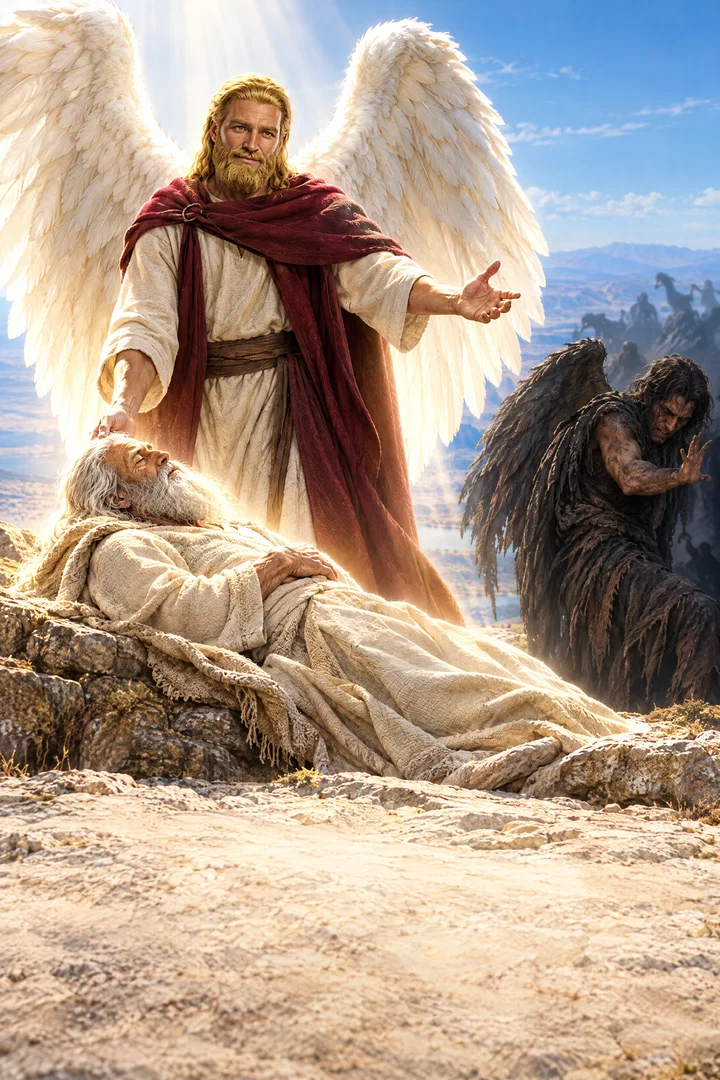
And he buried him in a valley in the land of Moab, over against Beth-peor: but no man knoweth of his sepulchre unto this day.
Translations
And he buried him in a valley in the land of Moab, over against Bethpeor: but no man knows of his sepulcher to this day.
King James Version, KJV Cambridge Paragraph Bible
And he buried him in a valley in the land of Moab, over against Beth-peor: but no man knoweth of his sepulchre unto this day.
And he buried him in a valley in the land of Moab, over against Beth-peor: but no man knoweth of his sepulcher to this day.
Revised Version, American Standard Version
And he buried him in the valley in the land of Moab over against Beth-peor: but no man knoweth of his sepulchre unto this day.
and He burieth him in a valley in the land of Moab, over-against Beth-Peor, and no man hath known his burying place unto this day.
And he buried him in the valley in the land of Moab, opposite Beth-Peor; and no man knows his sepulchre to this day.
and he buried him, in a valley in the land of Moab, over against Beth-peor,—but no man hath known his burying-place, until this day.
Berean Standard Bible, Majority Standard Bible
And He buried him in a valley in the land of Moab facing Beth-peor, and no one to this day knows the location of his grave.
He buried him in the valley in the land of Moab opposite Beth Peor, but no man knows where his tomb is to this day.
And the Lord put him to rest in the valley in the land of Moab opposite Beth-peor: but no man has knowledge of his resting-place to this day.
And hee buried him in a valley in the land of Moab ouer against Beth-peor, but no man knoweth of his sepulchre vnto this day.
Douay-Rheims (Challoner revision)
And he buried him in the valley of the land of Moab over against Phogor: and no man hath known of his sepulchre until this present day.
Pictures
Cross-references
- Jude 1:9
Yet Michael the archangel, when contending with the devil he disputed about the body of Moses, durst not bring against him a railing accusation, but said, The Lord rebuke thee.
Michael disputes with the devil over Moses’ body.
- Matthew 17:3
And, behold, there appeared unto them Moses and Elias talking with him.
Moses appears alive with Elijah and Christ after his burial.
- Numbers 20:12
And the LORD spake unto Moses and Aaron, Because ye believed me not, to sanctify me in the eyes of the children of Israel, therefore ye shall not bring this congregation into the land which I have given them.
Moses’ failure at Meribah barred him from entering the promised land.
- Luke 9:30-31
And, behold, there talked with him two men, which were Moses and Elias:
Moses appears in glory and speaks with Jesus.
- Joshua 1:1-2
Now after the death of Moses the servant of the LORD it came to pass, that the LORD spake unto Joshua the son of Nun, Moses’ minister, saying,
After Moses’ death, God appoints Joshua to lead Israel across the Jordan.
- Deuteronomy 32:50-52
And die in the mount whither thou goest up, and be gathered unto thy people; as Aaron thy brother died in mount Hor, and was gathered unto his people:
Moses is told he will die without entering the promised land because of his trespass.
- Deuteronomy 3:25-27
I pray thee, let me go over, and see the good land that is beyond Jordan, that goodly mountain, and Lebanon.
Moses is denied entry into the land but allowed to view it from Pisgah.
- Deuteronomy 34:10
And there arose not a prophet since in Israel like unto Moses, whom the LORD knew face to face,
Moses is identified as a prophet unlike any other.
- Hebrews 11:24-26
By faith Moses, when he was come to years, refused to be called the son of Pharaoh’s daughter;
Moses chose affliction with God’s people and Christ’s reproach over Egypt’s rewards.
- Numbers 27:12-14
And the LORD said unto Moses, Get thee up into this mount Abarim, and see the land which I have given unto the children of Israel.
Moses is told he will see the land but die without entering because of his rebellion at Meribah.
- Mark 9:4
And there appeared unto them Elias with Moses: and they were talking with Jesus.
Moses appears with Elijah and Jesus, supporting the claim that Moses was raised.
- Deuteronomy 34:1
And Moses went up from the plains of Moab unto the mountain of Nebo, to the top of Pisgah, that is over against Jericho. And the LORD shewed him all the land of Gilead, unto Dan,
ascent to Nebo before burial
- Numbers 27:18-23
And the LORD said unto Moses, Take thee Joshua the son of Nun, a man in whom is the spirit, and lay thine hand upon him;
Joshua is appointed to lead Israel after Moses.
- Numbers 12:7
My servant Moses is not so, who is faithful in all mine house.
contrasts worldly failure with God's verdict
- Numbers 20:24
Aaron shall be gathered unto his people: for he shall not enter into the land which I have given unto the children of Israel, because ye rebelled against my word at the water of Meribah.
Connects Moses’ disobedience at Meribah with his exclusion from the land.
- Acts 2:29
Men and brethren, let me freely speak unto you of the patriarch David, that he is both dead and buried, and his sepulchre is with us unto this day.
shows Moses resurrection is an exception
Commentary
Each commentary is drawn from primary sources: the writings of Ellen G. White and Adventist pioneers and periodicals. Each commentary is separate. Its own words are not a quotation; follow the references to read the source passages.
Ellen G. White
16 sources
He was laid to rest in a valley in Moab facing Beth-peor, and his burial place remains unknown to this day.ST Mar 31, 1881PP 477.2–478.11SP 341.2–3 God Himself buried him by angels, who also kept watch over the grave.ST Mar 31, 1881PP 477.2–478.11SP 341.2–3 The grave was hidden so Israel could not find it and turn his body into an object of idolatrous worship.ST Mar 31, 1881PP 477.2–478.11SP 341.2–3 He truly came under the power of death because at the rock he sinned in anger by striking it and taking to himself the honor due to God, though he repented and his record in heaven stood clear.ST Mar 31, 1881SG1 42.2–43.1EW 133.3–4 Christ, as Michael, came with angels, freed him from death before his body saw corruption, and took him to heaven in a glorified resurrected body, after meeting Satan's claim upon him not with direct rebuke but with the words, The Lord rebuke thee.ST Mar 31, 18811T 658.3–659.2SG1 42.2–43.1EW 133.3–410MR 159.3–6
Burial and Final Hours
He was buried in a valley in the land of Moab, over against Beth-peor, and no man knows his sepulchre unto this day.ST Mar 31, 1881PP 477.2–478.11SP 341.2–3SG4 56.2–57.2ST Mar 31, 1881 He was buried by God through angels, who buried his body and watched over the grave.ST Mar 31, 1881PP 477.2–478.11SP 341.2–3ST Mar 31, 18811T 658.3–659.2 God buried Moses, and Michael came down with angels to guard that trust.ST Mar 31, 1881PP 477.2–478.11SP 341.2–3ST Mar 31, 1881EW 133.3–4
Before dying in Moab at God's command, he stood on Pisgah and Nebo and looked over the land of promise.ST Mar 31, 18811T 658.3–659.2RH Jan 30, 1908 There he reviewed his life and work, knew that one wrong act had barred him from entering the land, confessed that sin, and sought pardon through faith in the Promised One who would die as man's sacrifice.ST Mar 31, 1881 Before his death the laws previously given to Israel were repeated and enlarged, with some precepts explained and their reasons made plain.RH Jan 30, 1908 Before his death God also showed him the blessing of the promised land as like a second Eden, together with scenes of Christ's first and second advents and the resurrection of the just.1T 658.3–659.2 He died after being denied entry into the promised land because of his mistake, and Joshua took his place as leader.ST Mar 31, 18811T 658.3–659.2Ms 177, 1907, par. 19–21
Why the Grave Hidden
God kept the burial place in Moab secret and concealed the grave so that Israel would not find it and turn his body and his grave into an object of idolatrous worship.ST Mar 31, 18811SP 341.2–3SG4 56.2–57.2ST Mar 31, 1881Ms 8, 1880, par. 7–11 He was buried by angels, who also watched over the grave to guard it from being discovered and worshiped.ST Mar 31, 1881PP 477.2–478.11SP 341.2–3ST Mar 31, 1881 Had the Israelites found the grave they would have worshiped it, and the hiding of the place kept them from worshiping his body and committing idolatry.ST Mar 31, 18811SP 341.2–3SG4 56.2–57.2ST Mar 31, 1881Ms 8, 1880, par. 7–11 The concealment was needed because those who had rejected his counsel might have made his body an object of idolatry.PP 477.2–478.1 In the same way, the date of Christ's birth was not revealed, because people would worship the day they believed was his birthday.21MR 223.2
Death and Resurrection to Heaven
Moses truly passed through death because at the rock he sinned in anger and wrath by striking it and taking to himself the honor and glory due to God.ST Mar 31, 1881SG1 42.2–43.1EW 133.3–42SP 329.2–330.1ST Jun 7, 1877 That transgression displeased God, barred him from the promised land, and brought him under the power of Satan and the dominion of death.ST Mar 31, 1881SG1 42.2–43.1EW 133.3–42SP 329.2–330.1ST Jun 7, 1877 If he had remained steadfast and faithful, God would have brought him into the promised land and then translated him to heaven without his seeing death.ST Mar 31, 1881SG1 42.2–43.1EW 133.3–42SP 329.2–330.1
He repented of that sin, so his character and his name in heaven's record were clear.ST Mar 31, 1881 Even so, Satan claimed his body as his prey and disputed Christ's claim to it, accusing him before the angels on the ground that he had sinned.SG1 42.2–43.1EW 133.3–410MR 159.3–6 The devil tried to hold the body and railed against God as unjust for taking his prey.SG1 42.2–43.1EW 133.3–4
He slept in death in the mount until Christ, Michael, the Son of God, came with angels, gave him life and called him from the tomb before his body saw corruption.ST Mar 31, 18811T 658.3–659.2SG1 42.2–43.1EW 133.3–42SP 329.2–330.1 By that resurrection Christ freed him from death's power and took him to heaven in a glorified, resurrected body.ST Mar 31, 18811T 658.3–659.2SG1 42.2–43.12SP 329.2–330.1ST Jun 7, 1877 In that dispute Christ did not rebuke Satan directly but meekly referred him to the Father, saying, The Lord rebuke thee.SG1 42.2–43.1EW 133.3–4
Sources
Pioneers and periodicals
78 sources
God Himself buried Moses in a valley in the land of Moab over against Beth-peor, without human help or witnesses, and hid the grave so that no one has ever found it.ST Mar 31, 1881RH Mar 3, 1874RH Mar 10, 1868RH May 17, 1860 It was the highest honor ever given in death, yet the hiding kept Israel from venerating the remains and turning the grave into idolatry.ST Mar 31, 1881RH Mar 10, 1868ST Mar 12, 1912ST Apr 27, 1904 His body was not left in that hidden grave, but after a short time Michael, who is Christ, came with angels, contended with the devil for the body, raised him and took him bodily to heaven.ST Apr 27, 1904ST May 6, 1897ST Mar 20, 1879RH May 7, 1872ST Sep 7, 1904 For that reason he could later appear alive in bodily form on the mount talking with Christ, representing the saints who die and are raised in the first resurrection, paired with Elijah who represents those changed without dying.ST Apr 26, 1905ST May 4, 1915RH Jan 14, 1873ST Jan 11, 1905 Those who held the immortality of the soul taught that his appearing proves his conscious soul lived on apart from the body, but the weight of the teaching is that he really died unconscious like all the dead and lived again only by bodily resurrection.ST May 12, 1890RH Jan 21, 1873RH Jan 14, 1873ST Oct 12, 1876RH Oct 16, 1855
Place and Manner of Burial
The burial took place in a valley in the land of Moab, over against Beth-peor, by the mountain of Nebo on the east side of Jordan, on a solitary height reached from the plains of Moab by way of Pisgah.RH Mar 3, 1874ST Apr 27, 1904RH May 17, 1860RH Nov 20, 1860ST May 27, 1889 It was a lonely and nameless grave in that vale, laid in Moab after Moses was barred from entering the land.RH Mar 3, 1874RH May 17, 1860ST Sep 9, 1886
He Himself buried him, God by His own hand and by the angel of God, with angels waiting, watching and assisting.ST Mar 31, 1881RH Mar 3, 1874RH Mar 10, 1868ST Apr 27, 1904RH Nov 20, 1860 No human help was used, and there were no human witnesses, no undertaker or embalmer, no friends, no funeral ceremonies, no music, no weeping, and no human train.RH Mar 3, 1874RH Mar 10, 1868ST Apr 27, 1904RH Nov 20, 1860ST Apr 7, 1909 It was a silent, hidden, secluded and mysterious funeral, with nothing left that could reveal the burial place.RH Mar 3, 1874RH Mar 10, 1868RH Nov 20, 1860
No man knows his sepulchre unto this day, for the grave was concealed, unmarked, nameless and lonely, never found, with no memorial by which mourners could identify it.RH Mar 3, 1874RH Mar 10, 1868RH May 17, 1860RH Nov 20, 1860ST May 6, 1897 No one ever saw the burial or knows the sepulcher, and the hidden grave is consistent with his being raised from the dead to appear bodily with Elijah.RH Mar 3, 1874ST May 6, 1897ST Mar 20, 1879
The record is that Moses the servant of the Lord died in the land of Moab according to the word of the Lord, lay down and went to sleep with only spiritual beings present.ST Mar 18, 1897ST Apr 7, 1909RH Jan 21, 1873 It tells who buried him and, with the surrounding verses, when and with whom he died, but not just how he died.ST Mar 18, 1897ST Mar 20, 1879ST Apr 7, 1909 His death was in an unusual manner on the mountain at 120 years old with undimmed eyesight and unabated strength, when his work closed and angels bore him tenderly to burial.ST Apr 27, 1904ST Mar 20, 1879RH Sep 13, 1906
It was the grandest funeral ever on earth yet silent and noiseless sweeping down from the mountain's crown, with hillside for pall, stars for tall tapers, and dark rock-pines waving like plumes over the bier.RH Mar 3, 1874 Unknown to man, it was seen and heard only by beast and bird.RH Mar 3, 1874
Authorship and Historical Setting
The last chapter of Deuteronomy that records the death and burial was not written by Moses himself because it relates his own death, but was added by Joshua his close friend and successor or by some other servant of the Lord such as Eleazar the priest.ST Mar 24, 1898ST Mar 8, 1910RH May 1, 1879RH Dec 27, 1864 It was probably attached soon after Moses died, and may once have formed the beginning of Joshua, yet being given under the guidance of God's Spirit its inspiration is undiminished.ST Mar 24, 1898RH Mar 2, 1916 The books of Moses therefore are not claimed to have been written entirely by Moses, since Deuteronomy 34:5-12 records events extending beyond his death.RH May 1, 1879RH Dec 27, 1864 Those who held the other position taught that authorship by Moses is not prevented, for God could have inspired him to write a prophetic history of his own death and burial.ST Jan 24, 1900ST Nov 9, 1882 They raised the question whether anyone could tell of his own death and burial, and taught that the writer knew the burial by inspiration.RH Jul 2, 1861ST Nov 9, 1882
The classification of the Bible into books and chapters and verses is modern, and Christ and His apostles nowhere refer by name to books or chapters or verses.RH May 1, 1879 The closing testimony that there arose not a prophet since in Israel like Moses, whom the Lord knew face to face, was written by another hand than that of Moses.ST May 23, 1911RH May 1, 1879 The verse closes a history spanning more than twenty centuries from the creation of humanity, compressed into only a few pages by selecting essential events rather than recording every event.ST Oct 14, 1880 It belongs to the connected story from the building of the tabernacle through Joshua, Gideon, Samson, Ruth, Samuel and the ark taken and returned, coming after the victory over Sihon and Og and Balaam and before the people cross the Jordan.ST Oct 14, 1880RH Apr 28, 1904
Moses died near the close of Israel's forty years of wandering after leading the Lord's people forty years in the wilderness to the border of the promised land.ST Sep 17, 1902ST Apr 26, 1905ST Feb 3, 1904 After he died the people mourned him thirty days, followed by further days for Joshua to assume command and send spies and receive their report, so that likely two months elapsed before Israel actually crossed the Jordan.RH May 26, 1874 This proves that this-day language declares certainty and nearness rather than same-day fulfillment, since Moses died at least several days after he said Israel was to pass over Jordan this day.RH May 26, 1874 His death is the setting for his later appearance with Jesus at the transfiguration, where he represents the righteous who will be raised from the dead.ST Apr 26, 1905
Before leaving Israel at God's command to die in the land of Moab, the laws previously given were repeated and enlarged, with some precepts explained and their reasons made plain.ST Mar 31, 1881RH Jan 30, 1908 Before death Moses stood on Pisgah and Nebo, was shown the land and the future of the people, looked over the land of promise, and reviewed his life and work.ST Mar 31, 1881ST Aug 27, 1896 There he surrendered his appointed work, for which Joshua was prepared to carry forward.ST Mar 31, 1881RH Feb 2, 1911 God thus honors mountains, for on Nebo's height Moses was shown the goodly prospect, died there, and the Lord Himself buried him.ST Aug 27, 1896
The setting follows his failure at Meribah, when provoked by the people he failed to do exactly as commanded and to give God the glory as provider of water from the rock, taking honor to himself.ST Jun 7, 1877RH May 17, 1860ST Sep 17, 1902ST Sep 9, 1886 He was therefore allowed to see the land but barred from entering it with the people, and was laid in an unmarked, unknown grave in a valley in Moab opposite Beth-peor.RH May 17, 1860ST Sep 9, 1886ST Feb 3, 1904 He knew that one wrong act had kept him from entering the land; he confessed that sin and sought pardon through faith in the Promised One who would die as man's sacrifice, and his character and name in heaven's record were clear.ST Mar 31, 1881ST Mar 31, 1881 His death marked Israel's loss of its beloved leader after forty years to the border of the land, showing that the welfare of God's people requires recognizing dependence upon Him in everything and that without Christ nothing can be done, with not even Moses an exception, while his trials had been increased by the people's rebellion.ST Mar 31, 1881ST Sep 17, 1902
Honor and Hiding of Grave
Though barred from entering Canaan, Moses was honored in death as no other human was ever honored, for God Himself buried the writer of the first five books, the prophet whom the Lord knew face to face with none like him since in Israel, with heavenly angels alone as attendants at the funeral and no undertaker or embalmer.ST Mar 12, 1912ST Apr 27, 1904 This divine burial was fitting for such a prophet, and was a greater honor than the burial of Jesus by human hands.ST Apr 27, 1904 Even though he had failed in one instance to do exactly as commanded and to give glory to God when provoked by the people, and therefore could not be a perfect type of Jesus Christ who carries His people safely through without failure, he was thus honored in death.ST Mar 12, 1912ST Sep 10, 1902
The grave was purposely kept unknown and hidden from men, concealed in a valley in Moab so that no one knew where it was and it was never found, with nothing left that could reveal the burial place.ST Mar 31, 1881RH Mar 10, 1868ST Sep 10, 1902 Angels buried him and watched over the grave, with no human help used.ST Mar 31, 1881ST Mar 31, 1881RH Mar 10, 1868 This was done so the Israelites would not venerate the remains, worship relics, or turn the body and grave into an object of idolatry and endless superstitious observance.ST Mar 31, 1881ST Mar 31, 1881RH Mar 10, 1868ST Sep 10, 1902
The refusal of Moses' definite request to enter the promised land was because at its heart was dictation rather than submission, lacking the essential element of true prayer, Not my will, but thine, be done.RH Sep 10, 1903 God gave him a far better thing instead, the honor of burial by the divine hand, an honor he would never have had if he had died in the ordinary way in Canaan.RH Sep 10, 1903 This proves that when God refuses the thing asked His Fatherhood is reserving a better thing further on.RH Sep 10, 1903
The burial left no gravestone, because God does not remember death. God nevertheless marked the place, and He will remember and claim His own when the graves are opened.ST May 25, 1882 A Muslim pilgrimage to a place called the grave of Moses, believed to be about halfway between Jerusalem and Jericho, is a claimed location, not a known one, for no one knows the location of his grave in Moab.ST Mar 16, 1915
His unknown grave offers comfort to mourners whose loved ones lie in unmarked or unknown places, since even Moses, who spoke with God face to face, rested opposite Beth-peor in a grave no one could identify.RH May 17, 1860RH Jul 29, 1915 Yet his death did not mean that God had forsaken Israel, for the pillar of cloud and the pillar of fire continued to lead the people.RH Jul 29, 1915 God raised others to take the places of departed leaders.RH Jul 29, 1915
Resurrection of Moses
No man knowing his sepulchre means his body was not left in the grave, for after a short time in the earth he was raised from the dead soon after death, before his body saw corruption, and taken bodily to heaven from that valley in Moab.ST May 6, 1897RH May 7, 1872ST Jan 18, 1877 The hidden, unknown grave is consistent with and evidences that resurrection and ascension, and with the extraordinary manner of his death on the mountain under the Lord's own care of his burial.ST May 6, 1897ST Mar 20, 1879RH Jul 31, 1866 God buried him, yet he later appeared alive in bodily form with Elijah on the mount of transfiguration, which could only be because God had raised him.ST Mar 20, 1879RH Jul 31, 1866ST May 9, 1906ST Dec 21, 1882 Michael, who is Christ, came for the body, which is why Satan disputed with Him about the body of Moses, and Jude 9 supplies this account of the resurrection.RH May 7, 1872ST May 9, 1906ST May 14, 1894
That burial precipitated a crisis in the great controversy between Christ and Satan, life and death.ST Apr 27, 1904ST Sep 7, 1904 Michael the archangel, who is Christ, the Prince of Life and Captain of salvation, came with angels and called Moses from the tomb.ST Apr 27, 1904RH May 7, 1872ST Sep 7, 1904 The devil opposed and claimed Moses as his prisoner by death's right over his body, so Michael contended for the body of Moses.ST Apr 27, 1904RH May 7, 1872ST Sep 7, 1904RH Jan 14, 1873 The Lord's rebuke prevailed, and Christ freed him from death's power and raised the same body the Lord had buried, taking him bodily from that valley opposite Beth-peor.ST Aug 1, 1916RH Jan 14, 1873ST Jan 21, 1913ST Jan 18, 1877 His resurrection is linked with the resurrection at Christ's return.ST Aug 1, 1916
After death had reigned from Adam to Moses, God gave in Moses an illustrative, partial fulfillment of His promised victory over death to strengthen faith.ST Apr 27, 1904ST Sep 7, 1904 Christ's faith-inspiring victory in bringing the man of God from the enemy's land demonstrates His power and the faithfulness of His promise and His ability to release all the captives from death and the grave.ST Sep 7, 1904 Moses thus serves as representative and pledge of the saints' resurrection.ST Apr 27, 1904ST Sep 7, 1904RH Sep 2, 1862 The reference to Moses' body connects the burial with the dispute in Jude 9, which gives no further detail about the dispute or its outcome.ST May 9, 1906ST May 14, 1894RH Jan 7, 1904
His immediate resurrection before corruption is an exception to the general decree that the dead return to dust and to the general rule that the dead know nothing and wait in the grave unconscious.RH Jan 14, 1873ST Jan 18, 1877 David remains dead with his sepulchre still present, while Moses was raised and did not continue as a spirit watching over the living.RH Jan 14, 1873 Like Christ's case, Moses' case is comparable to the change of the living saints at Christ's second coming.ST Jan 18, 1877 Those who held otherwise taught that the verse establishes death and burial but does not directly say he was later raised, with possible resurrection to immortality argued only from comparison with other Old Testament raisings and translations.RH Jan 31, 1865
Transfiguration and Other Scripture
After death God brought Moses forth again, and just before Christ's crucifixion Moses appeared alive in bodily form, active and conscious, talking with Him on the holy mount about His death to be accomplished at Jerusalem and the trials He must pass through.ST Mar 12, 1912ST Apr 27, 1904RH Aug 6, 1872 Although Moses died and was buried with his grave unknown, his appearance and conversation with Christ require and evidence a special resurrection from the dead.ST May 9, 1906ST Dec 21, 1882ST May 14, 1894 Jude 9 supplies this resurrection account and refers to the dispute over his body, but gives no further detail about the dispute or its outcome.ST May 9, 1906ST May 14, 1894 The burial brought conflict at the grave when the devil opposed and Michael the archangel contended for the body.ST Apr 27, 1904
Because he died and was buried, he could live again only by a resurrection from the dead, so his presence at the transfiguration proves he was raised as a resurrected, glorified man, not as an angel, a disembodied spirit, or the spirit of a dead person.ST Jan 11, 1905ST Jan 20, 1887 He did not enter heaven as an immortal soul at death or by inherent immortality or translation, but only after being bodily raised, and he now is in heaven and later came back to talk with Jesus.RH Dec 28, 1911 Michael the archangel contending with the devil for the body was Christ reclaiming Moses from the power of death by resurrection, and Christ prevailed so that Moses was raised to life and immortality.
In contrast to Elijah who was translated bodily to heaven without dying and never saw death, Moses passed through death and burial in a valley in Moab with the exact spot hidden so no man ever knew it.ST Oct 12, 1876RH Aug 6, 1872ST Aug 28, 1901 Because his body had died and been buried, it could not be alive afterward by translation or by inherent immortality.ST Aug 28, 1901 His living presence with Elijah on the mount, appearing and talking after dying and being buried, therefore proves he had been resurrected after Christ contended with Satan over his body and won.RH Aug 6, 1872ST Aug 28, 1901 Those who held otherwise taught from the same contrast that his appearing and talking proves the soul lives on apart from the body and establishes the immortality of the soul.ST Oct 12, 1876
At the transfiguration Moses represents the saints who die and are raised in the first resurrection and the righteous dead who will be raised when Christ comes, paired with Elijah who represents those alive at Christ's coming and changed without dying.RH Jan 14, 1873RH Jul 31, 1866ST Jan 11, 1905ST Sep 22, 1881 Together they form a miniature of God's kingdom and the two groups who will inherit it, the translated and the resurrected, with Moses as type of those sharing the first general resurrection.ST May 4, 1915RH Jul 31, 1866ST Sep 22, 1881 His death near the close of Israel's forty years of wandering is the setting for this appearance where in a material body he represents those subjects of the kingdom who will be raised from the dead.ST Apr 26, 1905RH Jan 14, 1873 His appearance represents resurrected saints, not disembodied dead people.ST Sep 22, 1881
His burial did not prevent God from raising him and taking him to heaven, and he may be one of the twenty-four elders around God's throne.RH Apr 13, 1876 His ascent did not make him one who came down from heaven to reveal God's plan and bring salvation, for only Christ did that. He stands as the example of the resurrection at Christ's second coming, paired with Elijah as the example of translation.
Death, Soul, and Doctrine
Moses truly died in the land of Moab according to the word of the Lord and was buried by God in a valley there, going into the grave unconscious like all the dead.ST May 12, 1890RH Jan 21, 1873RH Dec 12, 1854RH Dec 28, 1911RH Dec 12, 1854 He did not continue as a spirit watching over and loving the living, nor depart as an immortal conscious spirit to a spirit land to communicate with the living.RH Jan 21, 1873RH Jan 14, 1873 He was buried as Abraham and Sarah and Isaac and Rebekah and Leah were buried, dead and in the grave with no known grave remaining.RH Jan 21, 1873RH Dec 28, 1911 He did not enter heaven at death as an immortal soul, by inherent immortality, or by translation, but entered heaven only after being bodily raised from the dead, rather than going there as a conscious disembodied spirit.ST May 12, 1890RH Dec 28, 1911RH Dec 12, 1854
His being seen and heard long afterward alive on the mount of transfiguration does not prove that he had an immortal soul that survived death or that man has an immortal soul that survives death, but proves that he must have been raised from the dead to be present there.RH Dec 12, 1854RH Dec 12, 1854 His bodily appearance there with Elijah to talk with Christ was possible only because God raised him, when Michael the archangel was sent to the grave, contended with the devil who claimed Moses as his prisoner over his body, prevailed, and raised him.RH Jan 14, 1873 That resurrection is an exception to the general rule that the dead know nothing and wait in the grave, since David remains dead with his sepulchre still present.RH Jan 14, 1873 On the mount Moses in a material body represented those subjects of the kingdom who will be raised from the dead, while Elijah, who was translated and never saw death, represented those who will be alive at Christ's coming and changed without dying.RH Jan 14, 1873RH Aug 6, 1872ST Sep 22, 1881
Moses had passed through death before appearing with Elijah alive, active, and conscious, talking with Christ, so his presence must be accounted for without making him a conscious disembodied spirit.RH Aug 6, 1872ST Sep 22, 1881 His appearance represents resurrected saints, not disembodied dead people, with the dispute over his body indicating that he had been raised.ST Sep 22, 1881 His appearance does not prove that the dead remain conscious, for if the event was a vision he need not have been present, and if it was a real appearance he was bodily present by resurrection, not as a soul existing apart from his body.RH Aug 6, 1872RH Sep 8, 1859
Those who held the opposite taught that his appearing and talking after dying and being buried proves the soul lives on apart from the body and establishes the immortality of the soul, in contrast to Elijah who was translated bodily to heaven.ST Oct 12, 1876 They set his death and burial against his appearing with Elias talking with Jesus on the high mountain to argue that, since there is no proof Moses was ever resurrected, what Peter, James and John saw must have been his conscious soul separate from the body.RH Oct 16, 1855 They taught that the Lord buried his body in Moab while his soul did not remain asleep with it in the grave, but remained conscious after death and later appeared with Christ on the mount.RH Mar 4, 1862 Against that view, the burial does not mean only his body died while Moses himself lived on as a conscious soul, for joined to his being actually seen alive on the mount it proves a resurrection from the dead.RH Dec 12, 1854RH Oct 16, 1855
Lessons and Future Hope
Moses led the people forty years through the wilderness to the border of the promised land and was not permitted to enter with them because on one occasion he failed to give God the glory as the provider of needed water from the rock.ST Sep 17, 1902 His exclusion shows that the welfare of God's people requires recognizing dependence upon Him in everything.ST Sep 17, 1902 Without Christ nothing can be done, and not even Moses was an exception.ST Sep 17, 1902
Though barred from Canaan for that sin, he repented and was fully forgiven and abundantly pardoned, with character and name clear in heaven's record.ST Mar 31, 1881ST May 27, 1889ST May 27, 1889 His later raising and taking to heaven evidences that pardon, for Christ came with angels, called him from the tomb, freed him from death's power, and took him to heaven.ST Mar 31, 1881ST May 27, 1889 Without that one sin he would have entered Canaan and, like Elijah, been translated without dying.ST Mar 31, 1881ST May 27, 1889 His grave was concealed and left unknown so Israel would not turn his body into an object of idolatry, and angels buried him and watched over his grave.ST Mar 31, 1881ST May 27, 1889
Having failed in one instance, he could not be a perfect type of Jesus who carries His people safely through without failure.ST Mar 12, 1912 Yet in death he was honored as no other was ever honored, for God Himself buried him with heavenly angels alone as attendants, and later God brought him forth to appear alive just before Christ's crucifixion talking with Him about the trials the Saviour must pass through.ST Mar 12, 1912 The simple inspired record of his earthly end does him fuller justice than all men's poetic pictures of it.ST Mar 8, 1910 It closes the revelation of a grand, luminous character set against the black idolatry of the ages before him, mighty at first only in worldly learning and wisdom but fitted by forty years schooling alone with God in the desert to lead a people from bondage into freedom with patience, wisdom, tender solicitude, earnest devotion, and constant self-sacrifice.ST Mar 8, 1910 He stands as the one great figure of the ages second only to the Lord Jesus Christ whom he feebly typified, through whom God gave wonderful lessons to the world and through whose books marvelous civilizations arose.ST Mar 8, 1910
To end in a lonely grave on a mountain outside the goal he had hoped for, just on its border, while another took his place, after rejecting a throne with all its wealth and glory to herd sheep and men eighty years and cast his lot with a race of slaves, looks like stupendous failure by worldly standards of success.ST Sep 9, 1930 In heaven's lexicon it is not failure, for Moses was faithful in all his house, and success is faithfulness.ST Sep 9, 1930 Though buried on Nebo, his influence did not die with him, but his eloquence continued to shape people and would grow in influence over time.RH Jun 19, 1900
His clay is unconfined, for he shall break from that hidden sleep again before the Judgment Day.RH Mar 3, 1874ST Apr 5, 1905RH Nov 20, 1860 He shall rise clothed in glory to stand on the hills of Canaan he never trod and to speak with the incarnate Son of God of the strife that won our life.RH Mar 3, 1874ST Apr 5, 1905RH Nov 20, 1860 There he bears witness to the struggle won through Christ and to mysteries of grace and ways that cannot be told.RH Mar 3, 1874ST Apr 5, 1905RH Nov 20, 1860 His hidden, nameless, secluded burial reflects God's mysteries and calls people to humility before what they cannot understand.RH Mar 3, 1874ST Apr 5, 1905RH Nov 20, 1860
God honors mountains, for on Nebo's height Moses was shown the goodly prospect of the land and the future of his people, died there, and the Lord Himself buried him.ST Aug 27, 1896 At one hundred and twenty years old, when his work closed, the angels of God bore him tenderly to his burial.RH Sep 13, 1906 The word of the Lord through him was no less the word of the Lord because he had grown old, for God is not affected by old age.RH Sep 13, 1906
Sources