Deuteronomy 4:12
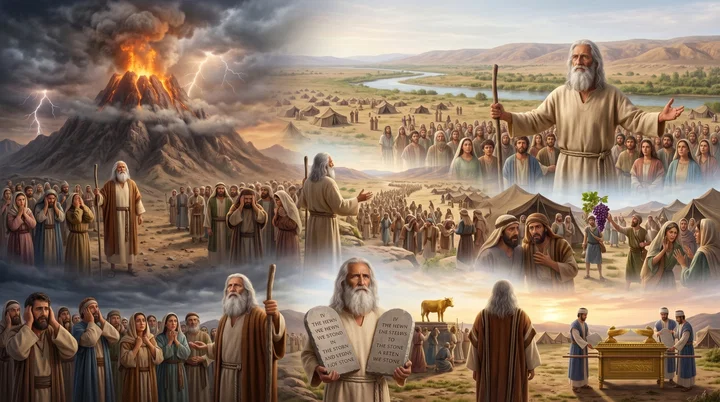
And the LORD spake unto you out of the midst of the fire: ye heard the voice of the words, but saw no similitude; only ye heard a voice.
Translations
And the LORD spoke to you out of the middle of the fire: you heard the voice of the words, but saw no similitude; only you heard a voice.
And the LORD spake unto you out of the midst of the fire: ye heard the voice of the words, but saw no similitude; only ye heard a voice.
And the Lord spake unto you out of the midst of the fire: ye heard the voice of the words, but saw no similitude; only ye heard a voice.
And the LORD spoke to you out of the midst of the fire: ye heard the voice of the words, but saw no similitude; only ye heard a voice.
And the LORD spake unto you out of the midst of the fire: ye heard the voice of words, but ye saw no form; only ye heard a voice.
And Jehovah spake unto you out of the midst of the fire: ye heard the voice of words, but ye saw no form; only ye heard a voice.
'And Jehovah speaketh unto you out of the midst of the fire; a voice of words ye are hearing and a similitude ye are not seeing, only a voice;
And Jehovah spoke to you from the midst of the fire: ye heard the voice of the words, but ye saw no form; only [ye heard] a voice.
Then spake Yahweh unto you out of the midst of the fire,—a voice of words, ye were hearing, no form, were ye seeing, there was only a voice.
And the LORD spoke to you out of the fire. You heard the sound of the words, but saw no form; there was only a voice.
And the LORD spoke to you out of the fire. You heard the sound of the words but saw no form; there was only a voice.
The LORD spoke to you out of the middle of the fire: you heard the voice of words, but you saw no form; you only heard a voice.
And the voice of the Lord came to you out of the fire: the sound of his words came to your ears but you saw no form; there was nothing but a voice.
And the Lord spake vnto you out of the middes of the fire, and ye heard the voyce of the wordes, but sawe no similitude, saue a voyce.
Douay-Rheims (Challoner revision)
And the Lord spoke to you from the midst of the fire. You heard the voice of his words, but you saw not any form at all.
Pictures
Cross-references 20 of 62
- Exodus 20:1
And God spake all these words, saying,
God speaks the commandments aloud to Israel at Sinai.
- Exodus 19:5-8
Now therefore, if ye will obey my voice indeed, and keep my covenant, then ye shall be a peculiar treasure unto me above all people: for all the earth is mine:
Israel agrees to obey God’s voice and keep his covenant, becoming his treasured, holy people.
- Deuteronomy 5:22
These words the LORD spake unto all your assembly in the mount out of the midst of the fire, of the cloud, and of the thick darkness, with a great voice: and he added no more. And he wrote them in two tables of stone, and delivered them unto me.
Both describe God speaking the commandments to Israel from the fire.
- Exodus 31:18
And he gave unto Moses, when he had made an end of communing with him upon mount Sinai, two tables of testimony, tables of stone, written with the finger of God.
God wrote the commandments on stone tablets and gave them to Moses.
- Exodus 19:16-19
And it came to pass on the third day in the morning, that there were thunders and lightnings, and a thick cloud upon the mount, and the voice of the trumpet exceeding loud; so that all the people that was in the camp trembled.
God speaks to Israel at Sinai amid fire, thunder, and a trembling mountain.
- Deuteronomy 10:4
And he wrote on the tables, according to the first writing, the ten commandments, which the LORD spake unto you in the mount out of the midst of the fire in the day of the assembly: and the LORD gave them unto me.
The commandments written on the tablets were those the LORD spoke from the fire.
- Exodus 34:28
And he was there with the LORD forty days and forty nights; he did neither eat bread, nor drink water. And he wrote upon the tables the words of the covenant, the ten commandments.
Identifies the covenant words written on the tables as the Ten Commandments.
- Jeremiah 7:22-23
For I spake not unto your fathers, nor commanded them in the day that I brought them out of the land of Egypt, concerning burnt offerings or sacrifices:
Contrasts obeying God's voice and covenant commands with burnt offerings and sacrifices.
- Exodus 24:3-8
And Moses came and told the people all the words of the LORD, and all the judgments: and all the people answered with one voice, and said, All the words which the LORD hath said will we do.
Moses records and reads the covenant words, and the people affirm and ratify them.
- Deuteronomy 9:10-11
And the LORD delivered unto me two tables of stone written with the finger of God; and on them was written according to all the words, which the LORD spake with you in the mount out of the midst of the fire in the day of the assembly.
The stone tablets bear the words God spoke from the fire and are called the covenant tablets.
- Exodus 24:12
And the LORD said unto Moses, Come up to me into the mount, and be there: and I will give thee tables of stone, and a law, and commandments which I have written; that thou mayest teach them.
God gives Moses the law and commandments written on stone tablets.
- Exodus 20:19
And they said unto Moses, Speak thou with us, and we will hear: but let not God speak with us, lest we die.
Israel fears God’s voice and asks Moses to speak for him.
- Deuteronomy 5:4-5
The LORD talked with you face to face in the mount out of the midst of the fire,
Both recall God speaking to Israel from the fire, with Moses mediating.
- Nehemiah 9:13
Thou camest down also upon mount Sinai, and spakest with them from heaven, and gavest them right judgments, and true laws, good statutes and commandments:
God spoke the law at Sinai and gave Israel commandments through Moses.
- Deuteronomy 33:2
And he said, The LORD came from Sinai, and rose up from Seir unto them; he shined forth from mount Paran, and he came with ten thousands of saints: from his right hand went a fiery law for them.
Both describe the Lord giving the law at Sinai amid fire and holy ones.
- Hebrews 12:18-19
For ye are not come unto the mount that might be touched, and that burned with fire, nor unto blackness, and darkness, and tempest,
Both describe God speaking from Sinai amid fire and terror.
- Acts 7:38
This is he, that was in the church in the wilderness with the angel which spake to him in the mount Sina, and with our fathers: who received the lively oracles to give unto us:
Israel received God’s spoken words as the lively oracles.
- Exodus 20:2
I am the LORD thy God, which have brought thee out of the land of Egypt, out of the house of bondage.
The opening words introduce the commandments spoken at Sinai.
- Deuteronomy 5:2
The LORD our God made a covenant with us in Horeb.
Identifies the covenant at Horeb as the one made with Israel.
- Galatians 3:19
Wherefore then serveth the law? It was added because of transgressions, till the seed should come to whom the promise was made; and it was ordained by angels in the hand of a mediator.
God’s own voice contrasts with the law ordained through angels and a mediator.
Commentary
Each commentary is drawn from primary sources: the writings of Ellen G. White and Adventist pioneers and periodicals. Each commentary is separate. Its own words are not a quotation; follow the references to read the source passages.
Ellen G. White
22 sources
At Horeb, also called Sinai, God spoke to Israel out of the midst of fire on the burning mountain veiled by cloud and thick darkness, and they heard the voice of His words but saw no form or likeness, only a voice.Ms 24, 1904, par. 1–2Ms 152, 1901, par. 24–26Ms 110, 1899, par. 6–9 That speaking declared His covenant, the Ten Commandments with its statutes and judgments given through Moses and written on two tablets of stone, to be kept unchanged, taught to children, and never erased.Ms 24, 1904, par. 1–2Ms 152, 1901, par. 24–26Ms 110, 1899, par. 6–9 He purposely showed no visible form so the people would not pattern an image after it, warning them against representing God by images or worshiping created things, and calling them to worship the living God whom creation only testifies of.Ms 24, 1904, par. 1–2Ms 152, 1901, par. 24–26Ms 84, 1910, par. 51–53 The law thus proclaimed includes the Sabbath, which is to be studied to see if its specified day is kept, for keeping His Sabbaths and reverencing His holy day is the sign and obedience of His covenant people.Lt 6, 1909, par. 5Ms 120, 1909, par. 11–12Ms 141, 1906, par. 31–33 The chapter is urged upon all who would be holy to God today for careful study and full obedience, for its sacred law still binds every person, its words are preserved unto the last judgment when each character will be decided by obedience or transgression, and blessing attends obedience while judgment follows departure.Lt 6, 1909, par. 5Ms 120, 1909, par. 11–12Lt 42, 1910, par. 6Lt 116, 1906, par. 3Ms 146, 1906, par. 36–44
Voice Without Visible Form
At Horeb, also called Sinai, the Lord spoke to Israel out of the midst of the fire on the burning mountain.Ms 24, 1904, par. 1–2Ms 152, 1901, par. 24–26Ms 110, 1899, par. 6–9Ms 125, 1901, par. 1–2ST May 13, 1886 The infinite God came down behind a cloud covering the mount, with thick darkness around, and made His words heard from the fire.ST May 13, 1886Ms 146, 1906, par. 36–44FE 506.5–7 The people heard the voice of His words but saw no form, similitude, or likeness.Ms 24, 1904, par. 1–2Ms 152, 1901, par. 24–26Ms 110, 1899, par. 6–9Ms 125, 1901, par. 1–2Ms 146, 1906, par. 36–44 Only a voice was heard, without any visible form revealed.Ms 24, 1904, par. 1–2Ms 152, 1901, par. 24–26Ms 110, 1899, par. 6–9Ms 125, 1901, par. 1–2ST May 13, 1886
That voice made the people tremble every time they heard it.Ms 146, 1906, par. 36–44 The signs of power and glory displayed in the speaking impressed them with reverence for God as the Author of the law and the Creator of heaven and earth.FE 506.5–7 The sacredness, importance, and permanence of the law were thus set before them.FE 506.5–7 In fear they asked that Moses speak to them instead of God.FE 506.5–7
The mountain where this speaking occurred had become sacred to the people.PP 376.4 God's presence and glory had been displayed there repeatedly.PP 376.4 The place was closely associated with Him.PP 376.4
The occasion marked God's nearness and presence with Israel as He spoke.ST May 13, 1886
Covenant, Images, and Sabbath
The speaking from the fire accompanied God's declaration of His covenant, the Ten Commandments, with its statutes and judgments given through Moses.Ms 152, 1901, par. 24–26Ms 110, 1899, par. 6–9Ms 125, 1901, par. 1–2ST May 13, 1886Ms 93, 1908, par. 38–41 He commanded Israel to keep them and to teach them to their children, He wrote them on two stone tablets, and they were never to be erased or changed.Ms 110, 1899, par. 6–9Ms 125, 1901, par. 1–2Ms 93, 1908, par. 38–41 The occasion marked His nearness and presence as He made His words heard without revealing any visible form.Ms 24, 1904, par. 1–2ST May 13, 1886RH Feb 19, 1914
God deliberately gave no visible form because the people would pattern after that similitude and copy it.Ms 84, 1910, par. 51–53 The absence of any likeness warns against representing God by images or worshiping created things, and calls Israel to direct worship to the living God.Ms 24, 1904, par. 1–2Ms 152, 1901, par. 24–26Ms 131, 1907, par. 26–28RH Feb 19, 1914 Created things only testify of their Creator and are not divine, and that warning applies to God's people today, who are to resist sinful desires and serve God according to His Word and will.Ms 24, 1904, par. 3
Because God showed no similitude, there is no need for the many pictures fashioned in books as a great addition, and no need to spend money for the many things spent in creating pictures.Ms 84, 1910, par. 51–53 This restraint belongs with getting ready for a life that measures with the life of God and getting ready to see the King in His beauty.Ms 84, 1910, par. 51–53
The law proclaimed in this setting includes the Sabbath and is to be kept by God's covenant-keeping people.Lt 6, 1909, par. 520MR 395.5 The commandments must be studied thoroughly to see if the very day specified in them is being kept, and keeping God's Sabbaths stands before the Lord as obedience and as a sign when His commandments are obeyed and His holy day is reverenced.Ms 120, 1909, par. 11–12 The verse belongs to every human being living today and calls each person to take heed to himself, with its teaching to be passed from father to son for generations by parents strictly educating their children in observance of the same day observed today.Ms 141, 1906, par. 31–33
Study and Obey Today
The voice heard without form gave sacred truth expressing the mind of the infinite God, telling what to do and what not to do toward God and toward one another.Ms 40, 1891, par. 42–45 Every word then spoken is to be cherished, and its principles are to be acted out in all religious service by loving as brethren, doing no injustice, and always showing liberality, tenderness, compassion, and true courtesy.Ms 40, 1891, par. 42–45 The specifications of that law never lose their force and must be preached, for God will not be trifled with or made a thing of naught.Ms 40, 1891, par. 42–45 He is to be represented by His people through correct principles in everything, and all who depart from His word in their actions misrepresent His character, while light and gladness belong to the righteous and upright in heart who keep them.Ms 40, 1891, par. 42–45
Those words are sacredly preserved and hidden now, to be brought forth in the great day of the last judgment.Ms 120, 1909, par. 11–12Ms 146, 1906, par. 36–44 Then every character will be investigated and every case decided and settled according to the commandments God has given.Ms 120, 1909, par. 11–12Ms 146, 1906, par. 36–44Lt 112, 1909, par. 22–24 The test will be whether each person was obedient to God or in transgression of His law.Ms 120, 1909, par. 11–12Ms 146, 1906, par. 36–44
The chapter containing this speaking is urged for careful study by those who would be a holy people belonging to God and counted among His covenant-keeping people.Lt 6, 1909, par. 5Lt 112, 1909, par. 22–24 Its charge is to be read carefully and followed in full obedience, for the Lord's Word and commandments must be taken seriously.Lt 6, 1909, par. 5Lt 42, 1910, par. 6 Its instruction calls people back to the true platform of faithfulness to God rather than being displaced by Satan's deceptive suggestions, and truth will triumph.Lt 116, 1906, par. 3 Its lessons on God's sacred and binding law apply beyond Israel's time, belonging to every human being living today, with blessing in obedience and judgment in departure.FE 508.1–4Ms 141, 1906, par. 31–33Lt 112, 1909, par. 22–24 The verse therefore calls each person today to take heed to himself, to resist sinful desires and to serve God according to His Word and will.Ms 141, 1906, par. 31–33Ms 24, 1904, par. 3 Its teaching is to be passed from father to son for generations, by parents strictly educating their children in observance of the same day observed today.Ms 141, 1906, par. 31–33
Sources
Pioneers and periodicals
128 sources
At Horeb, also called Sinai, God himself spoke aloud to assembled Israel out of the midst of fire, and the people heard the voice of his words but saw no similitude or visible form.RH Mar 19, 1857RH Oct 16, 1856RH Nov 8, 1853RH Jul 8, 1862ST Sep 27, 1883 What he spoke by that voice was his covenant which he commanded them to perform, even the ten commandments alone, with nothing about sacrifices, the same as what he wrote on the tables of stone.RH Mar 19, 1857RH Oct 27, 1868ST Sep 30, 1886ST Mar 4, 1886RH Jul 5, 1870 Speaking and writing them himself was designed to set the moral law forever apart from the ceremonial statutes and judgments commanded through Moses, written in a book and placed at the side of the ark.RH Jul 9, 1901ST Sep 27, 1883ST Jun 19, 1884ST May 20, 1875ST Mar 20, 1879 He deliberately withheld any visible form lest the people corrupt themselves by making a graven image of any figure to represent him, for he is to be worshiped spiritually without any representation.RH Feb 19, 1914RH Aug 1, 1871ST Sep 8, 1881RH Apr 2, 1901 To be obedient to his voice is to keep that law, and keeping it would make them a holy nation, for character copies the law obeyed.ST Aug 2, 1905ST Jul 1, 1875RH Mar 27, 1913ST Jul 20, 1882RH Sep 8, 1863
Fire and Voice at Horeb
At Horeb, also called Sinai, God himself spoke aloud to assembled Israel out of the midst of the fire, and the people heard the voice of his words.RH Mar 19, 1857RH Oct 16, 1856RH Aug 21, 1855RH Nov 18, 1915RH Mar 7, 1871 What they heard was his covenant which he commanded them to perform, even the ten commandments, which he wrote upon two tables of stone, the tables of the covenant placed in the ark.RH Mar 19, 1857RH Oct 16, 1856RH Nov 8, 1853RH Aug 21, 1855RH Mar 7, 1871 Moses rehearsed this forty years afterward to people already acquainted with it, looking back to when about two million stood before God in the journey from Egypt to Canaan on the day of assembly.RH Oct 27, 1868ST Jun 24, 1875ST Feb 8, 1905RH Jan 29, 1901RH Feb 18, 1875 On that day Israel stood before him at Horeb and heard the voice of words but saw no form, only a voice.RH Oct 27, 1868ST Feb 8, 1905RH Jan 29, 1901
The speaking came after three days of special preparation with safeguards, in great majesty with thunders, lightnings, thick cloud, smoke as of a furnace, earthquake, shining glory, and a loud trumpet voice that made the people tremble and shook the earth.ST May 6, 1875ST Mar 7, 1906 The thorough preparation and unequaled sublimity showed its unparalleled importance, remaining so until Jesus returns with shout, voice of the Archangel and trump of God.ST Mar 7, 1906 This was the first recorded occasion when God's audible voice was heard by a gathered nation, too exalted to entrust to another, so God himself taught the principles of heavenly government and no doubter was left.ST Jan 23, 1912ST Nov 12, 1912RH Mar 26, 1872RH Dec 31, 1861ST Sep 3, 1912 Their shared hearing confirms the law as spoken by God and as the standard testing later prophetic teaching.RH Jan 3, 1865
What God spoke by voice is the same as what God wrote, and he added no more by voice or by writing.RH Jul 9, 1901RH Jul 18, 1854ST Jan 16, 1912RH Apr 30, 1872 The introductory words in Exodus 20:2 were spoken introduction and were not part of what was engraved; the tables contained the commandments alone and nothing else.RH May 16, 1865RH Jan 7, 1862 God himself prepared the first tables and wrote on them with his own finger before calling Moses up to receive them, proving Moses did not write on the tables as God's agent.ST Sep 2, 1875ST Aug 21, 1879 Israel did not literally behold God's face unveiled; face to face means audible articulate speech mouth to mouth as a man speaks to a friend, while his glory was seen in the Shekinah cloud veiling his immediate presence as light from the sun is seen without seeing the sun.ST Feb 14, 1906RH Sep 4, 1860
Similitudes were really present — multitudes of angels, cherubim, seraphim, Christ, and devouring-fire glory — yet God covered the mount with smoke, cloud, thick darkness, blackness and tempest so only the voice from darkness was heard.RH Apr 2, 1901 Horeb is Sinai, pictured as God's throne where the law was given while living water flowed from the rock at its base for the thirsty.ST Mar 26, 1896
Hearing Without Seeing Form
At Horeb the assembled people heard the sound of words out of the midst of the fire but saw no similitude, no visible form or likeness of God, only a voice.RH Jul 8, 1862ST Sep 27, 1883ST Mar 4, 1886ST Jun 19, 1884 What was heard in that direct proclamation was his covenant commanded to be performed, even the ten commandments, the ten words written upon two tables of stone.RH Jul 8, 1862ST Sep 27, 1883ST Mar 4, 1886 That direct speaking by God himself distinguished the moral law from other laws delivered through prophets or Moses and from all laws of offerings and sacrifices, and it showed the law bore the mark of God alone and was intended to endure through generations.ST Sep 27, 1883ST Mar 4, 1886ST Jun 19, 1884 The withholding of any visible likeness was to guard the hearers from making an image to represent the God who spoke.ST Sep 8, 1881
God made himself heard without appearing in a visible likeness, speaking to all the assembly in the mount out of the midst of the fire, of the cloud and of the thick darkness, with a great voice, and adding no more.RH Jan 10, 1916ST Apr 8, 1897 The covenant so declared was the ten commandments, which he wrote upon two tables of stone and delivered to Moses, graven in stone by the work of God on both sides so that they could not be blotted out and have no connection with the handwriting of ordinances blotted out and nailed to the cross.RH Jan 10, 1916ST Apr 8, 1897 The fourth commandment among them identifies the seventh day as the Lord's Sabbath, proving the Sabbath came from God and not from Moses.ST Apr 8, 1897
Since the fall God's visible presence has necessarily been veiled by clouds and darkness, so Israel heard only his voice out of the fire and saw no form.ST Feb 14, 1906 The hiding was not from anger or resentment but was a loving, necessary precaution for man's preservation, because iniquity separated man from God and God is a consuming fire to sin dwelling in light no sinful mortal can approach or see and live.ST Feb 14, 1906 The veiling lasts until through the plan of redemption the redeemed may again see his face and dwell in the light of his presence, while even veiled he continues through the Spirit to make known his will in his dealings and works.ST Feb 14, 1906 The absence of a visible likeness explains the forbidding of images of him, yet it does not mean that God has no body or personal form.ST Feb 14, 1906ST Sep 10, 1912
Covenant Means Ten Commandments
The voice out of the fire declared the covenant he commanded to be performed, even the ten commandments, also called the ten words, which he wrote upon two tables of stone, the tables of the covenant, placed in the ark.RH Mar 19, 1857RH Oct 27, 1868ST Sep 30, 1886RH Oct 16, 1856RH Jul 9, 1901 What was heard as words without any form seen was that covenant, first spoken aloud by his own mouth in the hearing of about two million people and then given in his own handwriting, making it the earliest writing in existence and the only complete code of moral precepts ever given to man for all nations in every generation to keep perpetually.RH Mar 19, 1857RH Oct 27, 1868RH Jul 9, 1901 Israel was to remember that day diligently and teach children what was heard, in order to learn to fear him, and what was spoken is the same as what was written, with nothing added by voice or by writing.ST Sep 30, 1886RH Jul 9, 1901 The covenant commanded contained only ten precepts, not to be confounded with the statutes and judgments commanded through Moses to teach for practice in the land, which he did not speak with his voice nor write on stone.RH Jul 9, 1901ST Jun 17, 1875 The word covenant is used in many different senses and its precise meaning must be decided by connection; here it means God's own law itself, not the mutual agreement with its mediators, sacrificial blood, and ordinances of divine service with a worldly sanctuary.RH Apr 16, 1861RH Apr 12, 1860
The commandments were therefore already a covenant while spoken aloud, before the tablets were received, and then written on stone with direction to teach the separate statutes and judgments afterward.RH Feb 7, 1854 What he spoke with his own voice was only the ten commandments, with nothing about burnt offerings and sacrifices, separated from ordinances of sacrifice and from all secondary matters.ST Mar 4, 1886RH Jul 5, 1870ST Jul 29, 1875 Obeying his voice therefore means obeying those commandments, and that sacrificial system became necessary only because the commandments were transgressed, while keeping the law remains distinct from offering sacrifices.RH Jul 5, 1870ST Jul 29, 1875 The ten commandments were the condition Israel agreed to obey, not the covenant contract itself; obey my voice and keep my covenant mean the same obedience to that commanded covenant.ST Jan 15, 1880ST Jul 1, 1875RH Sep 8, 1863 That commanded covenant was proclaimed publicly after the mutual promises were already made, three days after the proposal in Exodus 19, so that the people fully understood the condition before ratifying their agreement to obey.ST Jan 15, 1880RH Mar 25, 1873ST Jun 4, 1902
God's law existed before and was distinct from the transaction at Horeb in which the people promised to keep it, and keeping it would have made them a holy people and his treasured possession because character copies the law obeyed.ST Dec 30, 1889ST Jul 1, 1875RH Sep 8, 1863 That commanded covenant of moral obligation, forbidding idolatry, profanity, murder and guarding the Sabbath and marriage erected in Eden, was binding whether Israel agreed to keep it or not; their covenanting added nothing to its force and their failure took nothing from its morality, authority or perpetuity.RH Mar 25, 1873 Breaking the mutual covenant resting on mutual promises and its annulment does not change God's law, which remains commanded to all and binding on all whether they agree to it or not.RH Mar 25, 1873ST May 21, 1896 Those who held that the ten commandments are the covenant made at Horeb with Israel when brought out of Egypt, placed in the ark in the most holy place of the earthly tabernacle, taught that because that first covenant was faulty and has waxed old and vanished away the ten-commandment law with the seventh-day Sabbath is abolished, made only with Israel and never with the Gentiles, now out of use and passed away.ST May 9, 1878ST Jun 4, 1902 Those who held the contrary taught that this covenant stands fast with Christ, distinct from the typical regulations of the priesthood, commanded to continue for a thousand generations, upheld by Christ, and not abolished, so that the law containing the Sabbath was not abolished.RH Jul 8, 1862RH Apr 16, 1861
Those who held another position taught that the voice of God is not the ten commandments alone separated from all other matters, but anything God commands directly or through an agent, contained in Exodus 20-23 including commandments concerning sacrifices.RH Feb 4, 1873 On that teaching, not all of that covenant was spoken directly to the people because they could not endure hearing God to the end and asked Moses to act as spokesman, so Moses spoke the rest and wrote it in a book and the people accepted it, while mere sacrifice without the spirit of obedience is not what God wants but sacrifice in its proper spirit is obedience to his voice.RH Feb 4, 1873 The weight of the passages presents the commanded covenant as conditions of the promise to Abraham's seed, confirmed to Jacob and Israel as an everlasting covenant linking the land promise to obedience, not first enacted at Horeb and not creating duties that already existed including the Sabbath.RH Nov 8, 1853ST Jun 17, 1875RH Feb 7, 1854ST Jul 29, 1880RH May 27, 1852 Because Israel was then Abraham's natural seed and the promised land was included in the covenant made with Abraham, Isaac and Jacob, the commandments link that land promise to obedience, the same everlasting covenant made with Abraham and confirmed to Israel, kept by Abraham and Isaac, given to Jacob for a law, and including the Sabbath ordinance whose breaking brings the curse that devours the earth.ST Jun 17, 1875RH Feb 7, 1854ST Jul 29, 1880 The covenant made in Horeb is the Decalogue itself directly spoken, yet it did not create the moral duties it contains, for those duties already existed and were only authorized and solemnly enjoined there, distinct from the covenant promise of the land of Canaan.RH May 27, 1852RH Feb 14, 1854
This law is pre-eminently God's covenant expressing his will concerning man and the basis and object of all covenants ever made with man, becoming the conditions of the mutual covenant with the nation which Israel was to obey.ST Jun 4, 1902 The ten commandments spoken by the voice out of the fire are the basis of both the old covenant and the new covenant and are not themselves the old covenant; that same law is written in mind and heart under the new covenant, so the gospel as good news of salvation from sin, which is transgression of the law, rests upon them.ST Aug 13, 1885 They are the only law spoken publicly with his own voice and written with his own finger, set apart from all other laws, the law that convinces of sin, whose first term under the new covenant is to love them and have them written within, so that keeping them is not a yoke of bondage but the love of God.ST Apr 22, 1880 That spoken law is the basis or condition of the Abrahamic covenant, identical with the gospel and the new and everlasting covenant.RH Apr 12, 1860 The first promise of a kingdom to Jacob's descendants in that Horeb covenant was conditional upon obeying God's voice and keeping those commandments, and all those conditional promises forfeited under the old covenant can only be regained by obtaining an interest in Jesus, now the prince and soon to be crowned king.RH Jan 19, 1860
The law spoken out of the midst of the fire, heard as a voice with no form seen, is the moral law holding life and death and blessing and curse.RH Sep 15, 1863 It is perpetual, its curse rests on transgressors including Gentiles, and its curse stands between the sinner and the blessing of Abraham which is the blessing of the gospel, so a transgressor is not entitled to gospel blessing while under its curse.RH Sep 15, 1863 The law itself is not against the promises of God but is the basis of the Abrahamic covenant and promises, and Christ redeems transgressors from its curse when they come to him by faith, while faith does not make the law void nor make Christ the minister of sin, for the law still gives knowledge of sin and brings sinners to Christ to be pardoned and made obedient.RH Sep 15, 1863
Moral Law Set Apart
The speaking with his own voice was designed to mark a plain distinction between the moral law and the ceremonial law.ST Sep 27, 1883ST Jun 19, 1884ST May 20, 1875ST Mar 20, 1879ST Dec 20, 1905 The covenant commanded to be kept is the Ten Commandments, spoken directly by God to the people out of the fire while they heard his voice and saw no visible form, unlike other laws delivered through prophets or Moses, and this shows it bears the mark of God alone.ST Sep 27, 1883ST Jun 19, 1884ST May 20, 1875ST Dec 20, 1905RH Jan 12, 1905 By origin, form, object, location and application God set the Ten Commandments apart, for they were spoken by God and written by God on stone and placed inside the ark, while statutes and judgments were commanded through Moses, written by Moses in a book and placed in the side of the ark.RH Jul 9, 1901ST Mar 20, 1879ST Feb 22, 1883ST Oct 2, 1884ST Mar 7, 1906 The Ten Commandments alone were spoken publicly in the hearing of all the people, while sacrificial, ceremonial, sanitary, dietary and civil statutes were communicated to Moses in private to be written in a book and taught to the people to do in the land.ST Mar 7, 1906 That moral law is distinct from the ceremonial law regulating sacrifices and offerings, which was appointed by angels in the hand of a mediator and could not give life, while the ten-commandment law was ordained to life.RH Apr 13, 1876
The God-spoken and God-written law is the decalogue alone, no more no less, directly and fully God's law, a statement of principles as well as precepts, moral, eternal, immutable, unchangeable and everywhere obligatory.RH Oct 27, 1868RH Jul 9, 1901 It is the earliest writing in existence and the only complete code of moral precepts ever given to man, first spoken by his own mouth and then given in his own handwriting, not for Israel alone but for all nations of the earth in every generation to keep perpetually.RH Oct 27, 1868 It is the supreme and immutable constitution of the Creator, the royal law and transcript of the divine mind and will that does not wax old and vanish away, purposely exalted above all merely ritual and ceremonial laws.RH Jul 9, 1901RH Mar 26, 1872 It is a complete moral code and the only one ever revealed, the basis of God's moral government without which there would be anarchy and confusion and no government, and there cannot be another, no more than there can be two universal governments at the same time or two Supreme Beings.ST Aug 19, 1875 It is of original obligation from the beginning, prior to and independent of all else as the standard of duty to God and to fellow men, resting on no contingency.RH Jul 18, 1854RH Mar 3, 1874 Civil and ceremonial systems were added only because man had failed to observe this moral law, are not of original obligation, are limited in duration by their typical nature, and merely enforce its principles in daily life and expiate its violations while pointing forward to Christ's priesthood and kingdom, distinct from burnt offerings and sacrifices.RH Jul 18, 1854RH Mar 3, 1874
The Ten Commandments are the oracles of God, the living oracles given by the living God and resembling him, committed to the Jews and entrusted to them for the good of all rather than making them merely Jewish.RH Mar 26, 1872RH Oct 14, 1873 All the people heard God himself speaking his precepts from above out of the fire, so that no word escaped them and its energy was not hurt by utterance through the tongue of a man.RH Mar 26, 1872 The voice that was heard shook the whole earth on which all nations dwell, which shows this law is not Jewish but spoken to and concerning all nations.RH Mar 26, 1872 The giving was a remarkable occasion coming directly from the King of kings and not from any earthly ruler, with ten thousand saints or angels present, delivered to Israel but for all people.RH Sep 2, 1915 The code so spoken is the most comprehensive code ever written, first among legal documents and absolutely universal, not an outgrowth of Babylonian jurisprudence, and so important that not even the angel Gabriel was permitted to write or deliver it, being the revelation of the infinite mind and supreme legislative authority.RH Sep 2, 1915
The law containing commands against killing, adultery and coveting is God's law distinct from the law of Moses, by which comes the knowledge of sin and by which Paul learned he was a sinner, and its commands including the Sabbath command are necessary to keep.RH Mar 5, 1867ST Feb 22, 1883 That moral law is truth and cannot be changed or repealed, and Jehovah himself declared it to be the rule of holiness, so to say that law was abolished denies what God declared about it.ST Jan 19, 1882ST Jun 5, 1879ST Oct 16, 1884 Because the ten commandments were thus spoken with a great voice with nothing added and graven in stone by the work of God on both sides, they could not be blotted out and it would not be proper to speak of nailing them to the cross, so they have no connection with the handwriting of ordinances that was blotted out and nailed to the cross. The instructions, laws, rites and ceremonies given after the law at Sinai explained the law's meaning, taught Israel how to avoid transgressing it, prescribed what to do when it was violated, and clarified its depth and practical application as the foundation of national and individual life.ST Jun 13, 1906
The Sabbath command was part of the law spoken in their hearing, commanded by God's own voice from heaven out of the midst of the fire where no form was seen, and written on stone with the others.RH Dec 20, 1864RH Dec 2, 1858ST Jul 18, 1878ST Jun 4, 1874ST Jan 6, 1881 That covenant declared from the fire and written on two stone tablets is God's moral law and everlasting covenant, the measure of righteousness by which grace teaches righteous living.RH Dec 20, 1864RH Jun 7, 1864 This shows it binds all men and remains moral and permanent, made in Eden, ratified by Christ and the apostles without needing re-enactment, distinct from shadowy ordinances abolished.RH Dec 20, 1864RH Dec 2, 1858ST Jul 18, 1878ST Jun 4, 1874ST Jan 6, 1881 His voice gave the law its authority, so its precepts spoken with his own voice and written in stone with his own finger cannot be set aside to keep Sunday, especially when redemption is not yet fully completed, and accepting an institution that makes void a part of that law is disloyalty to God.ST Aug 6, 1912ST Oct 31, 1900
Worship Without Any Image
On the day the Ten Commandments were spoken at Horeb out of the midst of the fire, God deliberately withheld any visible form of Himself, so that Israel heard the voice of the words but saw no similitude, only a voice.RH Feb 19, 1914RH Aug 1, 1871ST Sep 8, 1881RH Apr 9, 1901RH Mar 10, 1904 The reason was lest the people corrupt themselves by making a graven image, the similitude of any figure, to represent Him, and this absence guarded them against making an image and corrupting their worship even though many other visible forms belonged to the scene.RH Feb 19, 1914RH Aug 1, 1871ST Sep 8, 1881RH Apr 9, 1901RH Mar 10, 1904 The law was part of His work of educating Israel in the wilderness and preparing them to enter the land as a people free from idolatry.RH Jul 23, 1914 This proves the true sense of the second commandment is the prohibition of making any representation of the one living and true God who alone is to be worshiped.RH Aug 1, 1871
By hiding all form and then telling why, God gives His own interpretation of the second commandment and instruction for keeping it: worshiping Him or thinking of Him under any form or representation of any kind to any extent whatever is forbidden.RH Apr 2, 1901 For He is Spirit, to be only spiritually discerned, and to be worshiped only in spirit and in truth according to His own revelation in His word, otherwise He is not worshiped at all.RH Apr 2, 1901 The hiding barred even using the brightness or the sun, moon, stars and host of heaven as visible symbols and aids to fix attention on the true God while claiming true worship of the true God, and it barred figures of male or female, beast on earth, winged fowl, creeping thing, and fish in the waters.RH Apr 2, 1901 Similitudes were really present — multitudes of angels, four-winged and four-faced cherubim, six-winged seraphim, Christ, and the glory of God like devouring fire — yet God covered the whole mount with smoke as of a furnace, thick cloud, thick darkness, blackness and tempest so no eye could see brightness or figure and only the voice from the darkness was heard.RH Apr 2, 1901 The command against making images concerns making them as objects of worship.ST Jul 1, 1897
Outward idol-making begins with inward mental images, so God veiled Himself to take away all temptation to build any image of Him either outwardly or in the mind.RH Feb 18, 1902 Any image men can make cheapens the thought of God and makes them a small people doing only a small work, and mental images of God belittle both God and those who hold them just as outward idols did.RH Feb 18, 1902 What He sought to impress was His existence and His character, which cannot be crystallized into an image, for the great God who upholds the universe and constantly works in nature and in the human body cannot be reduced to a mental conception without belittling Him.RH Feb 18, 1902 Though God's form was not revealed, He is revealed without veil in Christ, through whom His nature and character are more fully known.RH Dec 24, 1903 Moses' explanation of hearing God's voice without seeing a visible form is cited by some Christians to argue that making likenesses risks idolatry and violates the second commandment.RH Mar 1, 1864
While Moses was in the mount receiving the tables of the covenant, Israel made a molten calf like one of the gods of Egypt, proclaiming that similitude of an ox as the gods that brought them out of Egypt, and dancing around it like heathen.RH Nov 6, 1866 This exposed astonishing blindness and inveterate obstinacy of unbelief, which disregards the clearest proofs, for they had heard His majestic voice talking out of the midst of the fire that enveloped the summit of Sinai after He delivered them with mighty power through the sea, fed them with bread from heaven, and caused water to flow from the desert rock for their thirst.RH Nov 6, 1866
Holiness Obedience and Witness
The voice heard out of the fire is the law of God itself, even the covenant he commanded to be performed, the Ten Commandments written on two tables of stone, so to obey his voice and to keep his covenant mean the same thing as to keep that law spoken with his own voice and written with his own finger.ST Aug 2, 1905RH Mar 27, 1913RH Sep 8, 1863RH Aug 18, 1868ST Jul 1, 1875 Keeping that law would make Israel a holy nation and his treasured possession, because character is formed by actions with reference to law and copies the nature of the law obeyed, and perfect conformity to that rule of right imparts a holy character in harmony with God's unchangeable holy character.ST Jul 1, 1875RH Sep 8, 1863RH Mar 18, 1875RH Aug 2, 1864ST Jul 1, 1875 This proves the ten-commandment law holy, complete, spiritual and sufficient to make its keeper holy, a rule of holiness distinct from the mutual agreement at Sinai and from any ceremonial code, enduring and not changing between dispensations.ST Jul 1, 1875ST Jul 20, 1882RH Sep 8, 1863RH Mar 18, 1875ST May 10, 1905 The commandments were given as a rule of obedience to be performed, as their commanding Thou-shalt wording shows, and they are the measure of righteousness by which grace teaches righteous living.RH Jun 7, 1864RH Mar 26, 1872 That moral law was ordained to life, distinct from the later system of offerings and sacrifices appointed through a mediator which could not give life and which became necessary only because the commandments were transgressed.RH Jul 5, 1870RH Apr 13, 1876
The display of divine majesty in the speaking taught that the law is sacred and holy and was meant to make the people fear transgressing its commands.RH Nov 18, 1915 God had the people gathered on the day of assembly to hear his words so they would learn to fear him all the days they live on the earth, and that day and those words were to be diligently remembered all their lives and taught to children and sons' sons.ST Sep 30, 1886ST Feb 8, 1905RH Jan 29, 1901RH Oct 16, 1900RH Jun 23, 1868 The rehearsal of the manner of the giving shows the holiness and integrity of the Decalogue, reminding Israel of their own littleness and of God's goodness, warning not to forget but to take diligent heed, and pressing God's great moral lessons home upon the heart with force needed today.ST Feb 28, 1911 The event proves how near God was to Israel in all they called upon him for and how righteous his statutes and judgments were, with no other nation so great or so favored.ST May 13, 1886ST Jan 31, 1911 Moses rehearsed it when about to relinquish his place as visible leader in order to make its sacred precepts the rule of daily life, urging suffering any inconvenience rather than breaking one commandment as more pleasing to God than mere professions of loyalty or words of praise.ST Jan 31, 1911
Obedience to the stone-written commandments, held up with special emphasis, is the way Israel would be recognized by other nations as wise and understanding and superior to all others, for fearing God and keeping his commandments are the foundation of true knowledge and wisdom.ST Sep 29, 1914RH Aug 1, 1907ST Jan 27, 1898RH Oct 8, 1903 The law was part of God's work of educating Israel in the wilderness to obey in the land he was bringing them to, preparing a people free from idolatry and calling them to serve the Lord and turn from the sins that ruined other nations.ST Mar 3, 1909RH Jul 23, 1914 Received directly from him through Christ by whom it was given, the whole law would have been grace and truth and gospel in promise, a series of enabling acts filling the people with glory as Moses was filled.ST Jan 11, 1905 The people refused to hear for themselves and chose it through Moses as the word of man, so they received it as cold lifeless condemning precept kept at best only in outward form.ST Jan 11, 1905 The same principle of gospel liberty set forth to Israel was justification by faith bringing peace with God, access by faith into grace wherein to stand, and rejoicing in hope of the glory of God, manifested as deliverance from the power of sin into obedience to the law.ST Mar 31, 1898
Redemption restores acceptors to holiness, which is conformity to that law of which sin is the transgression and of which the Sabbath forms a part, and by restoring the earth to its primitive glory redemption honors the sign of the first creation, so the Sabbath is obligatory through the whole period of redemption into the endless world when the redeemed contemplate God's character in his works and render homage every day but especially each Sabbath.ST Jun 28, 1905 Turning to the Lord and being obedient to that voice with all the heart and soul in the latter days in tribulation after scattering among the nations is the condition for having captivity turned and being gathered, and that latter-day call is the third angel's message of the commandments of God and the faith of Jesus ripening the harvest for the great gathering day.RH Oct 22, 1861 The laws had already been written, and Moses in Deuteronomy recalled them and sometimes added reasons for keeping them rather than always repeating exact wording.ST Feb 27, 1912 Humble obedience through evil as well as good report qualifies a person to know the truth of doctrine better than all learning and titles, and the shared experience of all Israel hearing God confirms the Ten Words as the will of the Father spoken by God himself and engraved with his own finger, the standard by which later prophetic teaching is tested.RH Aug 18, 1863RH Jan 3, 1865 The ten commandments spoken by the voice out of fire at Horeb when God made his covenant with Israel and wrote the law on stone are the basis of the law whose transgression made them sinners.ST Oct 23, 1884 The fourth commandment identifies the seventh day as the Lord's Sabbath, proving the Ten Commandments and the Sabbath came from God not Moses, proclaimed by God's own voice and not by prophet or priest amid Sinai's majesty.ST Apr 8, 1897ST Jan 30, 1896
Sources