Deuteronomy 4:13
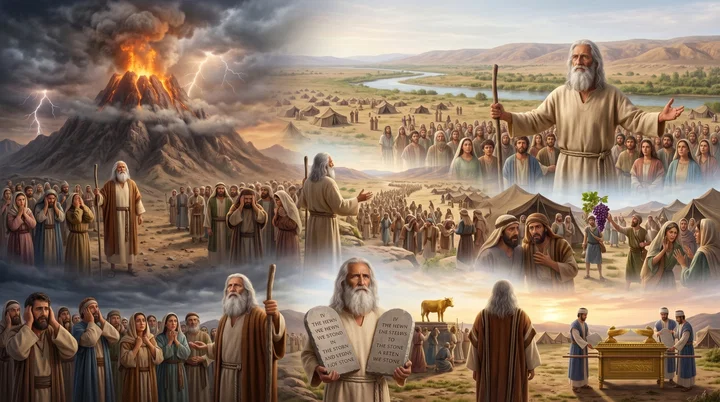
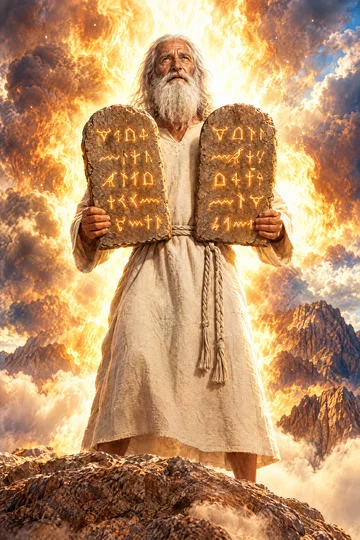
And he declared unto you his covenant, which he commanded you to perform, even ten commandments; and he wrote them upon two tables of stone.
Translations
And he declared to you his covenant, which he commanded you to perform, even ten commandments; and he wrote them on two tables of stone.
King James Version, KJV Cambridge Paragraph Bible
And he declared unto you his covenant, which he commanded you to perform, even ten commandments; and he wrote them upon two tables of stone.
And he declared to you his covenant, which he commanded you to perform, even ten commandments; and he wrote them upon two tables of stone.
Revised Version, American Standard Version
And he declared unto you his covenant, which he commanded you to perform, even the ten commandments; and he wrote them upon two tables of stone.
and He declareth to you His covenant, which He hath commanded you to do, the Ten Matters, and He writeth them upon two tables of stone.
And he declared to you his covenant, which he commanded you to do, the ten words; and he wrote them on two tables of stone.
Then declared he unto you his covenant which he commanded you to do, the ten words,—and wrote them upon two tables of stone.
Berean Standard Bible, Majority Standard Bible
He declared to you His covenant, which He commanded you to follow— the Ten Commandments that He wrote on two tablets of stone.
He declared to you his covenant, which he commanded you to perform, even the ten commandments. He wrote them on two stone tablets.
And he gave you his agreement with you, the ten rules which you were to keep, which he put in writing on the two stones of the law.
Then hee declared vnto you his couenant which he commanded you to doe, euen the ten commandements, and wrote them vpon two tables of stone.
Douay-Rheims (Challoner revision)
And he shewed you his covenant, which he commanded you to do, and the ten words that he wrote in two tables of stone.
Pictures
Cross-references 20 of 160
- Exodus 20:1-17
And God spake all these words, saying,
God proclaims the commandments identified as his covenant.
- Exodus 19:5-8
Now therefore, if ye will obey my voice indeed, and keep my covenant, then ye shall be a peculiar treasure unto me above all people: for all the earth is mine:
Cited with Deuteronomy to show God declared the law as a rule for his people.
- Deuteronomy 5:22
These words the LORD spake unto all your assembly in the mount out of the midst of the fire, of the cloud, and of the thick darkness, with a great voice: and he added no more. And he wrote them in two tables of stone, and delivered them unto me.
God spoke the commandments to the assembly and wrote them on two stone tablets.
- Exodus 31:18
And he gave unto Moses, when he had made an end of communing with him upon mount Sinai, two tables of testimony, tables of stone, written with the finger of God.
Both describe the commandments written by God on stone tablets.
- Exodus 34:28
And he was there with the LORD forty days and forty nights; he did neither eat bread, nor drink water. And he wrote upon the tables the words of the covenant, the ten commandments.
Identifies the words written on the stone tablets as the covenant’s Ten Commandments.
- Exodus 24:12
And the LORD said unto Moses, Come up to me into the mount, and be there: and I will give thee tables of stone, and a law, and commandments which I have written; that thou mayest teach them.
Both describe God giving Moses stone tablets bearing the law and commandments.
- Exodus 32:15-16
And Moses turned, and went down from the mount, and the two tables of the testimony were in his hand: the tables were written on both their sides; on the one side and on the other were they written.
Describes the two stone tablets and their writing as God’s work.
- Deuteronomy 10:4
And he wrote on the tables, according to the first writing, the ten commandments, which the LORD spake unto you in the mount out of the midst of the fire in the day of the assembly: and the LORD gave them unto me.
God writes the same ten commandments on the replacement stone tablets.
- Deuteronomy 9:9-11
When I was gone up into the mount to receive the tables of stone, even the tables of the covenant which the LORD made with you, then I abode in the mount forty days and forty nights, I neither did eat bread nor drink water:
Both identify the stone tablets as the covenant tablets bearing God’s commandments.
- Exodus 24:3-8
And Moses came and told the people all the words of the LORD, and all the judgments: and all the people answered with one voice, and said, All the words which the LORD hath said will we do.
Israel agrees to the covenant, whose words Moses records and whose ratification is sealed with blood.
- Hebrews 8:9
Not according to the covenant that I made with their fathers in the day when I took them by the hand to lead them out of the land of Egypt; because they continued not in my covenant, and I regarded them not, saith the Lord.
Contrasts Israel’s covenant made after the exodus with the promised new covenant.
- Jeremiah 31:33
But this shall be the covenant that I will make with the house of Israel; After those days, saith the LORD, I will put my law in their inward parts, and write it in their hearts; and will be their God, and they shall be my people.
God promises to write his covenant law in his people’s hearts.
- Matthew 5:17-18
Think not that I am come to destroy the law, or the prophets: I am not come to destroy, but to fulfil.
Christ says he came to fulfill, not destroy, the law, and that no part will pass away.
- Psalms 19:7
The law of the LORD is perfect, converting the soul: the testimony of the LORD is sure, making wise the simple.
Calls the Lord’s law perfect.
- Exodus 25:16
And thou shalt put into the ark the testimony which I shall give thee.
The ark was to contain the covenant testimony—the stone tablets of the commandments.
- Psalms 111:7-9
The works of his hands are verity and judgment; all his commandments are sure.
God’s commandments are sure, and his covenant is commanded forever.
- Romans 7:12
Wherefore the law is holy, and the commandment holy, and just, and good.
The law and commandment are called holy, just, and good.
- Revelation 14:12
Here is the patience of the saints: here are they that keep the commandments of God, and the faith of Jesus.
Names the saints as keeping God's commandments, identified here as the Ten Commandments.
- Deuteronomy 31:24-26
And it came to pass, when Moses had made an end of writing the words of this law in a book, until they were finished,
The book of the law is kept beside the ark, unlike the covenant tablets within it.
- Exodus 31:16-17
Wherefore the children of Israel shall keep the sabbath, to observe the sabbath throughout their generations, for a perpetual covenant.
The Sabbath is named a perpetual covenant and a sign between God and Israel.
Commentary part 1 of 2
Each commentary is drawn from primary sources: the writings of Ellen G. White and Adventist pioneers and periodicals. Each commentary is separate. Its own words are not a quotation; follow the references to read the source passages.
Ellen G. White
24 sources
God declared His covenant at Horeb, commanding Israel to perform it, and that covenant is the Ten Commandments written by Himself upon two tables of stone.RH Sep 5, 1907Lt 6, 1909, par. 5Ms 152, 1901, par. 24–26 He spoke it to Israel gathered apart at Sinai amid fire, darkness and cloud, where they heard His voice from the midst of the fire but saw no form.Lt 6, 1909, par. 5Ms 24, 1904, par. 1–2ST May 13, 1886 It was to be kept without adding to it or taking from it, taught diligently from father to son to later generations, and kept as their wisdom and righteousness bringing good, long life and blessing to them and their children.RH Sep 5, 1907Ms 152, 1901, par. 24–267MR 309.1–3RH Aug 23, 1906Ms 110, 1899, par. 6–9 That keeping includes honoring the true Sabbath day as holy in reverence for Him, and refusing all worship of graven images or of sun, moon and stars.Lt 6, 1909, par. 5Ms 120, 1909, par. 11–12Ms 24, 1904, par. 1–220MR 395.5Ms 24, 1904, par. 3 The law written by His finger and preserved in the ark will meet every person at the last day, when each case is decided by obedience or transgression.Ms 120, 1909, par. 11–12Ms 146, 1906, par. 36–44Ms 93, 1908, par. 38–41ExVEGW 25.3
Covenant Given at Horeb
The covenant declared and commanded to be performed is the Ten Commandments, written by God Himself upon two tables of stone.RH Sep 5, 1907Lt 6, 1909, par. 5Ms 152, 1901, par. 24–26Ms 120, 1909, par. 11–127MR 309.1–3 That declaration was made to Israel at Horeb, also called Sinai and Mount Sinai.RH Sep 5, 1907Lt 6, 1909, par. 5Ms 152, 1901, par. 24–26Ms 146, 1906, par. 36–44Ms 131, 1907, par. 26–28 Israel was gathered there apart from other nations amid fire, darkness, clouds, and the glory displayed on the sacred mountain.ST May 13, 1886RH Feb 19, 1914 From the midst of the fire and from the pillar of cloud they heard the voice of the words, but they saw no similitude or form, only a voice.Ms 24, 1904, par. 1–2ST May 13, 1886Ms 40, 1891, par. 42–45Ms 131, 1907, par. 26–28
At that same time Moses was commanded to teach statutes and judgments for Israel to do in the land they were going over to possess.Ms 24, 1904, par. 1–2 Those righteous laws were given to govern them and to guide them there, making the nation wise and understanding.ST May 13, 1886RH Feb 19, 1914 The setting gave solemn warning against corrupting worship by making a graven image in any form.Ms 24, 1904, par. 1–2 That included the likeness of male or female, of any beast on the earth, of any winged fowl in the air, of anything creeping on the ground, or of any fish in the waters beneath the earth.Ms 24, 1904, par. 1–2 It also warned against lifting the eyes to heaven and, when seeing the sun and moon and stars, even all the host of heaven, being driven to worship and serve them.Ms 24, 1904, par. 1–2 Created things are not God but testify of Him and must not be worshiped.Ms 24, 1904, par. 3
The tablets were written by Jehovah's finger.ExVEGW 25.3 After being broken they were rewritten on a second set of tablets.Ms 120, 1909, par. 11–12 They remain sacredly preserved in the Ark in the Most Holy Place, where Jesus entered in 1844.Ms 146, 1906, par. 36–44ExVEGW 25.3 They will be brought forth at the final judgment, when each case is settled according to obedience or transgression of the law God gave.Ms 120, 1909, par. 11–12Ms 146, 1906, par. 36–44 The One who declared this covenant is the One who proclaimed Himself the resurrection and the life.Ms 84, 1910, par. 54–56
Obedience Required Forever
The revelation at Horeb was to be remembered and kept alive in later generations, taught from father to son by strict parental education in obedience, and obeyed exactly as given without adding to it, taking from it, erasing it, or changing it.RH Sep 5, 1907Ms 152, 1901, par. 24–26Ms 110, 1899, par. 6–9Ms 141, 1906, par. 31–33Ms 93, 1908, par. 38–41 That charge belongs to every human being living today, each one required to take heed to himself individually.Ms 141, 1906, par. 31–33 The commandments were never to be erased or changed.Ms 93, 1908, par. 38–41
Keeping them was Israel's wisdom and public witness to their righteousness, part of what God required for them to be a holy people joined to His covenant and mercy.RH Sep 5, 19077MR 309.1–3ST May 13, 1886 The Lord alone is God, and obedience to His commandments brings good to the people and their children, well-being, prolonged days, and long life upon the earth given forever.RH Aug 23, 1906Ms 65, 1906, par. 21–22FE 508.1–4 They were the righteous laws given to govern Israel and make the nation wise and understanding.ST May 13, 1886
That obedience includes keeping the specified true Sabbath day holy, proclaimed by God at Mount Sinai for those who identify with His people.Lt 6, 1909, par. 5Ms 120, 1909, par. 11–1220MR 395.5 Its observance is a sign of obedience and reverence for God's holy day, including strict observance of the very day observed today.Ms 120, 1909, par. 11–12Ms 141, 1906, par. 31–33 Careful study of the chapter is important for those who would belong to His covenant-keeping people.Ms 120, 1909, par. 11–1220MR 395.5
The whole chapter is to be studied carefully by God's covenant-keeping people today as truly as by ancient Israel.RH Sep 5, 1907RH Aug 23, 1906Ms 65, 1906, par. 21–22FE 508.1–420MR 395.5 Studying the Word for oneself and doing what the Lord has directed helps prevent rebellion and supports daily sanctification.Lt 42, 1910, par. 6 This calls for wholly submitting to His will and way and resisting sinful inclinations, while those who have heard the truth for the last days are warned not to treat it as something to put on and set aside at will.19MR 67.1Ms 141, 1906, par. 31–33
The word spoken was verified in judgment, for because the people disobeyed, only two of the adults who left Egypt entered Canaan and the rest died in the wilderness.Ms 65, 1906, par. 21–22FE 508.1–4 God will still vindicate His word today if leaders depart from His commandments, and His word of judgment will also stand.Ms 65, 1906, par. 21–22FE 508.1–4
Every person will one day meet the commandments and understand their meaning.Ms 93, 1908, par. 38–41 The tablets, rewritten on the second set and sacredly preserved, will be brought forth at the final judgment, when each person's case is settled according to whether that person obeyed God or transgressed His law.Ms 120, 1909, par. 11–12Ms 146, 1906, par. 36–44 People are judged by the commandments God gave.Ms 120, 1909, par. 11–12
The commandments are sacred truth giving plain directions of what to do and what not to do, spoken by the voice of God from the pillar of cloud.Ms 40, 1891, par. 42–45 Their specifications never lose their force because they are expressions of the mind of the infinite God, and every word is to be cherished and preached.Ms 40, 1891, par. 42–45 They are principles to be acted out in all religious service toward God and toward one another — being Christian gentlemen, loving as brethren, doing no injustice, and always showing liberality, tenderness, compassion, and true courtesy, the very same principles expressed in James 3.Ms 40, 1891, par. 42–45 Making them a thing of naught trifles with the infinite God, and all who depart from His word in their actions misrepresent His character, who would be represented by His people by correct principles in everything.Ms 40, 1891, par. 42–45
The covenant is light shining on the pathway that must be walked in by practical works, not merely held as theoretical belief.Lt 55, 1897, par. 9–11 It means faith and works combined in earnest service for the Lord, including medical missionary work and educating students to do service.Lt 55, 1897, par. 9–11 Neglecting that light and failing to do the specified work leaves a wrong example.Lt 55, 1897, par. 9–11
Sources
Pioneers and periodicals
177 sources
God's covenant in this verse is the Ten Commandments themselves, ten words in number, a complete code by itself and not part of a larger covenant.RH Mar 19, 1857ST Apr 25, 1906 God Himself spoke them aloud with His own voice directly to all the people, and God Himself wrote that same ten with His own finger on two tables of stone.RH Jul 9, 1901RH Feb 7, 1854ST Mar 4, 1886RH Dec 31, 1861ST Sep 2, 1875 That stone-written law stands distinct from the statutes and judgments He commanded Moses to teach, which Moses spoke and wrote in a book.RH Jul 9, 1901ST Mar 4, 1886RH Apr 21, 1851RH Jan 20, 1853RH Oct 21, 1851 It is eternal, unchangeable and binding on all men in every generation, including the seventh-day Sabbath in the fourth commandment commanded by God's own voice.RH Jul 9, 1901RH Mar 7, 1871ST Mar 23, 1904RH May 3, 1860ST Jun 24, 1897 It is a commanded covenant enjoined by authority whose only part for man is to obey, and it remains and is not the abolished old covenant, beside which is the teaching of those who held that these ten so called are themselves the faulty first covenant that is done away.ST Oct 16, 1901RH Dec 8, 1874ST May 9, 1878ST Oct 31, 1878
Words and Historical Setting
The covenant God declared and commanded to be performed is the Ten Commandments written on two tables of stone, His own special covenant distinctively His own.RH Mar 19, 1857ST Apr 25, 1906ST Oct 4, 1883 It is the Decalogue, the ten words, expressions, thoughts and statements, ten in number no more and no less, a complete code by itself and not merely part of a larger covenant spoken at Sinai.ST Apr 25, 1906RH Aug 21, 1855ST Jun 17, 1875 While all the Bible is God's Word and scores, hundreds, even thousands of other expressions and laws were given by the Lord, the Ten Commandments are emphatically known as the law of Jehovah, His holy covenant and moral law.ST Apr 25, 1906ST Oct 4, 1883 It is a commanded covenant declared by God to be performed, not an agreement, with man's only part to obey, and it is not limited to one individual or people but all men are under obligation to observe it. There is only one covenant that is a law or commandment, distinct from many covenants that are promises or mutual agreements, and it is the condition on which every promise of blessing rests, including the promise to Abraham, because who are righteous and who are wicked can only be determined by a law as a standard of judgment.ST Jun 17, 1875 That commanded covenant was kept by Abraham and Isaac and was not then enacted but was later confirmed to Jacob and to Israel, containing only ten precepts spoken directly by God and written on two tables of stone, not to be confounded with the statutes given through Moses nor with the ordinances of offerings and sacrifices.ST Jun 17, 1875 God spoke the commandments aloud from the midst of the fire, and the people heard His words but saw no visible form of Him.RH Mar 19, 1857
The verse belongs to Moses' rehearsal forty years after Horeb, at the end of the forty years of wandering before entering the promised land, near the close of his leadership, pointing back to what Israel already knew.RH Oct 27, 1868ST Jun 24, 1875ST Sep 29, 1914ST Mar 1, 1910 Deuteronomy means second law or repetition of the law, recounting God's dealings with Israel and the laws and lessons given during the forty years in the wilderness before they crossed the Jordan into the promised land.ST Mar 11, 1913ST Mar 1, 1910 In the setting of Horeb these are the words Israel heard when God gathered the people to teach them reverence, and they were to remember that day and teach the commandments to their children and descendants.ST Sep 30, 1886 God Himself declared them aloud at Horeb in the hearing of about two million people, forty years before Moses rehearsed the event, and wrote them plainly in His own hand on two tables of stone to be placed in the ark.RH Oct 27, 1868 It was the earliest writing in existence and the only complete code of moral precepts God ever gave to man, spoken from His own lips and given in His own handwriting, which constitutes God's law.RH Oct 27, 1868 The commandments were given not for the children of Israel alone but for all nations of the earth in every generation, and they are perpetual, with promised blessings to all who obey and keep them.RH Oct 27, 1868 Moses recalling the proclamation from Sinai gave that document special emphasis as the law whose observance would make Israel a noted and wise people superior to all others upon the earth, impressing its sacred importance and necessity of obedience.ST Sep 29, 1914ST Mar 1, 1910
Deuteronomy means second law or repetition of the law, or duplicate of the law, and the verse stands in the fifth and last book of the Pentateuch.ST Mar 11, 1913RH Feb 24, 1916 It stands in the first of three addresses by Moses given just before his death, covering Deuteronomy 1 to 4:40 and rehearsing God's goodness to Israel, distinct from the review of the law for the new generation in Deuteronomy 5 to 26 from which the book takes its name, and from the renewal of the covenant in Deuteronomy 27 to 30, and it belongs to the reading appointed for February 29 together with Deuteronomy 5.RH Feb 24, 1916 That covenant of ten commandments alone is distinct from the covenant in Deuteronomy 5:3 which was not made with the fathers but with Israel in Horeb.RH Jun 3, 1862 The Horeb covenant was the mutual agreement between God and Israel, with the ten commandments as its moral conditions or basis.RH Jun 3, 1862 The ten commandments declared at Sinai were already enjoined and in force prior to the exodus as the necessary moral rule of God's moral government, including the Sabbath, which was in force thirty days before Israel came to Horeb.RH Jun 3, 1862 To make Deuteronomy 5:3 mean the ten commandments began at Sinai would release Abraham, Isaac and Jacob from all ten commandments.RH Jun 3, 1862 That covenant is the same as Exodus 20:3-17 and is substantially repeated in Deuteronomy 5:7-21.RH Apr 28, 1868 It was given when the Lord talked with Israel face to face in the mount out of the midst of the fire, speaking directly to the people so they all heard His voice, not through Moses standing between God and the people.RH Apr 28, 1868 It is distinct from the covenant of agreement in Exodus 19:5-8 and Deuteronomy 5:2-3, in which the people agreed to keep God's covenant and Moses stood between the Lord and the people.RH Apr 28, 1868ST Dec 18, 1893 That commanded covenant is not the covenant made with Israel to which Israel was a party, and it is not the covenant of Deuteronomy 5:3 made with those alive that day, for the national covenant recorded in Exodus 19:5-8 and Exodus 24:3-8 was made while the tables of the law were yet not given.ST Dec 18, 1893
The giving was solemn and majestic: after three days of special preparation to meet the Lord, the Lord came down in great majesty upon Mount Sinai with thunders and lightnings, a thick cloud, an exceedingly loud trumpet, smoke as from a furnace, and great quaking of the whole mount, so that all the people in the camp trembled, and His voice shook the earth.ST May 6, 1875 He spoke out of the midst of fire, darkness and clouds, and the people heard the voice of words but saw no form or similitude, only heard a voice.RH Jul 9, 1901RH Nov 18, 1915ST May 6, 1875RH Nov 5, 1908 What the Lord spoke to the people out of the midst of the fire was His covenant which He commanded them to perform, even the Ten Commandments, and He wrote that same covenant upon two tables of stone.RH Jul 9, 1901 What God spoke is identical with what God wrote, no more and no less, and it marks one distinct code of law, directly and essentially God's law, separate from the statutes and judgments He commanded Moses at that time to teach the people to do in the land.RH Jul 9, 1901 This law is a statement of moral principles as well as precepts, eternal, immutable, unchangeable, everywhere obligatory.RH Jul 9, 1901 The giving of the law was a solemn revelation whose memory was to be preserved and taught to later generations.RH Sep 5, 1907
The display of majesty was meant to teach the law's holiness and sacredness and to make the people fear transgressing it.RH Nov 18, 1915 With no visible form withheld lest they make images, they heard God's voice from the fire, and the account was recorded so later generations would know that God spoke the commandments aloud to all Israel.ST May 13, 1886ST Nov 12, 1912 It shows that God's law was known, since sin is not counted where there is no law, and the law was then placed in the ark.ST Nov 12, 1912 They were to remember the day at Horeb when God gathered the people to teach them reverence, and teach the commandments to their children and grandchildren.ST Sep 30, 1886 The commandments were to be obeyed without adding to or taking away from them, and keeping them was Israel's wisdom and a public witness to their righteousness.RH Sep 5, 1907 They were part of the righteous laws given to govern Israel and make the nation wise and understanding, and recognizing this righteous law of statutes and judgments gives men wisdom and understanding and keeps God near to them.ST May 13, 1886ST Feb 28, 1906 God's words apply to His people as truly as they applied to ancient Israel.RH Sep 5, 1907
Covenant as Commanded Law
The covenant in the verse means constitution, a body of laws and the supreme law to which the constitutions and laws of all dispensations must submit and be in perfect harmony, the center of the moral universe and fountain-head of moral government, so that dispensational constitutions can be abolished without abolishing it, as state constitutions can change without abolishing the federal constitution.RH Jan 15, 1861ST Mar 4, 1889ST Jul 20, 1882 It is used in its secondary sense as the condition, terms and basis of agreements rather than in its primary sense as a mutual contract containing promises on both sides, because the commandments themselves contain no contract and God's promises are always suspended upon obedience.ST Mar 4, 1889ST Feb 13, 1879ST Sep 27, 1883RH Dec 8, 1874 The commandments are therefore called covenant because God's law is the basis of covenants and underlies both the agreement made with Israel in Exodus 19 and the Christian system, distinct from that agreement yet the rule of holiness by which obedience forms holy character.ST Mar 4, 1889ST Jul 20, 1882ST Sep 27, 1883 The agreement promised Israel a special standing if they obeyed, while the ten words spoken directly by God and written by His own finger carried greater direct divine authority than other laws revealed through prophets and priests and were regarded as a moral code distinct from ceremonial observances.ST Jul 20, 1882ST Sep 27, 1883 The ark is called the ark of the covenant and the tables the tables of the covenant because they contained God's covenant of Ten Commandments rather than the mutual agreement entered into with Israel.RH Dec 8, 1874
The Ten Commandments are a commanded covenant declared by God to be performed and enjoined by authority, not a made covenant depending on mutual faithfulness for its continuance, with a clear difference between an arrangement established upon voluntary mutual promises and what one party with authority enjoins upon another.ST Oct 16, 1901RH Dec 8, 1874ST May 16, 1878 Man's only part in it is to obey with no choice left, and it is not limited to one individual or people but all men are under obligation to observe it, binding whether or not people agree to obey it.ST Mar 4, 1889RH Mar 25, 1873RH Sep 8, 1863 Unlike covenants with the nation and with individuals that were nullified when man failed on his part, its perpetuity depends not on the people but on God who changes not, and because God's righteousness is everlasting and the commandments are righteousness and the law is truth, they continue as righteousness so long as God continues to be righteous.ST Oct 16, 1901 This covenant of law existed before the special agreement made with Israel and is the same thing called my covenant in Exodus 19:5, already in existence before any formal agreement and never called the covenant meaning the old covenant but called His covenant and His special covenant distinctively His own.RH Dec 8, 1874ST May 16, 1878 Israel broke this covenant commanded to them, which nullified the covenant made with them, yet the old covenant that was done away was not God's covenant commanded to them but the arrangement entered into with them, leaving the law undiminished in force, morality, authority and perpetuity by their promise or their failure.RH Dec 8, 1874RH Mar 25, 1873
The commandments themselves contain no contract, no directions about priesthood or sacrifices, and no mutual promises, and are called covenant only in the secondary sense as the basis and conditions of the agreement, whose first condition was keeping that covenant.ST Feb 13, 1879RH Dec 8, 1874ST May 16, 1878 They were the subject matter about which God and Israel made mutual promises, with God promising that if they obeyed His voice and kept His covenant they would be a peculiar treasure above all people, a kingdom of priests and a holy nation, and Israel promising that all the Lord had spoken they would do.ST Jul 1, 1875ST Dec 30, 1889ST Feb 15, 1905 The commandments were the condition of Israel's covenant agreement and the terms Israel agreed to obey, not the agreement itself, linking the covenant condition in Exodus 19:5-8 to obedience to these commandments spoken from the fire and written on stone.ST Jul 1, 1875ST Dec 30, 1889RH Mar 18, 1875ST Jul 1, 1875 Keeping them would have formed a holy people and made Israel God's treasured possession, for the law is a rule of holiness and obedience to it forms a holy character, with the standard of holiness the same in both covenants.ST Jul 1, 1875RH Mar 18, 1875ST Jul 1, 1875 Israel broke that covenant and continued not in it, so God promised a new covenant established on better promises, the fault and the bettering belonging not to God's promises of salvation, redemption, sanctification and every good thing in His everlasting covenant but to the people's promises to keep His law.ST Feb 15, 1905
Obeying God's voice and keeping His covenant mean the same thing, and keep my covenant points to this commanded covenant, not merely to Israel's promise to obey.RH Mar 27, 1913RH Mar 3, 1874RH Sep 8, 1863 To be obedient unto His voice means to keep that law in which His will is expressed, the law spoken with His own voice out of the midst of the fire where only a voice was heard with no form seen and written with His own finger upon two tables of stone.RH Jan 15, 1861RH Mar 27, 1913ST Aug 2, 1905 The voice of the Lord is the law of God, proclaimed three days after the agreement at Sinai and set apart as the moral code to be held in peculiar reverence, and keeping it would make Israel a holy nation because character formed by actions in reference to law copies the nature of the law obeyed.ST Aug 2, 1905RH Mar 3, 1874RH Sep 8, 1863 Since only a holy law can produce holy character and law expresses God's attributes, obeying the ten commandments attains the righteousness of God and true holiness as pure and changeless as heaven itself, a truth that sanctifies and makes people holy including keeping the Sabbath as conformity to them.RH Mar 3, 1874RH Aug 18, 1868ST May 10, 1905 Those who held the opposing position taught that the ten commandments so called are themselves the first or old covenant established at Horeb, which was faulty, has vanished away, is done away and abrogated, abolishing the ten-commandment law with the seventh-day Sabbath.ST May 9, 1878RH Feb 18, 1873ST Jun 4, 1902 They taught that this covenant made when He brought them out of Egypt is the old covenant of which God promised a new covenant not according to it, now made so the old has waxed old and passed away, made only with Israel and never with the Gentiles, the tables containing its words having been put into the ark in the most holy place of the earthly sanctuary.RH Feb 18, 1873ST Jun 4, 1902
Being called covenant does not make the Ten Commandments the abolished old or first covenant, and does not keep the same God-written code from also being called law, commandments, and testimony.ST Oct 31, 1878RH Jun 14, 1864 That designation alone does not prove they are the covenant described elsewhere as done away, since other covenants existed and it must be shown that the covenant abolished is specifically the Ten Commandments before concluding that they were abolished.ST Oct 31, 1878RH Jun 14, 1864
Spoken and Written by God
What the Lord spoke is identical with what He wrote, no more and no less, for His covenant commanded to be performed is the Ten Commandments.RH Jul 9, 1901RH Feb 7, 1854ST Mar 4, 1886ST Jun 19, 1884 He declared them aloud Himself with His own voice directly to all the people in their hearing, three days after the proposal at Sinai, not through Moses, prophet or priest.ST Mar 4, 1886ST Jun 19, 1884ST May 20, 1875ST Jan 23, 1912 Together with the preceding verse this shows the people heard His voice out of the midst of the fire though they saw no similitude, and that same spoken covenant was written upon two tables of stone.RH Jul 9, 1901ST Jan 23, 1912 It marks one distinct code of law, directly and essentially God's law, separate from the statutes and judgments He commanded Moses at that time to teach in the land and from laws about offerings and sacrifices given through Moses.RH Jul 9, 1901ST Mar 4, 1886ST Jun 19, 1884 This law is a statement of moral principles as well as precepts, eternal, immutable, unchangeable, everywhere obligatory, and it taught the newly liberated nation the principles of heavenly government.RH Jul 9, 1901ST Jan 23, 1912
He Himself wrote them on two tables of stone with His own finger without Moses as amanuensis.ST Sep 2, 1875RH Mar 26, 1872ST Aug 21, 1879RH Aug 2, 1870 He prepared the first tables before calling Moses up into the mount to receive them at the end of forty days and forty nights, and delivered them into Moses' hands.RH Dec 31, 1861ST Sep 2, 1875ST Aug 21, 1879 After they were broken the same identical ten were written again on second tables which Moses hewed out and carried up, an exact copy of the writing that had been on the first.RH Dec 31, 1861RH Mar 26, 1872RH Aug 2, 1870 The speaking by God's own voice so that all heard God Himself speaking and not a man, and the stone-writing by God's own finger, mark this moral law as exalted above ritual and ceremonial laws, supreme and immutable, the constitution of the Creator, durable and not to wax old and vanish away like ceremonial ordinances.RH Mar 26, 1872RH Aug 2, 1870 The law so declared is the lively or living oracles, oracles spoken by mouth and given by the living God as a transcript of the divine mind and will, also called the royal or supreme law, not Jewish but concerning and shaking all nations, binding the fourth commandment as much as the first, second and third.RH Mar 26, 1872ST Apr 7, 1909
They are the only writing ever given directly by God rather than through a human instrument, bearing the impress of Deity alone and carrying direct personal authority.ST Apr 7, 1909ST Jul 20, 1882ST Aug 7, 1884 It was the earliest writing in existence and the only complete code of moral precepts ever given to man, spoken from His own lips and given in His own handwriting, twice written and the only portion of the Bible so written amid thunderings and lightnings and the sound of trumpets.RH Oct 27, 1868ST Apr 7, 1909RH Aug 2, 1870 To call this decalogue, His ten words, Jewish, obsolete, superseded, abolished, or unsuited to the genius and freedom of the gospel dispensation is to treat His own spoken and written words with contempt, weakening His authority over minds, destroying deep respect for the rest of the Bible, and producing formal will-worship designed to exalt self rather than glorify God.RH Oct 27, 1868ST Aug 7, 1884 They were declared aloud at Horeb in the hearing of about two million people forty years before Moses rehearsed the event, written plainly in His own hand to be placed in the ark, given not for Israel alone but for all nations in every generation, perpetual with promised blessings to all who obey and keep them.RH Oct 27, 1868RH Aug 2, 1870
Engraving in enduring stone makes the covenant sure, marks its exaltation, importance, stability, perpetuity and lasting authority.RH Oct 21, 1851ST Jan 30, 1896ST Jul 20, 1882RH Aug 5, 1851 What is engraved in stone cannot be blotted out as handwriting in a book can be blotted out, so the blotting out of the handwriting of ordinances and the nailing to the cross does not apply to it and has no connection with it.RH Oct 21, 1851 The stone engraving marks this covenant as immutable and enduring, unlike the distinct book of the covenant and book of ordinances that Moses wrote for a limited time.RH Oct 21, 1851RH Aug 5, 1851 The commandments were graven in stone by the work and writing of God Himself with His own finger, not entrusted to Moses to write, founded on obligations growing out of the nature of men and their relations to God and one another, binding before written and continuing to the close of time.RH Oct 21, 1851ST Jan 30, 1896
The tables are the tables of the covenant, the tables of testimony and the tables of stone.ST Jan 7, 1886RH Oct 7, 1851ST May 13, 1897 Placed inside the chest of shittim wood covered with pure gold inside the veil beneath the mercy seat in the most holy place, between the covering cherubim where His presence was manifested in the Shekinah, they make it the ark of the covenant of the Lord and the ark of His testament.ST Jan 7, 1886RH Oct 7, 1851ST May 13, 1897ST Apr 7, 1909 They were the original pattern for the tables placed in the earthly sanctuary, and John's vision of the ark of God's covenant in the heavenly sanctuary shows the same law there, for the law given at Sinai is a copy of the original commandments kept in heaven and remains His covenant under the present dispensation, including the seventh-day Sabbath.ST Dec 10, 1894RH Jun 21, 1864 The law placed in the ark and covered by the blood of the sin offering showed transgression requiring atonement, while the commandments with the mercy seat and the plan of salvation together are the complete revelation of His character, toward which all worship was directed and where sacrifices were brought.ST Oct 23, 1884ST Apr 7, 1909 The Decalogue is both His own covenant and the basis of the covenant made with Israel, distinct from the law of Moses written by Moses and placed in the side of the ark as a witness, and the promise of the new covenant to write the law in hearts and forgive transgressions refers to this same law.RH Oct 7, 1851ST May 13, 1897ST Oct 23, 1884
The delivery came not from any earthly potentate but from the King of kings as supreme source of legislative authority and Lawgiver, when the divine code took material form for Israel and for all people.RH Sep 2, 1915RH Dec 30, 1858 Ten thousand saints were present as angels at the delivery, and the law is so important that not even the angel Gabriel was permitted to write or deliver it to His representative on earth.RH Sep 2, 1915 It is the most comprehensive code ever written, holding first place among legal documents and absolutely universal, not an outgrowth of Babylonian jurisprudence but principles committed from the beginning, the revelation of the infinite mind, with His name and His descriptive title as Creator of heaven and earth placed in the fourth precept to distinguish the true God from all false gods.RH Sep 2, 1915ST Apr 7, 1909
The Hebrew word translated commandment is the same word translated word where it is said that His word is settled in heaven forever, which literally means planted in the heavens unto all eternity.ST Apr 25, 1906 The covenant law therefore originated in heaven, was made known to angels and to all created intelligences, governs the angelic hosts as it governs the inhabitants of earth, and remains in heaven unchanged to all eternity without jot or tittle failing.ST Apr 25, 1906
Sources