Deuteronomy 5:4
The LORD talked with you face to face in the mount out of the midst of the fire,
Translations
The LORD talked with you face to face in the mount out of the middle of the fire,
The LORD talked with you face to face in the mount out of the midst of the fire,
The Lord talked with you face to face in the mount out of the midst of the fire,
The LORD talked with you face to face on the mount, from the midst of the fire,
The LORD spake with you face to face in the mount out of the midst of the fire,
Jehovah spake with you face to face in the mount out of the midst of the fire
Face to face hath Jehovah spoken with you, in the mount, out of the midst of the fire;
Face to face on the mountain from the midst of the fire Jehovah spoke with you
Face to face, spake Yahweh with you in the mount out of the midst of the fire,
Berean Standard Bible, Majority Standard Bible
The LORD spoke with you face to face out of the fire on the mountain.
The LORD spoke with you face to face on the mountain out of the middle of the fire,
The word of the Lord came to you face to face on the mountain, out of the heart of the fire,
The Lord talked with you face to face in the Mount, out of the middes of the fire.
Douay-Rheims (Challoner revision)
He spoke to us face to face in the mount out of the midst of fire.
Pictures
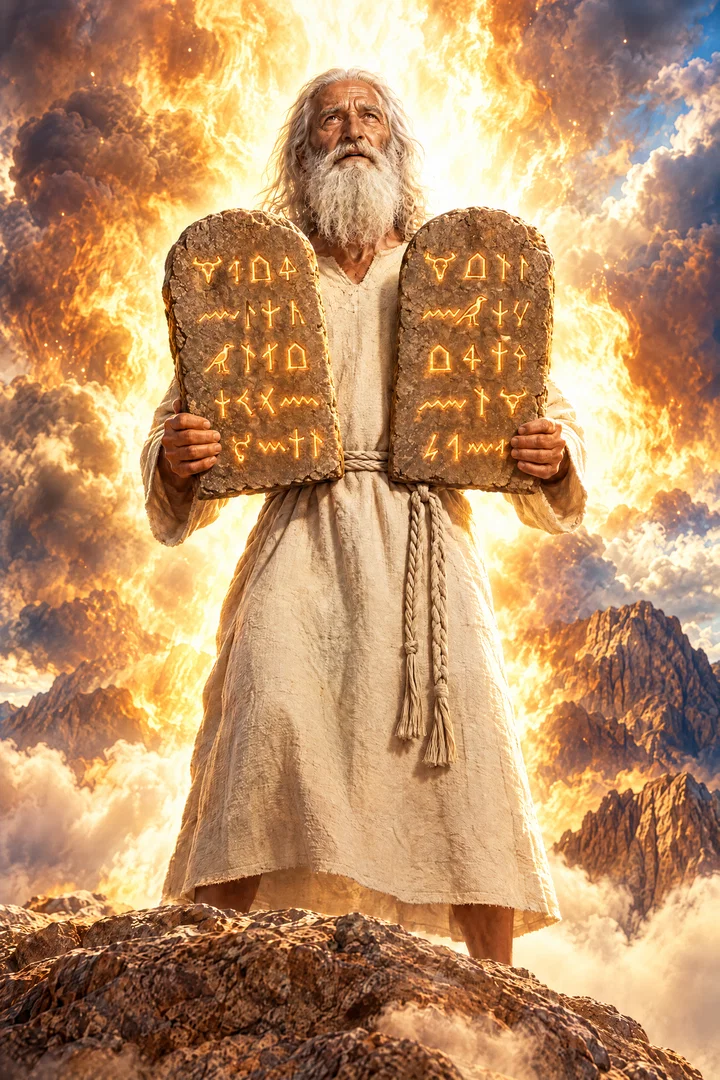
Cross-references 20 of 28
- Exodus 20:1-17
And God spake all these words, saying,
God speaks the commandments directly to the people from the mountain.
- Exodus 19:16-20
And it came to pass on the third day in the morning, that there were thunders and lightnings, and a thick cloud upon the mount, and the voice of the trumpet exceeding loud; so that all the people that was in the camp trembled.
The Lord descended in fire upon Sinai and spoke to Israel.
- Deuteronomy 4:12-13
And the LORD spake unto you out of the midst of the fire: ye heard the voice of the words, but saw no similitude; only ye heard a voice.
God speaks from the fire and declares the covenant commandments.
- Deuteronomy 5:22
These words the LORD spake unto all your assembly in the mount out of the midst of the fire, of the cloud, and of the thick darkness, with a great voice: and he added no more. And he wrote them in two tables of stone, and delivered them unto me.
The Lord spoke the commandments to the assembly from the fire and wrote them on stone tablets.
- Exodus 24:12
And the LORD said unto Moses, Come up to me into the mount, and be there: and I will give thee tables of stone, and a law, and commandments which I have written; that thou mayest teach them.
God gives Moses the law and commandments written on stone to teach the people.
- Nehemiah 9:13-14
Thou camest down also upon mount Sinai, and spakest with them from heaven, and gavest them right judgments, and true laws, good statutes and commandments:
God spoke his commandments at Sinai and made the Sabbath known to Israel.
- Exodus 19:17-18
And Moses brought forth the people out of the camp to meet with God; and they stood at the nether part of the mount.
Israel meets God at Sinai as the mountain burns and trembles.
- Exodus 20:1
And God spake all these words, saying,
God speaks the commandments directly to the people.
- Exodus 24:3-8
And Moses came and told the people all the words of the LORD, and all the judgments: and all the people answered with one voice, and said, All the words which the LORD hath said will we do.
The people heard God’s words and pledged obedience as Moses ratified the covenant with blood.
- Deuteronomy 10:4
And he wrote on the tables, according to the first writing, the ten commandments, which the LORD spake unto you in the mount out of the midst of the fire in the day of the assembly: and the LORD gave them unto me.
It identifies the commandments as the words the LORD spoke from the fire at the mountain assembly.
- Deuteronomy 4:36
Out of heaven he made thee to hear his voice, that he might instruct thee: and upon earth he shewed thee his great fire; and thou heardest his words out of the midst of the fire.
God speaks from the fire and gives his commandments.
- Deuteronomy 5:27
Go thou near, and hear all that the LORD our God shall say: and speak thou unto us all that the LORD our God shall speak unto thee; and we will hear it, and do it.
Israel asks Moses to hear God and speak to them, pledging to obey.
- Exodus 31:18
And he gave unto Moses, when he had made an end of communing with him upon mount Sinai, two tables of testimony, tables of stone, written with the finger of God.
God gave Moses stone tablets written with his finger.
- Malachi 4:4
Remember ye the law of Moses my servant, which I commanded unto him in Horeb for all Israel, with the statutes and judgments.
Horeb’s law is identified as the law of Moses.
- Exodus 19:8
And all the people answered together, and said, All that the LORD hath spoken we will do. And Moses returned the words of the people unto the LORD.
Israel pledges to do all that the LORD has spoken in the covenant setting.
- Deuteronomy 9:10
And the LORD delivered unto me two tables of stone written with the finger of God; and on them was written according to all the words, which the LORD spake with you in the mount out of the midst of the fire in the day of the assembly.
God spoke the commandments from the fire at the assembly.
- Exodus 20:19
And they said unto Moses, Speak thou with us, and we will hear: but let not God speak with us, lest we die.
standing between refers to this fear of the fire
- Deuteronomy 4:10
Specially the day that thou stoodest before the LORD thy God in Horeb, when the LORD said unto me, Gather me the people together, and I will make them hear my words, that they may learn to fear me all the days that they shall live upon the earth, and that they may teach their children.
Recalls the people hearing God speak at Horeb.
- Exodus 19:3-4
And Moses went up unto God, and the LORD called unto him out of the mountain, saying, Thus shalt thou say to the house of Jacob, and tell the children of Israel;
The Sinai covenant is confirmed to Israel through the law.
- Deuteronomy 33:2
And he said, The LORD came from Sinai, and rose up from Seir unto them; he shined forth from mount Paran, and he came with ten thousands of saints: from his right hand went a fiery law for them.
Describes the fiery law given at Sinai.
Commentary
Each commentary is drawn from primary sources: the writings of Ellen G. White and Adventist pioneers and periodicals. Each commentary is separate. Its own words are not a quotation; follow the references to read the source passages.
Ellen G. White
11 sources
The Lord talked directly face to face with Israel at Horeb, also called Sinai and Mount Sinai, in the mount out of the midst of the fire, described as a fiery cloud, to give the Ten Commandments and make His covenant and requirements known.Ms 12, 1904, par. 6–18Ms 152, 1901, par. 34–36Ms 151, 1901, par. 25–26ST Mar 31, 18981SP 330.3 That covenant was made not with their fathers but with the people then living.Ms 12, 1904, par. 6–18Ms 151, 1901, par. 25–26 Moses called all Israel together at the river Jordan when the appointed time to possess Canaan was at hand to recount that giving of the law.Ms 12, 1904, par. 6–18Ms 12, 1904, par. 5 Many were too young to remember it or had been born in the wilderness, and few were old enough to have comprehended its awful solemnity, so God directed him to retell the circumstances of that great and grand event given with great grandeur.SG4 52.21SP 330.3Ms 12, 1904, par. 5 He was to rehearse the deliverance from Egypt and the wilderness journeyings, repeat the law, and present the claims of His law before they passed over Jordan to take the promised land.Ms 12, 1904, par. 6–18Ms 12, 1904, par. 5
Within Deuteronomy 4-8 the verse introduces what God required in commandments, statutes and judgments that Israel might be a holy people to Himself.7MR 309.1–3Ms 12, 1904, par. 6–18 Moses urged them to hear those statutes and judgments that day to learn them and keep and do them.Ms 12, 1904, par. 6–18Ms 12, 1904, par. 19 Namely that He is the Lord who brought them out of Egypt, to have no other gods, make no graven image nor bow to them, not take His name in vain, keep the seventh-day Sabbath holy with rest for all and remembrance of deliverance from Egypt, honor father and mother for long life and well-being in the given land, and not kill, commit adultery, steal, bear false witness, or covet neighbor's wife, house, field, servants, cattle or anything his.Ms 12, 1904, par. 6–18 In this wilderness setting Christ continually presented God's commands to the wilderness church, including the command to keep the seventh day holy.ST Mar 31, 1898
The commandments Moses repeated were spoken by God and remain for study and practice in principle for their true meaning.Ms 151, 1901, par. 25–26RH Jan 30, 1908 They were recalled to remind the people of their solemn pledge to govern words and actions by God's law.Ms 152, 1901, par. 34–36 That instruction calls for sanctification of mind, soul and body and for perfect obedience to God's will and holy commandments, for which no excuse for disobedience is accepted.Lt 292, 1908, par. 13 Those commandments must still be learned, kept and done, with obedience enjoined as the condition of prosperity.Ms 12, 1904, par. 5Ms 12, 1904, par. 19 Reverence for God means obeying His law and disobedience forfeits His cooperation and blessing, leaving those who profess to serve Him yet refuse His precepts clouded by unbelief.Ms 12, 1904, par. 19 The same instruction is to be studied now with profit because the day of God's great final review is near when all must stand before the Judge of all the earth in this present time of investigation when every character is investigated and every case decided for eternity.7MR 309.1–3
Sources
Pioneers and periodicals
66 sources
The Lord himself spoke aloud to the whole assembled nation at Sinai, also called Horeb, out of the midst of the fire on the mount.RH Oct 21, 1851ST Jun 24, 1875RH Dec 24, 1861 What Moses here recalls is not a new giving of the law but a rehearsal forty years later, at the close of the wilderness wandering, of what God had already spoken and written and placed in the ark.ST Jun 24, 1875ST Jun 24, 1875RH May 27, 1852 That face-to-face speaking was the proclamation of the Ten Commandments, the moral law and terms of the covenant, spoken directly by God to all and afterward written by him on stone.ST Mar 7, 1906RH Jul 4, 1854RH Oct 7, 1851ST Mar 6, 1901ST The Sabbath so spoken was not then instituted, for it was sanctified at creation and already known before Sinai, while deliverance from Egypt was added as a further motive for keeping it.RH Feb 3, 1852RH May 1, 1879RH Oct 21, 1851ST Nov 16, 1876RH Oct 21, 1851 It was Christ himself who thus spoke the law from the fire, and that law remains perpetual and binding, showing love to God by obedience.ST Mar 31, 1898ST Mar 6, 1884ST Mar 1, 1910RH Oct 7, 1851RH Jul 24, 1866
Repetition Setting in Deuteronomy
Deuteronomy 5:4 stands in the second law, the repetition of the law given at the close of the forty years' wandering as a reckoning of God's dealings with His children before Israel passed over Jordan into the promised land.ST Mar 11, 1913ST Aug 22, 1916 It is in the fifth and last book of the Pentateuch, in Moses' second discourse and the second of his three addresses given just before his death, covering chapters 5 to 26, which review the law for the new generation and give the book its name meaning second law or duplicate of the law.ST Mar 11, 1913RH Feb 24, 1916ST Feb 28, 1911 That repetition was rehearsed and emphasized to impress the law's lasting obligation, and the whole book is full of practical religious instruction.ST Aug 22, 1916 The book carries the reverence of Christ, who successfully met the devil's threefold temptation each time with a quotation from Deuteronomy without question.
The verse recalls in substance a past event forty years earlier at Sinai, Horeb and the mount, when the Lord spoke directly to the people from the midst of the fire on the mountain.ST Jun 24, 1875ST Jun 24, 1875RH May 27, 1852 Moses there rehearses what Israel already knew and already had written and kept in the sacred ark, calling attention to laws already written rather than newly giving the Decalogue.ST Feb 27, 1912ST Mar 1, 1910ST Mar 1, 1910 It is not the original utterance of the commandments nor a new giving of them, and does not conflict with the original account.ST Jun 24, 1875RH May 27, 1852RH May 27, 1852 The law so rehearsed states duties binding on all because God rules the universe, with Israel under added obligation because He redeemed them from Egypt.ST Mar 1, 1910
Exodus 20 is the original promulgation of the law by the voice of God from heaven from the summit of Sinai, while Deuteronomy 5 is Moses' rehearsal forty years after deliverance from Egypt recounting God's dealings and deliverances.ST May 24, 1905RH Mar 31, 1859RH Jul 24, 1866 The rehearsal does not always use exact words but calls attention to laws already written and can add reasons why the redeemed people were under special obligation to observe them, which accounts for differences in wording between the two accounts.ST May 24, 1905ST Feb 27, 1912 Therefore the statement of the Sabbath's purpose in Deuteronomy does not define the original design of the institution, which must be learned from creation and from its first proclamation at Sinai, and it does not set forth the instituting acts and creation facts but exhorts to keep the Sabbath in view of deliverance from Egyptian bondage.RH Mar 31, 1859RH Jun 30, 1859RH Jul 24, 1866 Israel's deliverance can instead serve as a special motive for faithful obedience rather than the basis for instituting the Sabbath.RH Jun 30, 1859
The Deuteronomy record gives the same matter as the Exodus 20 record in different form and is not a literal word-for-word copy from the tables of stone.RH Apr 11, 1871 The differences show identity in matter with diversity in form, as zakor for Remember in Exodus and shamor in Deuteronomy at the opening of the fourth commandment, the added connective before the sixth through tenth commandments in Deuteronomy, the omission in Deuteronomy of the creation reason For in six days the Lord made heaven and earth and the insertion instead of remembrance of servitude in Egypt.RH Apr 11, 1871 The order of the clauses about coveting there is also different than in Exodus, showing that coveting is one commandment rather than two separate commandments.RH Apr 11, 1871 Literal exactness of language is not essential to the purpose of revelation, both form and substance are divine coming through the human, and manifold drapery of the same truth aims at heart and conscience rather than critical exactness.RH Apr 11, 1871
Direct Face-to-Face Speech
The Lord talked with Israel face to face in the mount out of the midst of the fire at Horeb, at Sinai, speaking directly and audibly to the whole assembled people where they could hear him.RH Oct 21, 1851RH Dec 24, 1861ST Oct 1, 1885RH Oct 21, 1851 This speaking was the proclamation of the Ten Commandments, including the fourth, when he made his covenant with them and declared the ten.ST Jun 24, 1875RH Dec 24, 1861ST Oct 1, 1885 It does not mean the Sabbath or the commandments and laws were first made then, for the Sabbath was already known and observed thirty-two days earlier, and the fuller wording is recorded in Exodus 20 rather than in the summary here.RH Oct 21, 1851ST Mar 6, 1901 Moses refers to this direct speaking from the fire on the mountain as an event in the past.ST Jun 24, 1875
Moses did not stand between God and the people to relay those spoken words.ST Jan 17, 1884ST Jul 8, 1875RH Mar 25, 1875 His mediating role belonged to the covenant-making, when he conveyed God's conditions and promises to the people and brought their reply back to God, distinct from the direct proclamation of the moral law heard by the people themselves from the mountain amid the fire.ST Jan 17, 1884ST Jul 8, 1875RH Mar 25, 1875 The verse belongs with what follows in verses 7-21, the covenant of commandments repeated there, not with verses 2-3 describing the mediated agreement where Moses stood between to show the word of the Lord.RH Apr 28, 1868RH Mar 25, 1873 It marks the change from that mediated agreement to direct declaration by God's own voice heard by all without the agency of Moses.RH Apr 28, 1868RH Mar 25, 1873
This public delivery to the whole nation sets the Ten Commandments apart from the other statutes, which were given to Moses privately for him to communicate and record.ST Mar 7, 1906RH Jun 23, 1868RH Dec 28, 1869 The commandments were given in God's own voice and distinguished from other precepts by being written on stone by his own finger, God later placing in writing what he had spoken.ST Mar 6, 1901RH Dec 28, 1869 This testimony confirms they came from God, not from human invention or skill devised or composed by men, and attests their sacredness, holiness, and binding authority.ST Mar 6, 1901RH Jun 23, 1868ST Mar 6, 1901 Moses served as the messenger who testified to this divine origin.ST Mar 6, 1901
The people addressed were those alive and present then to receive the covenant and its commandments.RH Oct 21, 1851RH Mar 24, 1863 As Moses rehearsed the commandments, this language impressed personal obligation on each hearer.RH Mar 24, 1863 But it does not say the Sabbath was instituted only for them, nor does it limit the commandments to that generation, since that reasoning would apply to all ten alike.RH Oct 21, 1851RH Mar 24, 1863 The present generation had been too young to grasp the solemnity when their fathers heard his voice and saw his power at Sinai, so Moses repeated the law and the history of their response.ST Mar 10, 1881 Their fathers' transgressions and death in the wilderness showed the grave consequences of disobedience, and Israel's love for God and claim to be his people would be shown through obedience.ST Mar 10, 1881
Covenant and Moral Law
The face-to-face speaking out of the midst of the fire was the proclamation of the Ten Commandments, including the fourth, spoken directly to the whole assembled people.RH Jul 4, 1854RH Oct 7, 1851RH Jun 30, 1859 God wrote what he had spoken on stone by his finger and added no more, marking those ten as his covenant word distinct from other laws.RH Oct 7, 1851STRH Oct 8, 1857 They are the moral law, not the ceremonial law of types and shadows nor the book of the law, and they formed the moral basis, conditions, and terms of the Sinai covenant which the people agreed to keep.RH Jul 4, 1854RH Oct 7, 1851STRH Oct 8, 1857RH Jun 30, 1859
The covenant made at Horeb was not the commandments and laws themselves but the mutual agreement that Israel would obey his voice and keep what he was about to speak, while God would make them a kingdom of priests, a holy nation, his special people.RH Oct 21, 1851RH Oct 21, 1851RH Jun 30, 1859 The commandments can therefore be called the covenant because they governed that agreement, declared when he made his covenant with them at Horeb.ST Oct 1, 1885RH Jun 30, 1859 Israel broke that covenant, but the law was not abolished, and under the new covenant it is written in believers' hearts.RH Jun 30, 1859
The law so spoken is perpetual and binding in the Christian dispensation, not temporary to a Jewish dispensation to be done away, and it is one with the patriarchal law kept by the children of Abraham.RH Oct 7, 1851RH Jul 24, 1866 That includes the second commandment and the fourth commandment on the seventh-day Sabbath, given to expose transgression rather than to save people by their imperfect works.RH Jul 24, 1866ST The Israel-only covenant setting is used to prove the ten precepts were given only to the Jews and that Gentiles have nothing to do with them.ST Jan 22, 1880RH Dec 30, 1873 Against that limit, Israel was God's church under that dispensation to whom he committed his oracles, the duty of the world then was to be proselytized and joined to it as now to believe and be baptized, and the ten continue not with the old do-and-live obligation nor with the Levitical priesthood but as the law of Christ.ST Jan 22, 1880RH Dec 30, 1873
Those who held the contrary taught that the ten commandments in covenant face to face, together with their amplification in the three following chapters, are the old covenant which was abolished.RH Mar 25, 1873 On that reading, the standing between in the next verse does not refer to the preliminary interview of Exodus 19 to see whether a covenant would be kept if made, but to Exodus 20:19 and Exodus 24:3-8, because the standing between is in connection with being afraid by reason of the fire and with the later assent.RH Mar 25, 1873 The weight of teaching holds otherwise, that the law given there came through Christ and was intended to bring life and grace when received as his word.ST Jan 11, 1905 Israel instead asked Moses to speak for God, and so received the law as a lifeless set of precepts that condemned them and could be kept only outwardly.ST Jan 11, 1905
The commandments belong to God, so changing them places the changer's authority above God's.RH Sep 22, 1863 They stand within the sacred history of the Sinai lawgiving and must be studied for their true meaning.RH Jan 30, 1908 The law of Moses with the statutes and judgments commanded in Horeb for all Israel is to be remembered before the coming of the great and dreadful day of the Lord when Elijah turns the heart of the fathers to the children and the heart of the children to their fathers.RH Jun 23, 1853
Sabbath Origin and Motive
The face-to-face speaking in the mount out of the midst of the fire was not the first making of the Sabbath with the other nine precepts, for the Sabbath and God's laws already existed and were known thirty-two days earlier in the wilderness of Sin.RH Feb 3, 1852RH Oct 21, 1851RH Oct 21, 1851 The day to be remembered is not a day connected with the flight from Egypt but the day on which Jehovah rested from His work of creation.RH Feb 3, 1852 The fourth commandment as rehearsed embodies the Sabbath institution that was sanctified at creation, and the rehearsal itself does not explain its origin.RH May 27, 1852 The wording contains neither Sabbath nor institution nor for in the sense alleged, and does not say for whom the Sabbath was instituted, while the covenant made at Horeb was not those commandments and laws themselves but the mutual agreement that Israel would obey His voice and keep what He was about to speak and that God would make them a kingdom of priests, a holy nation.RH Oct 21, 1851
Keeping the Sabbath is commanded in view of deliverance from Egyptian bondage and the humanity due to bond-servants as a further gracious reason and special motive for faithful obedience.RH May 1, 1879RH Jun 30, 1859RH Jul 24, 1866RH Sep 2, 1852RH Jun 30, 1859 That deliverance is a reason for observing the Sabbath, not the reason the seventh day became the Sabbath, and the chapter does not set forth the acts by which it was instituted and the creation facts on which it is based.ST Nov 16, 1876RH Jun 30, 1859RH Jul 24, 1866 Creation of the world in six days and rest upon the seventh remains the reason for instituting the Sabbath in honor of the Creator, with Exodus 20:11 giving that creation-based reason while Deuteronomy gives deliverance from slavery as its reason in exhortation.RH May 1, 1879RH Sep 2, 1852 Distinct motives are not inconsistent, so the variation proves no contradiction or invention.RH May 1, 1879 The wording varies from Exodus 20 because in exhortation the gracious deliverance is added to keeping the day to sanctify it as the Lord had commanded before.RH May 1, 1879
The appeal to deliverance does not make the Sabbath a memorial of the Exodus or of the departure from Egypt.RH Feb 3, 1852ST May 31, 1905 A memorial fits the event it recalls, and the seventh-day rest corresponds to the Creator's rest, not to Israel's flight from Egypt.ST May 31, 1905 The Passover, rather than the Sabbath, was suited to recall that deliverance, and the appeal to deliverance also supports pre-existing duties such as justice and mercy which existed before the Exodus.ST May 31, 1905 Exodus 20 is the original promulgation by the voice of God from the summit of Sinai and tells both when and why the seventh day was made the Sabbath, exactly parallel with Genesis 2 in stating the circumstances and facts on which the Sabbath rests, while Deuteronomy 5 is the rehearsal forty years after deliverance and does not tell when nor why.RH Mar 31, 1859ST Mar 6, 1884 As the definite passage Exodus 20 explains Deuteronomy 5 as the indefinite, so the original design must be learned from creation and from the first proclamation at Sinai.RH Mar 31, 1859ST Mar 6, 1884
The Decalogue repeated in Deuteronomy is the same law spoken at Sinai face to face from the midst of the fire, first given by the voice of God and engraved by His finger on the tables of stone as recorded in Exodus 20, not a different Decalogue containing a different Sabbath command.RH May 1, 1879ST Oct 26, 1904 That identity with added deliverance motive proves the Sabbath existed from creation and is not obligatory upon Jews alone.RH May 1, 1879 Those who held the contrary taught that the reason for instituting the Sabbath for Israel is that deliverance just accomplished, with the rest day at the close of creation week chosen to commemorate it, and that the words recorded as spoken face to face and written on stone, including remembering deliverance from Egypt, are fuller than Exodus 20 by comparison.RH Nov 13, 1860RH Oct 29, 1872 The fourth commandment as part of that spoken instruction heard by the people from the fire and written by God on stone does not require observance on fixed calendar dates with weekday changing year to year, and its repetition recalling deliverance from Egypt as a sign of redemption emphasizes lasting obligation.ST Apr 15, 1897ST Aug 22, 1916
Christ Speaking at Sinai
Jesus himself spoke the moral law from Sinai face to face out of the midst of the fire, and his voice there is the same voice of which he said everyone that is of the truth hears his voice.ST Mar 6, 1884 That law so spoken remains in force until heaven and earth pass, and hearing that voice by keeping the commandments distinguishes the true organized church from the multitude of divided churches that pervert or ignore the law and his ordinances.ST Mar 6, 1884 God speaking directly to Israel from the fire as he made his requirements known was Christ continually presenting God's commands to the wilderness church, including the command to keep the seventh day holy.ST Mar 31, 1898
Christ spoke directly to the assembled host from fire on the mount where they encamped for a whole year. That time was their schooling as pupils in God's desert school, fed with food from heaven and taught amid thunders and lightnings and dark clouds of the sky. There they carefully, exactly, and obediently built the tabernacle with the ark of the covenant as the place of God's presence among them, an object lesson for God's children today. That mountain stands paired in fame and honor with the mountain where the same Christ was transfigured centuries later.
The verse identifies the covenant under discussion as the one past transaction at the mount from the midst of the fire, not a second covenant introduced in the present speech.RH Jul 26, 1870 The fathers contrasted with those then alive are Abraham, Isaac, and Jacob, not the generation that came out of Egypt.RH Jul 26, 1870 The giving of the law in the mount was for Israel's profit, to bring them back to the virtuous manners received from their fathers but corrupted in Egypt by intercourse with a barbarous people.ST Nov 11, 1880 The ten commandments on the tables taught nothing new but reminded them of what had been obliterated, so that righteousness in them which had been put to sleep might revive again by the breathing of the law, like a nearly extinguished fire rekindled.ST Nov 11, 1880
Obedience and Present Application
The commandments spoken face to face in the mount out of the fire are God's law, which Israel was charged to keep without turning aside to the right or to the left.ST Mar 1, 1910RH Aug 15, 1854 They state duties binding on all people because God is ruler of the universe, and Israel lay under added obligation to keep them because he had redeemed them from Egypt.ST Mar 1, 1910RH Aug 15, 1854 Moses was therefore rehearsing in substance a law already given and kept in the sacred ark, not making a new giving of the Decalogue.ST Mar 1, 1910
Love for God and the claim to be his people would be shown through obedience, for the fathers who heard his voice and saw his power at Sinai transgressed and died in the wilderness, showing the grave consequences of disobedience.ST Mar 10, 1881 Because the present generation had been too young to grasp the solemnity of that occasion, the law and the history of the people's response to it were repeated for them.ST Mar 10, 1881 The same face-to-face meeting with God is still given through prayer at the family altar through the week and at the holy Sabbath hour.RH Sep 5, 1912 Not violating the Sabbath at any point, holding its first hour and first minute as sacred as the rest, and reverencing his institutions brings honor in return by the presence of his Holy Spirit, making the place of prayer the place of meeting God face to face.RH Sep 5, 1912
Sources