Deuteronomy 10:4
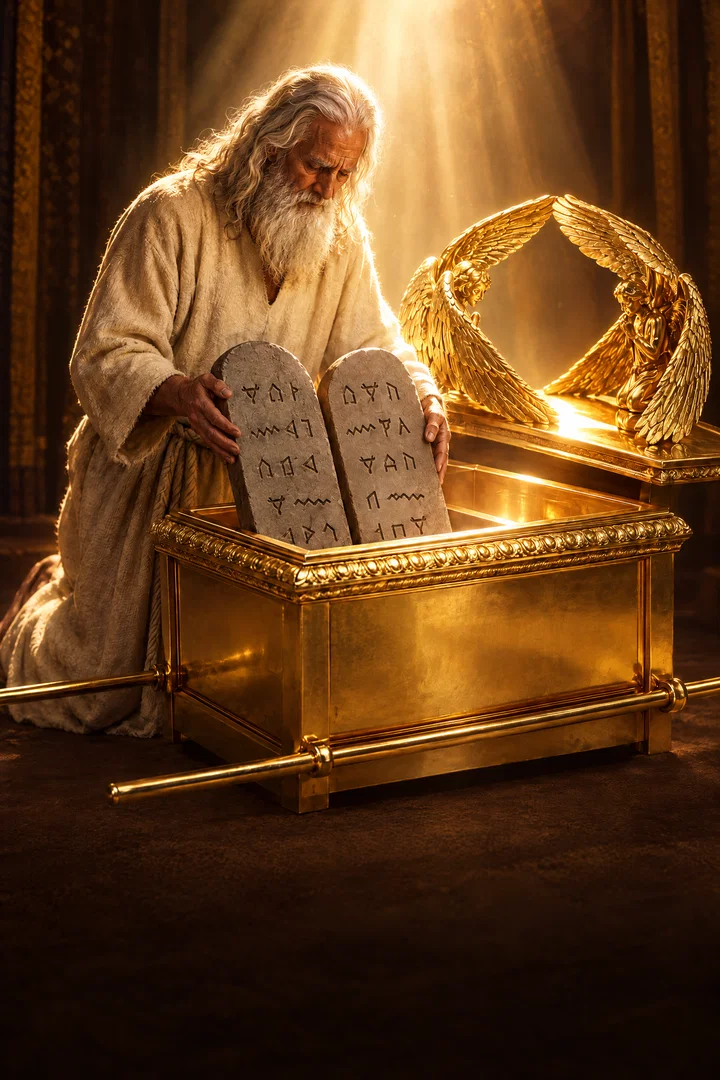
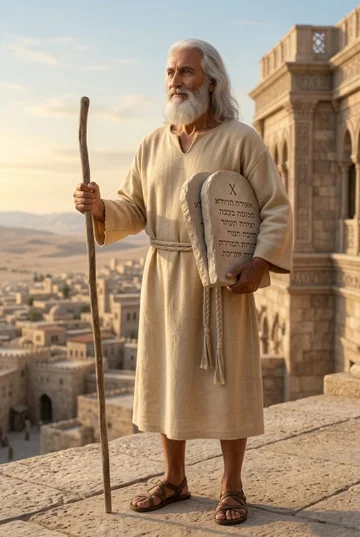
And he wrote on the tables, according to the first writing, the ten commandments, which the LORD spake unto you in the mount out of the midst of the fire in the day of the assembly: and the LORD gave them unto me.
Translations
And he wrote on the tables, according to the first writing, the ten commandments, which the LORD spoke to you in the mount out of the middle of the fire in the day of the assembly: and the LORD gave them to me.
King James Version, Revised Version
And he wrote on the tables, according to the first writing, the ten commandments, which the LORD spake unto you in the mount out of the midst of the fire in the day of the assembly: and the LORD gave them unto me.
And he wrote on the tables, according to the first writing, the ten commandments, which the Lord spake unto you in the mount out of the midst of the fire in the day of the assembly: and the Lord gave them unto me.
And he wrote on the tables according to the first writing, the ten commandments, which the LORD spoke to you in the mount, from the midst of the fire, in the day of the assembly: and the LORD gave them to me.
And he wrote on the tables, according to the first writing, the ten commandments, which Jehovah spake unto you in the mount out of the midst of the fire in the day of the assembly: and Jehovah gave them unto me.
'And He writeth on the tables, according to the first writing, the Ten Matters, which Jehovah hath spoken unto you in the mount, out of the midst of the fire, in the day of the assembly, and Jehovah giveth them unto me,
And he wrote on the tables, as the first writing, the ten words which Jehovah spoke unto you on the mountain, from the midst of the fire, on the day of the assembly, and Jehovah gave them unto me.
And he wrote upon the tables according to the first writing—the ten words, which Yahweh had spoken unto you in the mountain, out of the midst of the fire in the day of the convocation,—and Yahweh delivered them unto me.
Berean Standard Bible, Majority Standard Bible
And the LORD wrote on the tablets what had been written previously, the Ten Commandments that He had spoken to you on the mountain out of the fire on the day of the assembly. The LORD gave them to me,
He wrote on the tablets, according to the first writing, the ten commandments, which the LORD spoke to you on the mountain out of the middle of the fire in the day of the assembly; and the LORD gave them to me.
And he put on the stones, as in the first writing, the ten rules which the Lord gave you on the mountain out of the fire on the day of the great meeting: and the Lord gave the stones to me.
Then he wrote vpon the Tables according to the first writing (the tenne commandements, which the Lord spake vnto you in the Mount out of the middes of the fire, in the day of the assemblie) and the Lord gaue them vnto me.
Douay-Rheims (Challoner revision)
And he wrote in the tables, according as he had written before, the ten words, which the Lord spoke to you in the mount from the midst of the fire, when the people were assembled: and he gave them to me.
Pictures
Cross-references 20 of 85
- Exodus 31:18
And he gave unto Moses, when he had made an end of communing with him upon mount Sinai, two tables of testimony, tables of stone, written with the finger of God.
God gives Moses stone tablets bearing the commandments, written with his finger.
- Exodus 20:1-17
And God spake all these words, saying,
God speaks the commandments at Sinai, including the Sabbath commandment.
- Exodus 32:15-16
And Moses turned, and went down from the mount, and the two tables of the testimony were in his hand: the tables were written on both their sides; on the one side and on the other were they written.
The first tablets bear the commandments written by God.
- Exodus 34:1
And the LORD said unto Moses, Hew thee two tables of stone like unto the first: and I will write upon these tables the words that were in the first tables, which thou brakest.
God promises to write the original commandments on replacement tablets.
- Exodus 25:16
And thou shalt put into the ark the testimony which I shall give thee.
God commands that the testimony—the tablets of the commandments—be placed in the ark.
- Deuteronomy 5:22
These words the LORD spake unto all your assembly in the mount out of the midst of the fire, of the cloud, and of the thick darkness, with a great voice: and he added no more. And he wrote them in two tables of stone, and delivered them unto me.
God speaks the commandments to the assembly from the fire and writes them on stone tablets.
- Deuteronomy 4:12-13
And the LORD spake unto you out of the midst of the fire: ye heard the voice of the words, but saw no similitude; only ye heard a voice.
God speaks the Ten Commandments from the fire and declares them his covenant.
- Exodus 34:28
And he was there with the LORD forty days and forty nights; he did neither eat bread, nor drink water. And he wrote upon the tables the words of the covenant, the ten commandments.
Identifies the words written on the tablets as the Ten Commandments.
- Exodus 24:12
And the LORD said unto Moses, Come up to me into the mount, and be there: and I will give thee tables of stone, and a law, and commandments which I have written; that thou mayest teach them.
God promises Moses stone tablets bearing the law and commandments he has written.
- Hebrews 9:4
Which had the golden censer, and the ark of the covenant overlaid round about with gold, where in was the golden pot that had manna, and Aaron’s rod that budded, and the tables of the covenant;
The sanctuary account identifies the ark as containing the covenant tables.
- Exodus 25:21
And thou shalt put the mercy seat above upon the ark; and in the ark thou shalt put the testimony that I shall give thee.
Both place the testimony tablets inside the ark beneath the mercy seat.
- Revelation 11:19
And the temple of God was opened in heaven, and there was seen in his temple the ark of his testament: and there were lightnings, and voices, and thunderings, and an earthquake, and great hail.
The heavenly temple reveals the ark containing the testimony represented by the tablets.
- Deuteronomy 31:26
Take this book of the law, and put it in the side of the ark of the covenant of the LORD your God, that it may be there for a witness against thee.
The book of the law is placed beside the ark, unlike the tablets inside it.
- 1 Kings 8:9
There was nothing in the ark save the two tables of stone, which Moses put there at Horeb, when the LORD made a covenant with the children of Israel, when they came out of the land of Egypt.
The ark contained only the two stone tablets bearing the commandments.
- Romans 7:7
What shall we say then? Is the law sin? God forbid. Nay, I had not known sin, but by the law: for I had not known lust, except the law had said, Thou shalt not covet.
The commandment against coveting makes sin known.
- Deuteronomy 9:10
And the LORD delivered unto me two tables of stone written with the finger of God; and on them was written according to all the words, which the LORD spake with you in the mount out of the midst of the fire in the day of the assembly.
Both describe the commandments written on stone tablets as the words God spoke at the assembly.
- Exodus 32:19
And it came to pass, as soon as he came nigh unto the camp, that he saw the calf, and the dancing: and Moses’ anger waxed hot, and he cast the tables out of his hands, and brake them beneath the mount.
Moses broke the first tablets, requiring the commandments to be rewritten.
- Exodus 40:20
And he took and put the testimony into the ark, and set the staves on the ark, and put the mercy seat above upon the ark:
Moses places the tablets of the testimony inside the ark.
- Exodus 19:16-19
And it came to pass on the third day in the morning, that there were thunders and lightnings, and a thick cloud upon the mount, and the voice of the trumpet exceeding loud; so that all the people that was in the camp trembled.
God speaks the commandments amid fire and the mountain’s assembly.
- Nehemiah 9:13-14
Thou camest down also upon mount Sinai, and spakest with them from heaven, and gavest them right judgments, and true laws, good statutes and commandments:
God spoke and gave the law at Sinai, including the Sabbath commandment.
Commentary
Each commentary is drawn from primary sources: the writings of Ellen G. White and Adventist pioneers and periodicals. Each commentary is separate. Its own words are not a quotation; follow the references to read the source passages.
Ellen G. White
14 sources
God Himself wrote the Ten Commandments a second time with His own finger on the stone tables Moses hewed, repeating the same words He had spoken to the people from the midst of the fire in the day of the assembly, and gave them to Moses.Lt 98, 1900, par. 28–29Ms 63, 1899, par. 37–3815MR 40.3–4 They were placed in the ark of wood as their appointed depository, to be hidden, preserved and kept as a lasting witness.Lt 98, 1900, par. 28–291SP 398.119MR 265.3 That law in the ark represents God Himself and His revealed will, and its presence symbolized His presence as the glory and strength of Israel.1SP 398.1PP 584.1–2 The preserved commandments remain binding as the standard of righteousness, to be obeyed in the greatest direction and in what may seem least.STB 628.4–629.2Ms 63, 1899, par. 37–3815MR 40.3–4 At the final judgment they will be displayed before the obedient and the disobedient to justify the obedient and leave transgressors with no answer, convicting all the wicked.Lt 98, 1900, par. 28–2919MR 265.313MR 381.2–382.120MR 68.4
Writing and Preservation of Law
God Himself with His own finger wrote the Ten Commandments a second time on two tables of stone that Moses had hewed after breaking the first, repeating according to the first writing the same words He had spoken to the people at Mount Sinai out of the midst of the fire in the day of the assembly, and gave them to Moses.Lt 98, 1900, par. 28–29Ms 63, 1899, par. 37–3815MR 40.3–419MR 265.320MR 221.3–4 The second writing preserved the first with indelible permanence, keeping the commandments spoken amid fire at the mountain assembly.Ms 63, 1899, par. 37–3815MR 40.3–4PP 500.419MR 265.320MR 221.3–4
The tablets were put in the ark of wood, the ark of God and of the testimony, a sacred chest made to be their depository where the Lord commanded them to be.Lt 98, 1900, par. 28–291SP 398.119MR 265.320MR 68.4Ms 187, 1907, par. 22 There they were hidden, preserved, and kept as a lasting record and witness.Lt 98, 1900, par. 28–2919MR 265.320MR 68.4Ms 187, 1907, par. 22 That law in the ark represents God Himself and is His revealed will, and its presence symbolized His presence.1SP 398.1PP 584.1–2 The ark holding it was the glory and strength of Israel, and the token of the Divine Presence rested upon it day and night.1SP 398.1
When Jerusalem was about to be destroyed by the Chaldeans, righteous men still in the city who understood God's purpose took the ark and with mourning and sadness hid it in a cave to place it beyond the reach of ruthless hands.PK 453.2 Because of the sins of Israel and Judah it was hidden from them and was never to be restored to them, and it remains hidden there undisturbed to this day.PK 453.2 Israel later had the law written publicly on memorial stones and heard it read aloud, so everyone could know the covenant conditions for possessing Canaan and affirm acceptance of its terms, including the blessings for obedience and the curses for neglect.PP 500.4
The tablets placed in the ark later appear in the opened heavenly temple as a testimony to the truth and binding claims of God's law.20MR 221.3–4
Binding Authority and Final Judgment
The preserved commandments remain binding as the standard of righteousness, to be understood and carefully obeyed from the greatest direction to what may seem least.STB 628.4–629.2Ms 63, 1899, par. 37–3815MR 40.3–413MR 381.2–382.1 Loyalty to the Sabbath is a sign of loyalty to God's government and to every principle of the Decalogue.15MR 40.3–4 Departure from its right principles blinds the understanding to truth.13MR 381.2–382.1
The commandments are God's counsel and revealed will, kept in the ark as a lasting record, and families and individuals are accountable for whether they follow it even when temporal business presses upon them.PP 584.1–2Ms 187, 1907, par. 22 The law's presence in the ark symbolized God's presence, but the ark itself had no power to protect people who despised the commandments.PP 584.1–2 God's people need to obey the law.PP 584.1–2
Leaders are urged to read these chapters for instruction about God's dealings with His people.STB 628.4–629.2Ms 63, 1899, par. 37–38 His promises are repeated again and again as blessings of obedience and warnings against disobedience.Ms 63, 1899, par. 37–38 More teaching is required on transgression and disobedience.Ms 63, 1899, par. 37–38
The law was hidden and preserved to justify the obedient and condemn the disobedient, so that those who choose to disobey will surely receive sentence according to their works.Lt 98, 1900, par. 28–29 People are judged by it as God's standard in the judgment, while the record of their deeds determines whether their sentence is for good or evil.20MR 68.4
At the final judgment the commandments written by God's own finger and placed in the ark, where they remain a witness, will be displayed before the world, before the obedient and the disobedient.19MR 265.313MR 381.2–382.1 Transgressors will be left with no answer to the charge against them, and all the wicked will be convicted.19MR 265.313MR 381.2–382.1 They will see that their actions came from depraved character, that their course carried on the rebellion begun in the heavenly courts, and that all cruelty and wickedness dishonored their Creator and brought the wretchedness that fills the world.13MR 381.2–382.1
The disobeyed law was their life.13MR 381.2–382.1 Obedience would have made their characters as fine gold and their principles as the golden wedge of Ophir, kept them in happiness and peace, borne fruit in sanctified love and beauty of character, and filled the world with holiness and purity.13MR 381.2–382.1 Those tables, traced by the finger of God with indelible permanence, are now in the ark, kept to be brought forth in the great day when sentence will be pronounced against every evil, seducing science produced by the father of lies.Lt 90, 1906, par. 12
Sources
Pioneers and periodicals
90 sources
God spoke the Ten Commandments to all Israel from the fire on the mount in the day of the assembly, and after the first tablets were broken He wrote them again Himself on the second tables of stone which Moses had hewed and gave them to Moses to bring down and put in the ark.RH Dec 31, 1861ST Oct 8, 1885ST Aug 21, 1879ST Jan 14, 1886RH Feb 1851 He who wrote was the Lord Himself with His own finger and hand, not Moses, and this settles that the writer in Exodus 34:27-28 is God.RH May 26, 1853ST Aug 21, 1879ST Sep 2, 1875ST Sep 23, 1875RH Dec 23, 1852 What He wrote was exactly according to the first writing, the same Ten Commandments without alteration, addition, or removal, no more and no less than what He spoke in Exodus 20:3-17.RH Dec 31, 1861RH May 26, 1853RH Sep 25, 1860ST Jan 14, 1886ST Apr 15, 1886 This marks the plain distinction between the moral law spoken by God and written by Him on enduring stone and the ceremonial, civil, and other statutes given privately through Moses and written by Moses in a book beside the ark.ST May 20, 1875ST Jan 6, 1881ST Jul 12, 1905ST Oct 18, 1905ST May 20, 1908 The ark made to contain them is therefore called the ark of the testimony or covenant, the pattern of the ark of His testament in heaven where the same law lies at the foundation of His throne and government.ST Oct 8, 1885ST May 13, 1886ST May 13, 1886ST Sep 23, 1886ST Apr 8, 1889 The fourth commandment shares this double honor of voice and finger and stone and ark, proving the seventh-day Sabbath belongs to the enduring moral law binding on all men, with the law beneath the mercy-seat showing sinners their need of Christ's atoning blood and the Spirit writing that same law on the heart in the new covenant.ST Jan 5, 1915RH Jul 31, 1900RH Jul 22, 1852ST Feb 25, 1875
Words and Historical Setting
The verse records that the Lord himself spoke the Ten Commandments to assembled Israel on the mount, called Sinai and also Horeb, out of the midst of the fire on the day of the assembly.RH Dec 31, 1861ST Aug 21, 1879ST Sep 2, 1875RH Dec 25, 1860ST Jan 14, 1886 What God spoke with his own voice before the assembled people he then wrote on the stone tablets in the same words as the first writing, repeating it without alteration.RH Dec 31, 1861ST Oct 8, 1885ST Sep 2, 1875RH Dec 25, 1860ST Jan 14, 1886 The tablets given to Moses are therefore presented as God's own law, spoken from the fire and written by God.RH Dec 31, 1861ST Oct 8, 1885ST Aug 21, 1879ST Sep 2, 1875ST Jan 14, 1886
After Israel broke the commandments by making the golden calf, Moses shattered the first stone tablets at the foot of the mount.ST Oct 8, 1885RH Feb 1851ST Jan 5, 1915RH Jan 8, 1861ST May 6, 1875 By God's command Moses hewed two new tables of stone like the first and carried them up the mount, and at the end of a second period of forty days God wrote again on them according to the first writing and gave them to Moses, who brought them down.ST Oct 8, 1885ST Jan 14, 1886RH Feb 1851ST Jan 5, 1915ST May 6, 1875 Moses rehearsed this forty years later at Horeb, testifying that God declared his commanded covenant and wrote it plainly in his own handwriting and gave it to Moses.ST Oct 8, 1885ST Jan 14, 1886RH Oct 27, 1868
The Lord gave the rewritten tablets to Moses, and Moses put them in the ark of shittim or acacia wood which he had made, overlaid within and without with pure gold, where they remained as the Lord commanded.RH Dec 31, 1861ST Oct 8, 1885ST May 13, 1886ST Sep 2, 1875ST Jan 14, 1886 Moses made the tablets and carried them up the mountain, but God fulfilled his promise to write the words on them, distinguishing the Lord who wrote from Moses who hewed the tablets and received them.ST Sep 2, 1875ST Sep 2, 1913 The following verse records Moses placing the tablets in the ark after coming down from the mount.RH Dec 31, 1861ST May 13, 1886
The writing was the earliest writing in existence and the only complete code of moral precepts ever given to man, communicated from God's own sacred lips and presented in his own handwriting, given not for Israel alone but for all nations in every generation to perform forever.RH Oct 27, 1868 It was declared by God's own voice in the hearing of about two million people, written plainly in God's own handwriting.RH Oct 27, 1868 The replacement tablets were like the first, with the writing on both sides as described in Exodus.ST Dec 9, 1908 In Hebrew the Ten Commandments are more exactly the ten words, the equivalent of Decalogue, a word being a complete thought made up of ideas, meaning they are not mere transient commands but the word of God in a distinctive sense, part of the abiding word giving a glimpse of the inner movement of the divine will that is the permanent foundation for all temporary ordinances.ST Feb 4, 1886RH Oct 23, 1900
God Alone Wrote Tables
He who wrote on the second tables was the Lord himself, not Moses, for Moses only hewed and prepared the two tables like the first and carried them up the mount and received them when finished.RH May 26, 1853ST Aug 21, 1879ST Sep 2, 1875ST Sep 2, 1913 God did the writing with His own finger and hand, repeating on the second tables the Ten Commandments according to the first writing, the same words the Lord had spoken to Israel assembled at the mount out of the midst of the fire in the day of the assembly, and the Lord gave them to Moses.RH May 26, 1853ST Aug 21, 1879ST Sep 2, 1875ST Sep 23, 1875 In this God fulfilled His promise to write the words that were in the broken tables, so that the writing on the second tables was God's work as much as the first.RH May 26, 1853ST Aug 21, 1879ST Sep 2, 1913ST Sep 23, 1875
The verse settles that the ambiguous he who wrote in Exodus 34:27-28 is God, not Moses, and resolves the apparent contradiction between the accounts.RH May 26, 1853ST Sep 23, 1875RH Dec 23, 1852RH Dec 9, 1852ST Nov 11, 1897 The last He in Exodus 34:28 refers to God, and the writer of the words of the covenant, the Ten Commandments, on the second tables is God.ST Sep 23, 1875RH Dec 23, 1852RH Dec 9, 1852ST Nov 11, 1897RH Apr 28, 1853 Moses did not write the Decalogue with his own hand, and therefore the law of God stands apart from and is not on a level with the handwriting of ordinances that was taken away and nailed to the cross.RH Dec 23, 1852RH Dec 9, 1852RH Apr 28, 1853
The commandments were written directly by God without leaving men to write them, unlike all other Scripture given through holy men moved by the Holy Ghost.ST Sep 30, 1886RH Mar 6, 1900RH Aug 2, 1870 No man was holy enough to speak or write them, and no other law was given in that way, for they were written by the hand of the Mediator Himself.ST Sep 30, 1886RH Mar 6, 1900RH Aug 2, 1870 They were written twice by God with His own hand and finger on stone, and could be written on the tablets by God alone.ST Sep 30, 1886ST Jan 26, 1915RH Aug 2, 1870RH Mar 18, 1875RH Apr 28, 1874 The seventh-day Sabbath shares this double honor with the other nine, having been once publicly proclaimed by the voice of God from Sinai and twice written by the finger of God, with the added honor that it rests on the example of God Himself, while laws for other holy days were written by men on parchment to show they would pass away.RH Aug 2, 1870RH Mar 18, 1875RH Apr 28, 1874
Those who held the differing minority reading taught that Moses wrote the Ten Commandments on the stone tablets according to the first writing, recording the words the Lord had spoken.RH Nov 8, 1915RH Oct 16, 1900RH Dec 24, 1861ST Apr 7, 1909ST Jan 16, 1907 On that reading, Deuteronomy 10:1-5 presents the Decalogue as Israel's God-given constitution in which the Lord spoke the commandments from the fire at the mountain, Moses wrote them on stone, and they were placed in the ark beneath the mercy seat as the foundation of the covenant and national government.RH Nov 8, 1915ST Jan 16, 1907ST Jan 21, 1913 The same reading distinguishes God's enduring moral law on stone, placed inside the ark, from the ceremonial laws written in a book and placed beside the ark, and identifies the Sabbath commandment as the fourth of these ten words expressing God's will and character.RH Dec 24, 1861ST Apr 7, 1909ST Jan 21, 1913
Contents Exactly Ten Commandments
What God wrote on the second tables was exactly according to the first writing, the same words as on the first tables, repeating and reproducing that first writing and preserving it without alteration, addition, or removal.RH Dec 31, 1861RH May 26, 1853ST Aug 21, 1879ST Sep 2, 1875RH Dec 25, 1860 He spoke those words from the fire at the assembly and then gave the tablets to Moses.RH Dec 31, 1861ST Aug 21, 1879ST Sep 2, 1875 The surrounding account distinguishes the Lord who wrote from Moses who hewed the tablets and received them, fulfilling the promise to write the words that were in the broken tables.RH May 26, 1853ST Sep 2, 1875
The tablets contained no more and no less than those commandments, the Ten Commandments spoken at Mount Sinai.RH Sep 25, 1860ST Jan 14, 1886ST Apr 15, 1886RH May 16, 1865ST Feb 24, 1887 That which was spoken from Sinai and written on stone was the ten commandments, and nothing not written on the stone can form any part of them.ST Jan 14, 1886ST Apr 15, 1886 The law of God is thus limited to what God spoke with His own voice and wrote with His own finger, as found in Exodus 20:3-17.ST Apr 15, 1886 The number ten marks the law as complete and distinct, pre-eminently the law as God Himself called it, in distinction from all other commandments, and it does not include the civil and ceremonial precepts or the other commandments God gave Moses to command.ST Apr 15, 1886ST Feb 24, 1887 What was written and engraven in stones was the ten commandments, and the ten commandments alone.ST Aug 5, 1889
The words in Exodus 20:2 about bringing Israel out of Egypt are an oral introduction to the commandments, not a commandment written on the tablets.RH Sep 25, 1860RH May 16, 1865 The tablets contained the ten commandments, not the introductory preface found before them in Exodus 20.RH Sep 25, 1860RH May 16, 1865RH Mar 31, 1863 These were the covenant tablets because they bore its conditions; the agreement between God and Israel itself was not written on them.ST Jun 4, 1902
The writing on the tablets is identified as the Ten Words of God's law, an exact copy of the original, not Moses' later rehearsal of the commandments or its added appeal to Israel's gratitude.RH Jan 7, 1862 Ten words is the Hebrew equivalent of decalogue, meaning they are not mere transient commands but the word of God in a distinctive sense, part of the word that abides.ST Feb 4, 1886 They give a glimpse of the inner movement of the divine will that is the permanent foundation for all temporary ordinances, distinguishing the moral law as an abiding statement of the divine will from civil and ceremonial law as transient ordinances of temporary and local force.ST Feb 4, 1886 With its other names testimony meaning witness of the divine will, words of the covenant, and Jehovah's covenant upon obedience to which His favor was specially conditioned, it declares unchanging moral authority.ST Feb 4, 1886ST Jul 22, 1908
Ark of Testimony in Heaven
The tablets were put inside the ark made of shittim or acacia wood overlaid within and without with pure gold, which had been made expressly to contain them, and for that reason the ark is called the ark of the testimony, testament, or covenant.ST Oct 8, 1885ST May 13, 1886RH Oct 9, 1900ST Sep 23, 1886ST May 13, 1897 What was deposited was the testimony commanded to be put in the ark, namely the Ten Commandments on two tables of stone written with the finger of God according to the first writing, the same words He had spoken on the mount out of the midst of the fire in the day of the assembly and given to Moses, who brought them down and put them where they remained as commanded.ST Oct 8, 1885ST May 13, 1886RH Oct 9, 1900ST Sep 23, 1886ST May 13, 1897 The tables, ark, veil, and tabernacle take the name of testimony from the Ten Commandments kept in the most holy place, and this alone gives the ark that title.ST Sep 23, 1886 The chest is so called because the Decalogue is God's own covenant declared to Israel and the basis of the covenant made with them, bearing its conditions.ST May 13, 1897
Alone of all the laws these two tables were put into the ark, so that when the ark stood in its proper place there was nothing in it but the two tables.RH Feb 1851ST May 20, 1875ST Mar 7, 1906RH Jan 12, 1905RH May 7, 1867 They were kept beneath the cherubim in the most holy place, beneath the mercy-seat between the cherubim where God's glory appears and He meets and communes.RH Feb 1851ST May 20, 1875RH Mar 4, 1862ST Mar 11, 1886ST Apr 8, 1889 Nothing else was placed there in its proper place, for Moses' book of the law with the sacrificial, ceremonial, sanitary, dietary, civil and judicial statutes communicated in private was placed only beside or in the side of the ark.ST Mar 7, 1906RH Jan 12, 1905RH May 7, 1867 This difference in origin, form, object, location, and application marks the Ten as fundamental and eternal and the others as subsidiary and temporal.ST Mar 7, 1906RH Jan 12, 1905
The earthly sanctuary and ark are a pattern and copy of the heavenly sanctuary and throne, and the tables placed in the earthly ark were only a copy of the Ten Commandments in the temple in heaven.ST May 13, 1886ST Sep 23, 1886ST Apr 8, 1889LDT 177.1–2RH Jun 23, 1868 The ark of His testament seen in the temple of God in heaven contains the identical Ten Commandments, the duplicate original law, an exact copy of His heavenly law.ST May 13, 1886ST Sep 23, 1886LDT 177.1–2RH Jun 23, 1868 It was seen in A.D. 96 about twenty-six years after the earthly sanctuary was destroyed, and is to be seen when the temple is opened at the seventh trumpet, calling for keeping the commandments of God in the third angel's message.ST Sep 23, 1886 Because everything about the earthly sanctuary represents things in the heavens and the ark signifies the throne of God in heaven, the law of God is underneath the throne of God in heaven.ST Apr 8, 1889
Because the ark with its solid gold mercy-seat was the very heart of the tabernacle services and the most important article of furniture, the Ten Commandments inside are the foundation of God's throne and eternal government.ST Mar 11, 1886ST Apr 8, 1889RH Jul 27, 1916 They were kept for safe deposit in the most holy place in the immediate presence of His glory, so that even the high priest entering only once a year had to hide it with the cloud of incense lest he die.ST Mar 11, 1886 Their place beneath the mercy seat between the cherubim shows this law is connected with God's throne and expresses His character, reflecting His character and applying to all people and not to Jews alone, with the Sabbath included in it. The law beneath the mercy seat formed the foundation of God's government, and breaking or destroying earthly copies could not alter that enduring law.RH Jul 27, 1916ST Apr 11, 1911
The ark with the law became the center of Israel's religious system and the glory of Israel, kept in the Most Holy and carried across Jordan, around Jericho, and into battle to give victory.RH Aug 13, 1857ST Jun 10, 1875RH Jun 24, 1852 God's glory was above between the cherubim where the high priest ministered before the ark beneath the outstretched wings of the standing cherubim overshadowing the mercy seat.RH Aug 13, 1857RH Dec 11, 1866 While the people had the ark with them anciently they prevailed and triumphed over enemies, and the same law now written in hearts gives still more certain victory.ST Jun 10, 1875RH Jun 24, 1852 Before Nebuchadnezzar destroyed the temple faithful men hid the ark in a cave because of Israel's sins, it was never restored to Israel and remains hidden, yet breaking earthly copies cannot alter the enduring heavenly law or the foundation of His government.ST Apr 11, 1911
Moral Law Distinct Forever
The verse proves a plain distinction between two laws given at Sinai.ST May 20, 1875ST Jul 12, 1905ST Oct 18, 1905ST Sep 26, 1906ST Mar 20, 1879 The moral law of the Ten Commandments was spoken by God Himself in the hearing of all the people from the midst of the fire on the day of the assembly, and written by His own finger on tables of stone.ST May 20, 1875ST Jan 6, 1881ST Jul 12, 1905ST Sep 26, 1906ST Mar 20, 1879 The sacrificial, ceremonial, sanitary, dietary, civil and judicial statutes were communicated to Moses in private and written by Moses in a book.ST May 20, 1875ST Jul 12, 1905ST Oct 18, 1905ST Sep 26, 1906ST Mar 20, 1879 The stone tablets were placed by Moses in the ark beneath the cherubim in the most holy place, while the book Moses wrote was delivered to be kept only beside or in the side of the ark.ST May 20, 1875ST Jan 6, 1881ST Mar 20, 1879 This difference in origin, form, object, location and application marks the Ten as fundamental and eternal and the others as subsidiary and temporal.ST May 20, 1875ST Jan 6, 1881ST Jul 12, 1905ST Oct 18, 1905ST Sep 26, 1906
Writing on tables of stone signifies an enduring, everlasting and unchangeable nature.ST Oct 18, 1905ST May 20, 1908RH Mar 18, 1875RH Mar 26, 1872 Laws for other days and other holy days were written by men on parchment or in a book to show they would soon pass away.ST Oct 18, 1905ST May 20, 1908RH Mar 18, 1875 After the first tables were broken God wrote again on the second tables according to the first writing, with none added or removed, and their identical wording shows His moral law remained unchanged.ST Oct 18, 1905ST May 20, 1908RH Mar 26, 1872 God gave Israel earthly copies of the ark and the covenant law with the tablets placed beneath the mercy-seat, representing originals kept in heaven, so that breaking or destroying the earthly copies could not alter His enduring law or the foundation of His government.ST May 20, 1908ST Apr 11, 1911
That which was spoken from the mount and written on stone was the Ten Commandments and nothing else, limited to what God spoke with His own voice and wrote with His own finger as found in Exodus 20:3-17.ST Apr 15, 1886ST Jan 6, 1881ST Feb 24, 1887 The tablets never had anything upon them except the Ten Commandments, so the Ten alone are pre-eminently the law in distinction from all other commandments, and none of the civil and ceremonial precepts are the law in that sense.ST Apr 15, 1886ST Feb 24, 1887 They alone are properly the law, the testimony, the covenant, the constitution and the moral law, being God's own covenant declared to Israel and the basis of the covenant made with them, deposited in the shittim-wood ark covered within and without with pure gold.ST Apr 15, 1886ST Feb 24, 1887RH Jul 22, 1852ST May 13, 1897 They are the written expression of His will, character, love, truth and righteousness.ST Jan 2, 1912 Other Israelite regulations were statutes under that constitution that must be interpreted in harmony with it and could not conflict with it, supplying principles for rulers, priests and daily conduct.ST Apr 15, 1886ST Jan 6, 1881ST Feb 24, 1887
The commandments express God's moral requirements for every age, identifying sin and serving as the rule of judgment.ST Nov 24, 1887ST Oct 31, 1911ST Aug 19, 1913 The Ten Words were written directly by God, not by Moses as scribe, and were written twice, and they are of perpetual obligation, not limited to the Mosaic code.ST Nov 24, 1887RH Aug 2, 1870ST Oct 31, 1911 Since sin is transgression of this spoken and written law and the gospel is power to save sinners from sin, wherever and whenever the gospel is preached this law must exist as the rule of life until the end at Christ's coming.ST Nov 24, 1887ST Oct 31, 1911ST Aug 19, 1913 It binds all humanity from the beginning and applies to all people, not to Jews alone, with its place beneath the mercy-seat between the cherubim showing its connection with God's throne and moral government.RH Aug 2, 1870 Those who held the contrary reading taught that the commandments are not a rule for Gentiles either before or after faith.ST Oct 31, 1911
The seventh-day Sabbath as the fourth commandment shares the double honor of being publicly proclaimed by God's voice to the assembled people and twice written by God's finger on stone and kept in the ark.ST Feb 25, 1875ST Jul 18, 1878RH Jan 12, 1905RH Mar 18, 1875 Its engraving on stone marks its enduring and unchangeable nature, proving it belongs to the enduring moral law and remains permanently and universally binding.RH Jul 22, 1852ST Feb 25, 1875RH Jan 12, 1905RH Mar 18, 1875 It is not part of the ceremonial law taken out of the way at the cross, unlike the yearly ceremonial sabbaths and festival laws recorded in a book kept by the priests in or beside the ark.ST Feb 25, 1875RH Jan 12, 1905 This makes a plain difference between the two kinds of laws and the two kinds of sabbaths, with the seventh-day Sabbath placed in the very center of the ten honored above all ceremonies given through Moses.ST Feb 25, 1875RH Jan 12, 1905 Its obligation rests further on God's own example at creation, was renewed on stone at Sinai, and is fulfilled in Christ as Lord of the Sabbath.RH Aug 2, 1870RH Mar 18, 1875
Covenant Gospel and Obedience
The ten words on stone are God's own covenant and constitution, declared to Israel and deposited in the ark, and the chest is called the ark of the covenant because it was made on purpose to contain them.RH Jul 22, 1852ST May 13, 1897ST Apr 15, 1886 They alone kept possession of the inside in the most sacred place of the tabernacle, beneath the throne above between the cherubim as the very heart of all its services and the peculiar symbol of covenant presence and faithfulness, while the book of the law was placed only beside or at the side of the ark, proving that the ten alone properly constitute the terms of the covenant and contain the sum of what righteousness strictly requires.ST Apr 15, 1886ST Jan 16, 1907 They were the basis of the Sinai covenant, as the preface proves, and supplied the principles from which Israel's other statutes proceeded for rulers, priests, civil affairs and daily conduct, serving as foundation of covenant and national government for a religious community and an earthly state.ST Mar 21, 1911RH Jul 4, 1854ST Jan 16, 1907 That Sinai covenant rested on the oath and promises to Abraham, Isaac and Jacob concerning their seed and served as a schoolmaster unto Christ until the new covenant built on the everlasting Abrahamic promises took its place, and it is now null and void.RH Jul 4, 1854 The law itself is not abolished with the covenant, and not one jot or tittle of it is ceremonial or Jewish, but the whole moral law remains binding, with mercy to thousands who love and keep it, so the abiding of the constitution proves the abiding of each word including the fourth.RH Jul 22, 1852RH Jul 4, 1854
The law kept beneath the mercy-seat was the moral law sinners had broken and that required atonement, the perfect rule of righteousness by which breaking any precept is sin and by which people are judged.ST Jan 6, 1881ST Sep 9, 1930 Sacrifices representing Christ stood between sinners and that law while the high priest mediated, and the sprinkled blood atoned for its violation, teaching how pardon could be made without replacing or removing it.RH Jul 31, 1900ST Jan 6, 1881 Through faith in Christ the Mediator and Surety sinners receive forgiveness and God's righteousness, so the law is seen as unbroken and guilt is taken away while the law remains perfect.RH Jul 31, 1900 On the Day of Atonement atonement was made over the broken law, and the whole ministration carried forward by the Levitical priesthood before the ark in the Most Holy showed guilt and exposure to just penalty, bringing to a sinful rebellious people only conviction, condemnation and death with no promise of pardon in itself.ST Sep 9, 1930RH Dec 12, 1854 The tabernacle services centered on humanity's relation to this deposited law and on Christ's mediatorial work, revealing salvation from lawlessness as transgression and pointing to His real atonement.ST Jan 6, 1881ST May 14, 1902
Since sin is transgression of this law spoken with God's own voice from Sinai and written on stone, and the gospel is power to save from sin, wherever and whenever the gospel is preached this law must exist as the rule of life.ST Nov 24, 1887 The gospel of the kingdom is to be preached in all the world for a witness to all nations until the end at Christ's coming, so the ten remain of binding obligation at least until then, and to deny this is to deny the gospel.ST Nov 24, 1887 The ten are the great words given by the Almighty Himself, the law and code of Christ's kingdom and basis of God's government with convicting power appointed upon hearts and consciences. To declare them abolished, claim them a copy or modification of an earlier pagan code, belittle their divine giving, abbreviate them, strike out one as with the second, or caricature them as rules for wives, husbands, miners and other classes in pseudo-sanctity brings them into disrepute, lessens convicting power, sears hearts and consciences, defrauds myriads into living and dying as if it were no part of God's law, strikes at His government, and shows the conflict nearing its climax.ST Feb 28, 1884
After the first tables were broken for the golden calf, signifying the breaking of the first covenant, Moses only hewed two tables like the first and the Lord Himself wrote the same words again and they were put in the ark, with nothing else inside in its proper place between the cherubim.RH Feb 1851RH Jul 25, 1854 This division of work pictures the new covenant, where ministers of Christ only prepare the epistle as tables and the Spirit of the living God does the writing.RH Jul 25, 1854 Under the first covenant the law on stone could receive only the letter, which has no quickening or life-giving power but convinces of sin and brings under condemnation, holding forth perpetuity which no ceremony ever received.RH Feb 1851RH Jul 25, 1854 Under the new covenant the same law is written not on stone but on fleshy tables of the heart and in mind and inward parts, fulfilling the promise and enabling service in newness of spirit and not oldness of letter and fulfillment in love by the quickening Spirit, while the blood of Christ of the everlasting covenant cleanses past transgression and purges conscience from dead works.RH Feb 1851RH Jul 25, 1854 The rewriting shows the law is not a failed plan, for when the heart is submitted He puts it within and enables obedience by His Spirit, and as the ark with the law gave victory anciently over enemies, so the law written in hearts by the Spirit gives still more certain victory.ST Jan 5, 1915RH Jun 24, 1852 That provision was fulfilled when Messiah came in flesh to reveal the glory of the law and keep it perfectly in His heart as man's representative, so that His law in the heart might be in everyone receiving Him as Saviour, keeping the new covenant promise constantly before Israel.RH May 20, 1902
The commandments teach nothing new but remind of righteousness received from the fathers, corrupted in Egypt by a barbarous people and obliterated, that what was put to sleep might revive again by the breathing of the law.ST Jun 11, 1894 They were announced in awful grandeur amid smoke as of a furnace with flashing lightnings and rolling thunders in the ears of all the people, and God did not leave men to write them but engraved them with His own finger on stone and had them placed in the beautiful ark overlaid and inlaid with purest gold in the holiest, the center and glory of Israel's religion carried across Jordan, around Jericho and into battle to give victory.RH Aug 13, 1857 That solemn giving and preservation in gold in the holiest signify divine source, vast and lasting importance, and God's care that they be obeyed.RH Dec 18, 1855RH Aug 13, 1857 Because the fourth precept was kept in that ark under the greatest blessings for keeping the Sabbath and the greatest curses of the prophets for breaking it, it remains permanently and universally binding and cannot be abolished without plain testimony in Inspiration and prophetic foretelling.RH Dec 18, 1855RH Aug 13, 1857 The Redeemer fulfilled the law for His people's justification, and those justified by it are bound to obey all its parts.RH Dec 18, 1855
In wonderful condescension and mercy God wrote the ten a second time with His own finger as first spoken with His own voice, containing nothing but the ten and keeping the Decalogue distinct by itself as moral and not ceremonial or Jewish, founded in the divine nature and relations to men.RH Jun 7, 1870 These tables with the manna in the golden pot and Aaron's rod that budded were deposited inside under the mercy-seat, a placing described at greater length than the creation of heaven and earth and showing the law's great pre-eminence in God's eyes.RH Jun 7, 1870 The words spoken from heaven recorded in Exodus 20:1-17 were thus also on stone and in the book, and the tables were kept in the ark to preserve them to be known, not to hide them, for God gives laws to be known.ST Jul 24, 1907
Sources