Deuteronomy 5:22
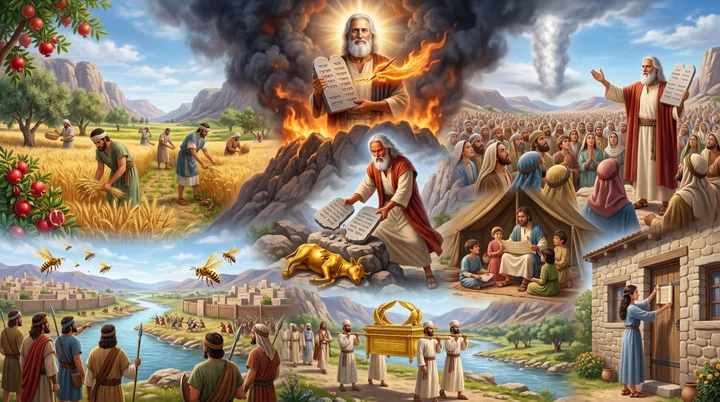
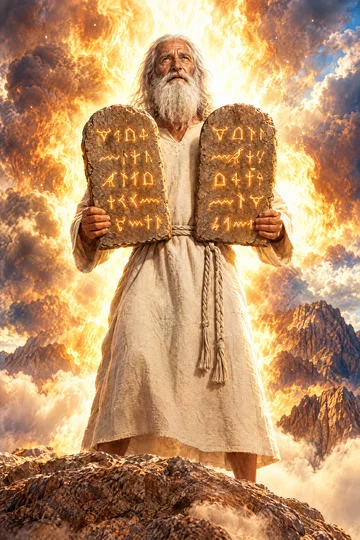
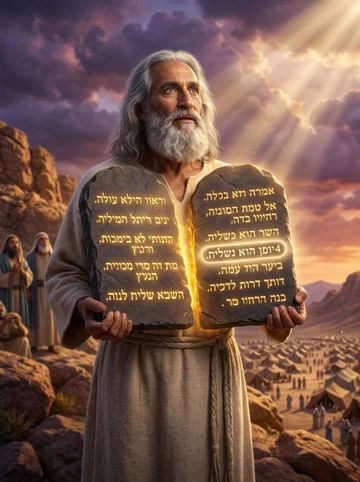
These words the LORD spake unto all your assembly in the mount out of the midst of the fire, of the cloud, and of the thick darkness, with a great voice: and he added no more. And he wrote them in two tables of stone, and delivered them unto me.
Translations
These words the LORD spoke to all your assembly in the mount out of the middle of the fire, of the cloud, and of the thick darkness, with a great voice: and he added no more. And he wrote them in two tables of stone, and delivered them to me.
These words the LORD spake unto all your assembly in the mount out of the midst of the fire, of the cloud, and of the thick darkness, with a great voice: and he added no more. And he wrote them in two tables of stone, and delivered them unto me.
These words the Lord spake unto all your assembly in the mount out of the midst of the fire, of the cloud, and of the thick darkness, with a great voice: and he added no more. And he wrote them in two tables of stone, and delivered them unto me.
These words the LORD spoke to all your assembly on the mount from the midst of the fire, of the cloud, and of the thick darkness, with a great voice: and he added no more. And he wrote them in two tables of stone, and delivered them to me.
These words the LORD spake unto all your assembly in the mount out of the midst of the fire, of the cloud, and of the thick darkness, with a great voice: and he added no more. And he wrote them upon two tables of stone, and gave them unto me.
These words Jehovah spake unto all your assembly in the mount out of the midst of the fire, of the cloud, and of the thick darkness, with a great voice: and he added no more. And he wrote them upon two tables of stone, and gave them unto me.
'These words hath Jehovah spoken unto all your assembly, in the mount out of the midst of the fire, of the cloud, and of the thick darkness — a great voice; and He hath not added, and He writeth them on two tables of stone, and giveth them unto me.
These words Jehovah spoke to all your congregation on the mountain from the midst of the fire, of the cloud, and of the obscurity, with a great voice, and he added no more; and he wrote them on two tables of stone, and gave them to me.
These words, spake Yahweh unto all the convocation of you in the mount out of the midst of the fire the cloud and the thick gloom, a loud voice, and added not,—and he wrote them upon two tables of stone, and gave them unto me.
Berean Standard Bible, Majority Standard Bible
The LORD spoke these commandments in a loud voice to your whole assembly out of the fire, the cloud, and the deep darkness on the mountain; He added nothing more. And He wrote them on two tablets of stone and gave them to me.
The LORD spoke these words to all your assembly on the mountain out of the middle of the fire, of the cloud, and of the thick darkness, with a great voice. He added no more. He wrote them on two stone tablets, and gave them to me.
These words the Lord said to all of you together on the mountain, out of the heart of the fire, out of the cloud and the dark, with a great voice: and he said no more; he put them in writing on the two stones of the law and gave them to me.
These wordes the Lord spake vnto all your multitude in the mount out of the mids of the fire, the cloude and the darkenes, with a great voyce, and added no more thereto: and wrote them vpon two tables of stone, and deliuered them vnto me.
Douay-Rheims (Challoner revision)
These words the Lord spoke to all the multitude of you in the mountain, out of the midst of the fire and the cloud, and the darkness, with a loud voice, adding nothing more: and he wrote them in two tables of stone, which he delivered unto me.
Pictures
Cross-references 20 of 123
- Exodus 20:1-17
And God spake all these words, saying,
Records the commandments God spoke to the assembled people at Sinai.
- Deuteronomy 4:12-13
And the LORD spake unto you out of the midst of the fire: ye heard the voice of the words, but saw no similitude; only ye heard a voice.
God speaks from the fire and identifies the covenant as the Ten Commandments written on stone.
- Exodus 24:12
And the LORD said unto Moses, Come up to me into the mount, and be there: and I will give thee tables of stone, and a law, and commandments which I have written; that thou mayest teach them.
God gives Moses stone tablets bearing the law.
- Exodus 31:18
And he gave unto Moses, when he had made an end of communing with him upon mount Sinai, two tables of testimony, tables of stone, written with the finger of God.
God gives Moses stone tablets written by God’s finger.
- Exodus 32:16
And the tables were the work of God, and the writing was the writing of God, graven upon the tables.
The tablets are God's work, and their writing is God's writing.
- Deuteronomy 10:4
And he wrote on the tables, according to the first writing, the ten commandments, which the LORD spake unto you in the mount out of the midst of the fire in the day of the assembly: and the LORD gave them unto me.
God writes the Ten Commandments on the tablets, as spoken at the assembly.
- Exodus 34:28
And he was there with the LORD forty days and forty nights; he did neither eat bread, nor drink water. And he wrote upon the tables the words of the covenant, the ten commandments.
Identifies the covenant words written on the tablets as the Ten Commandments.
- Exodus 19:9-20
And the LORD said unto Moses, Lo, I come unto thee in a thick cloud, that the people may hear when I speak with thee, and believe thee for ever. And Moses told the words of the people unto the LORD.
The Sinai setting rehearses God speaking to Israel before the law was given.
- Galatians 3:19
Wherefore then serveth the law? It was added because of transgressions, till the seed should come to whom the promise was made; and it was ordained by angels in the hand of a mediator.
The law added because of transgressions is connected with the commandments God added no more.
- Nehemiah 9:13-14
Thou camest down also upon mount Sinai, and spakest with them from heaven, and gavest them right judgments, and true laws, good statutes and commandments:
God spoke his commandments at Sinai and made the Sabbath known.
- Psalms 19:7
The law of the LORD is perfect, converting the soul: the testimony of the LORD is sure, making wise the simple.
Both describe the Lord’s law as perfect.
- Matthew 5:17-18
Think not that I am come to destroy the law, or the prophets: I am not come to destroy, but to fulfil.
Jesus says he came to fulfill, not destroy, the law, which will not pass away.
- Exodus 20:19
And they said unto Moses, Speak thou with us, and we will hear: but let not God speak with us, lest we die.
The people ask Moses to speak for God because they fear hearing God’s voice directly.
- Romans 7:7
What shall we say then? Is the law sin? God forbid. Nay, I had not known sin, but by the law: for I had not known lust, except the law had said, Thou shalt not covet.
The commandment against coveting reveals sin.
- Deuteronomy 9:10
And the LORD delivered unto me two tables of stone written with the finger of God; and on them was written according to all the words, which the LORD spake with you in the mount out of the midst of the fire in the day of the assembly.
Both texts describe God’s words from the assembly written on the stone tablets.
- Hebrews 12:19
And the sound of a trumpet, and the voice of words; which voice they that heard intreated that the word should not be spoken to them any more:
The people who heard God’s voice at Sinai asked that no more be spoken.
- Exodus 19:16-19
And it came to pass on the third day in the morning, that there were thunders and lightnings, and a thick cloud upon the mount, and the voice of the trumpet exceeding loud; so that all the people that was in the camp trembled.
Fire, cloud, thunder, and God’s voice mark the awe-inspiring setting at Sinai.
- James 2:10-11
For whosoever shall keep the whole law, and yet offend in one point, he is guilty of all.
Both identify God’s written commandments as one law, transgressed by breaking even one command.
- Deuteronomy 33:2
And he said, The LORD came from Sinai, and rose up from Seir unto them; he shined forth from mount Paran, and he came with ten thousands of saints: from his right hand went a fiery law for them.
Both describe God giving the fiery law at Sinai.
- Romans 7:13
Was then that which is good made death unto me? God forbid. But sin, that it might appear sin, working death in me by that which is good; that sin by the commandment might become exceeding sinful.
The commandment makes sin evident and exceedingly sinful.
Commentary
Each commentary is drawn from primary sources: the writings of Ellen G. White and Adventist pioneers and periodicals. Each commentary is separate. Its own words are not a quotation; follow the references to read the source passages.
Ellen G. White
17 sources
The Lord himself spoke the commandments aloud with a great voice to the whole assembled Israel from the midst of fire, cloud, and thick darkness, adding nothing more to that direct utterance, and then wrote those same words on two tables of stone and gave them to Moses.21MR 408.1–2Ms 34, 1903, par. 6–7Ms 79, 1901, par. 1–2ST May 6, 1880 The mountain was set apart as a sanctuary with bounds, enveloped in dense cloud and glory with lightning, thunder, solemn silence, and shaking earth, while Moses drew near the thick darkness to receive what the people in fear asked not to hear directly.ST May 6, 1880 That law did not begin at Sinai but was already binding before Egypt, where it had become confused, so God brought Israel there to impress its requirements more clearly upon their minds.Ms 34, 1903, par. 6–7ST May 6, 1880 Those spoken and written words are God's own law, a transcript of His character and the foundation of His government and not a yoke of bondage, with the Sabbath recalling a six-day creation of literal twenty-four-hour days, and obedience brings blessing and fitness for fellowship with Him.Ms 34, 1903, par. 6–7Lt 31, 1898, par. 22–25Ms 193, 1897, par. 1 They require full surrender and continuing obedience of mind, soul, and body with nothing neglected, to be taught from generation to generation in every part of life and in the home, and they press with special force now as the time of investigation and final review before the Judge of all the earth draws near.7MR 309.1–3Lt 42, 1910, par. 6Lt 112, 1909, par. 22–24Ms 93, 1908, par. 50–53Ms 71, 1896, par. 3
Proclamation at Sinai
The Lord himself proclaimed the commandments with a great audible voice to the whole assembled Israel at the mountain from the midst of fire, cloud, and thick darkness.21MR 408.1–2Ms 34, 1903, par. 6–7Ms 79, 1901, par. 1–2Ms 93, 1908, par. 50–53ST May 6, 1880 The proclamation came on the morning of the third day, after the people drew near the mount with fear and solemnity within set bounds, with the mountain made grand with solitude as a sanctuary and pulpit.ST May 6, 1880 The utterance was accompanied by displays of authority so the people would believe and know He is the only true and living God: a black dense cloud enveloping the Father and the Son with the retinue of holy angels, vivid lightning, deep thunder echoing among the mountains, solemn silence, brilliant flashes revealing the scenery, and the mountain shaking to its foundation beneath the divine majesty.ST May 6, 1880 Moses stood between the people and the Lord, drawing near and entering the thick darkness surrounding the cloud of glory without entering within it, after being charged to go down to secure the bounds, with Aaron then to go upward toward the summit.ST May 6, 1880
The great voice thrilled the people so that they asked not to hear the words directly, which shows unbelief.Ms 141, 1906, par. 34–37 By adding nothing further the Lord marked those directly spoken words as complete and brought to an end what He spoke directly to the assembly before Moses continued recounting the commandments and their instruction.21MR 408.1–2Ms 34, 1903, par. 6–7Ms 79, 1901, par. 1–2Ms 93, 1908, par. 50–53Ms 141, 1906, par. 34–37 He then wrote those same words on two tables of stone and delivered them to Moses, so the written commandments and the words spoken in the audible voice were equally His words.21MR 408.1–2Ms 34, 1903, par. 6–7Ms 79, 1901, par. 1–2Ms 93, 1908, par. 50–53Ms 141, 1906, par. 34–37 The written commandments and the words spoken in God's audible voice were equally God's words.Lt 100, 1907, par. 10
The principles spoken did not originate at Sinai; the law was already binding before Israel went down into Egypt, but had become confused by servitude in Egypt, so God brought Israel there to impress His requirements more clearly upon their minds.Ms 34, 1903, par. 6–7ST May 6, 1880 The words were spoken to the whole assembly from the pillar of cloud, and they are Christ's words from that cloud that are disregarded when people disobey them.Ms 64, 1899, par. 15
Authority and Obedience
The commandments spoken in Deuteronomy 5:22 are God's own law and not human words, a transcript of His character and the foundation of His government.Ms 34, 1903, par. 6–7Lt 31, 1898, par. 22–25Ms 193, 1897, par. 1 They are not a yoke of bondage, and obedience to them brings blessing and fits men and women for fellowship with God and for membership in the heavenly family.Ms 34, 1903, par. 6–7 The Sabbath commandment among them recalls creation, in which God made heaven and earth in six days and rested on the seventh, so those six days are ordinary twenty-four-hour days and not indefinite periods.Lt 31, 1898, par. 22–25
What God required of His ancient people that they might be a holy people unto Himself requires full surrender and continuing simplicity of obedience, with none of its important things to be neglected.7MR 309.1–3Lt 42, 1910, par. 6Lt 112, 1909, par. 22–24 That requirement is sanctification of mind, soul, and body, with perfect obedience to His will, and no excuse is accepted for disobeying His holy commandments.Lt 42, 1910, par. 6Lt 292, 1908, par. 13 The verse belongs with the fourth through the eighth chapters of Deuteronomy, and chapters five through seven are to be studied with profit.7MR 309.1–37MR 14.3Lt 112, 1909, par. 22–24 They are to be read to the people, read carefully and regarded as a charge, searched by all for themselves and made the study book, with every soul sanctifying himself daily according to the word lest he be found in rebellion.7MR 309.1–3Lt 42, 1910, par. 6
The commandments of the chapter were to be obeyed and taught from generation to generation and kept continually before the people in every part of life so they would avoid false ways.Ms 93, 1908, par. 50–53Ms 71, 1896, par. 3 They were to be treasured and followed and kept before children.Ms 93, 1908, par. 50–53Ms 71, 1896, par. 3 Parents are instructed by these chapters to train their children from infancy to form characters that meet God's approval and to teach them to love and obey God.7MR 14.3Ms 79, 1901, par. 1–2 This requires taking every precaution to prevent objectionable traits of character, controlling themselves for the sake of their Creator and Redeemer, and preparing themselves for the present and future life so they will be admitted into the city of God.7MR 14.3
The passage applies now because the day of God's great final review is near, when the people of this world must stand before the Judge of all the earth to answer for their deeds.7MR 309.1–3Lt 112, 1909, par. 22–24 The present is the time of investigation, when every character will have been investigated and every case decided for eternity.7MR 309.1–3Lt 112, 1909, par. 22–24 God in heaven proclaimed His law from Sinai with His own voice so that men would realize its importance.HMW 26.1 Satan makes every effort to undermine confidence in that law and to cause men to regard it as of little importance, so those who stand for God's law on earth and carry forward His closing work must represent that law and that work in a sensible way with nothing cheap and faulty connected with them.HMW 26.1
The law applied in the home and in business would prepare people to regain Paradise lost through disobedience.Ms 71, 1896, par. 3 Written words alone cannot benefit people unless their truth enters the heart and enlightens the mind.Ms 71, 1896, par. 3Ms 193, 1897, par. 1 Rejecting God's law in favor of human commandments includes treating a false sabbath as an object of reverence and punishing those who refuse to honor it.Ms 71, 1896, par. 3
Sources
Pioneers and periodicals
133 sources
The words are the Ten Commandments found in Exodus 20:3-17, which the Lord himself spoke aloud with a great voice to the whole assembly from the fire, the cloud and the thick darkness, with no human medium originating them.ST Apr 15, 1886RH Jun 13, 1854RH Jan 7, 1862ST Mar 10, 1914RH Aug 5, 1851 He added no more means that public utterance on the mount was limited to those ten and nothing else besides them was spoken there in the hearing of the people, making them a complete and closed code to which nothing is to be added and nothing taken away.ST Apr 15, 1886RH Jun 13, 1854ST Feb 11, 1913RH Aug 5, 1851ST Nov 15, 1910 He then wrote those same spoken words himself with his own finger on two tables of stone, without Moses as amanuensis, and delivered them to Moses to be placed in the ark.ST Apr 15, 1886RH Jun 13, 1854ST Mar 10, 1914ST Jan 14, 1886ST Aug 21, 1879 This separates the moral law spoken directly by God and engraved on stone from the statutes, judgments and ceremonies given privately through Moses and written by Moses in a book, the former eternal, universal and binding on all people in all ages while the latter were temporary types pointing to redemption.RH Aug 5, 1851ST Jul 8, 1886ST Jun 17, 1875RH Jul 9, 1901ST Dec 20, 1905 Among those stone-engraved words is the Sabbath commandment, the seventh-day Sabbath memorial of creation constituted by God's rest, blessing and sanctification and distinct from the yearly shadowy sabbaths that expired.ST Jan 15, 1885RH Nov 8, 1853STST Oct 26, 1904
Place in Deuteronomy History
Deuteronomy is the fifth and last book of the Pentateuch, named from its meaning as second law or duplicate of the law, and the verse stands within Moses's three addresses given just before his death, belonging to the second address in chapters 5 to 26 which reviews the law for the new generation.ST Mar 11, 1913RH Feb 24, 1916 It is part of the repetition of the law given as a reckoning of God's dealings with His children at the close of the forty years' wandering before Israel passed over into the promised land.ST Mar 11, 1913ST Feb 27, 1912 That rehearsal recalls God's deliverances by the way and repeats the already-written law while impressing its continued obligation, calling attention to the laws and sometimes giving additional reasons and appeals of gratitude showing why that redeemed people were under special obligation to observe them.ST May 24, 1905ST Aug 22, 1916ST Feb 27, 1912 All the great moral principles there set forth still apply in the present day, including the Sabbath command as the duty of all men as children of the great Creator because the Sabbath is His memorial, while Israel was under even greater obligation because God had redeemed them from slavery in Egypt.ST Feb 27, 1912 The chapter recounts the giving of the law about forty years earlier and does not present a new law or new reasons for obeying it, but supports the completeness and fixed form of the words God gave rather than a shortened or altered version.ST Jun 24, 1875ST Jan 30, 1896
The rehearsal is not a word-for-word copy of what was spoken at Sinai and does not conflict with it, for it does not always give the exact earlier wording and does not give the origin of the Sabbath institution or the reason for choosing and sanctifying the seventh day as the rest day.ST Jun 24, 1875ST Feb 27, 1912RH May 27, 1852 It omits part of the fourth commandment while referring back to the original for what it omits, differs in wording from the original, and adds an appeal to Israel's gratitude, so the tablets held the original code and not Moses's altered or expanded rehearsal.RH Jan 7, 1862RH May 27, 1852 Its wording of the prohibition against coveting puts the clauses in a different order than Exodus 20:17, which shows that prohibition is a single commandment and cannot be divided into two commandments. The phrase these words identifies the Ten Commandments as found in Exodus 20:3-17, the ten words of God's law which the Lord Himself spoke to the whole assembly in the mount out of fire, cloud and thick darkness with a great voice and wrote on two tables of stone and delivered to Moses, and it excludes the preface and everything else beyond the Ten Commandments.RH Jan 7, 1862ST Jan 30, 1896
The word words in these words has the technical special significance of commandments rather than literal single words, so the verse does not give the original literal copy of the Decalogue.RH Oct 29, 1872RH Nov 12, 1872 In that same sense, where the words the Lord commanded include things not written on the two tables of stone, as in Exodus 35, the term must likewise be granted to mean commandments.RH Nov 12, 1872 The verse stands in the repetition of the law rehearsed and emphasized by Moses just before his death as Israel was about to enter the promised land, in the last of the five books of Moses, which abounds in practical religious instruction. That book was honored by Jesus without question, who met the threefold temptation each time by a quotation from Deuteronomy.
Sense of Key Words
These words are the Ten Commandments as found in Exodus 20:3-17, not the preface and not everything else Moses says in his rehearsal.ST Apr 15, 1886RH Jan 7, 1862ST Jan 14, 1886 They are what was spoken to the whole assembly on the mount out of the fire, the cloud and the thick darkness with a great voice, coming right after the rehearsal in Deuteronomy 5:7-21.ST Apr 15, 1886RH Jan 7, 1862 Moses's version is a rehearsal rather than the original text, omitting part of the fourth commandment while referring back to the original for what it omits, adding an appeal to gratitude, and differing in wording, so the tablets held the original code and not the altered or expanded rehearsal.RH Jan 7, 1862
He added no more means the public utterance on the mount was limited to the Ten Commandments and nothing else besides them was spoken there in the hearing of the people.ST Apr 15, 1886RH Jun 13, 1854ST Feb 11, 1913RH Aug 5, 1851ST Jul 8, 1886 God himself spoke only those ten aloud to the whole assembly with a great voice, and those same words were then written by God on two tables of stone and delivered to Moses.ST Feb 11, 1913RH Aug 5, 1851ST Jul 8, 1886ST Jun 17, 1875 Nothing that was not written on the tables can be any part of them, for the law of God is only what God spoke with his own voice and wrote with his own finger.ST Apr 15, 1886 The words he added no more mark the commandments as a complete set of words spoken by God on that occasion, a distinct law and covenant written by God and not merely a portion of the law given through Moses.RH Jun 13, 1854RH Aug 5, 1851 This distinguishes the directly spoken ten commandments from other instruction later given through Moses and from the statutes and ordinances given through Moses.ST Jul 8, 1886ST Jun 17, 1875
The Hebrew word for add carries the sense of increasing, continuing, going on, or speaking further, so added no more means He did not continue speaking further after giving the Ten Commandments and He spake no more.ST Apr 25, 1906RH Feb 20, 1900 The Greek translation uses the same word as for adding in Galatians 3:19 and for entreating that no further word be spoken in Hebrews 12:19, identifying the added law of Galatians 3:19 as the Decalogue and standing behind the spoken any more of Hebrews 12:19.ST Feb 22, 1905ST Jul 25, 1911 He was adding the moral law in written form to the conceptions of truth and duty Israel already had, because transgression reaching back to Adam had so far obliterated the heart-law that a written standard to regulate conscience was necessary to make sin recognizable and exceeding sinful until the second coming.ST Jul 25, 1911 The law so spoken was the same law spoken of as added because of transgressions, unmistakably given in visible, tangible and audible form to expose the seriousness of sin.RH Feb 20, 1900
Added does not necessarily mean mathematical addition to something else; it means spoken, given, set, and introduced, describing the utterance of the law at Sinai rather than the beginning of the law's existence.ST Feb 15, 1899RH Feb 20, 1900 It describes the commandments spoken amid great majesty to warn that unbelief put the promised inheritance at risk and to show sin and need for the righteousness of faith.ST Feb 15, 1899 To translate it added is correct when added is understood to carry the sense of spoken and given, not restricted to adding one cubit to stature.RH Feb 20, 1900
He added no more means God stopped where His spoken words stopped after giving the same commandments He then wrote, showing a distinction between the Ten Commandments and the laws and regulations given afterward.RH Jun 25, 1872 Those who held another position taught that he added no more means God stopped speaking directly to the people in the terrifying voice from the mountain because they could not endure it, not that He wrote nothing beyond the spoken words on the tablets, and that God wrote the rest of the law including the spoken words for Moses to teach.RH Aug 21, 1855 The verse on that other teaching does not limit what was written to what had just been spoken, but limits the direct terrifying voice to the words of the covenant spoken aloud to all Israel at Sinai.RH Aug 21, 1855 If words is taken as commandments in this verse, the same sense must be granted where the words the Lord commanded include things not written on the two tables of stone, as in Exodus 35.RH Nov 12, 1872
Voice to Whole Assembly
The Lord himself spoke the words aloud to all the assembly in the mount out of the midst of the fire, of the cloud, and of the thick darkness, with a great voice, with no human medium, angel, or prophet originating them.RH Jun 13, 1854ST Mar 10, 1914RH Aug 5, 1851ST Nov 15, 1910ST Jan 15, 1885 The words so spoken were the Ten Commandments, complete in themselves, and nothing else besides them was spoken there in the hearing of the people.RH Jun 13, 1854RH Aug 5, 1851ST Nov 15, 1910ST Apr 25, 1906 The Sabbath commandment was included among them, and therefore rests on God's own authority rather than merely on Moses's.ST Jan 15, 1885
The speaking took place on the morning of the third day after the people drew near with fear within set bounds, with the mountain as God's sanctuary and pulpit.ST May 6, 1880ST Aug 5, 1889 It was enveloped in black dense cloud, vivid lightning, deep thunder, solemn silence, shaking to its foundation, and trumpet waxing loud, with smoke as a furnace, quaking, thunders and lightnings, and the mountain burning with fire unto the midst of heaven.ST May 6, 1880RH Mar 6, 1900ST Feb 15, 1899ST Sep 12, 1895 Moses stood between the people and the Lord, drawing nigh into the thick darkness around the cloud of glory after securing the bounds, with Aaron then to go upward toward the summit.ST May 6, 1880 The setting revealed inconceivable greatness and righteousness, the most majestic scene since creation, which is the true measure of its importance, and for those who remembered God's sworn promise the law's demands also magnified that promise to give by faith all its required righteousness to everyone who trusts him.RH Mar 6, 1900ST Feb 15, 1899
After the fall sinful people could not look on God's glory openly, so he spoke from the cloud and thick darkness rather than appearing openly before them.ST Aug 27, 1885 The Speaker was the Lord Jesus Christ, the Voice of the Father and the Word through whom all things were made.RH Feb 20, 1900ST Mar 6, 1884ST May 31, 1905 He spoke in the presence of holy angels in orderly array as a living tabernacle excluding evil angels, with the law ordained in the hand of the Mediator and going as a fiery law of love from his right hand.RH Feb 20, 1900RH Mar 6, 1900 His voice that shook the earth remains binding till heaven and earth pass, and everyone who is of the truth hears that voice.ST Mar 6, 1884ST May 31, 1905
The fact that God spoke his law audibly to the whole house of Israel could not have been invented, for no man could tell a whole people they had heard God speak if they knew they never had.RH Jan 3, 1865 There was no model for it among surrounding nations sunk in heathenism, so the law is of divine origin and could not have been originated by the people at that time.RH Jan 3, 1865 That spoken law then became the standard by which all later teachings in the form of prophecies must be tried.RH Jan 3, 1865
The law's voice is God's own present voice whenever the law is read now, as much as at Sinai, so no one has ground to answer back, debate, or make excuses.ST Mar 15, 1910ST Jul 31, 1901ST Jun 8, 1904 It remains the standard by which other voices, teachings, and spiritual claims are tested, expressing the sum of morality and reflecting God's character so that it cannot change.ST Mar 15, 1910ST Jun 8, 1904ST Sep 1, 1909 It is the epitome of His eternal code of moral conduct uttered by the same divine Voice that still speaks, and the eternal Spirit who writes it on the tables of the heart will never speak contrary to the eternal God who spoke it at Sinai.ST Knowing the law is not enough, for it must be written in the heart, and a life of submissive faith must come into harmony with it.ST Jul 31, 1901ST
The trumpet voice in Revelation recalls the time God spoke the Decalogue from heaven.ST Nov 22, 1910 Moses's spoken proclamation of it as recorded here confronts the present irreverent and lawless age, testing what impression hearing the Ten Commandments directly would make and whether a generation that neglects the written record would accept them if heard.ST Sep 9, 1930
Writing on Stone Tablets
The same words spoken to the whole assembly were written on two tables of stone and delivered to Moses.ST Apr 15, 1886RH Jun 13, 1854ST Mar 10, 1914ST Feb 11, 1913RH Aug 5, 1851 The writing was engraved by God Himself with His own finger, without Moses as amanuensis, on tables that were His own work.RH Feb 20, 1900ST Jul 22, 1908RH Aug 2, 1870 The tables were written on both sides and preserved for their preservation on enduring rock.ST Jul 22, 1908RH Aug 2, 1870 The declaration that He added no more limits the Ten Commandments to what was spoken there and written on the tables, so nothing not written on the tables is any part of them.ST Apr 15, 1886RH Aug 5, 1851ST Nov 15, 1910 The Ten Commandments as found in Exodus 20:3-17 are only what God spoke with His own voice and wrote with His own finger.ST Apr 15, 1886ST Feb 11, 1913
God had prepared and written the first tablets before calling Moses up the mountain to receive them.ST Aug 21, 1879 After Moses broke those tables, God Himself wrote the same law again with His own hand on other tables like the first.ST Jan 14, 1886RH Feb 20, 1900RH Dec 31, 1861ST Jul 22, 1908 The words on the second tablets were an exact copy of those on the first, the tablets of testimony containing the Ten Commandments.RH Dec 31, 1861ST Jul 22, 1908RH Aug 2, 1870 These replacement tablets were later placed in the ark.ST Jan 14, 1886 They were written twice over as the only portion of the Bible ever so written.RH Aug 2, 1870
No other part of the Bible was first spoken directly to the people by the Lord and then given to them on such enduring material, so the Ten Commandments are entitled to be called the royal law.ST Feb 11, 1913 This is true of no other law, for the ceremonial law concerning sacrifices, offerings, the sanctuary, and the whole Levitical system was written altogether by Moses and not at all by the Lord.RH Feb 20, 1900 Their inscription by God on stone marks their permanence and continuing obligation, in contrast with the temporary ceremonial precepts written by Moses.ST Dec 20, 1905RH Oct 21, 1851 The Ten Commandment law was given separate from all other laws, uttered with His own voice, written with His own finger, put on enduring stone, kept in a separate place inside the ark of the covenant, and spoken of as distinct from all other law.
God would not trust man to write His immutable covenant, but with His own finger engraved the Ten Commandments in stone to make them sure and to impress their perpetuity.RH Oct 21, 1851 The stone-engraved law cannot be blotted out as handwriting in a book can, making them imperishable and distinct from the laws written in the book of the law.RH Apr 30, 1857RH Oct 21, 1851 The law's inscription on enduring stone signifies its unchanging character and imperishable nature, including the Sabbath commandment engraved in enduring stone.RH Apr 30, 1857ST Jan 6, 1881ST Jul 29, 1913 It symbolizes enduring authority and great importance, founded on obligations growing out of the nature of men and their relations to God and one another, binding before it was written and continuing to the close of time.RH Oct 21, 1851 God placed on permanent record the laws He had already spoken, genuinely divine and not devised or composed by human skill, with no commandment an exception.ST Mar 6, 1901ST Mar 6, 1901 Their delivery through Moses does not lessen their authority or lasting value, and their wording bears no human element, though Deuteronomy 5 gives a summary whose full text is recorded in Exodus 20.ST Mar 6, 1901ST Mar 6, 1901
Complete Ten Words
The words spoken aloud to the assembled people and then written on two stone tablets are the Ten Commandments, the ten words of God's law found in Exodus 20:3-17, not the preface and not everything else in the later rehearsal.RH Jan 7, 1862RH Mar 18, 1862RH Dec 24, 1861 The fourth of these ten guards the sanctity of the Sabbath.RH Nov 8, 1853 God spoke exactly ten moral precepts and added no eleventh commandment.RH Feb 28, 1854ST Mar 29, 1883RH Nov 8, 1870 The rehearsal is not the original text, for it omits part of the fourth commandment while referring back to the original for what it omits, differs in wording, and adds an appeal to gratitude, so the tablets held the original code rather than an altered or expanded rehearsal.RH Jan 7, 1862
He added no more means the vocal declaration on the mount was limited to the Ten Commandments, with nothing more spoken with that voice and nothing more written on those stones.RH Jun 13, 1854RH Aug 5, 1851RH Aug 21, 1855 The ten form a complete code by themselves, not merely part of a larger law, complete and closed with nothing belonging to that proclamation beyond them and nothing to be added thereto nor diminished therefrom.RH Jun 13, 1854ST Nov 15, 1910RH Aug 21, 1855RH Feb 28, 1854RH Nov 8, 1870 They are God's covenant complete, a distinct law written by God, God's own law from the one Law-giver, like Himself unchangeable and unalterable during all time.RH Aug 5, 1851RH Aug 21, 1855RH Feb 28, 1854 Their spoken record is Exodus 20:3-17, given to provide a basis for religious teaching.RH Mar 18, 1862
The statement that He added no more shows the Ten Commandments are complete in themselves, their prohibitions covering the ground and comprehensively defining morality and reproving sin.ST Nov 15, 1910ST Jun 12, 1907 These ten precepts are the supreme law of right, expressing duties to God and to other people and resting on the two principles of love to God and love to man on which hang all the law and the prophets.RH Sep 20, 1853ST Mar 29, 1883RH Apr 7, 1851 They embody every principle of right between man and man and between man and his Maker, being the constitution by which God governs the world and the basis of every law of right.ST Mar 29, 1883 The Decalogue is complete and perfect, containing the whole duty of man, so that to add to it or to take from it would make it incomplete and therefore imperfect.ST Jan 30, 1896 This completeness supports its being a perfect expression of God's character and the whole duty of humanity and its serving as the rule of judgment, with its great principles governing heaven before the earth was created, though there they were enabling acts for sinless beings rather than prohibitions addressed to sinful people.ST Nov 22, 1910
The many moral precepts elsewhere in the Word of God are simply that complete law drawn out into more express and particular duties, while other Old Testament moral teaching draws out its principles.ST Jul 29, 1913 The inscription on enduring stone signifies its unchanging character.ST Jul 29, 1913
The written Ten Commandments were given in addition to the law already taught through conscience, fathers, holy men, and the moral nature, because transgression reaching back to Adam had so far obliterated the law written in the human heart and dulled the sense of right and wrong that a written standard to regulate conscience was necessary.ST Jun 10, 1908 The adding was an adding in this spoken and written form in addition to all former ways of teaching the law, done in answer to the prayers of the people, and the Greek word for that adding is the same as for the adding in Galatians 3:19 and for entreating that no further word be spoken in Hebrews 12:19.ST Dec 25, 1893ST Jul 25, 1911 The law was not new but was given in a new form to make sin known and recognizable and to show how sinful it was, that sin by the commandment might become exceeding sinful and the offense might abound, keeping ever before men the testimony that they are poor wretched sinners and leading them to abounding grace in Christ.ST Jan 23, 1907ST Dec 25, 1893 It continues to be used by the Spirit to point out sin and make it exceeding sinful until the second coming of Christ, fixing the Ten Commandment law as complete in those ten precepts given to point out sin so that men could not question its immutable precepts.ST Jun 10, 1908ST Jul 25, 1911 Its role as a code that reproves sin and drives people to seek Christ ends when all know the Lord and the law is written in their hearts, while as an expression of God's character and a force of love the law endures forever, and its office as a witness of sin will cease only when Christ the Seed comes to inherit the promise and every soul is saved.ST Jan 23, 1907ST Dec 25, 1893
Separate Moral Law
The verse separates the Ten Commandments spoken aloud by God himself to the whole assembly from the mount out of fire, cloud and thick darkness with a great voice from the statutes, judgments, ordinances and ceremonies given privately through Moses.RH Aug 5, 1851ST Jul 8, 1886ST Jun 17, 1875ST Jun 19, 1884ST Apr 15, 1886 The words he added no more mark that public utterance as closed to those commandments alone, with nothing else spoken there in the hearing of the people, and those same spoken words were then written by God on two tables of stone and delivered to Moses.RH Aug 5, 1851ST Jul 8, 1886ST Jun 19, 1884ST Apr 15, 1886RH Jul 9, 1901 The commandments thus inscribed form a distinct law and covenant written by God, not merely a portion of the law given through Moses, while the ceremonial system concerning sacrifices, offerings, sanctuary and Levitical service was written altogether by Moses in a book.RH Aug 5, 1851ST Jun 17, 1875RH Jul 9, 1901 The people asked Moses to hear the rest of God's instructions and relay them, so the additional laws and ceremonies came through Moses rather than by direct speech to the assembly.ST Apr 15, 1886
Those directly spoken and inscribed commandments are the moral law, the royal law, the law of the kingdom, the constitution of God's government, and the synopsis of religion and morality.ST Mar 10, 1914ST Feb 11, 1913RH Sep 20, 1853ST Mar 29, 1883RH Apr 7, 1851 They are the supreme law of right, pre-eminently and emphatically the law of God, founded in the nature of things and on humanity's relations to God and to other people, embodying every principle of right between man and his Maker and between man and man.RH Sep 20, 1853RH Jun 10, 1862ST Mar 29, 1883RH Apr 7, 1851 They resolve into the two principles of love to God and love to man on which hang all the law and the prophets, proclaimed by the King to His people when the old-covenant kingdom was established and made plainly known to anyone with a Bible.ST Mar 10, 1914RH Sep 20, 1853ST Mar 29, 1883 No other part of the Bible was first spoken directly to the people by the Lord and then given to them on such enduring material, so the Ten Commandments are entitled to be called the royal law.ST Feb 11, 1913 Christ's fulfillment of that law means keeping it, not abolishing it.RH Apr 7, 1851
That complete moral code of principles and precepts is eternal, unchanging, universal and binding everywhere and through all ages, growing out of relations sustained to God and to fellow men, while the ceremonial law of types and shadows pointing to redemption from sin was temporary in nature, grew out of sin and the need for redemption, and was binding only on the Jews until Christ's death.RH Jul 9, 1901ST Dec 20, 1905RH Jun 10, 1862RH Aug 5, 1851RH Mar 21, 1865 Inscription by God on stone marks permanence and continuing obligation, in contrast with temporary ceremonial precepts written by Moses, and when the ceremonial law served its time and vanished away the moral law remained complete and perfect as before.ST Dec 20, 1905RH Mar 21, 1865 Sin is the transgression of that prior law, and the stone tablets show the commandments are God's law, not a law of Moses serving as a schoolmaster to bring Israel to Christ.RH Aug 5, 1851RH Mar 21, 1865 The ordinances of that other system were blotted out and nailed to the cross.RH Jul 9, 1901
The Ten Commandments alone are the lively oracles, the oracles given to pass on, and the law of God's mouth, the only law He ever spoke with His own voice or mouth to mankind.RH Sep 2, 1852ST May 20, 1908ST Jun 4, 1894ST Jan 9, 1896RH Dec 9, 1873 Oracle means what is uttered by the mouth in words, spoken and not written, so the speaking described in the verse makes the ten commandments spoken oracles, and they are lively, meaning living, oracles, with the Old Testament oracles not dead.RH Dec 9, 1873 God honored that law above other laws by speaking it with His own voice to the assembled people.ST May 20, 1908 That perfect law is the path and way to walk in, all its commandments are righteousness, and it is the standard of righteousness to be lifted up before the people by calling attention to its claims and its keeping and developing a people who obey it.ST Jun 4, 1894
Those who held that the ten precepts were given only to the Jews teach that God made His covenant with Israel in speaking them and writing them on stone, that Israel was the church under that dispensation to whom He committed His oracles, and that the duty of the world then to be proselyted and joined to the church is as much as the duty now to believe and be baptized.ST Jan 22, 1880RH Dec 30, 1873 In that teaching they do not stand with the old do-and-live obligation nor with the Levitical priesthood, but stand as the law of Christ established by Himself and His apostles.ST Jan 22, 1880 Against limitation to Moses or Israel, the verse shows the commandments are God's law binding on all people, repeated at Sinai because Israel had lost knowledge of God's law, with Moses originating and imposing nothing.ST Jul 26, 1883 Those who held that the Sinai Decalogue with its amplification in the three following chapters is the old covenant teach that it was done away, placing the standing between the Lord and the people from fear by reason of the fire with Exodus 20:19 and Exodus 24:3-8 rather than with the preliminary interview of Exodus 19.RH Mar 25, 1873 Those who held to distinct dispensational forms teach that Deuteronomy 5 gives the ten commandments for the Jewish dispensation distinct from the patriarchal dispensation and the New Testament of the Christian dispensation, so that part of God's law was done away, with all brought into the New Testament except the fourth which can never be brought in though part of it is still received, and with the second no more found there than the fourth, while still affirming the perpetuity of the law in Deuteronomy 5:22.RH Jul 24, 1866
Sabbath Command Affirmed
The commandment concerning the Sabbath stands among the words the Lord himself spoke to the whole assembly on the mount out of fire, cloud and thick darkness with a great voice, to which he added no more, and which he then wrote on two tables of stone and delivered to Moses.ST Jan 15, 1885RH Nov 8, 1853ST Jun 10, 1886RH May 16, 1854ST Jun 4, 1874 It is the fourth of those ten, guarding the sanctity of the Sabbath and occupying a prominent place in that God-spoken law, with God's own voice declaring the seventh day to be the Sabbath of the Lord thy God.RH Nov 8, 1853ST Jun 10, 1886RH May 16, 1854 This direct divine proclamation sets the Ten Commandments and the weekly Sabbath apart from the feasts, which Moses declared, and from the ceremonial system concerning sacrifices, offerings, sanctuary and Levitical service, and it grounds the Sabbath in God's authority rather than merely in Moses' authority.ST Jan 15, 1885ST Jun 10, 1886 As one of the immutable Ten Words spoken by God's own voice and written by his own finger, the Sabbath law carries the full authority of God's Word against the tradition of apostasy and is not to be altered.STST Jun 4, 1874
The Sabbath so commanded is the seventh-day Sabbath, the only weekly Sabbath the Bible knows, with all Sabbath laws, precepts, promises and blessings centering in the seventh day.STST Feb 22, 1910 The Decalogue recorded in Deuteronomy 5 is not a new and different law but the same words spoken on Mount Sinai, so its fourth precept commands no different day from the Sabbath of Exodus 20:8-11, which is the creation Sabbath.ST Oct 26, 1904 That one weekly Sabbath was spoken by God from heaven and written by him on stone, existing before sin entered as a memorial of creation and a sign of the only true God as Creator and Redeemer, declared to be the Lord's day and based on the eternal facts of God's creative power and man's relation to it and his needs, as eternal as the Lord's creation. It was constituted by God's rest, blessing and sanctification placing his own presence in the seventh day as a constant pledge of everlasting rest through the power and love of Jesus Christ, and it was made and observed by Jesus Christ the Son of God, by whose obedience many are made righteous and by faith in whom the law is established in the heart.ST Feb 22, 1910 It is distinct from the yearly typical shadowy sabbaths that expired when the thing typified was reached, and against it stands a counterfeit Sunday observance occupying a position in the weekly cycle where it could not be a Sabbath or memorial of creation, having no authority in the Word of God and resting only on unwarranted inferences hallowed by tradition.ST Feb 22, 1910
Deuteronomy 5 does not give the origin of the Sabbath institution or the reason for choosing and sanctifying the seventh day as the rest day, for Moses' rehearsal forty years after Sinai is not a word-for-word copy of the original though it does not conflict with it.RH Feb 3, 1852ST Jun 24, 1875RH Sep 2, 1852 It does not say the Sabbath began after Israel left Egypt or that it commemorates the Exodus, for the Sabbath is the day on which the Lord rested from creation.RH Feb 3, 1852RH Mar 31, 1859 The great primary reason for the institution is that the seventh day has been the rest-day of the Lord ever since he rested upon it in Eden, sanctified it, hallowed it, consecrated it and set it apart to a holy use for the human family, as stated in Exodus 20:11.RH Sep 2, 1852RH Jun 30, 1859 The facts on which the Sabbath was based were those at the close of the first week of creation as stated in Exodus 20:11 and Genesis 2, not Israel's later deliverance from Egypt, and the Sabbath command and its reasons had already been spoken by God and written by him at Sinai before the later rehearsal.RH Mar 31, 1859RH Jun 30, 1859RH May 27, 1852 That rehearsal omits the creation reason stated in Exodus 20 while including a reason for Israel to keep the Sabbath, yet that does not mean the Sabbath began after the Exodus, for the seventh day was made holy at creation.RH May 27, 1852
The reference to deliverance from Egyptian bondage does not institute the Sabbath then and does not confine it to the Jews, but only urges an additional motive to keep the Sabbath day to sanctify it as the Lord had already commanded in Exodus 20, whose original ground is the six-day creation and rest on the seventh in honor of the Creator.RH May 1, 1879RH Jul 24, 1866ST Nov 16, 1876 Moses in Deuteronomy 1 to 7 repeats that already-written law while recounting God's deliverances by the way, not always giving the exact earlier wording but calling attention to the laws and sometimes giving additional reasons for keeping them, and Israel was under even greater obligation to keep the Sabbath because God had redeemed them from slavery in Egypt, with double obligation as redeemed servants and added obligation to Jehovah as Redeemer.RH May 1, 1879ST Feb 27, 1912RH May 27, 1852 All the great moral principles there set forth still apply in the present day, including the Sabbath command, which is the duty of all men as children of the great Creator of heaven and earth because the Sabbath is his memorial.ST Feb 27, 1912 The same appeal to redemption is used to enforce other moral duties without originating them or confining them to Jews, just as justice and righteous living commanded for the same reason did not originate in that deliverance.RH Jul 24, 1866ST Nov 16, 1876 The restatement appeals to God's deliverance from Egyptian servitude as a motive to keep the Sabbath and all the commandments, but that appeal does not make the Sabbath a memorial of that deliverance, for the Sabbath is and always has been a memorial of the creation of heaven and earth and the rest of the Creator on the seventh day, because a memorial must resemble the event it recalls, as rest resembles rest, and there is no analogy between rest and flight.ST May 31, 1905
Those who held the opposing position taught that everything Moses gives in Deuteronomy 5 as part of the Decalogue, including the command to keep the Sabbath day because Israel had been a servant in Egypt and the Lord brought them out with a mighty hand and stretched-out arm, was spoken by the Lord himself to all the assembly on the mount out of the midst of the fire, the cloud and the thick darkness with a great voice, with nothing added, and was written by him on two tables of stone and delivered to Moses.RH Aug 6, 1872RH Sep 24, 1872RH Oct 29, 1872 On that showing the deliverance from bondage was assigned by God on Sinai as a reason for the Sabbath institution alongside his rest from creation, and that wording belongs to the original Decalogue on stone, so that Exodus 20:3-17 is not the original copy but defective.RH Aug 6, 1872RH Oct 29, 1872
In that proclamation the Sabbath is not spoken of as a new institution nor is it then sanctified, but is commanded with Remember, that is forget it not, pointing to an obligation already binding as shown in the wilderness of Sin thirty days before Sinai where the rest of the holy Sabbath is spoken of familiarly with nothing said of its institution.RH Nov 13, 1860 The chapter contains no teaching that the Sabbath was instituted for Israel at Sinai because of deliverance from Egyptian bondage and no appointment of it as a memorial day of that deliverance, nor any limit of it to those sharing that deliverance.RH Nov 13, 1860 A claim that this commandment on the two stone tablets written by God required Sabbath observance on fixed dates, causing the Sabbath to fall on different weekdays, is challenged as an unsupported explanation of a supposedly shifting week.ST Apr 15, 1897 The fourth of those spoken words commands remembering the Sabbath day to keep it holy, laboring six days and doing all work, but keeping the seventh day as the Sabbath of the Lord with no work for man, family, servants, cattle or stranger, because the Lord made heaven and earth and sea in six days and rested the seventh, blessing and hallowing the Sabbath day.ST Sep 12, 1895
Covenant Ark and Judgment
The spoken words are the terms of the covenant Israel agreed to obey, the testimony written by God on the two tables of stone and placed in the ark in the most holy place, and the ark is called the ark of the covenant because it holds those moral conditions made at Horeb.RH Aug 5, 1851RH May 26, 1853ST Mar 1, 1883RH Nov 25, 1852RH Apr 21, 1851 They are a distinct law of God, not merely a portion of the law given through Moses and written by Moses in a book, but the whole covenant declared by God himself from fire, cloud and thick darkness with a great voice, with nothing more added to that utterance.RH Aug 5, 1851ST Mar 1, 1883RH Apr 21, 1851ST May 13, 1897 They concern enduring duties arising from human nature and relations to God and neighbor, and remain binding.RH Apr 21, 1851ST May 13, 1897
The tables in the tabernacle Moses built were only a copy of the ten commandments in the heavenly temple, for the ark of his testament seen in the temple of God in heaven contains the ten commandments.ST May 13, 1886ST Sep 4, 1879ST Apr 11, 1911 That testimony remains in the heavenly temple throughout the gospel dispensation until the seventh and last trumpet.ST May 13, 1886ST Sep 4, 1879
The commandments were what Israel was to fulfill on its part under the mutual agreement by which God promised to make them a peculiar people if they would obey His voice, and because they are the basis of the covenant they are sometimes put for the covenant itself.ST Apr 22, 1880RH Jun 30, 1859 Israel did not keep them, so the covenant was broken, and God promised a new covenant in which the same law called His law would be put in inward parts and written in hearts, established at the first advent without abolishing the law.ST Apr 22, 1880RH Mar 20, 1856RH Jun 30, 1859 That same law is the only law the Lord spoke publicly with His own voice and wrote with His own finger, separated from all other laws, and it is the law the apostles use to convince of sin in naming coveting, stealing, adultery, idolatry and sacrilege, still stopping every mouth and making all the world guilty before God.ST Apr 22, 1880ST Oct 31, 1911 It is God's holy perfect standard of morality and character and the test by which His guiding voice is known, and knowing it is not enough, for it must be written in the heart with a life of submissive faith brought into harmony with it.ST Apr 22, 1880ST Jul 31, 1901ST The eternal Spirit who writes the law on the tables of the heart never speaks contrary to the eternal God who spoke it at Sinai, for God's law and God's Spirit and the God-breathed Scriptures are in harmony, giving the test for knowing all other voices and rejecting every discord out of tune with its statutes.ST Jul 31, 1901ST
The royal law is the Decalogue, the law of the great King preeminently given by God Himself and preserved in the holy ark in the holy of holies, a law of liberty to all who obey it and the rule of God's final judgment.RH Feb 3, 1916ST Nov 22, 1910ST Oct 31, 1911 Its completeness, in that after speaking the Ten Commandments God added no more, supports its being a perfect expression of God's character and the whole duty of humanity, whose great principles governed heaven before the earth was created, though there as enabling acts for sinless beings rather than prohibitions for sinful people.RH Feb 3, 1916ST Nov 22, 1910ST Oct 31, 1911 It is the only law God ever spoke to mankind with His own voice or mouth, perfect and righteous, the path and way to walk in, the standard of righteousness to be lifted up by calling attention to its claims and its keeping and developing a people who obey it.ST Apr 22, 1880ST Sep 9, 1930ST Jun 4, 1894 Violation of any of its precepts is sin requiring offering, and on the Day of Atonement atonement was made over the broken law kept in the ark, with the people judged according to that standard, while observing to do all these commandments before Him is their righteousness and for their good to preserve them alive.RH Feb 3, 1916ST Sep 9, 1930ST Oct 31, 1911 It was confirmed and kept by Jesus Christ, points out all sin, witnesses to the righteousness of God by faith, and is written and established in the heart by faith in Christ.ST Apr 22, 1880ST Oct 31, 1911
The covenant commanded is the everlasting covenant remembered forever, confirmed to Abraham and to Isaac and to Jacob for a law and to Israel for an everlasting covenant.RH Dec 18, 1855ST Sep 17, 1874ST Jun 29, 1882 Keeping those Ten Commandments is the condition for securing the everlasting inheritance of the land promised to Abraham and his seed, and uprightness and sincerity come only by yielding obedience to that perfect law through the grace of God working within.RH Dec 18, 1855ST Sep 17, 1874ST Jun 29, 1882
The commandments are the distinguishing mark of God's true people when Christ comes, kept by the remnant under the third and last of the threefold last-day warning message in contrast to adherents of the beast or Catholic power.ST Mar 6, 1884RH Jun 2, 1874 Keeping them means keeping them all, including the seventh-day Sabbath set apart at creation, while breaking one makes a commandment-breaker.ST Mar 6, 1884RH Jun 2, 1874 The voice that spoke the moral law from Sinai was the voice of Jesus, and everyone of the truth hears that voice, so that perverting or ignoring it proves belonging to the Babylon of division and confusion that must be left, while keeping the commandments of God with the faith of Jesus identifies the true organized church that will resist the mark of the beast and remains binding till heaven and earth pass.ST Mar 6, 1884RH Jun 2, 1874
Obeying God's voice and keeping His covenant meant keeping the ten commandments as the complete words of the covenant God spoke, with nothing more spoken aloud to the whole assembly.ST Jan 11, 1905RH Jul 18, 1854ST Jul 2, 1902 The people refused to hear God's voice directly and asked Moses to speak to them instead.ST Jan 11, 1905ST Jul 2, 1902 God's law given through Moses was a message of life and grace when received as God's word, but received outwardly it became a cold lifeless set of rules that condemned and could be kept only outwardly.ST Jan 11, 1905RH Jul 18, 1854
The covenant and law God will not break or alter is the Ten Commandments, so God will not change the Sabbath to any other day of the week.RH Jul 15, 1858RH Mar 30, 1911 They are complete and perfect and final, a fixed law not to be carelessly revised, and weak finite fallible man cannot revise or abridge them nor evade or deny their authority by juggling with them.RH Jul 15, 1858RH Mar 30, 1911 Every man must stand before that law in judgment, for God is the same yesterday, today and forever, and instead of finding fault with His righteous requirements man must conform his life to the standard of His Word.RH Mar 30, 1911
God gave the Ten Commandments because He loved the people, and those who love God with all their heart receive, keep and do those words commanded that day and hold them in the heart.ST Nov 20, 1901RH Dec 10, 1872ST Nov 4, 1889 The moral law was written by the Creator on the conscience and never fully erased by sin, more fully taught at Sinai, summed as loving God supremely and neighbor as self, the offspring of love to man, requiring perfect obedience and of universal and perpetual obligation, confirmed and enforced by Christ as demanding holiness in the heart.ST Nov 20, 1901RH Dec 10, 1872 To the soul in Christ it is no longer the arbiter of doom yet still comes as the divinely appointed teacher of the will of God in which he delights, to be used as a mirror to see sins so that by putting away sin and looking into the perfect law of liberty there is reward, and it is easier for heaven and earth to pass than for one tittle of it to fail, making duty toward every precept completely clear.RH Dec 10, 1872ST Nov 4, 1889
The voice from heaven proclaimed the law on Sinai as the expression of Jehovah's will and was heard no more afterward in the same manner.RH Aug 3, 1911 After that direct proclamation ceased, the prophets echoed the already written word by pointing out men's hidden defects in relation to it.RH Aug 3, 1911 The same pattern applies after the direct voice of Christ on earth ceases, with prophets continuing as prompters to careless ones to restore men to communion with heaven, since Christ's mission was to perpetuate and enforce both the law and the prophets rather than to abolish or replace any part of them.RH Aug 3, 1911
Sources