Deuteronomy 9:10
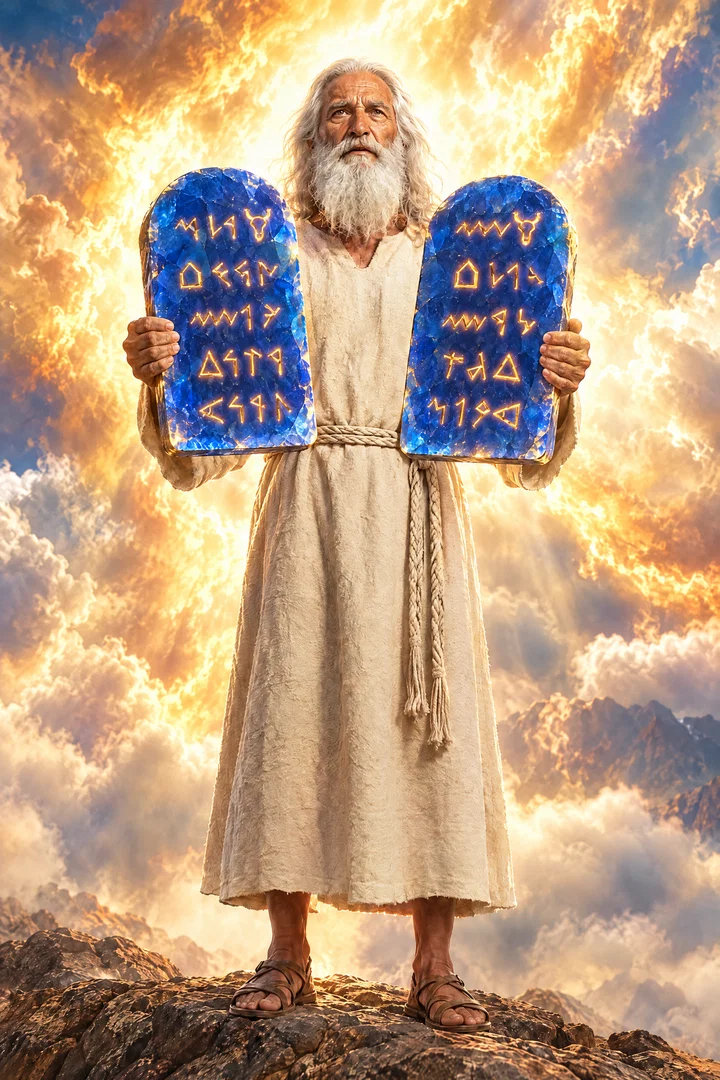
And the LORD delivered unto me two tables of stone written with the finger of God; and on them was written according to all the words, which the LORD spake with you in the mount out of the midst of the fire in the day of the assembly.
Translations
And the LORD delivered to me two tables of stone written with the finger of God; and on them was written according to all the words, which the LORD spoke with you in the mount out of the middle of the fire in the day of the assembly.
And the LORD delivered unto me two tables of stone written with the finger of God; and on them was written according to all the words, which the LORD spake with you in the mount out of the midst of the fire in the day of the assembly.
and the Lord delivered unto me two tables of stone written with the finger of God; and on them was written according to all the words, which the Lord spake with you in the mount out of the midst of the fire in the day of the assembly.
And the LORD delivered to me two tables of stone written with the finger of God; and on them was written according to all the words which the LORD spoke with you in the mount, from the midst of the fire, in the day of the assembly.
And the LORD delivered unto me the two tables of stone written with the finger of God; and on them was written according to all the words, which the LORD spake with you in the mount out of the midst of the fire in the day of the assembly.
And Jehovah delivered unto me the two tables of stone written with the finger of God; and on them was written according to all the words, which Jehovah spake with you in the mount out of the midst of the fire in the day of the assembly.
and Jehovah giveth unto me the two tables of stone written with the finger of God, and on them according to all the words which Jehovah hath spoken with you in the mount, out of the midst of the fire, in the day of the assembly.
— and Jehovah delivered to me the two tables of stone written with the finger of God; and on them [ was written] according to all the words which Jehovah spoke with you on the mountain from the midst of the fire on the day of the assembly.
Then did Yahweh deliver unto me the two tables of stone, written with the finger of God,—and [there was] upon them, according to all the words which Yahweh had spoken with you in the mountain out of the midst of the fire in the day of the convocation.
Berean Standard Bible, Majority Standard Bible
Then the LORD gave me the two stone tablets, inscribed by the finger of God with the exact words that the LORD spoke to you out of the fire on the mountain on the day of the assembly.
The LORD delivered to me the two stone tablets written with God’s finger. On them were all the words which the LORD spoke with you on the mountain out of the middle of the fire in the day of the assembly.
And the Lord gave me the two stones with writing on them done by the finger of God: on them were recorded all the words which the Lord said to you on the mountain out of the heart of the fire, on the day of the great meeting.
Then the Lord deliuered me two tables of stone, written with the finger of God, and in them was conteyned according to all the wordes which the Lord had said vnto you in the mount out of the middes of the fire, in the day of the assemblie.
Douay-Rheims (Challoner revision)
And the Lord gave me two tables of stone written with the finger of God, and containing all the words that he spoke to you in the mount from the midst of the Are, when the people were assembled together.
Pictures
Cross-references 20 of 46
- Exodus 31:18
And he gave unto Moses, when he had made an end of communing with him upon mount Sinai, two tables of testimony, tables of stone, written with the finger of God.
Both describe God giving Moses stone tablets written with his finger.
- Deuteronomy 4:13
And he declared unto you his covenant, which he commanded you to perform, even ten commandments; and he wrote them upon two tables of stone.
Identifies the covenant God declared as the Ten Commandments written on two stone tablets.
- Exodus 34:28
And he was there with the LORD forty days and forty nights; he did neither eat bread, nor drink water. And he wrote upon the tables the words of the covenant, the ten commandments.
The Ten Commandments, words of the covenant, are written on the tablets.
- Deuteronomy 5:22
These words the LORD spake unto all your assembly in the mount out of the midst of the fire, of the cloud, and of the thick darkness, with a great voice: and he added no more. And he wrote them in two tables of stone, and delivered them unto me.
God speaks the commandments to the assembly and writes them on two stone tablets.
- Exodus 24:12
And the LORD said unto Moses, Come up to me into the mount, and be there: and I will give thee tables of stone, and a law, and commandments which I have written; that thou mayest teach them.
God promises Moses stone tablets bearing the law and commandments.
- Deuteronomy 10:4
And he wrote on the tables, according to the first writing, the ten commandments, which the LORD spake unto you in the mount out of the midst of the fire in the day of the assembly: and the LORD gave them unto me.
God rewrites the Ten Commandments on the replacement tablets.
- Exodus 32:15-16
And Moses turned, and went down from the mount, and the two tables of the testimony were in his hand: the tables were written on both their sides; on the one side and on the other were they written.
Both describe the tablets and their writing as God’s work.
- Exodus 20:1-17
And God spake all these words, saying,
The commandments spoken at Sinai include the Sabbath command written on the tablets.
- Revelation 11:19
And the temple of God was opened in heaven, and there was seen in his temple the ark of his testament: and there were lightnings, and voices, and thunderings, and an earthquake, and great hail.
The heavenly temple reveals the ark containing the covenant tables.
- Exodus 19:5-6
Now therefore, if ye will obey my voice indeed, and keep my covenant, then ye shall be a peculiar treasure unto me above all people: for all the earth is mine:
Obeying God’s voice and keeping his covenant makes Israel a holy nation.
- Deuteronomy 10:5
And I turned myself and came down from the mount, and put the tables in the ark which I had made; and there they be, as the LORD commanded me.
Moses places the tablets in the ark.
- Exodus 34:1
And the LORD said unto Moses, Hew thee two tables of stone like unto the first: and I will write upon these tables the words that were in the first tables, which thou brakest.
God promises to write the original words on replacement tablets.
- Deuteronomy 5:4-5
The LORD talked with you face to face in the mount out of the midst of the fire,
The commandments were spoken from the fire at the mountain.
- Acts 7:38
This is he, that was in the church in the wilderness with the angel which spake to him in the mount Sina, and with our fathers: who received the lively oracles to give unto us:
Both describe the law given at Sinai to Israel in the wilderness.
- 1 Kings 8:21
And I have set there a place for the ark, wherein is the covenant of the LORD, which he made with our fathers, when he brought them out of the land of Egypt.
Identifies the covenant with the commandments given when God brought Israel out of Egypt.
- Deuteronomy 5:7-21
Thou shalt have none other gods before me.
Sets out the commandments as terms of the Horeb covenant.
- Deuteronomy 10:2
And I will write on the tables the words that were in the first tables which thou brakest, and thou shalt put them in the ark.
God writes the words on the replacement tablets, repeating the first tables.
- 1 Kings 8:9
There was nothing in the ark save the two tables of stone, which Moses put there at Horeb, when the LORD made a covenant with the children of Israel, when they came out of the land of Egypt.
The ark contained the stone tablets of the covenant.
- 2 Corinthians 3:7
But if the ministration of death, written and engraven in stones, was glorious, so that the children of Israel could not stedfastly behold the face of Moses for the glory of his countenance; which glory was to be done away:
Contrasts the ministries associated with the law engraved on stone.
- Hebrews 9:4
Which had the golden censer, and the ark of the covenant overlaid round about with gold, where in was the golden pot that had manna, and Aaron’s rod that budded, and the tables of the covenant;
ark still contains them after ceremonies ended
Commentary
Each commentary is drawn from primary sources: the writings of Ellen G. White and Adventist pioneers and periodicals. Each commentary is separate. Its own words are not a quotation; follow the references to read the source passages.
Ellen G. White
11 sources
The verse describes two tables of stone written with God's own finger containing all the words God spoke to Israel in the mount from the midst of the fire in the day of the assembly, which are the Ten Commandments, the Decalogue, the covenant commandments, the moral law.Lt 51, 1901, par. 10–13PP 314.1ExVEGW 25.3Ms 168, 1905, par. 35–36ST Jul 15, 1913 Unlike the rest of the Bible where God-given truths are expressed in human language, the Ten Commandments are of divine and not human composition, directly divine in both speaking and writing.GC v.3–vi.1 The verse belongs to the lessons of Deuteronomy 9-12 that Moses was charged to repeat to the people so that no member of the congregation of Israel was left ignorant of this duty.Lt 292, 1908, par. 14 The covenant connected with the tablets promised life and prosperity if the people obeyed God's law.Lt 51, 1901, par. 10–13 The tablets were a copy engraved by God Himself and delivered to Moses as the symbol of divine authority and the embodiment of the divine will, given when God promised to dwell among Israel as King and God, to be sacredly enshrined in the sanctuary as the visible center of national worship.PP 314.1
God's law is a transcript of His character, given to humanity in the beginning as the standard of obedience but lost sight of in succeeding ages, then given a second time at Sinai where in awful grandeur the Lord spoke His precepts and engraved the Decalogue on stone.8T 207.1–2 In giving the law at Sinai God revealed His character as a jealous God, and because His character has not changed He remains the same jealous God today and His holy law remains binding.BS 57.2 The law written by God on stone is the foundation of all truth.18MR 174.1–2 The two tables containing the ten commandments are in the ark in the most holy place in heaven, where Jesus entered in 1844 after finishing His mediation in the holy place and shutting its door.ExVEGW 25.3
The words spoken at the mountain and written on stone are God's perfect standard for judging human conduct, including business dealings, given to Moses during his forty days on the mountain, to be brought forth so that people's deeds will be compared with it.Ms 168, 1905, par. 35–36 The law God Himself spoke and wrote is declared holy, just, and good, including the Sabbath commandment, and requires obedience without removing any part, calling for entire obedience to its sacred claims.ST Jul 15, 191318MR 174.1–2 Only in obedience to God's commandments can humanity find safety and true greatness, so the same requirement rests on each person today to learn the importance of these lessons, to live by every word of God, and to express these heavenly principles in all that is done and said.Lt 292, 1908, par. 148T 207.1–2
Trampling God's law disproves sanctification, since being truly sanctified is different from merely claiming to be sanctified.BS 57.2 God's own finger writes His law upon every nerve, every muscle, and every faculty entrusted to humanity.HL 20.4
Sources
Pioneers and periodicals
70 sources
The verse tells of the Lord handing to Moses at the end of forty days and nights on Mount Sinai two tables of stone inscribed by His own finger exactly according to all He had spoken to Israel from the midst of the fire in the day of the assembly.ST Mar 11, 1889ST Feb 13, 1879ST Feb 8, 1905RH Nov 25, 1852RH Apr 21, 1851 Those tables held the Ten Commandments alone, the ten words spoken aloud to the whole assembly, with nothing else added to the stone.ST Feb 8, 1905RH Jan 7, 1862RH Sep 13, 1853 They are the tables of the covenant, the ten commandments given as the condition of God's agreement with Israel, to obey His voice by keeping what He Himself spoke and wrote.ST Feb 13, 1879RH Aug 5, 1851RH Nov 25, 1852ST Mar 8, 1883RH Jul 18, 1854 What God Himself spoke and engraved on enduring stone is the permanent moral law, distinct from the ordinances and ceremonial regulations Moses wrote in a book, which were for a limited time and could be blotted out.ST Oct 18, 1905RH Sep 13, 1853RH Oct 21, 1851RH Aug 5, 1851 That stone-written law, including the seventh-day Sabbath, remains unchangeable and binding, enthroned in heaven in the ark and to be kept by God's people to the end.RH Apr 30, 1857RH Nov 8, 1853ST Aug 17, 1915RH Mar 27, 1856RH Mar 25, 1858
Stone Tables and Assembly
The Lord delivered to Moses two tables of stone at the end of forty days and forty nights without bread or water, after finishing communing with him on Mount Sinai.ST Mar 11, 1889ST Feb 13, 1879RH Apr 21, 1851ST Feb 27, 1896 The tables were the work of God with the writing of God graven upon them, written by His own finger plowing the solid rock, on both their sides, on the one side and on the other.ST Mar 11, 1889RH Jun 25, 1867ST Nov 5, 1894 What was written was exactly according to all the words the Lord spoke with Israel in the mount out of the midst of the fire, cloud, thick darkness and glory in the day of the assembly.ST Mar 11, 1889ST Feb 8, 1905RH Nov 25, 1852RH Feb 7, 1854RH Sep 3, 1857 The tablets contained the Ten Commandments proclaimed with His own voice from Sinai, which He Himself calls law and commandments as a rule of life.ST Feb 8, 1905ST Nov 5, 1894ST Jul 22, 1908
The day of the assembly means the gathered people of God, the idea conveyed by the Greek word ecclesia, so the church existed in the Old Testament era and church history did not begin with the New Testament or Pentecost.ST Jan 3, 1905ST Jul 27, 1904 The Greek translators used ekklesia for Israel's assembly or congregation, showing God's people then were His congregation, the same people described as the church in later times.ST Jan 3, 1905ST Jul 27, 1904 The verse belongs to Moses' rehearsal in Deuteronomy 8-10 of God's dealings and the law before crossing the Jordan, stressing the law's sacred importance and Israel's duty to keep it.ST Mar 1, 1910
The chapter records Moses' second forty-day stay spent in intercession that God would not destroy the people after Israel's sin, and that Moses later broke the first two tablets in anger over the people's transgression.ST Mar 3, 1909RH Dec 31, 1861 The Ten Words were written twice on stone, with the second set given to Moses as a copy of the law bearing what had first been publicly proclaimed.RH Aug 2, 1870RH Apr 28, 1874ST Nov 29, 1883 That direct divine writing, not written by Moses as scribe, is unique in the Bible and distinguishes the Ten Words from the other parts of the Mosaic law.RH Aug 2, 1870ST Nov 29, 1883
God is a real personal Being who was Himself present on the burning mount, shook the earth with His voice and made Israel tremble, delivered the tables to Moses, and the same voice spoke again on the mount of transfiguration where Moses heard and saw the One who spoke.RH Jun 25, 1867 He spoke amid thunders, darkness, lightning flashes and glory, and Moses saw Him there.RH Jun 25, 1867 Moses' time in God's presence on the mount also illustrates the abundant Spirit and instruction given to qualify him to lead Israel.ST Feb 27, 1896
Ten Words Alone
The two stone tablets held simply the Ten Commandments alone, the ten words spoken by the Lord in the mount out of the midst of the fire in the day of the assembly, with nothing else included in them.ST Feb 8, 1905RH Jan 7, 1862RH Sep 13, 1853ST Mar 8, 1883RH Apr 9, 1901 They were written by God's own finger exactly according to all the words He had spoken to Israel at Horeb, and are the tables of the covenant.ST Feb 8, 1905RH Sep 13, 1853ST Mar 8, 1883RH Jun 2, 1859RH Apr 9, 1901 As God's law written on stone they stand distinct from the ordinances Moses wrote in a book, and they were placed within the ark of the covenant or testimony.RH Sep 13, 1853RH Jun 2, 1859 The earthly ark and its tables were a pattern of the original in the heavenly temple, so the heavenly temple contains the same ten commandments for which the earthly priesthood atoned and for which Christ as priest after the order of Melchisedec atones with His own blood.RH Jun 2, 1859
The preface to the Decalogue was not one of those ten words and therefore was not written by the finger of God upon stone.RH Jan 7, 1862 The words Moses uses in rehearsing the Decalogue were not what was engraven, but the original ten words themselves.RH Jan 7, 1862
No additional words beyond the ten commandments were spoken to the assembly.RH Nov 8, 1853 Yet the two tables of stone written with the finger of God with the words spoken in the mount in the day of the assembly, together with the preface to the Ten Commandments, were the basis of the Sinai covenant.RH Jul 4, 1854RH Nov 8, 1853 That Sinai covenant rested on the oath and promises of God to Abraham, Isaac and Jacob concerning their seed, and the Abrahamic covenant in its everlasting promises is the basis of the New Covenant.RH Jul 4, 1854 Though the Sinai covenant is now null and void, having served as a schoolmaster unto Christ and been replaced by the New Covenant in which God is the God of His true people in Christ, both Jews and Gentiles, the law of God itself remains, with not one jot or tittle to be conceded as merely ceremonial or Jewish, and those covenant commandments are presented as God's holy, everlasting law, including the fourth precept concerning the Sabbath.RH Jul 4, 1854RH Nov 8, 1853
The Sinai covenant was not in force until the two tables of stone were delivered.RH Feb 7, 1854 What was written on the tables with the finger of God was exactly according to all the words the Lord spoke with Israel in the mount out of the midst of the fire in the day of the assembly.RH Feb 7, 1854 The ten commandments therefore existed and were spoken in audible form before they were written, while Israel were still Abraham's natural seed under the promissory covenant.RH Feb 7, 1854 Hence the conditions were the same on the part of Abraham as on the part of his seed, keeping the ten commandments.RH Feb 7, 1854
Covenant Identity
The two tables of stone written with the finger of God are the tables of the covenant, also called the tables of testimony, containing all the words the Lord spoke in the mount out of the midst of the fire in the day of the assembly.ST Feb 13, 1879RH Aug 5, 1851RH Nov 25, 1852RH Sep 13, 1853RH Apr 21, 1851 They were given to Moses at the end of forty days and forty nights without bread or water, bearing the Ten Commandments engraved by God Himself on both their sides.ST Feb 13, 1879RH Apr 21, 1851RH Oct 21, 1851 They contained the complete covenant, identified as God's holy law suited to humanity's needs throughout every dispensation, distinct by divine engraving from the ordinances Moses wrote in a book.RH Aug 5, 1851RH Sep 13, 1853RH Oct 21, 1851 Their writing was the Ten Commandments alone, described as God's covenant and as a law in its own right, signifying that God's moral law is enduring.RH Nov 25, 1852RH Oct 21, 1851
The word covenant is applied to the Ten Commandments as the condition of the agreement with Israel, not as the contract itself.ST Feb 13, 1879ST Mar 8, 1883ST Jun 4, 1902 Calling the tablets the tables of the covenant does not make the commandments a contract, for they are called the covenant in that secondary sense as its conditions.ST Mar 8, 1883ST Jun 4, 1902 The agreement between God and Israel was not written on the tables, which held the written terms, distinct from the broader covenant agreement and ordinances recorded in the book of the covenant.RH Dec 9, 1851ST Jun 4, 1902 To obey His voice and to keep His covenant in Exodus 19:5-8 means to keep the Ten Commandments, because they are what He spoke with His own voice from the mount and wrote on two tables of stone, with nothing else included in them.RH Jul 18, 1854
The tablets contained the complete covenant as God's holy law for every dispensation.RH Aug 5, 1851 The Ten Commandments are God's own covenant which He commanded the people to perform without leaving the matter to their choice, a covenant commanded rather than a conditional covenant made through the people's promise, and are called the covenant and not the old covenant.ST Jan 4, 1905 In another teaching, the Ten Commandments are identified with the old covenant, which was replaced by the new covenant.RH Feb 18, 1873 In that teaching the Sinai covenant rested on the oath and promises of God to Abraham, Isaac and Jacob concerning their seed, with the Abrahamic covenant in its everlasting promises as the basis of the New Covenant, and though the Sinai covenant with its preface is now null and void, having served as a schoolmaster unto Christ and been replaced by the New Covenant in which God is the God of His true people in Christ, both Jews and Gentiles, the law of God itself remains, with not one jot or tittle to be conceded as merely ceremonial or Jewish.RH Jul 4, 1854
In yet another teaching, the Ten Commandments as God's covenant are distinct from the old and new covenants, and the contrast between the old and new covenants concerns their ministries, not the abolition of the law.RH Aug 4, 1863RH Jan 13, 1852 The law written on the tablets is distinct from the ministry that carried it into effect.RH Jan 13, 1852 Keeping that covenant is connected with Israel becoming a holy nation.RH Aug 4, 1863 The Sinai covenant was not in force until the two tables of stone were delivered, with what was written exactly according to all the words the Lord spoke in the mount out of the fire in the day of the assembly.RH Feb 7, 1854 The covenant associated with the tablets was made with Israel when God led them out of Egypt, and was called the words of the covenant.ST Jun 4, 1902
The Ten Commandments existed and were spoken in audible form before they were written, while Israel were still Abraham's natural seed under the promissory covenant, so the conditions were the same on the part of Abraham as on the part of his seed, namely keeping the Ten Commandments.RH Feb 7, 1854 The commandments themselves, as principles of God's moral government, existed before the Horeb covenant was made.RH Dec 9, 1851
Two Laws Distinguished
Deuteronomy 9:10 distinguishes two laws by who spoke and wrote them and where they were recorded.ST Oct 18, 1905RH Sep 13, 1853RH Oct 21, 1851RH Oct 7, 1851RH Aug 5, 1851 God Himself spoke the Ten Commandments to the people at Mount Sinai and engraved them with His own finger on two tablets of stone, after speaking them to Israel in the mount.RH Sep 13, 1853RH Oct 21, 1851RH Oct 7, 1851RH Aug 5, 1851 Those stone tables are the tables of the covenant, also called the tables of testimony, bearing the moral law and containing the words He had spoken to Israel.RH Sep 13, 1853RH Oct 21, 1851RH Oct 7, 1851RH Aug 5, 1851 Moses, by contrast, wrote the Jewish ordinances and ceremonial regulations in a book after communing with God for forty days.RH Sep 13, 1853RH Oct 21, 1851RH Oct 7, 1851RH Oct 21, 1851RH Aug 5, 1851
The divine engraving on enduring stone signifies that God's moral law is permanent, immutable, unchangeable and enduring.ST Oct 18, 1905RH Oct 21, 1851RH Aug 5, 1851ST Sep 3, 1912 It was spoken by the Creator before a gathered multitude and engraved on enduring stone, marking its divine authority, importance and unchangeableness.ST Oct 18, 1905RH Oct 21, 1851ST Sep 3, 1912 The book contained ordinances given for a limited period that could be blotted out.RH Aug 5, 1851RH May 5, 1851 The tables of stone were deposited inside the ark while the book of the law was placed by the side of the ark.RH Apr 30, 1857RH Sep 3, 1857 That placement shows the superiority of the Ten Commandments, and after the ceremonial dispensation has passed the ark still contains them.RH Apr 30, 1857RH Sep 3, 1857
The stone-table writing by God's finger marks those laws as the moral laws, separate from the ceremonial laws.RH Dec 18, 1860RH Dec 25, 1856 They are the principles of morality expressed and written out, founded on obligations growing out of human nature and the relations of people to God and to one another, prescribing religious and social duties owed to God and to fellow men.RH Dec 18, 1860RH Dec 25, 1856 They existed as early as morality itself from relations man sustained before the fall, not owing existence to sin, and they were binding before they were written and continue binding to the end of time upon all who know them.RH Dec 25, 1856 Ceremonial laws concerned outward observances that were not obligatory until commanded and were binding only on the Jews until the death of Christ.RH Dec 25, 1856 The other Mosaic laws and institutions served that fundamental, enduring law at the center of Israel's religious system, which expresses universal human duty.ST Apr 22, 1880
The reference to blotting out the handwriting of ordinances in Colossians 2:14 applies to the ordinances in Moses' book, not to the commandments engraved in stone.RH Oct 21, 1851RH Aug 5, 1851RH May 5, 1851 It was Moses' written ordinances, not the commandments on the tablets, that were blotted out and nailed to the cross at Christ's death.RH Oct 21, 1851RH Aug 5, 1851RH May 5, 1851 The handwriting in the book was a faulty covenant imposed on the Jews until the first advent of Jesus, while the two tables are God's perpetual everlasting covenant, the royal law.RH May 5, 1851 Their engraving in stone impresses perpetuity, so the idea of blotting them out is unnatural and impossible.RH Aug 5, 1851RH May 5, 1851 Those who held a differing position taught that the finger-written commandments are themselves handwritings included in what was taken away.RH May 13, 1873
The ceremonial law of sacrifices, priests, altar and temple was added after man violated the moral law and became a sinner needing a Saviour, to point to that coming Saviour.ST May 27, 1875 That added law was ordained by angels in the hand of a mediator in the way the law of Moses was given.ST May 27, 1875 It lasted only till the Seed should come, while the moral law written on stone does not terminate there.ST May 27, 1875
Authority and Permanence
God Himself is the one Lawgiver able to save and to destroy, who personally delivered the two tables of stone written with His own finger with the words He spoke in the mount out of the midst of the fire.RH Dec 30, 1858RH Sep 8, 1863 He spoke the Ten Commandments with an audible voice from Sinai amid cloud and fire and thick darkness and wrote them on stone in the most solemn and public manner, in contrast to the book written by the hand of Moses in a private manner, to show their superiority.RH Sep 3, 1857ST Feb 11, 1913 He set apart the Ten Commandments as the moral code by proclaiming them with His own voice and writing them with His own finger, teaching that they are to be regarded with peculiar reverence, an honor and distinction given to this law alone above all other laws.RH Sep 8, 1863RH Mar 31, 1859 No other part of the Bible was first spoken directly to all the assembly with a great voice with no more added and then given on enduring stone.ST Sep 3, 1912ST Feb 11, 1913
That direct divine writing is unique in the Bible, entitling the Ten Commandments to be called the royal law.ST Sep 3, 1912ST Feb 11, 1913 Ten Words is the more literal rendering, distinguishing them from the other parts of the Mosaic law, and they were not written by Moses as a scribe.RH Aug 2, 1870 The moral law of ten commandments is the earliest writing in existence, spoken and written by God before any other part of the Bible was written, and its proclamation before all other Scripture shows the value God placed on it. It was the foundation of the Bible, given before Moses wrote the first five books.RH Sep 16, 1852
The ten commandments summarily contain the moral law, the synopsis of all religion and morality and the foundation of the whole system.ST Nov 29, 1883RH Dec 18, 1860 They prescribe religious and social duties, the duties owed to God and to fellow men, and are the only complete code of moral precepts God ever gave to men, given personally by God and written with His own finger in the handwriting of the Most High, unlike any other law.RH Dec 18, 1860 They are God's own law, the single rule of faith and practice.RH Dec 30, 1858 They are a divinely given summary of the whole duty of humanity and a standard of righteousness whose authority for the present age rests on Christ's authority and His acceptance of the Old Testament, and they are God's authoritative standard against which every other claimed voice or standard must be tested.ST Aug 27, 1912ST Sep 3, 1896
Christ's work toward that law is to magnify it and make it honorable, to fulfill it and not destroy it, and as advocate with the Father for sinners to establish it in all its points.RH Dec 30, 1858 The ten commandments are the embodied uniform standard of right by which God judges the world from the beginning to the close of probation.RH Mar 31, 1859 Because God does not change, this standard cannot vary, so what was required in one age for the development of moral character is required in every age, and His law and its moral requirements apply in every age.RH Mar 31, 1859ST Oct 10, 1906 The law is the written expression of God's character, not a separate standard of righteousness, and the stone tablets point to God's purpose of writing His law on the hearts of His children.ST Oct 10, 1906
The Ten Commandments remain word for word, syllable for syllable, letter for letter exactly as God wrote them, with the fourth commandment still naming the seventh day as the Sabbath, the divine wording not changed or amended, so asking God for grace to keep that law means asking for grace to observe the seventh day as it reads.ST Feb 23, 1882 The commandments Moses taught are the righteousness of Christ expressed in words, synonymous with Christ's righteousness in the Gospel.ST Jan 24, 1900 Received through Christ they become righteousness, salvation, and peace, while apart from Christ they bring condemnation, and Moses' expressions also teach the resurrection.ST Jan 24, 1900 What was written on the two tables of stone was the decalogue, the moral law that summed up the purport of the dispensation.ST Oct 16, 1884 The ministration of Moses and all his successors, the whole putting forth of the Mosaic arrangement for promulgating and perpetuating the law, consisted in the presentation and enforcement of that engraved law, yet the ministration itself was not written on the stones and is distinct from the law written there, being called engraven only by a figure that names the ministry by its object, and that priestly ministration was typical and is done away, but the law on the stones is moral and did not and cannot pass away.ST Oct 16, 1884
Sanctuary in Heaven
The covenant kept in the ark in the most holy place of the earthly sanctuary is the ten commandments on two tables of stone.ST Dec 10, 1894ST Nov 5, 1894 The earthly sanctuary had two apartments, the holy place and the most holy place, and the ark containing these tables of the covenant with the cherubim stood in the second apartment. What was on the stone was written by God Himself with His own finger and bore exactly the words He spoke to Israel at the mountain, which He Himself calls law and commandments because they are a rule of life for man to obey.ST Dec 10, 1894ST Nov 5, 1894 They are therefore in an emphatic and preeminent sense God's law, honored above all ceremonial regulations by being separated from them and ordered to be placed in the sacred ark in the most holy place.ST Nov 5, 1894 The earthly ark and its tables were a pattern of the original in the heavenly temple, so the heavenly tabernacle contains the same ten commandments.RH Jun 2, 1859ST Dec 10, 1894
That law has not gone out of force with the Jewish ceremonies, and transgression of that same stone-written law is what the earthly priesthood atoned for and what Christ as priest after the order of Melchisedec atones for in heaven with His own blood.RH Jun 2, 1859 This covenant of ten living commandments abides forever without alteration, distinct from the law written in a book and placed in the side of the ark while this testimony was placed inside the ark.RH Apr 30, 1857 It is the same testimony now seen in heaven and obeyed by the remnant that they may be covered and stand through the time of trouble.RH Apr 30, 1857 The two tables of stone written with the finger of God are enthroned in heaven in the sacred temple inside the ark under the mercy-seat guarded by angels.RH Mar 25, 1858 There they exist without liability of change or decay as imperishable writing, as high above earth as heaven is, beyond the reach of men, so that no human legislating, councils, decrees, or rage against those who acknowledge the royal law can touch them.RH Mar 25, 1858 To change them a man would have to ascend to heaven, dethrone Jehovah, burst through the angel guards into the temple, wrest the mercy-seat from the ark, and with his own would-be omnipotent finger change what God's finger wrote.RH Mar 25, 1858
Sabbath and Final Obedience
The two stone tablets bear the covenant commandments spoken by God to the assembled people from the midst of the fire on the mountain, and they contain the Ten Commandments alone with no additional words spoken to the assembly, including the fourth precept concerning the seventh-day Sabbath.RH Nov 8, 1853RH Aug 2, 1870RH Aug 3, 1869 Those words were written directly by God's own finger on both writings of the tablets, not by Moses as scribe, giving the Sabbath commandment the same divine origin and honor as the other commandments, and this direct divine writing is unique in the Bible.RH Aug 2, 1870RH Nov 8, 1853RH Aug 3, 1869 The Ten Words, which is the more literal rendering, are God's holy everlasting law of perpetual obligation, not limited to the Mosaic code, whose essential principle of the Sabbath was established at creation and continues to the end of time.RH Nov 8, 1853RH Aug 2, 1870 The seventh-day Sabbath remains the same as when written by the finger of God and has not been changed by Christ and His apostles, so the whole Decalogue remains in force without removing any part, and to break it is to trample upon it while God requires obedience to His holy, just and good moral law.ST Jul 15, 1913RH Mar 27, 1856RH Aug 3, 1869 The fourth commandment supplies the law's royal sanction and identifies the Lawgiver's power and dominion, without which the law would lack the authority that makes it perfect, and it was given as the foundation of the Bible before Moses wrote the first five books.RH Sep 16, 1852 The Decalogue is the perfect constitution of God's universal and eternal kingdom, to be kept in the golden chest and obeyed under threat of death, perfect not only in covering human duties but in shaping the heart for cheerful obedience to any command God gives even when its reason is unseen, so the Sabbath must not be removed.ST Aug 27, 1912 This is the law binding in full described by James, so that breaking one command makes a person guilty of all, distinguishing the law God wrote on stone from the law Moses wrote in a book.ST Aug 17, 1915
The commandments of God are those God proclaimed in person and wrote with His own finger on stone, meaning emphatically the ten commandments exclusively when spoken of in distinction from the faith of Jesus.RH Aug 2, 1864 They are kept in opposition to the worship of the beast which is the papacy, and obedience to this divine moral standard by those who have faith in Jesus protects the saints from false worship and the beast's mark.RH Aug 2, 1864ST Oct 31, 1916 The moral law is the only complete code of moral precepts God ever gave, given personally and written in the handwriting of the Most High unlike any other law, still living truth perpetual and unchangeable and not abolished eighteen hundred years ago. Because it still binds, the prophetic program for the last days includes a most momentous closing message of probation to bring people to keep the commandments of God. That divinely spoken and divinely written law must now be restored to counteract the blasphemous work of the Roman apostasy, and the present forcing of the Sabbath question upon public attention is the sign that the time for that restoration has come.ST Mar 25, 1880 Its fulfillment enlightens the people, exposes false tradition about Sunday, and brings the people of God into keeping the commandments of God and the faith of Jesus.ST Mar 25, 1880
The tablets were the testimony and covenant preserving the Ten Commandments as the fundamental enduring law at the center of Israel's religious system, while the other Mosaic laws and institutions served that law.ST Apr 22, 1880 The commandments express universal human duty and the whole duty of humanity as a divinely given summary and standard of righteousness, and they remain authoritative for Christians since the Gospel presupposes the broken law and Christianity incorporates the Decalogue.ST Apr 22, 1880ST Aug 27, 1912 Their authority for the present age rests on Christ's authority and His acceptance of the Old Testament.ST Aug 27, 1912 God's law including the Sabbath command was written by God Himself on stone at Sinai, unique among the writings of the Bible and a sign of enduring authority, so people should not presume to change a law delivered directly by God.
Sources