Deuteronomy 5:27
Go thou near, and hear all that the LORD our God shall say: and speak thou unto us all that the LORD our God shall speak unto thee; and we will hear it, and do it.
Translations
Go you near, and hear all that the LORD our God shall say: and speak you to us all that the LORD our God shall speak to you; and we will hear it, and do it.
King James Version, Revised Version
Go thou near, and hear all that the LORD our God shall say: and speak thou unto us all that the LORD our God shall speak unto thee; and we will hear it, and do it.
Go thou near, and hear all that the Lord our God shall say: and speak thou unto us all that the Lord our God shall speak unto thee; and we will hear it, and do it.
Go thou near, and hear all that the LORD our God shall say; and speak thou to us all that the LORD our God shall speak to thee; and we will hear it, and do it.
Go thou near, and hear all that Jehovah our God shall say: and speak thou unto us all that Jehovah our God shall speak unto thee; and we will hear it, and do it.
Draw near thou, and hear all that which Jehovah our God saith, and thou, thou dost speak unto us all that which Jehovah our God speaketh unto thee, and we have hearkened, and done it.
Come thou near, and hear all that Jehovah our God will say; and speak thou to us all that Jehovah our God will speak to thee; and we will hear it, and do it.
Go, thou, near, and hear, all that Yahweh our God shall say,—so shalt thou speak unto us, all that Yahweh our God shall speak unto thee and we will hear and do.
Berean Standard Bible, Majority Standard Bible
Go near and listen to all that the LORD our God says. Then you can tell us everything the LORD our God tells you; we will listen and obey.”
Go near, and hear all that the LORD our God shall say, and tell us all that the LORD our God tells you; and we will hear it, and do it.”
Do you go near: and after hearing everything which the Lord our God has to say, give us an account of all he has said to you, and we will give ear, and do it.
Go thou neere and heare all that the Lord our God saith: and declare thou vnto vs all that the Lord our God saith vnto thee, and we will heare it, and doe it.
Douay-Rheims (Challoner revision)
Approach thou rather: and hear all things that the Lord our God shall say to thee, and thou shalt speak to us, and we will hear and will do them.
Pictures
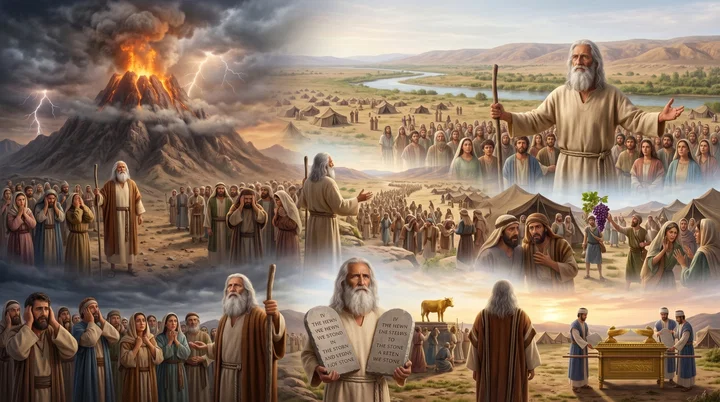
Cross-references 20 of 37
- Exodus 20:18-19
And all the people saw the thunderings, and the lightnings, and the noise of the trumpet, and the mountain smoking: and when the people saw it, they removed, and stood afar off.
Israel fears hearing God’s voice at Sinai and asks Moses to speak for them.
- Exodus 20:1-17
And God spake all these words, saying,
God’s direct delivery of the law led Israel to ask Moses to speak for them.
- Deuteronomy 5:22
These words the LORD spake unto all your assembly in the mount out of the midst of the fire, of the cloud, and of the thick darkness, with a great voice: and he added no more. And he wrote them in two tables of stone, and delivered them unto me.
God speaks the commandments to the assembly and adds no more.
- Deuteronomy 4:13
And he declared unto you his covenant, which he commanded you to perform, even ten commandments; and he wrote them upon two tables of stone.
Identifies the covenant as the Ten Commandments written on stone.
- Exodus 19:8
And all the people answered together, and said, All that the LORD hath spoken we will do. And Moses returned the words of the people unto the LORD.
Israel promises to do all that the Lord has spoken.
- Deuteronomy 5:5
(I stood between the LORD and you at that time, to shew you the word of the LORD: for ye were afraid by reason of the fire, and went not up into the mount;) saying,
Moses stood between God and Israel to convey God’s words.
- Exodus 24:12
And the LORD said unto Moses, Come up to me into the mount, and be there: and I will give thee tables of stone, and a law, and commandments which I have written; that thou mayest teach them.
God gives Moses the written law and commandments to teach the people.
- Exodus 24:3
And Moses came and told the people all the words of the LORD, and all the judgments: and all the people answered with one voice, and said, All the words which the LORD hath said will we do.
The people affirm that they will obey the Lord’s words.
- Deuteronomy 5:31-33
But as for thee, stand thou here by me, and I will speak unto thee all the commandments, and the statutes, and the judgments, which thou shalt teach them, that they may do them in the land which I give them to possess it.
Moses relays God’s commands for Israel to obey and live prosperously.
- Exodus 31:18
And he gave unto Moses, when he had made an end of communing with him upon mount Sinai, two tables of testimony, tables of stone, written with the finger of God.
God wrote the covenant commandments on stone tablets.
- 2 Corinthians 3:7
But if the ministration of death, written and engraven in stones, was glorious, so that the children of Israel could not stedfastly behold the face of Moses for the glory of his countenance; which glory was to be done away:
The law written on stone is described as a glorious ministration of death.
- Galatians 3:19
Wherefore then serveth the law? It was added because of transgressions, till the seed should come to whom the promise was made; and it was ordained by angels in the hand of a mediator.
The law was ordained through a mediator, as the people asked Moses to receive God’s words for them.
- Deuteronomy 6:1-2
Now these are the commandments, the statutes, and the judgments, which the LORD your God commanded to teach you, that ye might do them in the land whither ye go to possess it:
God’s commands are to be kept by Israel and taught to their descendants.
- Exodus 20:21
And the people stood afar off, and Moses drew near unto the thick darkness where God was.
The people stand far off while Moses approaches God.
- Deuteronomy 18:15-18
The LORD thy God will raise up unto thee a Prophet from the midst of thee, of thy brethren, like unto me; unto him ye shall hearken;
The promised prophet speaks God’s words to the people, as Moses did.
- Exodus 20:1
And God spake all these words, saying,
Records the words the LORD spoke as the commandments’ text.
- Hebrews 12:19
And the sound of a trumpet, and the voice of words; which voice they that heard intreated that the word should not be spoken to them any more:
Those who heard the voice asked that the words not be spoken to them again.
- Exodus 24:7
And he took the book of the covenant, and read in the audience of the people: and they said, All that the LORD hath said will we do, and be obedient.
The people promise to obey all that the LORD has said.
- Exodus 19:5-6
Now therefore, if ye will obey my voice indeed, and keep my covenant, then ye shall be a peculiar treasure unto me above all people: for all the earth is mine:
gives the mutual agreement terms
- Exodus 20:20
And Moses said unto the people, Fear not: for God is come to prove you, and that his fear may be before your faces, that ye sin not.
God’s coming tests the people and instills fear to keep them from sinning.
Commentary
Each commentary is drawn from primary sources: the writings of Ellen G. White and Adventist pioneers and periodicals. Each commentary is separate. Its own words are not a quotation; follow the references to read the source passages.
Ellen G. White
16 sources
At Sinai after seeing God's greatness and hearing His voice out of the fire, the heads and elders feared they would die if they kept hearing Him directly, so they asked Moses to go near as mediator, hear all the Lord would say and speak it all to them, promising to hear it and do it.Ms 133, 1899, par. 1–5Ms 75, 1898, par. 11–12Ms 12, 1904, par. 20–25 God heard and approved their words as well said, while longing that they always had such a heart to fear Him and keep all His commandments, so that it would go well with them and their children forever.Ms 75, 1898, par. 11–12Ms 131, 1907, par. 29–33SG3 279.2–281.1 What He required in order for them to be a holy people was to hear all He speaks and to carefully keep and do His commandments and statutes and judgments in every detail.7MR 309.1–3STB 628.4–629.2 That same requirement stands now and applies with special force to God's people today, calling for sanctification of mind, soul, and body, perfect obedience to His will, and no excuse for disobedience.7MR 309.1–3Lt 292, 1908, par. 13 Their promise to hear and do was the covenant they soon broke by worshiping a calf made by man instead of giving sincere devotion to the living God, yet His longing and promise extend to all who live till the close of time under the mediation of Jesus Christ, whose prosperity depends on obedience to His requirements.SG3 279.2–281.11SP 248.2–249.1ST May 20, 1880
Setting at Sinai
Moses repeats the commandments after God Himself has declared them, rehearsing the law for Israel before they enter Canaan.21MR 408.1–2Ms 141, 1906, par. 34–37 The request recorded here belongs to that rehearsal and repetition of what God commanded the people.21MR 408.1–2Ms 141, 1906, par. 34–37
All the heads of the tribes and the elders had seen God's glory and greatness and heard His voice out of the fire from the dark, burning mountain.SG3 279.2–281.11SP 248.2–249.1 They confessed that God talks with man and man lives.SG3 279.2–281.11SP 248.2–249.1 Yet they were convinced that to keep hearing God's voice directly from the midst of the great fire would mean death.Ms 133, 1899, par. 1–5Ms 75, 1898, par. 11–12Ms 12, 1904, par. 20–25Ms 131, 1907, par. 29–33SG3 279.2–281.1
They therefore asked Moses to go near as mediator in their place.Ms 133, 1899, par. 1–5Ms 75, 1898, par. 11–12Ms 12, 1904, par. 20–2521MR 408.1–2Ms 131, 1907, par. 29–33 He was to hear all that the Lord their God would say and then speak to them all that the Lord would speak to him.Ms 133, 1899, par. 1–5Ms 75, 1898, par. 11–1221MR 408.1–2SG3 279.2–281.11SP 248.2–249.1 They promised to hear it and do it, joining hearing God's instruction with doing it.Ms 133, 1899, par. 1–5Ms 75, 1898, par. 11–12Ms 12, 1904, par. 20–2521MR 408.1–2SG3 279.2–281.1
Hearing God's words directly had thrilled them, yet their shrinking from hearing for themselves showed unbelief.Ms 131, 1907, par. 29–33Ms 141, 1906, par. 34–37
God's Response and Covenant
God heard the people's words and said they had spoken well, while adding His longing that they always had such a heart to fear Him and keep all His commandments, so that it would go well with them and their children forever.Ms 75, 1898, par. 11–12Ms 131, 1907, par. 29–331SP 248.2–249.1Ms 151, 1901, par. 29–31ST May 20, 1880 Their request was approved, though it also showed unbelief in shrinking from hearing Him directly after confessing that God talks with man and man lives.Ms 131, 1907, par. 29–33SG3 279.2–281.1 That divine response reveals that He takes no pleasure in punishing the transgressor but must maintain the honor of His throne when His righteous laws are trampled, and He delights to bestow blessings on all who value them.ST May 20, 1880
What He required in order for them to be a holy people unto Himself was to hear all that He speaks and to keep and do His commandments and statutes and judgments.7MR 309.1–3 The directions He gave through Moses for receiving His words and doing what He commands are to be carefully observed in every detail.7MR 309.1–3STB 628.4–629.2 The law so rehearsed includes the renewed command to remember and keep the Sabbath holy, grounded in His creating heaven and earth in six days and resting the seventh.Lt 31, 1898, par. 22–25 Those six days were six ordinary twenty-four-hour days, not indefinite periods, because the fourth commandment specifies a day people can observe.Lt 31, 1898, par. 22–25 The Sabbath is a sign of obedience and of God as Creator and the One who sanctifies His people, and keeping the fourth commandment entails keeping the rest.Lt 31, 1898, par. 22–25
Their promise to hear and do was the covenant they soon broke by worshiping a calf made by man instead of giving sincere devotion to the living God, pictured by the broken tables of stone.SG3 279.2–281.11SP 248.2–249.1 Moses later used this account to contrast their promise of obedience with that breach of their covenant with God.SG3 279.2–281.11SP 248.2–249.1 God did not reprove Moses for breaking the tables, but was so angry with Aaron for his sin that He would have destroyed him without Moses' special intercession.1SP 248.2–249.1
Enduring Call to Obey
The same requirement laid upon ancient Israel to be a holy people — to hear all that the Lord speaks and to keep and do His commandments and statutes and judgments as set forth in Deuteronomy 4-8 — stands now.7MR 309.1–3 That instruction applies with special force to God's people today.Lt 292, 1908, par. 13 What is required is sanctification of mind, soul, and body and perfect obedience to His will.Lt 292, 1908, par. 13 There is no excuse for disobedience to His commandments.Lt 292, 1908, par. 13
It is to be read with profit while nearing the day of God's great final review.7MR 309.1–3 In that day the people of this world must stand before the Judge of all the earth to answer for their deeds.7MR 309.1–3 The present is the time of investigation, when every character will have been investigated and every case decided for eternity.7MR 309.1–3 His longing that His people always have a heart to fear Him and keep all His commandments, and His promise that it would go well with them and their children forever, extend to all who live on earth till the close of time.ST May 20, 1880 They extend to all who come under the mediation of Jesus Christ, whose prosperity depends on obedience to God's requirements.ST May 20, 1880
The verse stands with its surrounding instruction in chapters 5, 6, and 7 as teaching for parents to read and follow.7MR 14.3 Parents are to train their children from infancy to form characters that meet God's approval, taking every precaution to prevent objectionable traits of character.7MR 14.3 The words of God spoken at Mount Sinai were meant to be kept before children and to guide their whole conduct.Ms 71, 1896, par. 3 Teaching and obeying God's law in home life and business prepares people to regain the Paradise lost through disobedience.Ms 71, 1896, par. 3 A heart steadfastly fixed on the Lord will not think slightly of His law nor give it less regard because of universal disrespect, but will hold it more precious in proportion as it is disregarded and despised by the masses.ST May 20, 1880
Sources
Pioneers and periodicals
47 sources
After hearing God's voice out of darkness while the mountain burned with fire, the elders feared death if they heard Him again and asked Moses to go near, hear all God would say, and speak it to them, promising to hear it and do it.RH Aug 21, 1855ST Apr 8, 1886ST Jan 16, 1907 God heard their words and approved them, longing for such a heart in them to fear Him and keep all His commandments always so it might be well with them and their children forever.ST May 20, 1880 Their promise to hear and obey all the Lord would say through Moses formed their side of the covenant whose terms were the Ten Commandments, with Moses serving as mediator of God's instruction.ST Sep 20, 1899RH May 26, 1853RH Apr 12, 1860ST Apr 15, 1886 Deuteronomy 5 is Moses' rehearsal about forty years later of the same law first spoken by God's voice at Sinai and written in Exodus 20, not a new giving or a different day, and Israel's deliverance from Egypt was only an added motive of gratitude while creation remains the reason for the Sabbath.RH May 1, 1879RH Jun 30, 1859RH Jul 24, 1866ST Oct 26, 1904 Jesus Christ Himself spoke that moral law from Sinai, and its great principles remain binding on all people in the present day, with the true church marked by keeping it.ST Feb 27, 1912ST Mar 6, 1884ST Mar 1, 1910
Setting in Deuteronomy
Deuteronomy 5:27 belongs to the second law, the repetition of the law, in which Moses rehearsed and reviewed God's dealings with His children and His law for the new generation at the close of the forty years' wandering, just before his death and before Israel passed over the Jordan into the promised land.ST Mar 11, 1913RH Feb 24, 1916 It is Moses' oral repetition of the law to the children of Israel forty years after the Lord spoke it at Mount Sinai and wrote it on stone, impressing its lasting obligation, and not a new giving of the Decalogue, for Israel already had the law enshrined in the sacred ark.ST Jun 24, 1875ST Aug 22, 1916ST Mar 1, 1910 This repetition stands distinct from Exodus 20, where God spoke the law from heaven, and adds reasons showing why that redeemed people were under special obligation to observe it.ST May 24, 1905
The rehearsal is not always word-for-word or in the exact words before given and already written, yet it does not conflict with the original.ST Jun 24, 1875ST Feb 27, 1912 Moses is not always giving the exact words of the laws God had before given, which had already been written, but is calling the attention of the children of Israel to those laws, recounting God's wonderful deliverances by the way, and sometimes giving additional reasons why they should keep them.ST Feb 27, 1912 As exhorter he was not confined as historian to his earlier words but was free to remind the people of obligation to Jehovah as Redeemer from Egyptian bondage and of humanity due to bond-servants, adding appeals of gratitude as reasons for observing it.RH May 1, 1879ST Mar 3, 1909
Deuteronomy is the fifth and last book of the Pentateuch, meaning duplicate or second law, the second law or duplicate of the law that gives the book its name.RH Feb 24, 1916 Chapters 5 to 26 comprise the second of three addresses by Moses given just before his death, reviewing the law for the new generation.RH Feb 24, 1916 The book, rehearsed and emphasized by Moses just before his death as Israel was about to enter the promised land, abounds in practical religious instruction and was honored by Jesus, who met the devil successfully in His threefold temptation by quotation from this book without question.
The real text of the commandments is the words of Jehovah recorded in Exodus 20, of which Deuteronomy 5 is a summary and repetition.ST Oct 26, 1904ST Mar 6, 1901 The law recorded in Deuteronomy 5 is not a different Decalogue received in forty days on the mount but the same law given in Exodus 20.ST Oct 26, 1904 The chapter also records that God spoke the Ten Commandments and added no more, identifying the law discussed here with the moral law.ST
Israel's Fearful Request
After hearing God's voice out of the midst of darkness while the mountain burned with fire, all the heads of the tribes and the elders came to Moses confessing that God had shown His glory and greatness and that God talks with man and man lives.ST May 20, 1880 Yet they feared that the great fire and glory meant death if they heard His voice again, so they asked Moses to go near and hear all that the Lord God would say and to speak to them all that the Lord God would speak to him, promising that they would hear it and do it.ST May 20, 1880RH Aug 21, 1855ST Apr 8, 1886ST Jan 16, 1907RH May 26, 1853 Their request followed their inability to endure God's terrifying voice out of the fire at Sinai.RH Aug 21, 1855ST Apr 8, 1886 They did not know that God would speak no more than the Ten Commandments in that direct manner.ST Apr 15, 1886
By this choice they placed Moses between themselves and God.ST Jan 16, 1907 Their sinful condition made them unable to bear God's word directly.ST Jan 16, 1907ST Mar 20, 1901 Therefore God came down on Mount Sinai veiled in a cloud, with His glory like a devouring fire.ST Mar 20, 1901
The request explains why God stopped addressing the whole assembly in that manner and gave the remaining instruction through Moses.RH Aug 21, 1855 It marks the distinction between the Ten Commandments that God spoke directly from Sinai and the further instructions given through Moses.RH Aug 21, 1855ST Apr 15, 1886 The people's agreement to hear and obey whatever God spoke through Moses formed their side of the covenant whose terms were the Ten Commandments.RH May 26, 1853 Received in this way through Moses because they refused to hear God's voice directly, the law came to them as cold, lifeless precept that condemned them and could be kept only outwardly, whereas gladly receiving God's word would have made it a message of life, grace, and truth.ST Jan 11, 1905
God heard their words and approved them, saying they had well said all that they spoke.ST May 20, 1880 He expressed His longing that there were such a heart in them to fear Him and to keep all His commandments always, so that it might be well with them and with their children forever.ST May 20, 1880
Covenant and Mediator
The promise to hear and do all that would be spoken through Moses was the people's side of the covenant, whose terms were the Ten Commandments.ST Sep 20, 1899RH May 26, 1853
They asked Moses to go near, hear all the Lord God would say, and speak it to them, pledging to hear it and do it.RH May 26, 1853RH Apr 12, 1860ST Apr 15, 1886
In that office Moses served as mediator of God's instruction to the people, so the Sinaitic or Horeb covenant had a mediator.RH Apr 12, 1860ST Apr 15, 1886
The request belongs directly to the Horeb covenant and not to the Abrahamic promissory covenant.RH Feb 7, 1854
Both covenants appear together in Deuteronomy 5, the first three verses, the parenthetical fifth verse, the twenty-seventh verse, and the thirty-first verse belonging to the Horeb covenant, while the remainder with few exceptions gives the basis of the promissory covenant, which was the Ten Commandments spoken at Sinai or Horeb with an audible voice.RH Feb 7, 1854
That covenant in Deuteronomy 5 was made with Israel but not with the fathers as a mutual agreement in which God promised to make Israel a peculiar people unto Him if they would obey His voice.RH Jun 30, 1859
Israel on its part agreed to hear and do all God spoke, with the Ten Commandments spoken in their hearing as the basis or conditions to be fulfilled on their part, and because they are the basis they are sometimes put for the covenant itself.RH Jun 30, 1859
Israel broke that covenant by not keeping those commandments through disobedience, leading to the new covenant in which the same law is put in inward parts and written in hearts.RH Jun 30, 1859
The standing between the Lord and the people by reason of fear of the fire places this covenant at the giving and ratification described in Exodus 20:19 and Exodus 24:3-8.RH Mar 25, 1873
It was not at the preliminary interview in Exodus 19 about whether a covenant would be kept.RH Mar 25, 1873
This is in full accord that the old covenant done away was the Ten Commandments together with their amplification in the three following chapters.RH Mar 25, 1873
Sabbath Meaning Defended
Deuteronomy 5 is a rehearsal of the Sabbath commandment about forty years after the Exodus, not an account of when the Sabbath began, saying nothing about its origin.RH Jul 24, 1866RH Mar 31, 1859RH May 27, 1852 It repeats the commandment first given by the voice of God at Sinai and engraved by His finger on tables of stone in Exodus 20.RH May 1, 1879 It belongs to Moses' later review of Israel's history and law, distinct from the original giving and writing of the law by God.RH Jun 30, 1859RH Mar 31, 1859RH Jun 30, 1859
The wording differs from Exodus 20 because Moses speaks here as earnest exhorter, not confined as historian to his earlier words.RH May 1, 1879 He is free in this repetition to remind the people of obligation to Jehovah as Redeemer from Egyptian bondage and of humanity due to bond-servants.RH May 1, 1879 The people already knew the original ground for hallowing the Sabbath in honor of the Creator.RH May 1, 1879
The institution and sanctification of the Sabbath rest on God's work at the close of the first week of creation, when He rested the seventh day and blessed and sanctified it.RH May 1, 1879RH Jun 30, 1859ST Nov 16, 1876 That creation in six days with rest upon the seventh remains the reason for instituting the Sabbath and hallowing it in honor of the Creator.RH May 1, 1879 Israel's deliverance from Egypt is only an additional and special motive of gratitude for faithful obedience, to keep the Sabbath day to sanctify it as the Lord had already commanded.RH May 1, 1879RH Jun 30, 1859RH Jul 24, 1866ST Nov 16, 1876RH Jun 30, 1859 Distinct motives are not inconsistent, so there is no contradiction.RH May 1, 1879 That appeal does not make the Sabbath a memorial of that deliverance, does not establish the Sabbath, does not prove it began at the Exodus, and does not limit its obligation to those delivered or make it exclusively Jewish, since other moral duties were also given to Israel for that reason.RH May 1, 1879RH Jun 30, 1859RH Jul 24, 1866ST May 31, 1905RH Jun 30, 1859
The law recorded in Deuteronomy 5 is not a different Decalogue received in forty days on the mount but the same law spoken face to face out of the midst of the fire on Mount Sinai and given in Exodus 20.ST Oct 26, 1904 Its fourth precept therefore commands the same creation Sabbath, and no different day is recorded there.ST Oct 26, 1904
Because God made His covenant with Israel in Deuteronomy 5, those who held one position taught that the ten precepts were given only to the Jews with whom He made covenant and committed His oracles as the church under that dispensation, and Gentiles have nothing to do with them.ST Jan 22, 1880RH Dec 30, 1873 Yet even on that ground it was then as much the duty of the world to be proselyted and joined to that church as it is now to believe and be baptized.ST Jan 22, 1880RH Dec 30, 1873 Those who held the dissenting position taught that verses 12-15 give the Sabbath as a command concerning the seventh day with deliverance from Egypt as its origin and reason by the word therefore, and that verse 22 declares these words were written on stone, testifying that Exodus 20:3-17 is a defective copy of the original on stone.RH Oct 29, 1872
Christ, Faith and Unbelief
Jesus Christ himself spoke the moral law from Sinai, and everyone who is of the truth hears that voice by keeping the commandments of God.ST Mar 6, 1884 That law spoken there remains binding until heaven and earth pass, and to hear his voice means to keep it.ST Mar 6, 1884 The request for Moses to hear God's words and relay them, with the people's promise to hear and do, identifies Christ as the one who came in human form and spoke the precepts of that same law.ST Dec 20, 1905 It therefore shows that the law Christ obeyed was the Ten Commandments and that he is an example of obedience to them.ST Dec 20, 1905
All the heads of tribes and elders came to Moses after hearing God's voice out of the midst of darkness while the mountain burned with fire, confessing that God had shown His glory and greatness and that man lives though God talks with him.ST May 20, 1880 Fearing they would die from the great fire if they heard God's voice again, they asked Moses to go near and hear all that God would say and speak it to them, promising they would hear it and do it.ST May 20, 1880 God heard their words and approved them, saying they had well said all that they spoke, and expressing His longing for such a heart in them to fear Him and keep all His commandments always, so that it might be well with them and their children forever.ST May 20, 1880 That longing and promise cover all who live on earth till the close of time, all who come under the mediation of Jesus Christ, whose prosperity depends on obedience to God's requirements.ST May 20, 1880 God takes no pleasure in punishing the transgressor but must maintain the honor of His throne when His righteous laws are trampled, and He delights to bestow blessings on all who value them.ST May 20, 1880 A heart steadfastly fixed on the Lord will not think slightly of His law nor give it less regard because of universal disrespect, but will hold it more precious in proportion as it is disregarded and despised by the masses.ST May 20, 1880
In another view held by some, Israel's refusal to hear God's voice directly and request that He no longer speak to them showed unbelief and separation from Him that kept them from receiving His law and righteousness by faith.ST Jan 11, 1905ST Oct 28, 1897 By refusing to receive God's voice directly they received the law through Moses as cold, lifeless precept that condemned them and that they could keep only outwardly and unto condemnation and death.ST Jan 11, 1905ST Oct 28, 1897 Gladly receiving God's word would instead have made it to them a message of life, grace, and truth.ST Jan 11, 1905 Their vow to obey in their own strength put human effort in the place of trusting God for salvation.ST Jul 23, 1896 Their refusal to draw near and learn God is contrasted with Moses, who received God's word and came into harmony with Him.ST Jun 8, 1904
The veil of Moses represents that unbelief and separation.ST Aug 23, 1910 God gave the law because He loved the people and wanted to do them good, but the law heard or read without faith brings condemnation and death.ST Aug 23, 1910 Beyond that condemning glory is the greater justifying glory, for turning to the Lord removes the veil and the law is written in the heart.ST Aug 23, 1910 Their request that God no longer speak directly arose because they loved sin, which God's holy law exposed.ST
Lasting Obligation and Application
Moses' rehearsal of the law before Israel crossed the Jordan into the promised land was a solemn reminder of the lessons taught in the wilderness years and of the need to keep God's holy law.ST Mar 1, 1910 It was not a new giving of the Decalogue, for Israel already had the law written and enshrined in the sacred ark, but a calling of attention to those laws with sometimes additional reasons for keeping them.ST Feb 27, 1912ST Mar 1, 1910 The great moral principles set forth there are applicable in the present day and time.ST Feb 27, 1912 They state duties binding on all people because God the Ruler of the universe gave them, while Israel was doubly bound to obey because He had redeemed them from Egypt.ST Mar 1, 1910
Hearing Moses proclaim the Decalogue in his own voice would confront the present lawless and irreverent age and test its response.ST Sep 9, 1930 That test is like hearing him read the Genesis account of creation, which tests whether people accept the Mosaic record.ST Sep 9, 1930 A heart steadfastly fixed on the Lord will not think slightly of His law nor give it less regard because of universal disrespect.ST May 20, 1880 It will hold the law more precious in proportion as it is disregarded and despised by the masses.ST May 20, 1880
The people's pledge to hear and do all spoken through Moses concerns the commandments God gave at Horeb which they were commanded to keep.RH Aug 15, 1854 That commitment includes care for their children, with God's desire that they keep it with hearts fearing Him so it may go well with them and their children forever.RH Jun 23, 1853 Jesus Christ Himself spoke that moral law from Sinai, and it remains binding until heaven and earth pass.ST Mar 6, 1884 Hearing His voice means keeping the commandments of God, so churches that pervert or ignore that Sinai law do not hear His voice, while the true organized church is marked by keeping it.ST Mar 6, 1884
Sources