Deuteronomy 5:26
For who is there of all flesh, that hath heard the voice of the living God speaking out of the midst of the fire, as we have, and lived?
Translations
For who is there of all flesh, that has heard the voice of the living God speaking out of the middle of the fire, as we have, and lived?
King James Version, KJV Cambridge Paragraph Bible, Revised Version, American Standard Version
For who is there of all flesh, that hath heard the voice of the living God speaking out of the midst of the fire, as we have, and lived?
For who is there of all flesh that hath heard the voice of the living God speaking out of the midst of the fire, as we have, and lived?
For who of all flesh [is] he who hath heard the voice of the living God speaking out of the midst of the fire like us — and doth live?
For who is there of all flesh, that has heard the voice of the living God speaking from the midst of the fire, as we, and has lived?
For who [is there] of all flesh, that ever heard the voice of a Living God speaking out of the midst of fire as we, and yet lived?
Berean Standard Bible, Majority Standard Bible
For who of all flesh has heard the voice of the living God speaking out of the fire, as we have, and survived?
For who is there of all flesh who has heard the voice of the living God speaking out of the middle of the fire, as we have, and lived?
For what man is there in all the earth, who, hearing the voice of the living God as we have, out of the heart of the fire, has been kept from death?
For what flesh was there euer, that heard the voyce of the liuing God speaking out of the middes of the fire as we haue, and liued?
Douay-Rheims (Challoner revision)
What is all flesh, that it should hear the voice of the living God, who speaketh out of the midst of the fire, as we have heard, and be able to live?
Pictures
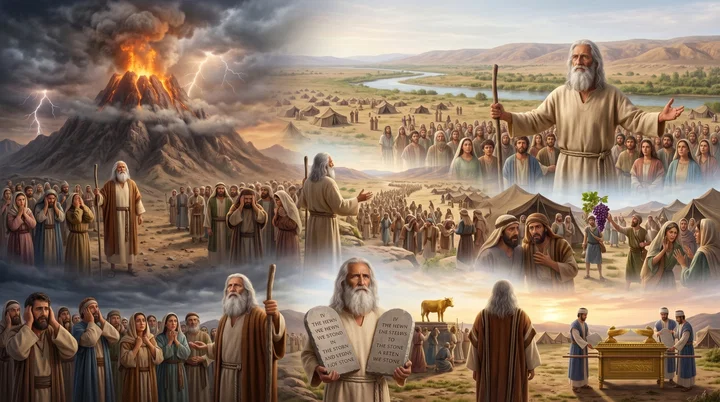
Cross-references 20 of 31
- Exodus 20:18-19
And all the people saw the thunderings, and the lightnings, and the noise of the trumpet, and the mountain smoking: and when the people saw it, they removed, and stood afar off.
Israel fears hearing God’s voice amid the fire and asks Moses to speak for them.
- Exodus 20:1-17
And God spake all these words, saying,
God speaks the commandments at the mount, which Moses later rehearses in Deuteronomy.
- Exodus 19:16-19
And it came to pass on the third day in the morning, that there were thunders and lightnings, and a thick cloud upon the mount, and the voice of the trumpet exceeding loud; so that all the people that was in the camp trembled.
God speaks at Sinai amid fire, thunder, and a trembling people.
- Deuteronomy 5:22
These words the LORD spake unto all your assembly in the mount out of the midst of the fire, of the cloud, and of the thick darkness, with a great voice: and he added no more. And he wrote them in two tables of stone, and delivered them unto me.
God spoke the commandments to the assembly from the fire and added no more.
- Deuteronomy 4:12-13
And the LORD spake unto you out of the midst of the fire: ye heard the voice of the words, but saw no similitude; only ye heard a voice.
God speaks from the fire and declares the covenant commandments.
- Hebrews 12:18-19
For ye are not come unto the mount that might be touched, and that burned with fire, nor unto blackness, and darkness, and tempest,
Recalls the fire and terrifying voice at Sinai that frightened the people.
- Exodus 19:18-19
And mount Sinai was altogether on a smoke, because the LORD descended upon it in fire: and the smoke thereof ascended as the smoke of a furnace, and the whole mount quaked greatly.
God speaks to Israel amid fire at Sinai.
- Deuteronomy 5:5
(I stood between the LORD and you at that time, to shew you the word of the LORD: for ye were afraid by reason of the fire, and went not up into the mount;) saying,
Moses stood between God and Israel as he conveyed God’s words.
- Exodus 20:22
And the LORD said unto Moses, Thus thou shalt say unto the children of Israel, Ye have seen that I have talked with you from heaven.
God tells Israel that he spoke to them from heaven.
- Exodus 34:28
And he was there with the LORD forty days and forty nights; he did neither eat bread, nor drink water. And he wrote upon the tables the words of the covenant, the ten commandments.
The covenant words written on the tablets are identified as the Ten Commandments.
- Exodus 24:12
And the LORD said unto Moses, Come up to me into the mount, and be there: and I will give thee tables of stone, and a law, and commandments which I have written; that thou mayest teach them.
God gives Moses the law on stone tablets to teach the people.
- Galatians 3:19
Wherefore then serveth the law? It was added because of transgressions, till the seed should come to whom the promise was made; and it was ordained by angels in the hand of a mediator.
The Sinai law was ordained through angels by a mediator.
- 2 Corinthians 3:7
But if the ministration of death, written and engraven in stones, was glorious, so that the children of Israel could not stedfastly behold the face of Moses for the glory of his countenance; which glory was to be done away:
The law written on stone was glorious, yet its ministration brought death.
- Exodus 32:15-16
And Moses turned, and went down from the mount, and the two tables of the testimony were in his hand: the tables were written on both their sides; on the one side and on the other were they written.
The tablets are described as God’s workmanship, unlike the powerless calf.
- Exodus 24:3-8
And Moses came and told the people all the words of the LORD, and all the judgments: and all the people answered with one voice, and said, All the words which the LORD hath said will we do.
Deuteronomy 5 recounts same covenant-making
- Deuteronomy 4:36
Out of heaven he made thee to hear his voice, that he might instruct thee: and upon earth he shewed thee his great fire; and thou heardest his words out of the midst of the fire.
God speaks from the midst of the fire.
- Exodus 24:17
And the sight of the glory of the LORD was like devouring fire on the top of the mount in the eyes of the children of Israel.
The Lord’s glory at Sinai appeared as devouring fire.
- Deuteronomy 4:11
And ye came near and stood under the mountain; and the mountain burned with fire unto the midst of heaven, with darkness, clouds, and thick darkness.
same mountain burning with darkness, clouds, thick darkness
- Deuteronomy 5:30-31
Go say to them, Get you into your tents again.
Moses is told to receive God’s further commands and teach them.
- Hebrews 12:25-26
See that ye refuse not him that speaketh. For if they escaped not who refused him that spake on earth, much more shall not we escape, if we turn away from him that speaketh from heaven:
God’s voice at the lawgiving shook the earth.
Commentary
Each commentary is drawn from primary sources: the writings of Ellen G. White and Adventist pioneers and periodicals. Each commentary is separate. Its own words are not a quotation; follow the references to read the source passages.
Ellen G. White
15 sources
After God spoke from the mount out of fire, cloud and thick darkness with a great voice and wrote His words on two tables of stone, the heads of the tribes and elders marveled that any mortal had heard the voice of the living God from the midst of the fire and lived.Ms 12, 1904, par. 20–25Ms 75, 1898, par. 11–1221MR 408.1–2Ms 133, 1899, par. 1–51SP 248.2–249.1 They confessed that He had shown His glory and greatness and proved that He talks with man and man lives, yet they feared the great fire would consume them and that hearing Him again would cause them to die.Ms 12, 1904, par. 20–25Ms 75, 1898, par. 11–1221MR 408.1–2Ms 133, 1899, par. 1–5Ms 151, 1901, par. 29–31 Therefore they asked Moses to go near and hear all God would say and speak it to them, promising to hear and do it.Ms 12, 1904, par. 20–251SP 248.2–249.1Ms 151, 1901, par. 29–31 God heard and commended their words as well spoken, longing that such a heart to fear Him and keep all His commandments always would remain in them for the good of them and their children forever, though their shrinking from hearing Him directly also revealed unbelief.Ms 131, 1907, par. 29–331SP 248.2–249.1Ms 12b, 1896, par. 27–28Ms 141, 1906, par. 34–37ST May 20, 1880 That longing reaches to all who live till the close of time, so the commandments repeated in those chapters are to be studied and obeyed now with sanctified mind, soul and body, treasured above human teachings and taught to children to govern all conduct in preparation for the final judgment.7MR 309.1–3Lt 292, 1908, par. 13ST May 20, 1880Ms 71, 1896, par. 3
Voice From Sinai Fire
The words were spoken by the heads of the tribes and elders to Moses after God spoke in the mount out of fire, cloud and thick darkness with a great voice and wrote the words on two tables of stone.Ms 12, 1904, par. 20–251SP 248.2–249.1 They spoke after hearing the voice out of darkness while the mountain burned with fire, the voice coming out of the midst of the darkness.Ms 12, 1904, par. 20–251SP 248.2–249.1 They confessed that God had shown His glory and greatness and proved that God talks with man and man lives.Ms 12, 1904, par. 20–25Ms 133, 1899, par. 1–51SP 248.2–249.1 They marveled that any flesh had heard the voice of the living God speaking out of the midst of the fire as they had and lived, an extraordinary and overwhelming experience to hear God speak directly and live.Ms 12, 1904, par. 20–25Ms 75, 1898, par. 11–1221MR 408.1–2Ms 133, 1899, par. 1–51SP 248.2–249.1 That survival displayed the extraordinary holiness and power of God's presence, His glory, greatness and power.Ms 133, 1899, par. 1–5SG3 279.2–281.1Ms 12b, 1896, par. 27–28
Though they had lived, they feared that this great fire would consume them and that hearing the voice of God again would cause them to die.Ms 12, 1904, par. 20–251SP 248.2–249.1Ms 151, 1901, par. 29–31 No human being, they felt, could hear the living God speaking from the fire and survive, so they asked Moses to go near and hear all God would say and speak it to them.Ms 12, 1904, par. 20–251SP 248.2–249.1Ms 151, 1901, par. 29–31ST May 20, 1880 They promised to hear it and do it.Ms 12, 1904, par. 20–251SP 248.2–249.1ST May 20, 1880 God heard their words and said they had spoken well, adding His desire that such a heart would remain in them to fear Him and keep all His commandments always, so that it would be well with them and their children forever.1SP 248.2–249.1Ms 12b, 1896, par. 27–28ST May 20, 1880
Their request also showed unbelief, because God wanted them to hear His voice, but hearing thrilled them so they asked not to hear God directly.Ms 131, 1907, par. 29–33Ms 141, 1906, par. 34–37 The same people afterward worshiped a calf made by man instead of giving sincere devotion to the living God.1SP 248.2–249.1 That calf was powerless, made by human hands, in contrast to the glory, greatness and power of the living God they had heard from the fire.SG3 279.2–281.1 The broken tables of stone showed that they had thus broken the covenant they had so recently made with God.1SP 248.2–249.1
God's Law for Today
The verse is part of God's commandment repeated a second time, recalled by Moses to the people before they entered Canaan, recording their extraordinary experience of hearing the living God speak from the midst of the fire and remaining alive.21MR 408.1–2Ms 141, 1906, par. 34–37 It belongs to Deuteronomy 4-8, which shows what God required of His ancient people that they might be a holy people unto Himself.7MR 309.1–3 Their asking not to hear God's words directly, because hearing thrilled them so, shows unbelief.Ms 141, 1906, par. 34–37 The chapter containing the verse is the basis for the Sabbath commandment to keep the seventh day holy, affirming that God's creation week consisted of six days of twenty-four hours followed by rest on the seventh.Lt 31, 1898, par. 22–25
Those chapters are to be studied and read with profit now because the world is nearing God's great final review when all must stand before the Judge of all the earth to answer for their deeds.7MR 309.1–3 The present is the time of investigation when every character will have been investigated and every case decided for eternity.7MR 309.1–3 That instruction is to have special force today, requiring sanctification of mind, soul, and body, perfect obedience to His will, and no excuse for disobedience to His commandments.7MR 309.1–3Lt 292, 1908, par. 13
The words spoken from the mount are godly instructions and precepts of His law to be taught to children, treasured, and allowed to govern all conduct.Ms 71, 1896, par. 3 Obeying the law in home and business life prepares a people to regain Paradise lost through disobedience.Ms 71, 1896, par. 3 God heard Israel's words and said they had spoken well, for He takes no pleasure in punishing the transgressor but must maintain the honor of His throne when His righteous laws are trampled, and He delights to bestow blessing.ST May 20, 1880 His longing for a heart in them to fear Him and keep all His commandments always, so that it might be well with them and their children forever, extends beyond that generation to all who live on earth till the close of time under the mediation of Jesus Christ, so that the prosperity of all depends on obedience to God's requirements.ST May 20, 1880 The steadfast heart will treasure His law more as the masses disregard and despise it, in contrast to human teachings that promote a false sabbath and threaten with punishment those who refuse to honor it.ST May 20, 1880Ms 71, 1896, par. 3
Sources
Pioneers and periodicals
46 sources
Israel heard the living God speak the Ten Commandments aloud directly to the whole congregation from the midst of the fire at Sinai and lived, which mortal flesh recognized as extraordinary to survive.ST Apr 8, 1886ST Oct 26, 1904RH Jul 18, 1854 The speaking was clothed in consuming majesty to show its importance, with thunders and lightnings, thick cloud and darkness, smoke as of a furnace, the quaking mount burning with fire unto heaven, the waxing trumpet exceedingly loud, and the heavenly host in orderly array, for His unveiled presence is a consuming fire to sinful people.ST Apr 4, 1900ST Mar 20, 1901RH Mar 6, 1900 Fearing that to hear His voice again would mean death, the people asked Moses to go near, receive the rest of God's words and relay them, so God wrote what He had spoken with His hand of fire on two tables of stone and gave them to Moses to teach them, with Moses standing between the Lord and the people as mediator of the covenant.ST Apr 8, 1886RH Aug 21, 1855ST Jan 16, 1907RH Mar 25, 1873RH Apr 12, 1860 What Moses rehearses in Deuteronomy 5 at the close of the forty years, just before his death and Israel's entrance into the promised land, is that same law already spoken from heaven and kept in the ark, not a second and different Decalogue, commanding the same creation Sabbath whose institution rests on God's six-day work, rest, blessing and sanctification.ST May 24, 1905ST Mar 11, 1913RH Feb 24, 1916ST Oct 26, 1904 Israel's deliverance from Egypt is an added motive for keeping that already-commanded Sabbath, reminding them of obligation to Jehovah as Redeemer and of humanity toward bond-servants, even as the commandments spoken with a great voice are the covenant Israel broke and which God promises anew by putting the same law in the inward parts and writing it in the heart to be received through Christ by faith unto life.RH May 1, 1879ST Nov 16, 1876RH Jul 24, 1866RH Jul 18, 1854RH Jun 30, 1859
Setting as Repeated Law
Deuteronomy 5:26 belongs to Moses' repetition of the law at the end of the forty years of wandering, spoken just before his death and before Israel passed over into the promised land.ST May 24, 1905ST Mar 11, 1913RH Feb 24, 1916ST Jun 24, 1875 It stands in the middle section of Deuteronomy, chapters 5 to 26, which reviews the law for the new generation, and from which the book takes its name meaning second law or duplicate of the law.ST Mar 11, 1913RH Feb 24, 1916ST Feb 27, 1912 That rehearsal was given about forty years after the Lord spoke the law from Mount Sinai and wrote it on stone, recalling that Israel had heard the living God speak from the fire and lived.ST Aug 22, 1916ST Jun 24, 1875RH May 27, 1852 In this setting Deuteronomy 5 is Moses' later rehearsal of the commandments by word of mouth, not the original utterance of the Decalogue.ST Aug 22, 1916ST Jun 24, 1875RH May 27, 1852
Exodus 20 records the law as God spoke it from heaven, while Deuteronomy 5 adds reasons why that redeemed people were under special obligation to observe it.ST May 24, 1905 The first giving was by the voice of God at Sinai engraved by His finger on the tables of stone, and the difference in wording in the repetition is not a contradiction.ST May 24, 1905RH May 1, 1879 Moses in Deuteronomy 5 was giving an earnest exhortation in his own words, free to remind Israel of obligation to Jehovah as Redeemer from Egyptian bondage and of humanity due to bond-servants, while the people already knew the original ground of honoring the Creator.RH May 1, 1879 It recalls in substance the law Israel already had, which was kept in the sacred ark, and is not a new giving of the Decalogue.ST Mar 1, 1910 The words of Jehovah recorded in Exodus 20 are the real text of the commandments, while the account through Moses in Deuteronomy 5 is a summary.ST Mar 1, 1910ST Mar 6, 1901
The repetition recounts God's dealings with His children and His wonderful deliverances by the way.ST Mar 11, 1913ST Feb 27, 1912 By repeating the law to the children of Israel by word of mouth forty years after God spoke and wrote it, it impresses the law's lasting obligation.ST Aug 22, 1916 Its great moral principles set forth there are applicable to men in the present day.ST Feb 27, 1912 God's law binds all people because He rules the universe, while Israel had an added reason to obey because God had redeemed them from Egypt.ST May 24, 1905ST Mar 1, 1910
Hearing God at Sinai
Israel heard the living God speak the Ten Commandments aloud directly to the whole assembled congregation from the midst of the fire at Sinai and lived.ST Apr 8, 1886ST Oct 26, 1904RH Jul 18, 1854RH Nov 13, 1860RH Oct 29, 1872 What they had heard was Jehovah speaking face to face on the mount out of the fire, the same law afterward repeated in Deuteronomy 5 and not a second and different Decalogue.ST Oct 26, 1904ST Mar 3, 1909RH Oct 29, 1872 They themselves recognized how extraordinary it was for mortal flesh to hear His voice in this way and survive.RH Jul 18, 1854RH Nov 13, 1860ST Mar 3, 1909RH Apr 12, 1860 The words so spoken, including the Sabbath command with its remembrance of deliverance from Egypt, were written by God on two tables of stone as the original copy.RH Oct 29, 1872
The speaking was compassed with consuming majesty that measured its importance.RH Mar 6, 1900 There were thunders and lightnings, a thick cloud, the voice of the trumpet exceeding loud and waxing louder, smoke as of a furnace, the quaking mount, and the mountain burning with fire unto the midst of heaven with darkness, clouds, and thick darkness.RH Mar 6, 1900 All the people trembled and entreated that the word should not be spoken to them any more.RH Mar 6, 1900 Around the glorious Lord and all the people was the heavenly host disposed in orderly array, ten thousand times ten thousand and thousands of thousands, four-faced and four-winged cherubim, six-winged seraphim, and bright angels in glittering golden chariots, making a great living tabernacle from which every evil angel was excluded so that not one word coming from the voice of Jesus would be altered in any mind nor one suggestion of doubt or evil made.RH Mar 6, 1900 In love there went forth from the hand of the Mediator to sinful men His great fiery law of love, the most majestic scene since the creation of the world, and the only law ever given by the hand of the Mediator, the law added because of transgressions.RH Mar 6, 1900
Because His presence is a consuming fire, dangerous to sinful people, He came down veiled in a cloud with His glory appearing like devouring fire.ST Apr 4, 1900ST Mar 20, 1901 Without being remade in His image, people cannot endure that presence or live forever.ST Apr 4, 1900 Having seen His glory and greatness and learned that God talks with man and man lives, Israel yet feared that to hear that voice again would consume them with death.ST May 20, 1880ST Apr 8, 1886ST Jan 16, 1907 The sound and manner of His voice were so terrifying that they could not endure them.RH Aug 21, 1855
They therefore asked Moses to go near, hear all God says, receive the rest of His words, and speak them to the people, promising they would hear and do.ST May 20, 1880ST Apr 8, 1886ST Apr 15, 1886 God stopped speaking aloud to them for this reason, and afterward they received instruction through Moses, whom He called up into the mount to receive tables of stone with law and commandments written by God that Moses might teach them.RH Aug 21, 1855ST Apr 15, 1886 With His hand of fire He wrote in two tables of stone the ten commandments He had spoken with a great voice from the midst of the fire, cloud, and thick darkness, and added no more, and delivered them to Moses.ST Jun 8, 1904RH Mar 6, 1900 Their fear came from their sinful condition and their view of His glory as condemnation, whereas He wanted them to draw near and receive His law.ST Jan 16, 1907
That fear of direct encounter showed the Sinaitic covenant had a mediator, with Moses standing between the Lord and the people.RH Mar 25, 1873RH Apr 12, 1860 That standing between does not refer to the preliminary interview of Exodus 19 to see whether a covenant would be kept if made, but to the covenant-making of Exodus 20:19 and Exodus 24:3-8.RH Mar 25, 1873 It stands in connection with being afraid by reason of the fire.RH Mar 25, 1873
Sabbath Origin and Motive
The law repeated in Deuteronomy 5 is the same Ten Commandments spoken face to face by Jehovah on Sinai out of the midst of the fire, not a second and different Jewish Decalogue commanding a different Sabbath.ST Oct 26, 1904RH Jun 10, 1852 It commands the same creation Sabbath as Exodus 20:8-11, delivered by God's voice in the hearing of all the people.ST Oct 26, 1904 Moses' applying the name Sabbath to the seventh day in recounting the Decalogue supports that the seventh day was already the Lord's Sabbath from creation, with its institution, blessing, and sanctification dating from creation and not from deliverance from Egypt.RH Jun 10, 1852
The chapter does not say the Sabbath was made after Israel left Egypt and does not say it commemorates leaving Egypt, and the Sabbath day remains the day on which Jehovah rested from His work of creation.RH Feb 3, 1852ST Nov 16, 1876RH Sep 2, 1852 It does not tell how or when or for what reason the seventh day was made the Sabbath and sanctified for observance, for the seventh day is not the Lord's rest day because He brought Israel out of Egypt, nor did He bless and sanctify it because He brought Israel out of Egypt.ST Nov 16, 1876ST Mar 6, 1884 Exodus 20 supplies that explanation by linking the Sabbath to God's six-day creation work, rest, blessing, and sanctification, giving the great primary reason that the seventh day has been the rest day of the Lord ever since He rested upon it in Eden and sanctified it as read in Exodus 20:11.RH Sep 2, 1852ST Mar 6, 1884 Appeal to Deuteronomy 5 as telling why the Sabbath was commanded in order to prove it was made for the Hebrews in the wilderness of Sin misses this primary reason for its institution.RH Feb 3, 1852RH Sep 2, 1852
Israel's deliverance from Egypt is an additional motive and consideration for keeping the Sabbath already commanded in Exodus 20, not its origin or reason for institution.RH May 1, 1879ST Nov 16, 1876RH Jul 24, 1866 The creation of the world in six days and rest on the seventh is the reason for instituting the Sabbath, while deliverance from Egyptian bondage is only an added motive to keep the day to sanctify it as the Lord had already commanded.RH May 1, 1879ST Nov 16, 1876 The difference in wording from Exodus 20 is no contradiction, for Moses in Deuteronomy 5 was giving earnest exhortation in his own words forty years after the Sabbath was already known, free to remind Israel of obligation to Jehovah as Redeemer and of humanity due to bond-servants while the people already knew the original ground of honoring the Creator.RH May 1, 1879RH Jul 24, 1866 Distinct motives are not inconsistent, just as the duties to do justice and live righteously commanded for the same reason did not originate in the Exodus.RH May 1, 1879ST Nov 16, 1876 The words so spoken, including the Sabbath command to remember deliverance from Egypt, were written by God on two tables of stone as the original copy of the Ten Commandments first given by His voice at Sinai and engraved by His finger.RH May 1, 1879RH Oct 29, 1872
The chapter belongs to Moses' later rehearsal of the law about forty years after its original promulgation by God's voice at Sinai, and it has been cited in discussion whether the Sabbath was intended only as a memorial of deliverance from Egypt.RH Mar 31, 1859RH Sep 2, 1852 It has been appealed to to assign its ten commandments to the Jewish dispensation distinct from patriarchal commandments and New Testament Christian law, with the claim that all ten except the fourth are brought into the New Testament set beside the counter that the second no more than the fourth is found there, leaving the perpetuity of the whole law including the Sabbath commandment at stake.RH Mar 31, 1859RH Sep 2, 1852RH Jul 24, 1866
Covenant Law and Faith
The Ten Commandments spoken aloud to Israel with a great voice from the fire were the covenant declared by God with His own voice, to which He added nothing.RH Jul 18, 1854RH Jun 30, 1859 To obey His voice and keep His covenant meant keeping those Ten Commandments, which stood as the basis or conditions Israel was to fulfill on its part in a mutual agreement by which God would make them a peculiar people if they would obey.RH Jul 18, 1854RH Jun 30, 1859 Because the commandments are that basis they are sometimes put for the covenant itself or called the covenant commanded, committed as oracles to Israel as the church under that dispensation.ST Jan 22, 1880RH Jun 30, 1859RH Dec 30, 1873 The ten precepts are held not with the old obligation to do and live nor with the Levitical priesthood, but as the law of Christ established by Himself and His apostles.ST Jan 22, 1880
That covenant was made with Israel but not with the fathers, and Israel broke it by not keeping the commandments.RH Jun 30, 1859 God then promised a new covenant in which the same law, His law, is put in the inward parts and written in the hearts of believers rather than blotted out and abolished.RH Jun 30, 1859 Those who held the abolition view taught that the old covenant that was abolished is the Ten Commandments together with their amplification in the three following chapters.RH Mar 25, 1873 Moses standing between the Lord and the people refers to the covenant-making of Exodus 20:19 and Exodus 24:3-8, not the preliminary interview of Exodus 19, because the standing between is connected with being afraid by reason of the fire.RH Mar 25, 1873
The law came from God as a message of life to be received through Christ, bringing grace and truth and righteousness and life, as with Moses and Caleb and Joshua.ST Jan 11, 1905ST Oct 28, 1897 Moses received the law from God by faith in the living Redeemer, while the people feared they would die if God continued speaking directly to them from the fire and asked Moses to hear God's words for them.ST Jan 16, 1907ST Jan 11, 1905ST Oct 28, 1897 Their refusal to hear Him directly came from unbelief and sinful condition and love of sin, so that they saw His glory only as condemnation and death.ST Jan 16, 1907ST Oct 28, 1897ST Aug 23, 1910ST They therefore received the law as cold lifeless precept that condemned them and could be kept only outwardly.ST Jan 11, 1905 God had given the law because He loved them and wanted to do them good, wanting them to draw near and receive it in their hearts and see the greater justifying glory.ST Jan 16, 1907ST Aug 23, 1910
The voice that spoke from Sinai is the voice of Jesus, which everyone that is of the truth hears, and that moral law remains binding till heaven and earth pass, so that hearing His voice means keeping the commandments given there.ST Mar 6, 1884 The recorded law is the enduring test of every religious voice, and its moral witness reflects God's holy eternal character and cannot be changed.ST Jun 8, 1904ST The voice that gave the law expressed God's holy eternal law, whose glory and power were fitting, and the law supplied the covenant's conditions.ST The living God who spoke from the fire and let the people live remains the same through the ages, with the same sovereign power and saving love toward those who love and serve Him.ST Jul 18, 1900
God approved the people's words asking for mediation as well said.ST May 20, 1880 That approval reveals that He takes no pleasure in punishing the transgressor but must maintain the honor of His throne when His righteous laws are trampled, and that He delights to bestow blessing.ST May 20, 1880 He longed for a heart in them to fear Him and keep all His commandments always, so that it might be well with them and their children forever.ST May 20, 1880
Obedience and Present Application
God's longing for a heart to fear Him and keep all His commandments always, that it might be well with them and their children forever, extends beyond that generation to all who live on earth till the close of time under the mediation of Jesus Christ, so that the prosperity of all depends on obedience to His requirements.ST May 20, 1880 The steadfast heart will treasure His law more as the masses disregard and despise it.ST May 20, 1880 He takes no pleasure in punishing the transgressor but must maintain the honor of His throne when His righteous laws are trampled, and He delights to bestow blessing.ST May 20, 1880
Keeping the commandments given there marks the true organized church amid the Babylon of divided and confused churches, for the moral law spoken from Sinai is the voice which everyone that is of the truth hears and remains binding till heaven and earth pass.ST Mar 6, 1884 Churches that have perverted or ignored that law and His ordinances do not hear His voice.ST Mar 6, 1884 The stock of Israel was the church under that dispensation, the people with whom God made covenant and to whom He committed His oracles, yet even then it was the duty of the world to be proselyted and joined to the church as much as it is now the duty to believe and be baptized.ST Jan 22, 1880RH Dec 30, 1873 The ten precepts are not pleaded as they stood with the old obligation to do and live, nor with the Levitical priesthood, but as they are the law of Christ, established by Himself and His apostles, while those who held the narrower view taught they were given only to the Jews and the Gentiles have nothing to do with them.ST Jan 22, 1880RH Dec 30, 1873
Hearing Moses proclaiming the Decalogue aloud with his actual voice would confront the present irreverent, blasé and lawless age and test whether it will accept God's law and be moved to holy thought.ST Sep 9, 1930 The fact that God is living and powerful encourages trust in Him through trials and afflictions, for He remains the same through the ages with the same sovereign power and saving love toward those who love and serve Him and can still do for them what He did in the past.ST Jul 18, 1900 The law commanded in Horeb for all Israel with its statutes and judgments is to be remembered before the coming of the great and dreadful day of the Lord, when Elijah turns the heart of the fathers to the children and the heart of the children to their fathers.RH Jun 23, 1853 That remembering brings the second recovery of the remnant, the contending for and saving of children, all children taught of the Lord with great peace, seeing and rejoicing in the Lord, gathered and redeemed to live with their parents as God's people.RH Jun 23, 1853
The verse stands in Moses' reminder that God gave Israel the Ten Commandments at Horeb with a charge to observe them.RH Aug 15, 1854 It belongs to the repetition of the law rehearsed and emphasized by Moses just before his death as Israel was about to enter the promised land, and gives practical religious instruction.
Sources