Ecclesiastes 9:6
Also their love, and their hatred, and their envy, is now perished; neither have they any more a portion for ever in any thing that is done under the sun.
Translations
American King James Version, King James Version, KJV Cambridge Paragraph Bible
Also their love, and their hatred, and their envy, is now perished; neither have they any more a portion for ever in any thing that is done under the sun.
Also their love, and their hatred, and their envy, hath now perished; neither have they any more a portion for ever in any thing that is done under the sun.
As well their love, as their hatred and their envy, is now perished; neither have they any more a portion for ever in any thing that is done under the sun.
As well their love, as their hatred and their envy, is perished long ago; neither have they any more a portion for ever in anything that is done under the sun.
Their love also, their hatred also, their envy also, hath already perished, and they have no more a portion to the age in all that hath been done under the sun.
Their love also, and their hatred, and their envy is already perished; neither have they any more for ever a portion in all that is done under the sun.
Both their love and their hatred and their envy, already had perished,—and, portion, had they none any longer, unto times age-abiding, in aught that was done under the sun.
Berean Standard Bible, Majority Standard Bible
Their love, their hate, and their envy have already vanished, and they will never again have a share in all that is done under the sun.
Also their love, their hatred, and their envy has perished long ago; neither do they any longer have a portion forever in anything that is done under the sun.
Their love and their hate and their envy are now ended; and they have no longer a part for ever in anything which is done under the sun.
Also their loue, and their hatred, and their enuie is now perished, and they haue no more portion for euer, in all that is done vnder the sunne.
Douay-Rheims (Challoner revision)
Their love also, and their hatred, and their envy are all perished, neither have they any part in this world, and in the work that is done under the sun.
Pictures
Cross-references 20 of 40
- Psalms 146:4
His breath goeth forth, he returneth to his earth; in that very day his thoughts perish.
Both say that a person’s thoughts perish at death.
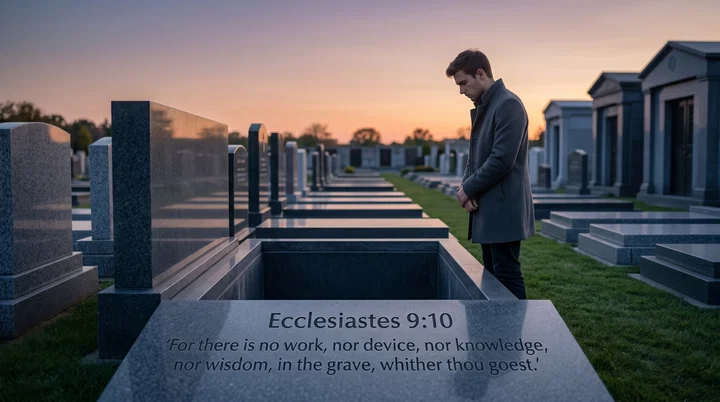
- Ecclesiastes 9:10
Whatsoever thy hand findeth to do, do it with thy might; for there is no work, nor device, nor knowledge, nor wisdom, in the grave, whither thou goest.
Both describe the dead as having no work or knowledge.
- Psalms 115:17
The dead praise not the LORD, neither any that go down into silence.
The dead go down into silence and do not praise the Lord.
- Job 14:21
His sons come to honour, and he knoweth it not; and they are brought low, but he perceiveth it not of them.
The dead are unaware of their children’s success or adversity.
- Psalms 6:5
For in death there is no remembrance of thee: in the grave who shall give thee thanks?
Both describe death as a state without remembrance or thanksgiving.
- Job 14:12
So man lieth down, and riseth not: till the heavens be no more, they shall not awake, nor be raised out of their sleep.
Says the dead do not awake until the heavens are no more.
- Isaiah 38:18-19
For the grave cannot praise thee, death can not celebrate thee: they that go down into the pit cannot hope for thy truth.
The dead cannot praise God; the living praise him and proclaim his truth.
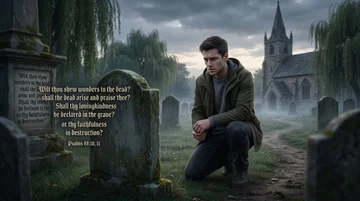
- Psalms 88:10-12
Wilt thou shew wonders to the dead? shall the dead arise and praise thee? Selah.
Both describe the dead as lacking awareness, activity, and praise.
- Ecclesiastes 3:19-20
For that which befalleth the sons of men befalleth beasts; even one thing befalleth them: as the one dieth, so dieth the other; yea, they have all one breath; so that a man hath no preeminence above a beast: for all is vanity.
Humans and animals share death and return to dust.
- John 5:28-29
Marvel not at this: for the hour is coming, in the which all that are in the graves shall hear his voice,
The dead remain in the grave until Christ calls them forth at the resurrection.
- Genesis 3:19
In the sweat of thy face shalt thou eat bread, till thou return unto the ground; for out of it wast thou taken: for dust thou art, and unto dust shalt thou return.
Both describe the dead returning to the dust.
- Job 17:13-16
If I wait, the grave is mine house: I have made my bed in the darkness.
Both describe the dead as resting in darkness and dust, without hope.
- 1 Samuel 28:7-20
Then said Saul unto his servants, Seek me a woman that hath a familiar spirit, that I may go to her, and enquire of her. And his servants said to him, Behold, there is a woman that hath a familiar spirit at Endor.
Saul’s apparent encounter with Samuel is described as deception, not contact with the dead.
- Job 14:10
But man dieth, and wasteth away: yea, man giveth up the ghost, and where is he?
It describes the dead as no longer living.
- Acts 13:36
For David, after he had served his own generation by the will of God, fell on sleep, and was laid unto his fathers, and saw corruption:
David fell asleep in death and saw corruption.
- Job 3:17-19
There the wicked cease from troubling; and there the weary be at rest.
The dead are at rest, free from trouble and oppression.
- Job 7:10
He shall return no more to his house, neither shall his place know him any more.
Both describe the dead as no longer returning to their earthly homes or places.
- John 11:14
Then said Jesus unto them plainly, Lazarus is dead.
Jesus describes death as sleep, illustrating the dead’s condition.
- 1 Corinthians 15:18
Then they also which are fallen asleep in Christ are perished.
Without resurrection, the dead are perished.
- Psalms 31:17
Let me not be ashamed, O LORD; for I have called upon thee: let the wicked be ashamed, and let them be silent in the grave.
Describes the dead as silent in the grave.
Commentary
Each commentary is drawn from primary sources: the writings of Ellen G. White and Adventist pioneers and periodicals. Each commentary is separate. Its own words are not a quotation; follow the references to read the source passages.
Ellen G. White
30 sources
Death ends conscious life, so love and hatred and envy are gone with all thought and feeling, leaving no pain and no joy and no awareness at all.ST Nov 13, 1884ST Jan 18, 19051T 298.1–2 The dead have no further share forever in what goes on under the sun, taking no part in earthly affairs and knowing nothing of the joys and sorrows of those they loved.GC88 545.2–547.14SP 364.3–365.2SG4 243.1PP 685.3 They rest asleep and unconscious in the grave until awakened at the resurrection, rather than receiving reward or punishment at death.4SP 364.3–365.24SP 369.1ST Apr 16, 1885 They do not come back to speak or act among the living or to report what lies beyond death, and Lazarus when raised had no experience of death to tell.ST Nov 13, 1884ST Jan 18, 19051T 298.1–2Ms 47, 1897, par. 9–10 Appearances of departed loved ones speaking and acting among the living are a soul-destroying deception by Satan and evil angels impersonating the dead, and all seeking of such communication is forbidden.1T 298.1–2SG4 243.1RH Sep 7, 1911SG4 244.1
Death Ends Conscious Life
In death love and hatred and envy have perished, with thoughts and affections gone and no continued feeling or awareness remaining.ST Nov 13, 1884ST Jan 18, 19051T 298.1–2ST Aug 26, 1889GC 545.2–546.1 There is no pain and no joy, no experience of former loves or hates or envies, for all such knowledge ceases at death.ST Nov 13, 1884ST Jan 18, 19051T 298.1–2ST Aug 26, 188920MR 147.3–5 The dead do not know what is happening, cannot give information or perform wonders for friends on earth, and have no account of time spent dead to give.ST Nov 13, 1884ST Jan 18, 19051T 298.1–220MR 147.3–5SLP 138.3–139.2
Neither have they any more a portion forever in anything done under the sun, taking no further part or share in earthly life and affairs.SG4 243.1PP 685.3SLP 138.3–139.2SG4 244.1 They do not continue to act in the affairs of the living, watch events, or become spirits who communicate, and in the grave a person cannot choose good or evil but the character formed during life remains unchanged.SG4 243.1PP 685.3COL 269.3SG4 244.1
The dead know nothing and are wholly unconscious and silent, cut off from life on earth and unaware of earthly events.GC88 545.2–547.14SP 364.3–365.2RH Sep 11, 1916ST Dec 8, 1909GC 556.1–2 They do not observe the lives of the living, know nothing of the joys or sorrows of those dearest to them and those they loved on earth, and have no sense of passing time but think of nothing.GC88 545.2–547.1RH Sep 11, 1916ST Dec 8, 1909GC 556.1–2GC88 549.3–550.1 They are asleep, not praising God in heaven, resting without awareness after death.GC88 545.2–547.14SP 364.3–365.2GC88 549.3–550.1
Dead Cannot Return
The dead have no share forever in anything done under the sun, for their love and hatred and envy have perished, and they neither know what is happening on earth nor hold communion with the living.ST Nov 13, 1884ST Jan 18, 19051T 298.1–2 They do not watch events among the living, give information to friends on earth, perform wonders for them, return to speak or act among the living, or report scenes after death.ST Nov 13, 18841T 298.1–2DA 557.3–558.1 Lazarus had no experience of the time he was dead to tell and nothing of that kind to report, though after being raised he could testify to Christ's power.DA 557.3–558.1Ms 47, 1897, par. 9–10
Claims that departed loved ones return, speak, act among the living, or speak through mediums are a soul-destroying deception, for they are not the dead at all.ST Nov 13, 1884ST Jan 18, 19051T 298.1–2SG4 243.1 They are Satan and evil angels presenting themselves under the guise of departed friends, working through evil spirits and deceptive spirits to gain control of minds.1T 298.1–2RH Sep 7, 1911ST Feb 18, 1886AA 289.2–290.2 Since thoughts and affections have perished and the dead are unconscious with no thoughts, love, or hatred, they do not communicate with the living.RH Sep 7, 1911ST Feb 18, 1886AA 289.2–290.2
This exposure condemns Spiritualism, whose claims that the dead know what happens on earth and communicate with the living are contrary to the verse.SG4 244.1RH Sep 11, 1916 The system of magic and sorcery, with its rules for communication with evil spirits and for worshiping Satan and soliciting his help, is the same satanic delusion operating in modern Spiritualism. Its foundation is at war with Scripture, pretended communication with the dead is impossible and deceptive, its visitants are spirits of devils, and all seeking of them is expressly forbidden by God.RH Sep 11, 1916
Sleep Until Resurrection
The dead rest unconscious in the grave, asleep and thinking of nothing with no sense of passing time, until they are awakened at the resurrection.4SP 364.3–365.24SP 369.1ST Apr 16, 1885GC 549.3GC88 549.3–550.1 They do not receive reward or punishment immediately at death, nor do they praise God in heaven or observe and take part in earthly life, for their love and hatred and envy have perished and they have no more share forever in anything done under the sun.4SP 364.3–365.24SP 369.1ST Apr 16, 1885GC 549.3GC88 549.3–550.1 Their hope of life again depends wholly on the resurrection, when the righteous awake and receive immortality.4SP 369.1ST Apr 16, 1885ST Apr 16, 1885 Lazarus had no experience or message from the time he was dead, for the dead know nothing and have no further part in what is done under the sun, but after being raised he could testify to Christ's power.Ms 47, 1897, par. 9–10 In the grave a person cannot choose good or evil, for thoughts perish and the character formed during life remains unchanged.COL 269.3 Death is an unconscious sleep without pain or joy, not continued life in misery or conscious torment.EW 182.2SG1 116.1 Although the dead have no further part in affairs carried on under the sun, their influence is not erased, for the example they set and the words they spoke can endure through time and eternity, and human recognition during life does not determine lasting value, which God measures.Lt 39, 1887, par. 22 Their lack of love and hatred and envy and of any share in earthly things contradicts the claim that the dead remain aware and communicate with the living or observe earthly life.ST Aug 26, 1889ST May 27, 1913
Sources
Pioneers and periodicals
125 sources
Death ends conscious thought and feeling, for love and hatred and envy perish because the mind itself ceases to act in the silence of an unconscious sleep.ST Feb 6, 1907ST Jul 8, 1930RH Aug 7, 1855ST May 2, 1878ST Feb 28, 1911
To have no more portion forever in anything done under the sun means to have no further share in mortal earthly life, not to be denied a future resurrection and reward.ST May 9, 1906RH Apr 11, 1854STST Jan 28, 1889
The dead therefore know nothing of the living, and cannot return, appear, speak, or in any way help, warn, or torment them, while seeming voices and likenesses come from deceiving fallen angels personating them.ST Nov 13, 1884ST May 9, 1906ST Feb 3, 1909ST Jul 30, 1912ST May 2, 1916
No reward, heaven, hell, or conscious bliss comes at death, but rest continues quietly until immortality is bestowed as a gift at the resurrection when Christ comes.RH Aug 7, 1855ST Feb 24, 1881ST Dec 19, 1916RH Feb 9, 1864ST Oct 23, 1893
Probation closes at death with no further choice or pardon, so prayers and offerings for the dead cannot help them, and holding this plain testimony guards against Spiritualism and saint-worship.RH Jan 14, 1915RH Feb 9, 1864ST Feb 20, 1901RH Nov 9, 1911
Words and Immediate Sense
Also their love and their hatred and their envy have perished at death because love, hatred and envy are faculties and attributes of the mind, and their passing shows that mind, thought, reason, personality and conscious feeling do not remain active after death.RH Aug 7, 1855ST May 2, 1878ST Feb 28, 1911ST Apr 14, 1909 Conscious people think, act and experience these feelings as living people do, so their end proves the dead are truly dead and unconscious, with no consciousness surviving the dissolution of the body and no separate thinking part living on apart from the body.ST May 2, 1878ST Feb 28, 1911ST Apr 14, 1909 This rules out the idea that the dead enter heaven still loving or enter a place of punishment actively hating and envying, and it also rules out claims that the dead act as guardian or ministering spirits communicating through rapping, writing, speaking or singing.RH Aug 7, 1855 As the testimony of God as Creator who made man and knows his frame, the declaration that the dead know nothing finally settles that man does not live on after death.ST Feb 28, 1911
Having no more a portion for ever in anything done under the sun means having no further share in earthly, mortal life under the sun and in earthly affairs and the present mortal state.RH Apr 11, 1854STST Jan 28, 1889RH May 30, 1871RH Apr 11, 1854 This limits the statement that they have no more reward to this life and describes their absence from mortal life, that they do not return to former homes and places or take notice of events among the living.RH Apr 11, 1854STRH Apr 11, 1854 It does not deny all future existence, a later raising and rewarding according to works, or a portion in God's future kingdom, since the dead will be rewarded at the resurrection.RH Apr 11, 1854STRH May 30, 1871 Left to themselves they would never live again, but they live in God's purpose and promise whose pledge of their future existence is as certain as if they were already alive.ST Jan 28, 1889 The condition stated is a fact about the person as a whole, not merely about the body while an intelligent part remains consciously active.RH May 30, 1871
The loss of knowledge and activity applies to the whole, real, responsible person who knew and felt while living, not to the body alone while a separate conscious part lives on.RH Sep 22, 1859RH Sep 8, 1859ST Dec 19, 1900ST Jun 6, 1906ST Jun 1, 1915 Love and hatred and envy and memory belong only to the conscious living person, not to the body alone, and they require union of body and spirit, so their perishing proves that the spirit separated from the body cannot exercise them.ST Dec 19, 1900ST Jun 6, 1906ST Jun 1, 1915 The breath that returns to God is therefore not a conscious part of the person, and the return of the spirit to God cannot be used to teach that man is naturally immortal.ST Jun 6, 1906 In context the verse describes the dead as unconscious and does not support the existence of a separate entity that continues to live independently of the body, and it applies alike to righteous and wicked.RH Sep 8, 1859ST Jul 8, 1930
The passage sets the living, who still have hope, awareness, acquaintance, and mental and emotional activity, against the dead, who have none, so that as a living dog is better than a dead lion the living know that they shall die but the dead know not anything.RH Feb 16, 1864RH Aug 7, 1855RH Aug 11, 1903 The knowing the dead lack means awareness and acquaintance, just as the living are aware that they will die, and it is the same thing that knows while a person is living that knows nothing after death.RH Feb 16, 1864 In death there is no active awareness or participation, no intelligence, knowledge, wisdom, work or planning in the grave, but complete inactivity contrasted with the living person's mental and emotional activity.RH Aug 7, 1855 This explains why the dead are contrasted with living people who can still hold grudges, and it shows death is not merely the body's inactivity while an intelligent part remains consciously active elsewhere.RH Aug 11, 1903
Unconscious Sleep in Death
Between death and the resurrection the dead lie in unconscious sleep, in silence and complete inactivity with no physical, mental, nor moral process possible.ST Feb 6, 1907ST May 2, 1878ST Dec 9, 1913 Their love and their hatred and their envy have perished, they know nothing, they have no further reward, their memory is forgotten, and they have no more portion forever in anything done under the sun.ST Feb 6, 1907ST Jul 8, 1930ST May 2, 1878ST Jul 24, 1907 They cannot love, hate, do anything whatever, think, or share as conscious participants in earthly life, because their thoughts have perished.ST Feb 6, 1907ST Jul 8, 1930ST May 17, 1905ST Jul 24, 1907 The living dog is better than the dead lion because the living still know, hope, and act while the dead enjoy no pleasures and take no part in the world of the living.ST Jul 8, 1930ST May 2, 1878ST May 17, 1905ST Jul 24, 1907
In the grave and in sheol and hades where all go there is no work, nor device, nor knowledge, nor wisdom, nor thought, nor memory.RH Aug 27, 1872ST Jul 29, 1875RH Mar 28, 1865RH Nov 21, 1871ST Jun 23, 1881 The dead are silent in the dust without power of mind, without knowledge, wisdom, or activity, manifesting no love, hatred, envy, or any emotion dependent on consciousness.RH Aug 27, 1872ST Jul 29, 1875RH Nov 21, 1871ST Oct 27, 1881 The spirit in man is the life principle that produces thought, reason, will, affection, and worship while in the body, not a separate conscious entity that keeps those powers after death, so when the body returns to earth those mental, emotional, and moral powers perish.RH Aug 27, 1872ST Jul 29, 1875ST Oct 27, 1881 Because no reward can reach the unconscious grave, resurrection and judgment according to works afterward are necessary for reward to be entered.RH Nov 21, 1871ST Oct 27, 1881ST Jun 23, 1881
Death is the opposite of life, not a fuller life in another sphere, but extinction of life and cessation of being in which the whole man dies.ST Sep 16, 1930ST Dec 9, 1913ST Aug 18, 1887 It passed upon all men through sin and disobedience as the result of yielding up life and ceasing to live, continuing between death and the resurrection at the last day with no conscious existence in the interval.ST Dec 9, 1913ST Aug 18, 1887 It is a complete blank, darkness, and forgetfulness with no remembrance, a blank unconscious sleep with no work nor device and no knowledge nor wisdom, where the brain as the organ of thought loses vitality just as vision ceases without the eye.ST Dec 9, 1913ST Jun 1, 1904ST Aug 18, 1887 This is the real death threatened as the extreme penalty of the law for sin, minutely described in Scripture with all feeling and attachment ended and no further share in this life, which proves death truly exists, refutes the claim that there is no death, and is promised to be destroyed.ST Jun 1, 1904ST Aug 18, 1887RH Aug 22, 1871
No Share in Earthly Life
The dead have no further share forever in anything done under the sun, for their love and their hatred and their envy have perished and their feelings and involvement in earthly affairs have ceased.ST May 9, 1906ST Feb 21, 1906RH Feb 24, 1859ST Jan 20, 1887 They do not know or perceive or take notice of what happens among the living, including praise spoken about them and matters that would most concern them.ST May 9, 1906ST Feb 21, 1906 They have no awareness of what is happening to their living friends, and they do not know the fortunes and joys and sorrows of those dearest to them.ST May 9, 1906ST Feb 21, 1906ST Jul 23, 1874 Because they cannot love or hate the living, they cannot talk to the living and tell things that cannot otherwise be learned, and they cannot appear in bodies and show themselves.ST May 9, 1906ST Jul 23, 1874ST Jan 20, 1887 Their lack of knowledge of earthly affairs means they cannot return to converse with or observe the living, and they cannot communicate with them.ST Feb 21, 1906ST Jul 23, 1874ST Jan 20, 1887
They do not watch over or sympathize with or rejoice over their living friends, nor do they grieve over or supervise or direct affairs among the living.ST Jul 23, 1874ST Mar 21, 1906RH Jan 14, 1873ST Mar 11, 1903 No departed mother grieves over wayward children, for at death mind and intelligence end with all thought gone, and the dead know nothing and feel nothing and suffer nothing.ST Jul 23, 1874ST Mar 21, 1906RH Jan 14, 1873 They do not return to former homes and places, they do not hear words spoken to them, they do not see tears of mourners, and a dead person has no love within and cannot see his sons.RH Jan 14, 1873ST Apr 2, 1912RH Aug 20, 1914 They do not breathe or speak or see light and sky, but rest without awareness of the living while the life principle has left the body and returned to God.ST Mar 21, 1906RH Jan 14, 1873RH Aug 20, 1914 The grave is a place of silence and rest and not a vantage point from which the dead watch their families or former lives, and the unconscious dead wait there until God awakens them in the resurrection to His likeness when the Lifegiver calls them.ST Mar 21, 1906RH Jan 14, 1873ST Apr 2, 1912
With knowledge and love and hatred and envy perished and consigned to the grave, the dead retain no faculties of love or hatred and have no conscious involvement in earthly affairs.RH Feb 9, 1864ST Jan 24, 1884ST Apr 11, 1900 With no knowledge the dead in heaven could not love God, and with no power to hate the dead in hell could not hate Him, and departed saints are not now celebrating the praises of the Lord.ST Apr 16, 1885RH Feb 9, 1864ST Jan 24, 1884RH Oct 4, 1864 They do not visit the living or praise God, and they do not continue loving and caring for the living.ST Apr 16, 1885ST Jan 24, 1884ST Aug 6, 1894 They do not act as agents who hear prayers or intercede or guide the living, and they do not praise the Lord until the final resurrection.ST Apr 16, 1885RH Oct 4, 1864ST Aug 6, 1894 They are unconcerned with what happens on earth or in heaven, resting free from trouble and oppression and care in a state of forgetfulness and sleep until they are raised, while mourners are gradually forgotten and return to joy and the hope of life again depends on the resurrection.ST Apr 16, 1885ST Jan 24, 1884ST Apr 11, 1900
No Return or Communication
The dead cannot return to the living, appear in bodies and show themselves, speak or write or sing or make music, move objects, rap or tip tables, torment or comfort, warn or counsel, observe or help, or in any way communicate or take further part in earthly life, for their love and hatred and envy have perished with them and they remain in the grave until the resurrection.ST May 9, 1906ST Jul 30, 1912ST May 2, 1916ST Aug 5, 1913RH Aug 28, 1853 They no longer know or love or hate or envy, and belief that they can come back is superstition that leaves people open to deceptive appearances.ST May 2, 1916ST Aug 5, 1913ST Nov 14, 1892 Since spirits claiming to be the dead are said to act in earthly affairs by writing and making music and moving objects, their claim to be spirits of the dead is false.RH Aug 28, 1853 Apparent messages from the dead are not reliable evidence that the deceased person is present.ST Nov 14, 1892
Voices and pictures, handwriting, dreams calling the living to follow, and recognitions even of well-known men on a phonograph do not come from the dead.ST Nov 13, 1884ST Jan 18, 1905ST Feb 3, 1909 A voice reproduced on a phonograph sounding exactly like Abraham Lincoln or U.S. Grant or Grover Cleveland and recognized by those who knew them in life still cannot come through a Spiritualist medium from departed friends, because God's true instruction is that the dead are unconscious, without feeling and without further share in anything on earth.ST Feb 3, 1909 Claims that the dead give information or perform wonders for friends on earth are soul-destroying deception, for the dead do not know what is happening and do not communicate with the living.ST Nov 13, 1884ST Jan 18, 1905ST Aug 26, 1889 Right understanding of this truth is the only safeguard against modern Spiritualism, proving that miraculous messages from unseen intelligences in the latter times are not spirits of the dead but spirits of devils working miracles and seducing spirits with doctrines of devils to gather the kings of the earth and the whole world to the battle of the great day of God Almighty.RH Feb 9, 1864 Cunning fallen angels with perverted voice and intelligence and wisdom mimic tones and handwriting and personate the dead, Satan can unlock forgotten memories, and demons draw faith away toward Satan.ST Nov 13, 1884RH Feb 9, 1864
Samuel, being dead and buried at Ramah, could not have come from his tomb to speak with Saul at Endor unless he had been raised from the dead.ST Dec 11, 1884ST Dec 11, 1884ST May 24, 1905ST May 7, 1902 The figure the witch claimed to see was not Samuel, and the woman's claim to raise him depends on this teaching being false.ST May 24, 1905ST Jul 13, 1904 Their feelings and involvement in earthly events having ceased, Samuel therefore could not have returned from death to converse with Saul.ST Dec 11, 1884ST Dec 11, 1884ST Jul 13, 1904 Moses likewise, though dead, could not have appeared on the mount of transfiguration unless he had first been raised from the dead, which rules out using his appearance or his converse about the coming death to prove that dead persons take part in earthly events.ST Apr 9, 1902
The talking together in the parable of the rich man and Lazarus cannot be used to infer that the dead in hades, which is sheol, are conscious, because that inference conflicts with the plain statement that they are in utter unconsciousness and silence, devoid of memory or sense of any kind, with love and hatred and envy perished and no more portion forever in anything done under the sun.ST Oct 1, 1894ST Oct 22, 1912ST Aug 25, 1881 Such speech is figurative representation like blood and money and stones and trees represented as speaking, given to teach the worthlessness of sinful earthly honors and pleasures when tested in God's judgment and the future reward of Christ's despised members, not to prove the dead are not dead.ST Oct 1, 1894ST Aug 25, 1881ST Mar 30, 1882 The dead cannot literally converse or act among the living immediately after death, are not conscious of earthly events or suffering after death, and are not consciously enduring torment, for they feel no resentment or vengeance or suffering or torment.ST Oct 1, 1894ST Oct 22, 1912ST Mar 30, 1882ST Jan 26, 1915 The dead martyrs therefore do not literally cry out from beneath the altar, but are represented symbolically while justice calls to God on their behalf.ST Feb 21, 1911
The dead cannot stay near the living or pass into an animal to be near them, which exposes belief in transmigration of souls from person to animal as Satan's deception to degrade God and leaves hope of life through Jesus and the resurrection as the true hope.ST Jul 22, 1897 The verse also rules out reappearance of a dead child by marks in another birth, messages about life on Mars from the dead, and claims that the dead continue living in a spirit world with greater knowledge or hover and pass on greater knowledge, for they know nothing and cannot observe or report on the living.RH Aug 7, 1855ST Jul 8, 1886RH Aug 7, 1855 The dead cannot act as guardian or ministering spirits through rapping, writing, speaking, or singing, whether still loving in heaven or actively hating and envying in punishment, since love, hatred, and envy perish at death as faculties of the mind and show the mind does not remain conscious after death.RH Aug 7, 1855RH Aug 7, 1855 Departed friends cannot return as spirits, and angels therefore are not spirits of the dead but a distinct order of beings higher than man in creation who continue to act among the living.ST Aug 19, 1897
Resurrection and Coming Reward
Neither reward nor exaltation nor promotion nor heaven nor hell nor conscious torment nor conscious bliss nor any intermediate state arrives at death, for the perishing of love and hatred and envy leaves the dead without active awareness or participation, unlike the living who still have hope.RH Aug 7, 1855ST Feb 24, 1881ST Dec 19, 1916RH Apr 14, 1874RH Dec 10, 1908 The dead rest quietly until the Life-giver comes, with physical death interrupting consciousness and life beyond the tomb coming only through resurrection.ST Dec 19, 1916RH Dec 10, 1908ST Aug 13, 1902 Reward and immortality and the crown come only at the resurrection at Christ's coming, when the same person is brought back from the dust.RH Aug 7, 1855ST Aug 13, 1902 That the mind stops working as well as the body stops living and acting stands alongside hope in resurrection from death, in agreement with the teaching that thoughts perish in the day of death.ST Feb 24, 1881RH Apr 14, 1874
Death claims good and evil alike, so even those forgiven and cleansed and saved from sins still die, and forgiveness and godly living in this present life do not keep a person from dying.ST Therefore a resurrection is necessary to complete redemption and give eternal salvation to the forgiven.ST Jan 6, 1904ST Without a resurrection even those fallen asleep in Christ are perished, for left to themselves the dead would never live again.ST Jan 28, 1889ST Oct 23, 1893 They live only in God's purpose and promise as certain as if already alive, awaiting His call and trumpet to awake to live again and know one another, with the next awareness after breath returns to God being the resurrection to receive the outcome fitting the character formed in life.ST Jan 6, 1904ST Jan 28, 1889RH Jan 5, 1911 This rest is an unconscious sleep in which they do not watch the living or experience their troubles, do not know what happens to their children, and take no part in earthly life, while hope for life beyond the grave rests in Christ and the resurrection rather than communication with departed spirits.RH Jan 5, 1911RH Jul 24, 1913ST Jul 9, 1912
The life record is closed at death, with no physical nor mental nor moral processes possible, and the dead are reserved unconscious in the grave until the day of final settlement when the records will be examined and sentence rendered according to works.ST Jan 10, 1900ST Jan 10, 1900 No intelligent part goes to God at death to be immediately judged, and no reward can reach the unconscious grave, which proves the necessity of a resurrection after which judgment according to works brings entrance into reward.RH Nov 21, 1871ST Jan 10, 1900 The dead do not continue undergoing purification or otherwise participating in earthly affairs.RH Nov 9, 1911
Humanity has no natural inherent immortality and does not live on after the body in a higher and nobler sphere where intellect flourishes and expands and achieves new acts of glory and grace, for all feeling and desire end and thoughts perish in the very day of dying.RH Feb 9, 1864ST Jan 28, 1897ST Feb 15, 1905 That doctrine of conscious activity after death is unscriptural human philosophy inherited through the ages and is the root of ancient and modern Spiritism.ST Jan 28, 1897 Immortality belongs to God alone, was brought to light by Christ in the gospel, is to be sought for, and is to be put on by the saints in the resurrection as a gift from Christ received when He appears and the dead are raised, while access to the tree of life being cut off leaves man to wear out and die.RH Feb 9, 1864ST Oct 23, 1893ST Aug 12, 1886ST Aug 12, 1886 Future life therefore depends on being raised from the dead, when immortality is bestowed, since death without resurrection would leave the dead never to awaken.ST Oct 23, 1893ST Aug 12, 1886
Being with Christ in Philippians 1:21-24 waits for the resurrection and reward at His second coming, and must be understood in harmony with the great oft-repeated fact that love and hatred and envy have perished and the dead have no more portion forever in anything done under the sun.ST Nov 8, 1910 The promise to the thief does not place conscious reward in heaven immediately after death.ST May 13, 1903 Those in hades, the grave, are unconscious, so neither Christ nor the thief was conscious there.RH Oct 2, 1866 To reject that mortality and unconsciousness implies the dead remain alive, making Christ's death in humanity's place seem superfluous and His second coming unnecessary.ST Jan 8, 1902
Probation Ended, No Help Afterwards
At death the period of trial for this life is closed, leaving no knowledge, will, feeling or share forever in anything done on earth.RH Nov 9, 1911ST Nov 3, 1898 Love and hatred and envy have perished, earthly involvement has ended, and the dead can no longer do good or evil, choose Christ as Savior or reject Him, exercise faith, preach the gospel or respond to it, or receive pardon.ST Oct 18, 1905ST Nov 3, 1898ST Jul 17, 1901 Their account is shut and they undergo no further purification or participation in earthly affairs, so prayers offered for them afterward cannot benefit, relieve or advance them, and no prayers or other efforts after death can make peace with God for one who died impenitent.RH Nov 9, 1911ST Oct 18, 1905 No propitiatory sacrifice or mass can aid them, since they have no conscious share in what happens under the sun and can take no further part in earthly affairs.RH Jan 14, 1915 No one can be given a will he no longer has and no one can be made a saint after death against his will, so if a person was not a saint before death it is impossible to make him one afterward, while if he was a saint in this life any human effort after death to secure the honor is superfluous and blasphemous as taking a prerogative belonging to God alone.ST Nov 3, 1898
The dead cannot communicate with the living or hear prayers addressed to them, for every affection and hostility is ended and they never again take part in anything done on earth.ST Mar 30, 1876RH Jan 16, 1900RH May 12, 1874 This shuts out any coming back to help living friends, since such help would require feeling and taking part in earthly things, and it means prayers to the dead or for the dead are useless.RH Jan 16, 1900RH May 12, 1874 Mary and the other dead saints, being unconscious, knowing nothing and forgotten, cannot hear prayers made to them, act as intercessors, watch, help or heal, so trust in their relics is useless.ST Mar 30, 1876RH Feb 18, 1915ST Mar 24, 1898RH May 12, 1874 The dead are truly dead, not conscious souls who can suffer in purgatory or be helped by prayers and payments made for them.RH Apr 3, 1879 To trust in relics, incense, crosses to keep away hail, and payments for help contradicts that their love, hatred and envy have perished and they have no part in what happens under the sun, and takes a prerogative belonging to God alone.RH Feb 18, 1915ST Nov 3, 1898RH Apr 3, 1879
Trust and Daily Application
The verse is plain inspired testimony about the condition of people in death, to be taken plainly and not explained away as mere appearance.RH Apr 12, 1860ST Jul 21, 1881 It cannot be used to prove that an undying soul goes on thinking and feeling after the body dissolves, for love and hatred and envy are powers of mind and their perishing means mind and consciousness end.ST Feb 28, 1911ST Jul 21, 1881 It is the declaration of God as Creator who made man and knows his frame, who cannot be mistaken and whose Scripture cannot be broken, that men surely die exactly as He said.ST Feb 28, 1911ST Feb 9, 1915 Its statement that the dead know nothing and have no more share forever in anything done under the sun finally settles that man does not live on after death.ST Feb 28, 1911ST Feb 9, 1915RH Apr 12, 1860
Right understanding of this truth is the only safeguard against modern Spiritualism, demon-worship, ancestor-worship, saint-worship, seducing spirits with doctrines of devils, and strong delusion.RH Feb 9, 1864ST Jun 2, 1914ST Jan 17, 1906 The dead know nothing, all feeling and desire ended and thoughts perishing in the very day they die, with no reward, knowledge, happiness or misery of departed spirits between death and the resurrection, and no undying soul that lives on and returns to teach the living.RH Feb 9, 1864ST May 12, 1898 Miraculous messages from unseen intelligences in the latter times, appearances of departed friends in seances and dreams calling the living to follow, and supposed messages of comfort from the dead such as from a deceased pastor, are not from the dead but delusion and personation by evil angels and spirits of devils working miracles to gather the world to battle.RH Feb 9, 1864ST Feb 20, 1901ST Jun 2, 1914ST Feb 25, 1875 Believing the dead are conscious discredits Scripture and takes people out from God's means of protection, opening the way for the deceiver to give any communication he chooses, while holding the truth secures against the delusion that death has already lost its sting, since victory comes only through resurrection to immortality at the coming of Christ when the Lord will come and the dead in Christ will rise.ST Jan 17, 1906ST May 12, 1898ST Feb 25, 1875 Immortality belongs to God alone, was brought to light by Christ in the gospel, is to be sought for, and is to be put on by the saints in the resurrection, and correct knowledge of this leaves no excuse for ignorance concerning the dead.RH Feb 9, 1864ST Jun 2, 1914
Because the dead are at rest and know nothing, fear of corpses seeing, moving, or appearing as ghosts and of dreams summoning the living with fear, sickness, and danger to life is dispelled.ST Jan 17, 1900ST Feb 20, 1901 A corpse cannot see, move, or appear, and like one asleep the dead cannot hear words spoken to them or see the tears of mourners.ST Jan 17, 1900ST Comfort and loving words and inclusion belong while people are still alive, for the grave is silent.ST Jul 22, 1886 Aged parents still alive should not be ignored and excluded from family news and daily life as though they had no portion in what is happening around them.RH Oct 15, 1901 Hope of meeting again belongs to the future at the Redeemer's side and the resurrection morning.ST
The dead gain no advantage in time and know no more than they did while alive, lying in a sleep of oblivion without awareness of time passing until God awakens all in the resurrection.RH Jul 24, 1913ST Jan 6, 1904 Those raised from the dead in the Bible confirm this unconsciousness, for none of them ever mentioned or hinted that they were conscious while dead.ST Dec 27, 1905 The living cannot be told by the dead what they experienced, yet generation after generation repeats the same human joys and sorrows, loves and griefs, that ancestors knew before passing from life into death.ST Mar 13, 1884 The perishing of love and hatred and envy proves conclusively that there are no joys in death and no joys of death.ST Aug 20, 1896 Belief that the dead are conscious is the root from which almost every system of error springs, opening the way for deception through spiritualism.ST Dec 27, 1905
Sources