Exodus 11:5
And all the firstborn in the land of Egypt shall die, from the firstborn of Pharaoh that sitteth upon his throne, even unto the firstborn of the maidservant that is behind the mill; and all the firstborn of beasts.
Translations
And all the firstborn in the land of Egypt shall die, from the first born of Pharaoh that sits on his throne, even to the firstborn of the maidservant that is behind the mill; and all the firstborn of beasts.
And all the firstborn in the land of Egypt shall die, from the firstborn of Pharaoh that sitteth upon his throne, even unto the firstborn of the maidservant that is behind the mill; and all the firstborn of beasts.
and all the firstborn in the land of Egypt shall die, from the firstborn of Pharaoh that sitteth upon his throne, even unto the firstborn of the maidservant that is behind the mill; and all the firstborn of beasts.
And all the first-born in the land of Egypt shall die, from the first-born of Pharaoh that sitteth upon his throne, even to the first-born of the maid-servant that is behind the mill; and all the first-born of beasts.
and all the firstborn in the land of Egypt shall die, from the firstborn of Pharaoh that sitteth upon his throne, even unto the firstborn of the maidservant that is behind the mill; and all the firstborn of cattle.
and all the first-born in the land of Egypt shall die, from the first-born of Pharaoh that sitteth upon his throne, even unto the first-born of the maid-servant that is behind the mill; and all the first-born of cattle.
and every first-born in the land of Egypt hath died, from the first-born of Pharaoh who is sitting on his throne, unto the first-born of the maid-servant who [is] behind the millstones, and all the first-born of beasts;
And all the firstborn in the land of Egypt shall die, from the firstborn of Pharaoh who sitteth on his throne, even unto the firstborn of the bondwoman that is behind the mill; and all the firstborn of cattle.
then shall every firstborn in the land of Egypt die, from the firstborn of Pharaoh who is sitting on his throne, unto the firstborn of the handmaid who is behind the two millstones,—and every firstborn of beasts;
Berean Standard Bible, Majority Standard Bible
and every firstborn son in the land of Egypt will die, from the firstborn of Pharaoh who sits on his throne, to the firstborn of the servant girl behind the hand mill, as well as the firstborn of all the cattle.
and all the firstborn in the land of Egypt shall die, from the firstborn of Pharaoh who sits on his throne, even to the firstborn of the female servant who is behind the mill, and all the firstborn of livestock.
And death will come to every mother's first male child in all the land of Egypt, from the child of Pharaoh on his seat of power, to the child of the servant-girl crushing the grain; and the first births of all the cattle.
And all the first borne in the lande of Egypt shall die, from the first borne of Pharaoh that sitteth on his throne, vnto the first borne of the maide seruant, that is at the mille, and all the first borne of beastes.
Douay-Rheims (Challoner revision)
And every firstborn in the land of the Egyptians shall die, from the firstborn of Pharao who sitteth on his throne, even to the first born of the handmaid that is at the mill, and all the firstborn of beasts.
Pictures
Cross-references
- Exodus 12:29-30
And it came to pass, that at midnight the LORD smote all the firstborn in the land of Egypt, from the firstborn of Pharaoh that sat on his throne unto the firstborn of the captive that was in the dungeon; and all the firstborn of cattle.
The announced death of Egypt’s firstborn is carried out.
- Exodus 12:12-13
For I will pass through the land of Egypt this night, and will smite all the firstborn in the land of Egypt, both man and beast; and against all the gods of Egypt I will execute judgment: I am the LORD.
God strikes Egypt’s firstborn, while blood-marked houses are passed over.
- Exodus 4:23
And I say unto thee, Let my son go, that he may serve me: and if thou refuse to let him go, behold, I will slay thy son, even thy firstborn.
God warns Pharaoh that refusing to release Israel will bring the death of his firstborn.
- Revelation 16
And I heard a great voice out of the temple saying to the seven angels, Go your ways, and pour out the vials of the wrath of God upon the earth.
The seven last plagues echo the plagues of Egypt.
- 1 Corinthians 5:7
Purge out therefore the old leaven, that ye may be a new lump, as ye are unleavened. For even Christ our passover is sacrificed for us:
Christ is the Passover foreshadowed by Israel’s deliverance from judgment.
- Exodus 12:30
And Pharaoh rose up in the night, he, and all his servants, and all the Egyptians; and there was a great cry in Egypt; for there was not a house where there was not one dead.
The deaths fulfill the threatened judgment on Egypt’s firstborn.
- Psalms 105:36
He smote also all the firstborn in their land, the chief of all their strength.
It recounts the death of Egypt’s firstborn.
- Exodus 12:23
For the LORD will pass through to smite the Egyptians; and when he seeth the blood upon the lintel, and on the two side posts, the LORD will pass over the door, and will not suffer the destroyer to come in unto your houses to smite you.
The destroyer passes over homes marked for protection.
- Exodus 12:13
And the blood shall be to you for a token upon the houses where ye are: and when I see the blood, I will pass over you, and the plague shall not be upon you to destroy you, when I smite the land of Egypt.
The blood-marked doors distinguish Israel from Egyptian homes struck by the plague.
- Exodus 13
And the LORD spake unto Moses, saying,
grouped together as going out of Egypt
- Exodus 11:1
And the LORD said unto Moses, Yet will I bring one plague more upon Pharaoh, and upon Egypt; afterwards he will let you go hence: when he shall let you go, he shall surely thrust you out hence altogether.
The Lord announces that one final plague will come upon Egypt.
- Exodus 7:1-12
And the LORD said unto Moses, See, I have made thee a god to Pharaoh: and Aaron thy brother shall be thy prophet.
Moses announces God’s judgment on Egypt, followed by signs and plagues.
- Revelation 15:5-8
And after that I looked, and, behold, the temple of the tabernacle of the testimony in heaven was opened:
final plagues parallel Egypt plagues
- Exodus 15:1
Then sang Moses and the children of Israel this song unto the LORD, and spake, saying, I will sing unto the LORD, for he hath triumphed gloriously: the horse and his rider hath he thrown into the sea.
closing triumph song of same rescue
- 1 Samuel 4:7-8
And the Philistines were afraid, for they said, God is come into the camp. And they said, Woe unto us! for there hath not been such a thing heretofore.
shows plagues were literal and known
- Revelation 11:6
These have power to shut heaven, that it rain not in the days of their prophecy: and have power over waters to turn them to blood, and to smite the earth with all plagues, as often as they will.
The witnesses can smite the earth with plagues, as God did in Egypt.
Commentary
Each commentary is drawn from primary sources: the writings of Ellen G. White and Adventist pioneers and periodicals. Each commentary is separate. Its own words are not a quotation; follow the references to read the source passages.
Ellen G. White
8 sources
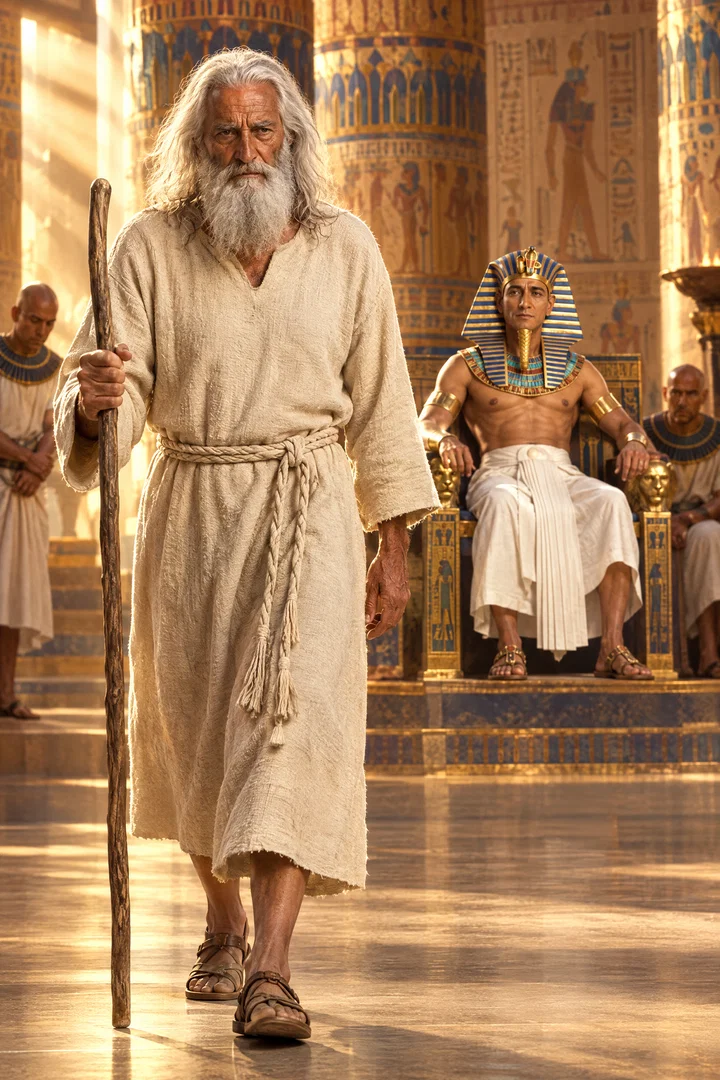
This was the fearless final warning spoken directly to Pharaoh face to face just before Moses left his presence in great anger.ST Mar 18, 1880SG3 221.3–222.1 It announced that every firstborn in the land of Egypt would die, from the heir of Pharaoh sitting upon his throne to the child of the maidservant behind the mill, together with all the firstborn of beasts, so that the stroke would reach every level of Egyptian society.PP 273.1–3ST Mar 18, 18801SP 197.2–198.2SG3 221.3–222.11SP 218.1 About midnight God Himself would go out into the midst of Egypt to execute the stroke.ST Mar 18, 1880 His angel would slay Egypt's firstborn if Pharaoh continued to refuse to let Israel go.SG3 245.1
The threat followed stubborn refusal to obey God, and specifically refusal to let Israel go and take their cattle with them.PP 273.1–3SG3 245.1ST Apr 1, 1880 Repentance after the earlier losses could have spared the children, yet Pharaoh humbled not himself.PP 273.1–3ST Apr 1, 1880 It would be the last plague, coming closer than those before it and more dreadful than any that had yet visited Egypt, bringing a great cry throughout the land.1SP 197.2–198.2SG3 221.3–222.11SP 218.1ST Apr 1, 1880 The plague would make a distinction between Egypt and Israel, whose children would be spared in distinguished mercy.PP 273.1–3ST Mar 18, 1880ST Apr 1, 1880 The threatened loss of Pharaoh's son answers God's claim that Israel is His firstborn son, honored with special privileges among the nations.PP 273.1–3
Faithfully portraying its nature and effects enraged Pharaoh, because he could not intimidate Moses or make him tremble before kingly authority.ST Mar 18, 1880SG3 221.3–222.1 Moses stood fearless because he leaned for support on a mightier arm than that of any earthly monarch.ST Mar 18, 1880SG3 221.3–222.1 It foretold that Egypt's great counselors would bow down before Moses and entreat Israel to leave.1SP 197.2–198.2SG3 221.3–222.1 This was fulfilled when the firstborn lay dead in every house, which compelled the rebellious monarch to relinquish his grasp on his bondmen.ST Apr 1, 1880 As the final judgment it shows that Jehovah is the God who executes judgment on the earth, executing His judgments upon Pharaoh and upon the gods of Egypt.ST Apr 1, 1880PP 758.3–760.1 It proved His power superior to all other power, and declared His name and divine power and justice to all nations.ST Apr 1, 1880 It was designed to strengthen the faith of His people so that their posterity would worship Him alone.ST Apr 1, 1880
Sources
Pioneers and periodicals
34 sources
The verse announces the tenth, last and most terrible plague upon Egypt, when at midnight God Himself would go out into the midst of the land and strike dead every firstborn.ST Jan 14, 1889ST Dec 7, 1904ST Dec 4, 1901 Its stroke would reach from the heir of Pharaoh on the throne down to the child of the lowest maidservant behind the mill, and include even the firstborn of beasts, so that death and mourning would enter every Egyptian home.ST Jan 14, 1889ST Dec 7, 1904ST Dec 4, 1901 It was just retribution upon Pharaoh and the slaveholding Egyptians for stubbornly refusing to free Israel, humbling the nation and proving their gods powerless to prevent calamity or bring deliverance.ST Apr 1, 1880ST Apr 13, 1904ST Nov 1, 1899RH Oct 1, 1861ST Nov 27, 1901 At the same time it showed distinguished mercy to Israel, for those who trusted God were spared under the blood on the doorposts, which represents the blood of Christ through which sin is pardoned and passed over.ST Apr 1, 1880ST Apr 13, 1904ST May 22, 1907ST Nov 27, 1901 The literal plagues just before Israel's deliverance foreshadow the seven last plagues of Revelation 15, 16 just before the final deliverance, when the saints will remain through the time of trouble yet be protected by the seal of God while destruction falls around them.ST Apr 13, 1904RH Dec 23, 1851ST Jan 30, 1912STST Jul 18, 1878
The Final Plague Announced
The verse announces the tenth and last plague threatened against Egypt, the most terrible visitation of all.ST Jan 14, 1889ST Dec 7, 1904ST Dec 25, 1901 About midnight God Himself would go out into the midst of Egypt and bring death upon every firstborn in the land.ST Mar 18, 1880ST Dec 7, 1904ST Dec 4, 1901ST Dec 4, 1901 It was the final dreadful plague, from which Israel would be spared.ST Mar 18, 1880ST Dec 25, 1901
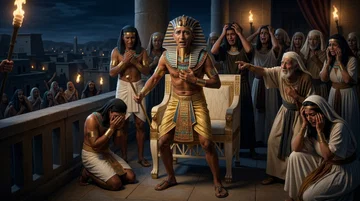
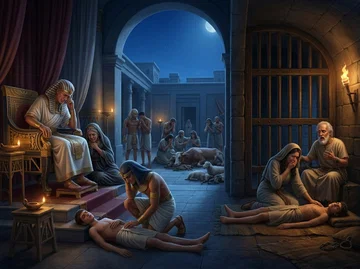
Its scope runs from the firstborn of Pharaoh who sits upon the throne, his heir, even unto the firstborn of the maidservant that is behind the mill, the lowest servant and servant woman working at the mill.ST Jan 14, 1889ST Dec 7, 1904ST Dec 4, 1901ST Jan 20, 1909 It includes also all the firstborn of beasts, among the animals as well.ST Jan 14, 1889ST Dec 7, 1904ST Dec 4, 1901ST Jan 20, 1909ST Oct 28, 1930 So the calamity would reach every rank of society, both people and animals, with death visiting every family and mourning and death in every Egyptian home.ST Dec 7, 1904ST Dec 4, 1901RH Mar 25, 1909
It was Moses' bold, fearless final message declared to Pharaoh before leaving his presence.ST Mar 18, 1880RH Dec 31, 1861 He faithfully portrayed its nature and effects, and this enraged Pharaoh, who could not intimidate him, for Moses stood leaning for support on a mightier arm than any earthly monarch.ST Mar 18, 1880ST Dec 4, 1901 If Pharaoh did not let oppressed Israel go free from bondage, God would strike the firstborn dead.ST Dec 4, 1901RH Dec 31, 1861
The warning came after Pharaoh's stubborn refusal to let Israel go and after repeated hardening of his heart despite signs and miracles.RH Mar 25, 1909ST Feb 4, 1913 It was delivered after Pharaoh refused to release Israel, even to take their cattle, and after he threatened Moses.ST Apr 1, 1880ST Dec 4, 1901 The nine earlier plagues had the double purpose of preparing the Israelites to undertake the exodus and of warning Pharaoh so he might relent and escape this final judgment.ST Dec 25, 1901 Pharaoh had already been warned of this visitation when Moses and Aaron first appeared before him.ST Dec 25, 1901
The warning was so sweeping that it made even the firstborn among the prisoners fear that they too would perish with the king's people.ST Dec 7, 1904
It means the king under whom the Exodus took place suffered the untimely loss of his own son.RH Apr 23, 1908 As part of the events of the first fourteen chapters of Exodus, no direct mention of this on Egyptian public monuments or court histories should be expected.RH Apr 23, 1908 Nothing was ever registered there except successes and triumphs, and the terrible plagues suffered during a whole year and the disaster of the Red Sea would naturally be omitted.RH Apr 23, 1908 Yet the loss of a son by the king is a point that admits comparison with the records of the time, where agreement or disagreement would show itself.RH Apr 23, 1908
The final plague came after a series probably lasting several months, with the tenth plague dated to the following March or April.ST May 6, 1913 The proposed chronology begins with the first plague during the Nile's annual inundation, around mid-June or, by another estimate, August.ST May 6, 1913 The second plague, of frogs, is placed in September.ST May 6, 1913 The seventh plague is dated to January or February, when barley was in ear but wheat had not yet grown.ST May 6, 1913
God's Power and Justice
The stroke was just retribution brought by God Himself after Pharaoh's refusal to let Israel go, even to take their cattle, and it fell as a terrible judgment on the Egyptians as slaveholders for refusing to release Israel instantly.ST Apr 1, 1880ST Apr 13, 1904RH Oct 1, 1861 It proved that He did not sanction even their modified serfdom, though He had for His own purposes allowed Israel to remain in it for a time.RH Oct 1, 1861 It was fulfilled when the firstborn lay dead in every Egyptian house, bringing mourning to every home, and it compelled the rebellious monarch to relinquish his grasp on his bondmen.ST Apr 1, 1880ST Apr 13, 1904 Those bondmen then left as an army of fugitive slaves whose pursuers were drowned in the Red Sea.RH Oct 1, 1861
Through that deliverance from oppression and bondage, when the whole power of Egypt was set against them, God demonstrated that He alone is all-embracing, all-powerful, and all-wise, and superior to all other power.ST Apr 1, 1880ST Jan 30, 1912ST Nov 1, 1899 He displayed His wisdom, love, power, and right to rule, thereby establishing Israel's obligation to obey Him.ST Mar 7, 1906 The death of all the firstborn belonged to that mighty saving work which showed His creative power manifested over again, such work as was never done in the saving of any other nation, leading to Israel's song of triumph beyond the Red Sea with the host of Egypt overthrown.ST Jan 30, 1912 The power in those acts was not Moses' own but was in God's word and message and in how people received or rejected it.ST Apr 4, 1911
The judgment humbled Egypt and executed judgment on Pharaoh and the gods of Egypt, declaring His name and divine power and justice to all nations.ST Apr 1, 1880ST Nov 27, 1901 It exposed their powerlessness and showed that Egypt's gods were nothing before Him, for they could neither prevent calamity nor provide deliverance.ST Nov 1, 1899ST Nov 27, 1901ST Dec 4, 1901 The same stroke displayed distinguished mercy to Israel, for the firstborn of those who trusted God were delivered while in homes that rejected His mercy no one escaped the destroyer.ST Apr 1, 1880ST Nov 27, 1901 That deliverance gave the people a striking personal knowledge of God, designed to strengthen their faith so that their posterity would worship Him alone.ST Apr 1, 1880ST Nov 27, 1901
The death of the firstborn of beasts together with the firstborn of people shows that bodily death falls even on animals, proving that beasts are not exempt from mortality.ST Nov 1, 1877RH Aug 5, 1862 They perished for the sins of their masters as an example of bodily death as punishment for sin, showing that all nature is subject to mortality and the curse connected with human sin.ST Nov 1, 1877RH Aug 5, 1862 The death belongs to God's redemption of Israel from Egyptian bondage with a mighty hand after hundreds of years of slavery had left them unfitted to comprehend His great salvation and the character He required. He therefore taught them by a great multiple object-lesson of forms and rites comprehending in its teaching the plan of salvation, including the sanctuary built from free-will offerings that He might dwell among them. As part of the awful music of darkness, plague, and storm to which Israel marched out of bondage, it proves that God marks the opening of a new age with grand, striking, and awful phenomena in nature, just as after the Deluge, at Sinai, at the first coming of Jesus, and as He will before the last advent.ST Sep 28, 1904
Passover and Last Plagues
The threatened death of every firstborn belongs to the account of the tenth plague and to the events culminating in hurried departure from Egypt, standing together with the Passover ordinance and the going out of Egypt in Exodus 11-13.ST Jan 25, 1910ST Jan 20, 1909 It was the last plague, the first Passover kept in Egypt just before Israel left bondage for Canaan, closely connected with the Lord's claim on the firstborn.ST Jan 25, 1910ST May 22, 1907 The name Passover recalls that the angel passed over houses marked with blood and did not slay their oldest child, while the judgment itself stretched from Pharaoh's heir to the firstborn of the lowliest servant and to the firstborn of animals as part of the plagues by which God delivered Israel.ST May 22, 1907ST Jan 20, 1909
That stroke stands in contrast with Israel's Passover deliverance, for the blood on the doorposts represents Christ's blood, through which sin is pardoned and passed over so that God's people are not cut off.ST Apr 13, 1904ST May 22, 1907 The mourning brought to every Egyptian home as just retribution is thus set against the sparing of those sheltered by that blood.ST Apr 13, 1904
The literal plagues of Egypt that came just before Israel's deliverance foreshadow the seven last plagues of Revelation 15 and 16 that will be poured out just before the final deliverance of the saints.RH Dec 23, 1851STRH Mar 23, 1852 As the going out of Egypt into Canaan foreshadows the deliverance of God's people from the dark Egypt of earth to triumph beyond, so the death of all the firstborn belongs to that mighty saving work from oppression and bondage when the whole power of Egypt was set against them, leading to Israel's song of triumph beyond the Red Sea with the host of Egypt overthrown and showing God's creative power manifested over again as never in the saving of any other nation.ST Jan 30, 1912STST Oct 28, 1930 Those plagues were literal judgments known in Egypt and remembered without doubt in Philistia, and the final plague on Egypt, falling on every firstborn from Pharaoh's household to the servant woman's household and among the animals, provides the pattern for the similar seven end-time plagues before Israel's deliverance.STRH Mar 23, 1852ST Oct 28, 1930
Because the Egyptian plagues were literal, the seven last plagues will be real and literal as well, and this death of the firstborn is cited as evidence for their literality.RH Dec 23, 1851ST May 31, 1910RH Mar 23, 1852 Their pouring out will cause the time of trouble.RH Mar 23, 1852
That experience is the pattern for the final time of trouble and for the remnant at the close of probation, whose deliverance is linked to this Passover deliverance.ST Apr 13, 1904ST Jul 18, 1878 The saints are not removed from the earth but remain through the pouring out of the plagues until after six have fallen, witnessing fearful scenes like Israel in Egypt yet protected by the seal of the living God so that destruction falls around them without coming near them.ST Jul 18, 1878
Sources