Translations
And you shall make the robe of the ephod all of blue.
King James Version, KJV Cambridge Paragraph Bible, Webster Bible, Revised Version, American Standard Version
And thou shalt make the robe of the ephod all of blue.
'And thou hast made the upper robe of the ephod completely of blue,
And thou shalt make the cloak of the ephod all of blue.
And thou shalt make the robe of the ephod wholly of blue;
Berean Standard Bible, Majority Standard Bible
You are to make the robe of the ephod entirely of blue cloth,
“ You shall make the robe of the ephod all of blue.
The robe which goes with the ephod is to be made all of blue;
And thou shalt make the robe of the Ephod altogether of blewe silke.
Douay-Rheims (Challoner revision)
And thou shalt make the tunick of the ephod all of violet,
Pictures
Cross-references
- Hebrews 8:5
Who serve unto the example and shadow of heavenly things, as Moses was admonished of God when he was about to make the tabernacle: for, See, saith he, that thou make all things according to the pattern shewed to thee in the mount.
The earthly tabernacle follows a pattern shown by God as a shadow of heavenly things.
- Exodus 28:2-4
And thou shalt make holy garments for Aaron thy brother for glory and for beauty.
Introduces the garments made for Aaron’s sacred service.
- Leviticus 8:7
And he put upon him the coat, and girded him with the girdle, and clothed him with the robe, and put the ephod upon him, and he girded him with the curious girdle of the ephod, and bound it unto him therewith.
Aaron is clothed in the priestly robe as he is ordained for sanctuary service.
- Exodus 25:8-9
And let them make me a sanctuary; that I may dwell among them.
The sanctuary and its furnishings followed the pattern shown to Moses so God could dwell among Israel.
- Exodus 39:22
And he made the robe of the ephod of woven work, all of blue.
records carrying out this direction
- Exodus 28:6-8
And they shall make the ephod of gold, of blue, and of purple, of scarlet, and fine twined linen, with cunning work.
The ephod is worn over the blue robe.
- Exodus 28:15-21
And thou shalt make the breastplate of judgment with cunning work; after the work of the ephod thou shalt make it; of gold, of blue, and of purple, and of scarlet, and of fine twined linen, shalt thou make it.
Describes the breastplate worn with the robe.
- Leviticus 16:4
He shall put on the holy linen coat, and he shall have the linen breeches upon his flesh, and shall be girded with a linen girdle, and with the linen mitre shall he be attired: these are holy garments; therefore shall he wash his flesh in water, and so put them on.
Describes the high priest’s holy garments for service.
- Hebrews 9:1-5
Then verily the first covenant had also ordinances of divine service, and a worldly sanctuary.
Describes the earthly sanctuary and its furnishings.
- Exodus 31:3
And I have filled him with the spirit of God, in wisdom, and in understanding, and in knowledge, and in all manner of workmanship,
God gives Bezalel his Spirit for the sanctuary work.
Commentary
Each commentary is drawn from primary sources: the writings of Ellen G. White and Adventist pioneers and periodicals. Each commentary is separate. Its own words are not a quotation; follow the references to read the source passages.
Ellen G. White
6 sources
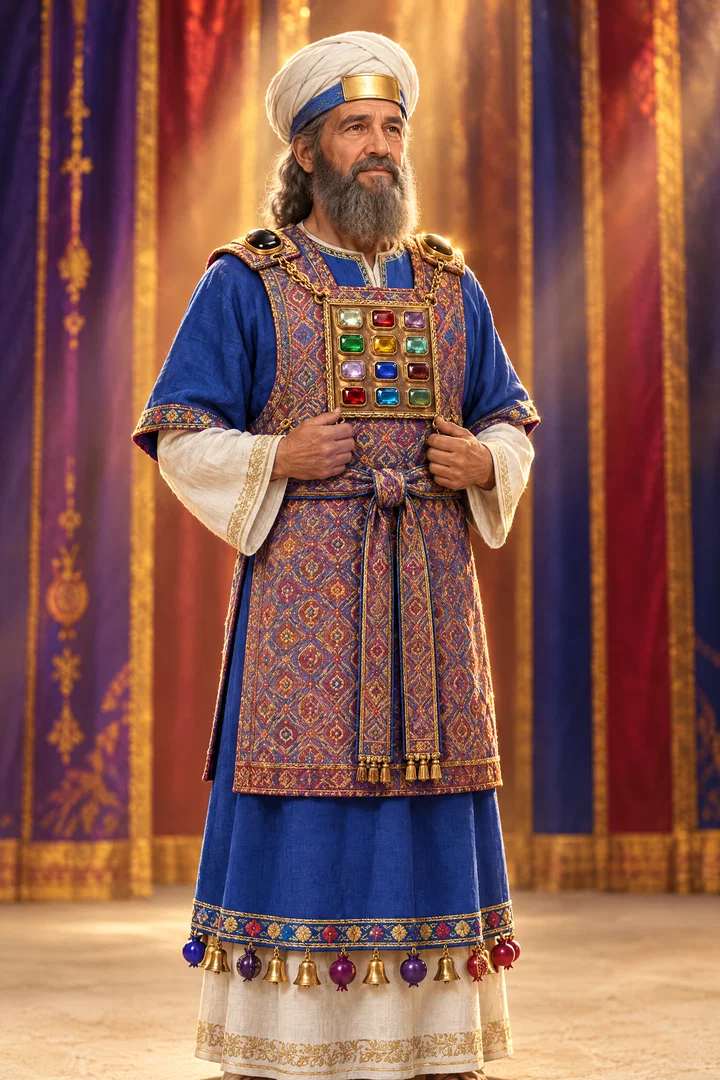
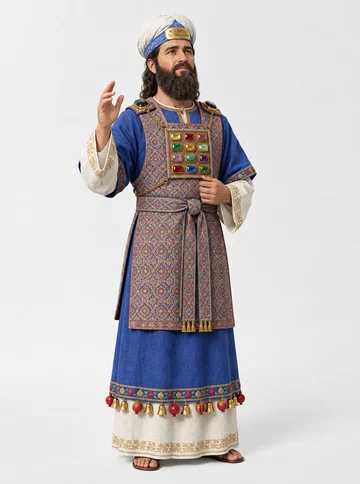
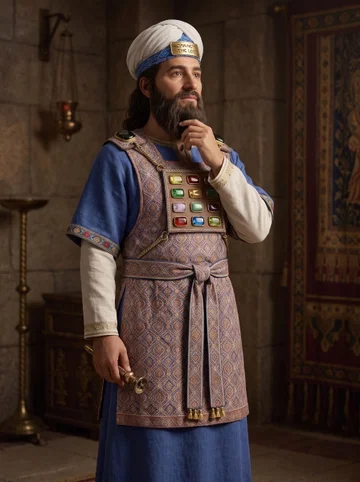
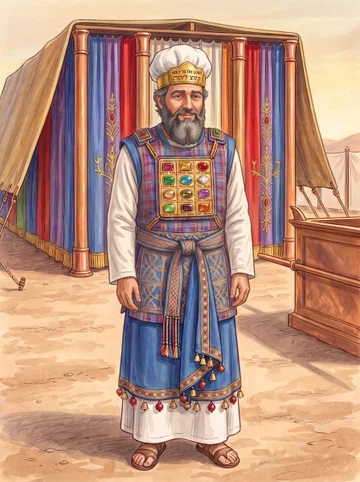
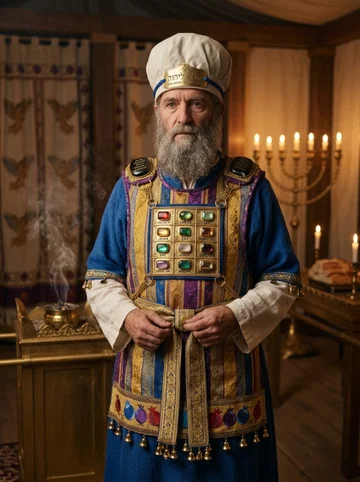
The verse belongs to God's special, detailed directions to Moses about the clothing of those who ministered in His service before Him in the tabernacle.GW92 161.12T 610.3–612.1Ms 56, 1900, par. 11–12 The high priest wore, in addition to the linen dress of the common priest, a robe of blue worn under the ephod, woven in one piece from costly material with beautiful workmanship befitting his exalted station and ornamented around the skirt with golden bells and pomegranates of blue, purple, and scarlet.PP 350.3 That robe of the ephod is part of Jesus' priestly garments in heaven, with alternating bells and pomegranates around its lower edge.EW 213.1
The chapter containing the verse sets forth God's covenant with the people He is seeking to save today, the terms of salvation, and the most valuable education for today.Ms 92, 1899, par. 10–12 It gives the outline of God's expressed will and the instruction Christ gave when He educated His church in the wilderness enshrouded in the pillar of cloud, which is the highest knowledge after the divine similitude for the mental, physical, and moral improvement of the whole being, teaching how to keep the laws of God's kingdom and conduct oneself as a citizen of heaven for present and eternal good.Ms 92, 1899, par. 10–12
Aaron's robe was symbolic, and the prescribed care in its design shows that God has preferences about the dress of those who serve Him.Ms 56, 1900, par. 11–12 The directions show that ministerial dress, like the other parts of the service, was to be orderly and clean, reflecting reverence for God and the holiness of His service.GW92 161.12T 610.3–612.1 The verse contributes to the lesson that Christ's followers should dress as His representatives.Ms 56, 1900, par. 11–12 No explanation of the meaning of the robe's blue color is given.2T 610.3–612.1
Sources
Pioneers and periodicals
29 sources
God directed that the robe worn under the ephod and over the white linen coat be woven in one piece entirely of blue, with its skirt finished with golden bells and pomegranates of blue, purple and scarlet, as part of the splendid garments for glory and beauty that included the ephod, the jeweled breastpiece and the mitre.RH Sep 16, 1852ST Nov 12, 1894 It belongs to the minute, exact instructions given to Moses on the mountain according to the pattern shown there for building the wilderness tabernacle and its furnishings that God might dwell among Israel.ST Oct 29, 1894RH Dec 31, 1861 That earthly sanctuary with its sacrifices and offerings was an object-lesson and type of the heavenly sanctuary with its two holy places where Jesus now ministers as priest upon the throne for the salvation from sin.ST Jan 24, 1911ST Jun 19, 1907 As holy garments for glory and beauty, the priesthood of Aaron with its blue robe points to Christ, the sinless High Priest who lives forever to confess the names of His people before the judgment-seat of the Judge of the whole earth.RH Sep 16, 1852ST Dec 17, 1912RH Jul 5, 1864 As part of the law of ordinances of ceremonies and carnal offerings for sin given by the hand of Moses, it belonged to the shadow of the new dispensation that found fulfillment and was abolished in the body of Christ, the Lamb of God who takes away sin by the sacrifice of Himself.ST May 6, 1875ST Apr 15, 1886ST Jul 8, 1886 That God specified even the color and detail of priestly clothing teaches that no detail is too small to escape His notice, that He is holy and all His work is sacred, and that He places His Spirit upon consecrated workers in material things as willingly as upon workers in spiritual things.ST Jan 27, 1909RH Oct 30, 1913ST Mar 15, 1883
Sanctuary Setting and Garment
The verse belongs to the minute, exact instructions in Exodus 25 to 31, extending through Exodus 40, for building the wilderness tabernacle and its furnishings.ST Oct 29, 1894ST Jun 26, 1907ST Jun 4, 1885ST Apr 15, 1886 Those directions were given to Moses by God during his forty-day stay on the mountain, according to the pattern shown there.ST Oct 29, 1894RH Dec 31, 1861ST Jun 26, 1907ST Apr 15, 1886 They provided for the sanctuary that was God's dwelling place among Israel, with the priesthood ordained to minister before the ark.RH Dec 31, 1861ST Jun 26, 1907ST Jun 4, 1885 Within those instructions the verse belongs to the description in Exodus 28 of the special garments appointed for the anointed and consecrated priests who served for the people.ST Nov 12, 1894 That description is to be studied with the account of their consecration in the next chapter.ST Nov 12, 1894 A special dress was appointed in accordance with their office, and the costly material and beautiful workmanship of the high priest's garments befitted his exalted station and were significant of his calling and purpose, with the high priest wearing a long white coat and the ephod over it as a curiously wrought cape of gold, blue, purple, and scarlet.ST Nov 12, 1894
The robe of the ephod was to be all of blue, woven in one piece.RH Sep 16, 1852ST Nov 12, 1894ST Dec 17, 1912RH Feb 2, 1911RH Jul 5, 1864 It was worn under the ephod and over the long white linen robe like that of the common priest, in addition to the linen dress of the common priest.ST Nov 12, 1894ST Dec 17, 1912 Its skirt was ornamented with golden bells and pomegranates of blue, purple, and scarlet, and the sound of the bells was heard when he entered before the Lord, including at the yearly atonement for Israel.RH Sep 16, 1852ST Nov 12, 1894ST Dec 17, 1912 It formed part of splendid sacred garments for glory and beauty that also included the ephod, the jeweled breastpiece, and the mitre.RH Sep 16, 1852RH Jul 5, 1864 The wonderfully itemized text of Exodus 25 to 31 gives extreme exactness and minute detail for the structure of the tabernacle and the priestly attire for Aaron and his sons, with profuse use of gold, silver, costly gems, and fine linen.ST Jun 10, 1908 The depths of all its meaning cannot be seen, all the reasons for the exactness and detail cannot be fathomed, and the complete motive for the costly materials cannot be appreciated.ST Jun 10, 1908 Yet slow, careful, thoughtful study with the mental microscope brings to the surface a multitude of invigorating and instructive ideas, suggestions and lessons, enough vitalizing food to strengthen famishing hearts and enough water of life to refresh worn spirits through long, long days.ST Jun 10, 1908
Type of Heaven and Christ
The wilderness tabernacle where Israel's worship centered was an earthly object-lesson setting forth God's plan of government and His dealing with rebellion, devised from eternity for salvation from sin through Christ as priest upon the throne, still as king. It was built with its furnishings according to the pattern shown to Moses in the mount during the forty days when Exodus 25 to 31 was given, that God might dwell among a people with whom the divine and the human co-operate at every step.ST Jun 26, 1907ST May 16, 1878 Its services revolved around the most holy place where God's law rested on tables of stone beneath the mercy seat in the ark of the covenant, and the robe of the ephod belonged to that prescribed design.ST Jun 19, 1907ST Jan 27, 1909ST May 16, 1878 That sanctuary was made for sacrifices and offerings which passed away when Christ died once for all, for it typified the heavenly sanctuary with its two holy places where Jesus now ministers.ST Jan 24, 1911ST May 16, 1878 Its ceremonies pointed to Christ and His work of forgiving sin and transforming character.ST Jun 26, 1907
The holy garments appointed for glory and beauty point from Aaron's priesthood to Christ, the sinless High Priest who lives in heaven forever, unlike sinful human priests who die.RH Sep 16, 1852RH Jul 5, 1864 The robe all of blue, woven in one piece and worn over the long white linen robe and under the curiously wrought ephod, with its skirt ornamented with golden bells and pomegranates of blue and purple and scarlet whose sound was heard when he entered before the Lord, belonged to those splendid sacred garments with the ephod, the jeweled breastpiece, and the mitre.RH Sep 16, 1852ST Dec 17, 1912RH Jul 5, 1864 It was worn for the yearly atonement for Israel when he entered the most holy place to make atonement for the people.RH Sep 16, 1852ST Dec 17, 1912 In that entering it represents Christ confessing the names of His people before the judgment-seat of the Judge of the whole earth.ST Dec 17, 1912
Those who held that the splendid official dress of Exodus 28, including the ephod robe, was the dress worn on ordinary occasions taught that on the Day of Atonement it was laid aside.RH Jan 11, 1870ST Jun 6, 1878 Then, they taught, the high priest entered the most holy place in the plainest and humblest dress as a solemn admonition that he was high priest only in a typical sense and not in reality, designed to impress his infirmity and sinfulness.RH Jan 11, 1870 No part of that laying aside, they taught, typifies the work of Christ.RH Jan 11, 1870
The weight of testimony holds that the blue robe was the garment worn when the high priest entered the most holy place to make atonement for the people, with its bells sounding, and not on ordinary occasions when white alone was worn.RH Sep 16, 1852ST Dec 17, 1912
Ceremonial Law and Reverence
The robe of the ephod all of blue belongs to the law of Moses commanded in Horeb, with the statutes and judgments together with the Ten Commandments and all the other moral, civil, health, sacrificial and ceremonial precepts. It stands among those laws in which offerings, sacrifices and types were revealed, whose shadows trace the substance of the new dispensation. With the whole law given through Moses, especially as set forth in Exodus 20 to 40 and Leviticus, it is to be remembered and studied in the last days, not the Ten Commandments alone but all the commandments as the rule of conduct and revelation of Christ.
The instructions for the priestly garments show that the Levitical priesthood and its laws were instituted after the Ten Commandments already given in Exodus 20, so that Exodus 28 concerns the Levitical system and not the moral law.ST Mar 22, 1883ST Mar 22, 1883ST Feb 20, 1879 This order proves that the law declared not faultless is not the Ten Commandments but the Levitical law received under that priesthood.ST Feb 20, 1879 The verse belongs to the law of ordinances written out in full after the moral law, the precepts, statutes and laws given by the hand of Moses recorded chiefly in Exodus 25 to 30 and Leviticus, not spoken directly from Sinai and written on stone with nothing added.ST May 6, 1875ST Apr 15, 1886ST Jul 8, 1886 It stands among burdensome ceremonies and carnal ordinances connected with flesh and offerings for sin, which could not really take away sin, imposed until the time of reformation as a yoke which neither the fathers nor their children were able to bear.ST Apr 15, 1886ST Jul 8, 1886 That ceremonial instruction found fulfillment and was abolished in the body of Christ, the Lamb of God who takes away sin by the sacrifice of Himself.ST Jul 8, 1886
The priesthood and its rites were committed to Aaron and his sons, and no one else was to perform priestly services unless specially directed by the Lord, which explains why Saul was not authorized to offer sacrifices.ST Mar 3, 1914 The setting apart of the Levitical order to minister before the ark in the most holy place of the typical sanctuary, while that sanctuary should continue, carried forward the ministration commenced when Moses brought down the law.RH Dec 12, 1854 That priestly service belonged to the ministration of condemnation and death that could only exhibit human guilt and just condemnation before God, offering no sacrifice that could take away sin but only pointing penitent sinners forward to the great Sacrifice to be offered for the sins of men.RH Dec 12, 1854 Together with Psalm 80:1, the direction for the robe helps identify the anointed cherub's covering position near God's throne as one of the two positions nearest the throne, explaining Satan's former access to knowledge and powers of nature beyond human understanding.ST Aug 8, 1900
The directions to which the verse belongs show that sanctification sometimes consists in setting apart or consecrating priests and the sanctuary and its utensils to a sacred or religious use.RH Jul 26, 1864 God specified even the details of priestly clothing that the ephod's robe was to be entirely blue, showing that no detail is too small to escape His notice and that carelessness is not acceptable in sacred work.ST Mar 15, 1883 The specified, careful, reverent dress for service in the holy place was to teach that God is holy and that His work and everything connected with it are sacred.RH Oct 30, 1913 Doing that work properly, with its center in the holy of holies where the ark of the covenant holding God's holy law written on tables of stone was placed, required God placing His Spirit upon Bezalel and Oholiab with other devoted men and women, showing He is as willing to bless workers in material things who are consecrated to Him as workers in spiritual things.ST Jan 27, 1909
Sources