Exodus 28:6
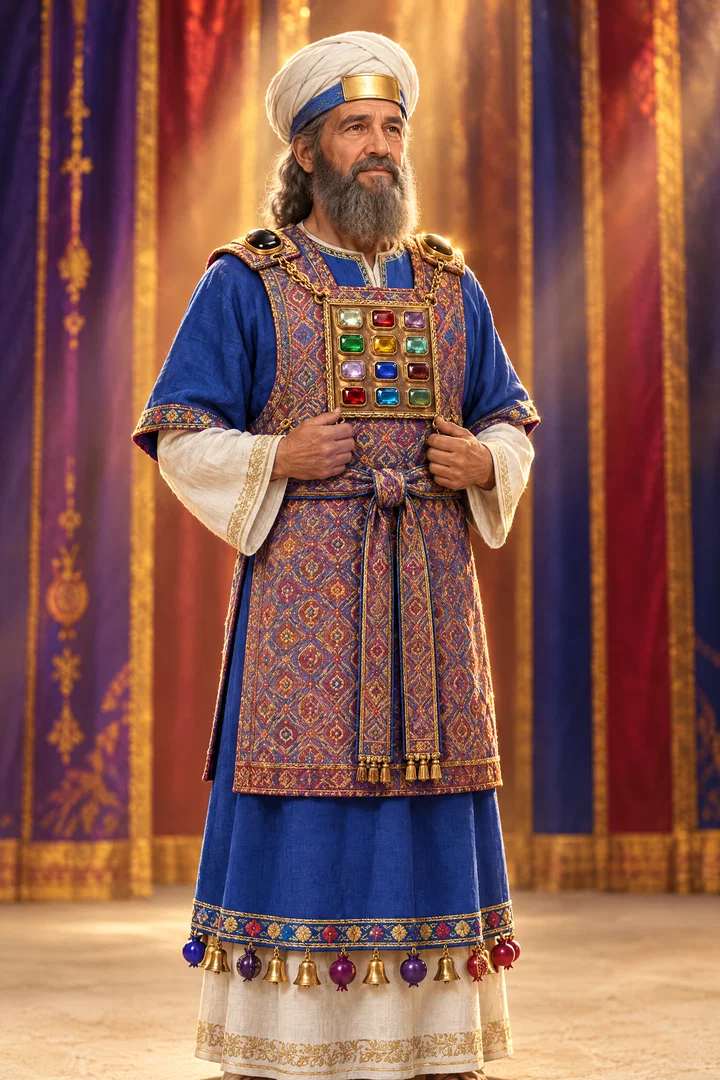
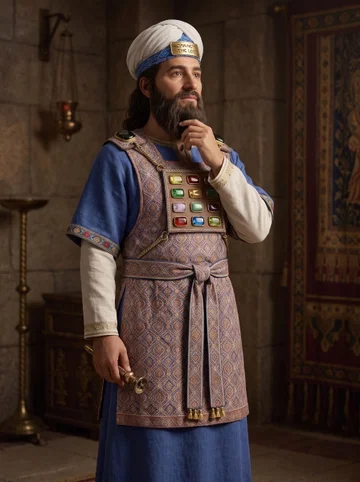
And they shall make the ephod of gold, of blue, and of purple, of scarlet, and fine twined linen, with cunning work.
Translations
American King James Version, King James Version, KJV Cambridge Paragraph Bible
And they shall make the ephod of gold, of blue, and of purple, of scarlet, and fine twined linen, with cunning work.
And they shall make the ephod of gold, of blue, and of purple, of scarlet, and fine twined linen, with curious work.
And they shall make the ephod of gold, of blue, and purple, scarlet, and fine twined linen, the work of the cunning workman.
And they shall make the ephod of gold, of blue, and purple, scarlet, and fine twined linen, the work of the skilful workman.
and have made the ephod of gold, blue, and purple, and scarlet, and twined linen, work of a designer;
and shall make the ephod of gold, blue, and purple, scarlet and twined byssus, of artistic work.
And they shall make the ephod,—of gold, blue and purple crimson and fine-twined linen, the work of a skilful weaver.
Berean Standard Bible, Majority Standard Bible
They are to make the ephod of finely spun linen embroidered with gold, and with blue, purple, and scarlet yarn.
“ They shall make the ephod of gold, blue, purple, scarlet, and fine twined linen, the work of the skillful workman.
And make the ephod of gold and blue and purple and red and the best linen, the work of a designer.
And they shall make the Ephod of gold, blewe silke, and purple, skarlet, and fine twined linen of broydred worke.
Douay-Rheims (Challoner revision)
And they shall make the ephod of gold, and violet, and purple, and scarlet twice dyed, and fine twisted linen, embroidered with divers colours.
Pictures
Cross-references
- Hebrews 8:5
Who serve unto the example and shadow of heavenly things, as Moses was admonished of God when he was about to make the tabernacle: for, See, saith he, that thou make all things according to the pattern shewed to thee in the mount.
The earthly ephod belongs to service patterned after heavenly things.
- Exodus 29:1-37
And this is the thing that thou shalt do unto them to hallow them, to minister unto me in the priest’s office: Take one young bullock, and two rams without blemish,
The ephod garments are studied with the priests’ consecration for ministry.
- Leviticus 16:4
He shall put on the holy linen coat, and he shall have the linen breeches upon his flesh, and shall be girded with a linen girdle, and with the linen mitre shall he be attired: these are holy garments; therefore shall he wash his flesh in water, and so put them on.
Contrasts the high priest’s plain linen garments with the prescribed splendid ephod.
- Leviticus 8
And the LORD spake unto Moses, saying,
Describes the setting apart of the priests for their ministry.
- Exodus 25:8-9
And let them make me a sanctuary; that I may dwell among them.
Introduces the sanctuary whose furnishings are described.
- Exodus 28:31-34
And thou shalt make the robe of the ephod all of blue.
Describes the blue robe and its bells and pomegranates worn with the ephod.
- Acts 7:44
Our fathers had the tabernacle of witness in the wilderness, as he had appointed, speaking unto Moses, that he should make it according to the fashion that he had seen.
The wilderness tabernacle was made according to the pattern shown to Moses.
- Hebrews 9:11
But Christ being come an high priest of good things to come, by a greater and more perfect tabernacle, not made with hands, that is to say, not of this building;
The earthly sanctuary’s pattern contrasts with Christ’s ministry in the greater sanctuary.
- Exodus 25:40
And look that thou make them after their pattern, which was shewed thee in the mount.
Commands the sanctuary to be made according to the pattern shown on the mount.
- 1 Samuel 23:9-12
And David knew that Saul secretly practised mischief against him; and he said to Abiathar the priest, Bring hither the ephod.
David seeks the LORD’s direction through the ephod.
- Exodus 26:1
Moreover thou shalt make the tabernacle with ten curtains of fine twined linen, and blue, and purple, and scarlet: with cherubims of cunning work shalt thou make them.
Both describe fine linen with blue, purple, and scarlet, woven with skill.
- Exodus 25:9
According to all that I shew thee, after the pattern of the tabernacle, and the pattern of all the instruments thereof, even so shall ye make it.
Gives the pattern command for the ephod’s description.
- Exodus 26:31-35
And thou shalt make a vail of blue, and purple, and scarlet, and fine twined linen of cunning work: with cherubims shall it be made:
details veil and holy place arrangement
- Hebrews 9:1-5
Then verily the first covenant had also ordinances of divine service, and a worldly sanctuary.
Describes the Mosaic tabernacle as the first covenant’s sanctuary.
Commentary
Each commentary is drawn from primary sources: the writings of Ellen G. White and Adventist pioneers and periodicals. Each commentary is separate. Its own words are not a quotation; follow the references to read the source passages.
Ellen G. White
6 sources
The ephod was a skillfully and finely worked priestly garment made of gold, blue, purple, scarlet, and fine twined white linen, with both its materials and its workmanship specifically directed by the Lord.EW 213.1PP 350.3Ms 56, 1900, par. 11–12 It was the high priest's outer, shorter, sleeveless garment, worn over the blue robe and over the white linen dress of the common priest, made of costly material with beautiful workmanship befitting his exalted station.PP 350.3 It was held by a beautifully wrought girdle of the same colors and had gold-embroidered shoulder pieces holding two onyx stones bearing the names of the twelve tribes of Israel.PP 350.3
God distinctly specified the material and style of dress to be worn by those ministering before Him in tabernacle service in the holy place, requiring a particular style in accordance with their work in the priest's office.GW92 161.1GW92 162.22T 610.3–612.1Ms 56, 1900, par. 11–12 This divinely directed dress was required before coming into God's presence in the sight of the congregation, because God is so high and holy that failure to comply with His conditions brought death.GW92 162.2 God gave special instruction through Moses about everything connected with His service, requiring order in everything and especially cleanliness, with nothing slack and untidy in those who come into His holy presence.GW92 161.12T 610.3–612.1
God may be honored or dishonored by the apparel of those who officiate before Him.GW92 161.12T 610.3–612.1 The reason for this care and reverence in apparel and deportment by those in sacred office is that a right impression may be made upon the people and their awe and reverence for God and His sacred service preserved.2T 610.3–612.1 It gives the people an exalted idea of God and His requirements, showing that God is holy, His work is sacred, and everything connected with His work must be holy and free from impurity and uncleanness, with all defilement put away from those who approach God.2T 610.3–612.1
Aaron's dress was symbolic, showing that God has a preference concerning the dress of those who serve Him.Ms 56, 1900, par. 11–12 The dress of Christ's followers should likewise be symbolic, representing Christ, and should be neat, modest, and pure, without changes made merely to follow fashion or display vanity.Ms 56, 1900, par. 11–12 The heavenly ministry fulfills this pattern, with Jesus clothed in precious priestly garments and wearing a breastplate as He enters the second apartment of the sanctuary.EW 213.1
Sources
Pioneers and periodicals
43 sources
God gave minute instruction in the mount to Moses for the tabernacle and its worship to be carried out exactly as shown, including the making of the ephod.ST Oct 29, 1894ST Mar 25, 1889RH Feb 11, 1858 It was to be a skillfully worked, sleeveless outer priestly garment of gold, blue, purple, scarlet and fine twined linen, fastened at the shoulders with onyx stones engraved with the names of the twelve tribes.RH Dec 15, 1910ST Nov 12, 1894RH Dec 15, 1910 It belonged to the special dress appointed for glory and beauty to the priestly office, signifying purity and consecration and the priest's bearing of the whole nation for guidance and judgment before God.ST Nov 12, 1894RH Dec 15, 1910RH Dec 8, 1910 Made exactly to the divine pattern, it with the earthly sanctuary foreshadowed the true heavenly tabernacle and Christ's ministry as High Priest, which ministry succeeded when the typical offerings ended forever at His once-for-all death.ST Jan 24, 1911ST Jun 26, 1907RH Mar 8, 1870ST May 16, 1878 It belongs to the ceremonial law of ordinances appointing the Levitical priesthood after the Ten Commandments were spoken and written on stone, and its careful prescription shows God's work must be done reverently and not negligently, though its costly array belongs to the Jewish high priest alone and gives no permission for costly dress now.ST May 6, 1875ST Mar 22, 1883ST Apr 15, 1886RH Jul 10, 1855ST Mar 15, 1883
Setting in Exodus Narrative
Exodus 28:6 belongs to the very minute, detailed description of the tabernacle, sanctuary, its furnishings and worship arrangements in Exodus 25-31, continued through Exodus 25-40, which Moses was instructed to make and which was to be carried out exactly according to the pattern shown him in the mount.ST Oct 29, 1894RH Feb 11, 1858ST Jun 19, 1907ST Jan 27, 1909 It is part of the account of the sanctuary God commanded Israel to build in the wilderness, with the ephod as one part of this prescribed work and as part of the priestly garments and worship arrangements established for Israel.ST Jun 19, 1907ST Jan 27, 1909ST Dec 10, 1896RH Jan 20, 1916 These instructions were given by God to Moses during his forty days and nights stay in Mount Sinai in the presence of Divinity, together with the tables of stone.ST Mar 25, 1889RH Dec 31, 1861ST Jan 31, 1911 They came after the Ten Commandments and other statutes were proclaimed and the covenant with Israel was made and ratified over the book of the covenant, and before the sin of the golden calf, belonging to the narrative of the personal descent of God upon Mount Sinai with His angels recorded in Exodus 19, 20, and 24-34.ST Mar 25, 1889RH Dec 24, 1861
The instruction received in the mount during forty days was given to the people by the hand of Moses and is recorded chiefly in Exodus 25-30 and in Leviticus, distinct from the Ten Commandments which God spoke directly from heaven and wrote on the two tables of stone with nothing added.ST Apr 15, 1886 Its preparation and fitting is related in the last six chapters of Exodus, when the tabernacle was set up on the first day of the first month of the second year from the Exodus, and the sanctuary was afterward built and set up.ST Dec 10, 1896 The sanctuary was to be built from willing, free-will offerings of the children of Israel, including gold, blue, purple, scarlet and fine linen, so that God could dwell among them.ST Jun 4, 1885ST Oct 25, 1905 Its pattern was divine, given by God to Moses in the mount, and the workmen who made it with its material, furnishings and cunning work were specially endowed by God for the work, forming a dwelling-place that the Divine Deliverer might be with men, where the glory of the Lord filled the tabernacle and where true worship centered.ST Jun 26, 1907ST Oct 25, 1905
The explicit instructions in Exodus 25-31 show how particular God is in that which pertains to His worship, with nothing too trifling to escape His notice.ST Mar 25, 1889 Their object with all services and remedies is to bring men into harmony with the holy law of God written by the finger of God on two tables of stone.ST Mar 25, 1889 They let down upon earth an object-lesson setting forth God's plan of government and how He deals with sinners, including those who have sought to dethrone Him, for salvation from sin according to a plan devised from eternity. The purpose was made known because God's people are so intimately related to the sanctuary that they cooperate with Him in His work through Christ in the sanctuary, with the divine and the human cooperating at every step. It was a marvelously beautiful, great multiple object-lesson by various forms and rites to teach the great plan of salvation and the character God required, given because Israel after hundreds of years of slavery in Egypt was unfitted to comprehend them.
Ephod Materials and Construction
The ephod is a linen priestly garment made of gold, blue, purple, scarlet and fine twined linen, also described as white.ST Mar 22, 1883RH Jun 21, 1864RH Feb 2, 1911RH Oct 30, 1913 It was skillfully, cunningly worked, woven and embroidered with rich workmanship, carefully made as part of the vestments appointed for glory and beauty.ST Mar 22, 1883RH Jun 21, 1864RH Feb 2, 1911RH Oct 30, 1913 Its detailed description belongs to the account of the tabernacle furnishings and coverings.RH Aug 4, 1863RH Jun 21, 1864
It is a shorter, sleeveless outer garment, worn in addition to the common priest's linen dress and outside the one-piece blue robe and the long white linen robe.RH Dec 15, 1910ST Nov 12, 1894ST Dec 17, 1912 It is confined at the waist by a beautifully wrought, beautifully embroidered girdle of the same colors, with colored pieces or borders compared to the colored pieces at the ends of Joseph's distinctive garment.RH Dec 15, 1910ST Nov 12, 1894ST Dec 17, 1912 Its gold-embroidered shoulder pieces fasten the garment at the shoulders and hold two onyx stones set in gold and engraved with the names of the twelve tribes of Israel.ST Nov 12, 1894RH Dec 15, 1910
Its blue, purple, scarlet and fine linen match the colors and fine linen of the embroidered sanctuary work, including the inner covering decorated with cherubim.RH Aug 4, 1863 The official priestly garments were pure white linen, and Aaron's garments, including the high priest's equipment, had distinctive features not worn by his sons.RH Dec 15, 1910ST Nov 12, 1894RH Dec 8, 1910
Priestly Office and Symbolism
The ephod was part of the special dress appointed in accordance with priestly office, signifying the priest's calling and purpose in sanctuary service.ST Nov 12, 1894RH Feb 2, 1911 The high priest's garments were of costly material and beautiful, rich workmanship befitting his exalted station and elevated dignity, appointed for glory and beauty.ST Nov 12, 1894RH Dec 15, 1910RH Feb 2, 1911 The ephod itself was a shorter, skillfully worked and richly embroidered garment made with gold, blue, purple, scarlet and fine linen, with colored pieces or borders like the colored pieces at the ends of Joseph's distinctive garment.RH Dec 15, 1910RH Feb 2, 1911
The official priestly garments were pure white linen, signifying the purity of priestly character and work.RH Dec 8, 1910 Aaron's garments, including the high priest's equipment, had distinctive features not worn by his sons.RH Dec 8, 1910 The appointment of these sacred garments belongs to the setting apart of the priests for religious service, supporting the sense of sanctification as consecration to a sacred use.RH Jul 26, 1864
The gold-embroidered shoulder pieces fastened the ephod at the shoulders with onyx stones set in gold and engraved with the names of the twelve tribes of Israel, held in place by a girdle around the body.RH Dec 15, 1910 The tribal names borne on the shoulders signified the priest's burden for the present and eternal welfare of the whole nation.RH Dec 15, 1910 The ephod served as the setting for receiving divine guidance about personal duties, bearing the urim and thummim, also called the breastplate of judgment, which gave directions in response to weighty inquiries.RH Dec 15, 1910
God committed the priesthood to Aaron and his sons with the ephod as part of their appointed service, so that after that appointment no one else was to perform the rites of a priest unless especially directed by the Lord.ST Mar 3, 1914 Saul had not been ordained for any such service and had been instructed to wait at Gilgal till Samuel came to offer sacrifices.ST Mar 3, 1914 His burnt offering after his victory over the Ammonites was therefore presumptuous self-exaltation and direct disobedience in the face of instruction, which is why God was displeased with him.ST Mar 3, 1914
The high priest's holy garments including the ephod, made for glory and beauty, were worn when he entered the most holy place on the annual Day of Atonement to make atonement for the people.ST Jun 6, 1878RH Sep 16, 1852ST Dec 17, 1912 In that entering they represent Christ as High Priest confessing the names of His people before the judgment-seat of the Judge of the whole earth.ST Dec 17, 1912 Those who held the laying aside to be the lesson taught that the splendid official dress prescribed in Exodus 28, including the skillfully made ephod, was for other occasions but was laid aside on the Day of Atonement when entering the most holy place for the plainest and humblest dress.RH Jan 11, 1870ST Jun 6, 1878 That laying aside with his sin offering for himself solemnly showed he was high priest only in a typical sense and not in reality, and was expressly designed to impress his infirmity and sinfulness, with no part of it typifying the work of Christ.RH Jan 11, 1870ST Jun 6, 1878
Type of Christ and Heavenly Sanctuary
The ephod belongs to the earthly sanctuary that was made exactly according to the pattern shown to Moses in the mount, and that sanctuary was always typical of and foreshadowed the true tabernacle which the Lord pitched and not man.ST Jun 26, 1907ST May 16, 1878RH Jan 4, 1870 Its two holy places with their sacred vessels and ark, together with the ministration of the Levitical priesthood in the priests' presence, serve as an example and shadow and pattern of the heavenly temple and of Christ's ministry in the heavenly sanctuary.RH Mar 8, 1870ST May 16, 1878RH Jan 4, 1870RH Feb 3, 1853 That heavenly pattern proves the heavenly temple itself consists of two holy places.ST May 16, 1878RH Jan 4, 1870
As an object lesson let down upon earth, the sanctuary with its explicit directions for material, furnishings and cunning work pointed to the coming Messiah and His power to forgive sin, transform the character and deliver from burdens, forming a dwelling-place that the Divine Deliverer might be with men where His glory filled the tabernacle and true worship centered.ST Jun 26, 1907 Its matters of flesh and offerings could not really take away sin, but pointed to Jesus as the Lamb of God who takes away the sin of the world, who appeared to put away sin by the sacrifice of himself and bore sins in his own body on the tree.ST Jul 8, 1886 Eternal life comes by partaking of the flesh and blood of the Son of man, and those sacrifices were not to continue after Christ suffered because they found their fulfillment and were abolished in the body of Christ.ST Jul 8, 1886
The ancient ministry of sacrifices and offerings in tabernacle and sanctuary ended when Christ suffered and died once for all.ST Jan 24, 1911ST Jun 26, 1907 With His death and the rending of the veil that typical and shadowy earthly sanctuary passed away entirely and forever.ST Jun 26, 1907 The sanctuary now typified is in heaven, where Jesus now ministers.ST Jan 24, 1911
Those instructions set forth God's plan of government and how He deals with sinners for salvation from sin according to a plan devised from eternity, even with those who have sought to dethrone Him, showing Him as priest upon the throne, still King while executing the office of priest. His people are so intimately related to the sanctuary that they cooperate with God in His work through Christ in the sanctuary, with the divine and the human cooperating at every step. The ephod itself, a beautiful embroidered sleeveless garment of gold, blue, purple, scarlet and white, shorter than the other garments and worn over the blue robe and the long white linen robe and confined at the waist by a beautifully embroidered girdle of the same colors, was worn when the high priest entered the most holy place to make atonement for the people.ST Dec 17, 1912 So worn it represents Christ as High Priest confessing the names of His people before the judgment-seat of the Judge of the whole earth.ST Dec 17, 1912 Aaron's splendid beauty in purple and gold and red stands in contrast to Christ, the sinless Priest who lives on high forever.RH Jul 5, 1864
Law Covenant and Priesthood Distinction
Exodus 28:6 belongs to the law of Moses commanded through Moses in Horeb with the statutes and judgments, standing with the laws revealing offerings, sacrifices and types and not only with the great moral rule of conduct. That law is especially set forth in Exodus 20 to 40 and Leviticus, which God in the last days calls His people to remember. Its ceremonial direction is a shadow of the old dispensation from which the substance of the new dispensation is traced.
It belongs to the law of ordinances written out in full after the moral law, when the record reaches Moses's time.ST May 6, 1875 It appoints the Levitical priesthood with its ephod and garments, describing the ephod as a priestly garment of gold, blue, purple, scarlet and fine twined linen skillfully worked.ST Mar 22, 1883ST Mar 22, 1883ST Feb 20, 1879 That appointment came after the giving of the Ten Commandments in Exodus 20, and this timing proves the Ten Commandments were received before that priesthood existed and distinguishes the Levitical law from the moral law.ST Mar 22, 1883ST Mar 22, 1883ST Feb 20, 1879
Unlike the Ten Commandments which God spoke directly from heaven to the people and wrote on the two tables of stone with nothing added, this instruction was received by Moses in the mount during forty days and given to the people by the hand of Moses, recorded chiefly in Exodus 25-30 and in Leviticus.ST Apr 15, 1886 It belongs to the burdensome ceremonies of flesh and offerings, including yearly pilgrimages, circumcision, diverse washings and carnal ordinances.ST Apr 15, 1886ST Jul 8, 1886 Those were a yoke which neither the fathers nor their children were able to bear and were imposed only until the time of reformation.ST Apr 15, 1886
Those matters of flesh and offerings could not really take away sin but pointed to Jesus as the Lamb of God who takes away sin, who appeared to put away sin by the sacrifice of himself and bore sins in his own body on the tree.ST Jul 8, 1886 Eternal life comes by partaking of the flesh and blood of the Son of man, and the sacrifices found their fulfillment and were abolished in the body of Christ and were not to continue after He suffered.ST Jul 8, 1886 The priesthood itself was ordained to minister in the sanctuary before the ark which held the law, set apart to minister before the ark in the typical sanctuary while that sanctuary continued.RH Dec 31, 1861RH Dec 12, 1854
Reverence and Present Duty
The ephod was to be made with deliberate skill from gold, blue, purple, scarlet, and fine twined linen.RH Oct 30, 1913 Such minute prescription of clothing for those serving in the sacred office required them to dress with care and reverence.RH Oct 30, 1913 That careful dress was to lead the people to recognize God's holiness and the sacredness of His service.RH Oct 30, 1913 God directed the service of His sanctuary down to the smallest detail, telling what the priests should wear and how they should appear before Him, with nothing too trifling to escape His notice.ST Mar 15, 1883
This exactness proves His work is sacred and important and must be done with continuous care and energy and ability, not negligently or carelessly.ST Mar 15, 1883 He is the same now as then and will not countenance negligence now any more than then.ST Mar 15, 1883 The express command that Aaron and his successors in the high priesthood be adorned in the most exquisite manner with gold and precious stones and costly array belongs to the Jewish high priest alone and affects no Christian person now.RH Jul 10, 1855 It therefore gives no permission for costly dress today, because Jews and Christians are under different dispensations, with the glory of the whole Mosaic dispensation chiefly visible and external whereas the glory of the Christian dispensation is of an invisible and spiritual nature.RH Jul 10, 1855
Sources