Exodus 5:6
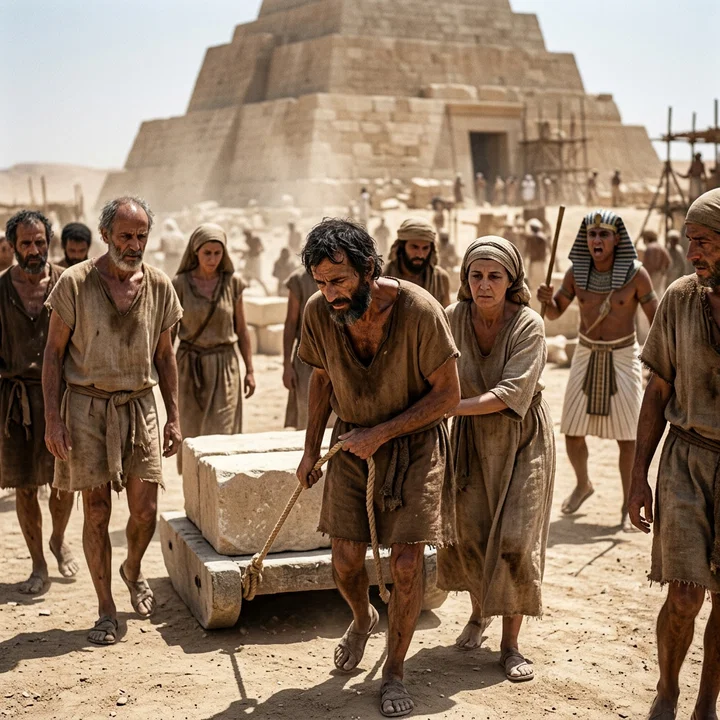
And Pharaoh commanded the same day the taskmasters of the people, and their officers, saying,
Translations
American King James Version, King James Version, KJV Cambridge Paragraph Bible, Darby Translation
And Pharaoh commanded the same day the taskmasters of the people, and their officers, saying,
And Pharaoh commanded the same day the task-masters of the people, and their officers, saying,
Revised Version, American Standard Version
And the same day Pharaoh commanded the taskmasters of the people, and their officers, saying,
And Pharaoh commandeth, on that day, the exactors among the people and its authorities, saying,
So then Pharaoh gave command on that day, unto the taskmasters over the people and unto their overseers—saying:
Berean Standard Bible, Majority Standard Bible
That same day Pharaoh commanded the taskmasters of the people and their foremen:
The same day Pharaoh commanded the taskmasters of the people and their officers, saying,
The same day Pharaoh gave orders to the overseers and those who were responsible for the work, saying,
Therefore Pharaoh gaue commandement the same day vnto the taskemasters of the people, and to their officers, saying,
Douay-Rheims (Challoner revision)
Therefore he commanded the same day the overseers of the works, and the taskmasters of the people, saying:
Pictures
Cross-references
- Exodus 1:13-14
And the Egyptians made the children of Israel to serve with rigour:
Describes the forced labor and harsh treatment that Pharaoh’s order intensifies.
- Exodus 3:7
And the LORD said, I have surely seen the affliction of my people which are in Egypt, and have heard their cry by reason of their taskmasters; for I know their sorrows;
God sees Israel’s oppression under Egyptian taskmasters and hears their cry.
- Exodus 5:1
And afterward Moses and Aaron went in, and told Pharaoh, Thus saith the LORD God of Israel, Let my people go, that they may hold a feast unto me in the wilderness.
Moses and Aaron’s request to let Israel go provokes Pharaoh’s order.
- Deuteronomy 4:20
But the LORD hath taken you, and brought you forth out of the iron furnace, even out of Egypt, to be unto him a people of inheritance, as ye are this day.
Egypt is described as an iron furnace from which God brought Israel.
- Exodus 5:13
And the taskmasters hasted them, saying, Fulfil your works, your daily tasks, as when there was straw.
daily brick quota blocks Sabbath keeping
- Exodus 5:15-21
Then the officers of the children of Israel came and cried unto Pharaoh, saying, Wherefore dealest thou thus with thy servants?
The officers appeal to Pharaoh, then reproach Moses and Aaron for worsening their plight.
- Genesis 15:13
And he said unto Abram, Know of a surety that thy seed shall be a stranger in a land that is not theirs, and shall serve them; and they shall afflict them four hundred years;
Foretells Israel’s servitude and affliction in a foreign land.
- Acts 7:19
The same dealt subtilly with our kindred, and evil entreated our fathers, so that they cast out their young children, to the end they might not live.
Recalls the oppression of Israel in Egypt.
- Acts 7:34
I have seen, I have seen the affliction of my people which is in Egypt, and I have heard their groaning, and am come down to deliver them. And now come, I will send thee into Egypt.
Recalls Israel’s affliction and cry for deliverance.
- Exodus 6:1-5
Then the LORD said unto Moses, Now shalt thou see what I will do to Pharaoh: for with a strong hand shall he let them go, and with a strong hand shall he drive them out of his land.
God answers worsening bondage by promising deliverance and remembering his covenant.
Commentary
Each commentary is drawn from primary sources: the writings of Ellen G. White and Adventist pioneers and periodicals. Each commentary is separate. Its own words are not a quotation; follow the references to read the source passages.
Ellen G. White
6 sources
On the same day Moses and Aaron asked for Israel's release to worship God, Pharaoh answered with a command for harsher labor.1SP 177.1–180.1SG3 197.1PP 257.5–258.2ST Mar 4, 1880 The command was directed to the Egyptian taskmasters of the people and to the Hebrew officers set over them.1SP 177.1–180.1SG3 197.1ST Mar 4, 1880RH Nov 6, 1913 He ordered that straw no longer be supplied while the same quota of bricks was still required, so the people had to gather straw for themselves and still produce as much as before.1SP 177.1–180.1SG3 197.1ST Mar 4, 1880
Pharaoh justified the order by claiming the people were idle.SG3 197.1 He also acted from suspicion that the people were plotting revolt, using heavier demands to leave them no time for scheming and to crush their independence.PP 257.5–258.2 The command displays hardened resistance to divine authority by intensifying oppression instead of yielding.1SP 177.1–180.1 The order made the work crueler and impossible to complete, and the Hebrew officers were beaten when the people failed to meet the quota.ST Mar 4, 1880
The command increased the weekly workload again and again with the purpose of forcing Israel to labor on the Sabbath while still in bondage in Egypt.PK 180.2RH Nov 6, 1913 This conflict brought the Sabbath institution prominently before God's people, and their deliverance from bondage brought them to a place where they could observe unmolested all His precepts, including His appointed rest day.PK 180.2RH Nov 6, 1913
Sources
Pioneers and periodicals
31 sources
On the same day Moses and Aaron first asked for release to worship in the wilderness, Pharaoh ordered the Egyptian taskmasters over the people and their Hebrew overseers to make their service harder.RH Apr 23, 1908ST Jan 25, 1910ST Feb 4, 1913ST Apr 28, 1909 No more straw would be supplied for brickmaking, yet the laborers must gather stubble for themselves from the fields and still deliver the same daily number of bricks, and the Hebrew officers were beaten when the quota failed.ST Mar 4, 1880ST Dec 28, 1888RH Apr 22, 1858 Moses and Aaron had been calling Israel back to rest from labor on the seventh-day Sabbath after years of working every day, and Pharaoh answered that teaching the same day by dismissing their words as vain, calling the people idle for wanting to sacrifice, and laying more work on them so they would not listen.ST Aug 1, 1911RH Mar 25, 1909ST Apr 28, 1909ST Dec 28, 1888RH Oct 29, 1914 Under masters who controlled work and rest, rigorous servitude made keeping a day of rest practically impossible, so Israel was in great measure prevented from observing God's law and the Sabbath even if they desired it.ST Aug 1, 1911ST Apr 28, 1909ST Oct 11, 1883 God therefore wrought deliverance with a mighty hand to bring them where they could keep the Sabbath unmolested and be tested in obedience, and this denial of rest in Egypt gives the background for the command to let servants rest on the Sabbath.ST Aug 1, 1911RH Oct 29, 1914RH Feb 3, 1852RH May 16, 1854
Historical Setting and Oppression
Exodus belongs to the history part of the book, chapters 1 to 18, in a book whose name means the going out, referring to Israel's departure from Egypt.RH Jan 20, 1916 Chapters 5 to 10 relate Moses' interviews with Pharaoh, the contest with the magicians, and the plagues culminating in the death of the firstborn and the departure. This verse falls at Moses' first appearance before Pharaoh and at the first request that Israel be allowed to worship God in the wilderness.ST Feb 4, 1913 It marks the beginning of Pharaoh's refusal, before God dealt with him through further appeals and mighty miracles, followed by repetition of the promises and by the plagues on the waters turned to blood, the frogs, the lice, and the flies.ST Feb 4, 1913
The command took place three and one-half millenniums ago when Egypt ruled the world as its greatest kingdom, acknowledged for might and power and skill and wisdom in statecraft.ST Nov 14, 1906 It was sustained by the annual overflow of its river, which it deified as one of its gods, and by the sun, which it worshiped and from whom its kings received their title as representative of the sun-god upon the throne of men.ST Nov 14, 1906 It followed an earlier time when Joseph, a captive slave become prime minister, taught Pharaoh how to store grain in plenteous years to become rich in time of famine and instituted a land-law with easy combined rental and taxes.ST Nov 14, 1906 As long as his memory lived among the rulers of Egypt he was honored, his laws governed, the country flourished, and the people who lived in Egypt knew no oppression but prospered.ST Nov 14, 1906
On the same day Moses and Aaron asked for release, Pharaoh commanded the taskmasters of the people and their officers.ST Jan 25, 1910ST Apr 28, 1909 Those were Egyptian taskmasters set over the labor and Israelite or Hebrew overseers under them.ST Mar 4, 1880ST Apr 28, 1909ST Aug 11, 1909 The verse is part of the account of forced labor under overseers and taskmasters that can be compared with Egyptian historical records, which attest to such management of labor.RH Apr 23, 1908 In that oppression Israel was forced to make bricks for Pharaoh's building projects and was beaten by taskmasters.ST Aug 11, 1909 The ruler in this brick-yard story is Pharaoh, king of Egypt, not Herod, who lived nearly fifteen centuries later and ruled in Syria.
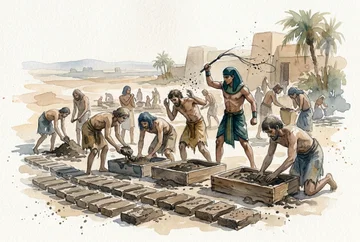
The order made the service more severe to crush the desire for liberty and to keep the people from listening to the call to go and sacrifice.ST Dec 28, 1888RH Apr 23, 1908 No more straw would be given for brick, but the people must go into the fields themselves to gather straw and stubble where grain was cut a little below the ear with the straw left standing.ST Dec 28, 1888RH Apr 22, 1858RH Jun 20, 1912 They must still produce the same daily number of bricks as before, with no deviation.ST Mar 4, 1880ST Dec 28, 1888RH Apr 22, 1858 The work thus became more cruel and impossible to complete, and the Hebrew officers were beaten when the quota failed.ST Mar 4, 1880 Egyptian tombs confirm the setting by depicting the whole brick-making process of digging and mixing clay, shaping it in the mould, taking bricks from the form and placing them in rows, and carrying them away to dry, with the taskmaster with rod in hand overlooking slaves at work.RH Apr 22, 1858
The verse belongs to the long and terrible oppression called the iron furnace and the bitter servitude, which came after brief prosperity upon the family of Abraham that had gone down to Egypt.RH Dec 17, 1861 By then Israel had grown more and mightier than the Egyptians and lay in bitter bondage under Pharaoh's command.RH Jan 20, 1916 It fulfilled what was foreshadowed to Abraham by the horror of great darkness and the smoking furnace in vision, and the delay happened because Israel could not possess the promised land until the iniquity of the Amorites was full.RH Dec 17, 1861 It stands at the beginning of God's mighty saving work for Israel, creative power shown over again, greater than in the saving of any other nation, with the whole power of Egypt set against them and ending with the song of triumph beyond the Red Sea and the host of Egypt overthrown.ST Jan 30, 1912 Pharaoh answered the plea for deliverance by tightening the burdens, and that increased suffering helped bring about the release.RH Oct 27, 1874
Sabbath Conflict and Deliverance
After years of hard bondage Israel had grown lax in observing the seventh-day Sabbath as part of the divine law and was working every day, while Moses and Aaron were teaching the people to rest from labor and seeking to bring them back to Sabbath observance.ST Aug 1, 1911RH Mar 25, 1909RH Oct 29, 1914ST Jan 20, 1909 God's preparation to deliver them from bondage was a call to return to observance of the Sabbath of the Lord, and this work in Egypt was a Sabbath reform.RH Oct 29, 1914ST Sep 10, 1896 Pharaoh put that reform down by putting his effort to stop Sabbath-keeping into action through the taskmasters and officers.ST Aug 1, 1911ST Sep 10, 1896
Pharaoh answered that teaching the same day Moses and Aaron asked for release by commanding the taskmasters of the people and their officers to lay more work on Israel.RH Mar 25, 1909ST Apr 28, 1909ST Dec 28, 1888 He dismissed their words as vain, charged them with turning the people from work and making them rest, called them idle for wanting to go and sacrifice to God, suspected their efforts to restore Sabbath observance, and feared they were becoming idle and plotting against his rule.ST Aug 1, 1911RH Mar 25, 1909ST Dec 28, 1888RH Jun 20, 1912 He therefore ordered more work to be laid on them to keep them from listening and so they would not regard those words, beginning a determined effort to crush their desire for liberty.RH Mar 25, 1909ST Dec 28, 1888RH Apr 23, 1908
The command put Sabbath-keeping out of reach by withholding straw for brick while requiring the people to go and gather straw and stubble themselves, and finally by imposing a fixed daily number of bricks with no deviation from day to day.ST Aug 1, 1911ST Apr 28, 1909ST Dec 28, 1888RH Jun 20, 1912 Meeting the full quota each day while gathering straw in the fields left them unable to keep God's rest day, so keeping a day of rest became impossible and labor was forced on the Sabbath under conditions made harder and more exacting again and again.RH Nov 6, 1913ST Aug 1, 1911ST Apr 28, 1909 In that state of rigorous servitude and abject oppression under masters who controlled work and rest, Israel was in great measure prevented from practically observing God's law, since acceptable worship includes obeying His law.ST Oct 11, 1883RH May 16, 1854 In that oppressed state as bondmen they could not have kept the Sabbath even if they had desired to, though they might have kept the other nine commandments, and they were probably deprived of Sabbath observance.RH Feb 3, 1852ST Oct 21, 1889RH May 16, 1854
Those who hold otherwise point out that the account of irritation between Pharaoh, the taskmasters and officers, and the Hebrew slaves gives no hint or statement of any trouble over a sacred rest-day.ST Oct 21, 1889 On that reading the conflict there is over other causes, not over God-fearing Hebrew men and women refusing to work on Saturday in obedience to a holy command while Egypt kept Sunday as its sacred day for worship of the sun.ST Oct 21, 1889
The conflict brought the Sabbath institution prominently before the people of God, and Israel's attempt at Sabbath observance while still in Egypt was answered through oppressors by heaping added hardship on them, under which they murmured and complained most bitterly.RH Nov 6, 1913ST Mar 7, 1906 God wrought deliverance for them and brought them out with a mighty hand to where they could keep the Sabbath, observe unmolested all the precepts of Jehovah including God's appointed rest day, follow God's law, and be tested in obedience.RH Nov 6, 1913RH Oct 29, 1914RH Feb 3, 1852RH May 16, 1854 Those cruel conditions were afterward swept away with their oppressors at deliverance, so no such hardship could excuse later Sabbath disobedience.ST Mar 7, 1906 The verse therefore explains that as servants in Egypt Israel was not allowed to keep the Sabbath, and gives the background for the command to allow servants to rest on the Sabbath because Israel had been denied that rest in Egypt.ST Aug 1, 1911
Doctrine and Application
The same-day order to the taskmasters and officers was Pharaoh's answer to the call to rest from burdens and worship, dismissing that call as vain words, and in that contempt for God and His law is seen that the oppression was not mere physical bondage but a conflict over worship and Sabbath-keeping.RH Mar 25, 1909 It was idolatrous Egyptians persecuting Hebrews who worshiped the true God, proving that he that was born after the flesh persecutes him that was born after the Spirit and that the wicked persecute the righteous.RH Jun 8, 1916 Pharaoh stubbornly continued that course until Egypt was laid waste by plagues and death in every house forced deliverance.RH Mar 25, 1909
The first appearance before Pharaoh brought severer oppression, followed by repetition of the promises and then the plagues of waters turned to blood, frogs, lice, and flies. Those plagues struck things worshiped or connected with Egyptian worship to show Pharaoh and the people that their gods are vanity and that the God of Israel is the true God. The oppression kept Israel from serving God properly despite a reasonable appeal to let them go and serve Him.ST Apr 22, 1913 In this dealing Pharaoh hardened his own heart at first, and his heart is later described as hardened by the Lord when God withdraws His Spirit after Pharaoh rejects its admonitions and softening influence.ST Apr 22, 1913
In Egypt Israel was in great measure prevented by rigorous servitude from practically observing God's law, since acceptable worship includes obeying His law, and the increased labor when they desired to worship proves it.ST Oct 11, 1883 If freedom from the law were liberty, Israel had that liberty in Egypt, but God calls their condition the house of bondage.ST Oct 11, 1883 He brought them out to give them the privilege of obeying and serving Him in a land flowing with milk and honey, and He spoke His law audibly to the whole multitude and gave it in indestructible form to assist their liberty, for obedience frees from condemnation.ST Oct 11, 1883 Hundreds of years of slavery had left them unable to comprehend His great salvation and the character He required, and therefore He gave them the sanctuary as a great multiple object-lesson that would teach by its various forms and rites the great plan of salvation.
Forced Sabbath-breaking under such increased burdens is not counted as guilt, for God did not hold the Hebrews responsible for doing what they could not help when left unable to keep the Sabbath.RH Sep 9, 1862 He would not have been honored by their resisting unto death rather than submitting to forced work, and the same is true of drafted Sabbath-keepers compelled to break the Sabbath in the army.RH Sep 9, 1862 Pharaoh's tyranny was that of a hurrying, hard, close-fisted master demanding brick so urgently that his brick-makers had no time to read or pray.RH May 17, 1860 The same Pharaoh spirit still exists even among those professing the message, in modern Pharaohs who lay onerous burdens on the oppressed and make rapacious demands for more work with cutting reproaches.RH May 17, 1860 Such hard mastery makes bad servants, stirs up their evil passions and sinks them lower, and breaks their strength until arms tremble and knees grow weak because discouragement of mind afflicts the body, while a kind, good master like Cornelius makes good servants bound to him by love, who are his solace, good fortune and recommendation.RH May 17, 1860 To hold Sabbath-keeping doctrines while oppressing workers will only be a millstone to sink the oppressor in an ocean deep as eternity, and God must speedily pity and deliver the oppressed, for this oppression will soon end.RH May 17, 1860
Sources