Genesis 12:5
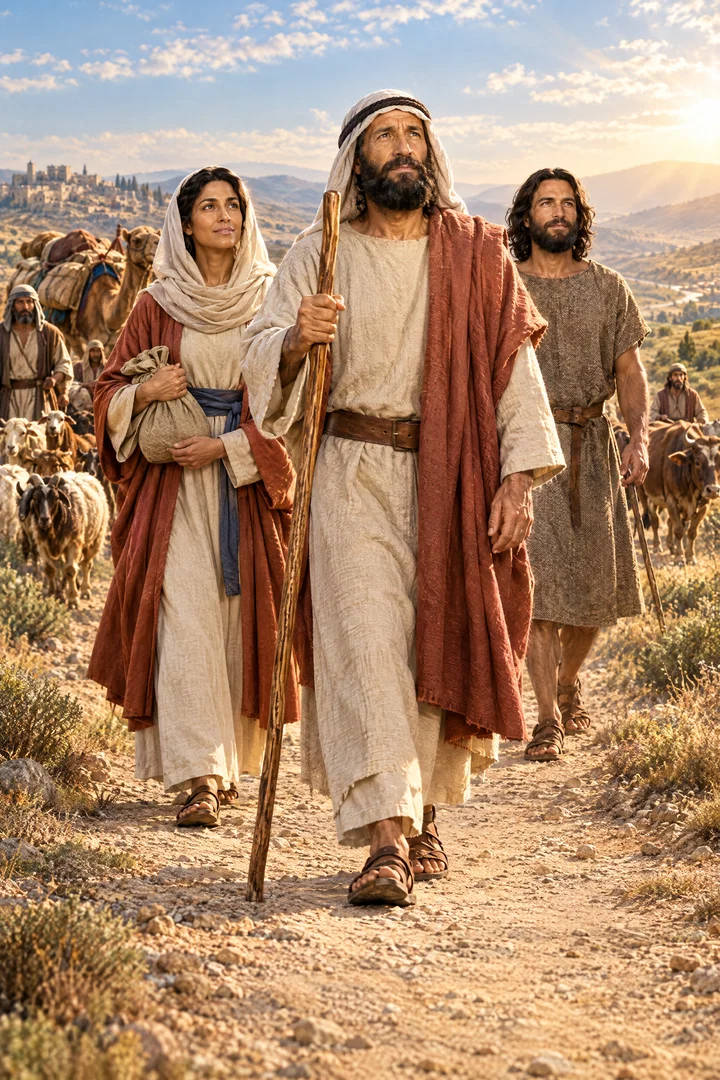
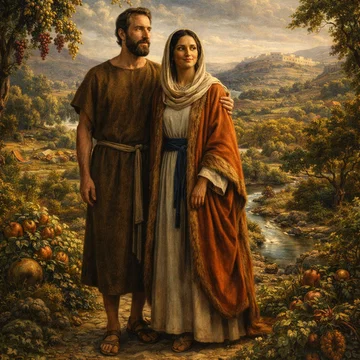
And Abram took Sarai his wife, and Lot his brother’s son, and all their substance that they had gathered, and the souls that they had gotten in Haran; and they went forth to go into the land of Canaan; and into the land of Canaan they came.
Translations
American King James Version, King James Version, KJV Cambridge Paragraph Bible, Revised Version, American Standard Version
And Abram took Sarai his wife, and Lot his brother’s son, and all their substance that they had gathered, and the souls that they had gotten in Haran; and they went forth to go into the land of Canaan; and into the land of Canaan they came.
And Abram took Sarai his wife, and Lot his brother's son, and all their substance that they had gathered, and the souls that they had gotten in Haran; and they went to go forth into the land of Canaan; and into the land of Canaan they came.
And Abram taketh Sarai his wife, and Lot his brother's son, and all their substance that they have gained, and the persons that they have obtained in Charan; and they go out to go towards the land of Canaan; and they come in to the land of Canaan.
And Abram took Sarai his wife, and Lot his brother's son, and all their possessions that they had acquired, and the souls that they had obtained in Haran, and they went out to go into the land of Canaan; and into the land of Canaan they came.
And Abram took Sarai his wife, and Lot his brother’s son, with all the goods that they had gathered and the souls that they had gained in Haran,—and they came forth to go towards the land of Canaan, and came in to the land of Canaan.
Berean Standard Bible, Majority Standard Bible
And Abram took his wife Sarai, his nephew Lot, and all the possessions and people they had acquired in Haran, and set out for the land of Canaan.When they came to the land of Canaan,
Abram took Sarai his wife, Lot his brother’s son, all their possessions that they had gathered, and the people whom they had acquired in Haran, and they went to go into the land of Canaan. They entered into the land of Canaan.
And Abram took Sarai, his wife, and Lot, his brother's son, and all their goods and the servants which they had got in Haran, and they went out to go to the land of Canaan.
Then Abram tooke Sarai his wife, and Lot his brothers sonne, and all their substance that they possessed, and the soules that they had gotten in Haran, and they departed, to goe to the land of Canaan: and to the land of Canaan they came.
Douay-Rheims (Challoner revision)
And he took Sarai his wife, and Lot his brother’s son, and all the substance which they had gathered, and the souls which they had gotten in Haran: and they went out to go into the land of Chanaan. And when they were come into it,
Pictures

Cross-references 20 of 31
- Hebrews 11:8
By faith Abraham, when he was called to go out into a place which he should after receive for an inheritance, obeyed; and he went out, not knowing whither he went.
Abraham obeyed God’s call and went to Canaan without knowing his destination.
- Genesis 12:1
Now the LORD had said unto Abram, Get thee out of thy country, and from thy kindred, and from thy father’s house, unto a land that I will shew thee:
Abram obeys God’s call to leave his country and journey to Canaan.
- Acts 7:4
Then came he out of the land of the Chaldæans, and dwelt in Charran: and from thence, when his father was dead, he removed him into this land, wherein ye now dwell.
Recounts Abram’s departure from Haran and arrival in the land.
- Genesis 11:31
And Terah took Abram his son, and Lot the son of Haran his son’s son, and Sarai his daughter in law, his son Abram’s wife; and they went forth with them from Ur of the Chaldees, to go into the land of Canaan; and they came unto Haran, and dwelt there.
It describes the earlier move from Ur to Haran.
- Galatians 3:7-9
Know ye therefore that they which are of faith, the same are the children of Abraham.
People of faith are identified as Abraham’s children and share his blessing.
- Genesis 13:4
Unto the place of the altar, which he had made there at the first: and there Abram called on the name of the LORD.
Abram called on the Lord’s name wherever he went.
- Galatians 3:29
And if ye be Christ’s, then are ye Abraham’s seed, and heirs according to the promise.
Those who belong to Christ are Abraham’s seed and heirs of the promise.
- Hebrews 11:10
For he looked for a city which hath foundations, whose builder and maker is God.
Abraham’s journey toward Canaan reflects his hope for God’s enduring city.
- Genesis 15:2
And Abram said, Lord GOD, what wilt thou give me, seeing I go childless, and the steward of my house is this Eliezer of Damascus?
Eliezer of Damascus belonged to Abraham’s household.
- Galatians 3:17
And this I say, that the covenant, that was confirmed before of God in Christ, the law, which was four hundred and thirty years after, cannot disannul, that it should make the promise of none effect.
Dates the law 430 years after Abraham’s call and covenant departure.
- Acts 7:3
And said unto him, Get thee out of thy country, and from thy kindred, and come into the land which I shall shew thee.
Stephen recounts God’s command for Abram to leave his country and kindred.
- Hebrews 11:9
By faith he sojourned in the land of promise, as in a strange country, dwelling in tabernacles with Isaac and Jacob, the heirs with him of the same promise:
Abraham sojourned in the land of promise.
- Acts 7:2
And he said, Men, brethren, and fathers, hearken; The God of glory appeared unto our father Abraham, when he was in Mesopotamia, before he dwelt in Charran,
God appeared to Abraham before his journey from Haran, beginning his call.
- Acts 7:5
And he gave him none inheritance in it, no, not so much as to set his foot on: yet he promised that he would give it to him for a possession, and to his seed after him, when as yet he had no child.
Abraham had no inheritance in the land despite the promise.
- Genesis 14:14
And when Abram heard that his brother was taken captive, he armed his trained servants, born in his own house, three hundred and eighteen, and pursued them unto Dan.
Abraham summoned 318 men from his household to rescue Lot.
- Genesis 26:5
Because that Abraham obeyed my voice, and kept my charge, my commandments, my statutes, and my laws.
Abraham’s obedience included keeping God’s commandments and laws.
- Genesis 13:15-16
For all the land which thou seest, to thee will I give it, and to thy seed for ever.
Promises Abraham the land forever and descendants as numerous as the dust.
- Genesis 13:18
Then Abram removed his tent, and came and dwelt in the plain of Mamre, which is in Hebron, and built there an altar unto the LORD.
Abraham built another altar to the Lord.
- Galatians 3:8
And the scripture, foreseeing that God would justify the heathen through faith, preached before the gospel unto Abraham, saying, In thee shall all nations be blessed.
The promise to Abraham is identified as the gospel preached beforehand.
- Genesis 15:5-6
And he brought him forth abroad, and said, Look now toward heaven, and tell the stars, if thou be able to number them: and he said unto him, So shall thy seed be.
God promises Abraham descendants, and Abraham trusts him.
Commentary
Each commentary is drawn from primary sources: the writings of Ellen G. White and Adventist pioneers and periodicals. Each commentary is separate. Its own words are not a quotation; follow the references to read the source passages.
Ellen G. White
6 sources
Abram took Sarai his wife and Lot his brother's son, with all the substance they had gathered and the souls they had gotten in Haran, and went forth to go into the land of Canaan, and into the land of Canaan they came.PP 127.2Lt 56, 1897, par. 7PP 127.113MR 357.1PP 147.2–148.1 His departure from his former and native country and homeland was in obedience to God's call.PP 169.3PP 147.2–148.1 The souls taken with him were people who had joined them in Haran, including many who through Abraham and Sarah had come to worship and serve the true God and who chose to travel with him rather than remain there.PP 127.1
His arrival completed the journey from Haran and sets the scene for his first encampment at Shechem, in a fertile land already occupied by the Canaanites and marked by idolatry.PP 127.2 The Canaan he entered had been promised as an everlasting possession, yet he did not receive an earthly possession there.PP 169.3 Leaving meant abandoning his ancestral home and the graves of his fathers to live as a stranger in the land God had promised.PP 147.2–148.1
Traveling as a stranger with his household and those accompanying him, his first work wherever he pitched his tent was to build an altar to God and worship with his fellow travelers.Lt 56, 1897, par. 713MR 357.1
Sources
Pioneers and periodicals
43 sources
Abram at seventy-five obeyed the Lord's call to leave his country and kindred for a land God would show him, taking Sarai his wife and Lot his brother's son with all their gathered substance and the persons gotten in Haran, going forth to go into Canaan and coming into Canaan.ST Jan 2, 1912ST Jan 13, 1887ST Dec 29, 1909ST Feb 17, 1888 The souls gotten in Haran were whole persons added to his household, converts won as he proclaimed the name of Jehovah who had left idolatry to worship the true God and went with him as the fruit of his missionary work.RH Apr 25, 1871ST Jul 24, 1901ST Jul 26, 1910ST Jan 22, 1894 His entrance into the promised land began the 430-year sojourn, 215 years in Canaan and 215 years in Egypt, ending with Israel's deliverance from Egypt at the Exodus.ST Aug 12, 1913RH Jan 2, 1913RH Dec 3, 1867 His arrival set the scene for God's covenant promise that the land would be given to his seed, promising innumerable descendants through whom all nations and families of the earth would be blessed in Christ.RH Nov 13, 1856ST Sep 25, 1901RH Dec 24, 1903ST Jul 22, 1908ST Jun 26, 1901 His journey begun in faith and brought to a successful end is the example of faithful obedience completed, representing the travels of Christians leaving the world toward the heavenly Canaan and gathering souls for life and eternity as they go.ST Sep 25, 1901RH Nov 17, 1910RH May 14, 1867RH Jan 10, 1907
Journey to Canaan
Genesis 12:5 records that Abram took Sarai his wife and Lot his brother's son, together with all the substance they had gathered and the souls they had gotten in Haran, and went forth to go into the land of Canaan, and into the land of Canaan they came.ST Jan 2, 1912ST Jan 13, 1887ST Dec 29, 1909ST Feb 17, 1888ST Sep 25, 1901 Lot was Abram's nephew.ST Jan 20, 1881 He was seventy-five years old when he departed, as the preceding verse states, and his going fulfilled the Lord's call to leave his country and kindred for a land God would show him.ST Feb 17, 1888ST Jan 22, 1894ST Jan 22, 1894 He obeyed without knowing where he was going, and Abraham's greatness consisted in obeying God through faith.ST Feb 17, 1888ST Sep 25, 1901 The account belongs to God's call to Abram, his sojourn, the promised Seed, and the trials of faith through which he learned to trust God, showing God's care for that promise and His providential dealings with His children.ST Jan 2, 1912ST Dec 29, 1909
Abram was a native of Ur of the Chaldees in Mesopotamia, near the mouth of the Euphrates.ST Jan 13, 1887ST Jan 13, 1887ST Jan 22, 1894 The departure followed what God had said to him while he was in Ur, that He would make of him a great nation, bless him, make his name great, make him a blessing, bless them that bless him, curse him that curses him, and bless all families of the earth in him.ST Jan 13, 1887 At his first call from his own country he had preached until the people refused to hear more, and finding in Haran a people willing to hear he proclaimed there until his work was finished, then left with those who believed, perhaps also leaving witnesses behind in both places.ST Jan 22, 1894ST Jan 22, 1894 He went as God commanded without knowing or stopping to ask why, going out by faith to a place he was to receive for an inheritance, not knowing whither he went.ST Feb 17, 1888ST Jan 22, 1894 After he had passed through the land to the plain of Moreh, the Lord appeared to him again and said his seed would be given this land.ST Jan 13, 1887
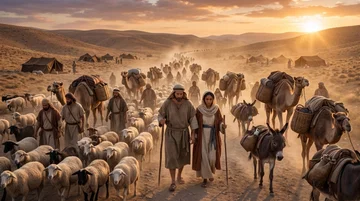
Haran was a stop on the journey before continuing to Canaan.RH Jan 18, 1906 The moving company was a vast, motley caravan, with widespread flocks of sheep and camels as far as the eye could reach to right, left, and front, and long lines of asses and bullocks laden with black tents, huge caldrons, and variegated carpets.ST Jan 20, 1887 Aged men and women no longer able to walk were tied on the heap of domestic furniture, infants were crammed into saddle-bags with their tiny heads thrust through the narrow opening balanced on the animal's back by kids or lambs tied on the opposite side, young girls were clothed only in the close-fitting Arab shirt, mothers carried children on their shoulders, boys drove flocks of lambs, riders urged dromedaries with short-hooked sticks, and high-born ladies sat in the center of huge gaudy wings extending like those of a butterfly from each side of the camel's hump, all without horses.ST Jan 20, 1887 He entered Canaan as the territory of his ancestors and used it as pastureland for his many flocks and herds, though not as a fixed home. The Canaanites and Perizzites had only recently established themselves there and did not prevent his progress or challenge his authority, so that he traveled through the land as a proprietor with sovereign power.
The verse belongs to the first fourteen chapters of Genesis whose historical accuracy is affirmed by ancient traditions and historical evidence.ST Dec 7, 1915 Its essential facts are substantially confirmed by contemporary records and monuments, so that it belongs to a historically grounded account of Abram's journey with his family and household from Haran to Canaan.ST Nov 27, 1884 Reducing that account of Abraham's migration to a speculative theory about a tribe's westward movement is not established by the passage.RH Aug 12, 1909
Souls Gathered in Haran
The souls gotten in Haran are whole persons or beings, simply designating persons in the same sense as Genesis 2:7, not a separate part of a person.RH Apr 25, 1871ST Sep 7, 1904 They are the servants Abraham had acquired in Haran, and they are called souls to emphasize that they were living people and not merely hands or labor to be used.ST Apr 1, 1889 Work and wages are right only when master and servant recognize one another as persons and treat one another with earnest, brotherly regard.ST Apr 1, 1889
The people gotten in Haran were converts won when Abram proclaimed the gospel, for calling on the name of the Lord wherever he went means preaching in the name of Jehovah.ST Jan 22, 1894ST Jan 22, 1894 At his first call from his own country in Ur of the Chaldees in Mesopotamia he had preached the truth of God until the people refused to hear more, and finding in Haran a people willing to hear he proclaimed the true God there until his work was finished and they would hear no more.ST Jan 22, 1894 Then at seventy-five years old he departed out of Haran, taking Sarai his wife and Lot his brother's son and all their substance with the souls he had obtained by conversion to the truth of God, people who believed through his work.ST Jan 22, 1894ST Jan 22, 1894 He left with those who believed as he did, perhaps also leaving witnesses to the true God in both places, and went forth to go into the land of Canaan by faith, not knowing whither he went, obeying God's call to go out to a place he was to receive for an inheritance.ST Jan 22, 1894ST Jan 22, 1894 Those converts left Haran with him for Canaan as the fruit of that work.
These people were counted as part of his household, had left idolatrous practices, worshiped the true God, and joined the pilgrim on the journey to Canaan, showing that his stay in Haran had rescued people from idolatry through his missionary work.ST Jul 24, 1901ST Aug 7, 1893 The household he had gathered in Haran went with him, and this group grew in Canaan as he led people away from idolatry to worship the true God.ST Jul 26, 1910 The company is numbered at ten or fifteen hundred people who accepted his message to come out of the cities into the country and joined his household in an exodus from the cities to the country in obedience to God.RH Oct 22, 1903
After the death of Terah, Abram took Sarai, Lot, their substance, and this company and journeyed west across the Syrian desert and over the Jordan into a fertile valley in Palestine.RH Oct 22, 1903 There he established an industrial school in which both children and heads of families were trained, and from which the Hebrew nation developed.RH Oct 22, 1903 The people who joined his household in Haran and went with him and Sarai to Canaan were taught the principles of God's moral law, which Abraham himself obeyed.ST Apr 13, 1915
Sojourn and Chronology
The departure from Haran and arrival in Canaan mark the beginning of the 430-year sojourn, dated from God's call and covenant with Abram in B.C. 1921.ST Aug 12, 1913RH Jan 2, 1913ST Aug 7, 1901 That leaving of his native land to become a wanderer in Canaan, a wandering that soon included Egypt, begins the sojourning of the children of Israel.RH Jan 2, 1913 The period comprised 215 years in Canaan from Abram's entrance to Jacob's move into Egypt, and 215 years more in Egypt continued there by Jacob and his posterity, ending with Israel's deliverance from Egypt at the Exodus in B.C. 1491.ST Aug 12, 1913RH Jan 2, 1913ST Aug 7, 1901
The 430 years run from Abram's entrance into the promised land to the Exodus, not only the time dwelt in Egypt, but the whole sojourning in the land of Canaan and in the land of Egypt.RH Dec 3, 1867 They are made up of 25 years from Abraham's entrance into the promised land to the birth of Isaac, Isaac being 60 years old at the birth of Jacob, Jacob being 130 years old at going into Egypt, and 215 years more continued there by Jacob and his children.RH Dec 3, 1867 The 400 years of affliction are distinct from the 430 years, counted from a later beginning thirty years after the promise to the deliverance from Egypt.ST Jan 21, 1913ST Aug 7, 1901RH Dec 3, 1867 That later beginning was when Ishmael persecuted Isaac, the son of the bondwoman mocking the heir, as the beginning of affliction.ST Jan 21, 1913ST Aug 7, 1901RH Dec 3, 1867
The year of Abram going forth into the land of Canaan gives the chronological starting point, and adding the 430 years to that year reaches the chronological year of Exodus 20.RH Oct 8, 1857 This shows the dispensation of law began at Sinai.RH Oct 8, 1857 The law with that beginning at Sinai and with an expiration in the midst of the seventieth week is not the moral law, which existed before Moses and continues after Christ.RH Oct 8, 1857
Covenant Promise Kept
Genesis 12:5 belongs to the account of God's call to Abram, his sojourn, and the trials of faith through which he learned to trust God.ST Jan 2, 1912ST Dec 29, 1909ST Dec 20, 1910 It belongs to the story of the promised Seed and shows God's care for that promise and His providential dealings with His children.ST Dec 29, 1909ST It belongs to God's progressive dealings with Abram, called the father of the faithful, from his call toward fully trusting God.ST Jan 2, 1912ST Dec 20, 1910 It belongs to God's providential dealings with Abraham's family, whose line was chosen to carry forward the promised Seed.ST Dec 29, 1909ST It marks the beginning of the book's account of God's dealings with the chosen race, which runs from chapters 12 through 50.ST Mar 17, 1914
Genesis 12 begins the covenant God made with Abraham because he was righteous.RH Nov 13, 1856 To him God promised innumerable descendants, that through them all nations would be blessed, and that they would inherit the land forever.RH Nov 13, 1856 These broad and comprehensive promises were confirmed to Isaac because he was righteous and point to the coming Messiah.RH Nov 13, 1856 Because they embrace all nations they will not be fully realized until the great multitude of all nations and kindreds and people and tongues inherit the city Abraham looked for in the new heaven and new earth, where there is no more death, sorrow, crying, or pain.RH Nov 13, 1856
Abraham's call was God's choice of a representative of true faith after humanity had departed from Him.ST Sep 25, 1901 The promise associated with Abraham was that all families of the earth would be blessed through him and his Seed, Christ.ST Sep 25, 1901 It belonged not to his natural descendants as such, but to those who share the spiritual inheritance through Christ.ST Sep 25, 1901
Abram's obedience in leaving his country and traveling to Canaan with Sarai, Lot, gathered possessions, and the people joined to him in Haran sets the scene for God's promise that the land would be given to his seed.RH Dec 24, 1903ST Jul 22, 1908ST Jun 26, 1901 The promise included both a descendant and the land for that descendant.RH Dec 24, 1903 His faith in leaving Haran with family and household in obedience, trusting God's guidance though not knowing where he was going, was rewarded when God showed him Canaan and renewed the promise of the inheritance and a great nation.ST Jul 22, 1908ST Jun 26, 1901 There in Canaan the Lord appeared to him and promised that his descendants would possess the land.ST Jun 26, 1901
The instructions to come out from among one's people and walk through the land, compared with Genesis 26:3-5, were not the commandments and laws that Abraham kept, and treating them as such reverses cause and effect.RH Mar 25, 1858 Abram's departure for Canaan with Sarai, Lot, and his household belongs to the story of God's promise to Abraham and the later contrast between Abraham's human scheme through Hagar, which brought bondage and trouble, and Isaac's birth through God's promise, which represents freedom through Christ.ST Sep 28, 1915
Faithful Obedience Applied
Abraham's greatness lay in obeying God through faith, and his going forth with his household toward Canaan and arriving there stands as a work begun in faith and brought to a successful end.ST Sep 25, 1901 Completing the journey to the land to which God had called him was necessary for receiving God's blessing and safety. He was safe there even among enemies, unlike Lot in Sodom among friends, because safety lies in dwelling apart with God.
Obedience to the call meant going all the way to Canaan and not stopping partway in Haran or combining the worship of God with the worship of other gods, in contrast to those who stayed in Haran rather than give up idolatry.RH Sep 19, 1912 The journey into a strange land was an act of confidence in God, in which he erected altars and proclaimed the name of the Lord despite dangers.RH Nov 17, 1910 His tent-dwelling expressed his hope for the city of God and the heavenly Canaan as his lasting inheritance.RH Nov 17, 1910
His departure and journey toward Canaan represent the travels and trials of God's church, for Christians likewise leave the world at conversion and journey toward the heavenly Canaan until death or Christ's second advent.RH May 14, 1867 His wandering among the tribes of ancient Canaan is a witness that people can obey God and live out the truth even amid difficult circumstances, temptation, trial, mockery, and ridicule.RH May 30, 1912 Lot was a lingering connection to Chaldea who proved little help to Abram, and their eventual separation showed that God's plan for Abram's complete separation was best. Abraham gathering souls as he went forth is the pattern for gathering souls for life and eternity by sounding forth God's message with the courage of Caleb and Joshua while trusting God's promised reward.RH Jan 10, 1907
Sources