Genesis 14:16
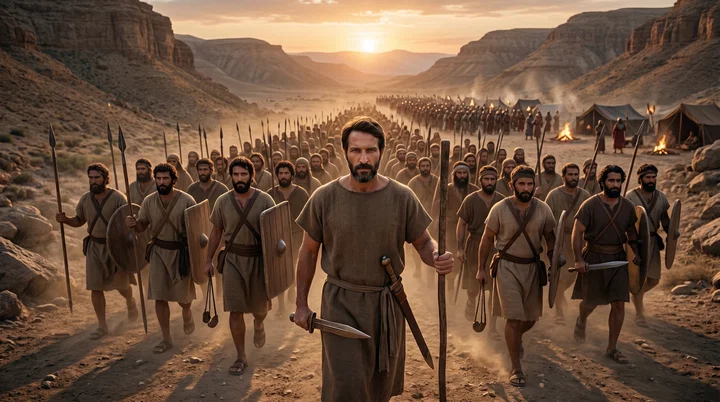
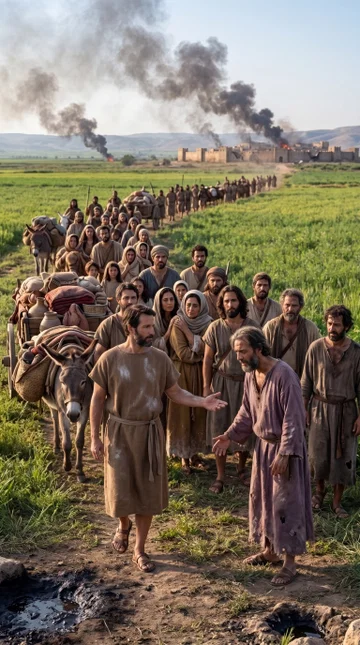
And he brought back all the goods, and also brought again his brother Lot, and his goods, and the women also, and the people.
Translations
American King James Version, King James Version, KJV Cambridge Paragraph Bible, Webster Bible, Revised Version
And he brought back all the goods, and also brought again his brother Lot, and his goods, and the women also, and the people.
And he brought back all the goods, and also brought back his brother Lot, and his goods, and the women also, and the people.
and he bringeth back the whole of the substance, and also Lot his brother and his substance hath he brought back, and also the women and the people.
And he brought back all the property, and brought again his brother Lot and his property, and the women also, and the people.
So he brought back all the goods,—yea Lot also his brother with his goods, did he bring back, and the women also, and the people.
Berean Standard Bible, Majority Standard Bible
He retrieved all the goods, as well as his relative Lot and his possessions, together with the women and the rest of the people.
He brought back all the goods, and also brought back his relative Lot and his goods, and the women also, and the other people.
And he got back all the goods, and Lot, his brother's son, with his goods and the women and the people.
And he recouered all the substance, and also brought againe his brother Lot, and his goods, and the women also and the people.
Douay-Rheims (Challoner revision)
And he brought back all the substance, and Lot his brother, with his substance, the women also and the people.
Pictures
Cross-references
- Hebrews 7:1-2
For this Melchisedec, king of Salem, priest of the most high God, who met Abraham returning from the slaughter of the kings, and blessed him;
Explains Melchizedek’s meeting with Abram after the battle and Abram’s tithe.
- Genesis 14:20
And blessed be the most high God, which hath delivered thine enemies into thy hand. And he gave him tithes of all.
Abraham gives Melchizedek a tenth of the recovered spoils.
- Genesis 14:12
And they took Lot, Abram’s brother’s son, who dwelt in Sodom, and his goods, and departed.
Lot is taken captive in the invasion and later recovered.
- Genesis 13:10
And Lot lifted up his eyes, and beheld all the plain of Jordan, that it was well watered every where, before the LORD destroyed Sodom and Gomorrah, even as the garden of the LORD, like the land of Egypt, as thou comest unto Zoar.
Lot chose fertile land near Sodom, from which he was later delivered.
- 2 Peter 2:7-8
And delivered just Lot, vexed with the filthy conversation of the wicked:
Lot is identified as righteous while living among the wicked.
- Genesis 14:22-23
And Abram said to the king of Sodom, I have lift up mine hand unto the LORD, the most high God, the possessor of heaven and earth,
Abraham refuses Sodom’s goods, showing his rescue was free from covetousness.
- Genesis 19:1-9
And there came two angels to Sodom at even; and Lot sat in the gate of Sodom: and Lot seeing them rose up to meet them; and he bowed himself with his face toward the ground;
Lot lives among Sodom’s people and condemns their wickedness.
- Hebrews 7:4
Now consider how great this man was, unto whom even the patriarch Abraham gave the tenth of the spoils.
It notes that Abraham gave Melchizedek a tenth of the spoils.
- Genesis 14:21
And the king of Sodom said unto Abram, Give me the persons, and take the goods to thyself.
the king's offer to keep the goods is what Abraham refused
- Genesis 14:4
Twelve years they served Chedorlaomer, and in the thirteenth year they rebelled.
twelve years of subjection under Chedorlaomer
- Genesis 19:12-17
And the men said unto Lot, Hast thou here any besides? son in law, and thy sons, and thy daughters, and whatsoever thou hast in the city, bring them out of this place:
Lot and his family are warned and led out before the cities’ destruction.
- Psalms 110:4
The LORD hath sworn, and will not repent, Thou art a priest for ever after the order of Melchizedek.
Both connect Melchizedek with priesthood.
Commentary
Each commentary is drawn from primary sources: the writings of Ellen G. White and Adventist pioneers and periodicals. Each commentary is separate. Its own words are not a quotation; follow the references to read the source passages.
Ellen G. White
4 sources
The verse records the recovery of all that had been taken in the warlike raid by the Elamites, with all the goods and all the people brought back.PP 134.3–135.1ST Feb 7, 1884PP 157.2–3 That full restoration included Lot and his family and goods, the women also, and the rest of the captives with their possessions.PP 134.3–135.1ST Feb 7, 1884PP 157.2–3Lt 69, 1890, par. 1–2 The rescue was a victory over a much stronger force, accomplished by divine power.PP 157.2–3 Although the victory gave opportunity to claim the spoils for himself, restoring Lot and unselfishly treating the prisoners, the spoil, and the rights of others displayed justice, humanity, and unselfish love of neighbor.ST Feb 7, 1884PP 157.2–3 By this victory and unselfish conduct the people of Sodom were shown the superiority of the faith honored, and were led to recognize that divine power had given the victory.PP 157.2–3 Looking after the relative Lot in bringing him and the other captives back with their goods is an example of concern for relatives' temporal and physical interests.Lt 69, 1890, par. 1–2
Sources
Pioneers and periodicals
45 sources
Abraham recovered everything that had been taken, bringing back Lot with his possessions together with the women and the rest of the captives and their goods.ST Sep 2, 1889RH Mar 3, 1904 He did this after pursuing the invaders with his 318 trained household servants and routing them by a night attack though greatly outnumbered and unpracticed in war.RH Oct 1, 1908RH Mar 10, 1863ST Jul 21, 1909 The recovery led directly to his meeting with Melchizedek, king of Salem and priest of the Most High God, to whom he gave a tenth of the recovered spoil.ST Sep 2, 1889ST Oct 21, 1889RH Mar 3, 1904 That tithe shows that setting apart one-tenth for God's ministers was already an established rule in the patriarchal age, long before Moses and the Levitical priesthood.RH May 18, 1869ST Jan 22, 1880 The rescue also displays Abraham's unselfish courage and love for his brother, in contrast with Lot's worldly choice of Sodom for gain, whose deliverance he failed to heed and afterward lost nearly all.ST Feb 7, 1884AUST Jun 14, 1920RH Nov 4, 1873ST Nov 8, 1899RH Mar 26, 1872
Rescue and Immediate Setting
After the battle Abraham recovered everything that had been seized, bringing back all the goods together with his kinsman Lot and Lot's possessions and the women and the rest of the people.ST Sep 2, 1889RH Mar 3, 1904RH Oct 1, 1908 This recovery of captives and spoil formed the immediate setting for what followed, when a tenth of the recovered spoil was given to Melchizedek, priest of God Most High.ST Sep 2, 1889RH Mar 3, 1904 The rescue came after a night attack on the invading army, by which the goods taken in the conquest were also brought back.RH Oct 1, 1908
He pursued with 318 trained servants born in his own house, men capable of being armed from his household for war against neighboring princes.RH Mar 10, 1863 Though unaccustomed to war and accompanied by only about three hundred men, he defeated the four kings and the forces of five kings and recovered Lot, the people, and all the goods.ST Jul 21, 1909RH Apr 2, 1861 The assault was made by night with a well-planned surprise, and the fact that those 318 household-born men formed a dependable army showed them to be loyal followers rather than persons held against their will.RH Oct 1, 1908RH Mar 10, 1863RH Mar 26, 1872
On the return Abraham came to the meeting with Melchizedek, having come back with the recovered goods, Lot, and the other captives after defeating the four foreign kings.RH Dec 1, 1910RH Jul 21, 1868 The meeting took place in the valley of Shaveh, also called the king's dale, where Melchizedek, king of Salem, met him with bread and wine and blessed him in the name of God Most High.RH Dec 1, 1910RH Jul 21, 1868 That valley lay probably just below the city on the return toward Hebron, among the earliest events connected with Jerusalem, a setting suggesting that Salem may have lain farther south rather than at Jerusalem.RH Dec 1, 1910RH Jul 21, 1868
The rescue kept Lot from becoming a slave, for he had been taken prisoner and was brought back with the other people and their goods.ST Jan 29, 1894RH May 26, 1863 It reached beyond Lot himself to the inhabitants of Sodom, saving him, his family, and the people of Sodom from dragging out miserable lives in bondage.RH May 26, 1863RH Mar 26, 1872 Lot's capture had followed his selfish choice of the plains of Sodom for pasture gain scarcely seven years before, when he was taken with Sodom's people and possessions; the weight of the accounts numbers the pursuers at 318 trained servants, though one account gives three hundred and nineteen.RH Mar 10, 1863RH Mar 26, 1872
History Confirmed by Archaeology
Genesis 14 is true history and not fable, parable, myth, or invented story.ST Dec 14, 1915ST Nov 23, 1904ST May 3, 1910ST Jul 16, 1896 The war in which four kings fought against five was a real event, and the kings and other figures named in the chapter were real people and real rulers, not myths.ST Dec 14, 1915ST Nov 23, 1904ST Jul 16, 1896 The chapter also mentions the father of the Israelites.ST Dec 14, 1915
Its statements are verified in minute detail by ancient records.ST May 20, 1913 Tablets found in the Chamber of Records by the banks of the Euphrates, inscribed on sandstone and marble, tell the same story of the invasion of Palestine in Abraham's time and vindicate the account as a historical record beyond question. Lists of kings are supported by records preserved in the stone libraries of the ancient Near East, and its numerous names are found on ancient monuments, some spelled letter for letter, showing that it reflects real historical people and is not a late invention.ST May 3, 1910ST Sep 7, 1904 Archaeological discovery confirms the story and its kings and setting, including details about Arioch's identity and alliance with Elam and about Chedorlaomer and his contemporaries, supporting the reliability of Abraham's pursuit, defeat of the invading kings, and recovery of Lot, the people, and the goods.RH Jul 9, 1914ST May 20, 1913ST May 20, 1913
The account is consistent with evidence that the Babylonian dynasties involved were contemporaneous, removing the claimed chronological difficulty that Abraham lived centuries before Hammurabi.ST Dec 14, 1915 Chedorlaomer's name appears as Kudur-la-ukhgamur on a tablet from the reign of Khammurabi of Babylon.ST Jul 8, 1897
Melchizedek and Christ
The recovery of Lot and the goods led directly to the meeting with Melchizedek as Abraham returned from defeating the kings, when Melchizedek met him, blessed him, set bread and wine before him, and received a tenth from him.ST Oct 21, 1889 He was king of Salem and priest of the Most High God, a priest-king in that office.ST Oct 21, 1889 The name Melchizedek means king of righteousness and Salem means peace, so he is king of righteousness and king of peace.ST Dec 17, 1912ST Oct 21, 1889 The record gives no account of his ancestry or of when his priesthood began or ended.
He represented Christ in his priesthood and was greater than Abraham, so that Abraham, great in God's sight, paid homage to him.ST Dec 17, 1912ST Oct 4, 1883ST Oct 4, 1883 Abraham saw Christ in Melchizedek, yet Melchizedek was a type of Christ and not Christ himself.ST Oct 4, 1883 He is described as a visitor from another world and the head of another world, even as Adam was designed to be the head of this world.ST Dec 17, 1912 He lived near Sodom, within God's providential dealings with Abraham's family as the chosen line through which the Seed would come.STST Oct 4, 1883
Tithing Before Moses
After the battle Abraham brought back all the goods that had been taken, and brought back Lot and Lot's goods and possessions, and the women and the other people.ST Sep 2, 1889RH Mar 3, 1904 This recovery is the setting for his meeting with Melchizedek and the circumstance preceding his first tithe, when he gave a tenth of the spoil he had recovered to Melchizedek, priest of God Most High.ST Sep 2, 1889RH Mar 3, 1904 He gave the Lord's priest a tenth of what he had received after he had recovered Lot and gained much booty, giving a tenth of the spoil to God.ST Sep 2, 1889RH Mar 3, 1904 The account therefore shows that tithing was practiced before the Mosaic law and before the Levitical priesthood, for in this chapter Abraham paid tithes to Melchizedek.RH May 18, 1869
God blessed Abraham both in recovering Lot and in taking great spoil, and the very first thing he did afterward was to give a tenth of everything to the Lord's priest.ST Jan 22, 1880 This proves that devoting one-tenth for the support of God's ministers was an established rule from the beginning in the patriarchal age.ST Jan 22, 1880 Because the tithing system existed before the Levitical priesthood and was associated with the Melchizedek priesthood, and because that priesthood is linked to Christ's continuing gospel ministry, tithing belongs to the gospel plan.RH Mar 9, 1905 It is founded on enduring moral principles and continues with that enduring priesthood, supporting the obligation to pay tithes under it.RH Mar 9, 1905
The recovered goods are the context for asking whether the tithe was given before or after the young men ate, a question that is left unanswered.ST Sep 2, 1889
War Government and Law
The bringing back of all the goods with Lot and his goods and the women and the people came after defeating the captors in a defensive fight undertaken for his allies.RH Oct 14, 1862 That defensive warfare did not make Abraham a murderer and did not violate God's law.RH Oct 14, 1862 He acted in the affair as an independent prince in Canaan, possessing the land as sovereign and proprietor, who could arm 318 servants from his own household and wage war against neighboring princes. Those 318 trained men born in his house formed a reliable army of loyal followers rather than persons held against their will, and it was with that household force that he pursued the kings and rescued Lot with the other captives, their goods, the women, and the people.RH Mar 10, 1863
The kings he pursued belonged to the imperial dominion of Chedorlaomer king of Elam, called Kudur-lagamer.ST Jan 20, 1904 He was an imperial ruler following Nimrod's pattern of asserting sovereignty first over territory and secondarily over people as inhabitants of the territory.ST Jan 20, 1904 His dominion covered the whole Mesopotamian plain and all the territory westward to the Mediterranean Sea almost to the border of Egypt, and held it all in subjection for twelve years.ST Jan 20, 1904 That dominion was as truly universal in its day as Alexander or Rome in later days.ST Jan 27, 1904 It became the pattern imitated by Thothmes III of Egypt, whose power extended eastward to the borders of India and held peoples in subjection through his reign and those of his three immediate successors.ST Jan 27, 1904 Such imposed empire does not endure, but goes absolutely to pieces when every king and every tribe, however petty, breaks loose and asserts the independence of native freedom.ST Jan 27, 1904
The events also show that God punished theft in Abraham's day. That punishment proves stealing was sin then. The law forbidding stealing was therefore already in force long before Moses.
Character Warning and Example
The account lays open the contrasting characters of Abram and Lot while displaying God's providential care and interest among men.ST Dec 20, 1910 It stands as an instance of how God's providence and word run through history and how events connect with the fulfillment of His purposes.ST Dec 20, 1910ST Nov 12, 1885 The bringing back of the captured people and goods, including Lot, gave the people of Sodom occasion to become acquainted with Abraham the friend of God.RH Jul 19, 1870ST Sep 1, 1898 That captivity and rescue came through Lot, a righteous man dwelling among them, and Abraham, another righteous man who sought to save him, and belonged to God's long-suffering mercy toward the cities from which they could learn of Abraham and of God's power.RH Jul 19, 1870ST Oct 24, 1895ST Sep 1, 1898
The recovery of all the goods with Lot and his goods and the women and the people reflects Abraham's courage and care for his nephew.ST Feb 7, 1884AUST Jun 14, 1920RH Nov 4, 1873 Though victory gave him opportunity to claim the spoils, his restoring of Lot with the other people and possessions shows justice, humanity, and unselfish love of neighbor and regard for others' rights.ST Feb 7, 1884 When the king of Sodom met him and told him to keep the goods for himself, Abraham acted to rescue relative and neighbors without seeking gain and refused to take even the smallest thing offered.RH Nov 4, 1873 He could not be bought because the Lord, possessor of heaven and earth, was his portion, so no earthly king could make him rich, and being content with what he had he waited for the city that has foundations whose builder and maker is God.RH Nov 4, 1873
The defeating of the forces of five kings and recovering of Lot, the people, and all the goods by a small band teaches that God does not depend on earthly strength or numbers to win battles.ST Jul 21, 1909RH Apr 2, 1861 He can accomplish great results through seemingly weak means and bring victory through the weak, so no one can boast before Him.ST Jul 21, 1909RH Apr 2, 1861 The victory of Abraham, though unaccustomed to war and accompanied by about three hundred servants, over the kings is recalled as an example of courage and victory through God's help.ST Jul 21, 1909RH Apr 2, 1861RH Apr 1, 1902 It encourages God's people to face their work and spiritual conflict with strength and courage, trusting that the victory God gives can be taken hold of.RH Apr 1, 1902
Lot had chosen the fertile plain of Sodom despite its wickedness for pasture gain while Abraham remained in the less fertile heights of the promised land, and was taken captive in war scarcely seven years later with Sodom's people and possessions.ST Nov 8, 1899RH Mar 26, 1872 Abraham pursued with his three hundred and nineteen trained servants and by a well-planned surprise brought back Lot, his family, all the goods, the women and the people without cost, saving them from dragging out miserable lives in bondage.ST Nov 8, 1899ST Oct 1, 1902RH Mar 26, 1872ST Jul 31, 1901 The rescue displays a divinely unselfish heart and is the reason God then gave assurance of divine protection and reward, and the action is an example of helping a brother in danger or need.ST Nov 8, 1899ST Oct 1, 1902 The deliverance was a warning Lot did not heed, for he returned and settled in the city of Sodom itself.RH Mar 26, 1872 He afterward lost all he took there and all he gained there and nearly all his family, escaping almost as destitute as he came into the world, so the record stands as a warning to those who come afterward against worldly policy that forgets the claims of God and the spiritual interests of the family.RH Mar 26, 1872
Sources