Genesis 21:3
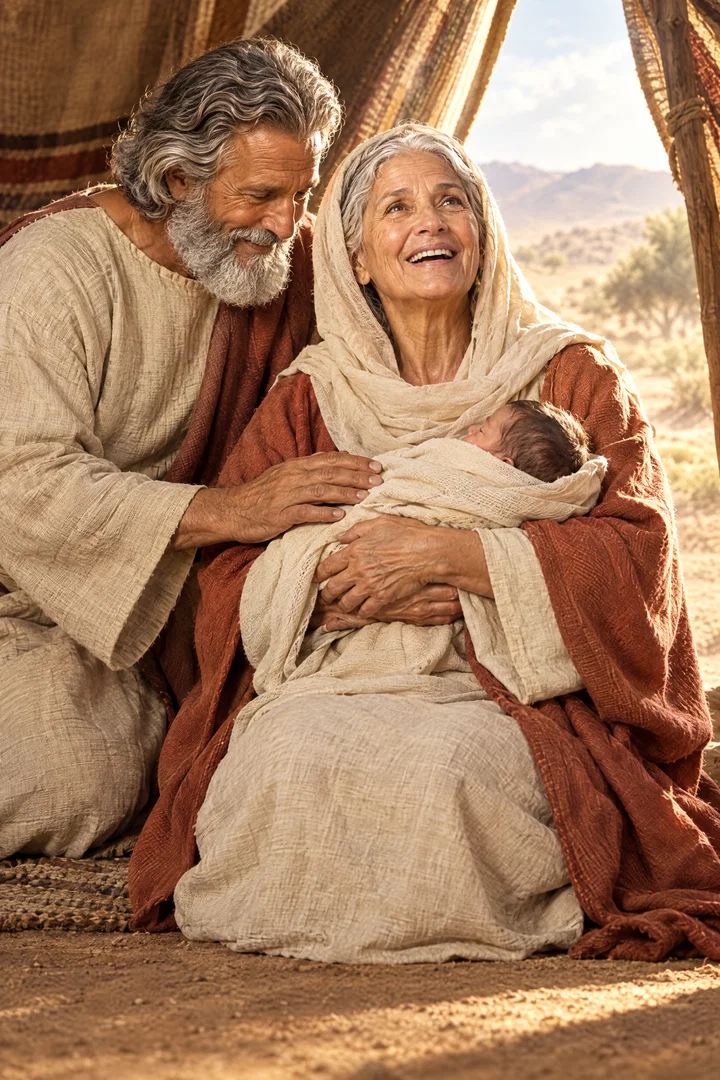
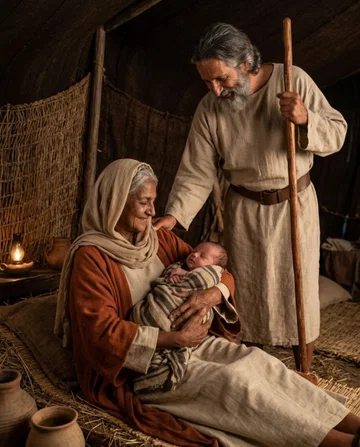
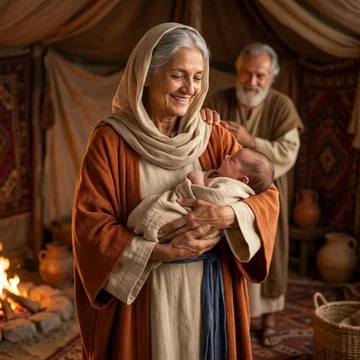
And Abraham called the name of his son that was born unto him, whom Sarah bare to him, Isaac.
Translations
American King James Version, Webster Bible
And Abraham called the name of his son that was born to him, whom Sarah bore to him, Isaac.
King James Version, KJV Cambridge Paragraph Bible, Revised Version, American Standard Version
And Abraham called the name of his son that was born unto him, whom Sarah bare to him, Isaac.
and Abraham calleth the name of his son who is born to him, whom Sarah hath born to him — Isaac;
And Abraham called the name of his son who was born to him, whom Sarah bore to him, Isaac.
And Abraham called the name of his son that was born to him, whom, Sarah, bare to him, Isaac.
Berean Standard Bible, Majority Standard Bible
And Abraham gave the name Isaac to the son Sarah bore to him.
Abraham called his son who was born to him, whom Sarah bore to him, Isaac.
And Abraham gave to his son, to whom Sarah had given birth, the name Isaac.
And Abraham called his sonnes name that was borne vnto him, which Sarah bare him, Izhak.
Douay-Rheims (Challoner revision)
And Abraham called the name of his son, whom Sara bore him, Isaac.
Pictures

Cross-references 20 of 37
- Galatians 4:22-31
For it is written, that Abraham had two sons, the one by a bondmaid, the other by a freewoman.
Contrasts Isaac, born by promise, with Ishmael, born after the flesh.
- Genesis 17:19
And God said, Sarah thy wife shall bear thee a son indeed; and thou shalt call his name Isaac: and I will establish my covenant with him for an everlasting covenant, and with his seed after him.
God promises Sarah will bear Isaac and names him as the covenant heir.
- Genesis 16:1-4
Now Sarai Abram’s wife bare him no children: and she had an handmaid, an Egyptian, whose name was Hagar.
Hagar bears Ishmael through Abraham before Isaac’s birth.
- Genesis 18:10
And he said, I will certainly return unto thee according to the time of life; and, lo, Sarah thy wife shall have a son. And Sarah heard it in the tent door, which was behind him.
God promises Sarah a son at a set time.
- Genesis 15:2-4
And Abram said, Lord GOD, what wilt thou give me, seeing I go childless, and the steward of my house is this Eliezer of Damascus?
God tells Abraham his heir will be his own son, not his servant.
- Genesis 15:5
And he brought him forth abroad, and said, Look now toward heaven, and tell the stars, if thou be able to number them: and he said unto him, So shall thy seed be.
God promises Abraham descendants too numerous to count.
- Genesis 12:1-3
Now the LORD had said unto Abram, Get thee out of thy country, and from thy kindred, and from thy father’s house, unto a land that I will shew thee:
God promises Abraham a great nation and blessing for all families through his seed.
- Genesis 22:1-2
And it came to pass after these things, that God did tempt Abraham, and said unto him, Abraham: and he said, Behold, here I am.
The offering of Isaac became a further test of Abraham’s faith.
- Matthew 1:2
Abraham begat Isaac; and Isaac begat Jacob; and Jacob begat Judas and his brethren;
Jesus’s ancestry traces descent from Abraham through Isaac.
- Galatians 4:28
Now we, brethren, as Isaac was, are the children of promise.
Believers are children of promise, as Isaac was.
- Galatians 4:29
But as then he that was born after the flesh persecuted him that was born after the Spirit, even so it is now.
Ishmael’s persecution of Isaac parallels persecution of God’s true children.
- Genesis 28:13-14
And, behold, the LORD stood above it, and said, I am the LORD God of Abraham thy father, and the God of Isaac: the land whereon thou liest, to thee will I give it, and to thy seed;
God’s promises to Isaac continue through Jacob, his descendant.
- Genesis 21:9-12
And Sarah saw the son of Hagar the Egyptian, which she had born unto Abraham, mocking.
God directed Abraham to send Hagar and Ishmael away; Isaac alone would carry the promised seed.
- Genesis 22:17
That in blessing I will bless thee, and in multiplying I will multiply thy seed as the stars of the heaven, and as the sand which is upon the sea shore; and thy seed shall possess the gate of his enemies;
God renews the promise to multiply Abraham’s descendants.
- Genesis 13:16
And I will make thy seed as the dust of the earth: so that if a man can number the dust of the earth, then shall thy seed also be numbered.
God promises Abraham descendants as numerous as the dust of the earth.
- Genesis 17:15-16
And God said unto Abraham, As for Sarai thy wife, thou shalt not call her name Sarai, but Sarah shall her name be.
promises son by Sarah
- Hebrews 11:18
Of whom it was said, That in Isaac shall thy seed be called:
Isaac is identified as the promised son.
- Hebrews 11:11
Through faith also Sara herself received strength to conceive seed, and was delivered of a child when she was past age, because she judged him faithful who had promised.
Sarah received strength to conceive through faith in God’s promise.
- Genesis 16:15
And Hagar bare Abram a son: and Abram called his son’s name, which Hagar bare, Ishmael.
contrasts Isaac by Sarah with Ishmael by Hagar
- Romans 4:18-21
Who against hope believed in hope, that he might become the father of many nations; according to that which was spoken, So shall thy seed be.
Abraham believed God’s promise that he and Sarah would have a son.
Commentary
Each commentary is drawn from primary sources: the writings of Ellen G. White and Adventist pioneers and periodicals. Each commentary is separate. Its own words are not a quotation; follow the references to read the source passages.
Pioneers and periodicals
29 sources
Abraham himself called the son Sarah bore to him Isaac, in obedience to God's command, at the set and appointed time when Abraham was one hundred and Sarah was ninety despite her age and barrenness.ST Apr 11, 1900ST Mar 1, 1905ST Jun 4, 1885 The name Isaac means laughter, recalling Sarah's laughter at the promise and expressing rejoicing when God fulfilled it by His word and power.ST Aug 28, 1901ST Sep 8, 1898 Isaac was wholly of God by promise, begotten of the Word and born of the Spirit with no power of the flesh to bring him forth, in contrast to Ishmael born after the flesh through Hagar by human scheming to hasten the promise.ST Apr 11, 1900ST Mar 1, 1905ST Jan 24, 1900STGSAM 42.2 As the son of the freewoman he represents the children of freedom under the new and everlasting covenant resting on God's promises, and the pattern for all born again from above by faith with justification resting wholly on God and not on human effort.ST Mar 1, 1905RH May 29, 1900ST Sep 28, 1915ST Apr 29, 1908 He is the promised seed and heir with whom God established His everlasting covenant, through whom the promised Seed would come, with the Messiah's genealogy following Abraham through Isaac and not Ishmael.ST Apr 11, 1900RH Nov 18, 1862RH Jul 5, 1915
Birth, Name, and Timing
Abraham himself gave the name Isaac to the son Sarah bore to him, in obedience to the command of God.ST Apr 11, 1900ST Mar 1, 1905ST Jun 4, 1885ST Aug 28, 1901ST Jan 24, 1900 The naming was part of the fulfillment of the repeated promise that Sarah herself would bear Abraham a son, and the child was duly circumcised.ST Apr 11, 1900ST Mar 1, 1905 The name Isaac means laughter, recalling Sarah's laughter at the promise and expressing her rejoicing when God fulfilled it.ST Aug 28, 1901ST Sep 8, 1898
The birth came at the declared set and appointed time through God's word and by God's power and not by human devising.ST Apr 11, 1900ST Mar 1, 1905ST Aug 28, 1901 It was twenty-five years after the promise was given to Abraham.ST Jun 4, 1885 He was one hundred years old and Sarah was ninety, and the birth fulfilled the promise despite her age and barrenness and long childlessness, as a miracle of divine power through whom the promised line would continue.ST Apr 11, 1900STRH Mar 16, 1869 There was great rejoicing in God over the birth.ST Apr 11, 1900ST Mar 1, 1905
The birth stands shortly after the destruction of Sodom and about four hundred years before the giving of the law at Sinai.ST Oct 4, 1883RH Jul 18, 1854 Isaac was weaned at about five years of age, roughly thirty years after the promise.ST Jun 4, 1885 Ishmael's mocking of him at that time marked the beginning of the four hundred years of affliction, understood as persecution of Abraham's seed.ST Jun 4, 1885 By biblical chronology Shem lived long enough to converse with Isaac for fifty years, placing Isaac among those who received instruction about Enoch's prophecy and translation.ST Oct 4, 1883
Isaac is the lawful son by Sarah, the free wife and lawful wife, in contrast with Ishmael born through the unwise plan to hasten the promise.ST Apr 11, 1900ST Mar 1, 1905GSAM 42.2 He is identified as the next bearer of the promises given to Abraham, through whose family the promised Seed would come.ST Jan 14, 1913 He is counted among the patriarchs who accumulated estates, showing that property ownership was recognized in patriarchal times and that the commandment against theft already had force.ST Jul 9, 1874
Promise Versus Human Effort
Isaac was wholly of God in purpose, plan, arrangement, power, and result, begotten of the Word and born of the Spirit by promise, for the flesh had no power to bring him forth until the all-powerful word of the Creator was given.ST Apr 11, 1900ST Mar 1, 1905 His coming was not by human devising, planning, scheming, or ordinary human power, but by God's power alone, impossible by nature for Abraham to beget and Sarah to bear, so that all power and glory for his existence belongs to God.ST Mar 1, 1905STST Apr 29, 1908 Though Sarah was aged and barren, she bore the child of promise through God's power as God had promised, and the son was duly named and circumcised with great rejoicing in God.ST Apr 11, 1900ST Mar 1, 1905STST Apr 24, 1901
In contrast Ishmael was born after the flesh through Hagar by Abraham and Sarah's attempt to solve what seemed a failure of the promise and to hasten it by human scheming and unwise planning.ST Jan 24, 1900GSAM 42.2ST Jul 22, 1908 Abraham had first failed by expecting the promise to come through Eliezer his steward, and failed again by trying to bring it about through Hagar his bondservant. Isaac's birth followed those failures and those attempts to work out how the promise could be fulfilled despite Sarah's barrenness, and showed that Abraham had learned to believe the promise and had at last passed God's test of faith.ST Jun 15, 1904ST Jul 9, 1894
Isaac, the son of Sarah the freewoman born by her faith in God's word, represents the children of freedom under the new and everlasting covenant resting on God's promises and power, with citizenship in Jerusalem above.ST Mar 1, 1905RH May 29, 1900ST Apr 29, 1908ST Jul 29, 1913 Ishmael, born through human scheming, represents bondage under the old covenant at Sinai resting on human promises, effort, and self-dependence.ST Sep 28, 1915ST Apr 29, 1908ST Jul 29, 1913 The two sons thus illustrate the two covenants, the typical and antitypical systems, and literal and true Israel, with Isaac born free and able to inherit all that Abraham had, unlike Ishmael born through Hagar the bondwoman.ST Mar 1, 1905RH May 29, 1900ST Nov 21, 1900
Isaac is therefore the pattern for all who are born again from above as miraculous children of promise, just as truly miraculous children of God as he was.ST Mar 1, 1905ST Apr 29, 1908 Those who are changed in heart, recreated, and born anew into the kingdom by the creative power of God in the gospel are thus the children of Isaac, the children of promise, obedient from a regenerated heart by faith because God works in them.ST Mar 1, 1905ST Apr 29, 1908 His birth teaches that justification and salvation rest wholly on God's promises through Jesus Christ, not on human effort, with obedience following from receiving life and salvation rather than earning them.ST Mar 1, 1905
The verse teaches patience in long waiting for God's plan rather than a shortcut, for Abraham and Sarah received Isaac after waiting many years with faith embracing the promise in its fullness.ST Nov 25, 1889ST Jul 22, 1908 His birth came in accordance with God's plan rather than through Sarah's attempted shortcut, after Abraham had sometimes grown impatient and tried by human means to bring about what only God could do.ST Jul 22, 1908 That birth stands between the earlier failures and the later proving when God asked Abraham to offer Isaac, not to learn whether his faith was genuine and not to tempt him to evil, but so Abraham himself would be blessed, his faith made more precious and proved equal to that test, and he himself made strong.ST Jun 15, 1904ST Jul 9, 1894
Covenant, Seed, and Salvation
Isaac is the promised seed and heir through whom salvation comes in God's way and by God's power, with whom God establishes His everlasting covenant.ST Apr 11, 1900RH Jul 5, 1915 The Messiah is descended from Abraham through Isaac, not through Ishmael, and the genealogy of Jesus follows that line.RH Nov 18, 1862RH Jul 5, 1915 This belongs to God's providential dealings with Abraham's family as the chosen line through which the promised Seed would come, with Isaac as the next bearer of the promises given to Abraham and as Abraham's heir and ancestor of Christ.STST Jan 14, 1913ST Feb 17, 1914
In Isaac shall Abraham's seed be called, and the son of the bondwoman shall not be heir with him.ST Apr 11, 1900ST Mar 1, 1905 At the weaning feast Ishmael the son of the bondwoman mocked Isaac, showing how he that is born after the flesh persecutes him that is born after the Spirit.ST Mar 1, 1905ST Jan 24, 1900 Because Isaac was the child of promise born free and able to inherit all that Abraham had, unlike Ishmael born through Hagar the bondwoman, the bondwoman and her son were required to be cast out with loss of the inheritance.ST Mar 1, 1905ST Jan 24, 1900ST Nov 21, 1900 The two sons thus illustrate the two covenants and the two peoples, literal Israel and true Israel.ST Jan 24, 1900
Isaac's birth and name illustrate the birth of Christ, for the name expresses rejoicing and his birth came at the appointed time through God's word.ST Aug 28, 1901ST Sep 8, 1898 By that same word believers are born from above and rejoice in God's salvation.ST Aug 28, 1901 Like Christ's birth, Isaac's birth was not the final fulfillment of the promise to Abraham and his seed to inherit the whole earth as an everlasting inheritance of righteousness, but a step toward its fulfillment at Christ's return and the resurrection.ST Jul 9, 1894
To demonstrate the covenant lesson and to perfect Abraham's faith came afterward the trial in which Abraham was asked to offer Isaac, in which in figure he received his son from the dead.ST Mar 1, 1905 That birth stood between Abraham's earlier failures by human effort and this later proving, and his faith, having learned to believe the promise, proved equal to the test.ST Mar 1, 1905ST Jun 15, 1904ST Jul 9, 1894
Sources