Genesis 27:4
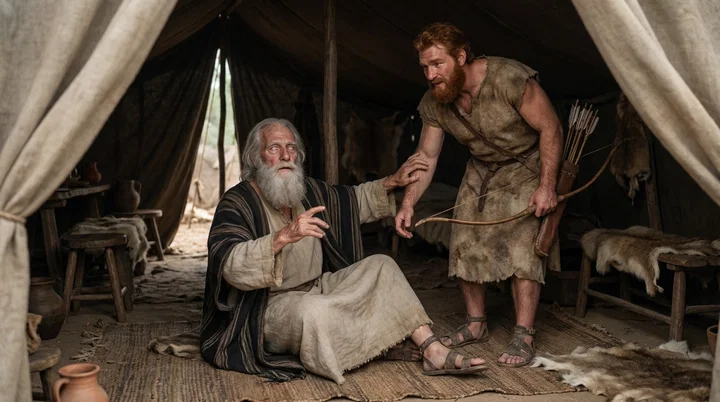
And make me savoury meat, such as I love, and bring it to me, that I may eat; that my soul may bless thee before I die.
Translations
And make me savoury meat, such as I love, and bring it to me, that I may eat; that my soul may bless you before I die.
And make me savoury meat, such as I love, and bring it to me, that I may eat; that my soul may bless thee before I die.
KJV Cambridge Paragraph Bible, Revised Version
and make me savoury meat, such as I love, and bring it to me, that I may eat; that my soul may bless thee before I die.
And make me savory meat, such as I love, and bring it to me, that I may eat; that my soul may bless thee before I die.
and make me savory food, such as I love, and bring it to me, that I may eat; that my soul may bless thee before I die.
and make for me tasteful things, [such] as I have loved, and bring in to me, and I do eat, so that my soul doth bless thee before I die.'
and prepare me a savoury dish such as I love, and bring it to me that I may eat, in order that my soul may bless thee before I die.
and make for me dainty meats, such as I love and bring in to me, that I may eat,—To the end my soul may bless thee, ere yet I die!
Berean Standard Bible, Majority Standard Bible
Then prepare a tasty dish that I love and bring it to me to eat, so that I may bless you before I die.”
Make me savory food, such as I love, and bring it to me, that I may eat, and that my soul may bless you before I die.”
And make me food, good to the taste, such as is pleasing to me, and put it before me, so that I may have a meal and give you my blessing before death comes to me.
Then make mee sauourie meate, such as I loue, and bring it me that I may eat, and that my soule may blesse thee, before I die.
Douay-Rheims (Challoner revision)
Make me savoury meat thereof, as thou knowest I like, and bring it, that I may eat: and my soul may bless thee before I die.
Pictures
Cross-references
- Genesis 25:33-34
And Jacob said, Swear to me this day; and he sware unto him: and he sold his birthright unto Jacob.
Esau sold his birthright for food before seeking Isaac’s blessing.
- Genesis 25:23
And the LORD said unto her, Two nations are in thy womb, and two manner of people shall be separated from thy bowels; and the one people shall be stronger than the other people; and the elder shall serve the younger.
God foretold that the elder would serve the younger, framing the blessing episode.
- Hebrews 12:16-17
Lest there be any fornicator, or profane person, as Esau, who for one morsel of meat sold his birthright.
Esau sold his birthright for a meal and later sought his father’s blessing with tears.
- Genesis 25:28
And Isaac loved Esau, because he did eat of his venison: but Rebekah loved Jacob.
Isaac’s love for Esau was tied to his fondness for venison.
- Genesis 27:41-45
And Esau hated Jacob because of the blessing wherewith his father blessed him: and Esau said in his heart, The days of mourning for my father are at hand; then will I slay my brother Jacob.
Esau’s hatred and threat to kill Jacob lead Rebekah to send him away.
- Genesis 28:13-14
And, behold, the LORD stood above it, and said, I am the LORD God of Abraham thy father, and the God of Isaac: the land whereon thou liest, to thee will I give it, and to thy seed;
The covenant promise continues to Jacob after the family’s conflict.
- Genesis 27:31
And he also had made savoury meat, and brought it unto his father, and said unto his father, Let my father arise, and eat of his son’s venison, that thy soul may bless me.
Esau brings savory meat seeking the promised blessing.
- Genesis 27:27-29
And he came near, and kissed him: and he smelled the smell of his raiment, and blessed him, and said, See, the smell of my son is as the smell of a field which the LORD hath blessed:
Jacob obtains Isaac’s blessing through deceit, at a sad cost.
- Genesis 27:10
And thou shalt bring it to thy father, that he may eat, and that he may bless thee before his death.
The meal is brought to Isaac so he will bless Jacob before his death.
- Genesis 27:35-36
And he said, Thy brother came with subtilty, and hath taken away thy blessing.
Jacob is said to have obtained Isaac’s blessing by subtility and supplanting.
- Hebrews 11:20
By faith Isaac blessed Jacob and Esau concerning things to come.
Isaac’s blessing of Jacob and Esau concerned things to come.
- Genesis 29:25
And it came to pass, that in the morning, behold, it was Leah: and he said to Laban, What is this thou hast done unto me? did not I serve with thee for Rachel? wherefore then hast thou beguiled me?
Jacob is deceived after deceiving his father.
- Genesis 28:20-22
And Jacob vowed a vow, saying, If God will be with me, and will keep me in this way that I go, and will give me bread to eat, and raiment to put on,
Jacob’s later vow follows his earlier wrongful attempt to obtain the blessing.
Commentary
Each commentary is drawn from primary sources: the writings of Ellen G. White and Adventist pioneers and periodicals. Each commentary is separate. Its own words are not a quotation; follow the references to read the source passages.
Ellen G. White
14 sources
Isaac, believing his death was near, asked his elder son Esau to prepare the venison feast he loved and bring it to him to eat, so that he might then give him the solemn blessing of the firstborn.PP 179.4–180.2ST Apr 17, 1879SG3 115.1 He favored Esau and planned to bless him secretly despite Rebekah and Jacob's opposition, even though Esau had sold and sworn away his birthright to Jacob and God had revealed that the blessing belonged to the younger son.PP 179.4–180.2SG3 115.11SP 106.2SG3 114.1PP 179.3 That request gave the occasion for Rebekah and Jacob to seize the blessing by deception, a course God did not prompt and could have accomplished for Jacob by His own means without deceit.SG3 114.1Ms 139, 1899, par. 17–21 Jacob thus obtained the blessing already promised to him by God through fraud and a failure to trust God, a wrong that required repentance and which he afterward truly repented.SG3 133.24SP 437.2GC88 616.1–2Lt 7, 1896, par. 1–4PP 201.3–202.2 Only because he had repented did God hear his later prayer for deliverance from Esau's anger and revenge and mercifully preserve his life in his flight, though he fled in fear and distress for his sin, showing that unconfessed sin leaves one unable to trust God while confessed sins are blotted out and remembered no more.SG3 133.24SP 437.2GC88 616.1–2ST Feb 13, 1901PP 201.3–202.2
Isaac's Blessing Feast Plan
Isaac, feeling his death was near, asked Esau to prepare savory meat, the venison he loved, and bring it to him to eat, so that afterward he might give him his blessing before he died.PP 179.4–180.2ST Apr 17, 1879SG3 115.11SP 106.2SG3 114.1 The meal was to be a feast held according to custom before pronouncing a solemn blessing.PP 179.4–180.2ST Apr 17, 1879PP 179.3 That blessing was the one intended for the firstborn, whom Isaac regarded as Esau his elder son and intended heir.PP 179.4–180.2ST Apr 17, 1879SG3 115.1PP 179.3
Though he knew God's revealed purpose concerning Jacob the younger son, Isaac favored Esau and intended to bless him as firstborn.PP 179.4–180.2ST Apr 17, 1879PP 179.3 He planned to do it secretly because he knew Rebekah and Jacob opposed it.PP 179.4–180.2PP 179.3 He made the request despite Esau's having sold his birthright and sworn it over to Jacob.SG3 115.11SP 106.2SG3 114.1 Prosperity and God's blessing depended on a person's conduct toward God, not merely on receiving the firstborn's privileges.SG3 115.1
The request set the occasion for Rebekah and Jacob's deception to obtain Isaac's blessing.SG3 114.1Ms 139, 1899, par. 17–21 That deceit was not prompted by God, for God could have provided for Jacob by His own methods without deceit.Ms 139, 1899, par. 17–21
Fraud, Flight, and Repentance
Genesis 27:4 belongs to the account in which Jacob obtained his father's blessing by fraud and deceptive dealing, the blessing that was intended for Esau and that God had already promised to Jacob.SG3 133.2GC88 616.1–2Lt 7, 1896, par. 1–4ST Jan 29, 1880ST Feb 13, 1901 His course is set forth as an example of deceptive dealings practiced against others.Lt 7, 1896, par. 1–4 In so obtaining what God had already promised him, Jacob sinned by failing to trust that God could fulfill His purpose whatever the circumstances.ST Jan 29, 1880
That fraud in obtaining the blessing and the birthright was a wrong that required repentance, and Jacob afterward truly repented of it.SG3 133.24SP 437.2PP 201.3–202.2 When he later pleaded with God for deliverance from Esau he pointed back to that repentance and held fast to God's mercy.PP 201.3–202.2 Only because he had previously repented did God hear his prayer and mercifully preserve his life from Esau, and without that repentance God would not and could not have heard him.SG3 133.24SP 437.2PP 201.3–202.2
The deception led Jacob to flee for his life from his brother's anger and afterward to face the danger of Esau's threatened revenge.GC88 616.1–2ST Feb 13, 1901 His own sin added to his fear and distress as he faced that danger.4SP 437.2GC88 616.1–2 Though Jacob knew he had sinned, God did not forsake him.ST Feb 13, 1901 His experience shows that unconfessed sin would leave people unable to trust God for deliverance in the time of trouble, while confessed sins are blotted out and no longer brought to remembrance.4SP 437.2
Sources
Pioneers and periodicals
48 sources
Aged and dim-eyed and feeling death near, Isaac called his elder son Esau to hunt venison and prepare the savory meal he loved as a feast before giving him the firstborn's covenant blessing.ST Apr 17, 1879ST Sep 22, 1898ST Sep 22, 1898ST Oct 1, 1902RH Nov 4, 1858 His plea that his soul might bless Esau means Isaac himself, the living man hungering for food and bestowing blessing, not a deathless entity able to live apart from the body.RH Sep 12, 1854ST May 28, 1896 He doted on Esau for his hunting and dishes from appetite rather than merit, and meant to give him the ancestral blessing, though God had promised that the elder should serve the younger and though Esau had already sold his birthright.ST Apr 17, 1879ST Feb 24, 1887ST Jul 31, 1901ST Rebekah overheard and sent Jacob with prepared kids' meat and skins on his hands and neck to personate Esau, acting from unbelief that God could fulfill His promise in His own time, yet God approved Jacob's consecration and gave the blessing in spite of the deceit and not because of it.STRH Nov 16, 1916ST Mar 31, 1881ST Feb 26, 1894ST Oct 1, 1902 The fraud succeeded for the moment but brought exile, separation, fear and long retribution until thorough repentance, teaching that God's people must wait for Him to fulfill His word and that the end does not justify the means.ST Jul 31, 1901ST Jan 3, 1911ST Jan 9, 1912ST Oct 1, 1902ST Oct 4, 1905
Request and Setting
Aged Isaac, his eyes dim so that he could not see and not knowing the day of his death, called Esau his elder son and told him to take his weapons, his quiver and his bow, go out to the field to hunt venison, and make savory meat such as he loved and bring it to him to eat, so that his soul might bless Esau before he died.ST Sep 22, 1898ST Oct 1, 1902RH Nov 4, 1858 When old and blind he directed Esau to prepare him a dinner of venison such as he loved for that same purpose.ST Oct 1, 1902
The requested meal was set immediately before the intended final blessing, with the food to be eaten first and the blessing to follow after eating.ST Sep 22, 1898RH Nov 30, 1916 It followed the custom of holding a feast on such occasions.ST Apr 17, 1879 It concerned the sacred covenant ceremony and the household's priestly blessing, the father's blessing of the firstborn, associated with family pre-eminence and inheritance and with the heir of the covenant, whose claim Jacob had already purchased.ST Apr 17, 1879ST Mar 31, 1881 An honest presentation of Jacob's rightful claim would have been enough, and the consecration of Jacob was approved and sanctified while the deceitful means used to bring it about were rejected.ST Mar 31, 1881
The request sets the scene for Esau's attempt to receive the birthright blessing.ST Mar 30, 1888 It belongs to the account marked by Jacob's guile and by Esau with face reddened by desert sun-heat, set among the outgoings and ingoings of the patriarchs Abraham and Ishmael, Isaac in the fields at eventide, Rebekah at the well, and Joseph's splendid funeral procession, all within a half-peopled world of bleating flocks, green pastoral rest, and indubitable human existence.RH Feb 22, 1912
Meaning of Soul
The phrase my soul denotes Isaac himself, the living man who feels appetite for food and who gives the blessing before he dies.RH Sep 12, 1854ST May 28, 1896 There soul denotes the animal life in man, the life common to all, including thoughts and emotions.ST May 28, 1896 It does not denote an immortal or deathless soul, nor an independent entity that can exist apart from the body, and its exact sense must be decided by context.ST May 28, 1896 As life, the soul came from God and returns to the great Fountain of life.ST May 28, 1896
Favoritism and Promise
Isaac doted on Esau from the boys' infancy because Esau was a cunning hunter whose savory dishes appealed to his aged father's appetite, and that favoritism rested on appetite rather than on superior merit.ST Esau knew this weakness and, though he had already foolishly sold his birthright, hoped by ministering to appetite with venison to secure the blessing too.ST Isaac's love of flesh meat was tied to his special affection for Esau and is raised as a possible influence on his spiritual discernment.ST Sep 22, 1898
Isaac intended to give Esau the ancestral blessing as firstborn and called him to go to the field, bring venison, and make the savory dish he loved, joining that meal to the promise to give him his blessing.ST Feb 24, 1887ST Esau hurried out eager with ambition and hope as firstborn and his father's favorite to obtain it.ST Isaac's partiality shaped his purpose, though the outcome of the blessing was subject to God's judgment of each son's conduct.ST Feb 24, 1887
That intention conflicted with the Lord's promise that Jacob would inherit the blessing and that the elder should serve the younger.ST Jul 31, 1901RH Nov 30, 1916ST Oct 1, 1902 It was pursued although Isaac knew God's purpose concerning Jacob, although God intended blessing and birthright for Jacob because of superior character and in His own way, and although Esau had already sold his birthright to Jacob.ST Apr 17, 1879ST Feb 24, 1887ST Feb 26, 1894ST Oct 1, 1902 Jacob obtained the blessing not because of deception but in spite of it, for God would give what He had promised in His own time and manner.ST Jul 31, 1901ST Feb 26, 1894
The birthright setting included family rulership and priesthood, a double portion of property, and in this family the line through which Christ the coming Seed would come and in a measure the salvation of the human race.ST May 17, 1910 Jacob valued these privileges, while Esau was willing to trade them for temporary gratification and had foolishly sold his birthright, later seeking the blessing with tears.ST May 17, 1910ST Feb 23, 1915ST The chapter's family conflict reflects Isaac's excessive affection for Esau and the resulting division between the parents and their sons.ST Jan 14, 1913
The family's pursuit of the promises in material terms showed Jacob's supplanting character before God later brought change, with his defects preceding his victory and his becoming Israel, prevailer with God.ST Jan 14, 1913ST Jan 6, 1909 Jacob desired God's promised blessing though his method was wrong, while Esau had shown he valued it lightly by selling it for food.ST Oct 4, 1905 Jacob is described as better than Esau in principle yet still selfish and sinful, having taken advantage of hunger to buy the birthright and then adding deception, and as seeking birthright and blessing for temporal rather than spiritual ends, which helped drive him into exile from home.ST Oct 4, 1905ST Jul 27, 1904
Deception and Retribution
Rebekah overheard the instruction to prepare venison for the blessing before death and, alarmed lest the promise that the elder should serve the younger be frustrated, supposed she must act herself.ST Oct 1, 1902 While Esau was out hunting she had Jacob kill two kids, prepared the dinner herself, put the skins of the kids on Jacob's neck and hands to imitate Esau's hairy skin, and sent Jacob to deceive his father by personating Esau.ST Oct 1, 1902 Rebekah and Jacob so acted from lack of faith that God could fulfill His promises without their help and in His own time, thinking Jacob must do something himself rather than wait submissively and leave the matter in the Lord's hands.ST Jul 31, 1884STRH Nov 16, 1916ST Feb 17, 1914 Jacob's scruples gave way to his mother's counsel, his desire for the birthright blessing became covetousness, and he used trickery, guile, dissimulation, worldly wisdom, and deliberate duplicity while still unconverted, unregenerate, and relying on his own wisdom.ST Apr 1, 1897RH Nov 16, 1916ST Feb 26, 1894ST Oct 6, 1914
That course was disobedience and transgression, sin against father, brother, his own soul, and God, revealing the name Jacob as supplanter in overreaching, mercenary, covetous character that had also taken advantage of appetite to purchase the birthright.ST Jul 31, 1884ST Feb 28, 1906ST Apr 1, 1897 It was not approved by God, is no proof of a lower Old Testament standard, and does not warrant imitation of a good man's sin or deliberate wrongdoing, for the way was strait then as now and spirituality in worship was then as necessary as now.RH Aug 17, 1869RH Jul 4, 1865ST Mar 30, 1888 God had promised Jacob the birthright and would have fulfilled it in good time and in a more honorable manner if Jacob had waited in faith for God's own time instead of taking his case into his own hands.ST Jul 31, 1884RH Apr 8, 1875 An honest presentation of Jacob's purchased claim to the heir of the covenant would have been enough, for God approved and sanctified Jacob's consecration while rejecting the deceitful means, so Jacob obtained the blessing not because of his deception but in spite of it.ST Mar 31, 1881ST Feb 26, 1894
The deception succeeded in its immediate purpose but was a disastrous attempt to supplement God's promise with human works.ST Oct 1, 1902 By it Esau the firstborn was put in second place, and his wrath, hatred, and desire for revenge to kill Jacob were provoked.ST Jan 3, 1911ST Oct 1, 1902ST Oct 4, 1905 Jacob was forced to flee from his father's house and the home he loved to a strange country and distant Padan-aram, hurrying for his life from Esau's rage.ST Jul 31, 1884ST Oct 1, 1902ST Jul 27, 1904 Mother and son were separated so Rebekah never saw her favorite son again, even formal reconciliation between the brothers was delayed over twenty years, and animosity continued in Esau's descendants for hundreds of years, so Israel could never wield moral influence upon Edom.ST Oct 1, 1902
Jacob's selfish plotting met the overreaching he practiced, bringing troubled, unsatisfactory experiences, suffering, fear, guilt, conviction of sin, deep remorse and penitence, and feeling utterly forsaken of God and man, lonely, without self-confidence, and separated from Heaven as by a great gulf.ST Jul 31, 1884ST Jan 9, 1912ST Jan 9, 1912ST Jul 27, 1904 Through Laban's deception, his sons' treachery, and other perplexing trials including wrestling with the angel, retribution came sooner or later and his wrongdoing was pressed upon him until deepest humility.RH Mar 30, 1869RH Apr 8, 1875RH Jul 4, 1865 That chastisement with its long-continued afflictions worked thorough repentance, moral reformation, patient submission, and perfect trust, and placed him among the heroes of faith.RH Apr 8, 1875ST Jul 21, 1881ST Mar 30, 1888 It was closed when he went down into Egypt where the rod was withdrawn, Egypt being the period assigned by Providence for his ripening for the kingdom, and his life ended in brightness and heavenly brightness; he recognized his own wrongdoing had caused his trouble, later repented before pleading for deliverance, and though cast down fearing the blessing forever lost, God did not utterly forsake him but extended mercy, revealed a Saviour and restoration to favor, and yielded his heart to God.ST Jul 31, 1884ST Nov 20, 1879ST Oct 6, 1914ST Jul 21, 1881
Doctrine Types and Application
Jacob's obtaining of the blessing by fraud stands as a type of those who seek the Lord's blessing by selfish or worldly means, by deceit or expediency, sacrificing principle for temporal gain.ST Nov 18, 1897ST Sep 1, 1909 It figures religious people who treat the blessing chiefly as temporal gain while joining with the faithless and the world.ST Sep 1, 1909 Their hoped-for blessing ends in disappointment.ST Nov 18, 1897ST Sep 1, 1909
Jacob's desire for Esau's birthright and blessing was covetousness, and that covetous desire led him to take an unrighteous course to secure them. Covetousness is idolatry and breaks the first and second commandments, so the law against coveting was already in force in Jacob's time before Moses. Those actions were sinful errors, not approved by God and not proof of a lower Old Testament standard of morality.RH Jul 4, 1865 They brought direct punishment, with grief to Rebekah and her separation from her son as the consequence of her error, and penitence to Jacob with long continued wrestling with the angel who pressed his sin upon his notice until he was brought to the deepest humility.RH Jul 4, 1865 This shows the way was strait then as now, spirituality in worship was necessary in that age as in the present to please God, and God's character is unchangeable and His ways to man are vindicated.RH Jul 4, 1865
The blessing set before Esau contained spiritual blessings, which Jacob ambitiously desired, and manifold temporal blessings in flocks, herds, family and prosperity.RH Dec 30, 1915 Though lightly esteemed by Esau, the birthright was of worth to Jacob and his posterity, including a home in the kingdom of God, the choice of obedience to God, denial of sinful worldly pleasures, and forgiveness of sinful scheming and supplanting through humble confession and wrestling with God in faith and prayer until pardon was known.RH Dec 30, 1915 The same sterling principles of moving from principle rather than impulse, abandoning worldly associations and customs, and making sacrifice in faith are involved in keeping the Sabbath today and receiving blessing from God.RH Dec 30, 1915 God's promised blessing did not need human deception or impatience to bring it about, and people should wait for God to fulfill what He has promised at the proper time.ST Jul 31, 1901 God's providence may seem slow, but retribution comes sooner or later, and Jacob's selfish plotting led to troubled, unsatisfactory experiences and suffering in which he himself met the overreaching he practiced.ST Jan 9, 1912
Forgiveness does not always remove the painful consequences of sin in this life, as Jacob's later suffering through Laban's deception and his sons' treachery illustrates.RH Mar 30, 1869 Jacob siding with his mother in deceiving Isaac put sympathy on the wrong side, and its influence did not end with the act but lived on to destroy precious souls for whom Christ died until the Judgment makes manifest souls eternally lost by it.RH Jan 7, 1873 For Jacob it resulted in being obliged to flee for his life to a stranger's land, and in after years nearly proved his ruin and the ruin of his family and of his substance.RH Jan 7, 1873 Even if those who commit such errors are saved through the pardoning love of God, there remains a loss to them of what might have been eternal gain.RH Jan 7, 1873
Rebekah did not trust God to fulfill His promise in His own time and instead took matters into her hands, and Jacob's scruples gave way to his mother's counsel, so both suffered self-reproach and condemnation.RH Nov 16, 1916 Rebekah was deprived of her son's companionship in her old age, with grief and separation as the consequence of her error.RH Nov 16, 1916RH Jul 4, 1865 Jacob being led into error and exile through his mother's influence proves that people are accountable for the influence they exert on the conduct of others and cannot evade the consequences of causing others to do wrong.ST Apr 12, 1883 Many will be lost through the negligence or misconduct of others.ST Apr 12, 1883 Jacob later repented of that sin before pleading with God for deliverance from Esau, and his experience shows that unconfessed sin would have left him without confidence to pray in his anguish.RH Nov 14, 1912 The account applies to God's people in the coming time of trouble, who must confess their sins now, before judgment, so their sins can be blotted out and nothing remain to condemn them.RH Nov 14, 1912
Sources