Genesis 25:33
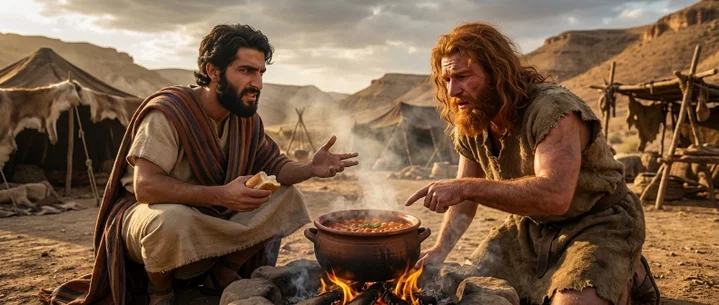
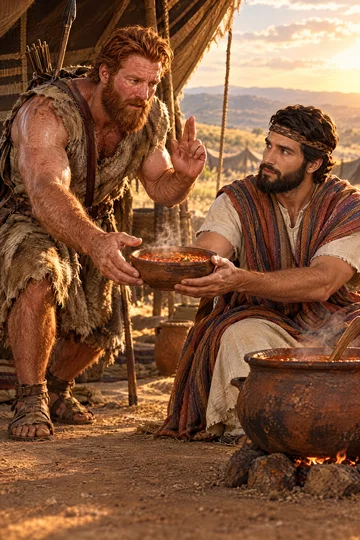
And Jacob said, Swear to me this day; and he sware unto him: and he sold his birthright unto Jacob.
Translations
And Jacob said, Swear to me this day; and he swore to him: and he sold his birthright to Jacob.
King James Version, Revised Version
And Jacob said, Swear to me this day; and he sware unto him: and he sold his birthright unto Jacob.
And Jacob said, Swear to me this day; and he sware to him: and he sold his birthright unto Jacob.
And Jacob said, Swear to me this day; and he swore to him: and he sold his birth-right to Jacob.
And Jacob said, Swear to me first; and he sware unto him: and he sold his birthright unto Jacob.
and Jacob saith, 'Swear to me to-day:' and he sweareth to him, and selleth his birthright to Jacob;
And Jacob said, Swear unto me now. And he swore unto him, and sold his birthright to Jacob.
And Jacob said, Come swear to me just now! And he sware to him,—and sold his birthright to Jacob.
Berean Standard Bible, Majority Standard Bible
“ Swear to me first,” Jacob said.So Esau swore to Jacob and sold him the birthright.
Jacob said, “ Swear to me first.”He swore to him. He sold his birthright to Jacob.
And Jacob said, First of all give me your oath; and he gave him his oath, handing over his birthright to Jacob.
Iaakob then said, Sweare to me euen now. And he sware to him, and solde his birthright vnto Iaakob.
Douay-Rheims (Challoner revision)
Jacob said: Swear therefore to me. Esau swore to him, and sold his first birthright.
Pictures
Cross-references 20 of 23
- Hebrews 12:16-17
Lest there be any fornicator, or profane person, as Esau, who for one morsel of meat sold his birthright.
Esau sold his birthright for food and later lost the blessing he sought.
- Genesis 27:1-29
And it came to pass, that when Isaac was old, and his eyes were dim, so that he could not see, he called Esau his eldest son, and said unto him, My son: and he said unto him, Behold, here am I.
Jacob’s purchase of the birthright is followed by his deception to obtain Isaac’s blessing.
- Genesis 25:23
And the LORD said unto her, Two nations are in thy womb, and two manner of people shall be separated from thy bowels; and the one people shall be stronger than the other people; and the elder shall serve the younger.
God foretold that the older son would serve the younger, shaping Jacob’s pursuit of the birthright.
- Hebrews 12:17
For ye know how that afterward, when he would have inherited the blessing, he was rejected: for he found no place of repentance, though he sought it carefully with tears.
Esau later sought with tears the blessing he had lost by selling his birthright.
- Genesis 27:34
And when Esau heard the words of his father, he cried with a great and exceeding bitter cry, and said unto his father, Bless me, even me also, O my father.
Esau cries bitterly after losing his father’s blessing.
- Romans 9:13
As it is written, Jacob have I loved, but Esau have I hated.
God’s love for Jacob and hatred of Esau reflect his choice between them.
- Genesis 27:41
And Esau hated Jacob because of the blessing wherewith his father blessed him: and Esau said in his heart, The days of mourning for my father are at hand; then will I slay my brother Jacob.
Esau plots to kill Jacob after losing the birthright.
- Genesis 33:3-4
And he passed over before them, and bowed himself to the ground seven times, until he came near to his brother.
Jacob and Esau reunite after Jacob’s repentance and prayer.
- Genesis 27:36
And he said, Is not he rightly named Jacob? for he hath supplanted me these two times: he took away my birthright; and, behold, now he hath taken away my blessing. And he said, Hast thou not reserved a blessing for me?
Esau says Jacob took his birthright and blessing.
- Malachi 1:2-3
I have loved you, saith the LORD. Yet ye say, Wherein hast thou loved us? Was not Esau Jacob’s brother? saith the LORD: yet I loved Jacob,
The words recall Jacob and Esau and God’s choice of Jacob.
- Joshua 24:4
And I gave unto Isaac Jacob and Esau: and I gave unto Esau mount Seir, to possess it; but Jacob and his children went down into Egypt.
Esau received Mount Seir after choosing present possession over his birthright.
- Genesis 27:37
And Isaac answered and said unto Esau, Behold, I have made him thy lord, and all his brethren have I given to him for servants; and with corn and wine have I sustained him: and what shall I do now unto thee, my son?
Jacob’s sale of the birthright leads to Esau’s servanthood among his kindred.
- Genesis 27:1-4
And it came to pass, that when Isaac was old, and his eyes were dim, so that he could not see, he called Esau his eldest son, and said unto him, My son: and he said unto him, Behold, here am I.
Isaac planned to bless Esau without knowing he had sold his birthright.
- Genesis 27:32
And Isaac his father said unto him, Who art thou? And he said, I am thy son, thy firstborn Esau.
confident firstborn claim after sale
- Genesis 48:17-20
And when Joseph saw that his father laid his right hand upon the head of Ephraim, it displeased him: and he held up his father’s hand, to remove it from Ephraim’s head unto Manasseh’s head.
Ephraim, though younger than Manasseh, receives firstborn status.
- Matthew 1:2
Abraham begat Isaac; and Isaac begat Jacob; and Jacob begat Judas and his brethren;
Jesus’ genealogy traces his descent through Jacob.
- Genesis 32:6
And the messengers returned to Jacob, saying, We came to thy brother Esau, and also he cometh to meet thee, and four hundred men with him.
Esau approaches Jacob with four hundred men.
- 1 Chronicles 5:1-2
Now the sons of Reuben the firstborn of Israel, (for he was the firstborn; but, forasmuch as he defiled his father’s bed, his birthright was given unto the sons of Joseph the son of Israel: and the genealogy is not to be reckoned after the birthright.
It explains how the birthright was divided among Judah, Joseph, and Levi.
- Genesis 32:28
And he said, Thy name shall be called no more Jacob, but Israel: for as a prince hast thou power with God and with men, and hast prevailed.
Jacob’s victory and renaming as Israel follow his earlier defects.
- Genesis 36:6-7
And Esau took his wives, and his sons, and his daughters, and all the persons of his house, and his cattle, and all his beasts, and all his substance, which he had got in the land of Canaan; and went into the country from the face of his brother Jacob.
brothers part peaceably because of possessions
Commentary
Each commentary is drawn from primary sources: the writings of Ellen G. White and Adventist pioneers and periodicals. Each commentary is separate. Its own words are not a quotation; follow the references to read the source passages.
Ellen G. White
50 sources
Esau came in faint with hunger from the field and sold his birthright to Jacob for pottage, confirming the transfer with a solemn oath that made it binding.2T 37.3–38.21SP 108.1–2ST Apr 17, 1879SG3 113.21SP 106.1 The birthright he gave up joined spiritual privilege with temporal advantage, including family headship, consecration to God as priest, and a double portion of goods.ST Apr 17, 1879PP 180.3–4 He lightly renounced what was sacred because long-indulged appetite overruled every other consideration, so that immediate gratification seemed worth more than his heirship.CH 110.2Lt 5, 1877, par. 16CTBH 43.1–44.2ST Feb 24, 1887PP 181.3–182.1 That choice fixed the course of his life, for when he afterward tried to regain what he had despised he could not, and his tears were grief over the consequences rather than true sorrow for sin.CH 110.22T 37.3–38.2Lt 5, 1877, par. 162SP 205.2–206.1ST Apr 19, 1877 His rash exchange stands as a warning that those who barter heaven for selfish gratification will awake in the day of God when too late to recover their loss.1SP 108.1–2ST Apr 24, 1879SG3 116.1–117.1
Setting of the Bargain
Esau came in faint with hunger from the field, and Jacob offered to feed him pottage if he would renounce all claim to the birthright.ST Apr 17, 1879SG3 113.21SP 106.1ST Feb 24, 1887 The proposal used Esau's immediate need and faintness after coming home to gain the privilege belonging to the firstborn.ST Apr 17, 1879SG3 113.21SP 106.1 By accepting the food Esau renounced his claim to the privileges of the firstborn and treated the birthright lightly.1SP 106.1ST Feb 24, 1887
At Jacob's demand Esau confirmed the sale with a solemn oath, which made the transfer binding.2T 37.3–38.21SP 108.1–21SP 106.2ST Feb 24, 1887SG3 116.1–117.1 He solemnly swore to give Jacob his birthright and formally sold it to him, so the bargain could not afterward be undone.1SP 108.1–2SG3 116.1–117.1SG3 114.1PP 180.3–4 Esau did not tell Isaac about the oath-sale when Isaac later planned to bless him.1SP 106.2SG3 114.1 Even so, he afterward tried to secure its blessings regardless of his brother's claim.PP 180.3–4
When Jacob and Esau met again at their father's death-bed, Jacob was wealthy and returned the material blessing of possession to Esau.ST Dec 4, 1879 Esau had once looked forward to their father's death as the time to be revenged on Jacob for stealing his father's blessing, but his feelings had greatly changed.ST Dec 4, 1879 The brothers then united in grief with no more enmity, jealousy, and hatred, and afterward parted from each other because of their possessions and because their religious faith was too unlike to live together.ST Dec 4, 1879
Contents of the Birthright
The birthright joined spiritual privilege with temporal advantage.ST Apr 17, 1879PP 180.3–4 It carried honor and authority in the family and tribe next to the parents, even headship of the family itself.ST Apr 17, 1879PP 180.3–4 It carried special consecration to God with selection to the office of priest.ST Apr 17, 1879 It carried possession of a double portion of the father's goods and wealth.ST Apr 17, 1879PP 180.3–4
Esau could value only those temporal blessings of the birthright, not its spiritual privilege.PP 180.3–4 In its full meaning the birthright is immortality, having a name written in the book of life, being hid in the secret of God's pavilion in the fearful day of trouble, and being made fit society for angels and Jesus.Lt 7, 1864, par. 10–12 By contrast the mess of pottage stands for worldly-mindedness, wrong and thoughtless words, and indulged temper and passion.Lt 7, 1864, par. 10–12
Jacob's Motive and Fault
Jacob had learned from his mother the word of God that the elder should serve the younger, and he reasoned that this promise could not be fulfilled while Esau kept the privileges of the firstborn, so he used Esau's faint hunger on coming in from the field to gain them by offering pottage if Esau would renounce all claim to the birthright.ST Apr 17, 1879SG3 113.21SP 106.1 In taking by his own action what God had already promised him instead of waiting for God to fulfill it in good time, he lacked faith and thought he must do something himself rather than submissively leave the matter in the Lord's hands.ST Jul 31, 1884 That obtaining of the birthright by fraud and deceit was sin against his father, his brother, his own soul, and against God.ST Jul 31, 1884
It brought Esau's hatred and made Jacob a fugitive from his father's house hurrying for his life from Esau's rage, and it began a harvest of wrongs that Jacob himself later suffered.ST Jul 31, 1884ST Nov 17, 1909 He feared his rash course had forever lost the blessing God designed to give him, yet God did not utterly forsake him but still extended mercy to his erring, distrustful servant, permitting afflictions to come upon him until he learned patient submission and revealing to him a Saviour by whom he could be restored to favor.ST Jul 31, 1884 Jacob had previously and truly repented of that fraud before his night of wrestling, and because repented sin is blotted out by the atoning blood of Christ, God could hear his prayer and mercifully preserve his life from Esau.ST Jul 31, 1884ST Nov 17, 1909PP 201.3–202.2
Without that repentance his prayer could not have been heard, for unconfessed sin overwhelms confidence to plead with God for deliverance under fear and anguish and leaves concealed wrong to destroy faith.PP 201.3–202.2 Repentance and grace can transform the sinner and turn a curse into blessing.ST Nov 17, 1909
Esau's Contempt and Irreversible Loss
Esau passed the crisis of his life without knowing it, treating what should have been sacredly cherished as scarcely worth a thought.Lt 5, 1877, par. 16 By oath he renounced all claim to the privileges of the firstborn, and that light renunciation exposed the prevailing traits of his character, his settled choices, and his true estimate of sacred things.Lt 5, 1877, par. 16ST Feb 24, 1887 Such indifference to divine blessings and requirements is what makes him a profane person.PP 181.3–182.1
Long-indulged appetite had grown so powerful in him that it overruled every other consideration.CTBH 43.1–44.2 Controlled by desire, inclination and imagined need rather than by self-denial, he let the clamors of appetite prevail over the value and sacredness of the birthright.CH 110.2CTBH 43.1–44.2Lt 47, 1894, par. 41–42 He counted his heirship as worth less than immediate gratification to meet his present want, so that to him a morsel of meat, a mess of pottage, meant more than the service of his Master.Lt 5, 1877, par. 16PP 181.3–182.1Lt 47, 1894, par. 41–42
He sold the birthright for the food he craved while wrongly thinking he could give it up and later buy back what he had surrendered.CH 110.22T 37.3–38.2CTBH 43.1–44.2 That act determined the aftercourse of his life.Lt 5, 1877, par. 16 When he tried to regain it he could not, though he sought it with tears and bitterly regretted his rash and foolish choice, for the blessing he had despised was removed from him and gone forever.CH 110.22T 37.3–38.2CTBH 43.1–44.2Lt 98a, 1897, par. 1–6
His later distress, mourning and tears over despising and selling the birthright came from its painful and unexpected consequences, not from true sorrow for sin or repentance.2SP 205.2–206.1ST Apr 19, 1877 Grief over the results of wrongdoing does not itself change the heart or remove sin.2SP 205.2–206.1ST Apr 19, 1877
Warning of Too-Late Repentance
Esau's oath to give Jacob his birthright stands as the course of those who count the redemption purchased by Christ as of little worth and give up their heirship to heaven for perishable earthly treasures.1SP 108.1–2ST Apr 24, 1879SG3 116.1–117.1PP 181.3–182.1 It pictures multitudes who live only for the present with no thought or care for the future, controlled by inclination rather than self-denial.PP 181.3–182.1 They trade hope of heaven for temporary pleasure and selfish gratification, virtually despising God and heaven when the clamors of appetite prevail over the high blessings promised only to the self-denying and God-fearing.1SP 108.1–2ST Apr 24, 1879SG3 116.1–117.1PP 181.3–182.1
Indulging desire weakens the power to prize eternal blessings, so that exchanging truth and duty for present worldly gain can cost everlasting life.2T 37.3–38.2 Uncontrolled appetite can overcome moral resolve and lead even to rejecting truth, making a lasting spiritual good surrendered for momentary indulgence.2T 37.3–38.24T 31.2–32.1 Esau so traded a sacred and valuable inheritance to satisfy appetite, wrongly supposing he could buy back afterward what he had surrendered, and when he sought it with tears he could not regain it.2T 37.3–38.2
His case is left on record as a warning that as he awoke to see the folly of his rash exchange when too late to recover his loss, so those who barter heaven for selfish gratifications and hurtful lusts will awake in the day of God when too late to recover.1SP 108.1–2ST Apr 24, 1879SG3 116.1–117.1PP 181.3–182.1 He grieved with great distress when the blessing that would have been his went to Jacob, but he could not undo the bargain.1SP 108.1–2ST Apr 24, 1879SG3 116.1–117.1 In that day sinners will find no place for repentance although they seek it carefully and with tears.ST Apr 24, 1879SG3 116.1–117.1
The same selling occurs when one for a time professes godliness while keeping a divided heart that yields service and affections to another than God, for unfaithfulness to solemn trust sells the birthright.Lt 23, 1890, par. 6–7 Selling the soul and peace for selfish advantage, sacrificing integrity to gratify carnal desires, is walking unguarded into Satan's snares, and no selfish act is without danger of repeating Esau's sale.Lt 47, 1894, par. 41–42 After desire is gratified such a one may regret the act, yet when he would inherit the blessing be rejected and find no place of repentance though sought carefully with tears, left finally and forever something other than a faithful child of God.ST Apr 24, 1879Lt 23, 1890, par. 6–7Lt 47, 1894, par. 41–42
Present Ways of Selling
Selling the birthright is trading a lasting spiritual good and eternal life for cheap, immediate gratification, worldly pleasure and self-indulgence when temporary pleasures seem more desirable than eternal things.ST Jun 20, 1900Lt 98a, 1897, par. 1–618MR 245.3–247.2Ms 5, 1897, par. 16–20Lt 63, 1896, par. 16 It is selling the soul for a mess of pottage, surrendering something of lasting spiritual value for food, money or other temporary gain that afterward cannot be bought back even with tears.Lt 98a, 1897, par. 1–6Ms 5, 1897, par. 16–20Lt 13, 1900, par. 7–8Lt 63, 1896, par. 16 That choice puts life or death before a person, for temptation entered into leads through completed sin to death, and prayer for deliverance is plea to be kept from entering it.18MR 245.3–247.2Lt 13, 1900, par. 7–8Lt 17a, 1891, par. 25–26
Uncontrolled appetite and intemperate habits can make a person give up that spiritual inheritance, sacrificing health, enfeebling mental faculties and benumbing the finer sensibilities of the soul.ST Apr 24, 18794T 31.2–32.1PP 181.3–182.1 When gratification of depraved appetite comes into conflict with high heavenly blessings promised only to the self-denying and God-fearing, the clamors of appetite generally prevail, moral resolve is overcome, truth is rejected, and God and heaven are virtually despised.ST Apr 24, 18794T 31.2–32.1PP 181.3–182.1 This includes clinging to indulgences injurious to health, being controlled by inclination rather than self-denial, being controlled by tea, coffee, snuff, tobacco and spirits and by corrupt passions, being offended by the duty to cleanse from all filthiness of flesh and spirit and perfect holiness in the fear of God, and abandoning the strait way to eternal life rather than give up hurtful gratifications for mere temporary pleasure that is weakening and debasing.ST Apr 24, 1879PP 181.3–182.1 The call is to reform without delay, for intemperate habits and excessive indulgence forfeit heaven.ST Apr 24, 1879PP 181.3–182.1Ms 34, 1902, par. 9–12
It is wasting the inheritance God gives and betraying sacred interests and responsibilities entrusted for the good of others and of humanity through intemperate appetite or greed for money.Lt 83, 1897, par. 17–20Ms 14a, 1897, par. 13–14 That greed leads to dishonest practices and failure to cultivate strict integrity in every transaction, giving up something precious for material gain and immediate appetite as Esau did for a meal.Lt 83, 1897, par. 17–20Ms 14a, 1897, par. 13–14Lt 110, 1897, par. 36 It is giving up eternal life for worldly advantages and earthly treasures, clinging to them and withholding from God the tithes and offerings that belong to Him instead of laying up treasure in heaven.5T 274.3Lt 15, 1898, par. 17–19Ms 5, 1897, par. 16–20 Love of display consumes money, leads to spending on what does not satisfy, and keeps people from entering the narrow way and following Christ.6MR 160.3Ms 56, 1900, par. 16–17 Covetousness trades spiritual inheritance for money or temporary satisfaction and relief, which is betraying God and risking the soul for financial advantage, and hindering His work to prepare a people to stand in the day when the Son of man shall be revealed brings woe and the curse of the Lord, while laboring to weaken brethren's hold on earthly treasures helps them keep the birthright.5T 274.3Lt 15, 1898, par. 17–19Lt 15, 1898, par. 1–5
It is gaining book knowledge while losing spiritual life when students become so absorbed in studies that they neglect prayer and religious privileges, become careless and indifferent to the welfare of the soul, and cease to learn in the school of Christ.CE 246.1–2 It is gaining ever so much knowledge yet failing to put it to practical use, losing sight of education's object to develop and direct the faculties to be more useful and bless others, increasing love of self, excusing self from responsibilities, and loving and idolizing books until they come between duty and study and create reluctance to leave reading to do essential labor.CE 246.1–2 Likewise young men barter heaven cheaply for immediate gratification by seeking education from inclination while neglecting duties to parents at home and the interest of the soul, following inclination rather than duty, which is infinite loss.Ms 2, 1871, par. 13–15
It is sacrificing spirituality and eternal life for position and praise of men and worldly honor and influence, from motives not single to God's glory, wanting to exalt self, and being overcome by Satan's bribe of honor.Lt 25, 1873, par. 4–5Lt 59, 1903, par. 7–11 Those in this danger need to guard a brother from that exchange, humble the heart, see the danger, remain true to principle, and make a strong determined effort for everlasting life, for durable honor and enduring riches.Lt 25, 1873, par. 4–5Lt 59, 1903, par. 7–11 Eternal life is worth everything and can be had by willingness to make any and every sacrifice for it and must be lost without it, for infinite sacrifice has been made that sinners complying with the conditions and walking even as Christ walked might be exalted through Jesus Christ to honor and glory and immortal riches.Lt 25, 1873, par. 4–5
Choosing a marriage by giving up loyalty to God and the Sabbath to obtain a wife or husband sells the birthright for a mess of pottage, treating God's claims as cheap in order to gratify self.10MR 190.1–194.1Lt 17, 1896, par. 8–9 Choosing marriage by promising to give up the Sabbath sells a God-given spiritual privilege cheaply like exchanging a birthright for a meal, and such disloyalty to God imperils the soul and brings reproach and unhappiness into family life.10MR 190.1–194.1Lt 17, 1896, par. 8–9 It is trading away loyalty to Christ and a place in Paradise for the friendship of the Lord's enemies when doubt, complaint and unbelief from Satan's fountain gain power in the mind, and the one who makes that exchange carries a poisonous, contagious atmosphere that pollutes and endangers other minds.Lt 1, 1880, par. 14 The cheap price is establishing idol self in the heart and worshiping at its shrine until there is no room for Jesus, no room for light, for love, for meekness and lowliness of heart, and departing from the living God.Lt 1, 1880, par. 14Lt 17a, 1891, par. 25–26
Keeping the birthright instead requires reform, overcoming wrongs by seeking the grace of God and firm reliance on the blood of Christ, being refined, purified, made white and tried, with sins going beforehand to judgment so spots are effaced and the record is clean and spotless.Lt 7, 1864, par. 10–12 The loss at stake is the life which measures with the life of God, so one is called to repent, be converted, renew the covenant at the cross of Calvary, cleanse the soul-temple of moral defilement, die to self and crucify self, and choose whom he will serve.Lt 7, 1864, par. 10–12Lt 17a, 1891, par. 25–26 The birthright also pictures a precious spiritual privilege that one who knows the truth can nearly trade away by neglecting growth, failing to use God-given abilities, and refusing to act for good.Lt 111, 1899, par. 6 It illustrates the danger of surrendering personal stewardship by entrusting large gifts to one person to use as he sees fit, despising the birthright as Esau did by selling it for a meal.Lt 111, 1899, par. 6Lt 170, 1899, par. 28–30
Sources
Pioneers and periodicals
118 sources
Jacob required Esau to swear to him that day before giving food, and Esau swore and formally sold his birthright, then ate bread and lentil stew, drank, rose up and went his way.ST Mar 30, 1888ST Feb 19, 1894ST Sep 22, 1898 The birthright he sold meant in temporal things the chief blessing, a double share, succession, honor and headship in the family, and in spiritual things consecration to the priesthood, claim to the promises to Abraham and Isaac, a place in the chosen line through whom Christ would come, and a home in God's kingdom.ST Mar 25, 1880RH Jul 22, 1873RH Sep 21, 1911 Esau despised what was precious and beyond price, letting present hunger and appetite rule him and preferring what was in hand at once to future good grasped by faith, and his loss was irreversible so that afterward with bitter tears he found no place to change the settled transaction.ST Mar 30, 1888ST Sep 22, 1898RH Jun 10, 1902RH May 15, 1866RH Apr 14, 1859 Jacob longed for the birthright above everything because he believed God's promise, yet knowing the elder should serve the younger he relied on his own craft and took advantage of his brother's hunger to buy it for a mess of pottage, sinning by trickery and coveting that brought exile, hatred and long trouble, though God honored his desire for spiritual things and did not forsake him.ST Apr 1, 1897ST Feb 19, 1894ST Nov 18, 1897ST Oct 4, 1905ST Oct 6, 1914 The sale fixed the chosen line in Jacob so that Messiah was to be the Son of Jacob and not of Esau, yet this appointment did not itself guarantee salvation nor shut Esau out by arbitrary choice, for grace is freely offered to all and Esau could have been saved if he had sought God in the appointed way.RH Nov 18, 1862ST Apr 10, 1907ST May 17, 1910ST Apr 11, 1906ST Sep 22, 1898 It therefore warns against deliberately treating a lasting heavenly inheritance as worth less than a brief earthly need, trading endless life for business, pleasure, appetite, drink, Sabbath-breaking for a living, withholding tithe, or an hour's gratification.ST Oct 21, 1886ST Oct 4, 1905RH May 15, 1866
Oath and Exchange
Jacob required Esau to swear to him that day before giving him food, and Esau swore and formally sold his birthright to Jacob.ST Feb 24, 1887ST Mar 30, 1888ST Feb 19, 1894ST Sep 22, 1898ST Sep 22, 1898 The sale was confirmed by oath after Jacob offered food when Esau was faint with hunger, renouncing claim to the privileges of the first-born, and it was driven by appetite when Esau was hungry and weary from the field and hunting.ST Feb 24, 1887ST Oct 4, 1905ST Jun 12, 1884 Then Jacob gave bread and lentil stew, which Esau ate and drank, and rose up and went his way, by which he despised his birthright.ST Mar 30, 1888ST Sep 22, 1898
The oath made the agreement binding and permanent.ST Feb 19, 1894ST Sep 22, 1898ST Feb 19, 1894 It was a small transaction in itself but mighty in its consequences, permanently binding so that it could not afterward be repurchased or redeemed on earth, even by a dish of savory venison.ST Mar 31, 1881RH Oct 8, 1857 Afterward, when Esau would have inherited the blessing, he was rejected and found no place of repentance or change in the settled transaction, though he sought it carefully with tears day and night with an exceeding great and bitter cry.ST Mar 31, 1881ST Jul 18, 1900ST Mar 31, 1881
The price was one meal to meet immediate hunger after coming faint from the field and hunting, taken when Esau said he was at the point to die and asked what profit the birthright would do him.ST Apr 17, 1879ST Mar 25, 1880RH Aug 27, 1901RH May 29, 1900 It is described as bread and pottage of lentils, red pottage which is red dahl, a simple staple eaten extensively with rice and wheat, though not palatable to foreigners at first.ST Mar 25, 1880RH Aug 27, 1901ST Mar 14, 1906 What was received saved life from starvation yet was only a morsel of meat for present relief and gratification of appetite, traded for something of lasting value.ST Mar 25, 1880RH Aug 27, 1901RH May 29, 1900
Esau sold willingly, voluntarily and deliberately, without extreme necessity when relief of hunger was at hand, because he despised the birthright and treated it as worth less than a meal and as beyond all price for which gold and gems could be no equivalent.RH Apr 14, 1859ST Oct 6, 1914ST Sep 22, 1898ST Sep 22, 1898 He sealed the impious transaction by a solemn oath, yet did not expect to lose it but meant to have both the food and the birthright too.RH Apr 14, 1859 He made preparations to inherit the blessing just as if he had not bargained it away, coming confidently asserting I am thy son, thy firstborn Esau, and expecting to inherit it, and the disappointment of his deluded hopes greatly embittered his distress when he was rejected.RH Apr 14, 1859
Each man chose what he preferred and the Lord gave him what he chose, and still gives what is chosen, though no one can look for both portions.ST Aug 21, 1884 Esau despised the promises and preferred to have whatever treasure was his in hand at once, so he was first to receive solid earthly possessions, while Jacob preferred an inheritance in the promises and he and his children went on walking by faith and not by sight as strangers and pilgrims, living and dying without receiving the fulfilled promises and not dissatisfied.ST Aug 21, 1884ST Oct 27, 1898 When Jacob and Esau met again at their father's death-bed, Jacob was wealthy and returned that material blessing of possession to Esau.ST Dec 4, 1879 Esau had once looked forward to their father's death as the time to be revenged for stealing his father's blessing, but his feelings had greatly changed, so the brothers united in grief with no more enmity, jealousy and hatred, and then parted because of their possessions and because their religious faith was too unlike to live together, though his throwing away the inheritance had brought sorrow to his father.ST Dec 4, 1879ST Mar 18, 1897
Contents of Birthright
In temporal terms the birthright meant the father's chief blessing and a double share of the father's estate and goods.ST Apr 17, 1879ST Mar 25, 1880RH Jul 22, 1873ST Mar 30, 1888 It meant succession to whatever position the father held, with his official dignities and privileges.ST Mar 25, 1880RH Jul 22, 1873ST Mar 30, 1888 It meant honor and authority and headship and rulership and pre-eminence in the family and tribe next to the parents.ST Apr 17, 1879 Jacob possessed the birthright except for the double portion of the parental estate.RH Sep 21, 1911
In spiritual terms it meant special consecration to the Lord and selection to the office of priest.ST Apr 17, 1879ST Mar 25, 1880RH Jul 22, 1873ST Mar 30, 1888 It carried the family priesthood and the privileges of prophet, priest and king.ST Apr 17, 1879RH Sep 21, 1911ST Mar 30, 1888 It carried all claim to the promises made to Abraham and Isaac and afterward to Jacob.ST Mar 30, 1888 That claim included possession of Canaan as an earnest of the heavenly inheritance, with the heavenly inheritance itself as God's covenant favor.ST Mar 31, 1881 It included the place in the chosen line through which all families of the earth would be blessed and through whom Christ would come, even the honor of becoming an ancestor of Christ.RH Sep 21, 1911 It included a home in God's kingdom by obedience and self-denial.ST Mar 31, 1881
The birthright and the blessing were distinct, so that Esau later hoped to obtain his father's blessing by pleasing him with food though he had sold the birthright.ST The family's favoritism and struggle over them led to deceit and lasting sorrow.ST Those who held the other teaching held that the birthright and the blessing went together.ST Feb 26, 1894 First-born can mean first in pre-eminence rather than first in time, so Jacob is called first-born even though Esau was older.ST Jan 11, 1905
Esau's Contempt and Loss
Esau despised his birthright, treating what was precious and beyond all price as worthless and of little value when hungry, and by deliberately swearing and selling it to Jacob for food he showed a selfish character and contempt for God's blessings.ST Mar 30, 1888ST Sep 22, 1898RH Jun 10, 1902ST Oct 21, 1886ST Feb 27, 1901 The birthright was exchanged for a single meal to meet immediate hunger, and the next verse records that he despised it, a warning against despising a lasting inheritance for brief earthly need and trading heavenly joys for worldly security and earthly concerns.ST Mar 30, 1888ST Sep 22, 1898ST Mar 24, 1898ST Oct 21, 1886ST Feb 19, 1894 By trading a great future good and spiritual privilege for immediate appetite he chose bodily desire and present gratification over the lasting blessings of God's kingdom, and those who put such idols first may afterward long for the blessing but fail to find it.RH Jun 10, 1902ST Mar 24, 1898ST Feb 19, 1894
The trade was the height of folly and a poor, bad, cheap, foolish and ruinous bargain, selling what was valuable and of lasting worth for a song, a morsel of meat and a piping hot mess of pottage, in contrast to buying the truth which makes a good bargain.ST Mar 25, 1880RH Jul 22, 1873RH Jul 24, 1855ST May 2, 1878ST Jul 3, 1884 What he sold was his father's chief blessing and a special consecration to the Lord, his double share in his father's estate, and his right to succeed to his father's official dignities and privileges, while what he received was only one meal of bread and pottage of lentils that saved his life when he thought himself at the point to die and the birthright would do him no profit.ST Mar 25, 1880RH Jul 22, 1873 The same poor bargain is repeated when people trade standing in society, a happy home, and hope of an inheritance with the redeemed for indulging the cravings of a perverted appetite, with the drunkard and the dyspeptic receiving even less than Esau received, and likewise when happiness is sold for a whim, conscience parted with though it alone has lasting worth, and land and mansions in the Celestial City exchanged for a few years lease of a dismal tenement in Vanity Fair with gilded chains and diseases and rags and repentance in return.ST Mar 25, 1880RH Jul 22, 1873RH Jul 24, 1855 Applied to drink it means selling the birthright of youth, wealth, position, health, mind, usefulness and Christian hope for a glass of liquor, leaving a blighted life of bondage, wretchedness and hopeless misery, and a man who sacrifices principle and honor to gain favor sells them even more cheaply.ST May 2, 1878RH Dec 6, 1870
Esau let appetite and present hunger rule him, putting immediate bread and butter above lasting spiritual blessing, so that temporal livelihood was treated as a higher law than God's claim.ST Mar 24, 1898ST Feb 14, 1884ST Jun 12, 1884 By unbelief and inability to grasp future good by faith he threw away the blessing God had in store, not believing God's Word, while Jacob preferred an inheritance in the promises.ST Jul 18, 1900ST Aug 21, 1884RH Jun 10, 1902 Esau therefore preferred to have whatever treasure was his in hand at once, and was the first to receive solid earthly possessions, while Jacob and his children walked by faith as strangers and pilgrims, living and dying without receiving the fulfilled promises and not dissatisfied, for each man chose what he preferred and the Lord gave him what he chose, though no one can look for both portions.ST Aug 21, 1884
Esau understood the value of the covenant favor yet despised it, for the birthright represented God's covenant favor, the promise of Canaan to Abraham and his descendants as an earnest of the heavenly inheritance, with the double portion, succession to his father's position, and special spiritual blessings belonging to the first-born as especially devoted to God.ST Mar 31, 1881ST Mar 30, 1888 By selling all claim to the promises made to Abraham and Isaac and afterward to Jacob he showed he had no trace of Abraham's faith and despised the promises of God.ST Mar 31, 1881ST Mar 30, 1888 Though he knew his father loved him and would provide for his needs, he treated the inheritance as worth less than food in a moment of hunger and impatience, failing to value his heritage when worldly concerns took priority.ST Mar 31, 1881ST Mar 7, 1906
The sale foreshadowed the different characters of the brothers and the later course of their lives, for Esau willingly sold his birthright for food while Jacob longed for it above everything else, revealing opposing values.ST Jan 9, 1912ST Oct 6, 1914 Jacob prized God's birthright and blessing while Esau despised them, and the contrast reveals the characters that God loved in Jacob and hated in Esau, choosing Jacob's line to carry the truth to the world and to bring Messiah as the Son of Jacob and not of Esau.ST Oct 6, 1914ST Apr 11, 1906
The loss was irreversible and permanently binding, so that it could not afterward be repurchased by a dish of savory venison, costing Esau the sacred ceremony consecrating the heir of the covenant and leaving him a servant among his kindred.RH Apr 14, 1859ST Mar 31, 1881 He sold without extreme necessity when relief was at hand because he despised it, sealed the impious transaction by solemn oath, and meant to have both the food and the birthright, coming confidently asserting I am thy son, thy firstborn Esau and making preparation to inherit the blessing just as if he had not bargained it away.RH Apr 14, 1859 When he learned the blessing had passed to Jacob he cried before his father with an exceeding great and bitter cry, and bitterly rued the bargain, earnestly seeking day and night with tears to undo it and get the birthright back, but he was rejected when he would have inherited the blessing and found no place of repentance or change in the settled transaction though he sought it carefully with tears.RH May 15, 1866RH Apr 14, 1859ST Mar 31, 1881ST Mar 31, 1881ST Jul 18, 1900 His later grief came from the painful consequences of his choice, not from true repentance, for sorrow over results does not change the heart or remove sin, and warnings before the sin are useless to those bent on indulgence while regrets afterward are vain, leaving peace, innocence, purity and honor gone.ST Apr 19, 1877RH May 15, 1866
Jacob's Motive and Fault
Jacob longed for the birthright above everything else, because he believed God and remembered the promise made to Abraham and the predictions concerning the seed of Abraham and of Isaac, and he valued God's promise and blessing above all as spiritual blessings of lasting worth, including a home in God's kingdom to be gained by obedience and self-denial, while Esau lightly esteemed them and was ready to sell them for a mere mess of pottage that he loved.ST Feb 19, 1894ST Oct 4, 1905ST Oct 6, 1914RH Dec 30, 1915 His desire was right and his heart was better than his sport-loving brother's, for he prized what Esau despised, and their opposing choices revealed opposing values.ST Oct 4, 1905ST Oct 6, 1914 Yet while unconverted he sought it by worldly means, and his later repentance and surrender to God marked the change in his character.ST Oct 6, 1914
He had learned from his mother God's word that the elder should serve the younger, and he knew that prophecy and reasoned that the promise could not be fulfilled while Esau kept the privileges of the first-born.ST Apr 17, 1879ST Feb 19, 1894 Instead of waiting for God to fulfill His word in good time and submissively leaving the matter in the Lord's hands, he lacked renewed faith and thought he must do something himself, relying on his own craft and human work to make sure what God had already promised.ST Jul 31, 1884ST Feb 19, 1894ST Oct 1, 1902 To supplement the Lord's promise with human works was to bring failure.ST Oct 1, 1902
His name supplanter, meaning one who takes undue advantage, fitted his overreaching, mercenary and covetous course.ST Apr 1, 1897ST Nov 21, 1906 Taking selfish advantage of his brother's supposed need, hunger and weariness from the field and hunting, his appetite and reckless character, he impatiently schemed through intrigue encouraged by his mother to make sure to himself what God had ordained would come to him legitimately, purchasing the birthright for a paltry mess of pottage.ST Nov 18, 1897ST Nov 21, 1906ST Oct 4, 1905ST Oct 1, 1902 That selfish purchase was among his wrongdoings, representing those who seek the Lord's blessing through fraud, deceit or expediency and value temporal place and position above spiritual things, for he coveted the birthright and blessing partly for temporal rather than spiritual ends, though he was superior to Esau in morality, integrity and faith.ST Nov 18, 1897ST Sep 1, 1909ST Oct 4, 1905
In this he acted in trickery and fraud, duplicity and deception, intrigue and unrighteous coveting, sinning against his father, his brother, his own soul, and against God.ST Jul 31, 1884ST Feb 28, 1906ST Apr 1, 1897 With his later deceiving of his father to steal the blessing intended for his brother, his sins became like a gulf separating him from heaven.ST Apr 1, 1897 His selfish, sinful dealing in taking advantage of his brother's weakness helped bring separation, tears, heartache and hatred into the family, with failure, family trouble, prolonged enmity and guilt.ST Oct 1, 1902RH Jan 7, 1915 As a result he became a fugitive from his father's house, hurrying for his life from the rage of Esau to Padan-aram in exile, and that wrong was the cause of his later time of trouble.ST Jul 31, 1884RH Jan 7, 1915
His action in getting the birthright was despicable from a generous social standpoint and a material overreaching that showed the fitness of his name and was part of his unsatisfactory early experience that cost him much later trouble.ST Jan 14, 1913ST Oct 4, 1905 God could not approve Jacob's method, yet He knew his desire for the blessing, honored the desire, regarded his repentance, and did not utterly forsake His erring, distrustful servant.ST Jul 31, 1884ST Oct 4, 1905 He intended to give both birthright and blessing in His own way in spite of the scheme, still extending mercy, permitting afflictions to come upon him until he learned patient submission, and revealing to him a Saviour by whom he could be restored to the favor of God, for God in mercy brings a change to turn curse into blessing.ST Jul 31, 1884ST Jan 14, 1913 Rebekah, who knew God's promise would be manifest through Jacob and kept the importance of the Seed before him in a material way without the fullest appreciation of the spiritual blessings, afterward helped him deceive Isaac to obtain the blessing, and by trying to manage the outcome herself instead of trusting God to resolve the circumstances she lost faith and failed.ST Jan 14, 1913ST Feb 17, 1914
Election and Covenant Doctrine
The oath and sale belong to God's providential dealings with Abraham's chosen family through which the promised Seed would come, continuing the passing of the promises from Abraham to Isaac to Jacob.STST Jan 14, 1913 It stands in the continuing story of Abraham and his family and of Isaac and his two sons, showing their defects before Jacob's victory that made him Israel, prevailer with God.ST Jan 6, 1909 Jacob's mother knew God's promise would be manifest through Jacob and kept the importance of the Seed before him in a material way without the fullest appreciation of the spiritual blessings.ST Jan 14, 1913 His gaining of the birthright was material overreaching that showed the fitness of his name supplanter and was part of his unsatisfactory early experience that cost him much later trouble, though God in mercy brings a change.ST Jan 14, 1913
The sale fixed the chosen line in Jacob, so that Messiah was to be the Son of Jacob and not of Esau, and Jesus Christ did descend from Jacob and not from his brother.RH Nov 18, 1862 In this case the birthright also carried the privilege of being the line through whom Christ would come and, in a measure, the salvation of the human race, along with a double share of the property, rulership in the family, and the priesthood, which Jacob valued while Esau bartered it away for temporary advantage and indulgence.ST May 17, 1910 The contrast reveals the characters that God loved in Jacob and hated in Esau, and God chose Jacob's line to carry the truth to the world.ST Apr 11, 1906
This special appointment as the channel through whom the promise would continue did not itself guarantee Jacob's eternal salvation.ST Apr 10, 1907 His loss was not caused by an arbitrary choice by God that shut him out of salvation, for God's grace through Christ is freely offered to all, and Jacob's later deception did not take away Esau's opportunity to seek God's blessing.ST Sep 22, 1898 God's hatred of Esau meant hatred of sin, not rejection of him as a person, with responsibility resting on Esau.ST Sep 22, 1898 This choice did not prevent Esau from being saved if he sought God in the appointed way.ST Apr 11, 1906
Jacob and Esau represent those who desire better, spiritual things and those satisfied with what is temporary and sensual, serving as a pattern for Israel's calling.ST Jan 30, 1907 Israel was not chosen for greatness, wisdom, learning, or refinement, but because they longed for God while the world had rejected Him.ST Jan 30, 1907 Though poor and unimpressive, they were God's remnant.ST Jan 30, 1907
Esau violated the third commandment against swearing and profanity when he swore to Jacob and sold his birthright, which proves the law was known and in force before Sinai.ST May 9, 1906 He was a profane man, and his profanity was so awful that when he sought to recover his birthright he could not secure it though he wept most bitterly, and he lost his life.ST May 9, 1906 Jacob violated the eighth commandment by taking Esau's birthright, and this wrong demonstrates that the commandments were known and could be broken before they were proclaimed at Sinai.ST Jun 6, 1906 He coveted Esau's birthright and took an unrighteous course to obtain it, and his coveting was part of the sin that led him to secure both the birthright and the blessing.
Because Esau sold his birthright to Jacob, the Edomites descended from Esau are not reckoned as Israel entitled to the promises, even though they descended from Isaac and Abraham just as Jacob's descendants did.RH Jan 16, 1872 The same is true of the Arabs descended from Ishmael and from the sons of Keturah.RH Jan 16, 1872 Their exclusion proves that descent from Abraham according to the flesh does not by itself make anyone an Israelite entitled to the promises, and that character is what really decides who belongs to true Israel.RH Jan 16, 1872
Warning and Present Application
The oath-bound sale calls each reader to weigh how highly the heavenly birthright is prized, warning against deliberately counting a lasting inheritance as worth less than a brief earthly need, choosing worldly security, present comforts and toys of earth over obedience, and trading heavenly joys and endless life for earthly concerns.ST Oct 21, 1886RH Nov 19, 1857RH Jul 13, 1905RH Sep 2, 1915 It is the great mistake of knowing truth yet refusing to obey because obedience requires sacrifice, exchanging a heavenly birthright for earthly gain and sacrificing what could have been for selfish interests.RH May 15, 1866RH Jul 13, 1905RH Sep 2, 1915 A choice made in passion can forfeit the inheritance of God's children, with remorse coming too late to recover what was surrendered.RH May 15, 1866RH Nov 19, 1857
Esau stands as a living type of a class found in almost every society who sells a glorious spiritual heritage belonging to that which is to come for business, money, pleasure, riches, honors, applauses, luxury and financial success in the present world.ST Oct 4, 1905RH Jan 6, 1910 This is worldliness, pursuing the world to entire forgetfulness of that which is to come, putting the present before the future, sacrificing the future for the present, saying give the pottage now and let another have the birthright.ST Mar 25, 1880 Like a hunter with eye on the game who seldom looks upward, more ready to use strength in the chase than to bend the knee in prayer and consecration, hundreds and even thousands today are absorbed in what suits taste, seeking first to secure the world by all means and then trying in odd moments and by side efforts to secure that which is to come.ST Oct 4, 1905 Thousands today stand where he stood, ready to barter away all the promises of God for lust, for pleasure, for power, for wealth, for fame, trading hope in Christ for earthly gain and the eternal inheritance for fashions and pleasures.ST Oct 4, 1905ST Aug 26, 1889RH Jan 6, 1910ST Mar 25, 1880 The glorious birthright as children of God and salvation in Jesus is still sold when men and women refuse to come to Jesus unless they can keep a loved hope or passion, even a miserable worthless passion such as desire for a profession on the stage, while church theatricals, tableaux, charades and entertainments feed love for acting and sow seed leading to that choice.ST Dec 9, 1880
The same bargain is repeated by indulging perverted, unsanctified appetite and making the belly a god, seen in eating and drinking in large cities just before Jesus is revealed, among professors and non-professors alike, where even high prices will not stop lust for tea, coffee and tobacco.ST Apr 24, 1879RH Nov 29, 1864RH Jan 12, 1864 When gratification of depraved appetite conflicts with high heavenly blessings promised only to the self-denying and God-fearing, the clamors of appetite generally prevail, so that for self-gratification God and heaven are virtually despised.ST Apr 24, 1879RH Aug 27, 1901 Many controlled by inclination rather than denying unhealthy appetite sacrifice health, enfeeble mental faculties and benumb finer sensibilities of soul by tea, coffee, snuff, tobacco and spirits, and by tobacco and whisky, refusing to cleanse from all filthiness of flesh and spirit and perfect holiness in fear of God, pampering tastes instead of self-denial and simple habits.ST Apr 24, 1879RH Aug 25, 1859ST Feb 10, 1881 The Christian's whole life is self-denial and cross-bearing, renouncing not only outward sins but whatever retards progress even if dear as right hand or eye, and he who expects to reach heaven by wrapped self-righteousness and good deeds while refusing to lay every idol on the altar will when tried sell eternal inheritance as Esau did.RH Jan 12, 1864RH Aug 27, 1901 Faithfulness and self-control are needed to hold fast through the time of trouble and be prepared for Christ's coming.RH Nov 29, 1864RH Jan 12, 1864 Spending money for tobacco and persisting in its injurious use trades interest in the kingdom for even less, and relaxing hold on truth to gratify appetite or withhold tithe lets little darkness spread until whole light goes out, with those persisting put out of fellowship.RH Aug 25, 1859ST Feb 10, 1881
Applied to drink, the sale means selling the birthright of youth, wealth, position, health, mind, usefulness and Christian hope for a glass of liquor, trading hope of God's kingdom for drink yet losing even this life's richer pleasures.ST Mar 25, 1880RH Jul 22, 1873ST May 2, 1878ST Feb 20, 1912 The drunkard gives up standing in society, a once happy home and hope of an inheritance with the redeemed, receiving far less than Esau's morsel of pottage that saved his life when at point to die, and is left with a blighted life of bondage, wretchedness, unfitness for business and friendship and hopeless misery where escape feels impossible.ST Mar 25, 1880RH Jul 22, 1873ST May 2, 1878
Choosing temporal livelihood over God's claim repeats the sale, treating livelihood as higher law than God, as when one convinced the seventh day is the Sabbath refuses to keep it because obedience would cost a living, answering the fourth commandment with the claim that bread and butter stands above it.ST Feb 14, 1884ST Jul 5, 1910 Such choosing of livelihood over Sabbath obedience for the bread that perishes surrenders spiritual and eternal good for passing need, compared with selling birthright for pottage.ST Feb 14, 1884ST Jul 5, 1910
Withholding from God repeats it at an even lower price, relaxing hold on truth to withhold tithe of income, or receiving much yet losing blessing by withholding what one has privilege of giving.ST Feb 10, 1881ST Jul 1, 1880RH Jan 10, 1871 Those who withhold tithe of what they receive may forfeit blessing more cheaply than Esau, who bound himself by oath to sell for a meal.ST Feb 10, 1881ST Jul 1, 1880RH Jan 10, 1871
Sacrificing conscience and principle for gold, favor and honor sells for even less than Esau sold, willingly giving up real and eternal riches for immediate temporal gain, placing too low a value on eternal life to escape temptations, conflicts and trials.RH Dec 6, 1870RH Nov 19, 1857RH Sep 2, 1862 It means trampling God's laws to secure great worldly inheritance, which when gained is lost from within the grasp, sowing tare-seed that reaps bitter fruit in money spent, blood shed and mourning, leaving bankruptcy and penalty for doing business on injustice.RH Nov 19, 1857RH Sep 2, 1862 The first selling of birthright for nothing was men parting with God's abundant gift of natural capital because they did not appreciate it, leaving men half-equipped and servants of the doubly-equipped class who gathered capital, first as hired servants selling labor then as bond-servants, gathering people into companies, colonies, villages and at last large cities with one class in luxury and wage-earners grading down to hardship and those none hires in penury.STST Giving up patrimony for apparent immediate advantage leaves dependence on others for chance to work for wages and obtain living, and trading freedom and liberty for imperial conquest follows the same image.ST Oct 25, 1899ST Against this stands making it business to do right and religion to seek prosperity founded on equity, which stands and pays a hundredfold in this life and secures eternal inheritance to come.RH Sep 2, 1862
Ministers sell their divine birthright when they trade their God-given calling to keep the church a place for worship where souls receive divine influence, to pray, to know the Bible and to preach that the world can be saved by no other name under heaven except Christ, for turning the church into social center, lectureship, school, literary society, place of amusement, bazaar, library, philanthropy, nursery, soup kitchen, employment bureau or political caucus, running after schemes to save by fiat, vote, purchase, organization or institution, quoting poets rather than Christ, lecturing, novel-writing, hobby-riding and excursions and entertainments.ST Sep 20, 1905 That sale leaves absence of soul life and spiritual power and strands the world on rocks of sin.ST Sep 20, 1905 Surrendering individual liberty to an organization is compared to selling birthright for pottage, as is Baptists exchanging their record of resisting secular power for a political scheme.ST Sep 4, 1893RH Apr 25, 1871 The church surrenders truth along the whole line to evolution in haste to agree with new philosophy and prove modern and up-to-date, selling itself for pottage in a shameful foolish bargain of great lasting worth for cheap momentary appetite. The phrase sold for African pottage applied to missionaries accepting land for mission work, accusing them of trading principle for advantage, is an extreme and wrong view.
Self-seeking unions that unite for selfish ends give up the eternal birthright for temporary advantage, producing only fleeting results ending in loss, while union with God through Christ bears love and mercy.RH Jul 25, 1912RH Oct 7, 1909 Repeatedly turning God-given abilities toward self-interest dulls desire for God and ruins the soul, trading eternal inheritance for immediate selfish gain.RH Jul 25, 1912RH Nov 23, 1911RH Oct 7, 1909
Young men still trade birthrights for Satan's savory messes of wealth, trinkets, luxury, rioting, sensual pleasure, exhilaration and the harlot's embrace, bartering manhood, honesty, nobility, purity of soul, fellowship with God and with His kings and priests, heavenly hope, eternal inheritance and joys unspeakable for one savory meal of bread and lentils, one hour's gratification longed for, enjoyed and gone.RH May 15, 1866RH Jun 5, 1866 That hour brings disease into body, rottenness into bones, remorse into heart, death and perdition, with pleasure past in an hour and innocence, purity, peace and honor gone beyond recall by tears or regrets, leaving loathsome memories, broken health, meanness and self-abhorrence that make life a burden and death a leap in the dark.RH May 15, 1866RH May 15, 1866 Young people surrendering purity, principle and godly character for temporary indulgence, women trading bodies and lives for shameful living choosing immediate over honest gain, one fearing evening's work cost joy of meeting Jesus in the Father's house like a new hat costing the meeting where Jesus would be met, and one gladly giving labored possessions for strong young eyes, repeat it.RH Jun 5, 1866RH Apr 18, 1871ST Jul 4, 1878ST Feb 18, 1913
Satan draws Christians little by little, not beginning with great sins like stealing, murder or lying, which like a candle cannot burn a green log are harmless against a real Christian as open temptation, but beginning with a small temptation like Esau's morsel before larger ones until destroyed.ST Mar 25, 1880ST Apr 8, 1875 Selling the birthright means trading eternal inheritance for fashions and pleasures without meaning full exchange, by grieving the Holy Spirit and bartering conscience bit by bit for what the world offers until the world holds fast with no breaking away, gaining the world and losing the soul.ST Mar 25, 1880 His bargains cheat because he makes men fulfill all their part of disobedience and sorrow while never fulfilling pledges, delivering goods so mean none would take them as gift, much less sell birthright for them, and it is better to yield wholly to the Lord for time and eternity.RH Jun 18, 1872
Warnings before the sin are useless to those bent on indulgence and regrets afterward vain, for Esau bitterly rued the bargain and sought day and night with tears to undo it and change the settled purpose, yet found no way.ST Apr 24, 1879RH May 15, 1866RH Nov 24, 1859 A people selling birthright through treacherous silence and sanction of slavery and becoming instruments of desolation, if awakened too late and driven only by terror, will hear repentance comes too late though sought carefully with tears.ST Apr 24, 1879RH Nov 24, 1859 Careless souls under heaven's judgment from which no appeal, trading endless felicities for toys of earth and present comforts while flattering themselves they can enjoy both and reach future good another way without sacrifice, though not meaning to lose all, will be cast into outer darkness forever separated from God and His people, engulfed in ruin with no more chance, weeping too late like Esau, because God gathers those in covenant by sacrifice.RH Nov 19, 1857 Those valuing filthy habits, superfluities of dress and vain ornaments dishonoring God and grieving His Spirit and ministering angels above the blessed hope, company of saints, commandments of God and testimony of Jesus which is spirit of prophecy, and eternal life where no more death, are let alone if joined to idols, and God lets men sell birthright if they choose, but afterward they find no place for repentance.RH Dec 2, 1862 So in the day of God sinners bartering heaven for selfish gratifications and hurtful lusts will seek repentance carefully with tears and find none.ST Apr 24, 1879RH Nov 19, 1857
The sale illustrates apostasy and deceitfulness of sin, by which one easily gives up right to eternal glory for apparent advantages and cannot regain it, exchanging great future good and spiritual privileges for immediate small gratification because value cannot be grasped by faith.RH Jun 10, 1902RH Mar 20, 1879 It pictures bitterness permitted in heart resulting in entire separation from God into hasty words, hasty conclusions and speaking without thought, an illustration of sinning against the Holy Ghost sealing doom of many selling birthright the same way.RH Aug 27, 1901 It stands as the wrong choice preferring earthly goods to Christ, surpassed only by turning the Redeemer out of town or home to keep swine as Gadara did, teaching never to turn Christ away for fear of cost when He comes to bless and save.RH Jan 8, 1875 The same exchange is seen in selling Jesus for less than thirty pieces, paralleling Judas selling his Lord for gain and Peter denying Him to escape danger, as well as Adam selling heritage through disobedience, forfeiting humanity's freedom into bondage and the earth's inheritance.RH Sep 30, 1852ST Sep 24, 1894ST Oct 13, 1898
By contrast Daniel, faithful through lifetime temptation, would not make comparable exchange by surrendering principles to save himself.RH Nov 19, 1857ST Oct 19, 1904 Eternal life must be estimated higher than present relief, so trials, conflicts and temptations should be endured rather than used as reason to turn back and forfeit it.RH Nov 19, 1857RH Apr 18, 1912 Giving up steadfast faith when trials cut to the quick, murmuring and longing for Egypt's flesh-pots, gains nothing but grief to soul and body.RH Apr 18, 1912
The spirit of power and love God gives as birthright can be desecrated when exchanged for lesser things, and must not be so traded.RH Nov 16, 1911 Selling birthright for pottage warns against making merchandise of what belongs to God or neglecting sacred calling, calling instead to devote to unselfish service in medical missionary work.RH Nov 16, 1911RH Oct 8, 1908
Those who sacrifice the nation's liberties for profit or ambition put others at risk as well, whereas Esau in swearing and selling for a meal harmed only himself.ST Sep 9, 1886
Scripture Setting and Story
The verse belongs to the continuing account of God's providential dealings with Abraham's family, the chosen family through which the promised Seed was to come.STST Jan 6, 1909 It stands within the ongoing story of Abraham and his family and specifically within the account of Isaac and his two sons.ST Jan 6, 1909 It shows their defects.ST Jan 6, 1909 It comes before Jacob's victory that made him Israel, prevailer with God.ST Jan 6, 1909
The verse belongs to the passing of the promises from Abraham to Isaac to Jacob in the family through which the Seed was to come.ST Jan 14, 1913 Jacob's mother knew God's promise would be manifest through Jacob and kept the importance of the Seed before him in a material way without the fullest appreciation of the spiritual blessings.ST Jan 14, 1913 Jacob's gaining of the birthright was material overreaching that showed the fitness of his name supplanter.ST Jan 14, 1913 It was part of his unsatisfactory early experience that cost him much later trouble, though God in mercy brings a change.ST Jan 14, 1913
Sources