Translations
American King James Version, King James Version, KJV Cambridge Paragraph Bible, Douay-Rheims (Challoner revision)
For he knew that for envy they had delivered him.
(For he knew that for envy they had delivered him.)
Revised Version, American Standard Version
For he knew that for envy they had delivered him up.
for he had known that because of envy they had delivered him up.
For he knew that they had delivered him up through envy.
For he knew that, for envy, they had delivered him up.
Berean Standard Bible, Majority Standard Bible
For he knew it was out of envy that they had handed Jesus over to him.
For he knew that because of envy they had delivered him up.
For he saw that for envy they had given him up.
(For he knewe well, that for enuie they had deliuered him.
Pictures
Cross-references 20 of 36
- Mark 15:10
For he knew that the chief priests had delivered him for envy.
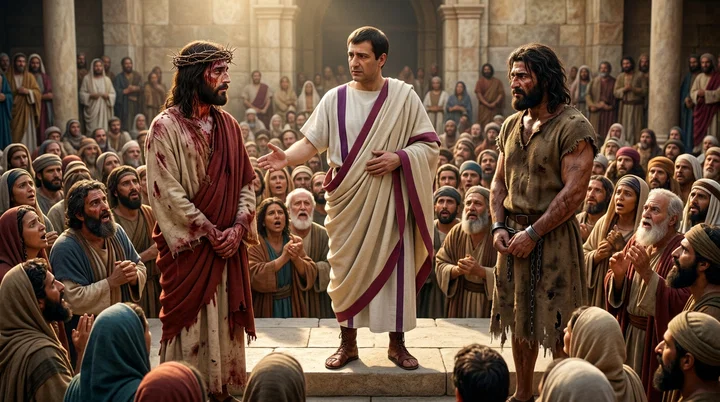
Pilate recognized envy as the chief priests’ motive for handing Jesus over.
- Luke 23:18-25
And they cried out all at once, saying, Away with this man, and release unto us Barabbas:
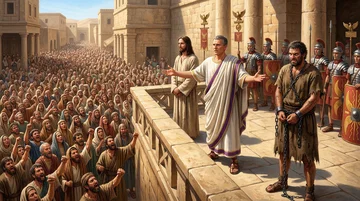
The crowd chooses Barabbas and demands Jesus’ crucifixion despite Pilate finding him innocent.
- John 18:39-40
But ye have a custom, that I should release unto you one at the passover: will ye therefore that I release unto you the King of the Jews?
The crowd rejects Jesus and chooses Barabbas instead.
- Matthew 27:24-26
When Pilate saw that he could prevail nothing, but that rather a tumult was made, he took water, and washed his hands before the multitude, saying, I am innocent of the blood of this just person: see ye to it.
Pilate acknowledges Jesus’ innocence but yields to the crowd and delivers him to be crucified.
- John 19:1-16
Then Pilate therefore took Jesus, and scourged him.
Pilate finds Jesus innocent yet delivers him to be crucified.
- Luke 23:4
Then said Pilate to the chief priests and to the people, I find no fault in this man.
Pilate declared Jesus innocent yet delivered Him.
- Matthew 27:22-23
Pilate saith unto them, What shall I do then with Jesus which is called Christ? They all say unto him, Let him be crucified.
The crowd demands Jesus’ crucifixion despite Pilate’s questions.
- Genesis 37:11
And his brethren envied him; but his father observed the saying.
Joseph’s brothers envied him, as the priests envied Jesus.
- John 18:38
Pilate saith unto him, What is truth? And when he had said this, he went out again unto the Jews, and saith unto them, I find in him no fault at all.
Pilate declares Jesus faultless, though he was delivered up out of envy.
- Acts 2:23
Him, being delivered by the determinate counsel and foreknowledge of God, ye have taken, and by wicked hands have crucified and slain:
God’s purpose in Jesus’ death did not remove his enemies’ guilt.
- Acts 7:9
And the patriarchs, moved with envy, sold Joseph into Egypt: but God was with him,
Envy moved men to deliver the righteous.
- John 19:4
Pilate therefore went forth again, and saith unto them, Behold, I bring him forth to you, that ye may know that I find no fault in him.
Pilate declares that he finds no fault in Jesus.
- Matthew 26:57-68
And they that had laid hold on Jesus led him away to Caiaphas the high priest, where the scribes and the elders were assembled.
Christ is followed to Caiaphas’s palace.
- John 19:16-18
Then delivered he him therefore unto them to be crucified. And they took Jesus, and led him away.
The passage points onward to Christ’s death at Calvary.
- Luke 23:19
( Who for a certain sedition made in the city, and for murder, was cast into prison.)
Identifies the crime for which Barabbas was imprisoned.
- Luke 23:15
No, nor yet Herod: for I sent you to him; and, lo, nothing worthy of death is done unto him.
Herod also finds no fault, confirming Pilate's knowledge.
- John 11:53
Then from that day forth they took counsel together for to put him to death.
The leaders’ response to Jesus’ mighty works leads them to plot his death.
- Matthew 27:25-26
Then answered all the people, and said, His blood be on us, and on our children.
people accept blood guilt, Jesus scourged and delivered
- Mark 14:55-56
And the chief priests and all the council sought for witness against Jesus to put him to death; and found none.
The council sought testimony against Jesus, but the witnesses’ accounts disagreed.
- Luke 23:18
And they cried out all at once, saying, Away with this man, and release unto us Barabbas:
The crowd demanded Jesus’ death and Barabbas’s release.
Commentary
Each commentary is drawn from primary sources: the writings of Ellen G. White and Adventist pioneers and periodicals. Each commentary is separate. Its own words are not a quotation; follow the references to read the source passages.
Ellen G. White
27 sources
Pilate knew Jesus had done nothing wrong and the charges were false, but that the leaders had handed Him over out of envy and malice.Ms 40, 1897, par. 3–63SP 141.1–142.1Ms 29, 1909, par. 12–17 That envy was the jealousy of the chief priests, elders and rulers toward His influence, authority, mighty works, righteous life and faithful rebukes, fearing He would draw the people away and expose their corruption.19MR 263.2–264.1SG3 174.2–176.1ST May 17, 1899 Though convinced He was innocent and just, Pilate failed to use his authority to protect Him, and instead declared Him faultless yet handed Him to scourging and crucifixion.Ms 29, 1909, par. 12–17RH Jan 23, 1900RH Jan 23, 1900Lt 132, 1910, par. 4–9Ms 40, 1897, par. 7–10 Set beside Barabbas the guilty robber and murderer, Jesus was rejected by a people led by the priests, and in demanding Barabbas they chose Satan personified before Christ.Ms 40, 1897, par. 3–6Lt 59a, 1895, par. 27–2819MR 263.2–264.1Ms 10, 1894, par. 24–2516MR 259.3–260.1 That judgment-hall choice between Christ the Truth and Satan the first rebel foreshadows the closing crisis of earth's history, and the same decision between Christ and Barabbas stands before everyone today.19MR 263.2–264.116MR 259.3–260.1Ms 13, 1897, par. 5
Envy Before Pilate
Pilate knew the leaders had handed Jesus over to him because of envy and malice, not because Jesus had done wrong or because the charges against him were true.Ms 40, 1897, par. 3–63SP 141.1–142.1Ms 29, 1909, par. 12–17RH Jan 23, 1900RH Jan 23, 1900 He recognized envy as the motive behind their delivery of Jesus for judgment, and had evidence the accusations were false.Ms 40, 1897, par. 3–63SP 141.1–142.1Ms 29, 1909, par. 12–17RH Jan 23, 1900DA 735.1–5 He declared Jesus faultless, innocent and just, yet the hatred of the chief priests drove them to press for death despite that innocence.Ms 40, 1897, par. 3–6RH Jan 23, 1900DA 735.1–5
The envy was that of the chief priests, elders and rulers, who were jealous of His influence and authority.Ms 29, 1909, par. 12–1719MR 263.2–264.1SG3 174.2–176.1EW 173.1Ms 39, 1894, par. 11–12 They feared He would draw the people away from them and become king, and they hated Him because His mighty works, righteous life and faithful rebukes exposed their corruption.SG3 174.2–176.1EW 173.1 That envy grew because of His mighty works until they desired His death, arranged false testimony, and worked even through betrayal by one of His own followers to bring Him into their hands for crucifixion.SG3 174.2–176.1EW 173.1 They then stirred the mob to act on that same envy, so the later rejection and cry for crucifixion repeated the pattern of leaders moving a deceived people to reject Jesus.19MR 263.2–264.1ST May 17, 1899Ms 39, 1894, par. 11–12
Herod as well as Pilate recognized that malice and envy had caused the accusation and condemnation of an innocent man.ST Jun 3, 1889COS 143.1–3ST Nov 2, 1882 Both rulers knew it from acquaintance with the character of the accusers.ST Nov 2, 1882 Pilate recognized envy as the sole motive behind the handing over, and Herod likewise saw that malice and envy had produced the charge.ST Jun 3, 1889COS 143.1–3ST Nov 2, 1882
The verse belongs to Jesus appearing before Pilate after the Sanhedrin had condemned Him and brought Him to have the sentence confirmed and executed.DA 723.1–724.1 There officials pressed with murderous hatred to have Pilate confirm their sentence.DA 723.1–724.1 It was the setting in which Jesus was condemned, reviled by the crowd, and rejected by people whose worldly ambitions had been disappointed.DA 394.2–3 It shows Jesus and His faithfulness standing against powerful people acting for evil, when the Jewish priests and rulers forced the Roman governor to do their will.RH Nov 11, 1915
Pilate had evidence the charges were false and declared He found no fault in Him.Ms 40, 1897, par. 3–6Ms 112, 1897, par. 33–34ST Jan 24, 1900 Jesus’ calm silence under accusation strengthened that conviction of innocence.ST Jan 24, 1900 Pilate knew Jesus was true and innocent, and knew that even bound and under accusation His power was the power of God and not of a common man, leaving his soul in terrible conflict.Ms 112, 1897, par. 33–34 He wrongly hoped that scourging Him would satisfy hatred and move the crowd to pity.DA 735.1–5
The sinless one, full of goodness, mercy, truth and holiness, was set side by side with Barabbas, a notable, guilty thief, robber and murderer.Ms 40, 1897, par. 3–6Lt 59a, 1895, par. 27–2819MR 263.2–264.1Ms 112, 1897, par. 33–34Ms 56, 1894, par. 3–4 The people, instructed by the priests and rabbis and moved by the rulers, chose Barabbas instead of the innocent, pure and holy Prince of Heaven, and demanded that Jesus be crucified.Ms 40, 1897, par. 3–6Lt 59a, 1895, par. 27–2819MR 263.2–264.1Ms 56, 1894, par. 3–4Lt 132, 1910, par. 4–9 To that maddened throng demanding death Pilate declared he found no fault in Christ, while angels witnessed men putting Christ to open shame as they called for the release of a robber and murderer.Lt 132, 1910, par. 4–9
Pilate's Failure to Act
Matthew 27:18 means Pilate saw through the trial to its real motive, that envy had moved the chief priests and elders to hand Jesus over, not any truth in the charges against Him.Ms 29, 1909, par. 12–17RH Jan 23, 1900Ms 40, 1897, par. 7–10 He recognized that envy, knew Jesus was innocent and true and had done nothing wrong, yet that knowledge did not excuse him.Ms 29, 1909, par. 12–17RH Jan 23, 1900Ms 40, 1897, par. 7–10 He failed to use his official authority and appointed power to do justice, to act on what he knew, and to protect Christ.Ms 29, 1909, par. 12–17RH Jan 23, 1900Ms 40, 1897, par. 7–10
His soul was in terrible conflict because he dared not give Jesus up to that maddened power and sought to save Him.Ms 112, 1897, par. 33–34 He knew that even bound and under accusation the power in Jesus was not that of a common man but of God.Ms 112, 1897, par. 33–34 Flattering himself that the contrast between innocence and guilt would be so convincing that the people would choose Jesus of Nazareth, he fell back on the pagan and unjust festival custom of freeing one condemned prisoner at the great national feast, setting the innocent Christ side by side with the notable, guilty Barabbas.Ms 112, 1897, par. 33–34 Their hatred still pressed for death despite that innocence, and he wrongly hoped that scourging Jesus would satisfy them and move the crowd to pity.DA 735.1–5Ms 112, 1897, par. 33–34
He declared Jesus innocent, faultless and just, yet condemned Him and handed Him to a maddened throng demanding His death to be scourged and crucified.RH Jan 23, 1900Lt 132, 1910, par. 4–9 His taking water and washing his hands before the multitude and saying he was innocent of the blood of this just person did not make him guiltless, but was a farce and a cowardly deed that left terrible guilt on his convicted conscience.RH Jan 23, 1900 By refusing the warning from the Lord and refusing to exercise his office to administer justice and protect Christ, he made himself responsible for the condemnation, the cruel scourging, and the insults offered before any wrong was proved, and accountable for His death.RH Jan 23, 1900 Angels witnessed it all as men put Christ to open shame, taking Him with wicked hands to humiliate, mock, revile and crucify Him while Satan stood at the head of the abusers and led the cruel mob.RH Jan 23, 1900Lt 132, 1910, par. 4–9
Choosing Christ or Barabbas
Instructed by the priests and rabbis, the people rejected Jesus and demanded that He be crucified, choosing Barabbas, a guilty robber and murderer, instead of the innocent Jesus.Ms 10, 1894, par. 24–25Ms 56, 1894, par. 3–4 Satan led those who rejected the light to make that choice, standing at the head of those who reviled and abused the Saviour and leading the cruel mob, with the hoarse cry to crucify Him coming from men inspired by him.Lt 59a, 1895, par. 27–28Ms 10, 1894, par. 24–25Lt 132, 1910, par. 4–9 Angels witnessed men putting Christ to open shame as they demanded His death and called for the release of Barabbas, showing what humanity will do when not under the control of the Spirit of God and standing under the black banner of the powers of darkness.Lt 59a, 1895, par. 27–28Lt 132, 1910, par. 4–9
Barabbas placed beside Jesus represented Satan personified, so the roaring demand to release Barabbas was choosing Satan before Christ and exalting Satan.16MR 259.3–260.1 That same exaltation of Satan happens on every such occasion when the choice is repeated.16MR 259.3–260.1 The judgment-hall scene symbolizes the closing crisis of earth's history, when people will choose Christ, the Truth, or Satan, the first rebel, liar, and murderer. Rejecting the message of mercy concerning God's commandments and the faith of Jesus means rejecting Christ and identifying with Satan and those who are disloyal.
Rejecting the light presented in Christ is rejecting Him as God's messenger and the only provision for cleansing from sin. Rejecting light and grieving God's Spirit leaves people open to the prince of darkness.Ms 10, 1894, par. 24–25 The later rejection of Christ and choice of Barabbas repeats the pattern of the chief priests and elders handing Jesus over to Pilate from envy, with people moved by deception rejecting Jesus and crying for His crucifixion.Ms 39, 1894, par. 11–12 Their hatred of Christ continued after His crucifixion, even as they heard the apostles boldly proclaim that the One they had rejected and killed was the Son of God and Prince of Life.ST May 17, 1899
This rejection reveals the spirit of man and what such ones will give themselves to in the great crisis before us, in scenes of cruelty whose details the disciples could not have comprehended.Lt 59a, 1895, par. 27–28 His self-denial, great humiliation, rejection, suffering in Gethsemane, in the judgment hall, condemnation, and scourging are to be contemplated for this lesson.Lt 59a, 1895, par. 27–28 It calls for greater faith and prayer for increased faith to stand the test and trial to come.Lt 59a, 1895, par. 27–28 Jesus knew beforehand the trying ordeal of betrayal, agony in Gethsemane, condemnation in the judgment hall, humiliation, and crucifixion.4RED 102.2–103.1 He knew who among His followers were unbelieving and of weak faith, and knew the multitude who had hailed Him as king would turn to hiss at Him and revile Him, with the cruel jeering crowd crying crucify Him.4RED 102.2–103.1
He therefore brought a testing crisis while still present to comfort and strengthen His chosen, so the faint-hearted would be sifted beforehand and the faithful would not be overwhelmed with surprise, fear, and disappointment when professed friends turned from Him in His trouble.4RED 102.2–103.1 The trial lays out two distinct parties, Christ and the rabble led by the apostate rulers who moved the crowd to cry for Barabbas and to cry crucify Him.19MR 263.2–264.1 The same decision now stands before everyone, to stand with Christ or with the apostate side, with solemn responsibility and account to God for encouraging transgression by example.19MR 263.2–264.1 The same choice between Barabbas and Christ, the Son of God who made the world and all things therein, is being made now in the world today, with the cries for Barabbas and to crucify Christ repeated, so that each person individually by his course of action is demonstrating whom he is choosing.16MR 259.3–260.1Ms 13, 1897, par. 5 Choosing Christ means living as Christ.Ms 13, 1897, par. 5
Sources
Pioneers and periodicals
56 sources
Pilate as Roman governor knew Jesus was innocent and just, and knew the chief priests and rulers had handed Him over not for any crime but from envy.RH Jan 23, 1900RH Jun 23, 1868ST Mar 13, 1901ST Oct 27, 1898RH Mar 26, 1861 Their envy was stirred by His superior excellence, growing influence with the people, holy character and power over hearts, becoming malice and hatred that sought His death.RH Jan 9, 1855ST Jun 24, 1897ST Oct 12, 1876RH Jun 26, 1900ST Jun 16, 1898 Though his duty was to release and protect Him, Pilate yielded to clamor and fear, tried to shift responsibility by the Passover pardon and by washing his hands, and delivered Him to be scourged and crucified, which left him guilty of His death.RH Jan 23, 1900ST Oct 27, 1898ST Oct 7, 1886ST Mar 13, 1901ST Mar 28, 1906 In this His condemnation under color of public justice fulfilled that Messiah was to be cut off in judgment as the great sacrifice for sin that ended the sacrificial system.RH Nov 18, 1862 The choice of Barabbas over Christ shows how envy and popular pressure reject truth and destroy the best friend while favoring an enemy, a warning against abandoning truth when pressed by the crowd.RH Jul 2, 1861RH Jun 24, 1915RH Sep 28, 1911RH Apr 14, 1874
Trial Setting and Circumstances
Jesus was brought to Pontius Pilate for trial, Pilate being at that time governor of Judea, and a sentence from him was necessary before proceeding to execution because the power of life and death was vested in the Roman governor.RH Feb 11, 1862ST Dec 1, 1898 Because Roman law knew no condemnation but for cause, he demanded to know the nature of the offense when the priests and elders led Christ up the steps of the Roman tribunal and delivered Him to the Roman judgment-seat.ST Dec 1, 1898 Pilate called together the chief priests and rulers and people and examined Jesus before them, finding no fault in Him touching the things charged against Him.ST Mar 13, 1901 His own examination found no evidence of crime, and with Herod he found Him worthy of no punishment and nothing worthy of punishment.ST Oct 27, 1898 Christ's dignified, trusting, unresentful bearing under indignity, His calm silence in the face of accusation, and His noble character even after being scourged and displayed beside Barabbas convinced Pilate He was innocent, righteous, and more than man, in contrast to the robber's hardened depravity.ST Jan 24, 1900ST Oct 27, 1898ST Oct 7, 1886
The day of condemnation and crucifixion was among the most momentous events in Christ's history, marked by trial before Pilate, mocking, scourging, and death in which He gave Himself for sinful humanity and bore the curse.RH Feb 13, 1872 At Pilate's judgment seat in the Roman hall He endured sarcasm, cruel jokes, blows, spitting, and humiliation before the crucifixion, then stood mocked and beaten, crowned and wounded, delivered up through the joined hate of Jew and Gentile.RH Nov 12, 1872RH Jun 10, 1862 His healing and other good works gave no cause for the rage against Him.ST Oct 11, 1899
After examining Jesus on the charges brought by the Jewish council Pilate publicly declared Him without fault.ST Aug 17, 1904 Yet he sought to free Him by pardon through the governors' Passover custom of releasing one condemned Jewish prisoner chosen by the people gathered from the province for the feast, proposing to chastise and release Him.ST Mar 13, 1901ST Aug 17, 1904ST Mar 13, 1901 He framed the offer so the people would choose Jesus because he still had confidence the multitude could be moved in the interest of justice, and he appealed a third time for leave to do his duty and tried to appease their wrath by offering to chastise Jesus and then release Him.ST Aug 17, 1904ST Mar 13, 1901
The council used threats and intimidation to secure the Roman governor's sanction for the unjust trial of an innocent man, though they presented their actions as loyalty to the government and enforcement of the law.ST Jun 9, 1898ST Jun 24, 1913 Their influence led the crowd to demand Barabbas's release and Jesus' crucifixion, for the chief priests incited the people to ask for Barabbas to be released instead of Jesus, and Pilate yielded by putting the innocent Jesus on a par with Barabbas and letting His avowed enemies choose His fate.ST Mar 28, 1906 Their choice shows inconsistency in demanding Jesus' death while seeking the release of a man convicted of the same crime they charged Jesus with, and though Pilate repeatedly declared Jesus innocent and tried to secure His release because He had committed no crime deserving death, the crowd's cries prevailed and Jesus was led away to be crucified.RH Jun 15, 1911ST Mar 28, 1906
Barabbas was a robber and criminal charged with insurrection and murder, whose hardened depravity contrasted with Jesus' character.ST Oct 7, 1886ST Mar 13, 1901 His arrest as a ringleader may have occurred in the same disturbance as the massacre of Galileans.ST Feb 16, 1882 The scene was linked to the struggle over whether Jesus would become a political king, with the imagining that the people would rally to Jesus and that He could be crowned, which Jesus did not meet.ST Oct 4, 1910 The Jewish leaders handed Jesus over because they envied His influence among the people, which had been displayed in the public welcome a few days earlier, and the people who had praised Him as King turned to demand His crucifixion.ST Oct 11, 1899ST Jun 16, 1898
Pilate Knew Yet Condemned
Pilate knew from the first that the chief priests, scribes, elders and rulers had delivered Jesus into his power from envy and not because the charges were true.RH Jan 23, 1900RH Jun 23, 1868RH Mar 26, 1861ST Dec 1, 1898ST May 10, 1905 He discerned their motive, and from the conflicting testimony and his own reason understood that Jesus was innocent and justly claimed to be the Messiah.RH Jan 23, 1900RH Jun 23, 1868 He had probably heard much about Christ and His work, and although heartlessly cruel by nature he was willing from the outset to release Christ from the power of Rome's enemies, the Jews, recognizing His piety.ST Oct 12, 1876ST Dec 1, 1898
His own examination found no evidence of crime, and the repeated efforts to release the innocent Man were met with fresh outbursts of malignity.ST Oct 27, 1898ST Mar 28, 1906 The Jews, choosing Barabbas, yielded neither to law and justice nor to pity at the sight of the scourged, beaten, bruised, bleeding, unresisting sufferer.ST Oct 27, 1898 Pilate repeatedly tried to secure release because no crime deserving death had been committed, but the rulers stirred the crowd to demand crucifixion, and he repeatedly yielded to pressure, wavered for fear of tumult, became nearly helpless before the crowd, and failed to judge fairly.ST Oct 27, 1898ST Oct 7, 1886ST Mar 28, 1906
He knew his official duty was to release Jesus and protect Him from violence and to exercise the power of his appointed office to administer justice.RH Jan 23, 1900ST Mar 13, 1901 Yet he tried to shirk responsibility and shift the decision onto the priests and rulers through the Passover custom of pardoning one prisoner, and that evasion strengthened the Jews and made release harder.ST Mar 13, 1901 He appealed a third time for leave to do his duty and tried to appease wrath maddened by his cowardly evasion by offering to chastise Jesus and then release Him, while the people rejected pardon for Jesus, demanded pardon for Barabbas, a criminal charged with insurrection and murder, and demanded death for Jesus by crucifixion.ST Mar 13, 1901
Though appealed to do right whatever the consequences, he was given a final warning through his wife Claudia Procula's God-given dream to have nothing to do with that righteous Man.ST Oct 27, 1898 He feared the Jews, refused to listen to the warning from the Lord, refused to identify himself with the suffering Innocent One, and delivered Jesus to the mob to be scourged and crucified.RH Jan 23, 1900ST Oct 27, 1898 His taking water and washing his hands before the multitude and saying he was innocent of the blood of this just person did not make him guiltless, but was a farce and cowardly deed to escape responsibility and ease conscience that left terrible guilt on his convicted conscience.RH Jan 23, 1900ST Oct 27, 1898 By refusing to administer justice and protect Christ he made himself responsible for the condemnation, the cruel scourging, and the insults offered before any wrong was proved, and accountable for His death.RH Jan 23, 1900 By his part in delivering Christ he set himself against the Rock of God's word and truth, and his name stands with Nimrod, the Pharaohs, Sennacherib, Agag, Belshazzar, Herod, Judas Iscariot and others who lifted hands against God's plans and precepts, and now lives only in infamy for opposition to truth.ST Jul 15, 1908
Envy That Delivered Jesus
The Jewish leaders, the chief priests and elders, handed Jesus over to Pilate to be condemned and put to death because of envy, and in joining with civil power to have Him put to death for refusing to submit to their traditions made into civil law they committed the crime of crucifying the Son of God, a crime that shocked the universe.RH Dec 30, 1915RH Dec 24, 1867RH Nov 11, 1858 They envied His superior excellence, and pain at another's excellence or happiness can give rise to hatred and then malice.RH Jan 9, 1855 They envied His growing popularity and influence among the people, which had been displayed in the public welcome a few days earlier, resenting the honor and influence He received from the people while their own influence waned.ST Oct 12, 1876ST Jun 16, 1898ST Oct 5, 1904
They envied His holy character, His nearness to God, and His power over hearts longing to be free from sin.ST Jun 24, 1897 Their envy arose because they could not endure the revelation of God's character in Jesus, and it led them to seek His destruction as the same spirit that opposes God's kingdom and attacks those who represent God's character.RH Jun 26, 1900 Their motive was malice and jealous, evil scheming against an innocent man, and that motive caused His condemnation.ST Nov 2, 1882ST Nov 14, 1895 It was so poorly concealed that Pilate, the Roman governor to whom they appealed for a death-warrant, discerned that envy was the cause of their handing Him over.ST Oct 2, 1901
It was the most malignant form of envy, for envy directed against the righteous is in reality against Christ, like Satan's envy of Christ that was fostered until it became open rebellion.ST Oct 2, 1901 Both Pilate and Herod knew of their malice and envy that had led them to condemn an innocent man.ST Jun 3, 1889ST Nov 2, 1882 Both rulers knew it from their acquaintance with the character of the Jews.ST Nov 2, 1882
Prophecy Fulfilled and Foreshadowed
Matthew 27:18 fulfills that Messiah was to be condemned in judgment and suffer death under color of public justice, and this was met in the mock trial where His very judge knew He was innocent and knew He had been delivered from envy, yet still delivered Him over to be crucified.RH Nov 18, 1862 His crucifixion was the great sacrifice for human sin, and His delivery to death belongs to the Messiah being cut off in the middle of the seventieth week. His death brought the sacrificial system to an end.
The judgment-hall scene symbolizes the closing crisis of earth's history, when every person will choose Christ, the Truth, or Satan, the first rebel, liar, and murderer. Rejecting the message of mercy concerning God's commandments and the faith of Jesus means rejecting Christ and identifying with Satan and those who are disloyal. Jesus was cast out and condemned to crucifixion though He came as God's messenger, showing that rejecting the light presented in Christ is rejecting Him and the only provision for cleansing from sin. The rulers' delivery of Christ to be condemned arose from envy, and the rejection of Christ in favor of Barabbas and Caesar stands for Jerusalem's failure and for the hopelessness of salvation by human works.ST Apr 11, 1900
The chief priests and elders rejecting the light given in Christ and misleading the people against Him is now repeated on a greater scale by churches rejecting the greater light of reform truth for the last perilous days, concerning God's holy law and the fulfillment of prophecy in the Old and New Testaments, covering truth with error and confusion and warning the people against those spreading the truth.RH Jun 13, 1865 The same spirit appears in religious people who spread lies and slander and persecute those preaching what is called present truth, who like those who chose Barabbas over Jesus oppose Christ's cause.RH Mar 15, 1860 Their opposition to Him led them to join with civil power and have Him put to death for refusing to submit to their traditions made into civil law.
Scripture Links and Cosmic Conflict
The envy that delivered Jesus to Pilate was the same envy that moved Cain to murder Abel because Abel was accepted with God while Cain's own works were evil and his brother's righteous, and the same envy that moved the patriarchs to sell Joseph into Egypt with murder already in the heart.ST Oct 2, 1901 Envy can lead people to attack the innocent and seek their death, as it did in the cases of Abel, Joseph, Moses, David and Daniel, and in the attempts against Paul.RH Nov 23, 1911
Jesus knew of the jealous, evil scheming behind His handing over, and He saw deeper and farther than Pilate, seeing behind that human envy the powers of darkness combined in one effort to defeat the eternal purpose of God.ST Nov 14, 1895 God's plan was deep and broad enough to cover that exigency, harnessing sin to His eternal will, so that Satan and evil hosts are only instruments to grind out character and help in attaining perfection.ST Nov 14, 1895 They are able to do nothing against the child of God except what God permits.ST Nov 14, 1895
The leaders' delivery of Jesus was driven by envy, and their hatred of Christ continued after His crucifixion even as they heard the apostles boldly proclaim that the One they had rejected and killed was the Son of God and Prince of Life.ST May 17, 1899 His healing and other good works gave no cause for the rage against Him, yet the people who had praised Him as King turned to demand His crucifixion, while a murderer was released and the Prince of Life was slain.ST Oct 11, 1899 Jesus went willingly to suffer and die so that even His enemies might be freed.ST Oct 11, 1899 Afterward, in the events surrounding His delivery from envy, they went to Pilate on the Sabbath and asked him to secure Jesus' tomb so His words about rising after three days would not be fulfilled.ST Jul 16, 1912
Their envy arose because they could not endure the revelation of God's character in Jesus, and it led them to seek His destruction, presenting the same spirit that opposes God's kingdom and attacks those who represent God's character.RH Jun 26, 1900 Their envy brought destruction on them and their nation, illustrating that evil ultimately brings consequences on those who begin it unless God stays it through the mercy sought in submissive faith.ST Jun 24, 1897 Their preference for Barabbas over Christ shows how people can reject and destroy their best friend while favoring an enemy, with truth persecuted and error welcomed.RH Jul 2, 1861 At His trial Barabbas the robber was preferred to the innocent Lamb of God, driven by hatred and persecution of Him.RH Jun 24, 1915 Their action, together with the crowd's demand for Jesus' death and Barabbas's release, shows that popular opinion can be gravely wrong, especially in religious matters.RH Apr 14, 1874
Warning and Christian Example
The account to which this verse belongs subdues pride and discontent when it is read by the fretful or gloomy Christian.ST Apr 17, 1879 The path from the judgment hall of unjust Pilate to Calvary is the path Christians are called to follow by taking up the cross.RH Jul 30, 1867RH Aug 14, 1860 Christian perfection consists not in rare visions or ecstatic joy but in resolutely following Him through suffering.RH Jul 30, 1867RH Aug 14, 1860
At Pilate's judgment seat before the hostile religious crowd He met questioning, insults, spitting and blows with unwavering courage, refusing to abandon truth or give way to the mob while remaining gentle and innocent.RH May 5, 1863 He remained composed and calm in self-possession under pressure, grounded in faith and confidence in God as an example of repose.RH May 5, 1863ST Jul 29, 1886
In the Roman hall at Pilate's judgment seat He stood mocked and beaten, crowned and wounded, delivered up through the joined hate of Jew and Gentile.RH Nov 12, 1872 On the cross His faithfulness stood against powerful people acting for evil when the Jewish priests and rulers forced the Roman governor to do their will.RH Nov 11, 1915 Pilate had Truth before him and found no fault, yet yielded to the crowd rather than release Him, and fear made him turn away and hand Him over to be crucified, warning that those who would defend truth may instead abandon it when pressured by the crowd.RH Sep 28, 1911
Sources