Genesis 45:4
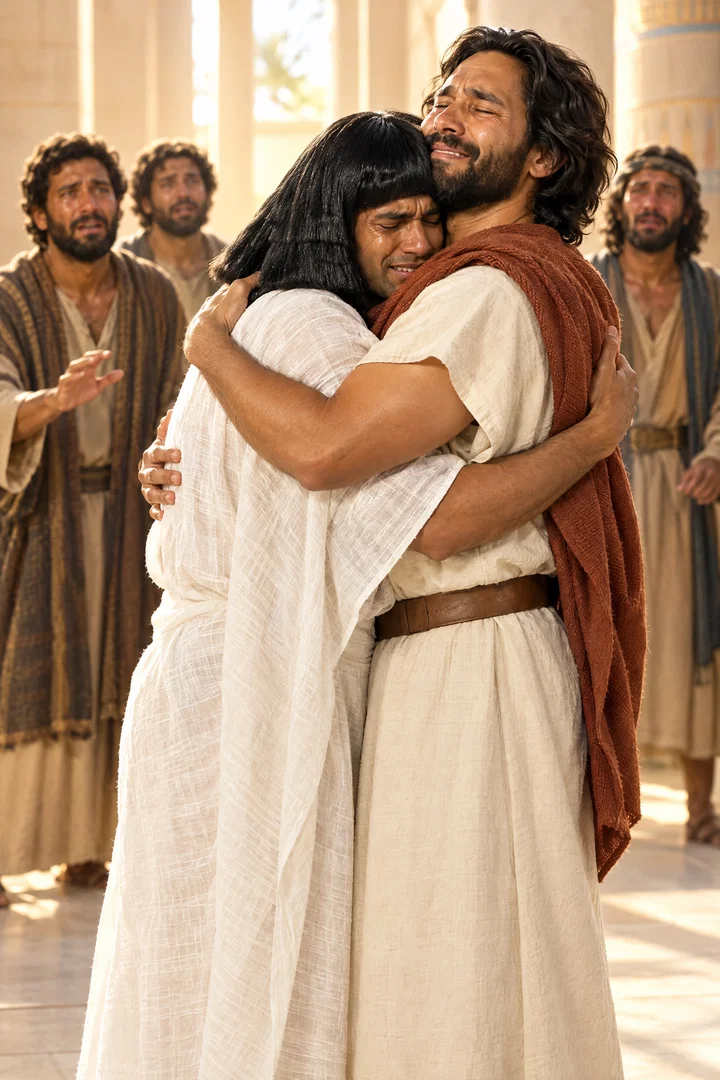
And Joseph said unto his brethren, Come near to me, I pray you. And they came near. And he said, I am Joseph your brother, whom ye sold into Egypt.
Translations
And Joseph said to his brothers, Come near to me, I pray you. And they came near. And he said, I am Joseph your brother, whom you sold into Egypt.
King James Version, KJV Cambridge Paragraph Bible, Revised Version, American Standard Version
And Joseph said unto his brethren, Come near to me, I pray you. And they came near. And he said, I am Joseph your brother, whom ye sold into Egypt.
And Joseph said to his brethren, Come near to me, I pray you: and they came near. And he said, I am Joseph your brother, whom ye sold into Egypt.
And Joseph saith unto his brethren, 'Come nigh unto me, I pray you,' and they come nigh; and he saith, 'I [am] Joseph, your brother, whom ye sold into Egypt;
And Joseph said to his brethren, Come near to me, I pray you. And they came near. And he said, I am Joseph your brother, whom ye sold into Egypt.
Then said Joseph unto his brethren—Draw near I pray you, unto me. And they drew near. And he said—I, am Joseph your brother, whom ye sold into Egypt.
Berean Standard Bible, Majority Standard Bible
Then Joseph said to his brothers, “ Please come near me.” And they did so.“ I am Joseph, your brother,” he said, “ the one you sold into Egypt!
Joseph said to his brothers, “ Come near to me, please.”They came near. He said, “ I am Joseph, your brother, whom you sold into Egypt.
Then Joseph said to his brothers, Come near to me. And they came near, And he said, I am Joseph your brother, whom you sent into Egypt.
Againe, Ioseph sayde to his brethren, Come neere, I pray you, to mee. And they came neere. And he sayde, I am Ioseph your brother, whom ye sold into Egypt.
Douay-Rheims (Challoner revision)
And he said mildly to them: Come nearer to me. And when they were come near him, he said: I am Joseph, your brother, whom you sold into Egypt.
Pictures
Cross-references
- Genesis 37:5-11
And Joseph dreamed a dream, and he told it his brethren: and they hated him yet the more.
Joseph’s brothers bow to him, fulfilling the dreams they had despised.
- Genesis 50:20
But as for you, ye thought evil against me; but God meant it unto good, to bring to pass, as it is this day, to save much people alive.
God turned the brothers’ intended harm into good and preserved many lives.
- Genesis 42:6-9
And Joseph was the governor over the land, and he it was that sold to all the people of the land: and Joseph’s brethren came, and bowed down themselves before him with their faces to the earth.
Joseph’s brothers bow before him, and he recognizes them though they do not recognize him.
- Genesis 42:21-22
And they said one to another, We are verily guilty concerning our brother, in that we saw the anguish of his soul, when he besought us, and we would not hear; therefore is this distress come upon us.
Joseph’s brothers acknowledge their guilt and remorse for selling him.
- Genesis 43:14-15
And God Almighty give you mercy before the man, that he may send away your other brother, and Benjamin. If I be bereaved of my children, I am bereaved.
The brothers travel to Egypt and stand before Joseph before he reveals himself.
- Genesis 44:18-34
Then Judah came near unto him, and said, Oh my lord, let thy servant, I pray thee, speak a word in my lord’s ears, and let not thine anger burn against thy servant: for thou art even as Pharaoh.
Judah’s plea shows the brothers’ changed spirit before Joseph reveals himself.
- Genesis 42:36
And Jacob their father said unto them, Me have ye bereaved of my children: Joseph is not, and Simeon is not, and ye will take Benjamin away: all these things are against me.
Jacob saw adversity, while God was working for his good.
- Genesis 42:13
And they said, Thy servants are twelve brethren, the sons of one man in the land of Canaan; and, behold, the youngest is this day with our father, and one is not.
The brothers explain that their youngest brother is with their father and one brother is gone.
Commentary
Each commentary is drawn from primary sources: the writings of Ellen G. White and Adventist pioneers and periodicals. Each commentary is separate. Its own words are not a quotation; follow the references to read the source passages.
Ellen G. White
7 sources
The verse belongs to the moment when Joseph makes himself known to his brothers, just after he had seen Benjamin and struggled to restrain his brotherly love, while his brothers stood before him anxious about being accused and punished.ST Mar 31, 1887 He reveals himself only after proving his brothers and seeing in them the fruits of true repentance for their sins.ST Jan 29, 1880SG3 165.1–31SP 149.2–150.1 Deeply affected and overcome with feeling, he wept aloud, asked to be left alone with his brothers, and declared his identity to them.ST Jan 29, 1880SG3 165.1–31SP 149.2–150.1
His brothers could not answer for surprise, terror, astonishment and confusion, unable to realize that the ruler of Egypt was the brother they had envied, would have murdered, and finally were content to sell as a slave.ST Jan 29, 1880SG3 165.1–31SP 149.2–150.1 They stood before him frightened, overwhelmed, condemned and amazed.ST Jan 29, 1880SG3 165.1–31SP 149.2–150.1PP 230.3–231.1 All their ill treatment passed before them, especially how they had despised his dreams and labored to prevent their fulfillment, yet had acted their part in fulfilling those dreams by repeatedly making obeisance to him.ST Jan 29, 1880SG3 165.1–31SP 149.2–150.1
Seeing their confusion, shame and fear, he called them to come near and plainly repeated his identification of himself as Joseph their brother whom they sold into Egypt.ST Mar 31, 1887ST Jan 29, 1880SG3 165.1–31SP 149.2–150.1PP 230.3–231.1 He spoke kindly to make the occasion as easy as possible, with no desire to condemn or to increase their embarrassment by censuring them, feeling they had suffered enough for their cruelty and endeavoring to comfort them and replace fear and self-reproach with reassurance.ST Mar 31, 1887ST Jan 29, 1880SG3 165.1–31SP 149.2–150.1PP 230.3–231.1 His naming of himself as the brother sold into Egypt recalls their guilt but turns at once to divine purpose.ST Jan 29, 1880SG3 165.1–3PP 230.3–231.1 He explains that God sent him before them to preserve life, to preserve them a posterity in the earth and save lives by a great deliverance through the famine, making him a father to Pharaoh and ruler of Egypt.ST Jan 29, 1880SG3 165.1–3PP 230.3–231.1
The disclosure opens reconciliation, leading the brothers to humbly confess the wrongs they committed against him and to ask his forgiveness.ST Mar 31, 1887SG3 167.1 The moment brings great joy at finding him alive and relieves minds long suffering remorse and great distress, knowing they are not guilty of his blood.SG3 167.1
Sources
Pioneers and periodicals
18 sources
Joseph made himself known to his brothers on their second visit from Canaan to buy food in the famine, after he had proved them and seen a changed spirit and true repentance in them.ST Mar 31, 1887ST Jan 29, 1880ST Dec 25, 1901 Having sent all others out and wept aloud, he found them troubled and speechless with surprise and terror before him as Egypt's ruler, so he called them to come near to quiet their fears and told them he was Joseph their brother whom they had sold into Egypt.ST Jan 29, 1880ST Oct 23, 1901ST Oct 23, 1901 He did not use the disclosure to condemn or take revenge though he had power to punish, but spoke kindly to ease their shame and comfort them with pity, forgiveness and love.ST Mar 31, 1887ST Jan 29, 1880ST Jun 11, 1894ST Nov 29, 1905RH Dec 5, 1865 He turned the reminder of their guilt at once to God's purpose, that God had sent him before them to preserve life and save his family and many people through the famine.ST Jan 29, 1880ST Dec 25, 1901 In so relieving his suppliant brothers he foreshadowed Christ, who after His resurrection called His fearful disciples His brethren and showed them His hands and feet with peace, and he stands as the pattern that a repentant trespassing brother is to be forgiven and a divided household united in love.ST Jun 11, 1894ST Sep 28, 1904
Words and Setting
The verse belongs to the account of Joseph making himself known to his brothers, the reunion with his father's family, and the closing story of Joseph and his brothers after they had sold him into slavery in Egypt.ST Mar 31, 1887ST Jan 10, 1911 Its setting is the brothers' second visit from Canaan to buy food because of the prolonged famine.ST Dec 25, 1901 He had seen Benjamin and struggled to restrain his brotherly love, while his brothers stood before him anxious about accusation and punishment.ST Mar 31, 1887 He revealed himself only after he had proved them and seen in them a greatly changed spirit and the fruits of true repentance for their sins.ST Jan 29, 1880ST Oct 23, 1901
He first sent every other man out from him and wept aloud and declared that he was Joseph.ST Jan 29, 1880ST Nov 24, 1898 His brothers were troubled at his presence and could not answer him for surprise and terror.ST Oct 23, 1901ST Nov 24, 1898 They were unable to realize that the ruler of Egypt was the brother they had envied and would have murdered but were finally content to sell as a slave.ST Jan 29, 1880 Seeing their confusion, he called them to come near to him to quiet their fears and make the occasion as easy as possible.ST Jan 29, 1880ST Oct 23, 1901ST Oct 23, 1901 His request brought them close as he faced them with the truth of their past deed, and when they came near he identified himself as Joseph their brother whom they had sold into Egypt.ST Oct 23, 1901ST Nov 24, 1898
His naming of himself as the brother sold into Egypt recalls their guilt, with all their ill-treatment, the pit and slavery.ST Jan 29, 1880 They remembered how they had despised his dreams and labored to prevent their fulfillment, yet had acted their part in fulfilling those dreams.ST Jan 29, 1880 He stood before them in all the power and glory of Egypt as a father to Pharaoh and ruler, while they stood before him as suppliants, condemned and amazed.ST Jan 29, 1880 The moment fulfills his earlier dreams of rule, with the same brothers who had asked if he would indeed rule over them now bowed before him in humble supplication.ST Jun 11, 1894
Providence and Forgiveness
Joseph does not use the disclosure to condemn, censure, or retaliate, and has no desire to increase embarrassment, but calls his brothers near to make the occasion as easy as possible and to ease their shame, confusion, and depression of spirit.ST Mar 31, 1887ST Jan 29, 1880 Feeling they have suffered enough for their cruelty, he endeavors to comfort them and speaks kindly to them, longing with tears to embrace them because he has seen in them a greatly changed spirit.ST Mar 31, 1887ST Jan 29, 1880ST Oct 23, 1901 He does not name himself alone and leave them to terrible memories and emotions crowding their minds, but immediately adds his relationship to them to comfort them rather than leaving them to those memories.ST Mar 31, 1887
Though he now possesses all the power and glory of Egypt and has power to punish their earlier cruelty and hatred, he treats them with pity, forgiveness, and love instead of revenge.ST Jun 11, 1894ST Nov 29, 1905RH Dec 5, 1865 In that self-revelation he shows a forgiving and Christlike spirit, and his love proves greater in usefulness and power than their hatred, subduing his wicked brothers and disarming their fear even while they tremble before him in conscious guilt.ST Jun 11, 1894ST Nov 29, 1905RH Dec 5, 1865
He turns the reminder of guilt at once to divine purpose, charging them not to be grieved nor angry with themselves for selling him, because God sent him before them to preserve life.ST Jan 29, 1880ST Dec 25, 1901ST Jan 23, 1912 That purpose was to preserve them a posterity in the earth and to save their lives by a great deliverance through the famine, so that what the brothers meant for ill God used for good and for the preservation of his relatives and of many people.ST Jan 29, 1880ST Dec 25, 1901ST Jan 10, 1911ST Jan 23, 1912 God's providence thus directed Israel's journey into Egypt, where Joseph could preserve his family from famine and where they could be tried and serve as representatives of God's truth to Egypt.ST Jan 29, 1880
His forgiveness illustrates overcoming evil with good and keeping the command to love enemies, showing the sanctifying influence of a holy life.ST Dec 25, 1901RH Dec 5, 1865 It shows that all things work together for good to them that love God and are called according to His purpose, and teaches that vengeance belongs to the Lord.ST Dec 25, 1901ST Nov 29, 1905
Christ Type and Application
Joseph's deliberate easing of his suppliant brothers from embarrassment and depression of spirit, when they stood before him while he possessed all the power and glory of Egypt after they had put him in the pit and sold him into slavery, makes him the great prototype of Christ. He does not name himself alone and leave them to the terrible emotions and memories of their past wrongs crowding their minds, but immediately adds his relationship to them to comfort them. Christ, who knew the grief and burning shame of His wayward and unfaithful disciples, did the same when He disclosed Himself after His resurrection, first sending word through Mary that they were His brethren and then personally appearing to show His hands and His feet and saying Peace be unto you, to make them peaceful and strong in Him, a wish for all time and for the whole household.
The self-revelation as the brother sold into Egypt shows a forgiving spirit toward those who had wronged him, at the moment fulfilling his earlier dreams of rule with the same brothers who had asked if he would indeed rule over them now bowed before him in humble supplication.ST Jun 11, 1894 A trespassing brother who repents is to be forgiven, and the forgiving spirit shown here is the pattern everyone ought to cherish.ST Jun 11, 1894 The family of Jacob is shown united in the closest bonds of love after jealousy had all but separated it, proving that affliction can unite a divided household and is therefore welcome.ST Sep 28, 1904 Affliction works like the blacksmith's fire and beating, putting hearts into the heat until they are pliable and then welding them firmly together.ST Sep 28, 1904
The life of Joseph holds principles designed to guide the contingencies of life and gives a counterpart to experiences people still go through.ST Nov 29, 1905 Its underlying principle and practical lesson are to be known as familiarly as one's own name, to help and guide any called to pass through a similar experience, for one's own soul's good and for giving counsel to others in similar difficulties, as part of the Word of God that is a guidebook to trust with confidence till the very end.ST Nov 29, 1905 Whatever God has intended a person for, that person may safely trust Him to bring them to it, for He may lead them round but He will guide them right, as seen in the history of Joseph.RH Jan 19, 1860 Joseph stands as one guided and saved by God in his youth, held up as an example with Samuel to show that every child and youth should want the God of Israel for his friend so that angels may guard him in the time of trouble.RH Nov 24, 1874
Sources