Luke 22:44
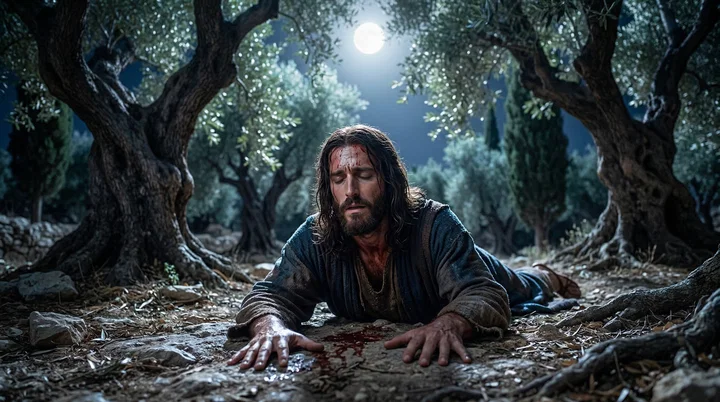
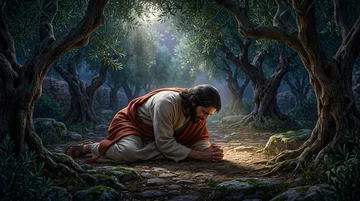
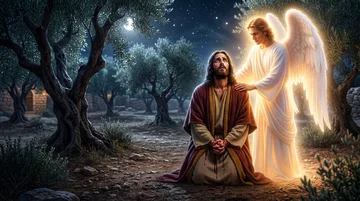
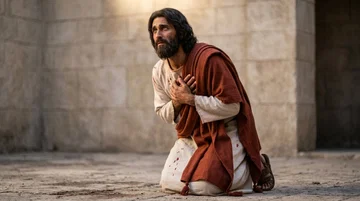
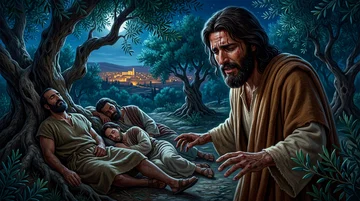
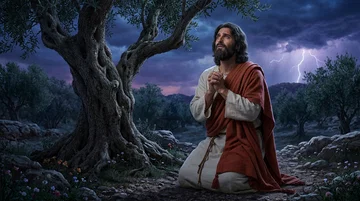
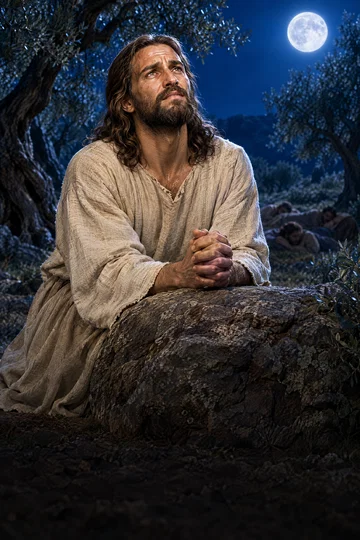
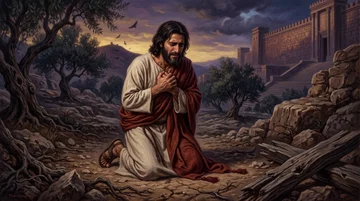
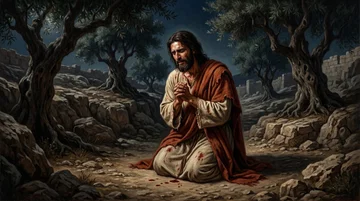
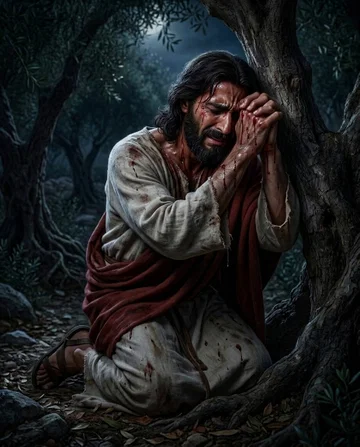
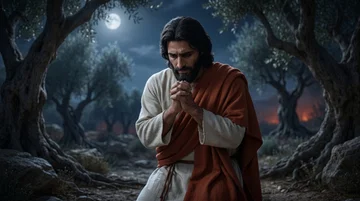
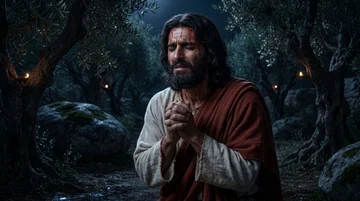
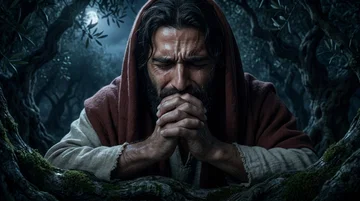
And being in an agony he prayed more earnestly: and his sweat was as it were great drops of blood falling down to the ground.
Translations
American King James Version, King James Version, KJV Cambridge Paragraph Bible
And being in an agony he prayed more earnestly: and his sweat was as it were great drops of blood falling down to the ground.
And being in an agony, he prayed more earnestly: and his sweat was as it were great drops of blood falling to the ground.
And being in an agony he prayed more earnestly: and his sweat became as it were great drops of blood falling down upon the ground.
And being in an agony he prayed more earnestly; and his sweat became as it were great drops of blood falling down upon the ground.
and having been in agony, he was more earnestly praying, and his sweat became, as it were, great drops of blood falling upon the ground.
And being in conflict he prayed more intently. And his sweat became as great drops of blood, falling down upon the earth.
and, coming to be in an agony, more intensely, was he praying; and his perspiration became, as if great drops of blood, falling upon the ground.]]
Berean Standard Bible, Majority Standard Bible
And in His anguish, He prayed more earnestly, and His sweat became like drops of blood falling to the ground.
Being in agony, he prayed more earnestly. His sweat became like great drops of blood falling down on the ground.
And being in great trouble of soul, the force of his prayer became stronger, and great drops, like blood, came from him, falling to the earth.
But being in an agonie, hee prayed more earnestly: and his sweate was like drops of blood, trickling downe to the ground.
Douay-Rheims (Challoner revision)
And his sweat became as drops of blood, trickling down upon the ground.
Pictures
Cross-references 20 of 56
- Matthew 26:39
And he went a little further, and fell on his face, and prayed, saying, O my Father, if it be possible, let this cup pass from me: nevertheless not as I will, but as thou wilt.
Jesus prays in agony, asking that the cup pass while submitting to the Father’s will.
- Mark 14:32-36
And they came to a place which was named Gethsemane: and he saith to his disciples, Sit ye here, while I shall pray.
Jesus prays in anguish in Gethsemane and submits to the Father’s will.
- Hebrews 5:7
Who in the days of his flesh, when he had offered up prayers and supplications with strong crying and tears unto him that was able to save him from death, and was heard in that he feared;
Jesus prays with strong cries and tears amid suffering.
- Matthew 26:41
Watch and pray, that ye enter not into temptation: the spirit indeed is willing, but the flesh is weak.
Jesus prays in Gethsemane and urges the disciples to watch and pray against temptation.
- Isaiah 53:6
All we like sheep have gone astray; we have turned every one to his own way; and the LORD hath laid on him the iniquity of us all.
Christ’s suffering is linked to the iniquity of all being laid on him.
- Matthew 26:38
Then saith he unto them, My soul is exceeding sorrowful, even unto death: tarry ye here, and watch with me.
Both describe Jesus’ soul as sorrowful unto death in Gethsemane.
- Matthew 26:42
He went away again the second time, and prayed, saying, O my Father, if this cup may not pass away from me, except I drink it, thy will be done.
Jesus submits to the Father's will concerning the cup amid his agony.
- Hebrews 4:15
For we have not an high priest which can not be touched with the feeling of our infirmities; but was in all points tempted like as we are, yet without sin.
Jesus’ agony shows the tempted, sympathetic High Priest, yet without sin.
- Isaiah 53:3
He is despised and rejected of men; a man of sorrows, and acquainted with grief: and we hid as it were our faces from him; he was despised, and we esteemed him not.
Jesus’ agony reflects the servant who is despised, a man of sorrows and acquainted with grief.
- Hebrews 12:4
Ye have not yet resisted unto blood, striving against sin.
Christ’s agony fulfilled resisting unto blood while striving against sin.
- Isaiah 53:4-5
Surely he hath borne our griefs, and carried our sorrows: yet we did esteem him stricken, smitten of God, and afflicted.
Christ’s anguish and wounds bear human griefs and transgressions.
- Mark 14:38
Watch ye and pray, lest ye enter into temptation. The spirit truly is ready, but the flesh is weak.
Jesus urges the disciples to watch and pray against temptation before his trial.
- Hebrews 2:18
For in that he himself hath suffered being tempted, he is able to succour them that are tempted.
Christ’s suffering under temptation enables him to help the tempted.
- Matthew 27:46
And about the ninth hour Jesus cried with a loud voice, saying, Eli, Eli, lama sabachthani? that is to say, My God, my God, why hast thou forsaken me?
Both portray Christ suffering under the burden of sin, from Gethsemane to the cross.
- Matthew 26:40
And he cometh unto the disciples, and findeth them asleep, and saith unto Peter, What, could ye not watch with me one hour?
The disciples slept instead of watching with Jesus during his agony in Gethsemane.
- Matthew 26:44
And he left them, and went away again, and prayed the third time, saying the same words.
Jesus prays repeatedly in the garden during his agony.
- John 18:11
Then said Jesus unto Peter, Put up thy sword into the sheath: the cup which my Father hath given me, shall I not drink it?
Jesus accepts the cup of suffering given by the Father.
- Luke 22:40
And when he was at the place, he said unto them, Pray that ye enter not into temptation.
Jesus urges the disciples to pray so they will not enter temptation.
- 1 Peter 3:18
For Christ also hath once suffered for sins, the just for the unjust, that he might bring us to God, being put to death in the flesh, but quickened by the Spirit:
Christ suffered, the just for the unjust, to redeem sinners.
- Revelation 5:9
And they sung a new song, saying, Thou art worthy to take the book, and to open the seals thereof: for thou wast slain, and hast redeemed us to God by thy blood out of every kindred, and tongue, and people, and nation;
Christ’s blood redeems people to God.
Commentary part 1 of 2
Each commentary is drawn from primary sources: the writings of Ellen G. White and Adventist pioneers and periodicals. Each commentary is separate. Its own words are not a quotation; follow the references to read the source passages.
Ellen G. White
113 sources
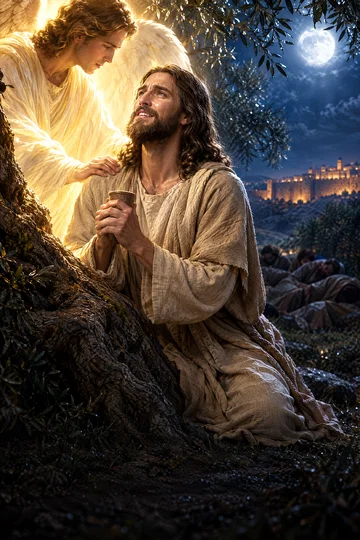
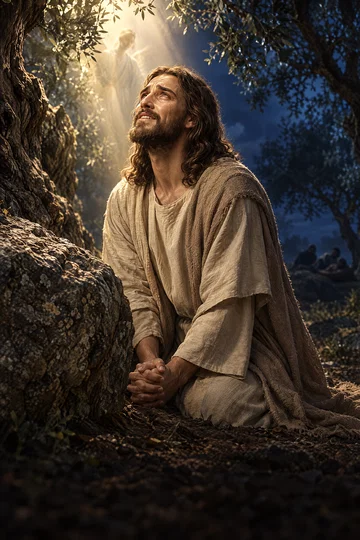
In Gethsemane on the night of the Passover He went apart about a stone's cast, kneeled and lay prostrate on the cold ground, and prayed three times that the cup might pass yet submitting to the Father's will.Ms 41, 1909, par. 5–7Ms 94, 1902, par. 12–13ST Dec 2, 1897 Being in agony He prayed more earnestly until sweat as it were great drops of blood was forced from His pores, beading on His forehead and face and falling to the ground to mingle with dew and moisten the sod.Ms 47, 1910, par. 8–10Ms 9, 1910, par. 11–13Ms 133, 1897, par. 1–2 The agony came because the sins, guilt, and curse of the whole world were laid upon Him as humanity's substitute, and what He feared most was separation from His Father's favor and presence under wrath against sin.Ms 47, 1910, par. 8–10Ms 1, 1892, par. 9–10Ms 9, 1910, par. 11–13Ms 133, 1897, par. 1–2Ms 134, 1905, par. 4 His anguish was from bearing sin and the Father's displeasure against it, not from fear of bodily suffering, and was superhuman beyond human comprehension, wrestled alone against the powers of darkness.Ms 1, 1892, par. 9–10Lt 147, 1903, par. 21–24Lt 66, 1906, par. 15–162T 203.2–204.1Ms 93, 1899, par. 20–21 Strengthened by one angel sent from heaven to console Him, He consented to do His Father's will and drank the bitter cup, for the destiny of a lost world hung in the balance and had He refused eternal ruin would have come on the human race.Ms 41, 1909, par. 5–7Lt 66, 1906, par. 15–16Ms 118, 1909, par. 30–33ST Aug 14, 18799T 102.1–3
Garden Setting and Suffering
The night was that of the Passover in Gethsemane, in the groves of Olivet, under the Passover moon shining over the silent city.Ms 41, 1909, par. 5–7Ms 94, 1902, par. 12–13DA 685.13SP 94.1–3 It was the garden where He was accustomed to seek strength through fervent prayer, sometimes spending the entire night there.3SP 94.1–3ST Aug 31, 1915 That resort to mountain solitude and night prayer was His practice to prepare for some great trial or important work, as before the agony of the judgment hall and the cross and the resurrection glory.ST Aug 31, 1915
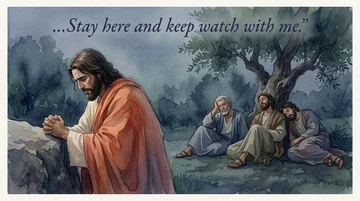
After bidding the disciples to watch and pray and charging them to pray earnestly, He left them and went apart from them alone about a stone's cast.Ms 41, 1909, par. 5–7Ms 94, 1902, par. 12–13 There He kneeled to pray that the cup might be removed, yet in submission to the Father's will.Ms 41, 1909, par. 5–7Ms 94, 1902, par. 12–13 Then He lay prostrate on the cold ground, suffering intense anguish as He prayed that His Father's will be done.Ms 42, 1897, par. 4–6ST Dec 2, 1897ST May 30, 1878 In that anguish He prayed earnestly for the cup to pass, repeating the prayer three times and finally submitting His will to His Father's, His agony becoming still greater as He prayed the third time.ST Mar 26, 1894ST Dec 2, 1897
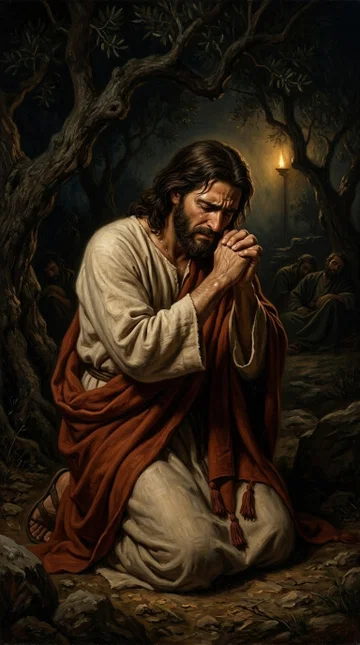
Being in agony He prayed more earnestly until His sweat was as it were great drops of blood falling down to the ground.Ms 47, 1910, par. 8–10Ms 9, 1910, par. 11–13Ms 133, 1897, par. 1–2Lt 106, 1896, par. 17–18 Large drops of perspiration, described as blood, were forced from His pores and fell onto the ground while His disciples slept nearby.Ms 42, 1897, par. 4–6ST Dec 2, 1897ST Mar 26, 1894 His sweat became blood that beaded on His forehead, gathered on His face and stained it with blood, tinged with blood and marking His face.Ms 133, 1897, par. 1–2Lt 147, 1903, par. 21–24COS 117.5–7 Those bloody drops fell to the ground mingling with the dew and moistening the sod.Lt 147, 1903, par. 21–24ST Dec 2, 1897DA 689.2–690.1
Sorrow and its terrible burden left Him physically weakened, fainting and exhausted, returning to His place of struggle under even greater suffering than before.Lt 147, 1903, par. 21–24DA 685.3ST Nov 30, 1882 He moved with labored effort, groaned, uttered suppressed wails, was convulsed with pain, appeared pale with anxiety yet earnest, and needed support to keep from falling.Lt 147, 1903, par. 21–24DA 685.3ST May 30, 1878 Clinging to the cold ground for relief, He lay prostrate fainting and dying under the accumulated guilt of the world, at times sinking beneath the weight as if dying.ST Nov 30, 1882ST Aug 8, 1878ST May 30, 1878 Seized with superhuman agony of soul, He passed through a death struggle while struggling alone against the powers of darkness.Lt 147, 1903, par. 21–24DA 689.2–690.1
The cypress and palm trees were silent witnesses of His anguish.ST May 30, 18783SP 98.2–99.2 Heavy dew fell upon Him as if nature wept over its Author wrestling alone with the powers of darkness.DA 689.2–690.1ST May 30, 18783SP 98.2–99.2
Cause of His Agony
The agony came because the sins of the whole world with their guilt, curse and accumulated mass were laid upon Him, and He suffered in humanity's place as transgressor of the law.Ms 1, 1892, par. 9–10Ms 133, 1897, par. 1–2ST Nov 30, 1882ST Apr 10, 18932T 203.2–204.1 He bore that weight as He saw sin in its full horror, the peril of the race, and the utter helplessness of man to save himself.ST Nov 30, 1882ST Apr 10, 18932T 203.2–204.1 What He feared most in that bearing was separation from His Father's favor, presence and love.Ms 47, 1910, par. 8–10Ms 9, 1910, par. 11–13Ms 134, 1905, par. 4ST Aug 9, 1905Ms 118, 1909, par. 30–33 He who had ever lived in the light of God's presence now felt shut out, forsaken in His hour of need, under God's wrath and frown against sin and the hiding of the Father's face, dreading that the separation might become eternal.Ms 133, 1897, par. 1–2DA 685.2ST Nov 30, 1882ST Aug 9, 1905Ms 118, 1909, par. 30–33
His anguish came from bearing sin and the Father's displeasure against it, not from fear of bodily suffering.2T 203.2–204.1 It included facing the fear of moral failure as a fear of death, while He resisted temptation unto blood with strong crying and tears until blood fell from the pores of His skin and moistened the ground.2T 203.2–204.1Ms 93, 1899, par. 20–21 The agony was superhuman, beyond human comprehension and bearing.Ms 1, 1892, par. 9–10Lt 66, 1906, par. 15–166MR 336.3–338.1 It was the most fearful strain ever brought upon a human being, permitted by God to come upon His Son because He bore the sins of the whole world, and it was intensely human in contrast with His earlier serenity and words of praise.Ms 1, 1892, par. 9–10Lt 66, 1906, par. 15–16ST Dec 2, 1897Ms 134, 1905, par. 3
He wrestled alone with the powers of darkness in the hour of the power of darkness.Lt 147, 1903, par. 21–24ST Nov 25, 1889ST Aug 14, 1879Ms 45, 1892, par. 10–14 He struggled with the prince of darkness while satanic powers and the enemy pressed darkness upon His soul, and He passed into horror of great darkness and temptation as a lost soul in a death struggle.Lt 147, 1903, par. 21–24ST Mar 26, 1894ST Nov 25, 1889ST Aug 14, 1879Ms 156, 1904, par. 10–12 The darkness and temptation surrounding Him marked the moment when it would be decided whether He would fail and leave sinful human beings to fall into the hands of Satan.Lt 147, 1903, par. 21–24Ms 156, 1904, par. 10–12 The mighty Conqueror who had stood like a cedar in divine majesty and spoken in triumph now stood like a reed beaten and bent by the storm, like a bruised reed beaten by the storm.Lt 147, 1903, par. 21–24ST May 30, 18783SP 98.2–99.2 His voice was full of human anguish rather than triumph, and longing for companionship, sympathy and relief from the darkness that nearly overpowered Him, His human heart yearned for His companions even as He prayed amid almost unbearable darkness.Lt 147, 1903, par. 21–24ST Jun 3, 1897ST May 30, 1878RH Dec 28, 1911ST Mar 19, 1912
Prayer Choice and Strengthening
The bloody sweat belonged to His threefold prayer — if it be possible let this cup pass, O My Father if this cup may not pass except I drink it Thy will be done — in which He consented to do His Father's will and remained obedient even to death on the cross.Ms 41, 1909, par. 5–7Ms 1, 1892, par. 9–10ST Nov 30, 18823SP 184.1–185.2ST Aug 8, 1878 He prayed the same prayer three times for deliverance as He lay prostrate, fainting and dying under the accumulated guilt of the world, with heaven sending a messenger to console Him.Ms 42, 1897, par. 4–6ST Nov 30, 18823SP 184.1–185.2ST Aug 8, 1878 His earnest praying more earnestly came as He faced whether to drink the cup and bear the curse resulting from human transgression, submitting His will to the Father while His disciples slept nearby.Ms 1, 1892, par. 9–10Ms 42, 1897, par. 4–6
The mysterious cup trembling in His hand represented suffering and temporary separation from the Father who hates sin, because He bore the sins of the whole world.Ms 118, 1909, par. 30–33Ms 81, 1909, par. 23–249T 102.1–3Ms 119, 1909, par. 32–34Ms 43, 1909, par. 10–12 Separation from God was what He feared most, and His divine nature shrank from the ordeal as He wondered how the Father could love Him with that mass of sin upon Him.Ms 118, 1909, par. 30–33Ms 81, 1909, par. 23–24Ms 139, 1909, par. 24–25 As He pleaded for the cup to pass if possible yet submitted to His Father's will, elements of darkness gathered about Him to discourage His soul.9T 102.1–3Ms 43, 1909, par. 10–12
The destiny of a lost world hung in the balance and the fate of humanity trembled while heavenly hosts waited with intense interest.Ms 41, 1909, par. 5–7ST Aug 14, 1879ST May 30, 18783SP 98.2–99.2 Had He refused to drink the cup apportioned to guilty men and wiped the bloody sweat from His brow, eternal ruin would have come on the human race left to perish in iniquity under the Father's displeasure.Ms 41, 1909, par. 5–79T 102.1–3ST May 30, 18783SP 98.2–99.2Ms 43, 1909, par. 10–12 The awful moment deciding the destiny of the world had arrived, for He could even then refuse the bitter potion of humiliation and agony and leave men to perish, seeing transgressors left to themselves must perish, seeing the power of sin and the utter helplessness of man to save himself and the woes of a doomed world.ST May 30, 18783SP 98.2–99.2 His suffering surpassed that of the martyrs, for the Father's presence sustained them while the Father's face was hidden from His Son as He faced the cup that would decide the world's destiny.ST Aug 14, 1879
Strengthened by one angel from heaven commissioned to console and strengthen Him, He accepted the cup and drank its bitter woe, His baptism of blood.Ms 41, 1909, par. 5–7Lt 66, 1906, par. 15–16Ms 118, 1909, par. 30–33Ms 81, 1909, par. 23–249T 102.1–3 The angel strengthened Him but did not remove the cup, strengthening Him to endure the ordeal and take the world's burden upon Himself.Lt 66, 1906, par. 15–16Ms 118, 1909, par. 30–33Ms 81, 1909, par. 23–24 He decided to save man at any cost to Himself so perishing millions through Him might gain everlasting life, refusing to turn from the mission He chose when He left the courts of heaven to rescue a lost and ruined race.Ms 41, 1909, par. 5–7ST Nov 25, 1889ST May 30, 1878 His suffering nearly extinguished His life as He faced the griefs, woes, and sins of humanity, fainting as if dead until the angel came to strengthen Him for the conflict.ST Nov 25, 1889
The agony in the garden was so great that He would have died there had not an angel been sent from heaven to strengthen Him so He could live to tread His blood-stained path to Calvary.5RED 83.2–84.23SP 163.2–164.2 The drops of blood forced from His pores came from soul-agony and horror under sin and the hiding of His Father's face, the same anguish later pictured by the deep supernatural darkness that covered the cross for three full hours.5RED 83.2–84.2 In all this suffering He gives an example of absolute submission, surrendering a will capable of asserting itself and refusing humiliation to the will of God.Ms 134, 1905, par. 3Lt 391, 1907, par. 17Ms 52, 1904, par. 6 Spiritual conflicts come from wanting one's own way in rebellion against God's way, rather than holding to submission to God's will.Lt 391, 1907, par. 17
Atonement and True Humanity
The sinless Son bore not His own sin but the sin and shame of others, standing as humanity's representative, substitute, surety and propitiation.ST Dec 2, 1897ST Aug 14, 1879ST Aug 9, 1905Ms 134, 1905, par. 3ST Jun 3, 1897 Treated as a sinner though innocent and undeserving, He suffered in humanity's place as transgressor of the law, that sinful human beings might be treated as innocent.ST Aug 14, 1879ST Aug 9, 1905Ms 134, 1905, par. 3ST Jun 3, 1897Ms 45, 1892, par. 10–14 Wounded for transgressions and bruised for iniquities, He bore the chastisement of peace that brings healing.ST Aug 9, 1905Ms 134, 1905, par. 3 The just thus suffered for the unjust, leaving the realms of glory to come to this dark and lonely world to give His precious life and die.ST2 46.2EW 40.3CET 106.3–107.2STM2 30.2ExVEGW 30.2–31.1 Amid cruel mocking and scourging and the platted crown of thorns He gave Himself for us and for our sins, that by His precious blood He might redeem people to God.STBk 105.2ST2 46.2EW 40.3CET 106.3–107.2STM2 30.2 His blood, sufferings and death are now pleaded before the Father for lost souls.STBk 105.2
He endured this agony rather than refuse the sacrifice through which sinners could be saved.Ms 47, 1910, par. 8–10Ms 9, 1910, par. 11–13Lt 66, 1906, par. 15–16ST Aug 14, 18795RED 18.2–19.3 Though He could have refused the cup and left the guilty to perish in sin, He chose to drink it and give His life so that people might gain pardon, grace and everlasting life.Ms 47, 1910, par. 8–10Ms 9, 1910, par. 11–13Lt 66, 1906, par. 15–16ST Aug 14, 18795RED 18.2–19.3 In so doing He offered the perishing another trial and probation under a just law and became a propitiation for the sins of the world.Ms 47, 1910, par. 8–10ST Dec 2, 1897 He knew many would refuse His love and salvation, yet willingly endured to save the guilty.ST Aug 14, 1879Ms 45, 1892, par. 10–14 His humanity in this suffering was genuine, not make-believe.Lt 106, 1896, par. 17–18 He took human nature and shared its infirmities, needs and weaknesses, was tempted in all points as humans are, yet without their fallen passions.Lt 106, 1896, par. 17–18ST Sep 5, 1900GW92 107.1 His divine attributes did not relieve His soul's anguish or bodily pain, and His divinity clothed with humanity lived a sinless life in behalf of humanity to make atonement on the cross for transgressions, coming into the world for the purpose of suffering humiliation and death.Lt 106, 1896, par. 17–18Ms 134, 1905, par. 3
The verse measures what He gave up and the matchless depths of love without parallel that brought Him from the courts of heaven to suffer and die so sinners might live through Him.1T 155.1–2SG2 251.3–252.2Lt 1a, 1861, par. 2–5ST Feb 4, 1897 It shows the immense cost of redemption and how dearly the heavenly inheritance was purchased.SG2 251.3–252.2ST Apr 13, 1915 It shows the value of every soul, for He risked all and would have laid down His life for even one sinner.ST Apr 13, 1915COL 196.4 That even His own Son standing as man's Surety was not spared proves God's justice thoroughly punishes sin and will not excuse transgressors of His law.Ms 99, 1897, par. 6 His terrible anguish when God seemed to forsake Him in His hour of need pictures the anguish the sinner will feel when too late he realizes God's Spirit is withdrawn from him.Ms 134, 1905, par. 4ST Aug 9, 1905 The lost will fully recognize the depth and love of that sacrifice when they see Him come as incarnate Judge and behold the marks of His crucifixion.RH Nov 22, 1906
Disciples and Heavenly Witnesses
He had told the disciples to watch and pray because their faith was about to be tried and their hopes disappointed, and they would need the strength that comes from close watching and fervent prayer to sustain faith and withstand temptation through the darkness of His trial.SG1 46.2EW 136.1ST Oct 19, 1882DA 713.2–3 Watching and praying with Him would have prepared them to understand more of His anguish, to remember His words about His suffering, death and resurrection, and to let hope sustain their faith when witnessing His suffering on the cross.ST Oct 19, 1882DA 713.2–3 His agony was prayer with strong cries and weeping that the Father's will be done, His faithfulness tested to the point that sweat appeared as blood falling to the ground and great drops gathered on His face.SG1 46.2EW 136.1
Overcome by drowsiness on the night before His suffering, the disciples slept instead of supporting Him in that hour.MH 509.2–44T 542.15RED 30.2Ms 59, 1897, par. 7 They sensed the angels' presence only dimly and missed the scene's power and glory and the evidence of heaven's presence that could have strengthened them for the terrible events and trials ahead.MH 509.2–44T 542.1Ms 59, 1897, par. 7 That lost evidence would have strengthened them for temptation and for witnessing the cross, and for remembering His words about His suffering, death and resurrection.MH 509.2–44T 542.1DA 713.2–3
Peter slept while Jesus prayed prostrate, and later remembered the place where Jesus had lain, His tears and groans and command to watch and pray.Lt 54, 1874, par. 15–163T 416.2GW92 401.15RED 30.2 He wept with repentance where he had seen Jesus prostrated, his tears of remorse falling on the same ground moistened by bloody sweat, and that memory deepened his remorse after denying Jesus and was joined to his repentance and conversion.Lt 54, 1874, par. 15–163T 416.2GW92 401.1 Christ's prayer for him gave hope against despair, while his sleep and later denial added the heaviest burden to Jesus' humiliation and grief, and his remorse there helped humble and change him.GW92 401.15RED 30.2ST Oct 19, 1882ST Jun 13, 1878 His face had been convulsed with anguish and stained with bloody sweat as He sank beneath the weight, weeping and groaning while those who should have sustained Him with sympathy and prayer were sleeping.5RED 30.2ST Oct 19, 1882ST Jun 13, 1878
Peter, James and John were present with Him as His closest disciples and chief witnesses, the same three who saw His transfiguration and beheld Him glorified.BS 45.1–37RED 68.1 John was one of the three permitted to witness both that agony and His glory on the mount of transfiguration, a privilege that was a token of confidence and love and showed pre-eminent friendship as the disciple whom Jesus loved.BS 45.1–37RED 68.1
Angels hovered over the place witnessing the scene with deepest silent interest and no joy, having cast crowns and harps aside.SG1 46.2EW 136.1 They wished to surround the Son of God but were forbidden by commanding angels lest they deliver Him when they beheld His betrayal, for the plan for His betrayal and suffering was laid out and must be fulfilled, with only one commissioned to strengthen Him.SG1 46.2EW 136.1 His suffering came at a decisive moment when the destiny of a lost world was in the balance, a struggle watched by the whole universe of heaven.SG1 46.2EW 136.1Ms 17, 1893, par. 17
He knew what a trying ordeal awaited His disciples together with His betrayal and crucifixion, knowing who among His followers were unbelieving and of weak faith.4RED 102.2–103.1 He knew that when He was betrayed and condemned in the judgment hall, humiliated and reviled by the multitude that had hailed Him as king, with the cruel jeering crowd crying crucify Him, faint-hearted ones would sink beneath fear and disappointment.4RED 102.2–103.1 Their apostasy at that hour of horror, added to grief and ruined hopes, could have carried the twelve with them, so He brought about an earlier crisis while still present to comfort and strengthen His chosen, sifting out the weak in character and undecided.4RED 102.2–103.1 In this way the faithful few would not be overwhelmed with surprise at insult to their Master, would remember former fickleness, would not hang faith on the opinions of others, and would be prepared for His betrayal and death.4RED 102.2–103.1
The disciples continually recounted His garden agony with His betrayal, trial and execution borne with forbearance and humility, and with His pitying prayer for those who persecuted Him.3SP 346.2ST Jun 12, 1879 They spoke of it after His victory over death and the tomb and His endurance of the shame of the cross following that conflict in the garden before His death.3SP 346.2ST Jun 12, 18793SP 213.2–3
The verse gives a picture of agonizing, persistent prayer echoed in God's people pleading with great earnestness and anguish, with faces marked by struggle and large drops of perspiration falling from their foreheads.RH Dec 31, 1857CET 175.1–31T 179.3–180.2 It is reflected in severe inner struggle with strong cries and heavy perspiration as they resist evil and call upon God for help.RH Dec 31, 1857CET 175.1–31T 179.3–180.2 Luther's face-down cries to God in fear and spiritual distress echo that same extraordinary earnestness in profound anguish.CET 175.1–3GC 156.2–3
Example for Prayer and Life
In agony He prayed with intense, earnest effort, wrestling in sincere communion with God, and that wrestling is the pattern of prayer required, in contrast to weak, heartless prayer and mere lip-service and empty form.GW92 35.1–36.14T 534.2–31T 151.1–2 Though He was the beloved Son of God, sinless and divine, He prayed with profound earnestness to the point of bloody sweat, showing human weakness and distress and dependence on the Father for help and support.2T 508.1–509.11T 158.2–159.11T 151.1–2 His example teaches that those who depend on God have still greater need to pray earnestly and wrestle for blessing, to plead for a clean heart and strength, and not to let the cares of life crowd out prayer and the word of God, but to watch and pray to resist temptation.2T 508.1–509.11T 158.2–159.11T 151.1–2 His prayer for strength as He prepared to complete His work amid duty and temptation sanctified His ministry, showing that worship gives strength and vigor for daily duty.ST Oct 31, 1900
Saving grace is obtained by that same kind of praying, alone in the closet, earnest, sincere, fervent, Jacob-like wrestling that agonizes and makes effort.1T 158.2–159.1MYP 131.3–132.1SG2 257.1–258.1 Those who want salvation must take time and not hurry, plead for a clean heart and thorough reformation and for grace and strength to overcome sin, and not leave until strong in God.1T 158.2–159.1MYP 131.3–132.1SG2 257.1–258.1 Then as long as they watch and pray they will keep evil besetments under and the grace of God will appear in them.1T 158.2–159.1MYP 131.3–132.1 Bowed in the groves of Olivet with soul wrung with anguish, with strong crying and many tears, often spending whole nights in prayer, He was not praying for Himself but for sinners He came to save.ST Sep 5, 1900 As representative of the race He prayed to the Father for strength and grace, and those prayers reach to the present time, while by bowing as a suppliant He obtained strength from on high and by communion was invigorated and refreshed for helping the needy, braced for duty and prepared for toil, going forth to encourage and bless others.ST Sep 5, 1900 Having identified with humanity and been tempted in all points as humans are, He is able to sympathize with the tempted, and those who are truly His friends will often commune with Him in the same way, with implicit faith that prayers offered in His name will be answered.ST Sep 5, 1900
His lonely prayer and suffering are the example for followers who face seasons of spiritual darkness and agony of soul.21MR 252.2–3Lt 1, 1858, par. 2–5 True followers will often feel agony of soul, pour out earnest prayer to the Father and groan in spirit after God, and when enshrouded in darkness will not be driven from God.21MR 252.2–3Lt 1, 1858, par. 2–5 The verse describes intense distress in which prayer is earnest, the measure of soul and bodily anguish so severe that a person feels helpless and fears death.Ms 27, 1894, par. 19–23Lt 57, 1894, par. 31–34 It is the anguish of one who cannot sleep and paces in distress with heart anguish, feeling that no person can help.Ms 27, 1894, par. 19–23Lt 57, 1894, par. 31–34
Beholding His suffering in Gethsemane, praying intensely with sweat like great drops of blood falling to the ground, reveals the great sacrifice made for humanity and the love of the Saviour and should move to gratitude and self-denial rather than leave any unmoved.1T 155.1–21T 240.2SG2 251.3–252.2 It measures what He gave up for sinners and the matchless depths of love by which the heavenly inheritance was purchased, putting all human self-denial in the shade and showing that any self-denial required of followers is small beside what He gave.1T 240.2SG2 251.3–252.2Lt 1a, 1861, par. 2–5 From Gethsemane on to the judgment hall, the purple robe, the mocking, the crown of thorns smitten with a reed, the cry for His blood, the nails through hands and feet, the darkness and the cross, it proves He demands all, a whole sacrifice and entire consecration, separation from the world and from dead heartless professors, and transformation by renewing of the mind instead of conformity.Lt 1a, 1861, par. 2–5Lt 10, 1856, par. 5 It answers the complaint that the narrow path is too strait and too self-denying, rebukes self-gratification, pride, indifference and love of ease, and calls believers to suffer, deny self, sacrifice, drink of the cup and be baptized with the baptism and partake of His sufferings, turning self-seeking into willing wholehearted service with courage to bear cross, trials, shame and persecution, since only those who do so realize that love and can enjoy heaven's glory.SG2 251.3–252.2Lt 1a, 1861, par. 2–5DA 439.3 Because that inexpressible agony, with horror of darkness forcing blood from His pores, was endured on account of our sins through love without parallel that brought the Son of God from the courts of heaven to suffer and die so sinners might live through Him, there is reason to mourn over sin.Lt 10, 1856, par. 5ST Feb 4, 1897 True sorrow brings the penitent near to Jesus in His suffering to plead for pardon, obtain grace to conquer, have darkened understanding enlightened, stony heart changed and rebellious will subdued into conformity to God's will, and to live close to His bleeding side, not shrinking at trials but remembering Him who endured contradiction of sinners and earnestly coveting purifying trials that make richer in glory.Lt 10, 1856, par. 5ST Feb 4, 1897
His night of prayer in agony came before the great trial of the judgment and the cross and the resurrection glory.ST Oct 31, 1900MH 509.1 In part His anguish was not for Himself but over hard hearts that could not see or accept Him though He is the way, the truth and the life.Ms 2, 1890, par. 12–13 His bearing such agony for sinners shows that God knows the suffering of His creatures, as He submitted His will to God with sweat falling like great drops of blood before betrayal and suffering.Ms 2, 1890, par. 12–13Lt 33, 1895, par. 29–32
Sources