Hebrews 9:20
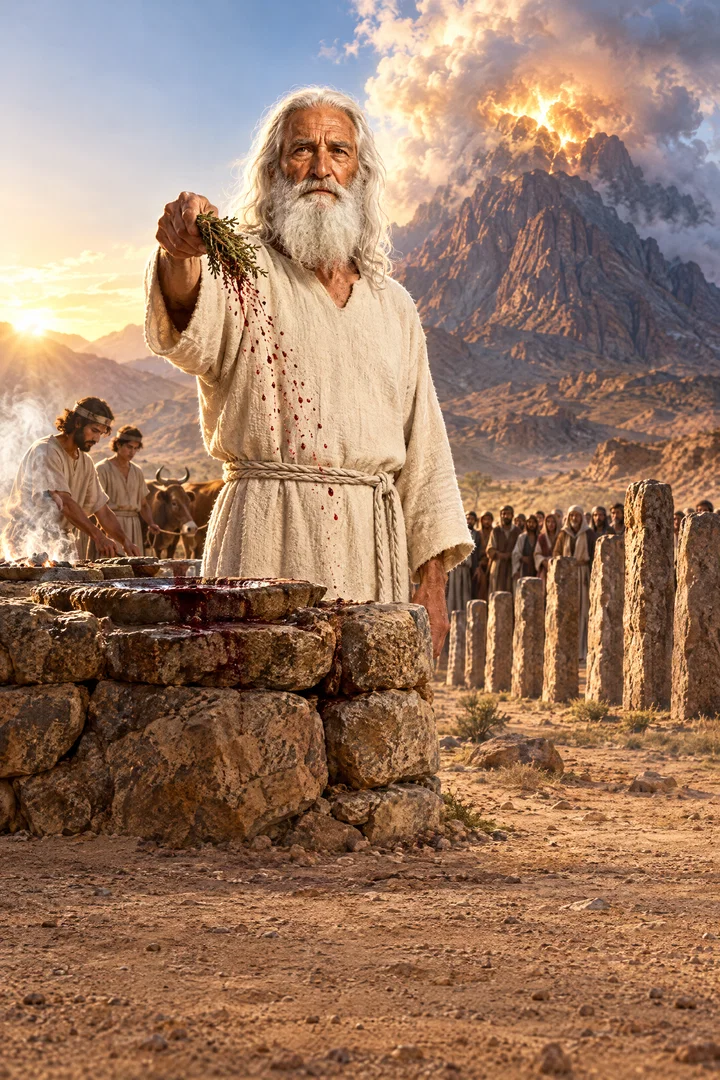
Saying, This is the blood of the testament which God hath enjoined unto you.
Translations
Saying, This is the blood of the testament which God has enjoined to you.
Saying, This is the blood of the testament which God hath enjoined unto you.
saying, This is the blood of the testament which God hath enjoined unto you.
Saying, This is the blood of the testament which God hath enjoined to you.
Revised Version, American Standard Version
saying, This is the blood of the covenant which God commanded to you-ward.
saying, 'This [is] the blood of the covenant that God enjoined unto you,'
saying, This [ is] the blood of the covenant which God has enjoined to you.
Saying—This, is the blood of the covenant which, God, hath sent in command unto you:
Berean Standard Bible, Majority Standard Bible
saying, “ This is the blood of the covenant, which God has commanded you to keep.”
saying, “ This is the blood of the covenant which God has commanded you.”
Saying, This blood is the sign of the agreement which God has made with you.
Saying, This is the blood of the Testament, which God hath appointed vnto you.
Douay-Rheims (Challoner revision)
Saying: This is the blood of the testament, which God hath enjoined unto you.
Pictures
Cross-references 20 of 76
- Exodus 24:8
And Moses took the blood, and sprinkled it on the people, and said, Behold the blood of the covenant, which the LORD hath made with you concerning all these words.
Moses declares the covenant ratified by blood.
- Leviticus 16:15-16
Then shall he kill the goat of the sin offering, that is for the people, and bring his blood within the vail, and do with that blood as he did with the blood of the bullock, and sprinkle it upon the mercy seat, and before the mercy seat:
The high priest cleanses the sanctuary by applying sacrificial blood.
- Hebrews 8:1-5
Now of the things which we have spoken this is the sum: We have such an high priest, who is set on the right hand of the throne of the Majesty in the heavens;
Christ’s heavenly priestly ministry fulfills the earthly sanctuary and its priesthood as a pattern.
- Hebrews 9:1
Then verily the first covenant had also ordinances of divine service, and a worldly sanctuary.
The first covenant included worship ordinances and a sanctuary.
- Hebrews 9:11-12
But Christ being come an high priest of good things to come, by a greater and more perfect tabernacle, not made with hands, that is to say, not of this building;
Christ enters by his own blood
- Exodus 19:5-8
Now therefore, if ye will obey my voice indeed, and keep my covenant, then ye shall be a peculiar treasure unto me above all people: for all the earth is mine:
God states the covenant terms, and Israel agrees to obey before its ratification with blood.
- Hebrews 8:6-13
But now hath he obtained a more excellent ministry, by how much also he is the mediator of a better covenant, which was established upon better promises.
Contrasts the first covenant with the new covenant mediated by Christ.
- Hebrews 10:10-14
By the which will we are sanctified through the offering of the body of Jesus Christ once for all.
Christ’s once-for-all offering replaces repeated sacrifices and secures the removal of sins.
- Hebrews 9:15
And for this cause he is the mediator of the new testament, that by means of death, for the redemption of the transgressions that were under the first testament, they which are called might receive the promise of eternal inheritance.
Christ’s death redeems transgressions under the first covenant and secures the new covenant’s promised inheritance.
- Revelation 11:19
And the temple of God was opened in heaven, and there was seen in his temple the ark of his testament: and there were lightnings, and voices, and thunderings, and an earthquake, and great hail.
The opened heavenly temple reveals the ark of God’s testament.
- Jeremiah 31:31
Behold, the days come, saith the LORD, that I will make a new covenant with the house of Israel, and with the house of Judah:
Introduces the promised new covenant contrasted with the first covenant.
- Luke 22:20
Likewise also the cup after supper, saying, This cup is the new testament in my blood, which is shed for you.
Jesus identifies the cup as the new covenant in his blood.
- Exodus 24:12
And the LORD said unto Moses, Come up to me into the mount, and be there: and I will give thee tables of stone, and a law, and commandments which I have written; that thou mayest teach them.
God calls Moses to receive the stone tablets after the covenant is ratified.
- Hebrews 10:1-4
For the law having a shadow of good things to come, and not the very image of the things, can never with those sacrifices which they offered year by year continually make the comers thereunto perfect.
The law’s repeated sacrifices were shadows that could not remove sins.
- Hebrews 8:9
Not according to the covenant that I made with their fathers in the day when I took them by the hand to lead them out of the land of Egypt; because they continued not in my covenant, and I regarded them not, saith the Lord.
Connects the first covenant’s failure to its conditions being broken.
- Hebrews 8:13
In that he saith, A new covenant, he hath made the first old. Now that which decayeth and waxeth old is ready to vanish away.
The old covenant is described as obsolete and ready to vanish away.
- Hebrews 12:24
And to Jesus the mediator of the new covenant, and to the blood of sprinkling, that speaketh better things than that of Abel.
Jesus is identified as mediator of the new covenant, whose sprinkled blood speaks better than Abel’s.
- Deuteronomy 5:2-3
The LORD our God made a covenant with us in Horeb.
Identifies the covenant God made with Israel at Horeb.
- Daniel 9:27
And he shall confirm the covenant with many for one week: and in the midst of the week he shall cause the sacrifice and the oblation to cease, and for the overspreading of abominations he shall make it desolate, even until the consummation, and that determined shall be poured upon the desolate.
The covenant is confirmed with many through the Messiah’s ministry and death.
- Exodus 24:3-4
And Moses came and told the people all the words of the LORD, and all the judgments: and all the people answered with one voice, and said, All the words which the LORD hath said will we do.
Moses speaks and writes the Lord’s words before the blood ratifies the covenant.
Commentary
Each commentary is drawn from primary sources: the writings of Ellen G. White and Adventist pioneers and periodicals. Each commentary is separate. Its own words are not a quotation; follow the references to read the source passages.
Ellen G. White
8 sources
This is the blood of the testament which God enjoined is the declaration by which Moses ratified the Sinai covenant, naming the sacrificial blood as the blood of the covenant God had enjoined on Israel.PP 311.5–312.2RH Oct 17, 1907 That ratification came after the people heard the conditions of the covenant and again unanimously promised to do all the Lord had said and be obedient.PP 311.5–312.2Ms 126, 1901, par. 52–561MR 115.1 Moses read the book of the covenant and sprinkled the blood on the book and on the people, thereby sealing their agreement to the covenant.PP 311.5–312.2Ms 126, 1901, par. 52–56
Part of the blood of the sacrifice was sprinkled on the altar and part was sprinkled on the people.Ms 126, 1901, par. 52–561MR 115.1 The blood on the altar signified that the people consecrated themselves to God in body, mind, and soul, and the blood sprinkled on the people signified that God graciously accepted them as His special treasure through the sprinkled blood of Christ.Ms 126, 1901, par. 52–561MR 115.1 By this solemn service of sprinkling, Israel was set apart as God's people and sealed to God.Ms 65, 1906, par. 17–18Ms 126, 1901, par. 52–561MR 115.1 The sprinkling of blood represented Jesus' shed blood, by which people are cleansed from sin.Ms 65, 1906, par. 17–18
The animal offerings of that covenant foreshadowed Christ's sacrifice, and when Christ gave His life on the cross the types met their fulfillment and the animal sacrifices lost their value.ST Apr 8, 1875 The old covenant at Sinai was ratified by the blood of a sacrifice, while the Abrahamic covenant was ratified by Christ's blood, and because Christ's blood was shed after the blood of the first covenant the Abrahamic covenant is also called the second, or new, covenant.RH Oct 17, 1907 Christ's blood ratifies the new covenant, through which those who receive Him become God's children and joint heirs with Christ and receive heaven's blessings for this life and the life to come.DA 656.5 The bread and wine of the sacrament keep before each disciple Christ's infinite sacrifice for them as individuals within fallen humanity.DA 656.5
The Sinai transaction typified the covenant made between God and every believer in Jesus Christ, in which the conditions are plainly laid out and accepted with a promise to obey every obligation of the law.Ms 126, 1901, par. 52–56 The blood is the seal of God's covenant promise.Lt 40, 1874, par. 1–3 Jesus' promise signed and sealed by His own blood is the believer's only hope and stronghold.Lt 40, 1874, par. 1–3
Sources
Pioneers and periodicals
108 sources
Moses spoke these words in the covenant ceremony at Sinai when he declared the sprinkled blood to be the blood of the covenant God had made with Israel.ST Feb 17, 1890ST Feb 13, 1879ST May 16, 1878 After speaking every precept of the law to all the people and receiving their promise to do and obey, he took the blood of calves and goats with water and scarlet wool and hyssop and sprinkled both the book of the covenant and all the people.RH May 13, 1862ST Mar 8, 1883 That first covenant was the solemn mutual agreement between God and Israel concerning the Ten Commandments, not the commandments themselves, with God promising to make obedient Israel His peculiar treasure and holy nation and Israel promising to keep His words.ST Feb 13, 1879ST Mar 8, 1883RH Aug 13, 1857ST Aug 13, 1885ST Jul 1, 1875 Its dedication with blood set it apart and initiated it, rather than cleansing from pollution, and that corruptible animal blood was typical of Christ's blood by which the new everlasting covenant was confirmed.ST Oct 25, 1883ST May 18, 1904ST May 12, 1898ST Jul 24, 1884 As the first covenant was dedicated with sacrificial blood, so the new covenant is now in force, dedicated and ratified by Christ's death and covenant blood, with Christ as its Mediator ministering in the true heavenly sanctuary where He entered by that blood.ST May 18, 1904RH Jul 7, 1874ST Jun 10, 1880
Words and Translation
The term rendered testament means covenant, and rendering it consistently as covenant makes plain the allusion to Exodus 24:8.ST May 16, 1878RH Apr 23, 1861ST Dec 16, 1897 It identifies the blood sprinkled by Moses as the blood that ratified the covenant God had made with Israel concerning the words spoken to them, namely the first or old covenant made at Sinai and closed and confirmed by the shedding of blood.ST May 16, 1878RH Apr 23, 1861ST Dec 16, 1897ST May 16, 1878 That is Paul's account of the first covenant, matching the covenant ceremony in Exodus 24, where after sprinkling both the book and the people with the blood of calves and goats, together with water and scarlet wool and hyssop, Moses declared this to be the covenant God had laid upon them.ST Dec 16, 1897RH Dec 31, 1861 This blood-ratification took place before Moses received the stone tablets, so the covenant then ratified with blood was distinct from the Ten Commandments as written objects.ST May 16, 1878
The word rendered enjoined emphasizes that the covenant's conditions were imposed by God rather than negotiated between parties, with the underlying term also renderable as made, commanded, or appointed.ST Feb 17, 1890RH Dec 31, 1861RH Aug 8, 1865 God set its terms and the people agreed to obey all He had spoken, with the Ten Commandments as the covenant's condition and with the promise that obedience would make Israel His treasured people, so the verse concerns a particular agreement made with Israel rather than a claim that the commandments were given to Israel alone.ST Feb 17, 1890RH Aug 13, 1857 Moses sprinkled the covenant book and the people and declared this to be the blood of the covenant God had commanded them to keep, thereby sealing the covenant after they had agreed to do and obey, with the blood both marking and sealing the obligation God laid on them.RH Dec 31, 1861ST Oct 29, 1902RH Aug 8, 1865 In connection with Hebrews 9:16-17, that blood-ratification and the testator's death mean the covenant could not be changed before that death.ST Oct 29, 1902
Sinai Dedication Ceremony
Hebrews 9:20 records Moses' words at Sinai, also called Horeb, in the covenant ceremony of Exodus 19 and 24, declaring the sprinkled blood to be the blood of the covenant God had made with Israel.ST Feb 17, 1890ST Feb 13, 1879ST May 16, 1878ST Mar 8, 1883ST Dec 16, 1897 The word testament means covenant, and the verse belongs to the account of the first covenant, which was closed, confirmed and dedicated with blood.ST Feb 13, 1879ST May 16, 1878ST Mar 8, 1883ST Dec 16, 1897 The wording enjoined emphasizes that God imposed the covenant's conditions rather than negotiating them, and the underlying word can also be rendered made.ST Feb 17, 1890ST Dec 16, 1897 In that setting the covenant was the solemn contract or mutual agreement between God and Israel concerning the commandments, not the commandments themselves.ST Feb 13, 1879ST Mar 8, 1883 The blood marked and bound the people to the covenant God had enjoined on them, and the earthly sanctuary sacrifices and covenant rites connected with it pointed forward to Christ's great sacrifice.ST Mar 8, 1883RH Jan 20, 1853
After speaking every precept of the law to all the people, Moses took the blood of calves and of goats, with water and scarlet wool and hyssop, and sprinkled both the book containing the words of the covenant and all the people.RH May 13, 1862ST Mar 8, 1883ST Oct 25, 1883 He did this after the people had promised to do and obey all that God had said, and after receiving their promise to do God's will.ST Oct 25, 1883RH Dec 31, 1861RH Jun 26, 1900 By that sprinkling he dedicated the first covenant and declared the blood to be the sign of the covenant God had enjoined and commanded them to keep.RH May 13, 1862RH Dec 31, 1861 The covenant concerned God's spoken words, including the Ten Commandments, which the people had promised to obey.ST Mar 8, 1883RH Jun 26, 1900
This blood-ratification at Sinai took place before Moses received the stone tablets, so the covenant then ratified was distinct from the tablets as written objects.RH Jun 26, 1900ST May 16, 1878ST May 16, 1878 The commandments were not yet in the people's possession as written tablets when the covenant was ratified with blood in Exodus 24:8.RH Jun 26, 1900ST May 16, 1878 Therefore the Ten Commandments in written form were not themselves the old covenant, though the covenant related to them as its basis.RH Jun 26, 1900ST May 16, 1878ST May 16, 1878
Nature of First Covenant
The first covenant was the solemn contract or mutual agreement between God and Israel concerning the Ten Commandments, not the Ten Commandments themselves.ST Feb 13, 1879ST Mar 8, 1883ST Aug 13, 1885ST Jul 1, 1875RH Jun 25, 1872 That agreement was made at Sinai, or Horeb, in Exodus 19 and 24 and was dedicated with blood when Moses took the blood of calves and of goats, with water and scarlet wool and hyssop, and sprinkled both the book and all the people.ST Mar 8, 1883ST Jul 1, 1875RH Apr 2, 1872 The blood marked that covenant agreement made concerning certain words, and the people there reiterated the promise to obey that they had already made.ST Jul 1, 1875RH Jun 25, 1872RH Apr 2, 1872 As the written terms they were associated with the covenant in that sense, but they were not identical with the covenant itself.ST Aug 13, 1885RH Jun 25, 1872
The Ten Commandments were the conditions or terms of that contract, spoken by God with His own voice and called by Him His covenant.RH Aug 13, 1857ST Jul 1, 1875RH Mar 18, 1875 God set its terms and the people agreed to obey all He had spoken, having promised in Exodus 19 to obey and then reiterating that promise at the dedication to do and keep them.RH Aug 13, 1857ST Jul 1, 1875RH Mar 18, 1875 The covenant itself consisted of the people's promise to obey and God's promise in return.ST Jan 15, 1880ST Oct 1, 1885
God promised that obedience would make Israel His treasured people, a peculiar treasure and a holy nation through obedience to the holy law, while Israel promised to obey His words.RH Aug 13, 1857ST Jul 1, 1875ST Jan 15, 1880ST Oct 1, 1885 The object remains the same, that they should be a peculiar treasure and a holy nation through obedience.ST Jul 1, 1875
The book of the covenant written by Moses in a book and dedicated with blood is to be distinguished from the Ten Commandments written by God on stone tablets, which were not sprinkled with blood.RH Mar 1, 1864RH Jun 25, 1861 That old Book of the Covenant with its ordinances served as atonement in figure, while the ten commandments themselves contain no provision about atonement or priesthood.RH Mar 1, 1864 Likewise the ordinances of divine service and the worldly sanctuary were associated with that covenant but were not themselves the covenant.RH Oct 19, 1869
The first covenant failed and was made void because the people did not continue in it and keep its conditions, not from any fault in the law.ST Jul 1, 1875ST Jul 27, 1882RH May 27, 1873 Israel's breaking of the agreement forfeited its claim to the promised blessings, but did not cancel God's claim to their obedience to His law.RH Jun 25, 1872 Its broken conditions brought that covenant to an end, and the old covenant ceased because the people failed to keep its commandments, with its end coming at Christ's death without annulling the law itself.ST Jul 27, 1882RH Jan 1851RH May 27, 1873 By contrast, the teaching of those who held the other position identifies the testament, or covenant, itself with the Ten Commandments as the law kept in the sanctuary.ST Nov 1, 1877
Dedication by Blood
The verse describes the one-time dedication, ratification, confirmation and putting into effect of the first covenant with blood, including the covenant under which Israel was delivered from captivity.RH Jul 18, 1854RH May 13, 1862ST May 16, 1878RH Jun 17, 1915 After Moses had spoken every precept to all the people and received their promise to do the will of God, he took the blood of calves and goats, with water and scarlet wool and hyssop, and sprinkled both the book containing the words of the covenant and all the people.RH May 13, 1862ST May 16, 1878ST Oct 25, 1883 In declaring this to be the blood of the covenant God had enjoined, made and imposed upon them, the verse identifies that sprinkled blood as the sign and seal by which the covenant made at Sinai concerning the words spoken to them was closed and confirmed.RH May 13, 1862ST May 16, 1878 Testament and covenant mean the same thing here.ST May 16, 1878 As a testament takes effect only after the testator's death, so Christ's death makes Him Mediator of the new testament, bringing redemption for transgressions under the first covenant and the promise of eternal inheritance.RH Jul 18, 1854 In that account the blood of animal sacrifices cleansed the earthly sanctuary, while Christ's precious blood cleanses the heavenly sanctuary.RH Jun 17, 1915
Dedicate here means to set apart and initiate, and by implication to sanctify in that sense, not to purify or cleanse from pollution.ST Oct 25, 1883 That dedicating work did not take place in the sanctuary and is entirely different in form and object from the yearly cleansing of the sanctuary by the high priest with the blood of the sin offering.ST Oct 25, 1883 Just so, the sanctuary was consecrated once, while blood was later applied to its articles to remove pollution.ST Jul 24, 1884
The old covenant was dedicated and confirmed with the corruptible blood of sacrificial animals.ST May 18, 1904ST May 12, 1898 That blood was typical of Christ's blood, by which the new, everlasting covenant was confirmed.ST May 18, 1904 By contrast with corruptible animal blood, the new covenant is ratified by Christ's spotless, everlasting life, and therefore is not represented by something corrupted through fermentation.ST May 12, 1898
Earthly Sanctuary Pattern
The verse stands in the account of the first covenant's worldly sanctuary and ordinances of divine service, which necessarily implies that the second or new covenant also has a sanctuary with divine service and priestly ministry.ST May 27, 1880RH Oct 2, 1856ST Apr 23, 1912RH Feb 18, 1858RH Jan 13, 1852 The first covenant's ceremonies continued until the time of reformation, while the new covenant came into force through Christ's death with its ministers serving under it.RH Jan 13, 1852 Only 490 years of the 2300 years at the end of which the sanctuary is to be cleansed were allotted to the first covenant, the worldly sanctuary, and the Jewish church, and at the end of that time the confirmation of the covenant was finished, the old covenant passed away, the new covenant was introduced, the services of the worldly sanctuary ceased forever, and the Jewish church no longer had pre-eminence as God's children above any other people.RH Feb 18, 1858
The earthly tabernacle belonging to that first covenant was a figure and pattern of the true sanctuary, made exactly after what Moses was shown in the mount, so whatever object the earthly sanctuary truly typified is the sanctuary of the better covenant.LDT 179.2ST Oct 22, 1874ST Aug 15, 1878ST May 27, 1880 That earthly tabernacle, continued in the temples of Solomon and Zerubbabel and later Herod's temple, was a figure, pattern, example, and shadow of the true tabernacle in heaven which the Lord pitched and not man.LDT 179.2ST Oct 22, 1874ST Aug 15, 1878RH Aug 28, 1853ST Nov 20, 1879 Under the new covenant Christ became High Priest and entered the heavenly temple by His own blood, and the earthly sanctuary's two apartments indicate the order of His ministry as traceable in the New Testament.ST Oct 22, 1874ST Aug 15, 1878RH Aug 28, 1853ST Nov 20, 1879 While the first tabernacle stood the way into the holy places of the heavenly temple was not opened, but when Christ ascended on high His ministration in its two apartments followed the order indicated by the service in the two apartments of the earthly sanctuary.ST Aug 15, 1878
The sanctuary where the priests ministered had two apartments divided by a veil.RH Sep 21, 1905RH Jan 24, 1856ST Aug 10, 1882 The first, called the sanctuary, contained the seven-branched golden candlestick, the table for the showbread, and the altar of incense, where priests ministered daily offering sacrifices.RH Sep 21, 1905RH Jan 24, 1856 The second, within the veil, called the holy of holies, contained the ark of the covenant overlaid with gold holding the two tables of stone on which the Ten Commandments were engraved beneath the mercy seat where atoning blood was sprinkled.RH Sep 21, 1905RH Jan 24, 1856ST Aug 10, 1882
Their official service of God included offering blood for themselves and for the errors of the people.RH Sep 21, 1905RH Jan 24, 1856 The high priest alone entered within the veil once a year and always alone to carry the blood of the sacrifices and sprinkle it before the mercy seat to make atonement for the sins of the people, for the priests, for the tabernacle, and for the altar.RH Sep 21, 1905RH Jan 24, 1856 In this setting the verse means Christ as the antitypical High Priest offered Himself a sacrifice for sins once for all and has gone within the veil to carry and present His own blood before the mercy seat.RH Jan 24, 1856
Those old services and ordinances were typical and could not by themselves make anyone perfect, take away sin, or save.ST Oct 10, 1906RH Oct 11, 1915ST Feb 27, 1879 They were merely types or shadows of the real sanctuary in heaven and its service, pointing forward to Christ and to His blood as the better sacrifice, a typical nature understood by intelligent Jewish worshipers and by Jewish converts to Christianity.ST Apr 23, 1912ST Oct 10, 1906RH Oct 11, 1915ST Feb 27, 1879 When Christ gave His life the types met their antitype and fulfillment, animal blood no longer served as an expression of faith, and the law contained in ordinances was nailed to the cross.ST Apr 8, 1875ST May 28, 1896 The tearing of the temple veil signified that God's presence had left the earthly sanctuary and that it was open to common gaze.ST May 28, 1896
Heavenly Ministry of Christ
Under the new covenant Christ became High Priest of good things to come and entered the greater and more perfect tabernacle, heaven itself, by His own blood.ST Oct 22, 1874ST Aug 15, 1878RH Jan 9, 1855ST Nov 20, 1879 That entering was by the blood He shed as a sacrifice on the cross, which He presents to the Father, not by the blood in His veins, just as Aaron entered not by his own blood but by the blood of the sin offering slain outside.RH Jan 24, 1856RH Jan 20, 1853 The earthly sanctuary and its services belonged to the first covenant as only the pattern of that heavenly temple which the Lord pitched and not man, and while the first tabernacle stood the way into its holy places was not opened.ST Oct 22, 1874ST Aug 15, 1878ST Nov 20, 1879 Christ consecrated heaven for His people with His own blood when He ascended on high to appear in the presence of God for them.ST Aug 15, 1878RH Jan 9, 1855RH Jan 20, 1853
Seated at the right hand of the throne of the Majesty in the heavens, He ministers in the true tabernacle whose two apartments indicate the order of His ministry as traceable in the New Testament.ST Oct 22, 1874ST Aug 15, 1878 As the earthly high priest went every day in the first room and alone once a year within the veil into the holy of holies to carry sacrificial blood and sprinkle it before the mercy seat for atonement, so Christ offered Himself once for all on earth and has gone within the veil into heaven itself to carry and present His own blood before the mercy seat.RH Jan 24, 1856RH May 8, 1856 That entering within the veil after His ascension fulfilled what the Levitical priesthood and its services foreshadowed.RH May 8, 1856ST Oct 13, 1909
Both the ministration and the cleansing of the sanctuary depend on and are accomplished by blood as the God-enjoined means.RH Jan 9, 1855 In the type the guilt transferred by confession to the victim was borne by its blood when sprinkled within the sanctuary, making the sanctuary the receptacle of sin through the year, and on the Day of Atonement the high priest entered within the veil with blood to make atonement for the holy sanctuary, the tabernacle, the altar, the priests and all the people and to reconcile the holy place, after which the sins were laid on the scapegoat and borne away.RH Jan 9, 1855 The heavenly things themselves, the true tabernacle and its furniture, require cleansing with better sacrifices, namely Christ's precious, efficacious blood, unlike the blood of bulls and goats which could not take away sin.RH Jun 17, 1915ST May 1, 1879ST Apr 20, 1904RH Dec 15, 1868 That cleansing removes sin and iniquity, not physical dirt, and is needed because the High Priest bears human sins into God's presence; it also purifies worshipers so that once purged they have no more conscience of sins and are prepared for the second advent.RH Apr 5, 1864RH Feb 21, 1856ST May 1, 1879
Christ's death is a real sacrifice for sin, the true substance of the Levitical sacrifices and the only effective atonement, offered once for all to put away sin.RH Aug 22, 1854RH Feb 21, 1856RH Nov 18, 1862 The blood shed and sprinkled in the sacrificial ceremonies typified His offering of His own blood for His people once for all, and renewing animal sacrifices would make that once-for-all offering of no effect and return from reality to shadow.ST Oct 1, 1896RH Feb 21, 1856ST Jun 3, 1913 In that heavenly work He presents the merits of His blood as priest on behalf of those who come to God through Him, and His pleading is necessary to salvation alongside His incarnation, suffering, and death.RH Dec 21, 1869RH Nov 21, 1854RH Nov 19, 1857 Through that priestly work of judgment sins are remitted and blotted out, and even those who lived under the old covenant receive redemption through His blood.RH Sep 14, 1869RH Dec 21, 1869ST Nov 18, 1880ST Apr 18, 1878
When that blotting out of the sins of His people in all ages and cleansing of the heavenly sanctuary from all their transgressions is finished, He lays all their iniquities upon Azazel, Satan the originator of all sin.RH May 9, 1871RH Jan 23, 1900 The goat chosen by lot typifies Christ's blood which the priest uses in his work in the sanctuary, while the scapegoat represents Satan, who then bears those sins unto a land not inhabited when bound for a thousand years in the wasted and desolate earth.RH May 9, 1871RH Jan 23, 1900 The earthly tabernacle services expired when Jesus the true Sacrifice died, the veil was torn showing God's presence had left it open to common gaze, the Aaronic priesthood ended and typical sacrifices ceased as type reached antitype.ST Sep 20, 1899ST May 28, 1896 From then on, while the gospel continues and people receive forgiveness, the services take place in heaven where Jesus ministers in the true tabernacle, for God no longer has a sanctuary on earth. The sanctuary now being cleansed is God's heavenly tabernacle, not the earth and not the people of God, and its cleansing is the High Priest's concluding work before He leaves it to come as King.RH Sep 2, 1851RH Dec 11, 1855RH Dec 15, 1868RH Sep 14, 1869
New Covenant Ratified
As the first covenant was dedicated or confirmed by the blood of sacrificial animals, the new, everlasting covenant was confirmed by Christ's blood.ST May 18, 1904RH Jul 7, 1874ST Jul 23, 1896 Covenants were put into force with blood, and the new covenant is now in force through Christ's death, whose blood is its covenant blood bringing salvation and deliverance from sin through its terms.RH Jul 7, 1874ST Jul 7, 1914RH Jul 7, 1874 It was confirmed with many through the Messiah, whose death was the covenant sacrifice, and He is its Mediator ministering in the true heavenly sanctuary where He entered as High Priest by that blood.ST Jun 10, 1880RH Jul 7, 1874 That blood confirmed the new covenant for all the world, just as the blood of bulls and goats ratified the old.ST May 18, 1904ST Jul 23, 1896
The covenant confirmed in Christ was already given to Adam, to Noah, to Abraham, to Moses, and to all the faithful in all ages, and it is confirmed in every heart that accepts Him.ST Jul 23, 1896 Christ's death also confirmed the same law, which brings condemnation and wrath to the sinner but hope and joy to the believer through Him.ST Jul 23, 1896 A testament takes effect only after the testator's death, and likewise Christ's death makes Him mediator of the new testament, bringing redemption for transgressions under the first covenant and the promise of eternal inheritance.RH Jul 18, 1854ST Oct 29, 1902 Its ratification and the testator's death mean it could not be changed before that death.RH Jul 18, 1854ST Oct 29, 1902
The New Testament is God's last will to humanity, sealed by the blood and death of His Son.RH Jul 18, 1854RH Mar 10, 1868 Like a will with conditions, it includes requirements that determine who receives its promised inheritance, redemption, and eternal life.RH Jul 18, 1854RH Mar 10, 1868 God desires all people to be saved, but salvation is conditional on belief and obedience, and those who reject the truth face loss rather than eternal life.RH Mar 10, 1868 The opening event in that ratification was on the night He was betrayed, when He as mediator of the new covenant and the eleven apostles as representatives of the people of God entered into solemn contract with each other.ST Feb 22, 1883ST Jan 23, 1879 By giving the cup representing His blood He pledged Himself to die for them, and by accepting it they pledged themselves to receive salvation through His blood and to fulfill its conditions.ST Feb 22, 1883ST Jan 23, 1879
The old covenant between God and Israel at Sinai was ratified by the blood of a sacrifice, while the Abrahamic covenant was ratified by Christ's blood.RH Oct 17, 1907 Because Christ's blood was shed after the blood of the first covenant, the Abrahamic covenant is also called the second, or new, covenant.RH Oct 17, 1907 The death of Christ was necessary to complete the covenant mediated by Him and served as the guarantee for all who became parties to it, though its promise was already certain because it rested on the unchanging promise of the Father and the Son.RH Jul 7, 1874ST Oct 10, 1906 The animal blood and ceremonies of the old covenant could not save in themselves but had value only when people acted in faith in the promises of the new covenant.ST Oct 10, 1906 Its blessings can be secured only while He serves as mediator before the Father in this dispensation.RH Jul 7, 1874
Only part of the 2300 years was allotted to the first covenant, the worldly sanctuary, and the Jewish church.RH Feb 18, 1858 At the end of those 490 years the confirmation of the covenant was finished, the old covenant passed away, the new covenant was introduced, the services of the worldly sanctuary ceased forever, and the Jewish church no longer had pre-eminence as God's children above any other people.RH Feb 18, 1858
Prophecy Judgment Second Coming
The first covenant had a worldly sanctuary and ordinances of divine service, which necessarily implies that the second or better covenant also has a sanctuary with divine service.ST May 27, 1880RH Feb 18, 1858 The earthly tabernacle belonging to the first covenant was a figure and pattern of the true sanctuary, made exactly after what was shown in the mount, so whatever object it truly typified is the sanctuary of the better covenant whose cleansing is fixed at the end of the 2300 days.ST May 27, 1880RH Feb 18, 1858 Only 490 years of those 2300 years were allotted to the first covenant, the worldly sanctuary, and the Jewish church, and at the end of that time the confirmation of the covenant was finished, the old covenant passed away, the new covenant was introduced, the services of the worldly sanctuary ceased forever, and the Jewish church no longer had pre-eminence as God's children above any other people.RH Feb 18, 1858 Since 1810 years still remained to complete the 2300 years when the sanctuary is to be cleansed, the sanctuary to be cleansed belongs to the second covenant.RH Feb 18, 1858
The heavenly sanctuary was to be purified or cleansed by the blood of Christ at a certain period set forth in Hebrews 9:1-28, and the decisive question is when those heavenly things were purified, whether at the commencement of Christ's ministration or at its conclusion in fulfillment of Daniel 8:14. That cleansing in Hebrews 9 is the same work as the cleansing described in Daniel 8:14.RH Feb 21, 1856 The sanctuary is cleansed with blood, and this cleansing removes sin and iniquity, not physical dirt.RH Feb 21, 1856 At the close of the typical dispensation, the heavenly tabernacle and Christ's ministry as High Priest took the place of the earthly tabernacle as pattern of God's true tabernacle in heaven.RH Feb 21, 1856
The priests who ministered under Moses prefigured the work of Christ as great High Priest under this dispensation set forth in Hebrews 7, 8 and 9, and that work includes a preliminary judgment before the Lord comes.ST Oct 21, 1880RH Jan 20, 1874 That preliminary judgment work connected with the work of Christ must be searched out in those chapters, for it is the burden of the everlasting gospel preached when the message of Revelation 14:6 is given.ST Oct 21, 1880RH Jan 20, 1874 It is proclaimed when the message of Revelation 14:6-7 is given.ST Oct 21, 1880
The sanctuary's cleansing is performed by a high priest through blood, not by fire, and belongs to priestly service in God's sanctuary rather than to a king's act of vengeance.RH Dec 5, 1854RH Apr 28, 1853RH Apr 30, 1857 This priestly cleansing by blood is the concluding work of the priest in God's sanctuary and of Christ for sinners; it ends His sanctuary ministry, completes the plan of salvation, and must take place before Christ's second Advent and the close of His priestly ministry.ST May 20, 1875RH Dec 5, 1854RH Apr 28, 1853 While it continues, the High Priest's intercession restrains God's wrath.RH Dec 5, 1854 Christ as great High Priest in the true sanctuary makes atonement for sin with His own blood, and this work, performed once for all, is followed by His coming a second time without sin to save His people and to come forth to pronounce the everlasting covenant of peace with them as the plan of salvation draws to a close.ST May 20, 1875ST Sep 18, 1884RH Jul 28, 1868
The word connected with the end of the ministration denotes an age, specifically the Jewish age or dispensation, rather than the physical world.RH Oct 15, 1872
Law Sabbath Ceremonial System
The blood named in the verse confirms God's agreement with Israel at Sinai and does not abolish His law, for the law supplied the terms of that covenant while the breaking of its conditions brought the covenant itself to an end at Christ's death without annulling the law.RH Jan 1851RH Aug 22, 1854 The offering of blood did not erase the commandments or lessen the duty to obey them, but showed that sin against the law required blood for forgiveness.RH Aug 22, 1854 That rite pointed forward to Christ entering the heavenly sanctuary with His own blood to plead for pardon for sinners.RH Aug 22, 1854
The ark containing God's law stood in the most holy place of the earthly sanctuary beneath the mercy seat where atoning blood was sprinkled.ST Aug 10, 1882ST Jan 6, 1881 The two tables of moral law spoken by God at Sinai were placed by His direction inside the ark made to receive them, and the top of the ark was called the mercy seat because the breaker of the law beneath it could find pardon by blood sprinkled there. The law inside demanded atonement, and the ceremonial law ordaining the Levitical priesthood and sacrifices for sin taught how that atonement could be made and enabled sinners to approach the broken law again, typifying restitution of the pardoned and destruction of the impenitent.ST Jan 6, 1881 The sprinkled blood extended pardon to the penitent but was only shadowy, since there was actual sin and a real broken law but not yet a real atonement, so a real atonement relating to that same perfect law was still demanded. That real atonement is the death of Jesus Christ as the antitype of all sacrifices, offered by His priesthood in the heavenly sanctuary patterned after the earthly, where the ark of God's testament contains the original law, so the law is magnified and made honorable while guilt is taken away without taking away the law.ST Jan 6, 1881
Hebrews 9 with Hebrews 7, 8, and 10 gives the full account of the ministrations of the two covenants, setting the ministration of the first covenant performed by the Levitical priesthood with its ordinances of divine service against the more excellent ministry of Christ in all its branches which fulfills the ministration of the second covenant.RH Mar 8, 1906 What was abolished or done away in Christ was that typical service or ministration of condemnation, not the tables of the testament in the ark which remain the foundation of the divine government in the heavenly tabernacle.RH Mar 8, 1906RH Jul 4, 1854 The ceremonial law was abolished at the cross as Christ fulfilled the old covenant's types and shadows.RH Jul 4, 1854 In the setting of the torn temple veil, Hebrews 8 and 9 show the sacrificial system's type reaching its antitype, with animal blood no longer serving as an expression of faith because the law contained in ordinances was nailed to the cross, and the veil's tearing signified that God's presence had left the earthly sanctuary and left it open to common gaze.ST May 28, 1896
The new covenant was confirmed by Christ's death, and like a will sealed by its maker's death it cannot afterward be altered.ST Mar 18, 1889 The Sabbath law in force when the covenant was confirmed therefore remains binding.ST Mar 18, 1889 The seventh-day Sabbath was in force then, while a later-added first-day Sabbath would not belong to the testament.ST Mar 18, 1889
The twenty-seven chapters of laws, regulations, and instructions in Leviticus portray the ceremonial life God required of Israel upon entrance into the land promised to Abraham four hundred thirty years before.ST Aug 1, 1911 Some of those regulations, waiting for the time to be fulfilled, distinctly symbolized the advent, sufferings, and death of Christ.ST Aug 1, 1911
Application to Believers
Without the shedding of blood there is no remission of sin, so Christ's shed blood is essential to the plan of redemption.ST Jan 21, 1903 His sacrifice fulfills the earlier sacrifices and stands as God's provision to redeem humanity.ST Jan 21, 1903
The sprinkling of blood in the Aaronic priesthood denotes forgiveness of sin and the atoning and cleansing work of Christ in behalf of sinners.ST Jun 28, 1905 Those who are saved and obedient are those who have accepted that atoning work.ST Jun 28, 1905 This cleansing work is the ground and basis on which God chooses His elect.ST Jun 28, 1905
Salvation in every age depended on Christ's mediatorship, for the old covenant's services were typical and could not by themselves make anyone perfect or save.ST Oct 10, 1906ST Oct 10, 1906 The animal blood and ceremonies had value only when people acted in faith in the promises of the new covenant ratified by Christ's blood.ST Oct 10, 1906ST Oct 10, 1906 That covenant confirmed in Christ was already given to Adam, to Noah, to Abraham, to Moses, and to all the faithful in all ages, and it is confirmed in every heart that accepts Him.ST Jul 23, 1896 His death also confirmed the same law, which brings condemnation and wrath to the sinner but hope and joy to the believer through Him.ST Jul 23, 1896 The promise was already certain because it rested on the unchanging promise of Father and Son, yet Christ's death was necessary to complete the covenant He mediates and serves as its guarantee for all who become parties to it.ST Oct 10, 1906
The New Testament is God's last will to humanity, sealed by the blood and death of His Son, and testament means will.RH Mar 10, 1868 Like a will with conditions, it includes requirements that determine who receives its promised inheritance.RH Mar 10, 1868 God desires all to be saved, but salvation is conditional on belief and obedience, and those who reject the truth face loss rather than eternal life.RH Mar 10, 1868 The shedding of Christ's blood and the pouring out of His soul unto death is what gives validity to the new covenant.ST Feb 22, 1883ST Jan 23, 1879 The opening event in that ratification was on the night He was betrayed, when He as mediator and the eleven apostles as representatives of God's people entered into solemn contract, He by giving the cup representing His blood pledging to die for them, and they by accepting it pledging to receive salvation through His blood and fulfill its conditions.ST Feb 22, 1883ST Jan 23, 1879
The earthly sanctuary service was a shadow of heavenly realities pointing to Christ as the true substance, and its ceremonies contained signs of the Redeemer.ST Jan 13, 1914 Israel did not have full gospel understanding of their meaning, yet spiritually minded people learned from the sanctuary service and its prophecies to look for Christ's coming.ST Jan 13, 1914 The earthly sanctuary and animal sacrifices were types of the heavenly sanctuary where Christ ministers as High Priest through the virtue of His own life.ST Sep 21, 1915 The sanctuary prophecy therefore concerns Christ's ministry, not the return of the Jews to God's favor.ST Sep 21, 1915
The New Testament gives a concise account of the sanctuary and its cleansing, including the reference to covenant blood, setting out matters treated at greater length in the Old Testament.ST Jan 16, 1907 That condensed account does not contradict the Old Testament.ST Jan 16, 1907
Sources