Leviticus 16:15
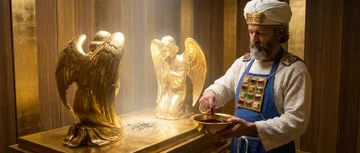
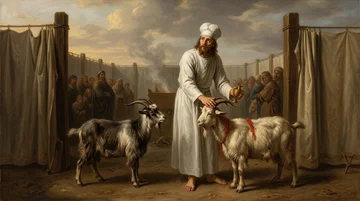
Then shall he kill the goat of the sin offering, that is for the people, and bring his blood within the vail, and do with that blood as he did with the blood of the bullock, and sprinkle it upon the mercy seat, and before the mercy seat:
Translations
Then shall he kill the goat of the sin offering, that is for the people, and bring his blood within the veil, and do with that blood as he did with the blood of the bullock, and sprinkle it on the mercy seat, and before the mercy seat:
King James Version, KJV Cambridge Paragraph Bible
Then shall he kill the goat of the sin offering, that is for the people, and bring his blood within the vail, and do with that blood as he did with the blood of the bullock, and sprinkle it upon the mercy seat, and before the mercy seat:
Then shall he kill the goat of the sin-offering that is for the people, and bring his blood within the vail, and do with that blood as he did with the blood of the bullock, and sprinkle it upon the mercy-seat, and before the mercy-seat:
Then shall he kill the goat of the sin offering, that is for the people, and bring his blood within the veil, and do with his blood as he did with the blood of the bullock, and sprinkle it upon the mercy-seat, and before the mercy-seat:
Then shall he kill the goat of the sin-offering, that is for the people, and bring his blood within the veil, and do with his blood as he did with the blood of the bullock, and sprinkle it upon the mercy-seat, and before the mercy-seat:
'And he hath slaughtered the goat of the sin-offering which [is] the people's, and hath brought in its blood unto the inside of the vail, and hath done with its blood as he hath done with the blood of the bullock, and hath sprinkled it on the mercy-seat, and at the front of the mercy-seat,
And he shall slaughter the goat of the sin-offering, which is for the people, and bring its blood inside the veil, and do with its blood as he did with the blood of the bullock, and sprinkle it upon the mercy-seat, and before the mercy-seat;
Then shall he slay the sin-bearing goat which is for the people, and bring in its blood, within the veil,—and do with its blood, as he did to the blood of the bullock, and shall sprinkle it, upon the propitiatory and before the propitiatory:
Berean Standard Bible, Majority Standard Bible
Aaron shall then slaughter the goat for the sin offering for the people and bring its blood behind the veil, and with its blood he must do as he did with the bull’s blood: He is to sprinkle it against the mercy seat and in front of it.
“ Then he shall kill the goat of the sin offering that is for the people, and bring his blood within the veil, and do with his blood as he did with the blood of the bull, and sprinkle it on the mercy seat and before the mercy seat.
Then let him put to death the goat of the sin-offering for the people, and take its blood inside the veil and do with it as he did with the blood of the ox, shaking drops of it on and before the cover of the ark.
Then shall he kill the goate that is the peoples sinne offring, and bring his blood within the vaile, and doe with that blood, as he did with the blood of the bullocke, and sprinckle it vpon the Merciseate, and before the Merciseate.
Douay-Rheims (Challoner revision)
And when he hath killed the buck goat for the sin of the people, he shall carry in the blood thereof within the veil, as he was commanded to do with the blood of the calf, that he may sprinkle it over against the oracle,
Pictures
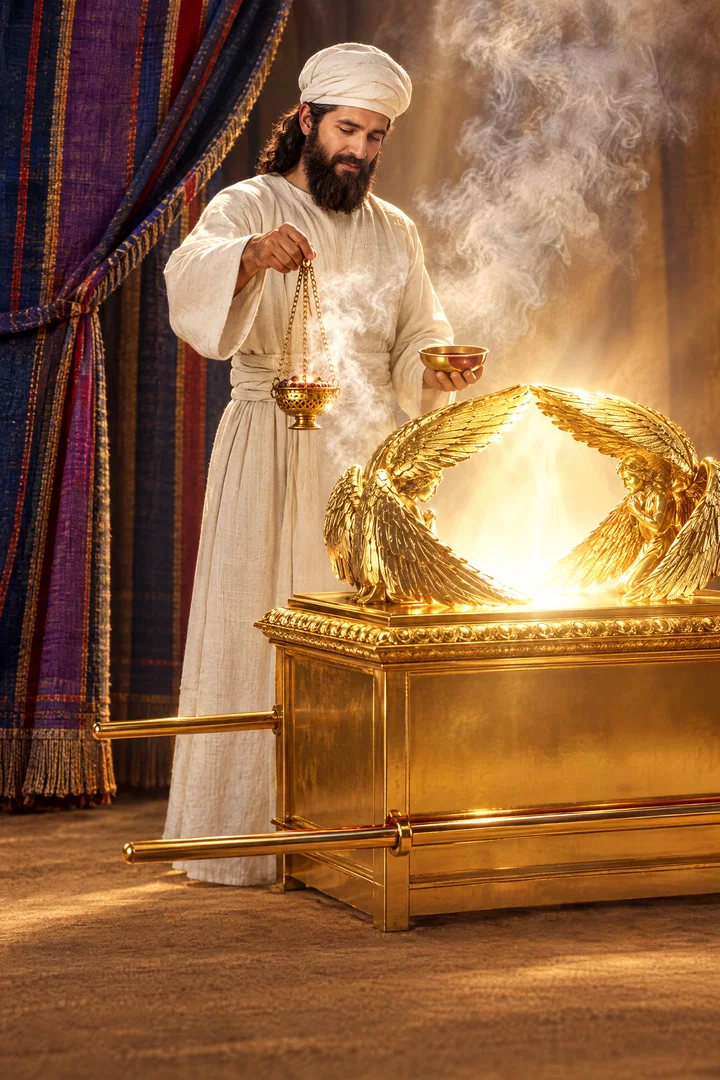
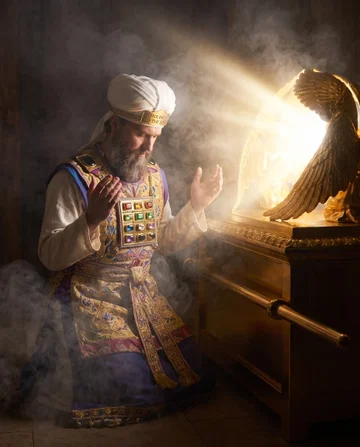
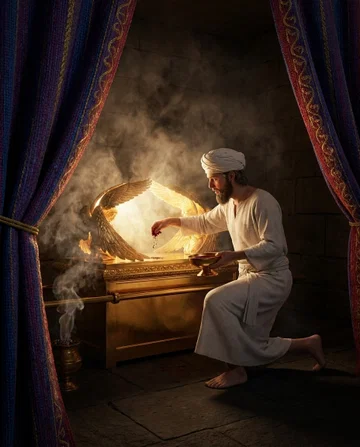
Cross-references 20 of 114
- Hebrews 9:7
But into the second went the high priest alone once every year, not without blood, which he offered for himself, and for the errors of the people:
The high priest enters the inner sanctuary yearly with blood for the people’s errors.
- Hebrews 9:23-24
It was therefore necessary that the patterns of things in the heavens should be purified with these; but the heavenly things themselves with better sacrifices than these.
Christ’s better sacrifice cleanses the heavenly sanctuary foreshadowed by the earthly ritual.
- Hebrews 8:5
Who serve unto the example and shadow of heavenly things, as Moses was admonished of God when he was about to make the tabernacle: for, See, saith he, that thou make all things according to the pattern shewed to thee in the mount.
Earthly sanctuary service is a pattern of Christ’s heavenly work.
- Leviticus 16:21-22
And Aaron shall lay both his hands upon the head of the live goat, and confess over him all the iniquities of the children of Israel, and all their transgressions in all their sins, putting them upon the head of the goat, and shall send him away by the hand of a fit man into the wilderness:
Israel’s sins are confessed over the live goat, which bears them away.
- Hebrews 9:12
Neither by the blood of goats and calves, but by his own blood he entered in once into the holy place, having obtained eternal redemption for us.
Christ enters the heavenly holy place once by his own blood, obtaining redemption.
- Leviticus 16:7-10
And he shall take the two goats, and present them before the LORD at the door of the tabernacle of the congregation.
Describes the two goats, the Lord’s goat offered for sin, and the scapegoat sent away.
- Hebrews 8:1-2
Now of the things which we have spoken this is the sum: We have such an high priest, who is set on the right hand of the throne of the Majesty in the heavens;
identifies true sanctuary typified by earthly
- Leviticus 16:30
For on that day shall the priest make an atonement for you, to cleanse you, that ye may be clean from all your sins before the LORD.
The Day of Atonement cleanses the people from all their sins.
- Hebrews 9:24-25
For Christ is not entered into the holy places made with hands, which are the figures of the true; but into heaven itself, now to appear in the presence of God for us:
Christ appears before God for us, fulfilling the earthly high priest’s sanctuary service.
- Leviticus 23:27-29
Also on the tenth day of this seventh month there shall be a day of atonement: it shall be an holy convocation unto you; and ye shall afflict your souls, and offer an offering made by fire unto the LORD.
Sets apart the Day of Atonement and warns that those who neglect its required affliction will be cut off.
- Hebrews 10:1-4
For the law having a shadow of good things to come, and not the very image of the things, can never with those sacrifices which they offered year by year continually make the comers thereunto perfect.
Yearly animal sacrifices were a shadow and could not take away sins.
- Hebrews 10:4
For it is not possible that the blood of bulls and of goats should take away sins.
Animal blood cannot take away sins.
- Exodus 25:21-22
And thou shalt put the mercy seat above upon the ark; and in the ark thou shalt put the testimony that I shall give thee.
God meets and speaks above the mercy seat, where the blood is sprinkled.
- Leviticus 4:27-35
And if any one of the common people sin through ignorance, while he doeth somewhat against any of the commandments of the LORD concerning things which ought not to be done, and be guilty;
Ordinary sin-offering blood began the sanctuary atonement later completed on the Day of Atonement.
- Hebrews 9:22
And almost all things are by the law purged with blood; and without shedding of blood is no remission.
The sanctuary rite illustrates that remission requires the shedding of blood.
- Leviticus 17:11
For the life of the flesh is in the blood: and I have given it to you upon the altar to make an atonement for your souls: for it is the blood that maketh an atonement for the soul.
Blood represents life and is given on the altar to make atonement.
- Leviticus 16:19
And he shall sprinkle of the blood upon it with his finger seven times, and cleanse it, and hallow it from the uncleanness of the children of Israel.
Both describe cleansing the sanctuary from Israel’s uncleanness through blood sprinkling.
- Hebrews 9:3-5
And after the second veil, the tabernacle which is called the Holiest of all;
Describes the inner sanctuary and its mercy seat, where the high priest sprinkled blood.
- Leviticus 16:33
And he shall make an atonement for the holy sanctuary, and he shall make an atonement for the tabernacle of the congregation, and for the altar, and he shall make an atonement for the priests, and for all the people of the congregation.
Names the sanctuary’s cleansing on the Day of Atonement.
- Hebrews 9:26
For then must he often have suffered since the foundation of the world: but now once in the end of the world hath he appeared to put away sin by the sacrifice of himself.
Christ’s once-for-all sacrifice puts away sin, fulfilling the yearly offering.
Commentary
Each commentary is drawn from primary sources: the writings of Ellen G. White and Adventist pioneers and periodicals. Each commentary is separate. Its own words are not a quotation; follow the references to read the source passages.
Ellen G. White
27 sources
On the yearly day for cleansing the earthly sanctuary, on the tenth day of the seventh month, the high priest alone entered the most holy place with the blood of the slain goat chosen for the Lord and sprinkled it upon and before the cover of the ark over the law for the people.GC88 420.1GC 420.1RH Nov 8, 1915LS 121.4–6ST Mar 4, 1903 The rite completed the yearly round of service and taught Israel God's holiness and abhorrence of sin and that contact with sin brings pollution, while the people waited without in solemn prayer.RH Nov 8, 1915GC 419.1–3ST Mar 4, 1903PP 352.1 It foreshadows Christ as both sacrifice and high priest, the Sin-bearer and Substitute whose offering at the cross reconciles sinners to God and whose blood He continues to plead with enduring efficacy.4T 124.3Ms 124, 1901, par. 18–1917MR 242.1–2 At the close of the 2300 days, on the antitypical tenth day of the seventh month in 1844, He entered the most holy place of the heavenly sanctuary within the second veil to present His blood before the Father beside the ark of the ten precepts to blot out the sins of His faithful ones until probation closes.4SP 499.3–500.1LS 121.4–6GC88 433.1 The blood sprinkled over the law satisfied its claims by a substitute without yet canceling sin, providing for its transfer to the sanctuary and finally to the scapegoat to be forever separated from the people, and now calls every person to afflict the soul in repentance, confession, and faith while cases stand before the judgment.GC88 420.1GC 420.1RH Nov 8, 19155T 420.3Ms 81, 1886, par. 9
Earthly Day of Atonement
Leviticus 16:15 belongs to the cleansing of the sanctuary described in Leviticus 16.GC88 683.4–684.5 That sanctuary is the earthly sanctuary made in the desert of Sinai and afterward housed in Solomon's temple, with its holy and most holy place as God's dwelling-place of glory upon the earth, not the earth itself nor the land of Canaan nor the church.GC88 683.4–684.5 The work was done on the tenth day of the seventh month, when only the high priest, after careful and solemn preparation, could enter the most holy place once a year.LS 121.4–6ST Mar 4, 1903PP 352.1GC88 433.1 There before the mercy seat God met him in the cloud of glory.PP 352.1
On that day the goat on which the lot fell for the Lord was slain as a sin offering for the people.GC88 419.1–2RH Nov 8, 1915GC 419.1–3 Its blood was brought within the veil and sprinkled upon the mercy seat and before the mercy seat.GC88 420.1GC 420.1RH Nov 8, 1915GC88 419.1–2RH Nov 8, 1915 That sprinkling was directly over the law, for the mercy seat is the cover of the ark containing God's law.GC88 420.1GC 420.1RH Nov 8, 1915 The blood was also sprinkled upon the altar of incense before the veil.GC88 419.1–2RH Nov 8, 1915GC 419.1–3 The rite formed part of the annual cleansing of the sanctuary that completed the yearly round of ministration.GC88 419.1–2GC 419.1–3
While the high priest ministered before God at the mercy seat, the people waited in silence and prayer for God's blessing.ST Mar 4, 1903PP 352.1 They feared when he remained longer than usual that delay meant he had been struck down because of their sins or his own.ST Mar 4, 1903PP 352.1 The sound of his bells reassured them that he was alive, and he came out to bless them.ST Mar 4, 1903 The whole ceremony was designed to impress Israel with the holiness of God and His abhorrence of sin and to show that contact with sin brings pollution.RH Nov 8, 1915GC 419.1–3
Heavenly Ministry of Christ
The slaying of the goat for the people and the carrying of its blood within the veil foreshadows the slain Lamb, to whom all types point.4T 124.3Ms 124, 1901, par. 18–1917MR 242.1–24MR 243.3 Christ is both High Priest and sacrifice, the Sin-bearer and Substitute for the offender.Ms 124, 1901, par. 18–1917MR 242.1–24MR 243.3 His merits are accepted by God as a purifier from sin, and the virtue of His offering shed at the cross reconciles people to God.4T 124.34MR 243.3 He continues to plead His blood in behalf of sinners, and that atoning sacrifice remains effective through all time and events.4T 124.3
The carrying of blood within the veil to sprinkle upon and before the mercy seat shows the present attire and work of Christ as great High Priest, dressed as the Jewish high priest was on the Day of Atonement.WLF 9.1 That priestly dress lasts only until the atonement is finished, when it is laid off for many crowns in one crown as King of kings.WLF 9.1 At the close of the 2300 days, on the tenth day of the seventh month in 1844, He closed one ministration and opened another in the most holy place of the heavenly sanctuary within the second veil.4SP 499.3–500.1LS 121.4–6GC88 433.1 There He began the closing antitypical atonement, coming before the ark of God containing the ten precepts and the mercy seat to present and plead His blood before the Father in behalf of sinners.4SP 499.3–500.1LS 121.4–6GC88 433.1
That entering is to blot out the sins of all His faithful ones from Abel to the present time by virtue of His own blood.4SP 499.3–500.1Ms 6, 1876, par. 5–6 The sanctuary to be cleansed at the end of the prophetic days is in heaven, not the earth.Ms 6, 1876, par. 5–6 He did not then come to this earth to punish the wicked and purify the world by fire, but in mercy began this heavenly cleansing work and gave further time to repent of sins and prepare for His coming.Ms 6, 1876, par. 5–6 The door of mercy was then opened in the fullest sense as the open door which no man can shut until the work there is fully done, and the merciful High Priest is now beheld beside the ark and the mercy seat inviting sinners to come until probation is closed and the ministry of the gospel is ended.4SP 499.3–500.1LS 121.4–6
The sprinkling of the congregation's sin-offering blood upon the mercy seat directly over the law made satisfaction for the law's claims.GC88 420.1GC 420.1RH Nov 8, 1915 A substitute is accepted in the sinner's stead, but the victim's blood did not cancel sin; it provided the means for sin to be transferred to the sanctuary.GC88 420.1GC 420.1RH Nov 8, 1915 By the offering of blood the sinner acknowledges the authority of the law, confesses guilt in transgression, and expresses desire for pardon through faith in a Redeemer to come, yet is not yet released from condemnation.GC88 420.1GC 420.1RH Nov 8, 1915 Then the high priest as mediator takes the sins upon himself and bears them from the sanctuary, and by placing his hands on the scapegoat and confessing all the sins over him in figure transfers them to the goat, which bears them away so they are regarded as forever separated from the people.GC88 420.1GC 420.1RH Nov 8, 1915
That entrance into the most holy place represents the place where Christ as High Priest is now pleading.ST Jun 28, 1899 While the priest was interceding with God no propitiatory sacrifices were offered without, and every heart was to be bowed in contrition pleading for pardon of transgression.ST Jun 28, 1899 So now no sacrifices are to be offered without, because the great High Priest is performing His work in the most holy place.ST Jun 28, 1899 His people stand in the outer court waiting and looking for the glorious appearing of Jesus Christ, offering prayer and confession only to Him who entered once for all into the most holy place.ST Jun 28, 1899
The carrying of the people's sin offering beyond the veil points to Christ carrying the blood of atonement into heaven's holiest place, applying it there and blessing the people, with His blood applied even to His own garments.ST Apr 19, 1905 At that time Satan pointed to the defilement of God's people, accused them as sinners, and triumphed in their discomfiture, as he does now.Ms 124, 1901, par. 18–19 Unlike sinful man, the sinless Christ takes away the sin of the repentant believing transgressor and cannot be accused as a transgressor.Ms 124, 1901, par. 18–19
The sprinkling of the warm blood upon the mercy seat means pleading the efficacy of Christ's atoning blood while confessing sin.14MR 129.2SPBC 151.4–152.1 The fragrant cloud of incense ascending before God at the same time means the prayers of the confessing sinner ascend to heaven made fragrant with the merits of Christ's character.14MR 129.2SPBC 151.4–152.1 Notwithstanding unworthiness, there is One who can take away sin and save the sinner, and every sin acknowledged before God with a contrite heart He will remove.14MR 129.2 This faith laying hold on the merits of the atoning blood is the life of the church.14MR 129.2
Judgment Call to Repentance
The rite belongs to the great day of atonement, whose solemn work is connected with the sanctuary above and the judgment.5T 420.3Ms 81, 1886, par. 9Lt 53, 1886, par. 4 It is the great antitypical day of atonement, when sins confessed are taken away and go beforehand to judgment.Ms 81, 1886, par. 9Lt 53, 1886, par. 4 Each person's case stands before the judgment in the final day before the books are opened and every person is judged by the record of deeds.Lt 53, 1886, par. 4Ms 52, 1905, par. 10 This work concerns every person and must be kept in mind rather than treated lightly.5T 420.3
While this atonement went forward every man was required to afflict his soul and humble himself before God.RH Nov 8, 1915GC 419.1–3 All business was laid aside as the whole congregation spent the day in solemn humiliation before God.RH Nov 8, 1915GC 419.1–3 That humiliation was with prayer, fasting, and deep searching of heart.RH Nov 8, 1915GC 419.1–3
The pattern calls now for humble preparation, putting away sin and trusting Christ to cleanse and obtain pardon.Ms 81, 1886, par. 9 Cleansing from defilement comes through the blood of Jesus.Ms 81, 1886, par. 9Lt 53, 1886, par. 4
The present time meeting its antitype is the antitypical day of atonement, a solemn hour fraught with eternal results.Lt 55, 1886, par. 9–10 It requires churches claiming to believe the truth and advocating the law of God to keep that law and depart from all iniquity, with individual members resisting temptation to practice evils and indulge sin.Lt 55, 1886, par. 9–10 It calls the church to commence purification before God by repentance, humiliation and deep heartsearching, to receive truth as it is in Jesus under its subduing, sanctifying, refining influence.Lt 55, 1886, par. 9–10 Those receiving it become clean vessels leavened with Bible religion, pure, steadfast, unmovable, always abounding in the love of Jesus as a light to the world.Lt 55, 1886, par. 9–10 Watchmen and shepherds are to proclaim the solemn warning truth to all people, nations and tongues as living representatives honoring God's law by strict and holy compliance, walking before the Lord in purity and holiness, with power attending the proclamation to reflect light everywhere.Lt 55, 1886, par. 9–10
Sources
Pioneers and periodicals
125 sources
On the yearly Day of Atonement on the tenth day of the seventh month the high priest alone, after offering for himself, kills the goat on which the Lord's lot fell as the sin offering for the people and carries its blood within the veil into the Most Holy, sprinkling it with his finger upon the mercy seat eastward and before it seven times as with the bullock's blood.RH Nov 17, 1863 The mercy seat where the blood is put is the golden cover of the ark above which God's presence shines, and beneath it lies the broken Ten Commandment law, so the blood is sprinkled over that law alone to meet its demands.ST Sep 6, 1910ST Oct 25, 1905RH Aug 10, 1916RH Jun 23, 1868RH Mar 4, 1862 Atonement is made not where the victim is slain but by the priest presenting its blood before God, for blood represents life given in place of the sinner's forfeited life, and by it the sanctuary, tabernacle, altar and mercy-seat area are cleansed, hallowed and reconciled from the confessed sins transferred there through the year's daily ministry.RH Dec 24, 1908RH May 19, 1874ST Jan 17, 1884ST Sep 6, 1910 The earthly service is the shadow of Christ's ministry in the true heavenly tabernacle with His own blood, and its antitypical cleansing began on October 22, 1844, when ministration changed from the holy to the Most Holy, which is the investigative judgment and final review in which confessed sins are forever blotted out from God's presence.RH Dec 24, 1908ST Jul 9, 1894ST Apr 20, 1904ST Jun 6, 1878 The slain Lord's goat represents Christ and His sacrifice while the live Azazel goat represents Satan and bears no part in atoning, and while the work proceeds each person must afflict the soul, confess, fast, pray and keep attention fixed on the High Priest, for those who do not are cut off.ST Jul 9, 1894ST Nov 27, 1884RH May 9, 1871RH Mar 24, 1863
Ritual Action and Setting
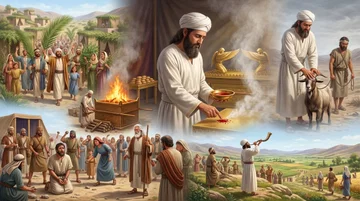
The verse describes the yearly cleansing of the sanctuary on the tenth day of the seventh month, the Day of Atonement, when after offering a bullock for himself and his house and casting lots over two goats for the Lord and for the scapegoat, the high priest kills the goat on which the Lord's lot falls as the sin offering for the people.RH Mar 8, 1870RH Dec 8, 1915 He alone carries its blood within the veil into the Most Holy Place, the apartment entered only once a year and only for this purpose, and sprinkles it with his finger upon the mercy seat eastward and before the mercy seat seven times, doing with it as he did with the blood of the bullock.RH Nov 17, 1863RH Dec 8, 1915 This blood is offered for two purposes, to make atonement for the children of Israel in all their sins and to cleanse, hallow and reconcile the holy sanctuary, tabernacle and altar from the uncleanness and transgressions transferred there in figure through the year's daily ministration, forever removing them and completing the reconciling of the holy place.RH Mar 8, 1870RH Dec 8, 1915
He brings the blood alone behind the veil and applies it over and in front of the mercy seat, with incense whose cloud covers the mercy seat, and also sprinkles the altar of incense.RH Nov 17, 1863RH Mar 8, 1870RH Dec 8, 1915 The two goats presented alive before the Lord at the door of the tabernacle must be exact counterparts in value, size, age and color, chosen by lots engraved La Yehovah and La Azazel.ST Mar 11, 1875ST Jun 13, 1878RH Jan 18, 1870 The same preposition on both lots marks Jehovah as a person and Azazel as another person or being distinct from Jehovah and distinct from the goat itself, not a sacrifice but the recipient of sins already cleansed by the blood, the proper name of Satan, originator of sin, as held by ancient Jewish and Christian interpretation.ST Mar 11, 1875ST Jun 13, 1878RH Jan 18, 1870
The cleansing work inside with blood is finished before the high priest comes out of the building; only afterward is the live goat brought, and he lays both hands upon its head, confesses over it all the iniquities and transgressions in all the sins of Israel, puts them upon it, and sends it away by the hand of a fit man into a separated, uninhabited wilderness, where it bears away all their iniquities.RH Jan 11, 1870ST May 27, 1897RH Feb 3, 1853ST Jul 4, 1911ST Oct 25, 1905 The Day thus reverses the daily service, for sins borne into the sanctuary by blood before the veil through the year are borne out by blood within the veil, leaving sanctuary and people clean, and the past forgiven sins carried out in figure are placed on the scapegoat to be sent away.ST May 27, 1897RH Feb 3, 1853ST Apr 3, 1879ST Jul 4, 1911ST Oct 25, 1905 Having gathered up all the sins of all the camp upon himself, he sprinkles the sin-offering blood upon the horns of the altar of incense seven times, so that priest's household, whole people, sanctuary and entire holy place are cleansed in figure.ST May 27, 1897RH Feb 3, 1853ST Oct 25, 1905
On this day all Israel assembles around the tabernacle and afflicts the soul by fasting and prayer, refraining from work of every kind from evening to evening for twenty-four hours, while the high priest ministers hidden from view within the veil where the visible presence dwells.RH Jan 22, 1914RH Dec 1850RH Feb 2, 1911RH Jan 15, 1861ST Sep 13, 1877 It is the most solemn day of the year, the great day of judgment and final atonement removing and cleansing all sins transferred during the year, attired with the breastplate of judgment bearing the twelve tribes and with blood emblematical of the blood of Jesus.ST Oct 25, 1905RH Jan 22, 1914RH Dec 1850RH Feb 2, 1911RH Jan 15, 1861 While he is inside they wait outside in solemn silence and prayer, fearing if he remains long, reassured by his bells, and receiving his blessing on coming out, with every one called by the name of Israel interested and having a part to act for himself from beginning to end.RH Dec 1850RH Feb 2, 1911RH Jan 15, 1861ST Sep 13, 1877RH Dec 10, 1901
That behind-the-veil blood work is the central work of the Day and the most important and solemn service of the sanctuary, in which decision is not reached until the close of the day.RH Dec 10, 1901RH Dec 10, 1861 It demands the most solemn service and best energies of all the living people, ending sins in the yearly typical service so they are remembered no more, though removing sin only in figure, for all that work was typical.RH Feb 2, 1911ST Sep 13, 1877RH Dec 10, 1901RH Dec 10, 1861 The great day falls only a few days before the Feast of Tabernacles and the seventh year's season of forgiveness, making that season a time when the people are especially concerned to have their sins forgiven.ST Feb 11, 1897
Mercy Seat and Law
The mercy seat where the blood is put is the golden cover of the ark, placed above the ark inside the veil in the Most Holy Place, which is entered on this day and no other.RH Aug 10, 1916RH May 11, 1869ST May 15, 1901 Above it the Shekinah glory shines from between the cherubim as the sign and manifestation of God's presence, moved there on that day from the holy place, as God's throne of mercy where hope centers.RH Aug 10, 1916RH May 11, 1869ST May 15, 1901 On the tenth day of the seventh month the goat of the sin offering for the people is killed and its blood is brought within the veil and sprinkled with the finger seven times upon the mercy seat eastward and before the mercy seat, doing with it as with the blood of the bullock, indicating complete satisfaction made for all transgressions of every repentant sinner.ST Sep 6, 1910ST Oct 25, 1905RH Aug 10, 1916 This is the final atonement and final balancing of accounts for the year, finishing the ministry in the most holy place, cleansing the sanctuary, tabernacle, altar of incense, mercy-seat area and sacred vessels from the record of sin transferred there in figure, while the people are cleansed from sin itself, and it is final for every member of the congregation.ST Sep 6, 1910ST Oct 25, 1905ST Jun 4, 1885 Its antitype is the time when God closes the record of sin for the whole world, when transgression is finished and sins are ended not by any righteousness of man's own but only by the atonement of Christ's blood forgiving sins, cleansing the soul temple, and sealing the sinner for eternity, foreshadowing the heavenly High Priest's work in the most holy place of the true temple begun at the close of the 2300 days in 1844 and marked by the temple opened in heaven with the ark of His testament seen.ST Sep 6, 1910RH Mar 26, 1867
Beneath the mercy seat lies the broken moral law God proclaimed at Horeb and wrote on stone tables, the Ten Commandments and tables of the covenant kept in the ark, including the Sabbath and seventh-day precept.RH Jun 23, 1868RH Mar 26, 1867RH Apr 28, 1874 Those sins for which atonement is made included breaking the commandments kept in the ark, and Sabbath-breaking was among the transgressions for which the typical atonement was made and for which the ritual pointed to Christ's atonement.RH Jun 23, 1868ST Mar 21, 1878 The blood is sprinkled over that law alone and over no other laws, upon and before the mercy seat above the law kept in the ark.ST Aug 10, 1882ST Mar 21, 1878ST Sep 21, 1876 The blood on the mercy seat represents atonement for transgression of that law and pardon to the breaker of the law contained in the ark beneath, bringing pardon to the penitent sinner.ST Aug 10, 1882ST Sep 21, 1876
The law beneath made atonement necessary and shows Israel to be sinners regarding it, while the animal sacrifices provided only a shadow and could not remove sin.RH Mar 4, 1862ST Aug 10, 1882 The law inside the ark is what demands an atonement, while the ceremonial law that ordains the Levitical priesthood and sacrifices teaches how that atonement is made; the ark's law shows why it is required.ST Aug 10, 1882ST Sep 21, 1876 That real atonement does not take away the broken law, for the law is perfect and immutable, but is expressly designed to take away the guilt of the transgressor, removing the sinner's guilt rather than abolishing the perfect law.ST Aug 10, 1882ST Sep 21, 1876RH Aug 30, 1864 The sprinkled blood stands between God and the broken law kept in the ark, showing how sacrifice provides atonement while God's law remains, and mercy does not abolish, erase or dishonor it.RH Aug 30, 1864RH Aug 30, 1864
Covering by blood on the mercy seat means sin is canceled, blotted out, purged, expiated and remembered no more, for the mercy seat is literally a covering and the Day's name conveys covering, expiation, purging and pardon.ST Oct 2, 1879RH Jan 15, 1861ST Oct 21, 1930 The sprinkled blood testifies a life was taken and the law's claims fully satisfied so the law releases its hold on the sins in the sanctuary and through them on the sinners from whom they came, its penalty having been enforced through an accepted substitute.RH Aug 30, 1864 It upholds the law while showing mercy to the penitent breaker who comes with repentance and faith, extending pardon to enable man to approach the broken law again, typifying restitution of the pardoned to their inheritance and destruction of the impenitent.ST Sep 21, 1876RH Aug 30, 1864 Before this the sinner through his own victim's blood had only transferred guilt to the sanctuary, gaining only relative and conditional pardon while the law still held him, because pouring out of blood did not cancel sin but only removed guilt to provide transfer to another object; remission means a sending away, the absolute disposal of sins so they never more appear against the sinner, and pardon was secured through the sinner's offering and was conditional, while remission comes only through this atonement and is absolute. Joined with laying all iniquities and transgressions upon the scapegoat and sending him into the wilderness to an uninhabited land, it provides a perpetual memorial that sin may not only be forgiven but taken away so as to be remembered against the sinner no more forever, giving hope of pardoning mercy to brokenhearted penitents, and the High Priest then announced that all was forgiven.ST Oct 2, 1879RH Jan 15, 1861
The word for putting the blood means sprinkle, rendered sprinkle in English and rhanei in Greek from Hebrew nah-zah, and it never means dip or immerse, just as tah-val never means sprinkle, so sprinkle cannot be put for immerse and baptizo cannot be put for rhantizo.ST May 6, 1880 The blood was carried within the veil into the most holy place and applied upon and before the mercy seat in the same manner as the bullock's blood, and by that blood atonement was made for the whole sanctuary and the altar to cleanse them, with benefit also reaching beyond the sanctuary itself.RH Jan 11, 1870 The blood was sprinkled seven times as part of the yearly cleansing removing the sins conveyed into the sanctuary during the year and making atonement for the holy place, the tabernacle and the altar.ST Jun 4, 1885RH Jan 11, 1870 The sevenfold sprinkling showed the thoroughness and completeness of forgiveness, making satisfaction to the law for all the people who were to afflict their souls that day, dealing in general service with accumulated sins and representing their release from the sanctuary.RH Aug 31, 1911
The ceremony taught Israel that God is holy and abhors sin, and that contact with sin pollutes.RH Nov 8, 1915 While the atonement work was taking place, each person was to humble himself before God, setting aside business for solemn prayer, fasting and searching of heart.RH Nov 8, 1915
Blood Atonement Meaning
Atonement was made by the priest inside the sanctuary by presenting blood before God, not where the offering was slain nor by the act of killing. The goat for the people was slain outside, then its blood was carried alone within the veil and sprinkled upon the mercy seat and before the mercy seat as was done with the bullock's blood, and that sprinkling itself was the atonement.RH May 19, 1874ST Jan 17, 1884ST Sep 6, 1910ST Nov 28, 1892ST Jan 17, 1884 The killing only prepared for atonement, while priestly presentation in the divine presence made it, blotting out the sins of Israel and removing them from before God while at the same time cleansing and hallowing the holy places from their uncleanness and transgressions.RH May 19, 1874ST Jan 17, 1884ST Sep 6, 1910ST Jan 17, 1884ST Oct 18, 1883 The sanctuary was defiled only by proxy, since the people never entered it, but the priest as their representative bore their judgment into God's dwelling, and the blood given to make atonement cleansed it there.RH May 19, 1874ST Jan 17, 1884ST Jan 17, 1884 The final balancing on the tenth day of the seventh month was therefore final for every member of the congregation, cleansing the sanctuary from the record of sin while cleansing the people from sin itself.ST Sep 6, 1910 The people's fasting, prayer and affliction of soul did not remove guilt, for that work belonged to the priest and depended on the blood, by virtue of which he was accepted as their representative.ST Oct 18, 1883
Blood represents life given in place of the sinner's forfeited life, since sin's penalty is death. The victim's life was accepted for the repentant sinner's life, and the offering was accepted for the sinner.ST Oct 18, 1883ST Feb 7, 1906 The blood sprinkled seven times upon and before the mercy seat covering the ark, where the Ten Commandments transgressed in every sin through the year were held, showed complete satisfaction made for all transgressions of every repentant sinner and that the law's demands had been satisfied and its claims released.ST Sep 6, 1910ST Nov 28, 1892ST Feb 7, 1906 In antitype the record of sin for the whole world is closed not by any righteousness of man's own but only by the atonement of Christ's blood forgiving sins, cleansing the soul temple and sealing the sinner for eternity.ST Sep 6, 1910
Animal blood in itself could not finally take away sin and was only symbolic, a continual reminder of sin and deserved death. Its insufficiency shows the value of atonement consists entirely in the dignity of the offering, pointing to Christ's richer sacrifice and more precious blood and His ministry in the heavenly sanctuary by His own blood.ST Jan 17, 1884ST Jan 17, 1884ST May 1, 1879RH Feb 3, 1853ST Feb 7, 1906 The earthly blood ceremony removed in figure the sins borne in through sin offerings, not by fire, and patterned the change from holy-place ministry to most-holy ministry where His blood accomplishes forgiveness and cleansing.RH Feb 3, 1853 Through that work repentant sinners are freed from sin and reconciled to God above the transgressed law.ST Feb 7, 1906
The gospel of remission is not fully accomplished by the death of the sacrifice alone, nor by repentance and reconciliation alone, but by Christ as great High Priest appearing in the presence of God for His people to blot out their sins and remove them forever from before the throne. The death of Christ makes salvation possible for all but by itself saves no one, for atonement is the priest's work in the sanctuary performed with the blood of the offering and is not simply identical with His death.ST Jul 31, 1884
Without shedding of blood there is no remission, because God can come short of neither His law nor blood to save the sinner. Salvation is both a legal transaction and a moral transformation, with no display of mercy without vindication of justice, foreshadowed at Sinai and consummated at Calvary when infinite love trod the winepress alone, tasted death and shed judicial blood as propitiation for the sins of the world.RH Sep 25, 1900 With one stroke of divine justice, once for all, infinite Innocence died, closed the holocaust of centuries and opened the past to the midday splendor of the Sun of righteousness.RH Sep 25, 1900 Apart from Calvary the two goats with the other priesthood and sanctuary types remain incomprehensible enigmas, but in gospel light they become clear and beautiful and give strong confirmation of Scripture.RH Sep 25, 1900
The blood avails for sins committed both before and after the priest's entrance into the Most Holy. In the yearly work transgression preceded offering in both apartments, and likewise Christ shed His blood before entering the heavenly sanctuary, so its efficacy is not limited to sins committed before He entered.
Sanctuary Cleansed from Sin
The blood of the Lord's goat is brought within the veil and sprinkled upon and before the mercy seat to make atonement for the children of Israel in all their sins and to cleanse, hallow and reconcile the holy sanctuary, the tabernacle of meeting, the altar, the mercy-seat area and all the furniture and sacred vessels.RH Dec 24, 1908RH Mar 8, 1870 Through the year's daily ministration the people's sins were in figure transferred into the sanctuary by the blood of sin offerings, and this yearly service forever removes those accumulated sins from the sanctuary and completes the reconciling of the holy place.RH Dec 24, 1908RH Mar 8, 1870ST Nov 20, 1879 The central act stands on the tenth day of the seventh month, when after offering the bullock for himself and casting lots for the two goats the high priest kills the goat on which the Lord's lot falls as the sin offering for the people, carries its blood alone into the most holy place, and sprinkles it with his finger eastward upon the mercy seat and seven times before it, as with the bullock's blood. The people are to confess, humble themselves and repent, for their sins cannot be removed from them until they repent.RH Dec 24, 1908
That cleansing is from moral pollution, uncleanness, transgressions and sins, not from physical impurity or dust, not a rededication of vessels for priestly service, not by fire, and not by destruction of oppressive powers.RH Dec 8, 1915ST Jul 24, 1884RH Jan 1851ST Jul 1, 1880RH Feb 16, 1869 It is done by blood applied inside the tabernacle in the most holy place entered only once a year and upon the altar, not in the court and not once for all outside as at the dedicating of the covenant, and it does not describe the earth's future purification by fire.RH Dec 8, 1915ST Jul 24, 1884ST Oct 25, 1883ST Nov 20, 1884 The sanctuary has no impurity of its own needing removal; it is made unclean because the priest as representative bears the people's sins and judgment into God's dwelling though the people themselves never enter, and by that same priestly blood-bearing it is cleansed and hallowed.ST Oct 25, 1883ST Feb 7, 1884RH Jun 2, 1874 Making atonement and cleansing the sanctuary mean precisely the same thing, accomplished when blood is sprinkled upon the mercy seat and altar to take sins away from the presence of God and remove them from the throne of judgment.RH Jun 2, 1874ST Nov 1, 1877
The yearly work differs altogether from the daily ministry in the outer apartment by the under-priests, where blood was spilled at the base of the altar of burnt offering.RH Dec 8, 1915ST Jun 19, 1879ST Mar 10, 1898 By the daily work in the first apartment sins were transferred in by blood before the veil through the year, and by this work in the second apartment those confessed sins stored there are taken up by the high priest passing through with the blood, borne in before God, and removed out, completing the round begun in the first apartment.RH Dec 8, 1915ST Apr 3, 1879ST Nov 20, 1879ST Mar 10, 1898 That special cleansing on the tenth day of the seventh month is the close and culmination of the yearly service and a decisive work of judgment, yet it takes place alongside the ordinary daily duties and does not by itself indicate that probation has ended.ST Apr 3, 1879RH Feb 3, 1853ST Jun 19, 1879 Past sins that had been forgiven are in figure carried out of the sanctuary and afterward placed upon the scapegoat to be sent away.ST Apr 3, 1879RH Feb 16, 1869
The earthly blood of bulls and goats could not actually take away sin, so the earthly sanctuary was never truly cleansed of sin but only in figure, while the necessity remained because the people were actual sinners needing remission and blotting out.RH Dec 1, 1863ST Feb 7, 1884RH Jun 2, 1874ST Nov 1, 1877 For the same reason that sins were communicated to it, the heavenly sanctuary of the new covenant must itself be cleansed with better blood through the mediation of Christ.ST Oct 25, 1883RH Jun 2, 1874ST Nov 1, 1877 That cleansing is not a general cleansing detached from individual cases but a work of atonement for the people's sins there, dealing with individual sins while Christ's blood remains available for His people.RH Oct 30, 1855RH Dec 15, 1868 In type one slain offering both reconciles the sanctuary and cleanses the people from sin, accomplished by that slain offering without another sacrifice supplementing it.ST Dec 21, 1915
Type of Heavenly Ministry
The earthly service with its two apartments is the example, shadow, pattern and type of Christ's ministry in the true heavenly tabernacle pitched by the Lord, accomplished with His own better blood rather than beasts' blood.ST Jul 9, 1894ST Apr 20, 1904ST Jun 6, 1878RH May 18, 1869 That day-of-atonement service completes the atonement begun during the year and therefore represents the finishing of Christ's work of atonement, not the whole gospel dispensation, prefiguring the final work of judgment when sins are blotted out and removed from the sanctuary.ST Apr 20, 1904ST Jun 6, 1878RH Aug 22, 1912 The earthly atonement was performed in the earthly sanctuary on the last day of the year, and when the high priest came out the work for Israel was finished; so Christ's work for the people must be done in the heavenly sanctuary, where He makes the great atonement identified with the real judgment.ST Jul 9, 1894RH May 18, 1869RH Aug 22, 1912 The cleansing of the sanctuary in this service points to the cleansing of the heavenly sanctuary and to the day of judgment, with confessed sins dealt with in the sanctuary and ultimately transferred to the scapegoat as a figure of Satan sent away and destroyed.ST Jul 9, 1894ST Apr 20, 1904
The slain Lord's goat is the goat of sacrifice chosen by lot from two goats, distinct from Azazel the scapegoat, and represents Christ and His sacrifice, death and blood as sin offering for the people, the innocent one suffering death for the guilty.RH Dec 8, 1915RH May 9, 1871ST Apr 20, 1904ST Nov 29, 1905ST Sep 26, 1911 Its blood is the blood of atonement that redeems from sin and makes propitiation for sinners, typifying Christ's blood by which the priest performs the sanctuary ministry to save the people from their sins.RH May 9, 1871RH Mar 24, 1863ST Apr 20, 1904ST Sep 26, 1911 The high priest who carries that blood alone into the most holy place, the apartment entered only once a year, and applies it over and in front of the mercy seat, represents Christ as ascended High Priest.RH Dec 8, 1915ST Apr 20, 1904RH Aug 22, 1912 The killing outside only prepares for atonement, which is made inside when the risen Christ enters heaven with His cross-shed blood, the scapegoat having no role in atoning and not representing Christ.RH May 9, 1871RH Mar 24, 1863ST Nov 29, 1905
Aaron alone is not a complete type of Christ by himself, but Aaron together with Melchizedek presents all the essential truths of the gospel in the priesthood of Christ, who is both of the order of Melchizedek and the antitype of Aaron.ST Nov 18, 1889RH Apr 7, 1868 Aaron's work at the mercy seat with the people's sin-offering blood brought within the veil and sprinkled on and before the mercy seat typifies only a limited part of Christ's priestly ministry as High Priest and Intercessor in the heavenly Most Holy Place.ST Nov 18, 1889RH Apr 7, 1868 This brief work does not mean that the mercy seat is God's throne or that Christ's ministry is confined there, for He is also exalted to the Father's throne.RH Apr 7, 1868
Christ entered the heavenly sanctuary once for all at ascension to begin in the first apartment in A.D. 31, not at once entering the closing work nor spending eighteen hundred years on it.ST May 17, 1877ST Mar 14, 1906ST Dec 22, 1881RH Mar 10, 1874 In the type the round of service was completed every year on one set day in a portion of the day because its priests were mortal, closing with the yearly cleansing that concluded the earthly sanctuary's round; in the antitype it is performed once for all when the heavenly sanctuary, the only sanctuary of the new covenant then in existence, is cleansed in the same way.ST May 17, 1877ST Dec 22, 1881RH Mar 10, 1874 He completes each part of that work once without yearly repetition as mortal priests required, the repeated service with animal blood never actually taking away sins but serving as a shadow teaching about Christ's work.ST May 17, 1877ST Dec 22, 1881RH Mar 10, 1874 In the yearly work transgression preceded the offering in both apartments, and likewise Christ shed His blood before entering the heavenly sanctuary, so His blood avails for sins committed before or after His death and before or after His entrance into the Most Holy.
The cross was only the offering of the sacrifice, with the victim slain before its blood was brought into the sanctuary, and atonement is completed through His later work as mediator and High Priest with His own blood in the sanctuary in heaven.RH Nov 24, 1874ST Jun 4, 1874ST Feb 21, 1878RH Jul 6, 1869 The killing of the goat for the people and bringing its blood within the veil to sprinkle upon the mercy seat pictures Christ ascended on high as the only mediator, where the atonement made with blood is the very last portion of His work as priest.RH Nov 24, 1874ST Jun 4, 1874ST Feb 21, 1878 The yearly service places atonement at the end, not the beginning, typifying Christ making atonement for His people, cleansing the sanctuary, and finally blotting out their sins before He returns, with sins then borne away from the sanctuary by the scapegoat.RH Nov 24, 1874ST Jun 5, 1879RH Aug 22, 1912 So the atonement was not completed on the day of His resurrection, but belongs to the last service of His priesthood when repented sins are blotted out and borne away.ST Jun 5, 1879RH Aug 22, 1912RH Jul 6, 1869
The sanctuary has holy places each entered through a veil, with blood brought within the veil and sprinkled upon and before the mercy seat, revealing the heavenly sanctuary where Jesus has entered within the veil into the heavenly holy places as minister of the sanctuary to serve on behalf of believers.ST Aug 18, 1881 The veil within which Jesus entered is not His flesh but the entrance into the heavenly holy places, through which He consecrated a new and living way by His body and blood for believers to follow.ST Aug 18, 1881 Believers enter the holy place by the body and blood of Jesus, following where He has entered for them, with His work looking forward to its completion in the putting away of sin.ST Aug 18, 1881ST Mar 14, 1906
Prophetic Fulfillment in 1844
The yearly blood brought within the veil to sprinkle upon and before the mercy seat for the people pictures the cleansing of the true tabernacle of the new covenant by Christ with His own blood at the end of the 2300 days.ST Jul 9, 1894ST Apr 20, 1904ST Jun 6, 1878RH May 18, 1869 That cleansing was expected in 1844 and was begun on October 22, 1844, on the tenth day of the seventh month, when ministration changed from the holy to the Most Holy.RH Aug 22, 1912RH Mar 20, 1856LDT 175.1–2ST Mar 14, 1878RH Dec 15, 1868 The day-of-atonement service therefore represents the finishing of Christ's work of atonement, when sins confessed and transferred into the sanctuary through the year's ministry are blotted out and removed, and not the whole gospel dispensation.ST Apr 20, 1904ST Jun 6, 1878RH May 18, 1869RH Aug 22, 1912 The earthly high priest's entrance was the type of Christ's ministry in the heavenly sanctuary, where He makes the great atonement identified with the real judgment, while the scapegoat Azazel represents Satan whose destruction comes later.ST Jul 9, 1894ST Apr 20, 1904RH May 18, 1869RH Aug 22, 1912
That entrance closed the holy-place ministration and opened the Most Holy, opening rather than closing the way for mercy to sinners.RH Mar 20, 1856LDT 175.1–2ST Mar 14, 1878RH Dec 15, 1868ST May 17, 1877 It opened the door of mercy in the fullest sense beside the ark and mercy seat, marked by the temple of God opened in heaven with the ark of His testament seen.RH Mar 20, 1856LDT 175.1–2ST Mar 14, 1878LDT 149.1 The cleansing is the concluding work of the High Priest before He leaves the sanctuary, performed once for all in the second apartment of heaven in 1844 at the end of the 2300 days, a work whose time is indefinite but comparatively brief.RH Mar 20, 1856LDT 175.1–2RH Dec 15, 1868ST May 17, 1877LDT 149.1 As in the type the high priest entered and came out again to bless the people in one literal day, so in the antitype the entering and coming out covers years in the days of the voice of the seventh angel when the mystery of God is finished.LDT 175.1–2ST Mar 14, 1878ST May 17, 1877LDT 149.1
The work is final and lasts for a brief but indefinite time before Christ's second coming, covering years and not one literal day.ST Jul 9, 1894ST Apr 20, 1904ST Jun 6, 1878RH Aug 22, 1912 It continues while mercy is open until probation closes and Christ returns, and must transpire while He is still priest before He is revealed as King and before the plagues fall.ST Jun 6, 1878RH May 18, 1869RH Aug 22, 1912 The antitypical atonement is now taking place as the last work forever for any people, marking the very last days of the work of the gospel, when the sanctuary is cleansed and the gospel, the mystery of God, is finished.RH Feb 26, 1867RH Sep 18, 1900RH Apr 15, 1873 When He comes out the work for the people is finished, with the sins of God's people blotted out and the atonement complete.RH May 18, 1869RH Nov 24, 1874RH Sep 18, 1900RH Apr 15, 1873
The sanctuary to be cleansed is not this earth, which is a world in rebellion and cannot be called a holy place consecrated to God, nor the land of Palestine, but the sanctuary in heaven itself inside the same building where daily ministry was performed.RH Dec 23, 1852RH Nov 24, 1874RH Feb 14, 1854 The sanctuary is the place where the priest offers the blood of the sin offering, containing the holy and most holy places, and it is cleansed by blood applied in mediation, not by fire.RH Nov 24, 1874RH Feb 14, 1854RH Mar 22, 1870 The earlier taking of the sanctuary to be the earth or Palestine and its cleansing to be the burning of the earth or purification of Palestine at Christ's coming, so that the great High Priest would leave heaven and descend in flaming fire in the autumn of 1844, ended in painful disappointment, while the chronological argument ending the 2300 days at that time stands unoverthrown.RH Dec 23, 1852RH Nov 24, 1874 As sins in the type were communicated to the earthly sanctuary, so sins of those who come to God through the great High Priest are communicated to the heavenly sanctuary, and at the end of the 2300 years, with only 490 years belonging to the earthly sanctuary and 1810 years to the true sanctuary, the heavenly sanctuary must be cleansed from those sins for the same reason.RH Nov 24, 1874RH Feb 14, 1854RH Mar 22, 1870
The fulfillment follows the two-apartment order from holy-place intercession to Most-Holy work, closing up the mediatorial work and finishing the mystery of God.RH Feb 26, 1867RH Sep 18, 1900RH Apr 15, 1873RH Aug 27, 1857 Christ's intercession from A.D. 31 gives place to Most-Holy work from the seventh trumpet in 1844, when the dead are judged and the temple in heaven is opened.RH Apr 15, 1873RH Aug 27, 1857LDT 175.1–2LDT 149.1 As Passover, the wave sheaf of firstfruits, and Pentecost were fulfilled chronologically at Christ's first advent in His death as the Paschal Lamb, His resurrection as firstfruits, and the descent of the Holy Spirit, so this atonement must be fulfilled chronologically at His second advent on the tenth day of the seventh month.RH Aug 27, 1857RH Sep 18, 1900RH Aug 27, 1857LDT 175.1–2 The Day falls ten days after the Feast of Trumpets and before the Feast of Tabernacles, part of the sacred calendar's transition, and with the other observances centering in the seventh month it is typical of events predicted to transpire in immediate connection with the second advent.RH Aug 27, 1857ST Oct 31, 1906RH Aug 27, 1857
Christ's entrance into the Most Holy to make the real atonement opens rather than closes forgiveness, probation and mercy, raising the question answered from the type of the people's sin-offering blood brought within the veil.ST Feb 25, 1913 The ministration pictured as taking place in the most holy place of the heavenly sanctuary on the great day of atonement is beheld by faith by the last generation as the marriage of the Lamb to the New Jerusalem.ST Feb 25, 1913RH Mar 30, 1869
Judgment and Blotting Out
The day is a day of judgment and final balancing of accounts, a miniature judgment in which the sins previously represented by blood in the holy place are brought into final review before God.ST Apr 3, 1879RH Dec 29, 1904 The yearly sanctuary services had symbolically transferred the people's sins to the sanctuary, and the bringing of the Lord's goat's blood within the veil to sprinkle it on and before the mercy seat cleanses it and finally removes those sins.RH Dec 24, 1908ST Nov 27, 1884ST Apr 3, 1879 Past sins that had been forgiven are in figure carried out of the sanctuary by the high priest and placed on the scapegoat to be sent away, marking the close of the yearly service as a decisive work of judgment.ST Apr 3, 1879ST Feb 17, 1898 Characters are weighed by the law in the ark, God's dealings are vindicated, and its antitype is the investigative judgment and final adjustment of cases reaching to the end of the gospel plan in the taking away of the penitent's sins and the condemnation of the wicked.RH Dec 29, 1904ST Feb 17, 1898 Those who confessed and put away their sins stood clear, while those who did not were cut off, for the people were to confess, humble themselves, repent, examine their hearts, afflict themselves and refrain from work, since sins could not be removed from them until they repented.RH Dec 24, 1908RH Mar 24, 1863RH Dec 29, 1904 Their penitence and humility did not themselves make atonement but related them to God so the priest's atoning work could avail for them, and those redeemed by this sacrificed blood are to put away evil, forsake sin, walk in God's ordinances and be holy, for even after propitiation those who continue in sin share the fate typed by the scapegoat.ST Nov 27, 1884RH Mar 24, 1863
Presenting the people's blood before the mercy seat represents blotting out sins, removing them from God's presence and the throne of judgment so they never appear against the sinner.RH Mar 8, 1870 The blood is offered for two purposes, to make atonement for Israel in all their sins and to cleanse and reconcile the holy sanctuary, tabernacle, altar, mercy-seat area and sacred vessels from uncleanness and transgressions transferred there in figure through the year's daily ministration. It forever removes from the sanctuary the sins borne into it through the sin offerings and completes the reconciling of the holy place.RH Dec 24, 1908RH Mar 8, 1870 This blotting is acquittal, declaring the faithful worthy of the first resurrection when sins are forever cleansed and remembered no more.ST Sep 13, 1877
Pardon during the year is conditional and relative by transfer of guilt into the sanctuary without canceling sin, for God maintains the claims of law and justice and forgives by transferring sin to another who bears it in stead while the sin still counts as existing as an offense against Heaven.RH Sep 21, 1905 Absolute remission and sending away come only at the mercy-seat sprinkling, when the blood typically cleanses the sanctuary from all sins confessed during the year before the mercy seat and those sins are ceremonially carried out and laid on the scapegoat to be taken into the wilderness.ST Feb 17, 1898ST Sep 13, 1877 Those who confessed receive its benefit and are freed from their sins, while those who did not confess retain their sins and are separated from those freed, with the unrepentant cut off.ST Feb 17, 1898RH Sep 21, 1905 The order is essential, for the blood work in the sanctuary for blotting out sin must be completed before any action concerning the live scapegoat, which was presented but not slain and left untouched until after atonement was made. It removed sin only in figure, for all that work was typical of the final judgment and the antitypical day of atonement and cleansing of the heavenly sanctuary at the end of the 2300 days.ST Feb 17, 1898ST Sep 13, 1877
At the final cleansing the cases of the righteous dead and living come in review, including Daniel standing in his lot when his case and the cases of all the righteous dead come before God at the close of the 2300 days.GSAM 83.2–84.1RH Dec 10, 1901 God holds an open court in heaven weighing evidences for eternal life, and every living person who hears the trumpet and accepts the message becomes a living active part of that court, needing to overcome, to have every sin confessed with pardon written against the last one, and to walk with God as Enoch did.GSAM 83.2–84.1RH Dec 10, 1901 The great day of atonement is the investigative judgment now going forth in the last age as a testing message, testing a people given to infidelity, unbelief and carnal pleasure, proud churches resisting present truth, waning love, and the narrow way and strait gate, raising who may abide the day of Christ's coming and stand when He appears.RH Dec 10, 1901
In the final application Christ brings the confessed sins of those in the book of life before God and the angels and confesses them in the presence of the angels after people have received personal forgiveness through confession.ST Jul 17, 1901RH Sep 28, 1905ST Nov 29, 1905 Israel's attention was fixed on the high priest's work because each person's case was pending there, and this sanctuary service is applied to the great day of atonement when Christ offers blood that cleanses from sin and will soon finish His pleading.RH Aug 24, 1869 That day was the time Israel stood in their lot, meaning the determination of Providence and decision of their cases, typifying the cleansing of the heavenly things themselves with the better sacrifice of Christ's own blood and the final adjustment of cases and closing of probation.RH Aug 24, 1869ST Jul 17, 1901ST Nov 29, 1905 Overcomers whose names are confessed have their sins afterward laid on Satan the originator of evil to be removed in the final judgment of the righteous, while those whose names are not confessed retain their sins, are separated from God's people, cut off and face the lake of fire.RH Sep 28, 1905ST Nov 29, 1905RH Dec 10, 1901
Scapegoat and Human Response
The goat whose blood is carried within the veil is the Lord's goat, slain as the sin offering for the people, and it is altogether distinct from the live goat for Azazel.RH May 9, 1871RH Mar 24, 1863ST Apr 20, 1904ST Nov 29, 1905 The scapegoat Azazel does not represent Christ, has no part in making atonement, and is not the bearer of atonement, but represents Satan as the originator of sin and the type of evil and of the Evil One.RH May 9, 1871RH Mar 24, 1863ST Apr 20, 1904ST Nov 29, 1905 The blood of atonement that redeems from sin belongs to the sacrificed goat alone, whose death for the guilty figures the innocent Christ suffering for sinners.ST Jul 9, 1894RH Mar 24, 1863ST Apr 20, 1904 Only after the sanctuary has been cleansed by that blood are the already-cleansed confessed sins laid upon the live goat to be borne away.ST Jul 9, 1894ST Apr 3, 1879 That goat is then sent by the hand of a fit man into a separated uninhabited wilderness to perish there, fulfilled when Satan is bound upon the desolate earth during the thousand years.ST Jul 9, 1894
While this work proceeds, every person must humble himself and afflict the soul, confessing sins, repenting, fasting, praying, searching the heart, and putting away sin.RH Dec 24, 1908ST Nov 27, 1884ST Apr 3, 1879RH Dec 29, 1904 Ordinary business and work are set aside and ordinary offerings suspended, with attention fixed upon the High Priest and cooperation with Christ, while all share a common interest as the tribes borne under the breastplate.RH Mar 24, 1863RH Dec 29, 1904ST Oct 25, 1905RH Dec 1850 Penitence and humility do not themselves make atonement, but they relate the penitent to God so that the priest's atoning work can avail for him.ST Nov 27, 1884 Those redeemed by the sacrificed blood are therefore to forsake sin, walk in God's ordinances, live a righteous and godly life, and be holy as the Lord God is holy.RH Mar 24, 1863 The yearly judgment day thus brings previously blood-represented sins into final review before God, and those who confess and put them away stand clear.RH Dec 24, 1908ST Apr 3, 1879
Those who do not afflict their souls, continue in sin, neglect the provision, or fail to repent cannot have their sins finally removed from them.RH Dec 24, 1908ST Nov 27, 1884 Even after yearly confession and propitiation, those who continue in sin share the fate typed by the scapegoat.RH Mar 24, 1863 They are cut off from God's people, separated, and destroyed, and failure in the antitype brings the same consequence.RH Mar 24, 1863 This decision determines who is at one with God.RH Mar 24, 1863
The present time is the antitype of the great Day of Atonement, in which Christ as great High Priest has entered with His own blood into the holy of holies of the heavenly sanctuary at the close of the twenty-three hundred days to begin cleansing the sanctuary.ST Aug 15, 1878LDT 175.1–2 That day is now present in the Laodicean church state, which means the judging of the people, or a just people, and is the judgment of the house of God by the just and holy law.ST Aug 15, 1878RH Aug 7, 1860 It calls the generation living today to humbling and confession of sins while Christ pleads in the Most Holy.ST Oct 25, 1905RH Jan 22, 1914ST Aug 15, 1878 His people wait as in the outer court, as all Israel assembled around the tabernacle from evening to evening, for His coming out again to bless them without sin unto salvation, the entering and coming out that took one literal day in the type covering years in the antitype until the mystery of God is finished.ST Oct 25, 1905RH Dec 1850LDT 175.1–2
The verse belongs to the laws concerning sacrifices, offerings, worship, and priestly mediation under the Sinaitic first covenant, giving instruction for the cleansing of the sanctuary and for the proper approach of a sinful yet chosen people to a holy God.ST Feb 7, 1911RH Feb 3, 1916RH Apr 12, 1860ST Aug 5, 1889 Its sacrificial details have meaning and find their fuller meaning in the sacrifice, life, and work of Jesus Christ, showing why the ministration of the first covenant was called a ministration of death and pointing to the later New Covenant provision for forgiveness.ST Feb 7, 1911RH Apr 12, 1860ST Aug 5, 1889 It is therefore important and is to be read carefully rather than lightly passed over as an ancient rite.RH Feb 3, 1916 The blood represents the victim's life, and its sprinkling teaches that disobedience forfeits the right to eternal life, that God is holy and will not receive the unholy into His presence, and that salvation depends on the promised Redeemer's atonement.ST Apr 1, 1886RH Dec 4, 1860 Understanding the tabernacle, priest, and sacrifices is necessary to understand Christ, whose ministry includes more than the Day alone.ST Feb 7, 1911ST Apr 1, 1886
Sources