Exodus 30:7
And Aaron shall burn thereon sweet incense every morning: when he dresseth the lamps, he shall burn incense upon it.
Translations
And Aaron shall burn thereon sweet incense every morning: when he dresses the lamps, he shall burn incense on it.
King James Version, KJV Cambridge Paragraph Bible
And Aaron shall burn thereon sweet incense every morning: when he dresseth the lamps, he shall burn incense upon it.
And Aaron shall burn upon it sweet incense every morning: when he dresseth the lamps, he shall burn incense upon it.
Revised Version, American Standard Version
And Aaron shall burn thereon incense of sweet spices: every morning, when he dresseth the lamps, he shall burn it.
'And Aaron hath made perfume on it, perfume of spices, morning by morning; in his making the lamps right he doth perfume it,
And Aaron shall burn thereon fragrant incense: every morning, when he dresseth the lamps, he shall burn the incense.
And Aaron shall burn thereon fragrant incense,—morning by morning, when he trimmeth the lamps, shall he burn it;
Berean Standard Bible, Majority Standard Bible
And Aaron is to burn fragrant incense on it every morning when he tends the lamps.
Aaron shall burn incense of sweet spices on it every morning. When he tends the lamps, he shall burn it.
And on this altar sweet spices are to be burned by Aaron every morning when he sees to the lights.
And Aaron shall burne thereon sweete incense euery morning: when hee dresseth the lampes thereof, shall he burne it.
Douay-Rheims (Challoner revision)
And Aaron shall burn sweet smelling incense upon it in the morning. When he shall dress the lamps, he shall burn it:
Pictures
Cross-references 20 of 46
- Revelation 8:3-4
And another angel came and stood at the altar, having a golden censer; and there was given unto him much incense, that he should offer it with the prayers of all saints upon the golden altar which was before the throne.
Incense rises with the prayers of God’s people before God.
- Luke 1:9-10
According to the custom of the priest’s office, his lot was to burn incense when he went into the temple of the Lord.
The people pray while the priest offers incense.
- Hebrews 8:5
Who serve unto the example and shadow of heavenly things, as Moses was admonished of God when he was about to make the tabernacle: for, See, saith he, that thou make all things according to the pattern shewed to thee in the mount.
Earthly sanctuary service was an example and shadow of heavenly things.
- Psalms 141:2
Let my prayer be set forth before thee as incense; and the lifting up of my hands as the evening sacrifice.
Prayer is compared to incense offered before God.
- Hebrews 9:6
Now when these things were thus ordained, the priests went always into the first tabernacle, accomplishing the service of God.
Describes the priests’ regular service in the first tabernacle, where the incense altar stood.
- Exodus 29:38-42
Now this is that which thou shalt offer upon the altar; two lambs of the first year day by day continually.
The morning incense accompanies the regular morning and evening offerings in the daily sanctuary service.
- Hebrews 9:3-4
And after the second veil, the tabernacle which is called the Holiest of all;
Describes the sanctuary furnishings, including the golden altar of incense.
- Exodus 40:27
And he burnt sweet incense thereon; as the LORD commanded Moses.
Moses burns sweet incense on the altar before the veil.
- Hebrews 8:1-2
Now of the things which we have spoken this is the sum: We have such an high priest, who is set on the right hand of the throne of the Majesty in the heavens;
Earthly priestly service typifies Christ’s ministry in the true heavenly sanctuary.
- Exodus 30:34-36
And the LORD said unto Moses, Take unto thee sweet spices, stacte, and onycha, and galbanum; these sweet spices with pure frankincense: of each shall there be a like weight:
Gives the ingredients and preparation of the sacred incense.
- Leviticus 10:1-2
And Nadab and Abihu, the sons of Aaron, took either of them his censer, and put fire therein, and put incense thereon, and offered strange fire before the LORD, which he commanded them not.
contrasts God's fire with common fire
- Leviticus 24:2-4
Command the children of Israel, that they bring unto thee pure oil olive beaten for the light, to cause the lamps to burn continually.
Both describe the continual tending and burning of the sanctuary lamps.
- Exodus 27:20-21
And thou shalt command the children of Israel, that they bring thee pure oil olive beaten for the light, to cause the lamp to burn always.
Both describe the lamps tended as part of the daily service.
- Exodus 25:31-37
And thou shalt make a candlestick of pure gold: of beaten work shall the candlestick be made: his shaft, and his branches, his bowls, his knops, and his flowers, shall be of the same.
Describes the lampstand and its lamps, dressed when incense is offered.
- Exodus 37:25-28
And he made the incense altar of shittim wood: the length of it was a cubit, and the breadth of it a cubit; it was foursquare; and two cubits was the height of it; the horns thereof were of the same.
Describes the construction of the incense altar.
- 2 Chronicles 2:4
Behold, I build an house to the name of the LORD my God, to dedicate it to him, and to burn before him sweet incense, and for the continual shewbread, and for the burnt offerings morning and evening, on the sabbaths, and on the new moons, and on the solemn feasts of the LORD our God. This is an ordinance for ever to Israel.
Describes sweet incense burned before God as part of Temple service.
- 2 Chronicles 29:7
Also they have shut up the doors of the porch, and put out the lamps, and have not burned incense nor offered burnt offerings in the holy place unto the God of Israel.
The verse says incense was no longer burned in the temple.
- Revelation 5:8
And when he had taken the book, the four beasts and four and twenty elders fell down before the Lamb, having every one of them harps, and golden vials full of odours, which are the prayers of saints.
Incense is identified with the prayers of the saints.
- Hebrews 9:11
But Christ being come an high priest of good things to come, by a greater and more perfect tabernacle, not made with hands, that is to say, not of this building;
Christ ministers in the greater heavenly sanctuary, fulfilling the temple service.
- Leviticus 16:12-13
And he shall take a censer full of burning coals of fire from off the altar before the LORD, and his hands full of sweet incense beaten small, and bring it within the vail:
Priests burn incense on altar coals before the LORD.
Commentary
Each commentary is drawn from primary sources: the writings of Ellen G. White and Adventist pioneers and periodicals. Each commentary is separate. Its own words are not a quotation; follow the references to read the source passages.
Ellen G. White
11 sources
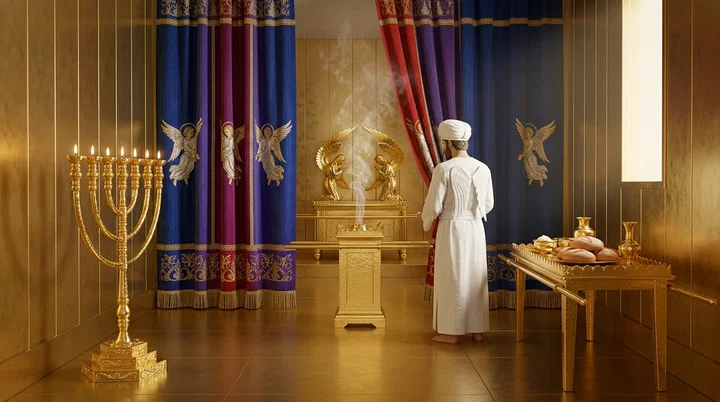
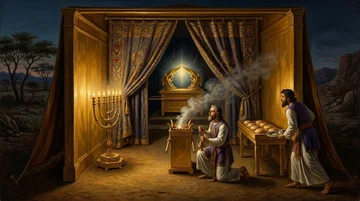
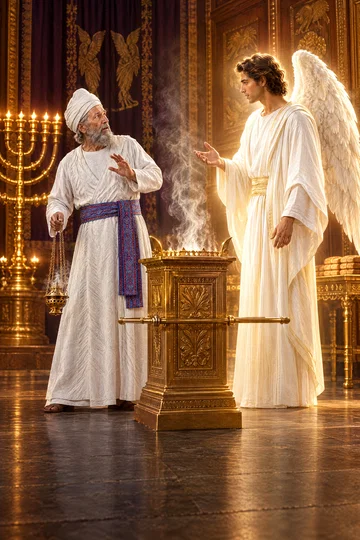
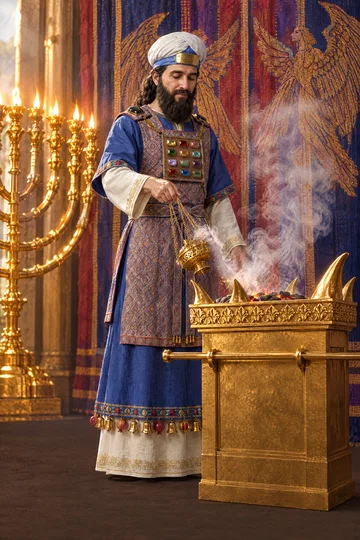
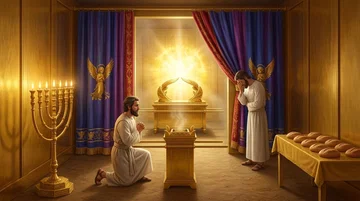
The golden altar of incense stood in the holy place or first apartment, just before the veil separating the holy from the most holy and near the candlestick, and sweet incense was to be burned upon it every morning when Aaron tended the lamps and also every evening as a regular daily service.PP 348.1LSEGW 100.1–3RH Nov 8, 1915RH Mar 25, 1875ST Mar 4, 1903 The lamps burned day and night, and their light illuminated the altar and the richly furnished apartments.ST Mar 4, 1903 The altar's fire was kindled by God himself and was to be kept burning perpetually day and night, never extinguished but kept sacred and holy.2RED 82.1–2ST Mar 4, 1903PP 348.1RH Mar 25, 1875 Holy incense continually gave a fragrance that filled the sanctuary and sacred apartments day and night and spread beyond the tabernacle.2RED 82.1–2ST Mar 4, 1903PP 348.1
The altar's horns were touched with sin-offering blood and the altar was sprinkled with blood on the Day of Atonement.PP 348.1 When the priest offered incense he faced the mercy-seat though the curtain hid it from view, with the rising incense accompanying the descent of God's glory.ST Mar 4, 1903 There is a real altar of incense and censer in the first apartment of the heavenly sanctuary, made of purest gold reflecting the image of the one who enters there.SG1 158.1 Its burning means Jesus receiving the saints' prayers as they come up to Him in faith and offering them with incense to His Father, when a sweet fragrance arises like smoke of most beautiful colors.SG1 158.1LSEGW 100.1–3 A golden censer also stands between the cherubim before the ark in the second apartment where Jesus stands to minister.SG1 158.1
As the incense ascends to the Father, excellent glory and light come from the Father's throne to Jesus and from Jesus are shed upon those whose prayers came up like sweet incense, overshadowing the mercy-seat until the train of glory fills the temple.SG1 158.1 The incense ascending mingled with Israel's prayers and with the people's prayers is an emblem and symbol of Christ's mediation and intercession and merits.2RED 82.1–2ST Mar 4, 1903PP 353.2RH Nov 8, 1915RH Mar 25, 1875 It represents the communication between God and man opened through Jesus Christ alone, with the altar before the veil as a place of continual intercession illustrating prayer directed by faith to Christ the Mediator before the mercy-seat in the heavenly sanctuary whom believers cannot see with natural sight but to whom they pray and claim the benefits of His mediation.2RED 82.1–2ST Mar 4, 1903PP 353.2
The morning service represents the prayers, praise, and confessions of believers ascending to God.Ms 50, 1900, par. 17–18 These offerings are defiled by human weakness, and sinful people's worship is acceptable only when Christ presents and purifies them with His blood and spotless righteousness, His perfect righteousness imputed through faith, so that they rise acceptably before God.PP 353.2Ms 50, 1900, par. 17–18 Mercy and salvation are granted to the repentant and believing who approach God through Christ the Mediator alone, and gracious answers are returned.PP 353.2Ms 50, 1900, par. 17–18 God gave explicit directions that all sacred worship must accord with His holy character, requiring sacred fire of His own kindling and not common fire, with no sacrifice acceptable unless salted and seasoned with that divine fire.2RED 82.1–2RH Mar 25, 1875 Any deviation such as offering common fire and disregarding those directions was punishable with death.2RED 82.1–2RH Mar 25, 1875 The interruption of this regular morning incense service, along with the lamps and other temple services, marked Judah's abandonment of worship in the temple under Ahaz.RH Apr 8, 1915
Sources
Pioneers and periodicals
72 sources
Aaron as high priest was to burn sweet incense on the golden altar in the holy place every morning when he trimmed and tended the lamps, with a like burning every evening when he lighted them, making a continual perpetual offering before the Lord throughout Israel's generations.RH Dec 1, 1910ST Apr 22, 1889 The altar stood before the veil with the table of showbread on the north and the seven-lamped candlestick on the south, and its fire kindled by God was never allowed to go out, so holy fragrance diffused day and night while the priest faced the mercy-seat.ST May 20, 1880STST Apr 1, 1913 The rising incense represents Christ's righteousness, merits, mediation and intercession, which alone makes the prayers and worship of sinful people acceptable to God, for sinners approach God only through Christ the Mediator.ST Nov 19, 1902RH Dec 1, 1910ST Nov 26, 1912 It also represents the prayers of God's people ascending before Him and God's grace that clothes and refines imperfect prayers by the Spirit, while the tending of the lamps pictures Christ's care in giving morning guidance and evening enlightenment with more of the Holy Spirit pictured by the oil.RH Feb 10, 1910ST May 15, 1901ST May 8, 1901 The earthly work of trimming the lamps and burning incense was typical of Christ our High Priest among the golden candlesticks in His continuing work in the heavenly sanctuary, and provides the pattern for families to worship morning and evening with their prayers rising like fragrant incense.ST Nov 19, 1912ST Nov 26, 1912
Sanctuary Place and Furnishings
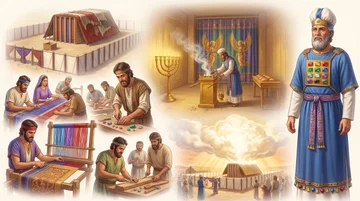
The verse belongs to the very minute description in Exodus 25 to 40 of the worldly sanctuary built in the wilderness in the days of Moses exactly according to the pattern shown to Moses in the mount.ST Oct 29, 1894ST Jun 26, 1907 It is part of the explicit directions for making the sanctuary given in Exodus 25 to 31, built by free-will offerings of the children of Israel by workmen specially endowed by God, that He might make them a sanctuary and dwell among them as the divinely appointed center of devotion.ST Jun 26, 1907ST Nov 14, 1892 That worldly sanctuary first pitched in the wilderness was afterward succeeded by the temple of Solomon in Jerusalem, where true worship centered until Christ.ST Jun 26, 1907 The instructions were given to Moses during forty days and nights in the presence of God on the mount after the covenant with Israel was made and ratified and before Moses received the law written by God on stone.ST Mar 25, 1889RH Dec 31, 1861 In chronological order they stand within Exodus 19 to 32, with the building and setting up in Exodus 33 to 40 immediately following, showing how particular God is in that which pertains to His worship, whose object with all worship, services and remedies is to bring men into harmony with the holy law written on two tables of stone by the finger of God.ST Mar 25, 1889ST Dec 10, 1896
The altar is the golden altar of incense in the holy place, the sanctuary's first apartment, standing before the veil at the end opposite the entrance, with the table of showbread on the north and the seven-lamped candlestick on the south.ST May 20, 1880STST Mar 11, 1886 Exodus 30:6-8 places it there and Exodus 40:26-27 confirms that placement and practice, and there Aaron burned sweet incense while tending the lamps, morning and also at night, as part of the regular sanctuary service.STST Apr 22, 1889ST Mar 11, 1886 When Moses set up the tabernacle he burned incense on this altar as commanded.ST May 20, 1880 The altar was made of acacia wood overlaid with gold according to the directions in the preceding verses, about three and a half feet high and nearly two feet square, for burning incense before God.RH Aug 4, 1863RH Mar 1, 1870 It was anointed with holy anointing oil prepared by special direction from fragrant herbs, and stood in a building thirty cubits long and ten broad erected according to the pattern, where Moses placed the golden altar and burned sweet incense upon it.RH Jul 2, 1914RH Mar 1, 1870RH Oct 2, 1856
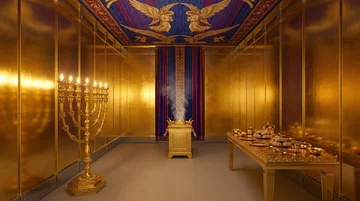
Dressing the lamps was trimming them and filling them with pure olive oil, with tongs and snuff-dishes used to remove what hindered a lamp's light, the high priest also bringing oil.ST Apr 29, 1897ST May 8, 1901 Once lighted they were to burn always with continuous perpetual light and never go out, tended from evening to morning, and because the tabernacle had no windows they were never all put out at once.ST Apr 29, 1897ST May 8, 1901 The solid-gold candlestick with its seven lamps was kept burning day and night to give light to both windowless sacred apartments, its light reflecting from the gold-plated walls and from the blue and purple and scarlet curtains embroidered with cherubim, so that the altar glittered like burnished gold in magnificence and glory and illuminated the richly furnished rooms.ST Mar 21, 1911ST Mar 4, 1903 The fire on the altar of incense had been kindled by God Himself and was sacredly cherished and never allowed to go out, with holy incense required and not common fire.RH Mar 25, 1875ST Apr 1, 1913ST Nov 5, 1894 Day and night the holy incense diffused its fragrance through the sacred apartment and far around the tabernacle, filling the sanctuary, while the priest offering it faced the mercy-seat though a curtain hid it from view, where the rising incense accompanied the descent of God's glory.ST Mar 4, 1903RH Feb 2, 1911ST Nov 5, 1894
Daily Service Performed
Aaron as high priest burned sweet incense on the golden altar every morning when he dressed and tended the lamps, with a like burning every evening when he lighted them.RH Dec 1, 1910ST Apr 22, 1889RH Jul 2, 1914ST Jan 7, 1886ST Nov 26, 1912 Together the morning and evening burnings made a continual perpetual offering before the Lord throughout Israel's generations and throughout the year.RH Dec 1, 1910RH Jul 2, 1914ST Jan 7, 1886ST Nov 26, 1912 The altar stood before the veil in the sanctuary's first apartment, made and anointed according to direction, and its morning tending belonged with the lamps and the regular sanctuary service.RH Dec 1, 1910ST Apr 22, 1889RH Jul 2, 1914ST Jan 7, 1886
This tending of the lamps and renewing of the incense morning and evening was a special daily service in the first apartment entrusted to Aaron and his descendants.ST Nov 19, 1912RH Dec 1, 1910ST Nov 26, 1912ST Dec 10, 1912 It belonged to the high priest alone, performed twice each day throughout the year, morning and evening.ST Nov 19, 1912RH Dec 1, 1910ST Nov 26, 1912ST Dec 10, 1912
It was part of the regular daily and continual worship alongside the morning and evening lamb and burnt offerings, the showbread and the priesthood.RH Feb 19, 1901RH Feb 2, 1911RH Aug 27, 1908 The incense was placed on burning coals in a censer making a fragrant cloud, while the people stood without praying and joined their prayers with its rising.RH Nov 8, 1915RH Feb 19, 1901ST May 15, 1901 Sweet incense thus burned daily and raised a cloud of fragrance that ascended before God with the prayers of Israel, and the continual service taught the gospel.RH Nov 8, 1915ST May 15, 1901RH Aug 27, 1908
Only the prescribed formula could be offered; no unauthorized or different mixture could be substituted, and the same formula could not be made for another purpose.RH Feb 19, 1901RH Feb 10, 1910 Sacred and not common fire was required, kindled with holy fire kept continually burning, and disregard of those directions brought death.RH Mar 25, 1875RH Feb 19, 1901 Others were barred from priestly service unless specifically directed, for Aaron and his sons were established as the priesthood responsible for the prescribed rites.RH Mar 25, 1875ST Mar 3, 1914 In the crisis of plague Aaron used incense with prayer to halt it, standing between the dead and the living, showing that prayer alone was not sufficient there and the priest's incense offering was also necessary.RH Feb 19, 1901
Meaning of Incense
The sweet incense burned each morning while the lamps were tended, and again each evening, represents Christ's righteousness added to the prayers of God's people.RH Dec 1, 1910ST Nov 26, 1912RH Jan 6, 1916 It is His merits and continual intercession, His perfect righteousness imputed by faith, which alone makes the worship of sinful people acceptable to God.ST Nov 19, 1902ST Nov 19, 1902ST Apr 1, 1913 Sinners approach God only through Christ the Mediator, through whom mercy and salvation are granted to the repentant and believing, and the rising cloud pictured the righteousness of the coming Messiah imputed to Israel by faith.ST Nov 19, 1902ST Apr 1, 1913
The ascending fragrance also represents the prayers of God's people rising before Him.ST May 15, 1901ST May 15, 1901 It represents their desire to please and serve God, offered while the people joined their prayers with it as the incense was placed on burning coals in a censer making a fragrant cloud in morning and evening worship.RH Feb 10, 1910ST May 15, 1901 The sweet smell rising from the altar in the first apartment is a reminder that the penitent prayer of a sinner reconciled to God is pleasing to Him.ST Mar 10, 1898
The incense represents God's grace which makes His people's prayers effectual.STST Aug 19, 1913ST Dec 29, 1909 It is the grace of supplication, the favor of God and His love mingled with the prayers of priests and people, which made even the prayers of the humblest acceptable.ST Mar 14, 1911 Imperfect prayers are clothed and shaped and refined by the Spirit of God until they rise as sweet incense, and being thus remembered and recorded before God they will be answered.ST Mar 14, 1911
The daily service presented morning and evening is a symbol of the sufferings and sacrifice of the Son of God, Christ's atoning sacrifice presented before God with the prayers of the saints while the families of Israel prayed at the time it was offered.RH Nov 28, 1912RH Nov 28, 1912 The lamps tended at the same time represent the Spirit of the Lord and perpetual light, and their tending was a special daily service entrusted to the high priest alone.RH Dec 1, 1910ST Nov 19, 1912 That tending teaches the need for Christ the High Priest to give guidance by His Spirit in the morning and to enlighten the mind in the evening for reviewing the day and noticing its faults.ST Nov 19, 1912 Tongs and snuff-dishes removed what hindered a lamp's light, and oil was brought besides, picturing how Christ removes what hinders His people's witness and gives them more of the Holy Spirit pictured by the oil so they may shine more brightly, while the ever-fragrant incense with perpetual light symbolizes the enduring life union and service between God and His people.ST May 8, 1901ST Mar 12, 1912
In this act the priest came more directly into God's presence than in any other daily ministration.ST Nov 19, 1902 The altar of incense was a place of perpetual intercession.ST Nov 19, 1902 Its fragrance continued beyond the time it was offered, filling the holy place and reaching the most holy place.ST Apr 22, 1897
Type of Heavenly Ministry
The sanctuary and its rites were typical, a shadow of heavenly things and object-lessons pointing to the coming Messiah, the Lamb of God that takes away sin and His power to forgive, transform character and deliver from burdens.ST Jun 26, 1907 The ancient tabernacle was built for ministry involving sacrifices and offerings according to explicit directions given in the mount in Exodus 25 to 31, built exactly in the wilderness as a dwelling-place that God might be with men, first pitched in the wilderness and afterward succeeded by the temple of Solomon where true worship centered until Christ.ST Jan 24, 1911ST Jun 26, 1907 It typified the heavenly temple, the better temple, the true tabernacle which the Lord pitched and not man, where Jesus now ministers, and served as the pattern and illustration of the ministry in the heavenly sanctuary and of how God deals with sinners through Christ as priest and king with His people cooperating.ST Jan 24, 1911ST Jun 26, 1907RH Mar 28, 1854 The morning burning of sweet incense on the golden altar while the lamps were dressed belonged to that daily service in the first apartment, the holy place, performed by the Levitical priesthood along with the morning and evening burnt offering and the work for Sabbaths, new moons, feasts and individual offerings, distinct from the yearly work of the high priest in the most holy place.RH Mar 8, 1870RH Mar 28, 1854 That whole earthly ministration was the example and shadow of Christ's more excellent ministry in the true tabernacle in heaven, preserving the old-dispensation types and shadows through which the substance of the new dispensation can be traced.RH Mar 8, 1870RH Mar 28, 1854
The high priest trimmed and lighted the sanctuary lamps and burned incense in connection with tending them, and this earthly priestly service represents Christ our High Priest among the golden candlesticks in His continuing work in the heavenly sanctuary.ST Nov 19, 1912ST Nov 26, 1912RH Sep 26, 1912 The high priest alone renewed the incense on the golden altar each morning as he tended the lamps, with incense also renewed in the evening and kept continually burning, twice each day throughout the year in the sanctuary's first apartment.ST Nov 26, 1912ST Dec 10, 1912 This sacred daily incense service and the tending of the lamps typified Christ's work as High Priest, a shadow of His continuing work in the heavenly sanctuary.ST Nov 26, 1912ST Dec 10, 1912RH Sep 26, 1912 In that antitype the incense represents Christ's righteousness added to the prayers of God's people, making them acceptable before God.ST Nov 26, 1912
The earthly altar of incense where incense was burned each morning as the lamps were tended has a corresponding altar in the heavenly sanctuary, and that altar and its service correspond to the heavenly sanctuary and its incense.ST Nov 11, 1897ST Mar 17, 1898 The altar was part of the building Moses erected thirty cubits long and ten broad according to the pattern shown on the mount as a type or figure of the true sanctuary of the new covenant, with its two apartments, golden candlestick, ark of the covenant and continual service of the priesthood, and must therefore have something answering to it in the antitypical sanctuary of the new covenant.RH Feb 18, 1858RH Oct 2, 1856 Nothing on earth answers to it, not Mount Vesuvius or Hecla, not the land of Canaan, not the whole earth, not the church, nor heaven and earth together, which shows that none of those is that antitypical sanctuary and the earth itself is not the sanctuary.RH Feb 18, 1858RH Oct 2, 1856
With the death of Christ once for all and the rending of the veil the earthly sanctuary and its typical shadowy sacrificial services passed away entirely and forever.ST Jan 24, 1911ST Jun 26, 1907 The burning of incense belongs to the Jewish rites that were types and shadows, instituted within Israel's national order and listed among practices said to be observed forever or as a perpetual covenant, yet fulfilled when Christ their antitype came.ST Jun 26, 1907RH Jun 10, 1862 Its prescribed duration was therefore limited, unlike the creation Sabbath.RH Jun 10, 1862
The service described in Exodus 30:6-8 was performed every day throughout the entire year in the first apartment of the earthly sanctuary by the high priests.RH Dec 1, 1910 That daily service shadowed the work Christ performs for humanity after entering within the veil, passing the first veil to begin His service in the first apartment of the heavenly sanctuary.RH Dec 1, 1910
Law Covenant and History
Exodus 30:7 belongs to the written law of ordinances concerning offerings and ceremonies given by the hand of Moses after the moral law.ST May 6, 1875ST Jul 8, 1886 It stands within the instruction Moses received from God in the mount during forty days, recorded chiefly in Exodus 25-30 and Leviticus, and within the larger range of Exodus 19-30 that contains both laws, with the law of ordinances following the moral law.ST May 6, 1875ST Apr 15, 1886ST Jul 8, 1886 It is distinct from the ten commandments which God spoke directly to the people in the day of the assembly, to which He added no more and which alone were written by God on the two tables of stone.ST Apr 15, 1886ST Jul 8, 1886 It is part of the description of the earthly sanctuary and its services connected with the first covenant, preserving the types and shadows of the old dispensation through which the substance of the new dispensation can be traced.ST Aug 5, 1889 These were additional instructions given through Moses by hand after the covenant spoken from Sinai, many burdensome ceremonies with diverse washings and carnal ordinances imposed until the time of reformation, a yoke which neither the fathers nor their children were able to bear, ordinances that found their fulfillment in the body of Christ and were abolished in His flesh.ST Apr 15, 1886ST Jul 8, 1886
The verse illustrates that sanctification can mean setting something apart or consecrating it for sacred use, grouped with the sanctuary and its utensils as things sanctified.RH Jul 26, 1864
When Moses set up the tabernacle he placed the golden altar there before the veil in the first apartment and burned sweet incense upon it as commanded.ST May 20, 1880RH Mar 1, 1870 The altar was one of the vessels of the tabernacle made after the pattern shown to Moses, overlaid with gold, about three and a half feet in height and nearly two feet square, for the purpose of burning incense before God in the holy place before the veil.ST May 20, 1880RH Mar 1, 1870 Sweet incense was burned on it when the lamps were tended, with incense to be offered regularly in the morning as the lamps were tended.RH Apr 8, 1915ST May 20, 1880 The later interruption of this regular morning incense with the lamps and other temple services marked Judah's abandonment of worship in the temple under Ahaz.RH Apr 8, 1915
The golden altar of incense in the holy place received the blood of individual atonements during the daily ministry and thus received Israel's uncleanness.RH Sep 16, 1852 On the annual Day of Atonement it was cleansed and set apart again with the blood of the sin offering.RH Sep 16, 1852
Call to Prayerful Worship
The morning and evening burning of sweet incense while tending the lamps, set alongside the morning and evening burnt offerings, the trimming of the lamps and the prayer of the people, gives the pattern for families to worship morning and evening with promise of special blessing.RH Jul 2, 1914RH Nov 28, 1912 The altar for this work was made according to direction and anointed with holy anointing oil prepared by special direction from fragrant herbs, and the offering was perpetual incense before the Lord, morning when the lamps were dressed and evening when they were lighted.RH Jul 2, 1914RH Nov 28, 1912 Although most old forms and ceremonies have passed away under the new dispensation, this morning and evening service is God's plan to be remembered and observed by His people as long as time continues.RH Jul 2, 1914 The daily incense is the sufferings and sacrifice of the Son of God and His atoning sacrifice presented before God morning and evening, with the prayers of the saints and of the families of Israel rising with it at the time it was offered.RH Nov 28, 1912RH Nov 28, 1912 Angels present the prayers of praying households morning and evening with the merits of the blood of the crucified and risen Saviour, and families are therefore called to pray regularly at those times, their morning and evening prayers rising like fragrant incense, so that those who leave such a home carry that fragrance into wider service.RH Nov 28, 1912ST May 21, 1912
The morning offering is the example for seeking God early and beginning the day with devotion.ST Sep 2, 1880 The morning ministry at the altar pictures coming away from time with God bearing the fragrance of that communion.ST May 6, 1880 The tending belonged to the high priest alone, morning and evening, and it teaches the need for Christ the High Priest to give guidance by His Spirit in the morning and to enlighten the mind in the evening for reviewing the day and noticing its faults.ST Nov 19, 1912 The lamps were kept burning continually from evening to morning and, because the tabernacle had no windows, they were never all put out at once, while tongs and snuff-dishes removed what hindered a lamp's light and the high priest brought oil as well.ST May 8, 1901 Applied to Christ's care for His people, He removes what hinders their witness and gives more of the Holy Spirit, pictured by the oil, so they may shine more brightly.ST May 8, 1901
The altar's fire was kindled by the Lord and kept burning with holy incense whose fragrance filled the sanctuary day and night.ST Mar 4, 1903 When the priest offered incense he faced the mercy-seat, though a curtain hid it from view, and the rising incense accompanied the descent of God's glory.ST Mar 4, 1903 This illustrates prayer directed by faith to Christ the Mediator before the mercy-seat in the heavenly sanctuary, where believers cannot see Him with natural sight but pray to Him in faith and claim the benefits of His mediation.ST Mar 4, 1903 The perpetual morning and evening incense was offered on the altar standing in the holy place just before the veil that separates the most holy place, while the people stood without praying.ST Mar 14, 1911 The angel of incense precedes the angel of strife, so God does not permit war and calamity to come until assurance is given that His people's prayers are heard and made effectual.ST Mar 14, 1911 The incense is the grace of supplication and favor of God that makes the imperfect prayers of supplicating mortals acceptable, so that prayers clothed and shaped and refined by the Spirit of God are as sweet incense, and those prayers are remembered and recorded before God and will be answered even if nations must be overthrown to answer them.ST Mar 14, 1911
The word continual applies not only to the burnt offering but also to incense and other parts of Israel's worship, meaning constant or unceasing service and not merely repeated ceremony. The continual service of incense with the continual burnt offering, showbread and priesthood taught the gospel of the true offering for sin, the true Bread from heaven, everlasting righteousness, forgiveness of sin and God's glory revealed in living temples.RH Aug 27, 1908 It teaches that those who become temples of the living God must serve Him continually and Him alone, keeping minds fixed on God and refusing to let earthly authority interrupt worship.RH Aug 27, 1908 The evening lighting of the sevenfold lamp is the pattern for the church's evening ministry, symbolized by a deacon lighting a lamp before the altar.RH Apr 17, 1879 The daily morning burning took place alongside the morning and evening lamb offerings while the people prayed, and no unauthorized incense could replace it.RH Feb 19, 1901 Aaron's use of incense with prayer to halt the plague, standing between the dead and the living, shows that in that crisis prayer alone was not sufficient and the priest's incense offering was also necessary.RH Feb 19, 1901
Sources