Isaiah 36:2
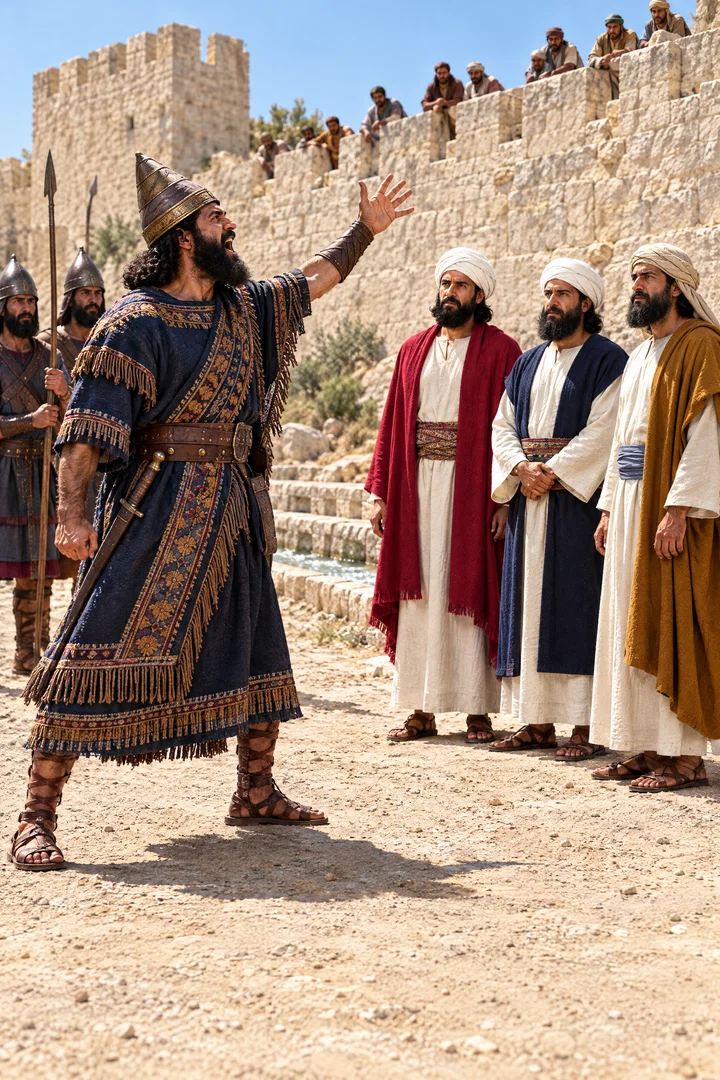
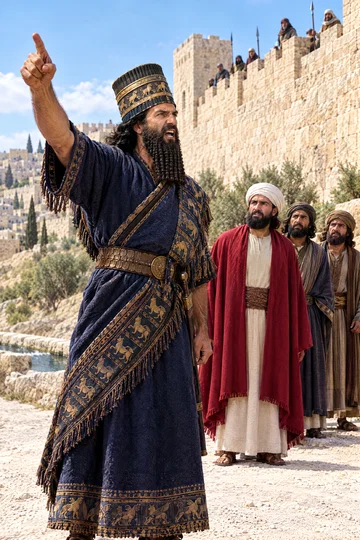
And the king of Assyria sent Rabshakeh from Lachish to Jerusalem unto king Hezekiah with a great army. And he stood by the conduit of the upper pool in the highway of the fuller’s field.
Translations
And the king of Assyria sent Rabshakeh from Lachish to Jerusalem to king Hezekiah with a great army. And he stood by the conduit of the upper pool in the highway of the fuller’s field.
King James Version, KJV Cambridge Paragraph Bible, Revised Version, American Standard Version
And the king of Assyria sent Rabshakeh from Lachish to Jerusalem unto king Hezekiah with a great army. And he stood by the conduit of the upper pool in the highway of the fuller’s field.
And the king of Assyria sent Rabshakeh from Lachish to Jerusalem against king Hezekiah with a great army. And he stood by the conduit of the upper pool in the highway of the fuller's field.
And the king of Asshur sendeth Rabshakeh from Lachish to Jerusalem, unto the king Hezekiah, with a heavy force, and he standeth by the conduit of the upper pool, in the highway of the fuller's field,
And the king of Assyria sent Rab-shakeh from Lachish to Jerusalem, to king Hezekiah, with a strong force. And he stood by the aqueduct of the upper pool, on the highway of the fuller's field.
Then did the king of Assyria send Rabshakeh from Lachish to Jerusalem unto King Hezekiah with a heavy force,—and he took his stand by the upper channel of the pool, in the highway of the fuller’s field.
Berean Standard Bible, Majority Standard Bible
And the king of Assyria sent the Rabshakeh, with a great army, from Lachish to King Hezekiah at Jerusalem. And he stopped by the aqueduct of the upper pool, on the road to the Launderer’s Field.
The king of Assyria sent Rabshakeh from Lachish to Jerusalem to King Hezekiah with a large army. He stood by the aqueduct from the upper pool in the fuller’s field highway.
And the king of Assyria sent the Rab-shakeh from Lachish to Jerusalem to King Hezekiah with a strong force, and he took up his position by the stream of the higher pool, by the highway of the washerman's
And the King of Asshur sent Rabshakeh from Lachish toward Ierusalem vnto King Hezekiah, with a great hoste, and he stood by ye conduite of the vpper poole in the path of the fullers fielde.
Douay-Rheims (Challoner revision)
And the king of the Assyrians sent Rabsaces from Lachis to Jerusalem, to king Ezechias with a great army, and he stood by the conduit of the upper pool in the way of the fuller’s held.
Pictures
Cross-references
- 2 Kings 18:17
And the king of Assyria sent Tartan and Rabsaris and Rab-shakeh from Lachish to king Hezekiah with a great host against Jerusalem. And they went up and came to Jerusalem. And when they were come up, they came and stood by the conduit of the upper pool, which is in the highway of the fuller’s field.
Rabshakeh advances from Lachish to Jerusalem and stands by the upper pool conduit.
- 2 Kings 19:35-37
And it came to pass that night, that the angel of the LORD went out, and smote in the camp of the Assyrians an hundred fourscore and five thousand: and when they arose early in the morning, behold, they were all dead corpses.
The Assyrian army is destroyed, and Sennacherib departs and dies.
- 2 Chronicles 32:1-2
After these things, and the establishment thereof, Sennacherib king of Assyria came, and entered into Judah, and encamped against the fenced cities, and thought to win them for himself.
Sennacherib invades Judah and threatens Jerusalem.
- Isaiah 37:36
Then the angel of the LORD went forth, and smote in the camp of the Assyrians a hundred and fourscore and five thousand: and when they arose early in the morning, behold, they were all dead corpses.
The LORD miraculously delivers Jerusalem by destroying the Assyrian army.
- 2 Chronicles 32:9-23
After this did Sennacherib king of Assyria send his servants to Jerusalem, (but he himself laid siege against Lachish, and all his power with him,) unto Hezekiah king of Judah, and unto all Judah that were at Jerusalem, saying,
Retells the Assyrian campaign and Jerusalem’s deliverance.
- Isaiah 37:1-2
And it came to pass, when king Hezekiah heard it, that he rent his clothes, and covered himself with sackcloth, and went into the house of the LORD.
Hezekiah seeks the Lord and prophetic counsel during the Assyrian threat.
- Isaiah 37:14-20
And Hezekiah received the letter from the hand of the messengers, and read it: and Hezekiah went up unto the house of the LORD, and spread it before the LORD.
Hezekiah prays for deliverance from the enemy army.
- Isaiah 36:10
And am I now come up without the LORD against this land to destroy it? the LORD said unto me, Go up against this land, and destroy it.
The passage cites this chapter’s example of destroying the land.
Commentary
Each commentary is drawn from primary sources: the writings of Ellen G. White and Adventist pioneers and periodicals. Each commentary is separate. Its own words are not a quotation; follow the references to read the source passages.
Pioneers and periodicals
9 sources
This verse belongs to the historical account of Sennacherib's invasion and threat against Judah during Hezekiah's reign, describing the Assyrian envoy's approach to Jerusalem that led to Hezekiah's triumph.ST Oct 6, 1909RH Jun 29, 1916ST Oct 6, 1909 The expedition described is Sennacherib's 701 B.C. campaign against Judah.RH Sep 7, 1905 The Assyrian record supports the account of his campaign against Judah's fortified cities and of Hezekiah being trapped in Jerusalem and made to pay tribute.RH Sep 7, 1905
Rabshakeh was sent from Lachish, where Sennacherib was besieging the city, with a great army, after Assyria had taken Judah's fortified cities, while Jerusalem itself was under siege.ST Jun 21, 1905ST Nov 20, 1884RH May 21, 1908RH Jun 11, 1857 Lachish was about thirty-four miles southwest of Jerusalem.ST Jun 21, 1905 The place where he stood was the Upper Pool of Gibeon, opposite the northwest corner of Jerusalem.RH Jul 21, 1868 The same approach to the city was later used by the Crusaders in their attack in 1099.RH Jul 21, 1868
He came to deliver the Assyrian challenge and to intimidate the people of Jerusalem and challenge their trust in God.ST Jun 21, 1905RH May 21, 1908 An Assyrian monument depicts the victory at Lachish, and Sennacherib's account claims tribute from Hezekiah rather than the capture of Jerusalem.ST Nov 20, 1884 The biblical and Assyrian accounts agree on thirty talents of gold from Hezekiah, and their different silver totals also agree when the difference between large and small talents is taken into account.ST Nov 20, 1884
The account continues with Hezekiah's humility and God's message and deliverance of Jerusalem from Assyria.ST Oct 6, 1909ST Oct 6, 1909 The campaign is connected with the tribute Hezekiah paid, the destruction of the Assyrian army by the angel of the Lord, and Sennacherib's later death at the hands of his sons.RH Jun 11, 1857 The ensuing deliverance showed that the God of Israel was mightier than the gods of the nations, for the Lord defended and saved Jerusalem by direct, miraculous intervention, so the victory testified to God's power rather than human strength.RH May 21, 1908
Sources