John 13:9
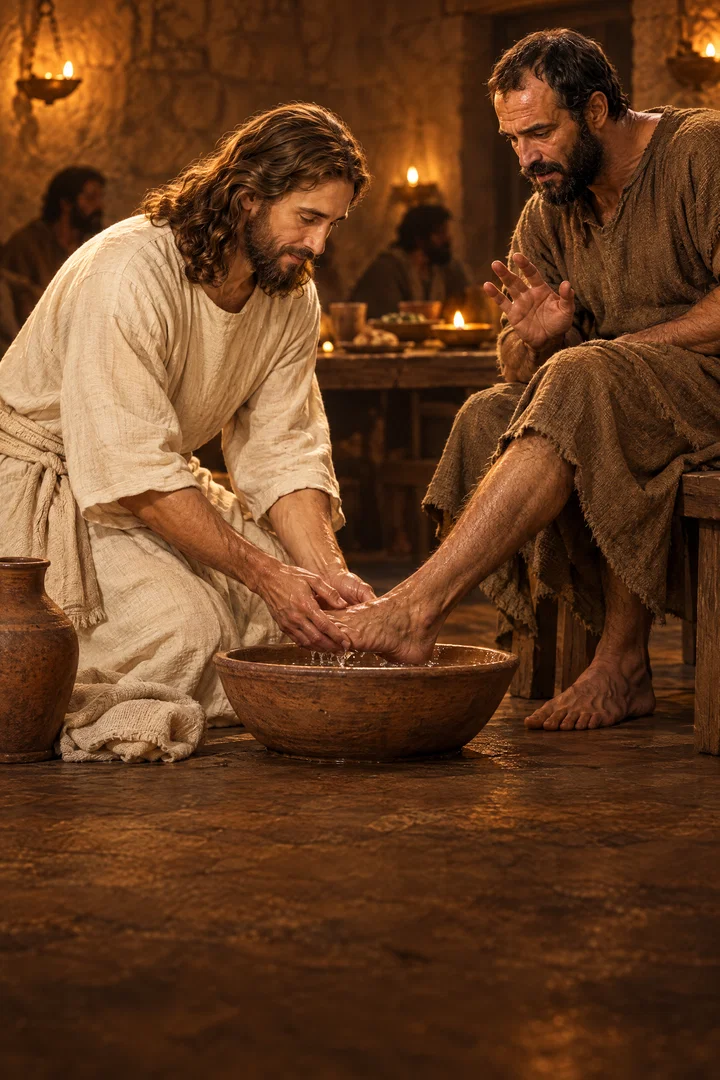
Simon Peter saith unto him, Lord, not my feet only, but also my hands and my head.
Translations
American King James Version, Darby Translation
Simon Peter says to him, Lord, not my feet only, but also my hands and my head.
King James Version, KJV Cambridge Paragraph Bible, Revised Version, American Standard Version
Simon Peter saith unto him, Lord, not my feet only, but also my hands and my head.
Simon Peter saith to him, Lord, not my feet only, but also my hands and my head.
Simon Peter saith to him, 'Sir, not my feet only, but also the hands and the head.'
Simon Peter saith unto him—Lord! not my feet only, but my hands also, and my head.
Berean Standard Bible, Majority Standard Bible
“ Then, Lord,” Simon Peter replied, “ not only my feet, but my hands and my head as well!”
Simon Peter said to him, “ Lord, not my feet only, but also my hands and my head!”
Simon Peter said to him, Lord, not my feet only, but my hands and my head.
Simon Peter sayd vnto him, Lord, not my feete onely, but also the hands and the head.
Douay-Rheims (Challoner revision)
Simon Peter saith to him: Lord, not only my feet, but also my hands and my head.
Pictures
Cross-references
- John 13:14-15
If I then, your Lord and Master, have washed your feet; ye also ought to wash one another’s feet.
Jesus commands his disciples to wash one another’s feet, following his example.
- 1 Timothy 5:10
Well reported of for good works; if she have brought up children, if she have lodged strangers, if she have washed the saints’ feet, if she have relieved the afflicted, if she have diligently followed every good work.
Washing the saints’ feet is listed among the widow’s good works.
- John 13:4-5
He riseth from supper, and laid aside his garments; and took a towel, and girded himself.
Jesus washes the disciples’ feet at supper, including Judas.
- John 13:14
If I then, your Lord and Master, have washed your feet; ye also ought to wash one another’s feet.
Jesus commands the disciples to wash one another’s feet.
- John 15:3
Now ye are clean through the word which I have spoken unto you.
Christ’s word makes the disciples clean.
- Luke 7:44
And he turned to the woman, and said unto Simon, Seest thou this woman? I entered into thine house, thou gavest me no water for my feet: but she hath washed my feet with tears, and wiped them with the hairs of her head.
Jesus contrasts the woman’s washing his feet with Simon’s failure to provide water.
- Genesis 18:4
Let a little water, I pray you, be fetched, and wash your feet, and rest yourselves under the tree:
Water is provided for guests to wash their feet.
- Luke 22:26-27
But ye shall not be so: but he that is greatest among you, let him be as the younger; and he that is chief, as he that doth serve.
Jesus teaches the disciples to serve humbly, as shown by washing their feet.
- 1 Samuel 25:41
And she arose, and bowed herself on her face to the earth, and said, Behold, let thine handmaid be a servant to wash the feet of the servants of my lord.
Washing feet is presented as an act of humble submission.
- John 13:1
Now before the feast of the passover, when Jesus knew that his hour was come that he should depart out of this world unto the Father, having loved his own which were in the world, he loved them unto the end.
Christ’s love for his own motivates the foot washing.
- John 13:16
Verily, verily, I say unto you, The servant is not greater than his lord; neither he that is sent greater than he that sent him.
Christ’s teaching after the washing reinforces its lesson of humble service.
- Genesis 19:2
And he said, Behold now, my lords, turn in, I pray you, into your servant’s house, and tarry all night, and wash your feet, and ye shall rise up early, and go on your ways. And they said, Nay; but we will abide in the street all night.
Lot invites his guests to wash their feet.
- Colossians 2:12
Buried with him in baptism, where in also ye are risen with him through the faith of the operation of God, who hath raised him from the dead.
Baptism represents burial and resurrection with Christ.
Commentary
Each commentary is drawn from primary sources: the writings of Ellen G. White and Adventist pioneers and periodicals. Each commentary is separate. Its own words are not a quotation; follow the references to read the source passages.
Ellen G. White
42 sources
Peter first refused to let Jesus wash his feet, but after being warned that without that washing he would have no share with Him, he eagerly asked to be washed entirely and not his feet only.Ms 102, 1904, par. 4–7Ms 35, 1897, par. 9–10Ms 19, 1897, par. 3–5 His eager request was broken surrender of pride because he could not bear separation from Christ, and it expresses desire for the complete cleansing which the washing represented.Ms 102, 1904, par. 4–7Ms 106, 1903, par. 18–23Ms 54, 1897, par. 16–18Ms 19, 1897, par. 60–61DA 645.2–646.2 Jesus answered that one who is washed needs only to wash the feet but is clean throughout, while adding that not all present were clean because He knew His betrayer.Ms 35, 1897, par. 9–10 He made that washing a consecrated religious ordinance together with the supper, to be kept before the communion emblems through all time as His example that disciples ought to wash one another's feet.Ms 35, 1897, par. 9–10DA 650.2–3Ms 35, 1897, par. 11–12Ms 43, 1897, par. 24Ms 8, 1897, par. 10 It was done to humble them and expose pride, to bring them into unity and love, and to prepare them by self-examination, confession and forgiveness for commemorating His death.Ms 14, 1895, par. 1–2Ms 19, 1897, par. 3–5GW92 245.3–246.2ST Mar 25, 1880Ms 43, 1897, par. 24
Setting and Wording
The words were spoken on the final evening with the disciples in the upper chamber, after eating the Passover on the night before the crucifixion, during the last week as Christ prepared them with words of comfort for His coming trial, separation, suffering and rejection.Lt 336, 1906, par. 5–9ST Mar 25, 1880Ms 113, 1897, par. 17 The foot-washing and communion were carried out with the disciples apart from unbelievers, taken away from the wicked before sharing the bread and cup.Ms 14, 1850, par. 4–612MR 247.1–2 It belonged to the last Passover supper held with the Lord in the last hours before He offered Himself as a sacrifice for the world.ST Mar 25, 18806MR 24.2–3
At that supper the devil had put betrayal into the heart of Judas Iscariot, Simon's son, and Jesus, knowing that the Father had given all things into His hands and that He had come from God and went to God, rose from supper, laid aside His garments, girded Himself with a towel, poured water into a basin, and began to wash and wipe the disciples' feet.Ms 35, 1897, par. 9–10 The disciples had come to that last supper in a wrong frame of mind, with hearts filled with selfishness and tempers heated by contention for the highest place in the promised kingdom, disputing who should be greatest.Ms 43, 1897, par. 246MR 24.2–3 Christ sorrowed to see their strife and yielding to it, and heard their whisperings and saw their flushed faces.6MR 24.2–3
Peter first shrank from bringing his soiled feet into touch with the hands of his Lord and Master and refused to let Jesus wash his feet.Ms 102, 1904, par. 4–7Ms 35, 1897, par. 9–10Ms 19, 1897, par. 62–63 But after Jesus warned that unless Jesus washed him he would have no part with Him, Peter turned to eagerly asking to be washed entirely, not his feet only but also his hands and head.Ms 102, 1904, par. 4–7Ms 35, 1897, par. 9–10Ms 19, 1897, par. 3–5 His eager request was broken surrender of pride and self-will because he could not bear the thought of separation from Christ, yet he did not yet understand the lesson Jesus was giving.Ms 102, 1904, par. 4–7Ms 54, 1897, par. 16–18Ms 19, 1897, par. 60–61DA 645.2–646.2
Cleansing Christ Teaches
When Peter understood the foot-washing as a sign of spiritual cleansing, he asked to be cleansed completely rather than risk separation from Christ.Ms 106, 1903, par. 18–23DA 645.2–646.2 Having been warned that to refuse the washing would leave him with no part in Him, he surrendered pride and self-will because he could not bear that separation, and his plea for hands and head as well as feet expresses desire to receive Christ's cleansing which the foot-washing represented.Ms 106, 1903, par. 18–23DA 645.2–646.2 The disciples had already been cleansed through Christ, yet temptation had led them into pride, jealousy and alienation, so they still needed His continuing grace to cleanse their hearts and restore humility and love.Ms 106, 1903, par. 18–23
Simon Peter turned from refusing to let Jesus wash his feet to asking for his hands and head to be washed too, after Jesus told him that unless Jesus washed him he had no part with Him.Ms 35, 1897, par. 9–10 Jesus answered the request by teaching that he that is washed needs only to wash his feet but is clean every whit, and that the disciples are clean but not all, because He knew who would betray Him.Ms 35, 1897, par. 9–10
His request showed he had grasped the sign yet still failed to understand that foot-washing pointed to a higher cleansing, Christ's work of washing away sin and purifying the heart.Ms 54, 1897, par. 16–18Ms 19, 1897, par. 60–61 Bodily washing represents cleansing from moral pollution, and a clean heart cleansed from every defilement matters far more than outward water on dusty feet.Ms 54, 1897, par. 16–18Ms 19, 1897, par. 60–61 Judas's inward corruption remained despite his feet being washed, showing that the washing means more than bodily cleansing.Ms 54, 1897, par. 16–18 That deep, full, significant answer teaches that to receive Christ's teaching and to love one another requires humility and affection, free from alienation, dissension, jealousy and pride.Ms 19, 1897, par. 60–61
Ordinance Christ Established
Peter's eager plea belongs to the moment when foot-washing was set apart as a consecrated religious ordinance and religious service, not merely an act of hospitality for cleaning travelers' feet, and that service tests and proves loyalty.DA 650.2–3Ms 8, 1897, par. 10 As He ate the Passover with His disciples He put an end to the sacrifices offered for four thousand years, and in place of the national festival the Jewish people had observed He instituted foot-washing together with the sacramental supper as a memorial service to be observed by His followers through all time and in every country.Ms 43, 1897, par. 24 It was His last established ordinance in connection with the last supper, in which He discharged His disciples from the cares and burdens of the ancient Jewish obligations in rites and ceremonies which no longer possessed any virtue.Ms 19, 1897, par. 18–19
For type was meeting antitype in Himself as the authority and foundation of all the Jewish ordinances that pointed to Him as the great and only efficacious offering for the sins of the world, and to continue those rites would be an insult to Jehovah.Ms 19, 1897, par. 18–19 The ordinance is to be kept before the Lord's supper to call humility to mind, to precede the sharing of the emblems of Christ's death and the communion bread and cup, and to be remembered at every service of feet-washing when God is sacredly near.Ms 35, 1897, par. 9–10Ms 35, 1897, par. 11–12Ms 8, 1897, par. 1012MR 247.1–2 There He who was called Lord and Master washed feet to give an example that disciples ought to wash one another's feet, taking them apart from unbelievers to wash their feet before sharing the communion bread and cup with them.Ms 35, 1897, par. 9–1012MR 247.1–2 The example is a plain duty to keep His people humble and separate from the world and from backsliding like the nominal churches, to be followed as exactly as possible and practiced more frequently together with the Lord's supper and literally by the saints together with breaking bread.EW 95.2–96.17MR 218.1
Yet it is to be introduced in new places with carefulness and wisdom at a proper time and manner with judgment to avoid confusion where people are uninformed or prejudiced through former teachers.EW 95.2–96.1 In practice men follow the example set for men and women follow the example set for women until all heartily take part, with sisters washing the feet of brethren according to gospel order and sisters washing sisters.EW 95.2–96.17MR 218.15MR 192.1–3 There is no example for brethren to wash sisters' feet, and men and women washing each other's feet together is not the right thing to do, and the service is to be done understandingly and not made a tedious ceremony.EW 95.2–96.15MR 192.1–3 The observance is solemn, interesting and profitable, a humbling before God marked by weeping and rejoicing and long remembered, with the breaking of bread joined with interesting and appropriate speaking, and it is counted as one of the Lord's ordinances alongside the Lord's Supper and as a precious religious service practiced in humility before God.Ms 6, 1859, par. 347MR 218.1Lt 164, 1897, par. 4–5Ms 28, 1892, par. 15–16
Humility Unity and Preparation
Though called Lord and Master, He near the end of His earthly ministry humbled Himself to wash their feet, most forcibly illustrating the necessity of true humility.GW92 245.3–246.2Ms 43, 1897, par. 24 The pure, spotless Lamb of God presenting Himself as a sin-offering yet performed the office of a servant.Ms 43, 1897, par. 24 That lesson calls gospel ministers to learn humility from His service.GW92 245.3–246.2
He washed their feet to humble them and to expose the pride in their hearts.Ms 50, 1890, par. 12–13 The lowly service with its command to follow His example taught them not to consider themselves superior to even the humblest believer.4T 225.3–4Ms 50, 1890, par. 12–13 The rite is a simple act whose meaning can be overlooked, yet following the example softens the heart, expels selfishness, and fosters the Holy Spirit, love, grace, and peace.Ms 14, 1895, par. 1–2 It was given to teach humility and to bring them together in unity, joining their hearts in oneness with Him.Ms 75, 1898, par. 30–32
The sacred act was done to lead them, through remembering what He had done for them, into a state where no one exalts himself above another and where each understands his brother's feelings.Ms 19, 1897, par. 3–5 Brother is not to exalt himself above brother, and the dangers of disunion and strife must be seen, since the health and holy activity of the soul are involved.Ms 19, 1897, par. 18–19 Joined with the supper, the ordinance is to be a season of self-examination where His people learn the true feelings of their hearts toward God and one another.ST Mar 25, 1880 There pride, selfishness, and hatred are discovered, leading to mutual confession, forbearance, forgiveness of each other's errors, and true love with unselfish ministry as preparation for commemorating His sufferings and death, because He loved His disciples enough to die for them and exhorted them to love one another as He loved them.ST Mar 25, 1880Ms 43, 1897, par. 24
It clears away misunderstandings, evil surmisings, and bitterness over trifles, to bring people out of selfishness and self-exaltation into lowliness that will wash a brother's feet.Ms 35, 1897, par. 11–12 It disentangles them from rites that the reception of the Gospel made of no force, speaking not so largely to intellectual capacity as to the heart which the moral and spiritual nature needs.Ms 19, 1897, par. 18–19 No one is prepared to appreciate holy communion with Christ and with one another unless cleansed by His efficacy.Ms 19, 1897, par. 62–63 Preparation requires close investigation of life and character, true contrition of soul, fellowship with Jesus Christ and with brethren, the breaking down of pride and self-sufficiency, a humble heart clean and purified from all defilement, consciousness of sins forgiven, the love of Jesus abounding in the heart, and the sunshine of Christ's righteousness filling the mind.Ms 19, 1897, par. 62–63
He gives this special season when He Himself will always be present to lead everyone participating to feel the pulse of conscience, to awaken them to an understanding of the lessons symbolized, to revive memory, to convict of sin, and to receive penitential offerings.Ms 19, 1897, par. 18–19 Eating His body and drinking His blood means not merely partaking at the sacramental service but daily partaking of the bread of life that alone satisfies soul-hunger by receiving His Word and doing His will.Ms 19, 1897, par. 18–19 The words in John 13 with John 14 and 15 and 17 require the Holy Spirit of God to cleanse away the defilement of unkind talk and passing judgment.Lt 264, 1902, par. 11 He places the living coal upon the lips to cleanse away self-assured conversation that hurts souls and spoils the work of God, so that counsels become a savor of life unto life and not a savor of death unto death, and these words are not heeded while strange fire is handled.Lt 264, 1902, par. 11
Judas and Full Inclusion
Jesus bore patiently with His disciples even when He knew Judas would betray Him, and He tenderly took Judas in with the rest in the washing of feet as a last loving appeal before Judas cast it aside and left to betray Him, still bearing with him to the end.MH 493.3–4DA 720.2Ms 120, 1897, par. 9Ms 64, 1897, par. 9 That patient care in that hour stands as the pattern for dealing with those who are at fault.MH 493.3–4
With His own precious hands He bathed those soiled feet and wiped them with the towel, beginning with Judas, speaking no rebuke and exposing nothing, though He alone could read Judas's hidden purpose as the channel of darkness and the coming traitor and betrayer.Ms 19, 1897, par. 56–57 That goodness and humility and love shown especially toward Judas was a sample of His dealing with them all through their time together.Ms 19, 1897, par. 56–57 Judas was thrilled for a moment with an impulse to confess, then turned the wrong way, bracing himself against the light and struggling away from Jesus, while the other disciples were ashamed and mortified and conscience-stricken, subdued and broken, their hearts going out to Jesus in deep earnest faith that works by love and purifies the soul.Ms 19, 1897, par. 56–57
In that act He was offering cleansing and calling to repentance, patiently reaching even Judas by washing the betrayer's feet with full knowledge of him and thereby giving him opportunity to repent and be cleansed.DA 655.4Ms 106, 1903, par. 54–55 All but one of the twelve were brought to repentance by it, but the washing did not make Judas love Him more.DA 655.4COS 110.7–9
The service is therefore not to be withheld from any who profess to be Christians, nor deferred or refused because someone present is counted unworthy.20MR 149.2–4Ms 35, 1897, par. 11–12Ms 47, 1897, par. 18–20 Christ washed Judas's feet and left him a place at the table though He knew he would go out to betray Him, and human beings cannot read the secrets of the soul to say who is worthy to take part, nor reliably separate the unfaithful from the faithful or the tares from the wheat.Ms 35, 1897, par. 11–12Ms 47, 1897, par. 18–20 Unseen heavenly witnesses were present at that washing of the disciples' feet, Judas included, and Judas was still permitted to share in the sacrament.20MR 149.2–4Ms 47, 1897, par. 18–20
Judas was numbered among the apostles, and Christ's course with him is an example of long patience toward false disciples.ST Feb 9, 1915 As Peter's faults and repeated reproofs did not keep him, by God's grace, from afterward living a life of service and sacrifice, so the setting shows a patient care meant to be followed in treating others who err.MH 493.3–4
Sources
Pioneers and periodicals
97 sources
Peter first refused to have his feet washed, but when told that without this washing he would have no part with him, he reversed and asked for his hands and head to be washed as well as his feet.RH Jan 8, 1867RH May 3, 1864ST Jul 30, 1885 His request was impetuous and vehement, swinging to the opposite extreme and asking for more than was needed from devotion and readiness to submit to any washing rather than be separated from him.ST Feb 7, 1884RH Feb 24, 1859ST Apr 19, 1905 Jesus corrected the excess by explaining that one who has bathed is already clean and needs only the feet washed, showing the washing is not for bodily cleanliness or mere hospitality.RH Feb 24, 1859ST Feb 7, 1884ST Jul 26, 1883RH Feb 24, 1859RH Apr 23, 1867 He that is washed is one cleansed once for all in regeneration and baptism, while washing the feet is daily cleansing from the dust of worldliness and sins committed afterward, signifying moral cleansing, humility, brotherly love and communion with the Lord.RH Apr 2, 1908ST Jul 26, 1883ST May 1, 1901ST Oct 21, 1880ST May 13, 1875 The account institutes foot-washing as a commanded observance to be literally performed before the Lord's Supper, teaching humility and loving service by example, removing alienation and uniting hearts in preparation for communion.RH Jan 8, 1867ST Mar 30, 1904ST Jul 30, 1885
Supper Setting and Background
John 13:9 belongs to the account of the foot-washing that Jesus instituted in connection with the last supper eaten with his disciples at Passover on the night before his crucifixion.RH Feb 10, 1916ST Nov 15, 1883 It is part of the history of his instituting feet-washing and part of his words commanding it, establishing feet-washing as an ordinance to be kept in connection with communion, immediately before the Lord's Supper.ST Dec 30, 1889 The ordinance was for all the disciples, not just a particular class, and Jesus told them to follow his example. Peter's reply falls within Jesus' washing of the disciples' feet during or near the beginning of the supper, not after the meal was finished.ST Nov 15, 1883
The washing came before the bread and wine were blessed and given, and places the foot-washing ordinance before the Lord's Supper.CO 45.1–2RH Jun 26, 1856 That washing came first in the celebration of the ordinances before the Lord's Supper, and the breaking of the bread and the blessing of the cup followed immediately together after the foot washing was finished.ST Feb 4, 1903 Afterward Jesus returned to the table, while the disciples were reclining there the question of who would betray him arose, and Jesus gave Judas the dipped sop.RH Dec 23, 1858 The foot-washing at the beginning of the meal followed a dispute over who should have precedence at the table, and the dispute gave Jesus occasion to teach humility through the foot-washing.ST Nov 15, 1883ST Nov 15, 1883
The act was prompted by strife among the disciples over which should be greatest and have precedence and honor, with some wanting to rule and have the others serve them.ST Mar 30, 1904RH Feb 10, 1916ST Jul 12, 1905 The incident occurred at the supper, when the disciples' rivalry over honor led Jesus to wash their feet and establish the ordinance, Peter first resisting and then asking for hands and head as well.ST May 18, 1904 Jesus the Lord and Master became the lowliest of servants and commanded washing one another's feet as an example to do as he had done.ST Mar 30, 1904 In love's kingdom the greatest does the most and best service, and does the lowliest service too if called for, for Christ is among his own as one who serves, teaching absolute equality as brethren, as sons of a common Father, as servants of a common Master.ST Mar 30, 1904 The washing followed the disciples' strife over greatness and gives the striking lesson of humility by example, for Jesus was greater than the disciples and by right Lord of all whom all creatures should serve and obey, yet he served them, emptying himself of his rights and power and taking the form of a servant.ST May 21, 1896 It was an object lesson in humility prompted by strife over which should be counted greatest, set apart as an ordinance for his disciples to observe, and if those who had long been with him and witnessed his meek humility needed such a lesson at that solemn moment, those coming into the church afterward need it, especially at the time of falling away in the last days.ST Oct 24, 1900
The setting is troubled and sorrowful, showing Jesus serving his friends with tender love while bearing the sorrow and anguish of the coming betrayal and suffering.ST Aug 28, 1879 The chapter also recounts Jesus' warning that one disciple would betray him, his announcement that he was leaving, and his prediction that Peter would deny him, after Peter had said Jesus should wash not only his feet but also his hands and head in connection with an ordinance they did not fully understand.RH May 18, 1869 Judas remained with Jesus and the disciples through the foot-washing and the Lord's Supper, and the disciples had taken a full bath before the Passover.ST Jul 12, 1905 Judas was present during the washing, and Jesus said that not all the disciples were clean, then Judas went out after receiving the sop, and after singing a hymn they departed.RH Dec 23, 1858 Jesus washed the disciples' feet despite their errors and faults while they were still faulty and in need of correction, and the act brought all but Judas to repentance and led the disciples toward meekness, teachability, love, and unity, preparing them to share the Last Supper in loving fellowship.RH Nov 20, 1913RH Jul 23, 1901
The passage is part of the upper-room discourse, which extends through John 13-17 and is identified as John's great discourse.ST Mar 9, 1888 It is part of his last teaching given in the inner circle of his immediate friends after his work and teaching among his enemies is finished.ST Mar 11, 1897 It belongs to the account of Jesus' last supper, an event whose details and sequence are important to understanding the meaning of his actions.ST Nov 15, 1883 The lowliness of the foot-washing stands in contrast to the triumphal entry, yet both reveal the same principles of his character.ST Mar 11, 1897
Peter's Request and Reply
Peter first refused to allow Jesus to wash his feet, but when told that without this washing he could have no part with him, he reversed his refusal and asked to have his hands and head washed as well as his feet.RH Jan 8, 1867RH May 3, 1864ST Jul 30, 1885ST Mar 29, 1899ST Apr 19, 1905 His change of mind came from wanting to share fully in Jesus and from accepting that receiving the washing was necessary to have a part with him.RH May 3, 1864ST Jul 30, 1885ST Mar 29, 1899ST Apr 19, 1905RH Jun 16, 1868 The exchange then led to Jesus' explanation that the foot-washing was an example for the disciples to follow by washing one another's feet.ST Jul 30, 1885ST Apr 19, 1905
His request was impetuous and zealous, vehement in its submission after positive objection, swinging to the opposite extreme by asking for more than Jesus had said was needed.ST Feb 7, 1884RH Jun 16, 1868RH Feb 24, 1859ST Feb 7, 1884ST Feb 11, 1897 If having his feet washed meant having a part with Jesus, he would have his hands and head washed too, ready to submit to any amount of washing rather than be separated from Jesus and the cause he had embraced.ST Feb 7, 1884RH Feb 24, 1859ST Apr 19, 1905ST Feb 7, 1884 His eagerness showed devotion and recognition of the necessity of receiving Jesus' service, so that a sense of unworthiness should not keep a person from accepting the privilege Jesus offers.RH Feb 24, 1859ST Apr 19, 1905RH Oct 9, 1866
Peter could see the outward act but did not yet understand its deeper meaning, which Jesus said he would understand later.RH Jan 8, 1867RH Apr 2, 1908ST Aug 5, 1886ST Feb 7, 1884RH Jun 16, 1868 What he witnessed was more than a customary washing, for Jesus used it to teach humility and service and to point to his purpose of cleansing people from sin.RH Jan 8, 1867RH Apr 2, 1908ST Feb 7, 1884 His words belonged among the troubled events of that night, when Jesus introduced an ordinance the disciples did not fully understand, alongside the warning of betrayal, the announcement of his leaving, and the prediction of Peter's denial.ST Aug 5, 1886RH May 18, 1869
Jesus corrected the excess by explaining that one who has bathed is already clean and needs only the feet washed, so the washing is not for bodily cleanliness.ST Feb 7, 1884RH Apr 23, 1867ST May 1, 1901ST Feb 7, 1884 The disciples had already bathed, and the distinction between having bathed the whole body and washing the feet shows that foot-washing is not ordinary cleansing or hospitality but an ordinance serving as a token of humility and brotherly love.ST Feb 7, 1884ST Jul 26, 1883RH Apr 23, 1867ST Feb 7, 1884 Through Christ, the living Word, the one who has been bathed is clean, though not all are clean, for the cleansing comes from him and is from sin.ST Jul 26, 1883ST May 1, 1901
What the Washing Signifies
The washing was not a lesson in hospitality or a response to physical uncleanness, for nothing in the situation called for hospitality and no courtesy required one person to wash another's feet.RH Feb 24, 1859RH Feb 24, 1859ST Mar 9, 1888ST Feb 20, 1901 The disciples had shown no lack of hospitality and were not themselves in need of hospitality being shown to them, so to make the act hospitality turns it into a strange digression from the events then transpiring.RH Feb 24, 1859RH Feb 24, 1859 One who had bathed was already physically clean and needed only the feet washed, and the disciples had already bathed, so the foot washing was not an ordinary cleansing but was used to teach humility and brotherly love.ST Feb 7, 1884ST Mar 9, 1888 It is more than an act of hospitality, showing the service Christian fellowship requires believers to give one another.RH Feb 24, 1859ST Mar 9, 1888ST Feb 20, 1901
It is a literal emblem and token pointing to Christ's work, signifying cleansing from sin, moral cleansing, humility and brotherly love, and communion with the Lord.RH Apr 2, 1908ST Jul 26, 1883ST May 1, 1901ST May 1, 1901RH Jun 27, 1878 The ordinance points to Christ's purpose of cleansing people from sin and gives his followers a way to show that they value that purpose, while Peter could see the outward act but did not yet understand its deeper meaning.RH Apr 2, 1908RH Apr 2, 1908 The feet-washing is not ordinary bodily cleaning but an ordinance that serves as a token of humility and brotherly love, distinguishing the cleansing of the whole person from the washing of the feet.ST Jul 26, 1883ST May 1, 1901 In the foot-washing disciples must be cleansed to have a part with him in his work, and this service illustrated moral cleansing, while humble service softens the heart and helps prevent dissension and alienation.ST May 1, 1901ST May 1, 1901 Cleansing comes through Christ, the living Word who cleanses from sin, and the emblem points to what the Saviour did and develops humility and contrition in the disciple.RH Apr 2, 1908ST May 1, 1901RH Jun 27, 1878
He that is washed means one cleansed in regeneration, washed once for all with no need for a second baptism of the regenerating Spirit.ST May 1, 1901ST Oct 21, 1880ST May 13, 1875 Needing only to wash the feet means needing daily partial cleansing to remove the dust of worldliness gathered in contact with the world.ST May 1, 1901ST Oct 21, 1880 Believers are once fully cleansed by Jesus in baptism when they accept him, and sins committed afterward defile them many times without entirely separating them from God or casting them off forever from being his children.ST Oct 21, 1880RH Jun 23, 1910 Those later defilements do not call for baptism again but call for cleansing again of heart and life before taking the bread and wine that typify perfect unity with his holy, sinless life.ST May 13, 1875RH Jun 23, 1910 Every day the Christian needs this cleansing, and especially when presenting himself in his Master's house he must come clean every whit by leaving worldly thoughts and feelings at home in the closet of prayer and not bringing them into the house of God.ST Oct 21, 1880RH Jun 23, 1910
Peter's request for feet, hands and head recalls the full consecration described in the ceremony of Leviticus 8, where the blood touched the head, hands, and feet.RH Apr 2, 1908RH Jun 23, 1910 Understanding that Jesus' washing offers cleansing from sin and communion with the Lord, he asked to be washed fully, expressing a willingness to be cleansed wholly, including in his heart.RH Apr 2, 1908RH Jun 23, 1910 Yielding to Jesus' way made the disciples clean, while Judas refused that cleansing.RH Jun 23, 1910RH Dec 23, 1858
The figure follows the Eastern custom in which a guest bathed before going to a feast and then needed only his dust-soiled feet washed on arrival before the host.ST Oct 31, 1878ST Oct 21, 1880ST Oct 31, 1878 The disciples had taken a full bath before the Passover, and those who participate have already washed themselves before the ceremony.ST Jul 12, 1905RH Jun 27, 1878ST Oct 31, 1878ST Oct 31, 1878 Participants first bathe before taking part, for the ceremony is not for physical cleanliness but serves as a symbol that points to Christ's work and teaches humility.RH Jun 27, 1878ST Oct 31, 1878ST Oct 31, 1878 Jesus said that not all the disciples were clean, marking Judas as unclean, though Judas remained with Jesus and the disciples through the foot-washing and the Lord's Supper.ST Jul 12, 1905ST May 1, 1901RH Dec 23, 1858
Foot Washing as Ordinance
John 13:9 belongs to the account in which Jesus instituted foot-washing in connection with the last supper as a divinely appointed, commanded religious observance for the church.ST Jul 30, 1885 It was for all the disciples, not for a particular class, and by example and word He told them they ought to do as He had done, to humble themselves and wash one another's feet.ST May 13, 1889ST Sep 9, 1886 The act was actually performed and is to be literally observed and actually performed as reciprocal washing, and its example of humble service does not make the commanded act merely symbolic or optional.ST May 13, 1889ST Sep 9, 1886ST Jul 15, 1886 It stands as a binding ordinance and duty, and its single mention does not weaken it but leaves it as valid as if repeated fifty times, with stronger support than exists for Sunday-keeping or infant baptism.ST Jul 15, 1886 It is rejected because it is too humiliating and unpalatable, showing a tendency to reject all of the Bible except Christ's own words and then to reject even His words when unwelcome.ST Jul 15, 1886
The ordinance is a memorial of the humility of the Lord and Master, commemorating not only the single act of washing the disciples' feet but His whole humble self-sacrificing life.ST Oct 24, 1900RH Jun 16, 1868ST Feb 7, 1884 It points to His taking human nature, His humble work of salvation, His bearing the world's sins, and His dying on the cross, with His broken body and shed blood given for the world.ST Oct 24, 1900ST Jun 14, 1905ST May 21, 1896 It belongs alongside the memorials of His death and burial and resurrection, to be observed until His return, as the Lord's Supper shows the Lord's death till He comes.ST Feb 7, 1884ST May 21, 1896ST Oct 24, 1900 It was prompted by strife over who should be counted greatest, and if those long with Him and witnessing His meekness needed such a lesson at that solemn moment, those coming into the church afterward need it, especially at the time of falling away in the last days.ST Oct 24, 1900 It is even more necessary because professing Christians are as a rule more willing to follow Christ in dying for religion than to imitate His humility in living it.ST Oct 24, 1900
Foot-washing was instituted before the bread and wine were blessed and given, and it is to be kept in connection with communion, immediately before the Lord's Supper.CO 45.1–2CO 43.4–5 It is a divinely appointed service of humility to be observed before the sacrament as its inseparable preparatory service, meant to remove alienation and dissension and prepare participants for communion.RH Jun 23, 1910CO 43.4–5RH Jul 7, 1863 It is practiced along with communion as a scriptural ordinance, received when believers meet to break bread, and is included when the ordinance is called the breaking of bread.ST Nov 21, 1906RH Dec 25, 1856 It humbles believers and helps unite them, so that washing one another's feet can remove alienation and restore fellowship unless participants act hypocritically, prompting members to settle difficulties before sharing the Lord's table.RH Jul 7, 1863
The practice was followed in the early Christian church before it was neglected, altered or perverted, and must be restored.RH Jun 16, 1868ST Feb 7, 1884 The command is a thus saith the Lord with the plainest testimony in John 13:4-17 establishing washing the saints' feet as an institution of the church to be actually performed, which His followers are to obey rather than place themselves above their Master.RH Dec 25, 1856RH May 16, 1854 To say it only teaches humility and lowliness without ever washing feet disregards plain testimony and sets the institution aside.RH May 16, 1854RH May 16, 1854 This disregard proves that the plainest testimony for a divine institution can be rejected by man, so the same disregard can happen with other institutions, and every point of theology must be tested by the word of the Lord.RH May 16, 1854
By some the act has been treated as hospitality rather than a standing ordinance essential to church fellowship, with some churches nevertheless arranging foot washing and members left to follow their own convictions.RH Mar 1, 1860 One argument uses the demand to follow Jesus exactly in feet-washing at every communion to question whether exact observance should be insisted on in this matter.
Humility, Service, and Equality
The chapter teaches humility and loving service by the example of Jesus washing feet, striking at pride to humble believers and rebuking ambition to be greatest, pride, selfishness and unholy ambition.RH Jan 8, 1867ST Mar 30, 1904ST Sep 24, 1912RH Jul 24, 1856RH May 3, 1864 Peter's swing from refusing the washing to asking for hands and head as well belongs to that lesson, showing one who did not yet grasp that the act was more than customary washing, and the exchange stands within the example and command to wash one another's feet as an ordinance of humility, self-denial and service to be followed.RH Jan 8, 1867RH Jul 24, 1856RH May 3, 1864ST Dec 30, 1889
In love's kingdom the greatest does the most and best service and does the lowliest service too if called for, for Christ is among His own as one that serves, when strife over who should be greatest and who should rule and be served gave occasion for the Lord and Master to become the lowliest of servants.ST Mar 30, 1904RH Aug 19, 1902 That example commands doing as He did and teaches absolute equality as brethren, as sons of a common Father, as servants of a common Master, in humble service and holy equal fellowship without social or religious ranks or barriers.ST Mar 30, 1904ST Feb 20, 1901 The service enjoined by the act makes service the rule among Christ's followers and rejects supremacy and chattel slavery.RH Oct 8, 1861
The washing was done from love for His own when about to depart, with tender love and care while bearing sorrow and anguish over coming betrayal and suffering, showing oneness and sympathy with His people.ST Aug 28, 1879RH Jan 20, 1853RH Mar 24, 1910 The Master and Lord serving others proves that true greatness and authority are measured by service.RH Aug 19, 1902 The motive of the ordinance is love, its example is commanded to be imitated, and serving in the lowliest role for Christ is honor and an act of humility.ST May 25, 1915ST Feb 19, 1885ST Oct 25, 1883
Humility is tested in daily acts of menial service, for the washing was then ordinary menial work rather than yet a church rite.RH May 30, 1912 Doing such work as Jesus did, from love rather than pride or compulsion, is true humility and the spirit needed to take part truly in the ordinance of humility, while being made to serve against pride feels like humiliation.RH May 30, 1912RH May 30, 1912 Willingness to do small, humble tasks prepares a person for greater service.ST Oct 25, 1883
Preparation, Unity, and Blessing
The ordinance removes alienation and dissension and prepares participants for communion.RH Jun 23, 1910RH Jul 7, 1863ST May 1, 1901 It humbles believers and helps unite them, softening the heart and helping prevent dissension and alienation among Christ's people.RH Jun 23, 1910RH Jul 7, 1863ST May 1, 1901 Rightly used it melts hearts and unites lives and interests, restoring fellowship and bringing all but the unrepentant to repentance, meekness, teachability, love and unity for loving fellowship at the table.RH Jul 7, 1863RH Nov 20, 1913RH Jun 23, 1910 It gives time and opportunity for cleansing from everything that would unfit for the holy service before taking the bread and wine that typify perfect unity with His holy sinless life, since sins committed after full cleansing in baptism defile many times without casting off forever from being His children and call for cleansing of heart and life rather than baptism again.ST May 1, 1901RH Jun 23, 1910 It prompts members to settle difficulties before sharing the Lord's table, leading to mutual confession, forbearance, forgiveness of each other's errors and true love as preparation for commemorating His sufferings and death, because He loved His disciples enough to die for them and exhorted them to love one another as He loved them.ST Mar 25, 1880RH Jul 7, 1863
It is a season of self-examination connected with the supper, where His people learn the true feelings of their hearts toward God and one another, so that pride, selfishness and hatred are discovered.ST Mar 25, 1880RH Jan 14, 1858 That close self-examination comes through Christ's example before sharing the emblems of His body and blood, and is observed after self-examination with the blessing of the Lord, a good spirit and joy.RH Jan 14, 1858RH Apr 9, 1861 The lesson of Jesus washing the disciples while they were still faulty and in need of correction shows their errors were not a reason to reject them, for all but one were brought to repentance.RH Nov 20, 1913RH Jul 23, 1901 Open sin excludes the guilty, but others must not be barred or exclude themselves because imperfect people are present.RH Jul 23, 1901
Knowing these things and doing them brings happiness, and doing what He taught in washing one another's feet as an ordinance of the Lord's house is an act of love for Christ.RH Apr 22, 1862RH Jan 19, 1869RH Aug 4, 1868ST Aug 20, 1902 The wider instruction is taken as a literal example for believers to follow, with the promised blessing belonging to those who act on it by doing the Word and not neglecting it.RH Apr 22, 1862ST Aug 20, 1902 Keeping the humbling ordinance of washing feet followed by the Lord's Supper brings a refreshing season and the happiness Christ promised to those who know these things and do them.RH Jan 19, 1869RH Aug 4, 1868RH May 19, 1859 Keeping the ordinance of John 13:4-17 together with communion, with nearly every member taking part in both, is a good season for all present, even when kept for the first time or in small isolated companies.RH May 19, 1859ST Feb 1, 1877ST Aug 21, 1907
The command involves an outward act, not only inward humility or a spiritual sentiment, and is a plain teaching to be obeyed, not dismissed as nonessential.ST Jun 13, 1900ST Jul 17, 1879RH Mar 12, 1901 It is practiced by believers kneeling at one another's feet and expresses love, with men washing their brothers' feet and women washing their sisters' feet, the whole company following baptism with men and women apart.ST Jun 13, 1900RH May 8, 1913 Doing what Christ as Lord and Master said in washing His disciples' feet and saying His followers ought to wash one another's feet shows belonging to Christ from a Bible standpoint.ST Jun 13, 1900 It is a practical duty to be taught to newly organized churches along with the duties of church officers and tithes, to be witnessed and joined in by all believers, and those who join heartily are blessed accordingly even when keeping it for the first time, leading to embracing brother with brother, tears, reconciliation and unity, and such spiritual advancement that time is counted from it.ST Aug 21, 1907RH May 8, 1913
The fact that Jesus washed the disciples' feet in the evening does not make evening essential for observing the ordinances.
A sense of unworthiness should not keep a person from accepting the privilege Jesus offers, as seen when Peter, recognizing the necessity of receiving Jesus' service after being told that unless He washed him he would have no part with Him, eagerly asked to be washed beyond his feet in contrast with his earlier refusal.RH Oct 9, 1866ST May 13, 1875 Asking to have hands and head washed too expresses willingness to be cleansed wholly, including in heart, surrendering pride and self-will upon understanding that the washing signifies deeper spiritual cleansing and not merely washing of feet.RH Oct 9, 1866RH Jun 23, 1910 A person already washed, that is baptized, needs only the feet washed, while refusing this service cuts a person off from having a part with Him.RH Oct 9, 1866ST May 13, 1875 Yielding to Jesus' way made the disciples clean, while Judas refused that cleansing, misinterpreting the offer to wash his feet to mean that one stooping to such a menial act could never become a king with honor, exaltation and personal gain to follow, and then and there reaching the final decision which sealed his doom, leaving the presence of his Redeemer with his sins unconfessed to go out into the gloom of eternal night, a lost soul forever.RH Jun 23, 1910RH Jan 4, 1906
Sources