Joshua 6:12
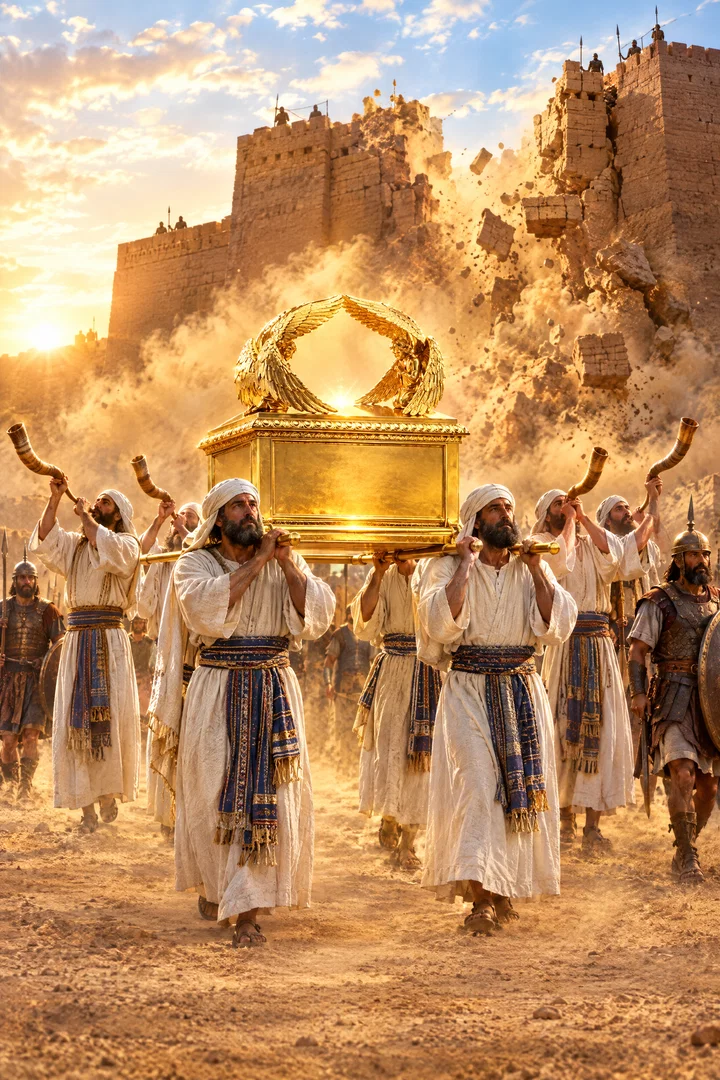
And Joshua rose early in the morning, and the priests took up the ark of the LORD.
Translations
American King James Version, King James Version, Webster Bible, Revised Version
And Joshua rose early in the morning, and the priests took up the ark of the LORD.
And Joshua rose early in the morning, and the priests took up the ark of the Lord.
And Joshua rose early in the morning, and the priests took up the ark of Jehovah.
And Joshua riseth early in the morning, and the priests bear the ark of Jehovah,
And Joshua rose early in the morning, and the priests carried the ark of Jehovah.
And Joshua rose early in the morning,—and the priests bare the ark of Yahweh;
Berean Standard Bible, Majority Standard Bible
Joshua got up early the next morning, and the priests took the ark of the LORD.
Joshua rose early in the morning, and the priests took up the LORD’s ark.
And early in the morning Joshua got up, and the priests took up the ark of the Lord.
And Ioshua rose early in the morning, and the Priestes bare the Arke of the Lord:
Douay-Rheims (Challoner revision)
And Josue rising before day, the priests took the ark of the Lord,
Pictures
Cross-references 20 of 29
- Joshua 6:20
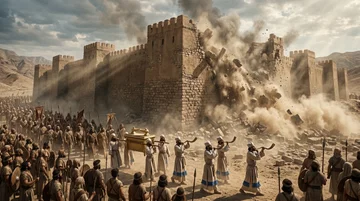
So the people shouted when the priests blew with the trumpets: and it came to pass, when the people heard the sound of the trumpet, and the people shouted with a great shout, that the wall fell down flat, so that the people went up into the city, every man straight before him, and they took the city.
The people’s shout completes the march around Jericho as its walls fall.
- Joshua 3:14-17
And it came to pass, when the people removed from their tents, to pass over Jordan, and the priests bearing the ark of the covenant before the people;
The ark led Israel through the Jordan on dry ground, recalling its passage into Canaan.
- Joshua 5:13-15
And it came to pass, when Joshua was by Jericho, that he lifted up his eyes and looked, and, behold, there stood a man over against him with his sword drawn in his hand: and Joshua went unto him, and said unto him, Art thou for us, or for our adversaries?
The Captain of the Lord’s host appeared before the Jericho campaign and led the victory.
- Hebrews 11:30
By faith the walls of Jericho fell down, after they were compassed about seven days.
Jericho’s walls fell through faith after Israel’s seven-day march.
- 1 Samuel 4:3-11
And when the people were come into the camp, the elders of Israel said, Wherefore hath the LORD smitten us to day before the Philistines? Let us fetch the ark of the covenant of the LORD out of Shiloh unto us, that, when it cometh among us, it may save us out of the hand of our enemies.
Israel’s victory at Jericho contrasts with its defeat and the Ark’s capture.
- Joshua 6:2
And the LORD said unto Joshua, See, I have given into thine hand Jericho, and the king thereof, and the mighty men of valour.
God promises Joshua victory over Jericho as he gives the battle instructions.
- Exodus 25:14
And thou shalt put the staves into the rings by the sides of the ark, that the ark may be borne with them.
The gold-covered ark was made to be carried.
- Joshua 6:3-5
And ye shall compass the city, all ye men of war, and go round about the city once. Thus shalt thou do six days.
Israel marches around Jericho, whose walls fall after the trumpet blast and shout.
- Numbers 14:44-45
But they presumed to go up unto the hill top: nevertheless the ark of the covenant of the LORD, and Moses, departed not out of the camp.
Israel was defeated when it went into battle without the ark.
- 1 Kings 16:34
In his days did Hiel the Beth-elite build Jericho: he laid the foundation thereof in Abiram his firstborn, and set up the gates thereof in his youngest son Segub, according to the word of the LORD, which he spake by Joshua the son of Nun.
Hiel’s rebuilding of Jericho fulfills the curse pronounced after its fall.
- Exodus 26:33
And thou shalt hang up the vail under the taches, that thou mayest bring in thither within the vail the ark of the testimony: and the vail shall divide unto you between the holy place and the most holy.
The ark is placed within the veil in the Most Holy Place.
- Joshua 5:2
At that time the LORD said unto Joshua, Make thee sharp knives, and circumcise again the children of Israel the second time.
Israel renewed circumcision at Gilgal before the conquest of Jericho.
- Deuteronomy 10:5
And I turned myself and came down from the mount, and put the tables in the ark which I had made; and there they be, as the LORD commanded me.
The tablets of the law are placed in the ark.
- Exodus 25:21
And thou shalt put the mercy seat above upon the ark; and in the ark thou shalt put the testimony that I shall give thee.
The ark held the testimony, and victory came because the law was in the ark.
- Revelation 11:19
And the temple of God was opened in heaven, and there was seen in his temple the ark of his testament: and there were lightnings, and voices, and thunderings, and an earthquake, and great hail.
The ark Israel followed is revealed in heaven.
- 1 Samuel 4:21-22
And she named the child I-chabod, saying, The glory is departed from Israel: because the ark of God was taken, and because of her father in law and her husband.
The ark’s capture is expressed as the glory departing from Israel.
- Joshua 6:1
Now Jericho was straitly shut up because of the children of Israel: none went out, and none came in.
The city is shut up before the attack.
- 1 Samuel 4:17-18
And the messenger answered and said, Israel is fled before the Philistines, and there hath been also a great slaughter among the people, and thy two sons also, Hophni and Phinehas, are dead, and the ark of God is taken.
News of the ark’s capture leads to Eli’s death.
- Joshua 5:10
And the children of Israel encamped in Gilgal, and kept the passover on the fourteenth day of the month at even in the plains of Jericho.
Israel kept Passover at the camp in Gilgal.
- Genesis 22:3
And Abraham rose up early in the morning, and saddled his ass, and took two of his young men with him, and Isaac his son, and clave the wood for the burnt offering, and rose up, and went unto the place of which God had told him.
Both rose early for a solemn undertaking with blessing.
Commentary
Each commentary is drawn from primary sources: the writings of Ellen G. White and Adventist pioneers and periodicals. Each commentary is separate. Its own words are not a quotation; follow the references to read the source passages.
Ellen G. White
25 sources
Joshua's rising early in the morning and the priests' taking up the ark was obedience to the divine command for the conquest of Jericho, given by the Captain of the host of the Lord with assurance that the city with its king and mighty men was given into his hand as the first step in taking Canaan.ST Oct 19, 1888PP 487.3 On the seventh day from the first dawn he marshaled the armies to compass the city once each day for six days and seven times on the seventh day, with the ark borne by priests in sacred dress leading the ordered procession after armed men and seven priests with trumpets while the vast host followed tribe by tribe in solemn silence broken only by footsteps and trumpets until the blast and shout threw the walls down.ST Apr 14, 18814T 160.1PP 488.3–491.1RH Nov 9, 1905 The march went from Gilgal under heavenly guard, for angels accompanied the ark and Christ with the heavenly host attended its circuit and cast down the walls, and the ark borne by holy men by express command was the symbol of God's presence and repository of His law that had led Israel across Jordan and now went before them with His promise to go with them.SG4 64.1–21SP 399.2RH Nov 9, 1905ST Jul 27, 1882 The taking of Jericho the key to Canaan came not by Israel's strength or skill but by God's power making the simple sounding of trumpets effective, with no human hand to touch the walls so that no person could take glory, for strength was not in merely having the ark present but in obeying the law it contained, to the glory of the Lord God of Israel alone.SG4 64.1–2ST Jul 21, 1881Ms 143, 1899, par. 22–23SG4 105.1–2Ms 36, 1885, par. 23–24 The same God still casts down walls not by might nor by power but by His Spirit, so His workers must leave the work in the hands of the great I AM and follow His appointed means exactly with humble trust and perseverance, keeping the deliverance fresh in memory to teach their children, in contrast to the later time when the ark was borne by doomed men while the law condemned the people to defeat for following human plans against divine counsel.Ms 143, 1899, par. 22–23Lt 8a, 1896, par. 8–93MR 21.1–22.3PP 553.2–554.1
The Morning March Described
Joshua's rising early in the morning and the priests' taking up the ark of the LORD was obedience to the divine command for the conquest of Jericho.ST Oct 19, 1888PP 487.3 The command had been received from the Captain of the host of the Lord, who gave assurance that Jericho with its king and mighty men of valor was given into his hand.PP 487.3 This taking of Jericho was the first step in the conquest of Canaan, undertaken after seeking assurance of divine guidance for reducing the city.PP 487.3 The ark led the procession as Israel obeyed the Lord's instructions for the city's conquest.ST Oct 19, 1888
On the seventh day, with the first dawn of light, Joshua marshaled the armies of the Lord for the final assault.PP 488.3–491.1 Israel was on that morning directed to march seven times around the city and then at a mighty peal from the trumpets to shout with a loud voice, for God had given them the city.PP 488.3–491.1 The march was solemn and silent except for the measured tread of many feet and the occasional sound of the trumpet breaking the stillness of the early morning.PP 488.3–491.1 Watchers on the massive stone walls looked on with rising fear through the successive circuits toward the impending seventh-circuit blast and collapse.PP 488.3–491.1
The ark led the ordered procession, borne by priests in sacred dress denoting their office and surrounded by a halo of divine glory.ST Apr 14, 18814T 160.1RH Nov 9, 1905 It was placed after a chosen body of armed men set in front not to fight but to believe and obey and after seven priests with trumpets.ST Apr 14, 1881 The vast army followed in perfect order, each tribe under its standard, in silence except for footsteps and trumpets.ST Apr 14, 18814T 160.1 They compassed the city with the ark once each day for six days, and on the seventh day beginning with the first dawn of light marched seven times around.ST Apr 14, 1881 They kept solemn silence for seven days until the trumpet blast and shout threw the walls down for a great victory.ST Apr 14, 1881
The march to the overthrow of Jericho started from Gilgal, Israel's first encampment in the promised land.ST Jul 27, 1882PP 613.3–614.2 Gilgal was the starting place from which they marched to the overthrow of Jericho and the conquest of Ai.ST Jul 27, 1882 The march went under heavenly guard, for four angels always accompanied the ark in all its journeyings to guard it from danger and to fulfill any mission connected with it.1SP 399.2 Christ the Son of God with heavenly angels attended its circuit around Jericho, cast down the massive walls, and opened the way for Israel.SG4 64.1–21SP 399.2
The ark was the symbol of God's presence among His people and the repository of His law borne by holy men by express command.RH Nov 9, 1905 It had led the way for the hosts of Israel when they crossed the Jordan and entered the promised land, and was now carried before the armies.RH Nov 9, 1905 It was carried before them nearly forty years after the rebellion, with God's promise to go with them and with appointed leaders directing their movements under divine supervision.PP 393.2–3 With such guidance no harm could come to them, unlike the earlier attack made contrary to God's command without the ark and without divine direction.PP 393.2–3
God Won The Victory
Jericho was the key to Canaan, to be taken by trusting God's promise rather than by military strength or skill.SG4 64.1–2ST Jul 21, 18814T 148.3 Israel was to remember how God had brought them out of Egypt and safely guided them, and to trust Him to give them the land, for failure to do so was unbelief and hearts out of harmony with His plans.ST Jul 21, 18814T 148.3 The victory came from God and His heavenly host rather than from Israel, for Christ the Captain of the Lord's host with His angels threw down the walls and opened the way for Joshua and Israel.SG4 64.1–2Ms 32, 1897, par. 7–10 The simple act of sounding the trumpets around the city was made effective by God's power, and success rested on humble trust, faith, and faithful obedience to His commands and appointed means rather than on human methods or force.ST Jul 21, 1881Ms 32, 1897, par. 7–10PP 553.2–554.1 That miracle strengthened Israel's faith in God's power and rebuked their former unbelief, showing that God accomplishes His work through His appointed means and that men must follow His direction rather than take control themselves.SG4 64.1–2Ms 32, 1897, par. 7–10
No human hand was to take down or touch the massive walls of the city, lest man take the glory of the victory to himself.Ms 143, 1899, par. 22–23Lt 58, 1895, par. 22–25Lt 8a, 1896, par. 8–9 The plan of the mighty General of armies was made so simple that no human being could take glory to himself, and no human general devised it.Ms 143, 1899, par. 22–23Lt 8a, 1896, par. 8–9 God directed the battle and assigned human agents their part, with the priests' carrying of the ark belonging to His plan, yet the overthrow gave no person grounds for credit or achievement.Lt 58, 1895, par. 22–25Lt 63, 1895, par. 34–38 The victory was God's work through both heavenly and human agencies, and God alone was to be glorified.Lt 58, 1895, par. 22–25Lt 63, 1895, par. 34–38
Strength was not in merely having the ark present at Jericho, but in obeying the law contained in the ark, which represents God Himself.SG4 105.1–21SP 402.3–403.1 The easy conquest that followed the priests' bearing of the ark did not come from the ark itself as a guarantee of victory.SG4 105.1–21SP 402.3–403.1 Israel afterward wrongly remembered Jericho and thought that bringing the ark into battle alone was all that was necessary to triumph over enemies.SG4 105.1–21SP 402.3–403.1
The fall of the city was a work accomplished by Christ rather than by Joshua alone, and it directed Israel to give glory to the Lord God of Israel and not to themselves.Ms 36, 1885, par. 23–24Ms 40a, 1890, par. 65–67 The Lord's plan, not Israel's finite strength, determined the victory, so victory is no reason for self-exaltation.Ms 40a, 1890, par. 65–67Lt 51, 1895, par. 8–13 Whatever makes a person different or better comes from God, and God's people facing formidable opposition are to show courage and perseverance by trusting the strength and help He supplies rather than boasting in their own power.Ms 36, 1885, par. 23–24Lt 51, 1895, par. 8–13
Lessons For God's People
The miraculous capture of Jericho was to be kept fresh in memory and repeated by parents to their children in the home training school.Lt 8a, 1896, par. 8–9 With the escape from Egypt, the deliverance from bondage to serve God and keep His Sabbaths, the water from the rock, the bread from heaven, and the commandments of God, it belonged to the instruction to be given even to the smallest child.Lt 8a, 1896, par. 8–9 No human general devised the plan for taking the city and no human hand touched its massive walls.Lt 8a, 1896, par. 8–9 The Captain of the Lord's host gave His orders to the heavenly army and down came the walls as an exhibition of God's power.Lt 8a, 1896, par. 8–9
God planned the taking of the city in such simplicity that no human being could take glory to himself.Ms 143, 1899, par. 22–23 No human hand was to take down the walls, lest man take to himself the glory of the victory.Ms 143, 1899, par. 22–23 God is the Instructor of His servants and will work through whom He will.Ms 143, 1899, par. 22–233MR 21.1–22.3 The work must be left in the hands of the great I AM to be done in His own way, rather than controlled and managed by men who desire too much power and feel qualified to hold the highest place, and no human being is to take to himself glory for the work he accomplishes but the Lord alone is to be magnified.Ms 143, 1899, par. 22–23
God casts down walls by the most simple means to do wondrous works, and His people were to do exactly as He told them, rising early with the priests taking up the ark, and God would do the rest so that His name would receive all the glory.3MR 21.1–22.3 The same God still works in the same way through whom He will, not by might nor by power but by His Spirit, so His workers must follow His directions with faith, with Jesus the Captain of the Lord's host with them.3MR 21.1–22.3 The simple act of sounding the trumpets was made effective by His power, showing that victory depended not on human methods or strength but on God's power and on carrying out His direction with humility and faith.PP 553.2–554.1 Trust in God and obedience to His will are essential in spiritual warfare as in Joshua's battle, and God's people can face formidable opposition with courage and perseverance, trusting in the strength and help God supplies rather than boasting in finite power.PP 553.2–554.1Lt 51, 1895, par. 8–13 That fight is with unseen foes more formidable than giants and can only be overcome by the sword of the Spirit.3MR 21.1–22.3
At Jericho Israel was an obedient and believing people walking in obedience to God, and God worked mightily for them. The ark was then not a mere symbol expected to give blessings that God alone could bestow, but the repository of His law borne by holy men in accordance with His express command, with the divine presence vouchsafed to them and the Captain of the Lord's host going before it, so that God's own arm brought deliverance for them. That obedient condition stands in wide contrast to a later state of following human plans in opposition to divine counsel. Then the ark was borne by doomed men while the law under the mercy-seat condemned the people to defeat, disaster, and death.
Sources
Pioneers and periodicals
74 sources
Joshua rose early in the morning and the priests took up the ark of the Lord to begin the commanded procession around Jericho in perfect order.ST Oct 19, 1888ST Apr 14, 1881ST Oct 8, 1902ST Oct 8, 1902RH Feb 24, 1910 The ark so borne was the visible sign of God's presence among His people and the repository of His law, with the mercy-seat above it and the Captain of the Lord's host going before it.ST Apr 14, 1881RH Nov 9, 1905ST Mar 20, 1901RH Feb 24, 1910ST Mar 20, 1901 Jericho fell not by human military skill or by the blasts alone, but by God's power through the armies of heaven as the whole people obeyed exactly for seven days even when the command seemed foolish.ST Mar 21, 1911ST Sep 12, 1895ST Oct 20, 1914RH Sep 8, 1904 That seven-day marching with the ark under the Lord's direction continued over the Sabbath as religious service commanded by God, not as ordinary work in violation of the law contained in the ark.RH Jan 21, 1862RH Jul 27, 1876RH Feb 3, 1852RH Jun 19, 1856RH Apr 11, 1854 His early rising to marshal the host is the pattern for solemn undertakings and waiting on the Lord in the morning, and for united courageous action that persists until God levels the wall.RH Aug 3, 1876RH Jul 2, 1901ST Sep 2, 1880RH Oct 8, 1908ST Oct 8, 1902
Setting and March Order
Joshua rose early in the morning while the priests took up the ark of the Lord to begin the commanded procession around Jericho.ST Oct 19, 1888ST Oct 8, 1902ST Oct 8, 1902RH Apr 21, 1851 The ark led the march as Israel acted under the Lord's directions for taking the city, and it was carried in the circuit around Jericho and stood before its walls when they fell after the completed circuit and shout.ST Oct 19, 1888ST Oct 8, 1902RH Apr 21, 1851 That early rising reflected haste, order and earnestness after preparation, with the people following the ark until the city fell before faith and persistence.RH Mar 21, 1912
The hosts were marshaled for the circuit after fresh assurance of divine support, and the march proceeded in perfect order.ST Apr 14, 1881 A chosen body of armed men was set in front not to fight but to believe and obey, then came seven priests with trumpets, then the ark, then the vast army following tribe by tribe each under its standard.ST Apr 14, 1881 The priests bore the ark clad in rich dress denoting sacred office and surrounded by a halo of divine glory, taken from the sanctuary as the visible sign of God's presence, and it played an essential and conspicuous part in capturing the city.ST Apr 14, 1881RH Feb 24, 1910 They compassed the city with the ark in solemn silence except for the tread of the host and the solemn peal of the trumpets, once each day for six days, and on the seventh day beginning with the first dawn of light they marched seven times around before the ram-horn trumpet blast and shout threw the walls down in great victory.ST Apr 14, 1881RH Feb 24, 1910
The verse belongs to the continuing conversation between Joshua and the Captain of the Lord's host begun in Joshua 5, whose continuity is obscured by the chapter break between Joshua 5 and 6.RH Jan 8, 1861 Jericho was the first city taken by Israel after crossing the Jordan, marched to from Gilgal as Israel's first encampment in the promised land.ST Jul 27, 1882RH Aug 24, 1905RH Apr 28, 1904 It was then a leading city in Palestine second only to Jerusalem, a city of Benjamin about twenty miles northeast of Jerusalem and about six miles from the Jordan amid a fertile plain.RH Aug 24, 1905 It was taken forty years after the spies came to Rahab, and its taking comes before the sin of Achan and the defeat at Ai.RH Aug 24, 1905RH Apr 28, 1904
The conquest of Canaan under Joshua is real history rather than fiction, and the unsettled condition of Palestine favored the Hebrew advance.ST Apr 20, 1904RH Aug 4, 1910 It belongs to God's leading of Abraham's descendants from bondage to the promised land, through the Red Sea crossing, the wilderness journey, Sinai, manna, water from the smitten rock, victory over Amalek and the holding back of Jordan, to the ark-borne advance bringing down the ramparts of Jericho, followed by the flight of heathen rulers, the driving out of the nations and settlement amid hills, valleys, water-brooks, springs, milk and honey and every privilege of the good land.RH Nov 21, 1854 It shows an organized campaign in which Joshuas go to the Jordan, to Jericho, to Ai and to Jerusalem to take the promised land, with fortified camps set up and advance-guards going ahead to point the way to new and fertile fields, whose details become clear only after the advance begins.RH Nov 2, 1911 That conquest, when the priests took up the ark against Jericho, took place at the time of the Tel el-Amarna correspondence in the fifteenth century before Christ, when Babylonian was the diplomatic language and written international correspondence passed between Asiatic and Egyptian kings.RH Aug 31, 1905 Letters from Abdi-Hiba of Jerusalem and other rulers plead for troops against the Habiri making inroads into the country, warning that without troops the king's land will be lost, and the Habiri are the Hebrews invading Canaan.RH Aug 31, 1905
Ark and Divine Presence
The ark had been taken from the sanctuary as the visible sign and symbol of God's presence among His people.RH Nov 9, 1905RH Feb 24, 1910RH Dec 11, 1866 It was borne by priests clad in rich dress denoting their sacred office and surrounded by a halo of divine glory.ST Apr 14, 1881RH Nov 9, 1905 Just as it had led the way for the hosts when they crossed the Jordan and entered the promised land, so it was carried around Jericho.RH Nov 9, 1905
It was the repository of His law, borne by holy men in accordance with His express command. It contained the law that defined the sin bringing judgment upon Canaan, while the mercy-seat above it represented God's mercy even toward sinful Jericho.ST Mar 20, 1901ST Mar 20, 1901 The divine presence was vouchsafed to obedient Israel, and the Captain of the Lord's host went before it, so that God's own arm brought deliverance for them.
The ark led the procession and played an essential and conspicuous part in capturing the city.RH Feb 24, 1910RH Aug 28, 1856ST Feb 3, 1904 Israel marched around with it and triumphed with mighty shouting when its towering walls were laid low before it.ST Jun 10, 1875 The strength that wrought the victory was not a chest of wood but the law of God in the ark, the law of love and truth and wisdom from above.ST Jun 10, 1875 To have the ark is to have the truth and keep God's law, while to oppose that law is to lack wisdom and to be deluded and in the dark without truth and without the ark, and as Israel triumphed then so the remnant in the latter days will surely triumph by keeping God's law and refusing the mark of the beast.ST Jun 10, 1875
The walls did not fall through the ram's-horn blasts alone, but as Israel obeyed God's command to follow the ark which contained the Ten Commandments, which remain binding until heaven and earth pass away.RH Dec 10, 1861 Nor did the fall come from the mere presence of the material symbol, but from the moral and spiritual conditions on which alone God's cooperation is given, with the sacred principles of the holy law made a part of the very lives of the people. Depending on form and external machinery without obedience does no good, for if iniquity is regarded in the heart the Lord will not hear.
That obedient success stands in wide contrast to a later state when, having turned from God and following human plans in opposition to divine counsel, Israel wrongly assumed the ark itself would protect them in battle.RH Aug 28, 1856RH Apr 20, 1876 Then, although God had departed from them because of their sins, the ark was borne by doomed men while the law under the mercy-seat condemned the people to defeat, disaster, and death. Carrying it did not protect them without God's cooperation.RH Apr 20, 1876
Faith Obedience and Victory
Jericho fell because the invisible army and armies of heaven were sent down to lay its walls flat, and the Captain of Jehovah's hosts, even Christ the Captain of the Lord's host with His angels, was with Israel in the victory. ST Mar 21, 1911ST Oct 20, 1914ST Feb 13, 1912ST Jan 23, 1907 The power that brought down the city was God's own, and the conquest shows that victory came through His help rather than by human military skill or ordinary means, resting on humble trust in Him and faithful obedience to His commands, with Israel's gradual possession of the land coming according to faith. ST Jul 21, 1881ST Oct 20, 1914ST Feb 13, 1912ST Jan 23, 1907 God's people did not need to win by killing their enemies, for His heavenly army conquered the city for them. ST Mar 21, 1911ST Oct 20, 1914
The whole people obeyed through the seven days of marching even though its purpose was not understood at the time, and this obedience helped perfect their faith. ST Sep 12, 1895RH Sep 8, 1904 The priests carried ram's horns though they had no ordinary means of breaking the walls, and after the commanded marches and the people's shout the wall fell, showing that faith obeys God even when His command appears foolish by human reasoning and that people of every age and ability can exercise such faith. ST Sep 12, 1895RH Sep 8, 1904 Success came from conforming exactly to God's plan, speaking the right word at the right time in the right place and doing duty always when and where God directs. RH Feb 6, 1879 This is working in harmony with the mind and Spirit of God, where every part fits and every joint is perfect when His design is followed, and any substitution of human ideas mars the work. RH Feb 6, 1879
Israel did not win by fighting but by obeying God and continuing as He directed to the completion of the seventh circuit and the shout of triumph, when God brought about the victory. RH May 29, 1913 God works through people who serve with zeal, obedience and consecration, and triumph comes through whole-hearted consecration and complete surrender with every person from least to greatest organized for active service in finishing the conflict. RH May 29, 1913RH Oct 29, 1914 That calls now for a mighty missionary movement embracing every believer from the oldest pioneer whose faith still burns with holy fire to the little children who can give out a paper or a tract, which will speedily finish the work and bring its glorious consummation in the hour of final labor and certain victory when the Lord is about to appear. RH Oct 29, 1914 God's wonders accompany His people as they move forward in obedience, and Jericho's fall illustrates that when known sin is put away and cleansing is sought the way opens for His power to act, for holiness includes both rejecting evil and being filled with God. RH Sep 21, 1916
Israel marched around the walls on the very days God told them to march, and doing the work at the time He appointed brought the cooperation of His angels, so that the Lord did the work for those who trusted Him and moved forward and what seemed hard was done easily and quickly. Taking their own time and delaying would have left them marching long without heavenly help, and each act of faithful courage now prepares for a next task requiring greater courage and faith, while weakness and fear now prepare for defeat later. The priests taking up the ark to march was work commanded by God made easy by His help, and with the Spirit of Christ in the worker the angels go before to prepare the people, so doing what the Lord tells is as easy as that march, as seen when timid and inexperienced workers succeed in selling Christ's Object Lessons. The weapons were feeble instrumentalities such as simple rams' horns by which God accomplished mighty results, as He had in defeating Pharaoh and opening the Red Sea and the Jordan, proving that success is certain when labor is done in God even through weak human means requiring severe toil. ST May 13, 1889ST May 6, 1875RH Apr 15, 1875 The same principle gives certainty of success in setting truth before the people of Europe by the press despite many languages requiring correct grammar and idiom and immense severe and painful labor. ST May 6, 1875RH Apr 15, 1875
The defeat of Jericho was a pledge of what God's power would have given throughout entry into the land and in other cases if Israel had trusted Him and wholly obeyed, for in Joshua's day His power could have brought His people into the promised rest. ST Jan 22, 1894ST Mar 10, 1909ST May 27, 1913 With no Achan in the camp the victory would have extended throughout the land, giving deliverance and victory everywhere, destroying the nations, making His power known to the world and bringing evil to an end. ST Jan 22, 1894ST Mar 10, 1909ST May 27, 1913 Walking around the walls shows implicit faith in God's promises and fearless willingness to do anything God commands, and though naturally weak Israel's obedience is the pattern for the 144,000 in the last days who will likewise cross any Red Sea, pass over any Jordan and march around any Jericho at His command. They will stand calmly trusting through scorching heat, earthquakes, disrupted nature and hail while others hide in fear, until enabled to sing the song of Moses and the Lamb, and such courage is formed now by accustoming oneself to obey God in present duties, as David's obedience against the lion and the bear prepared him to overthrow Goliath. Jericho's falling walls illustrate how strongholds deeply entrenched in a person's life can be driven out by God's grace, and God gave complete victory there as Christ gives complete victory over convicted wrong when it is met right there and then with full purpose of heart and with the whole soul depending on His grace. ST Nov 29, 1910ST Feb 11, 1889 Temporizing with wrong and yielding again and again keeps appetite alive and gives only a victory held for a while and then followed by defeat, for God permits the unconquered evil to remain just as He permitted Israel's foes to remain to become thorns and pricks until all compromise and temporizing is utterly abandoned and the whole soul is cast upon God. ST Nov 29, 1910ST Feb 11, 1889
Sabbath and the March
The march around Jericho continued for seven consecutive and successive days, so one of those days must of course have been the Sabbath.RH Jan 21, 1862RH Jul 27, 1876RH Feb 3, 1852RH Jun 19, 1856RH Apr 11, 1854 Rising early with the priests taking up the ark before the people and carrying it around the city with sounding of the sacred trumpets was religious service commanded by God under the direction of the Lord, not ordinary work forbidden by the Sabbath commandment.RH Jan 21, 1862RH Jul 27, 1876RH Feb 3, 1852RH Jun 19, 1856RH Apr 11, 1854 Doing God's bidding is no violation of the Sabbath, for the Sabbath commands refraining from our own work, not from work God bids be done.RH Jan 21, 1862RH Jul 27, 1876RH Jun 19, 1856 The people's marching around the city on the Sabbath with the ark did not violate the law that was in the ark.RH Jun 19, 1856RH Apr 11, 1854 God's own act of working for them to throw down the walls of Jericho on that day was not contrary to His own precepts in regard to that day, and in the same way a journey performed under the direction of the Lord on the Sabbath is no violation of the Sabbath law.RH Jun 19, 1856RH Apr 11, 1854
The account does not establish that the final day when the city was taken was the Sabbath.RH Jan 21, 1862RH Oct 15, 1872 The seven days were the first through seventh days of the siege, not days of the week, with no evidence or reasonable inference that Jericho was taken on the Sabbath.RH Jan 21, 1862RH Oct 15, 1872 There is no contrast between the Sabbath and circumcision in the account that would make the taking of Jericho a violation of the Sabbath.RH Oct 15, 1872
One of the victories Israel won when carrying the ark of God was when the priests took it up and marched around Jericho, as it also went with them when they crossed the Jordan and went to battle.RH Aug 11, 1853RH Dec 20, 1853RH Aug 13, 1857 The beautiful ark overlaid and inlaid with purest gold held the ten precepts spoken by God at Sinai amid smoke like a furnace with lightning and thunder and engraved by His own finger on tables of stone, including the fourth commandment.RH Aug 11, 1853RH Dec 20, 1853RH Aug 13, 1857 It was afterward put in the Most Holy of the earthly sanctuary and was the centre of Israel's religious system and life and the glory of Israel, so carrying it to battle displayed divine power and the honor God placed on the ark and on the Sabbath law inside it.RH Aug 11, 1853RH Dec 20, 1853RH Aug 13, 1857 That honor proves the law and its Sabbath remain binding and could not have been abolished without plain testimony.RH Aug 11, 1853
Devotion Judgment and Sevens
Jericho was the first city taken after crossing the Jordan, forty years after the spies came to Rahab, then a leading city second only to Jerusalem, in Benjamin about twenty miles northeast of Jerusalem and about six miles from the Jordan amid a fertile plain, whose most remarkable siege ended in the overthrow of its walls by faith.RH Aug 24, 1905 As first-fruits of Canaan it was devoted wholly to God for utter destruction by His power rather than by Israel's weapons, while its precious metals and treasures were devoted to God.ST Mar 20, 1901ST Oct 8, 1902 That appointed judgment was carried out at the hands of Joshua, followed by a curse and prophecy against anyone who would rebuild it.RH Aug 24, 1905 The ark accompanied the march around the city, containing the law that defined the sin bringing judgment on Canaan, while the mercy-seat above it showed God's mercy even toward sinful Jericho.ST Mar 20, 1901ST Mar 20, 1901
The priests and the ark led the silent circling army for seven days, giving the people time to yield to mercy.ST Oct 8, 1902 The city might have been saved if it had opened to God's people, and its people could have been spared through faith as Rahab and her household were.ST Oct 8, 1902 Its closed gates showed rejection of the opportunity to yield before destruction, and God's invisible army brought down its walls.ST Mar 20, 1901
The account emphasizes seven, for seven priests carried seven trumpets for seven days, on the seventh day circled seven times, and at the end of the seventh round the walls fell.RH Jan 22, 1857RH Sep 15, 1874 The strength that wrought victory when Israel marched with the ark and triumphed with mighty shouting as its towering walls were laid low was not a chest of wood but the law of God in the ark, the law of love, truth and wisdom from above.ST Jun 10, 1875 To have the ark is to have the truth and keep God's law, while to oppose that law is to lack wisdom and to be deluded and in the dark without truth and without the ark.ST Jun 10, 1875 As Israel triumphed then, so the remnant in the latter days will surely triumph by keeping God's law and refusing the mark of the beast.ST Jun 10, 1875
That victory came before Israel tried to press up from the plain of Jordan to the highlands through a narrow defile and were baffled and defeated because Achan coveted miserable spoil in a tent and broke God's laws.ST Feb 14, 1906 When swift terrible punishment purged the camp and Achan lay stiff and stark below his cairn, victory followed again and Israel pressed on up the glen to conquest.ST Feb 14, 1906 The rugged valley of that defeat and sharp justice was named the Valley of Achor, meaning trouble, showing that complicity of God's people with an evil world works weakness and defeat, but if taught by trouble and purged of the accursed thing, disaster makes a way for hope to come again.ST Feb 14, 1906 On the way to the heavenly Canaan and in the work of gaining converts, those not truly converted are like Achan and may still bring defeat.RH Apr 3, 1913
Practical Applications Today
Joshua rising early to marshal the host and begin the conquest shows the choice of the early morning for solemn and important undertakings and for early waiting upon the Lord, with successful achievement attended by His special blessing and the cooperation of the army of heaven.RH Aug 3, 1876ST Sep 2, 1880 Rising early for God's service was the custom of His servants, as seen in Abraham, Jacob, Gideon, Samuel, David, Mary, Jesus and the apostles, and the same early rising is applied to earnest morning prayer.RH Aug 3, 1876ST Sep 2, 1880ST Oct 8, 1902 As Israel's second great leader Joshua took command of the people, guided them through victories over their enemies, and kept them faithful to God and His law.ST May 27, 1908 At Jericho he and the priests remained with the people and led from the front, with the priests as the chief campaigners in taking the city, even as at the Jordan they dipped their own feet in the water and stood firm in the middle of the stream until all Israel had passed over.RH Nov 16, 1905 That gives the pattern for leaders in every church now to know the times, sound the note of courage, take position in the front, and stay with the people until the victory is won.RH Nov 16, 1905 God found in Joshua the man to meet the crisis after Moses was permitted to lead Israel only to the border of Canaan, and as Joshua led across Jordan and the walls of Jericho fell before him, so in every crisis in history the Lord has a willing man and a willing people to meet the issue.RH May 13, 1915
God led His people so that walls did not stop them when they rose together to do the work He required, and the advance illustrates united courageous action in the fear of the Lord.RH Jul 2, 1901RH Oct 8, 1908RH Dec 28, 1911 Taking up the ark of truth and beginning the march means united action done courageously in the fear of the Lord, and marching around enough times means persisting until God moves the hearts of men and women to liberality, until the wall of debt is completely and eternally leveled never to rise again.RH Jul 2, 1901 The fall of Jericho is thus invoked as a metaphor for united effort in carrying out work entrusted by God.RH Dec 28, 1911 The walls of Jericho represent the challenge faced by God's people, met by joining God's work through a humble, despised means and trusting Him to use it to bring people into greater truth and proclaim the last message, as in canvassing and circulating literature.RH Oct 8, 1908
The weapons of the siege were feeble instrumentalities by which God accomplished mighty results, proving success certain when labor is done in God even through weak human means requiring severe toil.ST May 6, 1875RH Apr 15, 1875 The same principle gives certainty of success in setting truth before the people of Europe by the press, even with many languages requiring correct grammar and idiom and with immense, severe and painful labor.ST May 6, 1875RH Apr 15, 1875 The seven-day march around Jericho, after which the walls fell, serves as an example of how sustained medical missionary work can break down prejudice.RH Sep 14, 1911 Facing Jericho as a seemingly impossible obstacle teaches God's people to press on in their work with confidence in the victory Christ has gained and given them, rather than delay until every obstacle is removed.RH Jan 28, 1902 The taking of Jericho as a seemingly impossible work accomplished through God's strength teaches that a large task beyond human strength can be undertaken by relying on Him.RH Dec 18, 1900
The capture of Jericho teaches that children face real battles against evil and must be loyal soldiers for Jesus, for the struggle is the battle of faith.RH Nov 17, 1910 The march around Jericho is offered as a model for meeting treason and strong enemies, for God's people may be called to march around the enemy rather than fight, while trusting God for guidance and outcome.RH Sep 23, 1862RH Sep 23, 1862 Circling Jericho with the priests carrying the ark and the people following the commanded plan until the walls fell makes Jericho an example of a bold, coordinated religious campaign overcoming a powerful stronghold.RH Sep 5, 1871
Sources