Deuteronomy 10:5
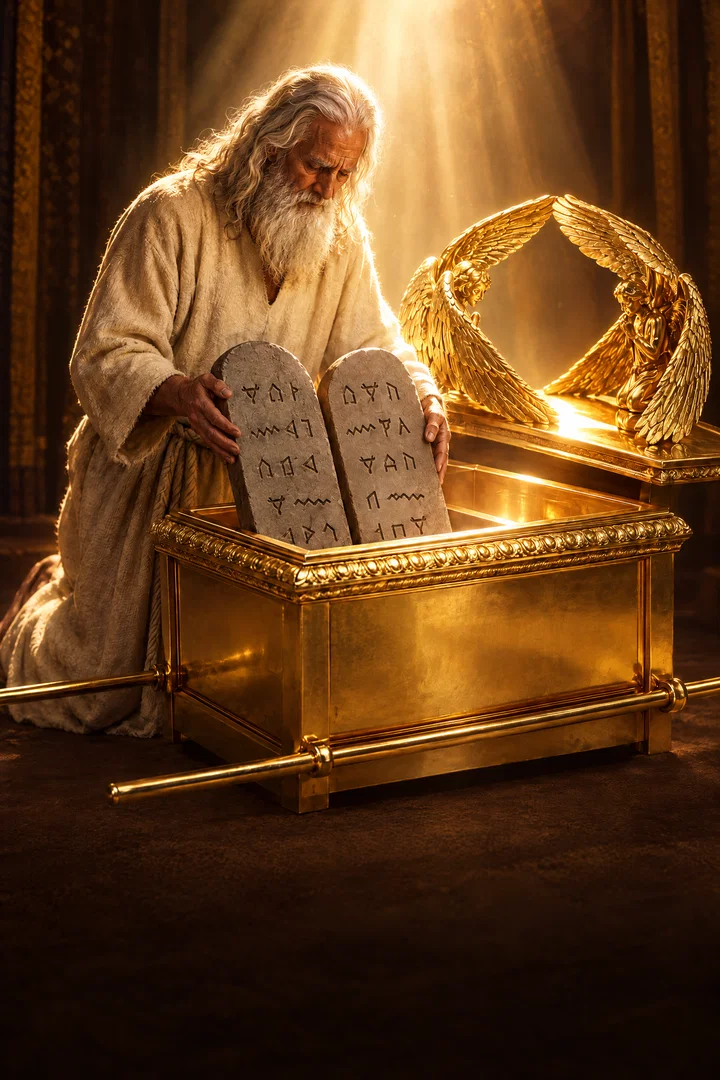
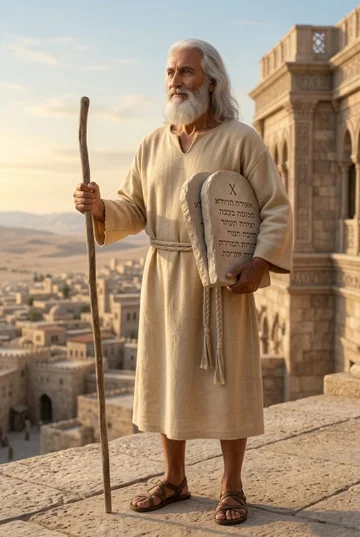
And I turned myself and came down from the mount, and put the tables in the ark which I had made; and there they be, as the LORD commanded me.
Translations
American King James Version, King James Version
And I turned myself and came down from the mount, and put the tables in the ark which I had made; and there they be, as the LORD commanded me.
And I turned myself and came down from the mount, and put the tables in the ark which I had made; and there they be, as the Lord commanded me.
And I turned myself and came down from the mount, and put the tables in the ark which I had made; and there they are, as the LORD commanded me.
And I turned and came down from the mount, and put the tables in the ark which I had made; and there they be, as the LORD commanded me.
And I turned and came down from the mount, and put the tables in the ark which I had made; and there they are as Jehovah commanded me.
and I turn and come down from the mount, and put the tables in the ark which I had made, and they are there, as Jehovah commanded me.
And I turned and came down from the mountain, and put the tables in the ark which I had made; — and they are there, as Jehovah commanded me.
Then turned I, and came down out of the mountain, and put the tables in the ark which I had made,—and they have remained there, as Yahweh commanded me.
Berean Standard Bible, Majority Standard Bible
and I went back down the mountain and placed the tablets in the ark I had made, as the LORD had commanded me; and there they have remained.
I turned and came down from the mountain, and put the tablets in the ark which I had made; and there they are as the LORD commanded me.
And turning round I came down from the mountain and put the stones in the ark which I had made; and there they are as the Lord gave me orders.
And I departed, and came downe from the Mount, and put the Tables in the Arke which I had made: and there they be, as the Lord commanded me.
Douay-Rheims (Challoner revision)
And returning from the mount, I came down, and put the tables into the ark, that I had made, and they are there till this present, as the Lord commanded me.
Pictures
Cross-references 20 of 55
- Exodus 31:18
And he gave unto Moses, when he had made an end of communing with him upon mount Sinai, two tables of testimony, tables of stone, written with the finger of God.
God gives Moses the stone tablets written by his finger.
- Exodus 25:16
And thou shalt put into the ark the testimony which I shall give thee.
Commands that the testimony be placed in the ark.
- Hebrews 9:4
Which had the golden censer, and the ark of the covenant overlaid round about with gold, where in was the golden pot that had manna, and Aaron’s rod that budded, and the tables of the covenant;
Describes the ark as containing the covenant tablets.
- Deuteronomy 31:24-26
And it came to pass, when Moses had made an end of writing the words of this law in a book, until they were finished,
Contrasts the written book of the law beside the ark with the tablets inside it.
- Exodus 25:21
And thou shalt put the mercy seat above upon the ark; and in the ark thou shalt put the testimony that I shall give thee.
Both place the testimony inside the ark beneath the mercy seat.
- Exodus 24:12
And the LORD said unto Moses, Come up to me into the mount, and be there: and I will give thee tables of stone, and a law, and commandments which I have written; that thou mayest teach them.
God gives Moses the stone tablets bearing his law and commandments.
- Exodus 32:16
And the tables were the work of God, and the writing was the writing of God, graven upon the tables.
Both describe the stone tablets and their writing as the work of God.
- Deuteronomy 5:22
These words the LORD spake unto all your assembly in the mount out of the midst of the fire, of the cloud, and of the thick darkness, with a great voice: and he added no more. And he wrote them in two tables of stone, and delivered them unto me.
God spoke the commandments and wrote them on stone tablets.
- 1 Kings 8:9
There was nothing in the ark save the two tables of stone, which Moses put there at Horeb, when the LORD made a covenant with the children of Israel, when they came out of the land of Egypt.
Confirms that the ark held the two stone tablets Moses placed there at Horeb.
- Deuteronomy 4:13
And he declared unto you his covenant, which he commanded you to perform, even ten commandments; and he wrote them upon two tables of stone.
The covenant commandments written on stone tablets are the Ten Commandments.
- Revelation 11:19
And the temple of God was opened in heaven, and there was seen in his temple the ark of his testament: and there were lightnings, and voices, and thunderings, and an earthquake, and great hail.
The tablets Moses placed in the earthly ark correspond to God’s testament in the heavenly ark.
- Exodus 20:1-17
And God spake all these words, saying,
The passage identifies the commandments with the Decalogue spoken at Sinai.
- Exodus 40:20
And he took and put the testimony into the ark, and set the staves on the ark, and put the mercy seat above upon the ark:
cited together for placing tables in ark
- Exodus 34:1
And the LORD said unto Moses, Hew thee two tables of stone like unto the first: and I will write upon these tables the words that were in the first tables, which thou brakest.
God commands Moses to prepare replacement tablets and says he will write on them.
- Exodus 25:22
And there I will meet with thee, and I will commune with thee from above the mercy seat, from between the two cherubims which are upon the ark of the testimony, of all things which I will give thee in commandment unto the children of Israel.
God speaks to Moses from above the ark containing the tablets.
- Deuteronomy 9:10
And the LORD delivered unto me two tables of stone written with the finger of God; and on them was written according to all the words, which the LORD spake with you in the mount out of the midst of the fire in the day of the assembly.
The stone tablets bear the commandments written by God.
- Exodus 34:28
And he was there with the LORD forty days and forty nights; he did neither eat bread, nor drink water. And he wrote upon the tables the words of the covenant, the ten commandments.
Deuteronomy recounts Moses placing the tablets bearing the covenant words in the ark.
- Leviticus 16:2
And the LORD said unto Moses, Speak unto Aaron thy brother, that he come not at all times into the holy place within the vail before the mercy seat, which is upon the ark; that he die not: for I will appear in the cloud upon the mercy seat.
God’s presence appears above the mercy seat on the ark, where the high priest cannot enter at will.
- Deuteronomy 31:9
And Moses wrote this law, and delivered it unto the priests the sons of Levi, which bare the ark of the covenant of the LORD, and unto all the elders of Israel.
Moses writes the law in a book, distinct from God’s law on the tablets.
- 2 Chronicles 5:10
There was nothing in the ark save the two tables which Moses put therein at Horeb, when the LORD made a covenant with the children of Israel, when they came out of Egypt.
Identifies the two tablets Moses placed in the ark at Horeb.
Commentary
Each commentary is drawn from primary sources: the writings of Ellen G. White and Adventist pioneers and periodicals. Each commentary is separate. Its own words are not a quotation; follow the references to read the source passages.
Ellen G. White
15 sources
Moses turned and came down from the mountain and placed the two stone tablets in the wooden chest he had made, where they remained as the Lord had commanded him.Lt 98, 1900, par. 28–29Ms 63, 1899, par. 37–3815MR 40.3–4 They were the second set given after the first were broken, newly hewn by Moses and inscribed a second time by God's own finger exactly as before.Lt 98, 1900, par. 28–29Ms 63, 1899, par. 37–3815MR 40.3–4 What was written and laid up in the ark was the ten commandments spoken by the Lord at Sinai from the midst of the fire in the day of assembly.Lt 98, 1900, par. 28–29Ms 63, 1899, par. 37–38Ms 20, 1906, par. 30 The chest was a sacred depository made in the wilderness to hold that law, becoming the glory and strength of Israel because the token of the Divine Presence rested upon it and it represented God Himself.1SP 398.1PP 584.1–2Ms 23, 1886, par. 1–2 There the law was hidden and preserved in divine keeping rather than human keeping, to justify the obedient and condemn the disobedient as the sacred basis of the covenant and the holy standard of righteousness.Lt 98, 1900, par. 28–2915MR 40.3–4PP 500.419MR 265.313MR 381.2–382.1 That same law is kept in the heavenly sanctuary in the ark of the testament, to be brought forth when judgment begins as an unanswerable witness by which all will be judged according to their works.20MR 221.3–419MR 265.3Ms 20, 1906, par. 3013MR 381.2–382.1Lt 90, 1906, par. 12
Tables Placed in Ark
Moses turned and came down from the mount and put the two tables of stone in the ark of shittim wood, of wood, which he had made, and there they remained as the Lord commanded him.Lt 98, 1900, par. 28–29Ms 63, 1899, par. 37–3815MR 40.3–420MR 221.3–4PP 500.4 The placing was of the second set of the covenant tablets, given after Moses broke the first tables.Lt 98, 1900, par. 28–29Ms 63, 1899, par. 37–3815MR 40.3–4 Moses hewed two new tables of stone like the first, and God wrote on them a second time with His own finger, indelibly, according to the first writing, and preserved His commandments.Lt 98, 1900, par. 28–29Ms 63, 1899, par. 37–3815MR 40.3–420MR 221.3–419MR 265.3
What was written was the ten commandments, the law spoken by the Lord at Sinai, out of the mount out of the midst of the fire in the day of the assembly.Lt 98, 1900, par. 28–29Ms 63, 1899, par. 37–38Ms 20, 1906, par. 3020MR 68.4 God came down to give His people counsel precept by precept, commandment by commandment, given to Moses, and that counsel was written upon tables of stone and put in the ark of the testimony to be immortalized.Ms 20, 1906, par. 3020MR 68.4Ms 187, 1907, par. 22 The tablets contained the law spoken at Sinai and written by God's finger.20MR 221.3–4Ms 20, 1906, par. 3020MR 68.4
The ark of God was a sacred wilderness-made chest made to be the depository of the ten commandments.1SP 398.1PP 584.1–2Ms 23, 1886, par. 1–2 It was the glory and strength of Israel, with the token of the Divine Presence abiding upon it day and night, and the priests who ministered before it were sacredly consecrated to their holy office.1SP 398.1 The law in the ark symbolized God's presence, and that law represents God himself.1SP 398.1PP 584.1–2
The ark remained with Israel through the forty-year journey from Horeb and was later in the Tabernacle at Jerusalem.Ms 23, 1886, par. 1–2 Before Jerusalem fell, righteous men still in the city placed that sacred ark holding the tables of stone on which were traced the precepts of the Decalogue beyond the reach of ruthless hands by secreting it with mourning and sadness in a cave.PK 453.2 Because of the sins of Israel and Judah it was hidden from them and was to be no more restored to them.PK 453.2 That sacred ark is yet hidden and has never been disturbed since it was secreted.PK 453.2
Law Preserved for Judgment
There in the ark the law was hidden and preserved, entrusted to the ark rather than to human keeping, to justify the obedient and condemn the disobedient, so that those who choose to disobey will surely receive sentence according to their works.Lt 98, 1900, par. 28–2919MR 265.3 The law thus preserved remained the sacred basis of Israel's covenant, whose terms the people were to know and accept as they entered Canaan.15MR 40.3–4PP 500.4 It is the holy standard of righteousness and of obedience, including the Sabbath as a sign of loyalty to God.15MR 40.3–413MR 381.2–382.1
The commandments are to be understood and obeyed, and God's promises connected with them are to be repeated again and again, with the blessings of obedience and the warnings against transgression and disobedience kept before the people.Ms 63, 1899, par. 37–38 Departure from its right principles blinds the understanding as to what is truth.13MR 381.2–382.1 Yet the ark itself had no power to protect Israel when the people despised the commandments it contained, for victory depended on honoring God through obedience, not on treating the ark as a source of power in itself.PP 584.1–2
The law is also kept in the heavenly sanctuary, in the ark of the testament, as a witness to the truth and binding claims of God's law.20MR 221.3–4Ms 20, 1906, par. 3020MR 68.4 When judgment begins and the books are opened it will be brought forth and displayed before the world as an unanswerable witness against transgressors.19MR 265.3Ms 20, 1906, par. 3020MR 68.4 It is the standard by which people are judged, while the record of their deeds determines their sentence according to their works, whether good or evil.Lt 98, 1900, par. 28–29Ms 20, 1906, par. 3020MR 68.4
In the last great day the law will appear before the obedient and the disobedient, and all the wicked will be convicted by it.13MR 381.2–382.1 They will see that their actions proceeded from a depraved character, that the part they acted served to carry on the rebellion begun in the heavenly courts, and that they will see all the cruelty and wickedness that dishonored their Creator and brought about the wretchedness that fills the world.13MR 381.2–382.1 Sentence will then be pronounced against every evil, seducing science produced by the father of lies.13MR 381.2–382.1Lt 90, 1906, par. 12 The law they disobeyed was their life, for obedience to it would have made their characters as fine gold and their principles as the golden wedge of Ophir, would have kept them in happiness and peace, and would have borne fruit in sanctified love and beauty of character, filling the world with holiness and purity.13MR 381.2–382.1
Sources
Pioneers and periodicals
89 sources
Moses came down from the mount and placed the second tables, written by God himself with the ten commandments he had spoken from the fire, inside the ark he had made as commanded, and there they remained.RH Dec 31, 1861ST Aug 21, 1879ST Oct 8, 1885ST Sep 2, 1875ST Jan 14, 1886 Those tables alone kept possession of the inside beneath the mercy-seat between the cherubim where God dwells and speaks, while the pot of manna and Aaron's rod were laid up before the testimony and the book written by Moses was placed beside the ark.RH Dec 31, 1861ST Mar 11, 1886ST Oct 28, 1897ST Oct 2, 1884ST Apr 15, 1886 The difference of author and place shows two distinct laws, the enduring moral law on stone inside and the ceremonial system in the book outside that was nailed to the cross.ST Mar 20, 1879ST Sep 26, 1906RH Jan 12, 1905ST Oct 2, 1884 The earthly ark was a copy of the original in heaven, where the same ten commandments lie underneath and are the very foundation of the throne of God and the standard of judgment proclaimed in the third angel's message.ST May 13, 1886ST Sep 23, 1886RH Jun 23, 1868ST Apr 8, 1889ST Apr 11, 1911 Shut up beneath the mercy-seat, the broken law demands atonement met by the sprinkled blood and the mediation of Christ, and it abides as holy and everlasting, with the seventh-day Sabbath as one-tenth part of it twice engraved and preserved in the holiest place.RH Jul 31, 1900ST Jan 6, 1881RH Jul 22, 1852ST Jul 18, 1878
Words and Historical Setting
Moses turned and came down from the mount and put the tables in the ark which he had made, as the Lord commanded, and there they remained inside as the repository of God's law beneath the mercy-seat.RH Dec 31, 1861ST Aug 21, 1879ST Sep 2, 1875ST May 20, 1875ST Jul 8, 1930 In the account of the second tablets the Lord is identified as the one who wrote the Ten Commandments while Moses made and carried the tablets and carried out the command to deposit them.ST Aug 21, 1879ST Sep 2, 1875RH Oct 9, 1900 The tablets carried the Ten Commandments written by God according to the first writing, and their presence in the ark made it the ark of the testimony or testament.ST Jul 8, 1930RH Oct 9, 1900
The tables were the second two tables of stone given after Moses broke the first, rehearsed by Moses to Israel just before his death, like the first and written on both sides, brought down and preserved rather than hidden.ST Oct 8, 1885ST Jan 14, 1886ST Mar 3, 1909ST Dec 9, 1908RH Dec 18, 1855 They contain the same words as the first broken tables, and the surrounding account identifies them as the tablets on which God wrote the words of the first tablets after Moses had broken them.ST Oct 8, 1885ST Jan 21, 1913ST Mar 3, 1909 Because the fourth commandment is part of that preserved law, its preservation underscores the care given to God's law.RH Dec 18, 1855
Moses made and carried the tables, but the Lord himself wrote the Ten Commandments on them according to the first writing, repeating the writing of the first tables.ST Aug 21, 1879ST Sep 2, 1875ST May 6, 1875ST Jun 4, 1902RH Mar 6, 1900 After Moses broke the first tablets the Lord wrote the same ten commandments again, and this repetition shows God deliberately selected those commandments above others.ST May 6, 1875 The tablets were made to match the first tables, and they were the covenant tablets because they contained its conditions.RH Jun 23, 1868ST Jun 4, 1902
The writing on the tables is the ten commandments which the Lord spoke in the mount out of the midst of the fire in the day of the assembly.ST Oct 8, 1885RH Dec 25, 1860ST Jan 14, 1886ST Sep 23, 1886ST Aug 5, 1897 That spoken and written law is the testimony ordered to be put in the ark, proving the testimony and law to be bound up and sealed is the law of ten commandments spoken audibly from Sinai and written by the finger of God on stone.ST Oct 8, 1885RH Dec 25, 1860 After God declared his covenant of ten commandments by his own voice in the hearing of about two millions at Horeb, he gave it to Moses in his own handwriting plainly written on two tables of stone and directed him to place them in the ark.RH Oct 27, 1868
The ark he had made was an oblong box of shittim or acacia wood covered within and without with gold, with the solid-gold mercy-seat and cherubim for its cover.ST Mar 11, 1886RH Jan 6, 1853 It was a small chest about four feet six inches in length and about two feet six inches in width and height, overlaid with pure gold within and without, made on purpose to receive God's testament, the ten commandments.ST Mar 11, 1886RH Jan 6, 1853 Carried by staves through rings, it stood alone as the single article of furniture in the most holy place behind the second veil, where God met and communed with Israel from above the mercy-seat between the cherubim.ST Mar 11, 1886ST May 15, 1901 That ark containing the law was placed in the second apartment of the earthly sanctuary and afterward set in the holiest of the tabernacle and temple, the holiest place on earth where the Levitical priesthood ministered before it and where the blood of atonement was sprinkled, so sacred that no man entered it except the high priest once a year.RH Apr 21, 1851ST Dec 10, 1894
As sacred container for the tablets of the law, the ark was later hidden in a cave before Nebuchadnezzar destroyed the temple and has remained hidden and undisturbed.
Ark and Its Contents
The testimony ordered to be put in the ark is the ten commandments written on the two tables of stone, and Moses coming down from the mount put those second tables into the wooden ark he had made where they remained as the Lord commanded.ST Oct 8, 1885ST May 13, 1886RH Oct 9, 1900ST Sep 23, 1886ST Nov 11, 1897 Because it holds that deposited testimony beneath the mercy-seat, the ark is called the ark of the testimony and the ark of the testament and covenant, and the tables themselves and the tabernacle take the name of the testimony from what is laid up within.ST Oct 8, 1885ST May 13, 1886ST May 13, 1886RH Oct 9, 1900ST Sep 23, 1886 Those tables carried the same words as the first tables that were broken, the ten commandments according to the first writing which the Lord spoke in the mount out of the midst of the fire in the day of the assembly.ST Oct 8, 1885RH Oct 9, 1900ST Sep 23, 1886 Therefore the ark of His testament seen when the temple of God in heaven is opened holds the identical testimony, the ten commandments, and their place in the earthly ark connects the commandments with the most holy place of the sanctuary.ST May 13, 1886ST Sep 23, 1886ST Nov 11, 1897
Nothing was in the ark but the two tables, and they alone kept possession of its inside as containing in themselves what in righteousness was strictly required.ST Oct 28, 1897ST Oct 2, 1884ST Apr 15, 1886 The pot of manna and Aaron's rod were laid up before the testimony and not inside with the Decalogue, and the rest of the law written by Moses in a book was placed in the side or beside the ark and not beside the tablets inside, though it could loosely be spoken of as being in the ark.ST Oct 28, 1897ST Oct 2, 1884ST Apr 15, 1886ST Sep 3, 1912
The ark was made on purpose to contain the tables of the covenant, God's law and testament and testimony, even the ten commandments.ST Jan 6, 1881ST Aug 10, 1882ST Nov 12, 1912RH Apr 21, 1851ST Sep 21, 1876 It is the divinely appointed repository for the moral law, the most sacred portion of the sanctuary and the very heart of all its services, set in the holiest place on earth within the second veil in the tabernacle and in the temple where no man entered except the high priest once a year.RH Apr 21, 1851RH Mar 4, 1862ST Apr 15, 1886 It stood as the center of worship and the peculiar symbol of covenant presence and faithfulness, the place over which the priests ministered for sin because the law within was the law transgressed by sinners and requiring atonement.ST Jan 6, 1881RH Mar 4, 1862ST Apr 15, 1886
The tables lay inside beneath the mercy-seat overshadowed by the cherubim, in the oblong box of acacia wood overlaid within and without with pure gold, carried by staves through rings and covered by the solid-gold mercy-seat with a cherub of gold on each end stretching wings over it and facing each other.RH Dec 31, 1861ST Mar 11, 1886ST Mar 26, 1896ST Jul 2, 1896 That ark stood alone as the single article of furniture in the most holy place, and between the cherubim upon the mercy-seat above the tables of the law was where the glory of God was seen.ST Mar 11, 1886ST Mar 26, 1896ST Apr 7, 1909 There God dwells and speaks and meets and communes with His people from above the mercy-seat between the cherubim, above the law bearing His revealed will and character and name.ST Oct 8, 1885ST Mar 11, 1886ST Mar 26, 1896ST Apr 7, 1909
Two Laws Distinguished
The stone tablets put inside the ark as the Lord commanded are distinct in author, form and place from the book put beside or outside the ark, and that distinction proves two distinct systems, God's moral law and Moses's ceremonial law.ST Mar 20, 1879ST Sep 26, 1906RH Sep 3, 1857ST Feb 1, 1877RH May 7, 1867 The commandments were kept in the holiest place of the sanctuary, written by God on stone, while the other laws Moses wrote in a book received by the priests and kept at the side of the ark.ST Sep 26, 1906RH Sep 3, 1857ST Feb 1, 1877RH May 7, 1867 The tablets held the law spoken by God and engraved on stone, including the Sabbath commandment, and this is the enduring moral law, not the ceremonial law of commandments in ordinances.ST Mar 20, 1879ST Sep 26, 1906
God wrote this law on solid and enduring stone to set it apart and to show its lasting, unchangeable nature.ST Feb 25, 1875ST May 20, 1908 Subsidiary precepts and judgments spoken to Moses and written by men upon fragile papyrus or parchment to pass away stand in contrast with the seventh-day Sabbath twice written by the finger of the living God and engraven on tables of stone, which was never done for any other holy day.ST Feb 25, 1875ST May 20, 1908RH Mar 18, 1875 The engraving not by man's device on stone, unlike other regulations of the economy and ritual, symbolically shows its more lasting character, and the sabbatical precept on those tables belongs to the everlasting and immutable moralities as old as creation, embodied to have its rightful position among the first and chief institutions of all religion and to be handed down in all its integrity.ST Feb 25, 1875RH Mar 18, 1875
This difference of authorship and placement marks a plain distinction between the permanent ten-commandment law and the law of commandments contained in ordinances and handwriting of ordinances that was abolished and nailed to the cross.RH Jan 12, 1905ST Oct 2, 1884ST Jun 12, 1879 The ten commands were spoken by God himself with his own voice to the people and written by God himself with his own finger on tables of stone, with nothing in the ark but those two tables, while the precepts and judgments spoken to Moses and written by Moses in a book were put in the side of the ark.RH Jan 12, 1905ST Oct 2, 1884RH May 19, 1863 Their placement inside the sacred ark honors them and carefully distinguishes them, with the seventh-day Sabbath at the center, from all other ceremonies and precepts given through Moses and from the shadowy ceremonial sabbaths pointing to the work of Christ.RH Jan 12, 1905ST Oct 2, 1884RH May 19, 1863 The separated Ten Commandments are the constitution of the Mosaic code as the constitution of the United States relates to other laws, while the special, local, positive laws given to Israel are changeable statutes under it that were abolished without affecting the constitution, which convinced of sin before they were given and remains giving knowledge of sin.ST Jun 12, 1879
The tablets alone kept possession of the inside of the ark and were thus recognized as containing in themselves the sum and substance of what in righteousness was strictly required by the covenant.ST Jun 4, 1902ST Apr 15, 1886 They were the covenant tablets because they contained its conditions, not the agreement between God and Israel.ST Jun 4, 1902ST Apr 15, 1886 They formed Israel's fundamental constitution, expressing Jehovah's rule as the people's King, embodying the covenant, and supplying the principles from which the nation's other statutes proceeded for rulers, priests and people in earthly government as well as religious community.ST Apr 15, 1886ST Jan 16, 1907 The ark of the covenant was the most sacred portion of the tabernacle and the very heart of all its services, the peculiar symbol of covenant presence and faithfulness with the throne as king in Jeshurun immediately above it, made on purpose to contain the tables, while the book of the law was afterwards placed at the side of the ark.ST Apr 15, 1886ST Jan 16, 1907 The ten precepts reach from the beginning, take hold on man's moral relations to God, and are the basis of God's moral government on earth, moral and indispensable for society and religion, so that blasphemy, murder, adultery and the rest would have been wrong if the Jewish nation had never existed, binding on Gentiles as well as Jews.ST Jun 12, 1879
God deliberately separated the ten commandments, and them only, by declaring them himself in the hearing of all the people, by writing them and them only on the tables of stone, and by putting them and them only in the ark to be placed in the most holy place which is the throne of God.ST Mar 4, 1886ST Apr 27, 1882ST Feb 4, 1886 They alone were placed beneath the mercy-seat where the priest sprinkled the blood of the sin offering over them and over no other laws, underneath the Shekinah glory of God's presence, where sprinkled blood could atone for breaking them.ST Mar 4, 1886ST Apr 27, 1882ST Feb 4, 1886 This high and separate position proves the law is holy and perfect and must not be belittled and degraded and brought down from its place, forever showing divine origin and care that they be obeyed.ST Mar 4, 1886ST Feb 4, 1886 The blood sprinkled over them shows that sins are violations of that law and that those violations must be blotted out for sinners to be accepted with God.ST Mar 4, 1886ST Apr 27, 1882 It sets the decalogue widely apart above all other laws by solemnity and majesty of giving and keeping, above the civil and ritual laws afterward given through Moses, which were not spoken to the people by God's voice nor written by his finger but were only heard and recorded by Moses.ST Mar 4, 1886ST Apr 27, 1882ST Feb 4, 1886
Heavenly Pattern and Prophecy
The placing of the tables in the ark shows that the earthly ark with its tables was given as an earthly copy of the original in heaven.ST May 13, 1886RH Jun 23, 1868ST Apr 11, 1911 The ark of His testament seen in the temple of God in heaven is likewise not empty but contains the identical ten commandments, the testimony, as the earthly ark contained the tables Moses placed in it as commanded.ST May 13, 1886ST Sep 23, 1886ST Dec 10, 1894 The tables bearing the Decalogue, God's covenant written by Himself to match the first tables which were God's work, were put inside the ark of the covenant in the most holy place of the earthly sanctuary, with the mercy-seat above them.RH Jun 23, 1868ST Apr 11, 1911ST Dec 10, 1894 That earthly sanctuary with its ark and contents was patterned after the heavenly temple, the figure whose antitype is the ark of God's testament seen in heaven.RH Jun 23, 1868ST Dec 10, 1894RH Jul 8, 1852 The ark afterward placed in the holiest of the tabernacle, where the Levitical priesthood ministered before it through many generations offering blood before the law, was the example and shadow of Christ's ministration before the ark in the heavenly tabernacle, and a type of what John saw in heaven.RH Jul 8, 1852RH Feb 1851 John saw that heavenly ark in A.D. 96, about 26 years after the earthly sanctuary was destroyed.ST May 13, 1886
As the commandments were in the earthly ark, so they are underneath and the very foundation of the throne of God in heaven.ST Apr 8, 1889RH Jul 27, 1916ST Mar 26, 1896 The tables containing the ten commandments were placed inside the ark in the rear inner apartment behind the second veil, beneath the mercy-seat with its two cherubim of gold, the place from above which God spoke.ST Apr 8, 1889ST May 15, 1901ST Mar 26, 1896 Between the cherubim upon the mercy-seat, above the tables of the law, was where the glory of God was seen and where God met and communed with His people.ST Mar 26, 1896 Because everything about the earthly sanctuary represents things in heaven and the ark with its covering signifies the throne of God, this placement means the law of God is underneath the throne of God in heaven.ST Apr 8, 1889ST Mar 26, 1896 The sacred ark kept there contained the law as the ten pillars of His eternal government and the foundation of His government, identical with the law as spoken from Sinai and written on stone.RH Jul 27, 1916ST May 15, 1901ST Mar 26, 1896
When the temple of God in heaven is opened at the seventh trumpet in connection with the cleansing of the sanctuary, the heavenly ark is seen holding the identical testimony, the ten commandments spoken in the mount out of the midst of the fire in the day of the assembly according to the first writing.ST Sep 23, 1886LDT 177.1–2 That deposited testimony is what made the earthly ark the ark of the testimony or testament, and therefore explains the connected call to keep the commandments of God in the third angel's message.ST Sep 23, 1886 In that sanctuary symbolism the law in the ark is the rule of life by which hearts and motives are measured, and when the heavenly sanctuary and its ark are seen the law is recognized as the standard.LDT 177.1–2
The testimony to be put into the ark means the ten commandments, and therefore gives its name to the tables on which it was written, to the ark in which the tables were placed, and to the tabernacle itself.RH Jan 4, 1870 Tabernacle of the testimony means tabernacle of the ten commandments in heaven as on earth, especially its second apartment where the ark stood.RH Jan 4, 1870
Law's Character and Gospel
The placing of the ten words spoken by Jehovah in the ark proves the perpetuity of the great constitution of the Father and therefore the perpetuity of each of the ten commandments.RH Jul 22, 1852ST Jan 21, 1913RH Jul 4, 1854 The tables so preserved are sacred and immutable, righteous and very faithful, everlasting as the character of Jehovah himself.RH Jul 22, 1852ST Jan 21, 1913ST Aug 5, 1897 They are the earliest writing in existence and the only complete code of moral precepts ever given to man, given not for Israel alone but for all nations in every generation.RH Oct 27, 1868ST Jun 12, 1879 They are moral and indispensable for the welfare of society and the preservation of morality and religion, the groundwork of all correct human governments, so that blasphemy, murder, adultery and the rest would have been wrong if the Jewish nation had never existed.ST Jun 12, 1879 Though the Sinai covenant itself is now null and void, the law itself remains fully binding with not one jot or tittle conceded as merely ceremonial or Jewish, binding on Gentiles as well as Jews, enjoined as the condition of entering eternal life.RH Jul 22, 1852RH Jul 4, 1854ST Jun 12, 1879
The law separated from all other laws and put into the ark over which the priests ministered for sin is the constitution of the Mosaic code as the constitution of the United States relates to other laws.ST Jun 12, 1879 The special, local, positive laws given to Israel were changeable statutes under it, abolished and nailed to the cross without affecting the constitution, which was of force and convinced of sin before they were given and remains of force giving knowledge of sin.ST Jun 12, 1879 The ten precepts reach from the beginning, take hold on man's moral relations to God, and are the basis of God's moral government on earth, so they must endure as long as that government and man's moral relations to his Creator endure, being the basis of the Abrahamic covenant as well as of the Sinai covenant.RH Jul 4, 1854ST Jun 12, 1879 The tablets bore God's sacred law written by His own finger, and this law was God's covenant with Israel and the basis of the covenant He made with them, for which the ark was made and called the ark of the covenant and the ark of the testament.ST Mar 21, 1911ST May 13, 1897RH Oct 27, 1868 Quoted from the original version written by God Himself and not from a revised edition, the law caused the Son of God to pour out His soul unto death for guilty man and was never blotted out by His death.RH Jul 22, 1852
The law in the ark was the law transgressed by sinners and the law that required atonement, shut up beneath the mercy-seat where sacrificial blood representing Christ was presented.RH Jul 31, 1900ST Jan 6, 1881 The ark containing the law was placed in the second apartment of the earthly sanctuary, the most holy place, whose top is the mercy-seat where the blood of atonement was sprinkled to pardon the breaker of the law shut up beneath it.ST Apr 27, 1882 Sins are violations of that law alone placed beneath the mercy-seat, and those violations must be blotted out in order for sinners to be accepted with God, the ceremonies and sacrifices showing how atonement could be made.ST Jan 6, 1881ST Apr 27, 1882 Through faith in Christ as mediator and surety, forgiveness and God's righteousness meet the law's demands, so the covenant's way is faith and the law is seen as unbroken.RH Jul 31, 1900 Because that law is perfect the real atonement takes away the guilt of the transgressor and does not take away the law, which is magnified and made honorable while pardon is given, with its great original kept in the ark of God's testament in the temple in heaven.
The tablets in the ark were the foundation of the mercy-seat and represented humanity's moral obligations, while the separate code outside dealt with forgiveness and foreshadowed Christ's atonement.ST Oct 25, 1877 All the services of the tabernacle had direct reference to this law in the ark and to man's relation to it, revealing provision in the gift of the Son for salvation from sin as lawlessness and for a life lived in harmony with His law.RH May 20, 1902 The law in the ark was the rule of righteousness and the standard by which the people were judged, by which hearts and motives are measured; violating its commands was sin and required an offering.LDT 177.1–2ST Sep 9, 1930 Fulfilled when the law that was in the ark is placed in the heart through Christ under the new covenant, the same law now written in the hearts of God's people by the Spirit gives more sure and certain success against God's enemies than the watchword of Gideon gave against the Midianites.RH Jun 24, 1852RH May 20, 1902
The ministration begun by putting the two tables of the holy law in the ark in the most holy place of the typical sanctuary and setting apart the Levitical order of priesthood to minister before it was carried forward through the entire period of the Old Testament.RH Dec 12, 1854 That law so ministered to a sinful, rebellious people was only condemnation and death, showing their guilt in the sight of God and their exposure to its just penalty, with no promise of pardon in itself.RH Dec 12, 1854 The shadowy atonement related to that law and showed that a real atonement was demanded by it, to which men are brought near again by the ceremonial system.
Sabbath and Christian Life
The Sabbath commandment is one-tenth part of the law on the stone tablets, twice written by God's finger and deposited in the ark in the holy of holies under the cherubim.ST Jul 18, 1878ST Jun 4, 1874RH Mar 18, 1875RH Feb 6, 1879 The tables of the moral law containing the seventh-day Sabbath were placed inside the ark in the most holy place, an honor never given to any other holy day.RH Mar 18, 1875RH Mar 18, 1875RH Feb 6, 1879 The stone on which it was engraved shows its enduring and unchangeable nature, unlike laws for other holy days written by men upon parchment to pass away.ST Feb 25, 1875RH Mar 18, 1875 The Sabbath commandment was therefore sacredly preserved with the law as the Lord commanded, kept there in the ark.ST Jul 18, 1878ST Jun 4, 1874ST Jan 6, 1881
The seventh-day Sabbath written on stone as part of the moral law is distinct from festival-day regulations written in a book and placed beside the ark.ST Feb 25, 1875RH Mar 18, 1875RH Jul 1, 1873 As part of Jehovah's law its precept was in the ark, unlike the ceremonial observance of the eighth day of the feast.RH Mar 31, 1863ST Jan 17, 1884 The Sabbath commandment was part of the Ten Commandments written by God on stone and kept in the ark, unlike the annual festival sabbaths which belonged to ceremonial ordinances.RH Mar 31, 1863RH Jul 1, 1873RH Jan 14, 1862 It was not among the temporary ceremonial types and feasts, but among the moral law written on stone and kept in the ark.RH Jul 1, 1873RH Jan 14, 1862
Because the fourth commandment shares the divinely spoken and twice-engraved writing and the ark's preservation, it is not merely a temporary Jewish rite.RH Jul 4, 1912RH Aug 13, 1857RH Dec 18, 1855 The tables were preserved in the ark he had made after the first tables had been broken, underscoring the care given to preserving God's law, and because the fourth commandment is part of that law its preservation supports its continuing and universal obligation.RH Aug 13, 1857RH Dec 18, 1855ST Aug 20, 1912 The engraving not by man's device on solid and enduring stone, unlike other regulations of the economy and ritual inscribed on fragile papyrus or parchment, symbolically shows its more lasting character. The sabbatical precept on those tables belongs to the everlasting and immutable moralities as old as creation, combining and bringing into practical form the grand verities of the preceding portion of the first table, embodied in the Jewish code to have its rightful position among the first and chief institutions of all religion and to be handed down to future ages in all its integrity. This mark of honor sets the Sabbath law in the middle of a moral code that remains binding, and distinguishes it from every ceremonial and repealable law given to the Jews, none of which received such honor.RH Sep 17, 1872
The tablets preserved the law as originally spoken by God at Sinai, and Moses's later account of the Sabbath in Deuteronomy 5 was a rehearsal, not a replacement for the original command or its stated basis.RH Jan 12, 1860 After Moses broke the first tables God wrote the same Ten Commandments again on the second tables, which Moses placed inside the ark he had made where they were kept so they would be preserved, not hidden from the people.ST Jul 24, 1907 The same law spoken from heaven is also written in the book of Exodus so the people had it and could write it upon their doorposts and gates.ST Jul 24, 1907
The Sabbath law kept in the ark is held in the hearts of God's people, so it needs no human law to preserve its sacredness.RH Oct 11, 1906 The same law is now written in the hearts of God's people by the Spirit of the living God, and while God's people had the ark they prevailed and triumphed.RH Jun 24, 1852 The standard bearing the motto of the commandments of God and the faith of Jesus gives more sure and certain success in defeating God's enemies than the watchword of the sword of the Lord and of Gideon gave against the Midianites.RH Jun 24, 1852 This law spoken by God and written with His finger connects its commandments with keeping the Sabbath.ST Oct 7, 1875
Sources