Leviticus 1:7
And the sons of Aaron the priest shall put fire upon the altar, and lay the wood in order upon the fire:
Translations
And the sons of Aaron the priest shall put fire on the altar, and lay the wood in order on the fire:
King James Version, KJV Cambridge Paragraph Bible
And the sons of Aaron the priest shall put fire upon the altar, and lay the wood in order upon the fire:
And the sons of Aaron the priest shall put fire upon the altar, and lay the wood in order upon the fire.
And the sons of Aaron the priest shall put fire upon the altar, and lay wood in order upon the fire:
And the sons of Aaron the priest shall put fire upon the altar, and lay wood in order upon the fire;
and the sons of Aaron the priest have put fire on the altar, and arranged wood on the fire;
And the sons of Aaron the priest shall put fire on the altar, and lay wood in order on the fire;
And the sons of Aaron the priest shall place fire upon the altar,—and arrange wood, upon the fire.
Berean Standard Bible, Majority Standard Bible
The sons of Aaron the priest shall put a fire on the altar and arrange wood on the fire.
The sons of Aaron the priest shall put fire on the altar, and lay wood in order on the fire;
And Aaron's sons, the priests, are to put fire on the altar and put the wood in order on the fire:
So the sonnes of Aaron the Priest shall put fire vpon the altar, and lay the wood in order vpon the fire.
Douay-Rheims (Challoner revision)
And shall put fire on the altar, having before laid in order a pile of wood:
Pictures
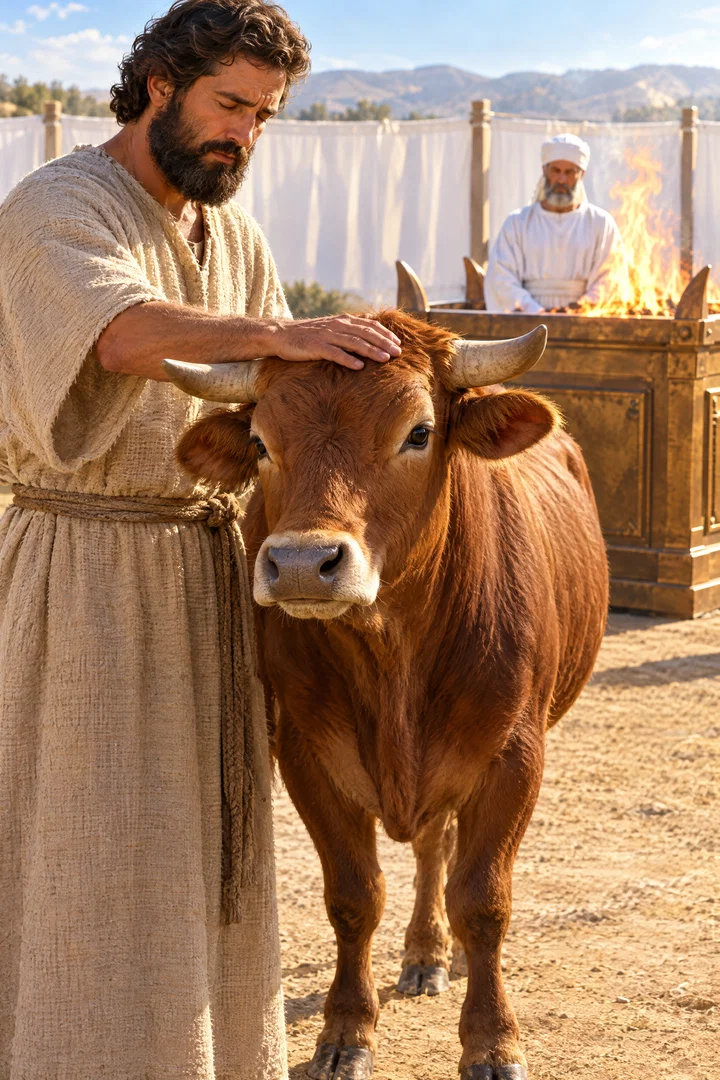
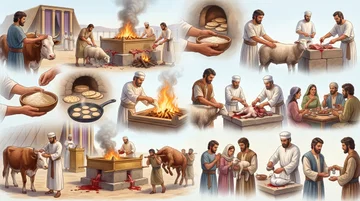
Cross-references
- Hebrews 8:5
Who serve unto the example and shadow of heavenly things, as Moses was admonished of God when he was about to make the tabernacle: for, See, saith he, that thou make all things according to the pattern shewed to thee in the mount.
Earthly priestly service follows a pattern of heavenly things.
- Leviticus 9:24
And there came a fire out from before the LORD, and consumed upon the altar the burnt offering and the fat: which when all the people saw, they shouted, and fell on their faces.
God kindled the altar fire that consumed the burnt offering.
- Leviticus 10:1-2
And Nadab and Abihu, the sons of Aaron, took either of them his censer, and put fire therein, and put incense thereon, and offered strange fire before the LORD, which he commanded them not.
God judges Nadab and Abihu for offering fire he did not command.
- Leviticus 1:3
If his offering be a burnt sacrifice of the herd, let him offer a male without blemish: he shall offer it of his own voluntary will at the door of the tabernacle of the congregation before the LORD.
same offering's requirement and acceptance
- Hebrews 10:1
For the law having a shadow of good things to come, and not the very image of the things, can never with those sacrifices which they offered year by year continually make the comers thereunto perfect.
Ceremonial offerings point beyond their outward forms to Christ.
- Numbers 28:3-4
And thou shalt say unto them, This is the offering made by fire which ye shall offer unto the LORD; two lambs of the first year without spot day by day, for a continual burnt offering.
The ordered altar fire serves the continual daily burnt offering.
- Hebrews 8:1-2
Now of the things which we have spoken this is the sum: We have such an high priest, who is set on the right hand of the throne of the Majesty in the heavens;
Earthly service teaches Christ’s ministry.
- Hebrews 9:6-12
Now when these things were thus ordained, the priests went always into the first tabernacle, accomplishing the service of God.
Contrasts earthly sanctuary services with Christ’s once-for-all ministry.
- Leviticus 1:1
And the LORD called unto Moses, and spake unto him out of the tabernacle of the congregation, saying,
The passage identifies chapter 1 as giving directions for the burnt offering.
- 1 Kings 18:38
Then the fire of the LORD fell, and consumed the burnt sacrifice, and the wood, and the stones, and the dust, and licked up the water that was in the trench.
Fire from the LORD consumed the burnt sacrifice and wood.
Commentary
Each commentary is drawn from primary sources: the writings of Ellen G. White and Adventist pioneers and periodicals. Each commentary is separate. Its own words are not a quotation; follow the references to read the source passages.
Ellen G. White
1 source
Leviticus 1:7 stands among the ceremonial directions governing the sacrificial offerings.ST Jul 15, 1880 That whole system of ceremonies was appointed by Christ himself to represent the coming Savior.ST Jul 15, 1880 The putting of fire on the altar and laying the wood in order was therefore no empty outward form.ST Jul 15, 1880 It pointed directly to the ministry and death of Christ for the redemption of the world.ST Jul 15, 1880
Sources
Pioneers and periodicals
26 sources
The sons of Aaron were to kindle fire on the altar and lay the wood in order upon it, so that the pieces, head and fat of the slain bullock could then be laid in order upon the wood to be burned whole as an accepted atoning sacrifice.ST May 29, 1901ST May 29, 1901ST Feb 3, 1909 It belongs to the offerings through the year in which the sinner laid a hand on the victim, the victim was slain in his place, and its blood figuratively carried sin into the sanctuary, as the first great division of the earthly ministration that shadowed Christ's ministry in the true tabernacle in heaven.RH Feb 25, 1858RH Mar 8, 1870ST Apr 2, 1912 The altar ritual was no meaningless form but was given by Christ to represent the Saviour to come, teaching that sin is hateful to God and requires penalty, and picturing the condemned sinner restored to favor and pardon through bloody sacrifice.ST Jul 15, 1880ST Oct 25, 1905ST Feb 3, 1909ST Feb 13, 1912ST Feb 8, 1883 The fire to be used was consecrated sacred fire first kindled by God Himself and kept burning constantly, from which the sacrifice was to be lit, for no other fire but this might ever be used.ST Sep 12, 1900 Its consuming of the offering means the sacred fire of divine love kindled by God in the soul, by which the whole renewed being is voluntarily presented in undivided consecration to His service, as most fully seen in the life of Jesus daily poured out in service, while the priest's laying of the pieces in order teaches that men cannot lay their own weaknesses on the altar but must place them in the hands of Christ their High Priest.ST Sep 12, 1900ST Jan 20, 1914ST Sep 12, 1900
Ritual and Sanctuary Setting
The verse describes the sons of Aaron kindling fire upon the altar and laying the wood in order upon it before the accepted animal substitute was burned as an atoning sacrifice.ST May 29, 1901ST Feb 3, 1909 It gives directions for the burnt offering, that Aaron's sons were to kindle the altar fire and arrange the wood on it, in a law showing God's hatred of sin and that sin required a penalty.ST Feb 3, 1909
In the burnt offering of the herd, the worshiper first kills the bullock before the Lord, then Aaron's sons present and sprinkle the blood round about upon the altar at the door of the tent of meeting, and then the offering is flayed and cut into pieces.ST May 29, 1901 After that the sons of Aaron put fire upon the altar and lay the wood in order upon the fire.ST May 29, 1901 The pieces, the head, and the fat are then laid in order upon the wood on the fire, the inwards and legs being washed with water, and the priest burns the whole upon the altar for a burnt offering made by fire of a sweet savor unto the Lord, showing the whole is accepted.ST May 29, 1901
The verse belongs to the individual offerings brought in faith through the year, in which the sinner brought a victim to the tabernacle, laid a hand on its head to signify transfer of sin and guilt, and the victim was slain in the sinner's place.RH Feb 25, 1858RH Feb 3, 1853RH Mar 28, 1854 The priest carried its blood into the sanctuary, figuratively transferring sin through the blood or the priest, so that the sanctuary became the receptacle of sin during the year.RH Feb 25, 1858RH Mar 28, 1854ST Offerings made in faith, together with the daily offering, figuratively transferred the penitent's sins to the sanctuary through the sacrifice's blood or the priest.ST That explanation of transfer of sin does not further explain the verse's specific instruction about placing fire and arranging wood on the altar.RH Feb 3, 1853
The verse belongs to the daily ministration in the holy place, the special work for burdened individuals presenting their particular offerings in faith in the Redeemer to come.RH Mar 8, 1870ST Apr 2, 1912 That work forms the first great division of the earthly ministration, distinct from the daily ministration for the nation and from the yearly work in the most holy place for cleansing the sanctuary that completed the yearly round.RH Mar 8, 1870ST Apr 2, 1912 That whole ministration was the example and shadow of Christ's more excellent ministry in the true tabernacle in heaven.RH Mar 8, 1870 The verse is also set among the yearly services of the Levitical sanctuary, whose recurring priesthood and rites served as a type portraying Christ's once-for-all priesthood in the heavenly sanctuary.ST Nov 28, 1895
The offering law shows sacrificial service was within reach of people of every means, from costly animals to a small measure of flour even for the very poor, yet each person had to bring something because all had sinned.RH Jan 20, 1859 The system of typical sacrifices began when man fell, was given to Adam's family immediately after the fall and transmitted through the faithful.ST Jul 16, 1894ST Feb 15, 1905 Abel obeyed its burnt-offering instructions in every detail and Cain disobeyed by bringing fruit of the ground which God had not commanded, which is why Abel's offering was accepted and Cain's rejected and shows God accepts obedience.ST Jul 16, 1894 With Israel's deliverance from Egypt it was enlarged, centralized, and embodied in the sanctuary and its elaborate services with special features because through Israel the promised Seed the Redeemer was to come.ST Feb 15, 1905 It was included with the re-established everlasting covenant and statutes and judgments in the promises at Sinai sometimes called the old covenant, and Leviticus 1:7 shows God accepts nothing but obedience and rejects only disobedience, since sin is transgression of the law.ST Jul 16, 1894ST Feb 15, 1905
The priesthood, altar, sacrifices, and rites are institutions established by God belonging to the history and laws of the Pentateuch on which the New Testament account of redemption depends.ST May 8, 1879 The sacrifice instructions were already followed at a Jewish temple at Elephantine long before the Babylonian captivity.RH Jul 4, 1912
Atonement Foreshadowed in Christ
Leviticus 1:7 belongs to the ceremonial directions for sacrifices given by Christ Himself to represent the Savior to come.ST Jul 15, 1880 The altar ritual was no meaningless outward form, but pointed to Christ's ministry and death for the redemption of the world.ST Jul 15, 1880 It stands within a section describing different kinds of sacrifices, each of which teaches in type something about the work of Jesus Christ.ST Feb 13, 1912 In the burnt-offering ceremony the parts of the sacrifice were arranged and burned on the altar, picturing a condemned sinner restored to God's favor and pardon through bloody sacrifice, whose ritual details teach spiritual truth.ST Feb 8, 1883
The verse belongs to the fuller symbolism of Israel's worship, in which the altar of burnt offering and the victim's blood provided the way to approach God's presence.ST Oct 25, 1905 Those offerings were intended to bring healing from sin and conscience and peace with God.ST Oct 25, 1905 The directions for the burnt offering, in which Aaron's sons were to kindle the altar fire and arrange the wood upon it, show God's hatred of sin and that sin required a penalty.ST Feb 3, 1909 They are an object-lesson showing that sin is hateful in the sight of God and revealing how sin may be put away. The blood of such offerings cannot itself take away sin, but points to the Lamb of God and His work in its various phases by which souls are justified while God remains just.
Leviticus 1:7 is part of Leviticus 1-7 describing the main features of the service of the earthly sanctuary, which was not written in vain or without purpose but is profitable for doctrine, for reproof, for correction, for instruction in righteousness that the man of God may be perfect, and was written for learning that through patience and comfort of the Scriptures men might have hope.ST Jun 19, 1907 That earthly sanctuary and its service was a pattern and shadow or type, an impressive object-lesson teaching the temple of God in heaven and Christ's priestly service therein as High Priest and Minister of the heavenly sanctuary.ST Jun 19, 1907 Study of it therefore enables understanding of the heavenly and gives clearer views of the Saviour and His work in behalf of men, revealing God's way, power, and glory.ST Jun 19, 1907 The verse belongs to the Levitical law of types given to the children of Israel and communicated through Moses, distinct from the law of God and moral law that is absolute and perpetual, holy, just, and good and was spoken by God Himself from Sinai.RH Aug 20, 1872 That Levitical law was abolished by Christ.RH Aug 20, 1872
Sacred Fire and Consecration
The fire to be put upon the altar is consecrated sacred fire, first kindled by God Himself upon the altar of incense and kept burning constantly ever since, then taken from there to ignite the sacrifice with the wood laid in order upon it.ST Sep 12, 1900 Usually the sacrifice is lit from that preserved fire, though on special occasions God kindles it directly from above as with Elijah on Mount Carmel.ST Sep 12, 1900 No other fire but this consecrated fire may ever be used, and offering strange fire brings consuming judgment from God as with Nadab and Abihu.ST Sep 12, 1900
The burnt offering must be a whole, clean, sound, whole burnt offering, burned entirely upon the altar as pleasing to God and never divided.ST Sep 12, 1900ST May 28, 1902 A large animal may be cut up for convenience while still burning it all.ST Sep 12, 1900
The fire upon the altar that consumes the offering means the sacred fire of divine love that God alone kindles in the soul.ST Sep 12, 1900 After the sinner has been accepted in Christ's merit, with the flesh crucified and the life renewed by divine power, the whole renewed being is voluntarily presented to be consecrated to His service and used as He directs, consumed as a sacrifice upon His altar by that love-fire with an undivided heart wholly given to God.ST Sep 12, 1900 Its truest and fullest meaning is the life of Jesus, whose whole life was constantly consumed day by day in service under divine love burning on the altar of His heart, not only in death on Calvary but in being daily poured out to be ignored and despised and ungratefully received and finally hated and mocked and spit upon and crucified.ST Sep 12, 1900
The offering shows complete consecration through death and burning.ST Sep 12, 1900 The killing of the animal and the shedding of blood means the giving of the life, without which there is no remission, and the offering stands for the one who offers it.ST Sep 12, 1900 A bruised and beaten but living animal would speak only of partial consecration, of going with Christ to Gethsemane and Pilate's judgment-hall, but only the flowing blood and the flesh consumed by fire on the altar for a sweet savor fitly speaks of willingness, in His strength, to go with Him even to Calvary.ST Sep 12, 1900
The burnt offering was arranged on the altar by the priest, with the offerer handing the cut pieces to him and the priest placing them on the altar.ST Jan 20, 1914 This teaches that people cannot lay their own weaknesses on the altar but must place them in the hands of Christ, their High Priest, who can lay them there.ST Jan 20, 1914
Sources