Leviticus 16:31
It shall be a sabbath of rest unto you, and ye shall afflict your souls, by a statute for ever.
Translations
It shall be a sabbath of rest to you, and you shall afflict your souls, by a statute for ever.
King James Version, KJV Cambridge Paragraph Bible
It shall be a sabbath of rest unto you, and ye shall afflict your souls, by a statute for ever.
It shall be a sabbath of rest to you, and ye shall afflict your souls by a statute for ever.
Revised Version, American Standard Version
It is a sabbath of solemn rest unto you, and ye shall afflict your souls; it is a statute for ever.
it [is] to you a sabbath of rest, and ye have humbled yourselves — a statute age-during.
A sabbath of rest shall it be unto you, and ye shall afflict your souls: [ it is] an everlasting statute.
A sabbath of sacred rest, it is unto you, Therefore shall ye humble your souls, A statute age-abiding.
Berean Standard Bible, Majority Standard Bible
It is a Sabbath of complete rest for you, that you may humble yourselves; it is a permanent statute.
It is a Sabbath of solemn rest to you, and you shall afflict your souls. It is a statute forever.
It is a special Sabbath for you, and you are to keep yourselves from pleasure; it is an order for ever.
This shall be a Sabbath of rest vnto you, and ye shall humble your soules, by an ordinance for euer.
Douay-Rheims (Challoner revision)
For it is a sabbath of rest, and you shall afflict your souls by a perpetual religion.
Pictures
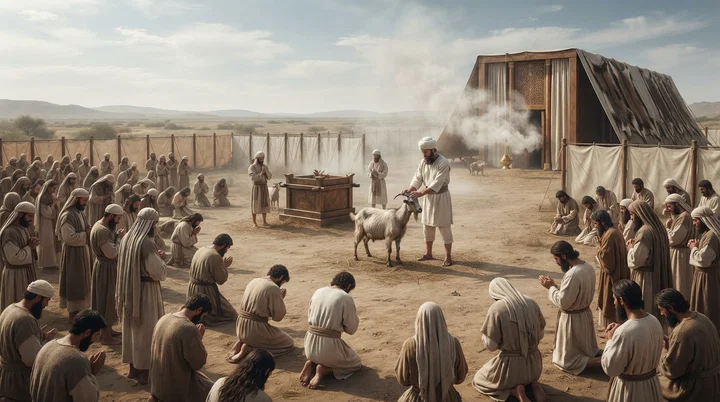
Cross-references 20 of 64
- Hebrews 9:6-7
Now when these things were thus ordained, the priests went always into the first tabernacle, accomplishing the service of God.
The yearly entrance of the high priest into the holiest represents the Day of Atonement service.
- Leviticus 23:27-29
Also on the tenth day of this seventh month there shall be a day of atonement: it shall be an holy convocation unto you; and ye shall afflict your souls, and offer an offering made by fire unto the LORD.
Requires rest and affliction of the soul on the Day of Atonement, with a penalty for neglect.
- Hebrews 9:23-24
It was therefore necessary that the patterns of things in the heavens should be purified with these; but the heavenly things themselves with better sacrifices than these.
Christ’s heavenly ministry fulfills the Day of Atonement sanctuary cleansing.
- Hebrews 9:11-12
But Christ being come an high priest of good things to come, by a greater and more perfect tabernacle, not made with hands, that is to say, not of this building;
Christ enters the heavenly sanctuary as High Priest, fulfilling the earthly sanctuary service.
- Leviticus 16:21-22
And Aaron shall lay both his hands upon the head of the live goat, and confess over him all the iniquities of the children of Israel, and all their transgressions in all their sins, putting them upon the head of the goat, and shall send him away by the hand of a fit man into the wilderness:
The high priest confesses Israel’s sins over the scapegoat.
- Hebrews 9:25-26
Nor yet that he should offer himself often, as the high priest entereth into the holy place every year with blood of others;
Contrasts the yearly Day of Atonement service with Christ’s once-for-all sacrifice.
- Leviticus 16:15-19
Then shall he kill the goat of the sin offering, that is for the people, and bring his blood within the vail, and do with that blood as he did with the blood of the bullock, and sprinkle it upon the mercy seat, and before the mercy seat:
Blood rites make atonement for the people and cleanse the sanctuary on the Day of Atonement.
- Hebrews 10:1
For the law having a shadow of good things to come, and not the very image of the things, can never with those sacrifices which they offered year by year continually make the comers thereunto perfect.
The law’s repeated sacrifices were a shadow of Christ’s greater work.
- Hebrews 8:1-5
Now of the things which we have spoken this is the sum: We have such an high priest, who is set on the right hand of the throne of the Majesty in the heavens;
Earthly priestly service foreshadows Christ’s ministry in the heavenly sanctuary.
- Leviticus 23:32
It shall be unto you a sabbath of rest, and ye shall afflict your souls: in the ninth day of the month at even, from even unto even, shall ye celebrate your sabbath.
Both call the Day of Atonement a Sabbath and require self-affliction.
- Numbers 29:7-11
And ye shall have on the tenth day of this seventh month an holy convocation; and ye shall afflict your souls: ye shall not do any work therein:
Prescribes the Day of Atonement observance, including affliction of soul and its special offerings.
- Leviticus 16:8
And Aaron shall cast lots upon the two goats; one lot for the LORD, and the other lot for the scapegoat.
Aaron casts lots to distinguish the Lord’s goat from the scapegoat.
- Leviticus 25:4
But in the seventh year shall be a sabbath of rest unto the land, a sabbath for the LORD: thou shalt neither sow thy field, nor prune thy vineyard.
Both texts call the seventh-year rest a Sabbath.
- Exodus 20:8-11
Remember the sabbath day, to keep it holy.
The yearly Sabbath of atonement is contrasted with the weekly Sabbath grounded in creation.
- Colossians 2:16
Let no man therefore judge you in meat, or in drink, or in respect of an holyday, or of the new moon, or of the sabbath days:
Sabbath days include ceremonial sabbaths, which are shadows of things to come.
- Hebrews 7:27
Who needeth not daily, as those high priests, to offer up sacrifice, first for his own sins, and then for the people’s: for this he did once, when he offered up himself.
Christ’s one offering contrasts with the repeated yearly services.
- Leviticus 16:2
And the LORD said unto Moses, Speak unto Aaron thy brother, that he come not at all times into the holy place within the vail before the mercy seat, which is upon the ark; that he die not: for I will appear in the cloud upon the mercy seat.
Restricts entry into the most holy place, where God appears above the mercy seat.
- Leviticus 23:27
Also on the tenth day of this seventh month there shall be a day of atonement: it shall be an holy convocation unto you; and ye shall afflict your souls, and offer an offering made by fire unto the LORD.
dates the atonement service described
- Leviticus 16:5
And he shall take of the congregation of the children of Israel two kids of the goats for a sin offering, and one ram for a burnt offering.
Names the two goats provided for the people’s offering.
- Leviticus 16:19
And he shall sprinkle of the blood upon it with his finger seven times, and cleanse it, and hallow it from the uncleanness of the children of Israel.
The altar is cleansed from Israel’s uncleanness during the Day of Atonement.
Commentary
Each commentary is drawn from primary sources: the writings of Ellen G. White and Adventist pioneers and periodicals. Each commentary is separate. Its own words are not a quotation; follow the references to read the source passages.
Ellen G. White
50 sources
Leviticus 16:31 appoints the Day of Atonement on the tenth day of the seventh month as a Sabbath of rest when all ordinary work was laid aside for solemn worship, humility before God, and deep searching of heart.GC88 398.4–400.1GC88 419.34SP 262.1–263.1RH Nov 8, 1915GC88 421.2 To afflict the soul was to humble oneself in sorrowful repentance with confession of sin and cleansing from moral defilement, under a lasting statute that all were required to obey on pain of being cut off.GC88 398.4–400.1ST Nov 8, 1905GC88 490.1RH Nov 9, 1905Ms 25, 1886, par. 6–7 On that day the high priest entered the Most Holy Place once a year to cleanse the sanctuary and complete the yearly ministration, removing the confessed sins that had been transferred there by sacrificial blood and bearing them away upon the scapegoat forever separated from the people.GC88 398.4–400.1GC 399.1–44SP 262.1–263.1GC 480.1GC88 420.1 That type was fulfilled in time on October 22, 1844, at the end of the 2300 days, when Christ as great High Priest entered the most holy place of the heavenly sanctuary to perform the closing work of atonement and cleanse it by His own blood.GC 399.1–44SP 499.3–500.1GC88 421.2GC 433.1–434.1LS 116.1 The present is therefore the great antitypical Day of Atonement and investigative judgment of professed believers, in which every individual case is examined and each person must now afflict the soul in self-examination, repentance, and overcoming, for there will be no second probation.ST Nov 8, 1905GC88 490.15T 420.35T 520.19T 218.3
Sabbath Rest and Humbling
It is a Sabbath of rest, a day when all ordinary business and work were laid aside and the whole congregation spent the day in solemn rest, worship and humility before God with prayer, fasting and deep searching of heart.GC88 419.34SP 262.1–263.1RH Nov 8, 1915GC 419.1–3PP 355.2–4 This solemn humbling impressed upon them God's holiness and His abhorrence of sin, and that contact with sin brings pollution.GC88 419.3RH Nov 8, 1915GC 419.1–3 The day was marked by solemn worship while the atonement went forward.PP 355.2–4ST Mar 4, 1903
To afflict the soul meant to humble oneself in solemn repentance before God in sorrow for sin.ST Nov 8, 1905GC88 490.1GC 430.2–3RH Nov 9, 1905 That humbling included confessing sins, remembering sins, and seeking purification from moral defilement.Ms 25, 1886, par. 6–7Ms 3, 1885, par. 235MR 5.2STMW10 7.4–8.1 It called for inward humility and confession as the pattern for seeking God's presence and victory rather than focusing on others.STB 58.3
The observance was imposed by a statute for ever, a lasting statute that remained in force.GC88 398.4–400.1EW 212.2Ms 3, 1885, par. 235MR 5.2Ms 26, 1886, par. 18–19 It required reverence and careful performance of every part of the service.Ms 3, 1885, par. 235MR 5.2 This pattern belongs also to the antitypical Day of Atonement, during which those ministering in sacred things must be holy and guard their lives from contamination, and God's commands including the Sabbath must be obeyed rather than adjusted for convenience.5MR 5.2Ms 26, 1886, par. 18–19Ms 55, 1911, par. 22
The day fell on the tenth day of the seventh Jewish month at the close of the yearly round of ministration, when the sanctuary was cleansed.GC88 398.4–400.1GC 399.1–4GC88 421.2 It came shortly before the feast, and after confessing their sins the people were declared to be at peace with Heaven, which prepared them to rejoice at the feast.DA 448.2 Its timing and ritual served as a type of Christ's work as High Priest, who after the 2300 days entered the most holy place to cleanse the heavenly sanctuary, and who after completing His special atonement for Israel will come in kingly power and gather those waiting for Him.GC88 398.4–400.1EW 212.2GC88 421.2
While the high priest entered the Most Holy Place once a year to meet with God before the mercy seat, all Israel were required to gather about the sanctuary.GC 430.2–34SP 270.1GC88 430.2–3ST Mar 4, 1903 They waited in solemn silence and prayer, fearing that sin might bring death in God's presence if he was delayed.SG4 9.2ST Mar 4, 1903 They rejoiced when he came forth and blessed them.GC 399.1–4SG4 9.2ST Mar 4, 1903
Everyone was required to take part in humbling the soul in order to receive pardon of sins.GC88 490.1GC 430.2–34SP 270.1GC88 430.2–3 Refusing this response brought the danger of being cut off from among the people and from the congregation.ST Nov 8, 1905GC88 490.1GC 430.2–34SP 270.1RH Nov 9, 1905
Sanctuary Cleansing Work
On that day the high priest made atonement for all Israel to cleanse the sanctuary and complete the yearly round of ministration, thus removing their sins from the sanctuary.GC88 398.4–400.1GC 399.1–44SP 262.1–263.14SP 499.3–500.1GC88 421.2 It was the annual service of atonement at the close of the year, kept as a Sabbath of rest when ordinary work was laid aside and every Israelite humbled himself before God with prayer, fasting, and searching of heart, by a lasting statute.GC88 398.4–400.14SP 262.1–263.1EW 212.2 That earthly cleansing in the most holy place is the type of Christ's final work as High Priest, who after completing His special atonement for Israel will come in kingly power and gather those waiting for Him.GC 399.1–44SP 499.3–500.1EW 212.2GC88 421.2
The day had a part only for those who had come before God with confession and repentance and whose sins through the blood of the sin offering had been transferred to the sanctuary.GC 480.1 The sacrificial blood transferred sin to the sanctuary but did not yet fully release the sinner from the law's condemnation.GC88 420.1 On the Day of Atonement the high priest made satisfaction for the law's claims, then carried the sins from the sanctuary and symbolically transferred them to the scapegoat, which bore them away as forever separated from the people.GC88 420.1
The second apartment of the earthly tabernacle, the holy of holies containing the ark, was opened only on that day for the cleansing of the sanctuary, and this earthly ministration served as the example and shadow of heavenly things.GC 433.1–434.1GC88 433.1 That yearly opening points to the opening of the most holy place of the heavenly sanctuary in 1844, when Christ entered there to perform the closing work of atonement, officiating before the ark and pleading His blood in behalf of sinners, a change of ministration understood by those who study the sanctuary and follow Him by faith.GC 433.1–434.1GC88 433.1 The high priest's ministry for Israel pictures Christ's actual present ministry for His people as Sin-bearer and Substitute for the offender, to whom all types point.Ms 124, 1901, par. 18–1917MR 242.1–2 As Satan then pointed to the defilement of God's people and triumphed in their discomfiture while accusing them as transgressors of the law, so he does now, but unlike sinful man Christ cannot be so accused and He takes away the sin of the repentant, believing transgressor.Ms 124, 1901, par. 18–1917MR 242.1–2
Type Fulfilled in 1844
As with the Passover and first-fruits foreshadowings of the first advent, which were met not only in event but in time, so the types pointing to the second advent must be met at the time marked out in the symbolic service.GC 399.1–4 The cleansing of the sanctuary, the great Day of Atonement, fell on the tenth day of the seventh Jewish month, when atonement was made for all Israel to remove their sins from the sanctuary and the high priest then came forth and blessed the people.GC 399.1–4 That work foreshadows Christ as great High Priest appearing to purify the earth by destroying sin and sinners and to bless His waiting people with immortality.GC 399.1–4
The tenth day of the seventh month in 1844 fell upon October 22, and was therefore regarded as the time of the Lord's coming, in agreement with the evidence that the 2300 days would end in the autumn.GC 399.1–4 On that day those looking for Christ expected Him to come, and were mistaken in the nature of the event.GC 399.1–4LS 116.1 The verse appoints that very day for the high priest to accomplish his special work of atonement as a sabbath of rest with affliction of souls.LS 116.1
On that very day Christ as the great High Priest did accomplish all that the type justified expecting, fulfilling the antitypical Day of Atonement.LS 116.1 Those who acted according to that faith could sorrow in disappointment yet rejoice with a conscience void of offense toward God and man, abundantly blessed by God.LS 116.1 All was soon made to work together for the good of His people and His glory.LS 116.1
After the 2300 days ended He entered the most holy place of the heavenly sanctuary in 1844 to perform the closing work of the atonement.4SP 499.3–500.1GC88 421.2GC 433.1–434.1GC88 433.1Ms 6, 1876, par. 5–6 The second apartment of the earthly tabernacle, the holy of holies containing the ark, was opened only on that day for the cleansing of the sanctuary, and this earthly ministration served as example and shadow of heavenly things.GC 433.1–434.1GC88 433.1 Its fulfillment is the opening of the most holy place of the heavenly sanctuary in 1844, when Christ entered there to officiate before the ark and plead His blood in behalf of sinners.GC 433.1–434.1GC88 433.1 There He cleanses it from the sins of the people by virtue of His own blood, completing the annual service of atonement at the close of the year in antitype.4SP 499.3–500.1GC88 421.2Ms 6, 1876, par. 5–6
The sanctuary to be cleansed is not the earth to be purified by fire at Christ's second coming to punish its inhabitants for iniquity, but the sanctuary in heaven.Ms 6, 1876, par. 5–6 In mercy this gives sinners still more time to repent of their sins and prepare for His coming.Ms 6, 1876, par. 5–6 After completing His special atonement for Israel in the most holy place and cleansing the sanctuary, He will come in kingly power and gather those waiting for Him.GC 399.1–4EW 212.2
Present Investigative Judgment
The present time is the great antitypical Day of Atonement, now present as a solemn work going on in the sanctuary above.5T 520.19T 218.3Lt 259, 1903, par. 18–20Ms 26, 1886, par. 18–1915MR 21.4 It is the solemn scenes of the judgment concerning every individual, when each person's case comes under review before God.5T 420.3 In this great day God's people are to confess their sins and diligently repent, each person seeking God, confessing his own sin rather than another's, and humbling the heart before Him.9T 218.3Lt 259, 1903, par. 18–2015MR 21.4 It is the time when Christ makes atonement for His people in the heavenly sanctuary, and God's commands, including the Sabbath, must be obeyed rather than adjusted for convenience.Ms 26, 1886, par. 18–19
The great day of final atonement and investigative judgment considers only the cases of the professed people of God, while the judgment of the wicked is a distinct and separate work that takes place at a later period.GC 480.1 That judgment has part only for those who have come before God with confession and repentance and whose sins through the blood of the sin offering have been transferred to the sanctuary.GC 480.1 The work of preparation is individual and not in groups, with every person examined and tested separately as closely as if there were not another being upon the earth, to be found without spot or wrinkle.ST Nov 8, 1905GC88 490.1 Those who would have their names retained in the book of life must sorrow for sin, truly repent, search their hearts faithfully and put away the light frivolous spirit during probation, waging earnest warfare to subdue the evil tendencies that strive for the mastery.ST Nov 8, 1905GC88 490.1RH Nov 9, 1905 They must put sin away, confess it, and trust Christ to cleanse them so that their sins go beforehand to judgment and pardon can be written against their names, doing the work of overcoming here in this life with mourning and weeping over sin, cleansing the hands and purifying the heart, forsaking every sin and keeping thoughts and bodies pure, while names not confessed are blotted out as every case is decided and the investigative judgment comes upon the living.ST Nov 8, 1905Ms 81, 1886, par. 921MR 385.5–386.3
It is much more essential to understand the work of Christ as merciful High Priest in the most holy place of the heavenly sanctuary and to know what duties are required.GC 430.2–34SP 270.1GC88 430.2–3 Only those who by faith follow Jesus in the great work of atonement and follow the change of ministration receive the benefits of His mediation.GC 430.2–3GC88 433.1 The careless and unbelieving who are willingly ignorant of it, like the unbelieving Jews at Christ's first advent, receive no benefit and have no communion with God.GC 430.2–3 That change is the opening of the most holy place of the heavenly sanctuary in 1844, when Christ entered there to perform the closing work of atonement, officiating before the ark and pleading His blood in behalf of sinners, as the second apartment of the earthly tabernacle containing the ark was opened only on that day for the cleansing of the sanctuary.GC88 433.1
That heavenly work is to be kept constantly before the mind, especially by those employed in institutions, and not be lightly regarded through business cares absorbing the mind.5T 420.3 It should be the constant study of believers and should be taught to children, calling for turning away from worldly customs and practices to spirituality, piety, and earnest work for God.5T 520.1 It is to be kept before the people and urged upon their consciences with earnestness and power, giving correct views of the importance of the work for this time.5T 420.3 A proper appreciation of it produces greater energy and zeal to make the work a success, guards against becoming careless and blinded to the wants of the cause and the perils attending every soul, and makes each a channel of light.5T 420.3
Call to Humble Soul Today
The command to afflict the soul applies now, in the few remaining days of probation, for the present is the great antitypical day of atonement. ST Nov 8, 1905GC88 490.1RH Nov 9, 1905Ms 55, 1911, par. 22Ms 93, 1901, par. 35–37 Now is the accepted time to afflict the soul, for there will be no second trial. Ms 93, 1901, par. 35–37 Those who would have their names retained in the book of life must sorrow for sin, truly repent, and search their hearts faithfully during their probation, each person examined and tested separately and not in groups. ST Nov 8, 1905GC88 490.1RH Nov 9, 1905CE 156.1–157.1 Its call is to humble the heart before God and confess sins. CE 156.1–157.1Ms 55, 1911, par. 22
Afflicting the soul means deep faithful searching of heart and self-examination, sorrow for sin and true repentance, putting away the light frivolous spirit, and earnest warfare to subdue the evil tendencies that strive for the mastery. GC88 490.1Lt 6, 1880, par. 55–5621MR 385.5–386.3Ms 93, 1901, par. 35–37 It is sincere repentance with mourning and weeping over sin. 21MR 385.5–386.3Ms 93, 1901, par. 35–37 The Israel of God needs this work now but does not feel the need for it, preferring busy activity to the self-examination that must take place, while a heart not in harmony with the Word neglects to search its pages and a heart not in harmony with Jesus feels it a punishment to approach Him in prayer. Lt 6, 1880, par. 55–56
It means that all the high-minded and self-sufficient must humble themselves before God and repent of their sins, lest they be weighed in the balances and found wanting. Ms 143, 1899, par. 5Ms 93, 1901, par. 35–37 It means cleansing the hands and purifying the heart, forsaking every sin, keeping thoughts and bodies pure, waging valiant warfare against every kind of sin, and doing the work of overcoming here in this life, in order to receive pardon written against the name and to stand when every case is brought up. Ms 143, 1899, par. 521MR 385.5–386.3Ms 93, 1901, par. 35–37 It means to cease striving for the highest place and causing heart-burning and discord, and never to think or speak evil of a brother or judge him. Ms 93, 1901, par. 35–37 It is being sanctified through the truth, for Christ is the Truth, by putting on Christ and partaking of His love and tenderness and compassion and of the divine nature, through receiving the truth as it is in Jesus and applying the Word to the soul, and those who humble themselves in this way will be lifted up by God and will pass through the portals of the holy city to live in the heavenly courts. Ms 143, 1899, par. 5Ms 93, 1901, par. 35–37
Each person is to seek God, confess his own sin rather than another's, and humble the heart before Him in a life filled with the Holy Spirit and made new. ASCOP 25.2STB 58.39T 218.3 Wrong must be confessed rather than covered when the books are opened and every deed is judged, with sin put away and forsaken and no sin cherished or practiced while the cases of all are being decided, trusting Christ to cleanse so that sins go beforehand to judgment and pardon can be written against the name. Ms 81, 1886, par. 9Lt 35, 1885, par. 26–32STMW10 7.4–8.1 This is resting by living faith upon the merits of a crucified and risen Saviour, accepting His justifying grace and the Holy Spirit's sanctifying work. ASCOP 25.2
Its pattern calls for inward humility and confession to seek God's presence and victory rather than focusing on the sins or confessions of others. STB 58.3 It requires reverence and careful observance of every part of the service, with those ministering in sacred things holy and guarding their lives from contamination. 5MR 5.2 It is a solemn period of self-examination in which each person's case comes under review, when people must consider how their conduct and influence and how one's case will stand before God's judgment, and turn from sin and seek purification before God because eternal results are at stake. 5T 359.1Lt 55, 1886, par. 9–10Lt 53, 1886, par. 4
The work calls for turning away from worldly customs and practices to spirituality, piety, and earnest work for God, and that work should be the constant study of believers and should be taught to children. 5T 520.1 There is no time left for doctrinal disputation and contention that confuses people and destroys harmony, but a man must be confessing his sins, humbling his heart before God, and getting ready for the great conflict. 15MR 21.4
Sources
Pioneers and periodicals
125 sources
It appoints the tenth day of the seventh month, the Day of Atonement, as the most solemn annual sabbath of rest on which no work at all is done and all business is set aside.RH Dec 24, 1908RH Feb 3, 1853RH Sep 16, 1852 To afflict the soul on that day is to humble oneself before God with fasting, weeping, prayer, searching of heart, confession of sin and putting away sin.RH Dec 24, 1908ST Sep 6, 1910ST Jul 9, 1894 On that day the high priest alone entered within the second veil into the most holy place with blood, first for himself and then for the people, to cleanse the sanctuary, altar and people of the confessed sins borne in during the year, with the live goat for Azazel bearing all iniquities into a land not inhabited.RH Feb 2, 1911ST Sep 6, 1910RH Sep 16, 1852ST Jun 4, 1885 That yearly service was the shadow of Christ as great High Priest cleansing the true tabernacle in heaven with his own blood, a work begun at the close of the 2300 days on October 22, 1844, when He entered the most holy place to begin the investigative judgment and the final blotting out of sins.ST Sep 6, 1910ST Jul 9, 1894ST Apr 3, 1879RH Nov 8, 1906RH Mar 28, 1854 Since 1844 is therefore the antitypical Day of Atonement, all must now afflict the soul by repentance, confession and forsaking of sin and overcoming, for whoever refuses will be cut off and bear his own sins when probation closes.ST Sep 6, 1910RH Dec 29, 1904ST Dec 21, 1915
Day and Its Observance
It is the tenth day of the seventh month, Tishri, the Day of Atonement, the yearly atonement and cleansing of the sanctuary.RH Feb 3, 1853RH Sep 16, 1852RH Oct 31, 1854RH Mar 8, 1870 It was the most solemn and important sacred day of the year, the most important day of the year, the yearly national atonement for all Israel for all their sins.RH Feb 3, 1853RH Sep 16, 1852RH Oct 31, 1854ST May 27, 1897 It was observed annually with strict fasting for expiation of sins, when atonement was made to cleanse the people that they might be clean from all their sins before the Lord.RH Feb 3, 1853RH Sep 16, 1852RH Oct 31, 1854ST May 27, 1897 On that day the ministration was changed from the holy place, where it had continued through the year, to the holiest of all.RH Sep 16, 1852RH Mar 8, 1870
It shall be a sabbath of rest, a Sabbath of rest, a solemn day of rest and self-affliction.RH Dec 24, 1908RH Feb 3, 1853RH Feb 3, 1916ST Mar 23, 1904 On it no work at all is to be done, whether by Israelite or stranger, with no work of any kind, no labor, and partaking of no food.RH Dec 24, 1908RH Feb 3, 1916ST Mar 23, 1904ST May 27, 1897 All business is set aside while the work of atonement goes forward, and the whole nation assembled about the sanctuary while the high priest alone entered within the veil into the Holy of Holies.RH Sep 16, 1852ST May 27, 1897 The congregation gathers about the sanctuary in solemn worship, humbling themselves before God, and after the scapegoat was sent away they were free from sin and rejoiced before the Lord.RH Dec 24, 1908RH Sep 16, 1852ST Mar 23, 1904ST May 27, 1897
To afflict the soul means to humble oneself before God, to make the record clear and have final atonement made on that same day.RH Dec 24, 1908ST Sep 6, 1910ST Jul 9, 1894RH Feb 3, 1916ST Mar 23, 1904 It is done with fasting, weeping, prayer, searching of heart and searching the heart, confession of sins, heartfelt contrition for sin and not doing penance, controlling appetite and selfish interests, putting away sin and finishing transgression and making an end of sins.ST Sep 6, 1910ST Jul 9, 1894ST Mar 23, 1904ST May 27, 1897ST Nov 23, 1904 Fasting is the appointed means of afflicting the soul, and every member of Israel must so afflict his soul while the sanctuary is cleansed.ST Sep 6, 1910ST Jul 9, 1894ST May 27, 1897
The observance is imposed by a statute for ever, a lasting ordinance and lasting statute for all generations.RH Feb 3, 1853RH Oct 31, 1854RH Feb 3, 1916ST Mar 23, 1904 Both the rest and the humbling are established as a lasting statute.RH Feb 3, 1853RH Oct 31, 1854RH Feb 3, 1916ST Mar 23, 1904 It is still observed even after the destruction of the temple at Jerusalem when offerings can no longer be made and there is no earthly high priest to perform the work, while since the Crucifixion and the rending of the temple veil Christ has become the High Priest and earthly sacrifices are of no service.ST May 27, 1897
Whoever does not afflict the soul and do the required work on that day is to be cut off from among the people.ST Sep 6, 1910ST Dec 12, 1916ST Nov 23, 1904 Every man was to afflict his soul while the work of atonement was going forward, to cease from his own works and afflict his soul, and whoever refused or failed to humble himself faced being cut off from Israel.ST Sep 6, 1910ST Dec 12, 1916ST Nov 23, 1904 The soul who does not obey is punished with death, because it is the day on which all sins are blotted out before God; those who humble themselves, confess their sins, and put them away stand clear before God, while those who do not are cut off and lost, with each person’s case treated as forever settled.ST Sep 6, 1910ST May 27, 1897ST Dec 12, 1916
In Hebrew idiom the day is called not only a Sabbath but the Sabbath of Sabbaths, which means Sabbath or rest in the superlative degree, showing another Jewish festival besides the weekly Sabbath bears the name Sabbath.RH Jan 10, 1856 In the Greek Old Testament it is called sabbaton, the Septuagint using sabbaton for one of the Jews’ yearly ceremonial sabbaths.ST Oct 4, 1883ST Apr 3, 1879RH Dec 27, 1870 The word forever is limited by the continued existence of the thing to which it applies. It appoints the only fast commanded through Moses, the fast of the Day of Atonement, while all other regular fasts, especially the Monday and Thursday synagogue fasts, are later human additions.ST May 19, 1881
Earthly Sanctuary Ritual
On that day the yearly ministration was transferred from the holy place, where it had continued through the year, to the holiest of all within the second veil.RH Feb 2, 1911ST Jul 4, 1911ST Nov 20, 1879ST Oct 22, 1874 The high priest alone, after solemn preparation with incense, entered once a year into the most holy place where God appeared between the cherubim over the mercy seat before the ark and the Ten Commandments.RH Feb 2, 1911ST Sep 6, 1910RH Sep 16, 1852ST Apr 3, 1879 It was the tenth day of the seventh month, the most important and solemn national day of the year for atonement for all Israel for all their sins.ST Sep 6, 1910RH Sep 16, 1852RH Oct 31, 1854 The whole congregation assembled about the sanctuary and waited outside in solemn silence with attention fixed on that work, while ordinary individual offerings at the door ceased.RH Sep 16, 1852ST Apr 3, 1879 Every man was to be represented in the priest's offering while the work went forward.ST Sep 6, 1910
The service fulfilled the first intimation to Aaron to make atonement upon the horns of the altar of incense once in the year with the blood of the sin offering.ST Oct 25, 1883ST Oct 22, 1874 Atonement was made first for the high priest and his house and the priests with a bullock, and then for the people and all the congregation with the Lord's goat.ST Sep 6, 1910RH Oct 31, 1854 The victims' deaths served in place of the lives of those for whom atonement was made, and their blood was brought into the sanctuary.RH Oct 31, 1854ST Nov 20, 1879 The high priest carried the blood within the veil and sprinkled it seven times upon and before the mercy seat and upon the altar and its horns in the holy place to make atonement for the sanctuary because of the uncleanness of Israel and to cleanse and hallow it, showing complete satisfaction for every repentant sinner.ST Sep 6, 1910ST Nov 20, 1879ST Oct 25, 1883ST Oct 22, 1874 By that blood he made atonement for the holy sanctuary and for the tabernacle of the congregation and for the altar and for the priests and for all the people once a year.RH Sep 16, 1852
Through the daily ministration in the first apartment sins already forgiven were transferred into the sanctuary through the blood of the sin offering, the priest as representative bearing their judgment and sins, since the people never entered themselves, and the record remained there.RH Sep 16, 1852ST Apr 3, 1879ST Nov 20, 1879ST Oct 25, 1883 The yearly ministration reversed the process and bore them out, making final disposition of the sins transferred during the year at the close of the yearly round.RH Dec 24, 1908ST Apr 3, 1879ST Jul 4, 1911 The cleansing was the removal from sanctuary, tabernacle, altar and priests of the moral uncleanness of Israel's confessed and remitted sins, not the washing of physical dirt.ST Sep 6, 1910RH Sep 16, 1852ST Oct 25, 1883 When all transgressions in all their sins were confessed over the live goat and borne by it into a land of separation, a land not inhabited, the people and the sanctuary were clean from all their sins before the Lord and free from their effect, and till then they were not.ST Sep 6, 1910ST Apr 3, 1879ST Nov 20, 1879
That final removal was accomplished with two goats set before the Lord at the door of the tent of meeting with lots cast over them, one lot for Jehovah and the other lot for Azazel.ST Nov 29, 1905ST Nov 20, 1879ST Oct 22, 1874 The goat upon which the Lord's lot fell was slain as a sin offering for the people, representing Christ, and its blood taken within the veil cleansed the sanctuary and altar from the sins and uncleannesses of Israel.ST Sep 26, 1911ST Nov 20, 1879RH Mar 24, 1863 The live goat for Azazel was not Christ but Satan, the strong one who revolted, the personal name of the Evil One and the type of evil, who led God's people into sin.ST Nov 29, 1905ST Sep 26, 1911RH Mar 24, 1863 The high priest laid both hands on its head, confessed over him all the transgressions of Israel, put them upon the goat's head, and sent him by a fit man into the wilderness to bear all their iniquities unto a land not inhabited and of forgetfulness.ST Jun 4, 1885ST Apr 3, 1879ST Sep 26, 1911ST Nov 20, 1879 Its fate shows the final separation of righteous and wicked as sheep and goats, with Satan finally bearing his own guilt and the sins he induced others to commit, and the last-day condition of those who die in sin after propitiation has been made.ST Sep 26, 1911RH Mar 24, 1863
While the atonement went forward every member of Israel, whether Israelite or stranger, was required to afflict his soul, make his record clear, and have final atonement made for himself on that same day, on pain of being cut off.ST Sep 6, 1910ST Dec 12, 1916 To afflict the soul meant to cease from own works, fast, search the heart, humble before God, confess sins and forsake sin to walk holy, and this repentance was necessary for sins to be removed.RH Dec 24, 1908ST Jul 9, 1894RH Mar 24, 1863ST Dec 12, 1916 Laying hands on the scapegoat and sending it free meant the congregation put away the evil of their doings and committed to live a righteous and godly life, and after it was sent away they were free from sin and rejoiced before the Lord.ST Mar 23, 1904RH Mar 24, 1863 Contact with evil in the rite defiled, so the man who led the goat into the wilderness must wash and be purified before being received into the camp, and Aaron must wash and change his vestments before approaching the altar.RH Mar 24, 1863
Atonement and Cleansing
Cleansing the sanctuary and making atonement were the same priestly work, performed by the high priest with blood to remove the people's sins from the sanctuary and transfer them to the scapegoat to be sent away, not a work done by fire nor by destroying oppressors, for the sanctuary is cleansed of sin and not of sinners.RH May 14, 1867RH Dec 1, 1863RH Apr 30, 1857RH Jun 2, 1874 This work concluded his service in the tabernacle and precedes the Second Advent, and reconciliation through confession and forsaking of sin precedes the forgiveness and blotting out accomplished in it.RH Dec 1, 1863RH Apr 30, 1857 The tenth day of the seventh month was set apart as the day of rest and self-affliction and as the appointed time for this atonement, when blood was sprinkled on the mercy seat and altar to cleanse them, which is the high priest's work of blotting out sins.RH Jun 2, 1874RH Apr 19, 1870
Through the daily ministration forgiven sins were transferred by confession and blood into the sanctuary where the record remained, and on the yearly day they were blotted out and removed forever from the sanctuary, not merely from the people, and borne into the land of separation, so forgiveness comes before the final blotting out.RH Dec 8, 1910ST Mar 25, 1889ST Sep 16, 1886RH Jan 1851RH Mar 28, 1912 Only confessed sins brought in during the year were included, and this final cleansing corresponds to the final work of atonement when sins borne by Christ are taken away forever and the gospel work is completed.ST Sep 16, 1886RH Mar 28, 1912 The yearly service was the last phase of the ministry, a miniature day of judgment in which every life came into solemn review, and when that Day began there began the finishing of the mystery of God, the power of God in Christ to save, pointing to the closing work of Christ and the judgment of the righteous dead remembered in the sanctuary not made with hands.RH Mar 28, 1912ST Mar 28, 1911 Pardon in that figure was real but only by virtue of the promised blood of Christ, since the offerings taught the sinfulness of sin and that sin merits death.ST Mar 25, 1889
The people's fasting and prayer, penitence and humility, did not themselves make atonement or remove past guilt but prepared them to relate to God and to benefit from the high priest's work, for atonement and cleansing came only through the priest's ministry with blood presented at the mercy seat.ST Nov 27, 1884ST Oct 18, 1883ST Oct 18, 1883 The blood of bulls and goats could not take away sins but illustrated sin's penalty, picturing sin laid on an innocent substitute and wholly consumed, while the blood of the sin offering atoned in figure and Christ's blood atones in fact.ST Mar 25, 1889ST Jan 21, 1886RH Sep 6, 1870ST Apr 15, 1886 That typical blood pointed to Christ the atoning Lamb whose blood cleanses from all sin, and without Christ offering his own blood from beginning to end no sinner, including the Sabbath-breaker, can be saved.ST Dec 13, 1883RH Apr 2, 1901
The cross was only the offering of the sacrifice, not the making of the atonement, for the slaying of the offering was preparatory and atonement was made afterward when the priest took the blood into the sanctuary, a work Christ continues as the only mediator with his own blood in heaven as the very last portion of his priestly work according to the example of the Levitical priesthood.RH Nov 24, 1874ST Feb 21, 1878ST Jan 28, 1875ST Mar 29, 1883ST Jun 4, 1874 The victim's life was taken so its blood could be offered at the altar, and the chapter presents atonement as priestly work beyond the cross, distinguishing the general atonement for all the people from special atonements.ST Mar 29, 1883RH Sep 6, 1870
The day was the year's judgment day and final balancing of accounts, when sins brought before God during the year received final review, characters were weighed in balances of justice, each case was settled forever, and those who humbled themselves, confessed and put away sin stood clear and were acquitted while the impenitent bore their own sins.ST Apr 3, 1879ST Sep 16, 1880RH Jan 10, 1907ST Sep 9, 1875 Until that day no one entered within the second veil where the ark and mercy seat were, but on that day a sin offering was made in both apartments that Israel might be cleansed from all sins before the Lord, the remitted sins being in figure borne out by the high priest, placed on the scapegoat and sent into a land not inhabited, leaving the repentant free and at one with God.ST Apr 3, 1879ST Feb 7, 1906 Those who did not afflict their souls were cut off and their probation in that cycle ended with destiny fixed, so the cleansing must transpire while Jesus is Priest above before he is revealed in flaming fire as King of kings.RH Jan 10, 1907ST Sep 9, 1875 The sanctuary cleansing performed on that solemn day of rest marked a time of judgment concerning the preceding year's acts.ST Sep 16, 1880
The service addressed transgression of God's law kept beneath the mercy seat where pardon was sought, the tables that had been broken making atonement necessary, including the Sabbath as one of the ten precepts, so that atonement for Sabbath-breaking required blood brought by the high priest alone to the mercy seat.RH Apr 15, 1862RH Mar 4, 1862RH Apr 28, 1874ST Dec 13, 1883 On that day atonement was made first for the priests by a bullock and then for the people by a goat, the high priest alone entering before the ark and sprinkling blood seven times to show complete satisfaction for every repentant sinner, cleansing the sanctuary from the record of sin and the people from sin itself, which in the antitype requires the congregation throughout the earth to finish transgression, cleansed in the soul temple and sealed only by Christ's blood and not by any act of their own.ST Sep 6, 1910 God's law is thus the rule of life in the judgment, yet the passage does not explain the command to rest and afflict the soul in those terms.RH Apr 4, 1871
Heavenly Fulfillment in Prophecy
The yearly round is the example and shadow of heavenly things, fulfilled when Christ as great High Priest cleanses the true tabernacle in heaven with his own blood, completing the atonement and removing believers' sins from before God's throne.ST Sep 6, 1910ST Jul 9, 1894ST Apr 3, 1879RH May 9, 1871 On the tenth day of the seventh month the earthly high priest alone passed within the second veil where the ark and mercy seat were, first making atonement for the priests by a bullock and then for the people by a goat, sprinkling blood seven times upon and before the mercy seat to show complete satisfaction for every repentant sinner.ST Sep 6, 1910ST Apr 3, 1879 That cleansing bore the remitted sins in figure out of the sanctuary upon the head of the scapegoat into a land not inhabited, so that sanctuary was cleansed from the record of sin and people were cleansed from sin itself, and every member of Israel had to make his record clear and have final atonement made for himself on that same day on pain of being cut off.ST Sep 6, 1910ST Apr 3, 1879ST Sep 9, 1875 In the antitype the time must come when the whole congregation throughout the earth finishes transgression and makes an end of sins, cleansed in the soul temple and sealed for eternity only by the atonement of the blood of Christ and not by any act of righteousness of their own, and believers enter that ministry by faith while self-examination and devotion apply as the High Priest completes his work.ST Sep 6, 1910RH Dec 29, 1904
The type fixes the antitype to the same season, the tenth day of the seventh month, at the close of the 2300 days reckoned as years from 457 B.C., when Christ entered the most holy place on October 22, 1844, beginning the antitypical cleansing after ministry in the holy place since his ascension in A.D. 31.RH Nov 8, 1906RH Jan 10, 1854RH Mar 28, 1854ST Dec 26, 1892RH Dec 23, 1852 On that typical day the high priest passed from the holy place of the earthly tabernacle within the veil into the most holy to make atonement for the people and cleanse the sanctuary, pointing to Christ the great High Priest entering the most holy of the heavenly sanctuary at the end of the days to begin its final cleansing.RH Jan 10, 1854RH Mar 28, 1854RH Mar 22, 1870 The antitype of every type must fall on the same day of the year and month to which the type was fixed, so the cleansing foretold in the 2300 days was to be fulfilled on the corresponding day, which in 1844 was October 22.ST Dec 26, 1892
Unlike the yearly repetition, Christ's work in each apartment is once for all over one brief but indefinite short period following 1844, completed when the last person is found worthy to be sealed, and no long preparatory period separates the end of the days from its commencement.ST Sep 16, 1886RH Aug 22, 1912RH Sep 18, 1900RH Sep 20, 1864RH May 5, 1868 The annual earthly service was a figure of Christ's once-for-all service in the heavenly sanctuary, its final cleansing corresponding to the final work of atonement when the sins borne by Christ are taken away forever and the gospel work is completed.ST Sep 16, 1886 As the earthly cleansing was the last work for that year for that people on the very last day of the yearly round, so the heavenly cleansing is the last work forever for any people in the very last days of the gospel, and when it is done the gospel, the mystery of God, will be finished.RH Sep 18, 1900 Christ ministered in the holy place of the heavenly tabernacle from the spring of A.D. 31 until the autumn of 1844, when on the tenth day of the seventh month he entered the most holy once for all to make special atonement for the blotting out of his people's sins by virtue of his own blood.RH May 5, 1868
The typical one-day service corresponds to one great antitypical day or period of judgment, not a seven-day cleansing nor a work postponed after a preliminary period, and its length before its close can no more be defined than the holy-place ministry could be before it ended.RH Apr 28, 1853RH May 5, 1868RH Sep 21, 1911RH Dec 15, 1868RH Dec 15, 1868 There is but one antitypical cleansing of the heavenly sanctuary, one great day of final settlement of the cases of all men by consideration of life records, decision of every case, and final removal and disposal of sins, one grand assize and final session of the supreme court of the universe.RH Sep 21, 1911 That cleansing is not limited to a brief seven-day period but corresponds to the great work of cleansing and blotting out transgressions, not a separate event postponed until after a preliminary period.RH Dec 15, 1868RH Dec 15, 1868
The cleansing is the investigative judgment announced by the first angel, examining records chronicled by angels beginning with the first generation and proceeding to the living, in which the saved have sins blotted out and names retained in the book of life while the wicked are afterward judged during the thousand years.ST Jun 6, 1878RH Jan 10, 1907ST Sep 9, 1875RH Nov 19, 1857RH Nov 24, 1874 It is the yearly judgment day when sins brought before God during the year receive final review, characters are weighed in balances of justice, and those who humble themselves, confess and put away sins stand clear while those who do not are cut off.ST Sep 9, 1875RH Nov 19, 1857 The time of cleansing the sanctuary is synchronous with the hour of judgment, when sins are blotted out and removed from before God's throne and God's people are acquitted, and its final blotting out must transpire while Jesus is Priest above before he is revealed in flaming fire as King of kings.ST Sep 9, 1875RH Nov 24, 1874 In the sanctuary service those who did not afflict their souls on that day were cut off, their probation in that cycle ended and destiny fixed, marking the close of opportunity to receive benefits of atonement made for confessed sins transferred to the sanctuary.RH Jan 10, 1907
The scapegoat is fulfilled when Satan, as originator of sin and the strong one who revolted, finally bears his own guilt and the sins he induced, bound in the abyss and the desolated earth during the thousand years and at last destroyed without atoning value for others, leaving the universe forever free from sin.ST Sep 26, 1911RH May 9, 1871STRH Apr 6, 1869RH Mar 15, 1870 The goat for Jehovah, slain so its blood taken into the sanctuary cleanses it, represents Christ, while the Azazel goat does not represent Christ but represents Satan who led God's people into sin.ST Sep 26, 1911RH Mar 24, 1863 After the sanctuary is cleansed the high priest places the sins upon the scapegoat and sends it away, corresponding to Satan being cast into the bottomless pit when Christ finishes his work and returns, the desolate earth being the uninhabited land where he remains with this burden while saints judge fallen angels and the lost.RH May 9, 1871STRH Apr 6, 1869RH Mar 15, 1870 Contact with evil in that rite defiles, as shown by washings required of him who led the goat and of Aaron's change of vestments, and the fate of the goat types the last-day separation of righteous and wicked.RH Mar 24, 1863
The high priest's coming out to bless the waiting congregation pictures Christ appearing the second time without sin unto salvation with the trumpet of jubilee, release of captives and restoration, so the cleansing must precede the Second Advent and the laying aside of priestly robes for kingly robes.RH Aug 27, 1857RH Jan 21, 1858RH Dec 11, 1855RH Jul 28, 1868ST May 6, 1880 His atonement for all Israel and intercession in the holy of holies pictures the completion of the intercession Christ is now making in heaven, and his coming out pictures Christ coming out of heaven itself, joined with the blowing of the great trumpet of jubilee picturing the trump of God and the last trump with canceling of debts and restoration to possessions.RH Aug 27, 1857 As Israel of old listened intently to hear their priest come out from making atonement, Christians must understand the position of their great High Priest and watch to be ready for him when he comes forth to pronounce the everlasting covenant of peace.RH Jul 28, 1868 At the end of the 2300 days in autumn 1844 this was expected to be his descent in flaming fire to bring deliverance on the tenth day of the seventh month.ST May 6, 1880
The 1844 expectation of Christ's descent in flaming fire to burn the earth was a painful disappointment from mistaking the sanctuary for the earth or Palestine, while the chronology terminating the 2300 days at that time stood unoverthrown.RH Dec 23, 1852 The sanctuary was taken to be the earth or Palestine and its cleansing to be the burning of the earth or purification of Palestine at Christ's coming, so the type was held to mean the great High Priest would leave heaven and descend in fire on the tenth day of the seventh month in 1844.RH Dec 23, 1852 What the type justified expecting on that very day was Christ's entry into the holiest to cleanse the heavenly sanctuary, not his coming out, for the verse proves his entry on that day but proves nothing that he would on that day come out to bless his waiting people.LS 116.1RH May 5, 1868RH Jun 9, 1851 On the tenth day of the seventh month in 1844 Christ as great High Priest did accomplish all that the type justified expecting, fulfilling the antitypical Day of Atonement, entering the holiest at the end of the 2300 days while invisible in the New Jerusalem before the Ancient of Days, the shutting of the holy-place door coming before to prepare for it.LS 116.1RH Dec 1850RH During it the whole Israel confesses sins while waiting for their blotting out, and when the cleansing ends the Devil as scapegoat will be chained bearing all confessed sins, affliction will end, and the people will be delivered when Jesus descends with a shout.RH Dec 1850
When the priestly work ends probation closes and he that is filthy remains filthy, for the gospel and mystery of God are then finished.RH Jan 10, 1907ST Sep 4, 1879RH Sep 20, 1864RH Feb 19, 1861ST Sep 16, 1880 The cleansing of the heavenly sanctuary is the last work of that antitypical service accomplished once for all, and when it is finished the plan of salvation and day of probation will be forever ended, the High Priest laying aside the priestly robe for the kingly robe.RH Feb 19, 1861 The solemn moments for this once-for-all blotting out are now passing, and its judgment concerns the preceding deeds whose removal from the sanctuary and transfer to the scapegoat closes priestly service.ST Sep 4, 1879RH Sep 20, 1864ST Sep 16, 1880
Mercy remains available while the cleansing goes forward and a person may still join Israel during the atonement, for pardon continues through Christ's merits and the blood does not establish that probation must close when he enters the most holy.ST Jun 19, 1879RH Dec 15, 1868ST Mar 14, 1878RH Jun 19, 1866 On that day the priests cleansed the people from sin, and this continuing work together with the people's required response shows the day was a time of probation rather than a close of probation.ST Jun 19, 1879 The high priest's work in the most holy both cleansed the sanctuary and made atonement for the people's sins, a twofold work typifying Christ's work in the most holy while individual cases are dealt with and Jesus' blood remains available for the church before God.RH Dec 15, 1868 Israel's membership is not fixed when that work begins, since a person may join Israel and become a true member while the atonement is in progress, and at the close of the 2300 days the door of mercy was opened in the fullest sense before the ark and mercy seat to plead his blood in behalf of sinners.ST Mar 14, 1878RH Aug 3, 1916RH Jun 19, 1866
Sabbath and Law
The day is the fifth annual sabbath, kept on the tenth day of the seventh month Tishri as the most sacred of all the annual sabbaths, on which work of every kind was forbidden while a final atonement removed and cleansed from the sanctuary all sins transferred to it during the year through the sin offering.RH Jan 22, 1914ST Dec 13, 1905 It is one of the ceremonial sabbaths, fixed to that calendar date without regard to the day of the week and appointed for a very different purpose than the seventh-day Sabbath of the ten commandments made at creation.RH Oct 14, 1915ST Dec 13, 1905RH Mar 7, 1854 The ceremonial sabbaths are shadows pointing forward to future events and to Christ, not memorials pointing back to God's creative power, and the Lord declared that they would cease.RH Oct 14, 1915ST Dec 13, 1905 Its prime object was typical, with the offerings made by fire commanded for those days typifying Him who made His soul an offering for sin, and while Israel was to afflict their souls by fasting, prayer, and confession of sins, its appointed time and circumstances belong to the type and do not require a corresponding period of abstaining from work in the fulfillment in Christ's work in the heavenly sanctuary.RH Jan 22, 1914ST Dec 13, 1905RH Aug 7, 1860 The verse is used among the Bible instructions concerning the seventh-day Sabbath, not Sunday, and keeping God's holy day is the way His delivered people know and remember His holy name and love, serve, and worthily glorify Him in the present day of atonement with Christ ministering as great High Priest in the heavenly sanctuary.ST Apr 11, 1900RH Mar 7, 1854
The Greek Old Testament uses sabbaton for this day, proving that the term does not always mean the seventh-day Sabbath but can denote one of the Jews' yearly ceremonial sabbaths.ST Oct 4, 1883ST Apr 3, 1879RH Dec 27, 1870 No recorded instance of its observance appears in the Bible, even though observances of the other seventh-month festivals are repeatedly recorded, yet this silence does not prove that the day was not observed.RH Dec 10, 1861ST Dec 7, 1915RH Oct 31, 1854 Its sanctuary work in the holiest place was the most important service of the earthly sanctuary, commanded as a lasting statute of rest with affliction of soul.RH Dec 10, 1861RH Oct 31, 1854 On September 27, 1879, the Day of Atonement fell on the seventh day of the week, so it was both Jehovah's Sabbath and the chief Jewish solemnity, within the law of Moses which teaches gospel truths through sacrifices, priestly service, and other types that point to things to come.ST Oct 2, 1879
Keeping the day by fasting and prayer is treated as a Jewish observance that fellow believers should not condemn, while some Sabbath-keepers wrongly taught that it had to be observed each year on October 22.ST Apr 1, 1889RH Mar 10, 1903 The verse belongs to the law for the cleansing of the sanctuary, setting forth the duty of the people in worship and their suitable and proper approach to a holy God dwelling with them in the tent, within the laws governing offerings, ritual, and sanctuary service given through the Levites and priests to a sinful yet chosen people.RH Feb 3, 1916 That entire system of religious service was instituted to bring Israel nearer to God and make them a mighty people and a praise in all the earth, forming one grand series of forms repeated each passing year that shows God is not the author of confusion but brings harmony and order, as in the six days of creation, in the saving of Noah and the animals, and in the leading of Israel out of Egyptian slavery.ST Aug 18, 1881 Exact obedience was required in that yearly service, and departure in the least particular was worthy of blame, proving God has not changed.ST Aug 18, 1881
The atonement is shown as a new institution originating from Abraham's time onward, whose origin is plainly brought to view with the command requiring its observance and the circumstances and rites connected with it, unlike the tithing system which reaches back to the beginning when its necessity was made by the fall of man and the promise of hope was offered to a lost world.RH Mar 9, 1905 Leviticus 16 sets forth the principal ordinances of divine service belonging to the first covenant with its worldly sanctuary, and those ordinances show why the ministration of the first covenant was a ministration of death.ST Aug 5, 1889 God set apart a day for the atonement because the atonement demanded a day, for all-wise God gives a day whenever an event needs one, giving the Sabbath forever for creation, the Passover until Christ was slain, and the Day of Atonement for atonement.ST Mar 26, 1902 If the birth, crucifixion, resurrection, or ascension of Christ needed a day, Infinite Wisdom would have given it, and setting apart a day God has not required honors the day rather than the event and hides the memorial God has given.ST Mar 26, 1902
Call to Present Humility
The present time since 1844 is the antitypical Day of Atonement, while Christ as High Priest has passed into the most holy place of the heavenly sanctuary and pleads there and will very soon finish intercession.RH Apr 2, 1914ST Mar 14, 1878 That yearly day of rest when the people humbled themselves typified the day of judgment and the cleansing of the heavenly sanctuary with its putting away of sin, and its call to self-examination and devotion applies as the High Priest completes his work and the approaching day draws near.RH Dec 29, 1904ST Dec 21, 1915RH Apr 2, 1861 Afflicting the soul is therefore a present privilege and duty upon God's people in the closing years of this dispensation, meaning fasting, which is the appointed Scriptural means of afflicting the soul, with prayer, examining the heart, controlling the appetite, doing no work, and holy gathering.RH Dec 29, 1904RH Mar 3, 1904 It means repentance for sin and humility before the Lord, confessing sins so they may be blotted out in the judgment and not condemn, forsaking sin, heart-searching and consecration, zeal in the Master's work, and overcoming temptation, putting away lightness and frivolity as probation nears its close and each person's case may soon come up for decision, to be ready for the refreshing from the Lord's presence and for his coming.ST Nov 8, 1905RH Jun 3, 1858ST May 10, 1883
Confessing sins beforehand does not excuse the required response, and anyone who failed to afflict the soul was cut off from the people.RH Mar 3, 1904 While Christ intercedes as High Priest, people must cooperate through self-examination and control of appetite, rather than resting on the fact that their sins are confessed.RH Mar 3, 1904
The preparation is individual, each case passing separately in the judgment, and each person is examined and tested separately during probation.ST Nov 8, 1905 The required affliction of the soul was personal work between God and the individual, not a demand to afflict others, so each person must examine himself and humble his heart before God.ST May 29, 1884 To afflict the soul means to confess and forsake sins and to give up self, the world, and sinful indulgence of appetite, counting them as nothing beside eternal life and resisting sin even unto blood, because without confession and forsaking there is no mercy and the name is erased from the book of life. Every person's case soon comes before the great Judge to answer for stewardship, and when the case has been tried in the heavenly court there is no new trial and no appeal but the decision stands forever either for or against, therefore each must employ Christ as Advocate to plead the case when it comes up for review, that pardon may be written opposite the name and the person may be accounted worthy to be a subject of God's everlasting kingdom.RH Apr 2, 1914 Those who would have their names retained in the book of life must sorrow for sin, truly repent, and search their hearts faithfully.ST Nov 8, 1905
The sanctuary's final cleansing was the symbolic putting away of the people's sins, pointing to the closing work of Christ's heavenly ministry as an examination of character in which repentant people's sins are blotted out and their names retained in the book of life, while the unrepentant remain accountable for their sins and have their names blotted out, identified with the King's coming to inspect the wedding guests before probation closes.RH Apr 2, 1861 Refusing the provision leaves sins upon the sinner to be borne, and in the time when the living saints' cases come before God they must be in humility, sobriety, self-sacrifice, and mourning for sin, otherwise God will reject them. To afflict the soul means to confess all sins now so they go beforehand to judgment, so Christ confesses the name before the Father, sins are blotted out of the book of God's remembrance, the name is retained in the book of life, the seal of the living God is received, and the believer is enabled to pass through the time of trouble and meet Christ on the white cloud with all the angels to be taken home to the city of the living God. Only those who receive the judgment message as a living reality, obtain the wedding robe of Christ's righteousness and the seal of God, will pass through the time of trouble.RH Apr 2, 1861ST Nov 8, 1899
As in the type so in the antitype, while the High Priest is within the sanctuary and now as Christ has entered the heavenly temple at the cleansing of the heavenly sanctuary, His people must confess sins, purify themselves, and turn their faces and hearts toward the light He sends.ST Nov 8, 1899 This turning toward the light includes leaving the pagan Sunday festival for the Sabbath of the Lord, and ignorance of past generations is no excuse because truth is progressive.ST Nov 8, 1899 Seeing Jesus by faith standing before the mercy-seat and the ark of the ten commandments enforces the perpetuity and claims of the entire law of God, the fourth precept not excepted, and the Sabbath reform, for the Day of Atonement work on the tenth day of the seventh month typifies Christ's work at the close of the 2300 days on the tenth day of the seventh month in 1844, when He closed ministration in the holy place and opened ministration in the most holy place to plead His blood before the Father in behalf of sinners, so that the door of mercy was opened in the fullest sense and probation for sinners had not closed.ST Mar 14, 1878 Whoever refuses will be cut off from the true church that will meet Him in peace, will belong only to Babylon without the wedding robe of Christ's righteousness, and will be destroyed by the brightness of His coming.ST Nov 8, 1899
Sources