Leviticus 16:21
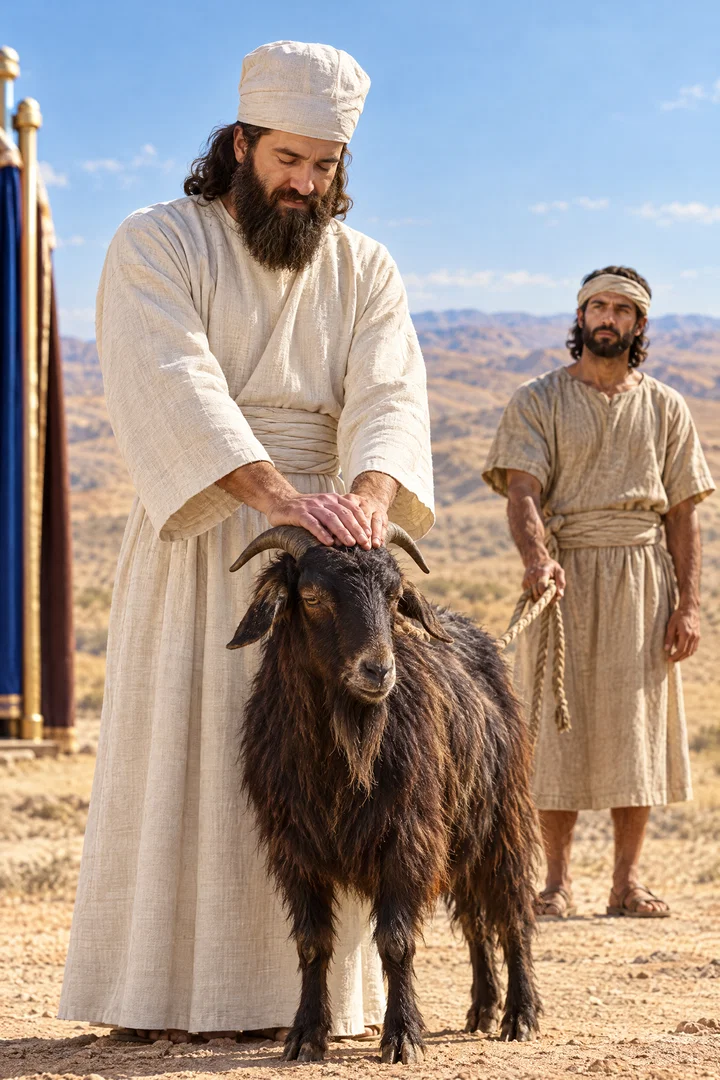
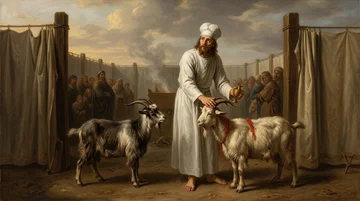
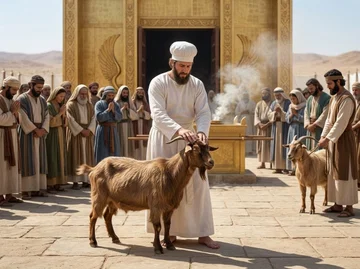
And Aaron shall lay both his hands upon the head of the live goat, and confess over him all the iniquities of the children of Israel, and all their transgressions in all their sins, putting them upon the head of the goat, and shall send him away by the hand of a fit man into the wilderness:
Translations
And Aaron shall lay both his hands on the head of the live goat, and confess over him all the iniquities of the children of Israel, and all their transgressions in all their sins, putting them on the head of the goat, and shall send him away by the hand of a fit man into the wilderness:
King James Version, Webster Bible
And Aaron shall lay both his hands upon the head of the live goat, and confess over him all the iniquities of the children of Israel, and all their transgressions in all their sins, putting them upon the head of the goat, and shall send him away by the hand of a fit man into the wilderness:
and Aaron shall lay both his hands upon the head of the live goat, and confess over him all the iniquities of the children of Israel, and all their transgressions in all their sins, putting them upon the head of the goat, and shall send him away by the hand of a fit man into the wilderness:
Revised Version, American Standard Version
and Aaron shall lay both his hands upon the head of the live goat, and confess over him all the iniquities of the children of Israel, and all their transgressions, even all their sins; and he shall put them upon the head of the goat, and shall send him away by the hand of a man that is in readiness into the wilderness:
and Aaron hath laid his two hands on the head of the living goat, and hath confessed over it all the iniquities of the sons of Israel, and all their transgressions in all their sins, and hath put them on the head of the goat, and hath sent [it] away by the hand of a fit man into the wilderness;
and Aaron shall lay both his hands on the head of the living goat, and confess over it all the iniquities of the children of Israel, and all their transgressions in all their sins, and he shall put them on the head of the goat, and shall send him away to the wilderness by the hand of a man standing ready;
And Aaron shall lean his two hands upon the head of the living goat, and confess over him, all the iniquities of the sons of Israel, and all their transgressions, to the extent of all their sins,—and shall put them upon the head of the goat, and then send him away, by the hand of a man appointed towards the desert:
Berean Standard Bible, Majority Standard Bible
Then he is to lay both hands on the head of the live goat and confess over it all the iniquities and rebellious acts of the Israelites in regard to all their sins. He is to put them on the goat’s head and send it away into the wilderness by the hand of a man appointed for the task.
Aaron shall lay both his hands on the head of the live goat, and confess over him all the iniquities of the children of Israel, and all their transgressions, even all their sins; and he shall put them on the head of the goat, and shall send him away into the wilderness by the hand of a man who is ready.
And Aaron, placing his two hands on the head of the living goat, will make a public statement over him of all the evil doings of the children of Israel and all their wrongdoing, in all their sins; and he will put them on the head of the goat and send him away, in the care of a man who will be waiting there, into the waste land.
And Aaron shall put both his handes vpon the head of the liue goate, and confesse ouer him al the iniquities of the children of Israel, and all their trespasses, in all their sinnes, putting them vpon the head of the goate, and shall sende him away (by the hand of a man appointed) into the wildernes.
Douay-Rheims (Challoner revision)
And putting both hands upon his head, let him confess all the iniquities of the children of Israel, and all their offences and sins: and praying that they may light on his head, he shall turn him out by a man ready for it, into the desert.
Pictures
Cross-references 20 of 102
- Hebrews 9:23-24
It was therefore necessary that the patterns of things in the heavens should be purified with these; but the heavenly things themselves with better sacrifices than these.
Christ’s heavenly priestly work fulfills the sanctuary’s cleansing represented in the Mosaic service.
- Hebrews 9:7
But into the second went the high priest alone once every year, not without blood, which he offered for himself, and for the errors of the people:
Connects the high priest’s yearly most-holy-place service with atonement for the people’s sins.
- Hebrews 8:1-2
Now of the things which we have spoken this is the sum: We have such an high priest, who is set on the right hand of the throne of the Majesty in the heavens;
Christ serves as High Priest in the heavenly sanctuary foreshadowed by the earthly sanctuary.
- Leviticus 16:7-10
And he shall take the two goats, and present them before the LORD at the door of the tabernacle of the congregation.
Describes the two goats and their distinct roles in the ritual.
- Leviticus 16:30
For on that day shall the priest make an atonement for you, to cleanse you, that ye may be clean from all your sins before the LORD.
The annual rite cleanses Israel from all their sins.
- 1 Peter 2:24
Who his own self bare our sins in his own body on the tree, that we, being dead to sins, should live unto righteousness: by whose stripes ye were healed.
Christ bears sins in his body on the tree, fulfilling the sacrificial type.
- Hebrews 9:24-26
For Christ is not entered into the holy places made with hands, which are the figures of the true; but into heaven itself, now to appear in the presence of God for us:
Christ enters the true heavenly sanctuary and offers himself once to put away sin.
- Hebrews 10:4
For it is not possible that the blood of bulls and of goats should take away sins.
Animal blood could not take away sins, but Christ’s offering does.
- Leviticus 23:26-32
And the LORD spake unto Moses, saying,
Sets out the observance of the Day of Atonement.
- John 1:29
The next day John seeth Jesus coming unto him, and saith, Behold the Lamb of God, which taketh away the sin of the world.
Jesus, the Lamb of God, bears away the world’s sin, as the scapegoat carried Israel’s sins.
- Leviticus 16:15-16
Then shall he kill the goat of the sin offering, that is for the people, and bring his blood within the vail, and do with that blood as he did with the blood of the bullock, and sprinkle it upon the mercy seat, and before the mercy seat:
The Lord’s goat’s blood makes atonement and cleanses the sanctuary before the sins are placed on the scapegoat.
- Hebrews 9:12
Neither by the blood of goats and calves, but by his own blood he entered in once into the holy place, having obtained eternal redemption for us.
Christ entered the heavenly holy place by his own blood, accomplishing what the animal sacrifices anticipated.
- Hebrews 9:28
So Christ was once offered to bear the sins of many; and unto them that look for him shall he appear the second time without sin unto salvation.
Christ bears sins and appears again apart from sin to bring salvation.
- Hebrews 8:5
Who serve unto the example and shadow of heavenly things, as Moses was admonished of God when he was about to make the tabernacle: for, See, saith he, that thou make all things according to the pattern shewed to thee in the mount.
Earthly priestly service is an example and shadow of Christ’s heavenly ministry.
- Hebrews 10:1
For the law having a shadow of good things to come, and not the very image of the things, can never with those sacrifices which they offered year by year continually make the comers thereunto perfect.
The yearly service and its sacrifices were a shadow of Christ’s saving work.
- Isaiah 53:6
All we like sheep have gone astray; we have turned every one to his own way; and the LORD hath laid on him the iniquity of us all.
The Lord lays the people’s iniquity on Christ.
- Leviticus 16:10
But the goat, on which the lot fell to be the scapegoat, shall be presented alive before the LORD, to make an atonement with him, and to let him go for a scapegoat into the wilderness.
The live scapegoat is sent into the wilderness after the atonement ritual.
- Leviticus 4:3-4
If the priest that is anointed do sin according to the sin of the people; then let him bring for his sin, which he hath sinned, a young bullock without blemish unto the LORD for a sin offering.
The sin offering receives the sinner’s guilt, beginning its transfer to the sanctuary.
- Hebrews 9:26
For then must he often have suffered since the foundation of the world: but now once in the end of the world hath he appeared to put away sin by the sacrifice of himself.
Christ puts away sin once for all by the sacrifice of himself.
- Leviticus 16:33-34
And he shall make an atonement for the holy sanctuary, and he shall make an atonement for the tabernacle of the congregation, and for the altar, and he shall make an atonement for the priests, and for all the people of the congregation.
Concludes the annual atonement that cleanses the sanctuary and Israel.
Commentary part 1 of 2
Each commentary is drawn from primary sources: the writings of Ellen G. White and Adventist pioneers and periodicals. Each commentary is separate. Its own words are not a quotation; follow the references to read the source passages.
Ellen G. White
47 sources
On the Day of Atonement, after the Lord's goat had been slain and its blood brought within the veil to make satisfaction for the law, Aaron laid both his hands on the head of the live goat and confessed over him all the iniquities, transgressions and sins of Israel, putting them upon him, and sent him away by a fit man into an uninhabited wilderness never to return to the camp.GC88 419.1–2PP 355.2–4GC 419.1–3GC 658.1GC88 657.3 The sin-offering points to Christ as sacrifice and the high priest represents Christ as mediator, while the live goat typifies Satan, the author, originator and instigator of sin.4SP 263.2–265.1GC 422.2GC88 422.2 By His own blood Christ at the close of His ministration removes the sins of the truly penitent from the heavenly sanctuary and places them upon Satan, who must bear the final penalty not only for his own rebellion but for all the sins he caused God's people to commit.GC 422.2GC88 422.2SG1 198.1SG1 217.1–218.1GC88 672.2–673.1 Those who held the differing position taught that Christ alone, not Satan, is the scapegoat borne into the wilderness, as the Sin-bearer and Substitute who alone could bear the sins laid upon Him.ST Jul 15, 1880Ms 112, 1897, par. 47Ms 124, 1901, par. 18–1917MR 242.1–2 The yearly service points to the great antitypical Day of Atonement now going on in the most holy place above, which is the Judgment concerning every individual, so sins must be confessed and put away beforehand, while Satan's banishment to the desolate earth for a thousand years and his final blotting from existence marks the forever separation of guilt from God's people and the purification of the universe from sin.5T 420.3PP 358.1–34SP 499.3–500.1Lt 53, 1886, par. 4Ms 52, 1905, par. 10
Ritual Words and Setting
On the Day of Atonement Aaron lays both his hands upon the head of the live goat and confesses over him all the iniquities of the children of Israel and all their transgressions in all their sins, putting them symbolically upon the head of the goat.GC88 419.1–2PP 355.2–4GC 419.1–3RH Nov 8, 1915 The goat is then sent away by the hand of a fit man into the wilderness.GC88 419.1–2PP 355.2–4GC 419.1–3RH Nov 8, 1915 This confessing and putting of the sins upon the goat belongs to the great day of atonement and its sanctuary service for cleansing the sanctuary.4SP 498.6GC88 433.1Lt 253, 1903, par. 17
This sending is the final act of the yearly round of ministration for cleansing the sanctuary.GC 419.1–3GC 420.1 It is done only after lots are cast over two goats and the Lord's goat has been slain as a sin-offering and its blood brought within the veil.GC 419.1–3GC 658.1GC88 657.3 That blood is sprinkled upon and before the mercy-seat directly over the law and upon the altar of incense to make satisfaction for the claims of the law and to remove the sins of Israel from the sanctuary.GC 419.1–3GC 658.1GC88 657.3GC 420.1
The goat then bears all the iniquities to a land not inhabited, an uninhabited wilderness, into a land of forgetfulness.GC88 419.1–2PP 355.2–4GC 419.1–3Lt 8, 1850, par. 7–8 He comes no more into the camp of Israel.GC88 419.1–2GC 419.1–3RH Nov 8, 1915 The man who led him away must wash himself and his clothing with water before returning.GC 419.1–3RH Nov 8, 1915
The cleansing described belongs to the earthly sanctuary made in the desert of Sinai that God might dwell among His people.GC88 683.4–684.5 Its vessels were afterward transferred to Solomon's temple with its holy and most holy place, the dwelling-place of God's glory upon the earth.GC88 683.4–684.5 The holy places of that earthly sanctuary were patterns of things in the heavens — not the earth itself, not Canaan or Palestine, and not the church.GC88 683.4–684.5 That earthly service was an example and shadow of ministry in the heavenly sanctuary.GC88 433.1
The chapter belongs to the high-priestly attire and atonement work that is completed in the heavenly Holy of Holies before the priestly role is laid aside and the appearing as King.WLF 9.1 In the yearly service the high priest entered the most holy place after careful and solemn preparation and stood before the mercy-seat.ST Mar 4, 1903 While he stood there the people waited in silence and prayer for God's blessing.ST Mar 4, 1903 When he came out he blessed them.ST Mar 4, 1903
Lessons Taught by Ceremony
The rite declares that God is holy and abhors sin, and that any contact with sin pollutes and brings defilement.4SP 263.2–265.1GC 419.1–3RH Nov 8, 1915 While the work of atonement went forward, every person was to afflict his soul, lay aside all business, and spend the day in solemn humiliation before God with prayer, fasting, and deep searching of heart.GC 419.1–3RH Nov 8, 1915
The laying of hands upon the victim signifies the transfer of guilt, with the sin confessed over it placed upon it.GC 420.1RH Nov 8, 1915ST Jul 15, 1880 In his character of mediator, the high priest takes the sins upon himself and bears them from the sanctuary after satisfaction for the claims of the law has been made by blood sprinkled upon the mercy-seat directly over the law.GC 420.1PP 355.5 By laying both hands upon the head of the live goat and confessing over him all the sins, he in figure transfers them from himself to the goat.GC 420.1RH Nov 8, 1915PP 355.5 The victim's suffering points to One who gives Himself as a sacrifice for sin.ST Jul 15, 1880
The people regarded themselves as freed from the burden of their sins only after the goat had been sent away.PP 355.2–4GC88 420.1PP 355.5 The goat's bearing all the iniquities away into the wilderness to an uninhabited place pictured guilt as forever separated from them, never to return to the camp.4SP 263.2–265.1PP 355.2–4GC88 420.1PP 355.5 So borne away, the sins are carried into a land of forgetfulness.PP 355.2–4GC88 420.1Lt 8, 1850, par. 7–8
Identity of the Scapegoat
The sin offering points to Christ as sacrifice and the high priest represents Christ as mediator, while the live goat typifies Satan, the author, originator, and instigator of sin.4SP 263.2–265.1GC 422.2GC88 422.2PP 358.1–3Ms 194, 1901, par. 1 As the high priest by the blood of the sin offering removed sins from the sanctuary and placed them upon the scapegoat, so Christ by His own blood will remove the sins of the truly penitent from the heavenly sanctuary at the close of His ministration and place them upon Satan, who in the execution of the judgment must bear the final penalty.GC 422.2GC88 422.2SG1 198.1EW 239.4 After Jesus finishes His mediation in the most holy place, the sins confessed during His ministry there are placed back upon Satan, their originator, who must suffer their punishment.SG1 198.1EW 239.4 The goat bore the confessed iniquities away so they were regarded as forever separated from the people, and so Satan is forever banished from God and His people and blotted from existence in the final destruction of sin and sinners.4SP 263.2–265.1GC 422.2GC88 422.2
The confessing and putting of iniquities upon the goat means Satan is made to bear guilt not only for his own rebellion but for all the sins he caused God's people to commit and for responsibility for souls he ruined.SG1 217.1–218.1GC88 672.2–673.14SP 487.2–488.1 His punishment is therefore far greater than that of those he deceived.GC88 672.2–673.14SP 487.2–488.1 After all who fell by his deceptions have perished he still lives and suffers on before being destroyed as the root with his followers as branches, so the full penalty of the law is visited and the demands of justice are met.GC88 672.2–673.14SP 487.2–488.1 The sins of those redeemed through Christ and victorious over sin, of all who come to Jesus and accept Christ, will finally be laid back upon Satan and his angels.EW 146.2SG1 61.1Ms 194, 1901, par. 1Ms 194, 1901, par. 3 Those who reject salvation and continue in transgression are left out of this transfer and must bear the penalty of their own sins.EW 146.2SG1 61.1Ms 194, 1901, par. 1
Those who held the differing position taught that Christ alone, not Satan, is the scapegoat represented by the live goat borne into the wilderness.Ms 112, 1897, par. 47 In that teaching Satan cannot bear even his own sins and cannot fulfill the solemn type, and Pilate washing his hands at the choosing of Barabbas cannot fulfill it either.Ms 112, 1897, par. 47 Only He over whom death had no power was able to bear the sins laid upon Him.Ms 112, 1897, par. 47 In that same differing position all the types point to Jesus Christ as the Sin-bearer and Substitute for the offender.ST Jul 15, 1880Ms 124, 1901, par. 18–1917MR 242.1–2 The victim's suffering points to Christ giving Himself as a sacrifice for sin, with the sinner's laying of hands signifying the transfer of guilt.ST Jul 15, 1880 While Satan points to the defilement of God's people and accuses them as sinners and transgressors of the law, Christ Himself cannot be thus accused, and He takes away the sin of the repentant, believing transgressor.Ms 124, 1901, par. 18–1917MR 242.1–2
Heavenly Fulfillment and Prophecy
The yearly service foreshadows a final work in the most holy place of the heavenly sanctuary, where the great High Priest blots out the sins of His faithful people from Abel onward.PP 358.1–34SP 499.3–500.1 What was placed on the scapegoat and carried into the wilderness, forever separated from the congregation, represents the final removal of the sins of the truly penitent from heaven's records and their lasting separation from God's people.PP 358.1–34SP 499.3–500.1 That removal is completed when Christ's work of redemption is finished and the universe is purified from sin, with Satan as originator and instigator of sin bearing those sins and their final penalty.PP 358.1–3
The sanctuary to be cleansed at the end of the prophetic days is in heaven, not the earth to be purified by fire at the second coming to punish its inhabitants for iniquity.Ms 6, 1876, par. 5–6 This cleansing is accomplished by virtue of Christ's own blood when He entered the heavenly sanctuary on the great antitypical day of atonement, and the work began after the passing of the time in 1844.Ms 194, 1901, par. 3Ms 6, 1876, par. 5–6 That directing of God's people to the sanctuary was joined to the going forth of the first angel's message with the binding claims of God's law, raising up a vast army to enter the dark places of the earth and bringing Satan's rule to an end, after which the sins of those who accept Christ are finally laid upon Satan and his angels.Ms 194, 1901, par. 3
When the ministration in the holy of holies has been completed and the sins of Israel have been removed from the sanctuary by the blood of the sin-offering, the live goat is presented alive before the Lord.GC 658.1GC88 657.3 In like manner, when the work of atonement in the heavenly sanctuary is completed, in the presence of God and the heavenly angels and the host of the redeemed the sins of God's people are placed upon Satan, and he is declared guilty of all the evil he caused them to commit.GC 658.1GC88 657.3 After Jesus finishes His mediation in the sanctuary He confesses Israel's sins upon the scapegoat before the plagues fall, placing back upon Satan as originator the sins confessed during His ministry in the most holy place, and Satan must suffer their punishment.Ms 15, 1850, par. 8–11SG1 198.1EW 239.4
As the goat was sent away into a land not inhabited never to return, so Satan will be banished to the desolate earth as an uninhabited and dreary wilderness.GC 658.1GC88 657.3 That wilderness becomes the home of Satan with his evil angels for a thousand years, where he is limited to the earth in chaos and darkness with no one left to tempt or annoy, and in that sense bound and wholly cut off from deception and ruin.GC88 658.1–659.1GC88 657.3 The goat is led away to the land of forgetfulness and struggles to escape but is held fast, because if it escaped Israel would be destroyed.Ms 15, 1850, par. 8–11
The goat's banishment from Israel represents Satan's being forever banished from the presence of God and His people.GC 422.2GC88 422.2 By His own blood Christ removes the sins of His people from the heavenly sanctuary at the close of His ministration and places them upon Satan as author of sin, who in the execution of the judgment must bear the final penalty.GC 422.2GC88 422.2 He is then blotted from existence in the final destruction of sin and sinners, which marks the close of the yearly sanctuary service and points to the final events in the conflict between Christ and Satan and the purification of the universe from sin.GC 422.2GC88 422.2PP 358.1–3
Present Call to Repentance
The laying of hands and confession over the live goat belongs to the great antitypical Day of Atonement now going on in the sanctuary above, which is the Judgment and concerns every individual as the great day of preparation.Lt 53, 1886, par. 4 Each person must consider how his case will stand in the judgment and be cleansed from defilement by the blood of Jesus.Lt 53, 1886, par. 4 The present time is the last great day of atonement before the books are opened and every person is judged for the deeds recorded there, when confession and the pardon made possible by Christ's death are decisive.Ms 52, 1905, par. 10 Confession must be done early, before the awful time when every secret thing comes to light.Ms 6, 1849, par. 8 This is a solemn time in which the church is to seek purification through repentance, humility, and deep heart-searching.Lt 55, 1886, par. 9–10
In the great antitypical Day of Atonement sins must be confessed and put away so they may go beforehand to judgment, just as Israel's sins had to be confessed at the sanctuary and placed upon the live goat.Ms 81, 1886, par. 9Ms 1, 1852, par. 4 The work moves forward only after every sin is confessed.Ms 1, 1852, par. 4 Christ can cleanse from every stain of sin and secure pardon for the repentant.Ms 81, 1886, par. 9 Believers must pray much that their own sins may be so confessed upon the head of the scapegoat and borne away into the land of forgetfulness.19MR 131.3 This is accomplished through Jesus' work in the sanctuary, which in a little longer will be finished.19MR 131.3
A proper appreciation of the heavenly work keeps it constantly before the mind and before the people and urges it upon conscience with earnestness and power, giving correct views of the importance of the work for this time.5T 420.3 Business cares must not absorb the mind so that the work in heaven is lightly regarded, and such appreciation leads to greater energy and zeal to make the work a success, avoiding carelessness and blindness to the wants of the cause and the perils attending every soul, and seeking to be a channel of light, including in the publishing work.5T 420.3 The verse also exposes a wrong human use of a scapegoat, putting one's own wrongs upon somebody or something else and making circumstances and providences bear the guilt for feeling and speaking in a manner unworthy of a Christian.2T 571.3 Trying occasions only arouse and reveal defects of character already lying dormant and hidden, so instead of censuring others the person should simply censure self and confess an untransformed carnal nature.2T 571.3
Sources
Pioneers and periodicals
294 sources
On the yearly Day of Atonement, after cleansing the sanctuary and altar with blood, the high priest brings forward the live goat, lays both hands on its head, confesses over it all the iniquities and transgressions of Israel to put them upon it, and sends it away by a fit man into an uninhabited wilderness never to return.ST Jun 4, 1885RH Dec 8, 1915RH Mar 8, 1870ST Nov 28, 1892
The live goat for Azazel represents Satan, the originator and instigator of sin, not Christ the holy Son of God.ST Feb 28, 1884ST Apr 20, 1904ST Nov 29, 1905ST Mar 11, 1875ST Jun 13, 1878
The service reverses the daily ministration by bearing out of the sanctuary the confessed sins previously borne into it by blood, so they are finally removed, separated from people and camp, and remembered no more.ST Jul 4, 1911ST Mar 23, 1904ST Jul 1, 1880ST Oct 22, 1874
Only the confessed and forgiven sins of repentant Israel are placed on the goat, while sins never taken into the sanctuary remain on the sinner who must bear them himself.RH Apr 4, 1854RH Jan 10, 1907ST Oct 25, 1905ST Sep 11, 1884RH Dec 15, 1868
In antitype Christ ministers in the true heavenly sanctuary, and since the close of the 2300 days in 1844 He has been cleansing it and blotting out believers' sins in the investigative judgment before His coming.ST Mar 11, 1875RH Mar 18, 1858RH Feb 3, 1853RH Mar 28, 1912RH Aug 28, 1853
When that ministry is finished He lays those sins upon Satan, who bears them confined to the desolate earth for a thousand years and then perishes with them in final destruction, which calls God's people now to afflict their souls, confess and forsake every sin.ST Sep 11, 1901ST Jul 9, 1896RH Jan 23, 1900ST Sep 4, 1879ST Dec 12, 1916
Ritual Setting and Details
The verse describes the closing act after the high priest finished reconciling the holy place and the tabernacle of meeting and the altar.ST Jun 4, 1885RH Dec 8, 1915RH Feb 25, 1858 Aaron then brings forward the live goat, lays both his hands upon its head, confesses over him all the iniquities of the children of Israel and all their transgressions in all their sins, putting them upon the head of the goat.RH Dec 8, 1915RH Mar 8, 1870RH Feb 25, 1858 He sends him away by the hand of a fit appointed man in readiness into the wilderness.RH Mar 8, 1870RH Feb 25, 1858 The goat bears all those iniquities unto an uninhabited, solitary land of separation and forgetfulness, released in the wilderness to complete the yearly sanctuary service.ST Jun 4, 1885RH Dec 8, 1915 After the sanctuary has been cleansed by blood the accumulated sins are thus borne out and put on the live goat, and without that removal the year's offerings remain incomplete.RH Mar 8, 1870RH Mar 8, 1870RH Feb 25, 1858
The service belongs to the yearly Day of Atonement on the tenth day of the seventh month, heralded by the feast of trumpets.RH Feb 3, 1853ST Apr 3, 1879 It is the last work of the annual round, when work passed from the holy place where it continued through the year into the most holy place within the second veil.RH Feb 3, 1853ST Apr 3, 1879 It was done by the high priest alone once a year for himself, his household and all Israel.RH Feb 2, 1911ST Apr 8, 1913 Two goats were presented alive before the Lord and lots were cast, one for the Lord and one for the scapegoat.RH Feb 3, 1853ST Dec 12, 1916 Until that day no one entered within the second veil where the ark and mercy-seat were, but on that day a sin-offering was made in both apartments for the whole house of Israel that they might be cleansed from all their sins before the Lord.ST Apr 3, 1879
The two goats were presented as exact counterparts in value, size, age and color, with lots drawn from an urn, one marked La-Yehova for Jehovah and one La-Azazel for Azazel.ST Mar 11, 1875RH Jan 18, 1870 Azazel is a proper personal name, not the goat itself, as shown by the same preposition La- on both lots.ST Mar 11, 1875RH Jan 18, 1870 The most ancient paraphrases and translations treat it as a proper name, the Septuagint renders apopompaios for a malign deity, the book of Enoch gives Azalzel to a fallen angel, and Arabic use and Jewish and cabalistic teaching with the early Christian church agree.ST Mar 11, 1875 It denotes Satan, the devil, the powerful apostate and mighty receder, the evil demon dwelling in the desert, also called Sammael and numbered among the fallen angels.RH Jan 18, 1870
The goat is sent by the hand of a fit man, not by the high priest himself, to be led away never to return to the camp.ST Nov 28, 1892ST Oct 25, 1905 By tradition it was led to a precipice and hurled over so its neck was broken, and the goat perished with the burden of sins it carried.ST Nov 28, 1892ST Oct 25, 1905 In one picture it hurries east from Jerusalem toward the Dead Sea down the stony desert road to Jericho over dry torrent-beds and naked hills, wandering into the distant wilderness and looking back toward the rejoicing camp while its brother has been slain.ST May 13, 1913 Its implied destruction represents the sins perishing with it, pursued by the law's avenging power until driven out of existence.ST Jul 4, 1911
Contact with sin defiles because God is holy and abhors sin.RH Nov 8, 1915 The man who led the goat out could not return to the camp until he washed himself and his clothes.RH Nov 8, 1915ST Nov 29, 1905 Aaron could not approach the altar until washed and changed his vestments, including the mitre that bore the iniquity of the holy things.RH Mar 24, 1863ST Apr 26, 1883 The scapegoat though let go alive is never heard of more and perishes in the wilderness.ST Nov 29, 1905
The yearly order began with 364 days of service in the first apartment and closed with one day in the most holy.RH Sep 17, 1861RH Aug 23, 1864 Ordinary individual offerings at the sanctuary door stopped while the atonement proceeded because all the people were represented in the priest's most-holy offering, so an individual offering at the same time would be a second, uncalled-for and improper offering drawing away the attention required to be fixed upon the work of atonement. The daily round of general sacrifices continued on the day of atonement as on other days, together with special general offerings for the feast and the specific offering of the atonement. The people waited in solemn silence and prayer while he stood before the mercy seat, terrified lest sin cause death, and were relieved to hear the bells on the high priest's garments when he came forth to bless them.ST Mar 4, 1903 As the earthly ministry began each year in the first apartment and closed with service in the second apartment, so the pattern runs from the holy to the Most Holy and its cleansing.ST Apr 22, 1913
The laying of both hands on the atonement victim belongs to an order in which atonement is first made for the priest himself, then for his family, and afterward for all Israel.ST May 27, 1897 The chapter restricts the high priest's entrance into the Most Holy to the tenth day of the seventh month, before which rule Aaron entered there at other times.ST Jul 17, 1879 The absence of a recorded instance of observing that day does not prove it was never observed, even though the observance of related festivals is recorded.RH Dec 10, 1861
Some passages cite the verse as part of the Day of Atonement atonement work without further explaining the live goat's separate role of receiving confessed sins and being sent into the wilderness.RH Oct 31, 1854 In that briefer form the verse shows that on the Day of Atonement Aaron confessed Israel's sins over the live goat, symbolically placing the sins on it, and sent it into the wilderness by a fit man as the final stage of removing from the sanctuary the sins transferred to it in figure during the year.RH Dec 24, 1908ST Aug 15, 1878ST Aug 15, 1878 It shows that after the sanctuary is cleansed the high priest places Israel's confessed transgressions and sins on the live goat for Azazel and sends it into the wilderness by a designated man, bearing the people's iniquities to an uninhabited place, distinct from the goat sacrificed to the Lord whose blood makes atonement and cleanses the sanctuary.ST Aug 15, 1878ST Aug 15, 1878RH Mar 10, 1874 The ritual thus portrays sins being borne by the goat and links Israel's sin-bearing ritual to the defilement of the earthly sanctuary and its need for cleansing by the high priest's service and sacrificial blood.ST May 1, 1879
Hands Confession and Transfer
Laying both hands on the head with confession transfers guilt to the substitute so that the victim bears the sin in the sinner's stead.RH Apr 7, 1874ST Nov 22, 1883ST Dec 15, 1881RH Jan 9, 1855 This explains the rite at the door of the tabernacle where the transgressor lays hands on the head of the prescribed offering and confesses sin, putting iniquities, transgressions and sins upon the head of the victim so the innocent substitute bears imputed guilt and is then slain, the sinner acknowledging by taking its life that he himself is worthy of death.RH Apr 7, 1874ST Nov 22, 1883ST Apr 8, 1913 The sin-bearing substitute was entirely consumed, and these animal sacrifices in themselves could not remove sin, which only Christ's sacrifice can do.ST Apr 15, 1886 The scapegoat illustrates this transfer of the people's accumulated guilt to the goat sent by a fit man into an uninhabited land never to return, so sins would no longer be remembered against them, but this transfer on the live goat does not make it the sin offering or a type of Christ.RH Apr 7, 1874ST Dec 15, 1881RH Jan 9, 1855
Through the year the sins of penitent Israel were transferred by blood into the sanctuary, making it the receptacle of sin.ST Nov 20, 1879 Penitents confessed over sacrifices and the sprinkled blood was ministered in the holy place before the veil, so sins passed from the people to the victim, through the priest and its blood to the sanctuary.ST Nov 20, 1879RH Nov 8, 1915 After atonement was made for the holy place, the tabernacle of meeting and the altar with the blood of the Lord's goat, Aaron laid both hands on the head of the live goat and confessed over him all the iniquities, transgressions and sins of Israel, putting them upon the head of the goat, and sent him away by the hand of a fit man into the wilderness to a land not inhabited.ST Nov 20, 1879RH Nov 8, 1915 The offering of the Lord's goat cleansed the sanctuary and atoned in type for sins transferred there during the year, but it did not finally dispose of or destroy them; the live goat then bore them away beyond the camp to a place of separation, completing the yearly round and blotting out the sins of God's people.ST Nov 20, 1879ST Nov 28, 1892RH Nov 8, 1915 The blood of the goat offered for the people was accepted in place of their lives and made atonement for them, yet that alone does not explain the live goat's separate role of receiving the confessed sins and being sent into the wilderness.RH Oct 31, 1854
When the ministry in the most holy apartment was finished the priest carried the sins out of the sanctuary in his own body and person.RH Mar 8, 1870RH Feb 3, 1853RH Sep 1, 1863 Coming out of the sanctuary building he gathered up all the transgressions of every repentant soul of the year, brought them to the door of the tabernacle where the live goat for Azazel stands, publicly acknowledged them and confessed them upon the goat's head, putting them upon him.RH Mar 8, 1870RH Feb 3, 1853RH Aug 10, 1916ST Oct 22, 1874ST Feb 7, 1906 The sanctuary is thus cleansed from the sins of the people, and those sins are borne by the scapegoat away from the sanctuary into an uninhabited land of forgetfulness, where goat and sins are heard of no more and penitent souls are left free and clear, at one with God.RH Mar 8, 1870RH Feb 3, 1853RH Sep 1, 1863ST Oct 22, 1874ST Feb 7, 1906
In figure sins are transferred to a mediator.ST Mar 14, 1878ST Jul 15, 1880ST Mar 11, 1886 Christ in counsel with the Father instituted the system of sacrificial offerings so that death would not immediately fall on the transgressor but would pass to a victim prefiguring the great and perfect offering of the Son of God.ST Mar 14, 1878 Sins were laid upon the officiating priest as mediator for the people, but the priest being himself a sinner and mortal could not offer his own life or become an offering for sin, so the penalty passed to an innocent beast without blemish as immediate substitute typifying Jesus, conveyed in figure through its flesh or blood.ST Mar 14, 1878ST Mar 11, 1886 Through the blood of that victim men looked forward by faith to the blood of Christ which would atone for the sins of the world, for the innocent victim bore the guilty person's sins and the sinner was forgiven, pointing forward to Christ the great Sacrifice.ST Mar 14, 1878RH Mar 4, 1862 The Christian daily lays every sin that rises on conscience upon Christ as surety by confessing transgressions and laying them on the head as pictured, and all sins so confessed are forgiven in Christ to be believed with undoubting mind because of the faithful promises of God.RH Oct 22, 1857 Under the old dispensation those who had sinned brought unblemished offerings and confessed sins on the heads of the victims, and through blood their sins were transferred to the sanctuary where atonement was made year by year because sin is transgression of the law; after the Saviour's death and the rending of the veil, pardon is sought in the heavenly sanctuary by repentance toward God and faith in Jesus the great High Priest who gave His life a ransom and tasted death for every man.RH Jan 8, 1861
Laying hands on the head and confessing means acknowledging guilt and worthiness of death, transferring sin to an innocent substitute, and accepting the substitute in the taking of innocent life.ST Jul 15, 1880RH Feb 25, 1904 The act places the sinner in direct connection with the priest, trusting that the priest carries the blood within the veil and presents it before God in his behalf.RH Feb 25, 1904 Confessing transgressions over the victim puts the penitent's sins upon the victim, and the sinner of old laying sins upon his victim by confessing over him is the type whose antitype is confessing sins to God through Christ as the sacrifice.ST Jul 15, 1880RH Aug 10, 1876 By faith in Christ as the offering and by confession through Him, believers lay their sins upon Christ and transfer them to the heavenly sanctuary where He ministers as priest, just as the Mosaic offering bore sin into the earthly sanctuary.RH Aug 10, 1876 On the Day of Atonement the laying on of hands was required when the scapegoat was sent into the wilderness, identifying the goat with the people whose sins were placed upon it.ST Feb 8, 1883
Confession accompanied sin offerings and was required as preliminary to forgiveness under the old dispensation, as seen when the high priest confessed all the people's sins over the goat.RH Sep 21, 1869 The sinner confessed his sins upon the head of the animal, putting them upon it, and then slew it by his own hand as his substitute bearing his death penalty.ST Jul 6, 1915 This prefigured Christ as the Lamb of God in love bearing and removing the sins of the world, in contrast to bringing fruit of the ground as a gift of penance by works to appease an offended God.ST Jul 6, 1915
God gave Israel after Sinai a remedy for sin by faith in a Deliverer from spiritual bondage, with confessing sins on the head of the offerings as the center of truth to be revealed to the world.RH Jul 9, 1901 The constantly flowing blood showed the blood of the Lamb slain from the foundation of the world, and bringing a goat or lamb reminded of Him led as a lamb to the slaughter.RH Jul 9, 1901 The slain offering revealed the nature and awful consequences of sin and taught that the Lord would lay the iniquity of all upon Him, the Lamb of God who bears away the sin of the world, bearing sins in His own body on the tree with great shedding of blood and intense suffering.RH Jul 9, 1901 It taught that without shedding of blood there is no remission, that the soul of God's dear Son was to be made an offering for sin, and that forgiveness comes only through His blood.RH Jul 9, 1901
Identity of Live Goat
The live goat for Azazel represents Satan, the devil, the originator and author and instigator and promoter and accuser of sin, the strong one who revolted, an evil being associated with the wilderness, and not Christ the holy Son of God.ST Feb 28, 1884ST Apr 20, 1904ST Nov 29, 1905ST Mar 11, 1875RH Mar 18, 1858 The two goats set before the Lord stood for Christ and Satan together, the Lord's goat being slain to represent Christ's death for guilty sinners while the scapegoat represented Satan the author of sin whose destruction comes in its appointed time and pointed forward to the judgment day.ST Apr 20, 1904RH May 9, 1871ST Jun 13, 1878 After atonement was made for the high priest and his house with the blood of a bullock, lots were cast upon the two goats at the door of the tent of meeting, one lot for the Lord and the other for the scapegoat, and the word scapegoat means Azazel, which refers to Satan.ST Nov 29, 1905ST Mar 11, 1875RH Mar 18, 1858
The goat cannot be Christ because the act comes only after the cleansing of the sanctuary is finished, because it is sent soul and body alive away from God's people into a land not inhabited and not into heaven, because it retains iniquities whereas Christ comes the second time without sin, because it is one distinct from Christ the priest who sends him, and because it is not the Lord's and is not offered as a sacrifice.ST Mar 11, 1875ST Jun 13, 1878RH Jul 7, 1874RH Aug 30, 1864 Christ bears sin before beginning His priestly work, while the live goat receives sins only after that work is finished and they pass from it to no one else.ST Jun 13, 1878RH Jul 7, 1874ST Nov 29, 1905 Only the sins of those who repent and are accepted of God, who have afflicted their souls, are placed upon it, while the impenitent who keep transgressing bear their own sins on their own heads, and the goat itself is not pardoned but sent away carrying the transferred sins.RH Jul 7, 1874RH Aug 30, 1864
The live goat remains alive and its sole office is to receive the iniquities from the priest after the cleansing and bear them away, being sent away from sanctuary and priest and people and camp never to return or be heard of again, leaving sanctuary, priest and people free, in contrast to Christ dwelling among His people.ST Mar 11, 1875RH Mar 18, 1858RH May 9, 1871RH Sep 1, 1863RH Oct 14, 1852 Christ though put to death appeared again on the third day and took up His work as High Priest of the heavenly sanctuary, whereas the goat evidently perishes in the wilderness and is never heard of more, and even the man who leads it to final destruction must wash himself and his clothes before he can re-enter the camp.ST Mar 11, 1875RH Mar 18, 1858ST Nov 29, 1905 The sending alive into the wilderness is not a sacrifice to Azazel, because sacrifice requires the taking of life and this goat is kept alive.RH Mar 13, 1866 The casting of lots for both goats by appeal to God, with the first goat sacrificed to Jehovah alone and the second let go alive, declares that sacrifice belongs to God alone and not at all to Satan, while still showing a relation to Satan, and this rite ended sacrifices to evil powers in Israel.RH Mar 13, 1866
The laying upon the live goat and sending into the wilderness does not foreshadow Christ led by the Spirit into the wilderness after His baptism, but foreshadows Satan.RH Mar 18, 1858RH Sep 10, 1857 The sending belongs after the work in the sanctuary is finished, not before that work commenced, and Christ does not begin His ministry in the heavenly sanctuary by cleansing it and transferring sins to the scapegoat, for that would reverse the earthly pattern.RH Sep 26, 1854RH Mar 18, 1858RH Sep 10, 1857RH Jun 20, 1854 The blood of the goat slain on the day removed Israel's sins from the sanctuary and typified the Saviour's sacrifice at Calvary, while the live goat did not typify the coming Saviour.RH Jun 28, 1864RH Apr 28, 1868 The live goat bears sins away only after the saints' judgment is complete and they are acquitted, and this bearing is distinct from Christ's bearing of sin as the offering who dies for people and purchases them with His life, for the verse does not present the scapegoat as dying for people or making the offering for their sins.RH Jun 28, 1864RH Apr 28, 1868
The live goat for Azazel bearing iniquity represents an involuntary death in sin, in contrast to the Lord's goat representing a voluntary death to sin.RH Mar 24, 1863ST Jan 27, 1904ST Jan 27, 1904 Its fate types the final condition of those who die in sin after propitiation has been made for them, when on the last day the righteous and the wicked are separated as sheep and goats.RH Mar 24, 1863 Contact with the goat defiles, so that the congregation's acknowledgment means being prepared to put away the evil of its doings and, having been redeemed by the blood of atonement through the other goat offered as a sacrifice for sin, to live righteously forsaking sin and walking in God's ordinances.RH Mar 24, 1863 The placing of sins on the head of a live goat stands contrasted with Jesus as the Lamb who takes away the sin of the world.RH Jul 12, 1864 The goat's bearing of sins and being led away was also taken as a type of the one who bore sins and carried sorrows, under the old covenant the people learning whether they were accepted through the high priest's service, and the live goat being called their savior, while the ceremonial law that regulated that service is distinct from the moral law and does not make the goat a savior on whom Christians depend.RH Jun 28, 1864RH Aug 27, 1857RH Jun 28, 1864
Cleansing and Removal of Sin
The Day reverses the daily ministration, for sins previously borne into the sanctuary by blood are now borne out of it to their final disposition and final riddance.ST Jul 4, 1911ST Mar 23, 1904ST Jun 19, 1907RH Feb 25, 1858 After atonement for sanctuary, priest and people is finished, both hands are laid on the live goat, all iniquities, transgressions and sins are confessed and put upon him, and he is sent alive by the hand of a fit man into a wilderness, a land not inhabited, a place of oblivion, separation, forgetfulness.ST Mar 23, 1904ST Jun 19, 1907ST Mar 11, 1875RH Feb 25, 1858 There goat and sins perish together, never to return to the camp, forever separated from people and camp, leaving sanctuary, priest and people free, clear, at one with God and rejoicing.ST Mar 23, 1904ST Jun 19, 1907ST Mar 11, 1875RH Feb 25, 1858 That yearly removal is the judgment day in figure, when cases come into final review and those humbled, confessing and putting away sin stand clear while those who do not are cut off.
The sanctuary became unclean because the priest as representative entered bearing the sins and judgment of the people, though the people themselves never entered.ST Oct 25, 1883RH Jun 2, 1874 It is cleansed and hallowed from that uncleanness of Israel by the blood of the slain sin-offering goat alone, carried into the most holy and sprinkled upon and before the mercy-seat and upon the altar and its horns, not by fire and not as a dedication of the covenant.ST Oct 25, 1883RH Feb 3, 1853RH Sep 6, 1870ST Nov 20, 1884 The law transgressed in every such sin is the Ten Commandments.RH Apr 15, 1862 The victim's life is taken so its blood, which is the life given for forfeited life, can be presented to make atonement on the altar.RH Sep 6, 1870RH Sep 6, 1870
Cleansing is removal from the sanctuary of sins transferred there, not removal of physical dirt or impurity.ST Jul 1, 1880ST Oct 22, 1874RH Sep 21, 1911ST Jun 24, 1880ST Dec 17, 1894 Through the first-apartment ministry sins were brought in by blood and recorded, polluting God's dwelling by their effect though not committed there; on the Day the sanctuary and altar are cleansed by the Lord's goat's blood and then the accumulated sins are borne out and put on the live goat.RH Sep 21, 1911ST Jun 24, 1880ST Oct 22, 1874ST Dec 17, 1894 Without that removal the year's offerings remain incomplete and the people are not made clean, but with it sins are blotted from the record against the saints and the heavenly counterpart is likewise cleansed.ST Jul 1, 1880ST Oct 22, 1874ST Jun 24, 1880ST Oct 22, 1874
Cleansing the sanctuary and making atonement are the same work.ST Feb 7, 1884RH Mar 25, 1875RH Jun 2, 1874 It is done by the high priest bringing blood within and sprinkling upon the mercy-seat and altar to cleanse them from the people's sins, placed at the completion of the yearly service which takes sins away from God's presence and from the throne of judgment.ST Feb 7, 1884ST Sep 20, 1910RH Jun 2, 1874 In figure the earthly sanctuary was never truly cleansed by bulls and goats, which cannot take away sin; the true cleansing is Christ's finishing priestly work in heaven, blotting out and finally removing and disposing of His people's sins, which is their acquittal before He comes without sin unto salvation to reward every man.RH Mar 25, 1875RH Jun 2, 1874RH Mar 10, 1874ST Jan 18, 1883
Only confessed and forgiven sins of saints, of repentant accepted Israel, of overcomers, whose record was brought into the sanctuary through personal sacrifice and priestly ministry during the year, are placed on Azazel.RH Apr 4, 1854RH Jan 10, 1907ST Oct 25, 1905ST Mar 25, 1897 Sins never taken into the sanctuary are not included but remain on the sinner himself with their shame, to be borne to everlasting ruin, separated and cut off.RH Apr 4, 1854RH Nov 19, 1903ST Mar 25, 1897 The day thus decides who has sins removed and who bears them, for atonement avails only those whose sins were confessed and transferred, taken once for all out of the account when the live goat is led to the desolate wilderness and abandoned.RH Jan 10, 1907RH Nov 19, 1903ST Mar 25, 1897
Pardon during probation is relative and conditional, not absolute annihilation, because law and justice are never disregarded but the sinner is forgiven by transfer to another who bears in his stead.RH Jul 7, 1874ST Oct 12, 1876RH Jun 30, 1874 After reconciling is ended and the sanctuary is cleansed and hallowed by sprinkling the slain offering's blood, forever cleansing the people and removing sins from before Jehovah's throne, the work does not end because sin still exists in God's government as an offense.ST Oct 12, 1876RH Jun 30, 1874 Those same sins are then removed from God's presence to another object, the live goat, which is not slain and concerning which no action is taken until after the cleansing; that further appointed action proves transfer does not destroy sin or put it out of existence.RH Jul 7, 1874ST Oct 12, 1876RH Jun 30, 1874 The impenitent who keep transgressing and do not afflict their souls bear their own sins on their own heads.RH Jul 7, 1874RH May 24, 1870
Forgiveness removes the sinner's guilt by imputing Christ's righteousness, yet does not make sins cease to exist nor erase the instigator's responsibility.ST Jul 11, 1911ST Jul 15, 1880 The guilt of repentant sins, though borne by Christ on the cross, is ultimately imputed to Satan their originator and instigator, just as Christ's righteousness is imputed to the believer.ST Jul 11, 1911ST Jul 15, 1880 In the antitype Christ's redemption and the purification of the universe end with sin removed from the heavenly sanctuary and placed on Satan as vehicle, who bears the final penalty as guilty of them.ST Jul 11, 1911ST Jul 15, 1880
The high priest places the people's confessed sins on the scapegoat and sends it to uninhabited wilderness to perish with them, showing sin as an entity pursued by the law's avenging power until driven out of existence.ST Jul 4, 1911ST Apr 29, 1913RH Oct 10, 1912ST Oct 21, 1930 The sins are carried to a land of separation and by sunset are gone, separated forever from God's people, while the bodies of animals whose blood was taken into the sanctuary are burned outside the camp leaving only ashes.ST Apr 29, 1913RH Oct 10, 1912ST Oct 21, 1930 The goat wandering into distant desert and looking back toward the rejoicing camp, its brother slain, pictures forgiven sins borne away so they can no longer stand against the sinner and Israel stands free when humbled.ST May 13, 1913ST Apr 29, 1913
That final disposal removes sin from the people's presence into a land of separation, banishes reminders of past sinfulness, and rebukes the typical accuser.ST Dec 12, 1916 In heavenly application the sins of the overcomers are borne away forever when the sanctuary is cleansed and remembered no more.ST Dec 12, 1916RH Aug 13, 1857
Through Christ sinners who accept Him are justified, sin is ultimately turned back upon the head of its originator, the earth is cleansed from the curse, God's righteous government is restored through the universe, and those who refuse loyalty are destroyed.ST Jan 29, 1894ST Feb 20, 1893ST Jul 30, 1894ST Dec 26, 1892ST Aug 20, 1894 Only sins confessed and laid on Christ can be so transferred, while those who reject the plan must bear their own sins, so the rite is the final removal of accumulated sin and the settling of each destiny.ST Jan 29, 1894ST Aug 20, 1894ST Oct 15, 1894
The transfer completes the atonement for the people and the high priest's work, pointing to Christ's atoning death, resurrection and heavenly ministry.ST Dec 12, 1916ST Apr 8, 1913RH Apr 9, 1857RH Jun 26, 1855 The goat's role is only to bear sins away, with no account of what happens afterward, not to reconcile by any meritorious act.ST Apr 8, 1913RH Apr 9, 1857RH Jun 26, 1855 Every sin has instigation, which is Satan's alone whether men repent or not, and consent and obedience, which is the tempted one's; in the case of overcomers who avail themselves of the High Priest, that consent is placed on Satan after they are made immortal, and he with the fallen angels must bear the full punishment, which completes the penalty of the law ending in eternal death.ST Dec 12, 1916RH Apr 9, 1857RH Jan 18, 1870 The placing of the overcomers' sins on the great author of sin is one of the most important events in the opening of the great judgment day, together with cleansing, blotting out, judgment and sealing, given as shadow and object-lesson now become mere form where its power is lost.RH Jan 18, 1870ST Oct 25, 1905
Sources