Leviticus 24:3
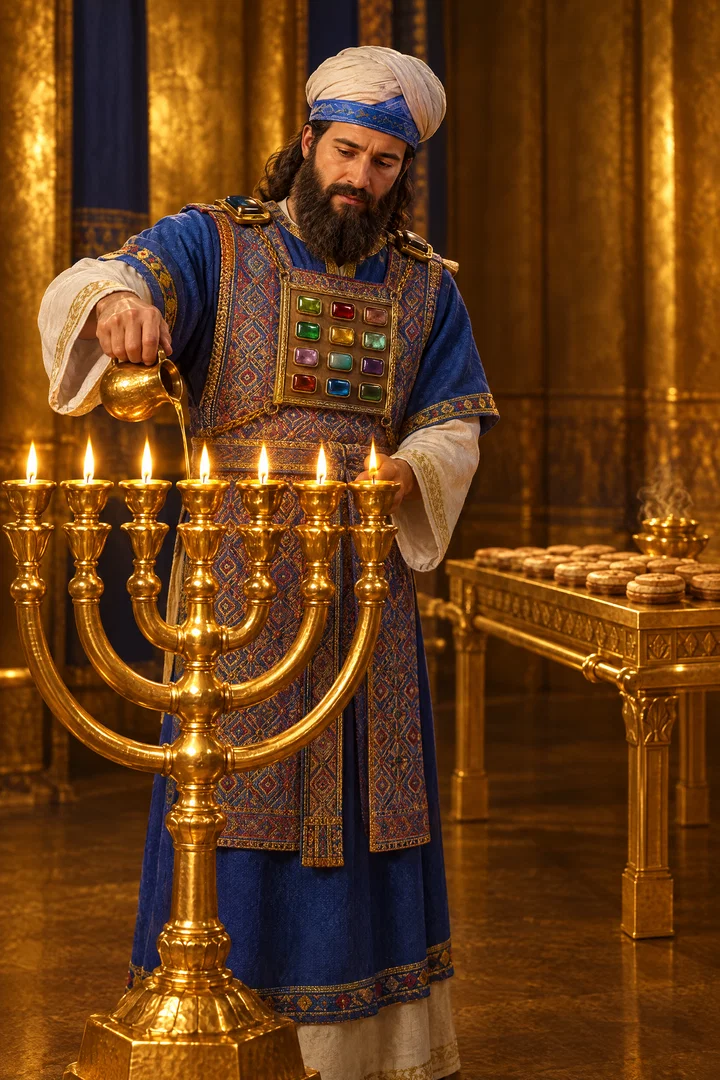
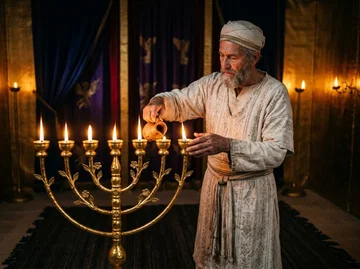
Without the vail of the testimony, in the tabernacle of the congregation, shall Aaron order it from the evening unto the morning before the LORD continually: it shall be a statute for ever in your generations.
Translations
Without the veil of the testimony, in the tabernacle of the congregation, shall Aaron order it from the evening to the morning before the LORD continually: it shall be a statute for ever in your generations.
Without the vail of the testimony, in the tabernacle of the congregation, shall Aaron order it from the evening unto the morning before the LORD continually: it shall be a statute for ever in your generations.
Without the vail of the Testimony, in the tabernacle of the congregation, shall Aaron order it from the evening unto the morning before the Lord continually: it shall be a statute for ever in your generations.
Without the vail of the testimony, in the tabernacle of the congregation, shall Aaron order it from the evening to the morning before the LORD continually: It shall be a statute for ever in your generations.
Without the veil of the testimony, in the tent of meeting, shall Aaron order it from evening to morning before the LORD continually: it shall be a statute for ever throughout your generations.
Without the veil of the testimony, in the tent of meeting, shall Aaron keep it in order from evening to morning before Jehovah continually: it shall be a statute for ever throughout your generations.
at the outside of the vail of the testimony in the tent of meeting doth Aaron arrange it from evening till morning before Jehovah continually — a statute age-during to your generations;
Outside the veil of the testimony, in the tent of meeting, shall Aaron dress it from evening to morning before Jehovah continually: [ it is] an everlasting statute throughout your generations.
Outside the veil of the testimony, in the tent of meeting, shall Aaron order it, from evening until morning, before Yahweh continually,—a statute age-abiding, to your generations.
Berean Standard Bible, Majority Standard Bible
Outside the veil of the Testimony in the Tent of Meeting, Aaron is to tend the lamps continually before the LORD from evening until morning. This is to be a permanent statute for the generations to come.
Outside of the veil of the Testimony, in the Tent of Meeting, Aaron shall keep it in order from evening to morning before the LORD continually. It shall be a statute forever throughout your generations.
Outside the veil of the ark in the Tent of meeting; let Aaron see that it is burning from evening till morning at all times before the Lord: it is a rule for ever through all your generations.
Without the vaile of the Testimonie, in the Tabernacle of the Congregation, shall Aaron dresse them, both euen and morning before the Lord alwayes: this shalbe a lawe for euer through your generations.
Douay-Rheims (Challoner revision)
Without the veil of the testimony in the tabernacle of the covenant. And Aaron shall set them from evening until morning before the Lord, by a perpetual service and rite in your generations.
Pictures
Cross-references 20 of 23
- Exodus 40:25
And he lighted the lamps before the LORD; as the LORD commanded Moses.
The lamps are lit before the LORD, as Leviticus commands them to burn continually.
- Revelation 4:5
And out of the throne proceeded lightnings and thunderings and voices: and there were seven lamps of fire burning before the throne, which are the seven Spirits of God.
The seven lamps before God’s throne correspond to the sanctuary lamps.
- Exodus 27:20-21
And thou shalt command the children of Israel, that they bring thee pure oil olive beaten for the light, to cause the lamp to burn always.
Commands the lamps to burn continually and prescribes their care.
- Exodus 40:20-21
And he took and put the testimony into the ark, and set the staves on the ark, and put the mercy seat above upon the ark:
Identifies the testimony in the ark behind the veil.
- Exodus 30:7-8
And Aaron shall burn thereon sweet incense every morning: when he dresseth the lamps, he shall burn incense upon it.
Both describe Aaron’s morning and evening service tending the lamps and burning incense continually.
- Hebrews 9:2
For there was a tabernacle made; the first, where in was the candlestick, and the table, and the shewbread; which is called the sanctuary.
The lampstand is located in the tabernacle’s first apartment.
- Exodus 31:18
And he gave unto Moses, when he had made an end of communing with him upon mount Sinai, two tables of testimony, tables of stone, written with the finger of God.
Identifies the testimony as the commandments written on stone tablets.
- Revelation 15:5
And after that I looked, and, behold, the temple of the tabernacle of the testimony in heaven was opened:
The heavenly temple is called the tabernacle of the testimony.
- Numbers 8:2-3
Speak unto Aaron, and say unto him, When thou lightest the lamps, the seven lamps shall give light over against the candlestick.
Both describe Aaron lighting the tabernacle lampstand before the LORD.
- Exodus 26:33
And thou shalt hang up the vail under the taches, that thou mayest bring in thither within the vail the ark of the testimony: and the vail shall divide unto you between the holy place and the most holy.
The veil separates the holy place from the most holy place, where the ark is concealed.
- Exodus 25:31-40
And thou shalt make a candlestick of pure gold: of beaten work shall the candlestick be made: his shaft, and his branches, his bowls, his knops, and his flowers, shall be of the same.
Describes the lampstand and its design.
- Exodus 32:15
And Moses turned, and went down from the mount, and the two tables of the testimony were in his hand: the tables were written on both their sides; on the one side and on the other were they written.
Names the law tablets as the tables of testimony.
- Numbers 9:15
And on the day that the tabernacle was reared up the cloud covered the tabernacle, namely, the tent of the testimony: and at even there was upon the tabernacle as it were the appearance of fire, until the morning.
Both refer to the tabernacle as the tabernacle of testimony.
- Hebrews 9:4
Which had the golden censer, and the ark of the covenant overlaid round about with gold, where in was the golden pot that had manna, and Aaron’s rod that budded, and the tables of the covenant;
The ark contained the tables of the covenant.
- Exodus 40:4
And thou shalt bring in the table, and set in order the things that are to be set in order upon it; and thou shalt bring in the candlestick, and light the lamps thereof.
Records the lampstand being set up and its lamps lit.
- Revelation 11:19
And the temple of God was opened in heaven, and there was seen in his temple the ark of his testament: and there were lightnings, and voices, and thunderings, and an earthquake, and great hail.
Shows the ark of God’s testament in the opened heavenly temple.
- Zechariah 4:2
And said unto me, What seest thou? And I said, I have looked, and behold a candlestick all of gold, with a bowl upon the top of it, and his seven lamps thereon, and seven pipes to the seven lamps, which are upon the top thereof:
Both describe seven lamps kept before the LORD.
- 1 Kings 8:6-11
And the priests brought in the ark of the covenant of the LORD unto his place, into the oracle of the house, to the most holy place, even under the wings of the cherubims.
Included among references on ministry in the sanctuary.
- Leviticus 16:2-19
And the LORD said unto Moses, Speak unto Aaron thy brother, that he come not at all times into the holy place within the vail before the mercy seat, which is upon the ark; that he die not: for I will appear in the cloud upon the mercy seat.
Both describe Aaron’s continual priestly ministry in the sanctuary.
- Numbers 18:1-5
And the LORD said unto Aaron, Thou and thy sons and thy father’s house with thee shall bear the iniquity of the sanctuary: and thou and thy sons with thee shall bear the iniquity of your priesthood.
Both describe Aaron and his sons’ duties in the sanctuary.
Commentary
Each commentary is drawn from primary sources: the writings of Ellen G. White and Adventist pioneers and periodicals. Each commentary is separate. Its own words are not a quotation; follow the references to read the source passages.
Ellen G. White
1 source
Aaron was charged to arrange and tend the lamps outside the veil of the testimony, in the tent of meeting, from evening until morning before the Lord so that they would burn continually.1SP 274.1 This ordering was a perpetual statute throughout the generations.1SP 274.1 The seven-branched candlestick thus kept its light shining without interruption through the night hours under priestly care.1SP 274.1 Its illumination supplied both sacred apartments of the tabernacle, since neither room had windows to admit outside light.1SP 274.1
Sources
Pioneers and periodicals
16 sources
Aaron was to keep the sanctuary lamp burning continually before the Lord outside the veil, tending it from evening until morning as an everlasting statute for Israel's generations.ST Apr 29, 1897ST Jul 17, 1879RH Jan 4, 1870 The veil is called the veil of the testimony because behind it lay the ark containing the Ten Commandments, and the candlestick with its seven lamps stood in the first apartment of the earthly tabernacle made as the pattern of things in heaven.RH Jan 4, 1870ST May 23, 1878ST May 16, 1878RH Mar 15, 1870RH Feb 3, 1853 The seven lamps of fire seen burning before God's throne are the heavenly reality of those seven lamps, showing Christ's ministration as High Priest in the first apartment of the heavenly temple.ST May 16, 1878RH Feb 3, 1853 Its word forever is used in a limited sense bounded by the continuance of the thing to which it applies, for the lamp service with the passover, priesthood and sacrifices was typical, national and temporary, pointing forward to Christ and ending at the antitype, unlike the seventh-day Sabbath made at creation as a memorial for all mankind and part of a law eternal as God.RH Jun 10, 1862ST Jun 29, 1882 The lamp represents the light of life in Christ the light of the world, and His care in trimming the lamps shows His work as High Priest in removing what hinders His people's shining and giving them more of the Holy Spirit pictured by the oil.ST May 8, 1901
Lamp, Veil, and Tending
Aaron was to order the sanctuary lamp outside the vail of the testimony in the tabernacle of the congregation, keeping it burning before the Lord continually from evening unto morning as a statute for ever in Israel's generations.ST Apr 29, 1897ST Jul 17, 1879RH Jan 4, 1870RH Feb 2, 1911ST Nov 21, 1892 The lamps stood in the first apartment of the earthly sanctuary, tended by Aaron himself under this command.RH Jan 4, 1870ST May 8, 1901ST Nov 21, 1892 Their tending from evening until morning before the Lord was a continual duty and lasting rule for Israel.ST May 8, 1901RH Feb 2, 1911ST Nov 21, 1892
The curtain is called the vail of the testimony because the testimony is the Ten Commandments kept in the ark.RH Jan 4, 1870ST May 23, 1878RH Jan 4, 1870 Its name therefore connects it with the law and with the most holy place behind it where the ark was concealed.RH Jan 4, 1870RH Jan 4, 1870 It is the vail that hid and concealed the ark, standing before the testimony.RH Jan 4, 1870ST May 23, 1878RH Jan 4, 1870ST May 8, 1901
The lamps were tended and replenished with oil morning and evening and kept burning through the night.ST Apr 29, 1897ST May 8, 1901RH Feb 2, 1911 Because the tabernacle had no windows and no other provision for light, they were not all put out at once but gave light by day and night.ST Apr 29, 1897ST May 8, 1901 They were to remain alight under Aaron's care.ST Apr 29, 1897RH Feb 2, 1911
The tending of the lamp from evening until morning before the Lord is an example of what is called continual, meaning constant continuance. The same term is used not only for burnt offerings but also for the ever-burning lamp and other parts of God's service. Its presence in this command is evidence that priests ministered in the earthly sanctuary.ST Nov 1, 1877 The ceremonial instructions about the lamp and the showbread in Leviticus 24 were given after Moses set up the tabernacle, so they cannot establish that the day the tabernacle was set up was a Sabbath.ST Jul 17, 1879
Heavenly Pattern and Forever
The golden candlestick with its seven lamps, ordered by Aaron from evening unto morning before the LORD, was by God's express direction placed in the first apartment of the earthly tabernacle, which was the pattern of things in the heavens.ST May 16, 1878RH Mar 15, 1870RH Feb 3, 1853 Leviticus 24:2-4 shows the seven lamps that burned in that first apartment where they were tended continually, making the lampstand a feature of the first apartment in the pattern of the heavenly sanctuary.ST May 16, 1878RH Mar 15, 1870 The seven lamps of fire burning before the throne of God are the heavenly counterpart and reality of those seven lamps.ST May 16, 1878RH Feb 3, 1853 That correspondence proves that the throne-scene where John sees them is a view into the first apartment of the heavenly temple, which contains the same furniture as the earthly first apartment and where Christ commenced His ministration as High Priest.ST May 16, 1878RH Feb 3, 1853
The continual tending of the lamp before the Lord as a statute forever shows that forever can be used in a limited sense whose meaning depends on its context.ST Jun 29, 1882 It is limited by the continued existence of the thing to which it applies, rather than meaning unlimited or eternal duration in itself.ST Jun 29, 1882 Forever and perpetual mean only the utmost extent of duration the person or thing allows: applied to God they mean unending, applied to man and his works they mean limited.RH Jun 10, 1862 Applied to the passover, priesthood, sacrifices and services like this lamp service ordered to be kept from evening to morning continually, they mean limited duration because those things belonged to the Jewish nation as types and shadows pointing forward to Christ and ended when the antitype was reached, unlike the seventh-day Sabbath which was made at creation before sin entered and before types were needed as a backward-pointing memorial of creation for all mankind and part of a law eternal as God, so that the service in Leviticus 24:1-3 was typical, national, and temporary.RH Jun 10, 1862
Christ, Spirit, and Service
Aaron was to keep the lamp burning before the Lord from evening until morning, continually, outside the veil that stood before the testimony, as a continual duty and a statute for Israel's generations.ST May 8, 1901 The lamp represents the light of life that illumines the hearts of those who accept the gospel. In its fulfillment Christ is the light of the world, and God shines in human hearts to give the knowledge of His glory in Christ. Because the tabernacle had no windows and no other provision for light, the lamps were not all put out at once but gave light by day and night.ST May 8, 1901 Their care illustrates Christ the High Priest removing what hinders His people's light and giving them more of the Holy Spirit, pictured by the oil, so they may shine more brightly.ST May 8, 1901
Aaron's ordering and lighting of the lamps in the tabernacle from the evening unto the morning before the Lord is a type whose antitype is an evening service.ST Apr 24, 1879 That antitypical evening service consists of short meditations on the subject supplied in the morning, given by the ministry.ST Apr 24, 1879 It is symbolized by a seven-fold lamp burning before the altar.ST Apr 24, 1879RH Apr 17, 1879 The lamp is lighted by deacons as soon as the introductory part of the service is over.ST Apr 24, 1879
The continual care of the tabernacle lamps, kept burning before the Lord from evening until morning generation after generation, is compared with daily morning and evening services.RH Apr 17, 1879 Aaron's evening lighting of the lamps is the pattern set beside the church's daily morning and evening services.RH Apr 17, 1879 The church's sevenfold lamp is presented as a symbol of that service.ST Apr 24, 1879RH Apr 17, 1879
Sources