Leviticus 4:35
And he shall take away all the fat thereof, as the fat of the lamb is taken away from the sacrifice of the peace offerings; and the priest shall burn them upon the altar, according to the offerings made by fire unto the LORD: and the priest shall make an atonement for his sin that he hath committed, and it shall be forgiven him.
Translations
And he shall take away all the fat thereof, as the fat of the lamb is taken away from the sacrifice of the peace offerings; and the priest shall burn them on the altar, according to the offerings made by fire to the LORD: and the priest shall make an atonement for his sin that he has committed, and it shall be forgiven him.
And he shall take away all the fat thereof, as the fat of the lamb is taken away from the sacrifice of the peace offerings; and the priest shall burn them upon the altar, according to the offerings made by fire unto the LORD: and the priest shall make an atonement for his sin that he hath committed, and it shall be forgiven him.
and he shall take away all the fat thereof, as the fat of the lamb is taken away from the sacrifice of the peace offerings; and the priest shall burn them upon the altar, according to the offerings made by fire unto the Lord; and the priest shall make an atonement for his sin that he hath committed, and it shall be forgiven him.
And he shall take away all its fat, as the fat of the lamb is taken away from the sacrifice of the peace-offerings; and the priest shall burn them upon the altar, according to the offerings made by fire to the LORD: and the priest shall make an atonement for his sin that he hath committed, and it shall be forgiven him.
and all the fat thereof shall he take away, as the fat of the lamb is taken away from the sacrifice of peace offerings; and the priest shall burn them on the altar, upon the offerings of the LORD made by fire: and the priest shall make atonement for him as touching his sin that he hath sinned, and he shall be forgiven.
And all the fat thereof shall he take away, as the fat of the lamb is taken away from the sacrifice of peace-offerings; and the priest shall burn them on the altar, upon the offerings of Jehovah made by fire; and the priest shall make atonement for him as touching his sin that he hath sinned, and he shall be forgiven.
and all its fat he turneth aside, as the fat of the sheep is turned aside from the sacrifice of the peace-offerings, and the priest hath made them a perfume on the altar, according to the fire-offerings of Jehovah, and the priest hath made atonement for him, for his sin which he hath sinned, and it hath been forgiven him.
And he shall take away all the fat thereof, as the fat of the lamb is taken away from the sacrifice of peace-offering; and the priest shall burn them on the altar, with Jehovah's offerings by fire; and the priest shall make atonement for him concerning his sin which he hath sinned, and it shall be forgiven him.
and all the fat thereof, shall he remove as the fat of the lamb is removed, from the peace-offering, and the priest shall make a perfume therewith at the altar, upon the altar-flames of Yahweh,—so shall the priest put a propitiatory-covering over him on account of his sin which he hath committed, and it shall be forgiven him.
And he shall remove all the fat, just as the fat of the lamb is removed from the peace offerings, and he shall burn it on the altar along with the offerings made by fire to the LORD. In this way the priest will make atonement for him for the sin he has committed, and he will be forgiven.
And he shall remove all the fat, just as the fat of the lamb is removed from the peace offerings, and he shall burn it on the altar along with the food offerings to the LORD. In this way the priest will make atonement for him for the sin he has committed, and he will be forgiven.
He shall remove all its fat, like the fat of the lamb is removed from the sacrifice of peace offerings. The priest shall burn them on the altar, on the offerings of the LORD made by fire. The priest shall make atonement for him concerning his sin that he has sinned, and he will be forgiven.
And let him take away all its fat, as the fat is taken away from the lamb of the peace-offerings; and let it be burned by the priest on the altar among the offerings made by fire to the Lord: and the priest will take away his sin and he will have forgiveness.
And he shall take away all the fat thereof, as the fatte of the lambe of the peace offrings is taken away: then the Priest shall burne it vpon the altar with the oblations of the Lord made by fire, and the Priest shall make an atonement for him concerning his sinne that he hath committed, and it shalbe forgiuen him.
Douay-Rheims (Challoner revision)
All the fat also he shall take off, as the fat of the ram that is offered for peace offerings is wont to be taken away: and shall burn it upon the altar, for a burnt sacrifice of the Lord: and he shall pray for him and for his sin, and it shall be forgiven him.
Pictures
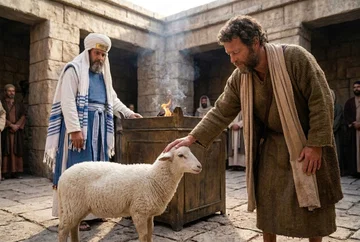
Cross-references 20 of 52
- Leviticus 17:11
For the life of the flesh is in the blood: and I have given it to you upon the altar to make an atonement for your souls: for it is the blood that maketh an atonement for the soul.
Blood makes atonement because life is in it.
- Hebrews 10:4
For it is not possible that the blood of bulls and of goats should take away sins.
Animal sacrifices could not actually take away sins.
- Leviticus 4:26
And he shall burn all his fat upon the altar, as the fat of the sacrifice of peace offerings: and the priest shall make an atonement for him as concerning his sin, and it shall be forgiven him.
The priest makes atonement for the ruler’s sin, and it is forgiven.
- Leviticus 4:20
And he shall do with the bullock as he did with the bullock for a sin offering, so shall he do with this: and the priest shall make an atonement for them, and it shall be forgiven them.
The priest makes atonement for the offering, and the sin is forgiven.
- Hebrews 9:22
And almost all things are by the law purged with blood; and without shedding of blood is no remission.
Remission and forgiveness are linked to the shedding of sacrificial blood.
- Leviticus 4:31
And he shall take away all the fat thereof, as the fat is taken away from off the sacrifice of peace offerings; and the priest shall burn it upon the altar for a sweet savour unto the LORD; and the priest shall make an atonement for him, and it shall be forgiven him.
The priest makes atonement for sin, and the sinner is forgiven.
- Hebrews 10:1
For the law having a shadow of good things to come, and not the very image of the things, can never with those sacrifices which they offered year by year continually make the comers thereunto perfect.
Animal sacrifices were a shadow of the good things to come.
- Leviticus 16:15-19
Then shall he kill the goat of the sin offering, that is for the people, and bring his blood within the vail, and do with that blood as he did with the blood of the bullock, and sprinkle it upon the mercy seat, and before the mercy seat:
The Day of Atonement service completes the atonement begun through sin offerings.
- Numbers 15:27-28
And if any soul sin through ignorance, then he shall bring a she goat of the first year for a sin offering.
Both teach atonement and forgiveness for sin committed through ignorance.
- Leviticus 6:30
And no sin offering, whereof any of the blood is brought into the tabernacle of the congregation to reconcile withal in the holy place, shall be eaten: it shall be burnt in the fire.
Sin offerings whose blood enters the sanctuary are burned rather than eaten.
- Hebrews 8:3-5
For every high priest is ordained to offer gifts and sacrifices: wherefore it is of necessity that this man have somewhat also to offer.
Earthly priests offer sacrifices according to the law, serving as a pattern of heavenly priestly service.
- Hebrews 13:11-12
For the bodies of those beasts, whose blood is brought into the sanctuary by the high priest for sin, are burned without the camp.
Sin-offering animals were burned outside the camp, as Jesus suffered outside the gate.
- Isaiah 53:6
All we like sheep have gone astray; we have turned every one to his own way; and the LORD hath laid on him the iniquity of us all.
The LORD laid the iniquity of all upon him.
- Hebrews 9:26
For then must he often have suffered since the foundation of the world: but now once in the end of the world hath he appeared to put away sin by the sacrifice of himself.
Christ offered himself once to put away sin, fulfilling the earthly sin offering.
- 1 Peter 2:24
Who his own self bare our sins in his own body on the tree, that we, being dead to sins, should live unto righteousness: by whose stripes ye were healed.
Christ bore sins in his body, fulfilling what the offerings represented.
- Hebrews 9:7
But into the second went the high priest alone once every year, not without blood, which he offered for himself, and for the errors of the people:
The yearly blood offering echoes the individual atonement and forgiveness described here.
- John 1:29
The next day John seeth Jesus coming unto him, and saith, Behold the Lamb of God, which taketh away the sin of the world.
Jesus is the Lamb who takes away sin, fulfilling the sinner’s lamb.
- Leviticus 5:6
And he shall bring his trespass offering unto the LORD for his sin which he hath sinned, a female from the flock, a lamb or a kid of the goats, for a sin offering; and the priest shall make an atonement for him concerning his sin.
The priest makes atonement for the sinner through an offering.
- Leviticus 16:30
For on that day shall the priest make an atonement for you, to cleanse you, that ye may be clean from all your sins before the LORD.
Priestly atonement cleanses the people from sin.
- Leviticus 10:17
Wherefore have ye not eaten the sin offering in the holy place, seeing it is most holy, and God hath given it you to bear the iniquity of the congregation, to make atonement for them before the LORD?
Priests bear the congregation’s iniquity through the sin offering, making atonement before the LORD.
Commentary
Each commentary is drawn from primary sources: the writings of Ellen G. White and Adventist pioneers and periodicals. Each commentary is separate. Its own words are not a quotation; follow the references to read the source passages.
Ellen G. White
4 sources
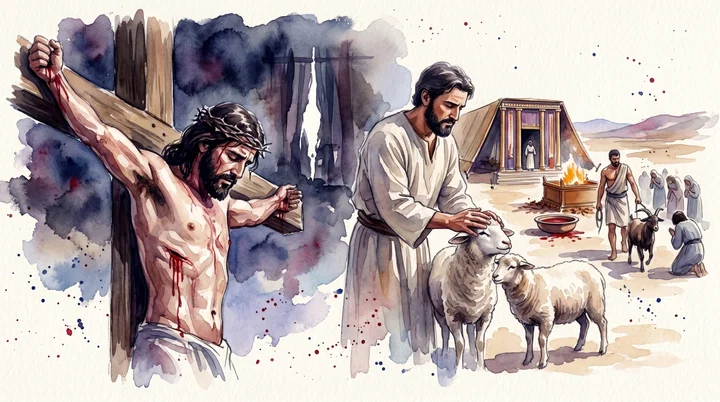
This law belongs to the sin offering for a ruler or for one of the common people, and describes the daily ministration in the holy place for the common sinner.PP 761.5GC88 418.1 The repentant sinner brought his offering to the door of the tabernacle, laid his hand upon the victim's head, and confessed his sins, thus transferring them in figure from himself to the innocent sacrifice.GC88 418.1 That victim was then slain, because without shedding of blood there is no remission and the broken law demands the life of the transgressor.GC88 418.1
The blood represented the forfeited life of the sinner whose guilt the victim bore, and when carried by the priest into the holy place and sprinkled before the veil behind which was the ark containing the transgressed law, the sin was transferred in figure through the blood to the sanctuary.GC88 418.1 In the case covered here the blood is not carried into the holy place, but the flesh is to be eaten by the priest in a holy place in the court of the tent of meeting to bear the iniquity of the congregation.PP 761.5GC88 418.1 Both ceremonies alike symbolized the transfer of sin from the penitent to the sanctuary, so this is an offering for sin in which the priest makes atonement for the sinner, granting forgiveness to the sinner while storing his sin in the sanctuary until its later removal.GC88 418.1ST May 6, 1875
Sin offerings were required returns to God under the Levitical dispensation in addition to the tithe, forming part of the Mosaic system alongside the tithes and thank offerings required of Israel.4T 467.1–2ST May 6, 1875 The amount required was proportioned to the amount bestowed, so the larger the capital entrusted the more valuable the gift required in return, and Christians with ten or twenty thousand dollars are therefore bound not only to give their proportion by the tithing system but to present sin offerings and thank offerings to God.4T 467.1–2 Faithfulness in these vows was examined at stated periods, and the conscientious gave about one-third of all income for religious interests and the poor, besides freewill offerings for special objects such as the tabernacle in the wilderness and the temple at Jerusalem, which God required for their own good and to sustain His service.4T 467.1–2
Sources
Pioneers and periodicals
76 sources
Leviticus 4:35 gives the sin offering for a common person who sinned unintentionally, bringing a lamb without blemish whose fat is removed as in the peace offering and burned on the altar, while the priest makes atonement and the sin is forgiven.ST Jun 4, 1885ST Jul 8, 1930RH Aug 10, 1916ST Aug 16, 1883ST Feb 17, 1890 The sinner confesses and lays his hand on the victim's head and slays it, and killing the offering and making atonement are distinct, for atonement is the priest's own work with the blood in the sanctuary.RH Mar 10, 1874ST Jan 18, 1883ST Jul 2, 1885ST Aug 8, 1916ST Mar 29, 1883 By that laying on of the hand guilt is transferred in figure to the innocent victim slain in the sinner's stead, and its blood bearing that guilt is carried into the sanctuary where atonement is made and forgiveness granted.RH Mar 10, 1874ST Jan 18, 1883ST Nov 20, 1879ST Jun 27, 1911ST Apr 19, 1905 That forgiveness is real, yet it begins the work of atonement without yet blotting out the sin, which remains in the sanctuary until taken up and completed later.ST Jun 26, 1907RH Sep 16, 1852RH Sep 21, 1905ST Jan 27, 1890ST Apr 15, 1889 Even sin done ignorantly or unwittingly is truly sin requiring atonement when known, and the lamb dying while the sinner goes free foreshadows Christ the Lamb of God, whose death was the sacrifice preparatory to His presenting of blood before God in heaven.ST Jun 27, 1911ST Apr 20, 1904ST Feb 20, 1893ST Apr 26, 1883ST Apr 15, 1886
Offering and Its Ritual
Leviticus 1 to 4 sets forth five distinct kinds of offerings — burnt, meal, peace, sin, and trespass — each with its own purpose and manner of offering, to be clearly distinguished in mind.RH Feb 3, 1916ST Sep 20, 1910 Chapter 4 gives the law for sin offerings as one of the special offerings of Israel, part of the Mosaic system alongside tithes and thank offerings, showing how sin and its remedy were represented through sacrifice and priestly service in the earthly sanctuary.ST May 6, 1875ST Aug 16, 1883ST Sep 20, 1910 These sacrifices cost something, and their cost varied with the wealth or position of the offerer.ST Aug 16, 1883
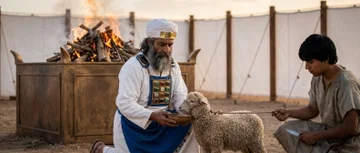
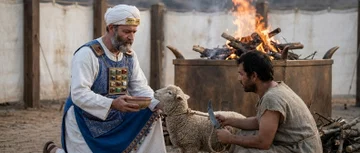
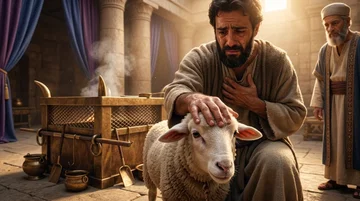
The verse gives the sin offering for a common person, and by extension a ruler, who sinned unintentionally, describing how the fat was removed and burned as in a peace offering and the priest made atonement so the sinner was forgiven.ST May 22, 1901ST Apr 2, 1912 He brought a lamb or kid of the goats, a clean beast without blemish, for any other was rejected, acknowledging guilt by laying a hand on it and confessing the sin over the victim.RH Aug 10, 1916ST Feb 17, 1890RH Jan 8, 1861 He then himself killed it, placing his culpability on a substitute that bore the death penalty, accepting it as his substitute and acknowledging himself worthy of death.RH Aug 10, 1916ST Feb 17, 1890 The priest then performed the prescribed service in faith in the coming Redeemer, burning the fat on the altar, handling the blood that transferred sin to the sanctuary where atonement was made, and the sinner received reconciliation and harmony with God's law.ST Feb 17, 1890ST Apr 2, 1912RH Jan 8, 1861 These individual offerings were part of the daily sanctuary services that kept remembrance of sin before the people and pointed forward to Christ, yet the sin carried into the sanctuary was not yet blotted out but remained there until the high priest's later atonement.RH Aug 10, 1916ST Apr 2, 1912
The verse prescribes removing all the fat of the sin offering as the fat of the lamb is taken away from the sacrifice of the peace offerings, and burning it upon the altar.ST Jun 4, 1885ST Jul 8, 1930ST Aug 15, 1878ST Jan 27, 1890ST Jul 1, 1908 The sacrifice of the victim and the burning of its fat precede the priest's making atonement for the committed sin, after which forgiveness follows.ST Jun 4, 1885RH Jul 6, 1869ST Jan 27, 1890 The offering's blood, which represents its life, is carried into the sanctuary and placed on its holy vessels, for through confession the sin is laid on the offering and conveyed into the sanctuary.ST Jun 4, 1885ST Aug 15, 1878 The offering itself does not secure forgiveness in itself; pardon comes through Christ's promised sacrifice, and offering the sacrifice shows the sinner's faith in Christ the Mediator, while the priestly work with shed blood makes reconciliation and makes it possible for God to dwell among His people.ST Jan 27, 1890ST Jul 1, 1908
The ritual order is that the sinner confesses, lays his hand or hands on the victim's head, and himself slays it; the priest then burns the fat, handles the blood, and makes atonement.ST Aug 8, 1916ST Jan 17, 1884RH May 19, 1874 Killing the offering and making atonement are distinct and separate acts in order, atonement being the third work following the laying on of hands and the killing.ST Jan 17, 1884RH May 19, 1874 Atonement is the priest's own work beyond what the sinner was required to do, made by the appointed priest with sacrificial blood in the sanctuary, not by the act of killing or at the place where it is killed, for the life of the flesh is in the blood given upon the altar to make atonement for the soul.ST Jul 2, 1885ST Aug 8, 1916ST Jan 17, 1884 The priest did not slay the sacrifice and was not himself the sin offering; his act of taking the blood and ministering it in the sanctuary is what is called making an atonement for sin.ST Aug 8, 1916 After the offering was slain, the priest performed the atoning work in the sanctuary, the death being preparatory to atonement.ST Mar 29, 1883RH Jul 6, 1869
The verse belongs to the regular sin offerings, not the Day of Atonement, its surrounding instructions identifying the blood handled by the priest as the appointed means of atonement.ST Nov 27, 1884 It belongs to the ceremonial law, which was instituted in consequence of sin.RH Jan 10, 1916 It belongs to the continual daily service in the first apartment, the holy place, through the entire year except one day, where when a man repented he brought his sin offering to the door, confessed, and transferred guilt to the offering whose blood bearing sin was carried in and sprinkled before God.ST Jan 18, 1883RH Mar 8, 1870RH Jan 11, 1870 This ministration includes especial individual offerings presented from time to time as set forth in Leviticus 1-7, alongside the regular morning and evening burnt offering, the burning of sweet incense on the golden altar, and the special offerings on Sabbaths, new moons and feasts, distinct from the yearly work in the second apartment, the most holy place, for the sins of the people and the cleansing of the sanctuary.RH Jan 11, 1870RH Mar 8, 1870ST Jan 21, 1886 The transfer of guilt to the tabernacle is the most important feature of the first-apartment work, which the one day of work in the most holy place closes up, and that whole ministration is the example and shadow of Christ's more excellent ministry in the true tabernacle, teaching through the earthly sanctuary about God's way.ST Jan 18, 1883RH Mar 8, 1870ST Jun 19, 1907
Transfer of Guilt and Forgiveness
Through confession and the laying of a hand on its head, the guilt of the sinner is transferred in figure to the innocent victim.RH Mar 10, 1874ST Jan 18, 1883ST Nov 20, 1879ST Oct 22, 1874ST Aug 15, 1878 The victim is then slain because of that transferred guilt, its life given in place of the life forfeited by breaking God's law.ST Jan 18, 1883ST Nov 20, 1879ST Oct 22, 1874ST Aug 15, 1878ST Nov 22, 1883 Its blood represents its life, and the offering stands in place of the person who broke the law.RH Mar 10, 1874ST Jan 18, 1883ST Nov 20, 1879ST Oct 22, 1874ST Aug 15, 1878 The priest carries that blood bearing the guilt into the sanctuary and sprinkles it before God.RH Mar 10, 1874ST Jan 18, 1883ST Nov 20, 1879ST Jun 4, 1885RH Feb 25, 1858 He sprinkles it before the veil, places it on the holy vessels and on the horns of the altar of incense, and in cases where the blood is not taken in, the flesh is eaten by the priests in the holy place.ST Jun 4, 1885ST Feb 17, 1890ST Sep 5, 1900ST Apr 1, 1913ST Jun 26, 1901
By blood or by flesh the sin is conveyed into and borne into the sanctuary, where atonement is made and the sinner is forgiven.ST Jun 26, 1907RH Feb 25, 1858ST Feb 17, 1890ST Apr 1, 1913ST Jun 26, 1901 In this way the sanctuary becomes the receptacle of sin through the year by the repeated offerings.ST Jan 18, 1883ST Jun 26, 1907RH Feb 25, 1858ST Jun 6, 1878RH Apr 6, 1869 The atonement and forgiveness then granted begin the work of atonement but do not yet blot out the sin.ST Jun 26, 1907RH Sep 16, 1852RH Sep 21, 1905RH Aug 10, 1916ST Jun 6, 1878 The forgiven sin is transferred to and remains in the sanctuary until it is taken up and completed later on the Day of Atonement, when the sanctuary is cleansed and sins are removed from the sanctuary and the camp.ST Jun 26, 1907RH Sep 21, 1905RH Aug 10, 1916ST Jun 6, 1878RH Apr 6, 1869 This daily ministry for forgiveness is distinct from the yearly atonement for blotting out sins.RH Sep 16, 1852RH Sep 21, 1905ST Jun 6, 1878
The offering is strictly vicarious by substitution, slain not for itself or its own wrongs but always for the sins of another.ST Jun 27, 1911ST Apr 19, 1905RH Oct 13, 1863RH Apr 7, 1874RH Oct 13, 1863 Its blood is shed and its death suffered in the sinner's stead, its life taken for his, so that the sin is remitted to the sinner and laid upon another who suffers its penalty.ST Jun 27, 1911ST Nov 22, 1883RH Oct 13, 1863RH Apr 7, 1874RH Oct 13, 1863 Without such substitution there is no atonement consistent with justice, for the dishonored law requires shedding of blood and cannot be satisfied or relaxed without taking life, since the wages of sin is death.ST Apr 19, 1905RH Oct 13, 1863RH Apr 7, 1874RH Oct 13, 1863 In the continual service through the year for individual sin, the priest puts some of the blood upon the horns of the altar of sweet incense before the Lord.ST Jun 4, 1885RH Feb 19, 1901ST Feb 17, 1890 The morning and evening incense continually covering that altar covers the blood which represents the sinful life and the sins of the sinner, with fragrance extending far around the tabernacle.RH Feb 19, 1901
To be forgiven is to have iniquities forgiven and sins thus covered by the incense continually ascending before the Lord.RH Feb 19, 1901 The incense is ever between the sinner and God, and in no other way can he be accepted, with no repentance and prayers saving without the incense covering the sins.RH Feb 19, 1901 The sin offering must be brought by the sinner, but the incense must always be offered by the priest.RH Feb 19, 1901 The remainder of this kind of sin offering is holy and eaten by the priests, who thereby bear the iniquity.ST Feb 17, 1890ST Sep 5, 1900ST Sep 5, 1900ST Apr 1, 1913ST Jun 26, 1901 Unlike an offering whose blood is brought into the sanctuary, it is not burned outside the camp, but the sin borne by the priest in his person is still remembered before God in His very presence, with the sinner coming in his representation into that presence; those who held the other teaching held that the sin was borne by the priest and carried outside the camp in the flesh of the sin offering, and that the priest who taught in God's name was responsible in large degree for the ignorant sins of those under his care.ST Feb 17, 1890ST Sep 5, 1900ST Sep 5, 1900ST Apr 1, 1913ST Jun 26, 1901
Ignorant Sin Requires Atonement
Leviticus 4:35 belongs to a law for sin committed ignorantly, unwittingly, unwillingly, through misunderstanding, or when overtaken in a fault, and such sin is still truly sin and is not passed by as of no consequence.ST Apr 20, 1904ST Feb 20, 1893ST Apr 26, 1883ST Mar 22, 1883RH Nov 22, 1853 Lack of awareness does not make a person free from sin, sincere belief that wrong is right does not remove guilt, and good intentions do not excuse, for law and not conscience is the standard.ST Feb 20, 1893ST Mar 22, 1883ST Nov 25, 1886RH Apr 28, 1910 Even sins not consciously recognized can stain and sully the life of righteousness.ST Aug 24, 1888ST Oct 30, 1884
When such sin becomes known the sinner is counted guilty and must bring the required offering.ST Feb 20, 1893ST Apr 26, 1883ST Mar 22, 1883 The Holy Spirit brings the sin to the transgressor's notice, and when brought to mind it should be confessed.ST Apr 20, 1904 By the priest's atonement it is then forgiven, proving that saying I thought it was right is no excuse and that lack of knowledge brings guilt that must be remedied.ST Apr 20, 1904ST Feb 20, 1893ST Apr 26, 1883RH Nov 22, 1853
Sins of ignorance are less heinous and less obnoxious to God than sins of weakness and sins of presumption, and ignorance may lessen blame.ST Aug 24, 1888ST Nov 25, 1886RH Mar 3, 1874ST Oct 30, 1884 Yet it does not make the act right or innocent, and God takes account of motives and opportunities to know what is right.ST Aug 24, 1888RH Apr 28, 1910ST Oct 30, 1884 Such sins still need repentance, reform, and forgiveness, and are among the things that made the death of Christ necessary.ST Nov 25, 1886RH Mar 3, 1874RH Apr 28, 1910
Once ignorance is removed there must be repentance and reform, a duty continuing in this dispensation.RH Mar 3, 1874 Those who entered unlawful marriage covenants in ignorance may, once the sin becomes known, find relief through repentance as godly sorrow for sin under the gospel.RH Mar 12, 1857 Breaking God's law by Sunday-keeping when done ignorantly, as by forefathers who did not know better, is such a sin of ignorance that needs atonement.RH Nov 10, 1863 Retaining pardon and remaining objects of divine grace after conversion requires the same turning from every known sin by advancing in sanctification and avoiding knowing and voluntary sin.ST May 31, 1905 When light comes to show sin and is chosen against, sin becomes doubly sinful, and past sins of ignorance are imputed as if committed with full knowledge of duty.RH Mar 3, 1874
Foreshadowing Christ's Sacrifice
The sin offering stood in the sinner's place, with guilt laid upon the victim which died for the sin while the sinner went free.ST Jun 27, 1911ST Apr 15, 1886 That death represents Christ bearing the curse and suffering for sinners, the innocent substituted for the guilty with punishment transferred from sinner to sinless, another life taken instead of the forfeited life and other blood falling while the sinner's still courses through his veins.ST Jun 27, 1911ST Apr 15, 1886 The lamb was a token of innocence and gentleness and therefore a fitting representation of Christ, the most conspicuous offering under the system, a bleeding Lamb whose blood provides atonement and is accepted as propitiation when offered in faith in the coming Saviour.RH Nov 13, 1900RH Dec 28, 1911 As in old time each penitent brought a lamb for himself, from Abel and Noah and Abraham, Isaac and Jacob through the system under Moses, so God's Lamb is for all, the best of heaven offered on Calvary as the final and complete sacrifice for every penitent sinner in the world.
The blood of bulls and goats cannot take away even one sin nor make worshipers perfect, so the forgiveness then granted was only typical in itself.ST Apr 15, 1886ST Jul 8, 1886ST Apr 15, 1889RH May 19, 1863 As ordinances of divine service belonging to the first covenant and the earthly sanctuary, these sin offerings were only a shadow of future good things, a ministration of death that demanded penalty and atonement and pointed to the atonement accomplished by Christ by which sin is truly put away.ST Apr 15, 1886ST Jul 8, 1886ST Aug 5, 1889ST Feb 3, 1909RH May 19, 1863 After His sacrifice by Himself, bearing the iniquity of all, the typical sacrifices were no longer required but abolished in His flesh with the law of commandments contained in ordinances, so that eternal life now comes by eating the flesh and drinking the blood of the Son of man.ST Apr 15, 1886
The forgiveness received was nevertheless real, coming not through anything inherent in the old covenant but through faith in Christ's promised sacrifice by virtue of the second and new covenant, with Christ as Mediator.ST Jan 27, 1890ST Apr 15, 1889ST Aug 5, 1889 God's promise made His future sacrifice effective in Moses' time as well as later, so that offering the sacrifice showed faith that God had laid human iniquity on Jesus and that cleansing is in His blood, and sacrifice had value through faith.ST Jan 27, 1890ST Apr 15, 1889 The individual offerings brought in faith in the coming Redeemer, with the daily offering, were part of the daily sanctuary services that kept remembrance of sin before the people and pointed forward to Christ, while the yearly cycle of sacrifices and priestly work typified His priestly service accomplished once for all in the heavenly sanctuary.ST Nov 28, 1895ST Feb 13, 1912ST Apr 2, 1912
The sin offering showed sin's deadly nature and the death required by the law, proving that the law and its penalty remain in force.ST Nov 23, 1904 It declares the same gospel that all have sinned by doing what the commandments forbid and are guilty, that an offering must be brought and atonement made so guilt is removed and sin forgiven.ST Nov 23, 1904RH Apr 10, 1900 That offering and atonement is fulfilled when the Lord lays on Christ the iniquity of all who like sheep have gone astray, when He is wounded for transgressions and bruised for iniquities and His soul is made an offering for sin, His blood shed for the world, and He sees His seed in those who are Christ's, who are Abraham's seed and heirs according to promise.ST Nov 23, 1904RH Apr 10, 1900
Foreshadowing Christ's Priestly Ministry
The death of the victim was only preparatory to atonement, for after the offering was slain and its fat burned upon the altar the priest made atonement for the sin and forgiveness followed.ST Jul 2, 1885ST Aug 8, 1916ST Mar 29, 1883RH Jul 6, 1869RH May 19, 1874 The killing of the offering and the making of atonement were distinct and separate acts in order, atonement being the third work following the laying on of hands and the killing.ST Aug 8, 1916ST Jan 17, 1884 The sinner himself laid his hand upon the head of the animal and slew it, but he did not make atonement; atonement was the priest's own work beyond what the sinner was required to do.ST Jul 2, 1885ST Aug 8, 1916ST Jan 17, 1884 The priest did not slay the sacrifice and was not himself the sin offering, but took the blood, for the life of the flesh is in the blood given upon the altar to make atonement for the soul, and ministered it in the sanctuary, sprinkling it upon the altar, and this ministering is what is called making an atonement.ST Aug 8, 1916ST Jan 17, 1884 Applied to Christ, His death was the sacrifice while His presenting of His blood before God in heaven made atonement; He was not acting as priest when He died and did not enter upon that priestly work until after His ascension to the heavenly sanctuary.ST Aug 8, 1916ST Mar 29, 1883RH Jul 6, 1869
As the offerings concerned sin and the sanctuary, Christ's blood is ministered in the heavenly sanctuary and sins are transferred there through His blood.RH Aug 3, 1876 The sin offering for a common person was provision for atonement and forgiveness among the sin offerings that prefigured Christ, belonging to the sanctuary-service instructions which teach through the earthly sanctuary about God's way and Christ's priestly work in the heavenly sanctuary.RH Aug 3, 1876ST Jun 19, 1907 A sinner brought an offering and the priest used its shed blood to make reconciliation, removing and burning the fat on the altar so that atonement was made and the sinner could be forgiven.ST Jul 1, 1908 This priestly work with shed blood removed sin and made it possible for God to dwell among His people.ST Jul 1, 1908 The sacrifices and priestly work formed a yearly cycle that typified Christ's priestly service, accomplished once for all in the heavenly sanctuary.ST Nov 28, 1895
The priest's role in bearing the people's sins and appearing before God for them typified Christ, who took sin upon Himself and represents people before God.ST Jul 8, 1930 When a common person brought a sin offering the fat was burned on the altar as in a peace offering, and the priest made atonement for the sinner who was forgiven, showing in figure that bearing and representation.ST Jul 8, 1930
Repentance Faith and Life
Sin requires atonement through the sin-offering ritual, and with it confession and renunciation of sin.ST Nov 23, 1904RH Apr 28, 1910RH Jan 8, 1861 The offering showed sin's deadly nature and the death required by the law, with the law and its penalty remaining in force, and the blood shed for the world pointed to Christ as the true sin-offering.ST Nov 23, 1904 Atonement was made for all, but it avails for those who come humbly before God and confess their sin.ST Nov 23, 1904ST Sep 5, 1900 Even when intentions were good, sin still requires atonement and forgiveness, for law and not conscience or sincere belief is the standard, and sin remains sin whether or not the sinner recognizes it.RH Apr 28, 1910 Once recognized, it is to be confessed, repented of, and put away, while God takes account of the sinner's motives and opportunities to know what is right.RH Apr 28, 1910
The sinner brought an unblemished offering and confessed the sin over the victim, and the priest burned its fat on the altar and made atonement, and the sinner was forgiven.RH Jan 8, 1861 The offering's blood represented the transfer of sin to the sanctuary, where atonement was made, and this repeated service showed the need for pardon by everyone who had transgressed God's law.RH Jan 8, 1861 A person who comes as a sinner may receive atonement and forgiveness through the sin-offering, coming to God in repentance for one's sinful nature even without awareness of a particular wrong.ST Sep 5, 1900 Yielding that nature to God brings forgiveness, victory, and a life made good and fruitful by God.ST Sep 5, 1900
The sin offering stood in the sinner's place, with the sinner's guilt laid on the victim which died for the sin while the sinner went free.ST Jun 27, 1911ST Jun 26, 1901 Its death represents Christ bearing the curse and suffering for sinners, the life of the Son of God, the Lamb of God, poured out for guilty man, so that those who come to God with Christ as their sin offering receive pardon and peace and are saved from sin.ST Jun 27, 1911ST Jun 26, 1901 The substitute must be whole-hearted, acceptable to and accepted by God as Judge, and whether by its blood borne into the sanctuary or by its flesh eaten by the priests and borne in their persons, the sin is in one way or another remembered before God in His very presence, with the sinner coming in his representation into that presence.ST Jun 26, 1901 The whole service teaches that salvation is wholly of God and His goodness, for no offering man makes and no service he performs can wash white his sin-stained character or change the nature received from his fathers.ST Jun 26, 1901
Sources