Leviticus 5:6
And he shall bring his trespass offering unto the LORD for his sin which he hath sinned, a female from the flock, a lamb or a kid of the goats, for a sin offering; and the priest shall make an atonement for him concerning his sin.
Translations
And he shall bring his trespass offering to the LORD for his sin which he has sinned, a female from the flock, a lamb or a kid of the goats, for a sin offering; and the priest shall make an atonement for him concerning his sin.
And he shall bring his trespass offering unto the LORD for his sin which he hath sinned, a female from the flock, a lamb or a kid of the goats, for a sin offering; and the priest shall make an atonement for him concerning his sin.
and he shall bring his trespass offering unto the Lord for his sin which he hath sinned, a female from the flock, a lamb or a kid of the goats, for a sin offering; and the priest shall make an atonement for him concerning his sin.
And he shall bring his trespass-offering to the LORD for his sin which he hath sinned, a female from the flock, a lamb or a kid of the goats, for a sin-offering; and the priest shall make an atonement for him concerning his sin.
and he shall bring his guilt offering unto the LORD for his sin which he hath sinned, a female from the flock, a lamb or a goat, for a sin offering; and the priest shall make atonement for him as concerning his sin.
and he shall bring his trespass-offering unto Jehovah for his sin which he hath sinned, a female from the flock, a lamb or a goat, for a sin-offering; and the priest shall make atonement for him as concerning his sin.
and hath brought in his guilt-offering to Jehovah for his sin which he hath sinned, a female out of the flock, a lamb, or a kid of the goats, for a sin-offering, and the priest hath made atonement for him, because of his sin.
and he shall bring his trespass-offering to Jehovah for his sin which he hath sinned, a female from the small cattle, a sheep or doe goat, for a sin-offering; and the priest shall make atonement for him [ to cleanse him] from his sin.
and shall bring in as his guilt-bearer unto Yahweh for his sin which he hath committed, a female from the flock—a lamb or a kid of the goats—as a sin-bearer,—so shall the priest put propitiatory-covering over him, because of his sin.
Berean Standard Bible, Majority Standard Bible
and he must bring his guilt offering to the LORD for the sin he has committed: a female lamb or goat from the flock as a sin offering. And the priest will make atonement for him concerning his sin.
and he shall bring his trespass offering to the LORD for his sin which he has sinned: a female from the flock, a lamb or a goat, for a sin offering; and the priest shall make atonement for him concerning his sin.
And take to the Lord the offering for the wrong which he has done, a female from the flock, a lamb or a goat, for a sin-offering, and the priest will take away his sin.
Therefore shall he bring his trespasse offring vnto the Lord for his sinne which he hath committed, euen a female from ye flocke, be it a lambe or a she goat for a sinne offring, and the Priest shall make an atonement for him, concerning his sinne.
Douay-Rheims (Challoner revision)
And offer of the flocks an ewe lamb, or a she goat, and the priest shall pray for him and for his sin:
Pictures
Cross-references 20 of 35
- Leviticus 4:20
And he shall do with the bullock as he did with the bullock for a sin offering, so shall he do with this: and the priest shall make an atonement for them, and it shall be forgiven them.
The priest makes atonement after the sin offering is brought.
- Leviticus 17:11
For the life of the flesh is in the blood: and I have given it to you upon the altar to make an atonement for your souls: for it is the blood that maketh an atonement for the soul.
Blood is given on the altar to make atonement for sin.
- Leviticus 6:7
And the priest shall make an atonement for him before the LORD: and it shall be forgiven him for any thing of all that he hath done in trespassing therein.
The priest makes atonement for the person who brings a trespass offering.
- Leviticus 7:1-7
Likewise this is the law of the trespass offering: it is most holy.
Further instructions concern the trespass offering and its priestly handling.
- Leviticus 5:10
And he shall offer the second for a burnt offering, according to the manner: and the priest shall make an atonement for him for his sin which he hath sinned, and it shall be forgiven him.
Both describe the priest making atonement for a sinner.
- Leviticus 4:22-26
When a ruler hath sinned, and done somewhat through ignorance against any of the commandments of the LORD his God concerning things which should not be done, and is guilty;
Both prescribe a sin offering followed by priestly atonement.
- Leviticus 16:15-19
Then shall he kill the goat of the sin offering, that is for the people, and bring his blood within the vail, and do with that blood as he did with the blood of the bullock, and sprinkle it upon the mercy seat, and before the mercy seat:
The high priest makes atonement with blood, cleansing the sanctuary from Israel’s sins.
- Leviticus 4:31
And he shall take away all the fat thereof, as the fat is taken away from off the sacrifice of peace offerings; and the priest shall burn it upon the altar for a sweet savour unto the LORD; and the priest shall make an atonement for him, and it shall be forgiven him.
The priest makes atonement for the person who brings an offering.
- Leviticus 5:16
And he shall make amends for the harm that he hath done in the holy thing, and shall add the fifth part thereto, and give it unto the priest: and the priest shall make an atonement for him with the ram of the trespass offering, and it shall be forgiven him.
Both describe the priest making atonement for sin through an offering.
- Hebrews 9:7
But into the second went the high priest alone once every year, not without blood, which he offered for himself, and for the errors of the people:
The high priest offers blood for the people’s errors, corresponding to the trespass offering for sin.
- Leviticus 4:35
And he shall take away all the fat thereof, as the fat of the lamb is taken away from the sacrifice of the peace offerings; and the priest shall burn them upon the altar, according to the offerings made by fire unto the LORD: and the priest shall make an atonement for his sin that he hath committed, and it shall be forgiven him.
The priest makes atonement after the offering is killed.
- Leviticus 1:4
And he shall put his hand upon the head of the burnt offering; and it shall be accepted for him to make atonement for him.
The sinner places a hand on the offering, signifying the transfer of sin for atonement.
- Hebrews 9:12
Neither by the blood of goats and calves, but by his own blood he entered in once into the holy place, having obtained eternal redemption for us.
Christ’s own blood secures redemption, fulfilling the Levitical sin offering.
- John 1:29
The next day John seeth Jesus coming unto him, and saith, Behold the Lamb of God, which taketh away the sin of the world.
Christ is identified as the Lamb who takes away sin.
- Isaiah 53:6-7
All we like sheep have gone astray; we have turned every one to his own way; and the LORD hath laid on him the iniquity of us all.
The Lord lays human sin on the lamb led to slaughter.
- Isaiah 53:10-11
Yet it pleased the LORD to bruise him; he hath put him to grief: when thou shalt make his soul an offering for sin, he shall see his seed, he shall prolong his days, and the pleasure of the LORD shall prosper in his hand.
The servant bears iniquities as an offering for sin.
- Leviticus 4:26
And he shall burn all his fat upon the altar, as the fat of the sacrifice of peace offerings: and the priest shall make an atonement for him as concerning his sin, and it shall be forgiven him.
Both describe the priest making atonement for the sinner.
- Leviticus 4:28-29
Or if his sin, which he hath sinned, come to his knowledge: then he shall bring his offering, a kid of the goats, a female without blemish, for his sin which he hath sinned.
Both describe bringing and presenting a female goat as a sin offering.
- 2 Corinthians 5:21
For he hath made him to be sin for us, who knew no sin; that we might be made the righteousness of God in him.
The sinless Christ is made sin for sinners.
- Hebrews 10:3-4
But in those sacrifices there is a remembrance again made of sins every year.
Animal sacrifices recalled sin but could not remove it.
Commentary
Each commentary is drawn from primary sources: the writings of Ellen G. White and Adventist pioneers and periodicals. Each commentary is separate. Its own words are not a quotation; follow the references to read the source passages.
Ellen G. White
1 source
The obligation does not end with the first confession and sacrifice.Ms 2, 1890, par. 20 When a further sin is afterward brought to remembrance, a separate offering is required for that sin.Ms 2, 1890, par. 20 The remembered fault must be acknowledged and atoned for just as the first was.Ms 2, 1890, par. 20 No past offering covers a sin only later recalled.Ms 2, 1890, par. 20
Sources
Pioneers and periodicals
27 sources
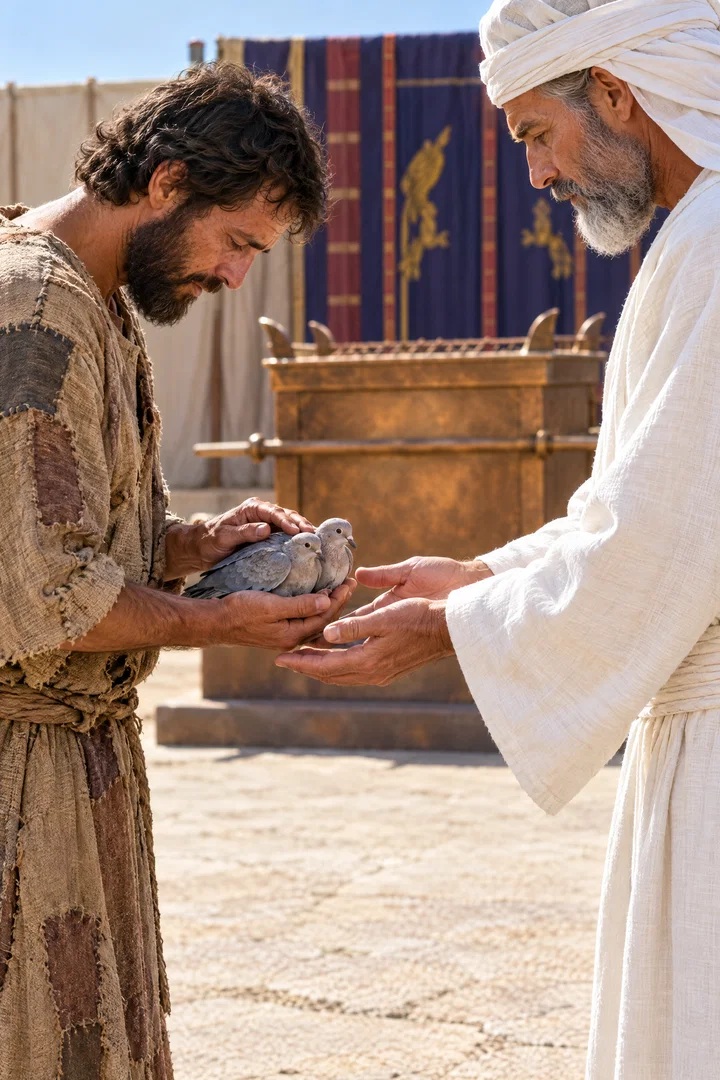
The verse directs one who has sinned, once his sin is known and confessed, to bring to the door of the tabernacle a clean female lamb or kid without blemish as his trespass offering for a sin offering.RH Sep 16, 1852RH Sep 30, 1852ST Feb 17, 1890 He lays his hand on its head in confession, transferring his sin to it in figure as his substitute, and then kills it himself, acknowledging by its shed blood that he is worthy of death.ST Aug 8, 1916ST Feb 17, 1890RH Feb 3, 1853ST Sep 7, 1904ST Apr 22, 1913 The priest alone then makes atonement for him with the blood, in which is the life, and he is forgiven and freed from that iniquity.RH Sep 16, 1852RH Sep 30, 1852ST Nov 27, 1884ST Jan 17, 1884RH Nov 17, 1863 By that blood the iniquity is transferred in figure into the sanctuary, where it remains until the yearly cleansing.RH Sep 30, 1852ST Feb 17, 1890RH Feb 3, 1853ST These details are a shadow of Jesus Christ and His priestly ministry in the heavenly sanctuary, availing for the repentant sinner only through confession, repentance, and faith in the coming Redeemer.ST Feb 7, 1911ST Feb 3, 1909ST Nov 28, 1895ST Feb 13, 1912ST Apr 2, 1912
The Offering and Ritual
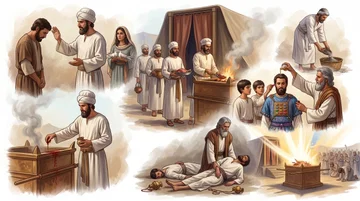
The instruction belongs to the trespass offering, which stands as one of five distinct offerings — burnt, meal, peace, sin, and trespass — each appointed with its own purpose and manner of offering.RH Feb 3, 1916 It belongs to the ceremonial law, which was instituted because of sin.RH Jan 10, 1916 It stands within the laws of sacrifices and offerings in Leviticus 1 to 7, which set forth the main features of the earthly sanctuary service and gave definite instruction about worship and how forgiveness of sin was to be obtained.ST Feb 7, 1911ST Jun 19, 1907RH Sep 24, 1914
The prescribed offering for the sin was a female from the flock, a lamb or a kid of the goats, for a sin offering.RH Sep 16, 1852RH Sep 30, 1852ST Nov 28, 1895 The animal was to be a clean beast without blemish, brought by the guilty person himself to the door of the tabernacle of the congregation.ST Feb 17, 1890ST Apr 22, 1913 The penitent sinner brought it as an individual offering for forgiveness, in faith in the provision made for pardon.RH Sep 16, 1852ST Nov 28, 1895ST Apr 22, 1913
It was to be brought after confession, once the sin became known.RH Sep 16, 1852ST Jan 11, 1916 This applied even when the sin had been committed in ignorance or without recognition; ignorance did not remove the offense, and until the victim was presented the person bore the iniquity.ST May 31, 1877RH Sep 30, 1852 Confession and, in the related trespass-offering pattern, restitution were required in connection with bringing it.RH Sep 16, 1852
The sinner laid his hand upon the head of the beast, confessing his sins and in figure transferring them to it.ST Feb 17, 1890RH Feb 3, 1853ST Apr 22, 1913 By that act he accepted the beast as his substitute and signified his need of a sacrifice.ST Feb 17, 1890ST Apr 22, 1913 The victim represented the sinner, and the laying on of hands signified that the sin and guilt were transferred to it.RH Feb 3, 1853 The shedding of its blood acknowledged that the sinner himself was worthy of death.ST Feb 17, 1890
The sinner himself, not the priest, killed the animal.ST Aug 8, 1916 The soul spoken of in this law is a being that performs these personal acts of confessing sin, bringing an offering to the Lord, and making restitution for harm done.ST Sep 7, 1904
Atonement by Priestly Blood
When the sinner brought the trespass offering for sin, the priest made an atonement for him concerning his sin, and he was forgiven and set free from that iniquity.RH Sep 16, 1852RH Sep 30, 1852ST Jan 17, 1884 Confession was required, and in the related trespass-offering pattern restitution was required, before atonement could be made.RH Sep 16, 1852 The killing of the offering and the making of the atonement were distinct and separate acts.ST Jan 17, 1884RH Nov 17, 1863RH May 19, 1874 The sinner's part was to lay his hand on the head of the offering and kill it, while atonement is the work of the priesthood alone.ST Aug 8, 1916ST Jan 17, 1884RH Nov 17, 1863 The priest was not the offering but performed the atoning work with its blood in the sanctuary.ST Aug 8, 1916
The priest made atonement only with blood, taking the blood in which is the life.ST Nov 27, 1884ST Jan 17, 1884RH Nov 17, 1863 For the life of the flesh is in the blood given upon the altar to make an atonement for souls, and the blood makes an atonement for the soul.ST Jan 17, 1884RH Nov 17, 1863 Through the blood the iniquity was transferred in figure to the sanctuary.RH Sep 30, 1852ST Feb 17, 1890RH Feb 3, 1853 The priest carried the blood into the holy place and sprinkled it before the altar of incense and put some of it on the horns of the altar, so that the sin of the one who made the offering was transferred in figure to the sanctuary.ST Feb 17, 1890 In some cases when the blood was not taken into the sanctuary, then the flesh was eaten in the holy place and the sins were transferred in that way.ST Feb 17, 1890 The victim represented the sinner, and its blood, bearing the sin and guilt, was carried into the sanctuary, so that the people's sins were transferred through their offerings and blood to the sanctuary during the year.RH Feb 3, 1853
The sins thus transferred, whether by blood sprinkled at the altar or by the priest's mediation, were represented as remaining there in the sanctuary until dealt with in the yearly cleansing.RH Sep 30, 1852RH Feb 3, 1853ST The person bore the iniquity until presenting and slaying the victim, and after atonement with its blood the iniquity rested in the sanctuary to be dealt with in that yearly cleansing.RH Sep 30, 1852 The instruction belongs to the regular sin offering and the daily service for individuals who had sinned, not to yom kippur, the day of atonement.ST Nov 27, 1884RH Feb 3, 1853 Afflicting the soul before the Lord does not make atonement but relates the sinner to God by penitence and humiliation so that the priest's blood-work may avail in his behalf.ST Nov 27, 1884
Shadow of Christ Applied
The details of the sacrifice have meaning whose fuller meaning is found in the sacrifice, life, and work of Jesus Christ.ST Feb 7, 1911ST Feb 3, 1909 The offerings were shadows of their fulfillment in Him, and each sacrifice in Leviticus teaches something in type about His work.ST Feb 7, 1911ST Feb 3, 1909ST Feb 13, 1912 The sin required a penalty met by the sinner bringing an animal offering while the priest made atonement for the sin.ST Feb 3, 1909ST Feb 13, 1912
The earthly sanctuary and its service were a pattern and shadow, or type, of the heavenly sanctuary and its service.ST Jun 19, 1907 This service is an impressive object-lesson concerning the temple of God in heaven and Christ's priestly service therein as High Priest and Minister in behalf of men.ST Jun 19, 1907 Study of it gives clearer views of the Saviour and of His work in behalf of men.ST Jun 19, 1907 Scripture including this service is profitable for doctrine, for reproof, for correction, for instruction in righteousness, and was written for learning that through patience and comfort of the Scriptures hope may be had.ST Jun 19, 1907
As part of the sanctuary's typical daily services for individuals burdened with sin, the offering of a female lamb or goat through which the priest made atonement prefigured Christ's priesthood and His once-for-all ministry in the heavenly sanctuary.ST Nov 28, 1895STST Apr 2, 1912 It was brought in faith, showing faith in the coming Redeemer, and pointed forward to Christ.ST Nov 28, 1895ST Apr 2, 1912 The blood of the sacrifice or the priest's mediation represented the transfer of the penitent's sins to the sanctuary, where forgiven sins were represented as remaining until the yearly cleansing.ST The animal offering was a figure and shadow of Christ's work for repentant sinners and could avail only through response to sin in confession, repentance, and faith, with the prescribed offering brought after confession and hands placed on the animal's head before it was slain and its blood offered.ST Apr 2, 1912ST Jan 11, 1916
In addition to tithes much was spent in offerings, including sin-offerings, peace-offerings, and thank-offerings whose names describe their purpose.ST Aug 16, 1883 The sin-offering cost the bringer something, with the cost varying with the wealth or position of the giver.ST Aug 16, 1883 Thus no one could profess to be religious for years and yet contribute nothing to the cause.ST Aug 16, 1883 Sin must be confessed, repented of, and put away even when committed with good intentions or not recognized as sin.RH Apr 28, 1910 Sincerity does not make a wrong act right, the law of God remains the standard, while the sinner's knowledge and opportunities to know are considered in assessing responsibility.RH Apr 28, 1910
For fraud where the wronged people cannot be found despite proper effort, the instruction applies by calling for confession before God's people and witnesses, an offering to God with at least one-fourth added to the value withheld, and a plea for forgiveness through Christ with a promise not to repeat the wrong.RH Feb 22, 1870 Aforetime when Israel sinned they brought sin and trespass offerings to make atonement before God, but those sacrifices, burnt offerings, and meat offerings are now discontinued and removed and God's dwelling place destroyed, leaving none fit to appease God with supplication and seek mercy to find grace.ST May 27, 1897 This raises with what to approach Him who dwells on high and with what to wash away the filth of shame and make atonement for transgression.ST May 27, 1897 The answer given is fasting to diminish blood and fat in place of blood sprinkled on the altar, bowing with supplications in place of binding the lamb morning and evening, and bowing the head and stretching out the neck in place of killing and wringing the head and receiving the blood.ST May 27, 1897
Sources