Luke 15:14
And when he had spent all, there arose a mighty famine in that land; and he began to be in want.
Translations
American King James Version, King James Version, KJV Cambridge Paragraph Bible
And when he had spent all, there arose a mighty famine in that land; and he began to be in want.
And when he had spent all, there arose a severe famine in that land; and he began to be in want.
Revised Version, American Standard Version
And when he had spent all, there arose a mighty famine in that country; and he began to be in want.
and he having spent all, there came a mighty famine on that country, and himself began to be in want;
But when he had spent all there arose a violent famine throughout that country, and he began to be in want.
And, when he had spent all, there arose a mighty famine throughout that country,—and, he, began to be in want.
Berean Standard Bible, Majority Standard Bible
After he had spent all he had, a severe famine swept through that country, and he began to be in need.
When he had spent all of it, there arose a severe famine in that country, and he began to be in need.
And when everything was gone, there was no food to be had in that country, and he was in need.
Nowe when hee had spent all, there arose a great dearth throughout that land, and he began to be in necessitie.
Douay-Rheims (Challoner revision)
And after he had spent all, there came a mighty famine in that country; and he began to be in want.
Pictures
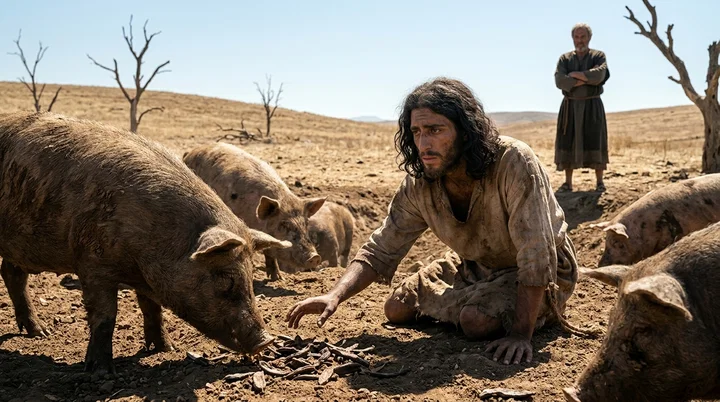
Cross-references
- Luke 15:20-24
And he arose, and came to his father. But when he was yet a great way off, his father saw him, and had compassion, and ran, and fell on his neck, and kissed him.
The father welcomes his returning son, restores him, and celebrates his return.
- Luke 15:18-19
I will arise and go to my father, and will say unto him, Father, I have sinned against heaven, and before thee,
The son resolves to return to his father and confess his sin.
- Luke 15:22-24
But the father said to his servants, Bring forth the best robe, and put it on him; and put a ring on his hand, and shoes on his feet:
The father welcomes and restores his returning son with a robe, ring, and feast.
- Luke 15:4-7
What man of you, having an hundred sheep, if he lose one of them, doth not leave the ninety and nine in the wilderness, and go after that which is lost, until he find it?
The lost sheep and prodigal son parables show Christ’s mission to recover the lost.
- Luke 15:19
And am no more worthy to be called thy son: make me as one of thy hired servants.
Want leads the prodigal to confess unworthiness and seek a servant’s place.
- Luke 15:21
And the son said unto him, Father, I have sinned against heaven, and in thy sight, and am no more worthy to be called thy son.
The son confesses his sin and unworthiness to his father.
- Luke 15:24
For this my son was dead, and is alive again; he was lost, and is found. And they began to be merry.
The son’s return to the Father brings restoration and rejoicing.
- Luke 15:25-30
Now his elder son was in the field: and as he came and drew nigh to the house, he heard musick and dancing.
The elder brother’s resentment contrasts with the father’s loving welcome of his repentant brother.
- Luke 15:8-10
Either what woman having ten pieces of silver, if she lose one piece, doth not light a candle, and sweep the house, and seek diligently till she find it?
The lost coin parable shares the lesson of rejoicing over what is found.
- Isaiah 55:2
Wherefore do ye spend money for that which is not bread? and your labour for that which satisfieth not? hearken diligently unto me, and eat ye that which is good, and let your soul delight itself in fatness.
His unsatisfied hunger illustrates seeking what cannot truly satisfy.
Commentary
Each commentary is drawn from primary sources: the writings of Ellen G. White and Adventist pioneers and periodicals. Each commentary is separate. Its own words are not a quotation; follow the references to read the source passages.
Ellen G. White
84 sources
After he had wasted his inheritance a severe famine came upon the country where he was staying, and he began to be in need of even life's bare necessities, left destitute, hungry and exposed to hardship.ST Jan 29, 1894COL 198.4–199.1ST Apr 20, 1915 His poverty exposed how little his chosen separation from his father and his expected freedom and prosperity had secured him.COL 198.4–199.1TCBMP 123.1COL 199.2–200.3 His condition pictures the sinner who turns from God to self-indulgence and wastes life and God-given powers, finding that apparent freedom ends in spiritual poverty, misery and bondage.COL 199.2–200.3ST May 26, 1909 Destitution and hunger brought him to regret his course, to remember the abundant provision in his father's house, and to resolve to return, confess his sin and trust his father's love to supply his need.3T 100.3–101.23T 101.3–102.2TCBMP 124.1 The father longs and waits with yearning love, and when the degraded and lost one repents and returns He receives him with compassion, forgiveness and greatest joy, with no reproach for unworthiness.ST Jan 29, 1894RH Jan 19, 1911GW 157.3
Story and Its Setting
After he had spent all his inheritance, a severe famine arose in the country where he was staying, and he began to be in need.ST Jan 29, 1894COL 198.4–199.1ST Apr 20, 1915ST Jan 29, 18943T 100.3–101.2 He lacked even life's bare necessities, and was left destitute, desolate, hungry and exposed to hardship.ST Jan 29, 1894COL 198.4–199.1ST Jan 29, 18943T 100.3–101.23T 101.3–102.2 His hunger and isolation drove him to the degrading work of feeding swine, where he longed even for their food, with loss of money and pride and weakened will and dulled feelings.ST Apr 20, 19153T 100.3–101.23T 101.3–102.2 His destitution made him regret his extravagant course and brought him to recognize his need of his father and to remember the kindness and abundant provision enjoyed by servants in his father's house.3T 100.3–101.23T 101.3–102.2
He had chosen to separate himself from his father and manage his inheritance as he wished, free from his father's counsel, reproof and advice.COL 198.4–199.1TCBMP 123.1COL 199.2–200.3 His poverty and hunger exposed how little his supposed freedom, prosperity, independence and expected happiness had secured him.COL 198.4–199.1COL 199.2–200.3ST May 26, 1909ST Jan 29, 1894 Separated from his father he was left with no money, no friends and no satisfaction, his apparent freedom ending in misery and bondage to sin.COL 198.4–199.1COL 199.2–200.3ST May 26, 1909 Christ drew this parable from familiar events of daily life to illustrate immortal truth and make spiritual realities vivid through ordinary experience, teaching so as to reach every kind of hearer.ED 102.3–4Lt 223, 1905, par. 8–10GW 408.2ST Nov 30, 1915
The prodigal's exhausted resources and hardship are used to represent Israel as a wayward son who resisted grace and wasted its privileges and opportunities, and to represent Christ's loving treatment of Israel.ST Feb 27, 1896Ms 56, 1902, par. 5 Those acting as the prodigal include professed commandment keepers who transgress the law, are unthankful and unholy, and flatter themselves they are Christians.Ms 75, 1898, par. 13–14 They use entrusted talents to counterwork God, have no light, are conformed to worldlings, exert influence on Satan's side, and retain the form of godliness while denying its power, so that Jesus longs to do them good but cannot because of their perversity, and they will give account to God.Ms 75, 1898, par. 13–14 In some uses the famine and want in the verse are not explained separately apart from the wider story of the wanderer and his return, which illustrates Christ's readiness to receive and welcome the lost sinner.ST Feb 27, 1896Lt 15a, 1890, par. 9–11
Sin's Misery and Bondage
The famine that struck after the inheritance was squandered left the son in growing need, and his apparent freedom collapsed into misery and bondage to sin.COL 199.2–200.3ST May 26, 1909 Separated from his father he became destitute, hungry and alone, with no money, no friends and no satisfaction, forced into degrading work.COL 199.2–200.3ST May 26, 1909 His condition pictures the sinner who turns from God to self-indulgence, wastes life and God-given powers, and becomes spiritually impoverished when a life spent apart from God has exhausted its gifts.COL 199.2–200.3ST May 26, 1909
In a strange country his sinful indulgence left him friendless, dressed in rags and hungry, compelled to take the lowly work of feeding swine and even longing for their food.MYP 408.1ST May 26, 1909TCBMP 123.3 His hunger and isolation brought him to regret his extravagant course.ST Apr 20, 1915TCBMP 123.3 His loss of money and pride, with weakened will and dulled feelings, shows the misery and bondage that follow a life of sin.ST Apr 20, 1915
Being in want means finding no profit in serving sin and the flesh and the devil and receiving only poor wages.2T 295.1 It is traveling a road that ends in perishing in sins and death with no certain hope of eternal life.2T 295.1 His state is that of a soul who has known the love of Jesus and the guardianship of the compassionate Shepherd but through Satan's deceiving and deluding power has left the pleasant pasture and fold for darkness, confusion and a wilderness of bewilderment.Ms 81, 1893, par. 61–63 There he is miserable, dissatisfied and frightened, rushing farther and farther from heaven's gates and from the Shepherd's care and protection, unable to find the way back or rescue himself without help, needing the tender and true Shepherd to endure storm, cold and roughness of the way to search for, find and bring him back to the fold.Ms 81, 1893, par. 61–63
Many such prodigals result from indulgence at home and from parents' failure to restrain and guide their children.11MR 40.3–41.2Lt 117, 1898, par. 4–5 The verse describes one separated from the Father's blessing whose selfish indulgence leads to ruin.Ms 22, 1898, par. 19Lt 27, 1890, par. 1 Worldly life does not satisfy, and the one who has left wants something better, while the contrast with the rich supplies in his father's house warns against remaining away and starving when provision is available at home.Lt 52, 1899, par. 3Lt 10, 1856, par. 5 The Father still loves him and calls him to return to Christ, whose gifts are eternal riches and life.Lt 52, 1899, par. 3
Awakening Toward Return
After he had spent all, famine and want left him destitute, hungry and isolated, and that hardship made him regret his extravagant course and recognize his need of his father.3T 100.3–101.23T 101.3–102.2TCBMP 124.1 In his adversity he was humbled and brought to consider the kindness and abundant provision enjoyed even by servants in his father's house.3T 101.3–102.2TCBMP 124.1ST Jan 29, 1894 This led him to decide to return with humble confession, to confess his sin and accept that he was no longer worthy to be called a son.TCBMP 124.1ST Jan 29, 1894
Want after spending all makes the erring sensible of sin and neglect, appreciating the father's love and acknowledging the father's claims.3T 103.5–104.1TCBMP 128.1 That felt need drives him back to his father as the only one who can supply it.3T 103.5–104.1TCBMP 128.111MR 370.1 The distress of famine and want thus marks what leads him back toward his father's house, and the need underscores the call to return rather than despair.TCBMP 128.211MR 370.1Lt 76, 1898, par. 18–20
His misery in a strange country, friendless, in rags and longing even for swine's food, left returning humbly and repentantly as his last hope.MYP 408.1 His hardship brought him to the point of returning home to a father who longs to welcome and forgive.MYP 408.1RH Jan 19, 1911
Penitence is required of the returning sinner, who receives no reproach or reminder of unworthiness.ST Jan 29, 1894 Even when hope is nearly gone, a message of love without rebuke can help the lost return in contrition with a humble heart and find redemption through Christ.Lt 178, 1902, par. 28–30 The story therefore warns not to delay returning to God but to come back at once and seek forgiveness.Lt 178, 1902, par. 28–30Lt 18f, 1890, par. 2
Even in that wasted, spent condition more than finite possibilities remain within reach by linking with God.Lt 33, 1896, par. 12 Turning to God with full decision of soul brings acceptance, and giving heart and soul to God brings blessing and a work of helping other youth give their hearts to God and be converted.Lt 33, 1896, par. 12 The one in want remains accountable for all the good he might have done and which Jesus died for him to do, and Jesus still invites him to wear His yoke, lift His burden, and learn His meekness and lowliness of heart, with rest unto his soul as reward.Lt 33, 1896, par. 12
The verse shows the possibility of returning after going astray.Lt 200, 1902, par. 8–10Lt 59, 1886, par. 1–5 Failure does not prevent a person from returning to the Lord and seeking strength for a fresh effort.MYP 97.1 It is a pattern for one who once loved and served the Lord but left the Father's house, applied to backsliders urged to return to the Father's house and service, and to those who have left God and need encouragement to return to Him.Lt 59, 1886, par. 1–5STB 147.5STB 620.1–2 It is applied to seekers coming with confession and contrition, and to named individuals such as Arthur and Rosetta, who can come back to God by following an enlightened conscience.Lt 27, 1890, par. 18–19
Such a thorough backslider in Satan's and sin's service, who through discouragement, temptation and harsh dealing gave up the Sabbath for worldly work and trade, must turn square about at once and return like the prodigal to the Father's house and service.3MR 64.5–65.3 He must leave sin and Sabbath-breaking employment even at loss of position and unfinished trade and decide from that day to be a Christian, which brings pardon and love, purified thoughts, changed purposes and solemn joy.3MR 64.5–65.3 Likewise one who has long denied Jesus, having spent all and begun to be in want away from the Father's house, is to grasp Christ by faith, fix the eye upon Him, cast himself all helpless upon His mercy, come penitent, cease known sin, give life's remnant to Jesus and be saved by His cleansing blood.Lt 1a, 1890, par. 1
Father's Forgiving Welcome
The parable shows pitying love for those who have strayed and become lost, for God does not leave them in misery but remains kind and tender toward those exposed to temptation, full of lovingkindness and tender pity.COL 198.1Lt 80, 1898, par. 1Lt 16a, 1887, par. 411MR 367.1 A soul endangered by temptation calls forth tender sympathy and earnest labor, and when a sinner repents the joy is greater than over those who do not need repentance.5T 604.1 His dealings are with those who once knew the Father's love but separated from Him and were led captive by the tempter, and He continues to work to bring them back so that when they repent He receives them with joy.Lt 80, 1898, par. 9–13
The Father longs and yearns for the wayward son and waits with yearning love to receive the sinner who comes back to Him.RH Jan 19, 1911GW 157.3 Famine and need after spending all brought the prodigal to the point of returning home, and his hardship belongs to the story of a wayward son whom the father longs to welcome and forgive.RH Jan 19, 1911 The erring, degraded, lost one awakens to sin and repents, and erring children who stray may return and be received with joy and compassion, pity, love, forgiveness and greatest joy.18MR 113.5Lt 45, 1894, par. 21–24Lt 80, 1898, par. 9–13 He meets the returning sinner with no accusations of wrath and no reproach or reminder of unworthiness, but with welcome and a feast, the moving picture of one thought dead becoming alive again, while penitence is required.ST Jan 29, 1894GW 157.3 That welcome rebukes the cold, condemning spirit of the elder brother and his refusal to regard publicans and sinners as brothers who should be sought, forgiven, encouraged and led to eternal life, calling instead for tender sympathy and encouragement toward the repentant.ST Jan 29, 1894Lt 45, 1894, par. 21–24
When the son repents the Father places His arm about him, covers his rags with His own garments and the robe of righteousness, places a ring upon his finger as a token of royalty, and gives him a place at the Father's table.GW 140.211MR 370.2–371.1Lt 59, 1898, par. 12–14 This love is revealed in the gift of His beloved Son as a sacrifice, which made a channel for the outflow of infinite love so that all who believe in Jesus Christ are restored again to favor, with believing leading to obedience to all the commandments and to life in Him.Lt 85, 1886, par. 17–18 The welcome to the father's house shows boundless love welcoming returning sinners in Christ, who assumed humanity in the person of the Son, made propitiation for the sins of the whole world, is not far from anyone, and will freely cooperate with and gladly receive all who receive Him as Saviour.ST May 8, 1901 Christ's love shown at Calvary assures the sinner of acceptance, peace and love, and the prodigal's return illustrates the work God undertook through the gift and suffering of His Son to bring wandering sinners back to the Father.Ms 82, 1894, par. 22–24Ms 41, 1890, par. 45–51
God takes the first step and seeks people while they are still in rebellion, and He will bring every wanderer who allows Him to the Father's house.ST Jan 22, 1894 Even while the sinner is far off in a strange country the Father's heart yearns for him, and the desire to return is the pleading of the Spirit drawing him back to the Father's love. Heaven expends labor and energy with amazing sacrifice to reclaim the lost in want away from the Father's house and bring them back.ST Oct 31, 1916 As the true Shepherd He goes after the lost sheep and speaks to the lost, distressed, perishing wanderer in need to return to Him, promising to return, to heal backslidings and to love freely, with all heaven rejoicing in the finding of the lost.Lt 71, 1895, par. 25
The Father's welcome brings joy among the heavenly host when even the poorest person comes to God with repentance, as the prodigal did after his need.STOM 11.2STA 14.1 That joy is greater than over those who do not need repentance.5T 604.1
Conditions of Restored Sonship
To enjoy a son's privileges on return the son must also accept a son's obligations, remaining under his father's care instead of renewing his wanderings and repaying love by staying in the fold and living in accordance with the father's conditions.Ms 98, 1901, par. 17–20Lt 164, 1900, par. 21–23Ms 183, 1901, par. 1210MR 110.3–5 The welcome back to the father's house does not leave the returned one free to live as before, but binds enjoyment of sonship to life under the father's conditions.Ms 98, 1901, par. 17–20Lt 164, 1900, par. 21–23Ms 183, 1901, par. 12 Claiming the place of a son therefore means consenting to be kept, staying in the fold rather than going out again to waste what has been restored.Ms 98, 1901, par. 17–2010MR 110.3–5
That compliance must be on God's ground, not man's, with cordial assent and willing obedience.ST May 8, 1901 It requires renouncing the favor and friendship of the world and making Christ all and in all, walking in accordance with His Word, acknowledging Him as King, submitting to His authority and consulting His will.ST May 8, 1901 It requires making His law the rule of life and being bound by His requirements, taking His life as the pattern and obeying the stern precepts of His Word, denying self and being ready to part with all and make any sacrifice for His sake.ST May 8, 1901 It requires receiving Him to reign in the soul, with friendship measured by His dominion, while the welcome itself reveals boundless love that gladly receives in Christ all who receive Him as Saviour, He having assumed humanity in the person of the Son and made propitiation for the sins of the whole world and being not far from anyone.ST May 8, 1901
Being thus returned to the Father's house means being led by the Lord step by step in submission to His will and His way into a rich experience.Ms 89, 1893, par. 1–2
Compassion for the Erring
The want that follows spending all leaves the erring inwardly suffering, desponding and discouraged in feeling, and for that reason they need pity, help, sympathy and above all free forgiveness rather than efforts to make them feel their error and remind them of their mistakes.3T 103.5–104.1TCBMP 128.2 That want makes the sin sensible of neglect, appreciates the father's love, acknowledges the father's claims, and drives the needy one back to the father as the only one who can supply the need.3T 103.5–104.1 Complaint and reproach of brother toward brother after the manner of the elder brother may be natural, but it is not right.3T 103.5–104.1
The wandering one who repents needs compassionate help, tender sympathy and encouragement with opportunity to recover, rather than censure, suspicion, jealousy, severe judgment or harsh condemning rejection.Lt 45, 1894, par. 21–24Ms 40, 1899, par. 10–12RH Nov 25, 1902Lt 71, 1895, par. 27Lt 16, 1887, par. 7–14 His need calls for the loving Father's welcome instead of the elder brother's cold rejection.Lt 45, 1894, par. 21–24Ms 40, 1899, par. 10–12RH Nov 25, 1902 Tenderness toward those fallen into sin should move to seek and restore the erring rather than abandon them to temptation or treat them harshly, with compassion instead of severe judgment.Lt 16, 1887, par. 7–1416MR 339.3 The straying child struggling against temptation and turning homeward is to be received and encouraged, while the elder brother's contempt stands as a warning against despising those trying to return.Ms 40, 1899, par. 10–12
Looking on the prodigal not only with indifference but with contempt, saying God I thank Thee that I am not as other men, is rebuked.GW 140.2 Standing by like the elder brother, stubborn, self-willed and selfish, while a soul makes its struggle against the flood of temptation, instead of uniting in Christlike sympathy and love, is rebuked.GW 140.2 Resentment at joy over the returned prodigal pictures church members who want to be constantly fed with sermons and murmur when ministers labor for those who do not know the truth.Ms 49, 1898, par. 24–25 A living church is not a gossiping church planting doubt, questioning, evil surmising and jealousy, but an earnest working church whose members seek to save the lost, reflect truth to all they meet, testify by precept and example in home and church, stretch out hands in burden and sincere prayer for souls, and hunt for souls to bring truth close to hearts.Ms 49, 1898, par. 24–25
Those rescued from sin as prodigals, brought back to the Father after their sinful course left them in need, can help others like themselves find the way back to God through Christ.MH 179.1–2 The prodigal far from the house, perishing with hunger and in need, is to be an object of compassion.9T 50.2Ms 45, 1901, par. 8 The parable is intended to teach mercy and forgiveness.Ms 102, 1894, par. 12–14 Together with the lost sheep and the lost piece of silver it means much with eternal interests involved and must be carefully studied and practiced by seeking the lost sheep instead of wounding and driving it away, since woe follows offending those who believe.Lt 71, 1895, par. 27
Sources
Pioneers and periodicals
135 sources
After he had wasted all his inheritance in riotous living, a mighty famine arose in that distant land and he began to be in want of even life's bare necessities, hungry, penniless, friendless and in rags.ST Jan 29, 1894ST Jan 18, 1905ST Sep 6, 1899 Forsaken by his former companions, he sank into degrading dependence, hiring himself to feed swine and longing for their husks, his supposed freedom exposed as bondage.ST Sep 6, 1899ST Jan 18, 1905ST Mar 25, 1880RH Feb 16, 1869 The squandering pictures every sinner spending the substance, gifts, powers, time and means entrusted by God in selfish indulgence apart from God, ending in spiritual and moral bankruptcy and ruin.ST May 4, 1904RH Jul 15, 1862RH Jul 15, 1862 The famine and want picture the starvation of the soul in the far country of sin, a barren land that brings its inhabitants to misery, guilt, nakedness and death unless he returns.ST Jan 29, 1894RH Jan 19, 1911ST Oct 17, 1900RH Jul 21, 1910 That adversity is a merciful means to bring him to his senses to remember the plenty in his father's house and resolve to return, where the Father watches for the first inclination, meets him while yet far off without reproach, and restores him as son and heir with joy.ST Aug 29, 1895ST Jun 11, 1896ST Jul 7, 1909RH Jan 19, 1911ST Aug 11, 1914
Parable Setting and Details
After the younger son had spent all of his inheritance in wasteful and riotous living, a mighty and severe famine arose in that distant land, and he began to be in want.ST Jan 29, 1894ST Jan 18, 1905ST Sep 6, 1899RH Jul 15, 1862ST Apr 2, 1896 That want was lack of even life's bare necessities, leaving him hungry, penniless, in rags, friendless and homeless.ST Jan 18, 1905ST Sep 6, 1899RH Jul 15, 1862ST Apr 2, 1896ST Dec 18, 1901 The famine deepened the consequences of his waste and left him without help or provision, driving him toward desperate hunger and dependence and bringing him to recognize that he was perishing.ST Jan 18, 1905ST Sep 6, 1899RH Jul 15, 1862ST Apr 2, 1896ST Dec 18, 1901
His want deepened beyond the famine itself into degrading dependence, for he hired himself out to feed swine and longed for their husks.ST Apr 20, 1915ST Sep 6, 1899ST Mar 25, 1880ST Aug 11, 1914ST Dec 15, 1909 He wandered in rags with soiled naked feet, sheltering wherever he could, pale and emaciated, turning from the fruits of the Father's vineyard to the husks and from pure springs to the rioter's wine, wearied and stricken and sore and dragging a heavier burden.ST Apr 20, 1915ST Mar 25, 1880ST Aug 11, 1914ST Dec 15, 1909ST Sep 9, 1875 His loss of money and pride, with weakened will and dulled feelings, exposed his supposed freedom as bondage and misery.ST Apr 20, 1915ST May 26, 1909ST Mar 25, 1880ST Dec 15, 1909ST Sep 9, 1875
His former companions had no further use for him and forsook him, and he was left with an empty heart, no money, no friends and no satisfaction.ST May 26, 1909ST Jan 18, 1905RH Feb 16, 1869ST Oct 17, 1900 His conscience troubled him, his hunger and hardship cut off indulgence and helped clear his mind, and he found the world harsh with no friend to replace the love he had left behind.ST May 26, 1909ST Jan 18, 1905RH Feb 16, 1869ST Oct 17, 1900 Forsaken in a far country and surrounded by swine and tormented by hunger, he had no peace, no hope, no joy and no comfort, only shame.ST Jan 18, 1905RH Feb 16, 1869ST Oct 17, 1900ST Dec 30, 1903
The verse belongs to the parable of the prodigal son, one of the three parables in Luke 15 about what was lost.RH Jul 15, 1862ST Jan 3, 1905ST Nov 22, 1899ST Nov 21, 1900 They were spoken because publicans and sinners had gathered to hear Jesus and the scribes and Pharisees complained that He received sinners and ate with them.ST Jan 3, 1905ST Nov 22, 1899ST Nov 21, 1900ST Mar 28, 1906 The story uses a familiar event of life to illustrate immortal truth, and is recognized as a parable by its nature and context, not as a record of actual history.RH Jul 15, 1862ST Nov 22, 1899ST Nov 21, 1900ST Mar 28, 1906
Spiritual Meaning of Want
The spending of all pictures every sinner using up the substance, gifts, powers, time and means entrusted by God in recklessness, folly, selfish indulgence and riotous living apart from God.ST May 4, 1904RH Jul 15, 1862RH Dec 13, 1906ST May 1, 1901 Nothing is saved for future need, neither economy nor self-denial is practiced, prosperity is presumed to continue, and the end is spiritual and moral bankruptcy and ruin.ST May 4, 1904RH Jul 15, 1862RH Jul 15, 1862RH Jul 15, 1862 The waste is an attempt to satisfy passion and drown conviction, a throwing away of life's golden hours and powers given for noble uses, leaving the spender penniless and perishing.RH Jul 15, 1862RH Jul 15, 1862ST May 1, 1901RH Oct 7, 1873
The famine and want that follow picture the starvation of the soul in the far country of sin.RH Jan 19, 1911ST Oct 17, 1900RH Jul 21, 1910ST Nov 14, 1900 To go on in sin away from the Father's house is spiritual emptiness, inward hunger, guilt and nakedness, with worldly-mindedness wasting blessings once enjoyed.RH Jan 19, 1911ST Oct 17, 1900RH Jul 21, 1910ST Nov 14, 1900 The hungry feed on husks and sentiment instead of real experience with God, while returning brings satisfaction through the bread of life.RH Jan 19, 1911ST Oct 17, 1900RH Jul 21, 1910ST Nov 14, 1900
The famine itself portrays sin as a barren land that brings its inhabitants to misery and ruin.RH Jul 15, 1862RH Oct 7, 1873RH Dec 9, 1862 The wanderer far from the Father's happy home is at war with himself and God, with discontent on the brow and a bitter wound within from inward hunger of heart and soul.RH Jul 15, 1862RH Oct 7, 1873RH Dec 9, 1862 Wandering into a life of lust, he is worn down by famine toward death in remorse, agony and despair, in contrast with the peace and hope of the one who returns.RH Jul 15, 1862RH Oct 7, 1873RH Dec 9, 1862
His condition shows the misery and bondage that follow a life of sin.ST Apr 20, 1915ST May 26, 1909ST Jan 29, 1894ST Dec 18, 1901ST Jul 1, 1880 Loss of money and pride, weakened will and dulled feelings, hunger, isolation and degrading work expose how little the supposed freedom and expected happiness secured, leaving no money, no friends and no satisfaction.ST Apr 20, 1915ST May 26, 1909ST Jan 29, 1894ST Dec 18, 1901RH Jul 18, 1912 The wicked make themselves supremely miserable by the impenitent heart, fostering the gnawing worm and carrying hell within, seeking freedom away from God's presence yet finding torment there.ST Apr 20, 1915ST May 26, 1909ST Dec 18, 1901ST Jul 1, 1880 The wasted body is left without power to resist disease, and without returning the path ends in death.ST May 26, 1909ST Jan 29, 1894RH Jul 15, 1862RH Jul 18, 1912ST Jul 1, 1880
The depth of this far-country lack is never realized until measured against what might have been by staying at home with the Father in His house.RH Jan 19, 1911RH Jul 21, 1910ST Sep 9, 1875 There is bread enough in the Father's house to sustain the soul and to satisfy the famished one who returns, with even the servants generously supplied while the prodigal perishes with hunger.RH Jan 19, 1911RH Jul 21, 1910RH Feb 15, 1912ST Sep 9, 1875 Had he stayed where he was he would have starved, and that plenty gives confidence that he will be received.RH Jan 19, 1911RH Jul 21, 1910RH Feb 15, 1912ST Sep 9, 1875
Hardship Awakening Toward Return
After spending everything in wasteful living, a severe famine arose in the land and left him needy, and that adversity brought him to his senses as it can bring all who suppose worldly pleasures better than the Lord's way.ST Jun 11, 1896ST Aug 11, 1914ST Nov 22, 1899 With resources exhausted and famine upon him, his adversity made him recognize his condition and turn his thoughts toward his father and his father's house.RH Jan 19, 1911ST Aug 11, 1914ST Nov 22, 1899 Deprivation set his hunger against the plentiful food at home, and had he stayed where he was he would have starved, yet the plenty of his father's bread and the generous treatment even of hired servants gave him confidence he would be received.ST Nov 22, 1899 His poverty deepened when money was gone and fair-weather friends forsook him, and hunger cut off indulgence and cleared his mind to think about his sins and resolve to arise and return with confession.ST Jun 11, 1896RH Jan 19, 1911RH Feb 16, 1869 The famine pictures the spiritual hunger and disaster of remaining away from the Father's house, where there is bread enough to sustain the soul.RH Jan 19, 1911
Suffering, reverses and affliction serve as God's means of leading the wayward back to the path of peace and life, and even in such trouble God remains their friend and His goodness leads to repentance.RH Jan 12, 1911RH Mar 25, 1873RH Nov 10, 1863 Affliction can be a mercy that stops the downward course, turns a person back from danger toward God, and brings wanderers who suffer the results of sin back to the Father.ST Jun 3, 1908RH Mar 25, 1873RH Nov 10, 1863 The want belongs to the erring and straying of His children, yet God is not a despot but a Father full of mercy and tender pitying care, with an eye to pity and a heart to love even when they are despondent under heavy clouds.ST Sep 23, 1908 Beyond the gloom there is light ahead and a sympathetic compassionate Friend who does not willingly grieve or afflict, and who will receive the repentant with joy greater than an earthly parent feels at recovering a long-lost son.ST Sep 23, 1908 Even while the sinner is far off in a strange country having spent his substance, the Father's heart yearns for him, and the desire to return is the pleading of the Spirit drawing him back to the Father's love.
His desperate condition exposes the injury and cost of sin and the need for reform, for without returning death awaits, so sinners must not delay repentance and return to God.RH Jul 15, 1862RH Aug 12, 1915 The world offers no lasting provision for those who leave the Father, but in their need they may return, though the opportunity will not remain open forever and they must come back before it is too late.RH Aug 12, 1915RH Nov 14, 1912 The mighty famine is an inward hunger of heart and soul, with discontent on the brow and a bitter wound within, after wasting powers given for noble uses and squandering life's golden hours far from the happy home.RH Oct 7, 1873RH Nov 14, 1865 The wanderer is faint and famishing on dark mountains and thorny precipitous paths where many have fallen to rise no more, yet wishing a thousand times to be back again, and must return at once to the good Shepherd who seeks amid gloom and solitude and to the Father who waits with music and joy.RH Nov 14, 1865 He is urged to turn homeward now in the accepted time and day of salvation, to seek Him while He may be found and call upon Him while He is near, for God can save and make whole, heal the wound, hear even the gentlest prayer, and welcome with open arms those who dedicate life anew, though returning is harder than wandering.ST Jun 4, 1912RH Oct 7, 1873RH Nov 14, 1865RH Nov 14, 1912
Hunger and poverty impelled him toward home, but humble confession of sin rather than an offer to do something gave ground to hope for reform, showing that repentance must precede good works.RH Apr 14, 1863 He must acknowledge his own guilt rather than blame people or circumstances, saying I have sinned in earnest repentance and readiness for saving grace.ST Dec 15, 1887 Returning home requires humility and confession, admitting sin, accepting the lowest place, and no longer claiming to be called son.ST Dec 24, 1902 That want is guilt and nakedness of soul, clothed only in rags of self-righteousness, leading him to confess all guilt, cast aside self-righteousness, admit unworthiness even to lift the eyes to heaven, and plead in Jesus' name to be covered by His blood, clothed in spotless righteousness, touched with sin-consuming fire, and given new thought, purpose, desire, daily grace and guidance in the narrow way.ST Dec 24, 1902 One who leaves the father's house and wastes his living in sinful life can come to himself, turn back, and be welcomed and clothed with the best robe, received with love.ST Sep 13, 1910RH Jan 10, 1907
Hardship and suffering cleared his vision, and the home once despised for worldly glamour rose before him in reproachful magnificence beyond the reach of its bounties.RH Feb 15, 1912 The memory of that far distant home with its holiness and purity, peace and plenty, where even servants had enough while he perished with hunger, awakened consciousness of guilt and unworthiness and a cry for even the most menial place.RH Feb 15, 1912RH Jun 7, 1906 His only thought and longing desire became home, to return as a penitent alien and live content as a servant in its restful sheltering embrace, showing the power of thoughts of home to restrain sin and turn steps homeward into righteousness.RH Feb 15, 1912RH Aug 24, 1916 A loving faithful home leaves such a recovering memory that draws the child back, whereas a repulsive home or stern forbidding father would not prompt it.RH Nov 17, 1868 Remembering how great the Father's love is brings the poor prodigal in the far country home, and remembrance of a sweet Christian home, a trusting mother's last words and the tearful farewell of dear ones, can smite the heart with remorse, prompt vows against further degradation, and lead to repentance and return with thankfulness.RH Jun 7, 1906RH Aug 24, 1916 Even when mind is dull on moral subjects and understanding must be convinced before conscience is reached and conscience labor long before the will is moved, the wanderer may cherish better sentiments than credited while struggling free, and must be waited for with patience, with no obstacles thrown in the way and a noble forgiving heart kept ready.RH Nov 20, 1860
Father's Love and Welcome
The parable reveals God's mercy, pity and compassion toward repentant sinners who are poor, helpless, perishing and defiled with sin in this dark world of wandering. RH May 9, 1871ST Nov 22, 1899RH Aug 17, 1911 It sweeps away the false view that He regards the erring and fallen as fit subjects of divine wrath entirely without mercy and to be shunned. ST Nov 22, 1899 His love reaches out for the wanderer from the Father's house who has spent his substance in recklessness, folly and riotous living until he begins to be in want, watches for the first sign of an inclination to return, seeks him while still in rebellion and bondage, and holds even the far-country prodigal in His yearning heart. ST Jun 15, 1904RH Jun 14, 1870ST Dec 10, 1896RH Aug 17, 1911 That ruin does not end the Father's love, and those who have wandered far can return and know that love again when they turn from sin with the whole heart, resolutely break free, and humbly seek His help, for His tender mercy helps them as soon as they earnestly begin to return and He is willing to pardon, forgive, bless, meet them with compassion, welcome them home and clothe them in Christ's righteousness. RH May 9, 1871RH Jun 14, 1870ST Dec 10, 1896RH Aug 17, 1911
When the sinner returns with godly sorrow, penitence and confession, the Father meets him while yet far off, without reproach, recital of wrongs, reminder of unworthiness, demand for penances or long list of apologies. ST Mar 25, 1880ST Mar 25, 1880ST Jan 29, 1894ST Aug 29, 1895ST Nov 7, 1900 He lifts him up, kisses him, takes him to His breast, wraps him in the rich robe and the best robe of Christ's righteousness, receives him as son, restores him to his former position as son and heir to a place near His heart, and celebrates with the fatted calf, music and joy. ST Mar 25, 1880ST Mar 25, 1880ST Aug 29, 1895ST Jul 7, 1909 This is for one reduced to utter want and degradation after spending all in unrestrained sin, returning penniless, in rags, starving, nearly naked, with naked feet soiled by travel, the dissolute life plain on his face, humbled to fall prostrate, desponding and discouraged. ST Mar 25, 1880ST Mar 25, 1880ST Aug 29, 1895 Such suffering brings him to sense his great sin, neglect and need and to come to the Heavenly Father as the only one who can supply his need with pity, love and free forgiveness, and he needs sympathy and help rather than efforts to make him feel where he erred and reminders of his error, for forgiveness breaks his already subdued heart and deepens his sense of ungrateful sin against a love he feared would disown him. ST Mar 25, 1880ST Mar 25, 1880ST Jan 29, 1894
That return brings joy in the presence of the angels of God over one sinner that repents, showing that a wanderer can return to the Father's love and protection and that Jesus seeks and receives the lost. ST Jun 15, 1904RH Mar 18, 1858RH May 9, 1912 It is genuine repentance wrought by the Spirit of God with human consent and cooperation, breaking the heart, bowing the stubborn will, humbling the proud nature, making frank and humble confession and putting away wickedness, in which angels feel intense, disinterested interest. RH Aug 3, 1869 God does not put a premium on sin but rejoices because the erring one returns to loyalty and obedience, and the failure of worldly desires to satisfy and the sorrow of wandering give way to the joy awaiting the wanderer who returns. ST Jun 15, 1904RH Mar 18, 1858
Sinners are to come as they are without making themselves presentable, as ragged, shoeless, half-starved men with no merit or claim of self-righteousness, bringing only themselves weak and unable to heal themselves. RH Jan 27, 1916ST Oct 3, 1895ST Apr 10, 1893 Those who have forfeited their place in the Father's house may come seeking mercy even as servants rather than sons, deserving nothing yet hoping in mercy, giving up sin and returning with all the heart, and need only arise and enter when penitent and weary of sin. ST Feb 24, 1887ST Oct 31, 1895ST Oct 3, 1895 The Father meets such a one while still far away and receives him as a son before he can call himself a servant, so that at the first sincere plea for mercy God sends the Spirit into the heart and the sinner becomes a child of God able to call God Father. ST Feb 24, 1887 That restoration comes without stopping to confess to a priest or receive priestly absolution, and forgiveness and Christ's righteousness are received by faith. RH Jan 27, 1916ST May 4, 1876
The welcome does not remove conditions, for to enjoy the privileges of sonship he must comply with the conditions of sonship on God's ground, not his own, with cordial assent and willing obedience. ST May 8, 1901 This means renouncing the favor and friendship of the world, receiving Christ as Saviour who assumed humanity, made propitiation for the sins of the whole world, is not far from anyone and will freely cooperate with and gladly receive all who receive Him, making Christ all and in all, walking according to His Word, acknowledging Him as King, submitting to His authority, consulting His will, making His law the rule of life, being bound by His requirements, making His life the pattern, obeying the stern precepts of His Word, denying self, being ready to part with all and make any sacrifice for His sake, and receiving Him to reign in the soul with friendship measured by His dominion. ST May 8, 1901
One saved from that want, tempted and tried with hope well-nigh gone, sought by the Saviour and brought back with a heart filled with love for Christ and surrendered without reserve, understands the science of soul-saving and knows how to seek the lost and point sinners to the Lamb of God. ST Sep 8, 1914 By the ministry of such restored ones many other prodigals in want will be brought to the Father, so everyone giving evidence of true conversion by leaving the service of Satan for the service of Christ, in whom the Spirit of God is striving, should be encouraged to enter the Lord's service and work for others and none should be turned away. ST Sep 8, 1914 The lost prodigal in his want is a lost sinner ready to perish whom God loves and has fully provided to save through giving His Son who tasted death for every man, and it is God's will and way that every lost prodigal be reached through humanity and brought home through grace, with personal effort to bring them to Christ, welcoming home and caring for them as needy souls, braving inhospitable places to find those truly and dangerously lost, disheartened, bewildered and beyond any power of their own to find the way back on bramble-grown moors and dangerous ways of their own choosing ending on the dark precipice of eternal ruin unless someone goes to the rescue while the short time lasts. ST Jan 1, 1894ST May 3, 1899RH Sep 15, 1910 The reason more are not brought from darkness to light is not neglect on God's part but that the human will does not cooperate with divine intelligences and humanity bars the way by rebellion and lack of partnership with Christ in seeking and saving the lost. ST Jan 1, 1894
The father's duty of loving care is not ended by the son's rebellion or wrongdoing, requiring reception when the child seeks reconciliation and continued care even if the child never returns. RH Jul 25, 1871 The need of the prodigal therefore calls for the loving Father's welcome rather than the elder brother's cold rejection. RH Nov 25, 1902
Who the Sons Represent
The younger son is the Gentiles, the publicans, sinners and lost men coming to Christ to be saved, while the elder brother is the Jews, the scribes and Pharisees who counted themselves Abraham's seed and the favored class and murmured because Christ receives sinners and eats with them.ST Nov 22, 1899RH Jul 6, 1868ST Mar 28, 1906 The want after spending all belongs to the prodigal's ruin by departing from God, and the great object of that want is to show God's great love to the undeserving, whether Jew or Gentile, backslider or sinner, for God is no respecter of persons.STRH Jul 6, 1868 The younger son left home, pursued a wicked course, wasted all and fell into destitute want, then returned with godly sorrow and confession, and God is shown willing to receive the penitent sinner wherever mercy is needed and penitence is shown.ST Nov 22, 1899RH Jul 6, 1868 The parables together contrast the two classes, with the lost sheep, the lost piece of money and the prodigal son set against the elder brother, as a sharp reproof because men make special effort and rejoice to find lost sheep and lost money yet act like the elder brother who was so offended that his poor lost brother had been received that he would not enter the house.ST Mar 28, 1906 The brother who stayed home is more foolish in grumbling instead of rejoicing at his brother's return after foolishness is given up.ST Jun 24, 1897
The want shows every sinner as a wanderer from his Father's house spending his substance in the recklessness of sin and folly until he begins to be in want.ST Jun 15, 1904 That destitute want after wasting all is the true spiritual condition of everyone, and the parable means whoever reads it.ST Aug 6, 1894 The parables of Jesus together hold salvation from sin for every kind of sinner, from the Pharisee to the prodigal, and present the gospel as a message of hope for a lost world with tender concern for the lost and outcast.RH Nov 9, 1916ST Feb 26, 1902 The Father's love reaches out for the wanderer and watches for the first inclination to return, rushes to meet him while yet a long way off, takes those who offer themselves as servants and makes them sons, and fills heaven with joy in the presence of the angels over one sinner that repents.ST Jun 15, 1904ST Aug 6, 1894 Every person is either the prodigal returning to the Father's house or the faultfinding elder brother, and the elder brother who stands for the Pharisees toward publicans and Gentiles is in fact in as hard circumstances as the prodigal and does not know it, for that same spirit still lives.ST Aug 6, 1894 The verse itself belongs to the prodigal's course and pictures the sinner who has wandered from God and come to need Him, with the call to recognize that need and return with humility and confession to find God meeting him.
The want also pictures the backslider and apostate, one who once knew God and then left the Father's house again in return to former folly.ST Oct 4, 1877 It is applied to those who accepted truth or kept the Sabbath and wandered from the church, then through affliction and need were brought back to Christ's fold.RH May 30, 1907 It pictures a backsliding Christian drawn away by the world and the tempter, losing the joy of first love, hungering for heavenly nourishment, starving in a strange land, feeding on husks for years and growing poor on sentiment, until need brings him to himself and to resolve to return to God.RH Jul 18, 1912 Worldly living brings no lasting satisfaction to one truly born of God, for after spending everything in a foreign country famine leaves him in need and unsatisfied, even among the hogs where he had many opportunities to repent before he came to himself.ST Jun 21, 1883RH Jul 18, 1912 It shows the state of an old professor, poor, almost an apostate, almost gone, almost lost, yet very self-complacent after many years' travel away from God, like a dog returning to its vomit, so that eternal life received at conversion can be lost.ST Aug 5, 1875 When he prays as never before and returns, the Lord has pity and meets him as He met the prodigal, with light coming in slowly as he sees how far he was from God and must still explore hidden places of the heart where Satan has kept an easy chair.ST Aug 5, 1875
The suffering after leaving home and abandoning himself to the sins of an unholy world is part of the history of fallen humanity turning from its wayward course and returning to God.ST Aug 26, 1875 Made in the image of God, very good, with right to the tree of life, man became a prodigal and went out from the Father's house.RH Jun 12, 1900 Leaving means forsaking God's name, the I AM, Jehovah, the Eternal One, the self-existent, all-living author and force of all life, and becoming a child of disobedience belonging to the synagogue and family of Satan, so that instead of having life he has death, and instead of possessing God he has Satan and death, while man in himself is only grass, a flower of the field, a vapor, today he is and tomorrow he is not.RH Jun 12, 1900 Like Esau and the prodigal bartering inheritance for a banquet that began with revelry and ended in want feeding on husks with the swine, men in all ages exchange all blessings and spiritual privileges held up to the eye of faith for some sensuous and supposed present benefit, some apparent advantage and gratification at hand and in sight, trading great future good which faith could grasp for a little present good, and this is always the way of sin and the deceitfulness of sin.RH Jun 10, 1902 Humanity is thus a lost child wandering from God, needing divine light to recognize its lost condition and find the way back.ST Feb 19, 1902
The prodigal who remains outside by choice still belongs to the family under the same fatherhood, for wanderers from God are still His children and may return to acknowledge Him as Father, and sinners are regarded as wandering children who remained sons even while living away from home in bondage.ST Feb 10, 1904ST Mar 8, 1899ST Nov 14, 1900 He remains outside because he is unwilling to return, separated from family fellowship by choice, a prodigal away from the forsaken homestead, in want apart from home.RH Sep 15, 1910ST Feb 10, 1904ST Sep 28, 1904 He can return to harmonious relations only by acknowledging the fatherhood and brotherhood he had disowned, becoming again a harmonious member of the household, bringing loyalty in place of disloyalty and love and interest in place of hatred and indifference, restored to brotherhood with one another and to acknowledgment of the Fatherhood of God, and the severed ties are reunited only as far as men are willing, for he cannot be forced back.RH Sep 15, 1910ST Sep 28, 1904 If he persists in disloyalty and in staying away he is ultimately disinherited in the end, while the faithful brother continues to watch, hope and pray for his return.RH Sep 15, 1910ST Feb 10, 1904ST Sep 28, 1904 Those prodigal members astray on the bramble-grown moors of sin, wandering with calloused hearts in dangerous ways of their own choosing, are truly and dangerously lost, disheartened, bewildered, lost beyond any power of their own to find the way back, on ways that must end on the dark precipice of eternal ruin and in death as slaves unless someone goes to the rescue, and their want lays an urgent, glorious, imperative burden on reconciled brothers and sisters to become seekers instead of wanderers, to brave inhospitable places to find them and to go into all the world to save them while the short time for rescue lasts.ST Nov 14, 1900RH Sep 15, 1910
Scripture Links and Parallels
The want in the far country is starvation of soul from continuing in sin, while returning to the Father's house brings satisfaction through the bread of life.ST Oct 17, 1900ST Nov 14, 1900ST Sep 9, 1875 After spending everything given by the Father for selfish purposes, adversity exposes selfish hopes and awakens desire for a better way, answered not by self-effort where disaster came but by turning back to where there is enough to sustain the soul.RH Jul 21, 1910 Had the wanderer stayed where he was he would have starved, but the plenty of bread and the generous treatment even of servants gives confidence of reception.ST Jan 2, 1907 God lets men go their own way alone into a far-off land until need leaves them faint, homesick, distressed and hungry, feeding on husks, so that with empty hands they humbly return to find His way best.ST Jan 2, 1907ST Oct 17, 1900 At the feeblest knock He waits to bless with welcome, robe and ring and feast, feeding the famished soul with love, satisfaction, refreshment, rest, heavenly manna and full joy.ST Jan 2, 1907ST Sep 9, 1875
The three parables of Luke 15 teach the same lesson as the story of Zacchaeus, that the Son of man came to seek and to save that which was lost, and they explain how even a rich man can be saved.ST Nov 21, 1900ST Sep 24, 1896 The parable of the prodigal was repeated to show that Jesus came to seek and save the lost and that even one who feels too wicked for help can find salvation.RH Jan 23, 1913ST Sep 24, 1896 The wanderer from the fold is a poor wayward lost lamb and prodigal who has spent all and begun to be in want, faint and weak and famishing on dark mountains and thorny precipitous paths where many have fallen to rise no more, yet wishing a thousand times to be back again.RH Nov 14, 1865RH Jul 27, 1869 The good Shepherd leaves the ninety and nine to tenderly seek the straying amid gloom and solitude in order to bring him back.RH Nov 14, 1865RH Jul 27, 1869ST Sep 24, 1896 The heavenly Father waits to receive the returning prodigal with music and joy, with God, Jesus, the Holy Spirit, saints on earth and angels all bidding him come now in the accepted time and day of salvation to rest and to take of the water of life freely.RH Jan 23, 1913RH Nov 14, 1865
Becoming poor through sin and sinking further into need pictures humanity far from God, whom the Father came to save, lift out of sin and rescue from the grave.RH Aug 17, 1911 The Father continues to love and yearn for the wayward, meets those who turn back with compassion, welcomes them home and clothes them in Christ's righteousness, giving the robe of righteousness and welcome to the Father's house.RH Aug 17, 1911ST Jul 7, 1914 The sinner as prodigal has wandered far, spent gracious gifts, fed on husks and begun to be in want, which is guilt and nakedness of soul clothed only in rags of self-righteousness.ST Dec 24, 1902 That want leads to repentance, confession of all guilt, admission of unworthiness to be called son or even to lift the eyes to heaven, casting aside self-righteousness and pleading in Jesus' name for transgressions to be covered by His blood.RH Aug 17, 1911ST Dec 24, 1902 The return is to be born anew and welcomed as a child of God with celebration in heaven, clothed in spotless righteousness, touched with sin-consuming fire and given new thought, purpose and desire, grace day by day and guidance in the narrow way to the Father's praise.ST Dec 24, 1902ST Jul 7, 1914
Spending all followed by mighty famine and beginning to be in want was seen literally in the South, where in the Sumter district of South Carolina most of over three hundred persons were without bread and actually subsisting on corn husks and whatever could preserve life, while others had only one or two bushels of corn left without means to get more.RH Apr 2, 1867 The same condition of want means finding oneself without money and with no position open, with the desired place of obedience and training apparently unreachable because means are lacking and a great barrier like the Alps lies between.RH Apr 12, 1906 That condition becomes the turning point for resolve, like the prodigal of old, to arise and go on foot to make personal application for admittance.RH Apr 2, 1867RH Apr 12, 1906 Such resolve is rewarded by reception, by being led as by miracle into contentment and training for service, and by being sustained to render a good testimony as a true son of God after long struggle, study and wavering.RH Apr 12, 1906
The parable of the prodigal shows the leading characteristics of Christ's kingdom: love to God, the brotherhood of man, and the rights of all, however poor, degraded or despised.RH Oct 8, 1861 It fulfills His commission to preach good news to the poor, deliverance to the captives, liberty to the bruised, and the acceptable year of the Lord.RH Oct 8, 1861 It stands opposite to chattel slavery and property in man in any form, teaching instead the dignity of labor and the laborer and common equality, political and religious.RH Oct 8, 1861
Warnings and Life Applications
The verse warns the young and those drifting against wasteful living, uncontrolled gratification and reckless provision of freedom, for spending all ends in want, spiritual and moral impoverishment, a wasted body weakened without power to resist disease and made old before its years, and untimely and unnecessary death.RH Oct 22, 1914ST Nov 25, 1930RH Jun 25, 1914ST Sep 24, 1894ST Most who leave the path of duty and purity never return to the Father's house, so self-control must be fostered early and often, carelessness sows a crop of cares, and the wayward course with its famine is set forth to turn drifting boys from that course.RH Oct 22, 1914RH Jun 25, 1914ST Sep 24, 1894ST The runaway's unhappiness and weariness in sin echo that destitution and desire to return, and even then like the prodigal a sinner can find his way back before he dies.ST Jul 4, 1900ST Nov 25, 1930ST Sep 10, 1894
Industry, economy and right living bring good things and protect against pain, while idleness and waste bring hunger.ST Nov 14, 1878ST Nov 27, 1879 The pinch of hunger helps bring the idle and wasteful man to his senses so that he returns to his father's house, waste and want are the morning and evening of the prodigal's day, and the desolation of the spendthrift son warns against wasteful living.ST Nov 14, 1878ST Nov 27, 1879
A loving faithful home leaves a memory that draws the wanderer back toward want and return, while a repulsive home or a stern forbidding father would not have prompted that recovering thought of home.RH Nov 17, 1868ST Sep 24, 1894 Proper parental training, government, surroundings and conditions keep boys from those sinful ways, and a father's love should reflect the Heavenly Father's, since harsh hasty words misrepresent Him and wound a child deeply.RH Nov 17, 1868ST Sep 24, 1894RH Feb 18, 1902 Mother-love and father-love for the wayward child reflect the everlasting love of God for sinners, earnest prayer answers in the return of the wayward child sunk in sin and weariness, and loved ones watching and praying with old folks waiting in a country home meet return with leaving liquor behind and going home.ST Oct 4, 1899RH Sep 2, 1858ST Mar 13, 1901
Believers must welcome the lost prodigal home and care for him as a needy soul, with his life as precious as a prodigal sister's, needing an open warm strong uplifting hand filled with mercy and help for women as well as men.ST May 3, 1899RH Jul 28, 1904RH Nov 3, 1904RH Jul 29, 1858 Such poor apostate backsliders are special objects of Christ's love that passes knowledge with many wonderful invitations to return, and those who know that love share His missionary love instead of holding the elder brother's feelings.RH Nov 26, 1901RH Sep 15, 1910 Prodigal members astray on bramble-grown moors of sin with calloused hearts in dangerous ways of their own choosing are truly lost beyond any power of their own to find the way back and must eternally perish on the dark precipice of eternal ruin unless someone goes to rescue, laying an urgent glorious imperative burden on reconciled brothers and sisters to brave inhospitable places, go into all the world to save them while the short rescue time lasts, urge kindness toward the erring who turns back, and press personal effort without condemnation, sentimentalizing or giving up.ST May 3, 1899RH Sep 15, 1910RH Jul 29, 1858
The want turns the sinner sick of his wicked abode toward home to listen when the father seeks him, ask to go home and ask forgiveness, and drives him home again after long absence so changed he is scarcely known, weeping and refusing to cross the threshold until told he is forgiven, meeting forgiveness granted long before with instant welcome and only sorrow that he stayed away so long.ST Jul 4, 1900ST Oct 4, 1899ST Jan 25, 1899 Wandering from God must be followed by return, though returning is harder than wandering, and Christ longs to welcome the sinner back with refreshment.ST Jun 4, 1912ST Jan 14, 1886 The tempest-tossed life wandering too long from Christ's loving voice in a dark cruel sea of sin must choose that day to come home to love and forgiveness, rejoice waiting hearts, grasp Christ's outstretched hand reaching over the wave, fling back the devil's treasure, seek mercy while He is near, and be rescued from the grave to rest on His breast in a haven of rest, with patient waiting and no obstacles thrown in the way, whether coming to the prayer meeting or to the Father, weary and asking to be cleansed and made humble, dull on moral subjects or held back by doubts.ST Jul 4, 1900ST Jun 4, 1912ST Jan 25, 1899
That want is echoed in common beggary after wasteful living, in those who wandered from church and Sabbath and were brought back to Christ's fold through affliction, in the stoutly rebellious son afterward sorry and humbly asking forgiveness and forgiven forever with nothing more said, in the foolish leaver who gives up foolishness and returns while the grumbling stayer is more foolish, and in the stranger-wanderer begging shelter and food freely given.ST Jan 18, 1905RH May 30, 1907ST May 27, 1897ST Jun 24, 1897 It is seen in the poor backsliding professor almost apostate yet self-complacent after years away from God, met with pity and slowly dawning light to explore hidden places where Satan kept an easy chair when he prays as never before and returns.RH May 30, 1907ST May 27, 1897ST Aug 5, 1875 So runaways, converts, gold-seekers, drink-ruined boys, wandering students and backsliding professors show that preventing prodigal ruin is better than reclaiming afterward, yet those reclaimed through affliction and prayer are received with forgiveness that blots out the past.ST Jan 18, 1905RH May 30, 1907ST Jun 24, 1897ST Aug 5, 1875
Sources