Luke 15:21
And the son said unto him, Father, I have sinned against heaven, and in thy sight, and am no more worthy to be called thy son.
Translations
And the son said to him, Father, I have sinned against heaven, and in your sight, and am no more worthy to be called your son.
King James Version, KJV Cambridge Paragraph Bible
And the son said unto him, Father, I have sinned against heaven, and in thy sight, and am no more worthy to be called thy son.
And the son said to him, Father, I have sinned against heaven, and in thy sight, and am no more worthy to be called thy son.
Revised Version, American Standard Version
And the son said unto him, Father, I have sinned against heaven, and in thy sight: I am no more worthy to be called thy son.
and the son said to him, Father, I did sin — to the heaven, and before thee, and no more am I worthy to be called thy son.
And the son said to him, Father, I have sinned against heaven and before thee; I am no longer worthy to be called thy son.
And the son said unto him—Father! I have sinned against heaven, and before thee: No longer, am I worthy to be called a son of thine,—[make me as one of thy hired servants.]
Berean Standard Bible, Majority Standard Bible
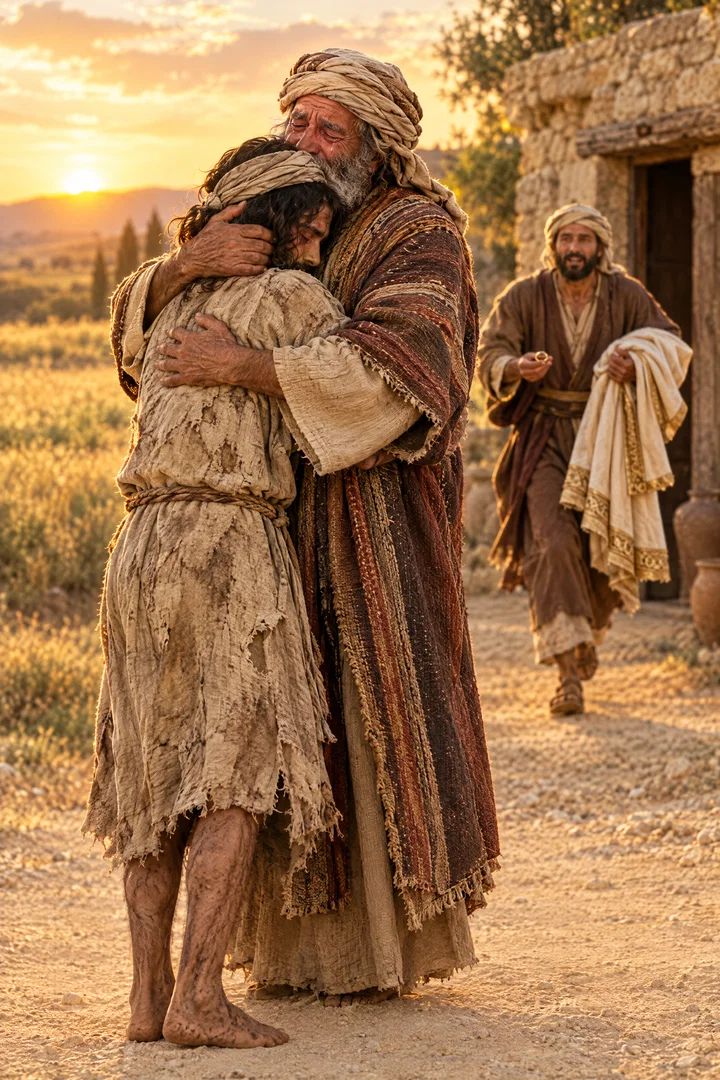
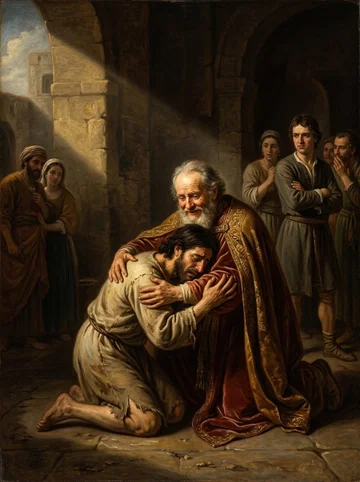
The son declared, ‘ Father, I have sinned against heaven and against you. I am no longer worthy to be called your son.’
The son said to him, ‘ Father, I have sinned against heaven and in your sight. I am no longer worthy to be called your son.’
And his son said to him, Father, I have done wrong, against heaven and in your eyes: I am no longer good enough to be named your son.
And the sonne sayde vnto him, Father, I haue sinned against heauen, and before thee, and am no more worthie to be called thy sonne.
Douay-Rheims (Challoner revision)
And the son said to him: Father, I have sinned against heaven, and before thee, I am not now worthy to be called thy son.
Pictures


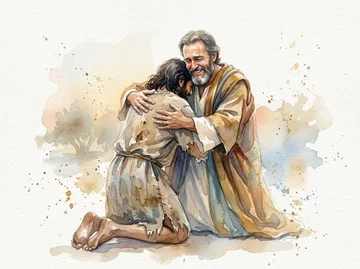
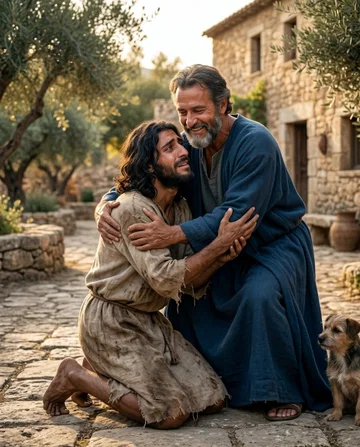
Cross-references 20 of 48
- Luke 15:7
I say unto you, that likewise joy shall be in heaven over one sinner that repenteth, more than over ninety and nine just persons, which need no repentance.
Heaven rejoices over one sinner who repents.
- Luke 15:10
Likewise, I say unto you, there is joy in the presence of the angels of God over one sinner that repenteth.
Heaven rejoices over a sinner who repents, as the returning son illustrates.
- Psalms 103:13
Like as a father pitieth his children, so the LORD pitieth them that fear him.
The Lord’s pity for His children is compared to a father’s compassion.
- Luke 15:17
And when he came to himself, he said, How many hired servants of my father’s have bread enough and to spare, and I perish with hunger!
Remembering his father’s abundant bread, the son comes to himself and turns back.
- Luke 15:28-32
And he was angry, and would not go in: therefore came his father out, and intreated him.
The father’s joyful welcome contrasts with the elder brother’s resentment.
- Isaiah 55:7
Let the wicked forsake his way, and the unrighteous man his thoughts: and let him return unto the LORD, and he will have mercy upon him; and to our God, for he will abundantly pardon.
The returning sinner confesses sin and receives God’s abundant pardon.
- 1 John 1:9
If we confess our sins, he is faithful and just to forgive us our sins, and to cleanse us from all unrighteousness.
Confession is joined with God’s promise to forgive.
- Isaiah 44:22
I have blotted out, as a thick cloud, thy transgressions, and, as a cloud, thy sins: return unto me; for I have redeemed thee.
God blots out sins and invites the sinner to return.
- Proverbs 28:13
He that covereth his sins shall not prosper: but whoso confesseth and forsaketh them shall have mercy.
Confessing and forsaking sin brings mercy.
- Jeremiah 3:22
Return, ye backsliding children, and I will heal your backslidings. Behold, we come unto thee; for thou art the LORD our God.
God invites backsliding children to return and promises to heal them.
- Luke 15:13-16
And not many days after the younger son gathered all together, and took his journey into a far country, and there wasted his substance with riotous living.
The son squanders his substance and falls into desperate need.
- Luke 18:13
And the publican, standing afar off, would not lift up so much as his eyes unto heaven, but smote upon his breast, saying, God be merciful to me a sinner.
Both admit their sin before God and seek mercy.
- 1 John 3:1
Behold, what manner of love the Father hath bestowed upon us, that we should be called the sons of God: therefore the world knoweth us not, because it knew him not.
The Father’s love gives returning sinners the name of God’s children.
- Romans 2:4
Or despisest thou the riches of his goodness and forbearance and longsuffering; not knowing that the goodness of God leadeth thee to repentance?
God’s goodness leads the sinner to return in repentance.
- Psalms 51:17
The sacrifices of God are a broken spirit: a broken and a contrite heart, O God, thou wilt not despise.
A broken and contrite heart is the offering God accepts.
- Luke 15:1-2
Then drew near unto him all the publicans and sinners for to hear him.
The parable answers objections to Jesus welcoming sinners.
- Ezekiel 33:11
Say unto them, As I live, saith the Lord GOD, I have no pleasure in the death of the wicked; but that the wicked turn from his way and live: turn ye, turn ye from your evil ways; for why will ye die, O house of Israel?
God calls sinners to turn from their ways and live.
- John 6:37
All that the Father giveth me shall come to me; and him that cometh to me I will in no wise cast out.
Christ promises not to cast out the sinner who comes to Him.
- Jeremiah 31:34
And they shall teach no more every man his neighbour, and every man his brother, saying, Know the LORD: for they shall all know me, from the least of them unto the greatest of them, saith the LORD: for I will forgive their iniquity, and I will remember their sin no more.
God promises to forgive sin and remember it no more.
- 2 Corinthians 5:20
Now then we are ambassadors for Christ, as though God did beseech you by us: we pray you in Christ’s stead, be ye reconciled to God.
God entreats sinners to be reconciled to him, as the father welcomes his returning son.
Commentary
Each commentary is drawn from primary sources: the writings of Ellen G. White and Adventist pioneers and periodicals. Each commentary is separate. Its own words are not a quotation; follow the references to read the source passages.
Ellen G. White
96 sources
The verse is the returning younger son's confession that he has sinned against God and his father and is no longer worthy to be called a son.ST Jan 29, 1894ST Jan 29, 1894TCBMP 123.1 It follows his awakening to his degradation and want in the far country, when he resolves to return and ask only for a servant's place.3T 100.3–101.2TCBMP 124.2–126.1TCBMP 124.1 The father represents God, who waits and yearns for the sinner and receives the penitent with compassion, forgiveness and love without reproach or contempt.Ms 76, 1903, par. 21–22ST Jan 29, 18943T 103.5–104.1 He does not grant the servant's place but restores the undeserving son to full sonship, covering his rags and bringing him into the house with honor and feasting.3T 101.3–102.23T 100.3–101.2ST Jun 2, 1909 That welcome requires believers to treat the fallen and returning with tender pity, encouragement and forgiveness rather than coldness, censure or contempt like the elder brother.Ms 102, 1894, par. 12–14Lt 45, 1894, par. 21–24Ms 40, 1899, par. 10–12
Parable Story and Setting
This confession belongs to the parable of the younger son, who rejected his father's care, demanded his share of the estate before the time, and left to live by his own wishes and desires, and that self-serving freedom led him into sin, loss, and bondage.COL 198.4–199.1TCBMP 123.1 He squandered his portion in riotous, sinful indulgence until he became destitute and enslaved in a far, strange country.MYP 408.1COL 199.2–200.3 There he was left friendless, clad in rags, perishing with hunger and longing even for the refuse fed to swine, and in that condition he is to be regarded as an object of compassion needing to be brought to saving truth.MYP 408.19T 50.2RH Nov 26, 1901Ms 45, 1901, par. 8
His separation from his father pictures sinners who turn from God and waste the gifts and years of life in self-service.COL 199.2–200.3 The parable shows God's pitying love for those who have strayed from Him, for even when they turn away and suffer He does not leave them in misery.COL 198.111MR 367.1Lt 80, 1898, par. 1 He remains kind, tender, and loving toward those exposed to the tempter's influence and temptation.COL 198.1Lt 80, 1898, par. 1
Christ drew the story from facts of life and daily surroundings familiar to His hearers to illustrate immortal truth, gathering spiritual teaching from nature and ordinary experience.3MR 333.2–319MR 259.1–3ST Nov 30, 1915 Told in this way it links the seen with the unseen and the spiritual, brightening and uplifting the daily task with constant reminders of the unseen.3MR 333.2–3ST Nov 30, 1915 It has something to interest every mind and appeal to every heart, touching the heart and awakening sympathies and commending truth to the conscience, while leaving hearers free to accept or reject it.3MR 333.2–319MR 259.1–3 The parable also represents God's loving, fatherly relation to Israel, over whom Christ's heart still yearned and grieved even when Israel resisted the mercy offered to it toward the destruction coming upon Jerusalem.ST Feb 27, 1896
The prodigal's departure pictures a person ruined by selfish indulgence who has lost his former standing and needs tender sympathy, including one who had once loved and served the Lord but went astray.Ms 22, 1898, par. 19Lt 52, 1899, par. 1 Jesus is yearning after those who are acting as the prodigal while claiming to keep the commandments yet breaking the law, unthankful and unholy.Ms 75, 1898, par. 13–14 They flatter themselves that they are Christians while using entrusted talents to work against God, with no light in them and an influence that does not lead to sanctification or holiness, and He longs to do them the good He would delight to do but cannot because of the perversity of character.Ms 75, 1898, par. 13–14 Those entrusted with influencing souls through sanctification of the truth must use that talent for its given purpose and not become conformed to the spirit and principles of worldlings to exert influence on Satan's side, or they will be called to give an account before God for retaining the form of godliness while denying its power in practice.Ms 75, 1898, par. 13–14 Parental indulgence, neglect, and lack of restraint at home can lead children into such prodigal, destructive ways.11MR 40.3–41.2Lt 117, 1898, par. 4–5
Confession of Unworthiness
The words are the returning son's confession that he has sinned against heaven, against God and his father, and is no more worthy to be called a son.ST Jan 29, 1894ST Jan 29, 1894TCBMP 123.13T 101.3–102.23T 100.3–101.2 It expresses repentance, penitence, guilt and recognition of unworthiness, the penitence required of every sinner who returns to the Heavenly Father.ST Jan 29, 1894ST Jan 29, 18943T 101.3–102.23T 100.3–101.2ST Jun 2, 1909 The confession follows awakening to sin and degradation, after his own disobedience and sin brought him to want and separation from his father.TCBMP 123.13T 101.3–102.23T 100.3–101.2 He decides to return and asks only to be treated as a hired servant.3T 100.3–101.2TCBMP 124.2–126.1TCBMP 124.1
His sense of unworthiness and his awareness of ingratitude deepen when his father receives him with tenderness, love and forgiveness.3T 101.3–102.2TCBMP 124.2–126.1TCBMP 124.1 His humble confession reflects that deepened awareness after being met with compassion rather than reproach.3T 101.3–102.2TCBMP 124.2–126.1TCBMP 124.1 His plan to seek a servant's place shows how little he understands his father's love.ST Jun 2, 1909 The father does not allow it but restores him with the honor and care of a son, bringing him into the house and home and keeping him close, though he does not deserve it.3T 100.3–101.2ST Jun 2, 1909ST Jan 29, 1894COL 203.2–205.1ST Apr 20, 1915 His confession does not earn the welcome, for the past is treated as forgiven and forgotten and repentance is met not with contempt but with embrace.ST Jan 29, 1894COL 203.2–205.1ST Apr 20, 1915
The words show the true mourning for sin that shall be comforted. God reveals guilt so the sinner flees to Christ to be set free from the bondage of sin and to rejoice in the liberty of the sons of God, coming in true contrition to the foot of the cross to leave burdens there. They mean the humble, lowly way of return God requires of one who has been a prodigal, separated from God and stayed away long in sin.2T 295.1 Return is by confessing sin and unworthiness and laying hold upon Christ to be pardoned, cleansed from sin, given life and accepted even now with all transgressions pardoned, because serving sin and the flesh and the devil brings only poor wages and ends in perishing in sin and death.2T 295.1
The returning son has become sensible of his great sin and neglect after being counted as dead to all love as a son.3T 103.5–104.1 He comes back appreciating his father's love and acknowledging his father's claims.3T 103.5–104.1TCBMP 128.1 Having suffered and felt his need, he comes to his father as the only one who can supply that great need.3T 103.5–104.1TCBMP 128.1
Father's Loving Welcome
The father in the story is God, who longs and waits and yearns for the sinner to come back.Ms 76, 1903, par. 21–22RH Jan 19, 1911COL 203.2–205.1 When the returning son confesses that he has sinned against heaven and against his father and is no more worthy to be called a son, he is met with yearning love, compassion, pity, care and forgiveness, not with reproach, contempt, denunciation or accusations of wrath.Ms 76, 1903, par. 21–22ST Jan 29, 18943T 103.5–104.1RH Jan 19, 1911COL 203.2–205.1 The confession expresses the penitence and sense of guilt and unworthiness required of every sinner returning to the Heavenly Father, and the past is treated as forgiven and forgotten.Ms 76, 1903, par. 21–22ST Jan 29, 1894RH Jan 19, 1911COL 203.2–205.1RH Apr 10, 1900 The son has become sensible of great sin and neglect after being counted as dead to love as a son, and he comes back appreciating his father's love, acknowledging his father's claims, having suffered and felt his need as only his father can supply.3T 103.5–104.1
He does not receive a servant's place, for the father will not allow it, but embraces him, keeps him close, brings him into the house and home, and restores him with a son's honor and care.3T 101.3–102.23T 100.3–101.2ST Jun 2, 1909ST Jan 29, 1894COL 203.2–205.1 His plan to ask only to be hired as a servant shows how little he understands his father's love, and his confession does not earn the welcome, yet his sense of unworthiness and ingratitude only deepens under such tenderness, love and forgiveness though he does not deserve it.3T 101.3–102.23T 100.3–101.2ST Jun 2, 1909ST Jan 29, 1894 The covering of his rags, the ring signifying sonship, and the preparing of a feast are the Father's welcome, care and restoration rather than contempt.COL 203.2–205.1RH Apr 10, 1900 God's love runs faster than the returning sinner's feet to meet him stealing back to peace, kissing his shame silent and putting the best robe on him.
That return brings joy throughout heaven, where warmth, courtesy and love prevail.COL 197.218MR 113.5Lt 80, 1898, par. 9–13 The father's joyful welcome shows that God receives with joy His children who have strayed and repent, restoring the wanderer brought back to the Father's house.18MR 113.5Lt 80, 1898, par. 9–13Ms 132, 1902, par. 9ST Jan 22, 1894 Heaven expends labor and energy to reclaim the lost and bring about such a return because of the amazing sacrifice made for them.ST Oct 31, 1916 This welcome reveals the Father's love in giving His Son to die for the human race.GW 157.3 It was proved at Calvary, where He sent His Son to be the propitiation for sins, not for believers only but for the sins of the whole world, and making this known is the way to win souls and bring the perishing with hunger far from home to a saving knowledge of the truth through self-denial, mercy and offerings.GW 157.3RH Nov 26, 1901
God in Christ daily pleads with men to be reconciled to God, and His dying love manifested on Calvary is the assurance of acceptance, peace and love to the one who comes back.Lt 15a, 1890, par. 9–113MR 32.1–3 Through the goodness and mercy of Christ the returning sinner and prodigal is restored to divine favor, received with acceptance, peace and love, and will in no wise be cast out.Lt 15a, 1890, par. 9–113MR 32.1–3Ms 82, 1894, par. 22–24 He is covered with Christ's robe of righteousness and welcomed into the Father's household with a place at His table.11MR 370.2–371.1Lt 76, 1898, par. 18–20Ms 82, 1894, par. 22–24Lt 59, 1898, par. 12–14 Coming to God in repentance means confessing wrongdoing and asking forgiveness, and the penitent is so received and clothed.11MR 370.2–371.1Lt 76, 1898, par. 18–20
In such loving fatherly dealings with a rebellious people He is willing to suffer for their sins and bear their guilt.Ms 56, 1902, par. 5 The return begins while still far off, for the Father yearns for him and the Spirit awakens the longing to return and draws him to God. The Father's gift of His beloved Son as a sacrifice shows infinite love for the fallen race and opens a channel for infinite love to flow out, so that all who believe on Jesus Christ are restored again to favor, led to obedience to all of God's commandments, and given life in Jesus Christ.Lt 85, 1886, par. 17–18 Like the father, God still loves the one who left Him and will accept as His child the person who returns to Him and is willing to receive him.Lt 52, 1899, par. 3Lt 52, 1899, par. 4
Compassion for the Erring
The parable teaches mercy and forgiveness toward sinners, and the erring, the fallen, and those perishing with hunger far from home are to be treated as objects of compassion.Ms 102, 1894, par. 12–14Lt 16, 1887, par. 7–14Lt 16a, 1887, par. 49T 50.2 They are to be approached with Christlike tenderness, sympathy, pity, help, encouragement, and love, and lovingly helped toward restoration.Ms 102, 1894, par. 12–14Lt 45, 1894, par. 21–24Lt 16, 1887, par. 7–14Lt 16a, 1887, par. 4 They are not to be condemned, held at a distance, treated harshly so they lose hope, or judged severely when a brother is overcome by temptation.Ms 102, 1894, par. 12–14Lt 16, 1887, par. 7–14Lt 16a, 1887, par. 4 The father's welcome stands against the elder brother's cold rejection, contempt, indifference, complaining selfishness, and lack of joy.GW 140.2RH Nov 25, 1902Lt 71, 1895, par. 27Ms 113, 1902, par. 30Lt 71, 1895, par. 25 Those who treat the struggling soul with contempt act like the elder brother, and those who serve God must share heaven's joy and welcome the repenting sinner instead of showing indifference and careless disregard for those ready to die.GW 140.2Ms 40, 1899, par. 10–12Lt 71, 1895, par. 25
The elder brother's complaints were natural but not right, and believers must not follow that course toward a brother.3T 103.5–104.1TCBMP 128.2 They must not make the returned sinner feel where he erred or keep reminding him of his mistakes.3T 103.5–104.1TCBMP 128.2 One who has failed and repented suffers in feeling and is often downcast, desponding, and discouraged.3T 103.5–104.1TCBMP 128.2 Above all he needs pity, help, sympathy, and free forgiveness.3T 103.5–104.1TCBMP 128.2 His return calls for pity, encouragement, forgiveness, and love, not reproach, suspicion, censure, blame, or condemnation.Lt 45, 1894, par. 21–24Lt 178, 1902, par. 28–30Lt 45, 1894, par. 25–27 Wanderers are brought back when they hear a message of love rather than blame and condemnation.Lt 45, 1894, par. 21–24Lt 178, 1902, par. 28–30
At Ashfield such confessions of sin against heaven and unworthiness to be called a son were made after plain counsel and reproof.21MR 296.5–6 There the elder-son part was acted out distinctly by established church members who ought to have rejoiced that wandering sheep were being brought to the fold and souls awakened for baptism, but instead felt envious and jealous because more labor could not be given to them.21MR 296.5–6 God is sorely displeased when church members reveal that same spirit toward rejoicing over the returned.Ms 49, 1898, par. 24–25 Those who have had labor bestowed on them should know God and Jesus Christ whom He has sent, and if Christ is formed within as the hope of glory they will seek to save the lost.Ms 49, 1898, par. 24–25 A living church is earnest and working, its members chosen vessels and light bearers carrying salvation, reflecting truth by precept and example, burdened for souls, praying sincerely, stretching out hands all day long and hunting for souls, doing righteousness at home and in the church, not gossiping, planting doubt, questioning, evil surmising and jealousy, and not expecting to be constantly fed with sermons while doing nothing, for food without work is a curse instead of a blessing.Ms 49, 1898, par. 24–25
The parables of the lost sheep, the lost coin, and the prodigal son must be carefully studied and practiced by seeking the lost instead of wounding and driving them away, for the lesson is practical and involves eternal interests.Lt 71, 1895, par. 27Lt 71, 1895, par. 25 Believers are chosen as laborers together with God to bring wanderers to a saving knowledge of the truth through self-denial, mercy, and offerings in righteousness for the saving of souls.Lt 71, 1895, par. 27RH Nov 26, 1901 People who have themselves been rescued from sin can help bring other prodigals to God, and a backslidden person's return is brought about through earnest labor in Christ for him.MH 179.1–2Lt 59, 1886, par. 6 God as the true shepherd seeks the wandering, calls the distressed soul to return with promise to return to them, heals backsliding, loves freely, and turns away anger, and all heaven rejoices over such a return.Lt 71, 1895, par. 25 Those willing to receive truth can be patiently helped and saved, for truth lived in the heart has saving power.Lt 200, 1902, par. 8–10 Harsh, unchristlike treatment of students who go astray can keep them from the kingdom, while they need patient, compassionate care.Lt 200, 1902, par. 8–10Lt 50, 1893, par. 8–9 Even an outcast and the poorest person who comes repentant, acknowledging sin and unworthiness, can be brought back to the Father's house, and God provides a shepherd to seek every lost sheep, bringing joy among the heavenly host.STBk 14.1Lt 88a, 1895, par. 16–21
Returning and Remaining Sons
Those who have left the Father's house, the sinful and those perishing in sin, are encouraged to return to God, and the son's confession on his return is the invitation to come home without delay.STB 147.5STB 620.1–2Lt 76, 1898, par. 3–5STB 119.1RH Mar 16, 1905 His return with a humble heart is the example of coming back without delay to seek forgiveness for sin.Lt 76, 1898, par. 3–5Lt 18f, 1890, par. 2 The call to return is joined to hope through believing in Jesus as personal Saviour and accepting His sacrifice, so that a new life may be begotten by the Spirit of God.Lt 27, 1890, par. 8 Failure and sin do not make a person unworthy to come to the Lord in prayer, for the repentant sinner confessing sin and unworthiness can approach Him, admit mistakes, and seek strength for a fresh effort, trusting His welcome.MYP 97.1
Even one who has long denied Jesus, pierced the Son of God and put Him to open shame, is waited on with grace.Lt 1a, 1890, par. 1 Coming penitent to the Father's house means grasping Jesus Christ by faith, fixing the eye upon Him, casting oneself all helpless upon His mercy, giving the little remnant of life to Jesus, ceasing to do things known to be sin, turning to Jesus, and being saved by His cleansing blood, because heaven must not be lost.Lt 1a, 1890, par. 1 Backsliders returning to God as the son returned to his Father's house, turning to the Lord with confession and contrition of soul under the convicting power of the Holy Spirit, meet tender, pitying, loving compassion in Jesus Christ who died to save them and will do all He has promised if they believe in Him, so that none who seek Him in this way seek Him in vain.Ms 21, 1889, par. 96–97
The son's return to his father is the model for a backslider turning back to God and returning to the Father's service.Lt 59, 1886, par. 1–5Lt 59, 1886, par. 6 That return can be brought about through earnest labor in Christ for him, as when like the prodigal those who turn back can return to their Father's house by humbling themselves and following an enlightened conscience, urged upon Arthur and Rosetta.Lt 59, 1886, par. 6Lt 27, 1890, par. 18–19 The thorough backslider's return means leaving the service of Satan and of sin and turning square about with an immediate decision.3MR 64.5–65.3 Though it costs position, as with a young person discouraged by Satan's temptations and by the mistakes and severity of brethren over simple errors of youthful indiscretion even to giving up the Sabbath for trade and apprenticeship, the mistakes of brethren must not keep him from Christ who loved him and died to redeem him, but he must return at once.3MR 64.5–65.3 The return involves confessing and promising before God and angels and witnesses, I will from this day be a Christian, and brings entrance into a new channel with purified thoughts, changed purposes, a solemn sense of responsibility taken, sleepless earnestness, and happiness and thankfulness in the evidenced pardon and love of the Lord.3MR 64.5–65.3
The returning son's confession of sin and recognition that he is no longer worthy to be called a son is a model for an erring child who needs encouragement to come back.21MR 429.3Lt 18e, 1890, par. 2 The parent should not make the sin seem less grievous, but should remain tender and welcoming, offering full pardon and pitying love that covers the child's disgrace.21MR 429.3Lt 18e, 1890, par. 2 The same return illustrates God's invitation to His children to repent and return, with the promise that He will freely pardon their transgressions, as in the appeal to Daniel to respond to God's love and return to his heavenly Father after neglecting the Spirit's invitation.21MR 429.3Lt 15, 1899, par. 9–11 The lesson is given for the instruction of youth, because many youth do as he did, living a careless, pleasure-loving, spendthrift life, forsaking the fountain of living waters, the fountain of true pleasure, and hewing out to themselves broken cisterns which can hold no water.MYP 408.1
Returning brings back claim to the privileges of a son, but enjoying them means accepting a son's obligations and remaining under the father's care.Ms 98, 1901, par. 17–20Lt 164, 1900, par. 21–23Ms 183, 1901, par. 12 Sonship involves willing acceptance of the father's terms and living by the conditions of sonship and walking according to God's word.Lt 164, 1900, par. 21–23Ms 183, 1901, par. 12ST May 8, 1901 Claiming the son's place means consenting to accept a son's obligations, submitting to control and direction for deliverance from sin, denying self and taking up the cross, remaining under care in the fold instead of wandering again, and repaying love by obedience.10MR 110.3–5 God accepts the prodigal who links himself with God by turning to Him with full decision of soul and unreserved surrender of the whole life.Lt 33, 1896, par. 1210MR 110.3–5 When a person gives heart and soul to God, God blesses him and works with him to help other youth give their hearts to God and be converted, while the one accepted is accountable for all the good he might have done that Jesus died to make possible, and God's acceptance carries Christ's invitation to wear His yoke, lift His burden, and learn His meekness and lowliness of heart, with rest of soul as the reward.Lt 33, 1896, par. 12 Such a wandering son returning to his Father's house in submission to His will and His way is led step by step by the Lord into a rich experience, and such a return brings tears of praise and joy to those who hear of it.Ms 89, 1893, par. 1–2
Sources
Pioneers and periodicals
131 sources
The returning son, come home from wasting his inheritance in reckless living to want and misery, owns to his father that he has wronged God and wronged his father and has no claim left to be called a son.ST May 4, 1904ST Oct 17, 1900ST Oct 17, 1900ST Dec 19, 1900ST Apr 25, 1878 He comes back, is seen while still far off and met with running, pity, embrace and kiss, then makes this confession, and only afterward is clothed with the best robe and ring and shoes and welcomed with the fatted calf and rejoicing as one alive from the dead and found from being lost.ST May 4, 1904ST Aug 6, 1894ST Jan 2, 1907 Though in his distress he had meant to ask for only a hired servant's place, when embraced he leaves out that request, and the father restores him at once as a son without letting him take the servant's place.ST Jan 29, 1894ST May 4, 1904ST Aug 26, 1875 The father stands for God the heavenly Father, who longs and waits for the lost, sees them from afar, runs to meet them, and receives the penitent without reproach, coldness or reminders of unworthiness, freely and fully forgiving, forgetting and blotting out the past forever.RH Jan 19, 1911ST Dec 18, 1901RH May 9, 1871RH Jul 15, 1862ST Aug 29, 1895 He restores the confessing one as son and heir and not as servant, covering rags and shame with Christ's spotless righteousness and giving feast, music and joy, so every wanderer however ruined may arise and come home just as he is, and believers must welcome the repentant with the same warm sympathy rather than the elder brother's cold rejection.ST Mar 25, 1880ST May 4, 1904ST Aug 6, 1894ST Jun 15, 1904ST Aug 23, 1899
Words and Story Setting
The verse is the penitent confession the returning prodigal speaks to his father after leaving home, wasting his inheritance in reckless sin in the far country, and coming back out of want and misery.ST May 4, 1904ST Dec 19, 1900ST Aug 26, 1875ST Feb 27, 1879RH Jun 14, 1870 It belongs to the return in which he arises and goes to his father, humbly repenting and acknowledging unworthiness rather than justifying or concealing wrong.ST Dec 19, 1900ST Apr 25, 1878ST Aug 26, 1875 His coming home and restoration to a son's privileges pictures fallen people turning from sin and once more professing allegiance to God.ST Aug 26, 1875RH Jun 14, 1870 The same confession is applied to one who recognizes sin and unworthiness before the Saviour, leading into assurance that the compassionate Father meets the one who has been far away.ST Feb 27, 1879RH Jun 14, 1870
The wording means he has sinned against heaven, that is against God, and in his father's sight, that is against his father.ST Jan 29, 1894ST Oct 17, 1900ST Oct 17, 1900ST Apr 2, 1896ST Jun 11, 1896 It means his wrongdoing has left him with no claim and no worthiness to be called a son.ST Jan 29, 1894ST Oct 17, 1900ST Oct 17, 1900ST Apr 2, 1896ST Aug 29, 1895 The words express repentance, humility, recognition of guilt, and acknowledgment of unworthiness upon returning.ST Jan 29, 1894ST Oct 17, 1900ST Oct 17, 1900ST Apr 2, 1896ST Jun 11, 1896 That confession does not prevent welcome, for the story joins it to mercy, love, forgiveness, compassion, restoration to the household, and joy over a sinner restored.ST Oct 17, 1900ST Apr 2, 1896ST Aug 29, 1895ST Jun 11, 1896
In narrative order he arises and comes, is seen while yet afar off and met with compassion, running, embrace, kiss and pity, then speaks this confession.ST Mar 25, 1880ST May 4, 1904ST Aug 6, 1894ST Jan 2, 1907ST Dec 10, 1894 Only afterward the father puts on him the best robe and ring and shoes and orders the fatted calf and rejoicing because the son who was dead is alive again and lost is found.ST May 4, 1904ST Aug 6, 1894ST Jan 2, 1907ST Aug 11, 1914 He comes home with empty hands and swelling heart after fainting in far-off lands and feeding on husks, thirsting and hungering, to own that the Father's way is best, and at his feeblest knock he is met by a waiting Father with welcome, robe and ring, and feast while angels sing.ST May 4, 1904ST Aug 6, 1894ST Jan 2, 1907 He falls prostrate in humility, trembling and fearing to be disowned, knowing he does not deserve reception, and that pity, lifting, kiss, and covering give him a deeper sense of his ungrateful course than when he decided to return, breaking his already subdued heart.ST Mar 25, 1880ST Aug 11, 1914ST Dec 10, 1894
He had resolved in distress to ask to be made as a hired servant, but when met and embraced he omits that request.ST Jan 29, 1894ST May 4, 1904ST Aug 26, 1875RH Jan 12, 1911ST Nov 22, 1883 The father promptly recognizes him as a son and brings him into the house and restores him to place and honor without giving opportunity to offer himself as a servant.ST Jan 29, 1894ST Apr 20, 1915ST May 4, 1904RH Jan 12, 1911 The omission is not accidental but teaches the change from fearful hope of only pardon and the lowest place to faith to receive full restoration as a son.ST Aug 26, 1875RH Jan 12, 1911ST Nov 22, 1883 What began as daring to hope only for a servant's place, trusting there is enough in the Father's house, ends in being welcomed, kept close, brought home, and treated as a son rather than a servant.ST Jan 29, 1894ST Apr 20, 1915RH Jan 12, 1911ST Nov 22, 1883
The verse belongs to the parable of the two sons in Luke 15:11-32, in which the younger son returns as a repentant sinner and the telling shows the father's love and mercy toward the lost.RH Sep 3, 1872RH Jul 3, 1900RH Jan 14, 1915ST Apr 12, 1899RH Dec 27, 1855 It is one of three consecutive accounts beginning with a certain man, recorded in Luke but not the other Gospels, drawn from everyday life to teach spiritual truth.RH Sep 3, 1872RH Jul 3, 1900ST Oct 10, 1900 Though Scripture nowhere calls it a parable, its standing as a parable rests on text and context.RH Sep 3, 1872RH Jul 3, 1900 As one of the parables preceding the rich man and Lazarus it supports that that account is also a parable rather than literal narration, and as a precious picture of God's relation to humanity its beauty lies in the son's confession and the father's response and in its revelation of a merciful and kind Father.RH Sep 3, 1872RH Jan 14, 1915ST Apr 12, 1899ST Oct 10, 1900
Repentance and Humility Shown
The confession is genuine penitence, godly sorrow, humility and contrition, acknowledging sin against God and against the father and recognizing guilt and unworthiness to be called a son.ST Jan 29, 1894ST May 4, 1904ST Oct 17, 1900ST Oct 17, 1900ST Apr 2, 1896 It does not justify or conceal wrong but willingly accepts even the lowest place, and it is met with mercy beyond what is asked or expected.RH May 9, 1871RH Oct 29, 1872ST Mar 13, 1901 The father's prompt, warm reception and restoration to the household follow this humble return, with welcome and celebration showing the joy of a sinner restored.ST May 4, 1904ST Oct 17, 1900ST Apr 2, 1896
True repentance takes personal responsibility and says I have sinned rather than blaming people or circumstances that contributed to ruin, for excuses keep a person from heartfelt repentance and trust in grace as a lost sinner.ST Dec 15, 1887RH Oct 29, 1872 It is the revolt of conscience against wrongdoing because it is wrongdoing, not mere regret for consequences nor reformation because a sinful life costs much and pays little.ST Feb 18, 1886ST Feb 18, 1886 That revolt is put into words joined with abandoning sin, acknowledging it without concealment, palliation or defense, making what reparation is possible, and willingly bearing its just and natural penalty and consequences.ST Feb 18, 1886ST Feb 18, 1886 Speaking the words alone does not prove repentance, for words are cheap and can be borrowed without experience, and even deeds may deceive; its reality is demonstrated by deeds, by leaving drink and gambling and caring for the one wronged, and by turning at once with resolve never to return.ST Feb 18, 1886ST Mar 13, 1901 God, who reads the heart, answers such repentance at its first aspiration without waiting for a reformed life to prove sincerity.ST Feb 18, 1886
Adversity brings the wanderer to himself, when hardship and suffering clear vision and hunger, husks, poverty, misery and sickness awaken consciousness of guilt.ST Jun 11, 1896RH Feb 15, 1912RH May 30, 1907 He does not sense the blessing of home until beyond the reach of its bounties, a sinner and an outcast perishing with hunger while even the servants have bread to spare.RH Feb 15, 1912RH Feb 28, 1871 Memory of that distant home, with its atmosphere of holiness and purity, its peace and plenty and bread, rises before him and cries out in agony for even the most menial position there.RH Feb 15, 1912RH Feb 28, 1871 Want follows waste, the world uses him ill and gives no friend such as he left behind, and feeling the leanness of soul from empty husks and empty religious observances makes sinners long for the Father's house, confess sin and unworthiness, and turn steps homeward into righteousness.RH Feb 28, 1871ST Jul 29, 1908 Their return after years away follows affliction and is marked by the joy of the Lord's love, met while still on the way with quick welcome.RH May 30, 1907ST Jul 29, 1908
The depth of sin is known only by seeing what might have been in the Father's house if one had stayed home with Him. The father's kindness and forbearance cannot relieve misery while one remains unrepentant.ST Jul 1, 1880 Merely coming home in body does not itself mean a lost boy is found, for he can be lost before he is missed and still lost after he returns, present for meals and sleep at home when innocence and the teachable spirit of boyhood are gone and he lives without right control.RH Aug 29, 1865
Confession comes before blessing and begins desire for a better way, but it must be joined to arising and actually returning to the Father rather than merely wishing to change or resolving to change where one is.RH Jan 19, 1911RH Jul 21, 1910 Humble confession and the decision to return are not enough by themselves; the sinner must come to himself, recognize sin, and travel back to be welcomed and restored to place as a son.RH Jul 21, 1910RH Sep 22, 1863 Sorrow over sin breaks the heart in a way sorrow over misfortune does not, and God values this godly sorrow and makes such broken hearts whole when it leads to acknowledging wrongs, making them right, and reforming.RH Sep 22, 1863 That return means pleading humbly and importunately in secret for mercy for self and for companion, child, brother, sister or even enemy until prevailing with radiant hope, and not forsaking that dependence after weeks or months in pride of heart to walk alone without need of God, lest one go mourning and be overcome by enemies for a time, if not forever.
Father's Love and Welcome
The father in the confession stands for God the heavenly Father, who seeks the lost before they seek Him, longs and waits for their return, sees them while still far away, runs to meet them, and receives the penitent without reproach, distrust, coldness, taunting, or reminders of unworthiness.ST Jan 29, 1894ST Mar 25, 1880RH May 9, 1871RH Jul 15, 1862ST Aug 29, 1895 He does not demand a long list of apologies, penances, or prayers before receiving, but welcomes and forgives at once with a parent's kindness and affection and with mercy beyond what is asked or expected.RH May 9, 1871RH Jul 15, 1862ST Nov 7, 1900 Such reception requires penitence and return rather than perishing in pride, for the proud and impenitent cannot enter the Father's home, and the reform marked by acknowledgment of sin and unworthiness is essential to salvation.ST Jan 29, 1894RH Jul 15, 1862 The erring one who confesses has become sensible of great sin and neglect, appreciating the Father's love and claims, feeling need after suffering sin's course, and coming to the Father as the only one who can supply that need, and such confession calls for sympathy, help, and above all free forgiveness rather than efforts to make the erring feel where they erred.ST Mar 25, 1880ST Aug 29, 1895
His forgiveness is free out of fatherly compassion, complete and settled forever, so that it is not brought up again and does not need to be asked for over and over.RH Jan 19, 1911ST Dec 18, 1901ST May 27, 1897 The past is forgiven and forgotten, buried in oblivion, buried in the depths of the sea, blotted out of the book of remembrance and remembered no more against the repentant forever, with reinstatement in divine confidence, affection, and esteem.RH Jan 19, 1911ST Dec 18, 1901RH Jul 21, 1863ST Feb 18, 1886 It is easy for the Father to forgive, and once He has forgiven and shown pitying and accepting love, it is unfitting to keep coming every day asking forgiveness for what is already forgiven and pleading for mercy when mercy has already been shown.ST May 27, 1897RH Nov 11, 1873 Every renewed tearful petition for what is already forgiven proves doubt of His sincerity, disbelieves His words of loving welcome, injures and insults Him, and mars the joy of the festal hour over the son who was dead and is alive, was lost and is found, so the forgiven should stop continually lamenting sins already forgiven and take a place at the feast rather than hide away in shame and tears while His heart glows with affection.ST May 27, 1897RH Jul 21, 1863RH Nov 11, 1873
He restores the confessing one as a son and heir rather than assigning a servant's place, even though the wanderer comes back in a stained and ruined condition.ST Aug 29, 1895ST Oct 31, 1900ST Dec 15, 1909 The confession follows arising and coming and being met while yet afar off with compassion, running, embrace, and kiss, and it comes before the putting on of the best robe and ring and shoes and the ordering of the fatted calf and rejoicing because the son who was dead is alive again and lost is found.ST May 4, 1904ST Aug 6, 1894ST Jun 15, 1904 The robe covers shame and rags and represents Christ's spotless righteousness, and the welcome brings lifting out of sin, rescue without condemnation, newness as a child of the kingdom, life from death, feast, music, and joy in the presence of the angels of God over one sinner that repents.ST Jun 15, 1904ST Oct 31, 1900ST Dec 15, 1909 The sinner need not remove his own rags or first make himself acceptable in order to be thus clothed and received.ST Dec 15, 1909
The Father's pity, lifting, kiss, and covering with His own robe give the returning one a much deeper sense of his ungrateful course than he had when he decided to return, breaking his already subdued heart that he has grieved such love.ST Mar 25, 1880RH Jan 12, 1911 He falls prostrate in humility, trembling and fearing to be disowned, knowing he does not deserve reception, yet the Father still recognizes him as son despite rebellion and misery, with love unchanged through separation and expressed in pity.ST Mar 25, 1880RH Jan 12, 1911 It is remembrance of the Father's goodness, love, and friendship that draws the sinner home, and suffering and hardship can help bring him back to the path of peace and life.RH Jan 12, 1911RH Jun 7, 1906
The parable sweeps away the low and incorrect view that God has no feelings of pity and compassion for the erring and fallen but regards them as fit subjects of divine wrath entirely without the pale of mercy and therefore to be shunned by good people.ST Nov 22, 1899RH Apr 28, 1874 In its place it shows interest and love for lost and wandering souls in this dark world of sin, vividly portraying wandering, sad condition, sense of need, return homeward, greeting, and rejoicing, enough to stir every soul and break a heart of stone.RH Nov 26, 1901ST Nov 22, 1899 That love is immeasurable, unselfish, and everlasting father-love and mother-love, proved at Calvary where the Son was sent as propitiation for the sins of the whole world, the biggest thing angels know and infinitely beyond the highest human thought, with nothing on earth like it except a mother's love for a lost son, because in God's heart nestles all fatherhood and motherhood.RH Nov 26, 1901RH Apr 28, 1874ST Oct 4, 1899 It fastens most strongly around the wandering son with special time, thought, prayer, and care, like a devoted mother's affection entwining around her wandering boy, and it finds life work among the lowly and sin-sick even when devout people cannot comprehend the course.ST Oct 4, 1899ST Jun 13, 1916 Like a true parent who sees a prodigal turn away from loving counsel and return no more, God keeps an aching void that no time can fully heal and a yearning that eternity itself will not remove, and though no insults, hard speeches, nor falls into ruin can destroy that parental love, the loss of those for whom He gave all leaves a deeper scar in His heart than even the scars of the cross, showing that sin cost blood and pain and tears.ST Oct 4, 1899ST Aug 22, 1911
Whom the Sons Represent
The younger, lost son is the Gentiles, the publicans and sinners and harlots who were coming to Jesus, and his confession pictures their repentance.STRH Jul 6, 1868ST Nov 22, 1899 He is also any sinner or backslider, any penitent wanderer who returns, including the unregenerated and a prodigal world, whose folly in leaving the father's house pictures a Christian leaving God and leaving a second time when he backslides.STST Oct 4, 1877ST May 1, 1901 The Father does not give up such wanderers in despair, but His care is ever over them and His Spirit ever pleads with them to return, for He never leaves nor forsakes them, continually invites the sin-weary soul to come and receive rest, and is not willing that any should perish but that all should come to repentance.ST May 1, 1901 The elder, angry brother is the Jews, the scribes and Pharisees, and all who resent the welcome of the repentant, fitly pictured as murmuring with envy at his brother's reception.STRH Jul 6, 1868ST Nov 22, 1899
It was spoken when publicans and sinners had gathered to hear Jesus and scribes and Pharisees complained because He received sinners and ate with them, exposing their low and incorrect view that God has no pity for the erring and fallen but regards them as fit subjects of wrath to be shunned.ST Nov 22, 1899ST Nov 22, 1899 With the other parables of the lost it teaches the same lesson as the story of Zacchaeus, that the Son of man came to seek and to save that which was lost, answering how even a rich man who is a sinner can be saved.ST Nov 21, 1900 Jesus receiving and eating with them pictures the father receiving the prodigal, showing how God regards the returning wanderer and how graciously heaven receives and accepts the repentant sinner, going to meet him with a warm, affectionate, sincere and whole-hearted welcome followed by rejoicing.ST Nov 22, 1899 The great object of the parable is therefore the great love of God to the undeserving, whether Jew or Gentile, backslider or sinner, because God is no respecter of persons and receives sinners still.STST Nov 22, 1899ST Sep 28, 1904 Believers must receive the repentant sinner and returning wanderer in the same way, for failure to welcome him gladly shows more of the spirit of the Pharisee than of the Spirit of Christ, while the restored relationship replaces disloyalty with loyalty and estrangement with brotherly love, though the family cannot force an unwilling member to return but continues to watch and pray for him.ST Nov 22, 1899ST Sep 28, 1904
The parables of Jesus hold salvation from sin for every type and every kind of sinner, even one who has strayed far.ST Feb 26, 1902ST Jan 15, 1902ST Nov 13, 1901 The prodigal stands at one end of the full range reached by the parables, from the Pharisee to the prodigal, with salvation offered even to a sinner like the prodigal.ST Sep 25, 1901ST Jan 29, 1902ST Feb 19, 1902
As representing God's loving, fatherly relation to Israel, it warns the Jewish nation that resisting offered mercy brings destruction and that blessings and promises may be taken away and given to others whose faith bears righteous fruit, even while Christ's heart still yearns over the people and grieves over the destruction coming upon Jerusalem.ST Feb 27, 1896RH Jun 1, 1916 By another application held by those who taught it, the story is an image of Protestant churches returning home to the Catholic Church. By yet another, the Church of England, as a secession from the Roman Church dating only to Henry VIII whose claim to apostolic succession and valid orders was refused by the pope, is such a prodigal who should drop all church pretension and return home to Rome in repentance in humility, confessing sin and unworthiness to be called a son.ST Mar 24, 1898 In a literal application the husks illustrate the South after the war, especially the Sumter district of South Carolina where most of over three hundred people were without bread and were actually subsisting on corn husks and whatever they could get to preserve life upon, while others had only one and two bushels of corn yet without any means to get more.RH Apr 2, 1867
Doctrine of Forgiveness Assured
The confession illustrates justification by faith, in which God receives the guilty sinner and restores him to favor as the father welcomed the prodigal into his arms.RH Apr 14, 1863RH Jan 27, 1916ST Mar 10, 1887 Justification is God's work of changing standing from condemnation to acquittal and from death to life, pardoning and freeing from sin in Christ and bringing the forgiven into the family, received through faith and not earned by works.ST Mar 10, 1887ST Apr 1, 1886 The returning one comes without first trying to make himself acceptable, coming with sin, broken vows and need and trusting God to forgive and to clothe him with Christ's righteousness.RH Jan 27, 1916ST Apr 10, 1893 Repentance of this kind comes before good works, admitting sin against God and father rather than offering to do something, and thereby giving reason to hope for reform and making a cordial reception possible.RH Apr 14, 1863ST May 12, 1914 That repentance turns back from rebellion to accept peace with God, restores what was taken and walks in the ways of life, so that the returning sinner is no longer condemned for past sins.ST May 12, 1914ST Apr 1, 1886
Wanderers remain the Father's own even while away from His house living as bond-servants under sin, still counted as children and heirs of all His possession though differing nothing for the time from a bond-servant.ST Mar 8, 1899ST Nov 14, 1900 Probationary life is given so they may acknowledge Him as Father and become sons indeed.ST Mar 8, 1899ST Nov 14, 1900 To become a son indeed requires coming back to the Father in a change as great as new birth, receiving the adoption of sons in Christ and passing from slavery to sonship and from death to life.ST Mar 8, 1899ST Nov 14, 1900 The father receives the returning one as son and heir even though the right to the inheritance was forfeited and unworthiness fit only for a servant's place was felt.ST Mar 8, 1899ST Mar 8, 1899 If he does not come back but stubbornly stays away from the Father's house, he will die as a slave.ST Nov 14, 1900 Rebellion itself comes simply from not knowing Him, for to know Him is to love Him, and through that knowledge and love the heart is won.
Return is made by direct confession to the Father, and the confessing one is restored to former honor in the house and reinstated in friendship with God without stopping for confession to a priest, imposed penance, or priestly absolution.ST May 4, 1876ST May 27, 1897RH Jun 30, 1874 No priestly cordon or creed walls need keep a sinner back, for God is no respecter of persons and Jesus remains the sinner's Friend who hated sin yet loved the sinner, entered sinners' homes, received them when they came, and shared their troubles.ST May 27, 1897 The only court etiquette for approaching His throne is humble believing confession, waited for with the kiss of pardon and the royal robe of righteousness.ST May 27, 1897RH Jun 30, 1874
Enjoying the privileges of sonship involves accepting the conditions of that relationship.ST May 8, 1901ST May 1, 1901 The sinner who confesses is gladly received by the merciful and long-suffering God, covered with the spotless robe of righteousness with every effect of sin taken away, enfolded in arms of love to the joy of the Father and the whole family of heaven.ST May 1, 1901ST Apr 1, 1886 To have part in making that joy he must yield to God to take him and mould his character and fit him for service, with cares and perplexities polishing character until prepared for a place in the heavenly family.ST May 8, 1901ST May 1, 1901 Forgiveness pays the sinner's debts and takes him into the house to keep him in safety, but it does not give liberty to go back to sin; it places him under obligation to keep the law fulfilled by Christ, not in the oldness of the letter but in the newness of the spirit, and to be trained to obedience.ST May 1, 1901ST Apr 1, 1886 Preventing one from becoming a prodigal is better than reclaiming one afterward, because prevention averts many sins.
The parable gives no support for probation after death for one who dies unrepentant after many opportunities, for the coming to himself marks repentance chosen in this life and not another chance regardless of repentance.ST Jun 21, 1883ST Jul 22, 1908 God does not rejoice over the returning prodigal because He puts a premium on sin or loves to have His people go astray for the joy of recovering them, for to obey is better than sacrifice and sin is taken seriously.ST Jul 2, 1885ST Jul 22, 1908 Those who sin that grace may abound and claim privilege to do evil that good may come stand justly condemned, and those who presume on mercy and remain incorrigible will receive punishment according to the greatness of the grace they abuse.ST Jun 21, 1883ST Jul 2, 1885 His compassion for the straying has no measured limit, shown in the Father giving His Son and the Son consenting to die, and it is not His will that one of the little ones should perish, so His followers must keep seeking to save those counted as lost.ST Jul 2, 1885
Scripture pictures the sinner as God's lost child wandering from the divine Father, revealing both the lost condition and the Father to whom return must be made.RH Jun 2, 1903ST Feb 19, 1902 In the light of the cross that return of the wandering, wayward child to the Heavenly Father joins humanity to divinity and makes heaven near and real.RH Jun 2, 1903ST Feb 19, 1902
Call to Return Home
The confession is the pattern for every wanderer, backslider and sinner to arise and go to the Father now while opportunity remains, acknowledging sin against heaven and unworthiness to be called a son.ST Aug 23, 1899ST Jul 7, 1909RH Aug 12, 1915RH Mar 18, 1858ST Oct 27, 1898 Leaving sin and returning to the Father's house is the way from spiritual starvation to satisfaction with the bread of life, and the same longing that turned the lost son homeward describes every soul that has left the heavenly Father and desires to come back.ST Nov 14, 1900RH Mar 18, 1858ST Oct 27, 1898 The cry, I have sinned, receive me still, is the sinner's appeal for mercy as he returns, trusting a tender welcome and keeping power.ST Jul 7, 1909RH Aug 12, 1915ST Oct 27, 1898 Coming back illustrates a sinner coming to the Lord, who receives the returning one with pardon and reconciliation and fills the household with joy, and what one not yet cleansed should do is arise and confess.ST Aug 23, 1899ST Jul 7, 1909RH Aug 12, 1915
Those who are already home must receive the repentant with sympathy, help and above all free forgiveness, as the heavenly Father in compassion, pity and joy meets the erring son who has become sensible of great sin and need.ST Mar 25, 1880ST Nov 22, 1899RH Mar 18, 1858 The warm, affectionate, sincere and whole-hearted welcome with rejoicing shows how Heaven regards the returning wanderer, and believers must receive him in the same way.ST Mar 25, 1880ST Nov 22, 1899RH Mar 18, 1858 Failure to welcome him gladly shows more of the spirit of the murmuring, angry, envious elder brother than of Christ, whether expressed as cold rejection, censure, envy, exclusion, efforts to make the erring feel where they erred, or continual reminding of error that leaves the desponding discouraged.ST Mar 25, 1880ST Nov 22, 1899RH Aug 13, 1872 The Lord pities the poor backslider and meets him when he returns even after many years away, almost apostate and almost lost while self-complacent, and the runaway who admits harm done and agrees to return finds forgiveness and love as the penitent's tears and homeward steps become cause for joy.RH Mar 18, 1858ST Aug 5, 1875ST Jan 14, 1886RH Aug 13, 1872
A pious home exerts a silent influence that follows the child when far from home and from God like the song of the sea in a shell, because the home had not been repulsive and the father had not been stern and forbidding.RH Nov 17, 1868RH Oct 22, 1914ST Oct 22, 1894 Motherly love, a mother's prayers for the child to come home, and early training of conscience awaken memory of home's peace and plenty, break the spell of sin, and call some back from abandonment of duty and purity, though many never return.RH Nov 17, 1868RH Oct 22, 1914ST Oct 22, 1894ST Jun 6, 1878 That memory gives courage to parents who were faithful with God and family altars to persevere in family religion, and gives the wayward child courage to come back to Jesus and bring joy to a praying parent.RH Nov 17, 1868RH Jun 25, 1914ST Jun 6, 1878 By contrast, wrong upbringing and surroundings, and indulgent freedom furnishing money and liberty, help ruin boys, while right parental training with thought, time, attention and godly home conditions keeps many from sinful ways.RH Jun 25, 1914ST Sep 24, 1894
The same confession has turned concrete lives: a sick boy hearing the parable recognizes his own sin and unworthiness and finds peace in the assurance of compassion and love.ST Oct 22, 1896ST Feb 15, 1883ST Dec 24, 1912 A prisoner surrenders to Jesus and through a glimpse of Calvary finds forgiveness and peace, a man hearing that God loves the sinner and welcomes him home turns to God and enters the kingdom, and one spiritually lost is moved to seek mercy and pray for forgiveness.ST Feb 15, 1883ST Jul 4, 1900ST Apr 10, 1907RH Oct 13, 1904 The lost son returns brokenly because sick of sinful life, asking to come home and be forgiven, and father and son meet in bewildered joy, fervent embrace and thankful prayer as the Sun of Righteousness shines into the darkened heart to cleanse it.ST Oct 22, 1896ST Jul 4, 1900ST Apr 10, 1907 Penitent meetings with sobs, pardon and new consecration, renewal of covenant, turning from unrighteousness to redemption, freedom from bondage like opium, rescue of the fallen, and return even shortly before death show the story repeated.ST Feb 15, 1883ST Jul 4, 1900ST Apr 10, 1907RH Oct 13, 1904
One restored to fellowship is moved to seek others still wandering and in danger, changed from a wanderer to a seeker and from a recruiting officer for evil to an advocate for God with true brotherly feeling and a burden for souls.ST Sep 8, 1914RH Nov 26, 1901ST Feb 10, 1904RH Sep 15, 1910 While astray he disowns those seeking him in love, realizing their burden of heart only after restoration, then sees brothers and sisters astray on bramble-grown moors of sin and dangerous ways of self-choosing ending on the dark precipice of eternal ruin, disheartened and bewildered and lost beyond own power to return, who must perish unless someone rescues.RH Nov 26, 1901ST Feb 10, 1904RH Sep 15, 1910 Heaven expends labor and energy to reclaim the lost because of the amazing sacrifice made for them, proved at Calvary where the Son became propitiation not for believers only but for the whole world, and believers are chosen as laborers together with Him through self-denial, mercy and offerings to bring sinners to saving knowledge.ST Oct 31, 1916ST Sep 8, 1914RH Nov 26, 1901 That homecoming requires the human will to cooperate with divine intelligences, humanity reached through humanity laboring together with God, for rebellion and lack of copartnership bar the way and block lost sheep from coming home, and the Head of the family urges going into all the world while time for rescue is short.RH Nov 26, 1901ST Jan 1, 1894RH Sep 15, 1910
The return comes with empty hands and swelling heart after fainting in far lands and feeding on husks, thirsting and hungering in the wilderness till homesick and distressed and owning the Father's way best.ST Jan 2, 1907ST Mar 25, 1880RH Feb 15, 1912 It is wearied, stricken and sore, with worn faltering feet, crimson-stained hands, tattered soiled garments exchanged for white robes of favor, fields spoiled, vineyard fruits forsaken for swine's husks, and pure springs of mercy left for riotous wine.ST Jan 2, 1907ST Mar 25, 1880RH Feb 15, 1912 Hardship clears vision so that one who did not sense blessing until beyond reach of bounty cries in agony of guilt and unworthiness for even the most menial place, with one longing desire for home as penitent and alien content to live as servant in restful sheltering embrace, waiting in dust for greeting even with the rod.ST Jan 2, 1907ST Mar 25, 1880RH Feb 15, 1912 At the feeblest knock the waiting Father blesses with welcome, robe and ring and feast while angels sing, cleansing stained hands by His grasp, healing bleeding feet in His ways and tearful eyes, so that from the lowliest place the penitent sees mercy in His pardoning face and presses on close-clasping the cross into loyalty, love and care.ST Jan 2, 1907ST Mar 25, 1880ST Dec 10, 1896RH Sep 15, 1910
Sources