Luke 15:22
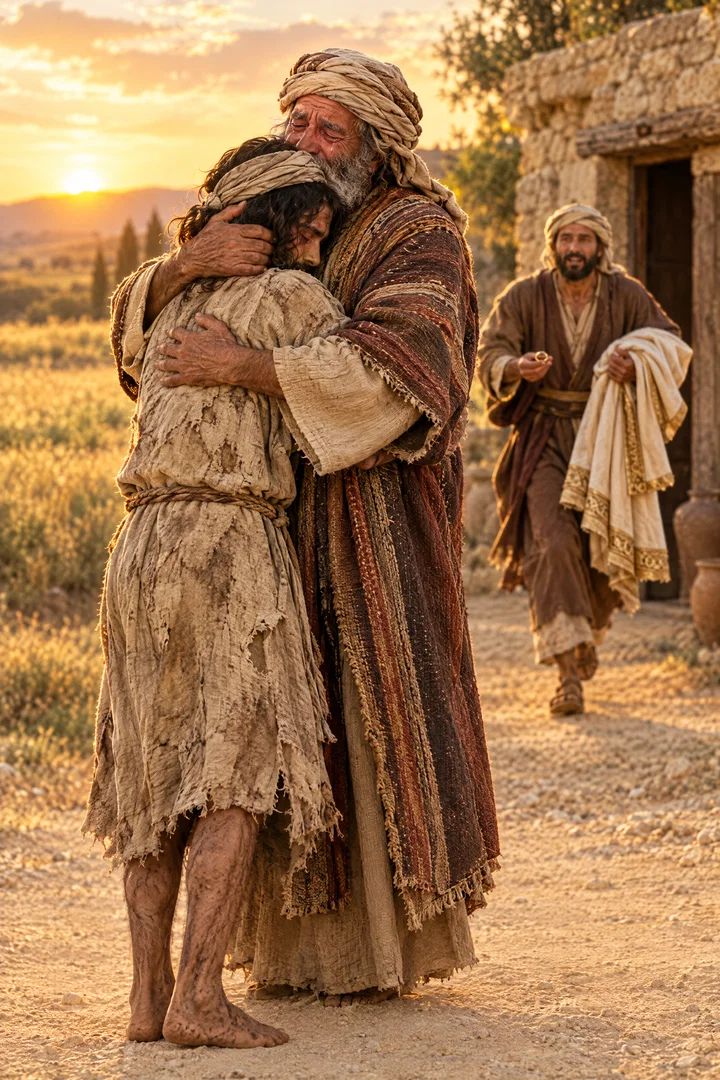
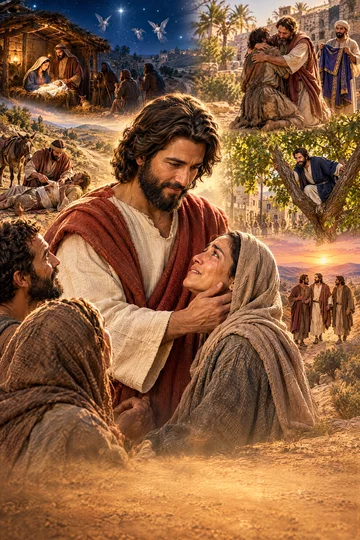
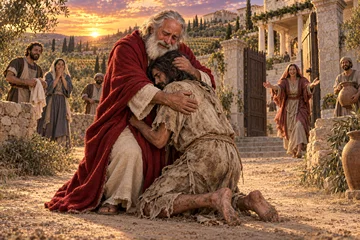
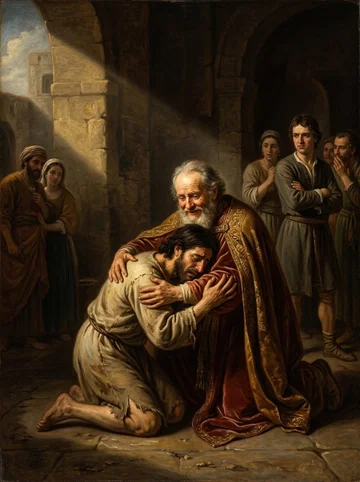
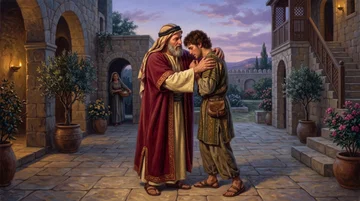
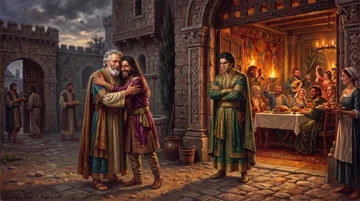
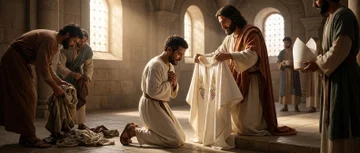
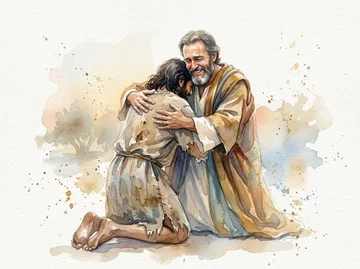
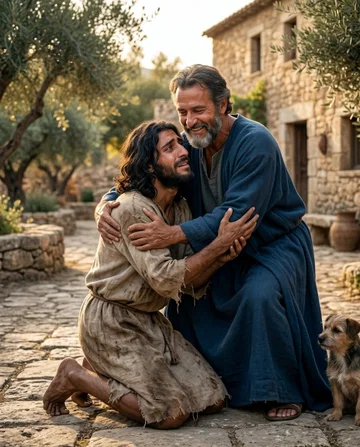
But the father said to his servants, Bring forth the best robe, and put it on him; and put a ring on his hand, and shoes on his feet:
Translations
American King James Version, King James Version, KJV Cambridge Paragraph Bible
But the father said to his servants, Bring forth the best robe, and put it on him; and put a ring on his hand, and shoes on his feet:
But the father said to his servants, Bring forth the best robe, and put it on him, and put a ring on his hand, and shoes on his feet:
Revised Version, American Standard Version
But the father said to his servants, Bring forth quickly the best robe, and put it on him; and put a ring on his hand, and shoes on his feet:
'And the father said unto his servants, Bring forth the first robe, and clothe him, and give a ring for his hand, and sandals for the feet;
But the father said to his bondmen, Bring out the best robe and clothe him in [ it], and put a ring on his hand and sandals on his feet;
But the father said unto his servants—Quick! bring forth a robe—the best! and put on him, and get out a ring for his hand, and sandals for his feet.
But the father said to his servants, ‘ Quick! Bring the best robe and put it on him. Put a ring on his finger and sandals on his feet.
But the father said to his servants, ‘ Bring the best robe and put it on him. Put a ring on his finger and sandals on his feet.
“ But the father said to his servants, ‘ Bring out the best robe and put it on him. Put a ring on his hand and sandals on his feet.
But the father said to his servants, Get out the first robe quickly, and put it on him, and put a ring on his hand and shoes on his feet:
Then the father said to his seruaunts, Bring foorth the best robe, and put it on him, and put a ring on his hand, and shoes on his feete,
Douay-Rheims (Challoner revision)
And the father said to his servants: Bring forth quickly the first robe, and put it on him, and put a ring on his hand, and shoes on his feet:
Pictures
Cross-references 20 of 27
- Luke 15:7
I say unto you, that likewise joy shall be in heaven over one sinner that repenteth, more than over ninety and nine just persons, which need no repentance.
Heaven rejoices over a sinner who repents.
- Luke 15:10
Likewise, I say unto you, there is joy in the presence of the angels of God over one sinner that repenteth.
Heaven rejoices when a sinner repents and is restored.
- Luke 15:17-18
And when he came to himself, he said, How many hired servants of my father’s have bread enough and to spare, and I perish with hunger!
The son recognizes his need, repents, and resolves to return to his father.
- Zechariah 3:4
And he answered and spake unto those that stood before him, saying, Take away the filthy garments from him. And unto him he said, Behold, I have caused thine iniquity to pass from thee, and I will clothe thee with change of raiment.
God removes iniquity and replaces filthy clothing with clean robes.
- Psalms 103:13
Like as a father pitieth his children, so the LORD pitieth them that fear him.
The father’s welcome illustrates God’s compassion toward his children.
- Luke 15:16
And he would fain have filled his belly with the husks that the swine did eat: and no man gave unto him.
The son’s hunger for swine’s husks contrasts with his restoration at home.
- Luke 15:1-2
Then drew near unto him all the publicans and sinners for to hear him.
Jesus welcomes sinners while the Pharisees complain, prompting parables about the lost.
- Luke 15:32
It was meet that we should make merry, and be glad: for this thy brother was dead, and is alive again; and was lost, and is found.
The father explains why rejoicing over the returning, restored son is fitting.
- Isaiah 61:10
I will greatly rejoice in the LORD, my soul shall be joyful in my God; for he hath clothed me with the garments of salvation, he hath covered me with the robe of righteousness, as a bridegroom decketh himself with ornaments, and as a bride adorneth herself with her jewels.
The Father’s gift of a spotless robe represents righteousness.
- 1 John 3:1
Behold, what manner of love the Father hath bestowed upon us, that we should be called the sons of God: therefore the world knoweth us not, because it knew him not.
The Father's love welcomes the returned sinner as His child.
- Luke 15:18
I will arise and go to my father, and will say unto him, Father, I have sinned against heaven, and before thee,
The son resolves to return to his father before being welcomed.
- Luke 15:28-30
And he was angry, and would not go in: therefore came his father out, and intreated him.
The elder brother resents his father’s welcome of the prodigal.
- Luke 15:4
What man of you, having an hundred sheep, if he lose one of them, doth not leave the ninety and nine in the wilderness, and go after that which is lost, until he find it?
The shepherd seeks the lost sheep, as the father receives his returning son.
- Matthew 18:12-13
How think ye? if a man have an hundred sheep, and one of them be gone astray, doth he not leave the ninety and nine, and goeth into the mountains, and seeketh that which is gone astray?
Both portray joy when the lost is found.
- Matthew 22:11-12
And when the king came in to see the guests, he saw there a man which had not on a wedding garment:
The wedding guest’s clothing contrasts with the robe provided for the feast.
- Galatians 4:7
Wherefore thou art no more a servant, but a son; and if a son, then an heir of God through Christ.
Sons are no longer servants and become heirs.
- Genesis 41:42
And Pharaoh took off his ring from his hand, and put it upon Joseph’s hand, and arrayed him in vestures of fine linen, and put a gold chain about his neck;
A ring marks Joseph’s elevated position and authority.
- John 1:12
But as many as received him, to them gave he power to become the sons of God, even to them that believe on his name:
Receiving Christ brings the prodigal into sonship.
- Isaiah 61:3
To appoint unto them that mourn in Zion, to give unto them beauty for ashes, the oil of joy for mourning, the garment of praise for the spirit of heaviness; that they might be called trees of righteousness, the planting of the LORD, that he might be glorified.
The robe signifies praise and joy replacing mourning.
- Isaiah 64:6
But we are all as an unclean thing, and all our righteousnesses are as filthy rags; and we all do fade as a leaf; and our iniquities, like the wind, have taken us away.
contrasts own rags with best robe
Commentary
Each commentary is drawn from primary sources: the writings of Ellen G. White and Adventist pioneers and periodicals. Each commentary is separate. Its own words are not a quotation; follow the references to read the source passages.
Ellen G. White
97 sources
The father orders his servants to take the returning son in rags and nakedness and clothe him with honor as a son, with the finest garment and a ring and shoes, instead of leaving him as a hired servant to be mocked.COL 198.4–199.1COL 198.2–3ST Jan 29, 1894ST Jun 2, 1909RH Apr 10, 1900
The father is God and the son is the sinner ruined by selfish separation from Him, whom God meets from afar with pity and tender embrace without reproach, anger, or reminders of unworthiness, forgiving and forgetting his sin.Ms 76, 1903, par. 21–22ST Jan 29, 1894RH Jan 19, 1911Ms 22, 1898, par. 1911MR 40.3–41.2
The finest garment is Christ's righteousness given to cover self-righteousness and sin, which no effort of the sinner can supply, but which is received by coming just as he is and trusting in Christ as personal Saviour.Lt 80, 1898, par. 9–1311MR 370.2–371.1Lt 76, 1898, par. 18–20Lt 65, 1894, par. 14–157MR 202.2–203.3
The ring is the token of royalty and restored standing as a son, so that he is treated as though he had always been obedient though he asked only for a servant's place, and this undeserved love breaks his heart with a deeper sense of sin and of the father's goodness.3T 100.3–101.23T 101.3–102.2ST Jun 2, 1909RH Apr 10, 1900GW 140.2
What is required is true heart-sorrow, hunger of soul, confession and full turning back to the Father without delay, and those who follow Christ must receive such erring ones with pity, help and free forgiveness rather than with the cold condemning spirit of the elder brother.3T 103.5–104.1ST Jan 29, 1894TCBMP 128.221MR 429.3
Parable Context and Figures
Luke 15:22 belongs to the parable of the prodigal or lost son, a most pathetic and touching illustration of mercy and forgiveness.COL 198.4–199.1Ms 102, 1894, par. 12–1419MR 259.1–3 Christ drew it from familiar daily life and familiar events to illustrate immortal truth, to brighten ordinary life with reminders of spiritual things and help people recognize spiritual realities in everyday experience.19MR 259.1–3ED 102.3–4GW 408.2ST Nov 30, 1915 He used it to come right to the point without long, farfetched, complicated reasoning, drawing things both new and old from His treasure-house to illustrate and enforce truth, to touch the heart, awaken sympathy, and commend truth to the conscience.19MR 259.1–3 He left hearers free to accept or reject it without force.19MR 259.1–3
In the parable the father represents God, the heavenly Father, who receives the repentant sinner without reproach and treats him as His child.Ms 76, 1903, par. 21–22 The son represents a person ruined by selfish indulgence and separation from God, whose wasted life and bondage to sin show that a life centered on self squanders God-given years and powers.COL 199.2–200.3Ms 22, 1898, par. 19 The account also illustrates how a child's wayward course can be shaped by indulgence at home and how parental indulgence can contribute to waywardness.11MR 40.3–41.2Lt 117, 1898, par. 4–5
The child had left home and squandered his inheritance, falling into misery far from his father's house and perishing with hunger as an object of compassion.COL 198.4–199.1MYP 408.19T 50.2Ms 45, 1901, par. 8 His lost condition is shown by distance from home and hunger, by rags, nakedness, and bondage to sin.COL 199.2–200.3Ms 45, 1901, par. 8 After wasting his inheritance he returns penitent and humbled to his father's care and restoration.MYP 408.1
The father sees his returning son from afar, runs to meet him, and rejoices that the one thought dead is alive.Ms 24, 1891, par. 8819MR 259.1–3 He welcomes him with yearning love and generous care, preparing a feast to follow rather than meeting him with accusations of wrath.RH Jan 19, 1911GW 157.3 That welcome carries the restoration to the family shown in the order for the best robe, a ring, and shoes.RH Jan 19, 1911
Father's Forgiving Restoration
The father welcomes the penitent, humbled son back into the household with restored honor and belonging, giving him the best robe and a ring and shoes.COL 198.4–199.1COL 198.2–3ST Jan 29, 1894ST Jun 2, 1909COL 203.2–205.1 He is received again as a son and not accepted as a hired servant, though that is all he asks for and though he still bears the marks of his sinful life.COL 198.4–199.1ST Jan 29, 1894ST Jun 2, 1909COL 203.2–205.1ST Apr 20, 1915 The father restores him to his place in the family, honors him and provides for his need, orders the household to treat him with respect and serve him, and prepares a feast with rejoicing over his return.COL 198.2–3ST Jan 29, 1894ST Jun 2, 1909COL 203.2–205.1ST Apr 20, 1915 He will not leave him in a servant's place and will not allow him to be mocked for his rags, for the gifts picture full compassion toward the returning sinner when sin is forgiven.COL 198.4–199.1COL 198.2–3COL 203.2–205.1ST Apr 20, 1915ST Apr 20, 1915 The past is blotted out and not held against him.Ms 76, 1903, par. 21–22ST Apr 20, 1915
That welcome comes without reproach, taunts, blame, anger, suspicion, or reminders of unworthiness.Ms 76, 1903, par. 21–22ST Jan 29, 1894RH Jan 19, 1911ST Jan 29, 1894Lt 15a, 1890, par. 32–34 God receives the repentant sinner as His child, forgives him, blots out the sin, and remembers it no more.Ms 76, 1903, par. 21–22ST Jan 29, 1894RH Jan 19, 1911ST Apr 20, 1915ST Jan 29, 1894 Penitence is what is required, and joy awaits every repentant soul who returns to the heavenly Father.ST Jan 29, 1894ST Jan 29, 1894
The father hastens to meet the son while he is still in beggar's rags, with naked feet and hunger and shame, and does not stand on dignity or wait afar off.3T 103.5–104.13T 101.3–102.2TCBMP 124.2–126.1TCBMP 128.1 He pities him, lifts him up, kisses him, and takes him to his breast and heart with tenderest pity and compassion.3T 103.5–104.13T 101.3–102.2TCBMP 124.2–126.1 He wraps his own rich robe about his nearly naked, emaciated, soiled form, and meets him with forgiveness and great joy because the son has become sensible of his sin and neglect, has felt his need, values his father's love, and comes to his father as the only one who can supply that need.3T 103.5–104.13T 101.3–102.2TCBMP 124.2–126.1TCBMP 128.1
The servants are ordered to pay him special tokens of respect, to clothe him as though he had remained an obedient son, and to serve him.3T 100.3–101.2ST Jun 2, 1909COL 203.2–205.1TCBMP 124.1ST Apr 20, 1915 He is clothed in the best the household can provide, though he knows he does not deserve it.3T 100.3–101.23T 101.3–102.2ST Apr 20, 1915 This leaves no room for contempt toward his misery and rags, for the robe and the other tokens express love and forgiveness.3T 100.3–101.2COL 203.2–205.1ST Apr 20, 1915
This undeserved reception, love, and honor breaks the already subdued heart.3T 101.3–102.2TCBMP 124.2–126.1 It gives a much deeper sense of sin and of having grieved such love, and leaves no doubt of the father's goodness and love.3T 101.3–102.2TCBMP 124.2–126.1
Meaning of Robe Ring Shoes
The best robe placed on the returning son pictures Christ's righteousness given to those who turn to God, covering the prodigal's rags and replacing the filthy garments of self-righteousness.Lt 80, 1898, par. 9–1311MR 370.2–371.1Lt 76, 1898, par. 18–20ST Dec 12, 1892Lt 59, 1898, par. 12–14 It is God's gift of acceptance and pardon to the repentant sinner who comes back to Him, whom He hastens to meet and receive with joy into His protection and fellowship.Lt 80, 1898, par. 9–1311MR 370.2–371.1Lt 76, 1898, par. 18–20Lt 65, 1894, par. 14–15Lt 59, 1898, par. 12–14 The welcome restores the fallen to the household, clothing them in the robe of righteousness when they receive Christ as Saviour.Lt 80, 1898, par. 9–1311MR 370.2–371.1Lt 59, 1898, par. 12–14 God's grace in this clothing is freely available to all who come to Him.ST Dec 12, 1892
That robe cannot be prepared by the sinner's own efforts to cover deformity and sin.Lt 65, 1894, par. 14–157MR 202.2–203.3 If Satan stands between the soul and Jesus Christ, the love and acceptance and pardon of Christ is eclipsed, and man must not constantly strive to make a robe of righteousness of his own.7MR 202.2–203.3 The sinner must come to Christ just as he is and believe in Him as personal Saviour to receive the Father's robe.Lt 65, 1894, par. 14–157MR 202.2–203.3
The ring placed on his finger is a token of royalty and of restored standing as a son, not a hired servant.ST Jun 2, 1909RH Apr 10, 1900GW 140.2Ms 40, 1899, par. 10–12 The best robe, ring, and shoes together honor him and provide for his need, covering his rags and ensuring the household treats him with respect despite his sin and ragged condition.ST Jun 2, 1909RH Apr 10, 1900GW 140.2Ms 40, 1899, par. 10–12 This tender care entreats the erring child to return and encourages him as he comes home, in contrast to treating the struggling soul with contempt.RH Apr 10, 1900GW 140.2Ms 40, 1899, par. 10–12
He is ordered to be clothed as though he had remained an obedient son, with special tokens of respect and proofs of love and forgiveness.3T 100.3–101.23T 101.3–102.2TCBMP 124.2–126.1TCBMP 124.1 Though he knows he does not deserve such honor and asks only to be made a hired servant, he is not left in beggar's rags, naked feet, hunger and shame.3T 100.3–101.23T 101.3–102.2TCBMP 124.2–126.1 The father does not stand on dignity, reproach him, or set past wrong and sin before him to make him feel how low he has sunk, but hastens to meet him, lifts him up, kisses him, takes him to his breast and heart with tenderest pity and compassion, and wraps his own rich robe about his nearly naked form.3T 101.3–102.2TCBMP 124.2–126.1 This undeserved love and honor breaks the already subdued heart and gives a much deeper sense of sin and of the father's goodness and love, leaving no doubt of that goodness and of having grieved such love.3T 101.3–102.2TCBMP 124.2–126.1
The father's joyful welcome also stands by itself as the picture of God's continuing love in receiving as His child the one who returns to Him, knowing his trials and sins and calling him to return.COL 199.2–200.3Lt 52, 1899, par. 3Lt 52, 1899, par. 4 In that setting the earlier departure, wasted life, and bondage to sin illustrate the sinner's separation from God and a self-centered life squandering God-given years and powers.COL 199.2–200.3 The robe, ring, and shoes are there left without separate explanation, the emphasis resting on welcome and restored sonship.COL 199.2–200.3Lt 52, 1899, par. 3Lt 52, 1899, par. 4
God's Love for Sinners
The parable sets forth pitying, tender, loving care for those who have strayed from God and are exposed to temptation, and He does not abandon them in their misery but shows them kindness and tender pity.COL 198.1Ms 132, 1902, par. 9Lt 80, 1898, par. 111MR 367.1 When His children repent and return He receives them with joy as a father welcomes a long-lost child, clothing the penitent prodigal with robe, ring, and shoes as the expression of that welcome.Ms 132, 1902, par. 911MR 367.1Lt 1a, 1890, par. 1 He takes the first step toward people still in rebellion, seeking to bring every willing wanderer home and, like the true shepherd, going after the lost.ST Jan 22, 1894Lt 1a, 1890, par. 1
His purpose in that welcome is to recover the lost rather than to condemn or destroy them, for those who recognize their need of a Saviour are the ones Christ came to save.ST Jan 29, 1894 That love was shown in the gift of His beloved Son, which made a channel for the outflow of infinite love so that all who believe on Jesus may be restored again to His favor.Lt 85, 1886, par. 17–18Ms 45, 1901, par. 8 Calvary proves how He regards those wandering far from the Father's house and perishing with hunger, for He sent His Son to be the propitiation for their sins, and not for theirs only but for the sins of the whole world, that sinners might be brought to saving knowledge of the truth, saved from sin, and made one with God.RH Nov 26, 1901Ms 45, 1901, par. 8 The lost condition of distance from home and hunger marks man as an object of compassion, and the one who advances toward God, submits his will to supreme wisdom, assents to the terms of salvation, receives Christ as personal Saviour and believes in His name is reconciled to the Father through the great atoning sacrifice and dying love, placed under the Father's protection, made one with God, covered with the robe of Christ's righteousness, given power to become a son of God and a place at His table in obedience, fellowship, and keeping of all the commandments.Ms 45, 1901, par. 818MR 354.2–355.1 Christ receives the lost sinner with outstretched arms and restores him to God's favor, and His dying love shown at Calvary assures the sinner of acceptance, peace, and love and gives grand themes for thought and a solid foundation for faith leading to obedience to all of God's commandments and to life in Jesus Christ.Lt 85, 1886, par. 17–18Lt 15a, 1890, par. 9–11Ms 82, 1894, par. 22–24 Even this tender picture of the Father's compassion toward the returning sinner falls short of expressing a love so great.
The return brings joy in heaven and shows the warmth of the Father's grace toward sinners, for the parable of the lost son illustrates the joy when someone is brought back to God.COL 197.2Ms 19, 1890, par. 21 When a sinner comes to the Father in repentance, heaven responds with joy, warmth, courtesy, and love, and the repentant son is welcomed with warmth, courtesy, and love that brings joy among the heavenly host.Ms 19, 1890, par. 21STOM 11.2STA 14.1 One especially endangered by temptation brings pain to Christ and calls forth His tender sympathy and earnest effort, and Christ rejoices more over one sinner who repents than over many who need no repentance.5T 604.1
The same yearning love was shown toward Israel, for the loving father's welcome to his returning son represents God's love toward them even when they resisted repeated offers of mercy, while Christ still yearned over them and grieved at the judgment He foresaw for Jerusalem.ST Feb 27, 1896 Jesus yearns after sons and daughters acting as the prodigal, professed commandment-keepers who transgress the law and are unthankful and unholy, using entrusted talents to counterwork God, with no light in them but darkness, whose influence does not lead to sanctification or holiness; He longs to do them the good He delights to do, but the perversity of their character prevents Him.Ms 75, 1898, par. 13–14 Like a father willing to suffer for his son, God was willing to bear the guilt of His wayward people and continued to send warnings, appeals, and invitations, though they resisted His grace and wasted the privileges He gave them.Ms 56, 1902, par. 5 The father's welcoming of his lost son home illustrates Heaven's labor to reclaim the lost and bring them back to the Father's house.ST Oct 31, 1916
Returning and Remaining Children
Penitence is what is required for the welcome of Luke 15:22, true heart-sorrow for sin and hunger and felt need leading to humble confession and full decision of soul to turn back to the Father as the only one who can supply that need.ST Jan 29, 189421MR 429.3Lt 33, 1896, par. 12Lt 18f, 1890, par. 2 The returning son is freely and fully pardoned when he returns and confesses, his disgrace covered by pitying love without making sin seem less grievous.21MR 429.3Lt 18e, 1890, par. 2 Deliverance from sin depends on Jesus' strength and not one's own, and restoration comes through the Father's welcome to the one who comes back with a humble heart and does not delay.Lt 18f, 1890, par. 2 The one who links himself with God and gives heart and soul to Him with full decision is accepted and blessed.Lt 33, 1896, par. 12
To the mourning sinner God's love runs faster than the sinner's feet, meeting him on the way with peace, kissing his shame into silence, putting the best robe on him, and giving the liberty of the sons of God. This is the comfort of mourning when guilt leads the sinner to flee to Christ, to come in true contrition to the foot of the cross, to leave burdens there, and to be set free from the bondage of sin. The call therefore is to return now without delay and without lingering in sin's poor wages, for though the sinner has been a prodigal long separated from God and has received only poor wages from serving sin and the flesh and the devil, the Majesty of Heaven even now invites him to come that he may have life.2T 295.1Lt 76, 1898, par. 3–5Lt 18f, 1890, par. 2 None who seek Him do so in vain, for if he will come in the one humble way God will pardon all his transgressions and Christ will cleanse him from sin when he lays hold upon Him, while to neglect this mercy and linger is to perish in sin.2T 295.1 Returning to God is a privilege with hope for those who turn and take Jesus as personal Saviour, and those who turn to Him after sin can come to Him, tell Him their failures, and ask for strength to begin again, and are to be encouraged to come home.STB 147.5MYP 97.1Lt 76, 1898, par. 3–5Lt 27, 1890, par. 8
A thorough backslider leaving the service of Satan and of sin returns like the prodigal to his Father's house and service by turning square about at once with a decided promise before God to be a Christian from that day, even if keeping the Sabbath costs position and trade.3MR 64.5–65.3 Mistakes and severity by brethren and simple errors of youthful indiscretion give no reason to stay away and grieve Christ who loved him and died to redeem him.3MR 64.5–65.3 The Father evidences pardon and love to the one who so returns, placing him in a new channel with purified thoughts, changed purposes, and a solemn sense of responsibility, bringing happiness and thankfulness.3MR 64.5–65.3 The prodigal's return is in this way the model for a backslider turning from sin and returning to God's service, brought about through labor in Christ, with the young man urged to return as the prodigal did.Lt 59, 1886, par. 1–5Lt 59, 1886, par. 6 Named prodigals such as Arthur and Rosetta, described as prodigals from their Father's house and blessing, are urged to turn back to God, confess their backsliding, and enter the heavenward path, and the call to come back to the Father's house presents the prodigal as the example of turning back to God.Lt 27, 1890, par. 1Lt 27, 1890, par. 18–19 People who so turn back may become receptive to truth, can be wisely helped and saved, and truth brought into their lives is a saving power making the receptive wise unto salvation.Lt 200, 1902, par. 8–10
Enjoying a son's privileges requires meeting sonship's conditions, for the welcome does not remove them.Lt 164, 1900, par. 21–23Ms 183, 1901, par. 12 Returning to the Father means accepting a son's obligations, staying under His care in obedience and fellowship, and not returning to former wandering.Ms 98, 1901, par. 17–2010MR 110.3–5 The returning sinner must meet God on God's ground and not his own, with cordial assent and willing obedience, walking according to His Word, acknowledging Christ as King, submitting to His authority and dominion, making His law the rule of life and His life the pattern, denying self and being ready to part with all and make any sacrifice for His sake, receiving Him to reign in the soul if He is received at all.ST May 8, 1901 This means receiving Christ as Saviour, renouncing the world's favor and friendship to make Him the all, walking according to His word, submitting the will to supreme wisdom, giving cordial assent to the terms of salvation, receiving Christ as personal Saviour and believing in His name, keeping all His commandments, with unreserved surrender and the gift of the whole life in self-denial and obedience rather than partial giving.Ms 183, 1901, par. 12ST May 8, 190118MR 354.2–355.110MR 110.3–5 The one so reconciled to the Father through the great atoning sacrifice and Christ's dying love is placed under the Father's protection, made one with God, covered with the robe of Christ's righteousness, given power to become a son of God, heartily welcomed, and given a place at His table.18MR 354.2–355.1 The one so accepted is accountable for all the good Jesus died to make it possible for him to do, and having known the Saviour's love and his own need of help, he is blessed and works with God to guide other lost youth and other lost people to give their hearts to God, be converted, and come back to the Father.MH 179.1–2Lt 33, 1896, par. 12
Welcoming the Erring Ones
Those who have erred and return in repentance are to be received as the father in Luke 15:22 receives the prodigal, with compassion, pity, forgiveness and great joy.3T 103.5–104.1TCBMP 128.2Lt 71, 1895, par. 27Lt 16, 1887, par. 7–14 The one sinned against is the one who meets the returning son, though that son had been counted dead to love for his father, and now has become sensible of his sin and neglect, values his father's love, owns his father's claims, suffers in feeling, and comes as one who has felt his need to the only one who can supply it.3T 103.5–104.1TCBMP 128.2 Because the erring are often downcast, discouraged and desponding and need forgiveness above everything else, they are to be given pity, help, sympathy and above all free forgiveness, not made to feel where they erred by reminders of mistakes and keeping error before them.3T 103.5–104.1TCBMP 128.2 They must be sought and welcomed rather than wounded and driven away, met with tenderness and efforts to restore them rather than harsh condemnation, abandonment, severe judgment or unwise treatment.Lt 71, 1895, par. 27Lt 16, 1887, par. 7–14Lt 16a, 1887, par. 416MR 339.3
The elder brother's complaints against that welcome were natural but are not right.3T 103.5–104.1TCBMP 128.2 That cold, complaining, condemning spirit stands in contrast to the loving Father who welcomes the prodigal rather than rejecting him, receiving the lost son with pity, gladness and love, accepting his repentance and rejoicing over his return.Lt 45, 1894, par. 21–24RH Nov 25, 1902Lt 71, 1895, par. 27 It is a wrong spirit to resent the rejoicing, to refuse the Father's joy, to show envy and jealousy instead of rejoicing when wandering people are brought back to the fold, to murmur over work done for the lost, or for brother to pursue brother by trying to make him feel his error.TCBMP 128.221MR 296.5–6Ms 49, 1898, par. 24–25 The same spirit displeases the Lord when church members murmur instead of rejoicing with heaven.Lt 45, 1894, par. 21–24Ms 49, 1898, par. 24–25
God's tender mercy in Luke 15:22 restores the returning son by covering his rags with His own garments and placing the ring on his finger as a token of restored standing and royalty.RH Apr 10, 1900GW 140.2Ms 40, 1899, par. 10–12 The Father loves His erring child, entreats him to return, puts His arm about the repentant son, encourages the erring to return home, and shows His readiness to receive the repentant.RH Apr 10, 1900GW 140.2Ms 40, 1899, par. 10–12 That mercy rebukes indifference and contempt toward the prodigal and condemns treating a soul struggling against the flood of temptation with contempt, Pharisee-like harshness, or stubborn, self-willed, selfish elder-brother harshness, even in those who claim to work with Christ.RH Apr 10, 1900GW 140.2Ms 40, 1899, par. 10–12 Those who need salvation should instead help bring the wanderer back.RH Apr 10, 1900
Parents are to follow that pattern by pardoning a returning, confessing child freely and fully, covering disgrace with pitying love and tenderness as the best robe, ring and shoes are ordered for the son, while not making sin seem less grievous or less serious.21MR 429.3Lt 18e, 1890, par. 2 Followers of Christ are to cooperate with Him in seeking the lost and winning back those who have wandered, helping and encouraging those returning to God.18MR 113.5Ms 81, 1893, par. 61–63 This cooperation calls for denying self, refraining from needless selfish spending, and bringing an offering in righteousness to advance His enterprise of mercy with power so sinners far from the Father's house and perishing with hunger may be brought to saving knowledge of the truth, saved from sin and made one with God.18MR 113.5RH Nov 26, 1901 Those who have had labor bestowed on them are to know God and Jesus Christ whom He sent, and when Christ is formed within as the hope of glory they will seek to save the lost, showing the Spirit of Christ in councils toward those who stray from the fold and carrying the message of salvation as light-bearers rather than gossiping, doubting and cherishing jealousy.Ms 49, 1898, par. 24–25Ms 81, 1893, par. 61–63
Sources
Pioneers and periodicals
126 sources
The father answers the returning son's confession of unworthiness and wish for a servant's place by ordering his servants to clothe him richly and then to feast with music and merriment because he was dead and is alive, was lost and is found.ST Aug 6, 1894ST Sep 6, 1899ST Oct 17, 1900 He does not make him a hired servant but restores him at once and fully to honor, sonship and heirship without reproach, coldness or reminders of the past.ST Oct 17, 1900ST Apr 2, 1896RH May 9, 1871ST Aug 29, 1895 The best robe is Christ's spotless righteousness put by God upon the penitent to cover nakedness and sin, the ring is acceptance, favor and authority as a member of the family, and the shoes lift disgrace and fit him as a child and pilgrim for the way home.RH Apr 10, 1900ST Mar 25, 1880ST Oct 31, 1900RH Jul 15, 1862ST Oct 17, 1900 The command reveals the Father's eager compassion toward every wanderer, seeing him while yet far off, running to meet him, forgiving directly and forever without demanding penance or priestly absolution, and rejoicing openly over one sinner that repents.ST Jan 29, 1894ST Aug 6, 1894ST Nov 22, 1899ST Nov 7, 1900RH May 28, 1857 It therefore calls every prodigal and backslider to arise and come with nothing but confession and humility to receive cleansing and rest, while requiring yielding obedience and not excusing continued sin.ST Aug 23, 1899ST Apr 25, 1878RH Jul 6, 1868ST Apr 10, 1907ST Nov 1, 1899
Parable Setting and Context
Luke 15:22 belongs to the story of the lost son, the third of the three stories of the lost sheep, the lost coin, and the lost son in Luke 15, all teaching that what was lost is found and met with rejoicing.ST Aug 6, 1894ST Sep 6, 1899ST May 4, 1904RH Nov 12, 1914 The three belong together as one picture of the lost being found and of rejoicing over a returning sinner, with the orders for the best robe, ring, and shoes standing alongside bringing the fatted calf to eat and make merry because the son was dead and is alive again, was lost and is found.ST Aug 6, 1894ST Sep 6, 1899 The parable of the prodigal son presents the Lord's dealing with those who have once known the Father's love but have allowed the tempter to lead them captive, and it illustrates tender care for the lost and outcast and speaks to humanity generally.ST May 4, 1904RH Nov 9, 1916 It stands in the same discourse as the parable in Luke 16, the two chapters forming a connected series of parables.RH Apr 8, 1858
The three parables were spoken to justify receiving sinners, because publicans and sinners drew near to Jesus and the Pharisees and scribes murmured that he receives sinners and eats with them.ST Aug 6, 1894ST May 4, 1904ST Mar 28, 1906 They were spoken in reply to that criticism, bringing out in distinct lines pitying love for those straying from God, whom He does not leave in misery but meets with kindness and tender pity amid exposure to the temptations of the artful foe.ST Aug 6, 1894ST May 4, 1904 The welcoming of sinners brings joy in heaven and aims to lead them to receive Christ and become children of God, with a place at the marriage supper of the Lamb. That welcome also gives an idea of the value the Son of God places on a soul.RH Nov 12, 1914
In the parable the father represents the heavenly Father.ST Oct 17, 1900 The younger or prodigal son represents publicans and sinners, and more broadly every penitent sinner who returns to God, including Gentiles, backsliders, and wandering humanity, while the elder brother represents the Jews, and specifically the Pharisees and scribes.STST May 4, 1904RH Jul 3, 1900ST Oct 17, 1900ST Mar 28, 1906 The prodigal is the poor lost sinner received to salvation, and the elder brother who was offended because his lost brother had been received and would not enter the house is the Pharisees, who make effort to find lost sheep and money and rejoice when found but reject lost men coming to Christ to be saved.ST Mar 28, 1906 Even the ungodly in bondage of sin are counted as His children as wandering, prodigal sons but still children, kept in probationary life under the law as under a severe master in order to be led to accept the promise and become sons indeed.ST Mar 8, 1899 The story also warns that people who take the Heavenly Father's gifts and waste them in sinful, selfish indulgence may persist in sin until lost forever.
The narrative containing the verse is a parable even though Scripture nowhere calls it a parable, counted as such because of the nature of its text and context rather than any positive declaration.ST Aug 19, 1880 Christ used it as a familiar event to teach immortal truth and to brighten ordinary life with reminders of spiritual things.ST Nov 30, 1915 The parables of Christ fit all ages of time and all sorts of people, instruct all who read thoughtfully, give better understanding of the Lord's parables, and help the reader catch points of application to his own life, and the parable containing this verse is full of the gospel and receives a strong spiritual application.RH Oct 15, 1901
The verse is the father's answer to the son's confession that he is unworthy to be called a son and his wish to be made as a hired servant.ST Aug 6, 1894ST Oct 17, 1900ST May 4, 1904ST Nov 22, 1899ST Aug 6, 1894 Before the confession can be finished the father does not make him a hired servant but orders the servants to clothe him and restore him fully as a son with honor.ST Aug 6, 1894ST May 4, 1904ST Aug 6, 1894 He commands them to bring forth the best robe and put it on him, to put a ring on his hand and shoes on his feet, clothing him with the best honor and welcome in a way that could not be misunderstood.ST Sep 6, 1899ST Oct 17, 1900ST Nov 22, 1899 That clothing is followed by the fatted calf, eating and merriment, because the son was dead and is alive again, was lost and is found, which is the cause of the rejoicing and justifies the preparation and the celebration.ST Aug 6, 1894ST Sep 6, 1899ST Nov 22, 1899
Father Restores Lost Son
The father refuses the son's request to be made as a hired servant and instead commands the servants to bring the best robe and put it on him, with a ring on his hand and shoes on his feet, thereby restoring him fully to honor, family standing, sonship, heirship and belonging in the household.ST Oct 17, 1900ST Apr 2, 1896RH Jul 15, 1862ST May 4, 1904 The gifts are both honor and practical care, expressing loving acceptance of one who had gone astray and illustrating the welcome given to penitent sinners returning to God and to the All-Father's household.ST Oct 17, 1900ST Apr 2, 1896ST Oct 17, 1900 The answer comes in response to the penitent confession of unworthiness to be called a son, yet it does not leave him in that lowly place but reinstates him as a son before any celebration begins.ST Oct 17, 1900ST May 4, 1904ST Aug 26, 1875 The scene pictures the joy in God's family when a sinner is converted and rescued from ruin.RH Jul 15, 1862
The welcome is immediate, tender and joyful, given with compassion and affection and without reproach, taunts, reminders of unworthiness, coldness or distrust.ST Jan 29, 1894ST Mar 25, 1880ST Aug 29, 1895ST Nov 7, 1900 The past is forgiven, forgotten, put away and blessed, for God is willing to pardon and bless those who turn from sin with the whole heart and humbly seek His help.ST Jan 29, 1894ST Mar 25, 1880RH Jun 14, 1870 The erring and repenting need pity, love, sympathy, help and above all free forgiveness, not efforts to make them feel their error and keep reminding them of it, since the returning sinner has suffered, feels his need, and comes to the Father as the only one who can supply it.ST Mar 25, 1880 The restoration is at once and without first requiring a long list of apologies, penances or prayers, and penitence is what is required for the joy awaiting every repentant soul who returns to the Heavenly Father.ST Jan 29, 1894ST Nov 7, 1900 The Father, though the one sinned against, meets the prodigal in pity and forgiveness with great joy that His son, believed dead to all filial affection, has become sensible of his great sin and neglect and has come back appreciating His love and acknowledging His claims.ST Mar 25, 1880
The father does more for the son than the son asked or expected, showing how willing God is to pardon those who return to Him.RH May 9, 1871 While the son had expected only a servant's place and dared hope only for pardon, the father had the best robe ready and gave more abundantly than could have been asked, restoring the waster of his inheritance to the privileges, provisions and promises of a beloved son despite unworthiness.ST Apr 30, 1894ST Aug 26, 1875RH Jun 4, 1901RH Jun 26, 1855 That generous care proves anyone who longs to return to God can come back and be welcomed, and the longing itself is an echo of the Spirit's call.ST Apr 30, 1894 Every prodigal who thus returns is at times filled with inexpressible joy and peace. God had already answered the desire to return home before the confession could be finished, eager to help the sinner who turns toward Him.RH Jun 4, 1901
The clothing with honor and welcome is joined to bringing the fatted calf to eat and make merry, because the son was dead and is alive again, was lost and is found.ST Aug 6, 1894ST Sep 6, 1899ST Nov 22, 1899 The father's joy must find expression in a way that could not be misunderstood, commanding feasting and merriment as the cause and justification of the preparation and celebration.ST Nov 22, 1899 These acts further express the father's joy at his son's return and picture pardon, reconciliation and the shared joy of the whole household and of God's family.RH Jul 15, 1862RH Jan 25, 1912ST Jul 7, 1909 The same joy and merry celebration extends in heaven and on earth when one who was dead and lost is alive and found again.ST Aug 6, 1894
Meaning of Robe Ring Shoes
The best robe is Christ's spotless righteousness, heaven's best gift put by God Himself upon the returning sinner however wretched his condition.ST Mar 25, 1880ST Oct 31, 1900RH Aug 17, 1911 It is the most honorable covering, white, fair, royal and probably priestly, connected with birthright and justification, marking the lost son's restoration as a child of the kingdom and his being born anew.RH Apr 10, 1900RH Jul 15, 1862RH Aug 17, 1911 It covers rags, nakedness, shame and every effect of sin, replacing tattered and soiled garments and all self-righteousness with the white robes of favor as an honored guest welcomed home.RH Apr 10, 1900ST Mar 25, 1880RH Jul 15, 1862RH Aug 17, 1911 The sinner comes back wearied, stricken, sore and burdened, with worn and bleeding feet, crimson-stained hands, blindness and a heart bringing only sin and pain, saddened, ashamed and defiled and asking only a servant's bread as unworthy of a child's name, and the Father answers by grasping and cleansing the stained hands, healing the bleeding feet to walk in His ways, healing the tearful blinded eyes to see His pardoning face, and bringing the penitent heart to meet God.ST Mar 25, 1880ST Mar 25, 1880
The ring is an ornament and token of the Father's love, friendship, favor and acceptance, signifying reinstatement as a member of God's family with restored standing and royalty.RH Apr 10, 1900RH Jul 15, 1862ST Oct 17, 1900ST May 24, 1899 In the East its gift conferred power and authority and marked a person of position or property, and it remains a memorial of salvation, a golden ring and gem given against the rags men wear to those who weep for their rags, the poor and lost and lone and dim-eyed, while a costly garment of praise is offered to all in every street with a song of joy for wailing and a place by the throne at the feast now ready.RH Jul 15, 1862ST Oct 17, 1900ST May 24, 1899 The Father's children, like children of a king, thus bear distinguishing ornaments, including the meek and quiet spirit prized by God.RH Jul 15, 1862
The shoes show that the sinner belongs to the family and equip the pilgrim for the journey to the heavenly home.RH Jul 15, 1862ST Oct 17, 1900 Putting them on the feet was among the first words of welcome because in Israel to be without shoes was a mark of disgrace indicating loss of inheritance and a state of penury and dependence, so shod feet lift disgrace.ST Oct 17, 1900RH Mar 5, 1901 They are the gospel shoe, the shoe of peace, enabling the wearer to mount up, run without weariness and walk without fainting, and they cannot be worn while the foot is swollen with sinful humors, meaning any unrighteous or unholy practices, which must first be purged out by repentance.RH Mar 5, 1901
That it is the best robe shows love giving beyond need, for robe, ring and shoes were in Palestine luxuries rather than necessities gladly offered at their best.ST Aug 6, 1894ST Feb 3, 1904 It is the Father's own respectable, rich and royal garment, white royal raiment wrapped about the nearly naked form soiled by travel and degradation, clothing him as if he had always been an obedient son rather than assigning him a servant's place.ST Mar 25, 1880ST May 5, 1914ST Dec 15, 1909RH Apr 20, 1916 So full sonship, friendship and heirship with God through Christ display the breadth and kindness of the Father's love that calls wanderers sons.ST Aug 6, 1894
The verse also belongs to the welcome and return in a more general sense, presenting the sinner turning to God, unable to return by his own resolve, won by divine love into willing submission, repenting and restored to the Father's house amid rejoicing in heaven.ST Jun 3, 1908RH Jan 23, 1913ST Oct 27, 1898RH Aug 3, 1869 In that setting the return from the swine pens and the far country, and the bringing back of prodigals in contrition and penitence and of wandering sons and daughters to restoration, are set forth without explaining in detail the clothing and gifts of robe, ring and shoes.ST Jun 3, 1908RH Jan 23, 1913ST Oct 27, 1898ST Aug 14, 1901
God's Love for Sinners
The best robe, ring, and shoes are the Father's answer to a son who confessed unworthiness and asked only for a servant's place, and they restore him fully to sonship with honor and favor instead of servitude.ST Jan 29, 1894ST Aug 6, 1894RH Jan 12, 1911 This welcome belongs to the third story of the lost being found, spoken because publicans and sinners drew near and Pharisees and scribes murmured at receiving sinners and eating with them.ST Aug 6, 1894 It reveals eager compassion, pity, and mercy toward lost and wandering people, regarding the sinful and fallen not as beyond care but as those Christ came to save when they recognize need of a Saviour.ST Jan 29, 1894ST Aug 6, 1894ST Nov 22, 1899 God meets the one who decisively turns back, sees him while yet a great way off, runs to meet him, hastens to silence shame, and graciously receives the penitent who has ruined himself by departing, wherever mercy is needed and penitence is shown.ST Nov 22, 1899RH Jul 6, 1868 Confidence in willingness to give enables the return, and heaven and earth make merry celebration over one who was dead and lost now alive and found again.ST Aug 6, 1894ST Nov 22, 1899
That great love to the undeserving is shown without respect of persons, to Jew and Gentile, backslider and sinner, Pharisee and prodigal.STST May 27, 1897ST Feb 26, 1902 The prodigal represents the Gentiles and the elder brother the Jews, yet the Father's welcome proves the same love embraces both.ST Salvation from sin is offered to every kind of sinner, from the Pharisee to the prodigal, and is available even to the prodigal type at the far end of the range.ST Feb 26, 1902ST Nov 13, 1901ST Sep 25, 1901ST Jan 29, 1902 Jesus welcomes sinners today and receives all who come, hating sin yet loving the sinner, coming to them, sharing their troubles, and waiting to welcome them with the kiss of pardon and the royal robe of righteousness.ST May 27, 1897 No priestly cordon or creed wall can shut a sinner out, and the only court etiquette for approaching the throne and receiving this clothing is the humble heart of faith.ST May 27, 1897
The welcome shows the value the Son of God places on a soul and His purpose to recover the lost rather than condemn or destroy them.ST Jan 29, 1894RH Nov 12, 1914 The three parables teach the same truth seen in Zaccheus the rich chief publican, that the Son of man came to seek and to save that which was lost, so that salvation comes even to a rich sinner received as a son of Abraham.ST Nov 21, 1900 It speaks courage to one discouraged by sins who feels lost, for all heaven is interested in the salvation of fallen man, shown in Christ dying for the ungodly, beyond which even infinite power could do no more. Having not spared His own Son, He will with Him freely give all things, perfecting that which concerns those who allow Him and working in them that which is good. Heaven still labors to reclaim the lost and bring them back to the Father's house, proclaiming good news of a lost world received with love, and seeking those still in rebellion through human agents.ST Jan 29, 1894ST Oct 31, 1916
The Father's love remained unchanged during separation and was only given new expression at the return, holding love and pity all along.RH Jan 12, 1911 It is everlasting love for sinners, of which human father-love and mother-love are only a reflection, yearning for lost sons and daughters with a heart throbbing with loving interest for every wandering child.RH Jan 12, 1911ST Oct 4, 1899 Those in rebellion are still His and rebel simply because they know Him not, for to know Him is to love Him and through that knowledge and love hearts are won. That heavenly love reaches with longing and pity toward the unlovely, the forsaken, and the hopeless where sin and ruin and desolation and death have made their presence felt, the same love Jesus brought from glory and lived as Friend of publicans and sinners, walking and working and healing among the sin-sick because His whole being was stirred by their need.ST Jun 13, 1916 It is faintly pictured by a devoted mother's time and thought and prayer entwining most strongly around the boy gone astray, and it endures as faithful, patient love for the unworthy that does not cease when one fails but seeks to restore toward the ideal, even when the one lost does not yet return.ST Jun 13, 1916ST Aug 22, 1911ST Mar 5, 1912
Joy over one repentant sinner is open and overflowing, exhibited before angels, and the returning soul need not despair because love remains abundant.ST Aug 6, 1894ST Nov 22, 1899ST Dec 10, 1896 Every prodigal who returns is at times filled with inexpressible joy and peace. That joy does not put a premium on sin nor mean God wants His people to go astray for the joy of recovering them, for to obey is better than sacrifice and sinning that grace may abound brings just condemnation.ST Jul 2, 1885 He rejoices not because He loves sin but because He abhors sin and rejoices that the erring returns to loyalty and obedience, revealing compassion for the straying whose limit cannot be measured, the same love that gave the Son to die, yet mercy must not be presumed upon for the incorrigible will be punished according to the greatness of grace abused.ST Jul 2, 1885 His thoughts toward His children are thoughts of peace, kindness, and mercy far above human thoughts.ST Nov 22, 1899ST Dec 10, 1896RH May 30, 1907
Forgiveness and Sonship Doctrine
Forgiveness comes directly and at once when the sinner turns and comes home, without first requiring a long list of apologies, penances, or prayers.ST Nov 7, 1900RH May 28, 1857ST Nov 1, 1899 There is no need first to become perfectly pure or to complete a long sorrowful journey before receiving redeeming grace, for God receives with tender care those who sincerely wish to return, confess impurity, and seek deliverance even while feeling unworthy to be called children.ST Nov 7, 1900RH May 28, 1857ST Nov 1, 1899 The sinner must not wait and try to win favor by meritorious acts, but must come at once with a broken and contrite heart, itself the gift of love, presenting the merit of Christ, and God meets such a one while yet a great way off to put upon him the best robe of spotless righteousness.RH May 28, 1857ST Nov 1, 1899 That restoration to grace, friendship, and former honor in the Father's house is given directly upon return, with no stop to make confession to a priest and receive absolution.ST May 4, 1876RH Jun 30, 1874
Once given, the sin is settled forever between God and the sinner, blotted out, remembered no more, and put away in everlasting oblivion, with no taunts, reminders, coldness, or distance.RH Jan 19, 1911ST Apr 20, 1915RH Jul 21, 1863ST May 27, 1897RH Nov 11, 1873 God forgives freely out of fatherly compassion like a father forgives a repentant son, restores fully, and settles the matter so nothing more is said about it.RH Jan 19, 1911ST May 27, 1897RH Nov 11, 1873 To keep pleading with tears for forgiveness afterward doubts the Father's sincerity, disbelieves words of loving welcome, and injures and insults Him.ST May 27, 1897RH Nov 11, 1873 The forgiven one should take a place at the feast and share the Father's affection and joy rather than refuse from unworthiness or hide in shame and tears, for continued lamenting mars the joy of the hour when the son dead is alive and lost is found.RH Nov 11, 1873ST Feb 18, 1886 True repentance is not regret from consequences nor reformation because sin pays little, but the revolt of conscience against wrong because it is wrong, acknowledged without concealment, palliation, or defense, with penalty borne and all done to repair its evil, and such are to be met with magnanimous, generous, trusting forgiveness, the sin buried in the depths of the sea and blotted out of remembrance forever.ST Apr 20, 1915RH Jul 21, 1863ST Feb 18, 1886
The welcome illustrates justification as a change of standing from condemnation to acquittal and favor, received through faith in Christ and distinct from sanctification as the progressive inward work freeing from sin's power.RH Jan 27, 1916ST Jan 5, 1915ST Mar 10, 1887ST Mar 18, 1897 Sinners are not to try to make themselves acceptable before coming, but to come as they are and ask God to cover nakedness, and He forgives and accepts them in Christ as they believe.ST Dec 12, 1892RH Jan 27, 1916ST Jan 5, 1915 The best robe is the blessed robe of Christ's righteousness replacing filthy rags of sin and self-righteousness with cleansing from all unrighteousness, received not by human strength but as a free gift by believing and accepting Christ, giving peace with God and establishing the law rather than making it void.ST Dec 12, 1892RH Jan 27, 1916ST Jan 5, 1915ST Mar 10, 1887 In this loving embrace the sinner and the Father are brought together through faith and the healing touch of Christ, pardoned, freed from condemnation, and welcomed into home and family.ST Mar 10, 1887ST Mar 18, 1897
The verse teaches restoration from prodigality, menial slavery, and death to sonship, heirship, adoption, and new birth in Christ, regaining through Christ what was forfeited by rebellion.ST Aug 29, 1895ST Oct 17, 1900RH Jul 25, 1912ST Aug 6, 1894ST Mar 8, 1899 The returning one is not merely allowed to remain as a hired servant though offering himself as one, but is welcomed with joy and without reproach and restored to the standing and inheritance held before leaving, with the same rights and privileges Christ has.ST Aug 29, 1895ST Aug 6, 1894ST Mar 8, 1899 The best robe marks welcome, the ring signifies acceptance, reinstatement as a member of God's family, friendship, and in the East conferred power, authority, and the standing of a person of position or property, while the shoes show belonging to the family, and together they mean full sonship, friendship, and heirship with God through Christ.ST Oct 17, 1900RH Jul 25, 1912ST Aug 6, 1894 He remains a member of the family even while outside its fellowship through refusal to return, but upon return and acknowledgment is restored to harmonious relations, safety, joy, inheritance, and life in union with Christ, whereas continued refusal ultimately brings disinheritance.ST Feb 10, 1904RH Jul 25, 1912ST Aug 6, 1894 This receiving of sinners is Christ's glory, exhibiting open joy over one repentant sinner before angels, watching for the wanderer and rushing to meet him while yet a great way off, training him in obedience within the Father's house.ST Feb 10, 1904RH Jul 25, 1912ST Aug 6, 1894
The welcome requires turning, arising and going to the Father, confessing sin against heaven and before Him and unworthiness to be cleansed and made clean.ST Aug 23, 1899ST Apr 25, 1878RH Jul 6, 1868RH Apr 14, 1863ST Dec 15, 1887 Wherever mercy is needed and penitence is shown mercy may be applied, for God is willing to receive the penitent who has ruined himself by departing from God.ST Aug 23, 1899RH Jul 6, 1868 Repentance precedes good works, since the son is received as a son after coming home confessing sin rather than offering to earn favor by doing something.RH Apr 14, 1863ST Dec 15, 1887 Sincere repentance that blames neither others nor circumstances for degradation marks readiness for welcome, and the robe and ring follow humility that confesses wrong and accepts even the lowest place at home, with no such promise to one refusing to admit wrongdoing.RH Apr 14, 1863ST Dec 15, 1887 It demands yielding to be moulded and willing obedience on God's ground, and is not license to continue sinning, for incorrigible presumption will be punished.ST Aug 23, 1899RH Jul 6, 1868RH Apr 14, 1863
The story does not teach another opportunity after death for one who dies unrepentant, since the prodigal had many opportunities and came to himself while living among the swine.ST Jun 21, 1883 One converted and restored can again leave and be lost, as a backslider repeating folly by leaving the house again, for once converted does not mean always converted.RH Sep 22, 1863ST Aug 1, 1916 Those who take the Father's gifts and waste them in sinful selfish indulgence are warned that they may persist until lost forever.RH Sep 22, 1863 Being found is not mere bodily return for meals and sleep, but recovery of innocence and a teachable spirit through right control that drags from dark labyrinths of roaming, loafing, and self-will onto the sunny road of virtue, without which a boy bodily home yet morally unrecovered and more than twelve years old is still lost, and was lost before he was missed.RH Sep 22, 1863RH Aug 29, 1865ST Aug 1, 1916
Call to Return Home
The best robe, ring and shoes call every wanderer, prodigal, backslider and tempest-tossed sinner to arise and go to the Father, confessing sin against heaven and before Him and own unworthiness, to be received and made clean.ST Aug 23, 1899ST Apr 25, 1878ST Apr 10, 1907ST Apr 30, 1894RH May 28, 1857 The wasted inheritance does not bar return, for one enslaved to drink and impurity and gambling is bidden to come home that very night, because God loves him there and then, and coming home is entering the kingdom of God.ST Apr 10, 1907ST Apr 30, 1894RH May 28, 1857 The longing itself to return is an echo of the Spirit's call, and those who sincerely wish to return, confess impurity and seek deliverance need not first make themselves perfectly pure or complete a long sorrowful journey before receiving redeeming grace.ST Apr 30, 1894RH May 28, 1857 The wisdom is to trust the Father and come rather than remain apart starving among degrading habits, for even one who expects only a servant's place finds ample provision, cleansing, bread of life and rest, coming with nothing but himself.ST Aug 23, 1899ST Nov 22, 1883RH Sep 1, 1874
Memory of home with its holiness and purity, peace and plenty draws steps homeward, while hunger, hardship, misery and affliction in the far country among husks and swine awaken guilt and longing.ST Jan 2, 1907RH Feb 15, 1912RH Nov 17, 1868ST Nov 22, 1883 The prodigal did not sense the blessing of home until beyond reach of its bounties, a sinner and an outcast, but hardships and suffering cleared his vision until the home he remembered rose in reproachful magnificence as far distant, where even servants had bread to spare while he perished with hunger.ST Jan 2, 1907RH Feb 15, 1912 That memory awakened consciousness of guilt and unworthiness and a cry in agony for even the most menial position there, with one longing desire to return as a penitent alien and live content as a servant if only to find place once more in its restful sheltering embrace.ST Jan 2, 1907RH Feb 15, 1912 God lets the one gone his own way alone thirst, hunger, faint in a far-off land, feed on husks and feel the smart until he returns with empty hands and swelling heart, homesick and distressed, owning God's way best, and at his feeblest knock the Father waits to bless with full welcome and feast, while angels sing even over the last and least.ST Jan 2, 1907ST Aug 5, 1875 So a Christian turned from God finds himself spiritually starving, comes to his senses and longs to return, and a poor backslider, an old professor self-righteous, conceited and self-complacent while almost apostate, almost gone and almost lost, after many years' travel away humbles himself as a sinner in prayer and self-examination, the light coming slowly as he wonders he was so far.ST Aug 5, 1875
Churches, families and parents are to reflect that father by meeting the erring with patience, kindness, pity and help rather than contempt, condemnation or obstacles, readily bringing the wanderer back and rejoicing with heaven when the lost return.RH Apr 10, 1900ST May 3, 1899RH Jan 27, 1863RH Aug 13, 1872RH Jul 25, 1871 The best robe covering rags and the ring marking restored standing and royalty show God's readiness to receive the repentant and encourage the erring to return, and those needing salvation must not treat a struggling sinner with contempt.RH Apr 10, 1900RH Jan 27, 1863 Wandering believers who required temporary exclusion, yet love God and His people and settle into grief, humility, contrition and longing for re-admission, are to be re-admitted at once and welcomed back frankly and heartily as the Master always receives a returning prodigal.RH Apr 10, 1900RH Aug 13, 1872RH Sep 1, 1874 Coming back to the Father's house where there is bread enough and to spare means coming back to the Sabbath of the Lord and to fellowship with His people, where hunger is fed with heavenly manna and all wants sustained in the fold under the gentle Shepherd, with wandering feet lifted from mire and placed on the Rock of Ages.RH Jan 27, 1863RH Sep 1, 1874 So a father should forgive and welcome a child who seeks him rather than reject or disinherit for past wrongdoing, and the lost are to be sought out and cared for personally with earnest prayer and effort.ST May 3, 1899RH Jul 25, 1871
Those restored, having learned the Father's love, become seekers and advocates who bear the burden for souls, point sinners to the Lamb and invite companions to the feast, so that many other prodigals are brought home.ST Sep 8, 1914ST Mar 31, 1914ST Feb 10, 1904RH Sep 15, 1910 Those who themselves were sought by the Saviour and brought back, leaving Satan's service for Christ's, give themselves without reserve to God and are accepted, their weak hand held out for help grasped by divine power, and their hearts filled with love for Christ because saved by a message of love understand soul-saving and know how to seek the lost.ST Sep 8, 1914RH Sep 15, 1910 As soon as restored to full fellowship with God's family, the returner realizes other brothers and sisters still astray on bramble-grown moors of sin or wandering with calloused hearts in dangerous ways of their own choosing toward the dark precipice of eternal ruin, feels something of the burden others felt for him, is possessed by true brotherly feeling, and becomes a seeker instead of a wanderer, an advocate for God instead of a recruiting officer for the evil one.ST Feb 10, 1904RH Sep 15, 1910 To him heat of desert, beasts of forest, fevers of jungle and terrors of wild men are nothing if he may find his brother's wandering footprints, for brothers and sisters are as truly and more dangerously lost than a neighbor's child lost in the woods, must eternally perish unless rescued, and God urges His children to go into all the world in this glorious, imperative, urgent, short-time work, by which one who found Christ helps the millions who have not.ST Sep 8, 1914RH Sep 15, 1910 That return is the purpose for which the Word was given and takes place in every home where the Bible rules and is contemplated through the day, joining humanity to divinity, taking painful monotony from ever-recurring tasks, giving life new meaning and beauty, and making heaven near, real and tangible in light of the cross.ST Mar 31, 1914ST Sep 10, 1894RH Jun 2, 1903
The welcome is pictured in a mother's enduring love and prayers through long separation, receiving at once and telling the returner forgiveness was long before, in a boy met with compassion and filled with peace, and in a wandering son spurning home's threshold in angry scorn, ill-used by the world with no friend like the one left behind, turning back shamed and sorrowing yet hopeful to find forsaken love, rest and fond forgiveness, met with loving face abloom, thankful prayer and joy to God for blessings won by grace after tears and weary nights of fear and prayer.ST Oct 22, 1896ST Jul 4, 1900ST Feb 18, 1913ST Oct 4, 1899 It is pictured in a costly ring and best robe covering filthy rags ordered with more than words and embrace, showing infinite forgiving love toward the erring and outcast and an example of generosity toward the unworthy of trust, in a father's embrace reconciling with joy, forgiveness and prayerful thanks, and in a robe, ring and sandals ready for sinners called to come.ST Jul 4, 1900ST Feb 18, 1913ST Nov 28, 1900 It is pictured in one who quarreled, ran away from a good home into sin, grew unhappy and tired of sin, remembered mother, home and innocent days, was led to the Saviour, resolved never to go back, went home rejoicing in Christ to praise, thanksgiving, tears of joy, family reunion in Christ, and then desire to work among the fallen from whom rescued, and in a farmer led by reading the story to seek the church and in men freed from bondage welcomed into new life.ST Oct 22, 1896ST Sep 10, 1894
The story warns against settling for the husks of this world when there is bread in the Father's house, for the world even at its best cannot give lasting happiness and peace but is a place to prepare for a brighter better life.RH Feb 28, 1871ST Jul 29, 1908ST Sep 28, 1904 The returning son replaces disloyalty, hatred and indifference with loyalty, love and concern for others, acknowledges the Father and is restored to harmonious fellowship, while remaining outside only while unwilling, and the faithful brother continues to watch and pray for his return.RH Jul 13, 1905ST Sep 28, 1904RH Mar 13, 1879 While wrongdoing is condemned and holiness approved, the returner is welcomed to a place as near the great Father's heart as sons and daughters more fortunate in pilgrimage, with full assurance of bread enough, for the Father is good beyond measure in friendly undeserved reception.RH Jul 13, 1905ST Jul 29, 1908RH Mar 13, 1879 Renewed favor alone does not prevent falling again, and those who know the love that passes knowledge toward the backslider will feel toward the prodigal as the father felt, making the poor apostate a special object of love, welcomed and honored instead of cast off, not as the elder brother felt with cold condemning spirit against boundless mercy.ST Sep 28, 1904RH Nov 26, 1901 A child's grace, if nurtured rather than quenched, can grow brighter than the grace in the soul of a converted prodigal.RH Nov 29, 1906
Sources