Luke 15:13
And not many days after the younger son gathered all together, and took his journey into a far country, and there wasted his substance with riotous living.
Translations
American King James Version, King James Version, KJV Cambridge Paragraph Bible
And not many days after the younger son gathered all together, and took his journey into a far country, and there wasted his substance with riotous living.
And not many days after, the younger son gathered all together, and took his journey into a far country, and there wasted his substance with riotous living.
And not many days after the younger son gathered all together, and took his journey into a far country; and there he wasted his substance with riotous living.
And not many days after, the younger son gathered all together and took his journey into a far country; and there he wasted his substance with riotous living.
'And not many days after, having gathered all together, the younger son went abroad to a far country, and there he scattered his substance, living riotously;
And after not many days the younger son gathering all together went away into a country a long way off, and there dissipated his property, living in debauchery.
And, after not many days, the younger son, gathering all together, left home for a country far away, and, there, squandered his substance with riotous living.
Berean Standard Bible, Majority Standard Bible
After a few days, the younger son got everything together and journeyed to a distant country, where he squandered his wealth in wild living.
Not many days after, the younger son gathered all of this together and traveled into a far country. There he wasted his property with riotous living.
And not long after, the younger son got together everything which was his and took a journey into a far-away country, and there all his money went in foolish living.
So not many daies after, when the yonger sonne had gathered all together, hee tooke his iourney into a farre countrey, and there hee wasted his goods with riotous liuing.
Douay-Rheims (Challoner revision)
And not many days after, the younger son, gathering all together, went abroad into a far country: and there wasted his substance, living riotously.
Pictures

Cross-references
- Luke 15:20-24
And he arose, and came to his father. But when he was yet a great way off, his father saw him, and had compassion, and ran, and fell on his neck, and kissed him.
The father compassionately welcomes and restores his returning son, then celebrates his return.
- Luke 15:4-7
What man of you, having an hundred sheep, if he lose one of them, doth not leave the ninety and nine in the wilderness, and go after that which is lost, until he find it?
The lost sheep illustrates Christ seeking and restoring the sinner.
- Luke 15:17
And when he came to himself, he said, How many hired servants of my father’s have bread enough and to spare, and I perish with hunger!
His hunger brings him to himself and awakens the resolve to return to his father.
- Luke 15:24
For this my son was dead, and is alive again; he was lost, and is found. And they began to be merry.
The father rejoices that his son, thought dead and lost, is alive and found.
- Luke 15:30
But as soon as this thy son was come, which hath devoured thy living with harlots, thou hast killed for him the fatted calf.
The elder brother resents the father's welcome to the returning prodigal.
- Luke 15:18-19
I will arise and go to my father, and will say unto him, Father, I have sinned against heaven, and before thee,
The son resolves to return to his father, confess his sin, and accept a servant’s place.
- Luke 15:21
And the son said unto him, Father, I have sinned against heaven, and in thy sight, and am no more worthy to be called thy son.
The younger son confesses his sin and unworthiness before his father.
- Luke 15:19
And am no more worthy to be called thy son: make me as one of thy hired servants.
He acknowledges he is unworthy to be called a son and asks to be made a servant.
- Luke 15:22
But the father said to his servants, Bring forth the best robe, and put it on him; and put a ring on his hand, and shoes on his feet:
The father restores and honors his returning son.
- Matthew 25:14-30
For the kingdom of heaven is as a man travelling into a far country, who called his own servants, and delivered unto them his goods.
Trading the entrusted talents contrasts with wasting the son’s substance.
- Luke 15:1-2
Then drew near unto him all the publicans and sinners for to hear him.
The Pharisees’ complaint prompted the parables.
- Luke 15:31
And he said unto him, Son, thou art ever with me, and all that I have is thine.
The father assures the elder son of his enduring love.
- Hebrews 11:25
Choosing rather to suffer affliction with the people of God, than to enjoy the pleasures of sin for a season;
defines riotous living as temporary enjoyment
Commentary part 1 of 2
Each commentary is drawn from primary sources: the writings of Ellen G. White and Adventist pioneers and periodicals. Each commentary is separate. Its own words are not a quotation; follow the references to read the source passages.
Ellen G. White
102 sources
Not many days after claiming his inheritance, the younger son gathers everything together, leaves his father's home, and journeys into a distant country where he wastes his substance in reckless, riotous living.COL 198.4–199.1ST Jan 29, 1894ST Apr 20, 1915 His departure is a deliberate choice to separate from his father to escape care, restraint, counsel and authority and pursue his own wishes, mistaking liberty for license and loving care for restrictive control.ST Jan 29, 1894COL 198.2–3TCBMP 123.1ST Jan 29, 1894ST Jan 29, 1894 The journey into a far country pictures sinners seeking happiness by separating from God, forgetting Him and leaving His house and service.ST Apr 20, 19153T 101.3–102.2COL 199.2–200.3 What is wasted is not money only but the precious years and powers of life, strength, intellect, mind, heart and soul, squandering gifts God entrusted to be used faithfully for His glory.ST Apr 20, 1915COL 199.2–200.3ST May 26, 19096T 337.3–338.2MC 60.1–3 Even while the wanderer is far away in want and misery, the Father does not abandon him but yearns and watches for him and sets influences in motion to bring him back to forgiveness and joy.COL 198.1RH Jan 19, 1911Lt 80, 1898, par. 9–1311MR 370.1ST Jan 22, 1894
Parable Context and Narrative
Luke 15:13 belongs to the parable of the prodigal or lost son, part of the larger account of the lost being restored to God.COL 197.2Lt 71, 1895, par. 27 That account is to be studied together with the lost sheep and the lost piece of silver, and its lesson that heaven rejoices when the lost are brought back is to be lived out by seeking the lost instead of wounding and driving them away.COL 197.2Lt 71, 1895, par. 27 Those who handle sacred things must not take the complaining elder brother's attitude when the prodigal returns, but receive him with joy, for the parable involves eternal interests.Lt 71, 1895, par. 27
Christ drew this parable from facts of life and experience familiar to His hearers to illustrate immortal truth.3MR 333.2–3ED 102.3–4GW 408.2ST Nov 30, 1915 Like His other lessons it connects everyday surroundings and tasks with spiritual and unseen realities, brightening ordinary toil with constant reminders of the unseen and appealing to every mind and heart.3MR 333.2–3ED 102.3–4ST Nov 30, 1915 His teaching comes straight to the point without long, farfetched, complicated reasoning, reading every heart as an open book and drawing things both new and old from His treasure-house to illustrate and enforce truth.19MR 259.1–3 He did not attempt to prove truth by argument or force belief, but illustrated truth in all its bearings with clearness and earnestness in practical godliness, commending it to the conscience and leaving hearers free to accept or reject it.19MR 259.1–3 The parable is most pathetic and touching, moving the heart and awakening sympathy in its scene of the father seeing his son afar off, running to meet him, and rejoicing that he who had been thought dead was alive.19MR 259.1–3
Jesus told the parable in response to the complaint of the scribes and Pharisees that He associated with sinners.Ms 102, 1894, par. 12–14 It teaches mercy and forgiveness toward those who are lost.Ms 102, 1894, par. 12–14 It gives courage to despondent and distrustful sinners, showing that God takes the first step to seek those still in rebellion and welcomes back every wanderer who lets Him.ST Jan 22, 1894
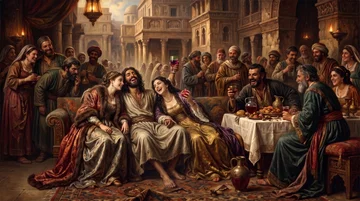
Not many days after claiming his inheritance, the younger son gathered all together, left his father's home, and took his journey into a distant country.COL 198.4–199.1ST Jan 29, 1894ST Apr 20, 1915COL 198.2–3ST May 26, 1909 His departure expressed a desire for independence from his father's care, counsel, correction, restraint, and authority in order to follow his own wishes and immediate pleasure.COL 198.4–199.1ST Jan 29, 1894ST Apr 20, 1915COL 198.2–3ST May 26, 1909 He mistook liberty for license and mistook loving care meant for his good for restrictive control, believing freedom to do as he pleased would bring happiness.COL 198.4–199.1ST Jan 29, 1894ST Jan 29, 1894ST Jan 29, 1894 He selfishly demanded a share of the estate he had no right to claim and did not deserve, treating his father's gifts as personal possessions with no gratitude or loving service and rejecting mutual obligation as a son, even withdrawing to a distance to forget he had a father.COL 198.4–199.13T 100.3–101.2 There in the far country, representing separation from the father, he wasted his substance in reckless, extravagant, riotous living in sinful pleasure, with evil companions and false excitement helping draw him deeper into sin.COL 198.4–199.1ST Apr 20, 1915COL 198.2–33T 100.3–101.2ST May 26, 1909 What he consumed included not only money but the precious years and powers of life.ST Apr 20, 1915
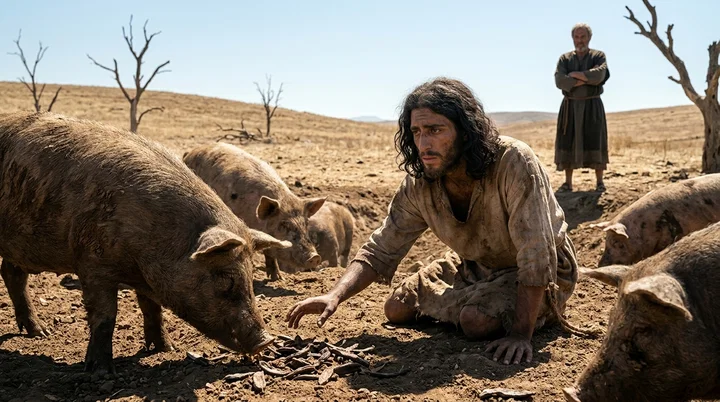
His reckless pleasure spent all his father had given him until it was gone.3T 100.3–101.2ST Jan 29, 1894ST Jan 29, 1894 He imagined himself happy, but his indulgence left him morally diminished, with weakened judgment and feeling, humbled pride, and deep misery.ST Jan 29, 1894ST Jan 29, 1894 He became friendless and destitute in a strange country, without life's bare necessities, in rags and hunger and want.ST Jan 29, 1894MYP 408.1 Famine in that country brought pinching want and made his need still worse.3T 100.3–101.2ST Jan 29, 1894ST Jan 29, 1894 He came down to the low business of feeding swine, regretted his course of sinful pleasure, and remembered his father's abundant provision.3T 100.3–101.2ST Jan 29, 1894
Desire for Independence
Not many days after claiming his inheritance, the younger son gathers all together and leaves his father's home for a distant country, where he squanders what he demanded in reckless living.ST Jan 29, 1894COL 198.2–3ST May 26, 1909 His departure is a deliberate choice to separate himself from his father and to manage his portion according to his own wishes.TCBMP 123.1TCBMP 123.3 He wants to be free from his father's care, counsel, correction, advice and authority, and to escape all restraint in order to pursue pleasure as he chooses.COL 198.2–3TCBMP 123.1TCBMP 123.3 That separation leads to destitution and regret, for away from his father he wastes through sinful indulgence what his father gave him.TCBMP 123.3ST May 26, 1909
He turns from loving care meant for his good because he mistakes liberty for license.ST Jan 29, 1894ST Jan 29, 1894 He mistakes his father's love and guidance for restrictive control, and wants independence from that guidance and restraint.ST Jan 29, 1894ST Apr 20, 1915 He believes that freedom to do whatever he pleases and to follow his own desires will make him happy.ST Jan 29, 1894ST Apr 20, 1915 He imagines himself happy, but after wasting his means and fortune in riotous living he is left without life's bare necessities, and famine in the country where he settled brings him to still worse hunger and need.ST Jan 29, 1894ST Jan 29, 1894 His years, intellect, youthful hopes and spiritual aspirations are consumed by lust.ST Apr 20, 1915
He selfishly demands and separates his interest from his father by claiming as his own right a share of the estate which he has no right to claim and does not deserve.COL 198.4–199.13T 100.3–101.2TCBMP 123.2 He does not want to be troubled by counsel, reproof, restraint or the mutual obligations of sonship, and he withdraws to a distance so that he might even forget he has a father.3T 100.3–101.2TCBMP 123.2 He determines to use what he received according to his own pleasure in whatever way he chooses, treating God's gifts as personal possessions with no gratitude or loving service.COL 198.4–199.13T 100.3–101.2 Like him, sinners seek happiness by separating themselves from God and living for self in self-indulgence, and a life centered on self squanders the years and the powers of mind, heart, soul, gifts and strength God has given, ending in spiritual ruin, degradation and misery.COL 198.4–199.1ST May 26, 1909 He wastes all his father gave him in sinful, extravagant indulgence until it is spent, and then pinching want and destitution make him regret his course of sinful pleasure and bring him down to feeding swine.3T 100.3–101.2
With money and no restraint away from his father's care, he falls in with evil companions, and their false excitement helps draw him deeper into sin until his wealth is wasted in reckless living.COL 198.2–3ST Jan 29, 1894ST Apr 20, 1915ST May 26, 1909 Many prodigal sons enter such wasteful, riotous life because of indulgence in the home.11MR 40.3–41.2Lt 117, 1898, par. 4–5 Parents permit children to follow pernicious and crooked ways, allow too much freedom, and indulge will and inclination instead of restraining and training them.11MR 40.3–41.2Lt 117, 1898, par. 4–5 Education is not commanded in the home at the dawn of reason and carried forward in the fear and love of God, and parental neglect in restraint with failure to be doers of the Word leaves mind and purpose without firm, undeviating, sanctified principles upheld by consistency, affection and a lovely consistent example.11MR 40.3–41.2 That failure to restrain and train fosters the self-willed waste that brings sons to ruin.11MR 40.3–41.2Lt 117, 1898, par. 4–5
Separation and Waste
The journey into a far country pictures the sinner seeking happiness by separating from God and forgetting Him, leaving the Father's house and His service. ST Apr 20, 19153T 101.3–102.2COL 199.2–200.3ST Apr 20, 1915ST May 26, 1909 Though surrounded by blessings, such a one chooses separation and spends what was entrusted in reckless, self-indulgent living at a distance from the Father. ST Apr 20, 19153T 101.3–102.2ST Apr 20, 1915
That separation is backsliding, staying long away from God in service to sin and the flesh and the devil, which yields no profit but poor wages. 2T 295.1 It is a departure from a former life of love and service, a leaving of the Father's house and blessing and of the heavenly Father for worldly life. Lt 59, 1886, par. 1–5Lt 52, 1899, par. 1Lt 27, 1890, par. 1Lt 52, 1899, par. 3 Such backsliding is to be confessed, with steps turned toward heaven and return to God and to His house and service. Lt 59, 1886, par. 1–5Lt 27, 1890, par. 1
Riotous living is reckless, extravagant, sinful self-indulgence in lust and pleasure. COL 198.4–199.1COL 199.2–200.3ST May 26, 1909 It includes spending on harlots and sinking through habitual drinking until under Satan's control, with judgment, feeling and God-given manhood weakened and courage lost. ST May 26, 1909Ms 22, 1898, par. 19
What is wasted is not money only but the precious years and powers of life consumed by sin — strength, intellect, youthful hopes, mind, heart, soul and spiritual aspirations. ST Apr 20, 1915COL 199.2–200.3ST May 26, 1909ST Apr 20, 1915ST Apr 20, 1915 A life centered on self thus squanders the years and the powers of mind, heart and soul that were given for higher use. ST Apr 20, 1915ST May 26, 1909
Left to itself, that course leaves a person spiritually bankrupt, enslaved to sin and earthly things, degraded and miserable, and bankrupt for eternity. COL 198.4–199.1COL 199.2–200.3ST Apr 20, 1915ST May 26, 1909 What was mistaken for liberty becomes bondage and spiritual ruin. COL 198.4–199.1ST May 26, 1909
Father's Love and Welcome
The parable presents God's pitying love toward those who stray from Him, and even when they turn away and follow their own course He does not leave them in their misery or abandon them.COL 198.111MR 367.1Lt 80, 1898, par. 1 He remains full of lovingkindness and tender pity toward sinners exposed to temptation, even toward one who has known the Father's love and is led captive by the tempter into separation.Lt 80, 1898, par. 9–1311MR 370.111MR 367.1Lt 80, 1898, par. 1 He sets influences in motion to bring such a one back, and if there is repentance He receives him with joy.Lt 80, 1898, par. 9–1311MR 370.1
Even while the sinner is far away in a strange country wasting what he has, the Father's heart yearns and longs for him and watches for his return.RH Jan 19, 1911SC 53.2–54.1 That departure and evil course set up the return, and the Father's longing and watchfulness show His desire for the sinner to come home.RH Jan 19, 1911 God takes the first step to seek those still in rebellion, still loves and calls the one who has left his heavenly Father for worldly life, and welcomes back every wanderer who lets Him.ST Jan 22, 1894Lt 52, 1899, par. 3 Every desire to return is the Spirit's tender appeal drawing him back to the Father's love.SC 53.2–54.1
When the erring son recognizes his sin and neglect, feels his need, and returns to his father as the one who can meet it, the heavenly Father receives him with pity, forgiveness, and joy.3T 103.5–104.1TCBMP 128.1 Wrongdoing does not remove the possibility of return, and penitence is required, but the repentant sinner is welcomed without reproach or reminders of unworthiness.ST Jan 29, 1894 Though His children stray and His substance is spent in a sinful, wasteful life that leaves the wanderer desolate with plans thwarted and hopes dead, He receives them with tender, loving care and compassion when they repent and return.COL 203.2–205.118MR 113.5TCBMP 128.2 He sees the returning one while still far away and runs to meet him, and heaven rejoices when the lost return.ST Jan 29, 1894COL 203.2–205.1
Upon repentance the Father puts His arm about the erring child, embraces him, covers his rags with His own garments, and puts a ring upon his finger as a token of royalty.GW 140.2Ms 40, 1899, par. 10–12 That welcome clothes the one who truly desires to return with the robe of Christ's righteousness, meets him with love, and brings him to the Father's table with a feast prepared to celebrate his return.GW 157.3GW 140.2Lt 76, 1898, par. 18–20 Heaven is marked by warmth, courtesy, and love, and there is joy among the heavenly host and in heaven when even the poorest sinner repents and comes back to God.Ms 19, 1890, par. 21STOM 11.2STBk 14.1 Such a struggle against the flood of temptation is not to be met with indifference or contempt like the stubborn, self-willed, selfish elder brother, whose complaint and cold rejection stand in contrast to the Father's joy.GW 140.2Ms 40, 1899, par. 10–12
That love is shown in giving His Son to die for the human race, revealing a Father who waits with yearning love rather than accusations of wrath.GW 157.3 In the gift of Jesus as a sacrifice a channel was made for the outflow of infinite love, so that all who believe on Him are restored again to favor, and believing they are obedient to all God's commandments and have life in Him.Lt 85, 1886, par. 17–18 The prodigal represents the sinner Christ came to seek and save, and the sinner who comes to Christ is not cast out but through His mercy is restored to God's favor and welcomed as the father welcomed the prodigal.Ms 82, 1894, par. 22–24Lt 15a, 1890, par. 9–11 God in Christ daily beseeches sinners to be reconciled, with outstretched arms ready to receive not only the sinner but the prodigal, and him that comes He will in no wise cast out.Lt 15a, 1890, par. 9–11 Christ as Physician of the soul understands its defects and maladies, knows how to heal with the purchase of His own blood, supplies what it lacks and molds as needed, and His dying love manifested on Calvary is the assurance of acceptance, peace, and love, bringing the lost back to God.Ms 82, 1894, par. 22–24Lt 15a, 1890, par. 9–11Ms 41, 1890, par. 45–51
Repentance and Restoration
Want and destitution overtake the younger son after his extravagant indulgence is spent, and famine sharpens his pinching need until he comes down to feeding swine.3T 100.3–101.2 His reckless pleasure consumes his wealth and leaves him morally diminished, with weakened judgment and feeling, humbled pride, deep misery, hunger and regret for his course of sinful pleasure.3T 100.3–101.2ST Jan 29, 1894 His separation as the result of his own disobedience and sin leads to friendlessness and want, and that adversity brings him to recognize his need for his father.TCBMP 124.1 In that condition he remembers his father's abundant provision and resolves to return humbly.TCBMP 124.1ST Jan 29, 1894
His return is a turning unto the Lord with penitence, confession and contrition of soul under the convicting power of the Holy Spirit upon the heart.Ms 21, 1889, par. 96–97Lt 178, 1902, par. 28–30 That turning follows an enlightened conscience, which can be awakened and drawn back by a message of love and by influences set in motion to bring the wanderer home.Lt 80, 1898, par. 9–13Lt 27, 1890, par. 18–19Lt 178, 1902, par. 28–30 Though he has long stayed away serving sin, the flesh and the devil for poor wages, he is still a brother for whom return remains possible, and if he will come and turn and live he is met, pardoned, given life and cleansed through Christ, for all things are now ready.ST Jan 29, 1894Lt 80, 1898, par. 9–132T 295.1 The Father receives the repentant one with joy and without reproach or reminders of unworthiness, and heaven rejoices when the lost return.ST Jan 29, 1894Lt 80, 1898, par. 9–13 After sin and failure a person can come to the Lord, tell Him of mistakes and failures, and seek strength to begin again.MYP 97.1 Sinners seeking Him for the first time and backsliders returning may firmly trust all He has promised for those who believe, for none who seeks Him in this way seeks in vain, and those who decide to return can be carefully helped and saved.Lt 200, 1902, par. 8–10Ms 21, 1889, par. 96–97 Giving heart and soul to God with full commitment brings His blessing and makes a person a worker with Him in helping other youth be converted.Lt 33, 1896, par. 12
Claiming a son's privileges means consenting to accept a son's obligations and remaining under the father's care.Ms 98, 1901, par. 17–2010MR 110.3–5 Enjoying sonship requires complying with its conditions and meeting God on His ground.Lt 164, 1900, par. 21–23Ms 183, 1901, par. 12 That means renouncing the favor and friendship of the world taken in the far country, making Christ all and in all, walking according to His Word in cordial assent and willing obedience and submitting to His dominion as King.ST May 8, 1901 It means not renewing wanderings but repaying love by staying in the fold.10MR 110.3–5 Such a return means being led step by step in submission to God's will and God's way to a rich experience, and it brings praise to God and weeping joy to those who hear of it.Ms 89, 1893, par. 1–2
The prodigal image fits one who abandons the faith, leaves the Father's house and service for the service of Satan and sin, wastes substance, and is degraded by liquor or by long denial of Jesus that pierces the Son of God and puts Him to open shame.3MR 64.5–65.3Lt 1a, 1890, par. 1Lt 28, 1874, par. 6–7 It fits a promising youth who becomes discouraged through temptation and harsh treatment by brethren, gives up the Sabbath and enters worldly business to perfect a trade, his wasting being the simple errors of youthful indiscretion.3MR 64.5–65.3 It fits one like Daniel Wessels who has neglected God's invitation and is not fully on the Lord's side, as the son who went away from his father.Lt 15, 1899, par. 9–11 Such a one must not delay but turn square about at once, leaving the service of Satan and sin and refusing to grieve the heart of Christ who died to redeem him.3MR 64.5–65.3 Return is to be with a humble heart to parents and to God, relying on Jesus' strength and not one's own, promising to be a Christian from that day even at loss of position and trade.3MR 64.5–65.3Lt 18f, 1890, par. 2 The call is to come penitent to the Father's house, give the little remnant of life to Jesus, cease things known to be sin, and be saved by His cleansing blood, because heaven cannot afford to be lost, and this brings a new channel of purified thoughts, changed purposes, and evidence of pardon and love.3MR 64.5–65.3Lt 1a, 1890, par. 1
Stewardship and Warning
Wasting substance in riotous living illustrates reckless use of what belongs to God, for life and health and reasoning powers and physical and mental strength and money and talents and precious opportunities are His money placed in human hands to be handled with faithfulness and diligence to His glory and traded wisely.6T 337.3–338.2MC 60.1–3CEv 65.4Ms 24, 1894, par. 14 To spend the Lord's money and entrusted goods on indulgence and vanities and riotous enjoyment and so-called enjoyment and pleasure, rather than using gifts and opportunities faithfully, is to trade unwisely with the Lord's goods.6T 337.3–338.2MC 60.1–3CEv 65.4Ms 24, 1894, par. 14 Such spending gains no experience in self-denial and fails to bear the cross after Jesus.MC 60.1–3CEv 65.4Ms 24, 1894, par. 14
To spend them recklessly in that way is to be written in heaven as an unfaithful servant who must give an account to God for every talent.6T 337.3–338.2MC 60.1–3CEv 65.4 Such unfaithfulness in that which is least proves unfitness to be trusted with greater responsibilities in heaven and leads to being tested and found wanting and unworthy of eternal life.MC 60.1–3 Works determine character and fix it for judgment, and the wasted life ends in suffering and want.MC 60.1–3CEv 65.4 The younger son's spending of his inheritance in a life of pleasure and sinful indulgence warns youth that forsaking the source of true pleasure for careless, pleasure-loving choices leaves them spiritually empty, and leads to becoming friendless and destitute in a strange country, hungry and dressed in rags, until a penitent and humbled return meets welcome and forgiveness.MYP 408.1
Children may squander an inheritance through riotous living and become beggars, which warns of the harm caused when parents hoard wealth instead of setting an example of sharing it.16MR 48.1 Sons and daughters who claim to keep the commandments and to be Christians while living as the prodigal son are transgressors of the law, unthankful and unholy.Ms 75, 1898, par. 13–14 They employ their entrusted talents to counterwork God, become conformed to the spirit and principles of worldlings, and exert their influence on Satan's side, with no light in them but darkness and with influence not unto sanctification or holiness.Ms 75, 1898, par. 13–14 They may retain the form of godliness while in practice denying the power thereof, and Jesus yearns after them and longs to do them the good He would delight to do but cannot because of the perversity of their characters, until they are one day called to give an account before God.Ms 75, 1898, par. 13–14 Israel likewise wasted the privileges and blessings God had given them, resisting grace and neglecting the opportunities to serve Him.Ms 56, 1902, par. 5 The parable represents God's loving care for Israel, whose rejection of repeated offers of mercy grieved Jesus as He foresaw the judgment that would fall on Jerusalem, though His love for them remained and He wept over the city.ST Feb 27, 1896Ms 56, 1902, par. 5
Seeking the Erring
The wandering in the far country is the picture of a soul lost through sin, gone out from the father's house and home and perishing with hunger in sin, yet regarded by God with love and compassion as one to be sought and helped and brought back to the Father's house.ST Oct 31, 1916MH 179.1–29T 50.2Ms 45, 1901, par. 8 Those prodigals brought back are sinners whom Christ has sought and rescued, and those who have themselves been saved can understand how to seek others and help bring them home.MH 179.1–2
The lesson stands together with the lost sheep, to be considered more critically and obeyed with purpose by feeling the true Shepherd's burden for the misery and danger of the lost and going to search for, find, and bring them back.Ms 81, 1893, par. 61–63 That soul has known and enjoyed the love of Jesus and the guardianship of the compassionate Shepherd and has left the fold and pleasant pasture through the deceiving, deluding power of Satan.Ms 81, 1893, par. 61–63 The gathering of such wandering sheep to the fold takes place through gospel labor in new fields and new suburbs with baptisms, and those already in the church stand in the place of the elder son and ought to rejoice that the Lord is bringing the wandering sheep to the fold instead of feeling envious and jealous because more labor is not given to them.21MR 296.5–6
Those who have left the Father's house and turned from God and fallen into error and sin are to be encouraged to return.Lt 16a, 1887, par. 4STB 620.1–2STB 147.5 The parable calls the heart and mind to consider Jesus' love and tenderness toward them and calls for tenderness and tender love and compassion toward the wanderer who has sinned, to soften the heart toward the erring rather than severe judgment of one who has fallen under temptation.Lt 45, 1894, par. 21–24Lt 16a, 1887, par. 416MR 339.3 When the erring son recognizes his degradation and repents, he is to be met with encouragement, sympathy, forgiveness, and joy, not scolding or reproach, with room to recover, and the father's welcome shows the mercy and love to be reflected toward a returning soul.Lt 45, 1894, par. 21–24 The parable should move believers to seek the erring person's restoration rather than condemn or abandon that person to temptation.Lt 16, 1887, par. 7–14
Poor Christian example can keep prodigals out of God's kingdom, and students who are treated harshly may be driven farther from what is good, so they must not be wounded and driven away.Lt 50, 1893, par. 8–9 Those handling sacred things must not assume the complaining elder brother's attitude when the prodigal returns, but receive him with joy, for the parable means much and practicing its lessons involves eternal interests, so it must be carefully studied together with the lost sheep and the lost piece of silver and lived out by seeking the lost instead of wounding and driving them away.Lt 71, 1895, par. 27 The erring child whom the Lord loves with tender pity and entreats to return journeys away and wastes his substance until clothed in rags, yet upon repentance the Father puts His arm about him, covers his rags with His own garments, and puts a ring upon his finger as a token of royalty.GW 140.2Ms 40, 1899, par. 10–12 Looking upon such a prodigal with indifference or contempt is forbidden, and standing by while his soul makes its struggle against the flood of temptation is forbidden, like the stubborn, self-willed, selfish elder brother, or like the Pharisee who thanks God that he is not as other men, for God disapproves of claimed co-workers with Christ who lack sympathy.GW 140.2 The father's embrace, covering of rags, and restoring with a ring show God's tender mercy toward the erring wanderer who struggles against temptation and returns to a Father ready to welcome him, while the elder brother's contempt and complaint and cold rejection stand in contrast to the Father's joy over his returning child.Ms 40, 1899, par. 10–1211MR 370.2–371.1RH Nov 25, 1902 Even sinners who have separated from God can return and be received with joy, while the elder brother's response exposes selfishness, jealousy, and an unforgiving spirit.11MR 370.2–371.1 God Himself does the work of a true shepherd toward those who are ready to die, going after the lost sheep and calling the distressed soul to return, healing backsliding and loving freely, and all heaven rejoices when the lost is found, so those who show indifference and careless disregard for the perishing instead of sharing that joy manifest the spirit of the elder brother.Lt 71, 1895, par. 25
Sources