Luke 15:19
And am no more worthy to be called thy son: make me as one of thy hired servants.
Translations
And am no more worthy to be called your son: make me as one of your hired servants.
King James Version, Webster Bible
And am no more worthy to be called thy son: make me as one of thy hired servants.
and am no more worthy to be called thy son: make me as one of thy hired servants.
Revised Version, American Standard Version
I am no more worthy to be called thy son: make me as one of thy hired servants.
and no more am I worthy to be called thy son; make me as one of thy hirelings.
I am no longer worthy to be called thy son: make me as one of thy hired servants.
No longer, am I worthy to be called a son of thine,—Make me as one of thy hired servants. And he arose, and came unto his own father.
Berean Standard Bible, Majority Standard Bible
I am no longer worthy to be called your son. Make me like one of your hired servants.”’
I am no more worthy to be called your son. Make me as one of your hired servants.”’
I am no longer good enough to be named your son: make me like one of your servants.
And am no more worthy to be called thy sonne: make me as one of thy hired seruants.
Douay-Rheims (Challoner revision)
I am not worthy to be called thy son: make me as one of thy hired servants.
Pictures
Cross-references 20 of 28
- Luke 15:7
I say unto you, that likewise joy shall be in heaven over one sinner that repenteth, more than over ninety and nine just persons, which need no repentance.
Heaven rejoices over a sinner who repents.
- Luke 15:10
Likewise, I say unto you, there is joy in the presence of the angels of God over one sinner that repenteth.
Angels rejoice over one sinner who repents.
- Luke 15:24
For this my son was dead, and is alive again; he was lost, and is found. And they began to be merry.
The father welcomes the returning son as alive from the dead and celebrates his return.
- Psalms 103:13
Like as a father pitieth his children, so the LORD pitieth them that fear him.
God’s pity for those who fear him is like a father’s compassion for his children.
- Galatians 4:7
Wherefore thou art no more a servant, but a son; and if a son, then an heir of God through Christ.
God makes believers sons and heirs, not servants.
- 1 John 3:1
Behold, what manner of love the Father hath bestowed upon us, that we should be called the sons of God: therefore the world knoweth us not, because it knew him not.
The Father’s love makes the prodigal a son.
- Luke 15:25-32
Now his elder son was in the field: and as he came and drew nigh to the house, he heard musick and dancing.
The elder brother resents the father’s welcome, contrasting with the father’s love.
- Luke 18:13
And the publican, standing afar off, would not lift up so much as his eyes unto heaven, but smote upon his breast, saying, God be merciful to me a sinner.
The publican’s plea expresses contrition and need for mercy.
- Romans 2:4
Or despisest thou the riches of his goodness and forbearance and longsuffering; not knowing that the goodness of God leadeth thee to repentance?
God’s goodness leads the sinner to return in repentance.
- Luke 15:23
And bring hither the fatted calf, and kill it; and let us eat, and be merry:
The father welcomes his returning son with a celebratory feast.
- John 1:12
But as many as received him, to them gave he power to become the sons of God, even to them that believe on his name:
Receiving Christ brings believers into God’s family as sons of God.
- Luke 15:1-2
Then drew near unto him all the publicans and sinners for to hear him.
Sinners draw near to Jesus as the prodigal returns to his father.
- Luke 15:4-6
What man of you, having an hundred sheep, if he lose one of them, doth not leave the ninety and nine in the wilderness, and go after that which is lost, until he find it?
The lost sheep pictures God seeking the lost.
- Isaiah 55:7
Let the wicked forsake his way, and the unrighteous man his thoughts: and let him return unto the LORD, and he will have mercy upon him; and to our God, for he will abundantly pardon.
The sinner returns to God and receives abundant pardon.
- Luke 15:13
And not many days after the younger son gathered all together, and took his journey into a far country, and there wasted his substance with riotous living.
The prodigal’s wandering from home recalls his departure.
- Romans 8:15
For ye have not received the spirit of bondage again to fear; but ye have received the Spirit of adoption, whereby we cry, Abba, Father.
Both describe sonship and address God as Father.
- Luke 15:32
It was meet that we should make merry, and be glad: for this thy brother was dead, and is alive again; and was lost, and is found.
The father rejoices that his lost son has returned.
- Galatians 4:5
To redeem them that were under the law, that we might receive the adoption of sons.
adopted into the royal family
- Matthew 8:8
The centurion answered and said, Lord, I am not worthy that thou shouldest come under my roof: but speak the word only, and my servant shall be healed.
Both confess their unworthiness.
- Hebrews 2:11
For both he that sanctifieth and they who are sanctified are all of one: for which cause he is not ashamed to call them brethren,
Christ is not ashamed to call the sanctified his brethren.
Commentary
Each commentary is drawn from primary sources: the writings of Ellen G. White and Adventist pioneers and periodicals. Each commentary is separate. Its own words are not a quotation; follow the references to read the source passages.
Ellen G. White
103 sources
The verse is the resolve of the ruined prodigal, perishing with hunger in a strange country after wasting his inheritance in self-indulgence, when he remembers the plenty even his father's hired servants enjoy and determines to return home without first trying to make himself respectable.3T 101.3–102.2COL 199.2–200.3MYP 408.1ST Jan 29, 1894TCBMP 124.1 It is his confession that by leaving his father and wasting his goods he has made himself unworthy to claim a son's place and privileges, and that he will ask only to be received and treated as a hired servant.COL 198.4–199.1ST Jan 29, 1894SC 53.2–54.1Ms 132, 1902, par. 9 His request for a servant's place shows humility and penitence, yet also how little he understands his father's love and willingness to receive him.ST Jan 29, 1894Ms 132, 1902, par. 9ST Jan 29, 1894ST Jun 2, 1909COL 202.3–203.1 The father does not meet him with reproach or punishment, but discerns him while yet a great way off, hastens with tenderest pity, runs and falls on his neck and kisses him, and rejoices that he who was thought dead is alive.Lt 20, 1889, par. 12–14Ms 102, 1894, par. 12–14ST Jan 29, 18943T 101.3–102.2COL 203.2–205.1 He will not let him ask for a servant's place, but honors him as a son, covering him with the robe of Christ's righteousness and preparing a feast, so that returning to God in repentance is not humiliating but brings forgiveness, restoration to favor, and joy in heaven.3T 101.3–102.23T 100.3–101.2ST Jun 2, 1909Lt 80, 1898, par. 9–13Ms 40, 1899, par. 10–12
Parable Context and Setting
Luke 15:19 belongs to the parable of the prodigal son, which reveals God's pitying love for those who have strayed from Him.COL 198.1Lt 80, 1898, par. 111MR 367.1 He does not leave them in their misery or abandon them when they turn away and suffer, but is kind and tender toward those exposed to temptation.COL 198.1Lt 80, 1898, par. 111MR 367.1
The parable presents the Lord's dealing with people who have known the Father's love but have been led captive by the tempter and turned away.COL 198.2–3Lt 80, 1898, par. 9–1311MR 370.1 His love for those separated from Him remains strong, and when they repent they may return to God, be received with joy, and be clothed in the robe of righteousness.Lt 80, 1898, par. 9–1311MR 370.1 The returning son acknowledges that he has forfeited any claim to be called son and approaches in repentance, and God works to bring such wanderers home.11MR 370.1
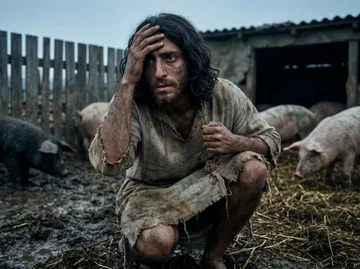
The setting of the verse is the misery that follows separation from the father, when pursuit of self-indulgence leaves the son degraded and enslaved by sin.COL 199.2–200.3Ms 22, 1898, par. 19 Through his own disobedience he comes as low as he can, far from home and perishing with hunger, friendless in a strange country, clad in rags, destitute and emaciated, feeding swine and longing for their refuse.3T 101.3–102.2MYP 408.1TCBMP 124.1 He is brought low by destructive habits, with Satan gaining control of mind and judgment, and the lost in this condition need compassion and saving knowledge.9T 50.2Ms 22, 1898, par. 19 His friendlessness and hunger arise from disobedience and separation, and his ruin through selfish indulgence pictures one brought low by such a course.TCBMP 124.1Ms 22, 1898, par. 19
In that want he remembers his father's kindness and love and the plenty, privileges, and care freely enjoyed even by his father's hired servants while he himself perishes with hunger.3T 101.3–102.2TCBMP 124.1 Humiliated by adversity he resolves to return by humble confession, and starving, he does not first try to make himself respectable.3T 101.3–102.2ST Jan 29, 1894 His confession that his sin has made him unworthy to be called son comes as he resolves to return home because he remembers his father has plenty of food.ST Jan 29, 1894
The story of the lost son illustrates the joy in heaven when someone is brought back to God.COL 197.25T 604.1 Even the poorest sinner who comes in repentance and returns calls forth Christ's tender sympathy and earnest labor, and brings joy among the heavenly host.STBk 14.15T 604.1STA 14.1STOM 11.2
Christ used this familiar experience from daily life to teach spiritual truth and make the unseen vivid and immortal truth more present in ordinary experience.ED 102.3–4ST Nov 30, 1915 He illustrates truth in all its bearings rather than proving it by long, farfetched, complicated reasoning, comes right to the point, reads every heart, and draws things both new and old from His treasure-house to illustrate and enforce His teaching.19MR 259.1–3 He commends truth to the conscience, touches the heart and awakens the sympathies, and leaves hearers free to accept or reject without forcing belief, and the parable is most pathetic and touching in showing the father seeing his son afar off, running to meet him, and rejoicing that he who had been thought dead was alive.Ms 24, 1891, par. 8819MR 259.1–3
The parable also represents God's loving fatherly care for Israel, which has resisted mercy, while Jesus grieves over the judgment coming upon Jerusalem.ST Feb 27, 1896 The prodigal can mean those who claim to be commandment keepers while transgressing the law, unthankful and unholy, using entrusted talents to counterwork God.Ms 75, 1898, par. 13–14 Jesus yearns after such sons and daughters and longs to do them the good He delights to do, but cannot because of the perversity of their characters, for there is no light in them and their influence is not unto sanctification or holiness.Ms 75, 1898, par. 13–14
Many prodigal sons become wayward through indulgence at home and parents' failure to restrain, guide, and control them.11MR 40.3–41.2Lt 117, 1898, par. 4–5 The story illustrates how a child may become wayward when indulged and not restrained or guided.11MR 40.3–41.2Lt 117, 1898, par. 4–5
Meaning of Son's Confession
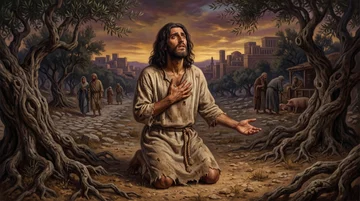
The words are the son's recognition that by leaving his father and wasting his inheritance his sin has made him unworthy to claim the place and privileges of a son or any share in his father's goods.COL 198.4–199.1ST Jan 29, 1894SC 53.2–54.1Ms 132, 1902, par. 9Ms 147, 1897, par. 31–33 He confesses that his wrongdoing has taken away his right to sonship, and he acknowledges his guilt in departing from his father.ST Jan 29, 1894SC 53.2–54.1Ms 132, 1902, par. 9Ms 147, 1897, par. 31–33Ms 23, 1897, par. 24–26 Knowing he does not deserve to be called son and that he has neglected his father's claims, he is willing to come back in poverty and ask only to be received and treated as one of the hired servants.ST Jan 29, 1894SC 53.2–54.1Ms 132, 1902, par. 9Ms 147, 1897, par. 31–33Ms 23, 1897, par. 24–26 He does not ask for restoration to sonship but only for acceptance in the lowest place, content to be taken in as a servant despite having squandered his blessings.SC 53.2–54.1Ms 132, 1902, par. 9Ms 147, 1897, par. 31–33Ms 23, 1897, par. 24–26
His confession is humility, penitence and repentance, with a sense of being lost, degraded, in need, and in need of a Saviour.ST Jan 29, 1894Ms 132, 1902, par. 9ST Jan 29, 18945T 632.1–2 He comes to the Father as the only one who can supply that need, appreciating His love and acknowledging His claims.ST Jan 29, 1894ST Jan 29, 18945T 632.1–218MR 113.5 His request to be made a hired servant reveals how little he understands his father's love, for he expects only a servant's place and underestimates his father's willingness to receive him.ST Jun 2, 1909COL 202.3–203.1COL 202.1–2ST Jan 29, 1894ST Apr 20, 1915 He plans to confess guilt and believes restoration as a son is impossible, so limited is his view of the love waiting for him.ST Jun 2, 1909COL 202.3–203.1COL 202.1–2ST Jan 29, 1894ST Apr 20, 1915
Trembling and fearing to be disowned, his misery has overcome his pride, and he turns from his former life and hurries home to ask for that place.3T 101.3–102.2ST Apr 20, 1915
Father's Loving Reception
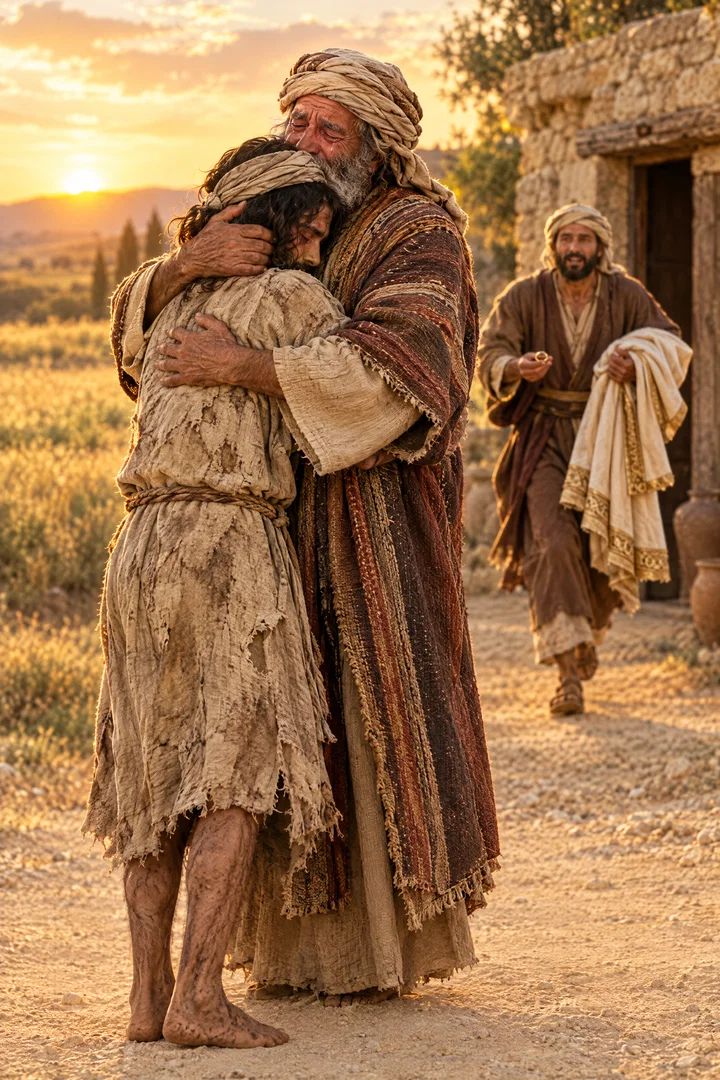
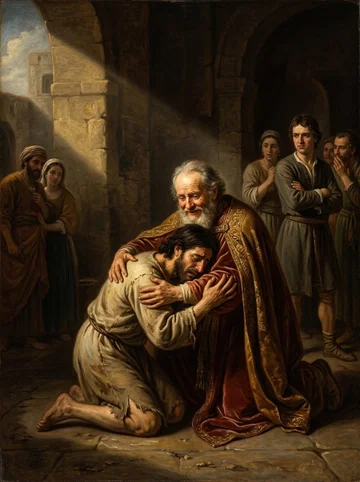
The parable teaches mercy and forgiveness in the way the father receives the returning son.Ms 102, 1894, par. 12–14 He sees him when yet a great way off, discerns his own image under all the degradation, does not wait, but hastens to meet him with tenderest pity and compassion.Lt 20, 1889, par. 12–143T 101.3–102.2 He runs to him, falls on his neck and kisses him, lifts him up and takes him to his breast and heart.Lt 20, 1889, par. 12–143T 101.3–102.2Ms 24, 1891, par. 8819MR 259.1–3 He rejoices that his son, who had been thought dead, is alive.Lt 20, 1889, par. 12–14Ms 24, 1891, par. 8819MR 259.1–3
He does not meet that return with reproach, blame, punishment, contempt, accusations, or reminders of past unworthiness.ST Jan 29, 1894COL 203.2–205.1RH Jan 19, 1911GW 157.3Ms 40, 1899, par. 10–12 He does not stand on dignity or set past wrong before him.3T 101.3–102.2 He meets him instead with compassion, pity, love, forgiveness, and greatest joy.3T 101.3–102.2COL 203.2–205.1RH Jan 19, 1911GW 157.3Ms 40, 1899, par. 10–12
He does not let the son ask for a servant's place, but receives and honors him as a son.3T 101.3–102.23T 100.3–101.2ST Jun 2, 1909COL 202.3–203.1COL 203.2–205.1 He wraps him in a rich robe, gives proofs of love and tokens of forgiveness, and orders special respect and clothing for him as if he had ever been an obedient son.3T 101.3–102.2 He clothes and honors him, welcomes him home, and prepares a feast and celebration with restoring gifts.COL 203.2–205.1RH Jan 19, 1911GW 157.3Ms 40, 1899, par. 10–12
The returning sinner is covered with the robe of righteousness, even the robe of Christ's righteousness, and given a place at the table.Lt 80, 1898, par. 9–13Ms 40, 1899, par. 10–1211MR 370.2–371.1Lt 76, 1898, par. 18–20Lt 59, 1898, par. 12–14 Coming back to God in repentance is therefore not humiliating or degrading.Lt 76, 1898, par. 18–20 That reception gives the son a much deeper sense of his ungrateful course than he had when he decided to return, and his before-subdued heart is now broken because he has grieved such love.3T 101.3–102.2
The wanderer's past is forgiven and forgotten, and his disgrace is covered by pitying love.RH Jan 19, 191121MR 429.3Lt 18e, 1890, par. 2 The father's tenderness does not make sin seem less grievous, but helps the child recover and return.Lt 18e, 1890, par. 2 God meets that return with infinite love shown in giving His beloved Son as a sacrifice at Calvary as propitiation not for His own people only but for the sins of the whole world.Lt 85, 1886, par. 17–18RH Nov 26, 1901 That gift makes a channel for the outflow of His love so that all who believe on Jesus are restored to favor, brought to saving knowledge, made one with God, and led to obedience to all His commandments and life in Christ.Lt 85, 1886, par. 17–18RH Nov 26, 1901
The wanderer's desire to return is awakened by the Father's Spirit drawing him back with love. Even one step in repentance is met by God, who hastens to enfold him in infinite love.ST Jun 2, 1909 He hears the contrite soul, and even a faltering prayer, a secret tear, or a feeble sincere desire is known and met, with a deep influence calling him to full conversion.ST Jun 2, 1909Lt 28, 1874, par. 6–7 Christ receives the sinner and restores him to God's favor, ready to receive not only sinners but those who have strayed, and His dying love on Calvary assures them of acceptance, peace, and love.Lt 15a, 1890, par. 9–11Ms 82, 1894, par. 22–24Ms 41, 1890, par. 45–51 Acceptance with God comes through Christ, not through a bodily act, but through submitting the human will to God and receiving Christ as Saviour.Lt 59, 1898, par. 12–14 The verse thus illustrates the loving Father's willingness to bear with a rebellious child and His continuing invitation to return.Ms 56, 1902, par. 5
Assurance for Returning Sinners
The despairing sinner crushed under sin is not to believe Satan's lie that God has no pity and leaves him to perish, but to arise and go to the Father trusting that Jesus died that he might live, that He loves him and wills not that he perish, confessing sin and abused love and squandered blessings, admitting unworthiness to be called son and asking to be made as a hired servant.Lt 20, 1889, par. 12–14 With such a promise doubt must go, for to think the Lord sternly withholds the poor sinner who wants to return and forsake sins from coming to His feet in repentance dishonors God and misrepresents Him to the world.Lt 20, 1889, par. 12–14 That thought hurts the soul, fills the whole spiritual life with hopelessness, and discourages all effort to seek and serve Him.Lt 20, 1889, par. 12–14 God must not be thought of only as a judge ready to pronounce sentence, for though He hates sin He gave Himself in the person of Christ, one with the Father, to bring eternal life within reach of all sinners so the sinner should not perish but be saved with eternal blessedness in the kingdom of glory.Lt 20, 1889, par. 12–14
Turning back to God in the way appointed for salvation is exemplified here, for after long separation with no certain hope of eternal life the only way to get hold again is humble coming confessing unworthiness and asking only to be received.Ms 23, 1897, par. 24–262T 295.1 It is a way so lowly that pride will not consent to it, leaving no room for false hopes.2T 295.1 God is ready to accept and pardon all transgressions if the sinner will but come, and the sinner's sense of unworthiness does not make him past help.2T 295.1ST Dec 5, 1892ST Jul 29, 1913 God is willing and able to forgive and receive those who come, contrary to the idea that He is unwilling to pardon, and the Majesty of Heaven meets him even now with mercy inviting him to come for life, with Christ to cleanse him from sin when he lays hold upon Him.2T 295.1ST Dec 5, 1892ST Jul 29, 1913
That unworthy feeling after sin must not keep anyone who has failed and been betrayed into sin from praying and coming before the Lord.MYP 97.1 Jesus waits with outstretched arms to welcome the returning prodigal, who should go to Him, tell Him mistakes and failures, ask strength for fresh endeavor, and trust He recognizes every effort to reach His ideal and will never disappoint confidence.MYP 97.1 His return is an example not to delay in coming back to God with a humble, enlightened heart, trusting Jesus as personal Saviour and surrendering to Him.Lt 18f, 1890, par. 2Lt 27, 1890, par. 8Lt 27, 1890, par. 18–19 Those absorbed in the world are called to come home without delay, no longer claiming the place of a son but asking to be received as a hired servant.Lt 18f, 1890, par. 2Lt 27, 1890, par. 8Lt 27, 1890, par. 18–19
For a thorough backslider who has given up the Sabbath through temptation and discouragement, this means leaving the service of Satan and sin, turning square about without delay even at the cost of position and trade, and coming back to the Father's house and service deciding to be a Christian from that day.3MR 64.5–65.3 That return brings evidenced pardon and love, a new channel of purified thoughts and changed purposes, and solemn happy thankfulness.3MR 64.5–65.3 Returning means turning from sin and Satan and leaving wandering from God and truth to come back into fellowship with God, turning steps toward heaven to confess backsliding and come to Jesus.Lt 59, 1886, par. 1–5Lt 59, 1886, par. 6Lt 27, 1890, par. 1 It is to be done despite unkind treatment from fellow believers, because Christ's love and sacrifice give reason to return.Lt 59, 1886, par. 1–5
The story applies to one who had once loved and served the Lord but left the Father's house after faithfulness, and to those like Wessels who have neglected the Spirit's invitation.Lt 52, 1899, par. 1Lt 15, 1899, par. 9–11 God still loves him, will accept him as His child, and calls him to return to loyalty to his heavenly Father.Lt 52, 1899, par. 3Lt 15, 1899, par. 9–11 Sinners seeking the Lord for the first time and backsliders returning with confession and contrition under the Holy Spirit's convicting power are met by a tender, pitying, loving Saviour whose compassion is greater than all human compassion.Ms 21, 1889, par. 96–97 He died to save the perishing and can be trusted to do all He promised, so none who turns to Him seeks in vain.Ms 21, 1889, par. 96–97
Those who have left the Father's house, far off and perishing with hunger, sick and sinful, are to be encouraged to return to God and pointed to the great Healer, to be brought to saving knowledge and made one with God.RH Nov 26, 1901STB 147.5STB 620.1–29T 50.2Lt 76, 1898, par. 3–5 The lost are reclaimed through Heaven's sacrifice, labor, and energy expended for their return.ST Oct 31, 1916 They have as incentives the rewards of right-doing, enjoyment of heaven, society of angels, communion and love of God and His Son, and elevation of all powers through eternal ages urging loving service.ST Oct 31, 1916 Serving sin and the flesh and the devil brings no profit but poor wages, so the call is to turn and live rather than die.2T 295.1
Obedience After Return
The welcome home does not end the story, for to enjoy a son's privileges the returned son must comply with the conditions of sonship and accept a son's obligations.Ms 98, 1901, par. 17–20Ms 183, 1901, par. 12Lt 164, 1900, par. 21–2310MR 110.3–5 Claiming the place of a son means living according to the father's conditions and accepting his authority, remaining under the shepherd's care rather than renewing wandering.Ms 98, 1901, par. 17–20Lt 164, 1900, par. 21–2310MR 110.3–5 That remaining is the answer to the shepherd's love, staying in the fold and giving the whole life in unreserved surrender.Ms 98, 1901, par. 17–2010MR 110.3–5 Meeting God is not on the sinner's own ground but on God's ground, with cordial assent and willing obedience.ST May 8, 1901 Such obedience renounces the favor and friendship of the world, submits to Christ as King to reign in the soul, and walks in accordance with His Word and law.ST May 8, 1901
A wandering son who returns in submission to God's will and way is led by the Lord step by step into a rich experience.Ms 89, 1893, par. 1–2 That leading brings praise to God and tears of joy.Ms 89, 1893, par. 1–2 God accepts the prodigal who links himself with God and turns to Him with full decision of soul.Lt 33, 1896, par. 12 Giving heart and soul to God brings His blessing and a place in working with Him, so that those who have been restored can help other lost ones find their way to the Father and give their hearts to Him and be converted.MH 179.1–2Lt 33, 1896, par. 12
The lesson is given for the instruction of youth, because many youth live as the prodigal did in a careless, pleasure-loving, spendthrift life.MYP 408.1 Like him they expend their inheritance in pleasure and sinful indulgence, forsaking the fountain of living waters and true pleasure to hew out broken cisterns that can hold no water.MYP 408.1 After such a life of folly and sin, it is repentance and prayer that lead the son back to his heavenly Father, whose mercy and love he had neglected.Lt 72, 1890, par. 7
Welcoming Fellow Returners
One who has gone wrong and has come to feel the weight of great sin and neglect needs pity, help, sympathy, and above all free forgiveness.3T 103.5–104.1TCBMP 128.2 Efforts to make such a one feel the error and reminders of mistakes are out of place, because the erring already suffer in feeling and are often desponding and discouraged.3T 103.5–104.1 The returning one has suffered and felt need, has come to appreciate the heavenly Father's love and to acknowledge His claims, and comes to the Father as the only one who can supply that need.3T 103.5–104.1TCBMP 128.2 Though the Father is the one sinned against, He meets the repenting one in compassion, pity, love and forgiveness with the greatest joy, knowing that need for pity and love.3T 103.5–104.1
A repentant person coming back like the prodigal, sensing sin and degradation and no longer counting himself worthy of a son's standing, must be met with tender sympathy, encouragement, and love.Lt 45, 1894, par. 21–24Lt 45, 1894, par. 25–27 His repentance is to be accepted and he is to be welcomed as the father welcomed his son, with a message of love rather than rebuke.Lt 45, 1894, par. 21–24Lt 178, 1902, par. 28–30 Censure, suspicion, coldness and resentment after the elder brother's manner have no place, for the returning soul needs encouragement and tender sympathy.Lt 45, 1894, par. 21–24Lt 45, 1894, par. 25–27 He is to be sought instead of wounded and driven away, since harsh, unloving treatment by Christians can keep those gone astray from returning to God and entering His kingdom.Lt 71, 1895, par. 27Lt 50, 1893, par. 8–9
The parable is to move to labor for the erring and to seek their restoration, bringing them to the forgiving Saviour rather than leaving them without hope or treating them harshly.Lt 16, 1887, par. 7–14 It is meant to soften the heart and to oppose severe judgment of one who has fallen under temptation and into sin.Lt 16a, 1887, par. 4 It should shape heart and mind toward tenderness for those fallen into error rather than severe judgment of them.16MR 339.3 Truth brought into life experience has saving power to guide souls willing to receive it, as seen in those coming to the Sanitarium willing to receive truth who can be guided toward salvation.Lt 200, 1902, par. 8–10
An erring child can return, confess sin, and be freely and fully pardoned, with disgrace covered by pitying love.21MR 429.3Lt 18e, 1890, par. 2 Parents should therefore preserve tenderness toward a wayward child, for God invites His children to return and repent and promises to pardon transgressions.21MR 429.3Lt 18e, 1890, par. 2 That tenderness does not make the sin seem less grievous; it helps the child recover and return.Lt 18e, 1890, par. 2
When the sinner repents, God receives him with joy and clothes him in the robe of righteousness, and the returning prodigal is received with tenderness, restored, and treated as a son.Lt 80, 1898, par. 9–13GW 140.211MR 370.2–371.1 That welcome exposes the elder brother's stubborn, selfish contempt, jealousy, envy, cold rejection and unforgiveness toward the restored sinner.Lt 80, 1898, par. 9–13GW 140.211MR 370.2–371.1RH Nov 25, 1902 The same spirit appears in complaining, murmuring, gossiping, planting doubt, questioning and evil surmising instead of rejoicing that the Lord is bringing the wandering sheep to the fold.Ms 49, 1898, par. 24–25 It is acted out when a church raised up by evangelism becomes envious and jealous because more labor is given to others, resenting labor extended to new interests and suburbs rather than to those who already have the truth and have had great labor, when it ought to rejoice and go after the lost sheep ready to die.21MR 296.5–6Lt 71, 1895, par. 27
A sinner who repents calls forth tender sympathy and earnest labor, and heaven rejoices over the repentant sinner.Ms 49, 1898, par. 24–255T 604.1 Those who have had labor bestowed on them should have a knowledge of God and should rejoice and work when the lost return.Ms 49, 1898, par. 24–25 A living church with Christ formed within as the hope of glory carries salvation to others, reflects light, prays sincerely, stretches out hands all day long, hunts for souls, and does righteousness at home and in church rather than expecting to be constantly fed with sermons.Ms 49, 1898, par. 24–25
Sources
Pioneers and periodicals
141 sources
The verse is the younger son's resolved speech when he comes to himself in want and hunger in the far country, remembering bread enough in his father's house.ST May 4, 1904ST Aug 6, 1894ST Aug 6, 1894 It joins a confession that his sin has made him no more worthy to be called son with a plea to be taken back in the lowly place of a hired servant.ST May 4, 1904ST Apr 25, 1878RH Apr 21, 1859 It teaches true repentance as humble self-abasement without excuse or claim, asking forgiveness rather than offering to earn acceptance.RH Jul 15, 1862RH May 1, 1879RH Feb 16, 1869RH Apr 14, 1863RH Aug 27, 1872 The father does not grant servanthood but meets the returning sinner with compassion and restores him to sonship with far more than asked, without reproach or reminder of the past.ST Mar 25, 1880ST Jan 29, 1894RH May 9, 1871ST Aug 6, 1894ST Nov 7, 1900 God receives those who come as servants and makes them sons and heirs through Christ, whose worthiness becomes theirs.ST Nov 19, 1902ST Aug 26, 1875
Parable Setting and Wording
The words belong to the younger son's resolved speech in the far country after he wasted his portion with riotous living and fell into want, famine and hunger feeding swine, when he came to himself and remembered bread enough and to spare in his father's house.ST May 4, 1904ST Aug 6, 1894ST Aug 6, 1894ST Nov 22, 1883ST Feb 13, 1912 His hardship cleared his vision, so that the home once despised for worldly pleasure rose before him with its holiness, peace and plenty, where even servants fared better while he perished with hunger.RH Feb 15, 1912ST Nov 22, 1883ST Feb 13, 1912 Resolving to arise and go to his father, he purposed to admit he was no more worthy to be called son and to ask to be made as one of the hired servants, as a penitent return willing to take even the most menial place.ST May 4, 1904ST Aug 6, 1894ST Aug 6, 1894RH Feb 15, 1912 He then arose and went on that resolve, and when yet a great way off his father saw him and met him with compassion, honor and rejoicing.ST Aug 6, 1894
The saying has two parts: a confession that sin and wrongdoing have left him unworthy of sonship, and a petition to be made like a hired servant.ST May 4, 1904ST Apr 25, 1878RH Apr 21, 1859RH Oct 29, 1872RH May 6, 1862 It is humble confession without pleading innocence or shifting ground, acknowledging sin against heaven and in his father's sight and owning unworthiness to be called son.ST Apr 25, 1878RH Apr 21, 1859RH Oct 29, 1872 It comes from a wounded, broken heart in deep contrition and urgent need, expressing guilt, lostness and willingness to accept a servant's place.RH Feb 15, 1912RH Oct 29, 1872RH May 6, 1862
The saying belongs to the lost-and-found chapter with its three parables showing the interest and love of God for lost and wandering souls and the Son of man come to seek and save the lost, as seen when Jesus lodged with Zacchaeus though the multitude murmured.ST Nov 22, 1899RH Nov 12, 1914ST Jun 11, 1896ST Nov 21, 1900 It gives courage to the sinner who feels lost and humbly longs for pardon and cleansing, since heaven is interested in the salvation of fallen people and adversity bringing him to his senses is followed by the Father's mercy, love and forgiveness.RH Nov 12, 1914ST Jun 11, 1896 Unlike the sheep and coin lost without choice, the son goes away wilfully into a dark world of sin, defiled, helpless and perishing, and must change his will, come to himself and choose to return, which becomes cause for joy and encouragement.ST Nov 22, 1899
The prodigal story is a parable known from its nature and context though nowhere called a parable in Scripture, Christ using a familiar event from daily life to teach immortal truth and make spiritual realities present in ordinary experience.ST Nov 30, 1915ST Aug 19, 1880 Its parabolic setting stands before the account of the rich man and Lazarus and helps show that story is also a figure, not a literal description of the dead speaking and acting in hades.RH Sep 3, 1872 In it the prodigal represents the lost Gentile and the elder brother the Pharisees, so that the son's return and reception illustrate Christ welcoming lost sinners and rebuke refusal to share joy over their salvation.ST Mar 28, 1906
The servant-place request is formed in distress and humiliation in the far country but is left out when the father meets him a great way off and embraces him with affection, and the omission is not accidental.ST Jun 2, 1909ST Aug 26, 1875ST Nov 19, 1902 It reveals the change of feeling that takes place in the repenting sinner when he believes he has received grace and forgiveness, and it shows how little he understands his father's love and how low his expectations are.ST Jun 2, 1909ST Aug 26, 1875 The father does not accept the reduced status or let him settle for wages, but before the request can stand he orders the best robe and a feast, welcomes, forgives and honors him as son again, covering soiled clothing and not dwelling on former wrongdoing.ST Jun 2, 1909ST Nov 19, 1902ST Aug 11, 1914ST Aug 11, 1914ST Dec 15, 1909
The hunger behind the words was literally fulfilled in the South after the Civil War, illustrated by the condition of the Sumter district of South Carolina where most of over three hundred people were without bread and actually subsisting on corn husks and whatever could preserve life, while others had only one or two bushels of corn left with no means to get more.RH Apr 2, 1867
Repentance and Humble Confession
The words express humble confession in which the younger son recognizes that his sin and wrongdoing have made him unworthy to be called his father's son and asks to be received in a lowly place as a hired servant.ST Oct 17, 1900ST Sep 6, 1899ST Apr 2, 1896RH Jul 15, 1862ST Oct 17, 1900 His resolve follows wasting his portion and falling into want, and shows the ruin caused by sin and the need to return, without which he would perish.ST Sep 6, 1899RH Jul 15, 1862 His next act is to carry out the resolve by arising and going back to his father.RH Jul 21, 1910 They illustrate true repentance as a clear sense of sin and lostness, full and open confession without self-justification or blaming people and circumstances, humble abasement, and willingness to return to the one wronged.RH Feb 16, 1869RH Aug 27, 1872ST Dec 15, 1887RH May 14, 1861 The returning sinner claims no goodness of his own but leaves the sinful life behind rather than bringing his sins with him.RH Feb 16, 1869RH Aug 27, 1872 Acknowledging personal responsibility in this way makes heartfelt repentance and trust possible, and a wrongdoer should confess humbly rather than expect welcome while refusing to acknowledge fault.ST Dec 15, 1887RH May 14, 1861
The confession renounces all claim to sonship and takes the place of unworthiness, so that boasting is excluded.RH Jul 15, 1862RH May 1, 1879RH Apr 14, 1863 The appeal is for forgiveness, not an offer to earn acceptance by doing something, showing that repentance must precede good works and that sinners bring no worth or work to earn wages and no claim of self-righteousness.RH Jul 15, 1862RH Apr 14, 1863RH May 28, 1857ST Dec 24, 1902ST Apr 10, 1893 Led by the Father's goodness the sinner casts aside self-righteousness and rags of own righteousness, stands with naked soul owning unfitness even to look up, and pleads in Jesus' name to be covered by His blood and spotless righteousness, with new thought, purpose and desire and daily grace and guidance.RH May 28, 1857ST Dec 24, 1902 Merely forming this intention in want is not yet genuine, complete repentance, for at first self is still uppermost and grief is for personal consequences and starvation rather than for pain caused to a loving father.ST May 7, 1894ST May 7, 1894ST Oct 27, 1898 Repentance becomes complete only when the sinner cooperates with the Spirit's work and acts, traveling the journey home through repentance instead of remaining far off.ST May 7, 1894RH Sep 22, 1863ST Oct 27, 1898 The first feeling of the repenting sinner in darkness and exile dares hope for nothing but pardon and the lowest place, as if touching a stretched-out scepter for safety, yet when escaped from bondage and standing before the promised inheritance he casts aside fear and in full faith appropriates all mercy holds out as a beloved accepted son.ST Aug 26, 1875ST May 7, 1894
The resolve requires arising and going to the Father rather than stopping at recognizing need or deciding to change while remaining where he is, for only return makes the new resolve effective.ST May 4, 1904RH Jul 21, 1910RH Jul 21, 1910 He must not stay away until he has made himself better and respectable enough to come, for then he would never come, nor wait until he feels fully repentant, but speak truthfully and come back as he is.ST May 4, 1904ST Aug 1, 1878 Confidence that the Father treats even servants generously moves wishing into firm resolve to return and overcome sin, and even one step toward Him in repentance is met a great way off with enfolding infinite love, strengthening by the Spirit, forgiveness and joy.ST May 4, 1904RH Jul 21, 1910 The words give the pattern for cleansing: turn and come back with confession of sin against heaven and acknowledgment of unworthiness, openly admitting sin to those injured before going to God.ST Aug 23, 1899RH May 14, 1861RH Apr 21, 1859 Such confession is made hungry, thirsty, blind and naked over sins pointed out by the Holy Spirit, with regret for the past and grief for injury done to the cause of truth and its servants, and with bitter tears crying for mercy as one not worthy to be called a child of God.RH May 14, 1861RH Apr 21, 1859RH Apr 16, 1867 Shame and humility accompany the confession, and the Father sees repentance in the return, forgives before the speech is finished, restores to former position and restores the joys of salvation.ST Aug 23, 1899RH Apr 16, 1867
Father's Loving Welcome
The one sinned against meets the returning son while he is yet a great way off, seeing him and running with compassion, pity, forgiveness and great joy to embrace and kiss him.ST Mar 25, 1880ST Mar 25, 1880ST Aug 6, 1894ST Dec 10, 1894ST Aug 6, 1894 That embrace and those kisses silence shame, and the trembling penitent who falls prostrate in humility fearing to be disowned is not accepted as a servant but treated and honored as a son.ST Mar 25, 1880ST Aug 6, 1894ST Dec 10, 1894ST Dec 15, 1909RH Jan 12, 1911 The father puts on him the best robe, gives the ring, shares his goods with him, clothes him and celebrates him as lost and found, dead and alive again.ST Dec 15, 1909RH Jan 12, 1911RH Apr 20, 1916RH Jul 21, 1863ST Mar 17, 1898 His return in sensibility of great sin and neglect, appreciating his father's love and claims after suffering and feeling need in sin, calls for sympathy, help and free forgiveness rather than efforts to make him feel his error, because he already suffers in feeling and is desponding and discouraged.ST Mar 25, 1880ST Mar 25, 1880
The welcome is pardon and reconciliation with pity and infinite love, extended regardless of how wretched the condition has become after wandering and squandering what was given.RH May 9, 1871ST Jul 7, 1909RH Aug 17, 1911ST Dec 10, 1896RH Apr 20, 1916 God is willing to pardon sinners who truly repent, and does more for the returning one than he asked or expected, giving far more than servanthood.RH May 9, 1871RH Aug 17, 1911RH Apr 20, 1916 That more includes righteousness, children's bread, an honored place, royal robes, and a place bearing God's name.RH Apr 20, 1916 Joy fills the household over the return, showing how God receives a sinner who comes back to Him.ST Jul 7, 1909ST Dec 10, 1896
There is no coldness, rebuke, reserve, distance, blame, punishment, demand for penance or prolonged apologies, and no reminders of past unworthiness.ST Jan 29, 1894RH Jan 19, 1911ST Dec 18, 1901ST Nov 7, 1900RH Jul 21, 1863 The erring past is forgiven, forgotten and buried in oblivion in kiss, robe, ring and feast, and is never used to taunt.RH Jan 19, 1911ST Dec 18, 1901RH Jul 21, 1863 Forgiveness once given is complete and settled forever, so the forgiven one does not keep asking for the same sin or keep lamenting great sins as if still unforgiven.ST May 27, 1897 What is required is penitence, and the repentant soul returning in humility is met with immediate forgiveness and welcome.ST Jan 29, 1894ST Nov 7, 1900
The father's love and pity remain unchanged during the separation, reaching out and watching for the first inclination to return, and heaven rejoices when a sinner repents.ST Jun 15, 1904ST Dec 10, 1896RH Jan 12, 1911 He reads the heart and answers its first aspiration toward repentance with reinstatement in divine confidence, affection and esteem, without waiting for doubly earned re-entrance by expiated penalty and proved new life.ST Feb 18, 1886RH Jun 4, 1901ST Aug 6, 1894 There is no penance or purgatory required, and the desire to return itself is already answered before the confession can be made, giving more abundantly than could be asked.ST Feb 18, 1886RH Jun 4, 1901 Forgiveness always restores relationship when wrongdoing is abandoned, what reparation is possible is made, cleansing is desired, sin is acknowledged, and its just consequences are willingly borne, even where penalty may remain as a necessary means to redeem from sin's power.ST Feb 18, 1886
The request to be made as a hired servant shows how little the son understands his father's love and how low his expectations are.ST Jun 2, 1909ST Apr 20, 1915RH Jan 12, 1911ST May 5, 1914 He knows something of his father's love yet feels unworthy to be called son, expects only a servant's place, holds himself afar off in fear, and his misery has overcome his pride as he hurries home.ST Apr 20, 1915RH Jan 12, 1911ST Feb 18, 1886ST May 5, 1914 His fear contrasts with his father's love, which does not hold itself afar off in distrust but receives and honors him as a son and does not let him settle for a servant's place.ST Jun 2, 1909ST Feb 18, 1886ST May 5, 1914 The father's robe covers the soiled, tattered clothing, portraying loving welcome despite shame and need, and that pity, embrace, kiss and forgiveness give a deeper sense of the ungrateful course than was felt when return was first decided, breaking the already subdued heart with grief for having grieved such love.ST Mar 25, 1880ST Dec 15, 1909
The return brings joy in heaven among angels over one sinner that repents, with intense disinterested interest in the one who comes to himself, breaks the heart, bows the stubborn will, humbles the proud nature, makes frank and humble confession and puts away wickedness so that not one particle cleaves longer.ST Apr 2, 1896ST Jun 15, 1904ST Dec 10, 1896RH Aug 3, 1869 That repentance is an elevated, honorable, sacred, noble and dignified work wrought by the Spirit by human consent and active cooperation, not a cause for shame.RH Aug 3, 1869 There is joy throughout the household and the return calls for joy rather than grumbling, because loyalty and obedience are restored and the lost is found.ST Apr 2, 1896ST Jul 7, 1909ST Jun 24, 1897
Grace Sonship and Forgiveness
The repentant sinner comes offering himself only as a servant, conscious that sin has made him unworthy to be called a son, and God receives him and makes him a son instead.ST Nov 19, 1902ST Aug 26, 1875RH Oct 31, 1907ST Aug 6, 1894 He is not taken on as a hired servant seeking wages but is given a robe and a feast before he can even speak his request for a servant's place, and is restored to the privileges of sonship and to a place near the Father's heart with the same closeness enjoyed by those who have not gone astray.ST Nov 19, 1902ST Aug 26, 1875ST Aug 6, 1894RH Mar 13, 1879 That reception makes those who came as servants to be called the sons of God, no longer servants but friends, no more servants but sons and heirs of God through Christ, with filial confidence to say Father.RH Oct 31, 1907ST Aug 6, 1894 Such receiving of sinners is Christ's greatest glory, for he is not ashamed to receive them and to call them brethren, and Christ's worthiness becomes theirs.ST Aug 6, 1894 God does not merely refrain from casting off the one who returns in this way but watches for him, rushes to meet him when he is yet a long way off, and openly shows overflowing joy over his repentance in the presence of the angels, giving opportunity to receive him, become children of God, and share in the joy of heaven.ST Aug 6, 1894
The plea of unworthiness describes the converted sinner's sense of need, humbled by conviction, no longer relying on pride, self-esteem, or human honor, feeling unworthy of a place in God's family and seeking the honor that comes from God.RH Jul 15, 1862 In that one Christ becomes righteousness and sanctification and redemption, his all in all, as the sinner confesses and forsakes sin, submits to Him, and finds mercy.RH Jul 15, 1862 Restoration through Christ brings the person out of rebellion and separation from God back to the position and rights lost through sin, into obedience, harmony, and reconciliation with God.RH Oct 3, 1912
The son comes straight back to his father without stopping anywhere to make confession to a priest and receive priestly absolution, and on his return he is remitted, restored to grace, replenished with peace and tranquillity, reinstated in the friendship of God, and restored to his former honors in his father's house.ST May 4, 1876RH Jun 30, 1874 God reads the heart and answers its first aspiration toward repentance with reinstatement in divine confidence, affection, and esteem, without waiting for doubly earned re-entrance by expiated penalty and proved new life.ST Feb 18, 1886 No penance or purgatory is required, for forgiveness always restores relationship when a man abandons wrongdoing, makes what reparation he can, desires cleansing, acknowledges sin, and is willing to bear its just consequences.ST Feb 18, 1886 Forgiveness is not merely remission of penalty and does not always include remission of penalty, since penalty may remain as a necessary means to redeem from sin's power.ST Feb 18, 1886
To enjoy the privileges of a son the welcomed one must comply with the conditions of sonship, meeting God not on his own ground but on God's ground with cordial assent and willing obedience.ST May 8, 1901RH Nov 30, 1869 This means consecrating life to God's service, staying near to learn His will and obeying by His grace, renouncing the favor and friendship of the world, submitting to Christ as King to reign in the soul, and walking in accordance with His Word and law.ST May 8, 1901RH Nov 30, 1869 The welcome brings the sinner into the family and into a safe place where he can be trained to obey, but it does not make continued sinning possible or remove the need to turn from sin.ST Apr 1, 1886ST Oct 27, 1898 God gives again justification for sins that are past through the blood of Christ and imparts by faith the life of Jesus to abide within and give power to keep from sinning, to subdue iniquities and give victory over all the power of evil, yet that mercy must not encourage repeating failure or presuming on divine forbearance but calls to walk more carefully and not deny the holy relationship by willing sin.RH Jul 22, 1909
The parable sweeps away the false view that God has no pity and compassion for the erring and fallen but regards them as fit subjects of divine wrath entirely without mercy and to be shunned.ST Nov 22, 1899 It shows instead how God regards poor sinners with pity, compassion, and beneficent love, loving the sinner even in his degradation and welcoming him home.ST Nov 22, 1899ST Apr 10, 1907 Jesus came to recover sinners, not to condemn or destroy them, and the gospel is good news for a lost world because Christ comes to save and sinners and sufferers may turn to Him and find loving care.ST Jan 29, 1894 Though man is estranged from God, the Father's love provides for repentance and awaits the sinner's return, welcoming with compassion and love the one who turns to Him, contrary to the idea that He is unwilling to pardon.ST Jul 29, 1913ST Feb 16, 1882
Even while absent and enslaved by sin the wanderer remains a child of his father in God's sight, still a member of the family and under the Father's care, regarded as a wandering child and still heir of what He offers.ST Feb 10, 1904ST Mar 8, 1899ST Nov 14, 1900 During his absence he is like a bond-servant, yet remains his father's son.ST Mar 8, 1899ST Nov 14, 1900 His unwillingness to return keeps him outside harmonious fellowship until he acknowledges the Father and the brotherhood he had disowned and permits himself to become again a loyal, loving, harmonious member of the household, with loyalty in place of disloyalty and love and interest in place of hatred and indifference.ST Feb 10, 1904ST Sep 28, 1904 This life gives opportunity to acknowledge God as Father and become sons indeed, but the unwilling brother cannot be forced back, and persistence in staying away ends in disinheritance, dying as a slave.ST Sep 28, 1904ST Mar 8, 1899ST Nov 14, 1900
Symbols and Scripture Links
The younger son stands for the Gentiles and for every sinner and backslider coming to God as undeserving and asking for a servant's place, while the elder brother stands for the Jews and for the scribes and Pharisees.STST Oct 17, 1900ST Mar 28, 1906 His return and reception show Christ welcoming lost sinners, and the elder brother's offense rebukes refusal to share joy over their salvation and to treat penitent returners as brethren.ST Oct 17, 1900ST Mar 28, 1906 The parable reveals God's great love to the undeserving whether Jew or Gentile, backslider or sinner, for He is no respecter of persons, and salvation from sin is offered to every kind of sinner including the prodigal.STST Feb 26, 1902 It also represents God's loving fatherly care for Israel, which has resisted mercy while Jesus grieves over coming judgment upon Jerusalem, and it warned the Jewish nation that blessings and promises it claimed would be taken to others whose faith bore righteous fruit when it refused mercy at its coming.ST Feb 27, 1896RH Jun 1, 1916
The resolve to confess unworthiness and ask for a servant's place is the blessed point in the backslider's experience after coming to himself, when the tempter's deceptive power is broken and suffering is seen as the result of personal folly.ST May 4, 1904 It belongs to those who once knew the Father's love but allowed the tempter to lead them captive, who then remember the home of plenty, begin to appreciate the Father's house, long to be there, and resolve to arise and go to confess sin.ST May 4, 1904 At that point the Spirit can give practical encouragement with assurance of willingness to receive, so that even one step in repentance is met a great way off with enfolding arms of infinite love and without waiting until the wanderer has made himself better and good enough.ST May 4, 1904 The story compares a Christian's backsliding to leaving the father's house again and repeating former folly, and life away in a foreign country shows that one turned from God, even one born of God, cannot find lasting satisfaction or true happiness in worldly things while living as a backslider.ST Oct 4, 1877RH Jul 18, 1912
The estrangement of those wandered from God's family calls God's family to seek the lost in sin and help them return, for backsliders are special objects of Christ's love that passes knowledge, seen in many invitations to return.ST Feb 10, 1904RH Nov 26, 1901 Those who know that love will not feel toward the prodigal as the older brother felt, but will feel Christ's love toward the backslider, since those gone wrong need the loving Father's welcome and not cold rejection.RH Nov 25, 1902RH Nov 26, 1901 Continuing in sin is starvation of soul, and returning to the Father's house is satisfying the soul with the bread of life.ST Nov 14, 1900 The returning son belongs to the picture in which the heavenly Father waits and longs to welcome the strayed through Christ, and the prayer meeting is a place where one feeling like a prodigal can come to the Father for refreshment and rest.RH Dec 3, 1857
The repentant wanderer arises to go where there is bread enough and to spare, which means being awakened anew to the Lord's Sabbath and returning to obedience and to the society and care of God's people.RH Sep 1, 1874 The Father's house is the fold where the gentle Shepherd leads and feeds with heavenly manna and sustains every want, lifting wandering feet out of mire onto the Rock of Ages into full joy for which the returner is thankful.RH Sep 1, 1874 Abundance there is full and free salvation, so old and young, rich and poor need not pine and hunger nor let difficulties dishearten them nor divisions dissipate joy and disgrace the cause, but should humble themselves, cleanse from impurity, arise and shine in the Redeemer's light, and bow for blessing unto purification of the church, prosperity of the work, and trembling of the proud, rebellious and indifferent.RH Apr 12, 1860
The prodigal must drop all pretension and return confessing unworthiness to be called son and asking for a servant's place, and the Church of England as product of secession from Rome dating only to Henry VIII in the sixteenth century is in that place after Rome refused its orders, with nothing left but so to return home.ST Mar 24, 1898 By contrast, others picture Protestants as the prodigal children and the Roman Catholic Church as the mother and home of return, where coming home means union of Protestant churches with Romanism by first uniting Protestants together so all can be drawn at once, while the mother church stays exactly the same and never changes to meet them.
Thoughts of home and return are encouraged by a faithful home with a father not stern or forbidding, and Christ told the story to use the appealing force of thoughts of home.RH Nov 17, 1868RH Feb 15, 1912 Hardship and suffering clear vision, so one who did not sense home's blessing until beyond its bounties, a sinner and outcast, sees the once-despised home in reproachful magnificence with its holiness and purity, peace and plenty, where even servants had bread to spare while he perished with hunger, awakening agony with one longing desire to return as penitent alien content as servant within its restful sheltering embrace.RH Feb 15, 1912 Its recital turns steps homeward, restraining sin and crime and turning lives to righteousness, right living, love, mercy and truth.RH Feb 15, 1912 A mother's loving face welcoming after tears and weary nights of fear and prayer, her prayers not in vain even when answer is delayed, and her forgiveness told long ago with nothing left but grief at long absence, help draw the spurner of home in angry scorn back repentant, shamed and sorrowing yet hopeful, yearning for rest and fond forgiveness after the world used him ill, and the thought of the praying mother brings the straying son toward home and the child back to Jesus.ST Oct 4, 1899ST Oct 22, 1894ST Jun 6, 1878 The parable is likewise applied through the image of a prodigal world that disgraces the human family and grieves God.RH Dec 5, 1907
Call to Return Home
Every wanderer, backslider and tempest-tossed soul is urged to arise and come home today without delay, through school days, manhood or years of folly, trusting that God can save, heal, hear prayer and be found near.ST Sep 12, 1911RH Aug 12, 1915ST Jan 25, 1899ST Jun 4, 1912RH Oct 7, 1873 The famine pictures deep spiritual need and discontent after gifts and time have been wasted and the world found empty, and those feeding on husks should confess sin and seek the Father anew.RH Aug 12, 1915RH Sep 5, 1871RH Oct 7, 1873 Returning after sin is harder than turning away and the sinner may feel lost and past help and in despair, fearing God stern and inexorable and unwilling to pardon, yet the Father has bread enough and to spare and earnestly longs to welcome, tenderly owning returners as children, keeping them from falling and making them glad members of the household again.ST Sep 12, 1911RH Aug 12, 1915ST Jun 4, 1912 Christ beckons with wide outstretched arms to save, to fold the poor soul to the breast, to rescue the perishing life from the grave and bring it to the haven of rest, turning sad eyes from perilous gloom and destroying billows to soul-cheering light that leads to joy and makes the waiting hearts of home rejoice.ST Jan 25, 1899
Sinners are called to come just as they are, ragged, shoeless, half-starved, with no claim of worthiness or self-righteousness and without trying first to make themselves respectable or worthy.RH Jan 27, 1916ST Oct 31, 1895ST Apr 10, 1893 They bring sins, failures and burdens to receive forgiveness and Christ's robe of righteousness by faith, unable to help or heal themselves and needing only to come.RH Jan 27, 1916ST Apr 10, 1893 Whoever gives up cherished sin and returns wholeheartedly will find a loving Father even after repeated falls, and no depth of sin places anyone beyond the reach of cleansing and healing through persistent, simple faith.ST Oct 31, 1895
Sentimental portrayals that make the transgressor interesting and suggest another chance in the next life even without penitence are rejected, since they overlook responsibility, sin and the need for a Saviour.ST Jul 22, 1908 Giving food and money without requiring work can keep the idle tramp from coming to the right mind and resolving to return, encouraging a life that leads to ruin, though such prodigals remain souls for whom Christ died even when wrongdoing calls for correction.ST Jan 11, 1905 Bodily coming home is not being found, for a boy is lost before he is missed and remains lost after return when innocence and a teachable spirit are gone and he roams streets day and night without control, and only correct parental control drags him from dark wandering and sets him on the road of virtue; preventing one from becoming a prodigal is better because it prevents many sins.RH Aug 29, 1865
The story summons personal care for people who are lost and needy, calling God's family to seek the estranged who have wandered from the household and help them return, since God welcomes the sinner who turns back and His love offers hope to the repentant.RH May 9, 1912ST May 3, 1899ST Feb 10, 1904 Those restored to fellowship develop brotherly concern for others still lost and become seekers of souls, sharing the gospel that can bring them home.ST Sep 28, 1904 Gospel song can awaken wandering people to the loving Fatherhood and bring them back to the house, and prayer is joined to this work, that a wayward child be kept from evil, yield to the Lord and return to parents.ST Aug 14, 1901RH Aug 22, 1912
The verse pictures the penitent's prayer as coming wearied and sore with only sin and pain, saddened, ashamed and defiled, waiting in the dust for greeting and willing to bear even chastening if it hastens reunion, finding cleansing, healing, mercy, kindness and pardon.ST Mar 25, 1880 It comes from a wounded, broken heart in deep contrition and urgent need, with empty hands and swelling heart owning that God's way is best after fainting, feeding on husks, thirsting and hungering in the wilderness until homesick and distressed.ST Jan 2, 1907 The returner goes into the lone closet, shuts the door, and in humble supplication pleads for mercy for self and for companion, child, brother, sister and even enemy, becoming importunate like Jacob and coming out with face radiant with hope because of prevailing; if after weeks or months the closet is forsaken in prideful self-sufficiency with no need of God, mourning and defeat by enemies follow for a time, if not forever. This humility asks to be cleansed, restored, given a clean heart and covered with the robe of righteousness, no longer wanting to stray.ST Sep 10, 1894
Affliction, trouble, hardship and spiritual hunger drive the son back, making the world seem less valuable and heaven more precious, and the gospel in song and the Spirit's drawing awaken return.RH Jun 14, 1870RH Jan 19, 1911ST Feb 15, 1883 Seeing the desperate, perishing condition leads to the humbling step of forsaking sin, seeking God's help and asking blessing with a whole heart rather than relying on own efforts where failure has occurred.RH Jun 14, 1870RH Jan 19, 1911RH Jul 15, 1862 Such godly sorrow and confession mark sound conversion through repentance, faith, love and obedience, and God in tender mercy helps as soon as return is earnestly begun, warmly and sincerely receiving wherever mercy is needed and penitence is present.RH Jun 14, 1870RH Jul 6, 1868ST Nov 22, 1899
Sources