John 13:5
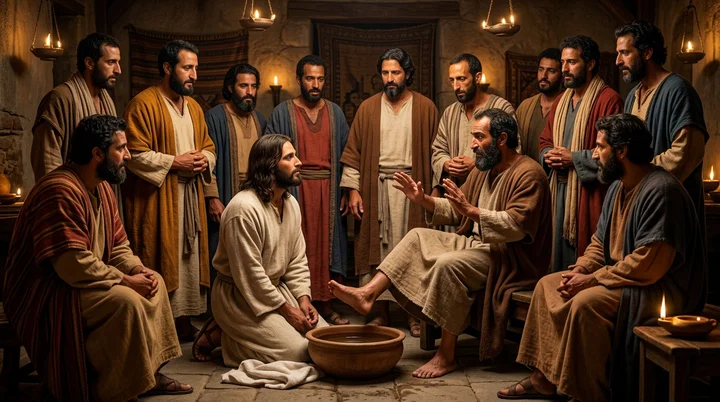
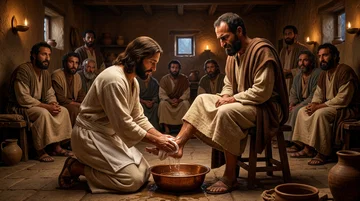
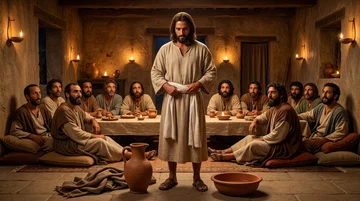
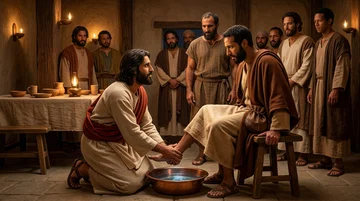
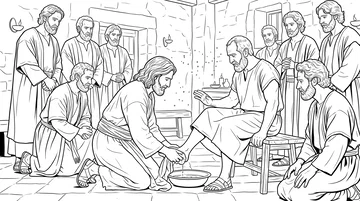
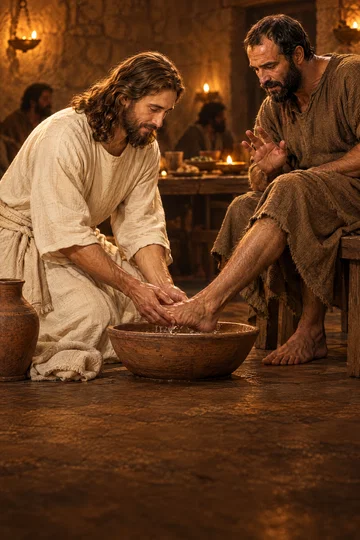
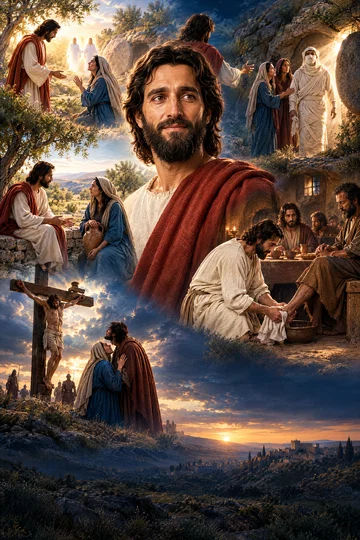
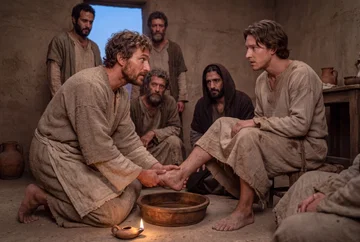
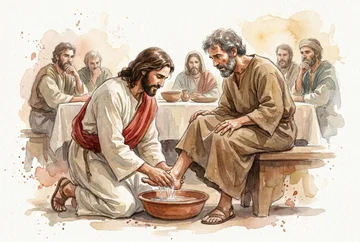
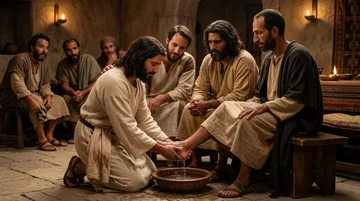
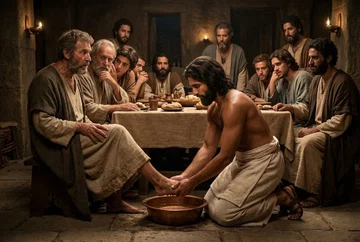
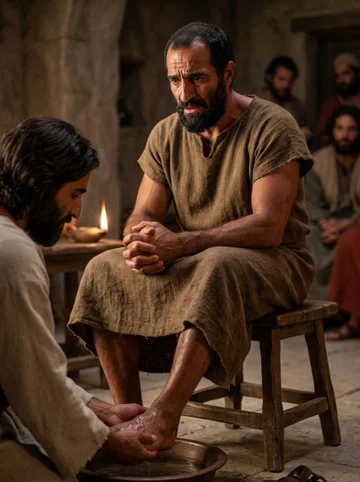
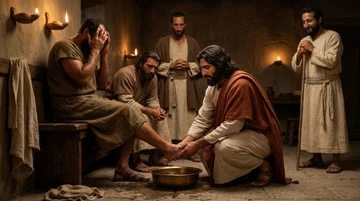
After that he poureth water into a bason, and began to wash the disciples’ feet, and to wipe them with the towel wherewith he was girded.
Translations
After that he pours water into a basin, and began to wash the disciples’ feet, and to wipe them with the towel with which he was girded.
After that he poureth water into a bason, and began to wash the disciples’ feet, and to wipe them with the towel wherewith he was girded.
After that, he poureth water into a bason, and began to wash the disciples’ feet, and to wipe them with the towel wherewith he was girded.
After that, he poured water into a basin, and began to wash the disciples feet, and to wipe them with the towel with which he was girded.
Then he poureth water into the bason, and began to wash the disciples’ feet, and to wipe them with the towel wherewith he was girded.
Then he poureth water into the basin, and began to wash the disciples’ feet, and to wipe them with the towel wherewith he was girded.
afterward he putteth water into the basin, and began to wash the feet of his disciples, and to wipe with the towel with which he was being girded.
then he pours water into the washhand basin, and began to wash the feet of the disciples, and to wipe them with the linen towel with which he was girded.
Next, he poureth water into the wash-basin, and began to be washing the feet of the disciples, and to be wiping them with the linen cloth wherewith he was girded.
Berean Standard Bible, Majority Standard Bible
After that, He poured water into a basin and began to wash the disciples’ feet and dry them with the towel that was around Him.
Then he poured water into the basin, and began to wash the disciples’ feet and to wipe them with the towel that was wrapped around him.
Then he put water into a basin and was washing the feet of the disciples and drying them with the cloth which was round him.
After that, hee powred water into a basen, and began to wash the disciples feete, and to wipe them with the towell, wherewith he was girded.
Douay-Rheims (Challoner revision)
After that, he putteth water into a basin, and began to wash the feet of the disciples, and to wipe them with the towel wherewith he was girded.
Pictures

Cross-references 20 of 32
- John 13:14-15
If I then, your Lord and Master, have washed your feet; ye also ought to wash one another’s feet.
Jesus commands the disciples to wash one another’s feet and follow his example.
- Philippians 2:7
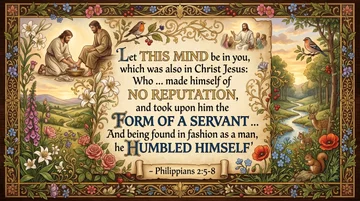
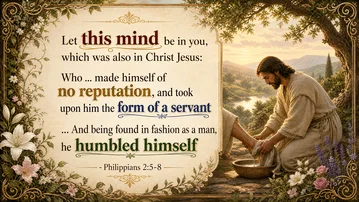
But made himself of no reputation, and took upon him the form of a servant, and was made in the likeness of men:
Christ takes the form of a servant and humbly washes his disciples’ feet.
- Luke 22:24-27
And there was also a strife among them, which of them should be accounted the greatest.
Jesus answers the disciples’ dispute over greatness by showing that the greatest serves.
- John 13:17
If ye know these things, happy are ye if ye do them.
Jesus promises blessing to those who follow his example and do what he taught.
- John 13:10-11
Jesus saith to him, He that is washed needeth not save to wash his feet, but is clean every whit: and ye are clean, but not all.
Jesus washed Judas’s feet, knowing he would betray him.
- 1 Timothy 5:10
Well reported of for good works; if she have brought up children, if she have lodged strangers, if she have washed the saints’ feet, if she have relieved the afflicted, if she have diligently followed every good work.
Lists washing the saints’ feet among a widow’s good works.
- Genesis 18:4
Let a little water, I pray you, be fetched, and wash your feet, and rest yourselves under the tree:
Water is provided for guests to wash their own feet.
- Genesis 19:2
And he said, Behold now, my lords, turn in, I pray you, into your servant’s house, and tarry all night, and wash your feet, and ye shall rise up early, and go on your ways. And they said, Nay; but we will abide in the street all night.
Lot offers his guests water to wash their feet.
- Genesis 43:24
And the man brought the men into Joseph’s house, and gave them water, and they washed their feet; and he gave their asses provender.
Joseph’s brothers are given water to wash their feet, showing ordinary hospitality.
- Matthew 20:28
Even as the Son of man came not to be ministered unto, but to minister, and to give his life a ransom for many.
Jesus came to serve rather than be served.
- John 13:15
For I have given you an example, that ye should do as I have done to you.
Jesus presents his footwashing as an example for the disciples to follow.
- Luke 7:38
And stood at his feet behind him weeping, and began to wash his feet with tears, and did wipe them with the hairs of her head, and kissed his feet, and anointed them with the ointment.
The woman washes Jesus’ feet with her tears and wipes them with her hair.
- John 13:1
Now before the feast of the passover, when Jesus knew that his hour was come that he should depart out of this world unto the Father, having loved his own which were in the world, he loved them unto the end.
Jesus’ love for his disciples frames the foot washing before his departure.
- Judges 19:21
So he brought him into his house, and gave provender unto the asses: and they washed their feet, and did eat and drink.
The host provides water for guests to wash their feet.
- Luke 22:27
For whether is greater, he that sitteth at meat, or he that serveth? is not he that sitteth at meat? but I am among you as he that serveth.
Jesus describes himself as one who serves, explaining the foot washing.
- Philippians 2:3
Let nothing be done through strife or vainglory; but in lowliness of mind let each esteem other better than themselves.
Foot washing illustrates humility in regarding others as better than oneself.
- John 13:30
He then having received the sop went immediately out: and it was night.
Judas leaves the supper into the night after Jesus washes the disciples’ feet.
- John 13:12
So after he had washed their feet, and had taken his garments, and was set down again, he said unto them, Know ye what I have done to you?
Jesus sits down after washing the disciples’ feet and explains the act.
- John 13:10
Jesus saith to him, He that is washed needeth not save to wash his feet, but is clean every whit: and ye are clean, but not all.
Christ distinguishes being washed from needing further cleansing.
- John 13:16
Verily, verily, I say unto you, The servant is not greater than his lord; neither he that is sent greater than he that sent him.
Christ’s teaching that servants are not greater than their master follows the foot-washing.
Commentary part 1 of 2
Each commentary is drawn from primary sources: the writings of Ellen G. White and Adventist pioneers and periodicals. Each commentary is separate. Its own words are not a quotation; follow the references to read the source passages.
Ellen G. White
67 sources
On the night before His crucifixion at the last Passover supper, with contention over greatness leaving no disciple willing to do the servant's work, Jesus Himself rose, laid aside His outer garments, girded Himself with a towel, poured water into a basin and with His own hands washed and wiped the soiled feet of every disciple from Judas first to John last.Ms 19, 1897, par. 3–5Ms 35, 1897, par. 9–10Ms 106, 1903, par. 16–17DA 644.3–46MR 24.2–3 Though fully conscious of His divinity and equality with God with His hour to depart at hand, He took the servant's place in tender love unto the end, making a sacred religious service of what was mere hospitality and giving an unforgettable rebuke to pride.Ms 19, 1897, par. 3–5Ms 54, 1897, par. 11–12Ms 102, 1904, par. 1–3DA 650.2–3DA 644.5 He thereby made foot washing a continuing ordinance for His followers in every country through all time, to be observed with believers apart in humble order before the Lord's Supper as He commanded them to do as He had done.DA 650.2–3EW 95.2–96.1Ms 14, 1850, par. 4–6Ms 35, 1897, par. 11–12Ms 43, 1897, par. 24 Received in true humility the service cleanses the heart from sin and pride, drives out selfishness and strife, and joins believers in oneness with Christ and each other to prepare them for communion.Ms 19, 1897, par. 3–5Ms 14, 1895, par. 1–2Lt 131, 1900, par. 1–3DA 649.1DA 645.2–646.2 Even knowing Judas had sold Him for thirty pieces of silver He washed him tenderly without rebuke or exposure as a final appeal of love, teaching that none are to be excluded from the service as unworthy since men cannot read hearts.Ms 106, 1903, par. 16–17DA 720.2Ms 14, 1850, par. 4–620MR 149.2–4Ms 35, 1897, par. 11–12
Passover Night Setting
The washing belongs to the last week with the disciples, when He prepared them for His coming trial and separation from Him and for His suffering of betrayal and rejection.Lt 336, 1906, par. 5–9 It took place on His final evening with them in the upper chamber, where He spent the last evening before His death instructing them.Ms 54, 1897, par. 10Ms 113a, 1897, par. 15Ms 113, 1897, par. 17 Even as He faced the cross and knew they would soon have to withstand temptation without Him, His care for them remained foremost while He anticipated suffering and humiliation, and washing their feet expressed His love and humble service.Ms 54, 1897, par. 10
It was at the last Passover supper on the night before His crucifixion, in His last hours before offering Himself as a sacrifice for the world, as He ate with His disciples.ST Mar 25, 18806MR 24.2–3Ms 43, 1897, par. 24 The pitcher, bowl and towel were ready for footwashing at that supper scene.Ms 54, 1897, par. 7 In place of the national festival He then put an end to the sacrifices offered for four thousand years and instituted feet washing with the sacramental supper to be repeated by His followers through all time and in every country.Ms 43, 1897, par. 24
Guests reclined on couches around the table with their feet at the outer edge of the couches, so one passing around the outside of the circle could wash them.DA 653.1 He took His disciples away alone separate from the wicked, first washing their feet and then giving the bread and cup, so washing of saints' feet and communion belong together in that order in private with believers only, separate entirely from unbelievers.Ms 14, 1850, par. 4–6 Doing them among unbelievers brings reproach on the cause, and shepherds must move understandingly in this, while a Judas may at times be present until God makes him manifest and purges him out.Ms 14, 1850, par. 4–612MR 247.1–2
The disciples came to the supper selfish, unprepared, and with tempers heated by contention over who should be greatest, disputing for the highest place.Ms 102, 1904, par. 1–36MR 24.2–3Ms 43, 1897, par. 24 Wounded by pride and ambition, each refused to take the servant's place and perform the customary service, which contention and selfishness kept them from doing because they despised it as servants' work fit only to be looked down upon.DA 644.2Ms 54, 1897, par. 7Ms 19, 1897, par. 54–55 It was under Satan's determined effort to arouse strife, which filled Christ with sorrow as He heard their whisperings and saw their flushed faces.6MR 24.2–3 He let the matter linger to give their hearts a chance to change before He rose without a word to do the work Himself.Ms 19, 1897, par. 54–55
Servant's Lowly Action
Without a word of argument He rose from supper, laid aside His outer garments, and girded Himself with a towel like a servant.Ms 19, 1897, par. 3–5Ms 35, 1897, par. 9–10DA 644.3–46MR 24.2–3Ms 19, 1897, par. 54–55 He poured water into a basin, and with His own precious hands bathed their soiled feet and wiped them with the towel wherewith He was girded, stooping in tender service.Ms 19, 1897, par. 3–5Ms 35, 1897, par. 9–10DA 644.3–4ST May 23, 1878Ms 19, 1897, par. 56–57 His silent act took the servant's place they had each refused, doing the lowly work Himself as the greatest rebuke pity and enduring love could give.Ms 54, 1897, par. 11–12DA 644.26MR 24.2–3Ms 19, 1897, par. 54–55
He washed every disciple, beginning with Judas as the first washed and ending with John last.Ms 106, 1903, par. 16–1720MR 149.2–4Ms 19, 1897, par. 56–57DA 645.2–646.2 The act was sacred and more than ordinary hospitality for dusty guests' feet; He made it a consecrated religious service.Ms 19, 1897, par. 3–5DA 650.2–3Ms 8, 1897, par. 10 It was not mere cleaning of travel-soiled feet but a religious service that tests and proves loyalty.DA 650.2–3Ms 8, 1897, par. 10
The act astonished and shamed them, opened their eyes to their conduct in a new light, and revealed the pride in their hearts.Ms 54, 1897, par. 11–12DA 644.3–4DA 644.2Ms 50, 1890, par. 12–13Ms 19, 1897, par. 54–55 This came despite Peter's protest that He should never wash his feet.Ms 50, 1890, par. 12–13DA 645.2–646.2
Humility Love and Greatness
Though fully conscious of His divinity and authority and equality with God, He took the form of a servant and washed and dried the disciples' feet in tender, undiminished love unto the end.Ms 54, 1897, par. 11–12Ms 102, 1904, par. 1–3DA 644.5 He did this while His soul was pressed under a severe load none could share and His hour to depart out of this world unto the Father was just before Him, with enduring divine love that did not change even as He responded without argument to their selfishness and contention over who should be greatest.Ms 102, 1904, par. 1–3Ms 19, 1897, par. 54–55 He let the matter linger to give their hearts a chance to change, then rose and girded Himself with a towel, and the act astonished them as the greatest rebuke pity and enduring love could give.Ms 19, 1897, par. 54–55
His humble service exposed their spirit and opened their eyes to their conduct in a new light, filling them with shame and humiliation and mortification too deep for speech.Ms 54, 1897, par. 11–12DA 644.3–46MR 24.2–3 Hearing their whisperings and seeing their flushed faces, He gave them without a word a lesson they would remember as long as life lasted.6MR 24.2–3 The memory of the scene would scourge them after His death as sufficient punishment, while their childish jealousies and passions were hurting their own souls.Ms 19, 1897, par. 54–55
The washing teaches humility rather than striving for a higher position, with no exaltation of one above another and no considering self superior to the humblest believer.Ms 19, 1897, par. 3–5Lt 117, 1897, par. 8–104T 225.3–4 Its motive is to work through remembrance of what He did a state of feeling where such exaltation finds no place, bringing brother to an understanding of his brother's feelings.Ms 19, 1897, par. 3–5 Followers are to serve one another rather than contend for honor or position, counting others better than themselves.ST May 23, 1878 Humility is not something to claim or merely talk about but an active principle rooted in awareness of God's great love and shown in how one acts.Lt 210, 1899, par. 3–5
Loving service and true humility, not status or self-importance, constitute greatness.DA 644.2 Though infinitely exalted and equal with God, His stooping to the humblest service did not lessen His dignity but gave the service grace and significance.DA 649.3–650.1 The act was also His exaltation, showing how to obey God's law of service in unselfish ministry, and teaching that those in the highest positions should be humble and speak simply.Lt 210, 1899, par. 3–5DA 649.3–650.1
His example is to be studied carefully and prayerfully, leading to humble repentance, contrition, and complete dependence on God through Jesus Christ.Lt 117, 1897, par. 8–10 Taking part in foot washing shows willingness to serve humbly and symbolizes the condition of mind and heart.Lt 210, 1899, par. 3–5 Near the end of His earthly ministry He gave this lasting lesson in humility and self-giving love to those who called Him Lord and Master, and ministers can learn from it by reflecting on His closing scenes.GW92 245.3–246.2
Continuing Church Ordinance
What He did with basin and towel was not mere hospitality but a consecrated religious ordinance given for His followers to keep in remembrance of His humility and service.DA 650.2–3 He commanded them to do as He had done, and His example is to be followed as exactly as possible.EW 95.2–96.1 It was a simple ordinance, the last He established, instituted in connection with the last supper to be repeated by His followers through all time and in every country.Ms 43, 1897, par. 24Ms 19, 1897, par. 18–19
It remains a continuing ordinance in which God is sacredly near on every occasion it is kept.Ms 35, 1897, par. 9–10 Christ Himself is present on each occasion, making it a special season for the conscience.RH Nov 4, 1902Ms 19, 1897, par. 18–19 It speaks less to intellectual capacity than to the heart and to the moral and spiritual nature, reviving memory, convicting of sin, and receiving penitential offerings.Ms 19, 1897, par. 18–19
It belongs with the sacramental supper, and is kept before the Lord's Supper in that order.DA 650.2–3Ms 35, 1897, par. 11–12Ms 8, 1897, par. 10 The memorial of His humiliation comes first to prepare the heart for communion, clearing away pride, discord, and rivalry that prevent fellowship with Christ and readiness to receive communion.DA 650.2–3 The washing precedes partaking of the emblems of His death, testing and proving loyalty, and the church practices foot washing together with breaking bread, even more frequently.EW 95.2–96.1Ms 8, 1897, par. 107MR 218.1 Foot washing is observed as one of the Lord's ordinances alongside the Lord's Supper.Lt 164, 1897, par. 4–5
In place of the national festival observed by the Jewish people He instituted this memorial service in feet washing and the sacramental supper.Ms 43, 1897, par. 24 It was given to replace the cares and burdens of ancient Jewish rites and ceremonies, which lost all virtue because type was meeting antitype in Himself.Ms 19, 1897, par. 18–19 He is the authority and foundation of all ordinances pointing to Him as the only efficacious offering for the sins of the world, and His act as He ate the Passover put an end to the sacrifices that had been offered for four thousand years.Ms 43, 1897, par. 24Ms 19, 1897, par. 18–19 To disentangle the disciples from rites they had counted essential but which the Gospel made of no force, He set this in their place, for to continue them would insult Jehovah.Ms 19, 1897, par. 18–19
It is to be done judiciously and understandingly, and not made a tedious ceremony.EW 95.2–96.1 Kept rightly it is a solemn, profitable, memorable occasion, humble and deeply gratifying, doing a good work upon hearts after humble confessions.Ms 6, 1859, par. 347MR 218.1Lt 73, 1888, par. 8 It may bring weeping and rejoicing together as participants humble themselves before God.Ms 6, 1859, par. 347MR 218.1 Where people are uninformed about the Lord's example and teachings on this point and where prejudice exists from former trusted teachers, it is to be introduced into new places with carefulness and wisdom in a proper time and manner.EW 95.2–96.1
In gospel order it is observed with separation of the sexes.EW 95.2–96.15MR 192.1–3 Brethren wash the feet of brethren, and sisters wash the feet of sisters and of brethren, but there is no order for brethren to wash the feet of sisters.EW 95.2–96.1 Men wash the feet of men and women wash the feet of women, and men and women washing each other's feet together is not the right thing to do.7MR 218.15MR 192.1–3
It is held with the disciples gathered alone, apart from unbelievers.Ms 14, 1850, par. 4–612MR 247.1–2 Jesus took His disciples away alone separate from the wicked, first washing their feet and then giving the broken bread and the juice of the vine, so washing and communion belong together in private with believers only.Ms 14, 1850, par. 4–6 Doing them among unbelievers brings reproach on God's cause, and shepherds must move understandingly in this.Ms 14, 1850, par. 4–6
Cleansing Unity and Preparation
The basin and towel are a picture of a higher cleansing, the washing of the heart from sin, and to refuse the outward act is to refuse that inward cleansing and to reject Christ Himself, while true humility receives His purifying work with gratitude and is led into earnest service, for water on the feet alone does not purify without yielding to Him.DA 649.1DA 645.2–646.2
Following His example in this ordinance is a solemn act by which the soul is softened and subdued, selfishness is driven out, and the contrite heart is filled with the Holy Spirit, love, grace and peace.Ms 14, 1895, par. 1–2Ms 8, 1897, par. 10
The ceremony tests and proves loyalty, revives memory, convicts of sin and receives penitential offerings, speaking less to intellect than to heart and to the moral and spiritual nature, and eating His body and drinking His blood in this connection means not only the sacramental service but daily partaking of the bread of life by receiving His word and doing His will to satisfy soul hunger.Ms 14, 1895, par. 1–2Ms 8, 1897, par. 10Ms 19, 1897, par. 18–19
Its celebration calls for searching the heart and confessing cherished sins, with severe self-censure, humiliation and humility putting away selfishness, evil speaking, evil thinking, self-exaltation, pride, hatred and self-sufficiency.RH Nov 4, 1902ST Mar 25, 1880Ms 75, 1898, par. 30–32
It calls for cleansing by the Holy Spirit from the defilement of unkind talk and passing judgment, and from lips that hurt souls and spoil God's work.Lt 264, 1902, par. 11Ms 75, 1898, par. 30–32
It is designed to produce mutual confessions that increase forbearance, forgiveness of one another's errors, and true love.RH Nov 4, 1902ST Mar 25, 1880
It clears away misunderstandings, esteeming self above brother, seeking the highest place, evil surmisings and bitterness of spirit over trifles, working through remembrance of what Christ did a state of feeling where no exaltation of one above another finds place.Ms 19, 1897, par. 3–5Ms 35, 1897, par. 11–12Ms 19, 1897, par. 18–19
It brings man down from self-exaltation to humility of spirit that will lead him to wash his brother's feet, and brings brother to an understanding of his brother's feelings.Ms 19, 1897, par. 3–5Ms 35, 1897, par. 11–12
It teaches that brother must not exalt himself above brother and shows the dangers of disunion and strife for the health and holy activity of the soul, rebuking pride, self-sufficiency, contention and strife among those who should be one.Ms 19, 1897, par. 18–19Ms 75, 1898, par. 30–32
It joins believers' hearts in oneness with Christ and with each other, and living out this instruction together with Christ's prayer for unity and love leads to unity.Lt 131, 1900, par. 1–3Ms 75, 1898, par. 30–32
It keeps God's people humble and separate from the world and keeps them from backsliding.EW 95.2–96.1
Pride, discord and rivalry shut out fellowship with Christ and readiness to receive communion, so the memorial of His humiliation comes first to prepare the heart for the Lord's Supper.DA 650.2–3ST Mar 25, 1880
The humble duty reveals the true feelings of the heart toward God and one another, discovering pride, selfishness and hatred in the honestly erring, and so prepares hearts to commemorate His sufferings and death flowing from His love that led Him to die for His disciples and from His charge to love one another as He loved them.DA 650.2–3ST Mar 25, 1880
Judas Washed and Lost
Jesus washed Judas's feet tenderly along with the others though He knew Judas would betray Him, even after Judas had pledged, twice agreed, and sold Him for thirty pieces of silver, yet He gave him a place at the table and washed him first.Ms 106, 1903, par. 16–17DA 720.2Ms 19, 1897, par. 56–57Ms 120, 1897, par. 9Ms 8, 1897, par. 14 He washed every disciple beginning with Judas as the first washed, bathing their soiled feet with His own hands and wiping them with the towel.20MR 149.2–4Ms 19, 1897, par. 56–57 Unseen heavenly witnesses and angels observed the act.20MR 149.2–4Ms 47, 1897, par. 18–20DA 656.2–4
The washing was His final appeal of love and final effort to reach Judas while he still had opportunity to repent, offering conviction, cleansing from sin, and a chance to confess, cast out Satan, and turn back from disloyalty.Ms 106, 1903, par. 16–17DA 655.4DA 720.2Ms 106, 1903, par. 54–55Ms 64, 1897, par. 9 It showed His longsuffering with one increasingly out of harmony with truth, bearing with him and not abandoning those in error but seeking to keep them from temptation and further opposition.DA 655.4Ms 106, 1903, par. 54–55Ms 64, 1897, par. 9 It offered the sinner opportunity to receive Him, repent, and be cleansed.DA 655.4Ms 106, 1903, par. 54–55
Though alone knowing Judas's secret purpose, He gave him no word of rebuke and did not expose him but showed him goodness, humility, and love to move him to shame and conviction.20MR 149.2–4Ms 19, 1897, par. 56–57Ms 47, 1897, par. 18–20 This treatment of Judas at the washing was a sample of His constant treatment of all the disciples through all His association with them.Ms 19, 1897, par. 56–57 For the disciples except Judas the washing brought shame, mortification, conscience-stricken brokenness and subduing, drawing their hearts out in deep earnest faith which works by love and purifies the soul, and helped bring all but one of the twelve to repentance.DA 655.4Ms 19, 1897, par. 56–57
Judas briefly felt an impulse to confess but resisted, braced his soul against light, and hardened his heart.Ms 106, 1903, par. 16–17Ms 19, 1897, par. 56–57 He resented Jesus for taking a servant's role, wrongly took His humility as proof He could not be Israel's king, and abandoned his hopes of worldly honor in a temporal kingdom.Ms 106, 1903, par. 16–17COS 110.7–9Ms 54, 1897, par. 13 At that scene he resolved to disown and betray Him, though the betrayal arrangements were not yet complete.Ms 54, 1897, par. 13 Washing his feet did not make him love Jesus or turn him from his plan.COS 110.7–9
The feet Jesus had washed went out to do the betrayer's work, after which Satan controlled his heart and mind, and Judas instead used his place beside Jesus at the supper to disguise his plans.Ms 120, 1897, par. 9COS 110.7–9Ms 64, 1897, par. 9 His example means no one is to be excluded, deferred, or refused from the service on suspicion of unworthiness, and no person is to decide who may attend or refuse it because another present is judged unworthy.Ms 14, 1850, par. 4–620MR 149.2–4Ms 35, 1897, par. 11–12Ms 47, 1897, par. 18–20DA 656.2–4 Human beings cannot read hearts or reliably distinguish the sincere from the insincere, the tares from the wheat, or tell who is worthy, and no one is to be singled out for special favor, service, or honor.20MR 149.2–4Ms 35, 1897, par. 11–12Ms 47, 1897, par. 18–20DA 656.2–4Ms 8, 1897, par. 14
All are His purchased possession for whom He died as truly for the poor and uneducated as for the learned and greatest, and He longs to cleanse every heart from sin.DA 656.2–4Ms 8, 1897, par. 14 A Judas may at times be present eating and drinking to his own damnation until God manifests and purges him out.Ms 14, 1850, par. 4–6 His treatment of Judas and the other erring disciples is a model of patience toward those at fault, teaching followers to bear patiently with perverse human nature and false brethren and not carelessly separate from one in error and leave him exposed to temptation.MH 493.3–4DA 655.4Ms 106, 1903, par. 54–55ST Feb 9, 1915 It also warns against betraying the Lord as Judas did.Lt 117, 1897, par. 8–10
Divine Condescension and Ministry
He who poured water into the basin and girded Himself with the towel was one with God and equal with God, who thought it not robbery to be equal with God, the highest of all, even the highest of all angels.RH Jun 12, 190012MR 393.1–212MR 399.2–400.1Ms 111, 1897, par. 1–4 He concealed His divinity in a garb of humanity, taking not even the nature of angels but a prepared body of flesh, and being found in fashion as a man He girded Himself and washed the disciples' feet.RH Jun 12, 190012MR 393.1–212MR 399.2–400.1 In that lowly act He fully identified His interest with humanity to represent man and to give a lesson in humility and true service as an example to all the human family.RH Jun 12, 190012MR 393.1–2Ms 111, 1897, par. 1–4
As the pure spotless Lamb of God presenting Himself as a sin-offering and the great sacrifice for humanity, He performed this self-humbling ministry of love at the Passover with His disciples.Ms 43, 1897, par. 244T 374.1 By stooping to the servant's office He qualified Himself to be not only the representative of the race in the heavenly courts but their Advocate and a High Priest who can be touched with the feelings of human infirmities.12MR 393.1–212MR 399.2–400.1
Near the end of His earthly ministry He washed the feet of those who called Him Lord and Master, and thereby gave ministers especially a lasting lesson in humility and self-giving love.GW92 245.3–246.24T 373.24T 374.1 Ministers learn it by reflecting on His closing scenes and spirit, humbling themselves to serve others in lowly service rather than contending for honor or for the highest place in the promised kingdom.GW92 245.3–246.24T 373.2Lt 48, 1893, par. 35–37 His lowly service stands as the example of humility they are to follow.4T 374.1Lt 48, 1893, par. 35–37
The act belongs to John 13-17, which plainly outlines God's will for those who minister in word and doctrine and for His people to live out in practical life.Ms 139, 1902, par. 121MR 346.1–3Lt 131, 1900, par. 1–3 Those acquainted with present truth need conversion to understand the genuine missionary work taught there.Ms 139, 1902, par. 1 God means just what He says in every verse of these chapters, and ministers have the privilege and duty to believe every verse and live it out before their fellow ministers.Ms 139, 1902, par. 1 The instruction is connected with Christ's prayer for unity and love, and living it leads to unity with one another and with Christ.21MR 346.1–3Lt 131, 1900, par. 1–3
Sources