Luke 22:25
And he said unto them, The kings of the Gentiles exercise lordship over them; and they that exercise authority upon them are called benefactors.
Translations
And he said to them, The kings of the Gentiles exercise lordship over them; and they that exercise authority on them are called benefactors.
King James Version, KJV Cambridge Paragraph Bible
And he said unto them, The kings of the Gentiles exercise lordship over them; and they that exercise authority upon them are called benefactors.
And he said to them, The kings of the Gentiles exercise lordship over them; and they that exercise authority upon them, are called benefactors.
Revised Version, American Standard Version
And he said unto them, The kings of the Gentiles have lordship over them; and they that have authority over them are called Benefactors.
And he said to them, 'The kings of the nations do exercise lordship over them, and those exercising authority upon them are called benefactors;
And he said to them, The kings of the nations rule over them, and they that exercise authority over them are called benefactors.
And, he, said unto them—The kings of the nations, lord it over them, and, they who wield authority over them, benefactors, are called.
Berean Standard Bible, Majority Standard Bible
So Jesus declared, “ The kings of the Gentiles lord it over them, and those in authority over them call themselves benefactors.
He said to them, “ The kings of the nations lord it over them, and those who have authority over them are called ‘ benefactors.’
And he said, The kings of the Gentiles are lords over them, and those who have authority are given names of honour.
But hee saide vnto them, The Kings of the Gentiles reigne ouer them, and they that beare rule ouer them, are called bountifull.
Douay-Rheims (Challoner revision)
And he said to them: The kings of the Gentiles lord it over them; and they that have power over them, are called beneficent.
Pictures
Cross-references
- Matthew 20:25-28
But Jesus called them unto him, and said, Ye know that the princes of the Gentiles exercise dominion over them, and they that are great exercise authority upon them.
Jesus contrasts Gentile rulers’ authority with greatness through service, exemplified by his self-giving.
- John 13:14-15
If I then, your Lord and Master, have washed your feet; ye also ought to wash one another’s feet.
Jesus, though Lord and Master, washes his disciples’ feet as an example of humble service.
- Mark 10:42-45
But Jesus called them to him, and saith unto them, Ye know that they which are accounted to rule over the Gentiles exercise lordship over them; and their great ones exercise authority upon them.
The parallel teaching contrasts rulers’ authority with Christ’s service and self-giving.
- Philippians 2:3
Let nothing be done through strife or vainglory; but in lowliness of mind let each esteem other better than themselves.
Urges believers to count others better than themselves.
- Matthew 23:8-10
But be not ye called Rabbi: for one is your Master, even Christ; and all ye are brethren.
Both texts reject exalted titles and distinguish Christian leadership from worldly authority.
- Luke 9:46-48
Then there arose a reasoning among them, which of them should be greatest.
Jesus responds to the disciples’ dispute over who is greatest.
- John 13:16
Verily, verily, I say unto you, The servant is not greater than his lord; neither he that is sent greater than he that sent him.
Christ teaches humility and service in connection with foot washing.
- Philippians 2:7
But made himself of no reputation, and took upon him the form of a servant, and was made in the likeness of men:
Christ’s servant form and self-humbling contrast with rulers who exercise lordship.
- Mark 10:43-45
But so shall it not be among you: but whosoever will be great among you, shall be your minister:
Jesus contrasts worldly authority with greatness through service and giving his life as a ransom.
- Matthew 20:28
Even as the Son of man came not to be ministered unto, but to minister, and to give his life a ransom for many.
defines greatness as serving not exercising lordship
- Mark 9:35
And he sat down, and called the twelve, and saith unto them, If any man desire to be first, the same shall be last of all, and servant of all.
Jesus contrasts worldly authority with greatness through serving others.
- Romans 13:1-7
Let every soul be subject unto the higher powers. For there is no power but of God: the powers that be are ordained of God.
Both texts address the authority exercised by rulers and how people should relate to it.
- Matthew 23:12
And whosoever shall exalt himself shall be abased; and he that shall humble himself shall be exalted.
Both condemn self-exaltation by leaders.
- Mark 14:12-31
And the first day of unleavened bread, when they killed the passover, his disciples said unto him, Where wilt thou that we go and prepare that thou mayest eat the passover?
Listed as a parallel account of the same events.
- Matthew 18:1-4
At the same time came the disciples unto Jesus, saying, Who is the greatest in the kingdom of heaven?
Christ teaches that greatness in his kingdom requires humility rather than status.
- John 18:36
Jesus answered, My kingdom is not of this world: if my kingdom were of this world, then would my servants fight, that I should not be delivered to the Jews: but now is my kingdom not from hence.
Christ’s kingdom is not established by worldly force.
Commentary
Each commentary is drawn from primary sources: the writings of Ellen G. White and Adventist pioneers and periodicals. Each commentary is separate. Its own words are not a quotation; follow the references to read the source passages.
Ellen G. White
18 sources
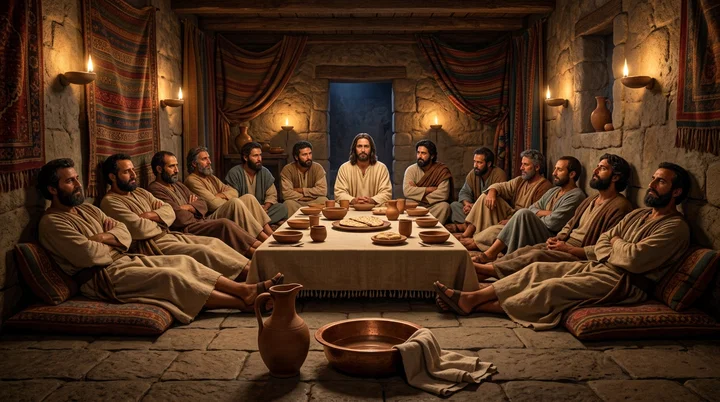
The verse sets forth the order of the world's kingdoms, where kings exercise lordship and those in authority are called benefactors, making position a means of self-aggrandizement in which the people exist for the benefit of the rulers.Lt 195, 1903, par. 3–7DA 550.1Ms 183, 1898, par. 49–50 It was spoken on the last evening with the disciples after the last supper, in answer to their heated strife over who should be accounted greatest.Lt 195, 1903, par. 3–7Ms 115, 1902, par. 1–4COS 107.1–3 Against that Gentile pattern it establishes a different order for His followers, that they shall not be so, but the greatest must be as the younger and the chief as he that serves, even as He was among them as one that serves.Lt 195, 1903, par. 3–7Ms 115, 1902, par. 1–4 He enforced it without a word by laying aside His garment and washing their feet, to rebuke selfish contention and give the rule of greatness as humble, loving, unselfish ministry.Ms 115, 1902, par. 1–46MR 24.2–33SP 84.2–4 Therefore among His followers there is to be no contention for supremacy and no exercise of lordship of man over man, but love for one another as He loved them, which is preparation for heaven where there is no struggling to be first.Lt 50, 1908, par. 27–29Lt 290, 1907, par. 521MR 304.4Lt 55, 1886, par. 23
Setting and Gentile Rule
The words were spoken on the last evening spent with the disciples, after the last Passover supper held with the Lord, in the last hours before death when He offered Himself as a sacrifice for the world.Lt 195, 1903, par. 3–7Ms 115, 1902, par. 1–4COS 107.1–36MR 24.2–3 They were spoken in answer to a heated strife over which of them should be accounted the greatest, with jealous and angry feelings toward one another.Lt 195, 1903, par. 3–7Ms 115, 1902, par. 1–4COS 107.1–3 That contention was stirred by Satan with determined effort to arouse rivalry, and it marred that last evening and left them not ready to listen or to receive the blessing He wanted to give.Ms 115, 1902, par. 1–4COS 107.1–36MR 24.2–3Ms 47, 1897, par. 18–20
His care was for the struggle they would face when He would walk no more with them, and He had much to tell them to stay their hearts, yet even with the shadow of the cross before Him they still thought He was soon to be made king and each wanted the highest place.COS 107.1–35RED 5.2–3 The strife was rooted in clinging to the idea of a temporal kingdom in Jerusalem despite repeated teaching to the contrary.5RED 5.2–33SP 84.2–4 That expectation had been revived by the entry into the city and the way He received its demonstrations, and the prospect of honor renewed their rivalry for rank.5RED 5.2–33SP 84.2–4
The verse describes the Gentile way of ruling and the order of the kingdoms of the world, where kings exercise lordship and those exercising authority are called benefactors.Lt 195, 1903, par. 3–7DA 550.1Ms 183, 1898, par. 49–50 There position means self-aggrandizement and the people are supposed to exist for the benefit of the ruling classes.DA 550.1 In that worldly order influence, wealth, and education become means of gaining control of the masses for the leaders’ use, with the higher classes to think, decide, enjoy, and rule while the lower are to obey and serve.DA 550.1 Even religion becomes a matter of authority where the people are expected to believe and practice as superiors direct and the right of man as man to think and act for himself is wholly unrecognized.DA 550.1
The disciples’ desire to be first and to have supremacy repeated that Gentile pattern of struggling for distinction, control, and praised status.Ms 183, 1898, par. 49–50Lt 55, 1886, par. 23 Their error was seeking distinction and control instead of walking humbly with God.Ms 183, 1898, par. 49–50 That spirit of envy and jealousy shows walking by power over others instead of walking humbly with God and proves Christ is not in the heart.Ms 183, 1898, par. 49–50Lt 55, 1886, par. 23
Servant Greatness and Application
Against that Gentile pattern a different order is commanded for followers: it shall not be so among them, but he that is greatest must be as the younger and he that is chief as he that serves, as Christ Himself was among them as he that serves.Lt 195, 1903, par. 3–7Ms 115, 1902, par. 1–4 Without a word He laid aside His outer garment, took the place of a servant, and washed their feet as a last token of love to rebuke selfishness and heated contention.Ms 115, 1902, par. 1–46MR 24.2–33SP 84.2–4 He washed the feet of all the disciples, including Judas, to open their eyes and fill them with shame and humiliation, an experience they would remember throughout their lives.Ms 115, 1902, par. 1–46MR 24.2–3Ms 47, 1897, par. 18–20 The act gives the example and the rule of greatness: humble, loving, unselfish ministry rather than contending for place, honor, status, or power.Ms 115, 1902, par. 1–45RED 5.2–3Ms 43, 1897, par. 243SP 84.2–4 It means counting others better than themselves, feeling obligation to one another, and washing one another's feet, for the servant is not greater than his lord and blessing comes only from doing as He did.Ms 115, 1902, par. 1–43SP 84.2–4Ms 54, 1897, par. 7
The verse warns those who are full of assurance and self-confidence that their course is right, teaching by presumptuous failure as in Peter's fall that strength lies not in what poor finite beings suppose they are able to do but in what Christ will do for them.Lt 195, 1903, par. 3–7 It calls for strong persevering faith and entire trust in Christ as Leader rather than fixing the eyes on what those who know the truth attempt to do.Lt 195, 1903, par. 3–7 Those who continue with Him in His temptations are appointed a kingdom as the Father appointed to Him, to eat and drink at His table and sit on thrones judging the twelve tribes of Israel.Ms 115, 1902, par. 1–4
Among followers there must be no contention as to who shall be greatest and no exercise of lordship of man over man after the manner of the Gentiles.Lt 50, 1908, par. 27–29Lt 290, 1907, par. 521MR 304.4 No man is to interpose himself between the soul and the Redeemer, for bearing rule by finite men over fellow men is a method of working God will have nothing to do with.Lt 50, 1908, par. 27–29Lt 290, 1907, par. 5 A decided change is therefore required and the voice of command must no longer be heard.Lt 290, 1907, par. 5 Instead Jesus Himself is to be the instructor, and His words are to be taken directly from the Scriptures with gladness and faith.Lt 50, 1908, par. 27–29 Those bought with the price of His precious blood and ransomed for eternal life are to cling to the Mighty One, be true to Him, refuse to be discouraged by men, and be of good courage in Him.Lt 50, 1908, par. 27–29
Leaders standing in positions of responsibility and trust must not be lords nor think they can rule as kings, but must be men of humility, discretion, and wisdom working in the fear of God.Lt 290, 1907, par. 5Ms 165, 1902, par. 36–37 They must hate every vestige of selfishness and reject narrow-mindedness, never using position as liberty to speak impatiently or boastfully or to act in an overbearing manner by scolding, fretting, and acting like spoiled children.Ms 165, 1902, par. 36–37 Such conduct dishonors Christ, trails His uplifted standard in the dust, imperils the progress of the cause, and sets a misleading example before all within their influence.Ms 165, 1902, par. 36–37 Instead they are to give counsel that protects and strengthens the people and to set an example that may be safely followed, standing together in Christian fellowship rather than striving for supremacy.Ms 165, 1902, par. 36–3721MR 304.4
The same rule means the thought of seeking to become greatest and love of dignity and position must not once be named among workers.STMW7 51.1 The intelligent, God-fearing, truth-loving canvasser stands equal to the gospel minister, and neither may act from selfish motives or be unfaithful to missionary principles.STMW7 51.1 Canvassing is honored as most precious ministry that ministers themselves can do, gaining varied experience while doing the very work Paul did.STMW7 51.1 The field must be worked from a missionary standpoint by placing before the people the books that will give most light instead of selling only the cheapest and easiest books in order to earn more money for self.STMW7 51.1 Christian physicians likewise must not contend over who is greatest but recognize one another as brethren working together in the vineyard.Ms 25, 1892, par. 16–17 Followers must love the law of God and have the love of Jesus in the heart, loving one another as He loved them.Lt 55, 1886, par. 23 That love is preparation for a heaven of peace and rest where there is no struggling to be first or to have supremacy but all love their neighbor as themselves.Lt 55, 1886, par. 23
Sources
Pioneers and periodicals
43 sources
The kings of the nations rule by exercising lordship and dominion over their subjects, while those who dominate them are still honored with the name of generous helpers.ST Apr 28, 1909ST May 21, 1896ST Nov 30, 1904 It was spoken to the disciples at the Passover supper on the night of the betrayal, when strife arose among them over who should be counted greatest because they expected a temporal kingdom soon to appear in Jerusalem.ST Oct 29, 1894ST May 21, 1896ST Jun 11, 1896ST Jan 10, 1911ST Oct 5, 1882 Among his followers it shall not be so, but the greatest must become as the younger and the chief as one who serves, for Jesus himself was in their midst as a servant and made humble service honorable.ST Mar 23, 1888ST Oct 29, 1894ST Jun 26, 1901RH Aug 31, 1911ST Oct 5, 1882 Worldly government works by authority, dominion and force, which is tyranny after Satan's principles, while Christ's kingdom is founded on serving others and making them happy.ST Oct 14, 1913ST Feb 7, 1900 Therefore lordship has no place in his church, whether in exalting popes, priests, bishops and ranks over believers, in claiming primacy for Peter, or in using force and coercion to control faith and conduct.RH Jun 13, 1871RH Aug 4, 1910ST Nov 20, 1901ST Oct 29, 1894ST Mar 30, 1904
Words and Setting
Jesus spoke these words to his disciples on the evening of his betrayal, in the room where the Passover was celebrated, when a contention arose among them over which of them should be accounted the greatest.ST Oct 29, 1894ST May 21, 1896ST Jun 11, 1896 It was the Passover supper on the night they went to Gethsemane where he prayed in agony, in the spring of A.D. 31 when Tiberius Caesar ruled the Roman Empire and Herod was tetrarch of Galilee and Pontius Pilate governed Judea.ST May 28, 1896 That night came before the betrayal by Judas, Peter's denial, the trials before the Sanhedrin, Pilate and Herod, the release of Barabbas the robber, and the condemnation to Calvary.ST May 28, 1896
The dispute came before the meal and is connected with the washing of the feet near the beginning of the supper.ST Jul 30, 1885ST Nov 15, 1883 By that washing Jesus taught humility and service and answered their striving for precedence.ST Jul 30, 1885ST Nov 15, 1883ST Nov 15, 1883RH Feb 10, 1916 The striving was over place of honor and rank at the supper, as they expected rank in his kingdom to reflect their standing, and the contrast between his humble service and their dispute teaches that his followers are not to seek honor or exalt themselves but to follow his example of humble, loving service.ST Nov 15, 1883RH Feb 10, 1916
The disciples expected a temporal kingdom soon to be set up in Jerusalem.ST Jan 10, 1911ST Oct 5, 1882 That belief had been revived by his recent welcome, and they looked for Jesus to rule as a temporal king over a realm rivaling Solomon's, with each wanting the highest place in it.ST Feb 11, 1897ST Oct 5, 1882ST Jul 21, 1898 Their desire for high places showed they misunderstood the kind of kingdom and kingship he came to establish and did not yet fully understand his mission.ST Jul 21, 1898 Their desire for high positions resembled political ambitions for power in religious affairs.
The strife was over place of honor and rank in that expected kingdom, including James and John seeking the highest places.ST Nov 15, 1883RH Jun 4, 1914 It showed ambition, self-esteem and selfishness still controlling them, and that they had not grasped the principle he had demonstrated.RH Jan 27, 1916RH Jun 4, 1914 It also showed lack of readiness for the trial ahead.RH Jun 4, 1914 The lesson of humility was especially directed to the sons of Zebedee and was not yet heeded by Peter.ST Aug 8, 1906ST Dec 30, 1889
The saying means the kings of the Gentiles exercise lordship and dominion over them.ST Apr 28, 1909ST May 21, 1896ST Nov 30, 1904ST Nov 14, 1895ST Mar 25, 1903 Those exercising authority over them are called and honored as benefactors and generous helpers, despite dominating those under them.ST Apr 28, 1909ST May 21, 1896ST Nov 30, 1904ST Mar 25, 1903ST Apr 11, 1906
Kingdom of Humble Service
Among Christ's followers it shall not be as it is with the kings of the Gentiles who exercise lordship and are called benefactors, for he that is greatest must become as the younger and he that is chief as he that serves.ST Mar 23, 1888ST Oct 29, 1894ST Jun 26, 1901ST Nov 14, 1895ST Nov 20, 1901 The chief among God's children is the servant, and by this Christ forever settled the question of supremacy among His disciples.ST Oct 29, 1894ST Nov 20, 1901 This kind of lordly rule is forbidden among His disciples, and the lesson taught at the last supper is humility rather than striving for greatness.ST Aug 8, 1906ST Nov 14, 1895 This servant principle can govern the disciples only under Christ's leadership.ST Jun 26, 1901
Jesus Himself was in the midst of them as one who serves, though He was their Lord.ST Oct 29, 1894RH Aug 31, 1911ST Oct 5, 1882 By so serving and by giving His life He made humble service honorable and set the pattern for service rendered to God rather than for human status.RH Aug 31, 1911 Greatness is shown by serving, not by being served, and the one who would be greatest must take the lowest place and serve.RH Aug 31, 1911ST Oct 5, 1882 His followers are not to seek honor or exalt themselves, nor to seek power over one another or lord it over God's people, but to follow His example of humble, loving service learned even in the washing of their feet.ST Jan 15, 1885 Their former ideas of greatness were shaped by pride and were unlike Christ, who though Lord came to serve and give His life.ST Jan 15, 1885
Worldly government operates through authority, dominion and force, unlike the Christian way of serving rather than ruling for personal greatness.ST Feb 7, 1900 Such worldly tyranny reflects Satan's principles, whereas Christ's kingdom is not so governed but is founded on serving others and making them happy.ST Oct 14, 1913 In God's kingdom exaltation is found only in serving, for the greatest is Christ because He has performed the most and the lowest service.ST Oct 29, 1894 In love's kingdom the greatest does the most and best service.ST Mar 30, 1904
Those who now possess this world rule in this lordly manner, exercising lordship and authority while being called benefactors, in contrast to those to whom the earth is promised as a future inheritance.ST Mar 23, 1888 To those who continue with Christ in temptation and self-denial is appointed a kingdom as the Father appointed to Christ, where they will eat and drink at His table and sit on thrones judging the twelve tribes of Israel.ST Mar 23, 1888 The redeemed reign with Christ not by ruling over subjects tyrannically, but through joyful ministry.ST Oct 14, 1913 The contrast shows that the equality and love expressed in loving one's neighbor as oneself are practical in God's kingdom, not in human government.ST Mar 25, 1903 Earthly power and status are wrongly treated as measures of greatness, reversing the true principle that the greatest takes the place of the younger and the chief serves, and a life of unselfish service reveals God's character to the world.RH Oct 15, 1901
Church Order and Doctrine
There is to be no lordship in the church of Christ, because lordship is left for the world.ST Oct 29, 1894 The apostate church copied the fashion of the world and brought worldly methods into the church, but that is not according to Christ, for he came as a servant.ST Oct 29, 1894 The greatest in the kingdom of God is Christ, because he has performed the most and the lowest service, showing that exaltation is found only in serving.ST Oct 29, 1894
Church elders must not dominate the people.RH Jul 3, 1856 Their authority is exercised through service, loving care, teaching, and oversight, while the church shares in the government and carries out discipline according to the Bible.RH Jul 3, 1856 Christ forbade Peter and the other apostles to exercise lordship and power over believers in the manner of Gentile rulers.RH Jun 13, 1871 He did not appoint Peter as supreme ruler or vicar over the apostles and the church, for such authority would conflict with his instruction against this kind of rule.RH Jun 13, 1871 Ambition for a ruling primacy among the disciples is rejected, for unlike Gentile rulers who exercise lordship, his followers are to relate as brothers and serve one another under one Master.ST May 8, 1884 His teaching reproved the disciples' desire to be first and head over the others, opposing the self-seeking conduct of rulers and those who seek honor and calling the disciples to a different way of relating to one another.ST Apr 13, 1915
Christ forever settled the question of supremacy among his disciples: the kings of the Gentiles exercise lordship and those exercising authority are called benefactors, but his followers shall not be so, and he that is greatest among them must be as the younger, and he that is chief as he that serves.ST Nov 20, 1901 Lordly dominion has no place in the church, and the exaltation of the pope, before whom even an emperor must approach in abject humility, violates this command and brings abasement on whoever exalts himself.ST Nov 20, 1901 The same strife of the disciples about who should be greatest, with some wanting to rule and have others serve them, continues now in lord priests and bishops and archbishops and popes and in the orders and classes and castes in the church.ST Mar 30, 1904 If the instruction had been followed there would never have been such hierarchy, and the once-a-year washing of the feet of twelve beggars by the pope is only a counterfeit of it.ST Mar 30, 1904 In love's kingdom the greatest does the most and best service, and all are absolutely equal as brethren, as sons of a common Father and servants of a common Master, for one is Master, even Christ.ST Mar 30, 1904 That same dream of supremacy, in which the disputing disciples demanded that kind of dignity in a political organization for the glory of the Lord, continues in actual combination with civil and political power in a hierarchy viewing itself as heir to those disciples, consenting to remain a political organization without the spiritual aggressiveness Christ placed upon the conscience of his followers.ST Jan 22, 1902
Exercising lordship and authority has no place among his followers, so force and coercion must not be used in gospel work to control faith or conduct.RH Aug 4, 1910 They are to rely on God's government rather than establish earthly rule over other people under titles such as benefactors as earthly rulers do.ST Aug 3, 1904 Authority is not a license to lord it over another person.RH Jan 2, 1900 A wife is not to dominate her husband but to serve him and be a spiritual support to her household while he remains open to the Spirit's influence.RH Jan 2, 1900 No man rules safely unless he has learned to obey gladly. No reason except human pride stands against perpetuating the Lord's example, and that pride itself demands its continuance.ST Mar 30, 1904
Personal Application and Warning
The verse warns against ambitious people who seek to exercise lordship over others in the manner of rulers among the Gentiles.ST Jan 18, 1899ST Jun 25, 1894 Church politics and the pursuit of public office can become such a struggle over who will be greatest, like the worldly exercise of authority the verse describes.ST Jan 18, 1899 It applies to the self-exalting self, which seeks rule over the kingdoms of the world and is honored with titles such as benefactor, priest, prophet and king, despite acting opposite to Christ's example.ST Apr 11, 1906 Desire for high positions resembles the political ambitions of those seeking power in religious affairs, for the disciples' argument over who would be greatest came from expecting an earthly kingdom they did not yet understand. Looking to earthly rulers and civil authority to secure spiritual ends that only Heaven can provide is therefore warned against.
His followers must have a different mind, the mind of Christ in entire unselfishness and devotion to others.ST Jun 11, 1896 They must become servants rather than seek position in this life, trusting that just where He places them is where He wants them for the greater glory.ST Jun 11, 1896 Answering rivalry for honor, He taught humility and love instead of striving for rank, and strengthened the correction by an act of humble service.ST Feb 11, 1897 They are to recognize their obligations to one another and to count others better than themselves.ST Feb 11, 1897 True dignity and strength come from humility, love for the Redeemer and concern for others, not from self-love, pride or self-exaltation.ST Feb 11, 1897
This servant principle, in which the greatest takes the place of the younger and the chief serves, can govern the disciples only under Christ's leadership, in contrast to worldly rule where rulers exercise authority and are honored as benefactors.ST Jun 26, 1901 Self-esteem and selfishness still controlling the heart shows the principle has not been grasped.RH Jan 27, 1916 True leadership does not drive others to bear burdens the leader avoids, but leads by serving and sharing the work.RH Jan 27, 1916 The disciples' strife about who should be greatest, with some wanting to rule and have others serve them, is the same strife that continues now.ST Mar 30, 1904 In love's kingdom all are absolutely equal as brethren, as sons of a common Father and servants of a common Master, for one is Master, even Christ, and the greatest does the most and best service.ST Mar 30, 1904 No reason except human pride stands against perpetuating the Lord's example, and that pride itself demands its continuance.ST Mar 30, 1904
Sources