Luke 22:39
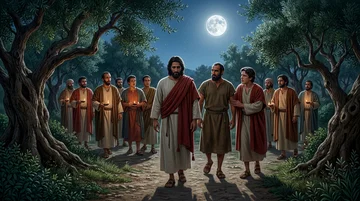
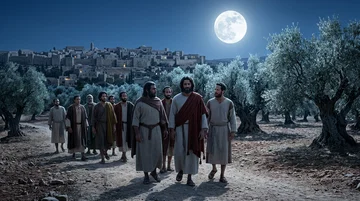
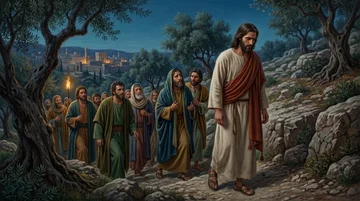
And he came out, and went, as he was wont, to the mount of Olives; and his disciples also followed him.
Translations
American King James Version, King James Version, KJV Cambridge Paragraph Bible, Webster Bible
And he came out, and went, as he was wont, to the mount of Olives; and his disciples also followed him.
Revised Version, American Standard Version
And he came out, and went, as his custom was, unto the mount of Olives; and the disciples also followed him.
And having gone forth, he went on, according to custom, to the mount of the Olives, and his disciples also followed him,
And going forth he went according to his custom to the mount of Olives, and the disciples also followed him.
And going out, he went, according to his custom, unto the Mount of Olives; and the disciples [also] followed him.
Jesus went out as usual to the Mount of Olives, and the disciples followed Him.
Jesus went out as usual to the Mount of Olives, and His disciples followed Him.
He came out and went, as his custom was, to the Mount of Olives. His disciples also followed him.
And he came out, and went, as his way was, to the Mountain of Olives, and the disciples went with him.
And he came out, and went (as he was wont) to the mount of Oliues: and his disciples also followed him.
Douay-Rheims (Challoner revision)
And going out, he went, according to his custom, to the mount of Olives. And his disciples also followed him.
Pictures
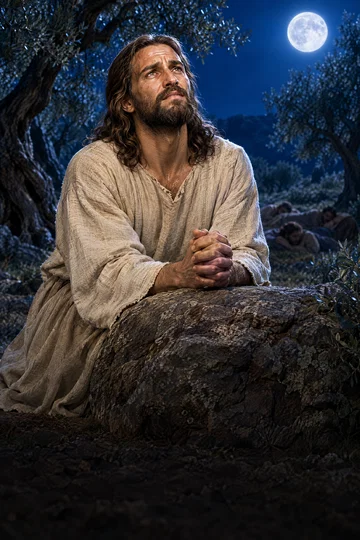
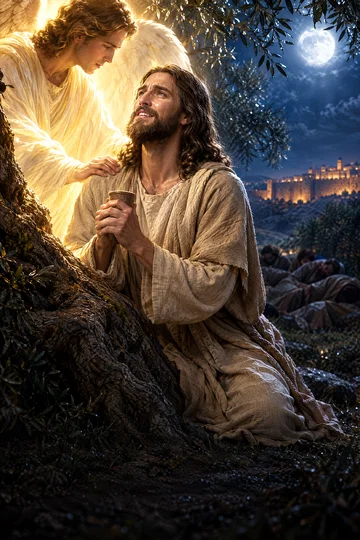
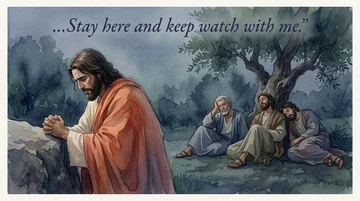
Cross-references 20 of 24
- Matthew 26:36-46
Then cometh Jesus with them unto a place called Gethsemane, and saith unto the disciples, Sit ye here, while I go and pray yonder.
Parallel account of Jesus going with his disciples to pray before his arrest.
- Mark 14:32-42
And they came to a place which was named Gethsemane: and he saith to his disciples, Sit ye here, while I shall pray.
Parallel account of Jesus praying before his arrest.
- Luke 22:44
And being in an agony he prayed more earnestly: and his sweat was as it were great drops of blood falling down to the ground.
Jesus prays in agony in the garden, sweating as drops of blood.
- John 18:1-2
When Jesus had spoken these words, he went forth with his disciples over the brook Cedron, where was a garden, into the which he entered, and his disciples.
Both place Jesus and his disciples in the garden across Kidron, where he often went.
- Matthew 26:39
And he went a little further, and fell on his face, and prayed, saying, O my Father, if it be possible, let this cup pass from me: nevertheless not as I will, but as thou wilt.
Jesus prays in anguish, asking for the cup to pass while submitting to the Father’s will.
- Luke 22:43
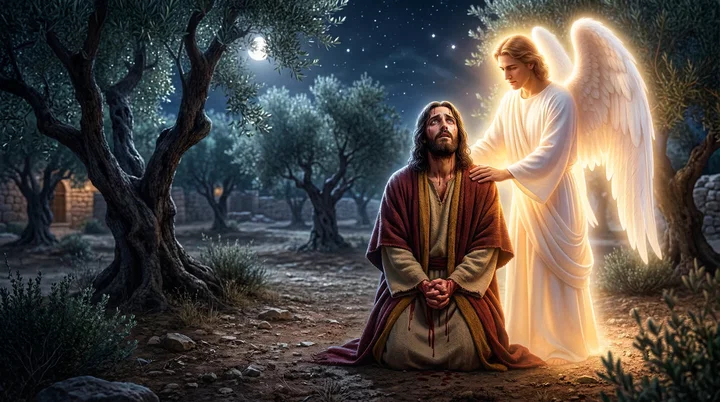
And there appeared an angel unto him from heaven, strengthening him.
An angel from heaven strengthens Christ in Gethsemane.
- Matthew 26:36
Then cometh Jesus with them unto a place called Gethsemane, and saith unto the disciples, Sit ye here, while I go and pray yonder.
Both place Jesus and his disciples in Gethsemane before he prays.
- Mark 14:37-38
And he cometh, and findeth them sleeping, and saith unto Peter, Simon, sleepest thou? couldest not thou watch one hour?
Jesus finds the disciples sleeping and urges them to watch and pray.
- Matthew 26:40-41
And he cometh unto the disciples, and findeth them asleep, and saith unto Peter, What, could ye not watch with me one hour?
Jesus finds the disciples sleeping and urges them to watch and pray.
- Hebrews 5:7
Who in the days of his flesh, when he had offered up prayers and supplications with strong crying and tears unto him that was able to save him from death, and was heard in that he feared;
Both describe Christ praying with strong crying and tears.
- Luke 21:37
And in the day time he was teaching in the temple; and at night he went out, and abode in the mount that is called the mount of Olives.
Both describe Jesus going to the Mount of Olives.
- Luke 22:45-46
And when he rose up from prayer, and was come to his disciples, he found them sleeping for sorrow,
The disciples sleep while Jesus prays at Gethsemane.
- Acts 1:12
Then returned they unto Jerusalem from the mount called Olivet, which is from Jerusalem a sabbath day’ s journey.
Jesus ascended from the Mount of Olives.
- Zechariah 14:4
And his feet shall stand in that day upon the mount of Olives, which is before Jerusalem on the east, and the mount of Olives shall cleave in the midst thereof toward the east and toward the west, and there shall be a very great valley; and half of the mountain shall remove toward the north, and half of it toward the south.
His feet will stand on the Mount of Olives when he comes again.
- Matthew 26:37
And he took with him Peter and the two sons of Zebedee, and began to be sorrowful and very heavy.
Jesus takes three disciples with him while the others remain behind.
- Luke 22:47-48
And while he yet spake, behold a multitude, and he that was called Judas, one of the twelve, went before them, and drew near unto Jesus to kiss him.
names betrayal as part of coming trial
- Luke 19:37-38
And when he was come nigh, even now at the descent of the mount of Olives, the whole multitude of the disciples began to rejoice and praise God with a loud voice for all the mighty works that they had seen;
same slopes rang with joyful shouts
- Acts 1:9-11
And when he had spoken these things, while they beheld, he was taken up; and a cloud received him out of their sight.
The parting scene on Olivet includes the angels’ promise of Christ’s return.
- Luke 22:59-62
And about the space of one hour after another confidently affirmed, saying, Of a truth this fellow also was with him: for he is a Galilæan.
parts of same last-night story
- Matthew 14:23
And when he had sent the multitudes away, he went up into a mountain apart to pray: and when the evening was come, he was there alone.
Jesus withdrew to the mountain to pray.
Commentary
Each commentary is drawn from primary sources: the writings of Ellen G. White and Adventist pioneers and periodicals. Each commentary is separate. Its own words are not a quotation; follow the references to read the source passages.
Ellen G. White
33 sources
On the night of His final agony after the Passover supper He went out as was His custom to the Mount of Olives and Gethsemane for meditation and prayer, and His disciples followed Him as they were accustomed to do.Ms 42, 1897, par. 1–3DA 685DA 685.2COS 113.2 On the way He talked with and taught them, but as He neared the garden His sorrow deepened into strange silence and He was so weighed down that He groaned and needed support.DA 685.3DA 685.2COS 113.2 There He bore the guilt and sins of the whole world under a strain never laid on any other, fearing above all that sin would separate Him from His Father's love.DA 685.2Ms 118, 1909, par. 30–33ST Aug 8, 1878Ms 123, 1909, par. 35–36ST Aug 9, 1905 Prostrate He prayed three times that the cup might pass yet submitted to His Father's will, until bloody sweat stained the ground and an angel was sent to strengthen Him while His sleeping disciples left Him alone.Ms 42, 1897, par. 1–3Lt 54, 1874, par. 15–16Ms 118, 1909, par. 30–33MH 509.2–4 By seeking His Father thus when weary and tempted He braced Himself for trial and left a perfect example that divine communion must come before power and victory, warning His followers not to miss strength for coming trial by spiritual sleep.MH 509.2–42T 508.1–509.1ST Oct 31, 1900ST Sep 5, 1900
Customary Journey to Gethsemane
He came out and went to the Mount of Olives and on to Gethsemane as was his wont, for it was his customary habit and familiar place of prayer, meditation, and retreat.Ms 42, 1897, par. 1–3DA 685.2COS 113.2ST Dec 2, 18975RED 14.1–3 He had often visited it to pray, frequently spending the entire night there in fervent prayer, while spending the day teaching in the temple and healing the sick, there bracing his spirit for duty and temptation and seeking vigor of soul and body and strength to complete his work.2T 508.1–509.1ST Oct 31, 19005RED 14.1–33SP 94.1–3
His disciples also followed him there as they were accustomed to do, going with him to the garden on the Mount of Olives.Ms 42, 1897, par. 1–3Lt 54, 1874, par. 15–16ST Dec 2, 1897ST Nov 25, 18895RED 14.1–3 Because withdrawing farther in to pray was familiar, his telling his companions to remain while he went on to pray called forth no remark and did not surprise them.5RED 14.1–33SP 94.1–3
This going took place after the Passover supper on the night of his final agony before betrayal and crucifixion, leading to Gethsemane where he withdrew to pray as he faced deep agony and asked that the cup pass from him while submitting to the Father's will.Ms 42, 1897, par. 1–3DA 685.1COS 113.2 It belongs to the Gethsemane and arrest narrative told also in Matthew, Mark, and John, and begins the most trying ordeal of betrayal, agony, and crucifixion.DA 6854RED 102.2–103.1 It was a Passover night under a broad full moon while the city of pilgrims' tents lay hushed in silence.3SP 94.1–3 The mount was made holy by his presence in human nature and set apart by his prayers and tears, holding the road where he rode into Jerusalem just before his trial while its steeps echoed the joyous shouts of the multitude, Bethany on its sloping descent where he often found rest, and the garden of Gethsemane at its foot where he agonized alone.ST Oct 31, 1895
On the way he talked with and taught his disciples, but as he neared the garden his sorrow deepened and he became strangely silent and utterly sad.DA 685.3DA 685.2COS 113.23SP 94.1–3 The journey was so physically difficult that he groaned and his form swayed as if about to fall, so that twice he needed his companions to support him lest he fall, while his disciples were perplexed and looked anxiously for his usual place of retirement where he might rest.DA 685.33SP 94.1–3
Agony and Atonement
In the garden He bore the guilt and sins of the whole world under the most fearful strain ever brought upon a human being, an unparalleled distress that cannot be exceeded.ST Aug 8, 1878Ms 123, 1909, par. 35–36ST Aug 9, 1905Ms 134, 1905, par. 3 God permitted that strain to come upon His Son, and in all that suffering He gave an example of absolute submission to the divine will.ST Aug 9, 1905Ms 134, 1905, par. 3 What He feared most was separation from His Father, fearing that sin would shut Him out from His Father's love.DA 685.2Ms 118, 1909, par. 30–33ST Aug 8, 1878Ms 123, 1909, par. 35–36Ms 139, 1909, par. 24–25 Bearing humanity's guilt He felt His Father's presence withdrawn, and His agony over bearing sin became so great that He felt separated and faced the bitter cup of separation as one who was to die as a sinner.ST Aug 8, 1878Ms 123, 1909, par. 35–36Ms 139, 1909, par. 24–25
Prostrated in fearful hours of prayer He asked that the cup pass from Him yet submitted to His Father's will.Ms 42, 1897, par. 1–3Lt 54, 1874, par. 15–16Ms 118, 1909, par. 30–33Ms 139, 1909, par. 24–25 He prayed three times for deliverance until bloody sweat was forced from His pores and stained the sod, expressing the anguish of the ordeal.Lt 54, 1874, par. 15–16ST Aug 8, 1878Ms 123, 1909, par. 35–36Ms 139, 1909, par. 24–25 An angel from heaven came to strengthen Him as He fainted under the burden.Ms 118, 1909, par. 30–33ST Aug 8, 1878Ms 139, 1909, par. 24–25 Though sinless He was treated as a sinner so that sinners might be treated as innocent, wounded for transgressions and bruised for iniquities, with the chastisement of peace upon Him bringing healing.ST Aug 9, 1905Ms 134, 1905, par. 3 He had laid off His royal robe and kingly crown and clothed His divinity with humanity to live a sinless life on human behalf and to make atonement on the cross.ST Aug 9, 1905Ms 134, 1905, par. 3
Though His will was capable of asserting itself and He could have refused such humiliation, He came into the world to suffer humiliation and death and surrendered His will to the will of God.Ms 134, 1905, par. 3 His suffering makes it possible for humanity to grasp divinity and, through divine power, overcome by the blood of the Lamb and the word of testimony.Ms 123, 1909, par. 35–36 His disciples soon fell asleep for sorrow and left Him to face the powers of darkness alone, while Satan pressed darkness upon Him during His trial.Lt 54, 1874, par. 15–16ST Nov 25, 1889Ms 139, 1909, par. 24–25Ms 119, 1909, par. 32–34 Their drowsiness kept them from hearing His voice and receiving the strengthening evidence of heaven and the angels' presence and glory that could have strengthened them for the trials ahead.MH 509.2–4
Only Peter, James, and John were brought closer as three favored disciples in closest relationship with Him, the same three who saw His transfiguration, and for John this witnessing of both His glory and His agony was a token of confidence and love.Lt 54, 1874, par. 15–16MH 509.2–4ST Nov 25, 1889Ms 119, 1909, par. 32–34 In His agony He longed for the sympathy of His disciples, showing the desire for love and sympathy implanted in the human heart by God.Ms 139, 1909, par. 24–25RH Dec 28, 1911 He wanted them to watch with Him so they could understand that He had come to suffer and die for sin, remember His promise to rise again, and be strengthened to endure the trial, but their failure to stay awake left them unprepared for His death and its shame.Ms 45, 1892, par. 6–9 His agony became a central subject of the disciples' preaching and conversation, with His humility and forbearance under suffering and His prayer for those who persecuted Him as central themes.ST Jun 12, 18793SP 346.2
Peter after denying Him in His humiliation returned alone to the solitude of that same garden and prostrated himself on the very spot where he had seen his Saviour prostrated.Lt 54, 1874, par. 15–16 With breaking heart and blinding penitential tears moistening the sod stained with the sweat drops of God's dear Son, he left that garden a truly repentant and converted man.Lt 54, 1874, par. 15–16 He was humbled and fitted to pity the tempted, sympathize with the weak and erring, caution and warn the presumptuous, and strengthen his brethren.Lt 54, 1874, par. 15–16
Example for Prayer
As was his wont he went out to the Mount of Olives for prayer and retreat, often spending whole nights there after days spent teaching in the temple and healing the sick.2T 508.1–509.1ST Oct 31, 1900ST Sep 5, 1900ST Aug 31, 1915Ms 110, 1899, par. 36–37 There as Son of man he braced his spirit for duty and temptation and for the great trial and important work before him, even the agony of the judgment hall and the cross, seeking his Father's help for his disciples' protection from evil and for vigor of soul and body and strength to complete his work and do his Father's will.2T 508.1–509.1ST Oct 31, 1900ST Sep 5, 1900ST Aug 31, 1915Ms 110, 1899, par. 36–37 By communion with God he was invigorated and refreshed, braced for duty and prepared for toil, and came forth to minister, encourage, and bless with tongue touched anew with living fire.ST Oct 31, 1900ST Sep 5, 1900ST Aug 31, 1915 Divine communion in solitude thus comes before power, strength, success, and victory.ST Aug 31, 1915ST Jul 27, 1915 Prayer sanctified his ministry and shows that strength and vigor for daily duty are derived from worshiping God in the beauty of holiness.ST Oct 31, 1900Ms 110, 1899, par. 36–37
Though weary and tempted he prayed earnestly with strong crying and many tears, and though he was the Son of God, equal with the Father, all-sufficient, the storehouse of all blessings whose voice could rebuke disease, still the tempest, and call the dead to life, he bowed as a suppliant before the Father.2T 508.1–509.1ST Sep 5, 1900 He was not praying for himself but for those he came to save, for sinners, having identified himself with humanity as representative of the race, tempted in all points as men are and able to sympathize with the tempted.ST Sep 5, 1900 His praying is left on perfect record as an example for all who desire to follow him, especially ministers, of how to combat the enemy, seek grace and strength through frequent earnest prayer, and derive strength for daily duty from worship.2T 508.1–509.1ST Oct 31, 1900Ms 110, 1899, par. 36–37 The lamp must be filled with holy oil before its light can shine amid moral darkness.ST Oct 31, 1900 Those who are indeed his friends will often commune with him, having implicit faith that he will answer all prayers offered in his name, and those prayers reach down to the present time.ST Sep 5, 1900
His disciples followed him there as they were accustomed to do, yet their drowsiness and sleep kept them from hearing his voice and receiving the strengthening evidence of heaven and the angels' presence and glory that could have strengthened them for the trials ahead.MH 509.2–4Ms 59, 1897, par. 7ST Jul 27, 1915Ms 45, 1892, par. 6–9 He wanted them to watch with him so they could understand that he had come to suffer and die for sin, remember his promise to rise again, and be strengthened to endure the trial, but their failure to stay awake left them unprepared for his death and its shame.ST Jul 27, 1915Ms 45, 1892, par. 6–9 Their failure shows the need for prayer and communion with God especially before trials, and warns those who need divine instruction not to miss it by spiritual sleep but to wake and become believing Christians.MH 509.2–4Ms 139, 1909, par. 24–25Ms 59, 1897, par. 7ST Jul 27, 1915 Safety from Satan's influence requires constant connection with God, continual help from heaven, and obedience to God's requirements.Ms 59, 1897, par. 7ST Jul 27, 1915
His lonely prayer and pleading with the Father on the mount show that his followers may also face seasons of deep spiritual anguish and earnest prayer without being driven away from God.21MR 252.2–3
Sources
Pioneers and periodicals
83 sources
He came out after the supper and went by night as he was wont to the Mount of Olives, to the garden of Gethsemane at its foot across the Kidron, and his disciples followed him there as they customarily did.ST Nov 5, 1894ST Mar 27, 1901ST May 28, 1896ST Nov 5, 1894RH Jan 6, 1910 Luke marks this going as customary, whereas he never marks meetings on the first day of the week as customary, so the verse does not prove first-day observance was customary.ST Apr 1, 1875RH Mar 11, 1875 His habit was to spend the day teaching and healing and the night in solitary prayer on Olivet, often whole nights communing with the Father to receive strength for ministry and conflict and to prepare for trial and intercession.ST Oct 31, 1900ST Jul 15, 1908RH Jan 6, 1910 There he knelt prostrate and prayed three times that the cup might pass yet submitted to the Father's will, praying more earnestly in agony with sweat as great drops of blood while an angel strengthened him, and three times found the disciples sleeping instead of watching and praying against temptation before Judas came with the multitude to betray him to trial and crucifixion.ST Aug 8, 1878ST Apr 11, 1900ST Feb 1, 1899ST Apr 14, 1914ST Jun 24, 1886 Guiltless, he bore the guilt and penalty of the sins of the whole world as his own, his greatest torture being separation from the Father under divine justice, not dread of bodily crucifixion but the righteous wrath of God as his soul was made an offering for sin, meeting there the supreme crisis and temptation of his life and conquering to decide the destiny of the world.ST Mar 27, 1901ST Apr 14, 1914ST Sep 30, 1889ST Jul 14, 1881 His fervent repeated persistent prayer in solitude is the model for severest distress and approaching death, teaching those overwhelmed by sorrow not to despair but to watch with him one hour, cry to God for deliverance and above all resignation, and find relief, strength of character, and victory.ST Jun 3, 1886RH Feb 3, 1863RH Aug 10, 1869ST Aug 24, 1915RH Jul 9, 1872
Habitual Going and Following
Going to the Mount of Olives was Jesus' customary practice, expressed by as he was wont, and his disciples followed him there.ST Nov 5, 1894ST Apr 1, 1875ST Mar 27, 1901ST Feb 1, 1899ST Aug 15, 1916 He regularly went there, and on this night they went with him as they customarily did.ST Nov 5, 1894ST Mar 27, 1901ST Aug 15, 1916ST Dec 15, 1898ST Oct 10, 1906 The turn from the joyful welcome in Jerusalem to the garden is marked here, where he would face anguish alone before going on to the cross.ST Aug 15, 1916ST Dec 15, 1898ST Oct 10, 1906
Luke's phrase as he was wont expressly marks the going as a custom, illustrating his careful practice of stating when an act is customary.ST Apr 1, 1875RH Mar 11, 1875 In contrast he never marks meetings on the first day of the week as customary, so this verse does not establish that first-day observance was customary.ST Apr 1, 1875RH Mar 11, 1875 The breaking of bread connected with that evening belonged to Thursday evening, proving it was done on Thursday and was not required on or tied to the first day of the week, since the disciples also broke bread every day.ST Jan 13, 1881
His daily habit was to spend the day teaching in the temple and healing the sick and the night praying on the Mount of Olives and in the groves of Olivet and the mountains of Galilee, often spending whole nights in prayer while the cities were hushed in slumber.ST Oct 31, 1900ST Jul 15, 1908ST Sep 5, 1900 The quiet evening retreat was a place where he often communed with his Father and received strength for the conflicts of his ministry, and on this night after the last supper he was approaching his coming agony.ST Oct 31, 1900ST Aug 31, 1915RH Jan 6, 1910 As the Son of man he braced himself there for duty and temptation and sought vigor of soul and body, praying earnestly for strength to do his work and to complete it.ST Oct 31, 1900ST Jul 15, 1908ST Sep 5, 1900 By communion he was invigorated and refreshed, braced for duty and prepared for toil and for great trial and important work, then came forth to minister, encourage and bless others.ST Oct 31, 1900ST Sep 5, 1900ST Aug 31, 1915 His last resort to Gethsemane followed his habit of stealing away to pour out his burdened soul in supplication on the mountain-top or in the garden, taking his disciples with him, and there he faced the greatest temptation of his earthly life, praying in agony for strength while they failed to share or understand his soul-trouble.ST Aug 31, 1915ST Mar 27, 1901RH Aug 19, 1873
Place and Time Setting
After the supper he came out and went by night to the Mount of Olives, to the garden of Gethsemane at its foot or base, across the brook Kidron on the slope of Olivet.ST May 28, 1896ST Nov 5, 1894RH Jan 6, 1910RH May 17, 1860ST Mar 31, 1909 That quiet evening retreat was where he often communed with his Father and received strength for the conflicts of his ministry, and on this night he was approaching his coming agony.RH Jan 6, 1910ST Oct 13, 1898 His going there opened the last night before his death, covering the temptation in the garden, the betrayal with a kiss by Judas leading a multitude, the cutting off of an ear and the healing of the wounded enemy, the taking to the house of Caiaphas, and Peter's denial.ST May 28, 1896ST Nov 5, 1894ST Nov 5, 1894 Gethsemane was a plot of ground containing a garden where he often resorted with his disciples, with many olive trees growing there from whose fruit olive oil was pressed, and the name means oil press in a double sense.ST Mar 31, 1909
It was Thursday evening, the last night before his death.ST Jan 13, 1881ST Nov 5, 1894ST Nov 5, 1894 This took place in the spring of A.D. 31, when Tiberius Caesar was ruler of the Roman Empire, Herod was tetrarch of Galilee, and Pontius Pilate was governor of Judea.ST May 28, 1896 He entered it by night under the paschal moon, a placid and tranquil garden hushed and still, and in the evening dusk under starlight walking slowly and heavily along a stony, lonely hillside track with his disciples following him.ST Apr 14, 1914ST Mar 5, 1902 It was a tranquil garden of cypress and palm, with kind olive trees, and a dry garden where he entered deep loneliness and sorrow.ST Apr 14, 1914ST Jul 8, 1897ST Mar 5, 1902 He enters it bowed with grief and weak with distress, exhausted, hungry yet consecrated and desolate, with bowed head and sunken, brooding brow carrying tired woe.ST Apr 14, 1914ST Jul 8, 1897ST Mar 5, 1902
The mount was made holy by his presence in human nature and set apart by his prayers and tears, its base being Gethsemane where he faced the bitter cup and moistened the ground with his blood.ST Oct 31, 1895RH Jan 22, 1914 It holds the road where he rode into Jerusalem just before his trial while its steeps echoed the joyous shouts of the multitude, the most striking scene before Gethsemane and the one time in his life he let the crowds fully honor him.ST Oct 31, 1895ST Jul 22, 1886 On its sloping descent lies Bethany where he often found rest at the house of Lazarus.ST Oct 31, 1895 The same mount later witnessed his triumphal ascent, and it belongs to the scenes of his life and his sufferings to be recalled in deep contemplation at sunrise or sunset on Mount Olivet with impressions never forgotten.RH Jan 22, 1914ST Mar 16, 1915
Prayer Agony and Arrest
Leaving most of the disciples near the entrance of the garden, he took Peter, James and John farther with him because they were his closest companions.ST Apr 11, 1900RH Jun 8, 1869ST Apr 11, 1900 They were the ones who had beheld his glory on the mount of transfiguration and had seen Moses and Elijah talking with him and had heard the voice from heaven, and he desired them to be near him in his great struggle.ST Apr 11, 1900ST Jul 4, 1899 In that culmination of grief his intense agony led him to separate from all but those three, and then to long for still stricter solitude.ST Nov 25, 1889RH Aug 19, 1873 He went a little farther from them, withdrawing about a stone's throw where they could still see and hear him.ST Apr 11, 1900RH Aug 19, 1873
There with his soul sorrowful even unto death and very heavy he knelt and fell prostrate on his face.ST Apr 11, 1900ST Jun 24, 1886ST Apr 11, 1900 He prayed three times that the bitter cup might pass from him if it were possible, asking whether he must drink the cup of suffering.ST Aug 8, 1878ST Apr 11, 1900ST Jun 24, 1886RH Mar 5, 1901 His humility and submission were shown in setting aside his own will to do his Father's will, and his confidence in the Father's goodness, love, wisdom and power was tested to the utmost while he appeared deserted and felt his Father's presence withdrawn.ST Aug 8, 1878ST Jun 24, 1886 Yielding anew, he submitted his will to the Father's will and received strength to drink the bitter cup which could not pass away.RH Mar 5, 1901RH Aug 19, 1873
In agony he prayed more earnestly with tears, crying to God for help, with sweat as great drops of blood falling to the ground and drops of blood poured in agony from his face.ST Apr 11, 1900ST Apr 14, 1914ST Feb 4, 1897 An angel from heaven came to minister to him and strengthen him as he fainted under the burden and drained the bitter cup for every mortal.ST Aug 8, 1878ST Apr 11, 1900ST Feb 1, 1899ST Apr 14, 1914ST Jan 10, 1911 The angels came unseen to all but God's beloved Son in answer to his call for aid to say Father thy will be done.ST Feb 4, 1897
Three times he returned to find the disciples sleeping instead of watching and keeping watch with him, wrapped in unconscious slumber through the scene while he struggled alone in profound grief.ST Apr 11, 1900ST Jan 10, 1911ST Jun 6, 1878RH Jun 8, 1869 He warned them to watch and pray against temptation and to pray lest they enter into temptation, striving against temptation himself while they slept at a fearful hour.ST Apr 11, 1900ST Jun 3, 1886ST Nov 5, 1894 Their drowsiness kept them from hearing him and receiving heavenly strengthening for the coming trials, illustrating the need to remain spiritually watchful in prayer.ST Jun 3, 1886 Then he rose and announced that the hour was at hand and the Son of man is betrayed into the hands of sinners.ST Apr 11, 1900ST Nov 5, 1894
While he was speaking Judas came leading a multitude and pointed him out with a kiss in betrayal.ST Apr 11, 1900ST Nov 5, 1894RH Mar 14, 1865 The disciples asked whether to strike and one cut off an ear, and Jesus rebuked him and healed his wounded enemy.ST Nov 5, 1894 He was taken to the house of Caiaphas, followed afar off to trial and crucifixion, where even the zealous Peter denied his suffering Lord.ST May 28, 1896ST Nov 5, 1894RH Jun 8, 1869 In his hour of agony he longed for the sympathy of his disciples, for the desire for love and sympathy is implanted in the human heart by God, yet his disciples soon fell asleep and left him to face the powers of darkness and Satan-pressed darkness alone.ST Nov 25, 1889RH Dec 28, 1911RH Aug 19, 1873
Meaning of His Suffering
Guiltless himself, he went to the garden bearing the shame, penalty, guilt, burden and misery of human sin as his very own, with the sins and misery of the whole world weighing upon him until his sweat became as blood.ST Apr 14, 1914ST Sep 30, 1889ST Nov 3, 1898 Though he knew no sin and was without sin, he was made sin with the iniquity of all laid upon him, wounded for transgressions and bruised for iniquities, treated as a sinner so that sinners bearing his burden by faith might be treated as innocent and know his blood shed for each person.ST Aug 9, 1905ST Sep 30, 1889ST Jul 14, 1881 His distress there was an unparalleled strain because he bore the sins of the whole world in order to redeem humanity, having taken humanity with its humiliation and death to live a sinless life and make atonement for its transgressions.ST Aug 9, 1905ST Nov 3, 1898
His greatest torture was feeling separated from the Father, with divine love and power withheld and his Father's presence withdrawn while he fainted under the burden of the world's guilt.ST Aug 8, 1878ST Apr 14, 1914 In that darkness his confidence in the Father's goodness, love, wisdom and power was tested to the utmost, yet he submitted his will to the Father's will with unwavering faith even when appearing deserted. There he stood in a different attitude than ever before, no longer as intercessor for others but as substitute and surety for sinful man suffering under divine justice and tasting what justice meant, even longing to have an intercessor for himself.ST Apr 11, 1900
His agony did not come from dread of the bodily pain of crucifixion, which many of his followers have endured with grace, for the terrors of the cross were only a feeble representation of what compassed his soul.ST Jul 14, 1881 The horror was the righteous wrath of God laid upon him for the guilt of sin, because redemption required his soul to be made an offering for sin with the chastisement of peace upon him.ST Jul 14, 1881 The same cup he prayed might pass if possible was what he drank on the cross when he cried, My God, My God, why hast thou forsaken me.ST Jul 14, 1881 There he met the greatest temptation of his earthly life as Saviour of men, entering his conflict under temptation in dark Gethsemane.ST Mar 27, 1901ST Mar 31, 1909RH Jun 23, 1910 There was fought the battle that decided the destiny of the world, the crisis of all the ages and supreme crisis at the threshold of which he stood, where burdened with the sins of the world as his very own he met the arch-enemy in the great climax of conflict.ST Mar 7, 1906ST Mar 31, 1909 Yielding himself anew to God and accepting the suffering and death required, with faith fixed on God and willingness to take the cup, he conquered and won an infinite victory on humanity's behalf, becoming humanity's everlasting sacrifice demonstrated in crucifixion and resurrection.ST Mar 7, 1906ST Nov 14, 1906ST Mar 31, 1909ST Nov 3, 1898
Though he is Lord of all above and beneath who gives man's breath, with power so that the stormy wave sank beneath his tread and the grave yielded up its dead, mortality overshadowed him there that he might know the very depth of human woe.ST May 6, 1889 There the suffering one baptized with tears and blood was Prince Messiah, the mysterious Son of both God and man and Creator of the universe, yet he refused to exert his divine power to escape but suffered as man the consequences of man's sin and the wrath of God against transgression.RH Nov 11, 1862ST Nov 3, 1898ST Apr 11, 1900 The sin that called him down from heaven weighed upon him and galled him there, for his suffering was caused not by the crowd that cried against him or the hands that nailed him but by that weight of human sin pressing on him as part of his emptying himself of glory for sin.ST Mar 18, 1913 His going to Gethsemane was a step made necessary by the expulsion from Eden unless man was to be hopelessly lost, beginning his downward plunge as the divine Saviour to recover the ground lost in Eden and save his lost creatures.ST Feb 24, 1887 Gethsemane is a partial fulfillment of the promise of a Deliverer given in Eden and stands as the symbol of atonement, because the agony of the cross began there and all that the Master endured — sorrow, pain, anguish of soul, the cross — is included in it and can only be rightly estimated when the fullness of his sacrifice is understood.ST Feb 24, 1887 It was the last and lowest step of his descent from the highest throne in heaven to the lowliest place, from being in the form of God to being found in fashion as a man to taking the form of a servant to becoming obedient unto death, with only one more round below, death on the cross of shame, before which in the garden he hesitates, prays, resolves, and steps down to die.ST Apr 8, 1889
His path leads on from garden sorrow to cross to resurrection and glory, for the turn from joyful welcome to lonely anguish goes on to the cross where companions leave him and then to resurrection as the pattern ending in resurrection hope.RH Jan 22, 1914ST Aug 15, 1916 That suffering bowed beneath the weight of woe with tears and great drops of blood bedewing the ground leads on to the judgment-hall with crown of thorns and scourge and mockings and up Calvary's rugged heights where he expired, and the same mount whose base is Gethsemane where he faced the bitter cup later witnessed his triumphal ascent.RH Jan 22, 1914RH Sep 11, 1866 That Gethsemane anguish belongs to his first coming in earth's degradation, with temptation in the desert, weakening by fasting and fear, burden and weariness, anguish and tears, mock trial, cross and Calvary, and the power of the grave.ST Dec 7, 1904 It is past and will never be known again by him, because he is coming again in transcendent glory to save his people from every temptation, to receive his own, and to reign forever in righteousness and eternal peace where love fills the earth.ST Sep 20, 1899ST Dec 7, 1904
Example for Prayer and Trial
His fervent prayer in solitude is the model for conduct in the severest and most trying distress, including the hour of approaching death.RH Aug 10, 1869ST Aug 24, 1915RH Jul 9, 1872 On the wood-crowned summit of Olivet, in the garden of Gethsemane, He prayed fervently, and those prayers are to be followed until earth is made heaven.RH Aug 10, 1869RH Jun 16, 1874 Almost every word spoken during that tremendous scene was prayer, most earnest and urgent, repeated and continued, proceeding from the recesses of the soul, private and solitary, prayer for deliverance, prayer for strength, and above everything prayer for resignation.ST Aug 24, 1915RH Jul 9, 1872 Afflicted yet resigned, grieved and wounded yet submissive, feeling suffering yet increasing the ardor and fervency of prayer in proportion to pain and acuteness of feeling, He made prayer His refuge from the storm in the last and most tremendous crisis before He was delivered into the hands of sinners.ST Aug 24, 1915RH Jul 9, 1872 There He poured forth petitions from agony in the deep recesses of His soul, so that angels came to the relief of their beloved Commander, showing that earnest prayer offered by a trusting child in simplicity and resignation brings help and deliverance and relief to the soul in hours of darkness when sorrows roll like sea billows and when in distress not knowing which way to go or what to do.ST Aug 24, 1915RH Jul 9, 1872
His agonized pleading shows that prayer may require persistent, extended effort as the petitioner recognizes the importance of the need and personal weakness.ST Aug 24, 1915RH Jul 9, 1872ST Feb 27, 1896 His earnest prayer is the example of how He overcame sin through perfect trust in God's word, a pattern believers may follow in overcoming sin.ST Aug 24, 1915RH Nov 11, 1915 Though perfect and divine, with no sins to be forgiven, no evil passions to be subdued, no temptation He could not resist, no enemy He could not conquer, having life in Himself, creative power, and infinite merit, He still prayed, even God made man praying for sinners, with cold mountains and midnight air witnessing the fervor of His prayer.RH Aug 10, 1869RH Jun 16, 1874 That truth rebukes all who do not pray.RH Jun 16, 1874
The garden scene beginning with His going to the Mount of Olives with His disciples following Him teaches believers to watch with Him and learn to pray, and to remain spiritually watchful in prayer at a fearful hour when others sleep while He suffers.ST Jun 3, 1886RH Mar 26, 1861RH Jun 23, 1910 His familiar practice of going there provided the setting for prayer before the suffering ahead, through which He was strengthened to endure it and was heard.RH Feb 3, 1863RH Jun 23, 1910 For those overwhelmed by sorrow the lesson is to cry to God and not give in to despair, for God hears and answers prayer.RH Feb 3, 1863ST Aug 24, 1915 Those who feel the tempter's power are to go to dark Gethsemane as He was accustomed to do, see the Redeemer's conflict and grief, watch with Him one little hour, not turn away, and learn from Him to watch and pray.ST Jun 3, 1886RH Mar 26, 1861RH Jun 23, 1910
Each person must pass through a Gethsemane of solitary struggle and despair, a garden that represents the trials people face on the way with Him.ST Aug 24, 1904ST Jun 11, 1896 The garden teaches the need to submit to God's will rather than only ask for suffering to be removed, and to trust that there is purpose in the trial.ST Aug 24, 1904ST Jun 11, 1896 Going to plead with God alone just before arrest, He won the great struggle there by yielding to God's will, and that yielding gave Him calmness, placidity, strength of character and readiness for whatever awaited Him, making Him the one calm person at His arrest though He had the greatest interest at stake and would suffer most.ST Aug 24, 1904ST Jun 11, 1896 Dark as Gethsemane may be, the right use of it by yielding to God gives a noble foundation for victory in coming trials, for all true permanent victory lies in the operation of God's will and is won by yielding to that will.ST Jun 11, 1896 No one prepares for the great conflicts of life by waiting till the conflict comes; readiness always comes by meeting every duty as it comes.ST Jun 11, 1896
His going apart as He approached the sacrifice at Calvary was preparation for that great moment and shows that solitude can strengthen spiritual life.ST Aug 31, 1915ST Jul 27, 1915ST Nov 21, 1892 Resorting with His disciples to the solitude of the mountains and spending the night in prayer to His Father, He prepared for a great trial and important work, the agony of the judgment hall and the cross, showing that divine communion comes before power, strength, success and victory.ST Aug 31, 1915ST Nov 21, 1892RH Nov 14, 1912 Continuing His customary practice of going to the Mount of Olives with His disciples as His final hour approached, He poured out His soul to God, and His need for prayer grew as the end drew near, while His unceasing communion with the Father prepared Him for His work as intercessor.ST Aug 31, 1915ST Jul 27, 1915RH Nov 14, 1912 The disciples' sleep kept them from hearing His voice and receiving the strengthening evidence and glory of the scene, for communion with God prepares people for trials, while neglecting it leaves them without needed strength.ST Aug 31, 1915ST Jul 27, 1915ST Nov 21, 1892
Remembering His extreme agony and unutterable merits in Gethsemane strengthens lively faith and joyful hope and loosens attachment to the world.RH Jun 26, 1866RH Jan 21, 1858RH Sep 11, 1866 Going to the Mount of Olives where He prayed in anguish for humanity, He faced the suffering He was willing to bear for sinners, revealing His love and pity and the salvation He sought, to be regarded with reverence and followed.RH Jun 26, 1866RH Jan 21, 1858 On that sad night the Lord of life and glory went to sad Gethsemane to drink the cup of anguish, bowing beneath the weight of woe, groaning and crying to His Father to let the cup pass if possible, with tears and great drops of blood falling from His holy brow and bedewing the ground where He knelt.RH Sep 11, 1866RH Mar 25, 1873 That suffering is to be remembered in celebrating the ordinances of the Lord's house, leading on to the judgment-hall with the crown of thorns and scourge and cruel mockings and up Calvary's rugged heights where He expired, a love so amazing and divine that demands heart, life, and all.ST Jun 12, 1879RH Sep 11, 1866RH Mar 25, 1873 His anguish, as He left His Father's throne and laid His glory by to lead a self-denying life unto suffering and death bearing human guilt on to the judgment hall and Calvary, calls believers to stand in the counsel of the Lord, obey His holy word without delay, and for His sake deny appetite, vanity, pride and tinsel, forsake all idols and rise in the strength of Israel's God, since clinging to self is why they lack power, and only those who obey will stand as wheat when God settles man's accounts.RH Sep 11, 1866RH Mar 25, 1873ST Nov 19, 1894
His suffering and death lead to His resurrection, and His path of suffering from the joyful welcome in Jerusalem to the garden where He faced anguish alone, as companions would leave Him and He would go on to the cross, is presented as a pattern for those who follow Him, ending in resurrection hope.ST Aug 15, 1916ST Apr 14, 1914ST Dec 18, 1901 Entering Gethsemane by night under the paschal moon, a placid and tranquil garden hushed and still, He entered bowed with grief and weak with distress, guiltless yet bearing the shame and penalty of the guilty, and His lowly endurance there teaches that no human burden is too heavy and that heaven gives balm to the head that bows low to sip a briny cup where grief and toil blend.ST Aug 15, 1916ST Apr 14, 1914 Going to the Mount of Olives to Gethsemane out of love alone, not for reward, ease-crowned life, or selfish gain, He made moan in travail-pain and kept His watch as the One of Calvary who lived and died and now lives for sinners.ST Apr 14, 1914ST Dec 18, 1901 That going calls believers to return love, adore His name for mercies given, share His travail-pain, and keep His watch, so souls that weep through woe's deep night may wake to joy again and know His joy of victory-crowned strife, vanquished sin, and peace won through anguish unto endless life.ST Aug 15, 1916ST Dec 18, 1901
Though the Son of God, equal with the Father, all-sufficient, the storehouse of all blessings, whose voice could rebuke disease, still the tempest, and call the dead to life, He habitually went to the mount of Olives and the groves of Olivet for prayer, with the mountains of Galilee, often spending whole nights in prayer while the cities were hushed in slumber.ST Sep 5, 1900RH Jun 16, 1874 He prayed with strong crying and many tears, bowed with soul wrung with anguish, not praying for Himself but for those He came to save, for sinners.ST Sep 5, 1900RH Jun 16, 1874 As representative of the race and example He bowed before the Father as a suppliant for strength and grace, having identified Himself with humanity, tempted in all points like men are and able to sympathize with those who are tempted.ST Sep 5, 1900RH Jun 16, 1874 By communion with God He was invigorated and refreshed, braced for duty and prepared for toil, then came forth to minister to them, to encourage and bless others with tongue touched anew with living fire.ST Sep 5, 1900 These prayers reach down to the present time, and those who are indeed friends of Christ will often commune with Him, having implicit faith that He will answer all prayers offered in His name.ST Sep 5, 1900RH Jun 16, 1874
Prophetic Doctrinal and Scriptural Links
The garden to which the customary going led is sad yet blessed evermore, hallowed and holy and consecrated, endeared to every Christian as the place of His agony of blood on behalf of humanity.ST Feb 4, 1897ST Mar 31, 1909 It was there in His darkest hour that He knelt in tears crying to God for help and strength and courage, with drops of blood poured in agony from His face, saying Father thy will be done.ST Feb 4, 1897 Angels came unseen to all but God's beloved Son in answer to His call for aid, and through that garden all must sometime go in life's short changeful day, made sweet because angels' hands uphold believers over the way.ST Feb 4, 1897 The scene is joined to sorrow and anguish leading to the cross, remembered as a source of triumph and glory, and to cross triumph and glory itself. There the Creator of the universe bore the weight of the sins of the whole world to redeem humanity, when humanity's eternal destiny hung in the balance and He won an infinite victory on humanity's behalf, worthy of remembrance and grateful praise through all eternity.ST Nov 3, 1898 The plot lay across the brook Kidron from Jerusalem on the slope of Olivet, containing a garden where He often resorted with His disciples and where many olive trees grew whose fruit was pressed for oil, the name Gethsemane meaning oil press in a double sense, associated also with His nights of prayer and the sorrow and suffering He endured.ST Mar 31, 1909
The Passion beginning here is the supreme event in the world's history and the turning point of human destiny, including His agony in the garden and His suffering on the cross. The going marks the hour of His trial and suffering in Gethsemane which meant final victory for the sinner, and begins those sufferings where that agony began.ST May 19, 1909RH Sep 3, 1903ST May 26, 1909 The account depicts His fearful agony and suffering and explains its true reason.ST Nov 4, 1897 It places Him on the Mount of Olives before His betrayal and suffering in the garden, and is to be studied closely until its meaning becomes real and believers can say they are crucified with Christ and that Christ lives in them.ST Nov 19, 1894
The innermost circle of three disciples accompanied Him during His passion in the garden, the same three who had been admitted to the death chamber of the little maid.ST Jul 4, 1899 Though His work does not recognize favorites, He permits some to enter more deeply into the mysteries of His work, and all should trust God's wisdom and justice.ST Jul 4, 1899 The garden of Gethsemane was also the setting for teachings of His that were not recorded, which did their work but were not preserved as instruction for future generations, and whose contents cannot now be known.ST Jun 23, 1881
By testing His followers before His betrayal, agony, and crucifixion, He exposed unbelief and weak faith while He was still present to comfort and strengthen His chosen disciples and prepare them for what followed, as part of the ordeal He knew awaited them.ST Oct 8, 1896 As the Man of Sorrows He went to the lonely shades of Gethsemane with His disciples following Him, where Peter, James and John were chosen to be with Him in His agony.RH Jun 8, 1869 There He suffered unutterable anguish under the weight of sin and woe that wrung from Him the agonizing prayer for the cup to pass, while the three were wrapped in unconscious slumber through the scene.RH Jun 8, 1869 They then followed Him afar off to trial and crucifixion, where even the zealous Peter denied his suffering Lord, exposing how human nature faints and falters and shrinks from suffering.RH Jun 8, 1869
Sources