Mark 14:23
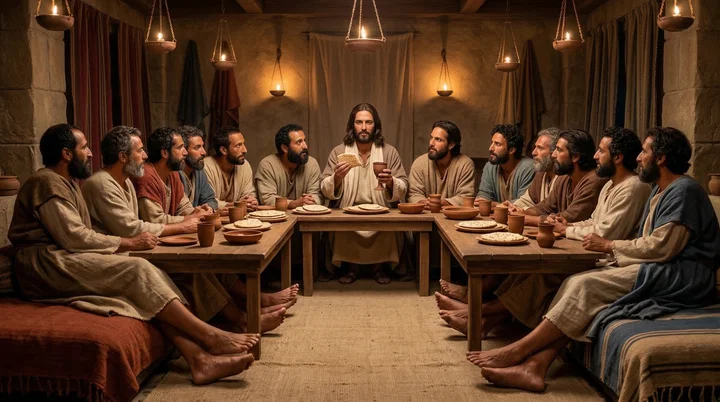
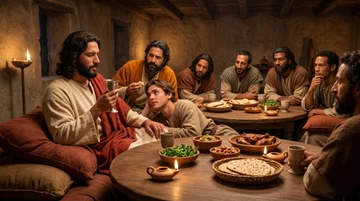
And he took the cup, and when he had given thanks, he gave it to them: and they all drank of it.
Translations
American King James Version, King James Version, KJV Cambridge Paragraph Bible, Webster Bible
And he took the cup, and when he had given thanks, he gave it to them: and they all drank of it.
Revised Version, American Standard Version
And he took a cup, and when he had given thanks, he gave to them: and they all drank of it.
And having taken the cup, having given thanks, he gave to them, and they drank of it — all;
And having taken [ the] cup, when he had given thanks, he gave [ it] to them, and they all drank out of it.
And, taking a cup, he offered thanks, and gave unto them; and they, all, drank of it.
Berean Standard Bible, Majority Standard Bible
Then He took the cup, gave thanks, and gave it to them, and they all drank from it.
He took the cup, and when he had given thanks, he gave to them. They all drank of it.
And he took a cup, and when he had given praise, he gave it to them: and they all had a drink from it.
Also he tooke the cuppe, and when he had giuen thankes, gaue it to them: and they all dranke of it.
Douay-Rheims (Challoner revision)
And having taken the chalice, giving thanks, he gave it to them. And they all drank of it.
Pictures
Cross-references
- Matthew 26:27-28
And he took the cup, and gave thanks, and gave it to them, saying, Drink ye all of it;
Jesus gives the cup to the disciples and identifies it with his blood shed for forgiveness.
- Luke 22:17-20
And he took the cup, and gave thanks, and said, Take this, and divide it among yourselves:
Parallel account of Jesus sharing the cup at the supper.
- 1 Corinthians 11:23-26
For I have received of the Lord that which also I delivered unto you, That the Lord Jesus the same night in which he was betrayed took bread:
Repeats the cup’s institution and connects it with proclaiming the Lord’s death.
- 1 Corinthians 11:26
For as often as ye eat this bread, and drink this cup, ye do shew the Lord’s death till he come.
Sharing the cup proclaims the Lord’s death until he comes.
- Luke 22:17-18
And he took the cup, and gave thanks, and said, Take this, and divide it among yourselves:
The parallel account describes the cup and the fruit of the vine.
- Luke 22:20
Likewise also the cup after supper, saying, This cup is the new testament in my blood, which is shed for you.
The cup is identified with Christ’s blood.
- 1 Corinthians 10:16
The cup of blessing which we bless, is it not the communion of the blood of Christ? The bread which we break, is it not the communion of the body of Christ?
The cup is shared as communion in Christ’s blood.
- 1 Corinthians 11:28-29
But let a man examine himself, and so let him eat of that bread, and drink of that cup.
Believers are told to examine themselves before partaking and discern the Lord’s body.
- 1 Corinthians 11:20-21
When ye come together therefore into one place, this is not to eat the Lord’s supper.
Paul contrasts the Lord’s supper with their improper meal, where some went hungry and others became drunk.
- Exodus 12:14
And this day shall be unto you for a memorial; and ye shall keep it a feast to the LORD throughout your generations; ye shall keep it a feast by an ordinance for ever.
The Lord’s Supper replaces the Passover memorial, which foreshadowed deliverance fulfilled in Christ.
- 1 Corinthians 11:23
For I have received of the Lord that which also I delivered unto you, That the Lord Jesus the same night in which he was betrayed took bread:
Paul recounts receiving instruction about the ordinance Jesus instituted.
- Hebrews 9:14
How much more shall the blood of Christ, who through the eternal Spirit offered himself without spot to God, purge your conscience from dead works to serve the living God?
Christ’s blood cleanses the conscience.
- 1 Corinthians 10:17
For we being many are one bread, and one body: for we are all partakers of that one bread.
Believers share one bread and are one body.
Commentary
Each commentary is drawn from primary sources: the writings of Ellen G. White and Adventist pioneers and periodicals. Each commentary is separate. Its own words are not a quotation; follow the references to read the source passages.
Ellen G. White
5 sources
He took the cup, and when He had given thanks He gave it to them, and they all drank of it.Ms 19, 1897, par. 1–2DA 652.1–2GC 59.24SP 63.1 By that act He established the Lord's Supper in place of the Passover.Ms 19, 1897, par. 1–2DA 652.1–2 The cup belongs to the service in which He offered Himself as a sacrifice, and it represents the new covenant in His blood.Ms 19, 1897, par. 1–2DA 652.1–2
It means His life given for the forgiveness of the sins of all who will believe and receive Him.Ms 35, 1897, par. 8 The supper is a great memorial of His sacrifice and death, meant to be often repeated to bring His death to mind.Ms 19, 1897, par. 1–2DA 652.1–2Ms 35, 1897, par. 8 It is to be kept by His followers in every land and age until He comes again.DA 652.1–2
The ordinance is not to be shut up to a few, but each person is to share in it openly as a witness that Christ is his own Saviour who gave His life to rescue him from death.Ms 35, 1897, par. 8 The cup belongs to this scriptural ordinance of the Lord's supper.GC 59.24SP 63.1 This stands in contrast to the later mass, in which priests claimed to turn the wine into Christ's actual blood, and by which the mass replaced the scriptural ordinance.GC 59.24SP 63.1
Sources
Pioneers and periodicals
44 sources
On the night before He died, after the Passover meal was over, Jesus took a cup, gave thanks over it once apart from the bread, and gave it to His disciples, and all who remained present drank of it.ST May 13, 1889ST Jun 21, 1905ST Mar 10, 1909RH Jan 28, 1862ST Nov 22, 1883 The cup is the emblem of His blood of the new covenant, the red juice of the grape representing His spilled blood shed for many for the remission of sins, given as a memorial to show forth His death until He comes again and to remind His followers of their continual dependence on His blood.ST Mar 25, 1880ST May 13, 1889ST Jun 21, 1905ST May 12, 1898RH May 27, 1873 It remains a cup of wine as a symbol and is not changed into His actual blood, just as the bread remains bread and His words about the true vine are symbolic.ST Jan 27, 1914ST Dec 12, 1911RH Jul 11, 1912ST Mar 4, 1897 Its contents are the fruit of the vine, pure unfermented grape juice kept from fermenting and fitting the unleavened Passover, not intoxicating wine or fermented liquor.ST Oct 5, 1882ST Jul 13, 1915ST Feb 7, 1878ST Oct 8, 1894ST Feb 6, 1879 Judas had already received the sop and gone out into the night before the memorial was instituted, so only the remaining chosen disciples drank of it, though those who held the opposite view teach that Judas was still present and partook with the rest.ST Oct 5, 1882ST Nov 22, 1883RH Jul 29, 1873RH Dec 28, 1911RH May 27, 1873 The Supper so instituted is an ordinance Christ commanded to be celebrated often in remembrance of Him until He drinks it new in the kingdom of God, with bread and wine alone as the emblems of His broken body and spilled blood.ST Mar 25, 1880ST May 13, 1875ST Dec 30, 1889
Setting and Order of Supper
The sharing of the cup belongs to Jesus' last hours before his crucifixion and resurrection.ST Mar 10, 1909 It took place on the evening of what is now called Thursday, the night before he died.ST Jul 12, 1905ST May 11, 1915 That following day of his death was the sixth day of the week.ST May 11, 1915
The cup was shared within the Passover meal that he made a memorial of his approaching death, to show forth his death until he comes again.ST May 13, 1889 It was part of the ordinance instituted at the close of the Passover supper and represented the new covenant in his blood, shed for them.ST Jun 21, 1905 It was taken after supper, after the evening meal was over, establishing a memorial consisting simply of bread and wine.ST Nov 22, 1883ST Jan 1, 1885 As such it is entirely distinct from the Passover meal itself, and whatever more is added, such as a full ordinary meal, is a perversion of the ordinance.ST Jan 1, 1885
The other cups drunk during the meal were part of the Passover, not the cup representing Christ's blood.ST Nov 22, 1883 That cup alone was taken after supper as the emblem of his blood.ST Nov 22, 1883
In order, the disciples sat down to supper, Jesus foretold his betrayal that same night and identified his betrayer, and the Lord's Supper followed.RH Jan 28, 1862ST Nov 15, 1883 After Jesus foretold his betrayal Judas left, and then the remaining disciples shared the solemn occasion of the Supper with him and joined in a hymn with him.ST Mark follows the same order as Matthew.ST Nov 15, 1883
These last-supper events are closely connected with his death, on which Christian hope depends.ST Nov 15, 1883 Their order matters and should be studied carefully to understand their full significance.ST Nov 15, 1883 The account is presented as fact also affirmed by the other Gospel accounts and Paul's testimony.RH Jan 28, 1862
Meaning of Cup and Thanks
He took the cup, gave thanks over it once, and gave it to the disciples, and the thanks over the cup were given separately from and just as the thanks over the bread were given once, the cup being one part of the single Lord's Supper distinct from the bread.ST May 8, 1884RH Apr 7, 1868ST May 13, 1875 The cup was shared as part of that solemn service alongside feet washing, with an important spiritual purpose.ST May 13, 1875
The cup is a literal emblem of the literal event of the Lord's death, and taking part remembers that event.ST Jan 3, 1884 It is an emblem of his shed blood, consecrated by prayer and joined with the theme of his redeeming love, to be partaken with thankful reverence.ST Jan 3, 1884ST May 13, 1889ST Jun 18, 1885 It was shared at the solemn institution of the ordinance and represents the new covenant in his blood, shed for them.ST Jun 21, 1905ST May 13, 1889 It represented his covenant blood, shed for many for the remission of sins.ST Jun 21, 1905ST May 12, 1898 It is the fruit of the vine, the red juice of the grape representing his spilled blood, a symbol of his blood shed to cleanse the sins of those who come to him for pardon and receive him as Saviour.ST Mar 25, 1880RH Apr 16, 1867
The Supper is a communion of believers with their Lord and with one another.RH Apr 16, 1867 The cup is a figure for communion in his blood in fellowship with the Father and the Son, made real as God abides in the life through the Holy Spirit.RH Apr 16, 1867RH Jul 11, 1912 The bread is his body and the cup is his blood of the new testament shed for many. The continual feast they represent is feeding on his word and drinking in his Spirit, for receiving his words is receiving his spirit and life.ST Dec 12, 1911RH Jul 11, 1912
He made the meal at the Passover a memorial of his approaching death, to show forth his death until he comes again.ST May 13, 1889 It is to be celebrated often so his followers remember his betrayal and crucifixion and their continual dependence on his blood for salvation.ST Mar 25, 1880 It is a sacred emblem of his blood shed for them, a memorial that brings his death vividly to mind.RH May 27, 1873 The cup remains a cup of wine, an emblem and not his actual blood transformed into the substance of the cup, just as the words about the bread and about him as the true vine are symbolic.ST Dec 12, 1911RH Jul 11, 1912ST Mar 4, 1897 The teaching that the bread and wine are changed into the real body and blood of divinity arose in the Church of Rome about the tenth century under the garb of the Christian religion, and is the old heathen doctrine of transmutation of species in a more complete form than it had under its heathen patrons.ST Jan 27, 1914
Contents of the Cup
The contents shared from the cup are called the fruit of the vine, meaning pure, unfermented, freshly pressed grape juice rather than intoxicating wine.ST Oct 5, 1882ST Jul 13, 1915ST Oct 8, 1894 The word cup alone does not identify what was drunk, and the drink is referred to as the cup or the fruit of the vine, not as wine.ST Oct 8, 1894ST Feb 6, 1879 The verse does not say the drink was fermented wine.ST Feb 6, 1879
Because the Supper immediately followed Passover, from which leaven and ferment and fermented things were excluded, the cup was not intoxicating wine.ST Jul 13, 1915ST Feb 7, 1878ST Oct 8, 1894 Its pure grape juice fittingly represented Christ's blood shed for mankind.ST Jul 13, 1915 It symbolized benediction rather than corruption.ST Feb 7, 1878
The identifying description the fruit of the vine excludes fermented wine, because fermentation is not the fruit of the vine.ST Feb 6, 1879 The cup should contain genuine grape juice kept from fermenting as much as possible, with care that it is genuine rather than adulterated.RH Apr 16, 1867 Those who object to wine may use pure cold water, and fermented wine is not necessary for its use, so unfermented wine should be used in celebrating communion.RH Apr 16, 1867RH Sep 3, 1908
Participants in the Cup
Jesus gave the cup to his disciples and they all drank of it, and he himself drank with them at that first Supper, thereby setting the example for his followers to drink it.CO 57.3–4ST Nov 3, 1909 All means all who were present drank, so that after Judas had gone out the eleven could still be all who drank, just as all were said to be offended when the word was spoken to the eleven without Judas.ST Nov 22, 1883 The Passover meal, the announcement of betrayal that same night, the dipping in the dish and the giving of the sop to Judas, Satan entering into him, and his going immediately out into the night all took place first, and only some time afterward was the memorial with bread and cup instituted for the remaining chosen disciples alone, so Judas did not drink of it.ST Oct 5, 1882RH May 27, 1873
On this reckoning Judas was not present when the Supper was instituted and had no part in the divine memorial, a question raised as an objection sometimes urged against close communion.RH Jul 29, 1873 Those who held the opposite taught that Jesus gave the communion cup to the disciples including Judas, even though Judas had already agreed to betray him and Jesus knew his purpose, while the other disciples were also struggling over who would be greatest.RH Dec 28, 1911 On that same teaching Jesus did not restrict the communion service to people entirely free from sin or authorize disciples to judge one another's fitness to partake, but gave the emblems himself while calling his followers to repentance and cleansing.RH Dec 28, 1911 The question turns on when Jesus instituted the memorial in relation to the Passover meal and Judas's departure, and a casual reading of Matthew, Mark, and Luke may suggest Judas was present and partook, while the matter is left without final conclusion.RH Jul 29, 1873
The cup was given to his chosen disciples in a private setting, not as a meal open to the crowd.RH May 27, 1873 It is a sacred emblem of his blood shed for them, a memorial bringing his death vividly to mind, and is intended for his true followers rather than worldlings or people living in sin while disgracing his name.RH May 27, 1873
Observance by the Church
The Lord's Supper is an ordinance commanded to be observed in remembrance of Christ, instituted in the solemn giving of the cup and to be celebrated often and continued until he comes again.ST Mar 25, 1880ST Dec 30, 1889ST Nov 3, 1909 It is to be kept often so that his betrayal and crucifixion are remembered and continual dependence on his blood for salvation is maintained.ST Mar 25, 1880 The observance consists of bread and the fruit of the vine, showing his death until he comes, and those who love him ought to obey that living duty.ST Nov 3, 1909 His declaration that he would drink no more of the fruit of the vine until he drinks it new in the kingdom of God was true, spoken because he was about to leave them without his bodily presence.ST Nov 3, 1909 That saying does not end the ordinance, for the command to continue it in remembrance keeps the drinking of the cup binding.ST Nov 3, 1909
At its institution Christ presided as the highest authority in the gathered church.CO 57.3–4 His example is followed by having the presiding minister or elder oversee the service and the wine passed to all believers, celebrating communion in the manner he gave it to the church.CO 57.3–4CO 42.7–43.1 The cup-drinking was instituted after the evening meal was over, entirely distinct from the Passover meal itself, establishing a memorial consisting simply of bread and wine.ST Jan 1, 1885 Only the bread and the wine commemorate his death as emblems of his broken body and spilled blood, taken alongside feet washing as a solemn service with an important spiritual purpose, and whatever more is added, such as a full ordinary meal, is a perversion of the ordinance.ST May 13, 1875ST Jan 1, 1885
The verse gives no rule that the Supper must be observed at a particular time or how often it must be celebrated.RH Nov 14, 1865 Christ's example was in the evening on a week-day night, probably on Wednesday and certainly by Thursday evening, not on the first day of the week.RH Nov 14, 1865 No instruction makes its timing binding, and it does not establish Sunday as the required day or command communion on any particular day.RH Nov 14, 1865ST May 27, 1875 The institution did not make Thursday evening a Sabbath, and the sharing of the cup on the night before the crucifixion, with death following on the sixth day of the week, did not make that day sacred.ST Jul 12, 1905ST May 11, 1915 Yet the account of taking the cup, giving thanks, giving it to the disciples who all drank, with the bread as his body and the cup as his blood of the new testament shed for many, bears directly on whether the Supper must be commemorated in the evening and in the evening only.
The cup he gave was unfermented wine.ST Feb 23, 1915 The verse authorizes only unfermented wine for the Lord's Supper and gives no foundation for using fermented wine or any intoxicating liquor as a sacrament.ST Feb 23, 1915 Churches therefore should use only unfermented wine and should practice and advocate complete temperance without seeking an exception for sacramental liquor in prohibition law.ST Feb 23, 1915
Sources