Mark 14:22
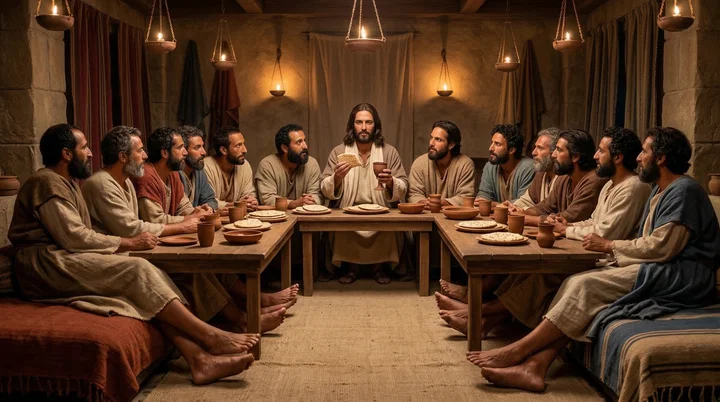
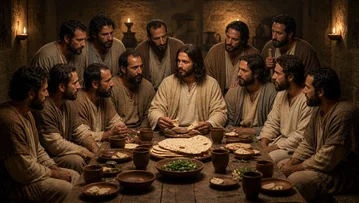
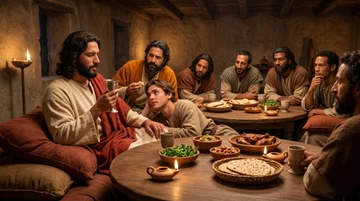
And as they did eat, Jesus took bread, and blessed, and brake it, and gave to them, and said, Take, eat: this is my body.
Translations
And as they did eat, Jesus took bread, and blessed, and broke it, and gave to them, and said, Take, eat: this is my body.
King James Version, KJV Cambridge Paragraph Bible
And as they did eat, Jesus took bread, and blessed, and brake it, and gave to them, and said, Take, eat: this is my body.
And as they were eating, Jesus took bread, and blessed, and broke it, and gave to them, and said, Take, eat: this is my body.
Revised Version, American Standard Version
And as they were eating, he took bread, and when he had blessed, he brake it, and gave to them, and said, Take ye: this is my body.
And as they are eating, Jesus having taken bread, having blessed, brake, and gave to them, and said, 'Take, eat; this is my body.'
And as they were eating, Jesus, having taken bread, when he had blessed, broke [ it], and gave [ it] to them, and said, Take [ this]: this is my body.
And, as they were eating, taking a loaf, he blessed and brake, and gave unto them, and said—Take! this, is, my body;
While they were eating, Jesus took bread, spoke a blessing and broke it, and gave it to the disciples, saying, “ Take it; this is My body.”
While they were eating, Jesus took bread, spoke a blessing and broke it, and gave it to the disciples, saying, “ Take and eat; this is My body.”
As they were eating, Jesus took bread, and when he had blessed it, he broke it and gave to them, and said, “ Take, eat. This is my body.”
And while they were taking food, he took bread, and after blessing it, he gave the broken bread to them, and said, Take it: this is my body.
And as they did eate, Iesus tooke the bread, and when hee had giuen thankes, he brake it and gaue it to them, and sayde, Take, eate, this is my bodie.
Douay-Rheims (Challoner revision)
And whilst they were eating, Jesus took bread; and blessing, broke, and gave to them, and said: Take ye. This is my body.
Pictures
Cross-references
- Matthew 26:26-28
And as they were eating, Jesus took bread, and blessed it, and brake it, and gave it to the disciples, and said, Take, eat; this is my body.
Records Jesus instituting the Supper with bread and the cup.
- Luke 22:19-20
And he took bread, and gave thanks, and brake it, and gave unto them, saying, This is my body which is given for you: this do in remembrance of me.
Gives the same institution and explains the bread and cup.
- 1 Corinthians 11:23-26
For I have received of the Lord that which also I delivered unto you, That the Lord Jesus the same night in which he was betrayed took bread:
Defines memorial as bread and cup showing death.
- Acts 20:7
And upon the first day of the week, when the disciples came together to break bread, Paul preached unto them, ready to depart on the morrow; and continued his speech until midnight.
The disciples’ breaking bread is linked with the supper Jesus instituted.
- 1 Corinthians 11:26
For as often as ye eat this bread, and drink this cup, ye do shew the Lord’s death till he come.
Eating the bread and drinking the cup proclaim the Lord’s death until he comes.
- Exodus 12:15
Seven days shall ye eat unleavened bread; even the first day ye shall put away leaven out of your houses: for whosoever eateth leavened bread from the first day until the seventh day, that soul shall be cut off from Israel.
Passover’s unleavened bread explains the bread used at the Supper.
- 1 Corinthians 10:16
The cup of blessing which we bless, is it not the communion of the blood of Christ? The bread which we break, is it not the communion of the body of Christ?
Calls the bread communion in Christ’s body, as Jesus says, “This is my body.”
- 1 Corinthians 11:20-21
When ye come together therefore into one place, this is not to eat the Lord’s supper.
Eating a full meal is not the Lord’s Supper, which the Corinthians observed improperly.
- 1 Corinthians 10:17
For we being many are one bread, and one body: for we are all partakers of that one bread.
Believers are one body through sharing the one bread.
- Matthew 26:28
For this is my blood of the new testament, which is shed for many for the remission of sins.
Jesus identifies the cup as his blood, shed for forgiveness.
- 1 Corinthians 11:2
Now I praise you, brethren, that ye remember me in all things, and keep the ordinances, as I delivered them to you.
Urges keeping the ordinances as delivered.
- Acts 20:11
When he therefore was come up again, and had broken bread, and eaten, and talked a long while, even till break of day, so he departed.
The bread-breaking is described as occurring after midnight.
- 1 Corinthians 11:23
For I have received of the Lord that which also I delivered unto you, That the Lord Jesus the same night in which he was betrayed took bread:
Paul recounts the Lord’s instruction about taking bread at the supper.
- 1 Corinthians 11:28
But let a man examine himself, and so let him eat of that bread, and drink of that cup.
Each person is told to examine himself before partaking.
- Matthew 26:27
And he took the cup, and gave thanks, and gave it to them, saying, Drink ye all of it;
Also describes Christ giving the cup at the Lord’s supper.
- John 6:56
He that eateth my flesh, and drinketh my blood, dwelleth in me, and I in him.
Partaking of Christ’s emblems signifies receiving him by faith.
- Hebrews 10:10
By the which will we are sanctified through the offering of the body of Jesus Christ once for all.
Christ offers his body once for all as a sufficient sacrifice.
- Ephesians 5:30
For we are members of his body, of his flesh, and of his bones.
Believers are members of Christ’s body.
- Luke 9:16
Then he took the five loaves and the two fishes, and looking up to heaven, he blessed them, and brake, and gave to the disciples to set before the multitude.
Jesus blesses and breaks bread in both accounts.
Commentary
Each commentary is drawn from primary sources: the writings of Ellen G. White and Adventist pioneers and periodicals. Each commentary is separate. Its own words are not a quotation; follow the references to read the source passages.
Ellen G. White
5 sources
At the Passover meal Jesus established the Lord's Supper, instituting this service in place of the Passover as the great memorial.Ms 19, 1897, par. 1–2DA 652.1–2 As they ate He took bread, blessed it, broke it, and gave it to the disciples, saying it is His body.Ms 19, 1897, par. 1–2DA 652.1–2GC 59.2 The bread was a sign of His body and of His sacrificial self-giving, the sacrifice He was about to make in giving His life for sin.Ms 19, 1897, par. 1–2DA 652.1–2 That sacrifice was for the remission of the sins of all who will believe and receive Him.Ms 35, 1897, par. 8
He made the supper a memorial of His sacrifice, designed to be often commemorated to bring that sacrifice to remembrance.Ms 19, 1897, par. 1–2DA 652.1–2Ms 35, 1897, par. 8 It was to be observed by His followers in every land and age.DA 652.1–2 The ordinance is not to be exclusive, but each must participate in it publicly and thus bear witness: I accept Christ as my personal Saviour, He gave His life for me that I might be rescued from death.Ms 35, 1897, par. 8
The ordinance was supplanted by the mass, in which priests claimed that ordinary bread and wine became Christ's actual body and blood and that they could thereby create God.GC 59.2 The bread is not changed into Christ's actual body, and claiming power to make that change is a false and blasphemous teaching.4SP 63.1
Sources
Pioneers and periodicals
45 sources
As they were eating the Passover on the night before his death, Jesus took bread, gave thanks to God, broke it, gave it to his disciples and told them to take and eat it as his body.ST May 13, 1889CO 42.7–43.1ST Jun 21, 1905ST May 13, 1875ST Dec 30, 1889
The word is means signifies, so the bread represents and figures his body as when he calls himself the vine, and its substance is not changed into his literal flesh.RH Jul 27, 1876ST Jan 3, 1884ST Dec 12, 1911RH Jul 11, 1912ST Mar 27, 1893
He instituted it then as a recurring memorial to be kept by believers together in remembrance of his betrayal, suffering and death, proclaiming his death until he comes.ST May 13, 1889ST Jun 21, 1905ST Dec 30, 1889RH Dec 24, 1914
The bread is the emblem of his body given in death for the sins of the world and for each person, paired with the fruit of the vine as the emblem of his spilled blood for communion with him and with one another.ST Mar 25, 1880ST May 13, 1889RH Apr 16, 1867
Thanksgiving was offered separately over the bread and over the cup, and the simple breaking and eating of bread with drinking of the cup apart from an ordinary meal continues as his commanded ordinance, while the later teaching that consecration changes the bread into God to be worshipped is contrary to what he instituted.ST May 8, 1884RH Apr 7, 1868ST Jan 27, 1914RH Dec 24, 1867ST Jan 1, 1885
Words and Actions Described
While they were eating, Jesus took bread, blessed and broke it, gave it to the disciples, identified it as his body, and told them to take and eat.CO 42.7–43.1ST May 13, 1875ST Dec 30, 1889 That action gives the form of the communion ordinance, with bread established as part of the Lord's Supper, a solemn observance performed alongside foot washing.CO 42.7–43.1ST May 13, 1875 The ordinance so instituted is to be observed in remembrance of him and belongs among the things he commanded his disciples to keep.ST Dec 30, 1889
The word rendered blessed means to thank or give thanks.RH Dec 24, 1867 The thanks were directed to God, not to the bread.RH Dec 24, 1867 Thanksgiving was offered separately over the bread and over the cup, once for each element, in one Lord's Supper.ST May 8, 1884RH Apr 7, 1868 This bears on giving thanks at meals, though it does not settle whether the food itself must be mentioned in the prayer.RH Dec 24, 1867
The word is means signifies, so the bread was a symbol of his body and not his actual body.RH Jul 27, 1876 The saying is a direct figure of speech, and like other biblical metaphors it is expressive at a particular point rather than in every detail.ST Mar 27, 1893 The blessing Jesus gave is beyond what people can give, but they can ask God to bless the bread, consecrate them to his service, and bless their actions so that they honor him, and God hears and answers such prayers.ST May 13, 1889
Jesus himself ate the bread and drank the wine at the first supper and thereby set an example for his followers to do the same.ST Nov 3, 1909 He was about to leave his disciples without his bodily presence, and by this act he established the Lord's Supper as a continuing religious duty in remembrance of him, showing his death until he comes again.ST Nov 3, 1909 His promise to drink it anew in the kingdom does not cancel that continuing duty, and those who truly love him keep the ordinance in obedience to his command.ST Nov 3, 1909
Passover Setting and Order
The supper was instituted at the Passover, at the close of or after the Passover meal, taking bread as an emblem of the body to be broken in death for the sins of the world.ST May 13, 1889ST Jun 21, 1905 It took place on Thursday evening, the night he was betrayed and the night before his crucifixion, with Friday completing the greatest act in the plan of salvation.RH Jan 28, 1862ST Jul 12, 1905ST May 11, 1915 It was instituted in a private room for his disciples, not as a meal for a crowd, and as an ordinance for true followers to be observed in remembrance of him and his sacrifice until he comes.ST May 13, 1889ST Jun 21, 1905RH May 27, 1873 Celebrating it on a particular day does not make that day a Sabbath, and neither the supper nor his death made that day sacred.ST Jul 12, 1905ST May 11, 1915
Mark places the institution after the meal begins and after Jesus identifies the betrayer, in the same order as Matthew and in its proper order though many details are omitted.ST Nov 15, 1883 The breaking of bread comes before the blessing of the cup, while other harmonies vary in minor details.ST Feb 4, 1903 After the meal Jesus and the remaining disciples joined in a solemn hymn, their last song together before his death, whose theme was redeeming love.STST Jun 18, 1885 The events are closely connected with his death, on which human hope depends, so studying their order and circumstances reveals their full significance.ST Nov 15, 1883
Judas was not present when the memorial was instituted, having received the dipped sop after the announcement that one would betray him and having gone immediately out while it was night, leaving Jesus with his loyal disciples for full communion near the close of the Passover meal.ST Oct 5, 1882RH May 27, 1873 Whether he was present turns on when the meal was eaten, when he received his portion, and when he left.RH Jul 29, 1873 Those who held otherwise taught that Jesus gave the bread and cup even to disciples not free from sin, for Judas had agreed to betray him and the others were arguing over who was greatest, and that though he knew Judas would betray him he washed Judas's feet and gave him the emblems.RH Dec 28, 1911
The memorial instituted that night was taken apart from an ordinary meal and after the Passover meal was over, consisting simply in breaking and eating bread and drinking the cup.ST Jan 1, 1885 Only the bread and the wine commemorate his death, as emblems of his broken body and spilled blood, to show forth his death till he comes.ST Jan 1, 1885 It was entirely distinct from the Passover supper and had no reference to it.ST Jan 1, 1885 To make it an ordinary regular full meal is a perversion, and there is no more reason for preceding its celebration with a full meal than for introducing it with some other act of that day.ST Jan 1, 1885
Memorial of Christ's Death
The bread is an emblem of his body, broken and given in death for the sins of the world and for the salvation of each person.ST Mar 25, 1880ST May 13, 1889RH Apr 16, 1867ST May 13, 1889RH May 27, 1873 It is paired with the fruit of the vine as an emblem of his spilled blood.RH Apr 16, 1867 Together they are for communion of believers with their Lord and with one another.RH Apr 16, 1867 Partaking of the emblems recalls his passion and is done with reverence and gratitude.ST May 13, 1889
The ordinance was instituted as a recurring memorial to be observed in remembrance of Jesus and his sacrifice.ST Mar 25, 1880ST Jun 21, 1905ST Dec 30, 1889RH Jan 28, 1862 He gave thanks, broke the bread, gave it to the disciples as a sign of his body, and commanded them to eat it in remembrance of him.ST Jun 21, 1905 It keeps his betrayal, passion, crucifixion and death in view, proclaiming his death until he comes.ST Mar 25, 1880ST May 13, 1889RH Jan 28, 1862 In this way it keeps his followers mindful of their dependence on his blood for salvation.ST Mar 25, 1880
The supper is among the things he commanded to keep and is to continue as a celebration for believers together when churches gather.ST Dec 30, 1889RH Dec 11, 1866 His promise to drink it anew in the kingdom does not cancel that continuing duty, and those who truly love him keep it in obedience.ST Nov 3, 1909 The verse identifies the bread with his body without saying that his body was broken, so it does not support the expression the broken body of Christ.ST Jul 14, 1898 Luke describes his body as given for his followers, for Christ's body was wounded and pierced but not broken, and his offering was whole so that each believer receives a whole Saviour whose life was given for each person's salvation.ST Jul 14, 1898
The bread and wine point beyond the emblems to a continual feast of receiving his word and his Spirit.ST Dec 12, 1911 The words are a direct figure of speech, as when he calls himself the vine, and the bread and cup are emblems of his death and a sign of communion with his body, not a literal transformation into his body.ST Dec 12, 1911RH Jul 11, 1912 That communion is with Christ through God's Spirit abiding in the believer, so that feeding on Christ's word means receiving his Spirit and life.RH Jul 11, 1912
Symbol Not Literal Flesh
The bread stands for the body and points to it rather than turning into the actual body, with the word for being carrying the sense of signifying.RH Jul 27, 1876ST Dec 12, 1911RH Jul 11, 1912ST Mar 27, 1893 The declaration over the bread is a direct figure of speech of the same kind as calling himself the vine, and it presents the broken bread as a sign of communion with his body.ST Dec 12, 1911RH Jul 11, 1912 That communion is through God's Spirit dwelling in the believer, so that feeding on his word is receiving his Spirit and life, and the bread and wine as emblems of his death point onward to a continual feast of receiving his word and his Spirit.ST Dec 12, 1911RH Jul 11, 1912 Biblical figures of this sort are forceful at the particular point they illustrate rather than exact in every detail.ST Mar 27, 1893
The supper is a literal ordinance in which bread is eaten as an emblem of the literal event it represents.ST Jan 3, 1884 What is recorded is taking, blessing, breaking, giving, and identifying the bread as his body, with no statement that the substance of the bread is changed.RH Dec 24, 1914 There is no literal transformation of the bread into his body.RH Jul 11, 1912ST Mar 27, 1893
The bread is a memorial of his body given in death, celebrating that death until he comes.RH Dec 24, 1914 It does not repeat his death nor make his literal body present to be eaten, because his death was offered once for all.RH Dec 24, 1914 The later teaching of transubstantiation holds that consecration changes the inward substance of the bread and wine into his body and blood while their outward appearance still remains bread and wine.ST Jan 27, 1914ST Mar 4, 1897 On that view the words of a priest are said to make each wafer or fragment into God, which stands over against the simple sacrament instituted with bread and wine and amounts to wafer worship, forming a Christian-shaped counterpart to the older notion of transmutation.ST Jan 27, 1914
Observance in Church Life
On that night the bread used was unleavened because it was the days of unleavened bread when leaven had been put out of all Jewish houses and no other bread was at hand except what could be obtained from Gentiles.RH Apr 16, 1867 The bread then in common use was coarse barley or wheat meal ground in hand-mills with the bran left in, not modern superfine flour.RH Apr 16, 1867 The absence of leaven illustrated nothing about his body, so the verse does not require unleavened or coarse bread now and the white raised loaf may be used.RH Apr 16, 1867
The cup is the fruit of the vine, meaning wine freshly pressed from grapes, understood as unfermented grape juice, fresh grapes, or raisins rather than fermented wine that makes men drunken.ST Jul 13, 1915ST Feb 7, 1878 The account never uses the word wine but only the cup and the fruit of the vine.ST Jul 13, 1915 The meal followed the Passover from which fermented things were excluded when all leaven was searched out and destroyed and only unfermented bread was eaten, so the wine used was not fermented.ST Jul 13, 1915ST Feb 7, 1878 Only the pure juice of the grape could fitly represent his blood shed for mankind and serve as a symbol of blessing.ST Jul 13, 1915ST Feb 7, 1878 Fermented wine has no foundation in Scripture for sacramental use, the Bible authorizes only unfermented wine, and unfermented wine can be used.ST Feb 23, 1915RH Sep 3, 1908
The command to take and eat establishes the bread as part of the Lord's Supper, a solemn observance performed alongside foot washing with only bread and wine as emblems of his broken body and spilled blood.ST May 13, 1875ST Jan 1, 1885 The memorial instituted that night was taken apart from an ordinary meal and after the Passover meal was over, consisting simply in breaking and eating bread and drinking the cup in remembrance to show forth his death till he comes.ST Jan 1, 1885 To make the Lord's Supper an ordinary regular full meal is a perversion, and there is no more reason for preceding its celebration with a full meal than for introducing it with some other act of Christ on that day.ST Jan 1, 1885 Christ presided at the institution, blessing the bread, breaking it, and giving it to his disciples to pass to everyone.CO 57.3–4 As the highest authority present his example supports having the church elder preside unless an ordained minister is present, in which case the minister in highest authority presides.CO 57.3–4
The supper's purpose makes it an ordinance for his true followers and not for worldlings or professed Christians living in sin, since it was instituted in a private room for his disciples and not as a meal for a crowd.RH May 27, 1873 Yet the service is not limited to people already sinless, for he gave the bread and cup even though they were not free from sin, and his example does not authorize people to judge one another's fitness to take part.RH Dec 28, 1911 The institution took place in the memorable evening when he was eating with his disciples, probably on what was then the fifth day and certainly no later than the evening before the sixth day, during a weeknight meal on Thursday evening, the night before his crucifixion.RH Nov 14, 1865ST Jul 12, 1905ST May 11, 1915ST May 27, 1875 These passages bear directly on whether it must be commemorated in the evening and in the evening only. But the example does not establish a required day, time, or frequency, and Scripture does not specify when or how often, so no particular day or frequency is religious duty.RH Nov 14, 1865 It may be celebrated on a weekday and does not establish Sunday or make Sunday communion a duty, celebrating it on a particular day does not make that day a Sabbath, and neither the supper nor his death made that day sacred.ST Jul 12, 1905ST May 11, 1915ST May 27, 1875
Sources